
Mar 23, 2026. Dharma Assembly for Lead Volunteers, Hospital Visit
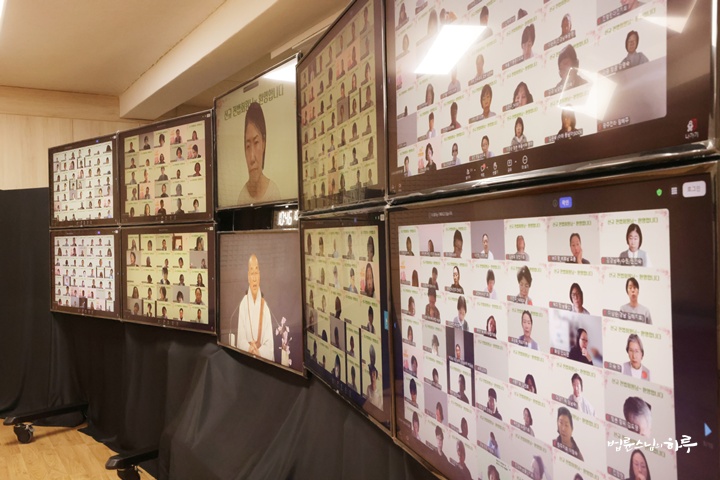
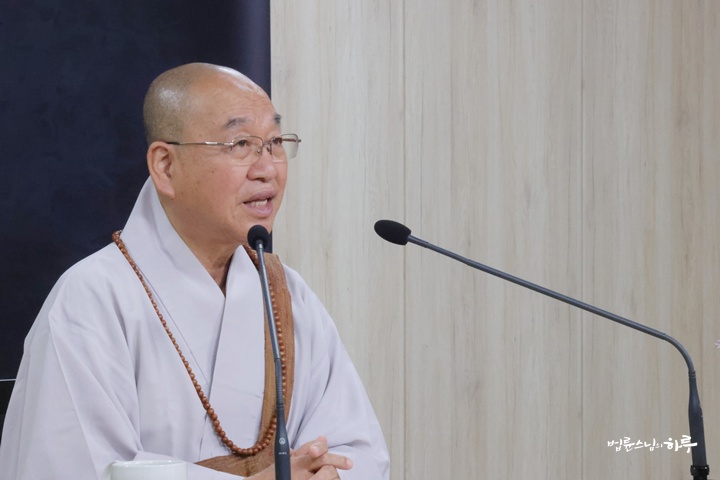
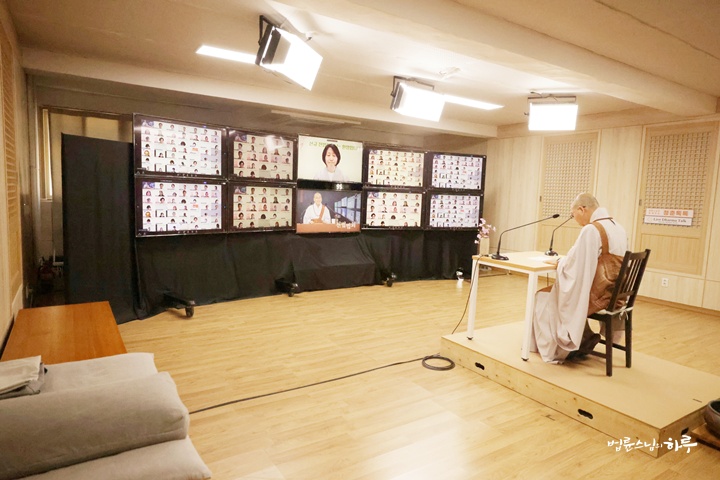
Hello. Today marks the first Dharma Assembly for lead volunteers since the beginning of the second 1000-Day Practice. Sunim participated in the assemblies held at 10 AM and 7:30 PM in the broadcasting room at Dubuk Jungto Retreat Center, where he gave Dharma talks.
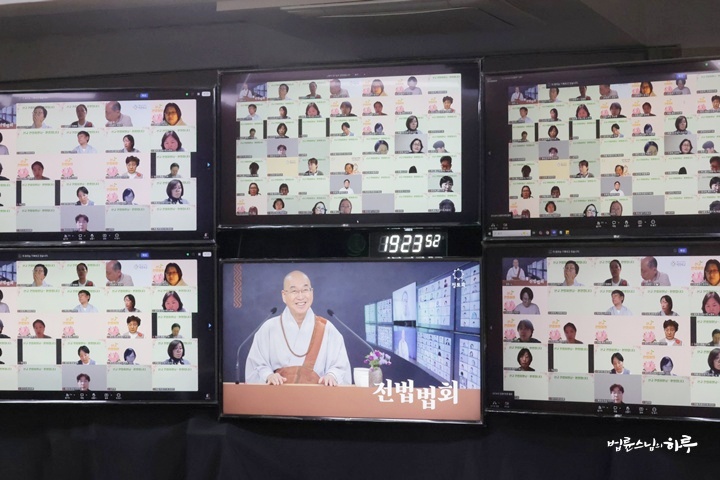
Yang Yoon-deok, President of Jungto Society, introduced and welcomed 134 new lead volunteers from the 10th cohort. Then, Dharma Teacher Hyang Gwang-myeong, Director of the Training Center, provided guidance about the leadership training. Afterward, the assembly requested a Dharma talk from Sunim with three prostrations.
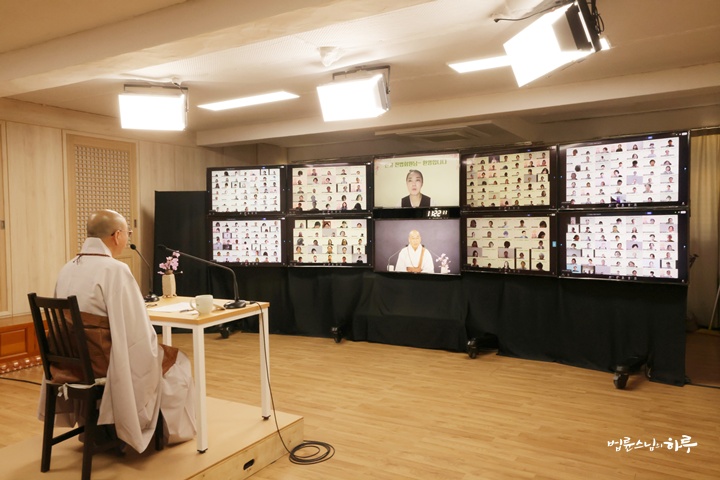
“Hello, lead volunteers. This is our first assembly for lead volunteers since the beginning of the second 1000-Day Practice and the formation of new leadership teams. Today, 134 new lead volunteers are joining us for this meaningful occasion. I sincerely welcome all new lead volunteers.”
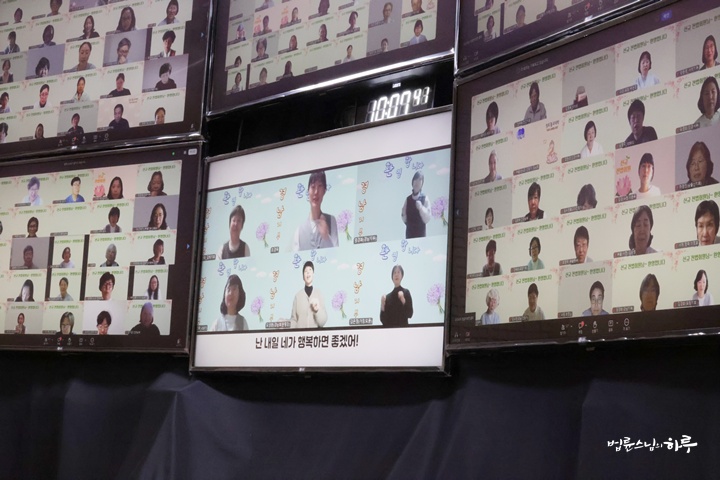
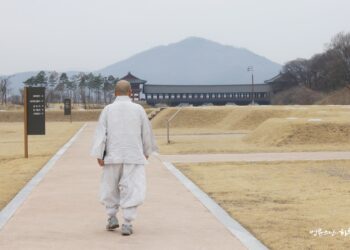
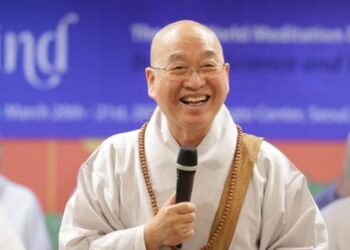
Sunim shared stories about yesterday’s visit to Namsan Mountain in Gyeongju, planting spring potatoes in the outdoor fields, and transplanting lettuce seedlings—all signs of spring at Dubuk Retreat Center. He also shared news about the World Meditation Forum held last Friday and Saturday, and expressed gratitude to the volunteers who prepared and conducted the event.
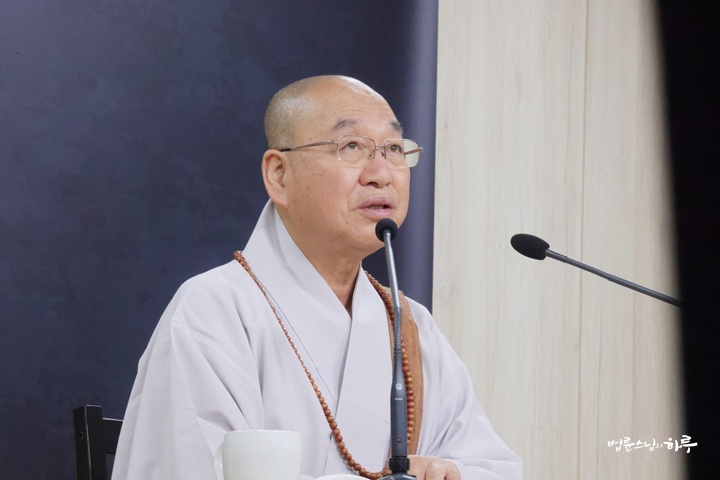
“As we begin the three years of the second 1000-Day Practice with new leadership teams, March and April seem to be a period when we need to coordinate our efforts, align our hearts, and adjust our thinking about what goals we’ll pursue and how we’ll operate over the next three years, especially since we have many new officers. The leadership training that’s being conducted seems designed to help those who are already familiar review once more, and help newcomers understand the principles of operation and the direction we’re heading. This month-long process starts today and concludes at the April assembly. I know you’re all busy, but since we’re beginning a three-year journey, please start well.”
Sunim explained the purpose of the leadership training and encouraged everyone to participate actively. He then had a dialogue session with the lead volunteers. There were two pre-registered questioners.
When conducting English Jungto Dharma School classes with international students, I need to share first as the facilitator, which makes it difficult to stay mindful. Time is also limited, so I keep rushing. Are there any points I should be careful about when sharing as a facilitator?
While volunteering as a lead volunteer at Jungto Society, I continuously feel uncomfortable with the leadership’s work methods and how they respond to questions. What perspective should I adopt?
At the opening ceremony, Venerable Domun’s words about hoping the Yongseong Memorial Hall would become a good place for spreading the Dharma to children and youth resonated with me. I thought it would be wonderful if Master Yongseong’s achievements could be included in textbooks, so I researched relevant regulations. Given various conditions, Venerable Domun has a good chance of being selected as an oral historian. However, considering he’s in his 90s and his health condition, would he be able to participate in the oral history and testimony work for textbook inclusion, which could take several years? Which department should I communicate with and what procedures are needed to pursue this proposal?
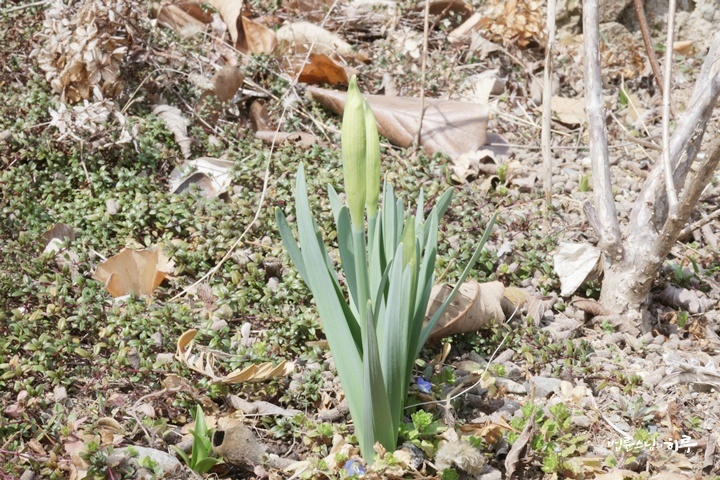
The morning assembly concluded with announcements and the Four Great Vows. After the morning assembly, Sunim had lunch and then went out for a hospital appointment.
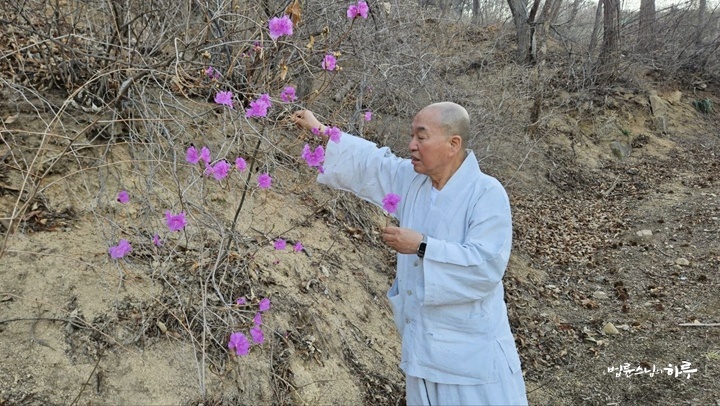
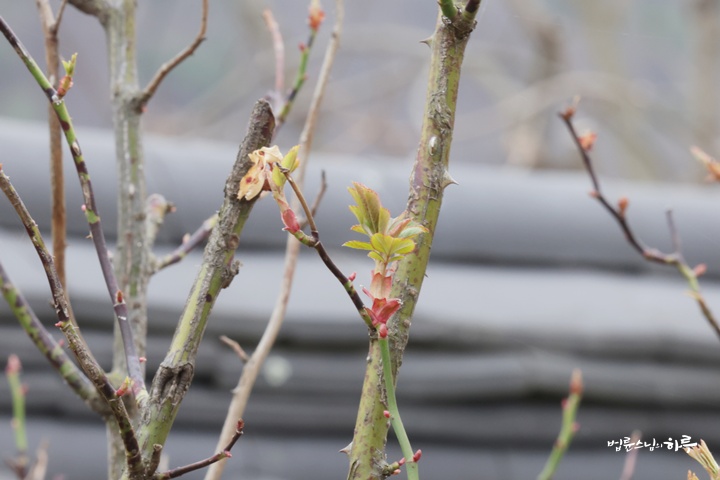
After the medical appointment, he returned to Dubuk Retreat Center around sunset and toured the upper mountain fields. In the upper fields, azaleas were the first to bloom, announcing the arrival of spring. Sunim picked a few azalea flowers to use as decorations for the Dharma assembly.
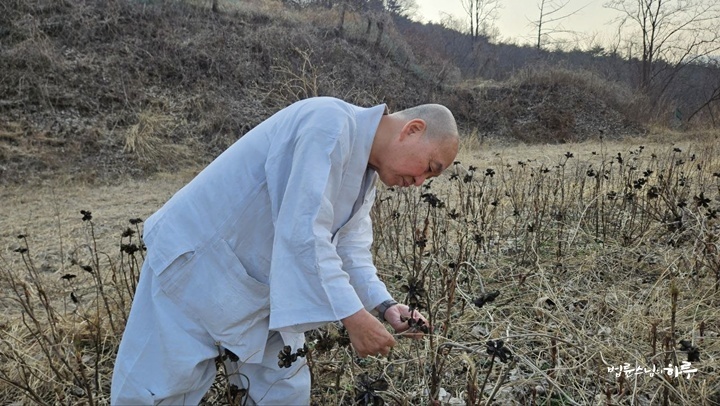
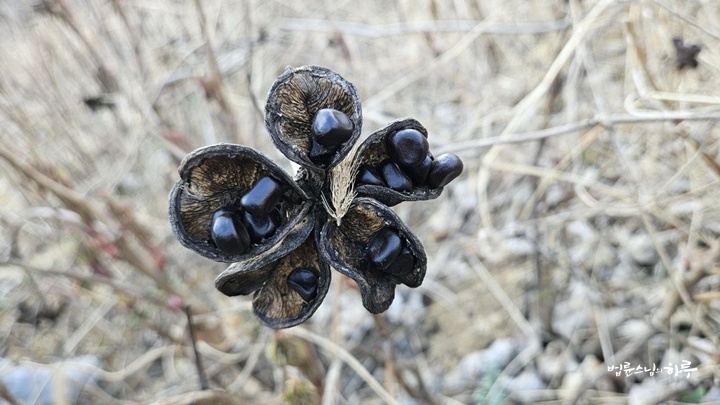
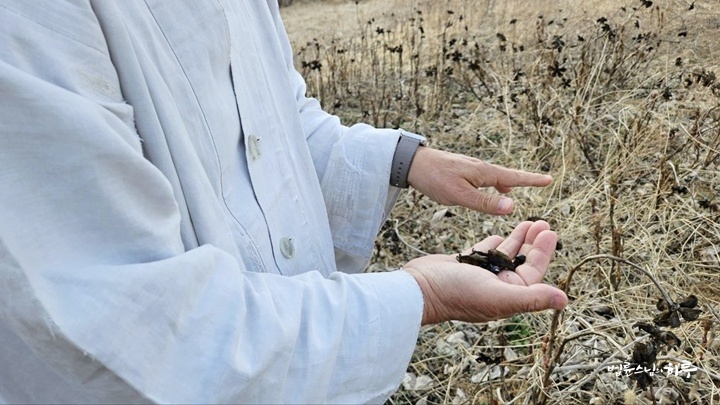
Peony flowers had been planted in the upper mountain fields several years ago, and the seeds that formed last fall were still hanging on the plants. Sunim collected some peony seeds.
After dinner, Sunim returned to the broadcasting room at Dubuk Retreat Center for the evening assembly.
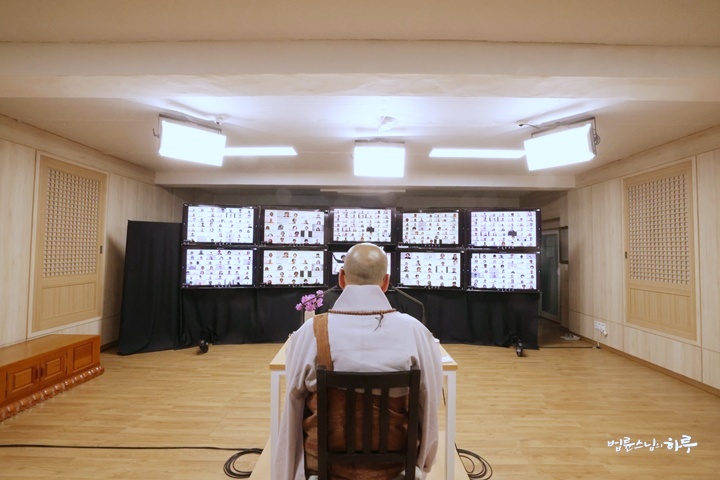
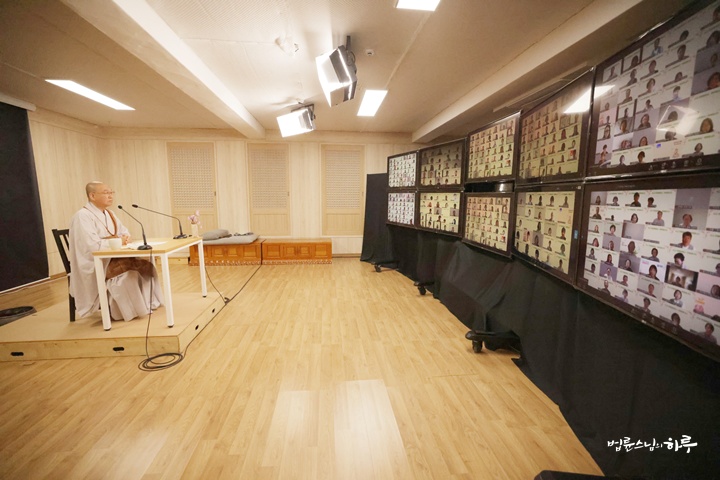
Like the morning assembly, there were introductions of new lead volunteers and guidance about leadership training. The assembly requested a Dharma talk from Sunim with three prostrations. There were four pre-registered questioners for the evening assembly.
Among them was a question about content creation using AI, which is introduced here.
How Real Are AI-Generated Videos?
“When we speak and express ourselves, it’s to convey our intentions. Therefore, what’s most important is that the listener properly understands the speaker’s intent, not the specific words used. In this regard, we don’t need to be too rigid about the Buddha’s words. Understanding is what matters.
That’s why I fundamentally support using various skillful means to help people understand, whether through AI, comics, or plays. We can’t say that the dignity of the Buddha’s teachings is diminished by doing so. However, when we use examples to facilitate understanding, various errors can occur. This is because sometimes examples are given not to help understand a fact, but to rationalize one’s own arguments.
Points to Consider When Using Analogies
For example, if I’m a man who wants to rationalize my desire to live with multiple wives instead of one, I might say, ‘Didn’t you say practitioners should learn from nature? Don’t goats and roosters live with multiple females? Therefore, my living with multiple women is natural.’ This is an example of using analogies to rationalize one’s desires, which is wrong. When explaining things simply, we must always be careful about this. While there are similarities and differences between animal behavior and human life, this becomes a case of inappropriately invoking natural laws to rationalize one’s desires.
When arguing that a country should have only one leader, some say, ‘There’s one sun, not two. Just as there can’t be two suns, there should be only one leader. Just as there’s one sun and one moon, a married couple should consist of one man and one woman.’ Looking at this analogy, while it’s true that there’s one sun and one moon in nature, is it appropriate to compare this to married life or political systems? This merely connects unrelated natural phenomena with social systems without any real correlation. Democracy is a system where multiple people make decisions through consensus, so using the sun as an analogy to justify monarchy or dictatorship by calling democracy unnatural is inappropriate.
In the past, when criticizing coalition politics as wrong, people would call it unnatural and insist ‘There should be one king,’ invoking the sun as justification. However, there’s no relationship between the sun as a natural phenomenon and social systems, yet people make such arguments. By the same logic, one could argue for polyandry by saying, ‘Doesn’t one queen bee have tens of thousands of drones?’ While analogies can aid understanding, without careful attention, it’s very easy to stray from the truth under the guise of simple explanation. So-called cults and deceptive teachings often contain such clever analogies, so we must listen carefully.
Recently on YouTube, there have been cases where people use AI to mimic my voice and spread false content. Fake dharma talks saying things like ‘If you place seven red beans in front of your house on the spring equinox, good fortune will come’ have been uploaded by the hundreds and are circulating. This content is completely inconsistent with what I normally say.
Until now, Jungto Society has been uploading edited videos through a few official accounts like ‘Venerable Pomnyun’s Creating a World of Hope,’ ‘Venerable Pomnyun’s Dharma Q&A,’ and ‘A Day in the Life of Sunim.’ However, there have been cases where individual YouTubers take my dharma talk videos to their channels, edit them, and upload them. This is copyright infringement. While content should be created without violating copyright laws, individual YouTubers who prioritize views continue to upload videos that infringe copyright because using Venerable Pomnyun’s name increases views and profits, making it extremely difficult to stop them all.
However, what’s happening now is completely different. This involves stealing my voice to create content for commercial purposes and spreading false information, which clearly constitutes a crime.
If an AI ‘Venerable Pomnyun’ with a voice identical to mine says ‘If you believe in Buddhism, you’ll receive blessings,’ it would be quite convincing. Here’s an actual case: Someone had an acquaintance who believed in Buddhism from a perspective of praying for blessings. One day, that person said, ‘I’m studying by listening to Venerable Pomnyun’s dharma talks these days,’ which seemed strange. When asked to share what they were listening to, it turned out to be a fake Venerable Pomnyun created by AI. When they investigated how much more of this fake Venerable Pomnyun content existed, they found it had spread enormously.
Creating manipulated and synthesized video content is a crime. While it’s relatively easier to find perpetrators in organizations based domestically, when addresses are in Vietnam or Cambodia, quick resolution is difficult despite the illegal nature of the acts. Currently, it’s reported that manipulated videos are being spread through 19 channels impersonating Venerable Pomnyun.
These illegal videos aren’t based on what the Buddha actually said but are made by exploiting the Buddha’s name. They spread false information by making absurd claims like ‘If you pray to the Buddha, your wishes will come true’ while falsely citing various sutras.
The sutras contain content where disciples ask the Buddha questions and the Buddha provides answers. Many fake videos are created in this question-and-answer format between the Buddha and disciples. When asked, ‘I’m facing difficulties, how can I escape them?’ the Buddha supposedly answers, ‘Even if imprisoned, just reciting this mantra will free you from any difficulty.’ This is precisely what fabricated sutras, or apocryphal texts, are. They spread false content while claiming it to be ‘the Buddha’s words.’
Criteria for Distinguishing Between Fake and Real
To determine whether something is fake or real, one must examine whether its content aligns well with the law of dependent origination, the Middle Way, the Four Noble Truths and the Eightfold Path, as well as the concepts of emptiness, impermanence, and non-self. If the core teachings of the Buddha are well incorporated, it’s acceptable to use methods that are slightly easier to understand, even if they differ from traditional approaches. However, if this is not the case, no matter how easy and entertaining it may be, it’s fake and requires caution and warning.
Additionally, when I listened to a video labeled as “Venerable Pomnyun Sunim,” the voice tone was almost identical to my usual speaking voice. However, the content was completely different. In such cases, one should immediately report it to Jungto Society to verify whether it’s a synthesized video, namely a deepfake, and take action to have it removed.
Being easy and entertaining isn’t inherently bad, but it always carries risk factors. While some distortions are made with malicious intent, in other cases, well-intentioned attempts to make things easier to understand through analogies can result in incorrect content, creating the risk of spreading misinformation. One must carefully examine things with this perspective in mind.
I once listened to a sermon by a pastor. He was quite well-known for his folksy and entertaining speaking style. One day, the topic was “Why only Christians receive salvation.” Many people find it puzzling that no matter how kind someone is or how many good deeds they do, they cannot receive salvation unless they’re Christian. However, Christians would say, “People believe in Christianity because we say you must believe in Christianity to be saved. If we said you could be saved by believing in other religions, there would be no need to believe in Christianity.”
To this, the pastor asked, “I have a son who doesn’t listen, doesn’t study well, and is a troublemaker. Meanwhile, my neighbor’s son studies well, listens well, and is kind. If I were to die and had to leave an inheritance, would I give it to my troublemaking son or to my neighbor’s kind son?” The congregation erupted with “Hallelujah!” In our human world, no matter how much trouble a child causes, we leave our inheritance to our own child, not to the neighbor’s child. Using this analogy, he explained that “you must believe in Christianity to be saved.” It really hits home, doesn’t it? How easy is that to understand!

The Content You Want to Convey Must Be Truthful
The problem here is that it presupposes that God has the same mindset as humans, who are full of obstinacy and greed. It equates worldly humans with the divine God. While listening to this, I thought to myself, ‘Oh my, do you think God is like you?’ Trying to make things easy to understand can sometimes lead to tremendous errors. This doesn’t mean things should be difficult, but rather that the content you want to convey must be truthful.
Just as when we compare animal and natural ecology to humans and ask, ‘Can what applies to animals be applied equally to humans?’ – such errors occur when we equate the mindset of humans consumed by possessiveness with God’s mindset. If that were the case, then that God would be at the same level as me, and wouldn’t be worthy of faith.
Once during a Dharma Q&A session, an elderly woman said she goes to the temple every day to pray for her granddaughter to pass the entrance exam. However, her granddaughter attends church. She prays to Avalokitesvara Bodhisattva every day, but the grandmother thinks her prayers won’t be answered because her granddaughter goes to church. So I smiled and said, ‘Do you think the compassionate Avalokitesvara Bodhisattva is like you, grandmother? We divide people into “my daughter,” “Buddhist,” “Christian,” but would the infinitely compassionate Avalokitesvara Bodhisattva think with such narrow views – excluding this person because they go to church, including that person because they go to temple?’ While we pray believing that Avalokitesvara Bodhisattva is a being greater than us, we think of the Bodhisattva as being at the same level as ourselves. If the Bodhisattva is at the same level as me, then the Bodhisattva has no ability to grant wishes. If the Bodhisattva is not at my level, then what I want and what I worry about become meaningless. This is precisely the contradiction we carry. I hope you’ll always be mindful and carefully observe to avoid falling into wrong perspectives.”
“Yes, I understand well. Thank you.”
As this was a Dharma propagation assembly, there were various suggestions related to the current responsibilities of the lead volunteers.
I’ve just taken on the role of Group Facilitator for the first time. Without sufficient preparation, I immediately had to lead the opening ceremony and Dharma assembly. The proceedings weren’t smooth, and my self-esteem dropped significantly. In the process, anger arose, and I even thought about letting go of everything. Looking back, I realized these difficulties might have occurred because everyone was adapting as all positions rotated at once. I’d like to suggest rotating positions sequentially and establishing central locations for joint management of practice activity materials rather than having individuals manage them.
I’m curious about why new general members don’t settle into group activities and why group members have low participation rates.
At main temples and other places, there are times when we put donations in the offering box. I’m curious why donations are anonymous rather than named. Since cash isn’t commonly used these days, it would be good to attach QR code stickers to donation envelopes.
After finishing the evening Dharma propagation assembly, Sunim rested and concluded the day’s activities.
Tomorrow, after traveling to Seoul, he will receive a medical checkup at the hospital and hold meetings with various divisions.