
Mar 8, 2026 – Assembly of Dharma-Spreading Practitioners
Hello. Today is the day when Jungto Society’s leading members gather in an online space to share and propose ideas about Jungto Society’s overall projects at the Assembly of Dharma-Spreading Practitioners.
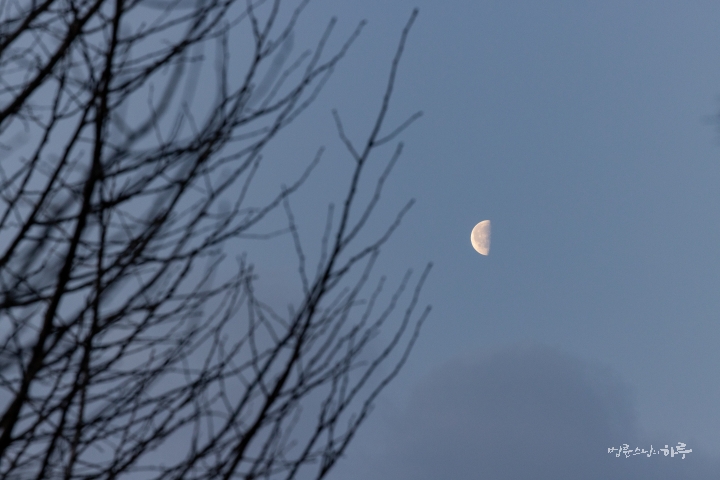
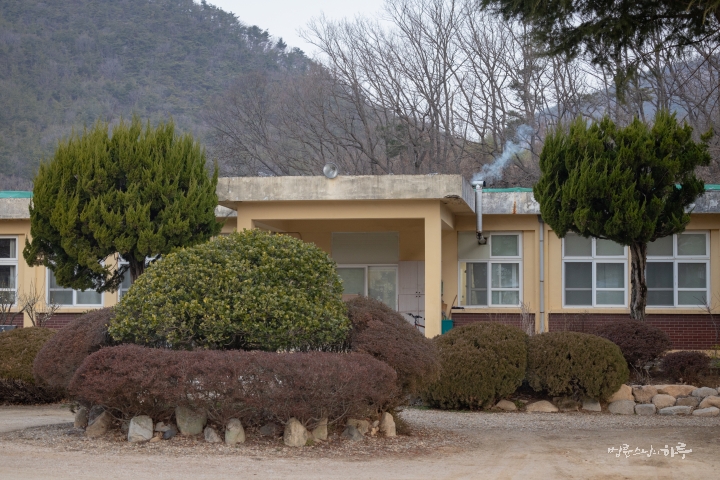
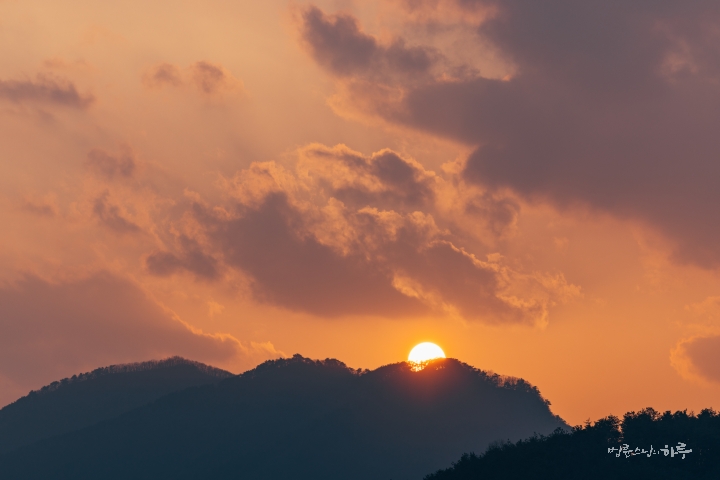
After completing morning practice, Sunim set out at 8:20 AM to survey sites for establishing a memorial park. He toured Jeongjigol (정지골), Wolpyeong (월평), and Wolsan-ri (월산리) in sequence for about two hours before returning to Dubuk Jungto Retreat Center (두북수련원).
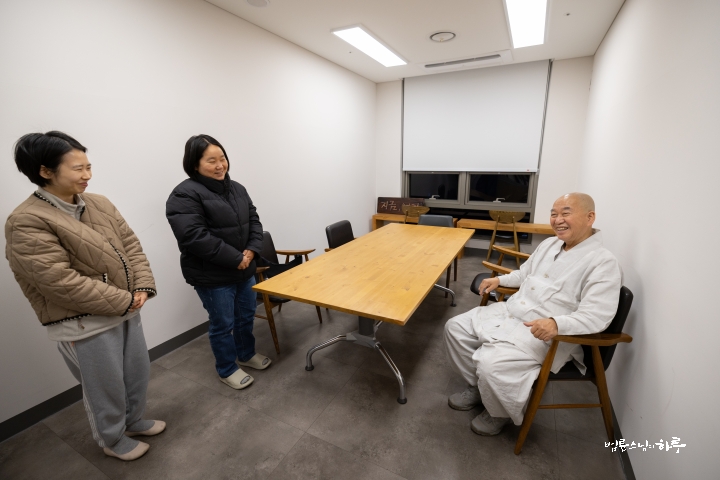
At 11:30 AM, Sunim’s nephew came to visit with his daughter. They enjoyed tea and conversation for a while.
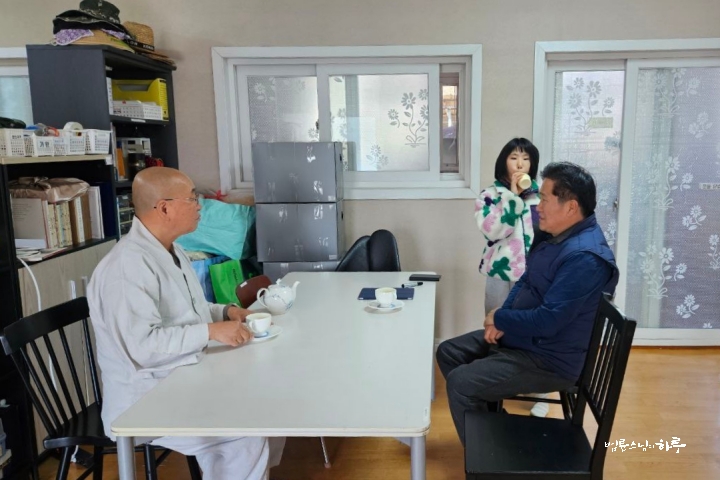
After tea and taking a commemorative photo together, Sunim headed to the broadcasting room to attend the Assembly of Dharma-Spreading Practitioners (전법행자대회) starting at noon.
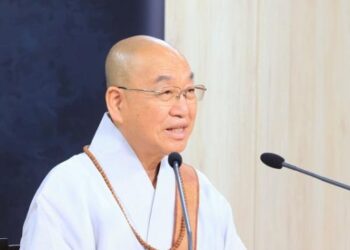
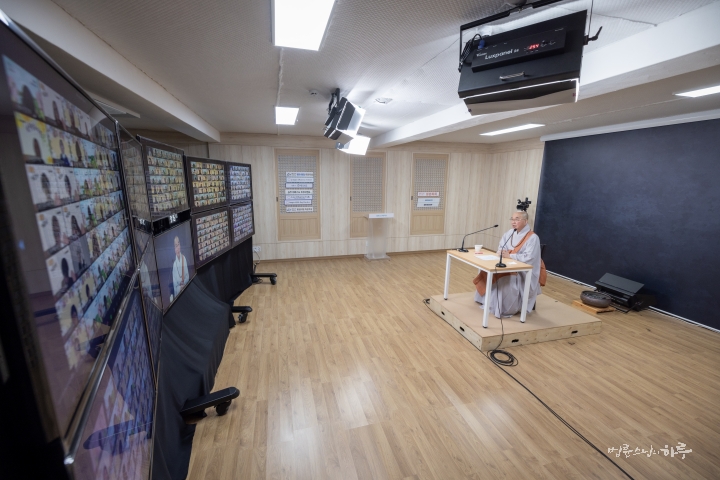
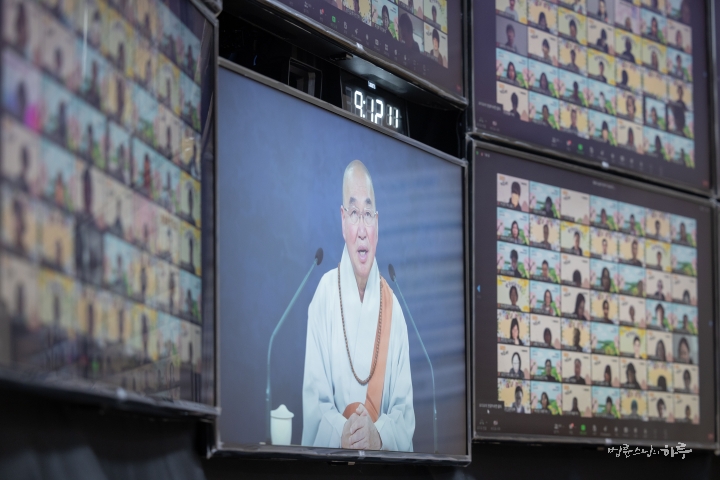
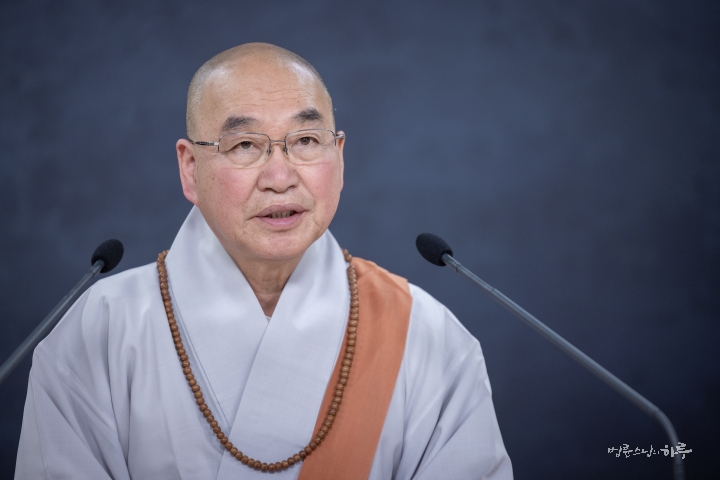
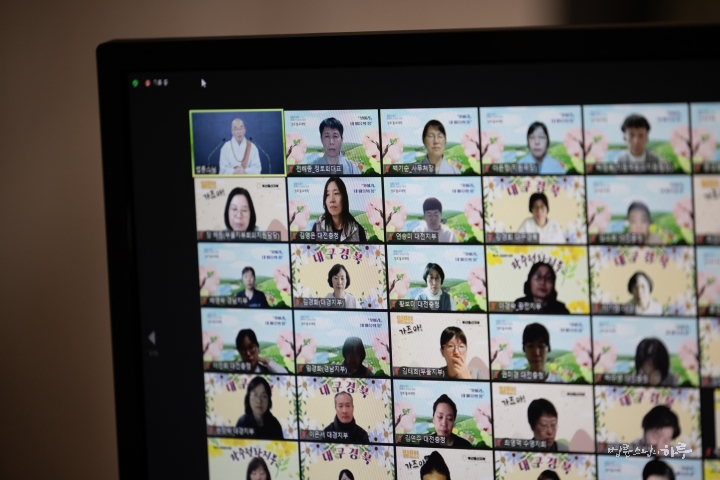
The Assembly of Dharma-Spreading Practitioners began with about 2,000 leading members joining the video conference. After the assembly requested the Dharma from Sunim with three prostrations, Sunim gave the opening Dharma talk.
Sunim emphasized that Jungto Society’s leading members should be Balsim Practitioners (발심행자) who dedicate themselves to practice and spreading the Dharma, while also being Korean Minutemen for Peace and Unification ready to act anytime to protect peace on the Korean Peninsula.
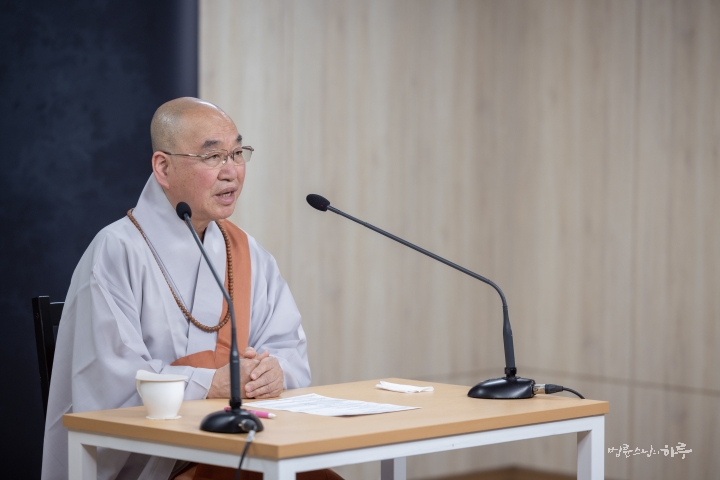
“Today is a day to receive comprehensive reports on what we have accomplished over the past six months, one year, or even three years, to ask questions, and to share opinions on how we should proceed for the next three years.
You are participating here today with two qualifications. One is as a leading member for spreading the Dharma, and the other is as a Korean Minuteman for Peace and Unification (통일 의병). Jungto Society was established with two goals: to realize the Buddha’s correct teachings in this land, and to achieve peace and unification without war ever again on this land. Therefore, you have two qualifications and duties: the role of a leading member spreading the Buddha’s correct teachings, and the role of a Korean Minuteman protecting peace without war and achieving unification, our nation’s long-cherished wish.
Not Everyone Who Attends a Temple for a Long Time Becomes a Practitioner
First, Jungto Society is a community of practitioners. Therefore, as leading members, you must clearly maintain your position as practitioners. The Buddha recognized both monastic practitioners and lay practitioners from the beginning. He established the fourfold assembly (사부대중) consisting of bhikkhus (비구 : male monastic practitioners), bhikkhunis (비구니 : female monastic practitioners), upasakas (우바새 : male lay practitioners), and upasikas (우바이 : female lay practitioners). However, as time passed, the Sangha gradually became centered around monastics. Lay practitioners became mere believers, and monastic practitioners transformed into priests, turning the practice organization into a religious organization.
To overcome this trend, Mahayana Buddhism (대승불교) established a new Sangha organization centered on those who vowed to become Buddhas—’bodhisattvas’—transcending the distinction between monastic and lay. While Theravada (소승불교) has sravakas (성문승) and pratyekabuddhas (연각승), Mahayana newly defined itself as consisting of the bodhisattva vehicle. This is how Mahayana Buddhism arose, organizing the Sangha with people who practice and implement the Buddha’s correct Dharma regardless of whether they are monastic or lay. However, as time passed, even Mahayana Buddhism tilted back toward being monastic-centered, with monastic practitioners becoming a priestly class who pray for blessings and conduct rituals, while lay practitioners became believers who pray for blessings.
Therefore, Jungto Society returned to the Buddha’s original teachings, establishing a community of practitioners with the idea that becoming a practitioner is what matters, regardless of whether one is monastic or lay. In this new era, just as discrimination based on gender and class must disappear, discrimination between monastics and laypeople must also disappear. Jungto Society is a new Sangha composed of people who have eliminated such discrimination and aspired to become Buddhas. Therefore, to become a member of Jungto Society, one must be a practitioner, not merely a Buddhist believer. Only those who consistently maintain their personal practice immediately upon waking each morning and continue their 100-Day Practice, 1000-Day Practice, and 10,000-Day Practice can become members of Jungto Society.
Furthermore, one can truly be called a member of the Sangha only when they also take on the role of widely spreading this wonderful Buddha Dharma. In the past, only monks spread the Dharma while believers only prayed for their own blessings. However, we are not believers but leading members who are practitioners. Practitioners have the responsibility to spread the Dharma. Even if we cannot fully practice and demonstrate the Buddha’s Dharma completely, we must at least understand and practice it. Moreover, we must develop the capability to conduct the Jungto Dharma School, which was created to help people learn the Buddha Dharma.
Those who consistently attend Weekly Dharma Assemblies for their own practice while receiving facilitator training to guide people to the Buddha Dharma become leading members. Leading members must develop the capability to conduct Jungto Dharma School so that others can take refuge in the Buddha’s Dharma. This cannot be achieved simply by attending a temple for a long time, doing a lot of volunteer work, or making many donations. One must consistently maintain personal practice, broaden their understanding of the Dharma, and receive training to conduct Jungto Dharma School.
Especially those who facilitate Jungto Dharma School (정토불교대학), Sutra Course (경전대학), or Happiness School must practice diligently themselves, as they are teaching the Dharma to others. It is inappropriate to tell others to practice diligently while not practicing oneself, or to tell others to study while lacking understanding of the Dharma oneself. Therefore, diligent practice is a fundamental obligation. One must also consistently participate in various retreats. Through these activities, you can say that you have qualified to participate here today as leading members. Of course, as you age, you may feel it difficult to fulfill the role of spreading the Dharma. In such cases, you can return to focusing more on your personal practice. However, while you still have the capacity to facilitate Jungto Dharma School, you should actively spread the Dharma.
Why We Must Renew Our Resolve as Korean Minutemen for Peace and Unification
Second, you have attended this gathering as Korean Minutemen for Peace and Unification (통일 의병 : KMPU) of Jungto Society. KMPU members must hold the conviction that war must never occur on the Korean Peninsula under any circumstances and must train to be ready to act whenever necessary. While KMPU normally trains once a month, we have resolved to engage in minutemen activities to preserve peace during emergencies. However, as KMPU activities have shifted to being primarily online, this resolve has gradually faded. Despite the very high tensions on the Korean Peninsula, our ability to act is limited, and it seems the identity as KMPU is gradually being forgotten.
Of course, when the threat of war on the Korean Peninsula heightened during Trump’s first term in 2017, over 10,000 KMPU members gathered at Gwanghwamun (광화문) with one heart to hold an anti-war rally to preserve peace. Also in 2024, we held a Ten Thousand People’s Dharma Assembly for peace at Jangsu Jukrim Temple (장수 죽림정사). At those times, KMPU members demonstrated high determination and solidarity.
So while it’s good to meet online once a month as we do now, going forward we need to gather offline whenever possible to train and review our roles. This is because the current global situation is very unstable. Following the Ukraine war, with the addition of the Middle East conflict, wars continue in Europe and the Middle East. Since World War II, major powers have refrained from invading neighboring countries according to international agreements, but now they increasingly disregard international agreements and invade other countries’ sovereignty when it doesn’t suit their interests. If this trend continues, the possibility of major powers like Russia, the United States, China, and India threatening neighboring countries and waging war according to their own interests will only increase. Weren’t World War I and II also triggered by Germany and Japan invading neighboring countries? The Korean Peninsula is particularly at risk with tensions between South and North, and there’s danger that the China-Taiwan conflict could spill over to the Korean Peninsula. Also, as we depend on the United States, there’s a possibility of being drawn into U.S. involvement in conflicts. While the risk of war has decreased somewhat with the new administration, the surrounding environment continues to worsen. Therefore, KMPU members must be more vigilant in monitoring global affairs and the situation around the Korean Peninsula. And we must further strengthen our determination and resolve to preserve peace.
You have come here as Tongil Euibyung (Korean Minutemen for Peace and Unification), ready to carry out any mission immediately when called upon. While participation in Tongil Euibyung (통일의병) is voluntary, once a decision is made, you must move swiftly like soldiers. The term ‘byung (병: 兵)’ here doesn’t carry the negative meaning of harming others. It means that once a decision is made, you must act promptly rather than debating whether it’s right or wrong. Even if you have objections, you should act first and raise issues later. It’s not desirable to hesitate and lose focus by arguing beforehand. Although our numbers may not be large, such training is necessary to maintain stability and take action when a crisis strikes the Korean Peninsula. Of course, we cannot achieve this with our strength alone. Many people must join us, including other civic organizations and religious groups. Among them, we must stand at the forefront and play a central role.
Those of you gathered at today’s Lead Volunteer Assembly (전법회원) are here both as leading members and as Tongil Euibyung. As leading members, you should practice diligently according to the Buddha’s correct teachings to become free and happy individuals, and share this wonderful Dharma with others, guiding more people to freedom and happiness through Jungto Dharma School, Sutra Course, Awakening Retreat, and Happiness School. As Tongil Euibyung, you must safeguard peace on the Korean Peninsula where we live and protect our people and nation. I hope all of you will clearly recognize this responsibility.
There will be many reports today. Given the extensive activities of Jungto Society and the limited time for reporting, it’s difficult to grasp all the details, and with time constraints, it’s not easy to fully exchange opinions. If you feel this way, please suggest in the post-event evaluation survey: ‘We are willing to dedicate more time, so please extend the operating hours to allow for sufficient reporting and opinion sharing.’
Throughout society, there is a growing trend toward resident autonomy and direct democracy through online platforms. Political parties also emphasize the importance of party members’ opinions, advocating for direct voting and one person, one vote. I believe this trend has some excessive aspects and side effects. As hardline supporters dominate parties, rational cooperation between ruling and opposition parties becomes difficult, and only confrontation is emphasized. When leadership is swayed by the demands of hardline supporters and cannot lead the party rationally, this represents populism, a dangerous element of democracy.
Nevertheless, the most important thing is that citizens’ opinions must be properly reflected in running the country, and party members’ opinions must be properly reflected in running the party. I agree with this principle. However, the side effects that emerge in the process are issues that need to be improved in the future. From this perspective, I hope today’s Lead Volunteer Assembly, scheduled for about six hours, will proceed well.
Finally, I would like to express my gratitude to all the volunteers who worked hard during the three years of the First 1000-Day Practice, including the former President of Jungto Society, former Secretary-General, former division heads, and many other volunteers. I also ask those who have taken on new roles during the Second 1000-Day Practice to continue their dedicated efforts for the next three years.”
After Sunim concluded the opening Dharma talk, the leading members declared the opening of the assembly and began the main session. They listened to evaluation and financial reports on nationwide projects conducted during the First 1000-Day Practice period, followed by a Q&A session. Next, they presented the business plan for the Second 1000-Day Practice and held another Q&A session.
After a short break, they conducted division-level discussions on the topic “How will I participate in the activities within the business direction of the Second 1000-Day Practice?” Finally, after sharing the results of each division’s discussion, the assembly concluded with closing remarks from the Head of the Dharma Teacher Group.
While the Lead Volunteer Assembly was in progress, Sunim departed from Dubuk Jungto Retreat Center (두북수련원) at 2 PM and headed to Seoul. After driving on the highway for 3 hours and 30 minutes, he arrived at the Jungto Social and Cultural Center in Seoul (서울 정토사회문화회관) at 5:30 PM.
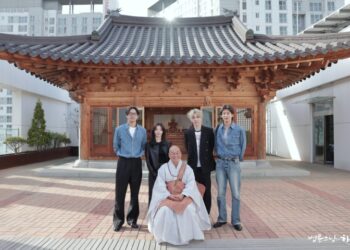
Upon Sunim’s arrival, JTS volunteer Shin Ye-seul (신 예슬), who had returned from Bhutan yesterday, and Kwak Su-kyung (곽 수경), who is scheduled to be dispatched to Bhutan soon, came to greet Sunim. Sunim encouraged the JTS volunteers working hard overseas and took a commemorative photo with them.
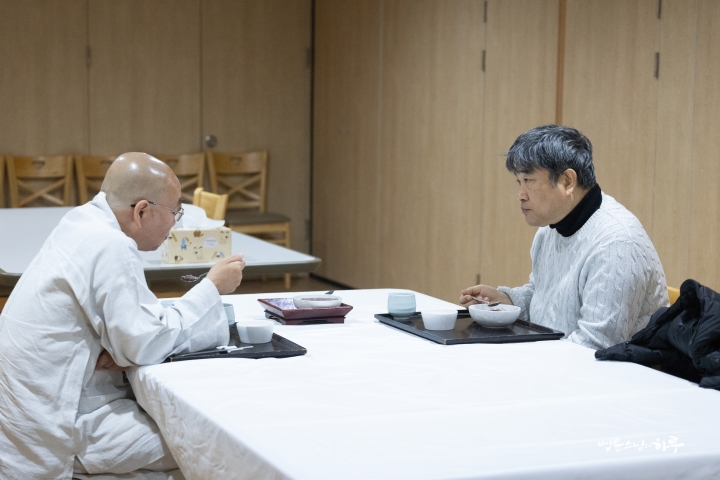
As the sun set, at 6 PM, Dr. Kwak Su-jong (곽 수종), who runs the Lien Economic Research Institute, visited Sunim and they had dinner together. They discussed many topics about how Korea’s economy could grow stably amid the increasingly chaotic international situation, including the potential war between the United States and Iran.
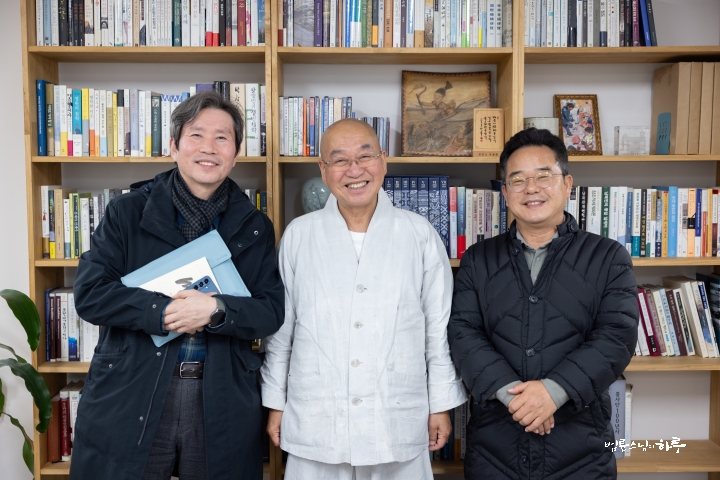
Subsequently, at 9 PM, Democratic Party members Lee In-young (이 인영) , former Minister of Unification, and Min Byung-duk (민 병덕) visited Sunim. They discussed various topics including how inter-Korean dialogue could resume to establish peace and lay the foundation for unification, and what role politics should play for peace on the Korean Peninsula. The meeting concluded after these discussions.
Tomorrow, Sunim will move to Incheon Airport (인천공항) early in the morning to depart from Korea, and will travel to Sri Lanka via Shanghai all day. Over the next four days, he will inspect cyclone damage recovery project sites in Sri Lanka and carry out food distribution work to affected households.