
February 20, 2026. Day 2 of Jeongcho Prayer (정초 기도), Hospital Visit, Friday Dharma Q&A
Hello. Morning has dawned at Dubuk Jungto Retreat Center (두북정토수련원).
Today is the second day of Jeongcho (New Year’s) Prayer. After completing morning practice and meditation, Sunim took his seat in front of the camera in the broadcasting room at exactly 10 AM for Jeongcho Prayer.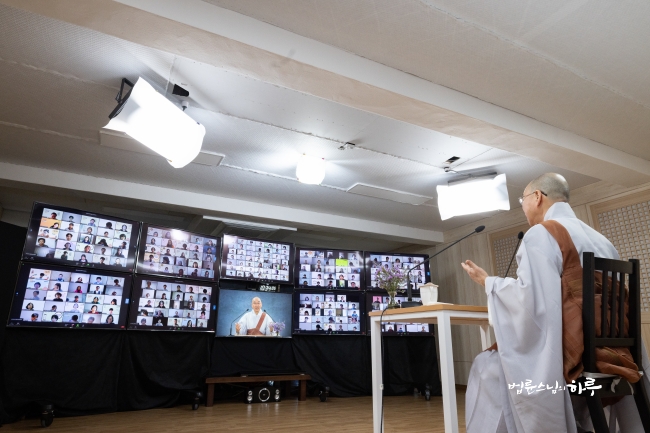
Jungto Society members who entered the video conference room requested a Dharma talk from Sunim before beginning Jeongcho Prayer. On this second day of Jeongcho Prayer, Sunim began his Dharma talk by discussing the attitude of preparing one’s mind with purity before prayer and the most important element in prayer – ‘earnestness.’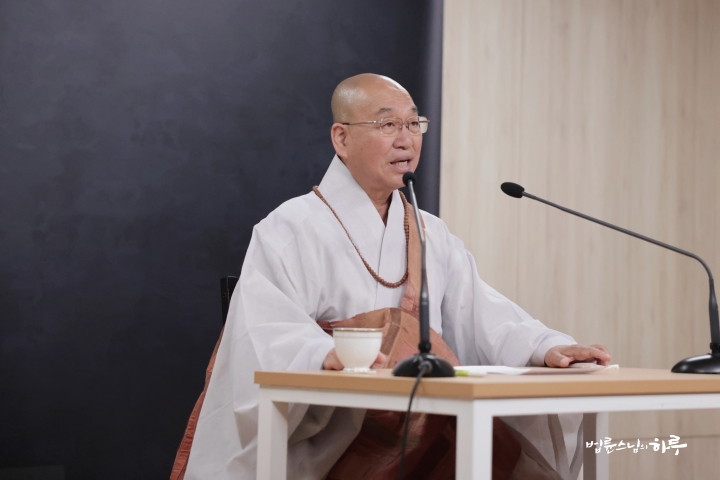
“Today is the second day of Jeongcho Prayer. In the old days, people would first perform ritual ablutions before praying. First, they would cleanse their body. Second, they would change their clothes. The most important thing is to purify the mind, and as a preparatory practice for purifying the mind, they would first cleanse the body. Not only that, they would clean the place where they pray – whether under a tree, in a Dharma hall, or in a room. This is called ‘purifying the practice ground.’ First, they would thoroughly clean the practice ground, then cleanse the body, put on clean clothes, and pray with utmost sincerity.
Earnestness Creates Miracles
The most important element in prayer is earnestness. When people are that earnest, they even give up eating meat they love, and married people abstain from marital relations during prayer. They said such acts would ‘bring impurity.’ It’s not that these acts themselves have any particular influence, but rather that to achieve what you desire, you must be willing to give up what you enjoy. How earnest must one be to give up such things? That’s what this means.
That’s why people don’t pray in comfortable homes but go deep into the mountains, eat very simple food, and practice while sleeping uncomfortably under trees or rocks. This doesn’t mean prayer works better under such harsh conditions. Praying in such places itself shows how earnest one’s wish is. This can be called the preparatory attitude for prayer. The core of all this is earnestness.
Then how earnest should one be? Master Seosan (서산대사) stated in his book, ‘Seon-ga-gwigam'(선가귀감, The Mirror of Seon) that ‘one should be as earnest as a newborn seeking mother’s milk.’ When a baby is hungry and seeks mother’s milk, there is no other thought except the desire for that milk. It’s just that one single thought. Sometimes it’s compared to ‘a thirsty person seeking water, a hungry person seeking food,’ or ‘a cat catching a mouse.’ This means one must concentrate and gather one’s sincerity to that degree.
This earnestness is said to create miracles because it makes possible what would be impossible by common sense. But miracles don’t exist separately. Everything happens for a reason, but when something that couldn’t happen through ordinary means comes to pass, people call it a ‘miracle.’ With earnestness, one can achieve miracles. 
Independence fighters achieved miracles because they had such desperate determination that they were willing to sacrifice their lives solely for the independence of their country. Successful businesspeople also achieved miracles because they focused entirely on their business without caring about eating, dressing, sleeping, or socializing with friends. To accomplish anything, you must concentrate. When students focus completely on their studies, they achieve results that can be described as miraculous given their abilities. That’s why desperation is important.
Desperation means gathering your mind in one place. In the Noble Eightfold Path (팔정도), this desperation is called ‘right mindfulness (정념).’ Your mind must be firmly concentrated in one place to maintain clear awareness. Being pulled by thoughts arising from various desires or memories from the past, wondering ‘should I do this or that,’ is not desperation but distraction.
However, many of you are often distracted whether you’re doing prostrations, practicing meditation, or chanting. That’s why you always ask questions like ‘I keep having various thoughts.’ Of course, having various thoughts is natural. What’s important is not being dragged around by these thoughts but staying focused on your set goal. When contemplating a hwadu (meditation topic), you must concentrate solely on the hwadu. In modern terms, you have to be totally ‘locked in’. The same applies when chanting or doing prostrations.
If you’re thinking ‘my legs hurt,’ ‘it’s too cold,’ ‘I’m sweating,’ ‘how long do I have to do this,’ ‘is it still not over,’ then you’re indulging in delusions. Whether your legs hurt, various thoughts arise, or you’re sweating, you should let all of that go and do prostrations with sincere devotion and desperate determination. Your mind must be firmly concentrated in one place. This is what we call desperation.
Sincerity Moves Mountains
When someone tries to do something with pure and desperate determination, people’s hearts naturally feel compelled to help. When we say ‘a miracle happened,’ it’s often because someone’s desperation moved the people around them. People touched by desperate prayers and devotion will readily offer their cherished rings or favorite clothes. This isn’t deception or misleading people. When surrounding people are moved by a desperate and earnest heart, their thinking changes: ‘What’s wrong with not wearing nice clothes,’ ‘What’s wrong with not eating good food.’ They don’t help because they have money or because someone told them to. When moved by desperation, the desire to help naturally arises: ‘I must help this person,’ ‘I must make sure this succeeds.’ 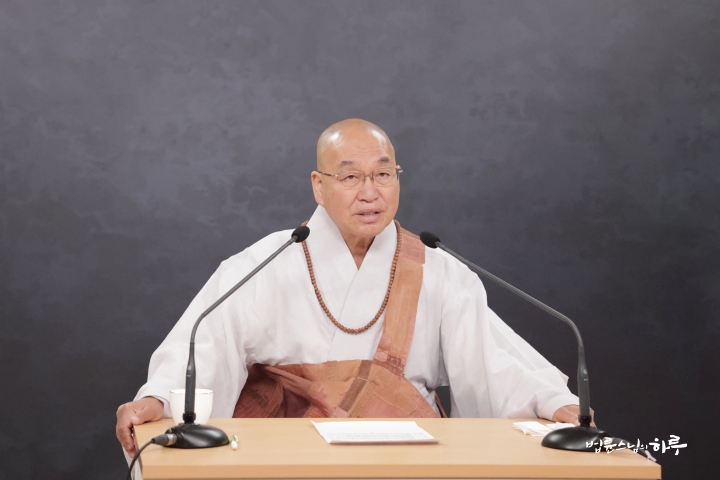
Jungto Society has reached where it is today because of the desperation of the young people who were there at its founding. At that time, we had a desperate feeling that ‘Korean Buddhism cannot continue like this; it must change.’ Within Buddhist circles, monks frequently fought over temples, and newspapers daily reported on immoral monks, making Buddhism a laughingstock. If we had cursed and criticized those monks, it would have led to bigger fights. The young people who founded Jungto Society made a vow with desperate hope: ‘Let us at least understand and practice Buddha’s teachings correctly.’ This desperation brought Jungto Society to where it is today. The same applies to our desire for peace on the Korean Peninsula.
‘By any means, there must be no war on this land. We must never again experience that horrific war where countless people died, were separated, and injured, where lifelong savings burned to ashes. We must preserve peace on the Korean Peninsula.’
We must strengthen this resolve. When we have such desperation, neighboring countries will also help our peace efforts. Moreover, if national leaders appeal and act with such desperation, people will be moved and the entire nation will come to desire peace on the Korean Peninsula.
When Jungto Society first began helping North Korean compatriots, South and North Korea could be considered enemies. Government policy and public sentiment were very hostile toward North Korea. However, seeing North Korean compatriots starving to death, we shed tears and made desperate vows.
‘We must save even one more person. We must truly think of them as our siblings and parents, stop everything else, and save them despite any danger.’
This was our mindset. People around us were moved not because they pitied North Korean compatriots, but because they saw our desperate devotion and actions. As one person participated, then two, people in society gradually changed. Eventually, we were able to change government policies that seemed unchangeable.
Creating miracles requires exactly this kind of devotion. Living in peaceful times today, we seem to lack such desperation. Even when praying, that desperation seems to have disappeared. When trying to change bad habits, if you have the desperation of ‘I absolutely must change this,’ you can change anything. To do so, you must overcome difficulties even when major obstacles arise.
However, when we face obstacles or trials, we tend to give up. We think, ‘Is there really anything worth going to such lengths for?’ or ‘Will the world change if I don’t eat what I want?’ This is why we can’t create personal change. To achieve any personal transformation, you need to approach it with desperate determination, as if completely transforming your body and soul, as the saying ‘hwangol-taltae’ (환골탈태 換骨奪胎 -omplete transformation) suggests. I’m not saying it’s bad to eat what you want, sleep when you want, or go where you want. I’m saying that anyone seeking change needs this desperate attitude. Change is difficult because we lack the desperation to pursue it.
If you truly think you must quit smoking, you must quit immediately. Even if the desire to smoke feels like it’s killing you, you mustn’t smoke. If your thought that ‘I must quit smoking’ is desperate, then do it. But when the desire to smoke arises, your thinking changes: ‘What’s the point of living one more year without smoking? I might as well die sooner.’ This is the major obstacle to changing habits. At this point, people without desperation usually succumb to the obstacle, but those with desperation overcome and conquer such thoughts.
When praying, you need the devotion and desperation to abstain from favorite foods and marital relations, bathe in cold water, go to the mountains, and even fast. This doesn’t mean that doing these things will make your wishes come true. It’s about ‘how desperate must they be to go to such lengths?’ People are moved by the thought, ‘How desperate must their goal be for them to go this far?’ While religiously we express this as ‘receiving God’s grace,’ ‘receiving Buddha’s blessing,’ or ‘a miracle happened,’ it’s actually the result of the desperate actions of those who pray and practice. Because this desperation moves people and creates miracles, it has been said since ancient times that ‘utmost sincerity moves even heaven.’ While we say heaven creates miracles, that heaven is actually people. 
This earnestness also affects our bodies. When earnestness is profound, changes occur in our unconscious mind, and these unconscious changes influence our autonomic nervous system, which can sometimes lead to the healing of incurable diseases. Of course, it would be foolish to try to solve bacterial infections or broken bones through prayer alone. Not everything can be resolved this way. However, because earnestness can sometimes create such miracles, people facing difficulties have prayed earnestly since ancient times.
The fact that South Korea has achieved such economic prosperity today is also due to the earnestness of our people. It was possible because both leaders and citizens worked diligently with the earnest desire: ‘Let us also live well. Why must we live in poverty generation after generation?’ While people in Southeast Asia call it the ‘Miracle on the Han River,’ Koreans don’t consider it a miracle. This is because we know it was the result of everyone working hard together.
However, today we seem to lack the earnest desire to take one more step forward to further develop our country and help not only ourselves but also neighboring countries. The mindset of ‘I only need to live well’ has become prevalent, leading to speculation frenzies in real estate and cryptocurrency, with a strong tendency to think that making money through luck without effort is acceptable. Economic growth is slowing, social conflicts are intensifying, and signs of decline are appearing everywhere.
What we need now is earnestness to say, ‘I must be of some use’ for our own transformation, family harmony, the development of Jungto Society, the development and peace of our country, and ultimately for world peace. To achieve this, if my temper is the problem, I need to fix it; if bad habits are the problem, I need to correct them; if the mind that torments me is the problem, I need to change that mindset.
If you think you cannot fully demonstrate your abilities as you are now, this year, please cultivate the earnest desire to say, ‘I must overcome myself.’ If you maintain this earnestness and proper attitude at the beginning of the year and practice steadily, miracles will surely happen. You will hear people around you say, ‘That person has changed so much compared to before.’ Of course, I’m not saying you should do this to receive praise from others. I’m saying that such results come when you practice earnestly and gather your sincerity with devotion.
This year, let’s pray with earnest hearts and complete sincerity. Even when various thoughts arise, don’t be dragged along by them; instead, focus your mind completely. Turn off your attention to thoughts like ‘My legs hurt,’ ‘I’m sweating,’ or ‘The person next to me is noisy.’ When such things occur, simply acknowledge them with ‘I see,’ and focus solely on your prayer. I hope you will practice with this perspective.” 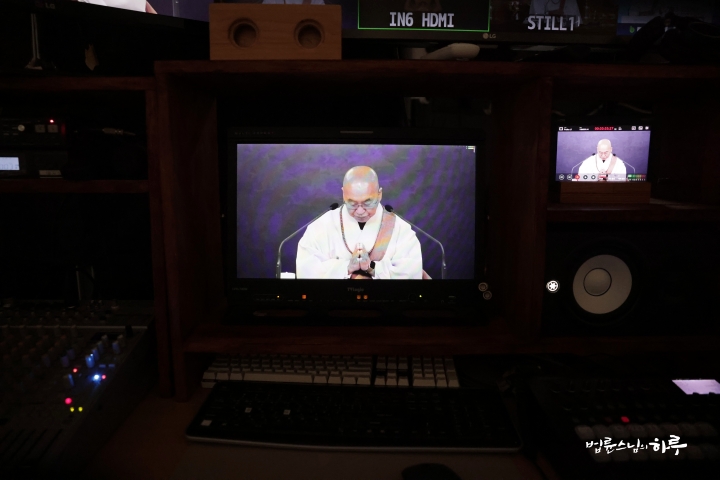
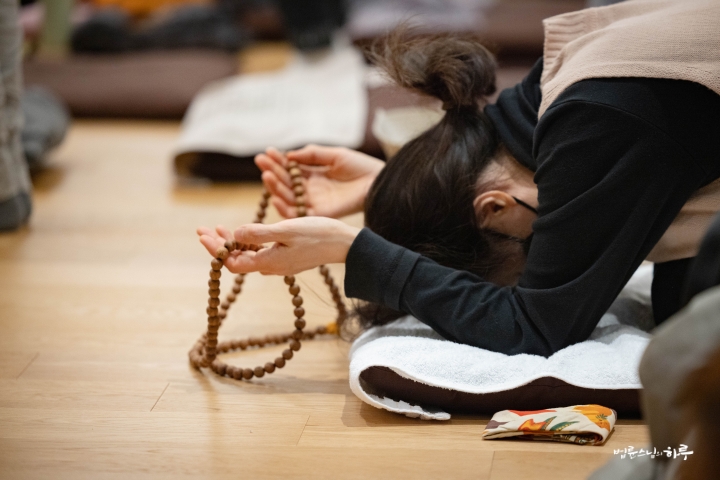
After the Dharma talk ended, everyone began the 300-bow prayer together. The live broadcast switched to the Dharma Hall at Seoul Jungto Social and Cultural Center. Led by Venerable Yusu, the resounding chanting of the assembled Sangha members echoed through the online connection. Jungto Society members watching the broadcast also rose from their seats and bowed one by one, turning their prayer beads with each prostration.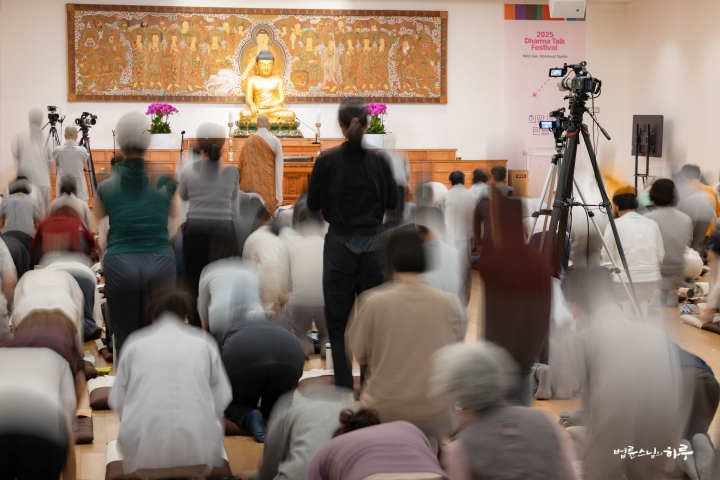
“For all the karma accumulated over countless lifetimes by beings in the six realms of existence, I now repent. May it all be extinguished, and may I practice the bodhisattva path life after life…”
With beads of sweat forming on their foreheads, participants concluded the second day of Jeongcho Prayer with the Four Great Vows.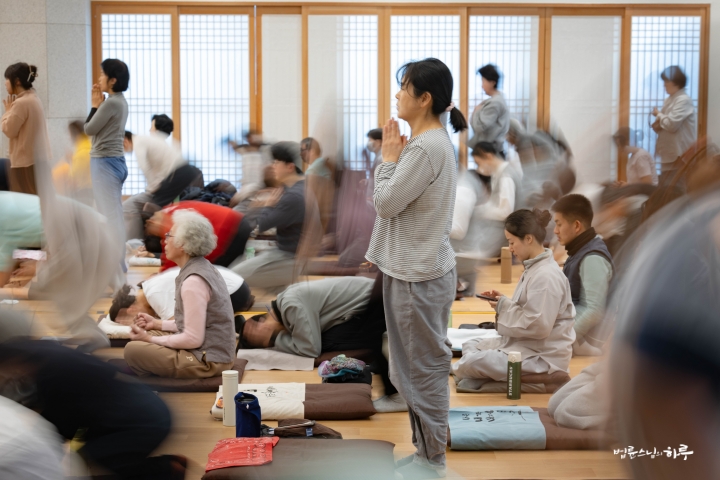
Sunim’s voice was particularly hoarse today. After the assembly, he headed to the hospital in the afternoon. He received ENT treatment in Gyeongju, then went to Busan for dental care, and in the evening received treatment to relieve pain in his neck and shoulders.
At 7:30 PM, Sunim took his place in front of the camera in the broadcasting room and began the Friday Dharma Q&A live stream. With about 3,700 people connected simultaneously, Sunim first spent about 30 minutes sharing detailed news about his recent month-long trip to India.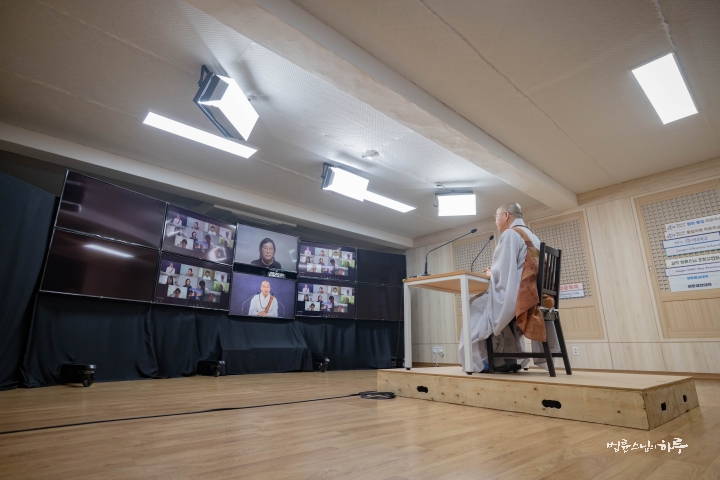
Following this, four people who had submitted questions in advance asked Sunim their questions. The dialogue continued for about an hour. The first questioner shared their story about wanting to stop their recurring violent anger.
I Threatened My Family with a Weapon Because I Couldn’t Control My Anger. How Can I Stop?
“Talk about the three poisons of greed, anger, and ignorance is abstract. You shouldn’t ask questions like that in Dharma Q&A. You need to ask directly: ‘This is my current situation, I’m in this kind of suffering, how can I escape from it?’ You need to pinpoint exactly, as if pointing with your finger, ‘This is the root of my suffering.’ Only then can you become free from it. 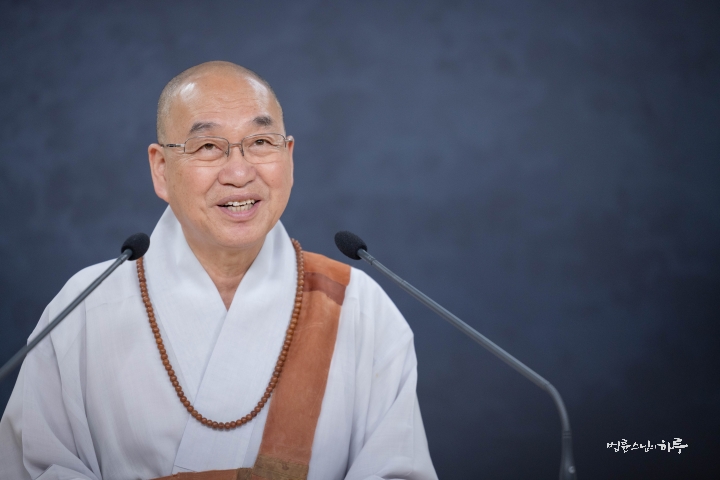
Gritting your teeth and trying desperately is better than not trying at all. But in my view, this is an amateur approach. It’s close to a practice method chosen by foolish people. Why grit your teeth and vow silence? You have a mouth to speak, so why decide not to speak? If you’re going to do that, you need a clear reason. Without a long explanation, why do you want to be silent?”
“I couldn’t overcome my anger and threatened my uncle with a weapon, and I said things that should never have been spoken. I’ve done similar things to others before. So I thought this must never happen again. This time, I wanted to stop it somehow. I wanted to change, and ‘silence’ came to mind as the method.”
“Why were you angry at your uncle?”
“My cousin had done something wrong, and I was just admonishing him saying ‘Don’t do that,’ but my uncle asked why I was speaking to my cousin that way and spoke down to me with adult authority. At that moment, I felt strongly that my sense of justice was being violated.”
“But this is also a problem arising from generational differences. This morning’s news had a story about a private school teacher. To make the school famous, they need to make students study hard and produce results showing how many got into which universities. So when students didn’t do their homework, the teacher made them do push-ups and poked their stomachs asking ‘Why aren’t you studying?’ But thinking back to when I was in school, there were much worse things. It was taken for granted that you’d get your palms hit if you didn’t do homework. We grew up learning that way from elementary school. Back then, it wasn’t called assault but ‘the rod of love.’ But as the younger generation raised issues, there was over 10 years of debate about whether this was ‘the rod of love’ or ‘school violence.’ Eventually, with the enactment of student human rights ordinances, a conclusion was reached. Violence is violence, even for educational purposes. Even with good intentions, it legally constitutes violence. So that student reported the teacher for school violence and the case went to trial – that was today’s news story.
This is the current social atmosphere. In the past, if parents hit their children, they’d say ‘It’s my child, why are you interfering?’ No one could interfere when masters beat servants, husbands beat wives, or teachers beat students. But now it’s all domestic violence and school violence. Even mothers can’t hit their children, husbands can’t hit their wives, and bosses can’t hit employees. Just 10 years ago, cases of assaulting employees frequently appeared in newspapers. By today’s standards, it’s clearly violence. In the past, persistently following someone because you liked them was called true love. But now it’s stalking. It’s a crime. Values have completely changed like this. 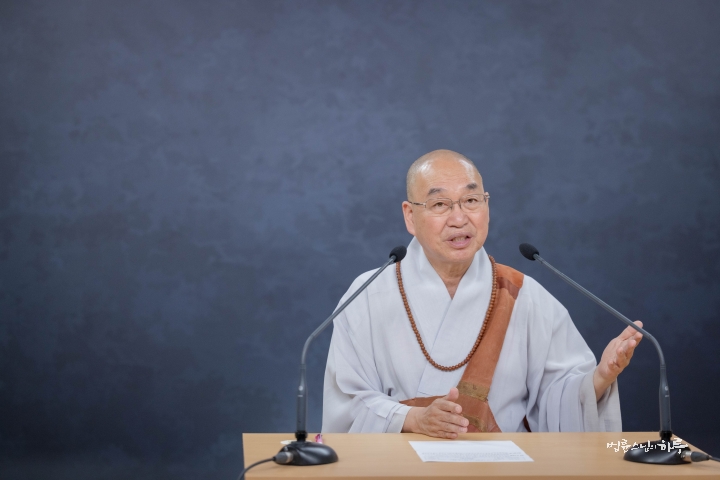
While we don’t know exactly what you said to your cousin, from your perspective, you might have thought, “Can’t I at least say this much?” However, from the parents’ perspective, it could look completely different. Just as you think you can discipline your cousin to this extent, your uncle might also think he can speak to his nephew in a certain way. But because you have such a strong belief that only you are justified and the other person is wrong, you only see your uncle’s unfairness, which triggers your rage.
Listening to your story, I can see two things. First, you have a tendency to lose control and explode when you get angry. This is dangerous. Second, you have a very strong belief that “I am right.” So we can think of two approaches to address this.
First, if there’s a risk of acting out due to inability to control momentary anger, you need to seek help from a psychiatrist. This isn’t something that can be resolved by just trying to endure it. In those moments, emotions overwhelm consciousness and you lose control. In the past, people would say someone had a “nasty temper,” but now we recognize it as a disorder of emotional regulation. Medication can help alleviate this.
Second, you need to practice letting go of the thought “I am right.” Even while doing prostrations, you should keep repeating:
“Everyone thinks differently. There’s nothing that makes me absolutely right.”
People just think differently; no one can be absolutely right. You need to let go of this attachment to being right. Only then will you feel less angry when you hear different opinions. You need to be able to accept that “That person might think that way.”
For example, look at romantic relationships. Whether it’s a girlfriend or boyfriend, each person is an independent individual. You are you, and I am I. You’re together because you like each other, but you must respect each other. When conflicts arise and violence occurs, nowadays it’s called dating violence. The penalties for this are very severe. Looking at actual court cases, there was one where a couple was having consensual sex, but when the woman said “I don’t want to, I won’t do this,” and the man argued “What are you talking about? You came here because you wanted to do this too,” it eventually led to a sexual assault conviction with prison time. That’s how strict the standards have become. In another case, when a woman said she didn’t want to continue, the man immediately said “Okay” and stopped. Even though charges were filed, the court verdict was not guilty. Why? Because he immediately respected the other person’s wishes. This is the era we live in. You can’t push forward with the thought “I am right.” If you don’t respect someone after they’ve expressed refusal, it can constitute assault.
Even in marriage, if your spouse develops feelings for someone else, it’s grounds for divorce but not a criminal offense. This is because we respect individual choice even within marriage. While you can seek damages for emotional distress if your spouse’s affair leads to divorce, it’s not subject to criminal punishment. When even the law has changed this way, it’s extremely dangerous for you to explode in anger and wield a weapon when things don’t go your way.
You asked a very good question today. If you had gone into society with this temperament, you could have encountered serious problems. The reason there are so many gun incidents in America is because people can’t control momentary anger due to mental health issues. In Korea, we don’t have mass shootings because guns aren’t available, but there are knife attacks. Recently, there have been cases of people murdering ex-partners or killing parents who opposed their marriage, resulting in life sentences.
You need to think about how these cases might apply to you. Treatment is necessary to prevent such incidents. To moderate your temperament, you should constantly repeat “There’s nothing that makes me absolutely right” while doing prostrations, and engrave Buddha’s teaching that “We are all free beings” in your heart. We can all express both our likes and dislikes freely. Buddha always taught us to “respect others’ wishes.” But contrary to Buddha’s teachings, we respond with anger when our wishes aren’t respected. In your case too, anger immediately arose when your uncle didn’t respect your wishes. While getting angry that the other person doesn’t respect your wishes, you yourself aren’t respecting the other person’s wishes either. 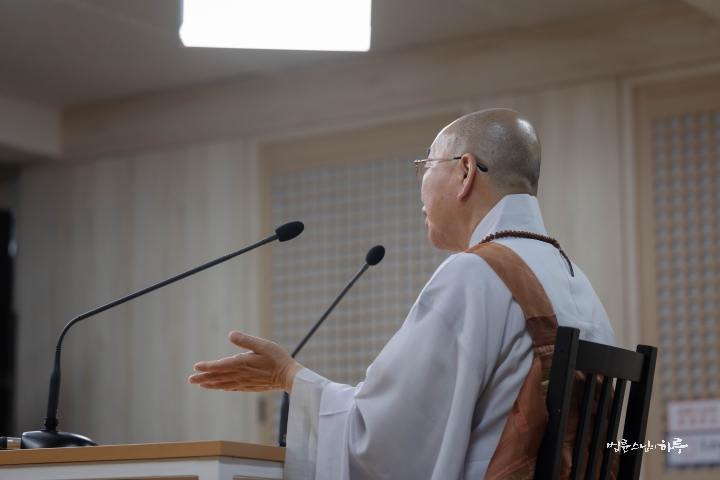
It cannot be concluded that the questioner’s inability to control anger is entirely their fault. They may have been born with excessive hormone secretion, or they may have grown up in a violent household from childhood. They may have inherited such traits as if genetically. However, what’s done is done. Lamenting is useless. Since this temperament poses a significant risk of causing great harm to the questioner in the future, they must treat and alleviate it themselves.
Even when breaking up after dating, one should say ‘Thank you for everything,’ and even when divorcing, one should say ‘We lived well together.’ Even when parting ways with a business partner, unless it was a case of fraud, one should say ‘We did good business together.’ In this way, we must acknowledge that we all have the right to be together and to part ways.
Doing 108 prostrations daily will help improve the tendency to get angry. Not speaking and keeping one’s mouth shut accumulates anger inside, which can lead to more violent and frightening outbursts. Silence is not a solution. Rather than silence, it’s better to go to the Dharma hall and do prostrations while keeping in mind ‘I have nothing to claim as right.’ An attitude of always acknowledging the other person is necessary.”
“I broke up with my girlfriend last year, but I accepted it well and endured it then. But I don’t know why it exploded like this time, and I deeply regret that I even picked up a weapon just because the other person crossed the line.”
“One mistake is okay. Because you made a mistake, you were able to realize that you have a dangerous element within you. Thanks to this, you can avoid committing such acts in the future. If you had actually wielded a weapon without going through this mistake, you could have gone to prison for more than 20 years. Don’t regret what has already happened, but use it as an opportunity to realize that you have this danger within you. Then you can prevent future disasters. If you combine medication to calm excitement with prostrations of repentance, I think self-control will be possible.”
“Thank you. I realized that even my decision to leave the situation without speaking when angry was a delusion of thinking I was right in my own way. Thank you for helping me understand this.”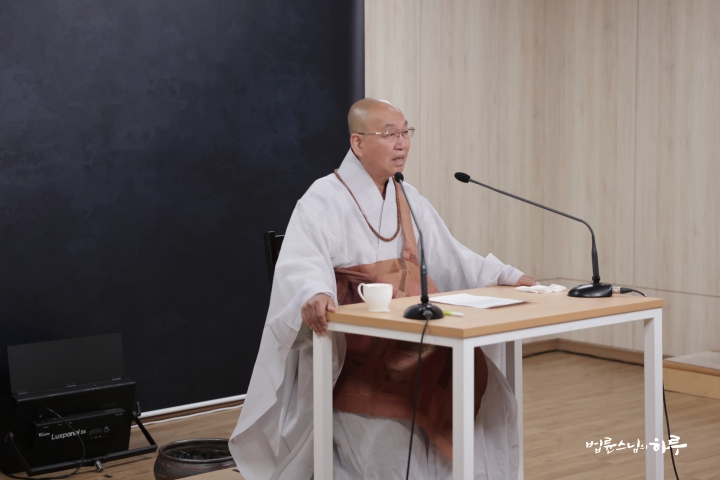
“While regret may seem like recognizing one’s wrongdoing, it’s actually an attitude of not accepting that one is capable of making such mistakes. It’s not acknowledging the fact that one can make mistakes. True repentance is thinking ‘Since I’m capable of this, I must not do it next time.'”
Questions continued to follow.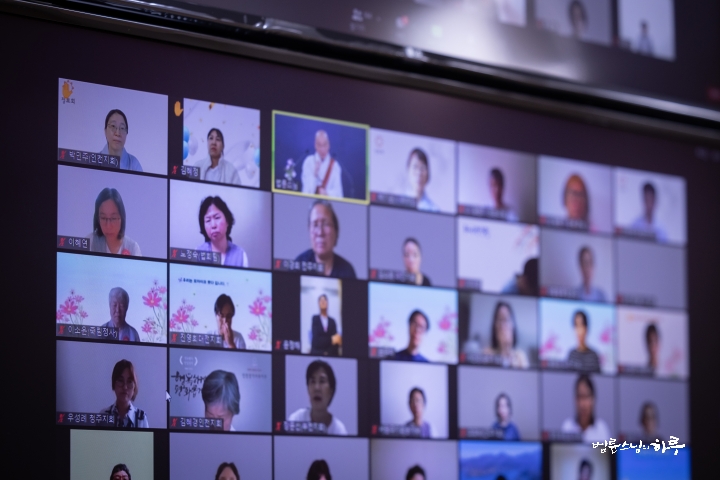
I’m in conflict with my high school senior daughter who engages in delinquent behavior. How should I deal with a child who rejects interference but demands money?
I’m undergoing depression treatment while practicing, but I’m tormented by becoming aware of my unconscious self-destructive tendencies. How can I stop these unconscious self-destructive actions?
I’m confused between the saying that there’s no enlightenment apart from the world and the instruction to become free from attraction. To what extent should I accept worldly matters and from where should I be cautious?
After finishing the live Dharma Q&A, it was 9 PM.
Today, Sunim received medical treatment at the hospital all afternoon, which allowed his body to recover a bit.
Tomorrow is the third day of the Jeongcho Prayer, when Sunim will give the closing Dharma talk(회향 법문) and complete the final practice session.