
Jan 28, 2026 – Sujata Academy 32nd Anniversary Ceremony
Hello. This is the fifth day of the 35th pilgrimage. Today marks the 32nd anniversary ceremony of Sujata Academy.
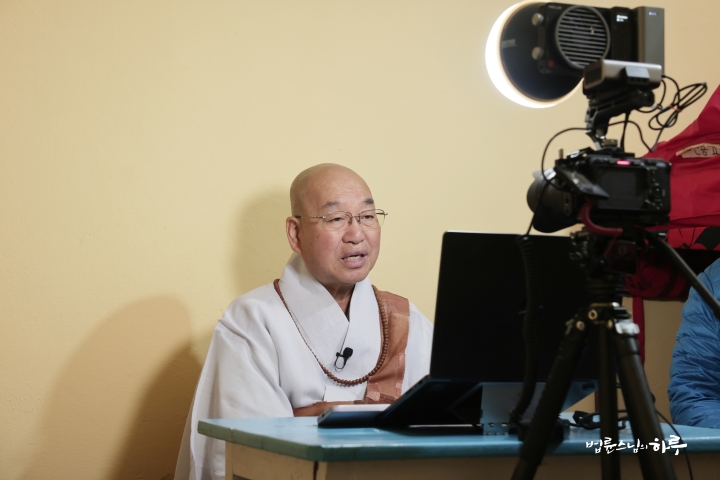
After completing his early morning practice and meditation, Sunim began the online Weekly Dharma Assembly at 6:30 AM Indian time.
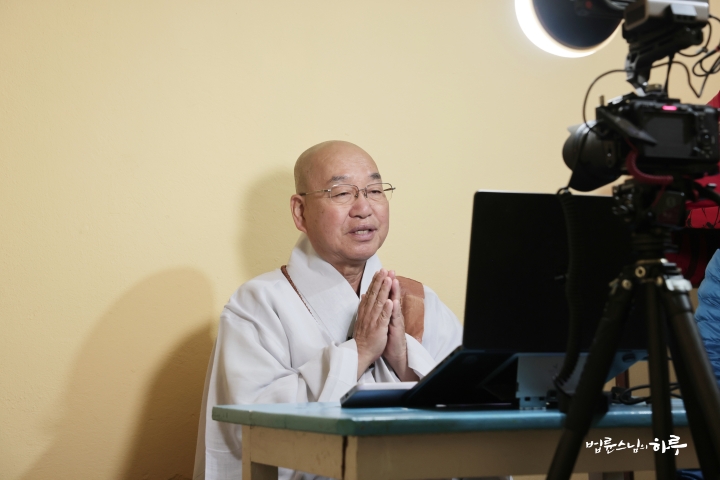
After sharing photos of the pilgrimage progress, Sunim gave a dharma talk about maintaining our center with Buddha’s wisdom and continuing our practice amid the climate crisis and international turmoil. Then, those who had submitted questions in advance took turns asking Sunim their questions. One person sought Sunim’s advice about persistent anxiety due to the superstition that “disturbing a grave brings misfortune,” after their family experienced a series of misfortunes following the legitimate relocation of an unauthorized grave from their family burial ground.
Does Disturbing a Grave Really Bring Misfortune?
“Looking at the entire world, people die in traffic accidents every day. About once a month, there’s a major accident like a bus crash, train collision, or plane crash. Over the course of a year, that’s roughly one major accident per week. Individual accidents probably occur by the minute. Fraud cases are even more frequent – they likely happen by the second. Your mother being scammed is probably one of hundreds of thousands of such cases worldwide this year. Divided by time, these are events happening almost every second.
So are all these events happening by the minute or second caused by relocating graves, not buying talismans, or someone doing something improper? When you isolate a single event, it feels like ‘it might not have happened but it did,’ so you keep looking for such causes. That’s why people say things like ‘It’s because we relocated the grave,’ ‘It’s because we went somewhere we were told not to go,’ or ‘We met someone and got contaminated by negative energy.’ But if we gather all the accidents and incidents from around the world, can they really be explained this way?
In the old days, people said ghosts would appear if you unknowingly built a house on a grave. But look at the mountains around cities today. Except for flat land, there’s hardly a hillside without graves. They bulldozed all of them and built apartments. By that logic, today’s apartments are built on hundreds of thousands of demolished graves. Then ghosts should appear in every apartment making them uninhabitable, but that’s not the case. This isn’t a problem caused by relocating graves – it stems from psychological anxiety in your mind.
When relocating a grave, if someone has the anxiety ‘I heard it’s bad to relocate graves…’, then when something bad happens later, they immediately think ‘Is this punishment for that?’ and connect the event with the superstition. ‘Could I be punished for going somewhere I was told not to?’ ‘Was secretly meeting someone of the opposite sex the cause?’ This anxiety becomes the primary cause, creating causal relationships between completely unrelated events. This is what we call a ‘jinx.’ People who are psychologically anxious are particularly sensitive to such jinxes.
Think about it this way. Even if someone buried a corpse on our mountain, is that really such a big deal? Originally, land belongs to neither you nor me. Living people need to build houses and farm, so we can draw boundaries, but what difference does it make whether a dead body is buried on my mountain or someone else’s? From nature’s perspective, it’s meaningless. Yet humans fight saying ‘It’s my mountain, so dig it up and take it away.’ This actually goes against the natural order.
In the past, people would argue about right and wrong while alive, but once someone died, they no longer debated such matters. What right or wrong exists in death? That’s why everyone reconciled at funerals. Even people who normally didn’t speak would visit to pay respects and open communication, resolving relationships that way. Not questioning the past in front of the deceased – this is called ‘letting go of grudges.’
But as people fought over whether to move graves or not, our ancestors thought ‘This would anger heaven’ and created a culture of not touching graves. As this was increasingly emphasized, it became the superstition that ‘touching a grave brings punishment.’ That’s why even when moving a grave with good intentions, people choose auspicious dates and show devotion, preferably doing it during intercalary months – all from the same context. You relocated the grave legitimately through administrative procedures. That’s according to the laws and order of the living. From the deceased’s perspective, such legal applications are essentially meaningless.
But haven’t you already relocated it? Then it’s better to simply accept what has happened, thinking ‘I see we suffer some losses when we argue over even dead bodies as yours and mine.’ Applying superstitions in a way that helps you accept things peacefully can actually be helpful. When you trip while walking, instead of suffering thinking ‘I tripped because of the relocation,’ think ‘I tripped because I argued over even a dead body. This cleared my bad luck.’ When you can’t collect money owed to you, thinking ‘I’m repaying in this life a debt I owed in a past life’ is borrowing the concept of past lives to help accept what has happened. But if I cheat someone out of money saying ‘You cheated me in a past life so I’m cheating you too,’ that wouldn’t make sense. Past lives and superstitions aren’t meant to justify harming others, but to help us accept what has already happened with less suffering. But you’re applying this backwards right now.
These things didn’t happen as punishment. Regardless of the relocation, people can die, be scammed, or fail exams. Right now, due to psychological anxiety, you’re connecting the relocation of the unclaimed grave with recent unfortunate events. That’s why I can’t simply say ‘The two events have no relationship.’ Psychologically, you already feel the two events are connected. Then it’s better to interpret it positively. ‘Moving the body resulted in some losses. From now on, I should live without being too calculating about interests.’ Looking at just the facts, we can say there’s no special causal relationship between the two events. But if superstitions weigh on your mind, I recommend interpreting them positively rather than negatively.”
“Yes, I understand. But my husband has another important exam coming up soon. If he fails that too, can I maintain this perspective you’ve just explained?”
“Don’t people fail exams because they lack the skills? (laughs) It could be due to fierce competition, or insufficient study. That’s why people fail exams. If you want to try again, supplement what’s lacking and challenge again. If it seems impossible no matter what, just think ‘I guess I have no affinity with this’ and give up. There’s no need to connect it with the relocation. You can fail an exam without relocating a grave, and you can pass even after relocating one. It’s difficult to see a direct relationship between the two events.”
“Yes, I understand well. Thank you.”
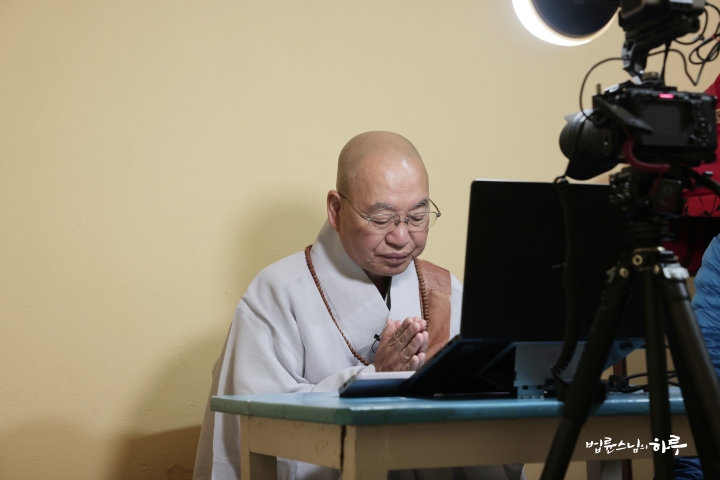
Questions continued. After finishing the live broadcast of the Weekly Dharma Assembly, it was 7:30 AM. While the members gathered in breakout rooms by group to continue mindful sharing, Sunim had breakfast.
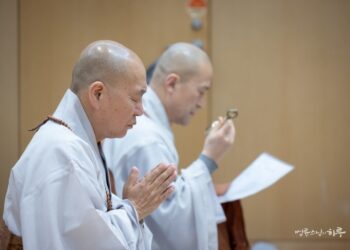
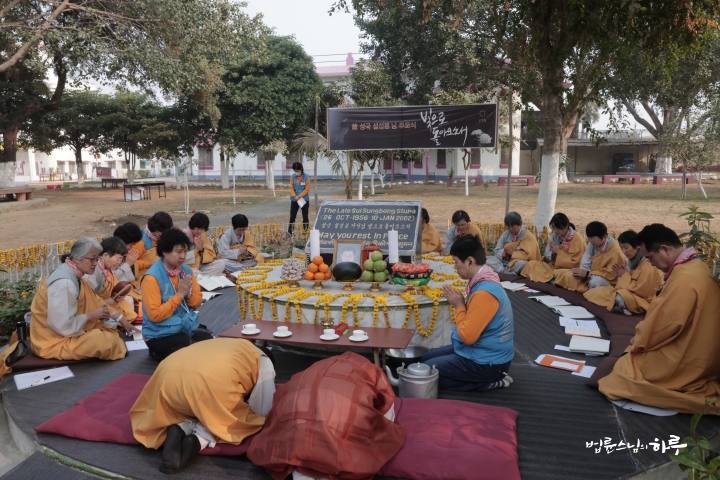
At 8:30 AM, a memorial service was held for the late Seol Seong-bong (설 성봉). The deceased lost his life defending against armed intruders during the early days of JTS India. The members gathered in front of the memorial stupa to pay their respects with hearts full of remembrance.
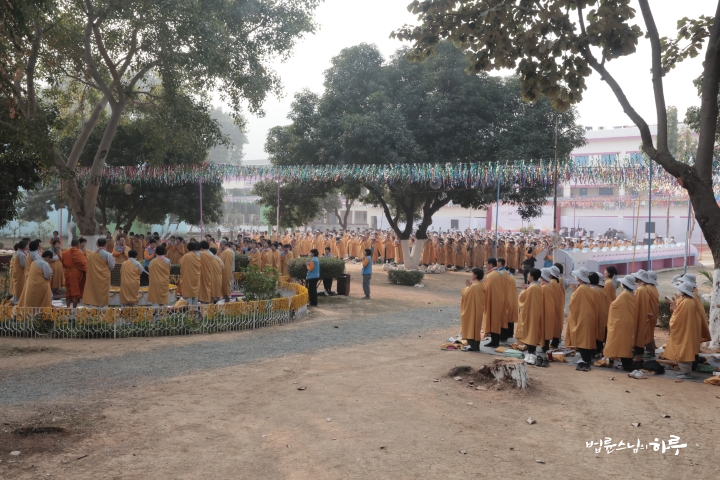
From 9:20 AM, villagers began entering the school. The residents entered in an orderly fashion following the guidance of JTS staff.
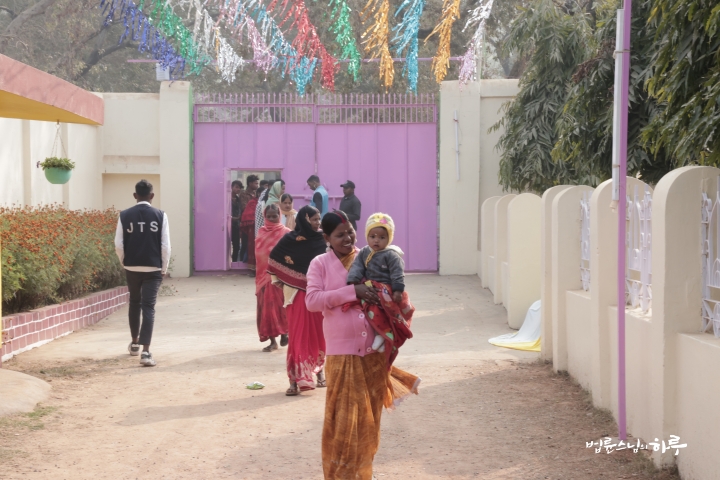
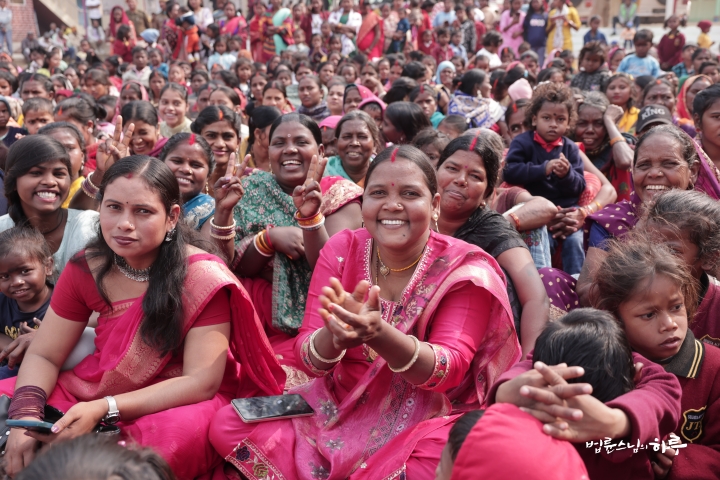
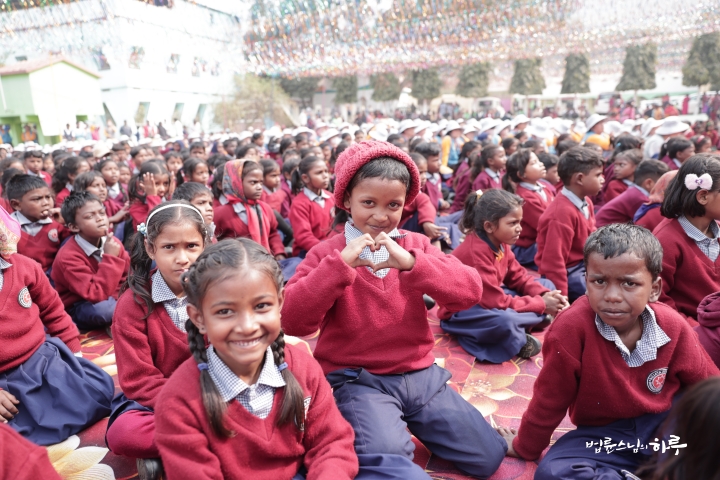
The neatly and beautifully dressed villagers participated in the event with joyful faces, as if coming on a picnic with their children.
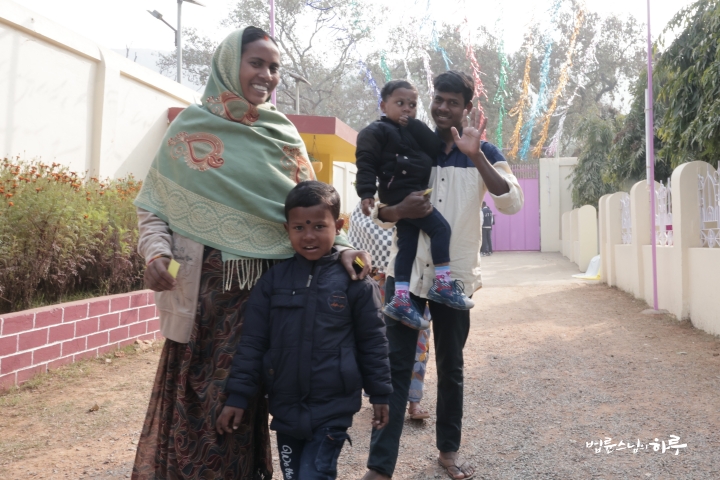
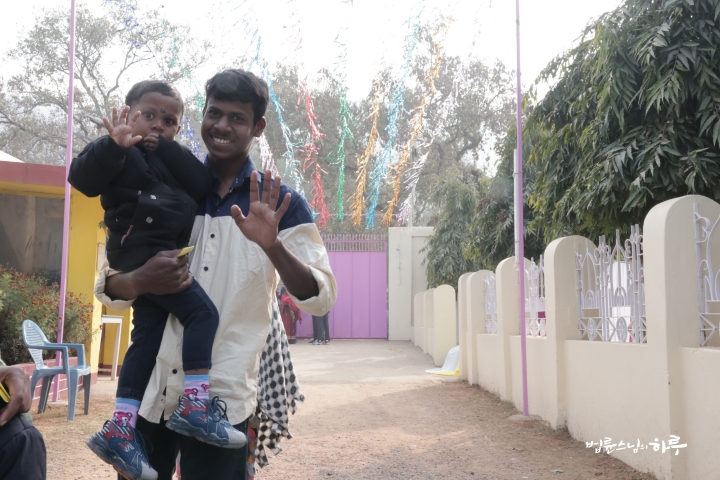
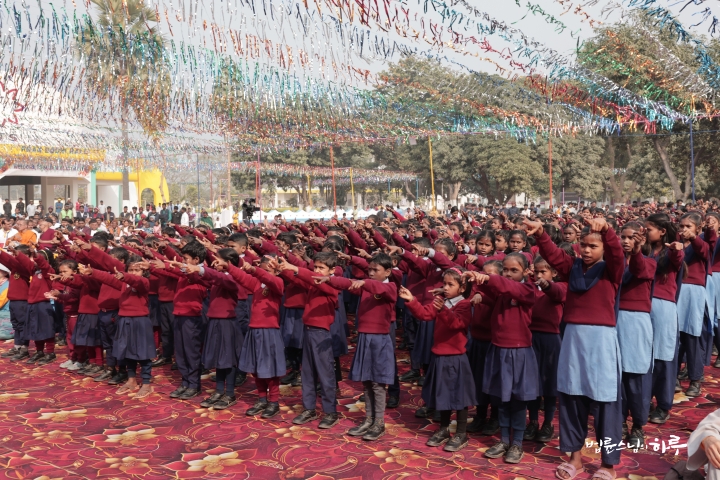
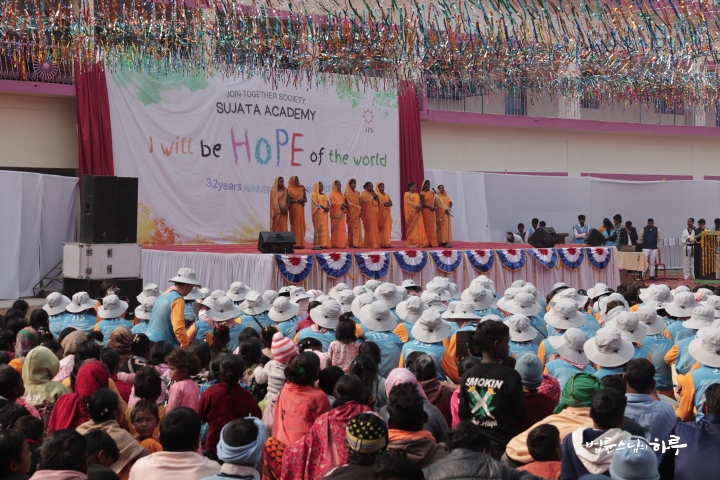
The ceremony had been held in the Prakriti Hall auditorium every year, but this year it was held on the playground. Carpets were laid across the entire playground so that all villagers and students could participate comfortably.
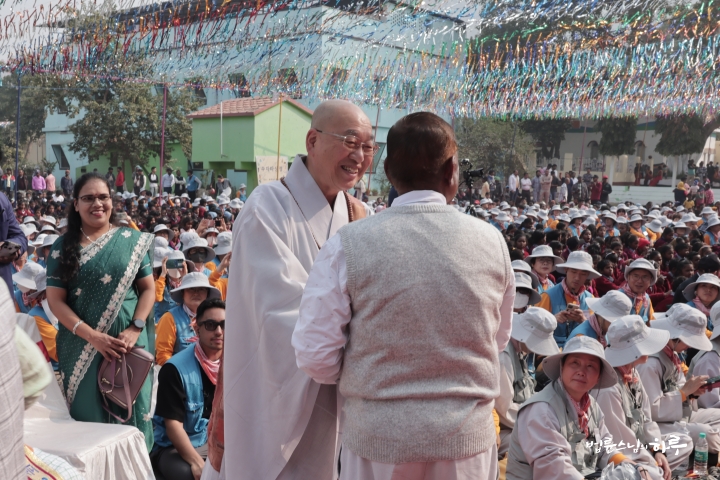
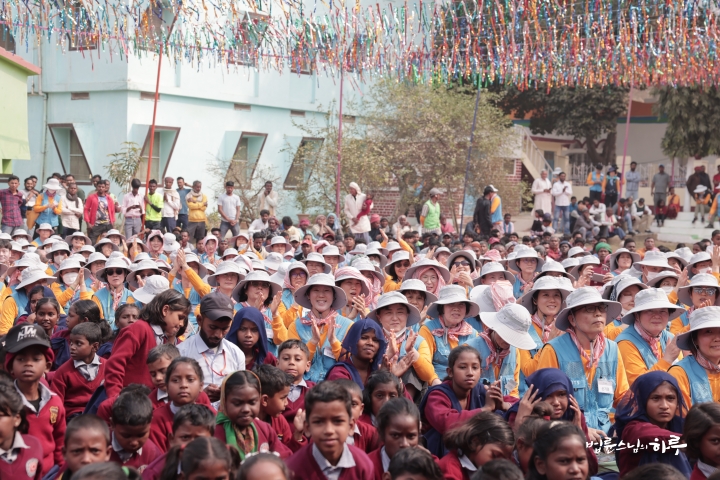
Soon the playground was filled with Dungeshwari villagers and distinguished guests.
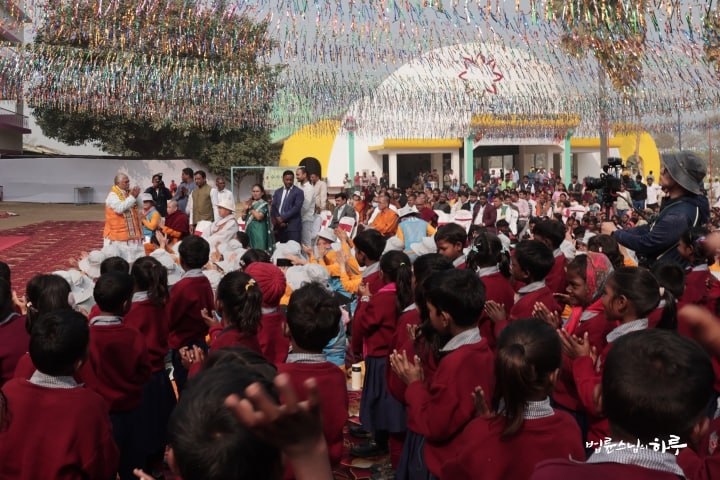
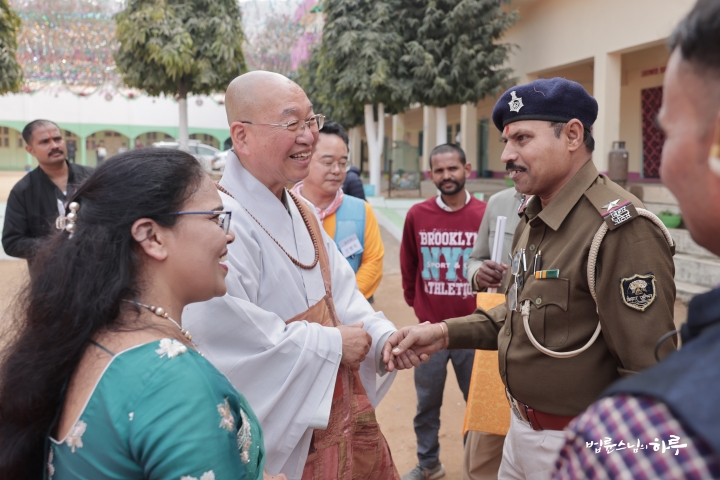
Present were Dr. Prem Kumar, Speaker of the Bihar Legislative Assembly, Sarvjeet Paswan, Member of the Bihar Legislative Assembly, police and military personnel from Gaya who had been escorting Sunim for several days, the abbots of Myanmar and Cambodia temples in Bodh Gaya, and those who had been with Sujata Academy since its early days. Sunim exchanged greetings with the distinguished guests before the ceremony began.
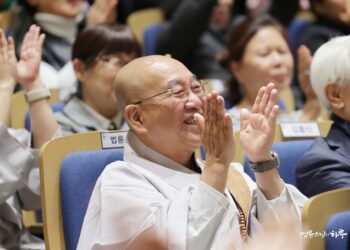
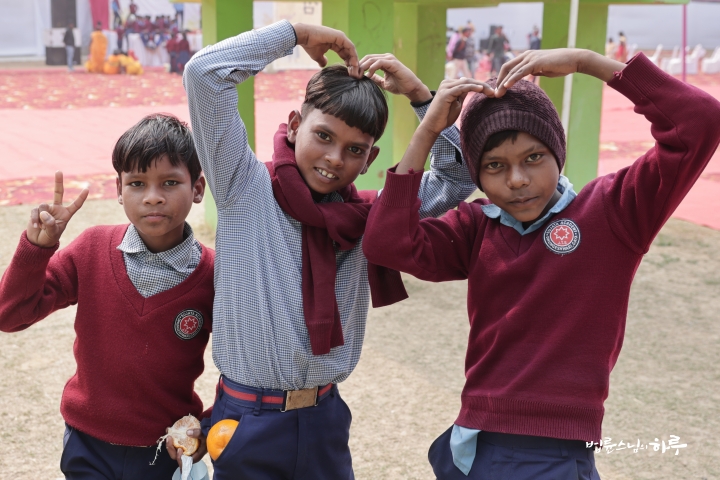
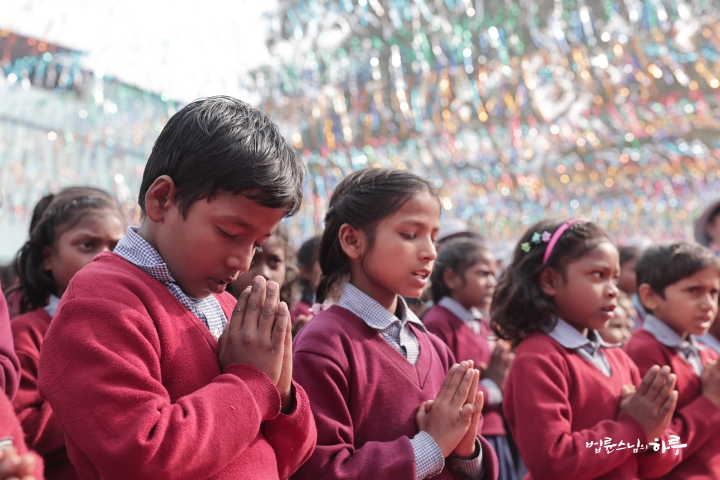
At 10 AM, the 32nd anniversary ceremony of Sujata Academy began. Students in neat uniforms opened the ceremony by singing the Panchsheel (Three Refuges and Five Precepts : 삼귀의·오계) and the school song in chorus.
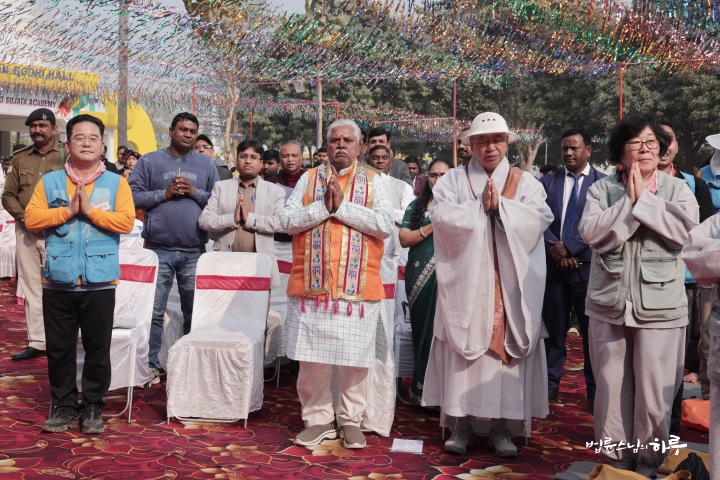
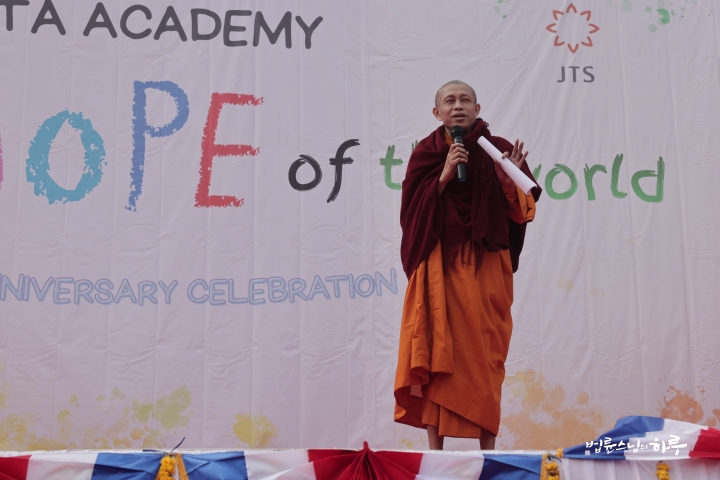
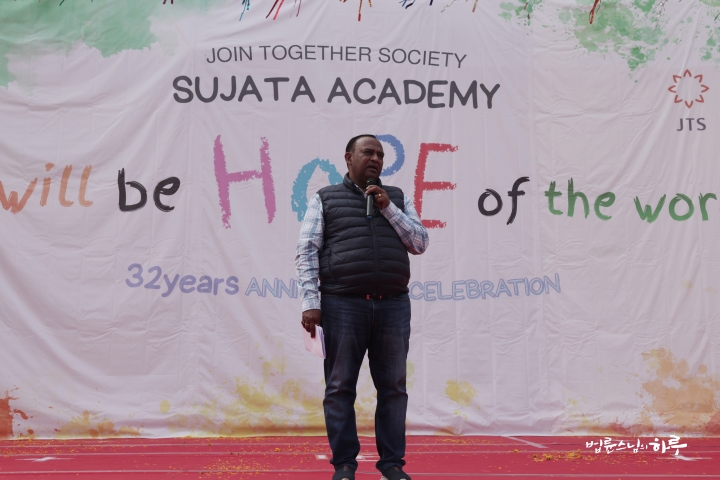
This was followed by congratulatory speeches from the distinguished guests. Chairman Priyapal Sunim, Speaker Prem Kumar, and Member Sarvjeet Paswan congratulated Sujata Academy on its 32nd anniversary.
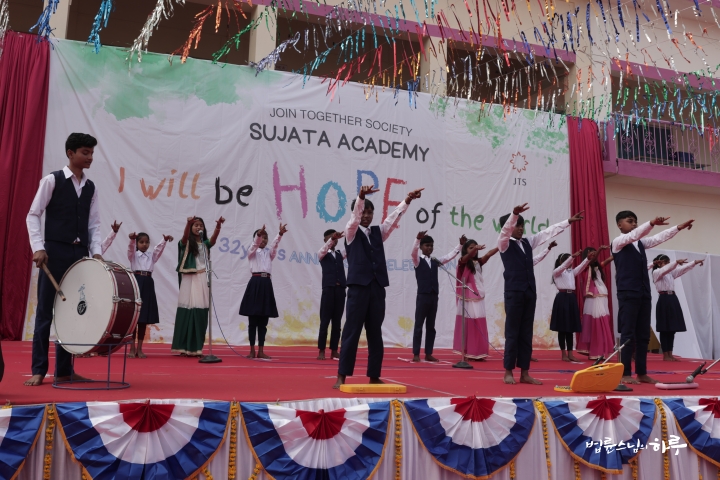
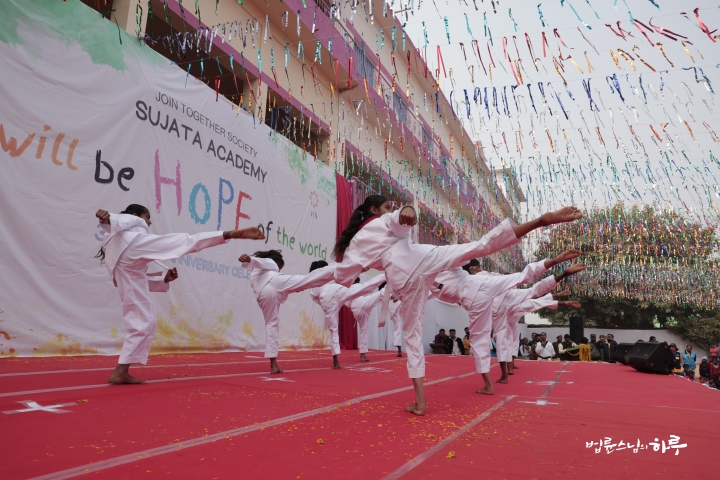
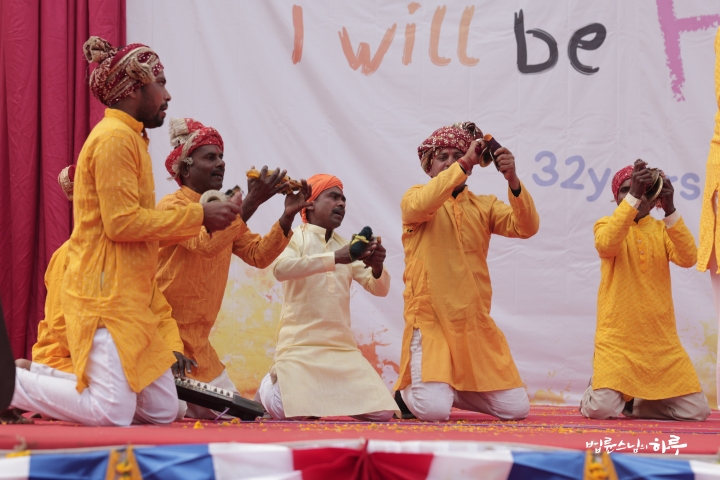
The ceremony continued with student dances, taekwondo (태권도) demonstrations, traditional dances, and songs and instrumental performances by villagers.
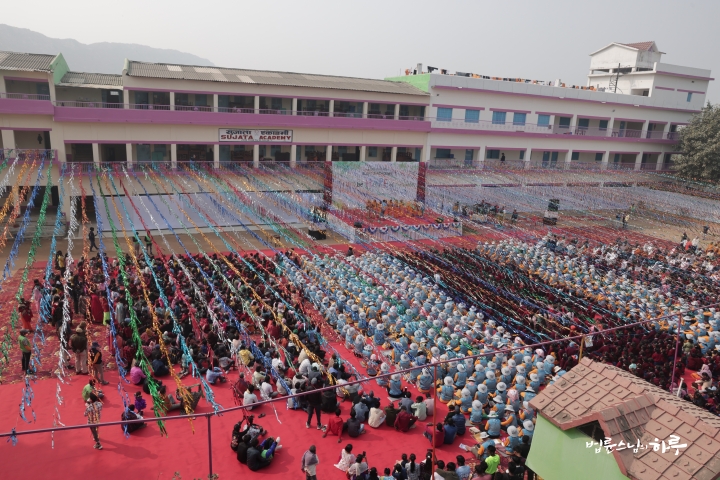
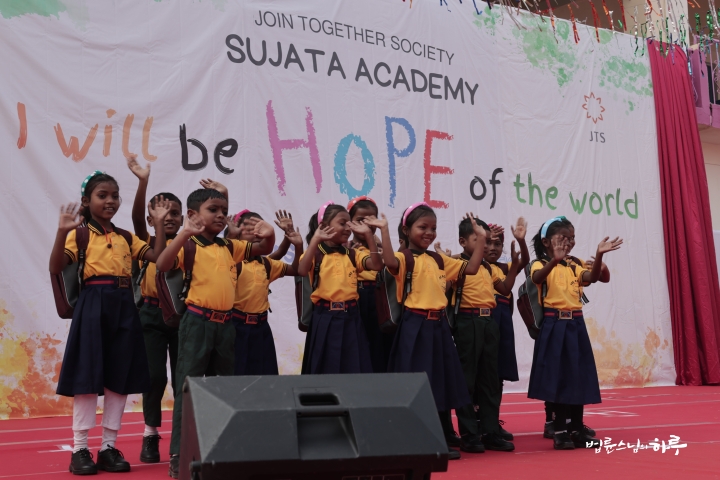
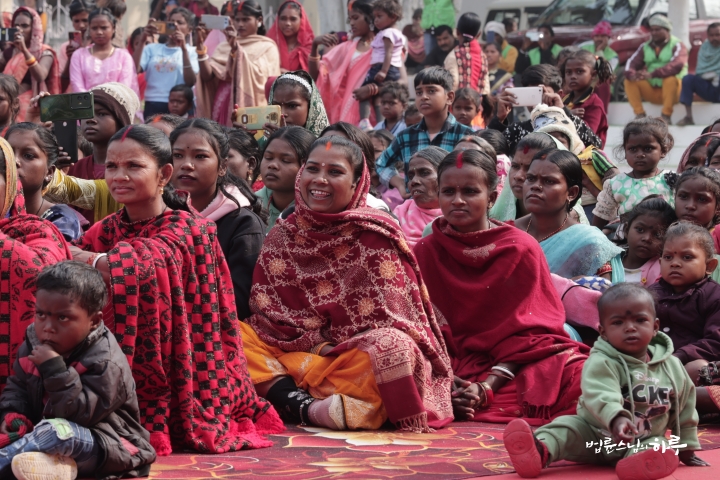
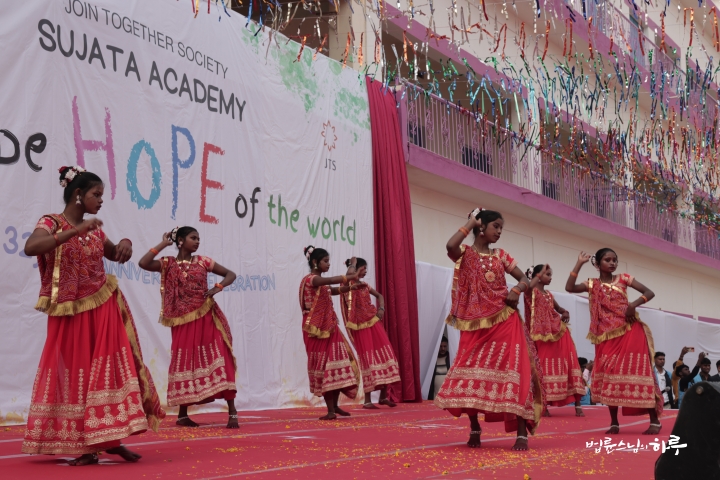
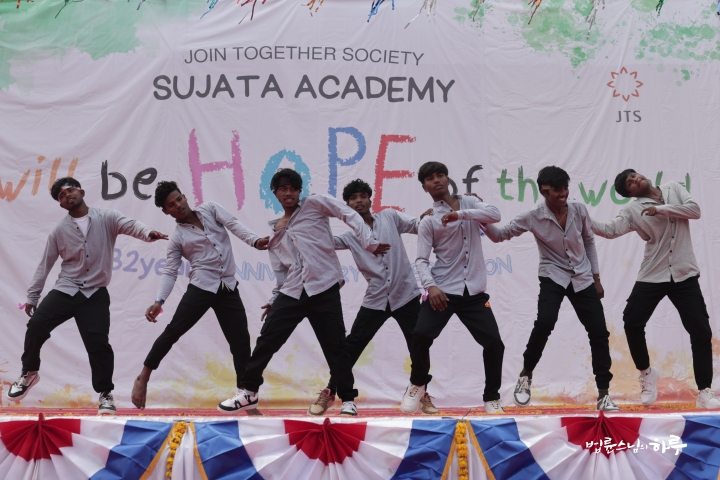
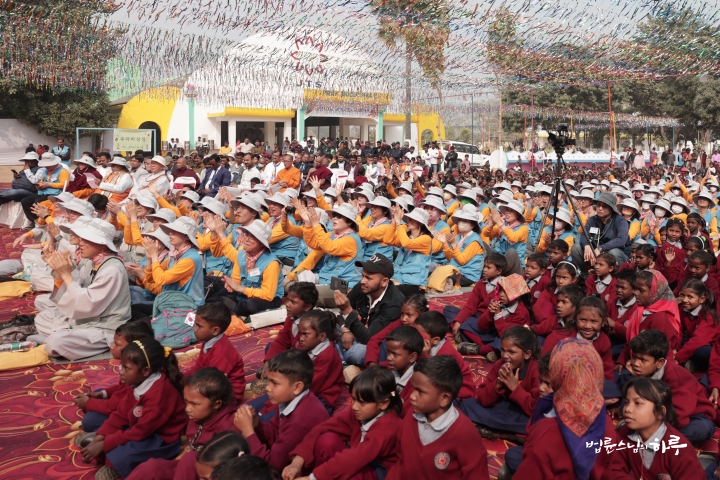
The performance that received the biggest response was the girls’ taekwondo demonstration. The audience burst into applause and cheers at their confident movements.
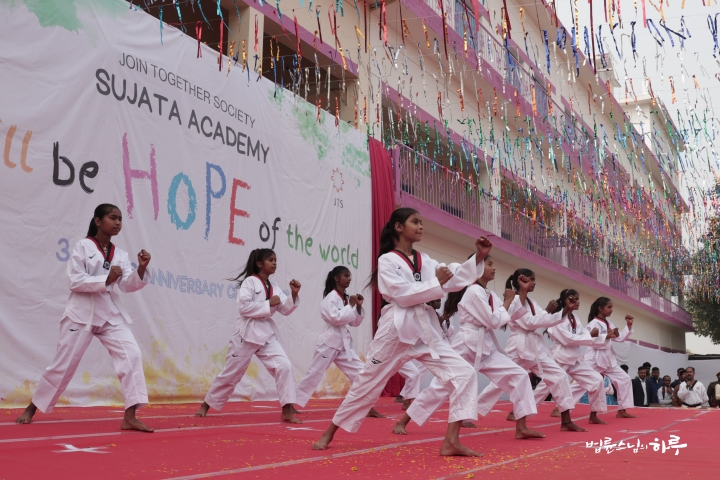
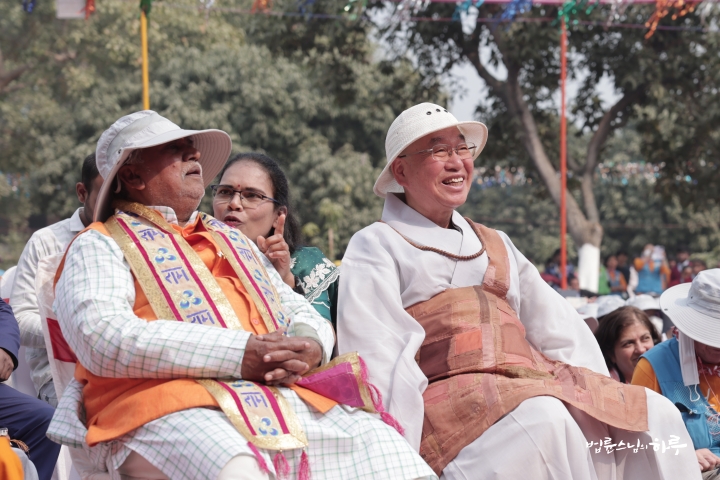
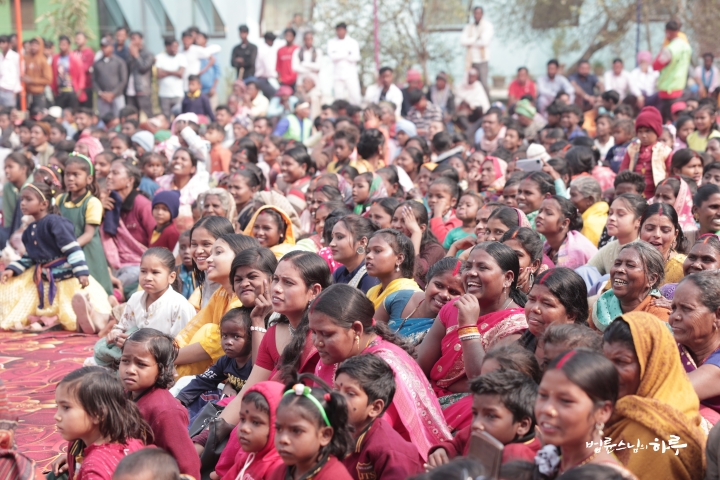
Since most children in Dungeshwari village attend Sujata Academy, most villagers are parents of students. Not only students but also villagers presented performances.
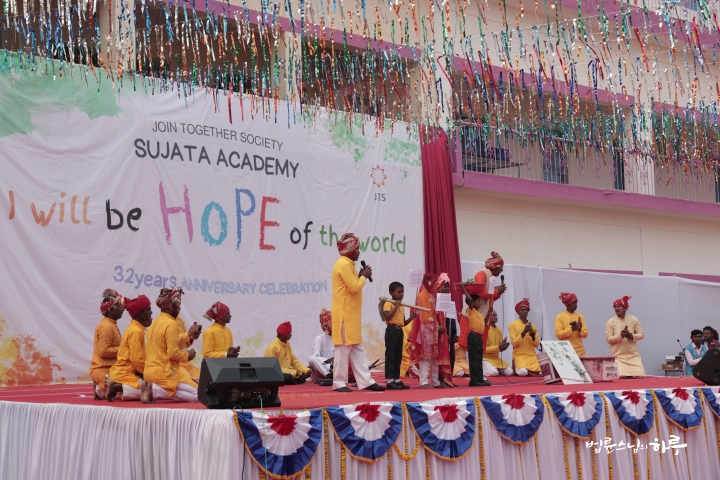
When all the prepared performances were over,
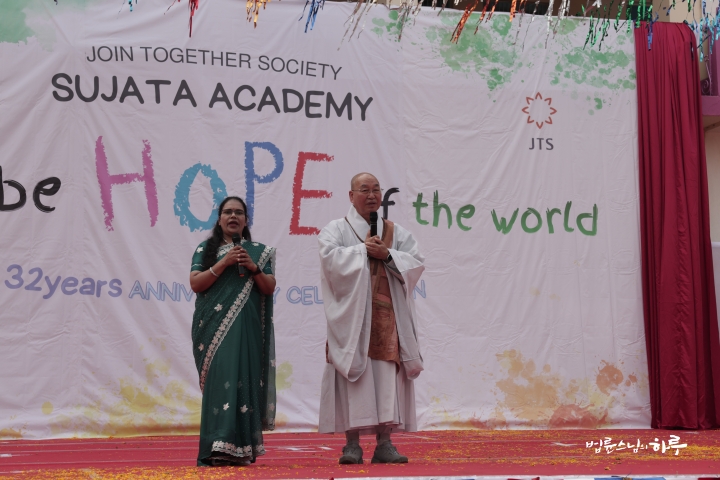
This work cannot be done by JTS alone. It is possible when the state of Bihar, the city of Gaya, village residents, local leaders, and young people work together. We must transform Dungeshwari, where the Buddha practiced for six years, into a village where education, healthcare, and housing are guaranteed. Just as we have walked together until now, let us continue to unite our strength and move forward together.
Seeing our children dancing and singing on stage today, aren’t they something to be proud of anywhere?”
“Yes!”
“Any child can grow into a wonderful person with good education. If we unite our hearts, we can transform Dungeshwari into a livable village. With this hope, let us move forward together. Once again, I deeply thank Chairman Prem Kumar and everyone who joined us here today.”
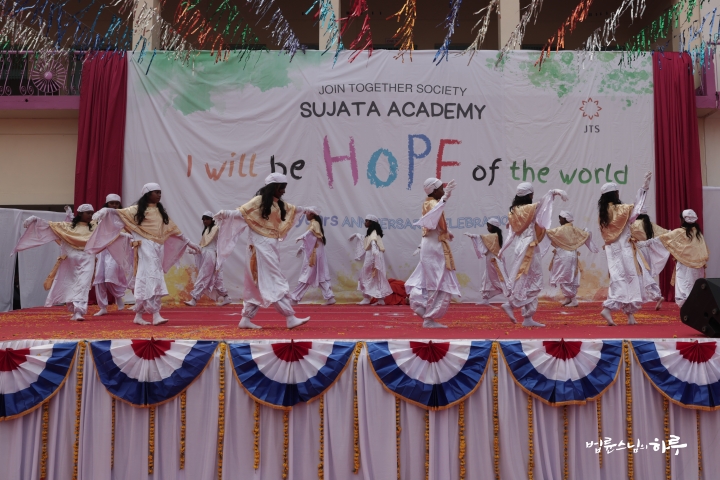
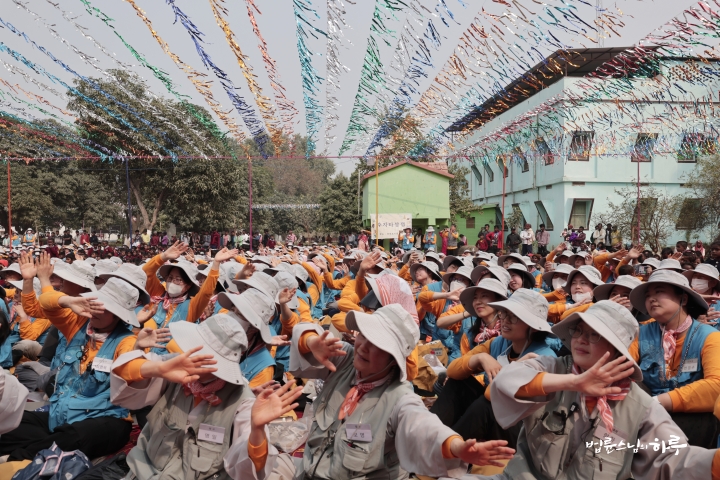
The final performance of the ceremony was the ‘Memorial Dance.’ It was a dance performance expressing the journey that began with one practitioner’s aspiration in 1993, leading to the establishment of the school, and continuing to Sujata Academy’s present and future. The children danced confidently under the banner “I will be Hope of the World.” The pilgrimage group joined the final performance by making waves with their hands.
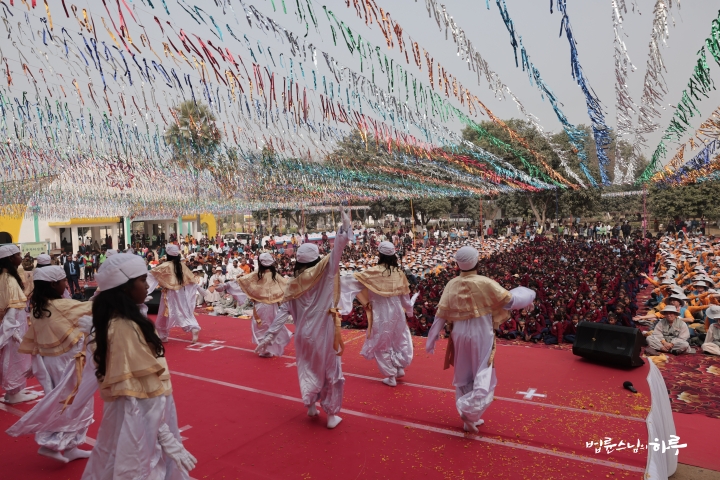
Sunim and all the distinguished guests went up on stage to take a commemorative photo with the children, concluding the 32nd anniversary ceremony.

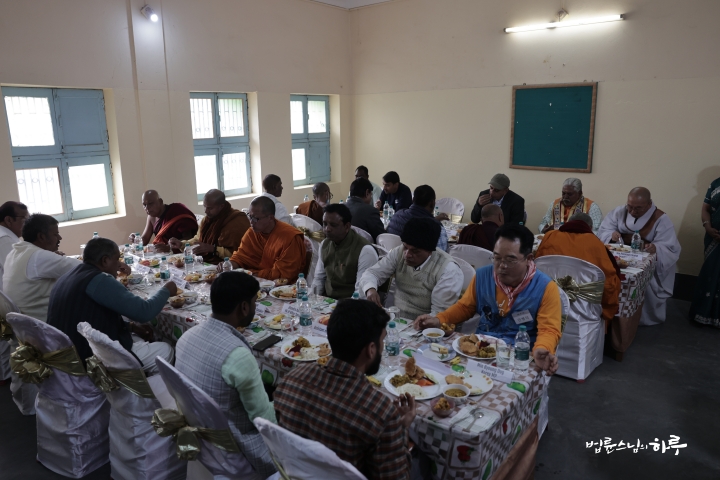
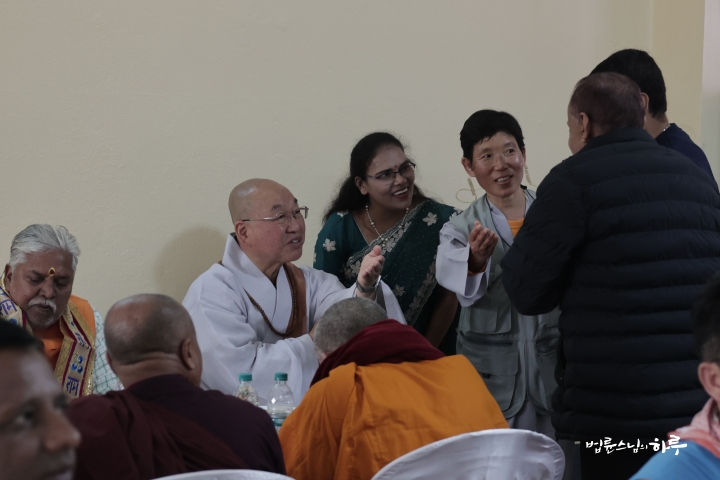
Sunim had lunch with the guests. Sujata Academy had prepared the meal with great care.
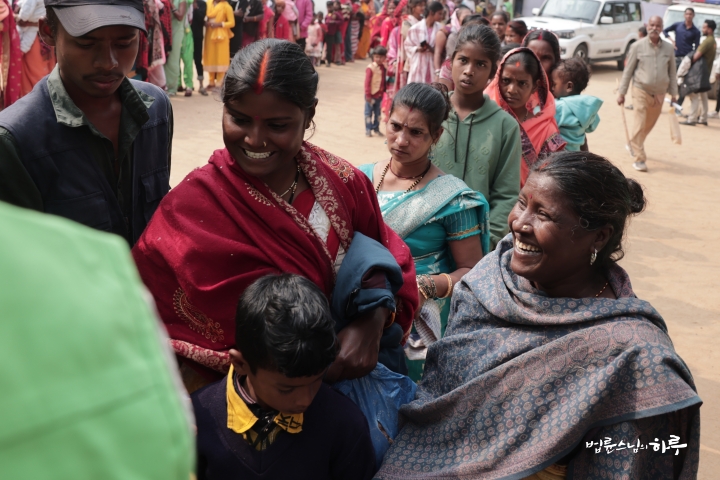
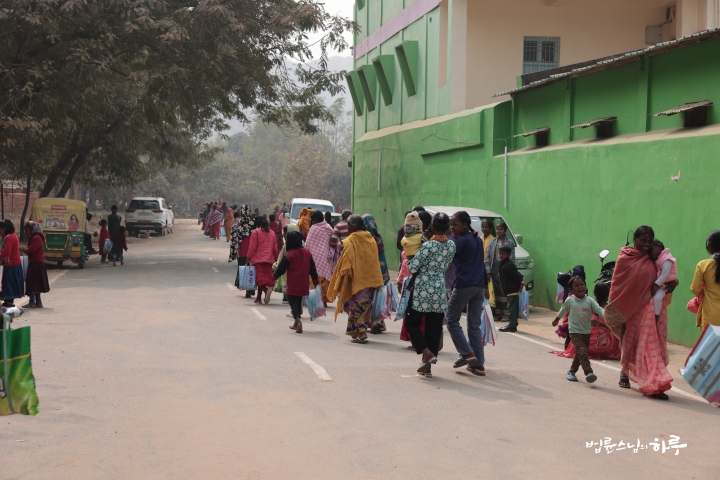
The villagers received lunch boxes prepared by the school and returned home.
After lunch, the pilgrimage group participated in an Indian cultural program held in the mango garden. They experienced wearing saris, traditional Indian clothing, applying bindis (decorative forehead ornaments), and creating mehendi designs on their hands with natural dyes.
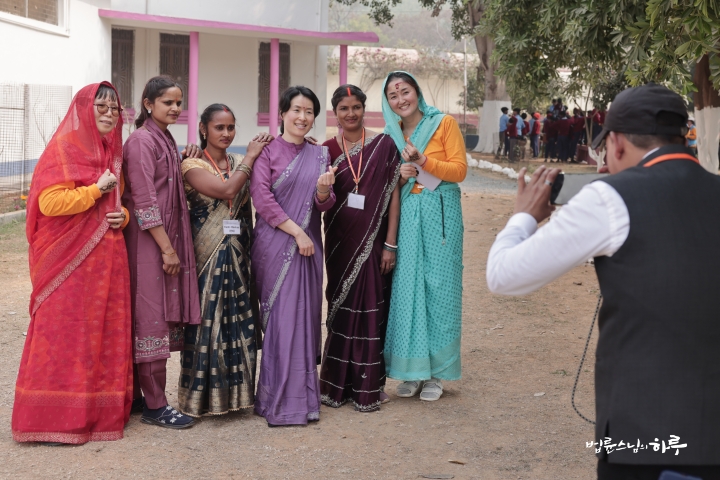
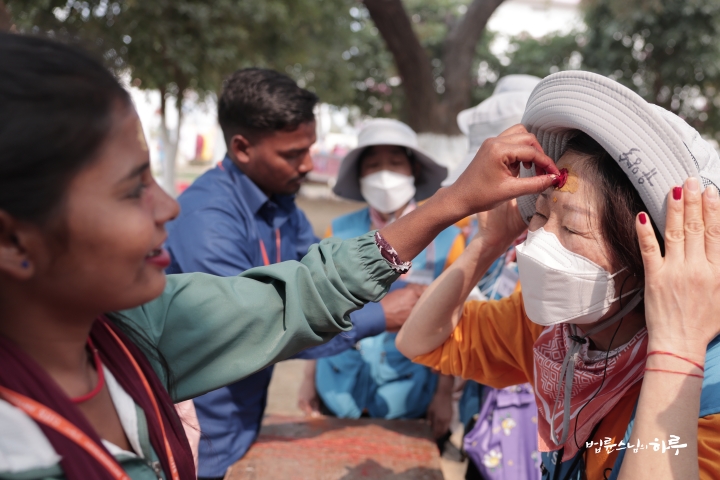
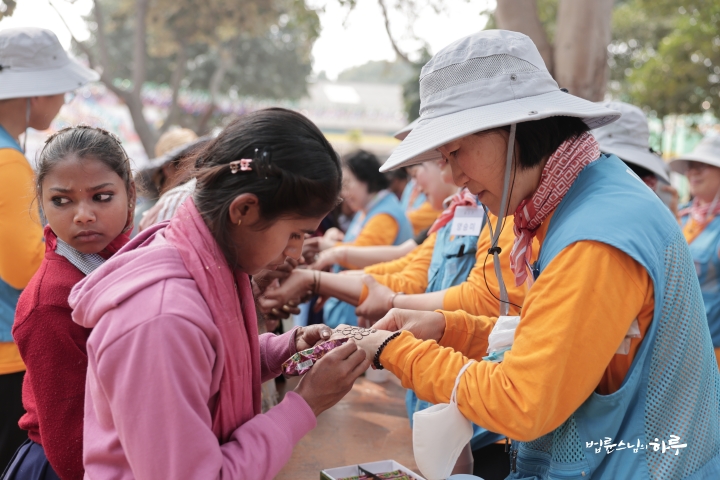
After seeing off the guests, Sunim attended to work at the JTS volunteer quarters. The pilgrimage group cleaned the entire school before having dinner.
At 7 PM, evening prayers were held at Prakbodhi Hall. Before the Dharma assembly, Sujata Academy’s BTS performed for the pilgrimage group.
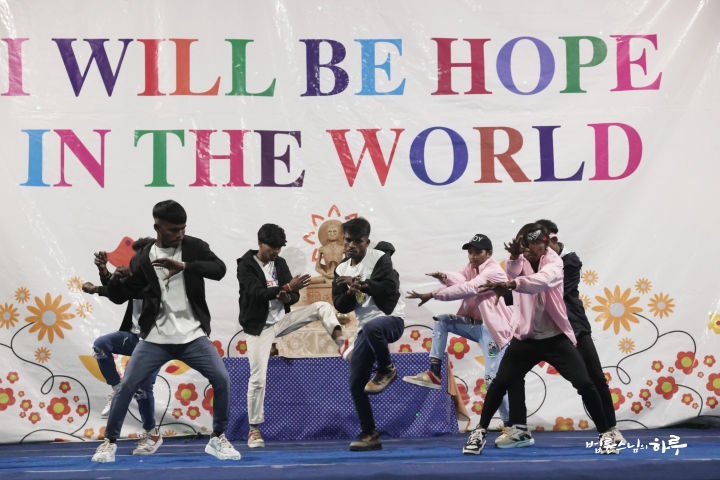
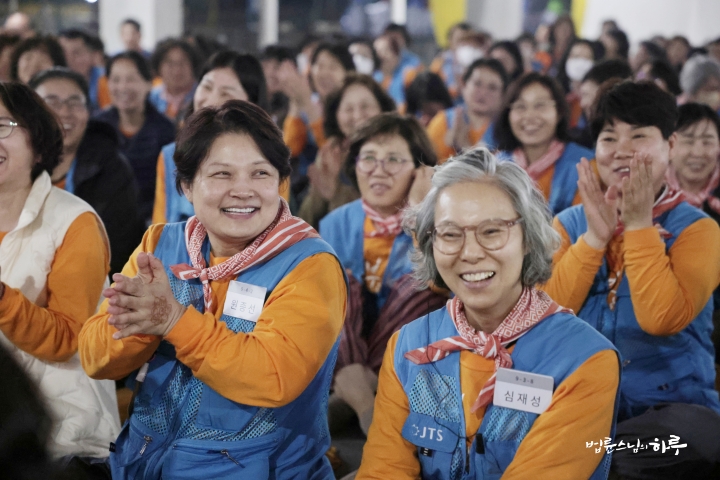
After the wonderful dance performance by the Sujata Academy children, Sunim’s Dharma talk followed. Sunim began the talk by saying that watching the children’s performance proved the Buddha’s teaching that all conditioned things are subject to change is being demonstrated in reality at this school.
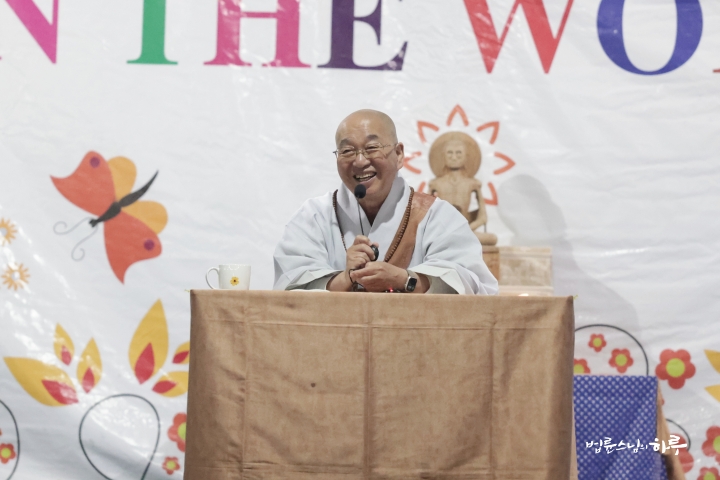
“The children are quite talented, aren’t they?”
“Yes!”
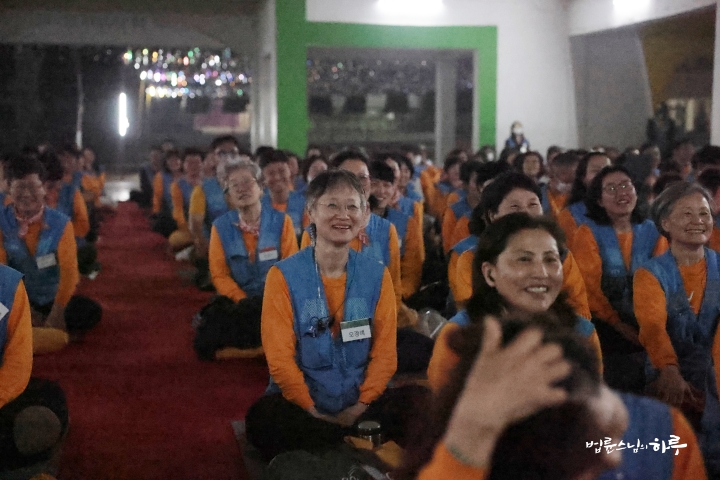
“They are the same people, but when begging, they appear undignified. However, with just a little education, their talents emerge like this. This is like proving the Buddha’s teachings in reality. In the past, children often became people without talent or ability because they were born as untouchables, poor, and without even the opportunity to learn. So people easily accepted fatalism, saying ‘They were born into a low caste because of many sins in their past life,’ or ‘They were born poor because they didn’t accumulate merit in their past life.’
However, the Buddha said, ‘Karma is not fixed but formed.’ In other words, this means ‘All conditioned things are subject to change,’ which in Chinese is called ‘jehaeng musang (제행무상 : 諸行無常)’ (impermanence). Our suffering was not originally there but was formed, and our life habits are not innate but created. If we know the cause and eliminate it, what was formed can change and life can be different. There is no life destined to suffer. Anyone can move toward a happy life on their own.
32 Years of Sujata Academy: What Have We Proven?
We have been directly proving this fact here at Sujata Academy for 30 years. Children who used to beg have grown into respectable young people, taking on their roles throughout society. However, there is still a reality where these children cannot fully demonstrate their talents due to institutional and systemic limitations in society. To play a social role, individual effort alone is not enough; the social system itself must change together. For example, no matter how talented a woman is, if the system is designed to prevent her from being socially active, she cannot display her talents. Even if the door is institutionally open, if education to enter through that door is not provided, the result is the same. Therefore, individuals need educational opportunities, and socially, the door of opportunity must be open for everyone to participate.
When Sujata Academy was first established, mainly children from untouchable villages attended the school. At that time, even among the untouchables, there were one or two children in each village who had graduated from middle school, so we hired them as teachers. There was no concept of parents here. While it was good for children to go to school to receive candy, almost no one agreed with building the school.
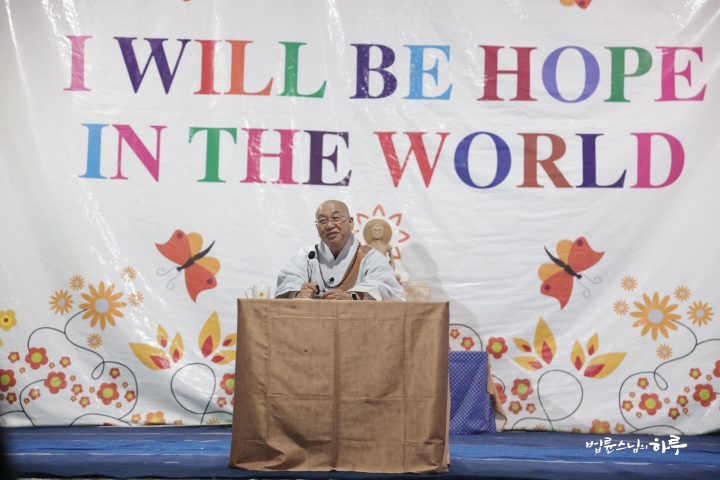
Principles Established Amid Discrimination and Conflict
Meanwhile, in the upper-caste villages, there were already children attending school. When they heard that a school had opened nearby and was providing food, they flocked to it all at once. However, when teachers from lower-caste backgrounds were hired, the villagers came in protest, saying, “Lower-caste people cannot teach our children.” So I met with the people directly to discuss the matter.
I asked them, “There are government schools available, so why do you want to send your children to Sujata Academy?” They said it was because this school provided better education. So I asked again, “Then should we run the school in the Korean style or the Indian style?” The villagers requested that it be run in the Korean style. So I explained it this way:
“If we run it in the Korean style, there will be no discrimination based on gender or caste. When hiring teachers, we only look at their ability to teach children. We don’t consider whether they are from a lower caste, male, or female. If you want it run in the Korean style, that’s how it must be done.”
After this explanation, the protesters gradually calmed down. If run in the Indian style, teachers often come to school only once a week. In rural areas, it’s common for teachers to receive salaries but rarely come to school. When I lived in this village before, I even saw cases where teachers came only once a month. That’s why the attendance rate at rural public schools is less than 15 percent. In contrast, the attendance rate at Sujata Academy exceeds 95 percent.
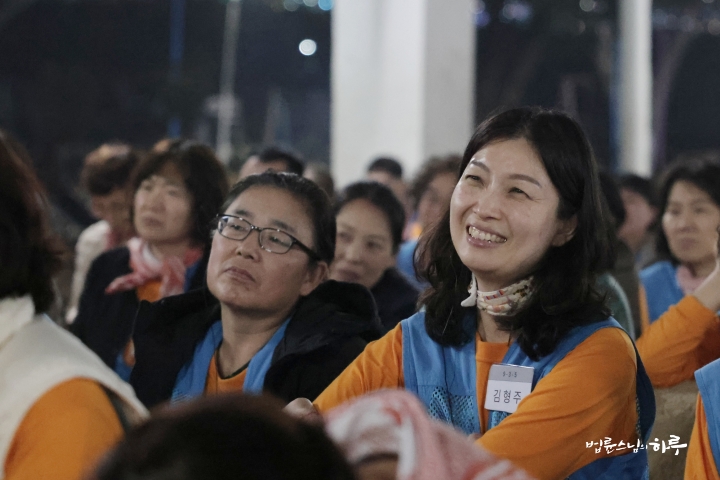
Meanwhile, when hiring Teacher Priyanka, there was opposition from the Dalit villages. They asked, ‘Why are you hiring someone from a high caste like Brahmin for a school built for Dalits?’ However, to properly run a preschool, more professional education is needed. The Dalit teachers had only graduated from middle or high school at most, while Teacher Priyanka had completed her master’s degree. So Sunim responded, ‘If there is someone among the Dalits with such qualifications, I will hire that person.’ By clearly establishing the criterion that what matters is not caste or gender but ‘whether one is qualified to teach,’ Sunim was able to persuade the residents.
While running the school, there were incidents where robbers broke in and an activist died, and internal conflicts between villages were very severe. Due to the custom of early marriage to reduce dowry, there were cases where elementary school students were already in their first marriage while attending school. Until Teacher Priyanka came, all the teachers were men. This was because it was difficult for women to live in such remote places. Corporal punishment of children was common, and in the process, rumors of sexual harassment even spread. The fact that the teachers came from Sankasya and Uttar Pradesh also fueled conflicts. So Sunim personally collected testimonies from each person to verify the facts, revealed that the rumors were exaggerated, and resolved the situation.
The Dharma Is Not Teaching but Practice
After going through many such ups and downs, we have reached today. Now girls also ask to be taught taekwondo just like boys. In the past, only boys went on stage when dancing, but now girls also wear pants and go on stage to dance freely. Things have really changed a lot over the past 30 years.
In fact, this is a society where gender discrimination is much more severe than caste discrimination. While it’s important to teach in words that discrimination is wrong, what’s more important is the experience of studying together without discrimination within the school. When children grow up this way, they naturally become friends despite their different backgrounds, and even if they face discrimination in society after graduation, its impact is significantly mitigated. Children receive education in an equal environment for 6 to 8 years, gradually changing their perception of society itself.
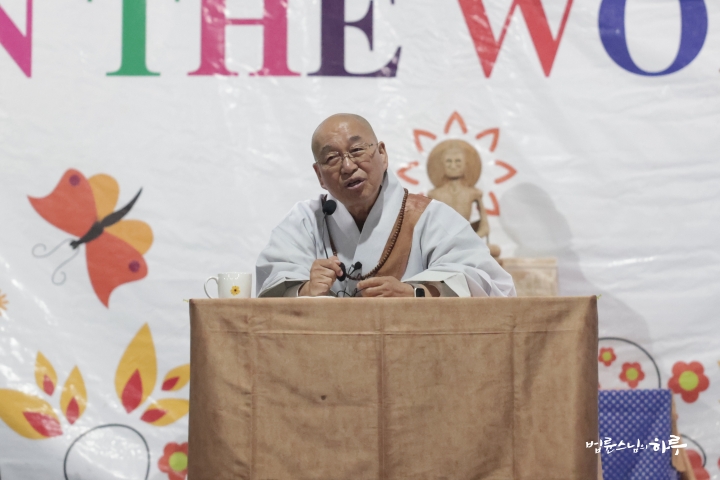
What we can do is give opportunities to individuals. Of course, no matter how talented an individual is, it’s difficult if society doesn’t provide opportunities. First, the seed must be good. Individuals must create their own change. At the same time, the soil must also be good. Good soil allows seeds to grow properly. Just as you cannot farm without seeds no matter how good the soil is, and you cannot farm without soil no matter how good the seeds are, change occurs when causes and conditions meet. What we can do is create the causes. And for these to turn into conditions, these children must grow up to assert their rights and lead social change themselves.
What happens in this village may not seem special to us. However, the people of this village have long lived with the belief that ‘being poor and lowly is due to karma from past lives.’ Just as we too once lived with feudalistic thinking. So education here is about showing through action that human destiny is not predetermined.
What we do is not simply teaching children. The era of simply saying ‘This is what the Buddha’s Dharma is’ has already passed. That was the story from 2,600 years ago. What’s important for us now is the question of how the Buddha’s Dharma can be embodied and realized in today’s reality.”

Following this, there was a Q&A session where participants could ask questions. Anyone in the pilgrimage group could raise their hand and ask a question. During the one-hour session, five people asked Sunim questions. One of them was curious about the meaning behind Buddha’s instruction to his disciples to go forth alone after their enlightenment.
Why Did Buddha Tell His Disciples to Go Forth Alone?
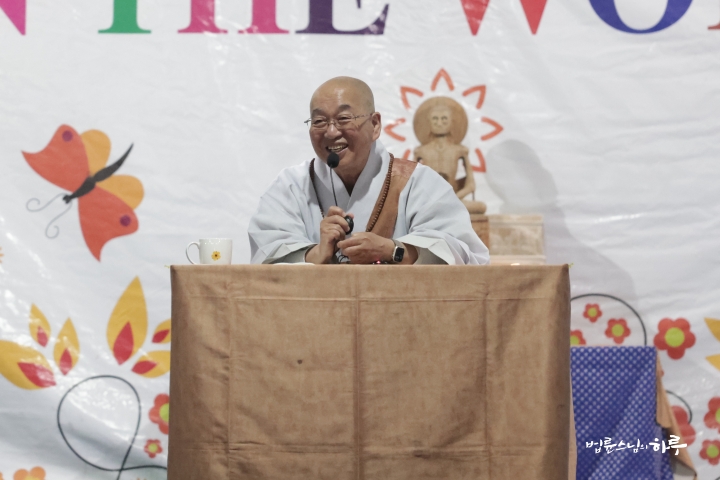
“When Buddha said ‘Go alone,’ he didn’t literally mean to travel by yourself. As ordinary beings, we tend to lean on and depend on others for everything in life. However, a Buddha is already a complete being who no longer needs to depend on anything. In other words, he has become the master of his own life. Therefore, saying someone has ‘become an Arhat’ means they have reached a state where they can stand on their own without leaning on anyone else.
Buddha declared, ‘I have been freed from all bonds of gods and humans. And you too have attained liberation.’ With these words, he proclaimed his disciples as Arhats. This means they were not beings still lacking in practice, but had already attained enlightenment. In other words, they had reached a state no different from Buddha himself. So there was no need to go in pairs or groups from the beginning.
Of course, if they were heading in the same direction, they could have traveled together for a while. But it wasn’t a case of ‘holding hands because we’re afraid to go alone.’ That’s why Buddha said, ‘Go alone.’ This expression appears frequently in the Buddhist scripture, the Sutta Nipata. The well-known phrase ‘Go alone like a rhinoceros horn’ comes from this same context.
Interestingly, the Bible expresses the exact opposite. It says, ‘Always go in pairs.’ That’s why missionaries are always seen traveling in twos for their mission work. This too faithfully follows the teachings of the Bible.
So we shouldn’t understand Buddha’s words to mean ‘you must not go in pairs.’ Rather, it should be understood as ‘you may go alone because you have no fear even when alone.’ This can be understood as a teaching that reveals the freedom and independence of a complete being.”
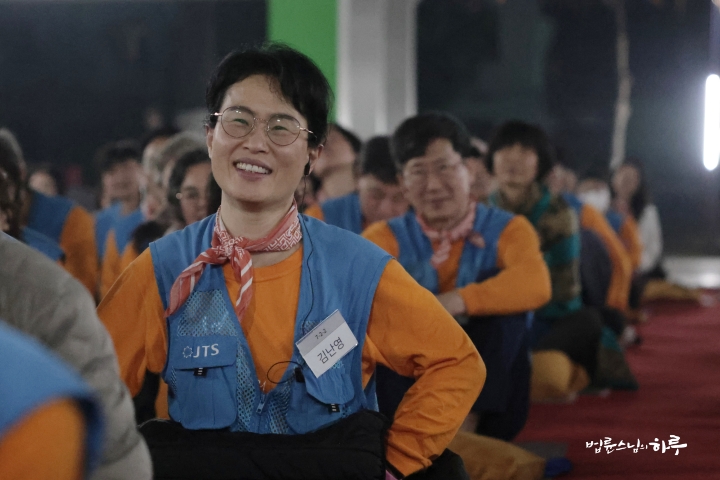
Questions continued to follow.
After my husband’s suicide, my sister-in-law has been saying hurtful things to the children, causing them to feel guilt and confusion. How should I explain and help them accept this situation?
I’m curious about the historical and social reasons why such an outstanding figure as Master Yongseong is not widely known to the public.
During the pilgrimage journey, the vehicle conditions and environment are uncomfortable, making it difficult to practice and concentrate. How should a practitioner accept such discomfort?
I’m curious about the overall scale and current status of the school and education projects that JTS has conducted worldwide.
Can we see any historical or cultural connection between ‘Gaya’ in India and ‘Gaya’ in Korea?
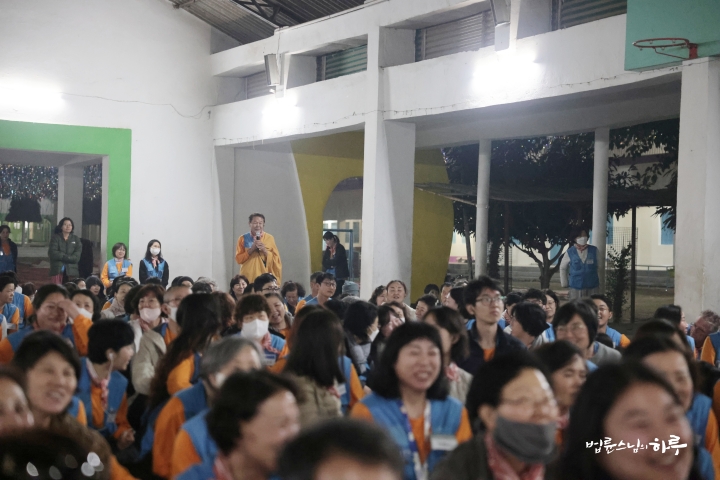
By the time the conversation ended, it was well past 9 PM. After concluding the Dharma assembly with the Four Great Vows(사홍서원), Sunim met with international Jungto members from overseas branches who were participating in the pilgrimage.
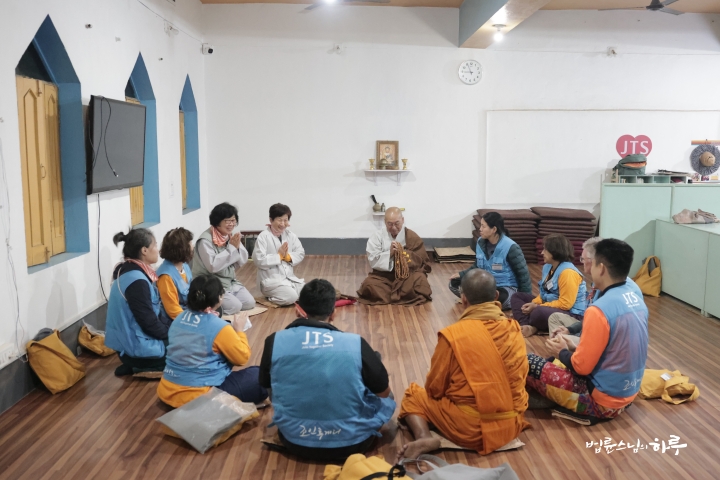
Among them was Aruna, who volunteers to teach English online to Sujata Academy students. Sunim asked Aruna:
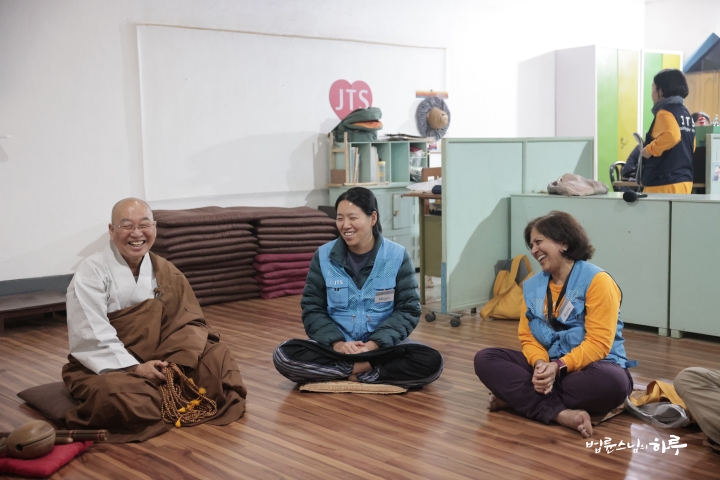
“Did you have time to greet the students you’re teaching?”
“No, I wasn’t given time, but I grabbed every child I met and asked, ‘Have you ever taken English lessons from me?’ (laughter)”
Sunim said with a smile:
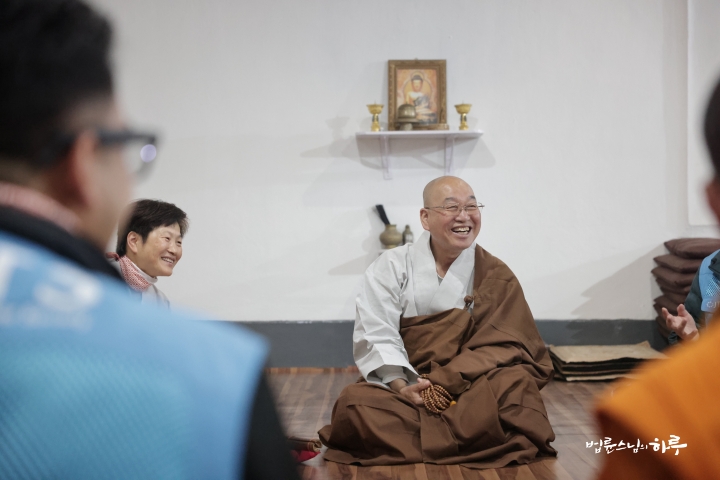
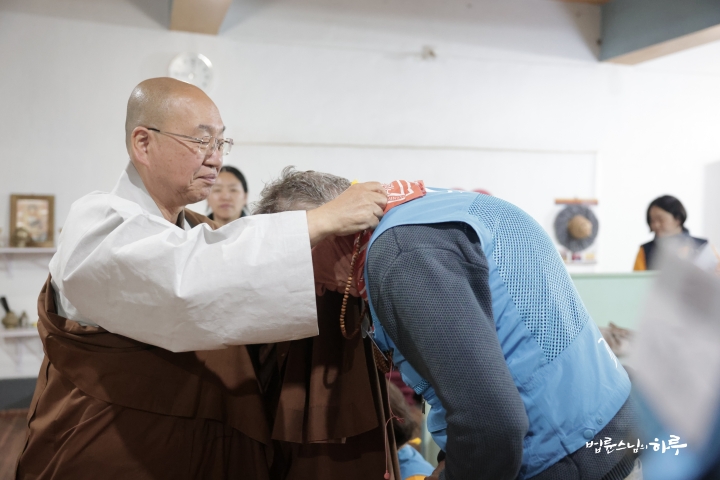
“If I had known earlier, I would have arranged time. It’s a shame. Although it’s late, I wanted to meet you all and give you prayer beads (염주) as gifts.”
Sunim placed prayer beads around the neck of each international Jungto member. By the time the conversation ended, it was past 10 PM.
Over the past five days, Sunim and the pilgrimage group have followed in the Buddha’s footsteps, visiting Sarnath where he first taught the Dharma and Bodh Gaya where he attained enlightenment. Tomorrow, they will head to Rajgir, following the path the Buddha took to meet King Bimbisara after his enlightenment.