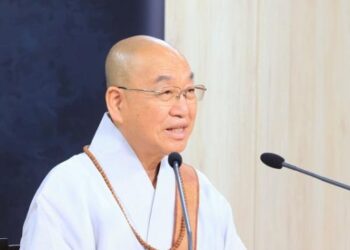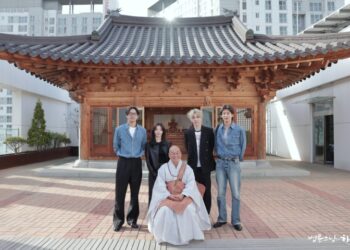

Jan 23, 2026. Invited Lecture at the Korean Language Department of Jawaharlal Nehru University, Friday Live Dharma Q&A
Hello. Today, Sunim was scheduled to give a Dharma Q&A lecture at Jawaharlal Nehru University in New Delhi, India. Thunder roared and rain poured from early morning.
After completing morning practice and meditation, Sunim worked on various tasks before leaving the accommodation at 11:40 AM to head to Jawaharlal Nehru University. Today and tomorrow, a bakery owner couple who have had a long relationship with Sunim provided vehicle support, making it convenient to travel between meeting locations.
At 12:30 PM, Sunim arrived at Jawaharlal Nehru University and met with Professor Chowduri Upendra Rao from the Department of Sanskrit Studies. Professor Upendra is an authority in Sanskrit and Pali languages and a renowned scholar who teaches traditional Indian philosophy.
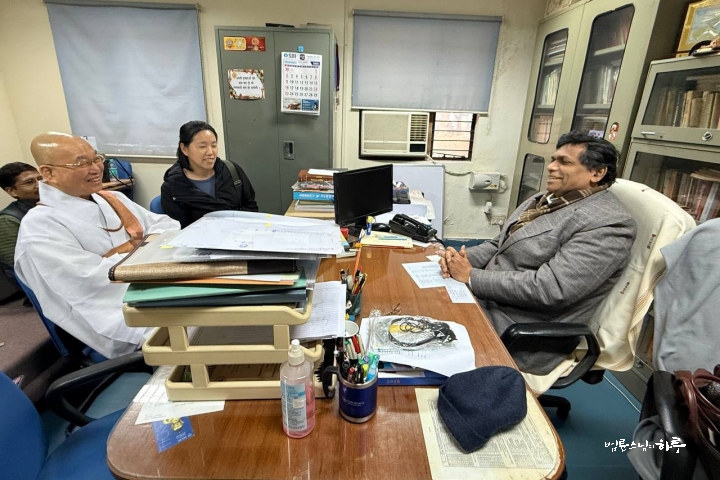
The professor explained that while Sanskrit, Pali, and Buddhist philosophy are taught and researched at Jawaharlal Nehru University, an independent center dedicated to Buddhist studies has not yet been fully operational. Although the establishment of a Buddhist Studies Research Center was recently approved through university procedures, he said it would take time before actual launch due to insufficient financial and institutional support. The professor noted that while the Indian government emphasizes Buddhism nationally, the academic research foundation is still lacking, and requested international cooperation and advice.
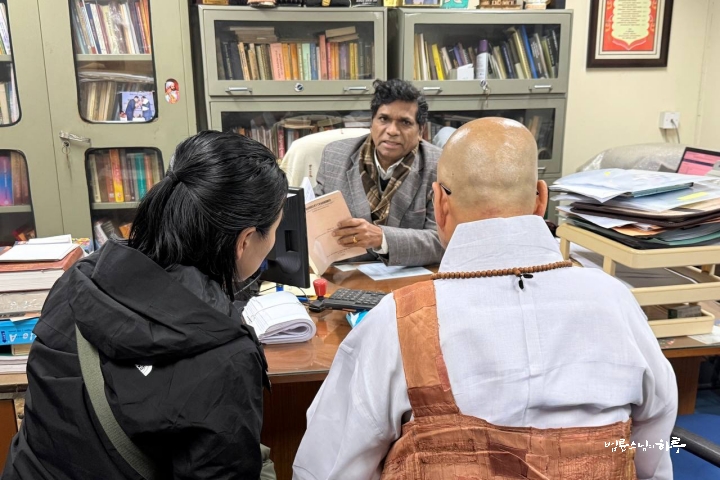
In response, Sunim explained that he had focused on social practice rather than academic research, and suggested that academic cooperation would be best pursued through Dongguk University (동국대학교), Korea’s specialized Buddhist university. He then emphasized that Buddhism cannot have lasting influence if it remains only at the level of cultural heritage, and that it gains true significance when it presents ideological alternatives to the crises facing modern society.
“If the Indian government uses Buddhism merely as stories about ‘Buddha being born in India’ or focuses only on historical sites, its influence on the international community won’t last long. While that’s necessary, it’s not sufficient. Humanity is now at a civilizational limit with environmental crises, climate change, inequality, and conflict. In such times, what’s important is deeply researching Buddhist thought to see what alternatives it can offer for future society. When such research takes place in universities, India can have long-term civilizational leadership rather than short-term event-centered influence.”
After an hour of discussion about the direction and role of Buddhist research, they took a commemorative photo together and headed to the next meeting location.
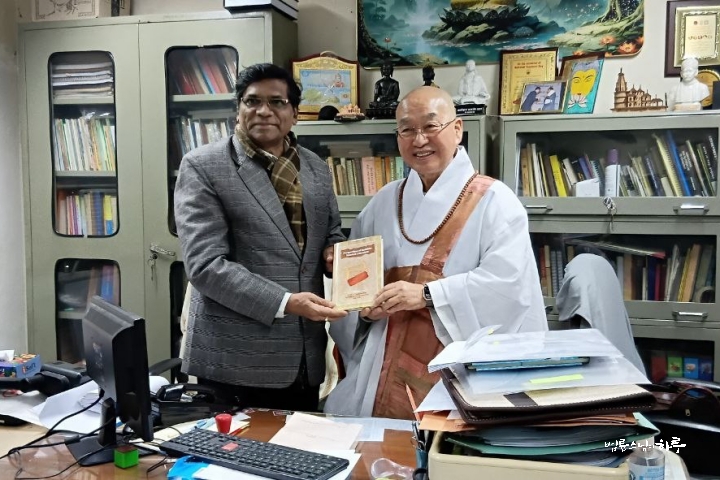
At 1:30 PM, Sunim met with professors from the Korean Language Department at Jawaharlal Nehru University. Since all were Korean language instructors, no interpretation was needed. They conversed comfortably in Korean in a warm atmosphere. It was especially delightful that 6 out of the 8 participating professors were from Bihar state, where Sujata Academy is located.
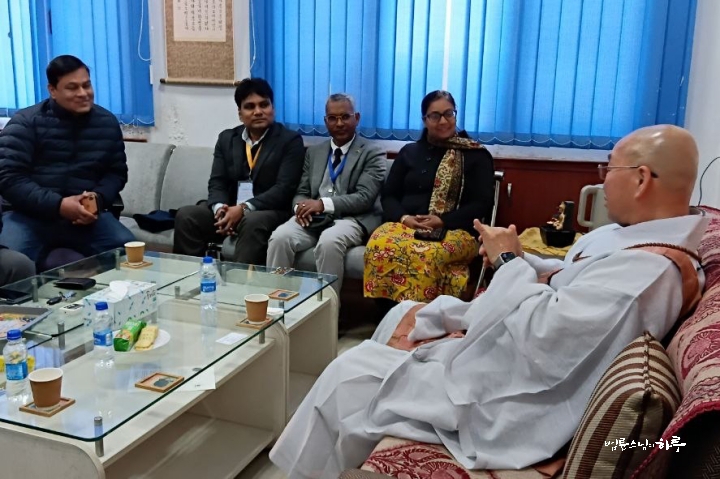
The Korean language professors first explained the foreign language education system within Jawaharlal Nehru University and the position of the Korean Language Department. They introduced that the Korean Language Department is uniquely operated as an independent department in India, with education provided alongside French, German, Spanish, Japanese, Chinese, Russian, and Arabic. Several professors shared their personal experiences of studying in Korea, teaching at Korean universities, temple stays and temple visits, and Korean food and vegetarian culture. They showed particular interest by asking questions about Korean Buddhism, Korea’s religious environment, and possibilities for academic and cultural exchange between Korea and India.
In response, Sunim shared his experience of operating a school for Dalit children in India for over 30 years, and told various stories about Korea-India exchange and the relationship between Buddhism and society.
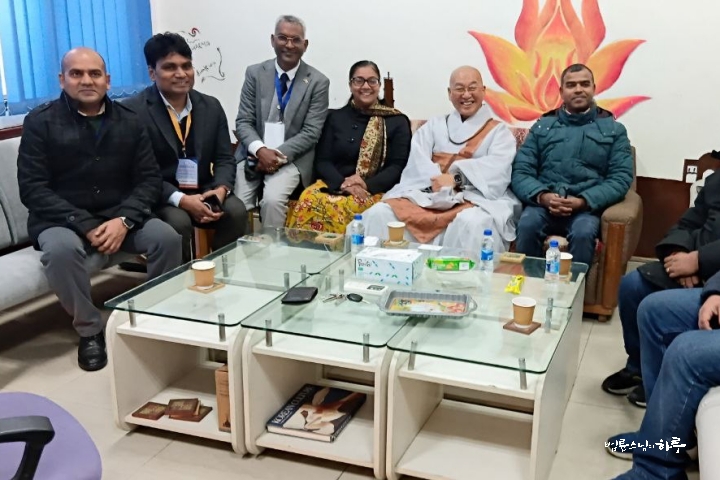
After taking a commemorative photo together, everyone moved to the lecture hall. Today’s Dharma Q&A lecture was scheduled to take place in a classroom of the Korean Language Department at Jawaharlal Nehru University. It was especially welcoming to see a sign in Korean at the classroom entrance.
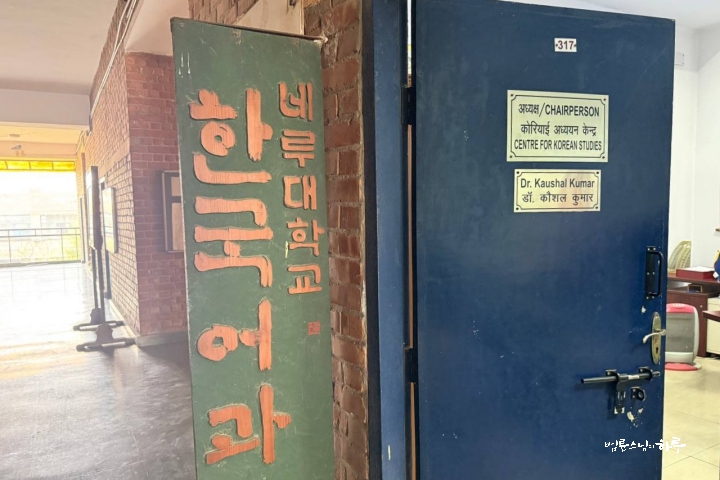
About 50 people, including Korean language students and students from other departments, were seated in the classroom waiting for Sunim. The Korean language professors also sat in the front row, showing high interest in Sunim’s lecture.
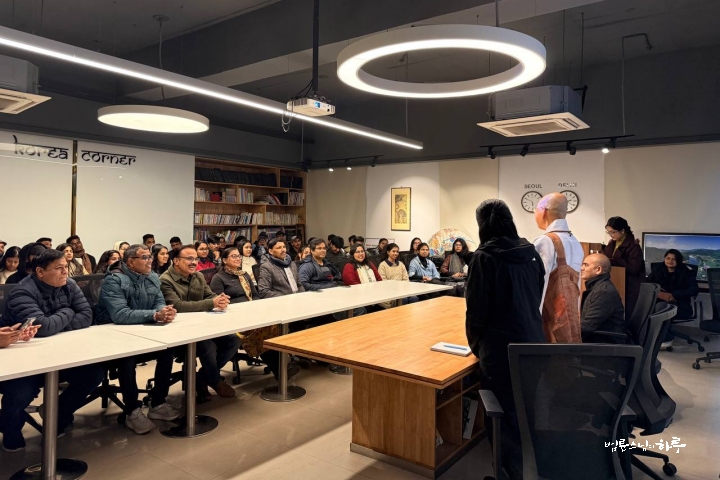
After watching an introductory video about Sunim together, Sunim took the podium to great applause. The dialogue began with Sunim’s bright smile.
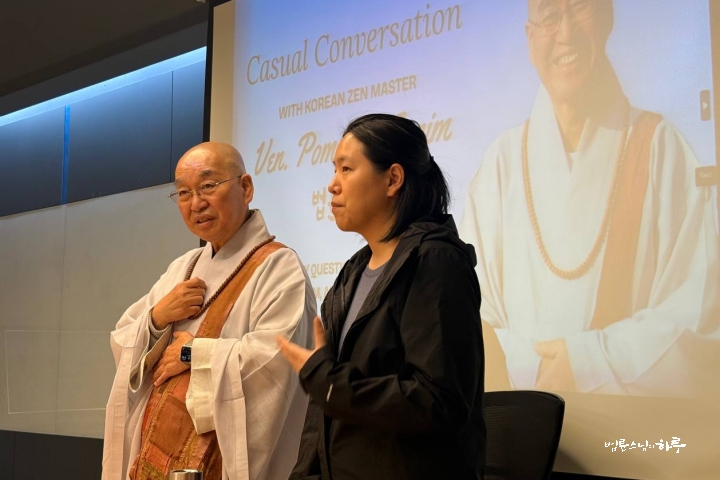
“I originally wanted to become a scientist. However, during my high school years, I was caught by a monk from a temple next to my school and literally forced to become a monk. At first, I didn’t want to become one at all, but that monastic life I started has now been 56 years, and now I feel it’s quite worthwhile. Actually, since I wanted to be a scientist, I didn’t particularly like religion. I felt that religious people often told irrational, fanciful stories. So when I studied Buddhism, I approached it from a scientist’s perspective. I’ve tried to explain our mental functions and life like science, avoiding fanciful stories as much as possible. I hope you too will examine things like research when you have questions, asking ‘What is this?’ and approach through dialogue. There’s no forcing beliefs here. I hope today’s session will be a time to explore and discuss as if researching academics. Now, please start with your questions first.”
Following this, there was time for anyone to raise their hand and ask questions about their curiosities. After freely receiving questions about students’ personal concerns, professors also had time to ask in-depth questions about Buddhism.
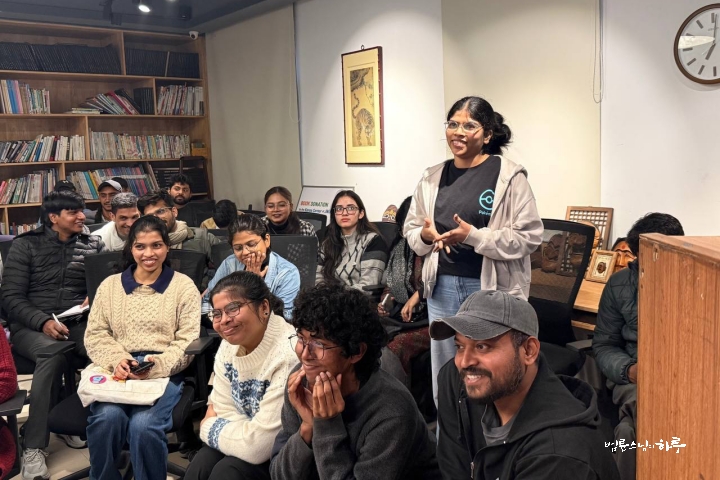
During the two hours, 13 people asked Sunim various questions. One of them started their question by mentioning they had been watching Sunim’s dharma talks through Venerable Pomnyun’s Instagram.
Why Shouldn’t Money Be a Goal?
“Does that need explanation? Money is just a means, it can’t be a goal.” (Laughter)
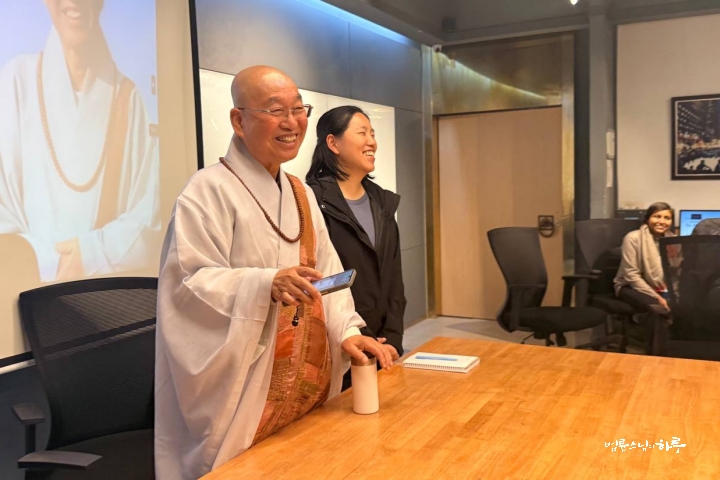
“Since we usually earn money first and then spend it, doesn’t it feel like the goal comes first and the means comes later in terms of sequence?”
“The sequence of actions might appear that way, but essentially, it’s correct to earn money in order to spend it.”
“Yes, that’s right.”
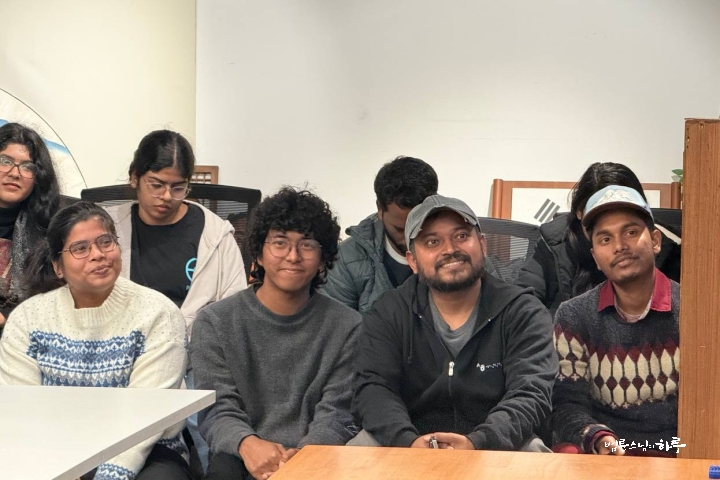
Having cheerfully resolved the doubt, the questioner asked another question.
Do We Need to Live a Satisfying Life to Be Happy?
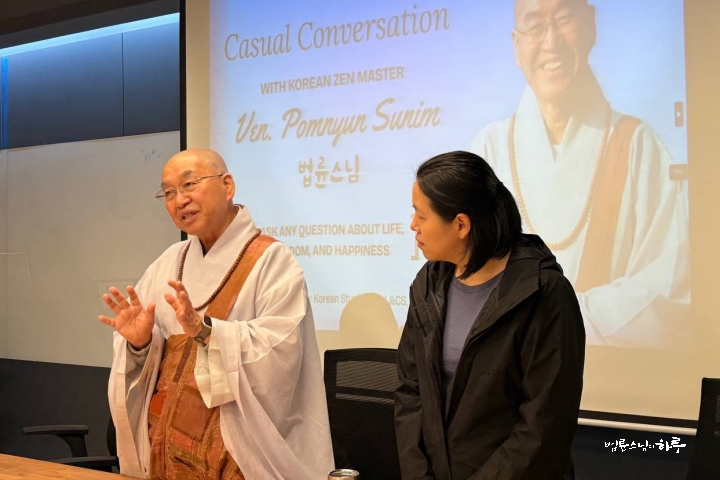
“It seems you’re experiencing some confusion because you keep treating means as if they were goals. For example, let me have this conversation with a young middle school student:
‘What’s your wish?’
‘To do well in studies.’
‘What will you do by studying well?’
‘So I can go to a good university.’
‘What will you do at a good university?’
‘So I can get a job at a good company.’
‘What will you do by getting a job at a good company?’
‘So I can earn a lot of money.’
‘What will you do with a lot of money?’
‘I need to buy a house and a car.’
‘What will you do with a house and car?’
‘Then I’ll be happy.’
Looking at this conversation, what is ultimately the purpose of life? It’s happiness. But even without going through all these processes, we can be happy right now in this moment.” (Laughter)
“Yes, that’s true. Thank you.”
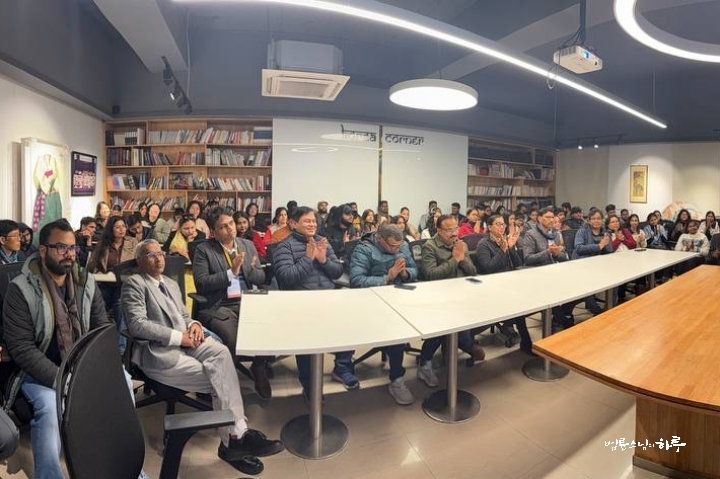
Questions continued to follow.
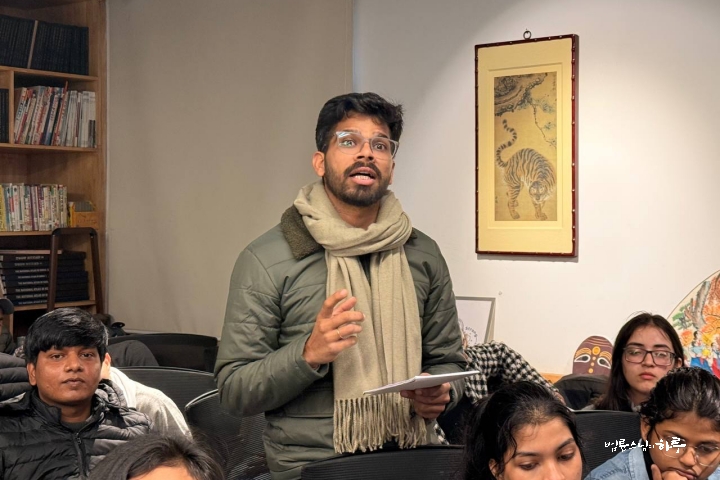
After my father passed away, I’m experiencing grief for the first time and the pain still remains. How can I live while bearing this sadness?
My father’s sculpture was stolen, causing great loss, and my mother lives far away alone, which makes my heart ache more. How can I escape from this sense of loss that comes from ‘losing’?
With talk of death and birth, I became curious about the meaning of death in Buddhism. How do Buddha and Buddhism explain ‘death’?
You said you view Buddhism from a scientific perspective, but I wonder if the concept of ‘God’ in religion is really rational. From a scientific perspective, does the concept of God really make sense?
I want to follow dharma (truth) but emotions waver and attachments arise, making it difficult to control. How can we handle emotions and practice dharma?
I’m curious about what ‘true happiness’ means as you describe it. What is your definition of true happiness?
Buddhist interpretations differ and sometimes contradict each other, making it difficult to discern what is ‘Buddhism as Buddha originally taught.’ How can we identify ‘original Buddhism’ among numerous interpretations?
I want to know how kings or powerful people can overcome arrogance to become humble. What specific practices should one do to become humble?
I’m confused about which is more important between karma and intention. When killing an animal to feed a sick child, is the fault in the ‘action’ or the ‘intention’? What is more central?
After making certain choices, regret comes up later and I feel guilty. How can I escape from guilt about my actions?
I’m confused about the boundary between freedom and avoiding responsibility when choosing to drop everything and travel the world. How can we distinguish which choice is freedom and which is avoidance?
After answering all questions, Sunim gave closing remarks.
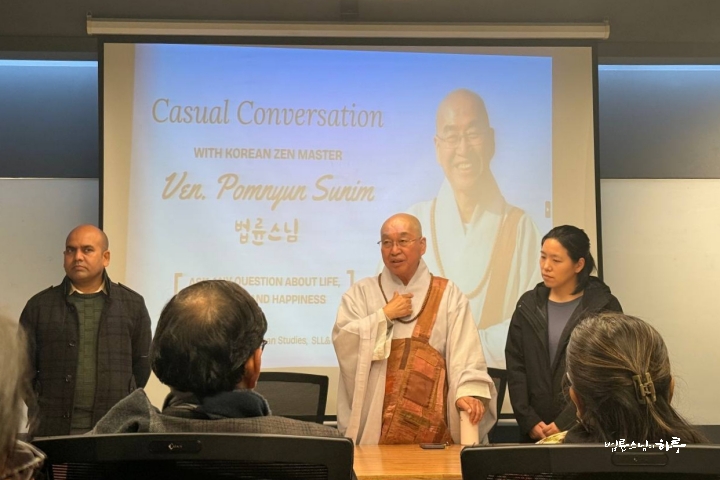
“Was I too direct? Of course, you sometimes need words of comfort too. However, Dhamma doesn’t mean comfort. Dhamma is fact. Buddha only spoke facts.
Buddha Who Spoke Only Truth Without Forcing Choices
For example, let’s say there’s food here. But there’s poison in that food. When I’m hungry and about to eat that food, what would Buddha have said? We usually think he would have said ‘Don’t eat it because it contains poison.’ But Buddha didn’t say that. He just said ‘There’s poison in it.’ Whether to eat or not is entirely my choice. If you want to die, you can eat it, and if you don’t want to die, you shouldn’t eat it no matter how much you want to.
But as time passed, Buddha’s teachings gradually changed to seem like ethical commands. The communication of the fact ‘There’s poison in it’ somehow began to be emphasized as an admonition or prohibition like ‘So don’t eat it.’ This created resistance in people’s minds, thinking ‘Why does Buddha tell us not to eat everything delicious?’ So Buddha’s teachings came to be misunderstood as teachings that prohibit all good things.
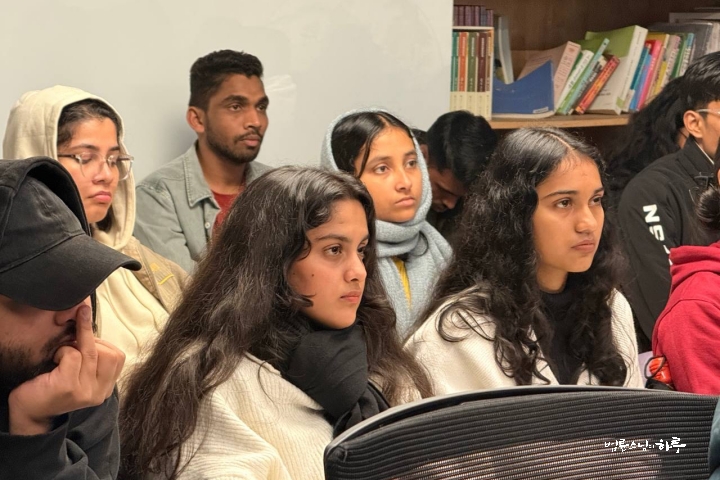
However, the Buddha spoke only the truth. Because we don’t know the truth, even though we eat to live, we ultimately face death. This leads to regret and suffering. That’s why I say Buddha Dharma is like science. It’s definitely worth studying thoroughly.
I believe that humanity’s future absolutely needs this Buddha Dharma. The fact that Gautama Siddhartha, born in India 2,600 years ago, discovered this truth is truly awe-inspiring. As a Korean, why would I favor teachings from India over Korean traditions and culture? Korea has K-pop and many wonderful cultural elements. However, truth transcends nationality and religion.
That’s why I believe Buddha Dharma is worth studying for everyone, regardless of their religion. Not as a religion, but as truth. I hope more people will take interest in the Buddha’s teachings as wisdom for all humanity.”
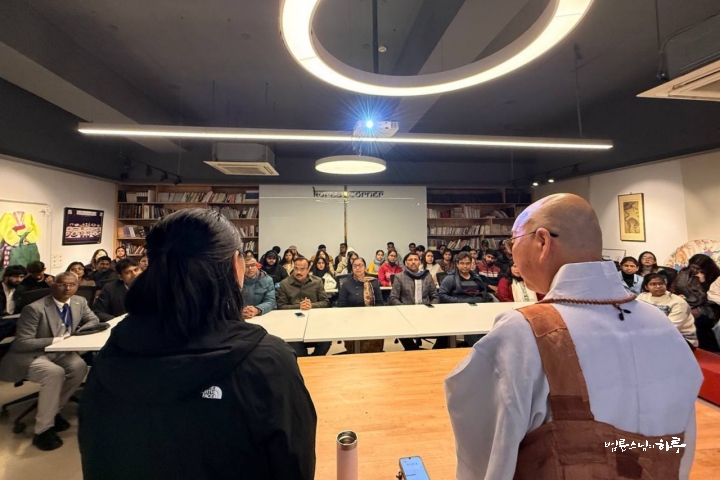
The lecture concluded with loud applause, and everyone took a commemorative photo together.
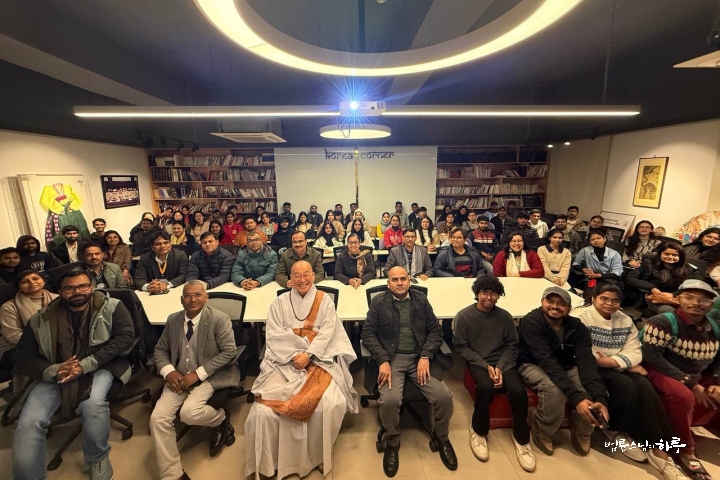
Sunim then moved to the office of the head of the Korean Language Department at Nehru University to conduct the Friday Dharma Q&A live broadcast. At 4 PM local time in India, which was 7:30 PM in Korea, over 3,200 viewers connected to the YouTube live stream. Sunim greeted them warmly.
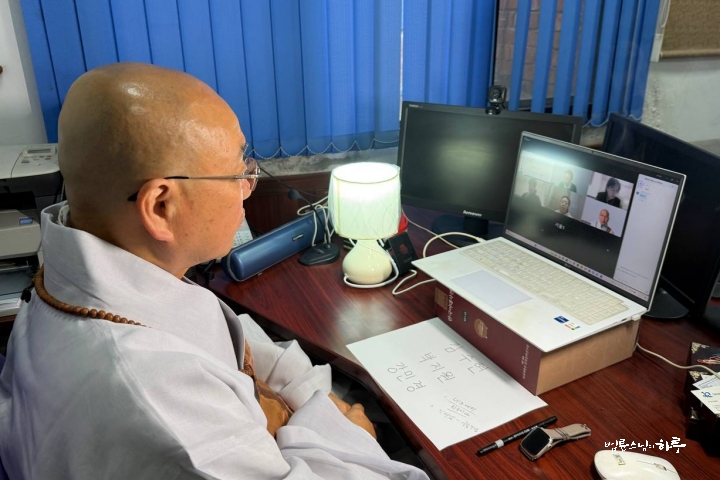
“I am currently at Nehru University in Delhi, India. Nehru University has a Korean Language Department that recruits 40 students per year. There are eight professors specializing in Korean language. Today, we have gathered with the professors, Korean language students, and students from other departments to conduct this Dharma Q&A. I just finished a lecture, and since time is tight to move to another location, I am now talking with you from the office of the head of the Korean Language Department at Nehru University.
Over the past two weeks, I visited the Aceh region in Indonesia and the Mindanao region in the Philippines. In Aceh, we helped residents affected by severe floods and landslides. We provided support by loading carts with shovels, hoes, cleaning supplies, and gas stoves. All the residents expressed their gratitude with bright faces. Let’s watch a brief video together.
Although they lost their homes and all their household items, seeing them living optimistically with smiles actually put my mind at ease. While losing their homes is a big problem, the bigger concern is how they will farm in the future, as all their farmland is buried under soil. After cleaning up the collapsed houses and surroundings, we need to carefully consider what crops to grow and what can be planted immediately on the sand-covered farmland.”
After watching the video of Sunim’s emergency relief activities in the flood-affected areas of Indonesia, the conversation continued.
Three people who had submitted questions in advance took turns asking Sunim questions. One of them said they had lived a life focused on escapism and pleasure but recently came to their senses, and asked Sunim for advice on how to approach life from now on.
I Wasted My Life Being Addicted to Games for 10 Years
However, since my second year of middle school, I’ve been addicted to games for over 10 years, procrastinating on what I should do and wasting most of my time. I worry that all this playing around will eventually become my karma, and I’ll have to live my entire life trying to catch up to others. Since adolescence, I frequently went to PC cafes or stayed up all night on my smartphone without my parents knowing. This became a habit and karma, and even as an adult, I was obsessed only with winning games while neglecting my studies, causing my grades to drop significantly. I’ve been dependent on my father for living expenses and have never properly held a part-time job.
Two years ago, I went abroad to study at great expense but failed, and after returning, I challenged the college entrance exam again but gave up 20 days ago when my scores didn’t improve. Looking back on my life, I feel I’ve exhausted all my passion and energy on meaningless obsessions and greed. Recently, through your Dharma talks, I’ve been learning a lot about the cause-and-effect relationship between pleasure and suffering. Now I’m trying to stay away from stimulating elements and live diligently.
However, I wonder if it’s too late to start over now, if I’ve come too far, or if it’s too late to achieve my dreams. I even had thoughts of suicide because my mind was so troubled. The self-blame for living irresponsibly has hit me all at once, and I’ve lost all motivation. In this situation, I would like to ask how I can live with positivity and hope again.”
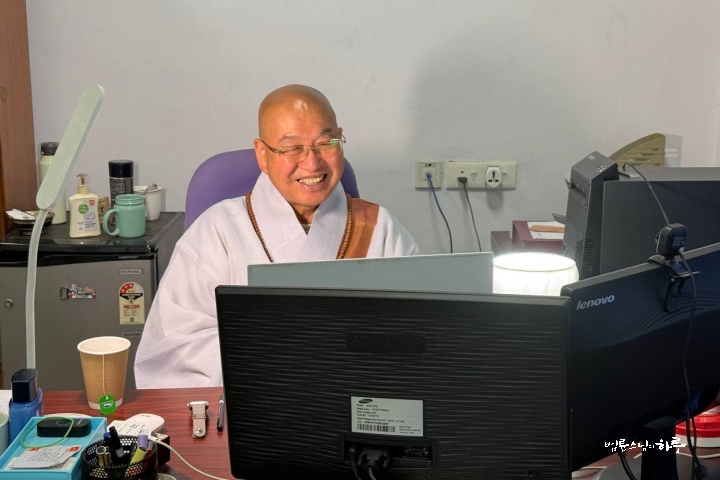
“You really had a good time playing for about 10 years. Actually, all teenagers want to play games and do whatever they want, but they don’t get to live that way. But you got to play to your heart’s content without limits. That alone is an experience and, in a way, a success. So why are you blaming yourself so much? Among successful people, many regret that they can’t go back to their youth and play freely. Since you’ve played enough, now you can think, ‘Let’s put playing aside and try working.’ Have you heard the saying, ‘The moment you think it’s too late is actually the earliest time’?”
“Yes, I’ve heard it many times.”
“Try saying it after me: The moment you think it’s too late is actually the earliest time.”
“The moment you think it’s too late is actually the earliest time.”
“Most people don’t even realize it’s late. But you’ve realized it’s late. However, you couldn’t take one more step forward and gave up instead. That’s how you ended up thinking, ‘I might as well die.’ You haven’t reached the point of understanding that ‘the moment you think it’s too late is actually the earliest time.’
To properly reflect on the past, you need to tighten your shoelaces from now on and commit to studying or working hard. What’s the point of dying? You’ll just end up as a failure who played games. You’ll become a failure who wandered during adolescence and ended their life. Even if you wandered a bit when young, you need to come to your senses and become successful. It’s never too late.
Don’t regret what you’ve done. Instead, take pride in the fact that you played to your heart’s content when you were young. From now on, even if others drink and play, you don’t need to pay attention to that. If you focus only on studying or work from now on, you might actually progress faster than those who are playing now. How many people continue drinking and wandering around even while attending school or work? Real estate investment and stock investment are essentially no different from games. But you’ve already realized that all of this is ultimately just a game, a useless activity. If you’ve realized that, it’s definitely not too late. You need to realize that ‘the moment you think it’s too late is actually the earliest time.’ You need to have the perspective that you’ll focus on studying or working from now on. Just do what you can do now.
You can use your gaming experience to get a job at a gaming company, or you can go to any company. We’re moving toward a society where conditions like academic credentials are becoming less and less important. You can go to university if necessary, but you don’t have to go back. If you make plans to start studying now and achieve something big, you’ll only be disappointed again. Just find what you can do now and do it.”
“I’ll be grateful that I can study even now and live diligently.”
“Wouldn’t it be better to find a job and work?”
“I haven’t graduated from university yet. I’m thinking of attending school while preparing for the patent attorney exam.”
“Were you somewhat academically inclined when you were young?”
“Before I got addicted to games, I did focus on studying to some extent.”
“To study for exams, you first need to have some academic ability. If you think studying suits your aptitude, prepare for the exam. If not, it’s better to learn a skill and establish yourself quickly. You shouldn’t just follow others taking exams; you need to choose according to your aptitude.”
“Yes, I’ll consider it. Thank you. Thanks to your words, I realized that I haven’t been properly reflecting but only suffering from regret. As you said, I’ll keep in mind that ‘the moment you think it’s too late is actually the earliest time’ and live faithfully so I don’t live like before.”
“Regretting your youth is not an attitude of deep reflection. You need to be able to view the past positively, thinking ‘I had a good time.’ You should conclude, ‘I’ve played enough, so let’s stop playing now.’ Even if someone invites you to drink or go out, you can think, ‘I did a lot of that when I was young, and I’ve graduated from it now,’ and not pay attention. Then you can actually invest more time in studying or work than others.”
“Yes, I’ll keep that in mind.”
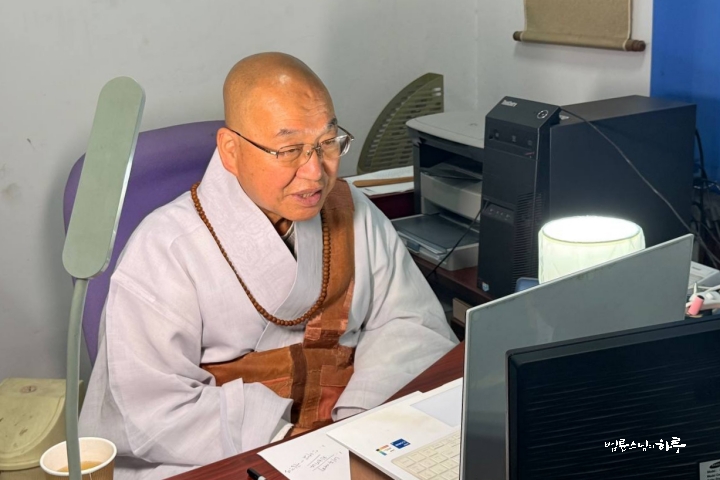
Questions continued to follow.
I studied again to get into a better university and am satisfied with the results. However, my parents are disappointed, saying the time and money were wasted, which makes me feel wronged and guilty.
Even when hurt, I can’t express it immediately and repeat anger and regret alone, making interpersonal relationships difficult. I fear conflict but can’t avoid people in reality, so how should I handle relationships?
It was past 5 PM when the live broadcast ended. After finishing the broadcast, all the Korean Language Department professors who had been waiting saw Sunim off on his way.
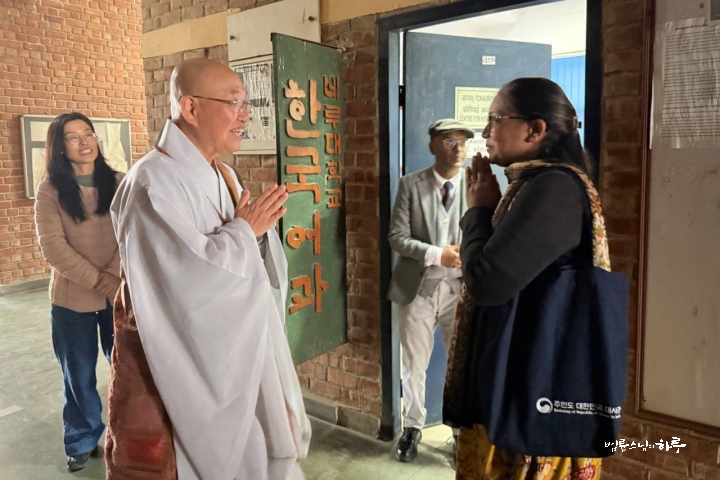
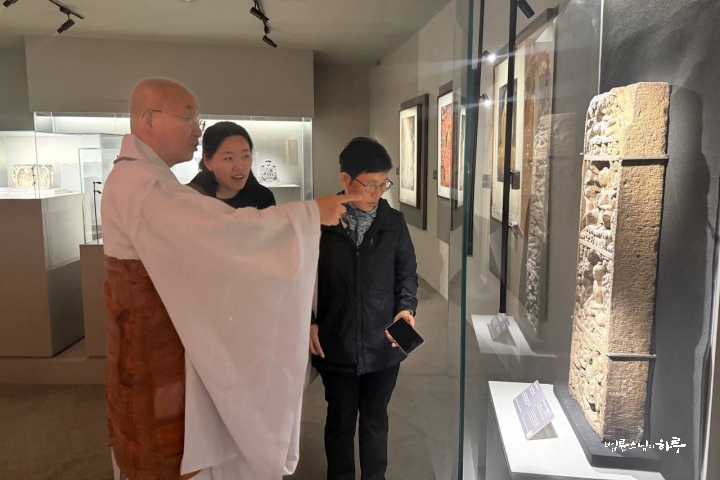
After leaving Nehru University, Sunim decided to briefly visit a special exhibition of Buddha’s relics being held at the nearby Rai Pithora Cultural Complex in Delhi, India. Sunim spent about an hour touring the exhibition hall, examining relics containing traces of the Buddha.
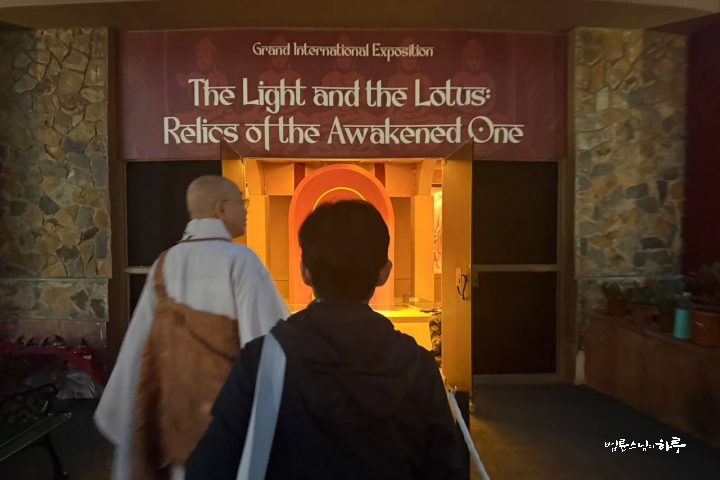
It was a special exhibition hosted by the Indian Ministry of Culture titled ‘The Light and the Lotus: Relics of the Awakened One.’ The exhibition featured Buddha’s relics and artifacts excavated in 1898, along with artifacts and jewels recently returned from the British Pepe family. It was particularly special as artifacts that had been stored separately in the National Museum of India and the Indian Museum in Kolkata were gathered in one place.
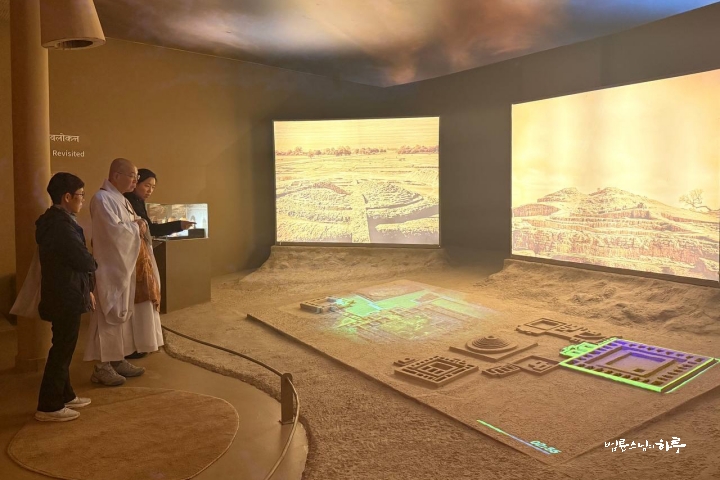
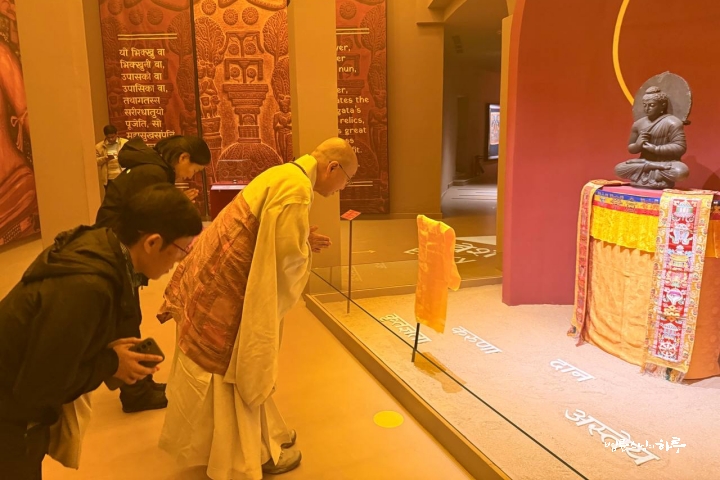
Through over 80 artifacts including sculptures, documents, and ritual items from the 6th century BCE to the present day, visitors could carefully observe how the Buddha’s teachings have been passed down.
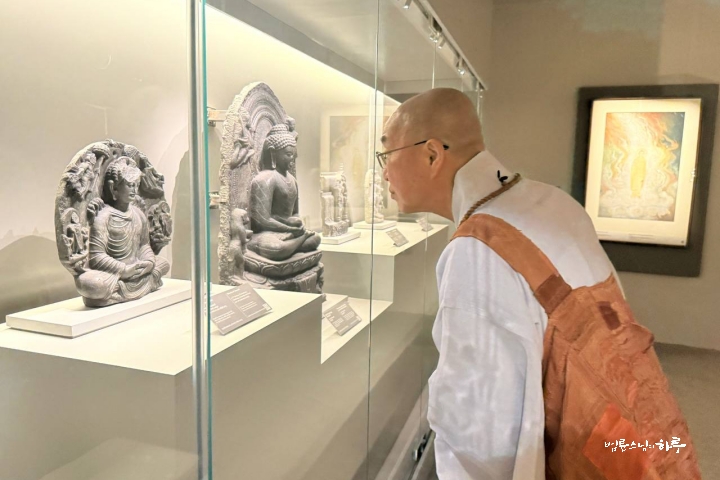
After finishing the special exhibition tour, Sunim headed to his next meeting location at the Indira Gandhi National Centre for the Arts. Arriving at the meeting place at 8:30 PM, Dr. Ashish Bhawe, Director of the Indian Institute of International Cultural Studies, warmly welcomed Sunim. Venerable Buddhapala, the abbot of Bunhwangsa (분황사), a Korean temple in Bodh Gaya, India, also joined the conversation.
Dr. Ashish Bhawe mentioned that he visited Korea last April and met with various experts to learn about Indian culture and Buddhist culture transmitted to Korea. Sunim expressed respect for the doctor’s research activities and had extensive discussions about exchanges between India and Korea.
It was past 11 PM when he returned to his accommodation after the meeting. It had been a long day.
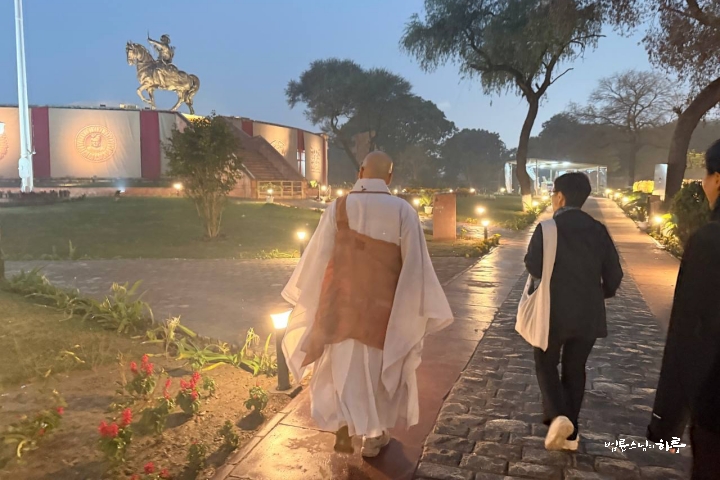
Tomorrow morning, Sunim will attend the 2nd Global Buddhist Summit hosted by the International Buddhist Confederation (IBC). In the afternoon, he will travel to the airport and fly to Varanasi, and in the evening, he will arrive in Sarnath to attend the opening ceremony of the India Pilgrimage.