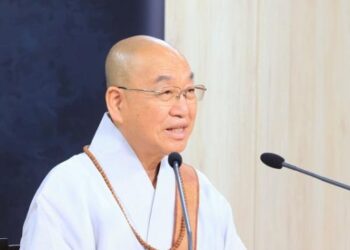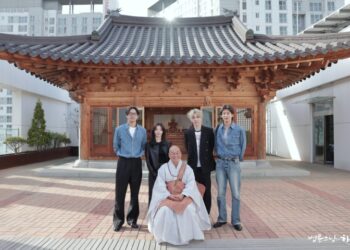

Jan 16, 2026 – Day 5 of Mindanao Survey
Hello. Today marks the fifth day of Sunim’s survey trip to Mindanao, Philippines. Sunim spent the entire day inspecting sites for new schools to be built, and after completing the final evaluation meeting, he departed for Banda Aceh, Indonesia.
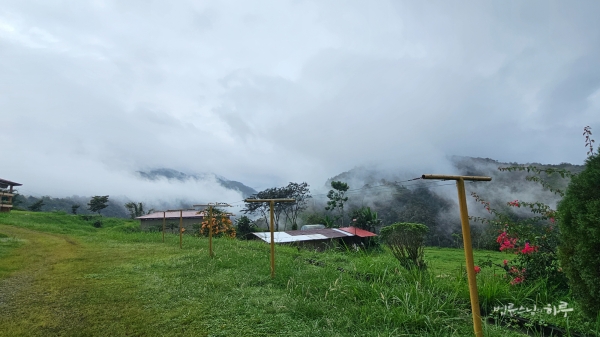
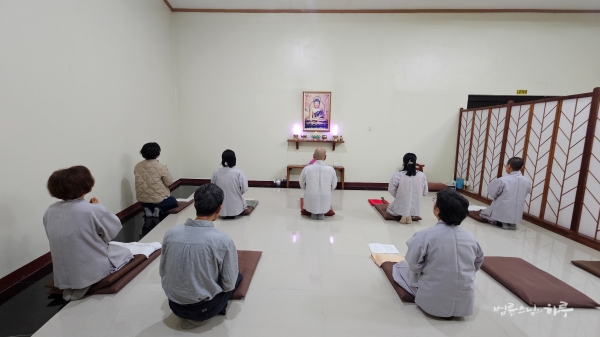
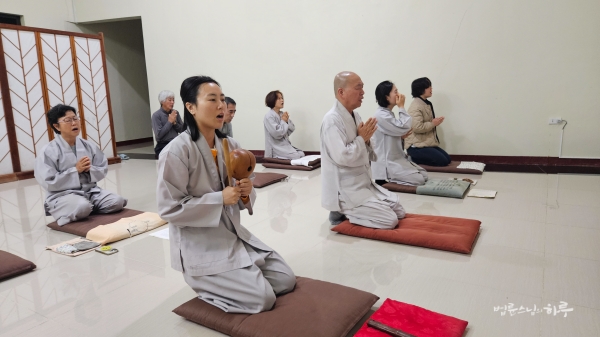
Rising at 4 AM, Sunim began the day at 4:30 AM with morning chanting and 1000-Day Practice prayers together with volunteers at the JTS Center dormitory.
After prayers, breakfast was served at 6:30 AM. Everyone enjoyed the meal carefully prepared by the JTS Mindanao Center while engaging in conversation.
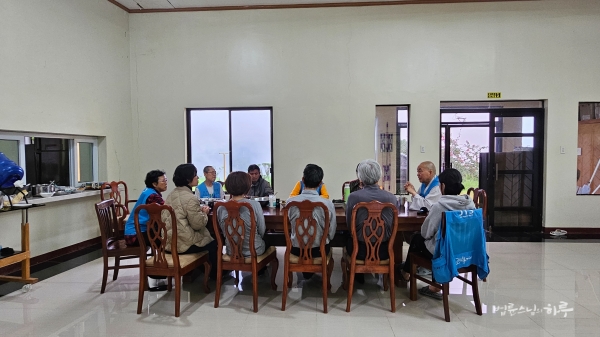
“Sunim, you won’t be able to eat properly for the next few days, so please eat twice as much today.”
“Why won’t I eat properly? I’ve been eating well during this trip.”
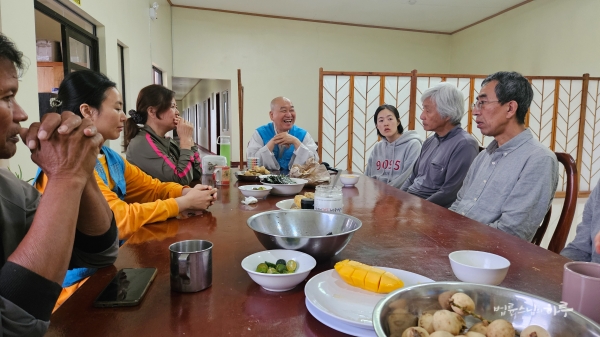
“Yesterday you only ate plain, hard rice without any side dishes.”
“The rice was hard, so I had to chew it thoroughly, which made it taste savory and delicious.”
“Then can we serve you hard rice from now on?”
“No, thank you.” (laughter)
After breakfast, the morning assembly began at 7 AM. Sunim summarized the entire survey and shared the direction for JTS Philippines’ projects this year with the volunteers.
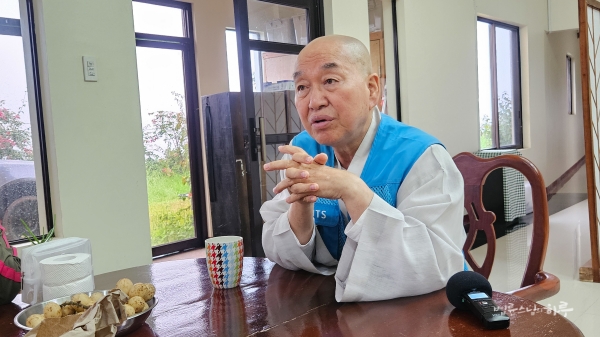
“After surveying everything this time, we received requests to build new schools at 18 locations. Among them, 2 schools will receive remodeling, and 2 schools were found to be not yet ready after inspection. If we accept requests from municipal offices or education offices to build at the unprepared locations, combined with the 4 schools we started last year but haven’t completed, we’ll have a total of 22 schools to build this year. It’s impossible to build them all using our current methods, so I personally conducted this survey to explore special changes to our approach.”
Sunim explained that among the 22 schools, excluding 2 that need remodeling and those without secured land or budget, they would need to build a maximum of 22 and a minimum of 15 schools.
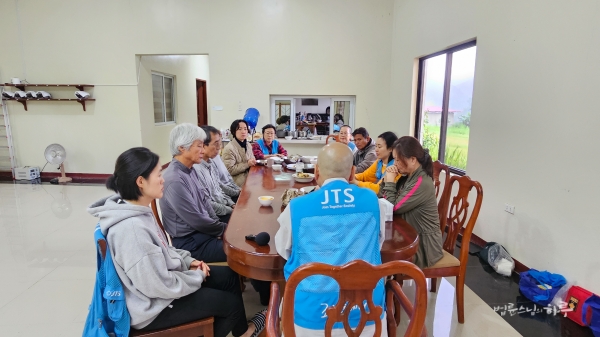
“During this survey, we discussed with the education office and decided to change our school construction method. The education office will now be the main entity responsible for building schools. We’ve changed our policy so the education office takes responsibility for school construction. JTS will support materials needed for the 22 schools and handle only the accounting, which is already overwhelming. While we might occasionally visit construction sites, the responsibility for building schools will be transferred to the education office.”
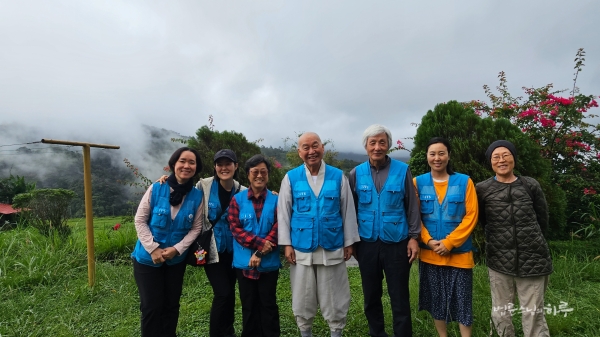
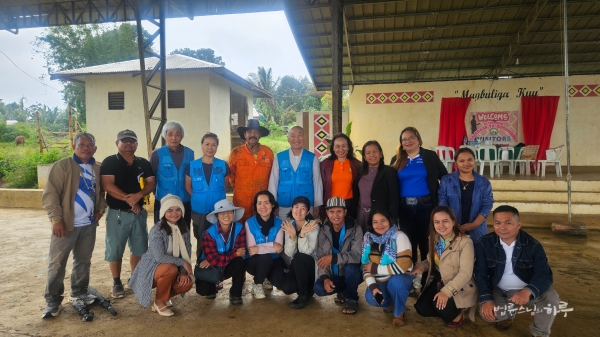
After the morning assembly, Sunim encouraged the JTS Philippines volunteers working in remote areas and took a commemorative photo together.
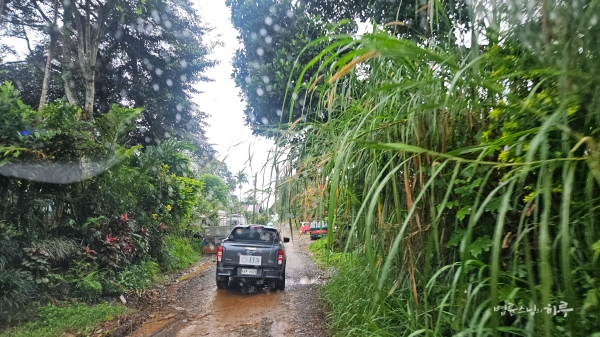
At 9 AM, the group departed from the JTS Center heading to the first survey location, Kalasuyan Indigenous School.
At 9:40 AM, they arrived at Kalasuyan Indigenous School, where construction is currently in progress. Sunim toured the construction site and checked the progress.
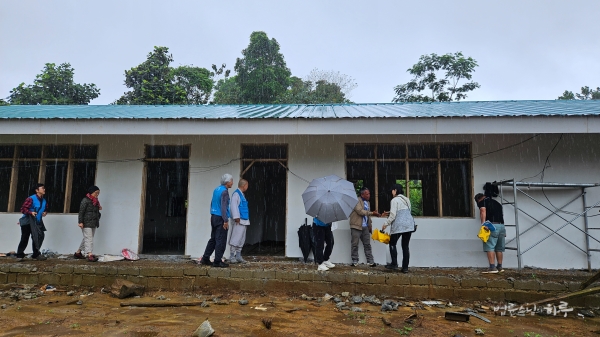
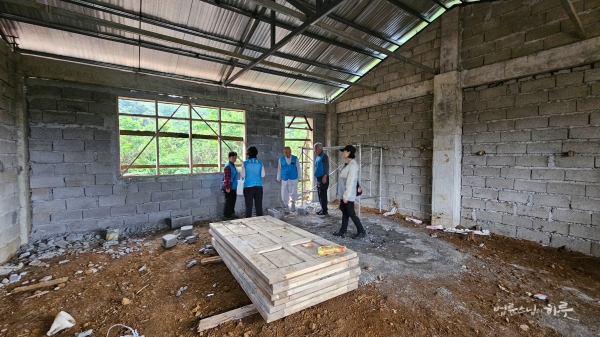
Four classrooms were being built, and white painting work was in full swing. Sunim carefully checked the toilet arrangements.
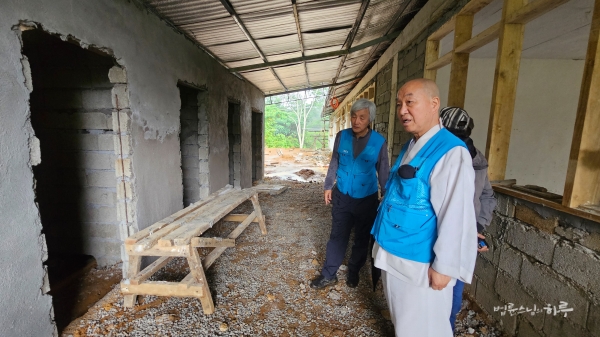
“Since women take longer in the restroom, we need to allocate more toilet stalls for them. That’s how we meet gender equality standards.”
After instructing adjustments to the toilet layout, Sunim spoke to Rolen, the education office coordinator, about the construction pace.
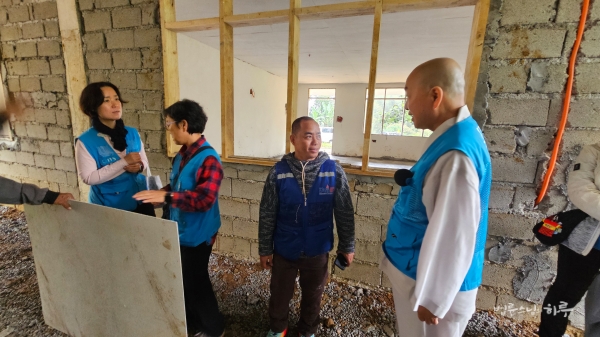
“The children are having classes outside because they don’t have classrooms right now. So please speed up the construction work.”
“Yes, we will do that.”
After checking the construction site, they departed for the next location at 9:50 AM.
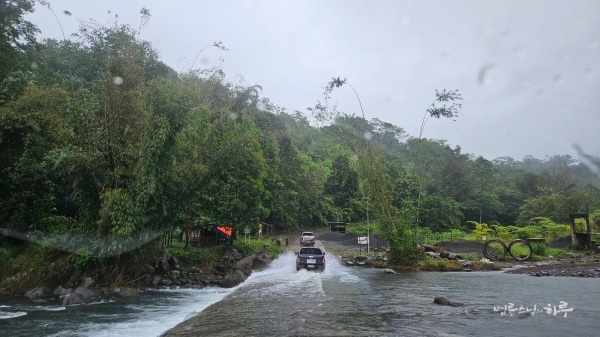
At 11:20 AM, they arrived at Kalugmanan Elementary School. It’s a large school with 560 students and 19 teachers, with 90% of the students being from indigenous tribes.
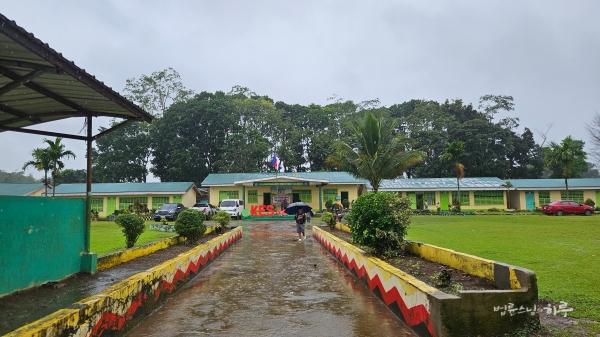
Hyanghoon, the JTS Secretary General, explained the school’s situation.
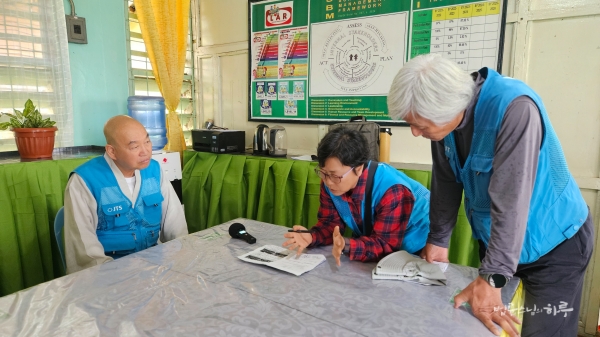
After meeting and greeting the principal and school officials, Sunim explained JTS’s principles.
“JTS’s principles for building schools are: first, to build schools in indigenous villages that don’t have schools. Second, to build one special school for children with disabilities in each municipality. So this location doesn’t originally qualify for support, but since the mayor earnestly requested it, we need to discuss it now.”
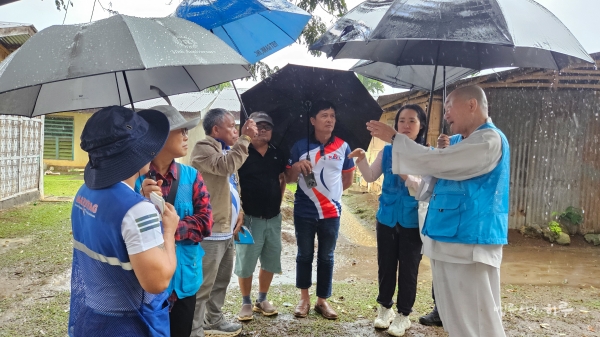
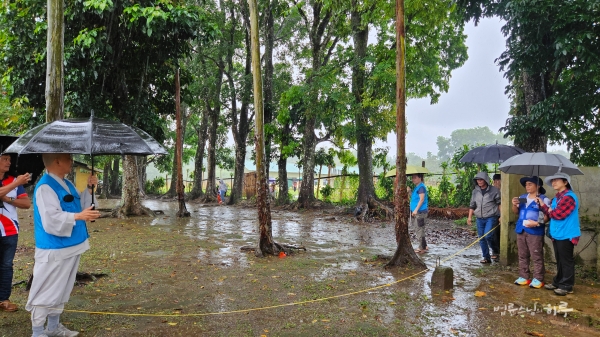
Sunim personally toured the site and examined the building placement. They had planned to build in the open space between buildings, but there was an issue with inefficient land use due to the building arrangement. Park Gina, JTS President, offered a suggestion.
Sunim nodded in agreement.
“That’s right. Since both front and back would become useless, it would be better to build attached to the fence side.”
He confirmed with the principal.
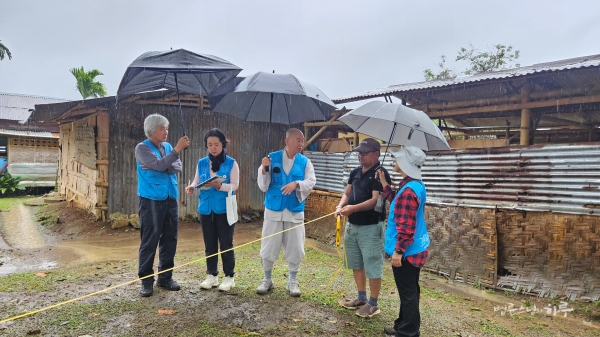
“If we build attached to the school boundary like this, the building won’t align with the straight line. Is that okay?”
“That’s fine. It’s good because we can use the middle area like a playground.”“Great! Thanks to President Park’s idea, we’ve found a solution.”
Sunim finalized the location for the new classrooms while advising them not to cut down trees and maintain the forest area.
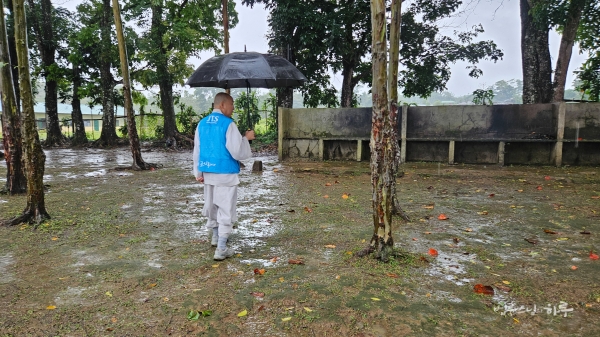
Due to heavy rain, they moved inside a classroom to continue the conversation. When Sunim mentioned that building additional classrooms at this school doesn’t align with JTS principles, Edwin explained about the indigenous education curriculum.
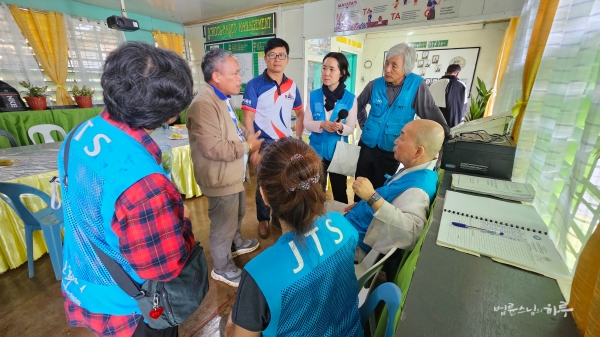
Sunim made a proposal.
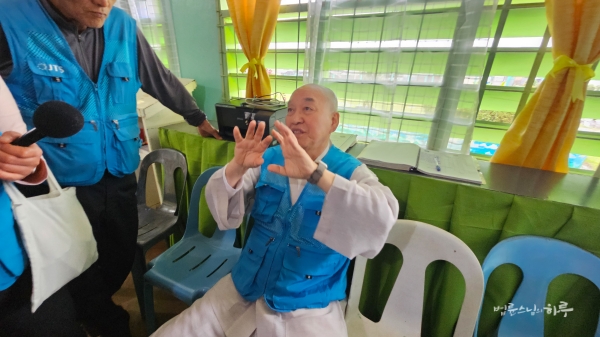
“Then it would be good if this school becomes a center where indigenous school students can hold traditional culture competitions for traditional dances, songs, and have award ceremonies. They could also have speech contests. If you continue researching ways to preserve traditional culture like this, we’ll proceed with the classroom expansion.”
Edwin actively agreed with Sunim’s proposal and responded.
“Thank you. August 9th is Indigenous Peoples’ Day. And in October, we have designated cultural weeks for each tribe every week. While we won’t have competitions in 2026, we’re planning many opportunities to showcase our culture.”
“Okay, you’re doing very well.”

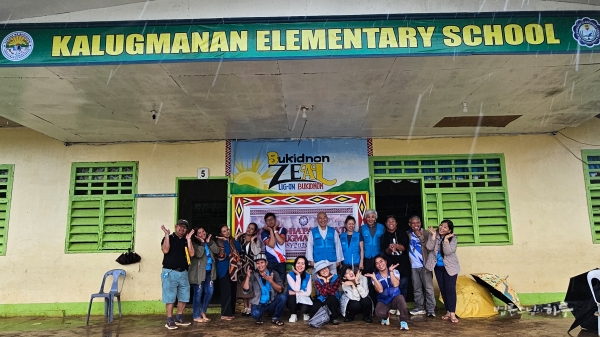
After taking a group photo, they departed from Kalugmanan Elementary School at noon for the next destination.
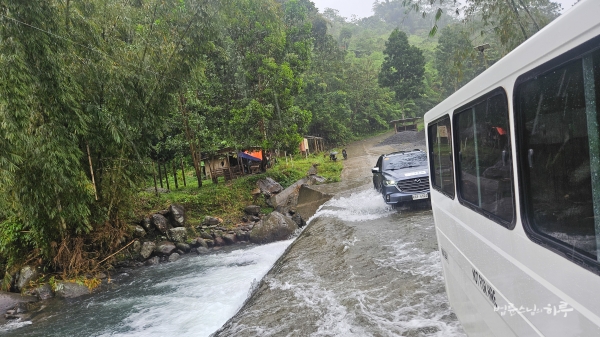
At 1 PM, they arrived at Salagaan Ta Quisumbing Indigenous School. Located at 840 meters above sea level, this village was using a cooperative building as a temporary school.
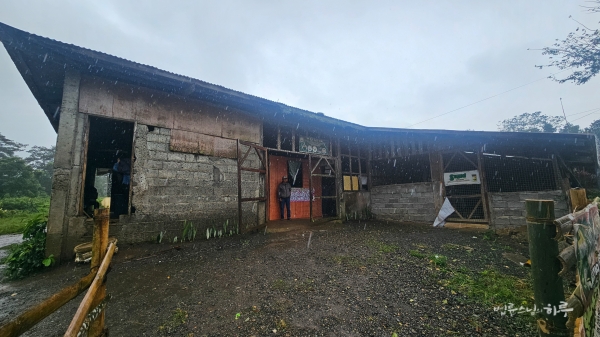

With 144 students and 5 teachers, this temporary school started in June 2025, less than a year ago. Children from 950 households use this school. The teachers requested 7 classrooms to be built.
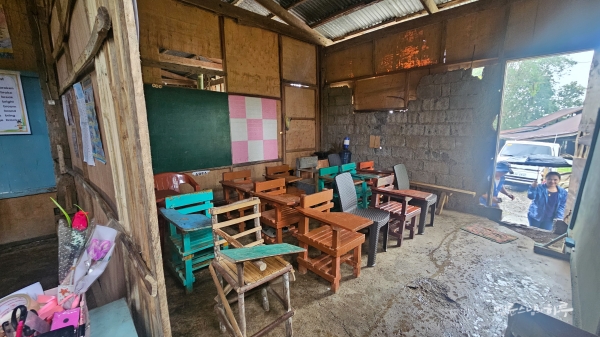
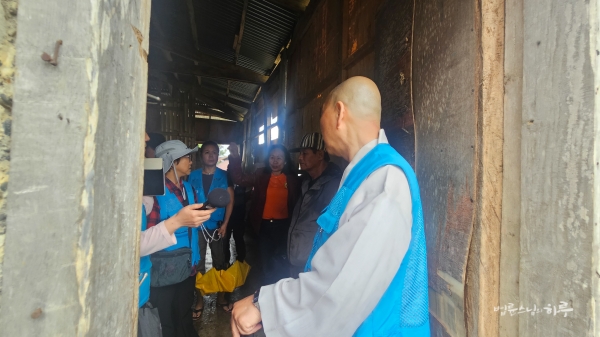
Sunim asked a question.
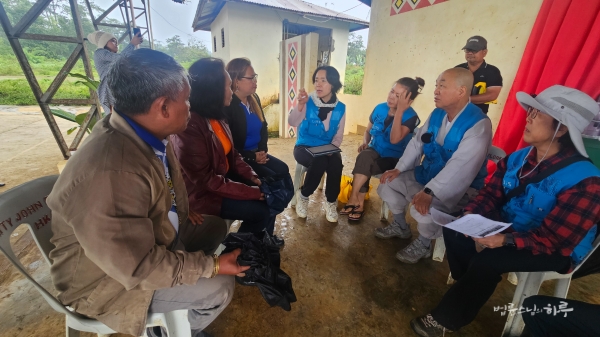
“The main road is right nearby here. Why hasn’t there been a school here until now?”
The parent association president answered.
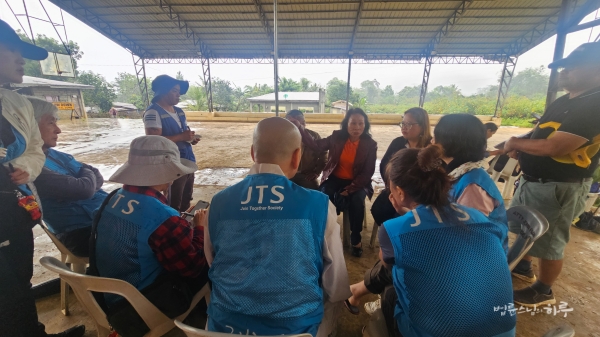
“What’s the nearest school from here?”

Sunim personally toured the school site. It was a 2-hectare plot of land. He walked between cornfields and bamboo groves, checking the slope and direction.
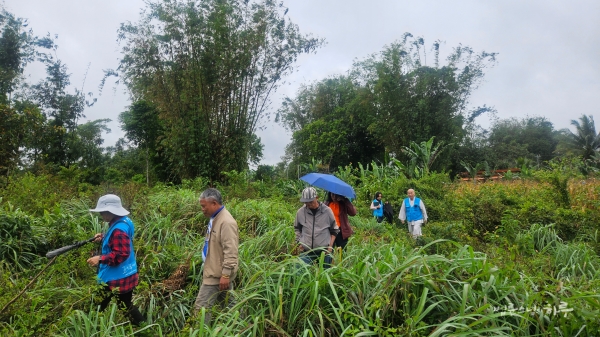
“Since this land has a slope like this, with this side being relatively flat and that side having a slight incline, wouldn’t it be better to build in this direction? It would make construction easier.”
“Power lines pass through there, so it’s a bit dangerous on that side.”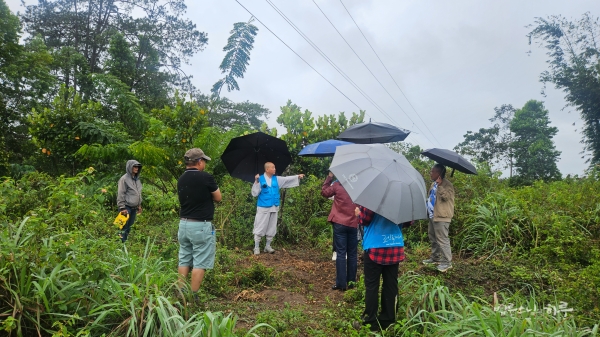
He confirmed the classroom layout while personally measuring distances with a tape measure.
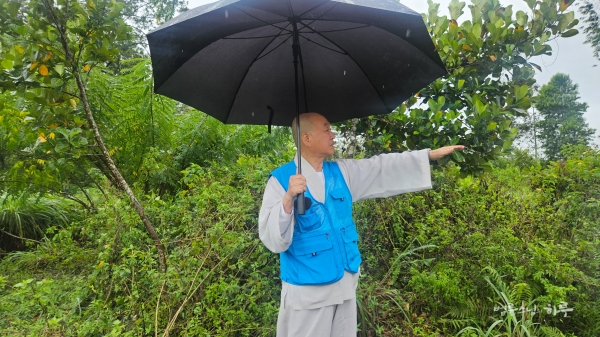
“If we build 7 classrooms in a 7×7 configuration, the building will extend to here. How far does the land go?”
“Up to that acacia tree.”“Okay, then there’s no problem. Let’s decide on 7×7, 7 classrooms.”
Due to the slope, opinions emerged that the school could be built with 3 sections at the same level and 4 sections at a different level. However, after examining the site, Sunim determined there wouldn’t be much difference and decided to build it in a straight line. Nevertheless, he decided to gather opinions from the construction workers with these two options before making the final decision.
Sunim called the engineer and explained in detail how to build the school while drawing the blueprint himself.
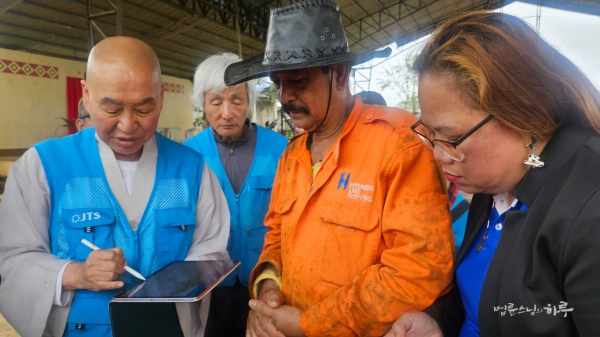
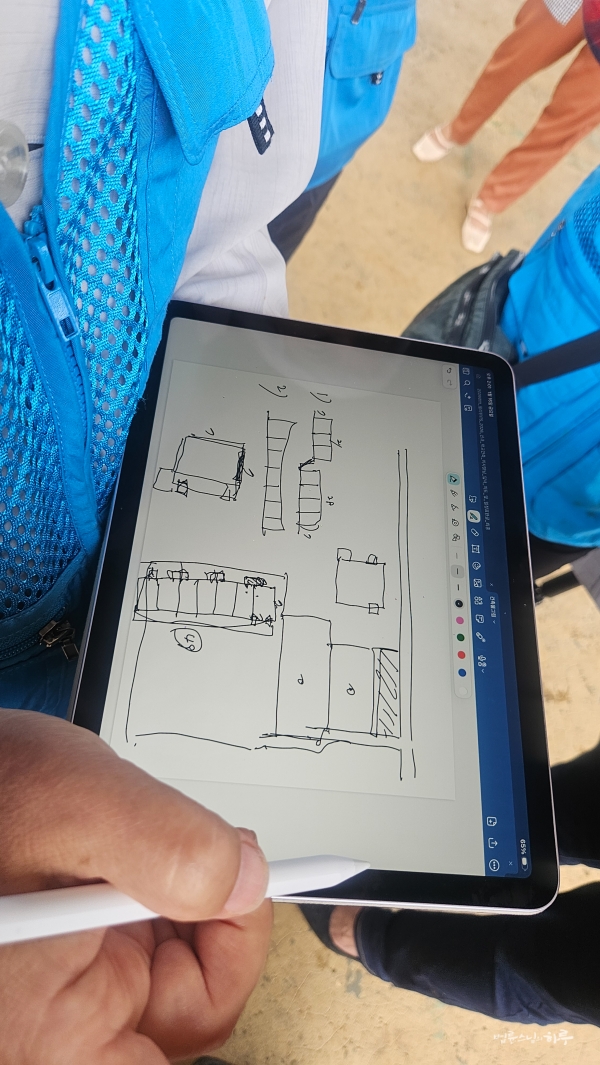
After completing the survey, they took a commemorative photo together.
The evaluation meeting began at 2:30 PM. JTS Philippines volunteers, education department officials, Indigenous Education Officer Edwin, and External Relations Officer Rolen attended the meeting.
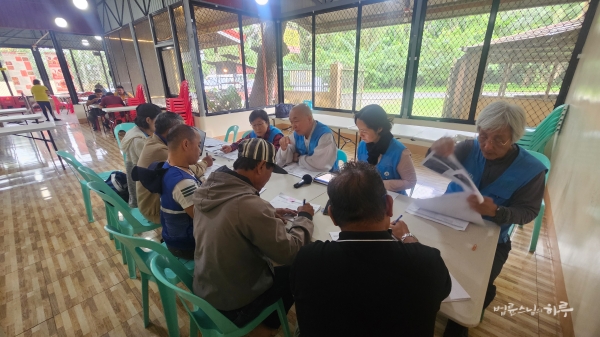
“Let’s have the meeting first and eat later. We visited 18 new sites and saw 2 that have been under construction since last year. We visited a total of 20 sites.”
Sunim reviewed each school one by one. As a result of this survey, 11 schools were confirmed for new construction. 7 schools remained undecided due to insufficient preparation.
The 7 undecided schools included 2 special schools, 3 schools with land issues, and 2 schools where the municipal budget had not been allocated. For the 2 special schools, Sunim suggested dispatching teachers first and starting construction after classes were formed. Therefore, construction will likely begin after September or next year when preparations are complete. For the 3 sites with poor location or steep slopes, he suggested finding alternative sites. The 2 schools with unconfirmed municipal budgets will be decided after budget allocation in June. Sunim concluded the meeting by saying:
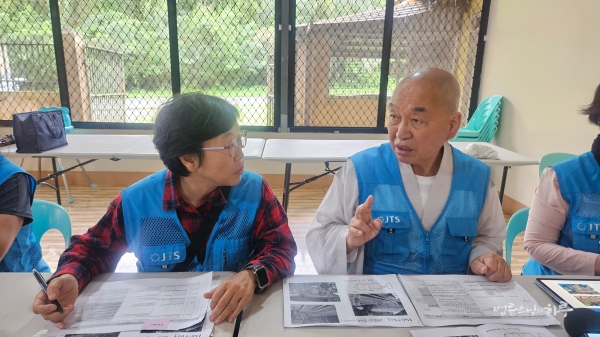
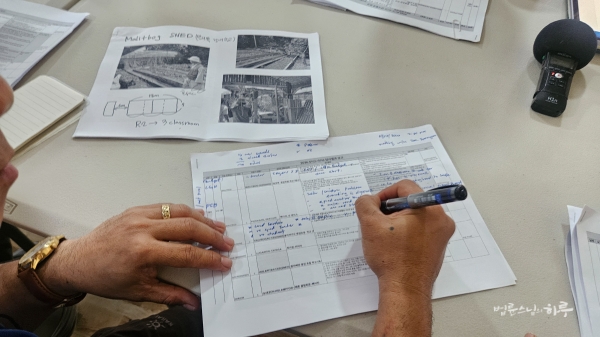
“To summarize, 11 are confirmed and 7 are undecided. So this year we’ll build at 15 sites, including the 4 that started last year but weren’t completed. The 7 undecided ones can also begin construction as soon as preparations are ready. If this system works well, we can expand the scale next year. If things go well, we might be able to build 30 schools next year.”
Officers Rolen and Edwin nodded in agreement.
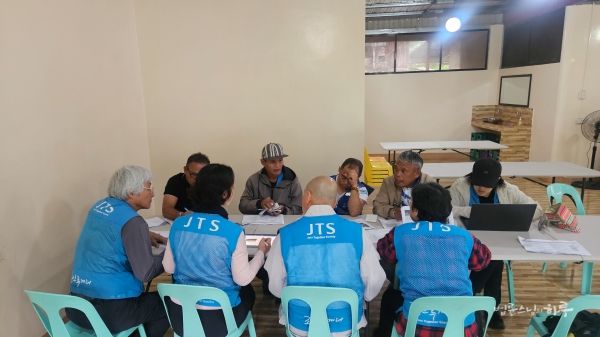
Sunim presented New Year’s gifts to all those involved in this survey, including the drivers, and encouraged them.
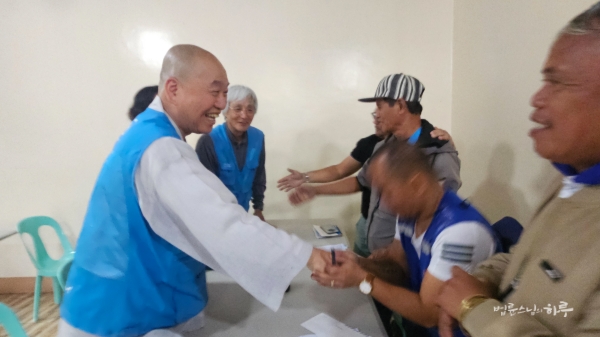
“This survey was conducted at my sudden request. Thank you all for making time for this.”
“Thank you!”
“Now the remaining work is up to you. Representative Noh Jae-guk and Dharma Teacher Hyang-hoon will have a lot of work to do. Making decisions is easy, but executing them is no ordinary task. Please do your best.”
“Don’t worry. We’ll handle it well.”
Everyone burst into laughter. After finishing the evaluation meeting at 4 PM, they headed to Cagayan de Oro Airport.
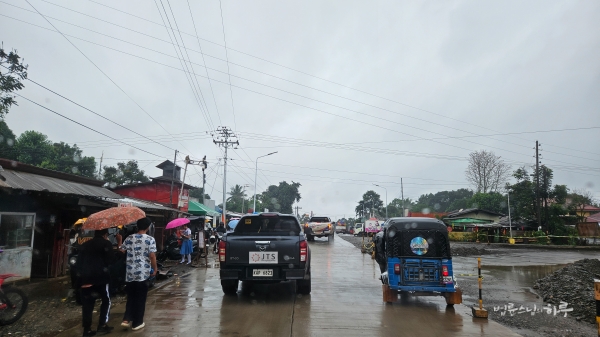

Sunim and JTS President Park Gina departed from Cagayan de Oro Airport at 9:45 PM to continue relief distribution activities in Banda Aceh, Indonesia.
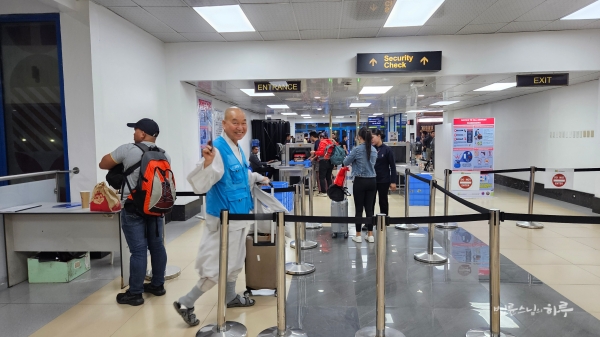
When they arrived at Manila Airport at 11:25 PM, Representative Noh Jae-guk’s son met them at the airport and drove them from Terminal 2 to Terminal 3.
Tomorrow, they will depart Manila Airport at 1:10 AM, arrive at the transit point Kuala Lumpur Airport in Malaysia at 5:15 AM, then board another flight to Indonesia and arrive in Banda Aceh at 8:10 AM. They will then spend the entire day visiting flood-affected areas to continue relief distribution activities.
Since there was no Dharma talk today, this post concludes with a dialogue between Sunim and a questioner from a Dharma Q&A held in Paris during last September’s European lecture tour.
Why Should I Live? I Haven’t Found the Answer Yet
“Life has no inherent meaning. You thought there would be meaning in life and searched for it, but now you’re realizing there isn’t any. What I’m telling you is that life never had meaning from the beginning. Meaning is something we create ourselves. Do rabbits or squirrels live with some meaning in mind?”
“That’s why I’ve been asking why I should wake up in the morning, why I’m living like this. I’ve had many questions about existence itself since I was very young. Why should we live?”
“If you keep thinking like that, it leads to suicide. It’s an illness. You mistakenly believe something exists when it doesn’t, and when you can’t find it, you think, ‘Then there’s no need to live, is there?'”
“If life has no meaning, then why should we live? I want to know why we exist like this now.”
“Living isn’t about having meaning; it’s just living. Grass just grows, squirrels and rabbits just live. People are the same. However, because humans have mental faculties, when we assign meaning to something ourselves, we feel we’re living more meaningfully.”
“I’m not talking about assigning meaning at that level. I want to know some direction. Why did I do this work, why am I with this person, where is life heading?”
“Living with God’s mission, living with Buddha’s mission, living for the country – these are meanings we assign ourselves, not something inherently given to life. If you want to live with meaning, do so. If you don’t need it, just live.”
“My teacher gave me a life meaning from childhood, saying ‘You were born with the mission to spread Buddha’s Dharma.’ I originally wanted to be a scientist, but my teacher said ‘You must spread Buddhism,’ so I became a monk semi-forcibly. That’s how I’ve been active as a monk until now. When people see this, they might think ‘Venerable Pomnyun was born with the great mission to spread Buddhism.’ But in my view, there was no inherent mission. I just live by assigning that meaning.”
“Then to know the meaning of my life, do I need to realize the meaning of my life?”
“I’m telling you life has no inherent meaning.”
“I’ve asked many questions since childhood. Why are there so many stars in the sky, why is the sky blue and dazzling, why does grass grow? I’ve always asked such questions.”
“Such inquiry is good.”
“But you might get scientific answers, or you might not.”
“Actually, it’s difficult to get even 1 percent of the answers through inquiry. There’s much more we don’t know than what we know. Even though humanity has learned a lot today, it’s only a tiny fraction of the truth. So we must continue searching.”
“Then there must be multiple lives, and we must live multiple times.”
“No. Future generations will continue the search. For example, the process of discovering poisonous plants required many sacrifices. Among countless plants, knowing which ones were poisonous required many sacrifices. The knowledge we have now is the result of experiences humanity has accumulated over tens of thousands of years. We learn easily, but when first discovered, even small things came with great sacrifice.”
“Then why did that plant contain poison?”
“There’s no such thing as inherent poison or medicine. We call it poisonous if it’s harmful when eaten, and medicinal if it’s beneficial. All poisonous plants become medicine in small amounts, and all medicinal plants become poison in large amounts. There was never anything predetermined as ‘medicine’ or ‘poison.'”
“Then how can I have a free mind?”
“If you think life has no inherent meaning and you can live as you please, you can live freely. Freedom includes the freedom to drink this water and the freedom not to drink it.”
“Then is there also freedom to choose between plague and cholera?”
“When drinking, enjoy the freedom to drink. When not drinking, enjoy the freedom not to drink. I’m completely free now. No one can limit my freedom. For example, if you see staying home because of children when you want to leave as ‘oppression,’ it’s painful. But if you see it as ‘choosing the freedom to care for children,’ you’re already enjoying freedom.”
“I don’t fully agree with what you’re saying yet.”
“Yes, but when you realize it, you become free.”
“Because having children was my choice, not the children’s choice. So I must take responsibility until they become adults.”
“That’s right. Choice comes with responsibility. Since I chose, I take responsibility. I didn’t make that choice, so I travel freely.”
“I should have lived like you.” (Laughter)
“Life has no inherent meaning. Meaning exists if you create it, and doesn’t if you don’t. Most of nature lives well without any meaning. But if you keep searching for meaning, you’ll eventually think, ‘Then there’s no meaning to live. Should I die?’ This is a mental process leading to suicide. Instead of asking ‘Why live?’ you should ask ‘How should I live?’ Living comes before having reasons. But if you wonder ‘How is it good to live?’ you can choose whether to live in suffering or with less suffering.”
“I think I need to embrace my suffering and live with it. I understand that life has no meaning. Is the answer to just live the given life without questioning myself every day?”
“There’s no right answer in life. Questioning yourself means contemplating how to live. Ultimately, it’s a matter of ‘What choice will you make?’ Choice is free, but that choice comes with responsibility. If you don’t want to wake up in the morning, you don’t have to. But if the result is not caring for children and not going to work, the children will be dissatisfied and you’ll be fired from work. You must accept those results. Any choice is fine.”
“The way I give meaning to my life is ‘How can I better understand others?’ I think that’s the meaning of my life.”
“Understanding others makes me less troubled. So I understand others to be less troubled myself, not for others. Everything we do is for ourselves.”
“Thank you. I understand well.”