
Jan 14, 2026 – Day 3 of Mindanao Field Survey, Philippines
Hello. Today is the third day of the Mindanao field survey in the Philippines. Sunim visited one indigenous school and three special schools for children with disabilities to survey the school construction sites.
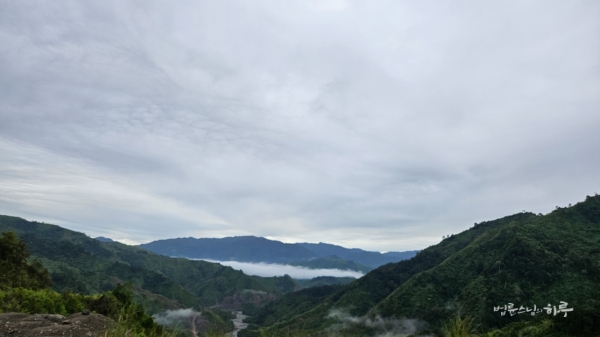
Sunim began his day at 5 AM with meditation and practice.

At 5:50 AM, after a simple breakfast at the accommodation, he departed at 6:30 AM.
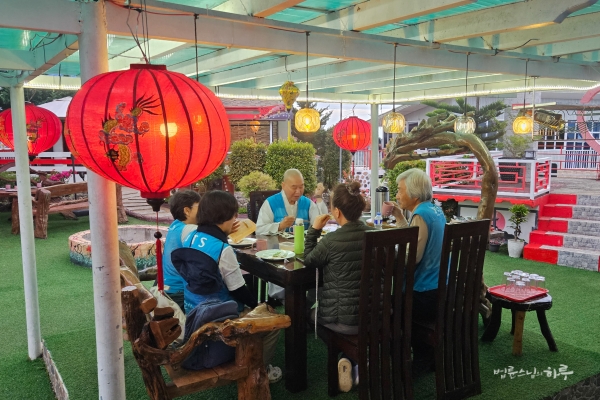

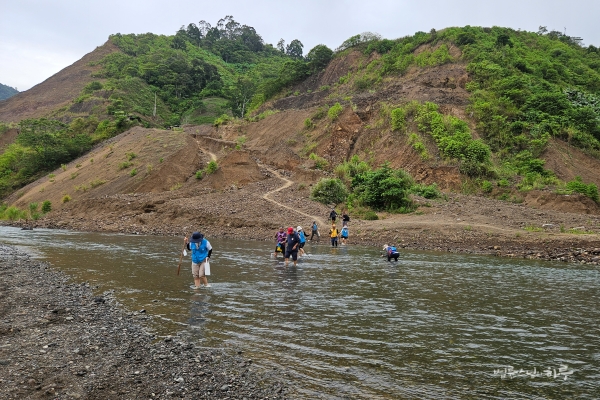
At 7 AM, the group got out of the car and began the hike in earnest. Sunim pointed to a village visible in the distance and said:
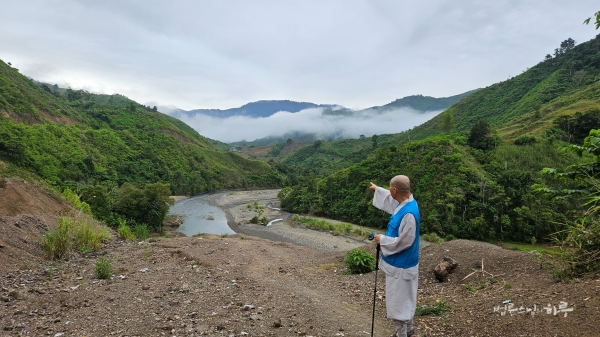
“We’re going to walk to that village across the river.”
Under the blazing sun, they headed toward the village for about an hour, crossing mountains and streams. Sweat poured down like rain. Sunim walked while continuously wiping sweat with a towel.
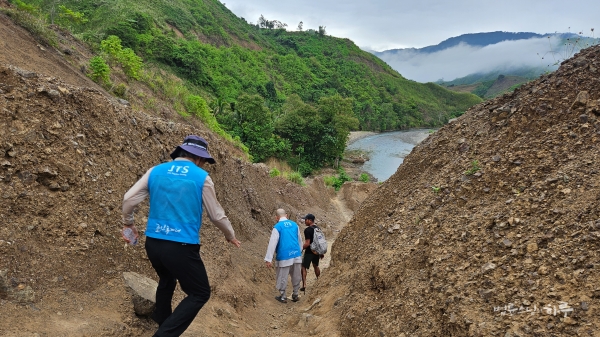
“We should have left in the dark at dawn. This was a mistake.”
The JTS volunteers expressed concern.
“Sunim, this path seems too rough for you to walk.”
Sunim replied with a smile:
“Don’t worry. This is no problem for me.”
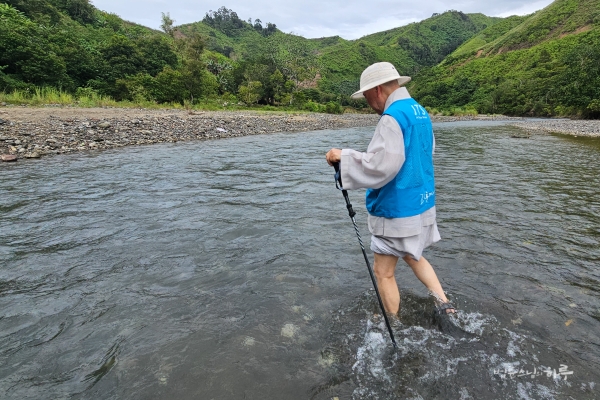
As they descended the mountain path, the view suddenly opened up, revealing a river. After catching his breath briefly, Sunim rolled up his robe and slowly stepped into the cold water.
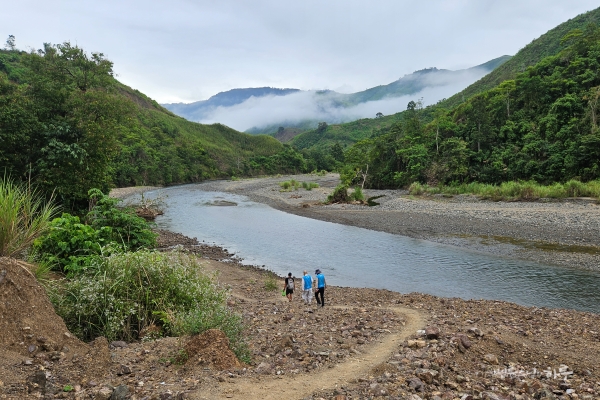
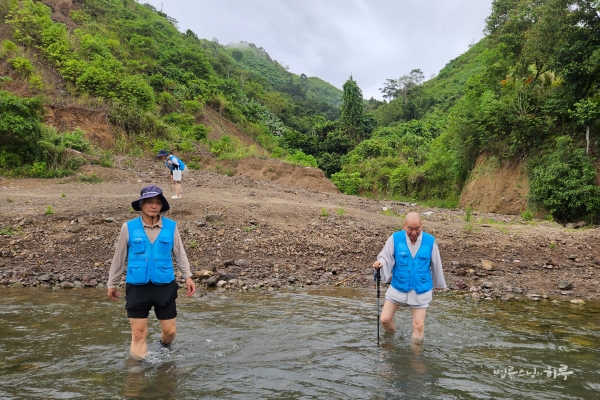
After everyone had safely crossed the river, they silently continued along the mountain path.

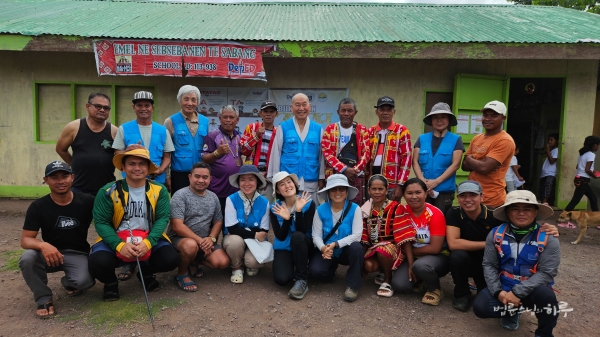
At 8 AM, they finally arrived at the Sabang indigenous school. Sunim slowly wiped his sweat-soaked hair with a towel and caught his breath for a moment.

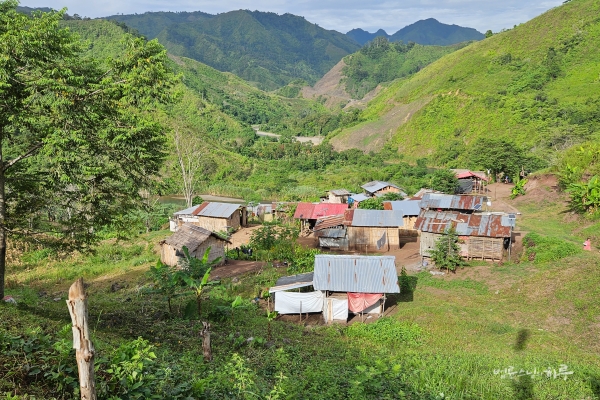
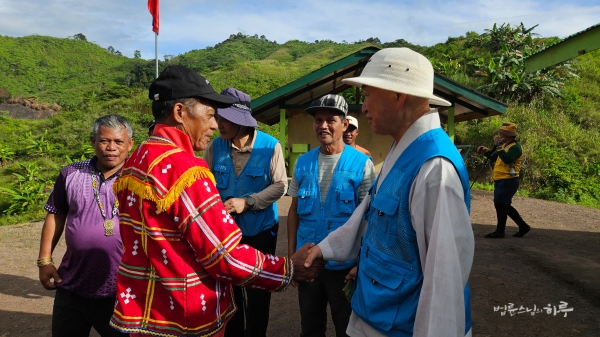
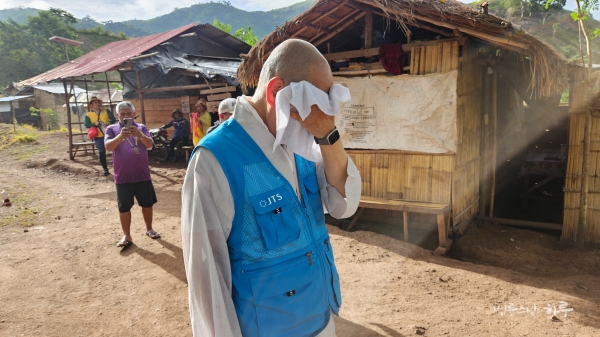
They were served coconuts, sweet potatoes, and bananas that the villagers had carefully prepared. They could sit in chairs for a moment to quench their thirst and fill their hungry stomachs. Sunim said while eating a sweet potato:
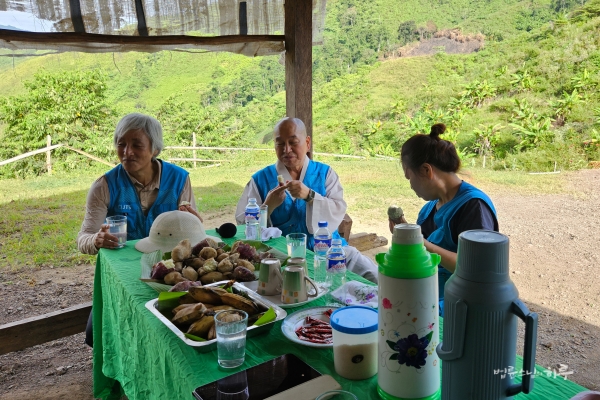
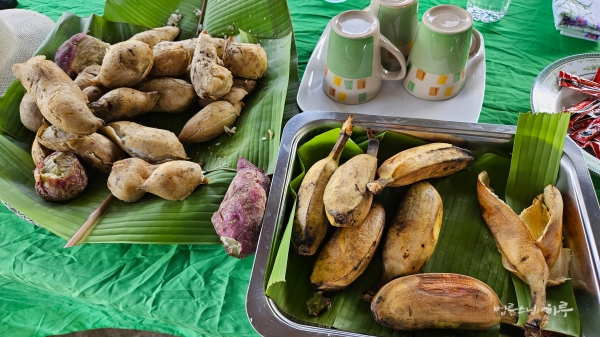
“This tastes like the sweet potatoes I ate when I was young.”
After the snack, they toured the temporary classroom made of plywood. Currently, 35 students were studying there: 10 kindergarteners, 6 first graders, 6 second graders, 4 third graders, and 6 fourth graders. Sunim carefully examined the old plywood walls and dirt floor.
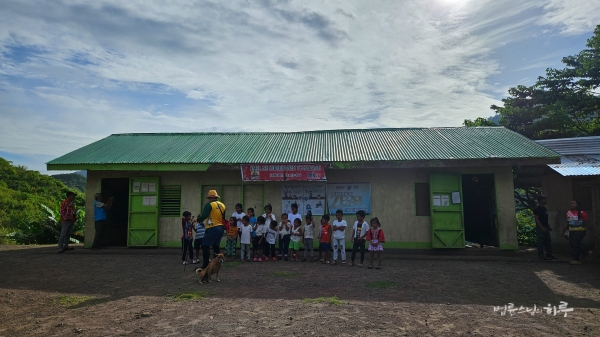

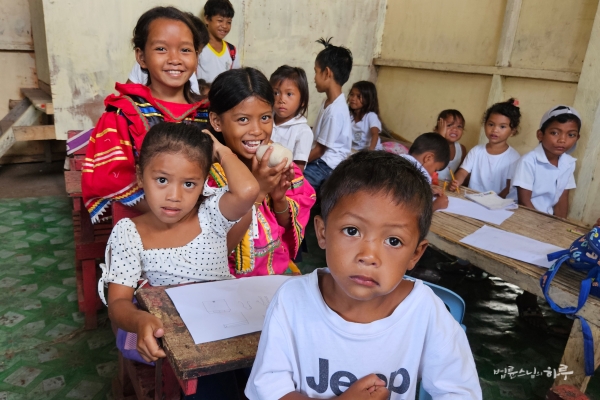
“As the Philippine economy grows, young people are moving to the cities. With fewer young people in rural areas, it seems difficult for the number of children to increase significantly.”
Sunim examined the existing building and had a serious discussion with the engineer.
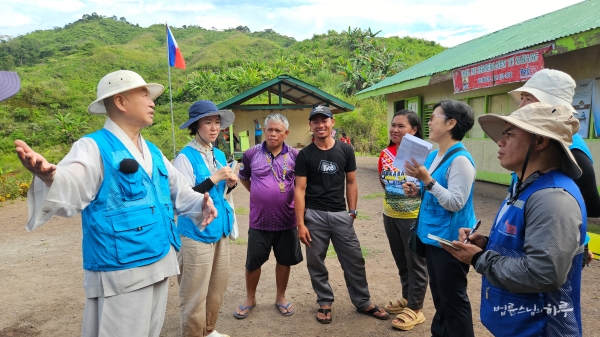
“Since it’s difficult to transport materials, it would be better to remodel first rather than build new. We can reinforce the wall foundation with bricks and cement and make the floor with cement. If a new road is built, the village grows, and the student population reaches 100, then we’ll build a new school.”
The chief and villagers nodded in agreement.
“Yes, Sunim is right. It would be good to repair and use it for now, then build new later if needed.”
Next to the classroom was teacher housing. Two teachers were living in the cramped space.
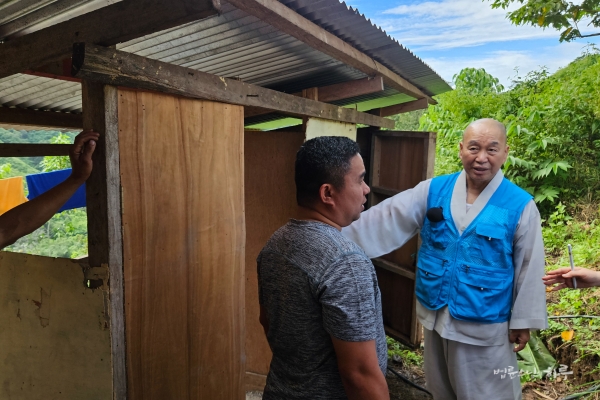
“It’s completely rural. It must not be easy for the teachers to live here.”
They decided to provide electricity through solar power generation for the teacher housing, kitchen, and classrooms. Instead of constructing new buildings here, they agreed to supplement with desks, chairs, storage cabinets, and electrical facilities. After completing the survey, they took a commemorative photo with the villagers and left the village.
On the way back across the river, Sunim had a conversation with Edwin, the Indigenous Education Officer from the Bukidnon Provincial Education Office.
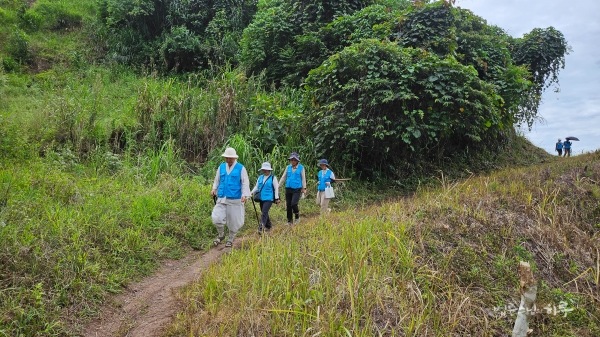
“When indigenous children graduate from elementary school and go to integrated middle schools, they often get teased or bullied by other children. Moreover, because their families are poor and schools are far away, many children marry early instead of going to middle school. Even as adults, many hide their indigenous identity because they face discrimination in society.”
Sunim replied:
“For the continuous education of indigenous children, middle and high schools are also needed. JTS has only supported elementary school construction, but for indigenous students, we should also build middle schools. However, what concerns me is that if we build schools, there’s a high possibility they’ll lose their traditional culture. So schools need to educate in ways that preserve traditions.”
Edwin deeply agreed and replied:
“Yes, Sunim’s point is really important. We need to balance education and tradition preservation well.”
Before they knew it, they had arrived where the car was parked. They drove for two hours to the next school.
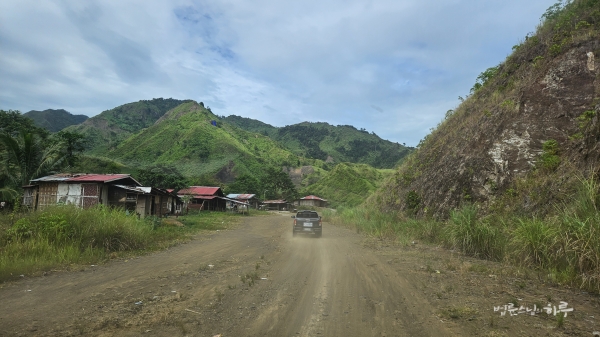
At 12:20 PM, they arrived at Kibawe Central Elementary School. A special school building for children with disabilities is planned to be built here. The children warmly welcomed Sunim and the JTS volunteers.
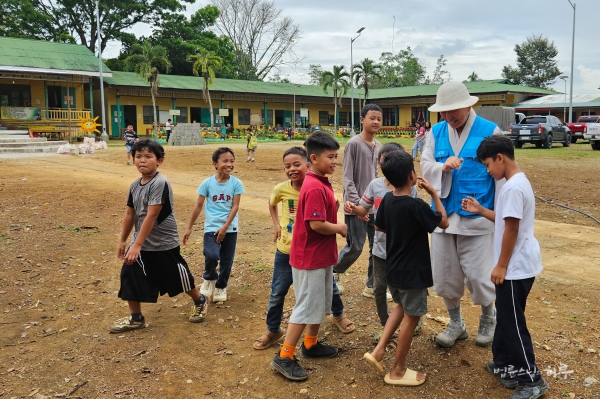
After touring the classrooms where the children were studying, Sunim took out a measuring tape and began measuring the special school site himself. He walked from one end to the other with the engineer, measuring the distance. The location designated by the school was in a remote area of the school.

“If we build the school for children with disabilities in that inner area, it’s too remote. It should be in the center of the school if possible.”
The principal suggested:
“What if we build the building facing the road?”
Sunim replied thoughtfully:
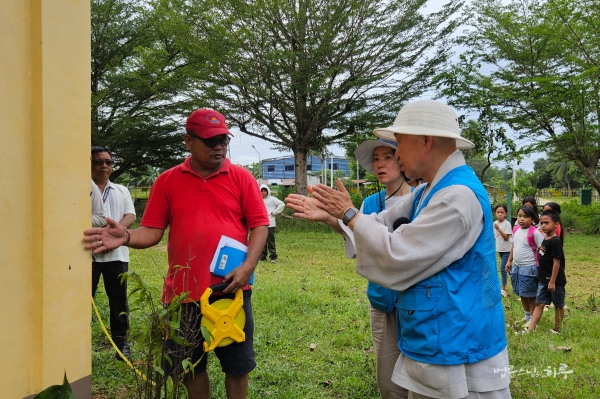
“The road side is too noisy. It would be difficult for the children to concentrate.”
After consulting with the engineer, they decided to add classrooms on both sides of the existing special school classroom.
“One room 7m×9m on this side, one room 6m×7m on that side. And install toilets together.”
Sunim took out his iPad and explained while drawing directly. He showed how to arrange the existing building and the new building, even marking the toilet location.
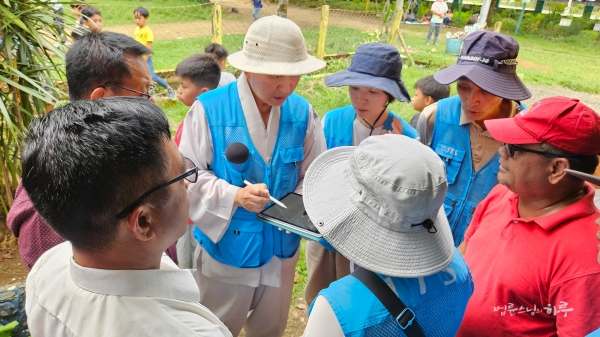
The principal and teachers expressed their gratitude with bright expressions.
“Thank you so much. We’re happy to be able to create a good educational environment for the children.”

At 1:15 PM, they had lunch prepared by the school. Since all the side dishes contained meat, Sunim only ate plain rice. The teachers felt sorry, but Sunim smiled and said it was fine.
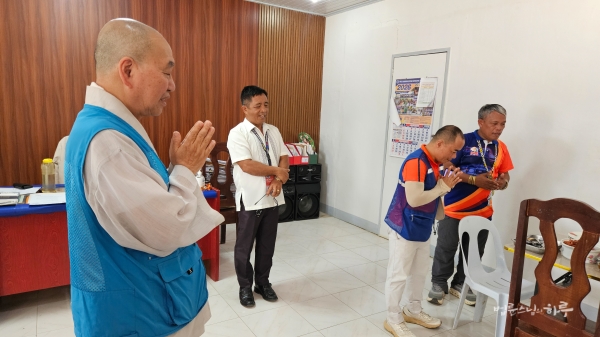
After finishing lunch, they departed for Kitaotao Elementary School at 1:40 PM. Since it was nearby, they arrived in 20 minutes.
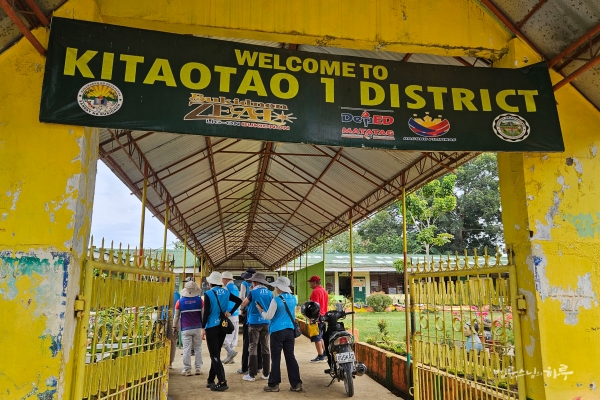
A special school for children with disabilities is also planned to be built within this school. Eleven children with disabilities were studying in a temporary classroom.
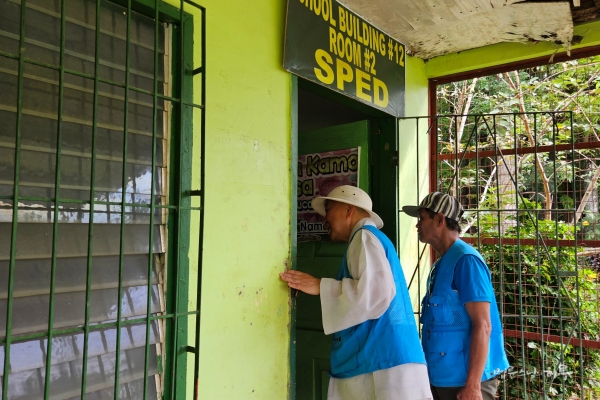
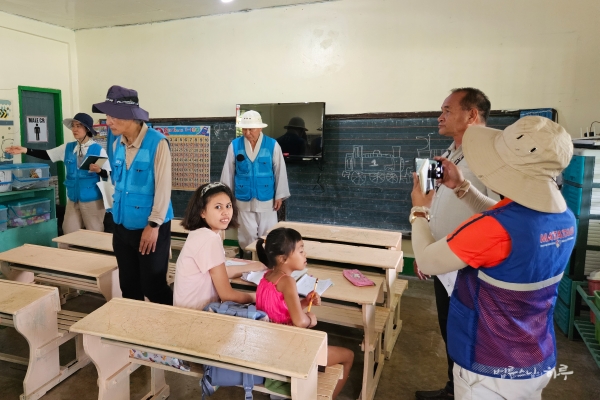

After touring the school, Sunim began a conversation with the special education teacher.
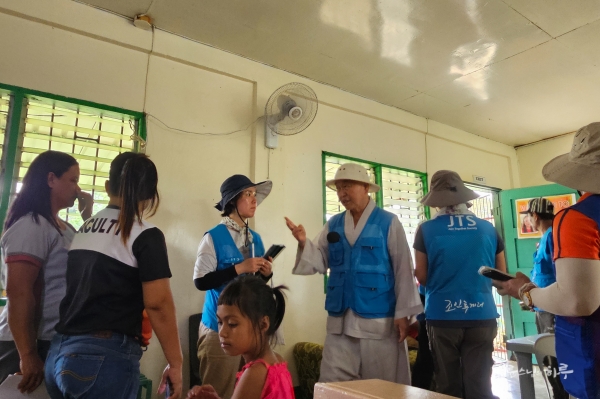
“What types of disabilities do the students have?”
The teacher explained calmly:
“Three with hearing impairments, one with speech impairment, one with physical disability, and four to six with intellectual disabilities. They haven’t received exact medical diagnoses yet, but these are based on teachers’ observations.”
After examining the 20-year-old building currently in use, Sunim said:
“Couldn’t we repair and use this building? Two classrooms seem sufficient.”
The teacher carefully mentioned what was needed:
“We need non-slip rubber mats on the floor. The children fall frequently. The toilet is too narrow and needs expansion, and dust falls from the ceiling with poor ventilation. We’re also worried about the glass windows breaking.”
After consulting with the engineer, Sunim decided:
“We’ll replace the entire roof and ceiling, install new electrical wiring, demolish and expand the toilet. We’ll lay rubber mats on the floor. For the windows, let’s first install mosquito nets and if there are problems, we’ll replace them later.”
The principal asked with a surprised expression:
“Are you really going to do all of this?”
“Yes, and if the student population increases later, we’ll build a new building.”
The teachers were moved and repeatedly expressed their gratitude.
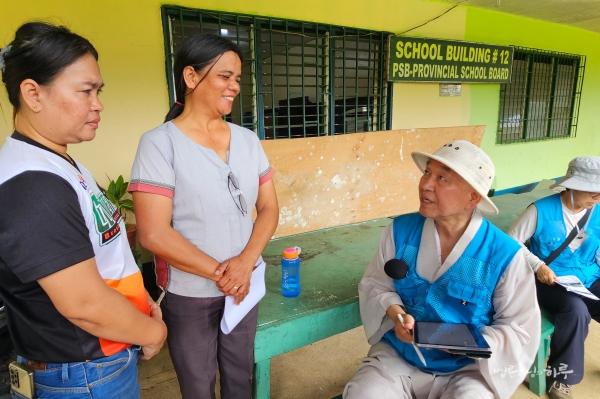
After taking a commemorative photo with the teachers, they left the school.

The next school was also nearby. At 3:10 PM, they arrived at Bugbug Central Elementary School located in Don Carlos municipality. They came here to survey for building a special school within the school grounds.
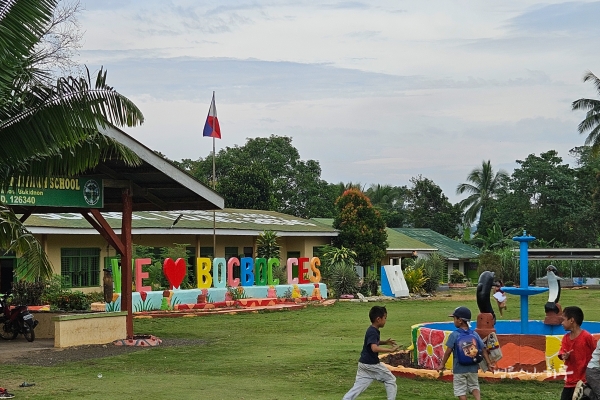
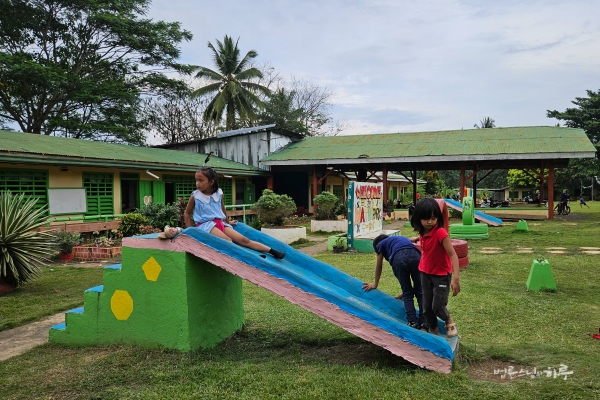
Before surveying the site, Sunim discussed several matters with the teachers. First, Sunim asked the teachers a question.

“How many students with disabilities are there?”
“There are 12 students. 11 have learning disabilities and 1 has a visual impairment.”
“Do you have any special education teachers?”
The principal responded with an embarrassed expression.
“Not yet. We’ve requested one from the education office, but we haven’t received a response yet.”
Sunim offered practical advice.

“First, request special education teachers from the education office. You need to be specific – request specialists for visual impairments, hearing impairments, and so on. Once teachers arrive and begin teaching in regular classrooms, other students with disabilities will start to gather. That’s when you should discuss building classrooms.”
The principal initially looked confused but soon nodded in understanding.
“Ah, yes. You’re right, Sunim. We should secure teachers first, and when students gather, then we can build the facilities. That’s the proper order.”
The engineer also agreed.
“That seems more reasonable. We’ll contact you when the number of students increases.”
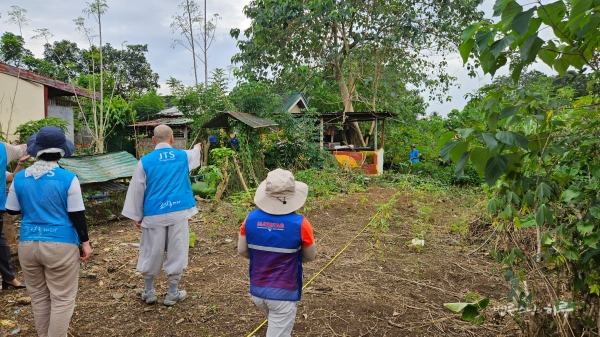
Nevertheless, they surveyed potential locations for building the school and measured the dimensions with a tape measure.
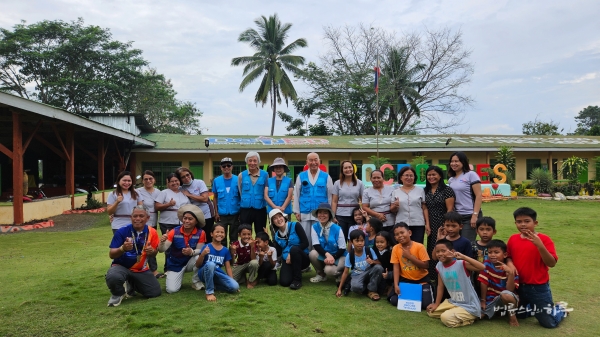
Finally, after taking a commemorative photo with the teachers and students, they left the school.
On the way back to the car after completing the survey, an education office official said to Sunim.
“Your advice is really practical, Sunim. It makes sense to prepare systematically rather than just building facilities without a plan.”
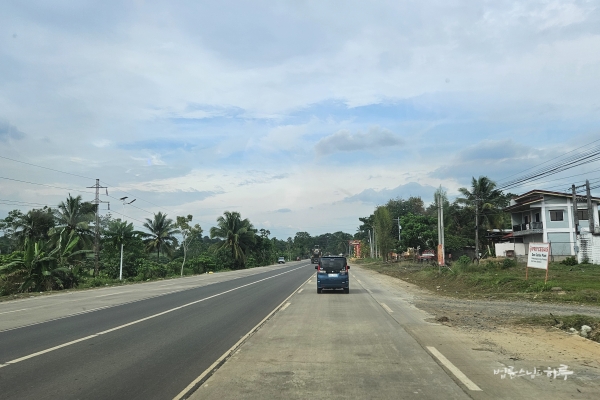
At 5 PM, they returned to their accommodation after completing all the surveys. In the car, the volunteers reflected on the day.
“Sunim, you walked so much today. Are you alright?”
“It’s a bit tiring, but I’m fine. We need to see the sites firsthand to provide proper support.”
At 5:30 PM, they had dinner at the accommodation and concluded the day’s activities.
Today, they crossed mountains and streams to visit indigenous villages and surveyed three special schools for children with disabilities. It was a meaningful day filled with deep conversations about the discrimination faced by indigenous children and the importance of traditional education.
Tomorrow, they plan to survey five locations: Kaatuan Indigenous School, Kinusuhan Indigenous School, San Miguel National High School, Kalapat Indigenous School, and Quisumbing Impalutao Indigenous School.
Since there was no Dharma talk today, this post concludes with a dialogue between Sunim and a questioner from a Dharma Q&A held in Cheonan last November.
Why Is There No One Who Truly Cares About Me?
“People like you are often jokingly called ‘attention seekers.’ (laughter) You always want attention and wherever you go, you want people to notice you. This strong desire is actually a kind of illness. When people’s attention turns elsewhere and they treat you as unimportant, you feel as if you’re being severely ostracized and suffer greatly.
But you need to think about this: Why should people pay attention to me? You haven’t done anything special, yet you expect people to pay attention only to you. This expectation itself is wrong. The experience of always receiving attention since childhood has created this mental habit.
In fact, most people are only interested in themselves and have little interest in others. You need to understand this first. There’s no reason why others should be interested in you. You’re having unrealistic expectations that don’t match reality – in other words, you’re having delusional thoughts. The question of why people don’t pay attention to you doesn’t even make sense.
When I counsel celebrities, two main difficulties emerge. One is that when they go to public places, people crowd around them to greet them, ask for autographs, and want to take photos together, which is very troublesome and exhausting. Celebrities sometimes visit Jungto Society, so I always ask our members: Even if you see a celebrity, please don’t pay attention to them, don’t talk to them, don’t ask for photos or autographs. I ask them to let celebrities remain as ordinary people.
So do celebrities feel comfortable and happy with this? Not necessarily. Celebrities need to receive a certain amount of attention wherever they go. If no one recognizes them or shows interest, they actually find it hard to bear. They expect and are accustomed to someone recognizing them first and greeting them wherever they go.
So the problem isn’t simple. People should pay attention but not bother them. But is that really easy? The moment you pay attention, you naturally want to take photos or ask for autographs. It’s the same for me. On my way here, I was hungry so I stopped at a noodle shop. While eating, a woman approached and asked for an autograph. I smiled and said ‘No, thank you.’ (laughter)
So-called ‘attention seekers’ suffer when they don’t receive attention, but they also find excessive attention burdensome and annoying. That’s why we call this a pathological condition. Therefore, you need to accept it as natural when people don’t pay attention to you. There’s actually no reason why people should pay special attention to you.
When we say we’re ‘interested’ in someone, it’s closer to meaning we’re temporarily curious rather than genuinely liking them. This curiosity doesn’t last long and naturally disappears once our questions are answered. In the end, attention isn’t something you can hold onto – it just comes and goes.”
“I never thought of it as an attention issue. I’ll think about it again.”
“There’s really no reason why people should pay special attention to you. When three friends meet and two of them talk more, it’s not because they like each other more, but because they have more common interests like religion, hometown, or hobbies. It’s not an intention to ostracize someone; it’s usually just because their interests align.
In such situations, you should just accept that ‘those people have similar interests,’ but people who interpret this as ‘they’re deliberately excluding me’ or ‘they’re ostracizing me’ are what we call ‘attention seekers.’ This way of thinking itself creates suffering because you always want to be the protagonist and the center of attention wherever you go.
But you’re neither a popular singer nor a famous actor. In such circumstances, expecting to always be the center of attention is realistically difficult. When you acknowledge this fact, the unnecessary suffering you feel among people will also decrease.
So what should you do to get people’s attention? If you don’t have special talents, you ultimately need to spend money. You say ‘Let’s have tea’ and take them to a café, ‘I’ll buy you a meal’ and take them to a restaurant, ‘Let’s have a drink’ and take them to a bar. If you offer to buy drinks, people will follow. But when you get to the bar, they talk among themselves again. This process will repeat.
If you still want to attract even a little attention, you need to provide service first. However, providing service is tiring. Didn’t you say that being kind to people made you even more tired? What you really mean is that you want people to approach you first and ask ‘How are you?’ and show interest without you doing anything. But this rarely happens in reality.
It’s the same for me. At gatherings where people know me, after events end, they ask for selfies or autographs. But when I go where people don’t know me, there’s almost no one like that. When I go to India, no one recognizes me. When I took a train in India and there were no seats, I spread newspaper on the floor and sat down, but not a single person came to talk to me or offer me a seat.
Without such experiences, people might live under the illusion that they’re special just because many people pay attention to them. But when you go where people don’t know you, no one pays attention to you. Only then do you realize, ‘Ah, I’m nothing special.’ You need to understand that you’re not a special being. Only then will you not be shaken whether people pay attention to you or not.
If you can’t accept this, you’ll develop a mental illness like yours. People in this world are already overwhelmed just managing their own lives. They don’t have the luxury to pay attention to others. When you first acknowledge this reality, you’ll be able to live much more comfortably.”
“Yes. Thank you.”