
Jan 10, 2026. Day 3 of Flood-Affected Area Survey in Indonesia
Hello. Today, after holding an evaluation meeting on yesterday’s flood-affected area survey results, Sunim traveled to Medan to secure relief supplies.
After staying up all night preparing for emergency relief activities, Sunim held an online meeting at 6 AM with the Jungto Society Dharma Teacher group and staff regarding personnel deployment plans. After finishing the meeting, he had breakfast at 7 AM and took a brief rest at the accommodation.
At 10 AM, Sunim held a meeting to establish a relief supply distribution plan with Mr. Amir, who is helping with the Indonesia emergency relief activities, and officials from FDP, the local partner organization.
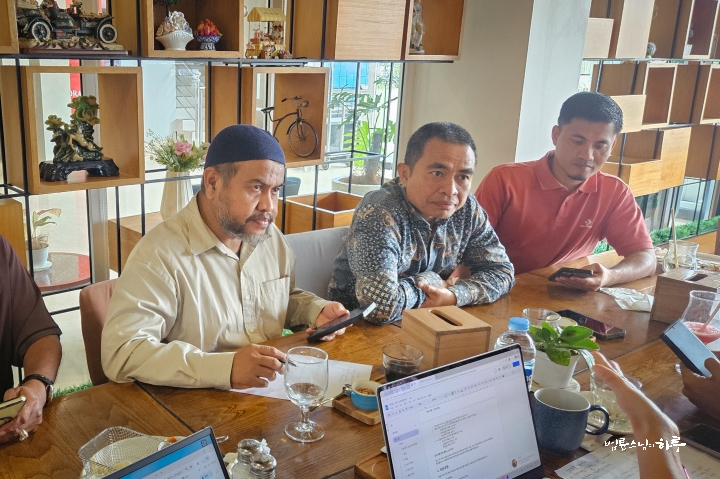
After touring the disaster sites yesterday, Sunim suggested that support should be provided in phases. First, he said that daily necessities such as kitchen supplies should be provided first so that residents can continue their basic lives. Second, he suggested providing cleaning tools so they can clean up their living spaces, mobilizing heavy equipment to remove mud piled up more than 1 meter around houses, and helping rebuild houses that were swept away. Third, since all rice fields have been lost, he proposed support to help them resume farming, such as restoring farmland or planting different crops on sand-covered land.
Accordingly, it was decided to provide support first to the 9 villages that had completed preliminary surveys. Including the 95 households in Krung Buka Village, 235 households in Kubu Village, 316 households in Pante Baro Kumbang Village, 28 households in Liseu Baro Village, 47 households in Liseu Tunong Village, 32 households in Liseu Tungoe Village, 57 households in Lokaja Village, 11 households in Krong Baro Village, 23 households in Lok Bayu Village, and an additional 87 households that requested help, it was decided to distribute relief supplies to a total of 931 households.
However, the number of affected households in the proposal submitted by FDP did not match the actual number of affected households identified during the survey. Park Gina, JTS President, requested FDP to conduct an accurate re-survey.
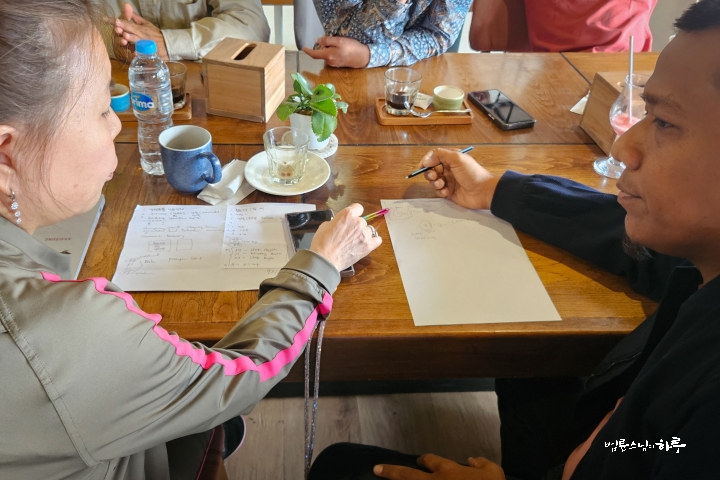
It was decided that JTS would directly distribute relief supplies consisting of kitchen items such as gas burners, rice cookers, dishes, basins, utensils, and frying pans, as well as cleaning tools such as shovels, hoes, and wheelbarrows to remove mud to all affected households. The distribution location was set as the mosque, the Islamic place of worship in each village, and FDP agreed to visit the villages in advance to carry out preparatory work. Since FDP has many medical personnel, they also decided to consider operating mobile clinics during supply distribution. In particular, they discussed how to restore the rice fields, which are the main source of livelihood for residents and have suffered significant damage.
After urgently distributing the supplies that residents need, they decided to gradually establish plans for house cleaning and farming restoration, and concluded the meeting.
After finishing the meeting, at 1 PM, Sunim visited the factory operated by Mr. Amir, who is helping with this emergency relief activity.
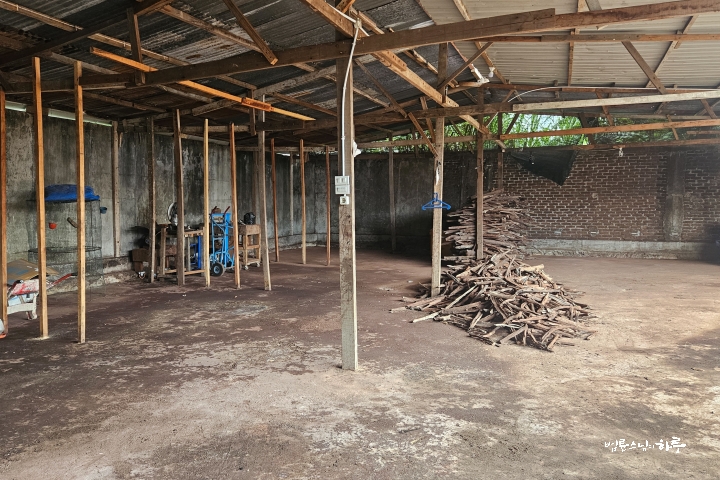
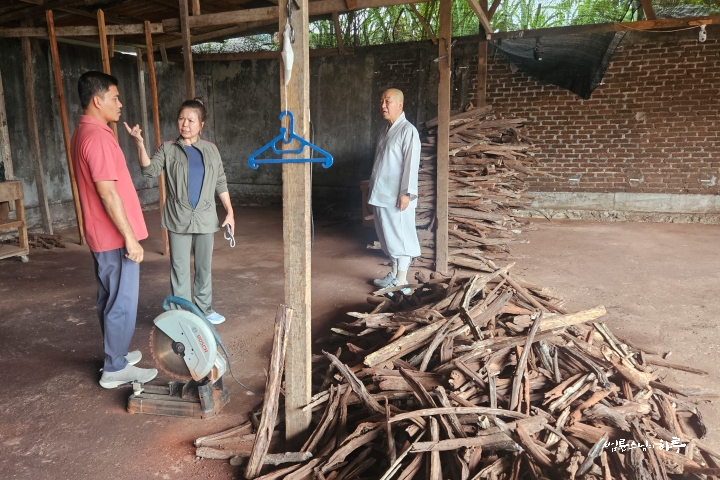
Mr. Amir is engaged in exporting and selling wooden products such as wooden prayer beads to China. Upon visiting the factory in person, it turned out to be a place that supplies materials rather than a manufacturing facility.
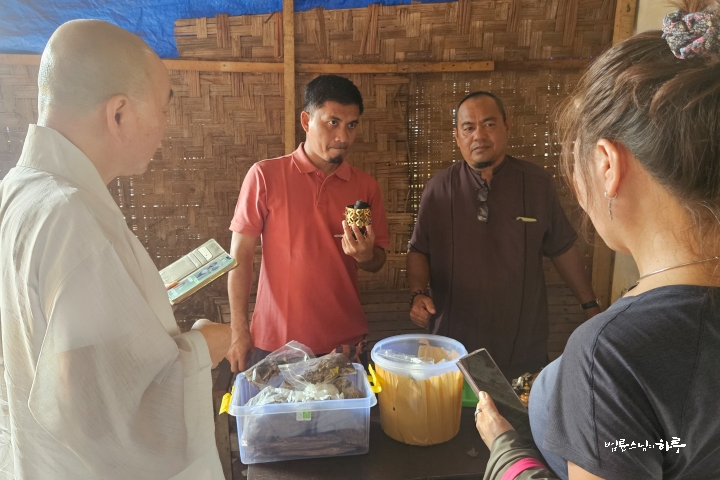
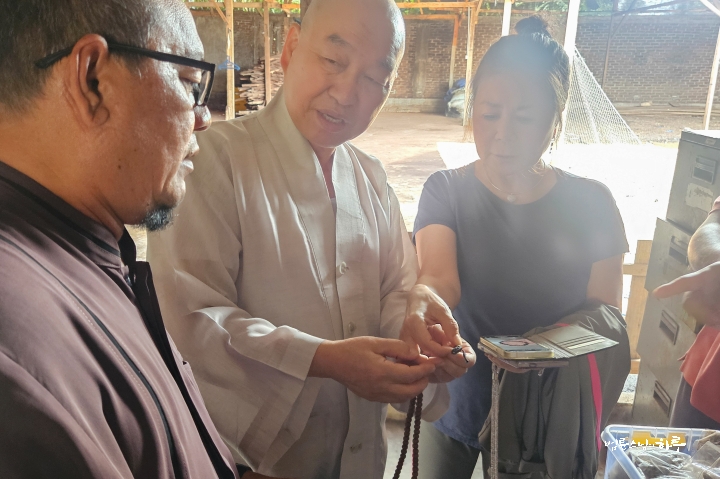
Sunim was impressed by the high quality of the sandalwood prayer beads supplied by Mr. Amir, and purchased a sample before leaving the factory.
At 2 PM, Sunim headed to Banda Aceh Airport to travel to Medan, a nearby city. Since it was not possible to obtain many daily necessities at once in Aceh Province, they decided to try to obtain relief supplies in Medan, a large city where goods can be transported by land.
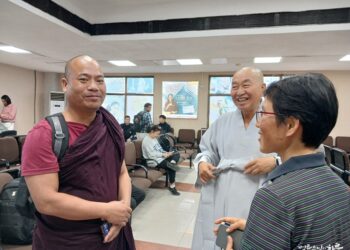
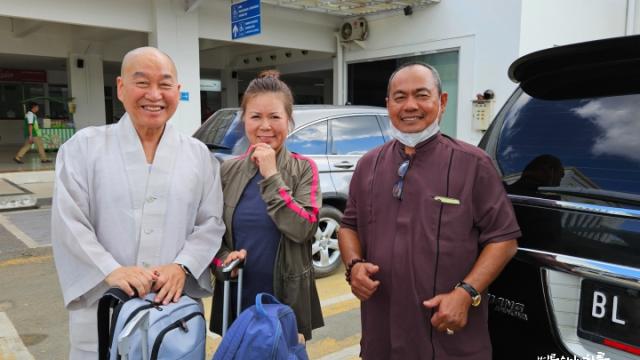
Upon arriving at Banda Aceh Airport, Sunim expressed his gratitude to Mr. Amir, who had been helping with this survey trip in every way possible, and took a commemorative photo. Yesterday, he drove a round trip of 10 hours to the flood-affected area.
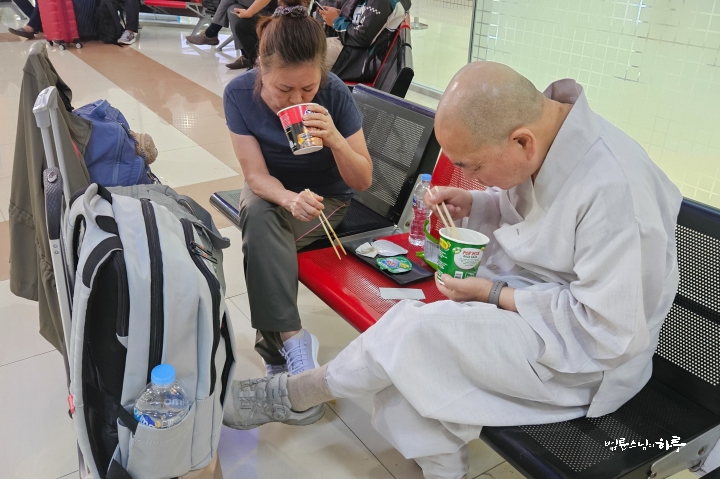
After saying goodbye to Mr. Amir, Sunim entered the airport and went through departure procedures. President Park Gina took a direct flight from Banda Aceh to Medan, while Sunim, unable to get a ticket, had to go to Medan via Kuala Lumpur, Malaysia again. He had cup noodles for lunch in front of the boarding gate and waited until the flight departure time.
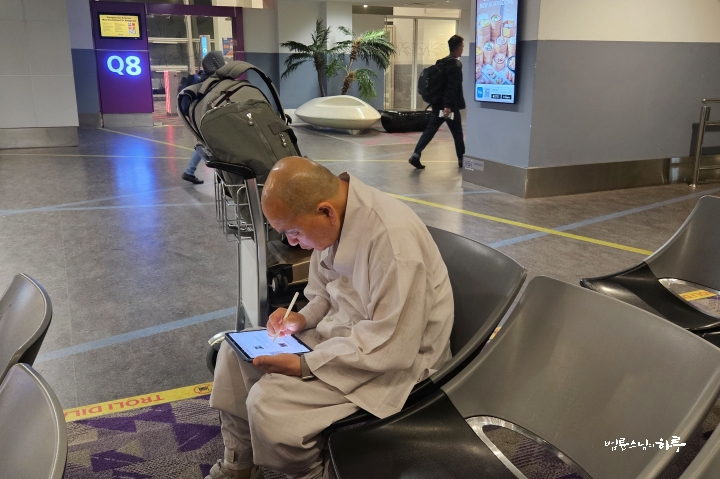
Departing from Banda Aceh Airport at 5:30 PM, Sunim arrived at Kuala Lumpur Airport, the transit point, and waited for 2 hours. During the wait, he had triangle rice ball(삼각 김밥) for dinner at the airport and worked on manuscript proofreading and various other tasks.
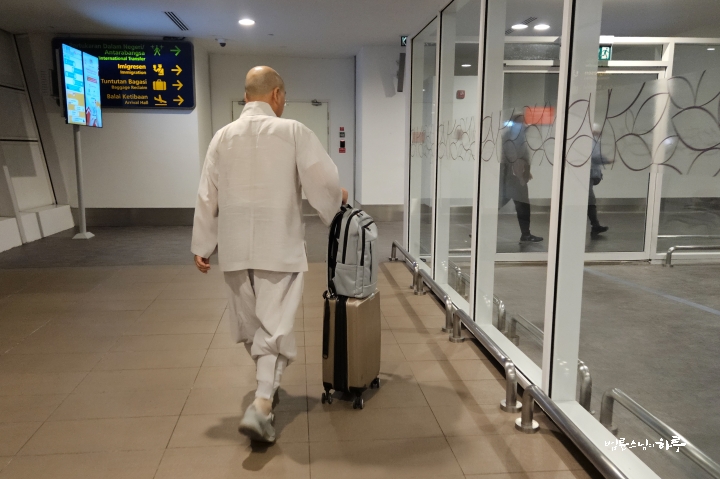
He boarded the plane again and arrived at Medan Airport at 10:30 PM. What would have been a 1-hour direct flight took 5 hours.
Sunim arrived at the accommodation at midnight and discussed the relief supply market survey results with President Park Gina. President Park, who had arrived in Medan earlier, visited several factories and conducted preliminary research on which relief supplies to purchase. She shared the results of finding places where tools essential for flood victims to clean their homes, such as boots, buckets, hoes, shovels, and hammers, could be purchased relatively cheaply. After the meeting that continued late into the night, the day’s activities came to an end.
Tomorrow morning, additional market research for relief supplies will be conducted in Medan, and several samples will be directly checked at factories. In the afternoon, after a meeting on the relief supply distribution plan, Sunim will depart from Medan Airport in the evening, transit through Kuala Lumpur Airport, and travel overnight through Manila, Philippines to Mindanao. The survey schedule in Mindanao, Philippines will continue thereafter.
Since there was no Dharma talk today, this post concludes with a dialogue between Sunim and a questioner from last September’s Weekly Dharma Assembly live broadcast.

What Should I Do in My Mid-50s After Closing My Business?
“Peace of mind has nothing to do with age. There is no such thing as comfortable work that exists separately. In other words, maintaining equanimity in any situation is true comfort.
Whether you go to the military or get discharged, get married or divorced, have work or not, what’s important is maintaining equanimity and continuing daily life as it is. If you go to the military, you can go as if going to work this morning, just as you had worked at your job until yesterday. If you get discharged, you can be discharged today as if leaving work and return to daily life tomorrow. If you got married today, you can have the wedding ceremony and continue daily life the next day. If you got divorced today, you can resume daily life tomorrow.
The reason equanimity is not maintained is because people rest when they go to the military, rest when they get discharged, rest after getting married and going on a trip, rest after divorce, rest when opening or closing a shop – living this way. Similarly, the idea that you need to find particularly comfortable work because you’re in your mid-50s is also a mistaken view. You should be comfortable while resting when there’s no work, and you should be comfortable while working busily when there is work. There is no such thing as comfortable work that exists separately. The mountains are good when you go to the mountains, the fields are good when you go to the fields, it’s good to rest when there’s no work, and it’s good to work busily when there is work. If you have this perspective, you can always maintain comfort. There is no such thing as comfortable work that exists separately.
If you’ve worked enough until now, it’s fine to put your work aside and rest for a while. But you are anxious even about resting and feel pressured to find more comfortable work. Since you’ve worked for decades, if you want to rest at home for a month or two, you can do so. Just as life doesn’t stop for ten days and restart after living for 30 years. If you’ve finished work you’ve done for 30 years, you can start something new right away today. You can choose to rest, or you can start new work.
The difference between you and me lies in our attitude toward daily life. When you return from abroad, you rest for several days, and you rest again when leaving. However, regardless of coming and going, you rest when tired, go to the hospital when sick, and if your body is fine, you can work immediately after getting off the plane. This is not because it’s particularly remarkable, but because daily life should naturally flow that way. There is no such thing as ‘comfortable work’ that exists separately.
You feel anxious when there’s no work, complain when there’s too much work, say it’s bothersome when together, and say you’re lonely when alone. However, it’s good to have work when there is work, good to have no work when there isn’t, good to be alone because it’s quiet, and good to be together because you can talk. There is no such thing as particularly comfortable work that exists separately.
The very thought of ‘now I should do this kind of work’ because you’re in your mid-50s is wrong. Do work when there is work, and rest when there isn’t. This is not particularly related to being in your mid-50s. You might rest from work because you’re sick or take a break because you’re tired, but that’s not because of age either. It’s not that you should particularly rest because you’re 70, but rather you need to reduce work because your body doesn’t move as freely as before. So regardless of age, do what you want to do and rest when you want to rest.
It’s good to have new experiences when you switch from this work to that work, and it’s good to become familiar when you continue the same work. You can experience new things when you meet new people or go to new places. Conversely, you can feel comfortable when you do familiar work or are with people you already know. Both familiar and new things are good. You should have that perspective. Being in your mid-50s has nothing to do with what work you should do.
If your body has a bit less strength than when you were young, you can reduce work that requires a lot of strength. If your mental agility isn’t what it used to be, you can adjust the amount or method of work. I also feel that my body is somewhat strained these days. In the past, I was fine flying around for a month at a time, but now my body doesn’t keep up as well as before. Sometimes my eyes don’t open easily when my condition isn’t good, and my steps feel heavy when I need to walk, but I do it because it’s work that needs to be done. So now I think I need to adjust my work a bit. Now that I’m over seventy, I really feel that my body doesn’t move as my mind wants. That’s why I feel the need to adjust plans according to my physical condition. This doesn’t mean I’ll rest right away, but rather that I need to adjust work to suit my body.
I’m not usually someone who loses things easily, but these days I keep forgetting things as I travel here and there. Scientifically speaking, as we age, blood vessels get blocked one by one, and brain cell function also gradually declines. When there’s a problem with the function that moves the body, paralysis occurs, but decline in cerebral function is a different area. It’s natural for cognitive abilities like memory to gradually decline with age. When I was young, I moved lightly like a squirrel or rabbit when hiking, but now my knees hurt and it’s hard to walk or stand for long periods. This is just the process of aging, a natural phenomenon where the body that has been used for a long time breaks down one by one. It’s like how cars break down here and there when used for a long time. Therefore, it’s necessary to adjust work according to your physical condition.
If you work without knowing you’re aging, you’ll overwork. If you slack off prematurely, you’ll become lazy. So don’t be bound by age. If you have enough money saved to live on, from your mid-50s onward, you can live frugally with the money you’ve saved. Since you can live on pension at 70, from now on, put down money-making work and try gradually increasing volunteer activities.
It would be nice if you don’t absolutely have to earn money, but if you need to support your children’s education more or haven’t saved anything yet, you can try various things you can do with your talents, whether it’s manual labor or any other work. Just don’t be too greedy.
In your 20s or 30s, even if you’re somewhat greedy, people view it positively, saying you have ‘ambition’ or ‘you can try again if you fail.’ However, if you try something in your mid-50s and fail, you can lose even what you already have. When you’re young, it’s not a big problem if you fail because you don’t have much, but as you age, you have things to protect, so the regret is greater when you lose them and you might think ‘I shouldn’t have done it.’ That’s why you need to be a bit more careful as you age. While I can say it’s good to live somewhat challengingly when young, I don’t think this is directly connected to age itself either.”
“Yes, after listening to your words, I think I’ve been worrying unnecessarily. Since I’ve worked hard until now, I’ll take a break for a while and do valuable work. Thank you.”