
Jan 5, 2026 – A Walk on Namsan Mountain in Gyeongju
Hello. Today, after receiving treatment for his neck disc, Sunim planned to take a walk on Namsan Mountain in Gyeongju(경주) with the practitioners.
After completing his early morning practice and meditation, Sunim departed from Seoul Jungto Center at 5:30 AM and headed to Dubuk Jungto Retreat Center (두북 수련원).
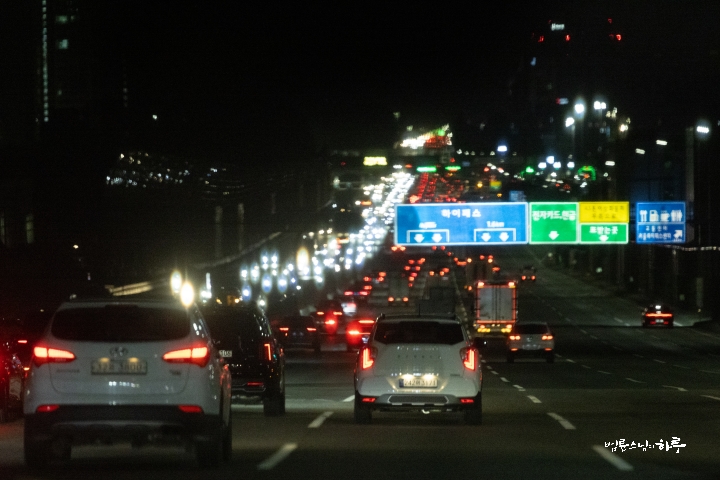
During the journey, he stopped at a rest area to have a bowl of udon noodles and arrived at Tongiljon (통일전), located at the foot of Namsan Mountain in Gyeongju, at 9 AM. He set out from Tongiljon to walk the trail to Okryongam (옥룡암), Tapgok(탑곡), and Rock-carved Seated Buddha in Bulgok Valley (불곡마애여래좌상) of Namsan Mountain, Gyeongju, known as “Halmaebucheo(할매부처)” but the cold wind was blowing very strongly.
“Oh, it’s too cold. We can’t do this. Let’s take a walk in the afternoon when the sun comes out.”
The wind was stronger than expected, making the perceived temperature much lower. Sunim decided to have lunch first and take a walk in the afternoon, then headed to Dubuk Jungto Retreat Center.
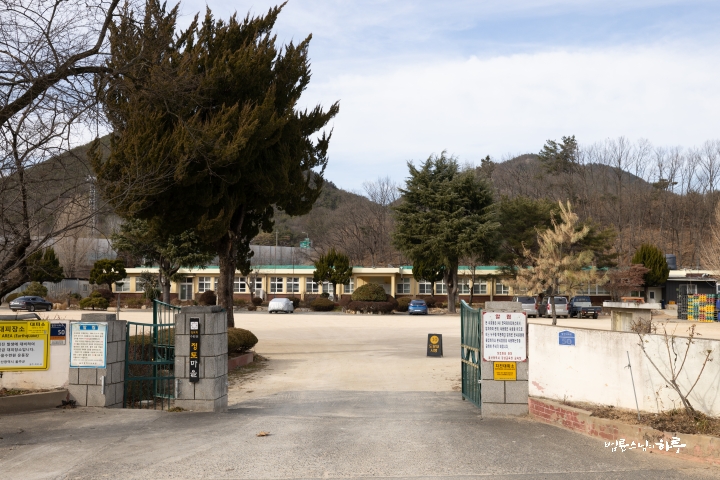
After arriving at Dubuk Jungto Retreat Center at 10 AM, Sunim received treatment to alleviate shoulder and arm pain caused by his neck disc. After finishing the treatment and having lunch, he went out for a walk on Namsan Mountain in Gyeongju again at 2 PM.
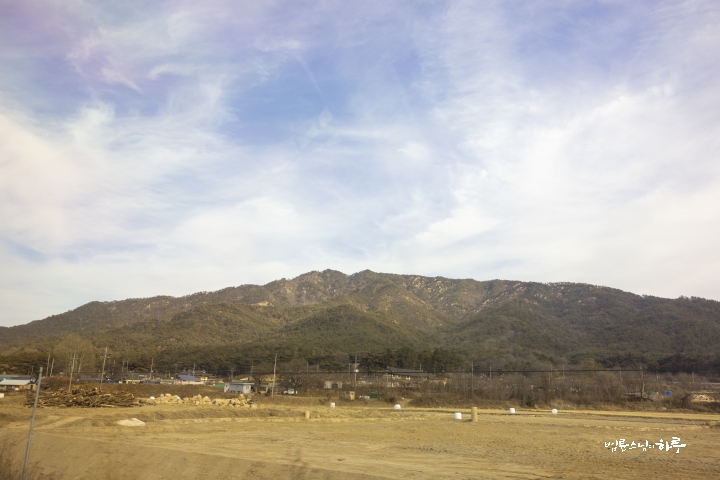
Sunim began his walk under the Samneung (삼릉) forest. The practice team practitioners, concerned about Sunim’s health, asked him.
“Sunim, has the pain in your shoulder and arm gotten better?”
“Since I’ve been taking painkillers continuously, the pain has lessened a bit, but it still hurts. However, it hurts less when I walk. It seems to hurt the most when I sit down to give Dharma Talks.”
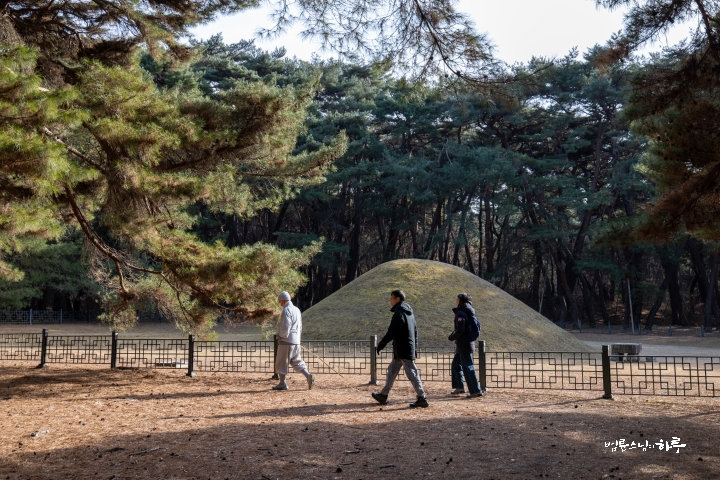
Reassured that the pain was less severe when walking, they began walking together. They passed Tomb of King Gyeongae(경애왕릉), Gyeongju and walked through Samneung with its dense pine forest before arriving at Mangwolsa (망월사) Temple.
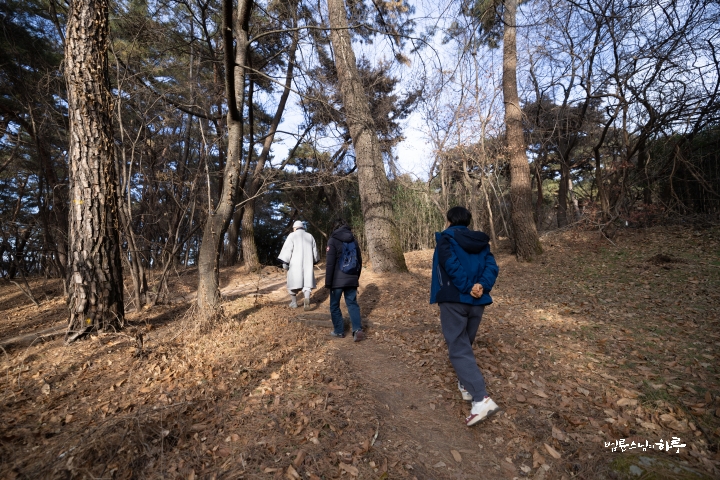
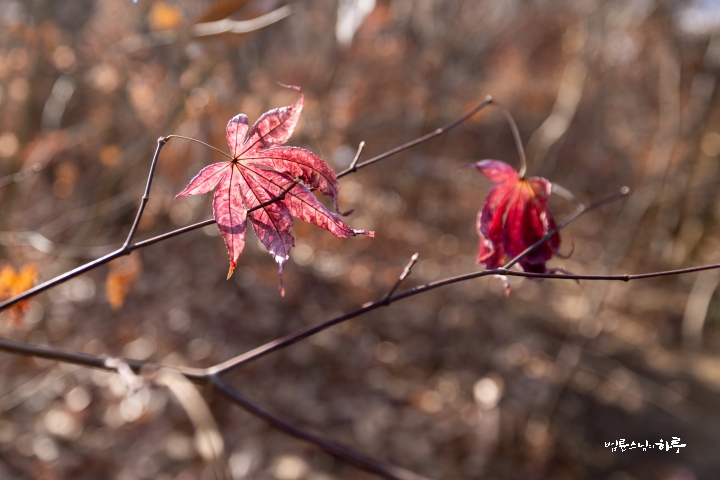
Namsan Mountain in Gyeongju was a complete winter. Most of the deeply colored autumn fell to the ground, and even the leaves remaining on the branches were completely dried and frozen.
“Let’s go to Poseokjeong(포석정).”
They passed through Taejinji (태진지) and Tomb of King Jima (지마왕릉), Gyeongju before arriving at Poseokjeong. With each breath, the cool winter scent penetrated deep into their lungs.
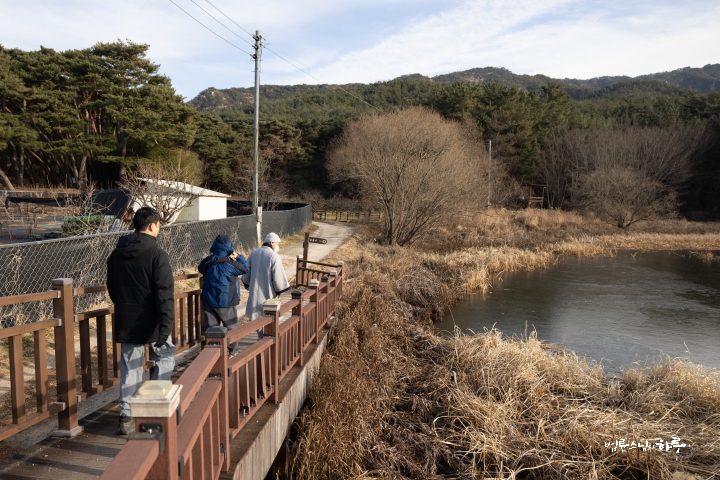
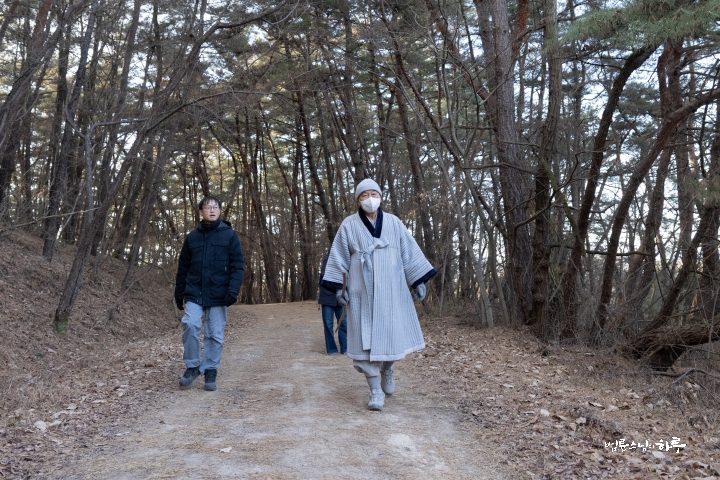
“Let’s go up the mountain. If we go up just a little, there’s a large reservoir. It’s probably frozen over.”
Following Sunim’s guidance, they walked up the mountain path from Poseokjeong to Geumojeong (금오정), and a large reservoir appeared at the entrance to the hiking trail.
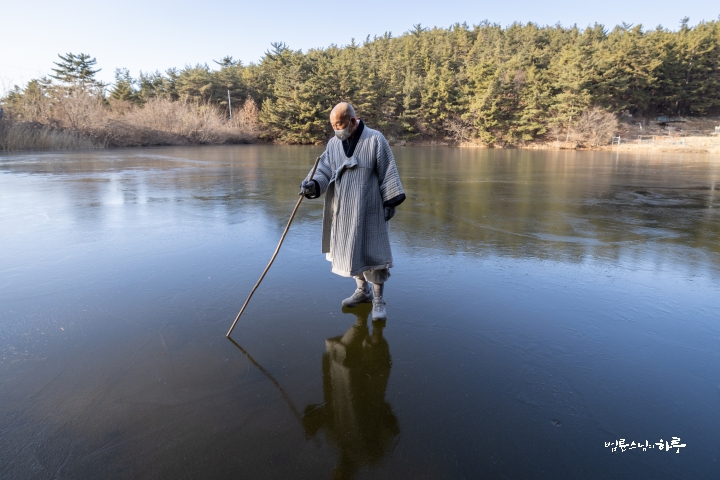
Sunim tapped the ice with his walking stick to check if it was sufficiently frozen, then lightly stepped onto the ice.
“It’s fine. Come on in. Even if the ice breaks and you fall into the water, it won’t kill you. The water isn’t that deep.”
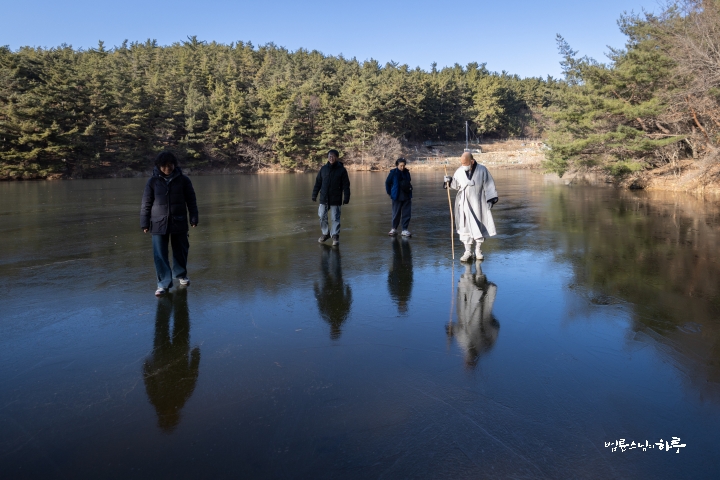
Fish could be seen passing under the ice. When Sunim stopped after walking across the ice, his shoes continued to slide forward.
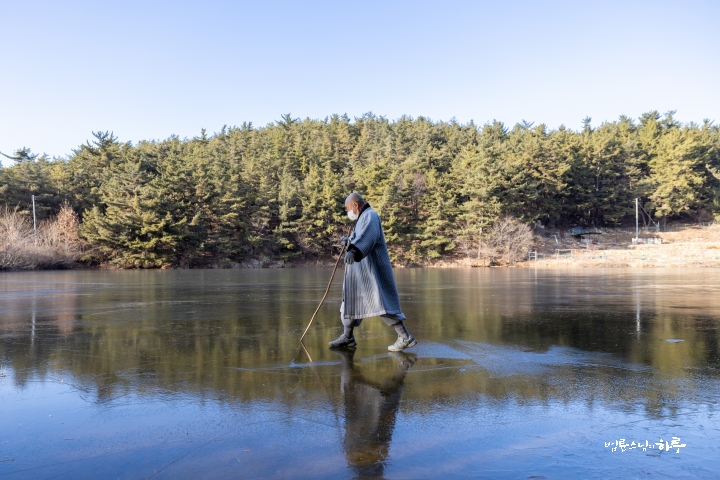
Sunim shared a story from his childhood.
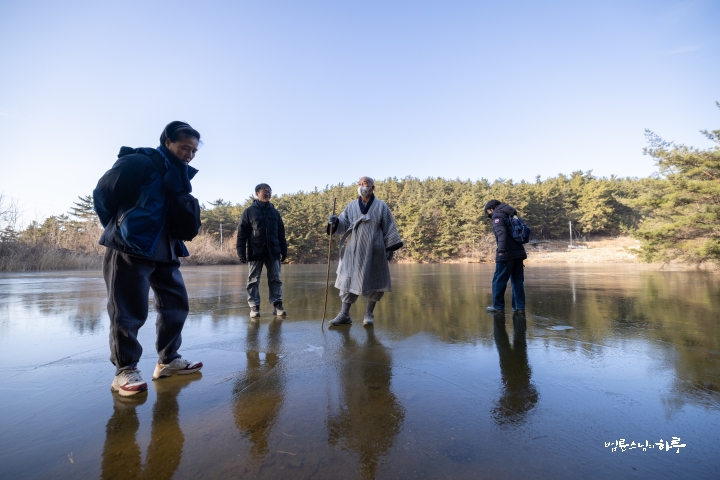
“When I was young, I made my own sleds to ride and play. You could make a sled with just wood and wire.
When the ice begins to thaw, even though the surface looks solid, the inside is already weakened. The moment someone applies force on the ice and it cracks with a ‘snap,’ the fracture that starts from that one point spreads in all directions, and white lines spread across the ice like a mosaic. Back then, we fearlessly kept applying force with our friends until someone fell through first. Looking back now, it was a terrifying game where we could have fallen into the water in an instant.”
After reminiscing about childhood memories on the ice, they came back down the mountain.
“The mountain is too cold. Let’s go to a warm café like other people and have a cup of tea.”
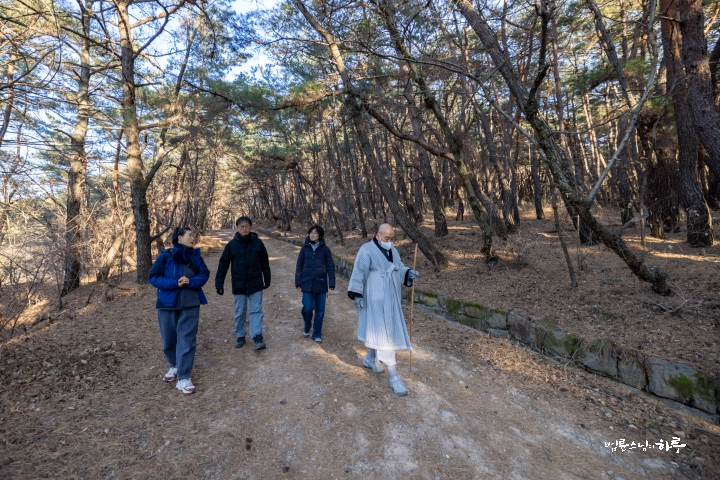
Sunim left Poseokjeong and stopped at a café for a cup of tea. After discussing what work to pursue in the upcoming second 1000-Day Practice, he returned to Dubuk Jungto Retreat Center.
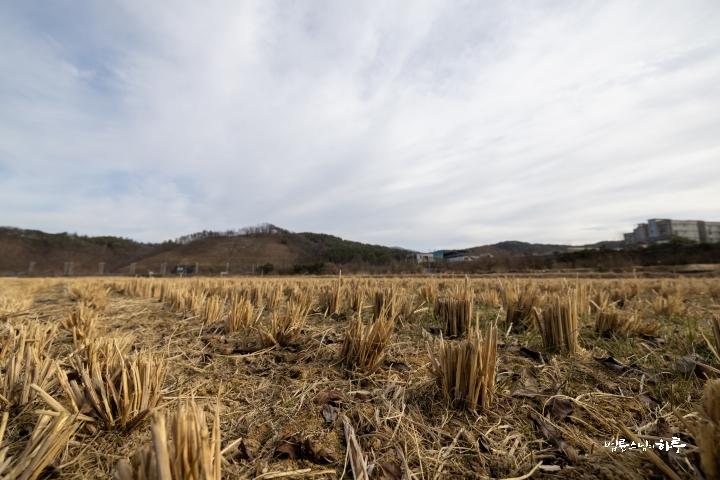
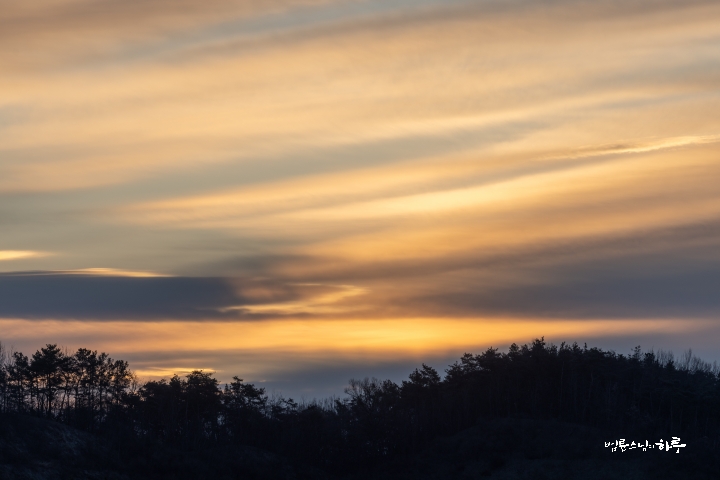
As Sunim arrived at Dubuk Jungto Retreat Center, the sun was setting behind the mountains.
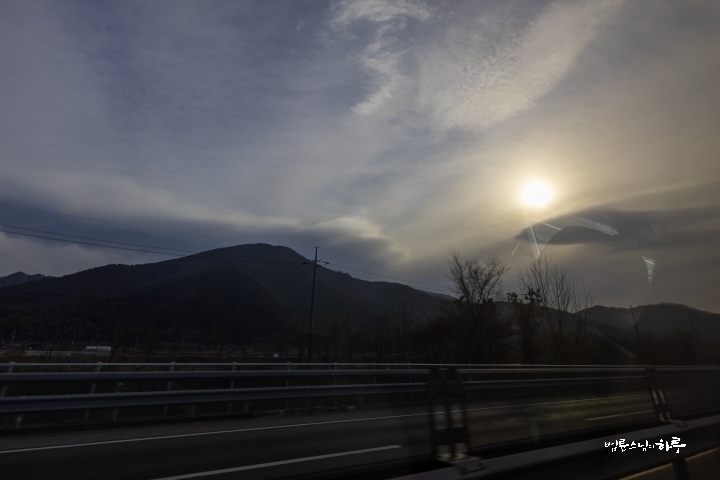
During dinner, Sunim sat face to face with the practice team practitioners and had a conversation. These practitioners had quietly taken on many roles behind the scenes to ensure Sunim’s busy schedule continued without disruption. On this day, Sunim took the time to listen attentively to their difficulties and heartfelt stories from their time together.
At 8 PM, after finishing the conversation, Sunim completed manuscript proofreading and various other tasks before ending his day.
Since there was no Dharma Talk today, this post concludes with a dialogue from last August’s Dharma Q&A held in Las Vegas during the North American West Coast lecture tour between Sunim and a questioner.
How Did Sunim Rise Again Every Time He Wanted to Quit?
“I’ve been doing this work for 56 years now. (Laughter) But does your husband agree with you joining the military?”
“At first, he was a bit worried, but I told him, ‘I don’t think I can do anything else but this.'”
“In life, there’s nothing that you absolutely must do. If this doesn’t work out, you can do that; if that doesn’t work out, you can take another path. That’s life. But if you join the military, you may have to move frequently depending on unit assignments, which means your husband might have to keep changing jobs. The military operates within a command structure, so such practical issues may arise. Have you thought about and decided on this after fully considering these aspects?”
“Yes. My husband has agreed to that part, and we’re planning accordingly.”
“Does your husband run his own business?”
“No, it’s not that, but it’s work he can do from home.”
“Are you planning to have children?”
“No. We agreed before marriage not to have children.”
“I understand your position. So what’s the main point of your question?”
“I’d like to ask how to overcome burnout.”
“Talk about that when burnout actually happens. (Laughter) Because you might not experience burnout at all. There’s no need to discuss it in advance.”
“Have you never experienced burnout?”
“I’ve had it once or twice along the way. The time when I most strongly wanted to quit was in 1980. In October of that year, when the May 18 Gwangju (광주) Democratization Movement occurred, the new military regime, trying to cover up the incident, arrested hundreds of Korean monks, accusing them of ‘having women’ or ‘having property,’ and sent them to the Samcheong Re-education Camp (삼청교육대). It was a form of religious persecution.
I tried to understand that the Buddhist community wasn’t actively addressing social democratization issues. However, I felt great disappointment seeing them remain silent even when facing unjust oppression. Despite suffering persecution by the new military regime, some within the Buddhist community even viewed it as competitors being eliminated. The internal logic of ‘the new military regime cleaned things up for us’ in the face of clear Buddhist persecution was a great shock to me. At that time, I even thought about leaving the Buddhist community.
Actually, I originally wanted to study physics or astronomy. I became a monk somewhat reluctantly after meeting my teacher in high school. As I approached thirty, I decided I should pursue new studies and went to America. Only after arriving in America did I face the truth about the May 18 Gwangju Democratization Movement that I hadn’t properly understood while in Korea, and that incident led me to return to Korea. That was the one moment in my life when I seriously thought about giving up everything and quitting.
But after ten years of Buddhist activities, when I tried to quit, I honestly felt a lot of regret. ‘What did I do wrong? Is the Buddhism I’ve been studying really Buddhism?’ I had such doubts. So I decided to study the Buddha’s life from the beginning again. Through that process, I realized that much of what I had learned in Korean Buddhism was closer to Buddhist culture formed within Indian culture rather than the Buddha’s actual teachings. And I finally realized that the enlightened being called Buddha was truly a revolutionary person.
In my youth, I led young people with the intention of reforming Korean Buddhism, strongly raising issues about ‘what’s wrong with the Buddhist community.’ But when I thought, ‘Ah, this isn’t Buddhism,’ my interest in Buddhist reform itself disappeared. I came to think that they were already playing a significant role just by maintaining temples and preserving cultural assets.”
When you think about it, religion is not so different from running a business with a storefront. When someone asks me, ‘Is Jungto Society doing well?’ I ask them back, ‘What do you mean by doing well?’ Most people then ask if we have many followers. That’s essentially no different from asking if a store has many customers and therefore high revenue. They’re not concerned with how many suffering people are being helped, but rather evaluating success by secular business standards. Once I shifted my perspective to see ‘they too are just business entities,’ all the criticism and judgment I had directed at the Buddhist establishment completely disappeared. That’s how I came to start Jungto Society with the mindset of ‘let me practice authentic Buddhism, even if alone.’
Looking back, the burnout I experienced was actually a blessing in disguise. Otherwise, I might still be fighting within that system under the banner of ‘reform.’ So burnout isn’t necessarily a bad thing. When burnout comes, it can open up new paths. I don’t think we need to fear it too much.”
“Yes, thank you.”