
Jan 2, 2026 – Jungto Society New Year’s Ceremony, Friday Dharma Q&A
Hello. After completing the 9-night, 10-day 1000-Day Practice closing home retreat, we resume the serialization of “A Day in the Life of Sunim” today.
In the meantime, 2025 has come to an end, and the new year 2026, the Year of the Fire Horse, has dawned. Jungto Society officially begins its 2026 operations today. Today, the Jungto Society executive team and members gathered together for a New Year’s ceremony to renew their minds and share their resolutions for the new year.
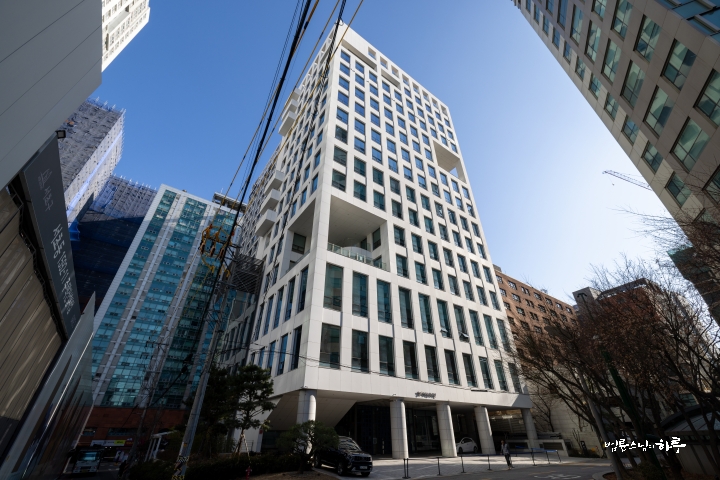
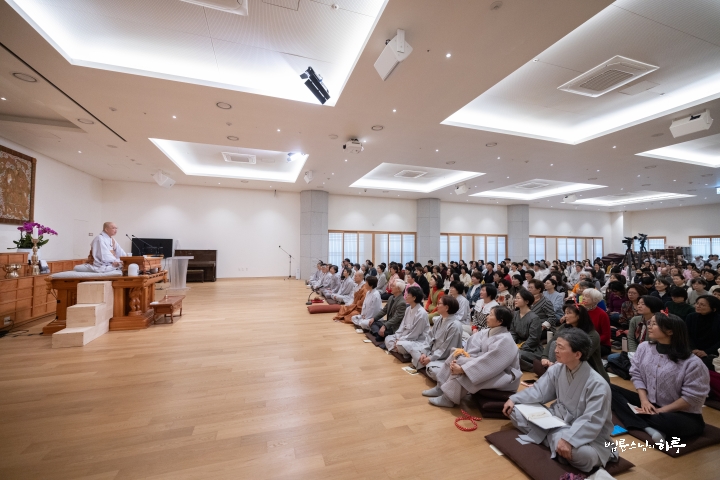
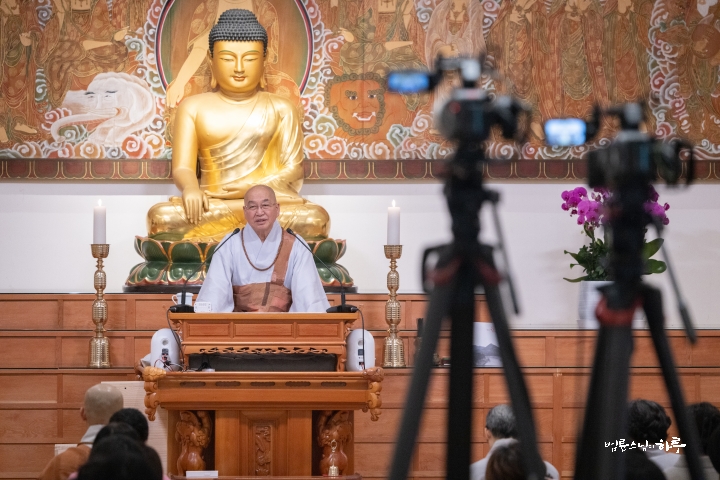
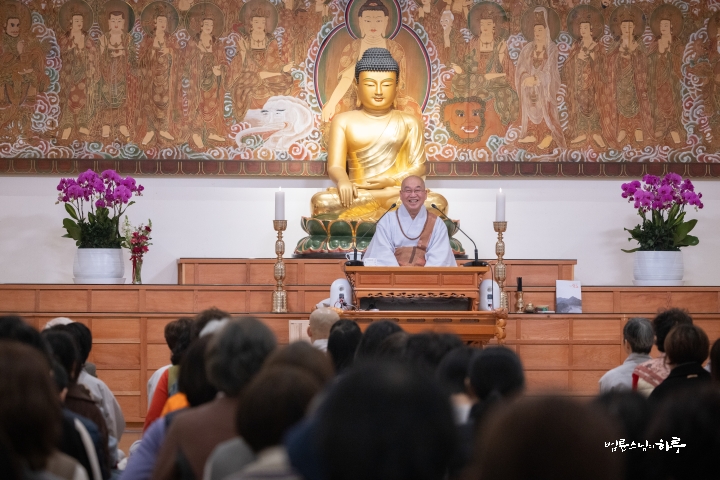
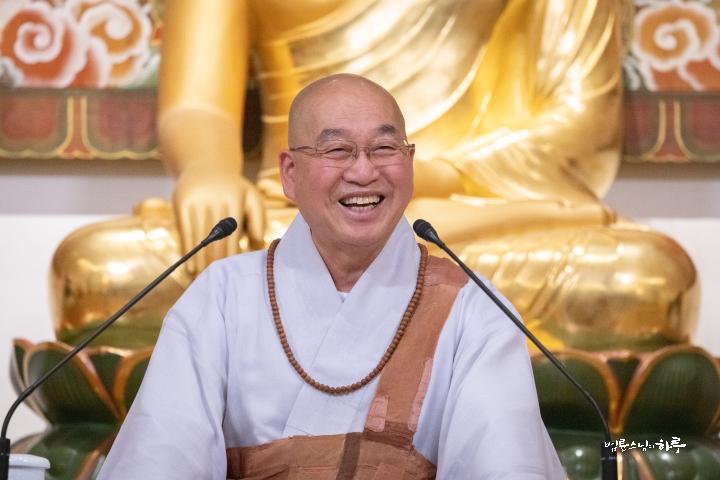
After completing morning practice and meditation, Sunim headed to the Jungto Social and Cultural Center for the New Year’s ceremony. With about 300 members of the Sangha gathered in the Dharma Hall on the third floor, the 2026 Jungto Society New Year’s ceremony began at exactly 10 AM.
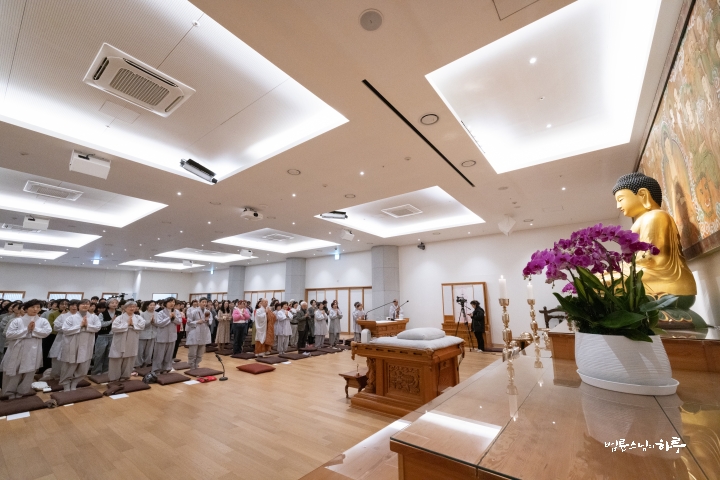
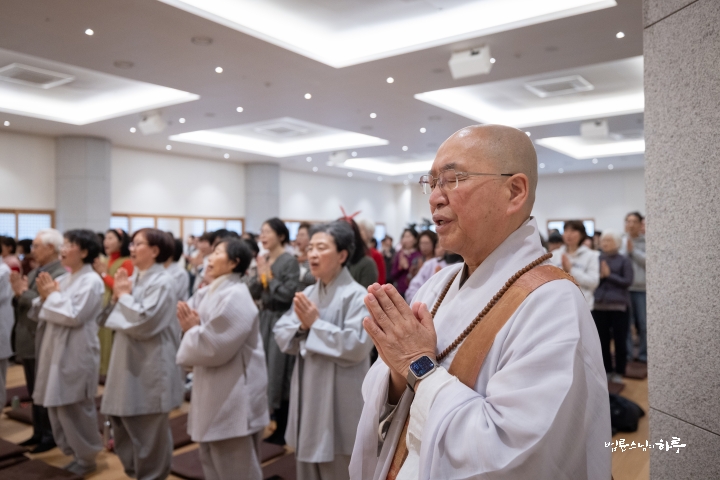
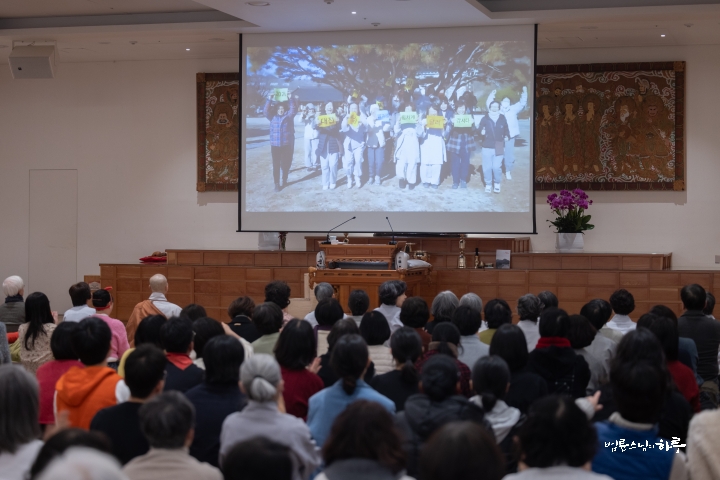
Following opening remarks by Dharma Teacher Seonju, the head of the Dharma Teacher Group, everyone watched New Year’s greetings prepared on video by various domestic and international divisions. The Daejeon-Chungcheong Division(대전충청지부), Gwangju-Jeolla Division(광주전라지부) , Daegu-Gyeongbuk Division(대구경북지부), Busan-Ulsan Division(부산울산지부), and Gyeongnam Division(경남지부), along with overseas divisions, the international division, and the Happiness Movement Headquarters(행복운동본부), all sent video messages from around the world expressing their determination to start the new year with vigor.
Next came New Year’s greetings from each division present at the venue. The Seoul-Jeju Division (서울제주지부), Gangwon-Eastern Gyeonggi Division (강원경기동부지부), Incheon-Western Gyeonggi Division(인천경기서부지부), Special Youth Division (청년특별지부) came New Year’s greetings from each division present at the venue. The Seoul-Jeju Division, Gangwon-Eastern Gyeonggi Division, Incheon-Western Gyeonggi Division, Special Youth Division , Community Division(공동체지부), and the Jungto Social and Cultural Center Special Practice Division each prepared and presented various performances showcasing their unique characteristics.
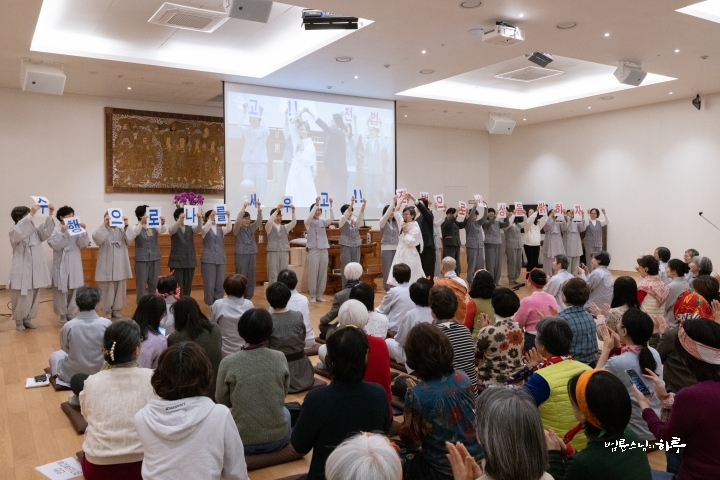
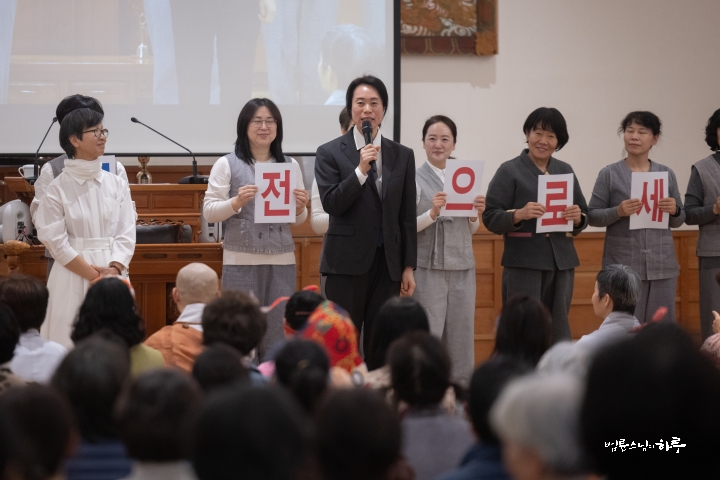
“Build ourselves through practice, brighten the world through spreading the Dharma!”
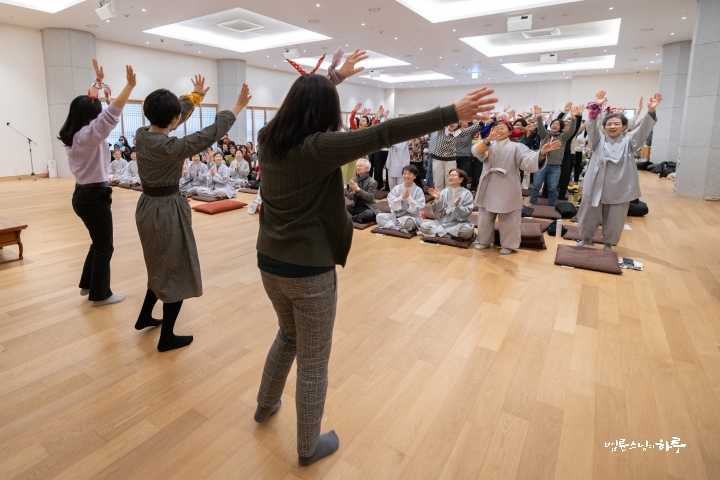
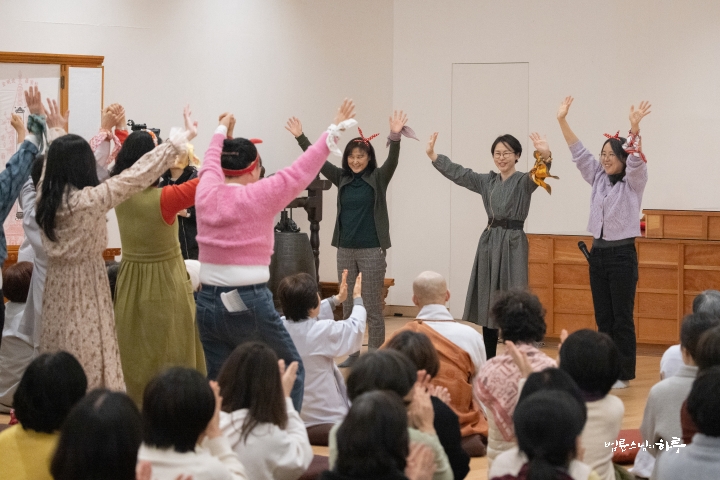
“Practice with a smile! Spread the Dharma joyfully! 2026, Year of the Horse, let’s run, run, run!”
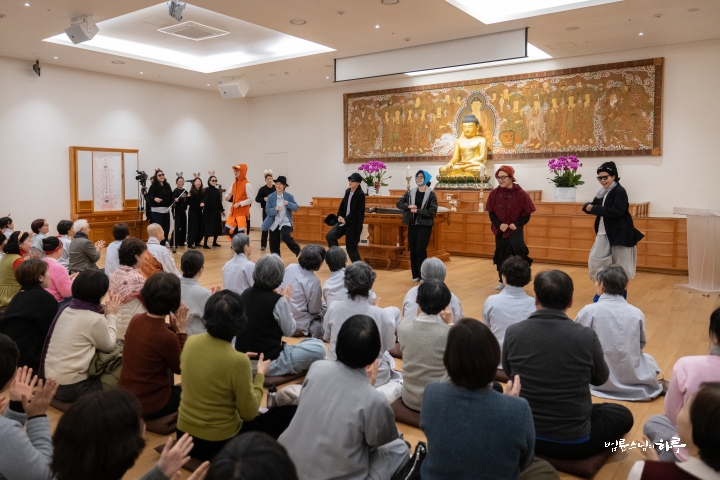
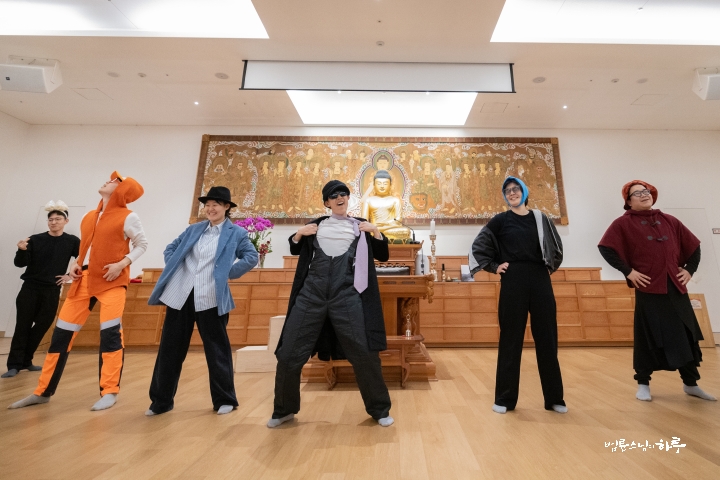
“In 2026, let’s all stay healthy and keep volunteering.”
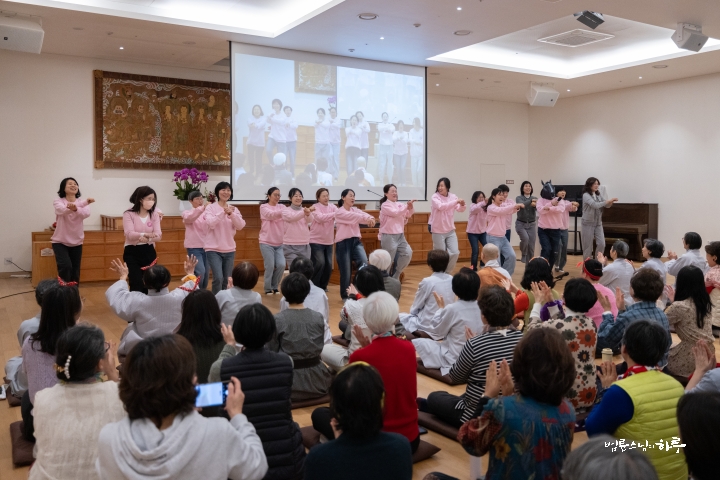
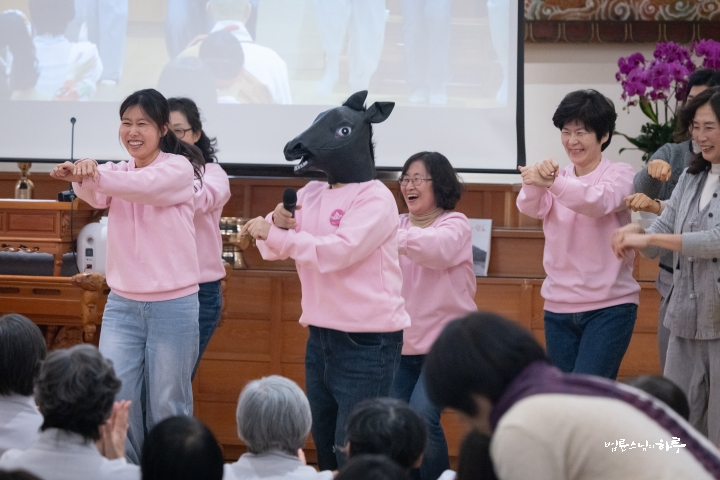
“Be happy through practice! Be energetic through dedication! Be vibrant through activities! Let’s run powerfully in 2026!”
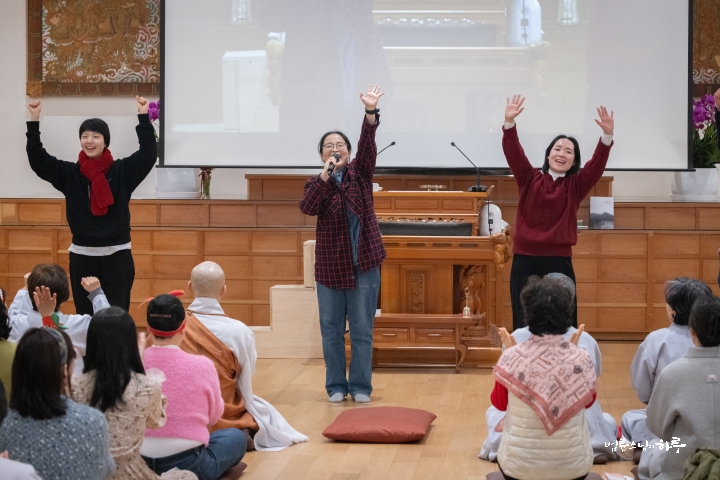
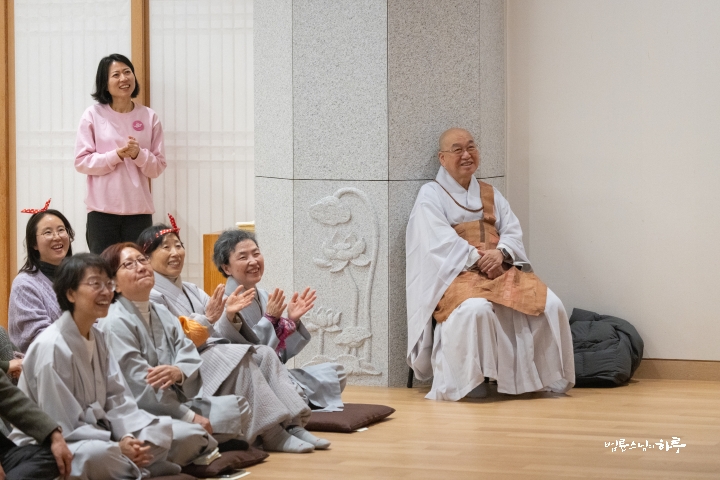
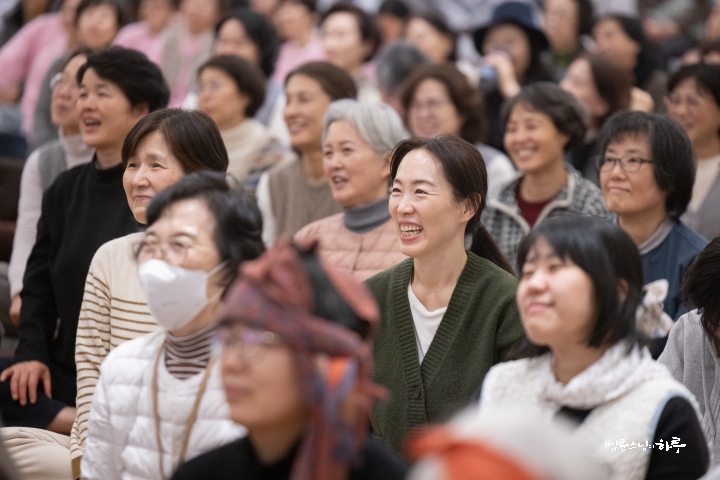
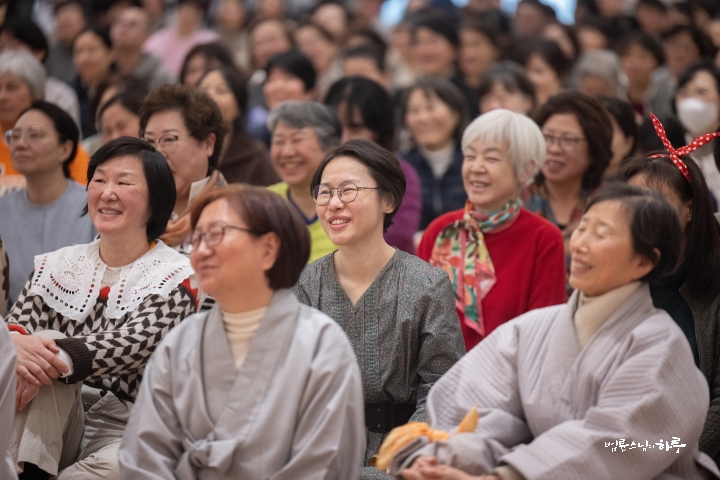
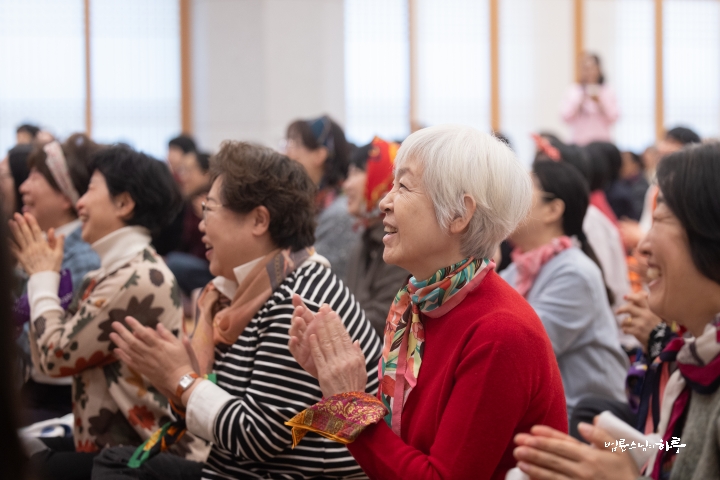
The doors to the new year were thrown wide open amid vibrant laughter. Through the New Year’s greetings combining videos and performances from each division, everyone welcomed the beginning of the year with energy and vitality.
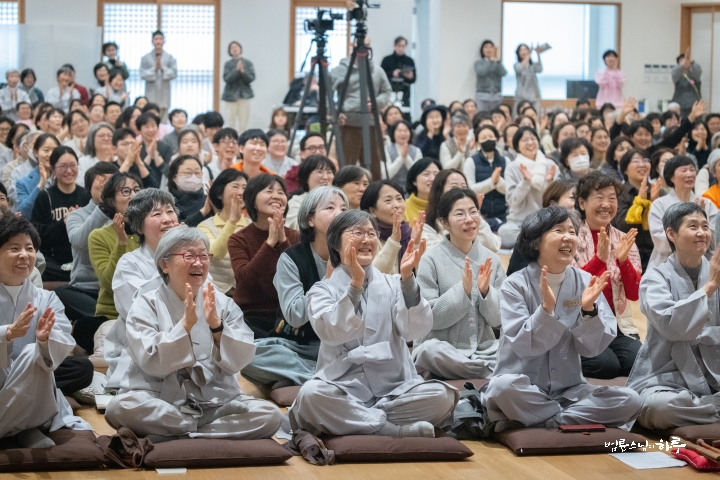
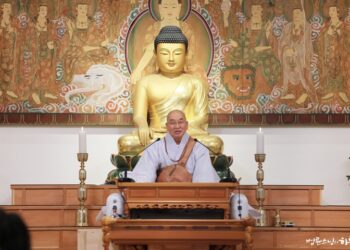
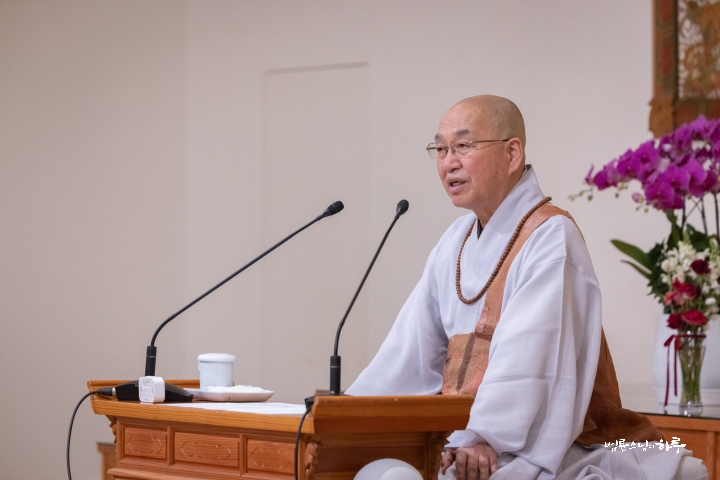
When the assembly requested a Dharma talk with three prostrations, Sunim gave a teaching on what mindset to adopt in welcoming the new year.
“The new year 2026 has dawned. In this new year, I hope you all stay healthy and that all your endeavors come to fruition smoothly. Moreover, I hope each day of your life becomes increasingly happy.
Today marks not only the beginning of 2026 but also, since Jungto Society practices in 3-year, 1000-day units, the start of the second 1000-Day Practice period from 2026 to 2028. Looking ahead at the next three years from 2026 to 2028, there is very high concern about the possibility of international conflicts around the Taiwan Strait and global war. There are concerns that the Korean Peninsula might also be swept up in conflicts as a result. In this situation, we must take a clear position that war must never break out again on the Korean Peninsula. While achieving unification is important, maintaining peace must be our top priority above all else. Peace is not a matter of left or right ideology, nor is it a matter of any particular religion. As citizens of the Republic of Korea, everyone must clearly hold the view that war must never occur again on this land and that peace must be maintained. And if there is anything that can contribute even slightly to that peace, we should participate in it as a priority over any other matter.
In an Era of Wealth Disparity and Climate Crisis, the Path We Must Choose Now
Another issue we must deeply consider is the rapidly expanding wealth gap worldwide. According to recent reports, the world’s top 500 richest people hold assets worth $8.4 trillion, with their wealth increasing by more than $1 trillion in just the past year alone. Meanwhile, the lives of the poor are becoming increasingly difficult. We have now moved beyond the level where ‘the top 1% equals the remaining 99%’ to a structure rapidly shifting toward ‘the top 0.1% equaling the income of 99.9%.’ At the same time, even in today’s modern society, the number of people worldwide who struggle with basic necessities of eating, clothing, and shelter is not decreasing. We must not spare our support to help these neighbors maintain at least a minimally decent human life.
Furthermore, looking at our Korean society, while absolute poverty may have decreased, relative poverty is intensifying as more people find their lives becoming increasingly difficult. Therefore, warm attention and helping hands toward our neighbors in need are more necessary than ever. Moreover, in these times, the government’s role should not be in forcibly reviving declining industries, but in establishing a social safety net to ensure that people who worked in those industries can maintain at least a minimum standard of decent living. And for the government to pay attention to such matters and fulfill its responsibilities, we citizens must also raise our voices clearly.
Jungto Society has been working with the eradication of absolute poverty as a major task. However, now is the time to pay attention to the issue of relative poverty as well. Of course, the problem of rapidly expanding relative poverty amid today’s rapid social changes inevitably touches on political issues, which may lead to misunderstandings or criticism as political activity. Nevertheless, we must view this issue not from a political standpoint, but from the perspective of valuing each person’s life and happiness. Although we may not be able to completely prevent the rapidly widening wealth gap both globally and domestically, efforts to alleviate this gap even slightly are absolutely necessary. This is not a matter of grand ideology, but a minimum responsibility to protect human dignity.
At the root of all these problems lies an even greater and more fundamental crisis: climate change. Climate change will intensify over time, and the resulting climate crisis will bring about increasingly frequent natural disasters. We have now reached a point where these are no longer mere inconveniences of slightly colder or warmer weather, but catastrophic natural disasters that threaten the very survival of countless people. Such disasters will inevitably occur more frequently, with greater intensity, and across wider regions.
While we may not be able to stop the climate crisis immediately, we can begin efforts right now to slow its pace and reduce its damage. This requires both reduced consumption in practice and the spread of a movement toward more frugal lifestyles. The existing value system, where consuming more has been a source of pride and envy, must now change. This is not about living in poverty, but about creating a social atmosphere where living frugally becomes a source of mutual pride and example, and where living simply is never a cause for shame. At the same time, we must establish response systems that can provide faster, broader, and more direct assistance in disaster situations that threaten survival.
Of course, Jungto Society cannot solve all the world’s problems. However, when we continue with small but steady practice and make small but sincere contributions, our actions themselves become an example. The power comes not from achieving great things, but from conveying to the world the courage and possibility that ‘we too can do this.’ When this happens, not only other Buddhist organizations but also other religions, civil society, businesses, and nations will spread the awareness of ‘If they can do it, why can’t we?’ This very example will make the world a little more beautiful and become the force that stops the rush toward destruction.
Service Without Diligent Practice Cannot Last Long
For Jungto Society to carry out these tasks even a little, above all, each of you must first establish your own practice. At the very least, you should be able to take responsibility for your own life. Rather than living a life where you cry for help saying ‘I can’t live because of someone,’ you must have the power to respond actively regardless of whom you meet or what situation you face. This is possible when you have a clear sense of self-centeredness and your own perspective.
Before helping others, you must first become self-reliant. We must make a vow to become people who can help others, people who care for the poor and contribute even small assistance. To do this, we must first save and economize, practice giving even if small, and make time to participate in volunteer work despite our busy schedules. When small acts of giving and small volunteer efforts gather together, and when more people’s strength is added and used in the right direction for what the world truly needs, the world will change. I hope we can all continue this practice together.
However, there are cases where people feel their lives are painful even while doing good work for the world. This is because they do not value themselves. While it is wrong to ignore others for one’s own benefit, it is also undesirable to treat oneself carelessly for others, as we too are precious beings just like others. Jungto practitioners must always be based on diligent practice. When I say ‘value yourself,’ I don’t mean to take your share first or prioritize your desires. It means having an attitude where you can actively respond to any situation and not drive yourself into suffering.
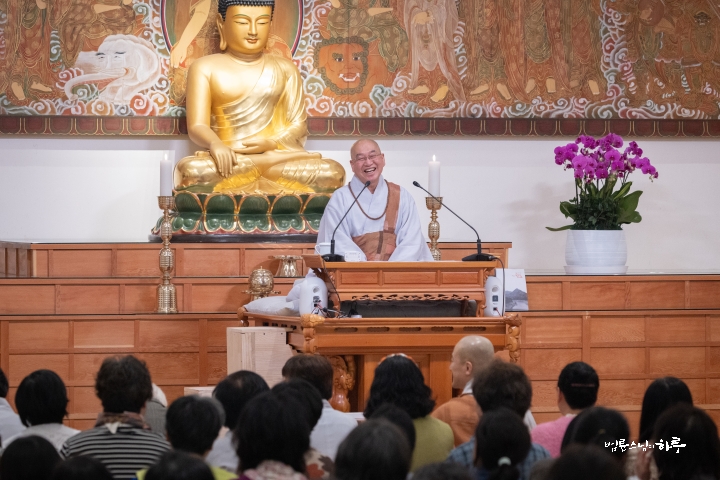
Looking at how you all expressed your New Year’s resolutions earlier, I was concerned that you seemed ready to rush forward recklessly just because it’s the ‘Year of the Horse.’ If you run like that, you’re likely to fall. That’s why you must never neglect the practice of protecting and caring for yourself.
Among Jungto practitioners, there are those who are dispatched to work in the Philippines, India, and Bhutan. While they initially begin their volunteer work based on their practice, as the amount of volunteer work increases and the scale of their duties grows, their practice gets pushed aside and they become absorbed only in their work. Eventually, they become overwhelmed by work and start getting angry, irritated, and suffering. When they suffer like ordinary people caught up in worldly affairs, they eventually think about quitting, and some actually do quit. They come for practice but end up returning to worldly life. This doesn’t mean ‘only practice and don’t work.’ It means that no matter how busy or difficult things get, sustainable volunteer work is only possible when you don’t lose sight of the perspective of practice that protects yourself. The power to continuously help others comes from diligent practice.
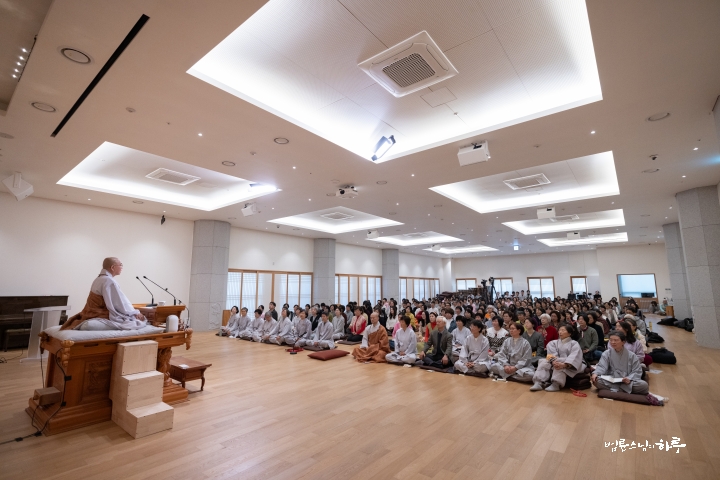
Especially those who are talented tend to become absorbed in their abilities and get caught up only in work, making it easy to neglect their spiritual practice. When this happens, it’s also easy to damage one’s health. In fact, some people say that their health deteriorated or they suffered emotional wounds while doing Jungto Society activities, but this doesn’t quite add up. When working, one must always observe and take care of one’s mind and condition. There’s a precept that says “Don’t spare your body,” which means don’t be lazy. At the same time, there’s also a precept that says “Don’t treat your body carelessly.” This means it’s not desirable to overwork your body by becoming too absorbed in work. When I say this, you probably want to ask, “Sunim, didn’t you also get sick because you worked frantically without taking care of your body?” (laughter)
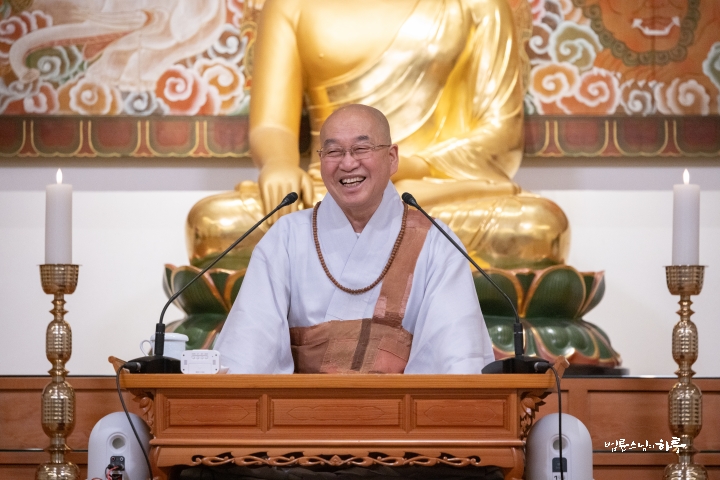
Even though I get sick just like you, there’s a difference. When I’m sick, I don’t stop working, complain, or blame others. I just work whether I’m sick or not. I’ve never taken sick leave or vacation in my entire life. While getting sick is the same, my perspective on accepting illness is somewhat different from yours.
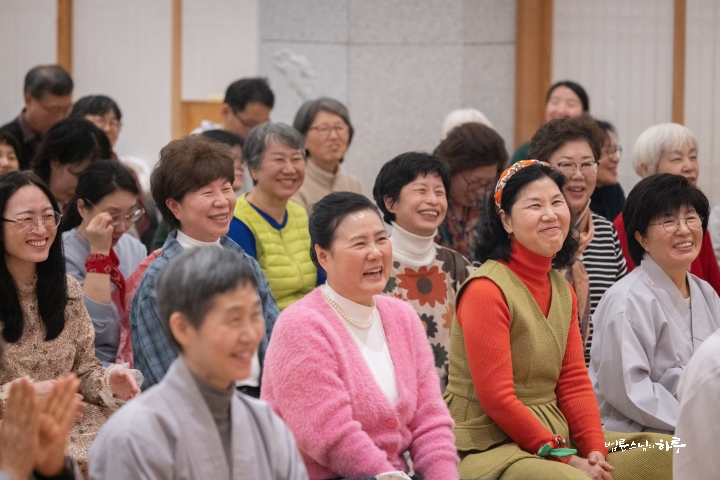
This doesn’t mean that you should work desperately while enduring pain. If you’re sick, you need to receive treatment while working. I’m not criticizing those who have taken sick leave. Please don’t misunderstand and think, ‘Is Sunim criticizing me for taking sick leave?’ If you’re sick, you need to go to the hospital, and when you need to rest, you should rest. I’m not taking issue with sick people resting, but rather saying that you need to take care of your body while working. When work becomes overwhelming, you should honestly communicate with your fellow practitioners and make adjustments. The point is not to keep everything to yourself and endure until you collapse later.
I believe the next three years will be a crucial period where it’s most important that war doesn’t break out on the Korean Peninsula, and furthermore, that East Asia moves away from a state of war toward mutual cooperation. For this to happen, North Korea needs to establish itself as a normal state, normalize diplomatic relations with the United States and Japan, and normalize inter-Korean relations as well. Therefore, while I will actively engage in Jungto Society activities, I plan to focus my greatest attention on activities that help end the hostile relationship between North and South Korea. Of course, I hope all of you will also join forces for spreading the dharma around the world, youth outreach, and the National Happiness Movement. In the new year, I hope you will greet the year with the same energetic and vibrant spirit as the New Year’s greetings you shared today.”
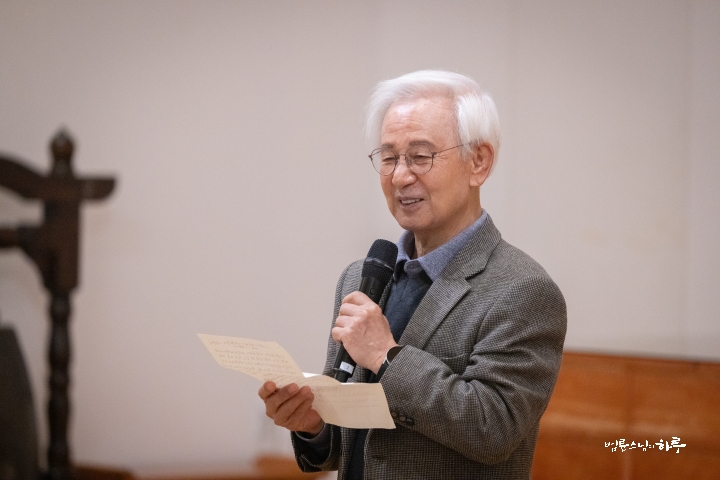
Next, author Kim Hong-shin, who has always been with Jungto Society for major events, shared warm New Year’s greetings.
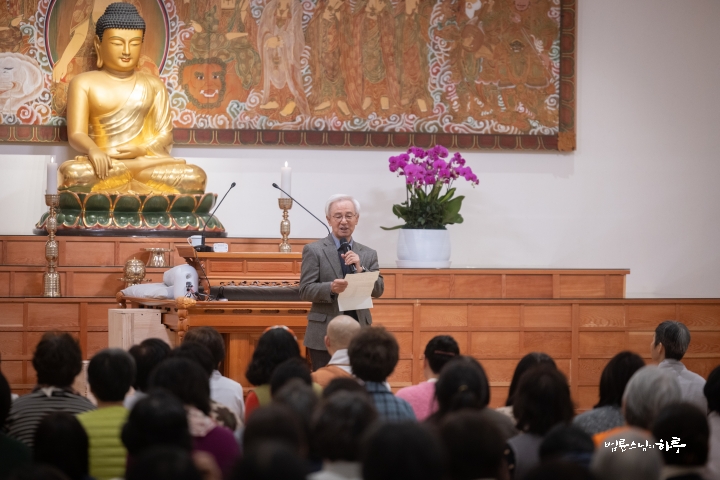
“The natural enemy of life is time. However, time is not the only natural enemy. Illness and aging, worries and concerns, anger and fury, irritation and conflict, quarrels and boredom, and sometimes even wives and husbands all become natural enemies of life. Humans in the beginning were beings surrounded by countless natural enemies. However, to survive, they united, helped each other, invented, and evolved, and as a result, have become the masters of Earth today. The Buddha also had many natural enemies. The same is true for Venerable Pomnyun Sunim. When traveling together not only in Korea but also in countries like the Philippines and India, it truly feels like being surrounded by natural enemies.
Through Venerable Pomnyun Sunim’s teachings, we are cultivating a Jungto of the mind, facing life’s natural enemies, and walking the path of free practitioners, liberated from suffering. Even at this very moment, just by living as practitioners, you are already free people and are certainly creating miracles. I hope you will live spiritedly as the protagonists of miracles throughout 2026. And I sincerely pray that you will all attain enlightenment and that we can meet again in good health on the day of the 10,000-Day Practice completion ceremony in 2052.”
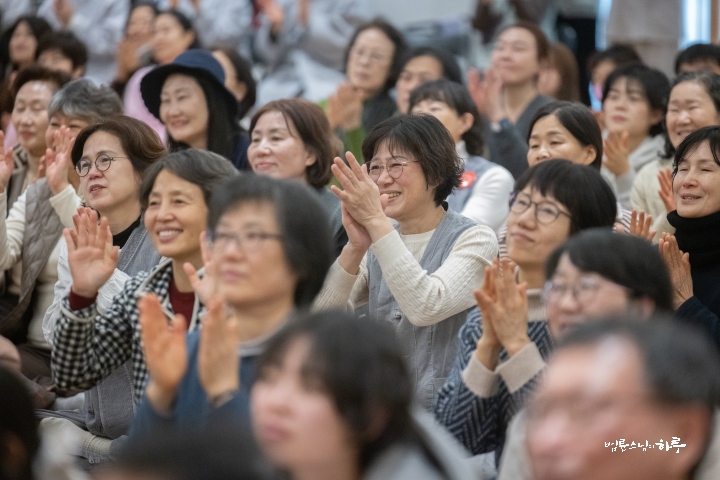
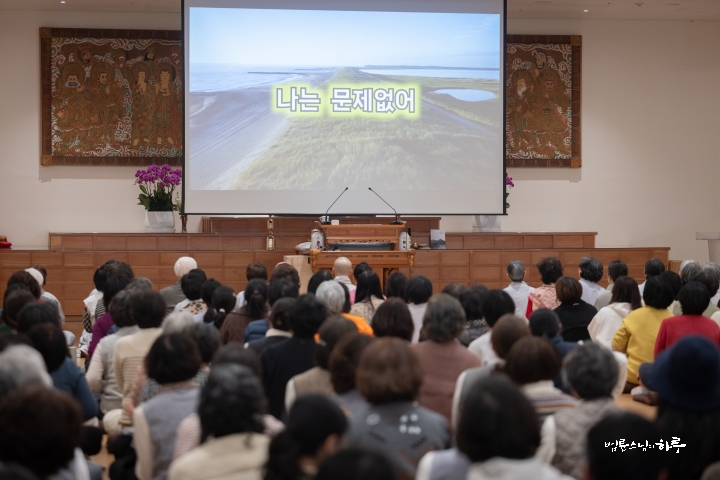
Everyone then sang “I Have No Problem” together, meaningfully concluding the 2026 New Year’s ceremony program.
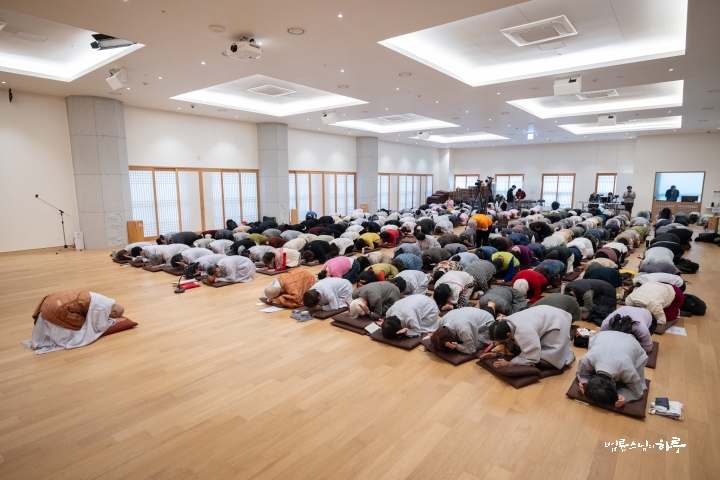
After the live broadcast ended, Jungto Society members who attended in person offered New Year’s bows to Sunim.
Volunteers gathered in groups to share their reflections and New Year’s resolutions, while Sunim left the broadcasting room and moved to the basement dining hall for lunch.
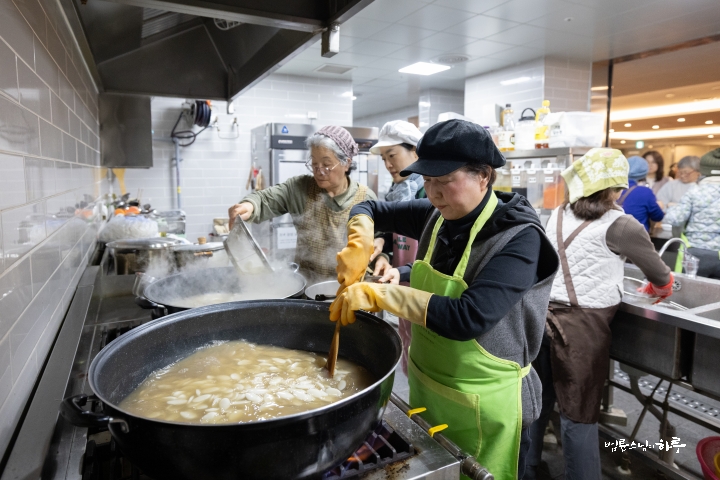
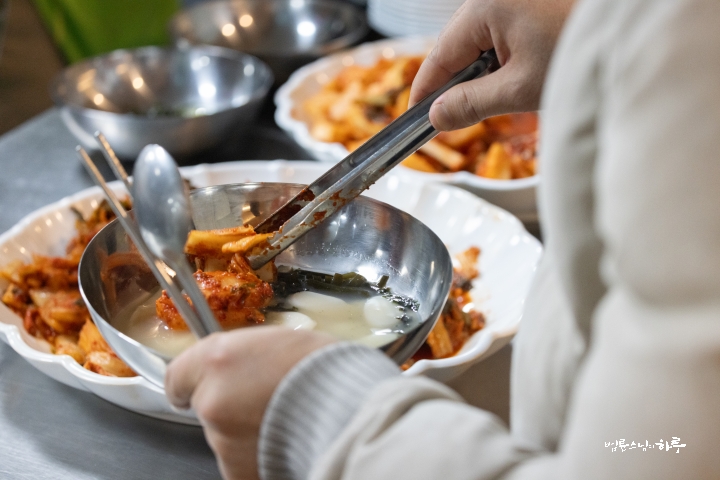
Rice cake soup was specially prepared for the New Year. Sunim enjoyed the rice cake soup and conversation with author Kim Hong-shin.
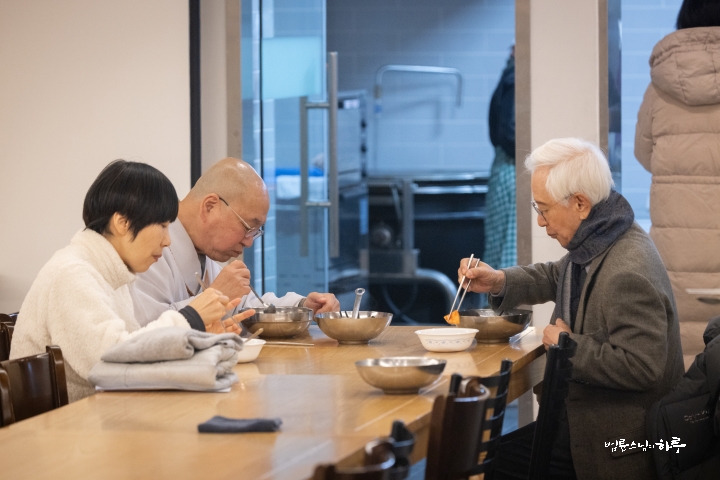
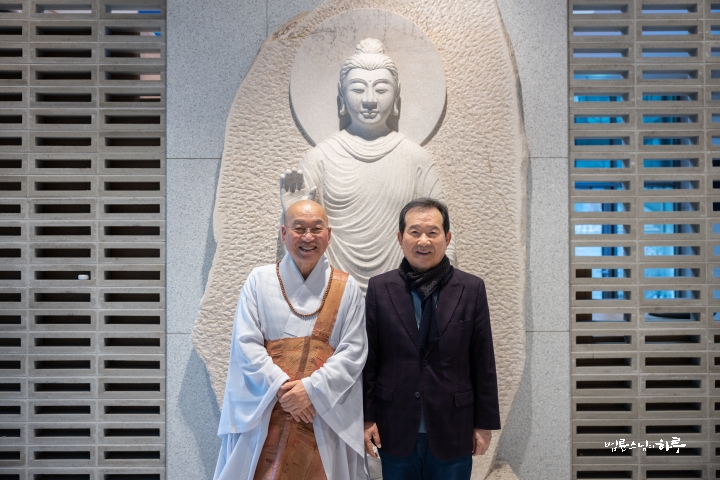
At 2 PM, former Prime Minister Chung Sye-kyun(정세균)visited The Peace Foundation to have tea with Sunim. They exchanged views on how to alleviate the increasingly severe conflicts between ruling and opposition parties and achieve national unity in the New Year. They also had an in-depth conversation about future directions for inter-Korean relations and North Korea-Japan relations, including improvements in North Korea-U.S. relations, before concluding their tea meeting.
From 4 PM, a discussion on personnel assignments for the 2-2nd 1000-Day Practice was held in the 6th floor international conference room with most lay Sangha division members present. Members dispatched to India, the Philippines, and Bhutan participated in the meeting online to share their opinions.
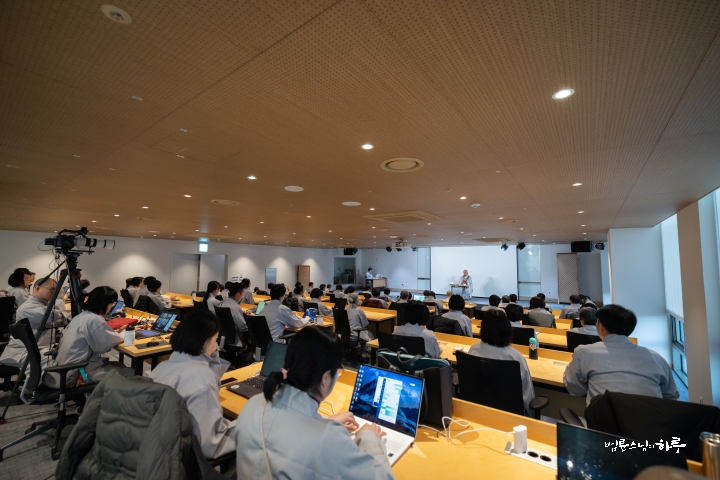
First, Sunim explained the purpose of today’s meeting.
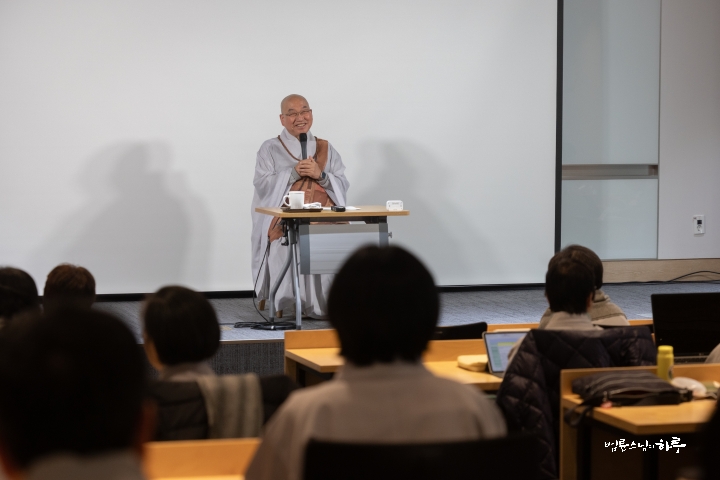
“This meeting has been arranged to discuss what roles each lay Sangha division member should take on for the 2-2nd 1000-Day Practice. If anyone has told you ‘you should go to this department,’ that would be completely improper. All personnel discussions will proceed over the next week starting today. Those who wish to stop their activities will also begin consultations today. The lay Sangha Dharma Teacher group will now present the initial draft of personnel assignments they have prepared, so please listen carefully and provide your questions or opinions.”
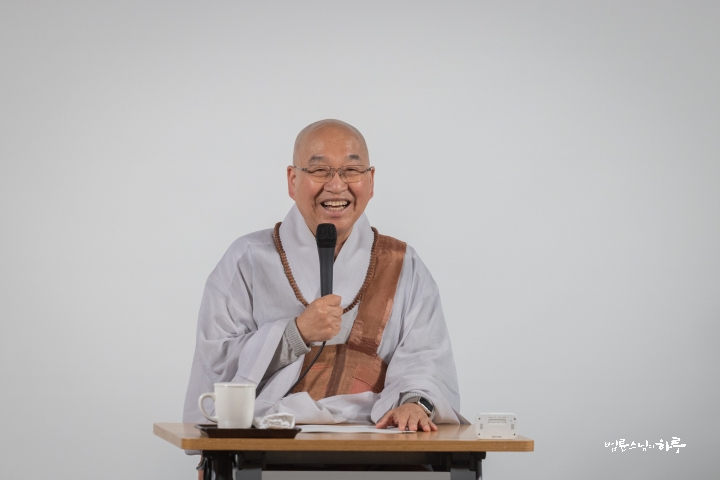
Next, Dharma Teacher Seonju, the head of the Dharma Teacher group, announced the initial draft of personnel assignments for each department including the Education and Training Center, Practice Team, Haengja Institute(행자원), main temples, Distribution Team, Farming Team, JTS, Good Friends, Eco Buddha, The Peace Foundation, Property Management Division, Multimedia Center, Construction Team, and International Cooperation Team.
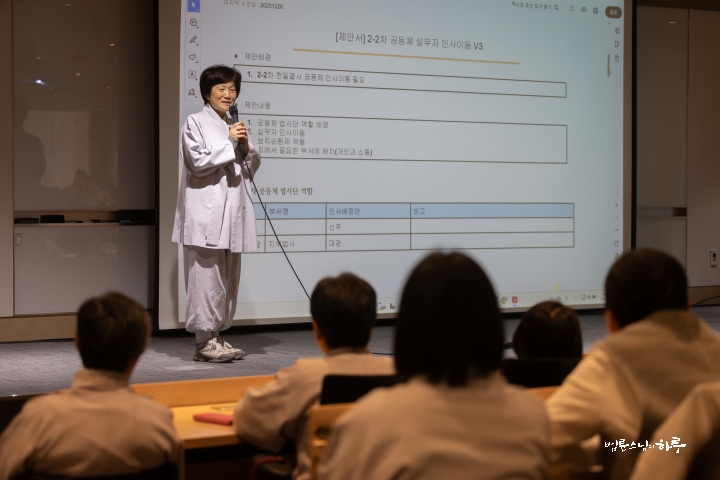
Each department needed many personnel, but the number of people was limited. After comprehensively reviewing the situation, Sunim continued the meeting and proceeded with the discussion.
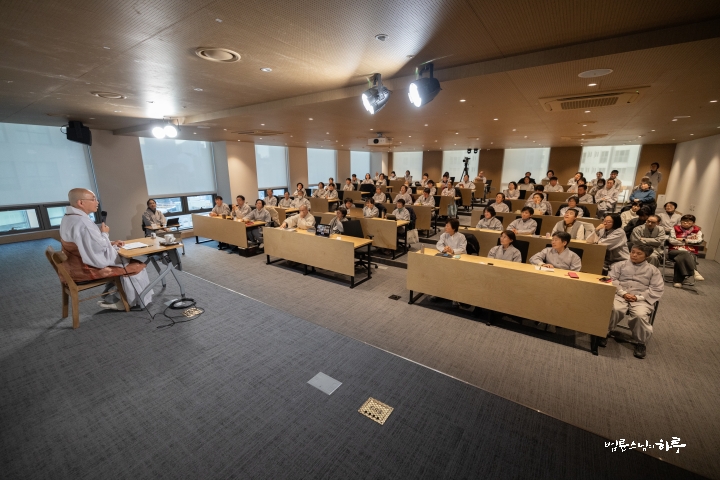
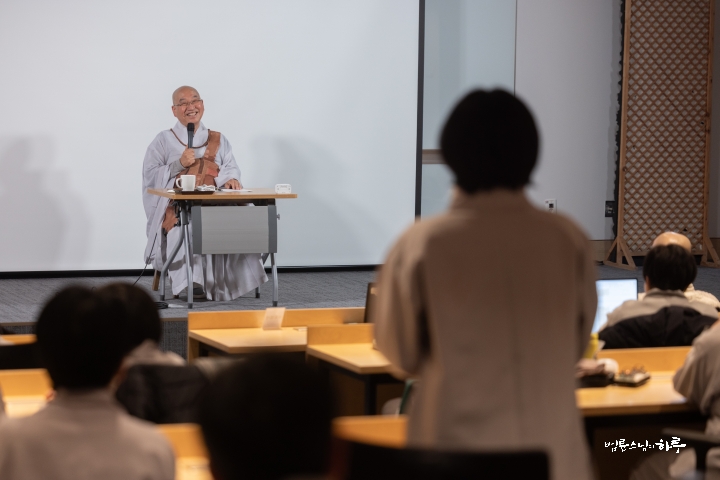
Various members shared their opinions on the initial personnel assignment draft and asked Sunim questions. After continuing the discussion for about two hours, Sunim concluded the meeting.
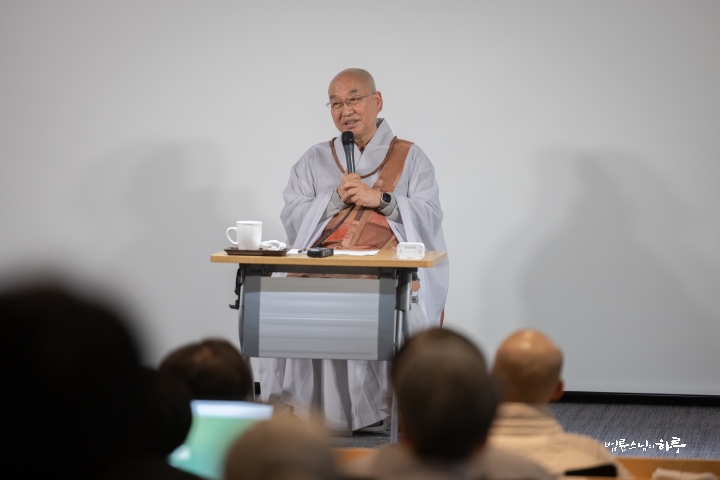
“Many people have provided good opinions. I hope the lay Sangha Dharma Teacher group will incorporate these well and make adjustments. We will have a meeting to finalize the revised plan in a few days. Thank you for your hard work.”
The lay Sangha division personnel assignment meeting concluded at 6 PM as the sun set.
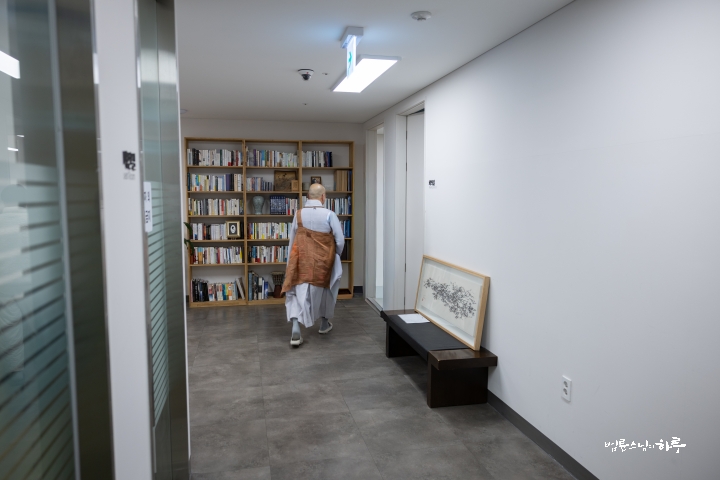
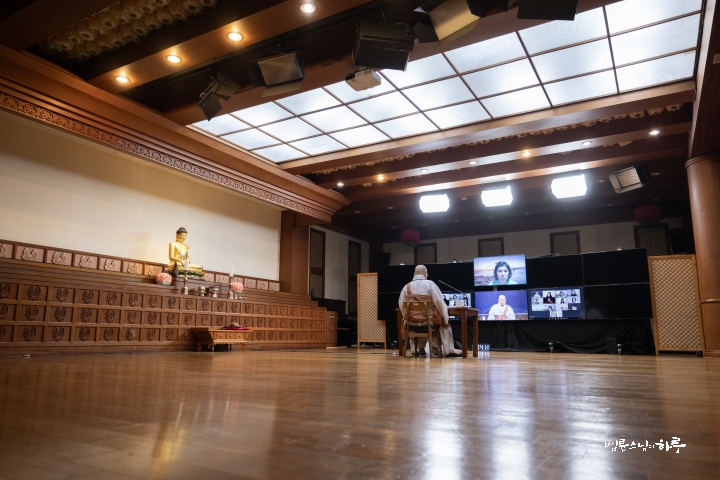
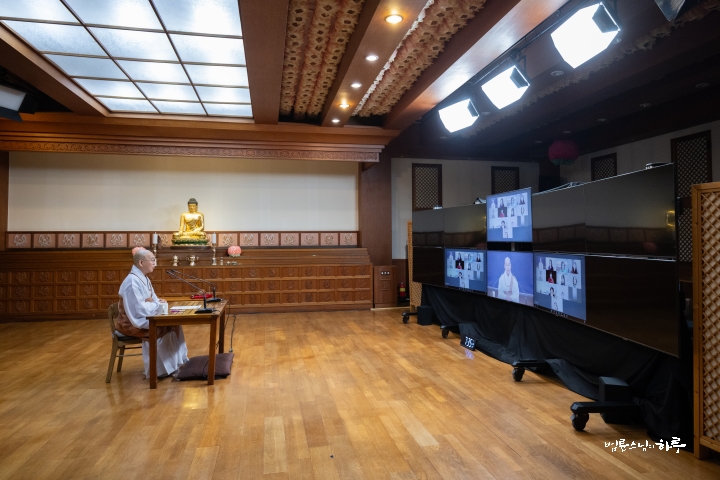
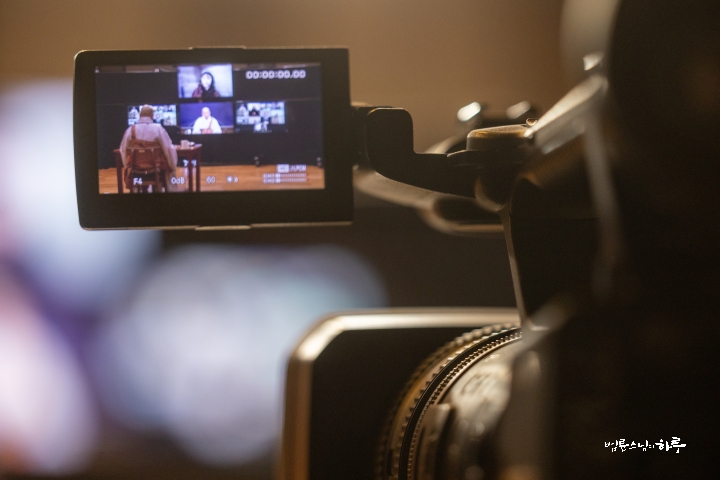
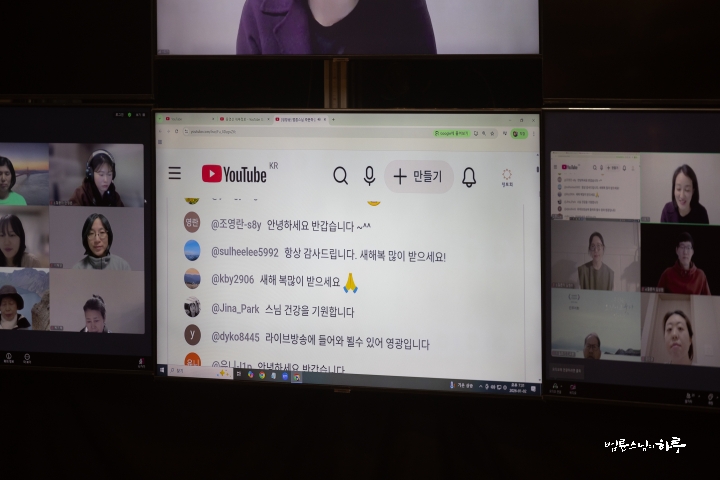
From 7:30 PM, the Friday Dharma Q&A live broadcast was held from the Seoul Jungto Center broadcasting room. With about 4,000 people connected to the live stream, Sunim greeted the viewers and then took questions. Four people had pre-registered questions and took turns having conversations with Sunim.
One person shared their deep suffering from still hating their father who destroyed the family through alcohol and gambling, yet being unable to turn away from him.
My Father Destroyed Our Family with Alcohol and Gambling. Must I Forgive Him?
“I hate my father so much. When I was young, my mother said she couldn’t live with my father anymore and ran away, leaving her young children behind. My older brother and I were raised by our paternal grandmother. Looking back, I really loved my father. But whenever he came home drunk, he would fight with my grandmother over money, curse at her to borrow money, and my grandmother would somehow try to fix things by borrowing money and cleaning up after his messes. As I gradually became aware of these things I didn’t understand when I was young, I began to hate and resent my father more and more, thinking ‘How could he do that to the grandmother who is raising his children with such devotion?’ My grandmother always told me not to hate my father no matter what. But when I became an adult, my father constantly asked me to lend him money. If I didn’t lend it to him, he would ask my brother-in-law or sister-in-law for money day and night. I found out that my father spent all the money on alcohol and gambling. Later, when I discovered that my father had even taken out loans in my name, I basically cut him off. Now, even my grandmother who lived with my father has passed away, and my father has had a stroke. Seeing him old, sick, and alone with no one to care for him, I feel so sorry for him on one hand, and angry on the other, wondering why he lived his life that way. I want to cut ties forever and live comfortably, but on the other hand, I think, as my late grandmother said, no matter how much I hate him, he’s still my father. But because of my hatred, I don’t want to approach my father carelessly. So when I think of my father, it weighs on my heart and causes me much suffering. What should I do with these feelings?”
“Do whatever you want.”
“Actually, that’s what I wanted to hear.”
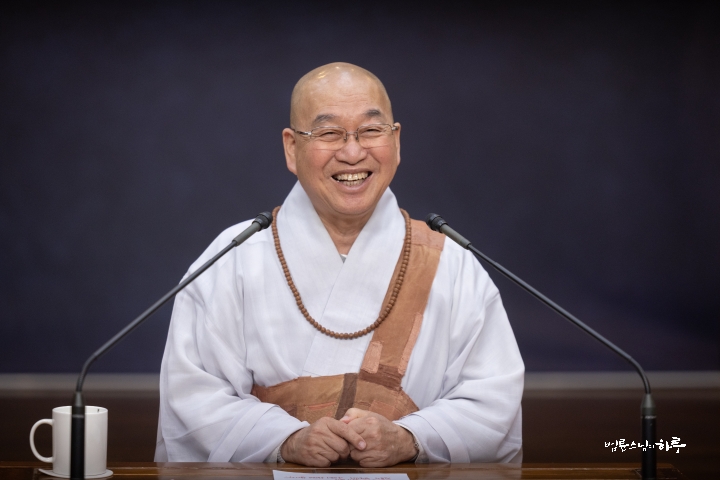
“If you’re worried, you can go visit him. If you feel hatred again, don’t go. If you’re worried again, go visit again. Do whatever you want.”
“Is that really okay? I feel like I’m becoming a bad person, and it weighs on my heart.”
“If you feel like you’re becoming a bad person, go help him again. If you feel bad, don’t go. Either way is fine. Even if you don’t see your father from now until you die, it’s not a sin at all. But if even a neighbor were sick on the street, you could take care of them, so what’s so hard about taking care of your father? You can take care of him or not. The point is, you can take care of him or not. Because you think you should take care of him, not doing so creates guilt. And when you think about your childhood, you feel hatred and don’t want to take care of him. The sense of duty that you should take care of your parent as their child, and the thought that you don’t have to take care of your father now because he didn’t take care of you, clash and create much turmoil in your mind.
Regardless of how that person lived, if they’re on the street, naked, starving, and begging, you help them if you feel sorry for them, and if you can’t afford to help, you just pass by. Similarly, there’s no need to judge how your father lived. If you want to help your father who is now old and sick, then help him. If past resentments keep coming up, you don’t have to help. As an adult, you can choose for yourself. These days, if someone reaches a level where they can’t make a living, they become eligible for government protection. In the past, if you had children who didn’t take care of you, you were excluded from protection, but not anymore. Whether you have children or not, if no one takes care of you, the local government sends someone to provide care.
If you help someone in need, you’re a good person. If you don’t help, you’re an ordinary person, not a bad person. There’s no obligation to help. If you want to be an ordinary person, just live your life. If you want to be called a good person, take care of him.”
“It always weighed on my heart, but hearing Sunim’s words, I feel much more at ease.”
“There’s no need to judge whether your father drank in the past or what he did. When we see someone begging on the street, we don’t judge whether they drank in the past, abandoned their home, or how many times they married. If they have no food now, we give them food; if they have no clothes, we give them clothes; if they’re sick, we provide treatment. We don’t refuse treatment or food to those who did bad things in the past. The hungry should eat unconditionally, and the sick should receive treatment unconditionally. Because you know your father’s background, you hesitate about whether to help based on his past. You don’t have to help, and you can help. There’s no obligation, but if it weighs on your heart, you can help. That’s why I said do whatever you want. You don’t necessarily have to help.”
“It always weighed on my heart, but when you said to do whatever I want, I felt much lighter. Since my father can’t speak due to his stroke, I sometimes think he’s receiving karma for cursing at my grandmother when he was young, but then I worry if I’ll be punished later for having such thoughts about my father. I’ve been living with all kinds of thoughts. Actually, to ease my own mind, I’ve been sending money to my father monthly, like donating to an NGO. I felt guilty because I wasn’t doing it for my father but to make myself feel better.”
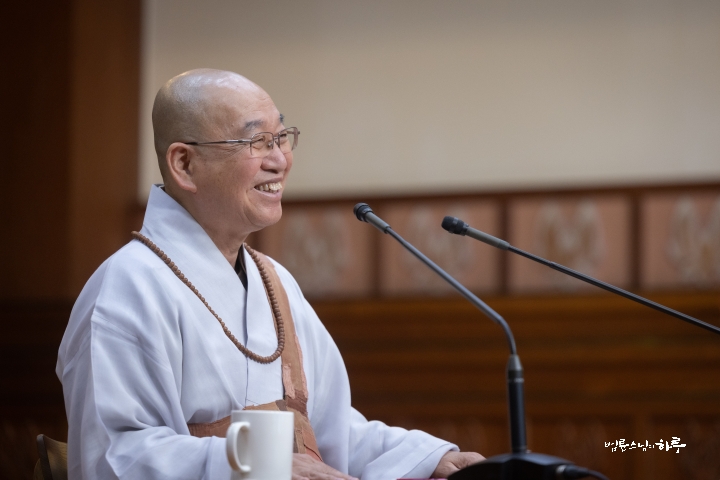
“Giving money to someone you meet on the street is ultimately done because it makes your heart feel at ease. Choosing to make your heart comfortable is not a bad thing. Don’t think of it as doing something for your father; consider that visiting him once makes your heart comfortable. Think of giving money not for your father’s sake, but as a choice to make your heart comfortable. Now he’s in a state where he can’t gamble or drink even if you give him money, so at times like this, you can give generously. In the past, if you gave money, it would have been used for alcohol and gambling, but now that’s not possible, so it’s okay to give a lot of money.”
“Yes. Thank you, Sunim.”
Questions continued to follow.
My husband strongly opposes my going to the temple, causing conflicts every time I go, and anger is building up in the process. How should I view and respond to this situation?
I’m experiencing deep loss and pain from the death of my older brother, whom I depended on greatly emotionally and financially. How can I endure this unbearable time of grief?
I’m concerned about the impact of population decline and concentration in the metropolitan area on individuals and society as regions shrink. What perspective should individuals living in the ‘era of regional contraction’ have?
Today, all the questioners quickly understood Sunim’s words, so the conversations were relatively short. Thanks to this, the live broadcast ended earlier than usual at 8:10 PM.
Starting tomorrow, Sunim will be on a two-day, one-night business trip to China.
The year 2026 has dawned. We wish all subscribers of A Day in the Life of Sunim a happy day every day in the new year.