

Nov 30, 2025 – Meeting with the 1000-Day Preparation Committee, National Dharma Teachers’ Training, Visit to Cheollyongsa Temple
Hello. Morning has dawned at Dubuk Retreat Center.
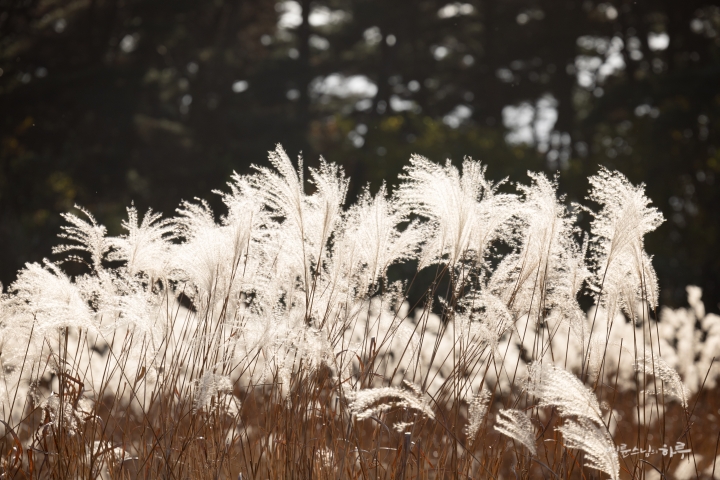
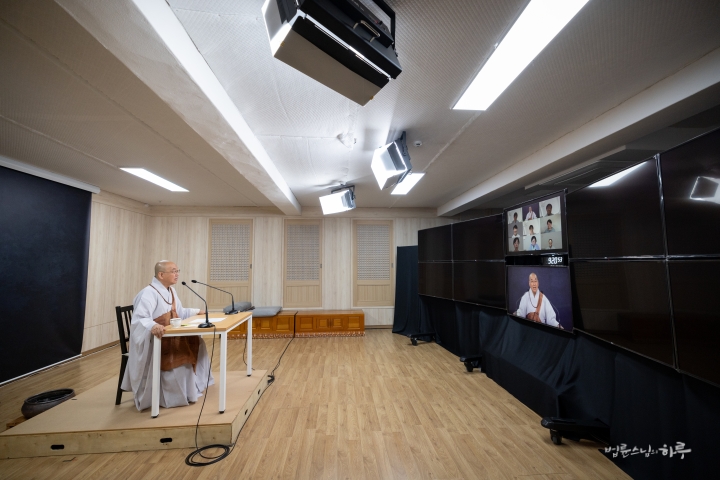
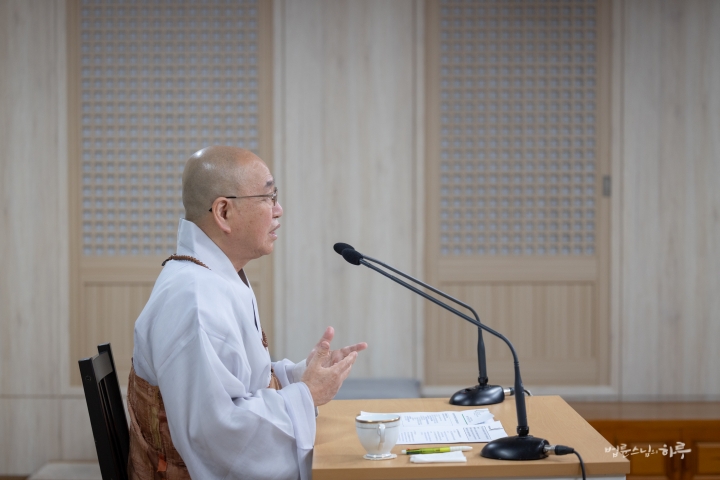
After completing his early morning practice and meditation, Sunim began his day at 7:30 AM with an online meeting with the Jungto Society Standing 1000-Day Preparation Committee.
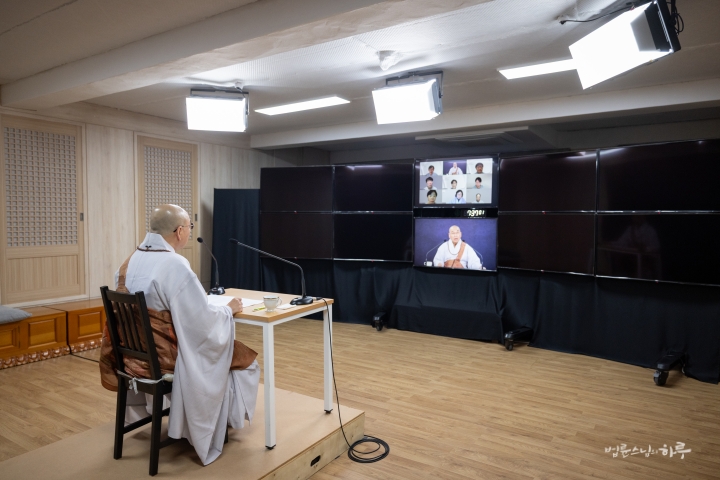
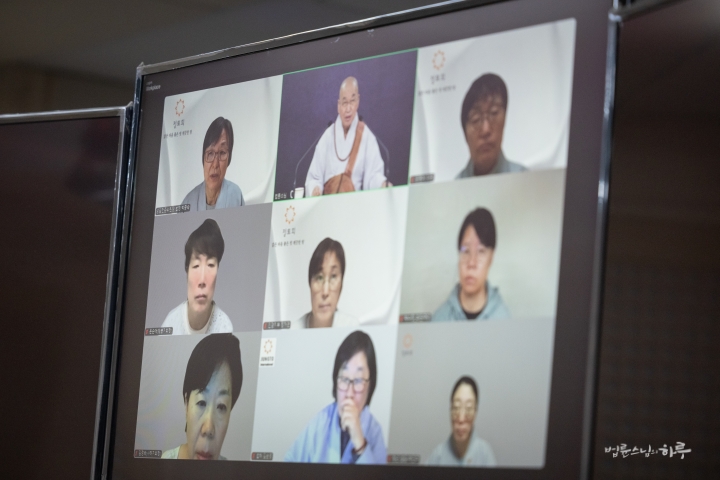
The 1000-Day Preparation Committee is the core discussion unit preparing Jungto Society’s business plan for the next three years. After a year of numerous meetings, the draft business plan is now nearly complete. After reciting the Three Refuges and Words for Practice, Dharma Teacher Beopjeong, who serves as the committee chair, sought Sunim’s advice on the business direction for Jungto Society’s 2-2nd 1000-Day Practice based on their discussions.
First, various questions were raised about contentious issues including the reorganization plan for branches and chapters, the establishment of weekly chapters, the establishment of special branches at Jungto Social and Cultural Centers, changes to qualification requirements for recommending Seowon Practitioner trainees, operation plans for main temples and practice venues, and the three-year evaluation report planning.
As Sunim’s caring advice continued, the preparation committee also sought his counsel on measures to reduce the meeting and activity burden on Jungto Society volunteers.
How Should We Change to Reduce Meetings and Lighten the Burden?
“When we researched ways to address the difficulties of leading members, we found it necessary to drastically reduce meetings. So we reduced decision-making meetings by more than 50 percent, adjusted matters that could be discussed together to be handled jointly, and improved the meetings themselves to be conducted more efficiently.”
Sunim suggested various methods such as limiting meeting times or reducing their frequency.
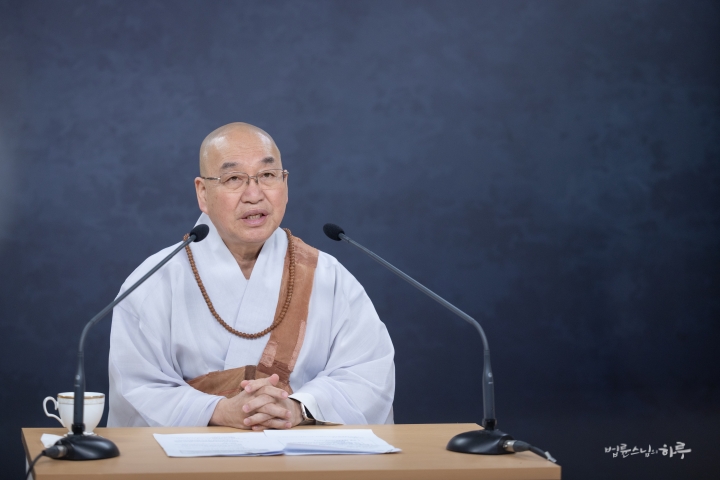
“How about limiting meeting times? Currently, the basic meeting time is 90 minutes, but we could reduce it to 60 minutes, and if it’s absolutely necessary to extend the meeting time, we could establish a principle that requires unanimous consent. It would be good to prepare thoroughly in advance so meetings can be conducted efficiently within 60 minutes.
Of course, I’m not saying all meetings should be within 60 minutes. Since the people experiencing difficulties are mainly leading members, let’s drastically reduce the duration of meetings that leading members participate in. Above all, we need to change meetings to proceed quickly. Being quick doesn’t mean pushing through, but rather conducting meetings efficiently in a shorter time. First, there are too many meetings. All Jungto Society meetings go through a three-step process of selecting agenda items, making decisions, and approval. Except for special cases, it would be good to consider omitting the approval process. For some matters, we could go through the approval process with all group members, for others we could end with a decision at the chapter leaders’ meeting, and for others we could use a post-approval system – it would be good to gather opinions on various ways to reduce meetings.
We need to proceed by asking the members’ opinions about ways to reduce meetings. Meetings are necessary for information sharing. If we don’t have meetings, it will inevitably lead to one-sided administration. However, since there are opinions that there are too many meetings and it’s difficult, we need to conduct surveys to check if there are unnecessary meetings and how often meetings should be held. We should maintain truly necessary meetings and only reduce unnecessary ones.”
“There were also opinions requesting days without online meetings. However, we decided not to designate such days as we judged there would be little effect in terms of work reduction or effectiveness.”
“Like how pastors rest on Mondays, I also tried to make Monday my day off, but it was difficult in reality. Even if I didn’t schedule lectures or official appointments on Monday, when I heard news of someone’s passing, I couldn’t not go even though it was my day off. If I had a lecture scheduled, I couldn’t go to pay my respects, and I couldn’t say I couldn’t go because it was my day off. As a result, my schedule ended up being filled even on days off. After trying a few times, I eliminated days off altogether. It would be better to suggest that departments or chapters try it experimentally if needed, and if it’s effective, then make proposals. I think it’s too early to make it an overall policy just because a few people request it.”
“Recently, health issues such as sick leave for key volunteers have emerged as an agenda item. There are also opinions that there shouldn’t be early morning online meetings on days when there are offline events on weekends. There are also opinions that having one Family Day where Telegram communication channels are quiet and there are no meetings is very meaningful for key volunteers. The work overload of volunteers working at the central level is severe, so transferring central projects to regional levels has also been put on the agenda. We’d like your opinion on this as well.”
“Yes, do whatever the members want. Health issues are your own problems, so please gather opinions on how you yourselves would like to adjust things.”
“Since Jungto Society has the three ‘no’ principles – no salary, no holidays, no vacation – there’s hesitation in proposing to have days off.”
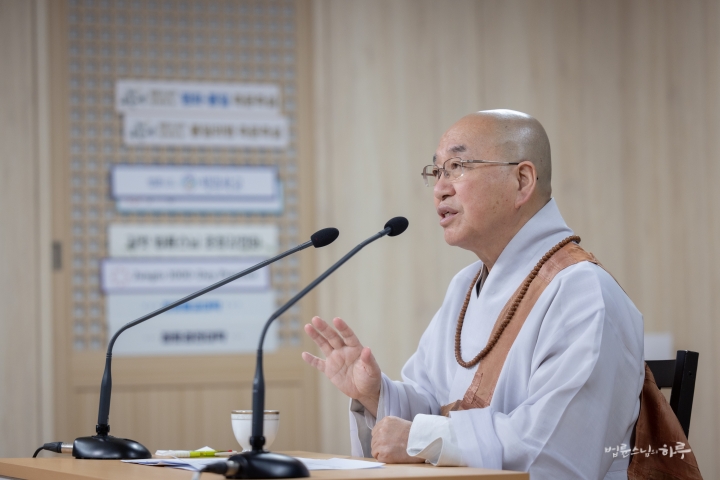
“That’s why we named it Family Day instead of a holiday. We decided not to schedule official events on Family Day. It’s not a holiday but meant for those with families to be devoted to their families. After this 2-1st closing ceremony, the community will also have a ten-day family week. Some people need to care for their parents, some want to do more meditation personally, and some have poor health, so we created this to have about ten days of family week for community members every three years. However, ideas have emerged from the MZ generation about going on overseas trips during this period, which some say doesn’t match the original purpose. Since community members are practitioners who have left home, the principle is not to go home, but since they haven’t shaved their heads to enter, they can visit home when problems arise or during holidays. However, during the last Chuseok, some people went traveling instead of going home, making us think about whether this kind of operation is appropriate. Initially, it started for sick people to rest or to briefly go home to care for parents, but over time it has transformed into the concept of taking a vacation, and has even developed to the point where people say ‘don’t interfere because this is my time.’ Basically, the reason for establishing family week is to be devoted to family during this period. During that time, physically tired people can also rest. It seems necessary to fully share this purpose.”
Finally, the committee sought Sunim’s advice on changing the name of unification activities to reflect the changed situation in inter-Korean relations. Sunim talked about how to maintain balance amid rapidly changing circumstances.
Should We Change the Name of Our Practice Activities from Unification to Peace?
“One of Jungto Society’s founding goals is to achieve peaceful unification of the Korean Peninsula. The ultimate goal for our nation’s peace is unification, but when applying the original spirit globally, peace is more appropriate than unification. So when considering activities on the world stage, I think ‘environment, welfare, peace’ is more reasonable than ‘environment, welfare, unification’ for the three major goals.
However, changing the name of Tongil Euibyung requires more research. It has already been proposed to use Peace Euibyung rather than Tongil Euibyung when translating into foreign languages. But domestically, the expression Tongil Euibyung is more appropriate to clarify the goal. I think this part needs more discussion.
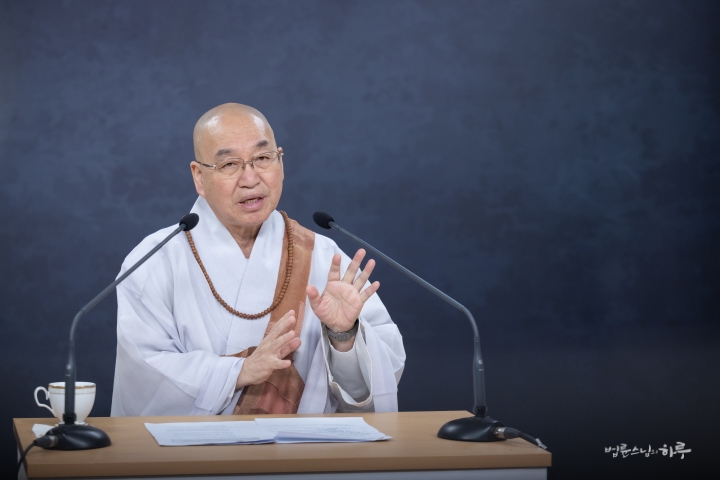
We shouldn’t misunderstand that just because North Korea has given up on unification, we should also give up unification and go for peace. The strategic goal is still unification. However, tactically, we are currently implementing policies that prioritize peace. If this is a proposal to make peace the strategic goal, this part needs to be reviewed again.
The situation surrounding the Korean Peninsula is completely unpredictable. If the North Korea-US summit doesn’t happen, the situation will be the same even after three years, but if the North Korea-US summit is successful and even leads to an inter-Korean summit, there could be an uproar as if unification could happen tomorrow, like in 2018. So we need to continue our activities with the principle of steadily maintaining the basic direction regardless of how rapidly the situation changes.”
After two hours of conversation, the meeting ended at 9:30 AM. The preparation committee members expressed their gratitude to Sunim for his caring advice over the long period.
Subsequently, from 10 AM, Sunim participated in the National Dharma Teachers’ Training. This is the fifth National Dharma Teachers’ Training held since the start of the 2nd 10,000-Day Practice. Today’s training program was designed as a time to intensively discuss and design what the role of Dharma teachers is while evaluating the activities of the past three years.
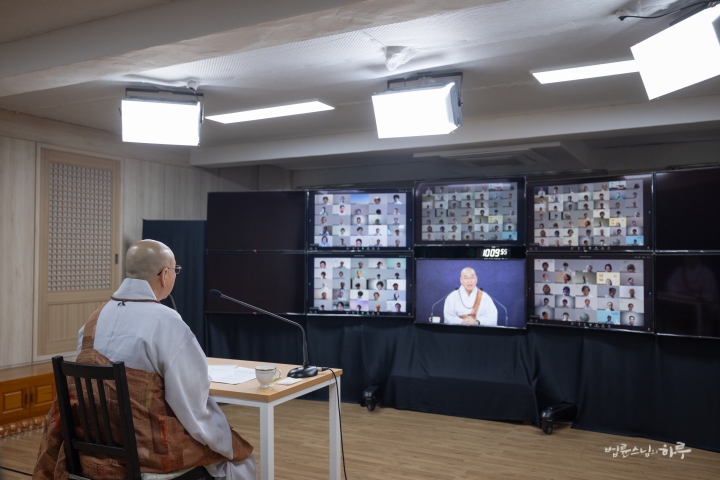
With about 100 Dharma teachers from across the country entering the video conference room, the National Dharma Teachers’ Training began after reciting the Three Refuges and the Heart Sutra. The Dharma teachers requested an opening Dharma talk from Sunim with three prostrations. Sunim talked about what perspective to have in order to walk the middle path between effectively supporting the members and interfering with them.
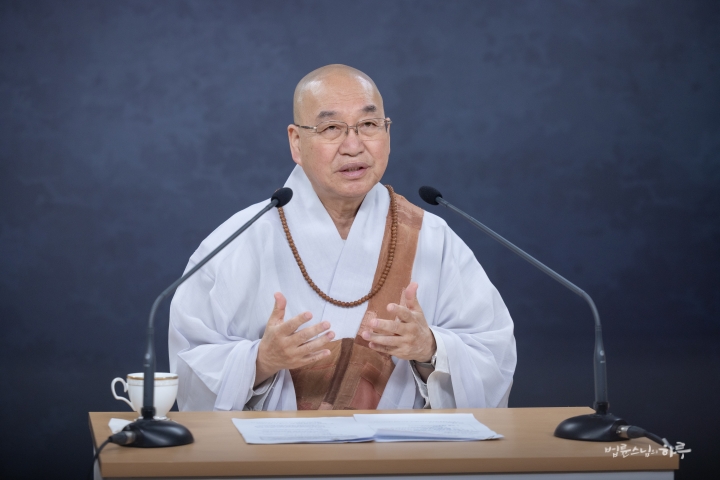
“Today is the day for Dharma teachers’ training education. According to the head of the Dharma teachers’ group, there are some difficulties regarding the role of Dharma teachers within Jungto Society, and some parts are not accurately understood. When actively involved in something, people say you’re ‘interfering,’ and when you step back and observe, they say you’re ‘indifferent.’ I heard that how to balance in such situations is the theme of today’s training program.
I think the role of the Dharma teachers’ group will naturally grow within Jungto Society. The reason lies in ‘continuity.’
Although Dharma teachers have a retirement age, they continue their role until the day they die, so experience inevitably accumulates, and they exert influence in various places accordingly. On the other hand, Jungto Society’s administrative staff change every three or six years, and many of them eventually move to the Dharma teachers’ group. This structure has the advantage of solidifying that Jungto Society is a practice-based organization while increasing stability. However, at the same time, there’s also the limitation that the entire organization ages. A structure is formed where people with rich experience but advanced age continue to be at the center.
To maximize advantages and reduce side effects, institutional supplements are needed, but above all, each person’s correct perspective is important. Don’t just put forward your own karma or talents, but stand from the perspective of ‘What role should I play for the overall development of Jungto Society?’
How Can We Balance Between Being Seen as Interfering When We Help and Indifferent When We Step Back?
Young people are full of courage and vitality, but they still have immature aspects. However, if we only focus on their immaturity, they easily become discouraged, and there’s a risk of solidifying a structure where skilled adults take on all the work. So we need to give sufficient opportunities for passionate and talented young people to accumulate experience through trial and error, even if they’re clumsy. The Dharma teachers’ group should play a role in stabilizing Jungto Society while also providing a solid foundation for young people to actively work and maintain Jungto Society’s vitality.
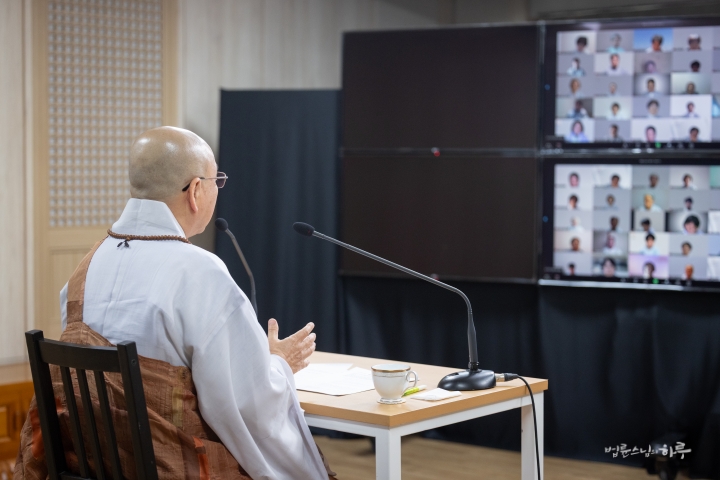
We should not criticize young people too harshly for being inexperienced, nor should we interfere excessively. People become skilled through practice while in an immature state. They grow by repeating trial and error. What is needed at this time is a ‘watchful attitude.’ We should advise and help when necessary, but not intervene excessively. To use an analogy, the role of the Dharma Teacher group is like fertilizer. When farming, if you give too much fertilizer, the crops grow too tall and fall over; if you give too little, they lack nutrients and cannot grow properly. Similarly, if we are overly involved, young people will only do what they are told and lose their vitality. Conversely, if there is too little involvement, they will struggle due to their inexperience and take a long time to become familiar with their roles. This could slow down the development of Jungto Society. Your role is to watch from the side as young people progress from inexperience to proficiency, and to provide appropriate help when needed.
Also, to save time, we should help young people as much as necessary when they encounter difficulties. However, we must not provide excessive help that weakens their self-reliance, nor should we leave them alone in the name of fostering independence, causing them to make unnecessary mistakes. Finding the right balance between these two is what we call the ‘Middle Way.’ However, what feels appropriate varies from person to person. Some people feel that even a little help is interference, while others are grateful even for substantial assistance. That’s why some Dharma Teachers find themselves wondering, ‘When I try to help, they say I’m interfering; when I step back, they say I’m not fulfilling my role. What exactly am I supposed to do?’ When this happens, there’s no need to feel too disappointed. You don’t need to completely withdraw and say, ‘Fine, I won’t help. You figure it out yourselves,’ nor do you need to be overly attached. What’s needed is to maintain balance by stepping back or stepping forward depending on the situation.
There is no fixed standard for how much a Dharma Teacher should be involved, as it depends on the personality and capabilities of the division or chapter leaders they work with. Some chapter leaders appreciate more active assistance and work well together, while others may feel that even minimal involvement is interference.
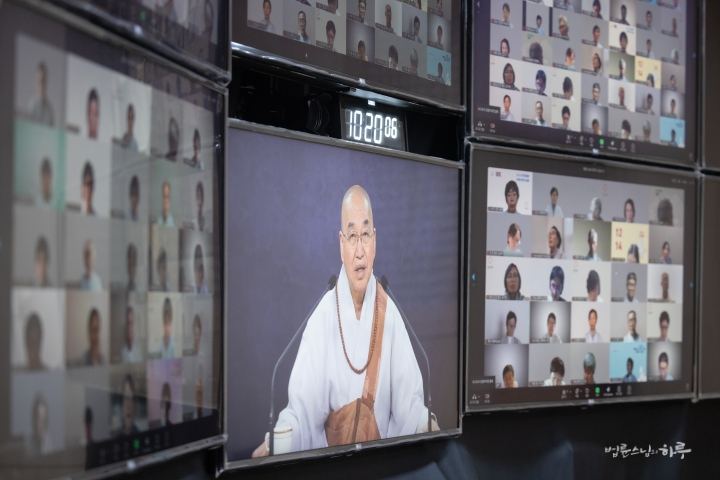
Additionally, what is appropriate varies depending on the nature of the work. When a new branch or division leader is appointed, you should first observe and understand their tendencies to determine the appropriate level of involvement. For tasks related to practice, such as counseling members of the Sangha, active involvement is necessary even if it might be perceived as interference. On the other hand, administrative tasks are fundamentally their responsibility, so even though it might feel disappointing, you need to step back and observe. If they request help, assist them; if not, simply observe. For practice-related tasks, it’s advisable to take an active role even if it’s evaluated as interference.
Thus, appropriateness is a flexible concept that varies depending on the person and the task. If finding this balance is difficult, it also means that your practice is not yet sufficient. The position of a Dharma Teacher is not about imposing your own style, but about maintaining appropriateness by adjusting to people’s conditions and circumstances.
Since the branch or division leader may have been someone who assisted under you, the relationship might improve after becoming a Dharma Teacher. However, if they were hurt by you while assisting, the relationship could become awkward instead. That’s why it’s important to always assess the situation and maintain appropriateness. However, if you are lazy or lack an inquiring attitude, you’ll only act according to your own style. For example, showing an example by saying ‘Let me live frugally as a model’ is different from saying ‘You should also live frugally.’ If I have a habit of living somewhat abundantly, I shouldn’t overlook rule violations by saying ‘Since I can’t live frugally either, you can also live loosely.’ Even if I’m lacking, I must be able to accurately guide others on Jungto Society’s principles. When objections arise, I should acknowledge ‘I’m sorry. I’m lacking in that area,’ while still fulfilling my role as a Dharma Teacher. We often demand that others do what we’re good at, making things difficult for them, while neglecting Jungto Society’s principles in areas where we’re weak. This cannot be called the role of a Dharma Teacher. That’s why practice in maintaining appropriateness is necessary.
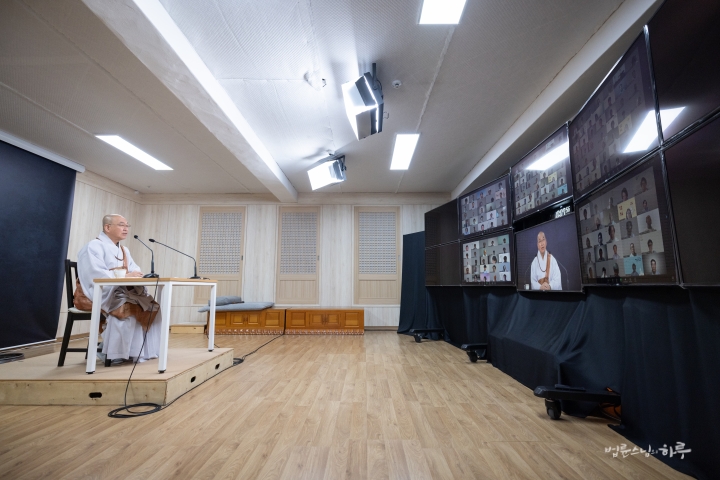
Complaints from the Sangha Are a Mirror for Practice
It doesn’t matter how many students enrolled in Jungto Dharma School or how much the membership of Jungto Society has grown. What a Dharma Teacher should be most concerned about is ‘How can I play an appropriate role in helping people?’ You need to coordinate various situations with this perspective. Don’t be afraid of complaints or issues being raised. Rather, having problems revealed helps my practice. When people complain, I can understand what the problem is. If they only complain internally, I might mistakenly think everything is going well, and a major incident could occur later. Therefore, you shouldn’t take the issues raised by the Sangha personally. If members raise concerns that you’re interfering too much, you can simply accept it as ‘Ah, I’ve gotten too close.’ If members feel disappointed that you’re observing from a distance, you can understand it as ‘They want me to play more of a Dharma Teacher role.’
Since most of you have mainly done administrative work, you’re Dharma Teachers in name only, and all you know how to do is administrative work. Even after becoming a Dharma Teacher, you might continue doing only administrative work and judging whether it was done well or poorly. This can lead to being told you’re interfering. However, the role of a Dharma Teacher is to counsel and calm volunteers’ psychological dissatisfaction, stress, anxiety, passivity, and issues related to sexuality. Also, by recalling the difficulties you experienced while doing administrative work, you can actually help them better.
Especially for general members, providing counseling is an important role of a Dharma Teacher. Each person has their own difficulties. You need to always keep the door open for counseling and maintain a space where they can meet you anytime. The role of a Dharma Teacher lies in guiding practice. Through training programs like today’s, you need to continue learning what role a Dharma Teacher should play. If you just receive the Dharma Teacher precepts and stop there, it’s difficult to find new roles beyond what you’ve been doing.
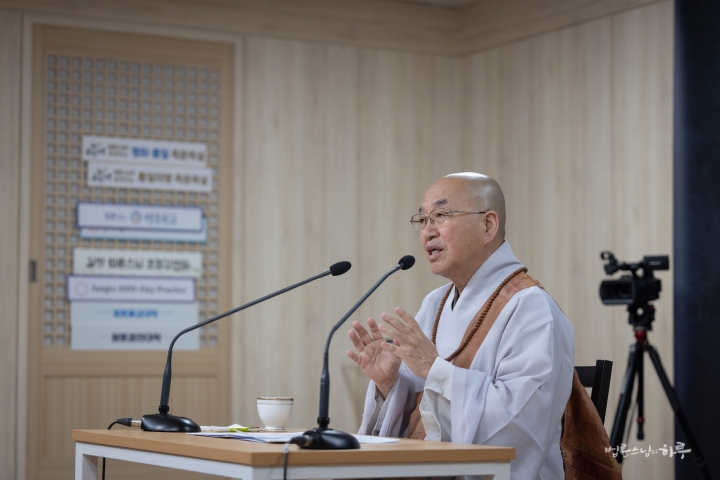
If members of the Sangha say they feel uncomfortable, step back a little. If there are requests that ‘the Dharma Teacher isn’t fulfilling their role properly,’ find the necessary role and actively try to fulfill it. If you judge something is necessary, just do it. If the other person says, ‘You’re overstepping boundaries,’ simply say ‘I understand’ and step back. Conversely, if they ask, ‘Why aren’t you taking on any role?’ say ‘I understand’ and perform the role. You cannot set a fixed standard saying, ‘I’ll do up to this point, but not beyond.’ While the broad framework divides into practice guidance and administrative work, there’s actually no clear distinction at the point of contact. The balance between involvement and observation can vary depending on the person and the nature of the work. During the afternoon discussion session, please share specific examples with each other and reestablish your perspective.
The Dharma Teacher group should center their role on Jungto Society’s practice-oriented perspective and values for the happiness of the Sangha members. On the other hand, those in charge of administrative work need to drive projects forward and produce results. Without such roles, Jungto Society would inevitably stagnate. Therefore, while encouraging Sangha members to perform administrative duties, it’s not appropriate for Dharma Teachers to take the lead saying ‘Let’s go!’ It’s not suitable for a Dharma Teacher who isn’t a branch or chapter leader to be at the forefront of projects. However, if one’s temperament is better suited for administrative work, even a Dharma Teacher can contribute to administration. Such a person can be a Dharma Teacher while also taking on some administrative duties. Additionally, Dharma Teachers with health issues can take on roles within their health limitations. There’s also a method of pairing experienced Dharma Teachers with health challenges with new Dharma Teachers to ensure know-how is passed on. By complementing each other in this way, we can develop Jungto Society positively.
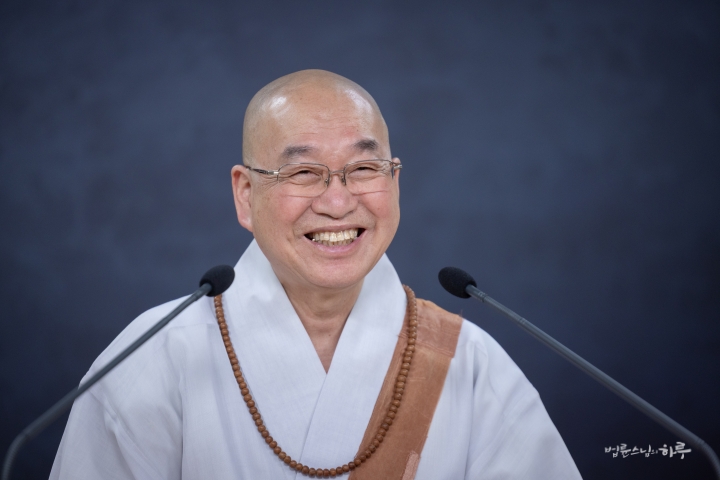
When members of the Sangha raise issues, some deserve careful consideration, but not every issue raised needs to be seen as a real problem. It could be the opinion of the majority or the minority. Even one person’s concern might be valid, so we need to listen carefully. However, while detecting and considering problems, a Dharma Teacher’s role must always keep the majority in mind.
Today, please have open and honest discussions with each other and find solutions among yourselves where possible. If there are remaining issues, I’ll join at the end to offer advice.”
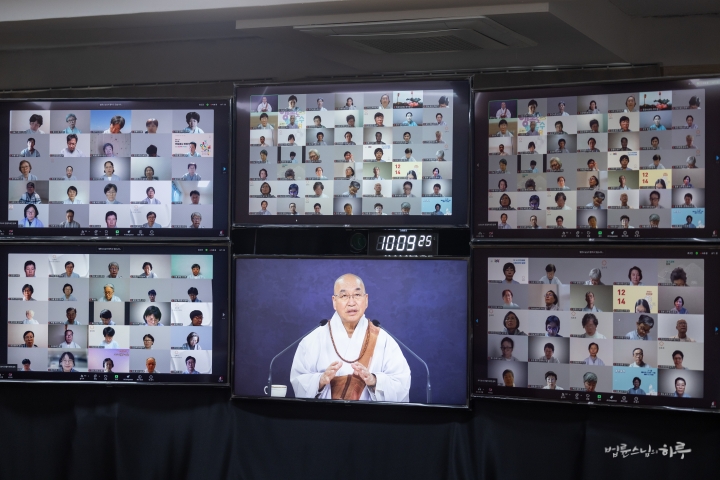
After the opening Dharma talk, the national Dharma Teachers’ assembly continued with case study presentations, group discussions, and presentations of discussion results. They had extensive discussions about how Dharma Teachers can be helpful in administration and how to create a playground where general members can stay engaged with Jungto Society, and then shared specific case studies.
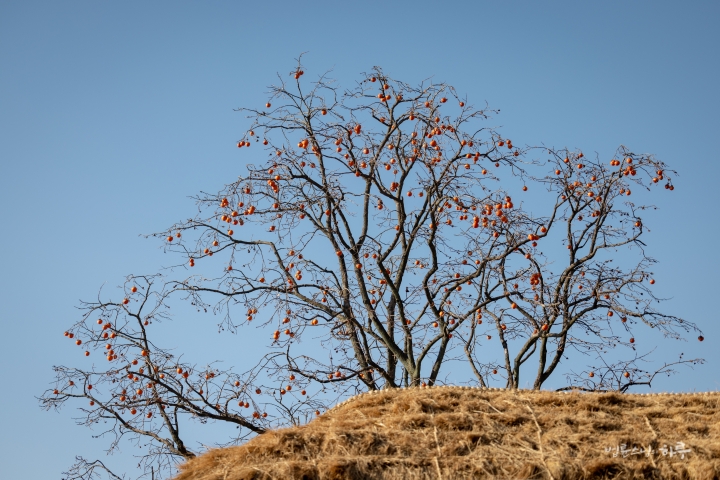
Sunim left the broadcasting room, changed into work clothes, and began pruning persimmon tree branches. After harvesting persimmons last month, only lush branches remained on the trees. To ensure a good persimmon harvest next year, the branches needed to be pruned now, so Sunim did some work alone during a brief free moment.

After an hour of work, Lee Kyung-taek and Lee Seung-hoon, members of LA Jungto Society, visited Dubuk Jungto Retreat Center after touring the Haeundae Dharma Center in Busan. These two individuals had laid the foundation for LA Jungto Society from its early days, and were on a pilgrimage to Jungto Society’s main temples during their long-awaited visit to Korea. After having lunch together, Sunim headed to Mt. Namsan in Gyeongju where Cheongryongsa Temple is located.
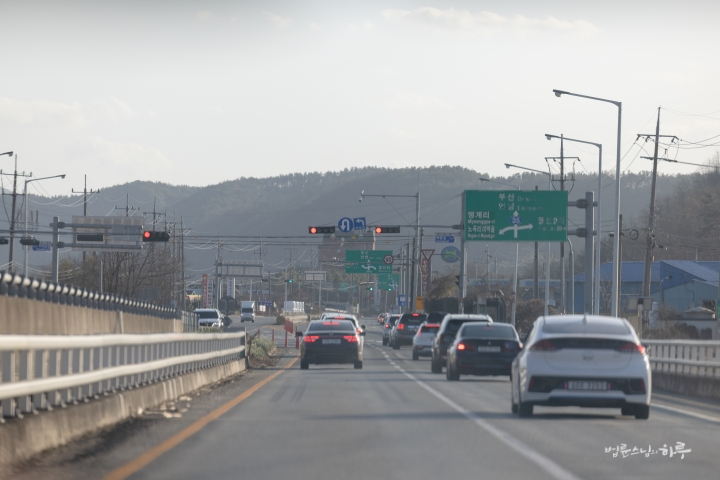
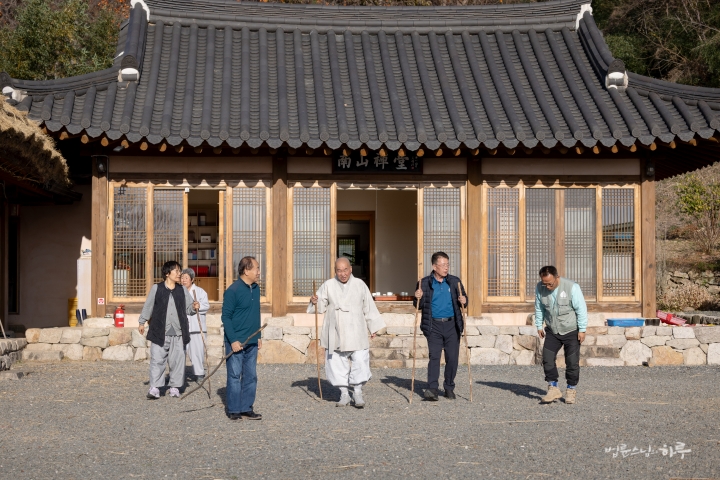
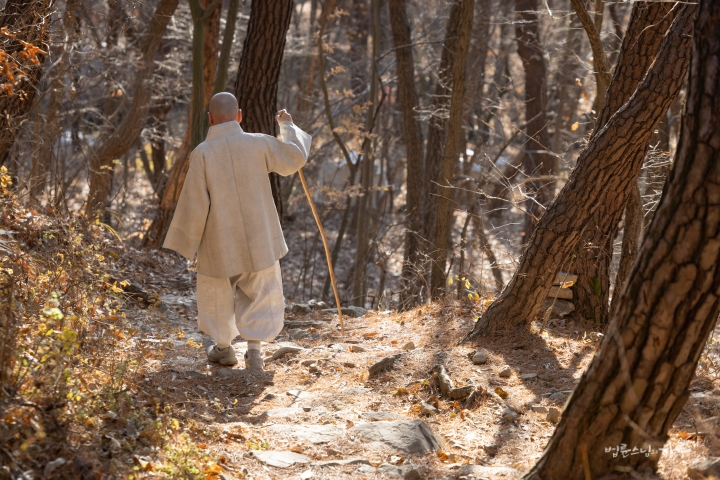
Since both Sunim and the two visitors had knee problems, they chose to drive up to Baekunam and then walk down to the mid-mountain where Cheongryongsa Temple is located.
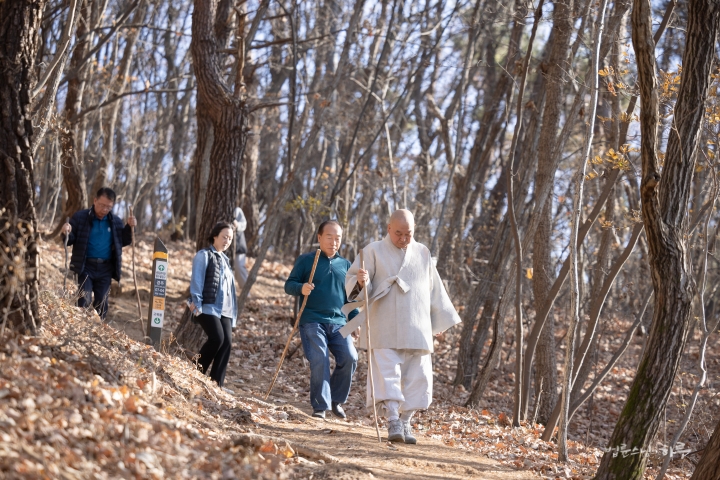
Sunim handed the two visitors walking sticks he had prepared in advance. Carefully descending the mountain path with their walking sticks, they soon arrived at a wide flat area located on the mountainside.
“This is Cheongryongsa Temple, which is recorded in the ‘Samguk Yusa’ as ‘When this temple falls, the nation falls; when this temple prospers, the nation prospers.’ That’s why Jungto Society is working to restore this temple with the hope that the Republic of Korea will be unified and prosperous.”
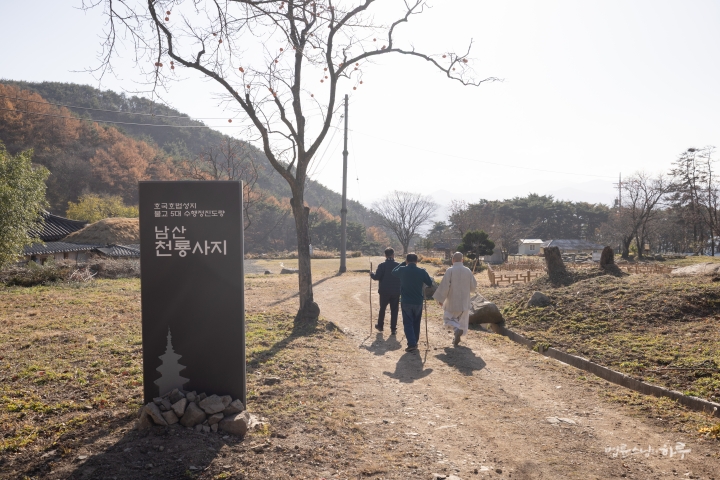
Following Sunim’s guidance, they toured the Cheongryongsa Temple site. First, they paid respects at the three-story stone pagoda.
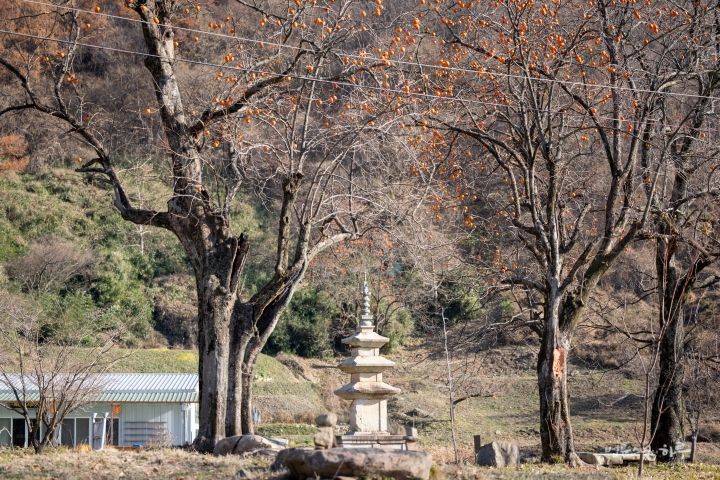
“This pagoda was lying in ruins at the old site of Cheongryongsa Temple, but my late teacher, the great master Bulsim Domun, restored it to its current form. The bottom is the base, and there are three pagoda bodies on top, making it a three-story stone pagoda. You can tell how many stories a pagoda has by counting the number of roofs. Now, let’s pay our respects before we continue.”
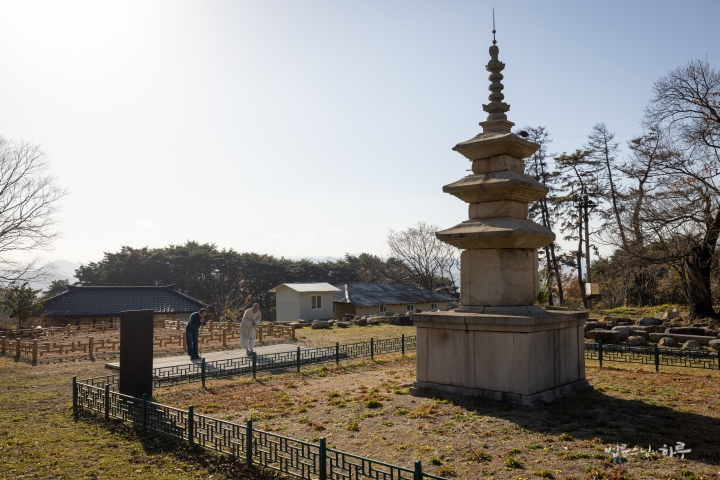
After paying respects at the three-story stone pagoda, Sunim carefully examined the site where excavation work had been completed and restoration plans were being developed.
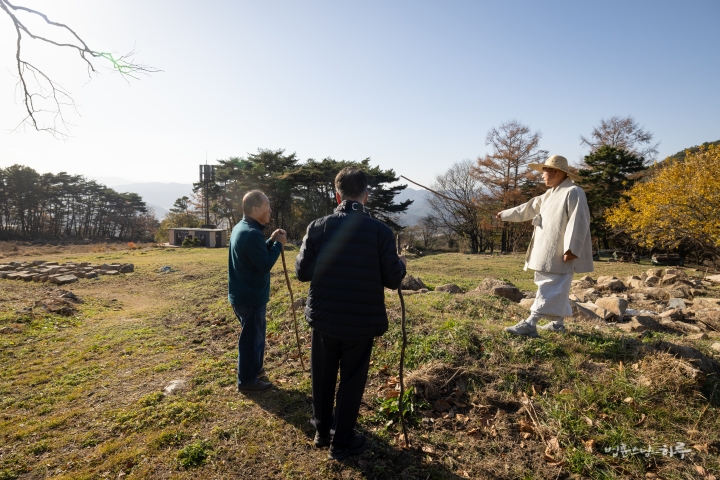
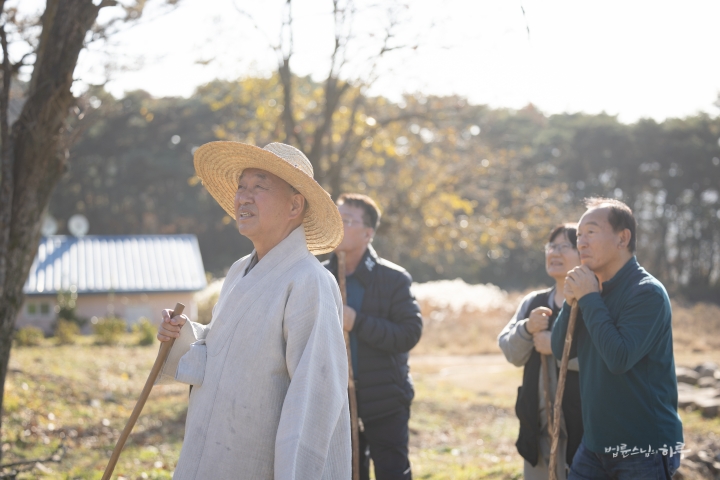
Next, Sunim paid respects at the Main Buddha Hall, which had been built as a temporary structure. After offering three bows, Sunim continued his explanation.
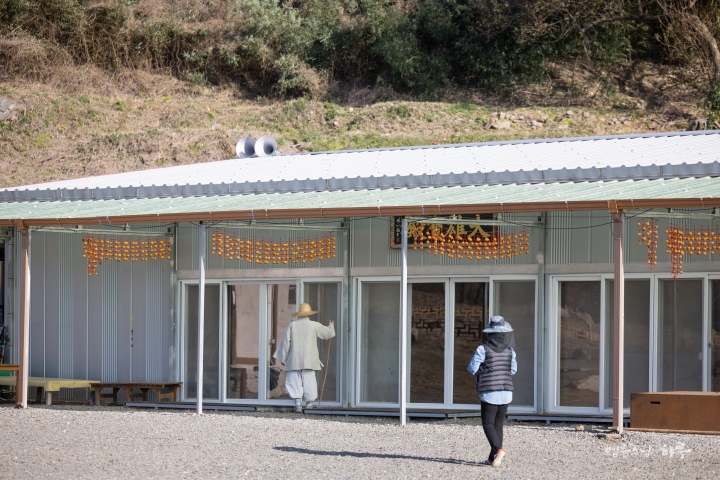
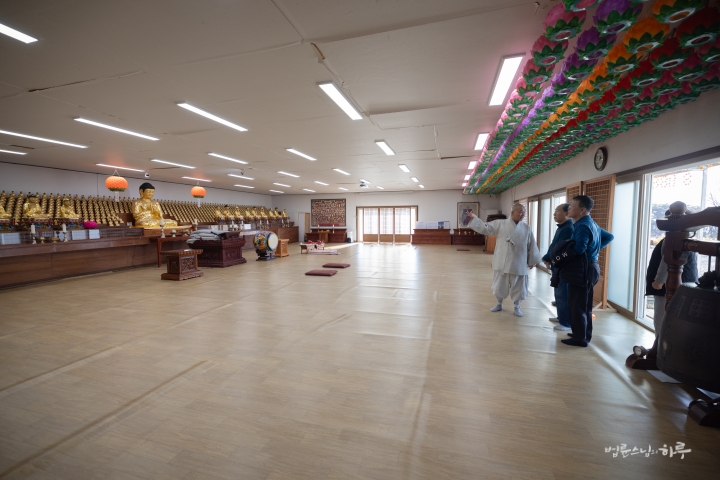
“There are many Buddha statues here. These are the Five Hundred Arhats. Venerable Bulsimdomun began praying here with the aspiration to restore Cheollyongsa Temple. When Master Yongseong passed away, he left a final instruction to ‘restore Cheollyongsa Temple’ for the prosperity of the Republic of Korea. In other words, he said that to establish a new nation and for that nation to develop, this temple must be restored.”
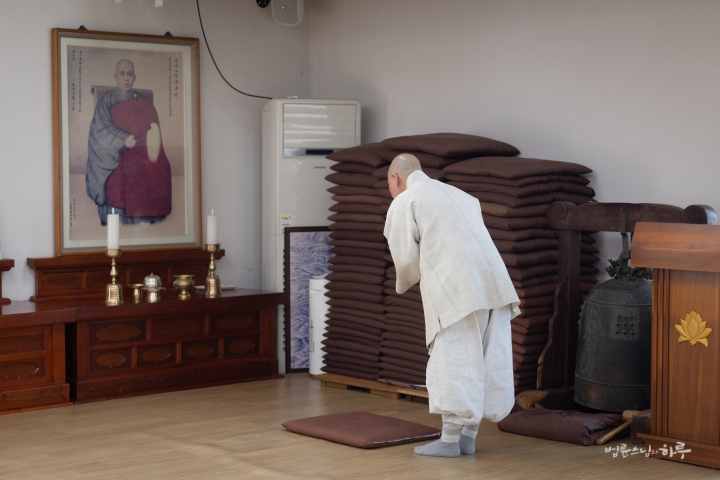
After paying respects to Master Yongseong’s portrait displayed on one side, Sunim left the Main Buddha Hall.
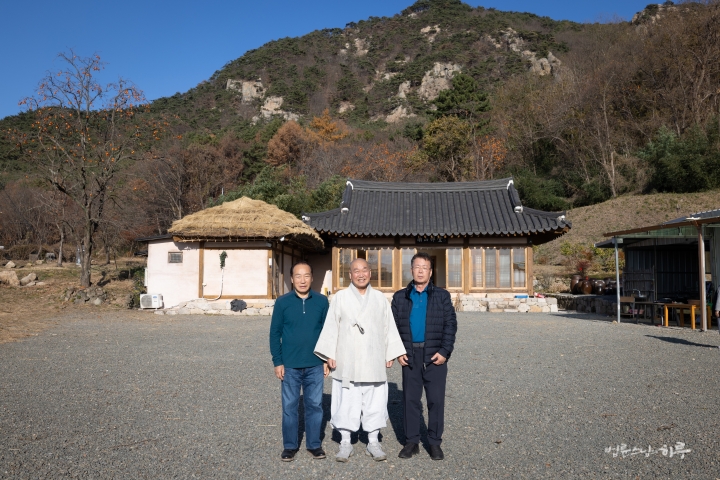
In front of the meditation hall, a commemorative photo was taken with Mount Gowisan’s peak in the background.
Then Sunim briefly entered the meditation hall for tea and conversation. Dharma Teacher Ildeungmyeong, who maintains Cheollyongsa Temple, graciously served refreshments.
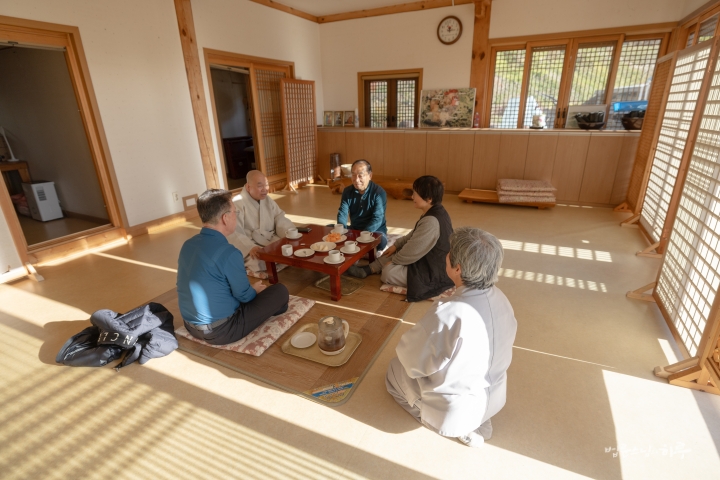
Sitting in the meditation hall and looking outside, a picturesque landscape unfolded. Sunim said with a smile:
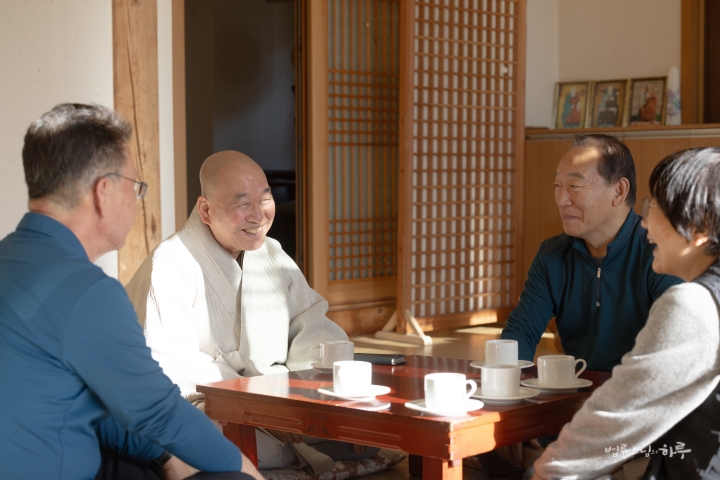
“Isn’t it wonderful here? From here, you can see the whole world below. Although the trees block the full view, it seems like they’re preventing good fortune from escaping.”
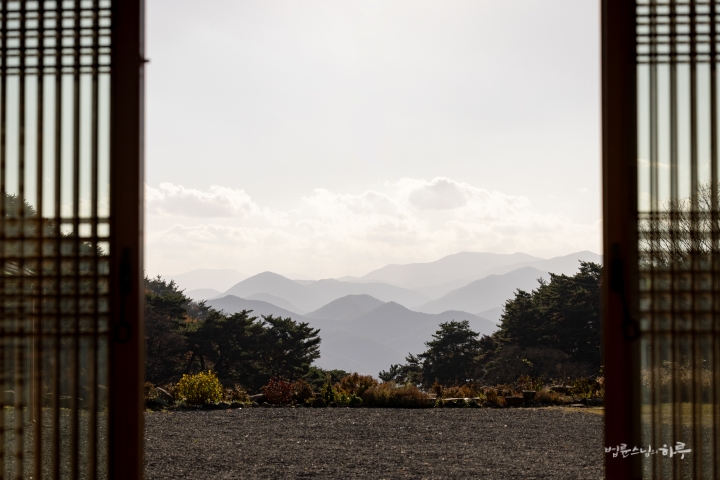
While conversing, the time was approaching for Sunim to give a Dharma talk at the National Dharma Teachers’ Training.
“I need to head down quickly as it’s time for the Dharma assembly. You two can take your time coming down.”
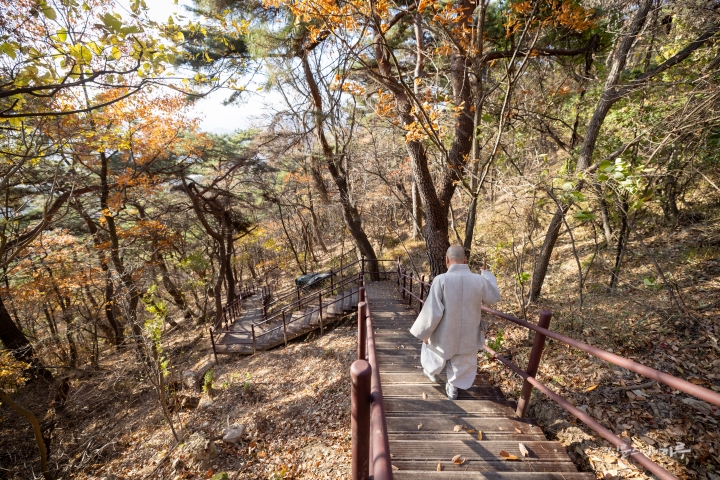
To avoid being late for the assembly, Sunim began descending at a brisk pace. After hurrying down Teumsugol Valley for 20 minutes, he got back in the car at Waryongsa Temple and headed to Dubuk Jungto Retreat Center.
At 3:40 PM, Sunim took his seat in front of the camera in the broadcasting room at Dubuk Jungto Retreat Center. Groups were presenting their discussion results. Sunim listened attentively to the presentations and took notes on important points.
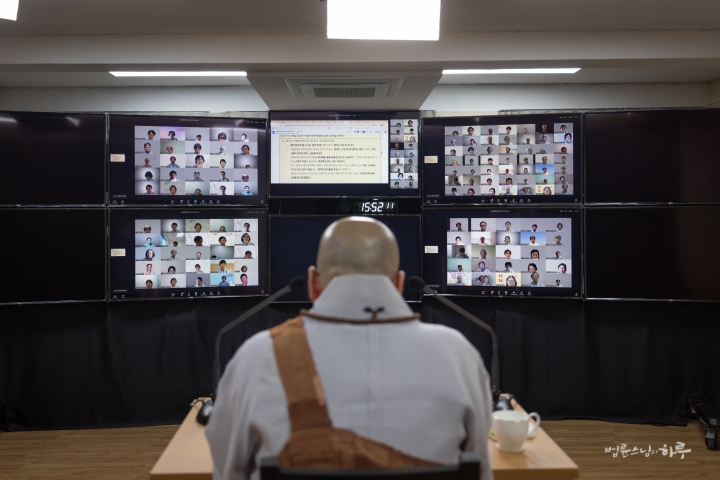
After the presentations, there was a Q&A session with Sunim. The Dharma teachers asked specific questions about the role of Dharma teachers, citing various situations that occur in branches and chapters. Various questions continued for an hour.
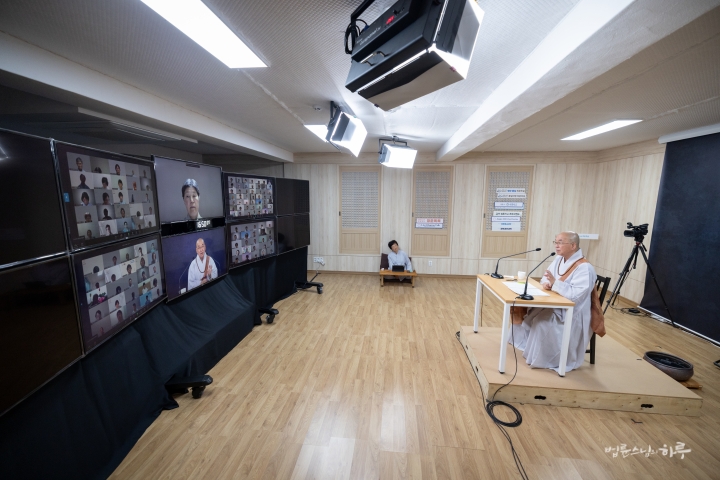
The last Dharma teacher to raise their hand mentioned that the Middle Way discussed in the opening Dharma talk is difficult to practice in reality and asked for more specific guidance.
In Reality, It’s Often Difficult to Find the Middle Way
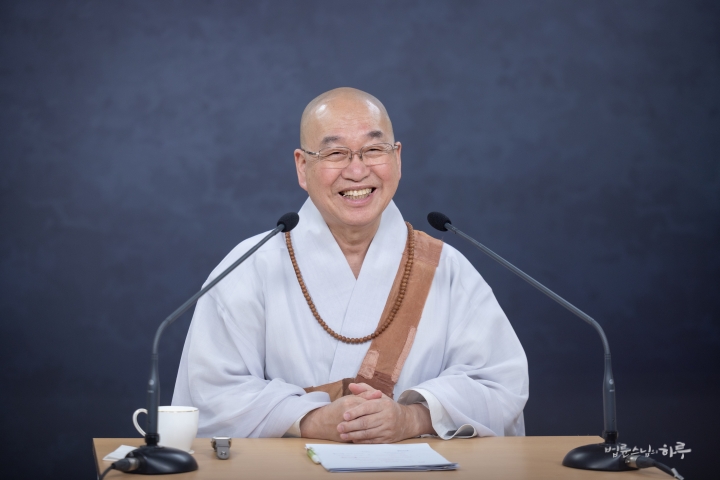
“There are two main reasons why it’s difficult to maintain appropriateness. One is lack of experience, and the other is stubbornness. When the desire to have things your way is strong, you push through with your own methods until you meet resistance. Then you say, ‘Fine, I won’t get involved. Do it yourself,’ and turn away. This cycle of attachment and avoidance happens because you’re clinging to your own views.
Conversely, when you don’t cling to your views, the gap between attachment and avoidance gradually narrows as time passes and experience accumulates. The Middle Way doesn’t automatically appear just because time passes. You need to let go of your stubbornness to gradually move toward the Middle Way in the space between attachment and avoidance. Also, no matter how much you want to act appropriately, lack of experience will cause you to lean to one side. That’s why accumulating some experience is necessary.
If time just passes and the same patterns repeat, the gap won’t narrow. That’s why it’s important to let go of your own thoughts and adopt a research attitude of ‘Let me try this way, let me try that way.’ You need to observe the other person’s reactions and make gradual adjustments to find what’s appropriate.”
“Thank you. I understand well.”
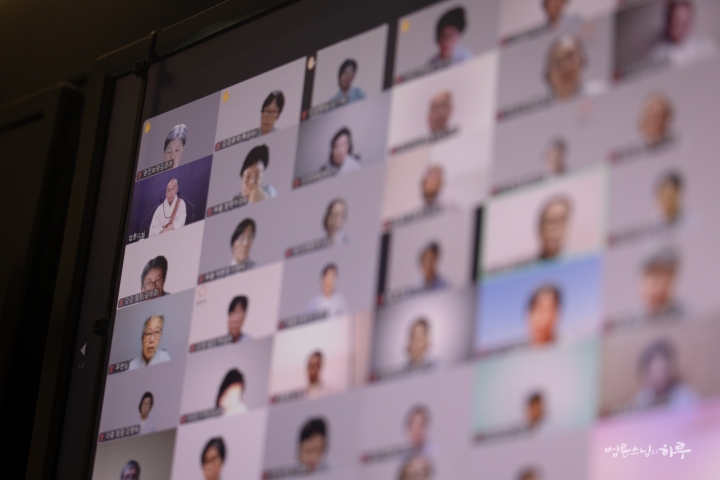
The National Dharma Teachers’ Training concluded with the Four Great Vows as 6 PM approached. The sun had already set and darkness had fallen.
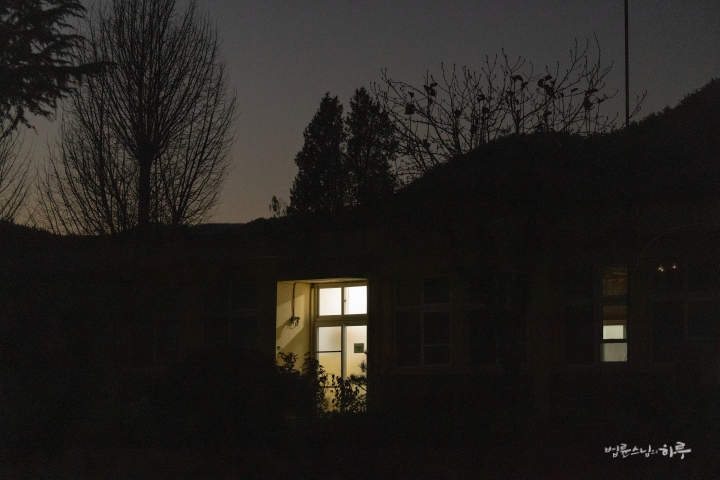
In the evening, Sunim had dinner with Mr. Lee Kyung-taek and Mr. Lee Seung-hoon from the United States, discussing many topics about the LA Retreat Center construction project.

Tomorrow, Sunim will depart from Dubuk Jungto Retreat Center at 3 AM to travel to Seoul, attend the Peace Foundation’s special board meeting early in the morning, broadcast the morning session of the Leading Members’ Dharma Assembly, have a regular hospital checkup in the afternoon, and broadcast the evening session of the Leading Members’ Dharma Assembly in the evening.