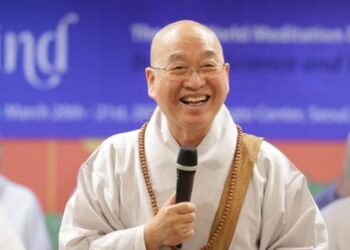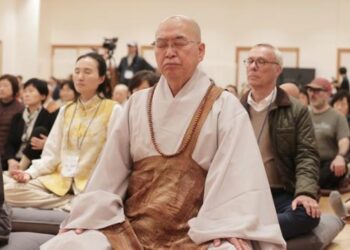

2025.10.27. Dubuk Elders’ Autumn Outing
Hello. Today is the day for an autumn outing with elders living in 13 villages near Dubuk Jungto Retreat Center.
For the past 21 years, Dubuk Retreat Center has been conducting volunteer activities, visiting the homes of elders with mobility difficulties to clean their houses, prepare side dishes, and provide companionship. Every year, the center also hosts spring and autumn festivals for the local elders.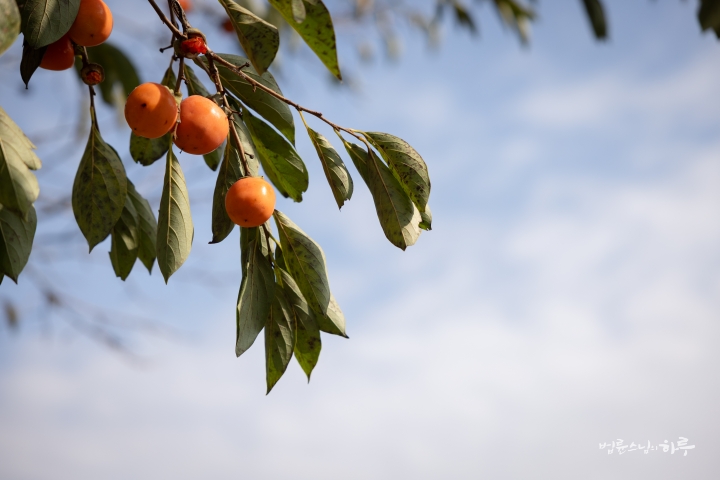
The village chief’s announcement echoed throughout the village.
“Ah. Ah. Aah. Today is the village elders’ festival day with Venerable Pomnyun Sunim. Since the weather is chilly, please dress warmly before coming out.”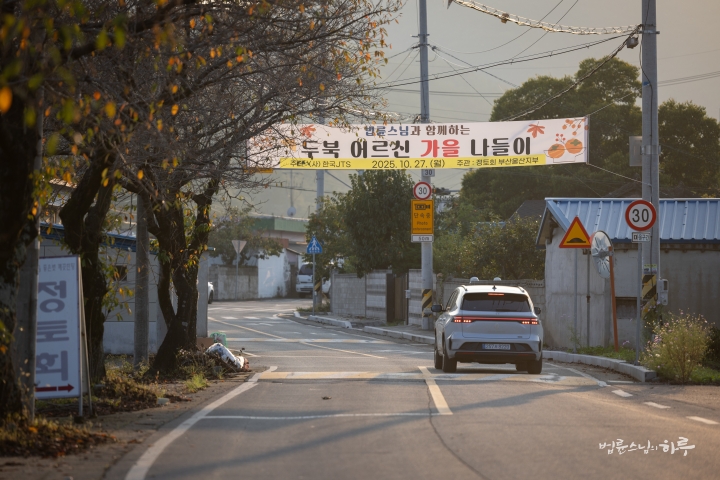
About 30 volunteers from the Busan-Ulsan Division of Jungto Society visited each village to pick up the elders. Some elders came with their bicycles or electric scooters. The volunteers greeted the elders with bright smiles.
“Elder, how have you been?”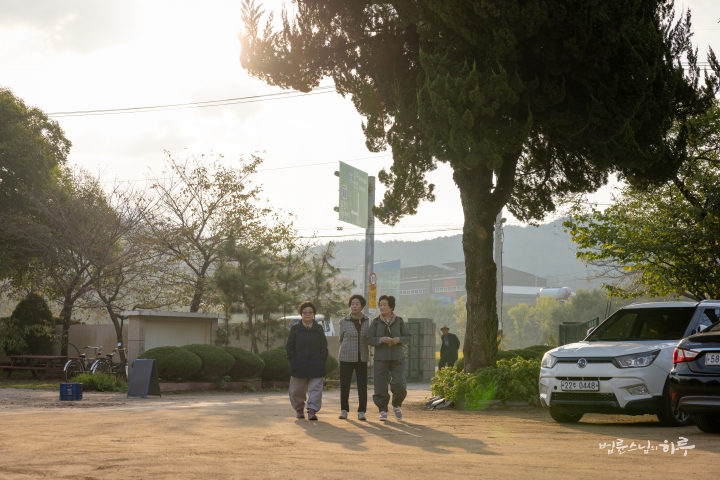
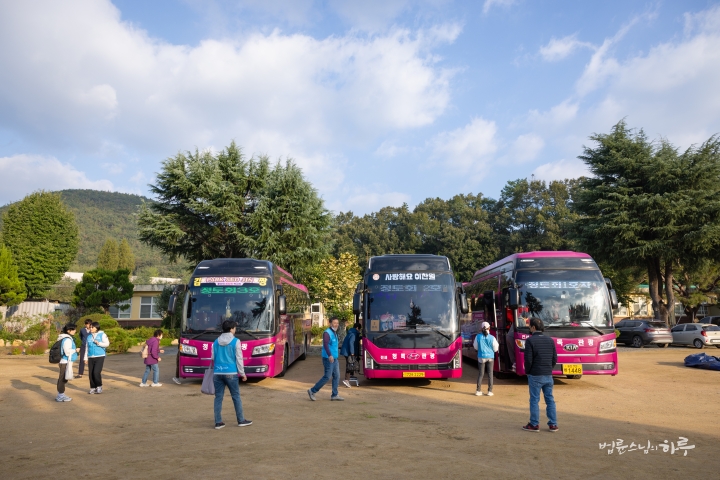
After boarding all the elders onto three large buses parked at the Dubuk Retreat Center playground, they departed for Unmunsa Temple. After an hour’s bus ride, they arrived at Unmunsa Temple at 9 AM.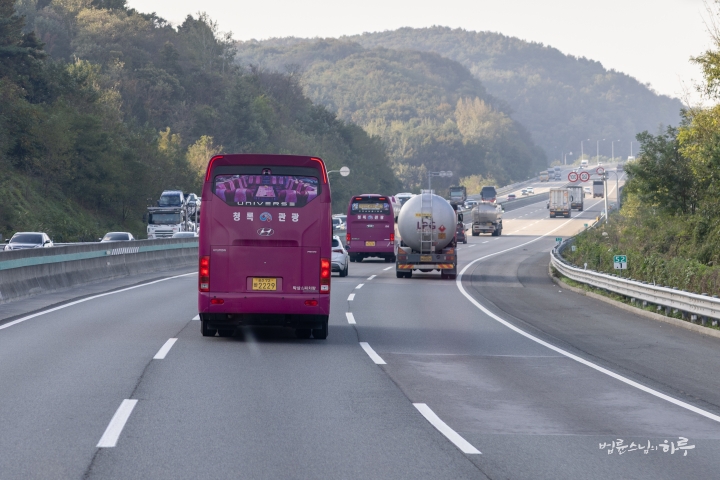
Sunim arrived at Unmunsa Temple an hour earlier than the elders and had tea with Eungwang Sunim, who serves as the head monk.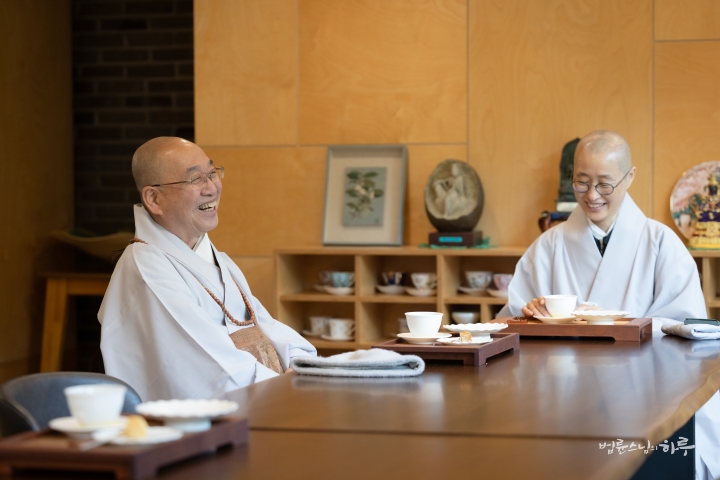
While having tea, the buses carrying the elders arrived. Sunim hurried to the main gate to greet the elders.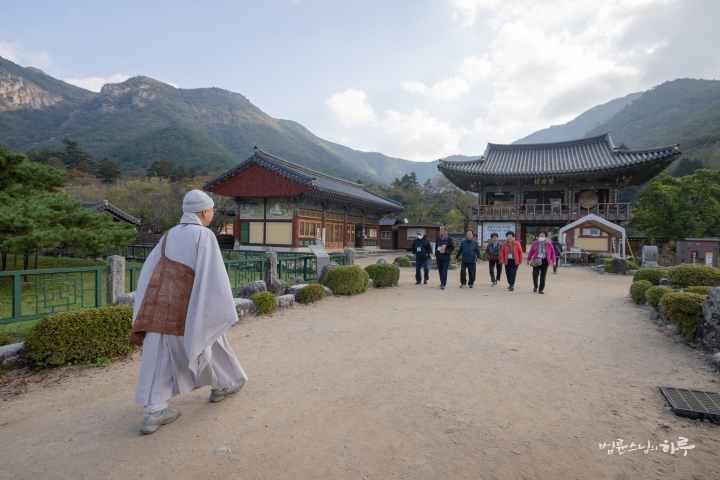
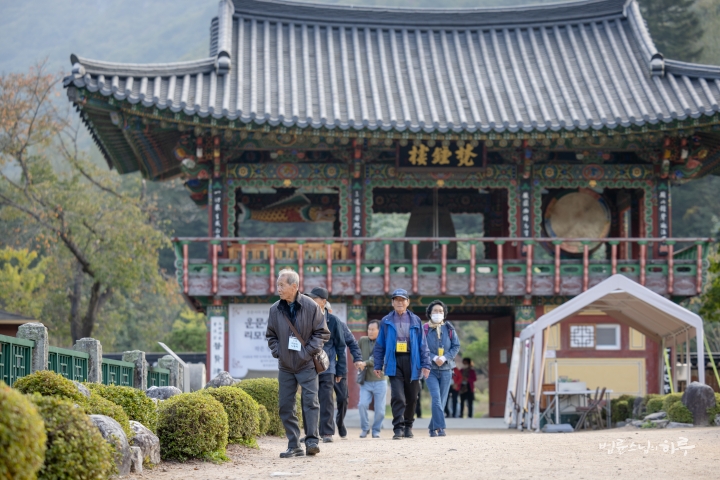
The elders who got off the bus entered through the main gate, using walking sticks and supported by volunteers. Sunim greeted the elders with a bright smile.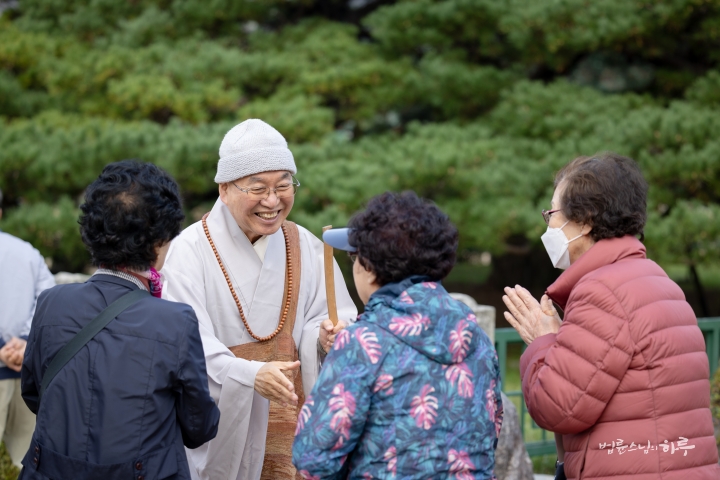
“Welcome. How have you been?”
“We came together as brothers and sisters.”
“You really look alike.”
“Thank you all for making the effort to come!” 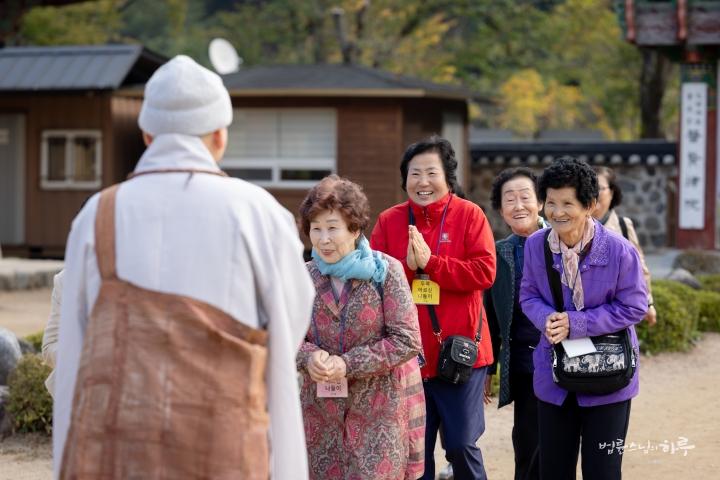
Together with the elders, everyone headed to the main hall.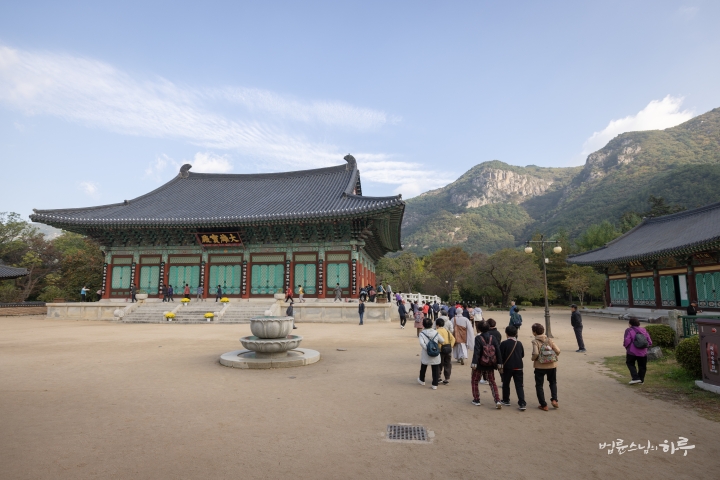
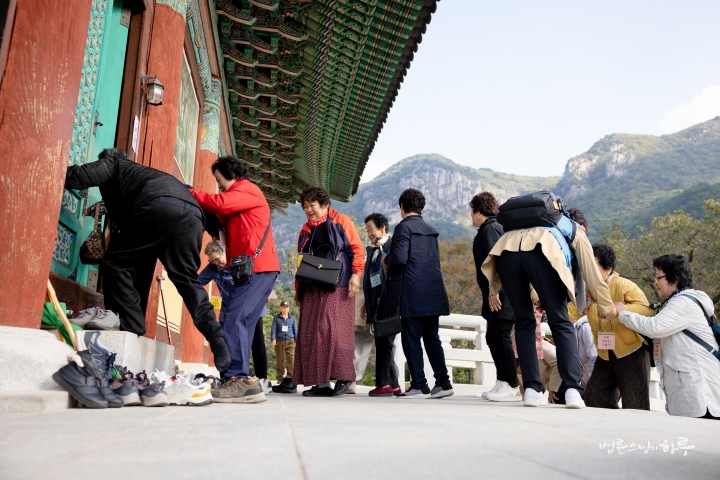
After all the elders paid their respects to Buddha and took their seats, Sunim gave a greeting.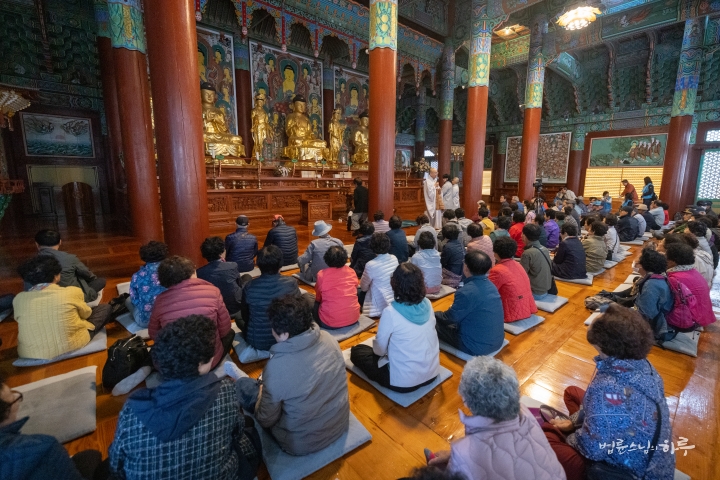
“The weather has gotten quite cold today, hasn’t it?”
“Yes.”
“It seems winter has arrived before autumn. There were rumors of a good harvest this year since there were no typhoons, but now with so much rain in autumn, many can’t even harvest their crops. When rice sprouts in the field, there will be more broken grains during milling, reducing the yield. You must be quite worried. But this is nature’s doing, so what can we do?
Please Put Down All Your Worries and Concerns for Today
So today, let’s put down all our worries and concerns and enjoy this outing together. Originally, we planned to go on a distant trip in spring and visit somewhere nearby in autumn since the days are shorter. However, I couldn’t move from March to June because I was conducting a program called ‘100-Day Dharma Talk,’ where I gave dharma talks every single day for a hundred days without rest. As a result, we couldn’t hold the spring elder festival, so we’re having it now in autumn. Since the days are short, we couldn’t go far and came to the nearby Unmunsa Temple. Has it been a long time since you visited Unmunsa Temple?”
“Yes.”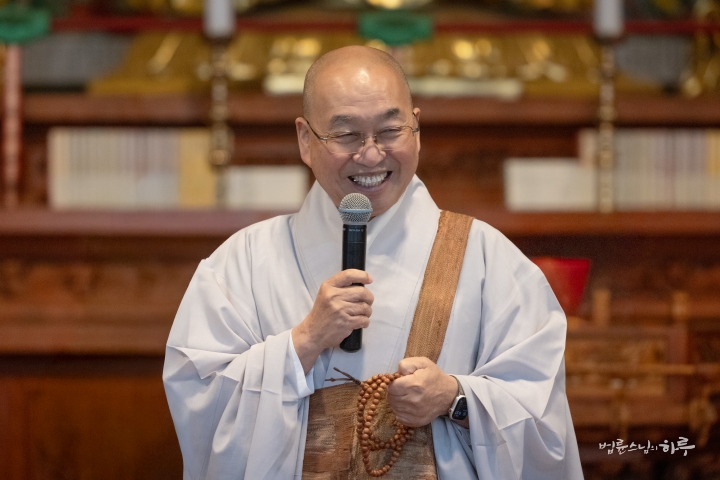
“That’s good. I was worried you might say you came last year. This place is very good for elders to visit. While most temples are located on steep slopes, this one is on flat ground, making it easy to walk around. Do you know that this is a temple where only bhikkhuni (female monks) reside? It’s the largest temple for female monks in our country.
Since we’ve come before Buddha today, let’s offer a bow. After Dharma Teacher Hwagwang leads us in a prayer, we’ll take a tour around the temple. If I explain about this temple now, it might not register well. Let’s first take a walk around and take some photos. After touring the temple, we’ll sit down and have a conversation. If you have any difficulties in life, please feel free to share anything. (laughter)
Since we’re at a temple, let’s pray. Let’s pray to be healthy while alive, peaceful when dying, and if there’s an afterlife—though we don’t know if it exists—may we go to a good place. And let’s also pray that all our children do well without any troubles.”
Following this, Dharma Teacher Hwagwang led the Three Refuges, Heart Sutra, and Avalokitesvara chanting, then offered a prayer. The elders also joined in prayer with their hands together devoutly.
“We pray for the health of all elders participating today and for peace in their families.”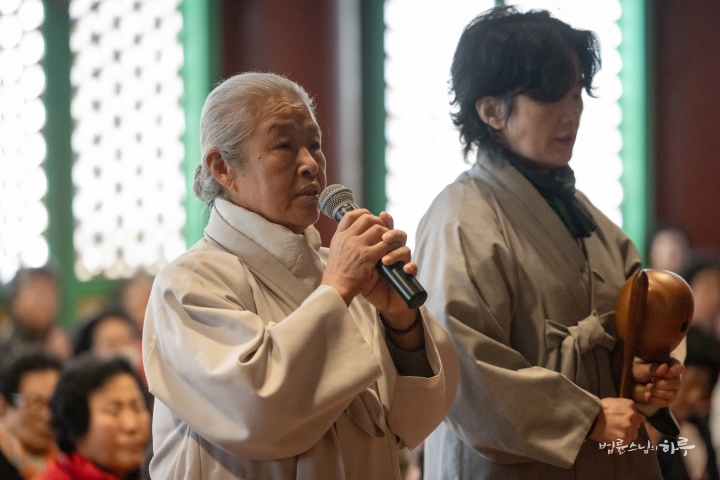
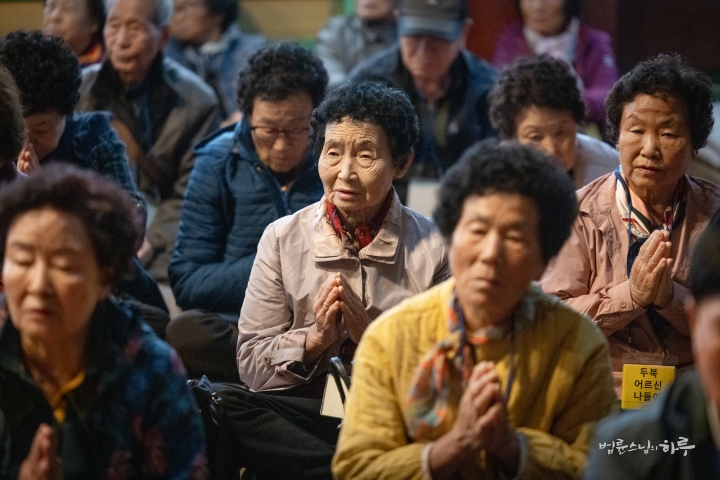
After the prayer, they went outside and took a commemorative photo with the elders. Since many couldn’t stand due to leg pain, they sat on the steps for the photo.
“Unmunsa!”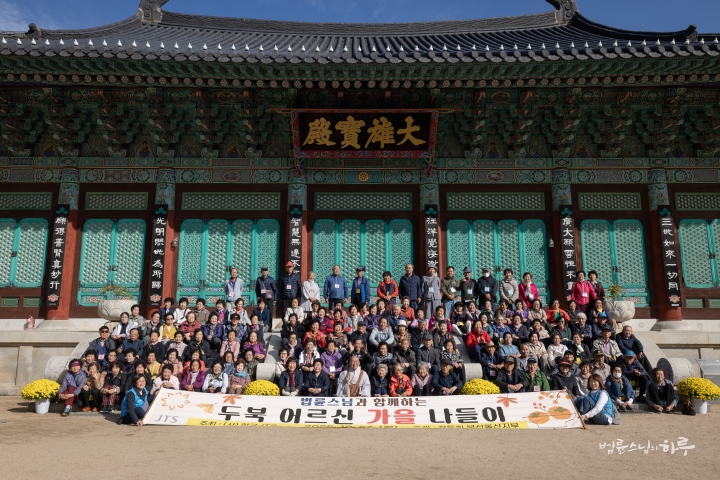
A student monk studying at Unmunsa Temple then gave a detailed introduction about the temple.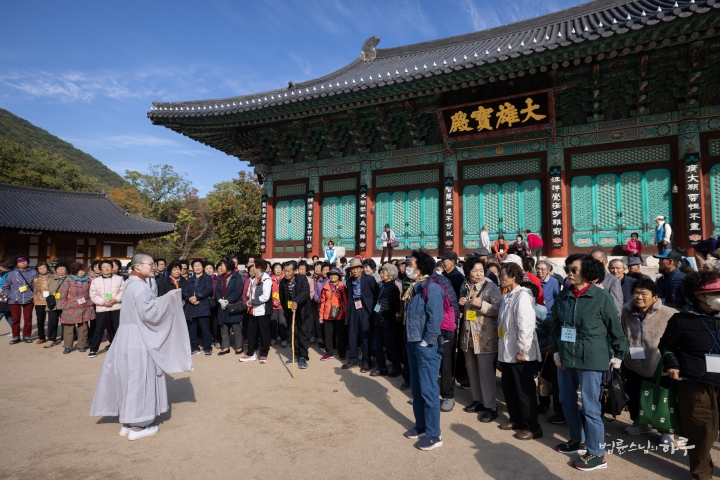
“Our Unmunsa Temple was first built during the Silla Dynasty. Daejak-gapsa, one of the ‘Five Gapsa Temples’ centered around Mt. Unmun at that time, is the origin of Unmunsa Temple. It’s a temple with a very deep history. I’ll explain the temple grounds in detail. Shall we all stand up and move together?”
They toured around Manseru, visiting various halls including Birojeon, Obaekjeon, Gwaneumjeon, and Cheongpungryo, and learned about the nine treasures within the temple grounds.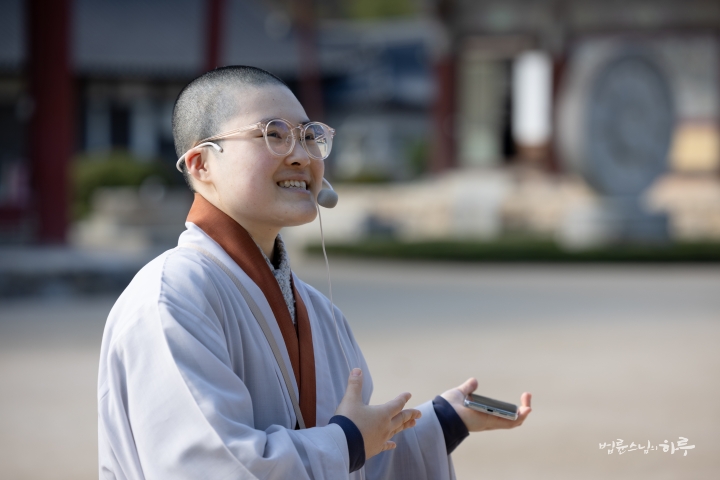
The elders took photos in small groups and tasted the water before heading together to Seonyeoldang where the Dharma Q&A would be held.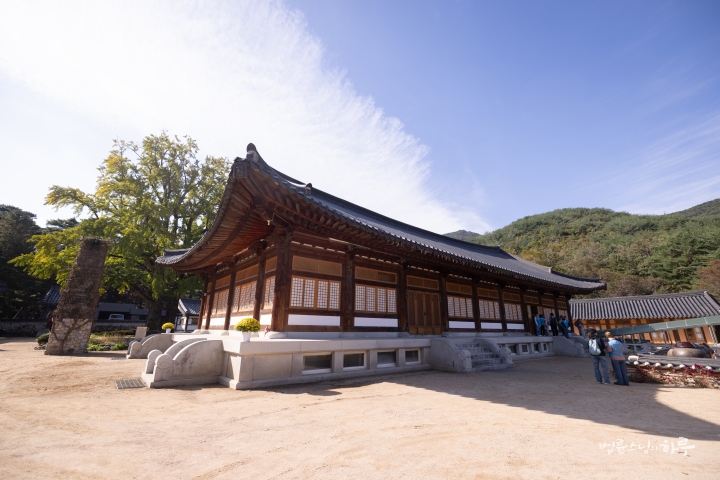
While the elders were touring the temple, Sunim briefly greeted the student monks at Unmunsa Temple. When the student monks requested a dharma talk, Sunim gave them a brief teaching.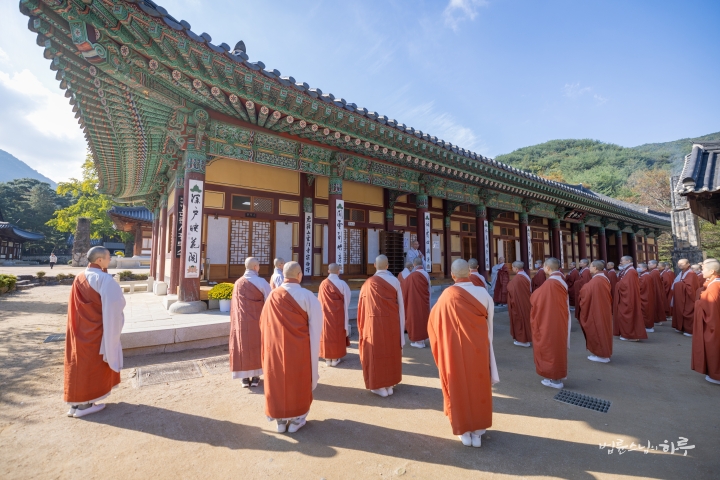
“When it’s hot, take off a layer of clothing. If it’s still hot, get in the water. If it’s still hot, just sweat. When it’s cold, put on another layer. If it’s still cold, light another heater. If it’s still cold, just shiver. Similarly, as we go through life, various things happen—isn’t it just like having hot days in summer and cold days in winter? 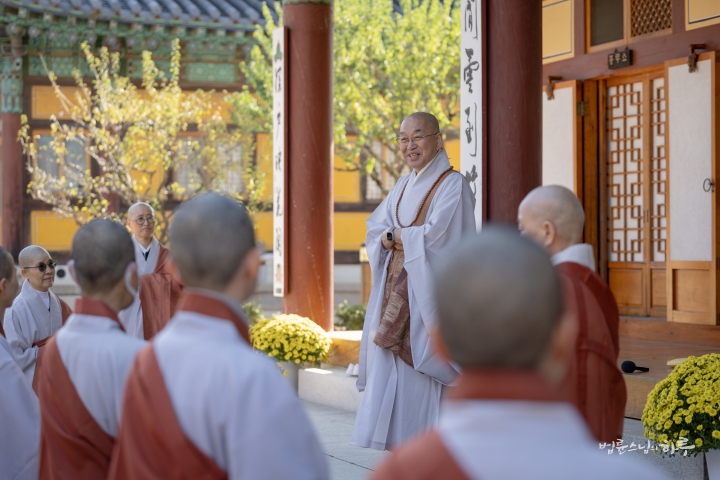
Life Is Hard? That’s Proof You’re Alive
Practitioners don’t have anything special to overcome. We simply respond to situations as they arise and live accordingly. If we get sick, we’re in pain. When the time comes, we die. So I hope you don’t attach too much meaning to living. Did you all come here risking your lives to attain enlightenment? Enlightenment isn’t something special—it’s being constantly aware of your state in daily life and responding appropriately to situations. I believe this is what Mahayana Buddhism calls ‘No Everlasting Abiding Dharma’ and what Theravada Buddhism calls the teaching of the ‘Middle Way.’ So don’t think of your seminary life as difficult. When it’s time to cook, cook. When it’s time to work, work. When it’s time to meditate, meditate. When it’s time for morning service, do morning service. Aren’t all these things possible because we’re alive? When we die, we can’t even do these things. Pain is also something we experience because we’re alive. So I hope you accept daily life as practice.”
“Thank you.”
After taking a commemorative photo with the student monks, Sunim also headed to Seonyeoldang.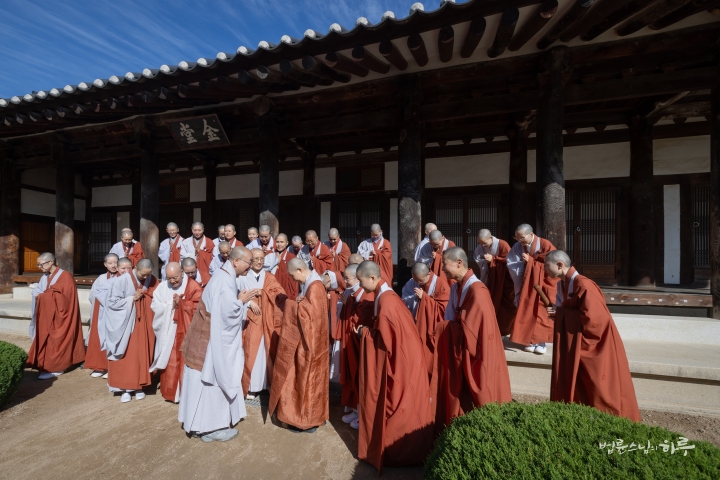
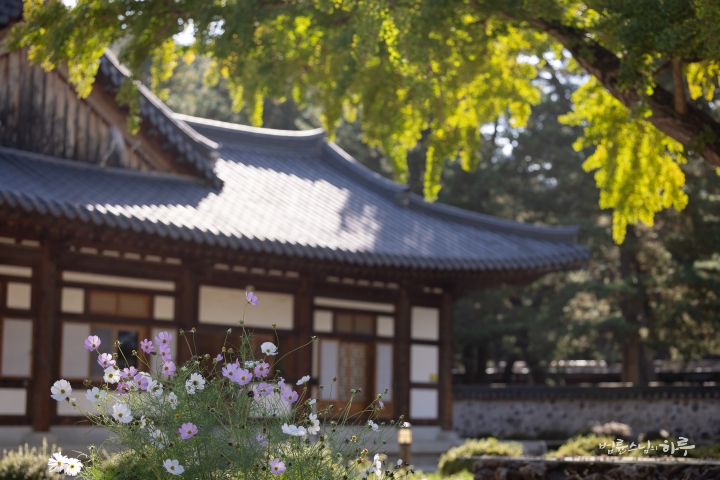
When about 150 elders had taken their seats in Seonyeoldang, Sunim began the dharma talk.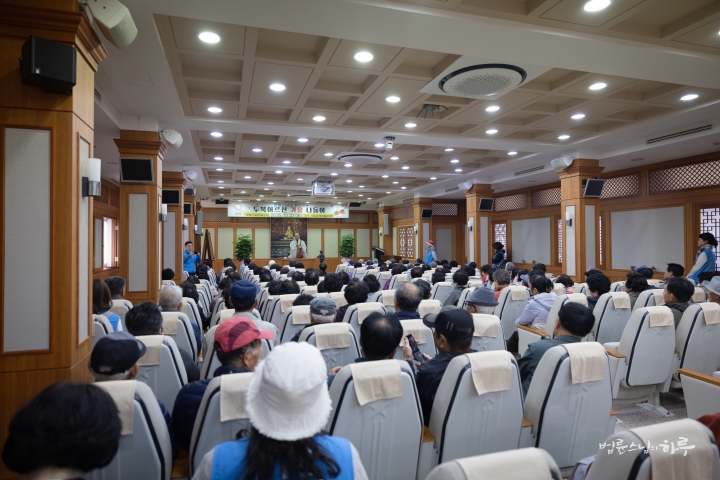
“Is everyone staying healthy and well? In the past, when we held elder festivals, everyone was from my parents’ generation or my older siblings’ generation, but now many people around my age are coming. What happened? People younger than me shouldn’t be coming here. Just now when I told my friend ‘You’ve become an old man!’ he said ‘How old do you think I am!’ Time is passing by so quickly. (laughter) 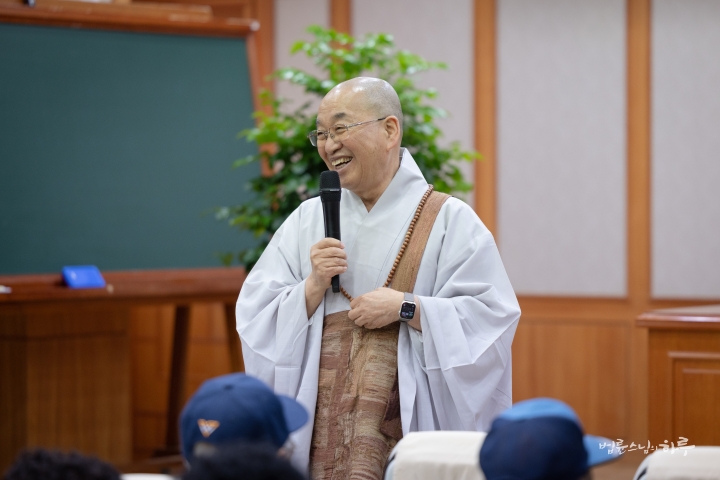
Today, please feel free to share anything you’d like to tell me. Whether it’s about your children, your husband, or worldly matters, everything is fine. If you don’t have anything particular to say, we’ll go straight to Gyeongju to eat, dance, sing, and have a good time. Anyone who has something to share with me, please raise your hand and speak up.
We just prayed in the Dharma hall to live healthily as long as we can, to die peacefully when the time comes, and to go to a good place after death, so Buddha will take care of the rest. If you have any concerns while you’re alive, please share them now.”
Following this, there was time for anyone to raise their hand and ask questions. Before the elders could raise their hands, Venerable Iljin, who serves as the Dean of Unmunsa Sangha University, quickly raised her hand and asked the first question.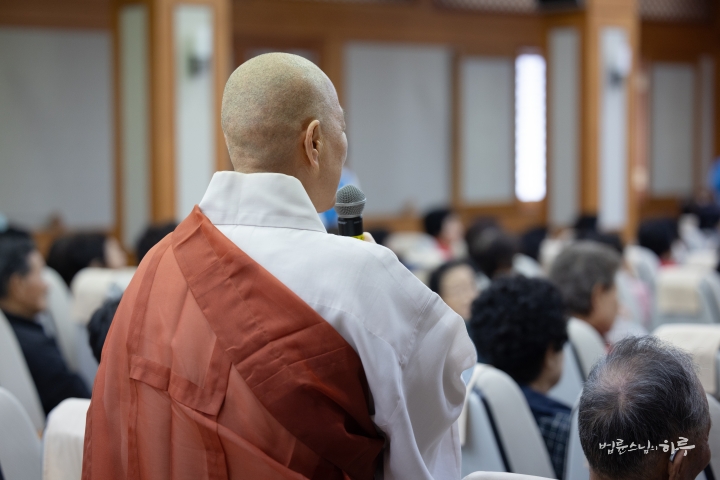
Why Does Sunim Travel with So Many Elders?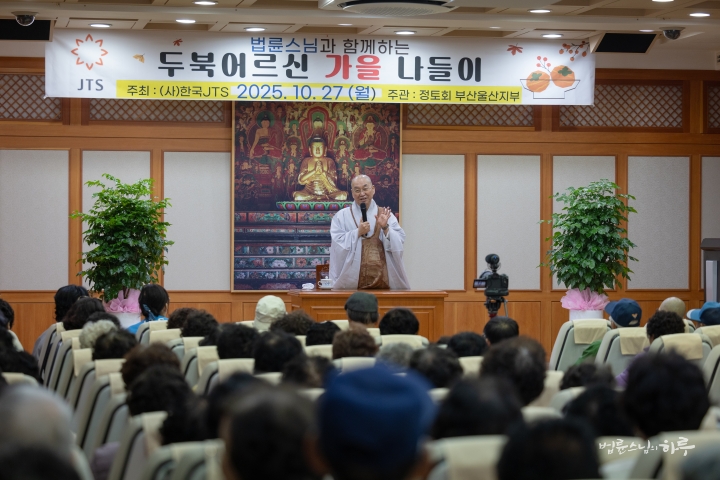
“When I was young, I attended elementary school in my hometown where Dubuk Elementary School was located, but I left home starting from middle school. Then I entered the temple during high school, so I rarely returned to my hometown. About 30 years later, I appeared on a TV program called , and my female elementary school classmates who watched it wondered, ‘Isn’t that monk someone we know?’ While debating whether it was me or not, they noticed my protruding tooth and said, ‘Look at that tooth, it’s him!’ and recognized me. Having a protruding tooth can actually be quite helpful for identifying people. So my classmates called the broadcasting station asking about me by my secular name, but of course, the station didn’t know that name. They apparently told them there was no such person. When I came out after the broadcast ended, the staff member asked, ‘Someone called asking about this name, is it you?’ and I said yes. That’s how I reconnected with my friends, and I even attended a class reunion once.
When I came back to my hometown through this connection, I found that Dubuk Elementary School, where I graduated from, had been closed and was overgrown with weeds. While discussing ways to revive the closed school, we decided to create facilities needed by the elderly. That was 20 years ago. We rented the closed school building and created a gateball court and a bathhouse. However, I think I misjudged the situation. Thinking of the old days, I thought, ‘Since homes don’t have bathhouses, wouldn’t the elders come often if we convert one classroom into a bathhouse?’ and ‘If we build a gateball court, wouldn’t they naturally gather?’ But after building these facilities, I realized that since this area became part of Ulsan Metropolitan City, there was already a well-equipped gateball court near the township office where the elders went. For bathing, they chartered buses to go to hot springs. So the facilities we prepared at the school became useless. As the world changed, so did the level of consumption, but living in the temple, I wasn’t aware of how the world had changed.
At that time, my father lived in the countryside. My mother had passed away early. We are six siblings. I naturally thought, ‘Since I’ve become a monk, I can’t take care of family matters,’ but my brother in America couldn’t take care of our father because he was in America, and my other siblings all had their own reasons for not being able to care for him. I thought, ‘I have a legitimate reason, but shouldn’t you all take care of him?’ But after hearing their situations, I realized that both my siblings and I were all in difficult positions to care for our father living alone in the countryside. Through this experience, I thought this might be a kind of welfare blind spot. In other words, there are many elders in the countryside who have land, houses, and children but receive no care from anyone. Since they have assets and children, they don’t qualify for government support. Living mostly outside, I wasn’t aware of these circumstances. After coming down to the countryside and seeing this situation up close, I started helping the elders by cleaning for them and bringing them side dishes, and then suggested we go on outings together, which is how this all began.
When we started the elder festivals, most of my elementary school friends’ parents were still alive. These were all people I owed gratitude to, whether I had gotten a meal or a rice cake at their homes when I was young. So beyond my own family, since I had received kindness from these people in my childhood, I wanted to go on outings with them at least once a year and listen to their stories. That’s how we started going on spring outings and holding autumn elder festivals. We would go to temples for prayers, show them around temples, eat together, play janggu drums, and have a good time. However, most of those who were with us in the beginning seem to have passed away now. These days, several people pass away each year.
Now even my friends have reached the age to join these gatherings. Being 73 years old, they’re now old enough to come to the elder festivals. I just saw that even my junior classmates have come. We’re all aging together like this. (Laughter) 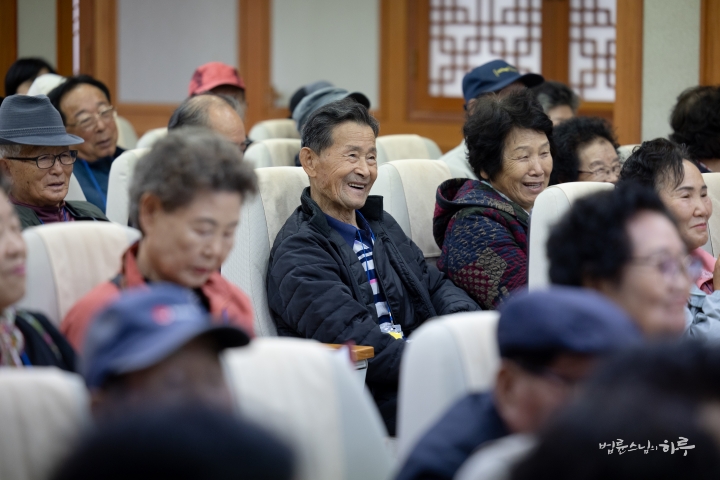
Through conversations with the elderly during the senior citizens’ feast, Sunim learned about the wishes of aging parents. Many expressed wishes like ‘I hope I don’t get sick’ and ‘I want to die peacefully in my sleep.’ They also worry a lot about their children. So I’ve been offering counseling for these concerns, but perhaps because they’ve listened to many Dharma talks over the years, they seem hesitant to ask questions now that they have fewer questions. This is how we’ve been holding senior citizens’ feasts for the past 20 years.”
As the atmosphere for conversation warmed up, the elderly began raising their hands to ask questions. One person shared concerns about how to accept the phenomenon of ancestral rites gradually disappearing, as the current trend is that most people no longer perform ancestral rites during Chuseok.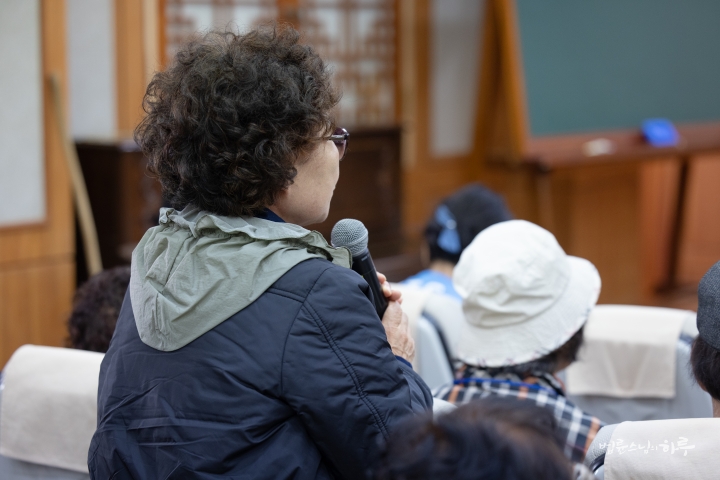
Is It Unfilial Not to Perform Ancestral Rites?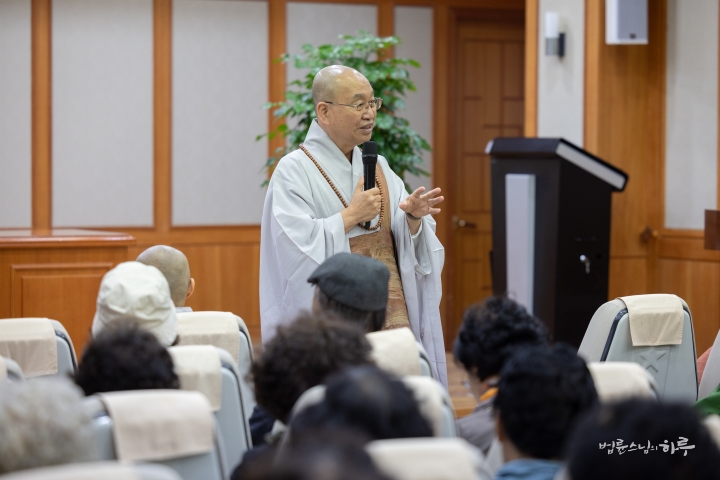
“In our country, Confucian culture dominated society for five hundred years during the Joseon Dynasty. Confucianism places the greatest emphasis on loyalty and filial piety – loyalty to the king and filial piety to parents. That’s why performing ancestral rites to honor deceased ancestors and taking good care of living parents became our traditional culture. When Catholicism entered our country two hundred years ago, it taught ‘Do not worship anyone but God, and do not kneel to anyone else!’ so Catholics didn’t perform ancestral rites. From the Confucian perspective, not performing ancestral rites was considered worse than being an animal. That’s why many Catholics were persecuted and killed. Confucianism valued ancestral rites that much. The core of ancestral rites is the philosophy of filial piety – the importance of serving parents and ancestors well. However, as time passed, Confucian culture gradually weakened. While the parent generation is familiar with traditional culture and believes ancestral rites must be performed, the younger generation feels greatly burdened by performing them.
Personally, I think it’s good to perform ancestral rites. The reason is that it’s good to preserve our traditional culture. Even this monk’s robe I’m wearing is inconvenient for daily life. These days, everyone dresses comfortably. I don’t think monks must dress like me even after I die. But this is tradition. I plan to live and die as our ancestors did. What happens after that, I don’t know. Among young monks these days, many wear jackets instead of monk’s robes. This is a change of the times, but I still think we should preserve traditional culture at least until my generation. However, I cannot tell future generations ‘You must preserve this too.’ It would be good if they did, but it’s not something to force. Because culture continuously changes. 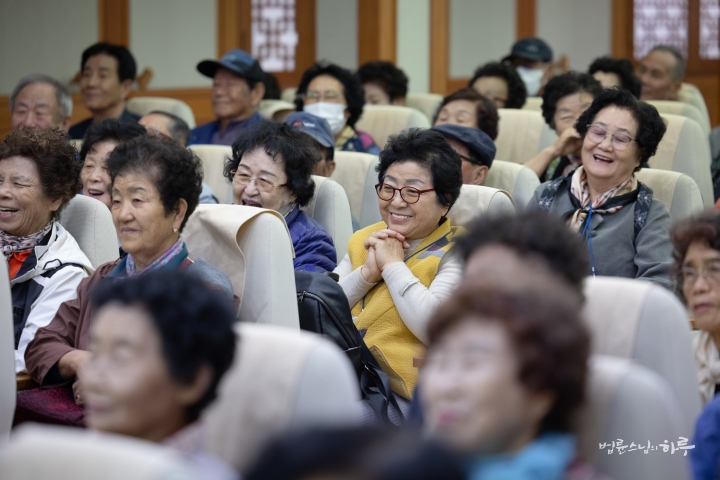
Recently, if you watch the animated film ‘K-pop Demon Hunters,’ which has gained tremendous popularity worldwide, the characters wear traditional Korean gat (traditional hat) while singing and dancing. Rather than abandoning our traditional culture like this, it’s better to preserve and develop it well. Korean temple buildings are also gaining tremendous popularity among young people overseas these days. They’re popular as culture, not as religion. They want to come to temples to stay for a day, try temple food, and experience meditation. I believe preserving traditional culture in this way is desirable.
However, not performing ancestral rites doesn’t mean being unfilial. This is because it’s a matter of culture. So, have a discussion with your family. When discussing, you should only say, ‘I will perform ancestral rites while I’m alive. Your mother and I would like it if you continued them too.’ You shouldn’t force them to perform ancestral rites. However, regardless of what religion one follows, preserving Korean traditional culture is very important – not necessarily because ancestral spirits exist.
Now, when building temples, we can’t insist only on traditional methods. I also built a temple in Seoul. Land prices in Seoul are incredibly expensive, aren’t they? Since I could only buy a small piece of land, I had to build a 15-story building to meet our needs. Of course, we decorated the interior with traditional elements and created a dharma hall inside. In situations where we can’t build in traditional ways like this, we can’t force traditional construction, can we? This is how we need to accept changes of the times to some extent while also preserving tradition to some degree. This is how human life is. So while I maintain the position of ‘I will preserve it while I’m alive,’ I recommend preserving tradition when possible but leave it to their freedom. What do you think? Do you want to tell your children ‘Don’t perform ancestral rites!’ Or do you want to say ‘You must perform ancestral rites’?”
As the topic of ancestral rites came up, other elderly participants raised their hands and comfortably shared their thoughts about ancestral rites.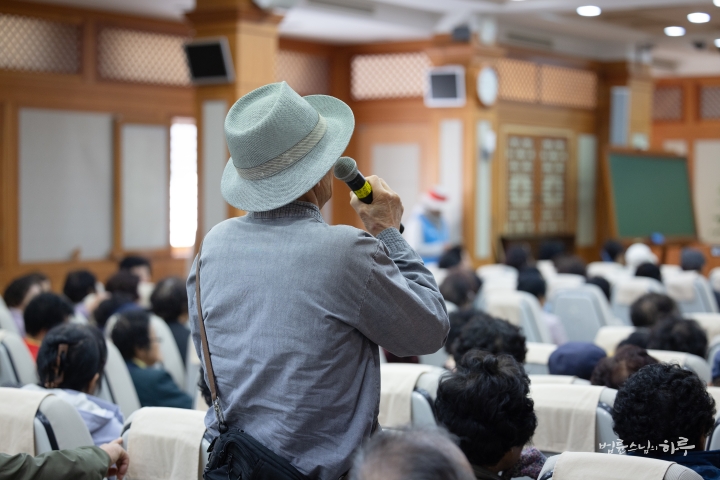
“We try to perform ancestral rites more conveniently by holding grandmother and grandfather’s rites together, and we also perform mother’s rite together with father’s rite. When writing the spirit tablet, we write both names together. I think this way is good.”
Sunim continued with a smile.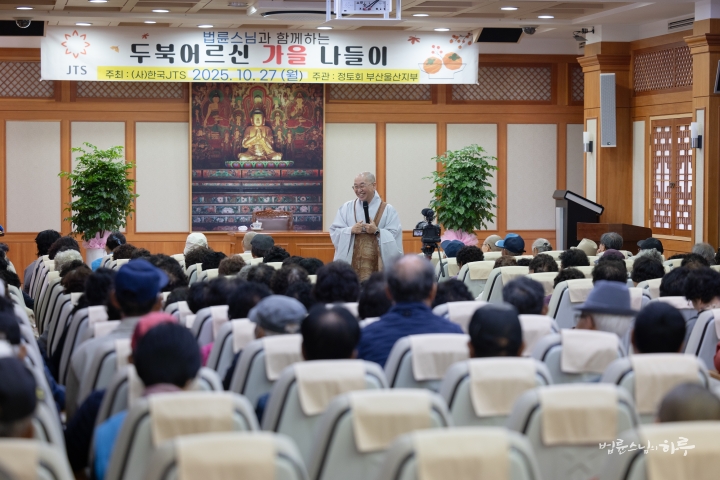
“Yes. You can do it however you like. You worry about whether it’s okay to change the location or time of ancestral rites, but it’s fine. For example, if two people make an appointment and say ‘Let’s keep this between us,’ but a third person shows up right at that spot, what do we say? ‘You knew about it like a ghost.’ Right? The meaning is that ghosts know everything. If they don’t know, they’re not ghosts. So, would ghosts know if you changed the date of the ancestral rite? Would they not know? If you change the location, would they know or not? They know everything like ghosts and will find it. So there’s no need to make such a fuss about ‘changing the location’ or ‘changing the date.’ It’s all human affairs anyway.
Let me add one more thing. Even in Confucianism, which greatly emphasizes ethics, it says that those over 80 don’t need to observe formalities. Why is that? In the old days, few people lived to 80, so those over 80 were already considered to have entered the realm of spirits. That’s why those over 80 don’t need to follow etiquette and manners. Even if told to sit, they can stand; if told to stand, they can sit; if told not to eat, they can eat – it’s all fine. Once you’re over 80, you can live however you like. But it seems like half of the people here are over 80. Maybe we need to raise the 80-year standard a bit. (laughter) 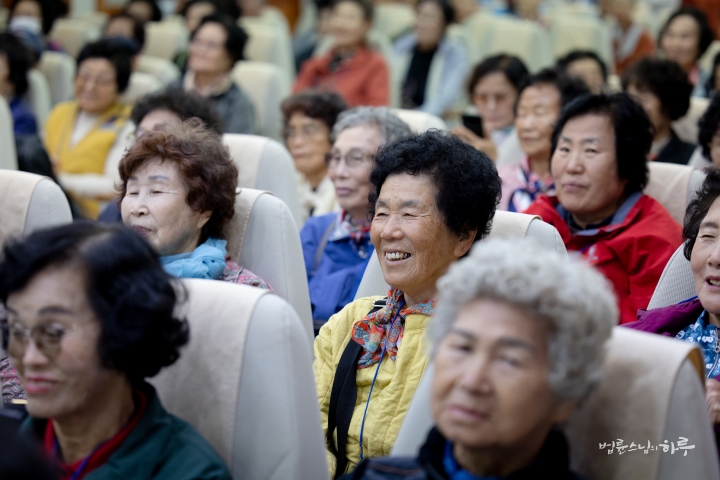
Chuseok is a day to give thanks for the grace of heaven and earth and the grace of our ancestors. During the Lunar New Year, it is our culture to express gratitude to our ancestors and offer Jeongcho prayers asking for a safe and peaceful new year. I hope we can preserve our culture well. However, we shouldn’t stubbornly insist on it. If this issue causes fights among children or siblings, I think it’s more important not to fight than to fight in order to preserve tradition.”
Today, time flew by as Sunim spent an hour discussing various aspects of ancestral rites. As Sunim concluded the conversation, he expressed his gratitude to the nuns of Unmunsa Temple.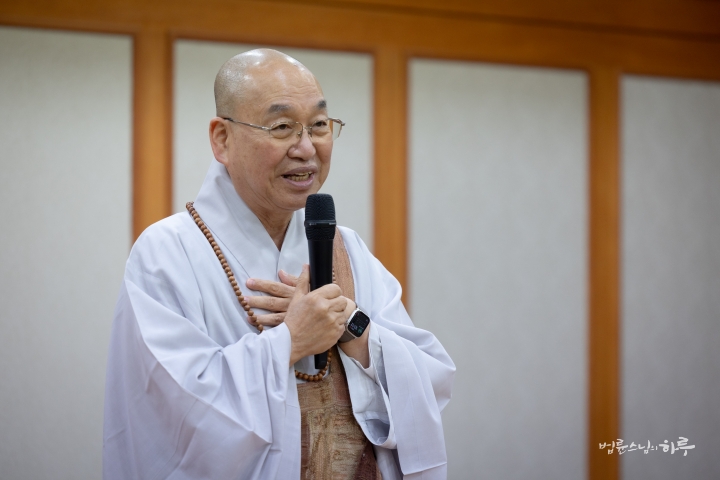
“Today, the nuns of Unmunsa Temple have invited us into this space that is usually reserved only for monastics. You have all become monks and nuns for the day. (Laughter) Since they have allowed us into this wonderful space, please give them a round of applause to show our appreciation.” 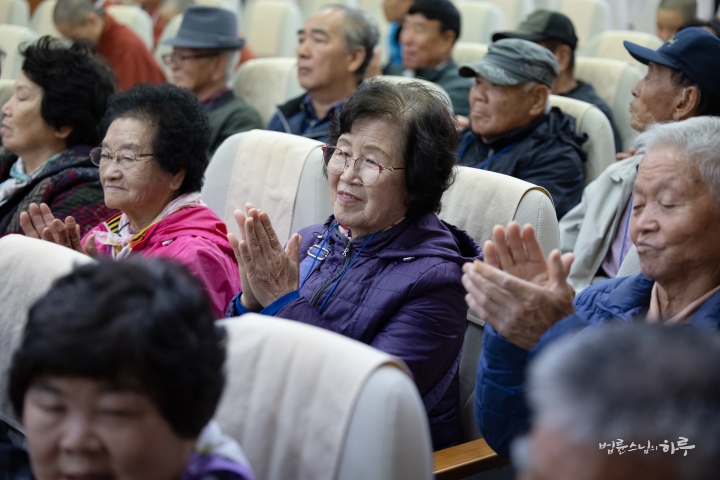
After leaving Seonyeoldang Hall, everyone moved together to the parking lot.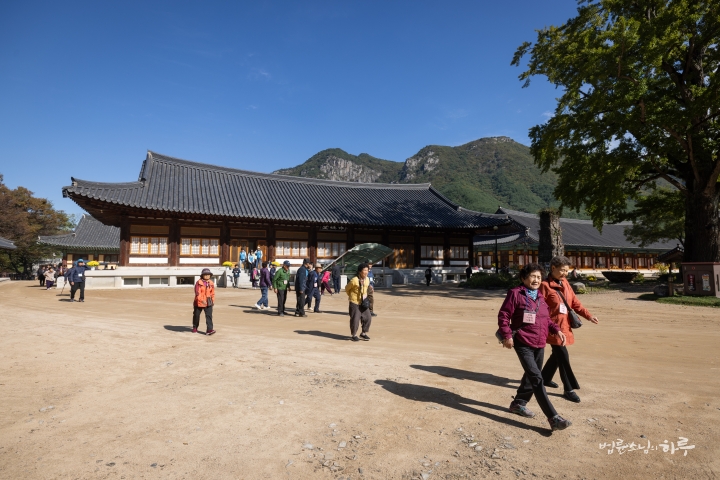
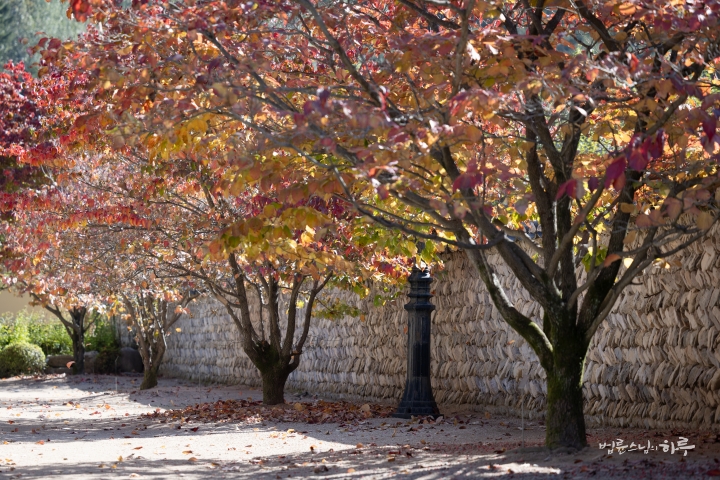
Unmunsa Temple had beautifully wrapped and presented gifts of dapo (tea cloth), handkerchiefs, and prayer beads to all the elderly visitors. After expressing his gratitude to the head nun and the lecture master for their warm hospitality, Sunim left Unmunsa Temple.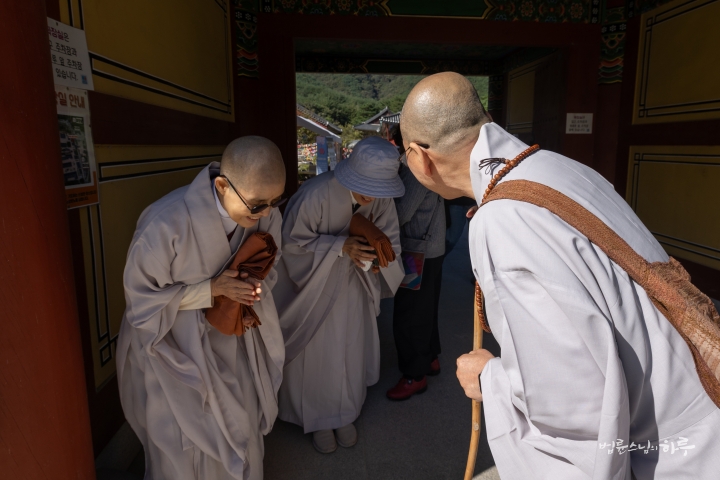
The elderly visitors boarded the bus again and headed to the lunch venue. In the afternoon, a program was prepared at a buffet restaurant in downtown Gyeongju where various dishes were laid out and the elderly could enjoy entertainment.
Sunim arrived at the restaurant before the elderly visitors to check on the food preparation. Soon the elderly arrived and began their meal.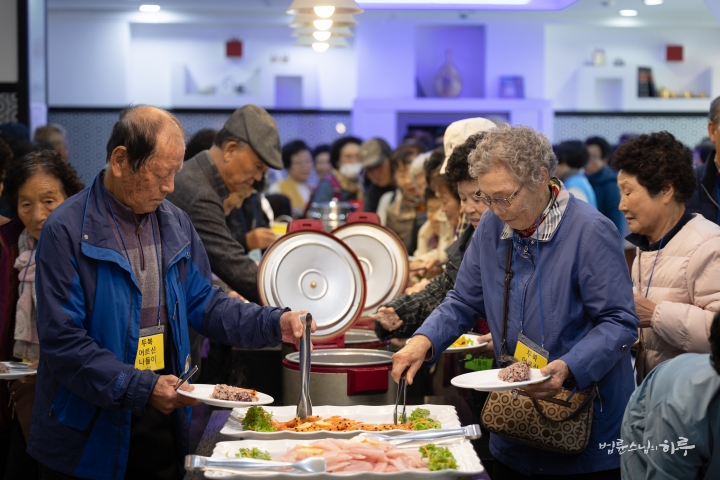
The volunteers busily carried drinks and replenished food to ensure the elderly could enjoy their lunch comfortably.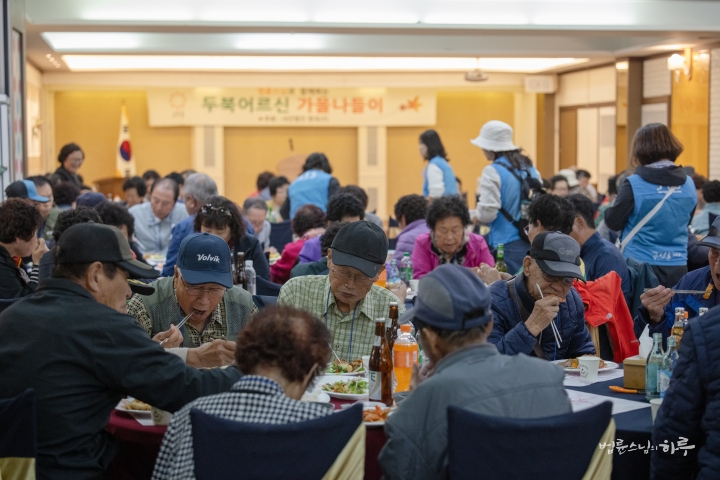
After all the elderly had finished eating, Sunim gave a greeting.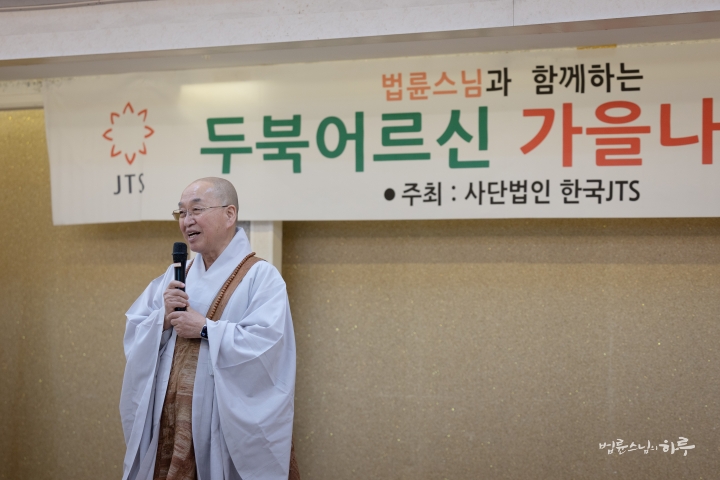
“Did you enjoy your meal?”
“Yes!”
“Was the food delicious?”
“Yes!”
“Since we’ve prepared plenty of food, please use it as accompaniment and have a drink while you enjoy yourselves to the fullest from now on. Don’t worry about keeping up appearances – just have fun and enjoy yourselves.” 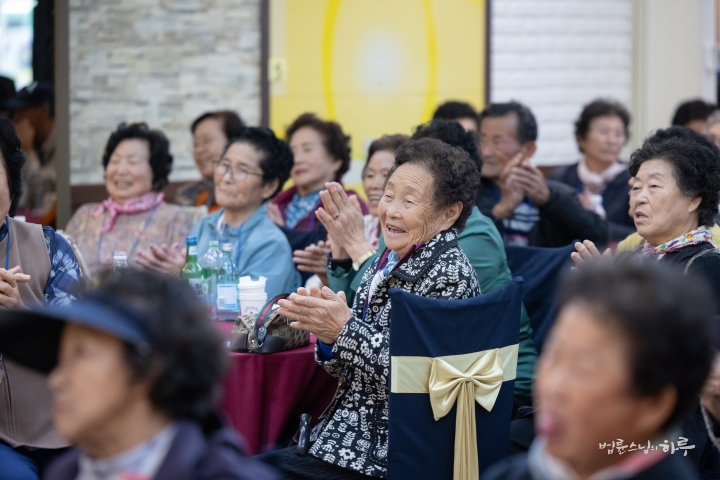
Next, the president of the senior citizens’ association spoke on behalf of the elderly.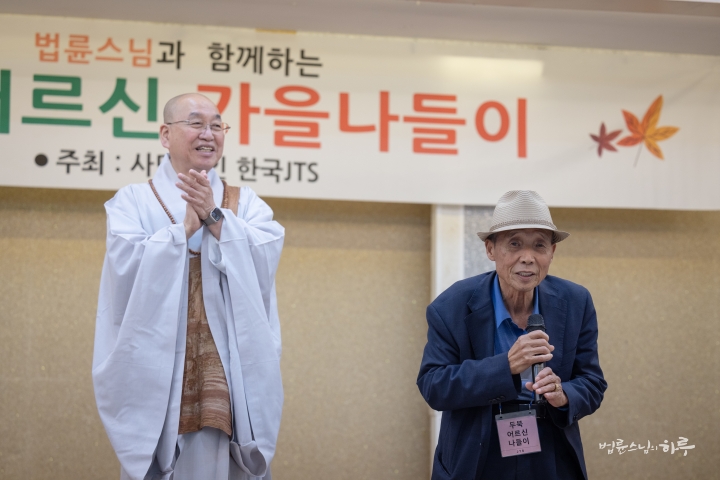
“Jungto Society has been hosting this senior citizens’ festival every year, and I believe this is the 21st year. How grateful we are that you have been taking care of us elderly people for such a long time. Please give them a big round of applause. Enjoy the good food and have a wonderful time.”
Next, the village chief of Hwalcheon-ri gave a greeting.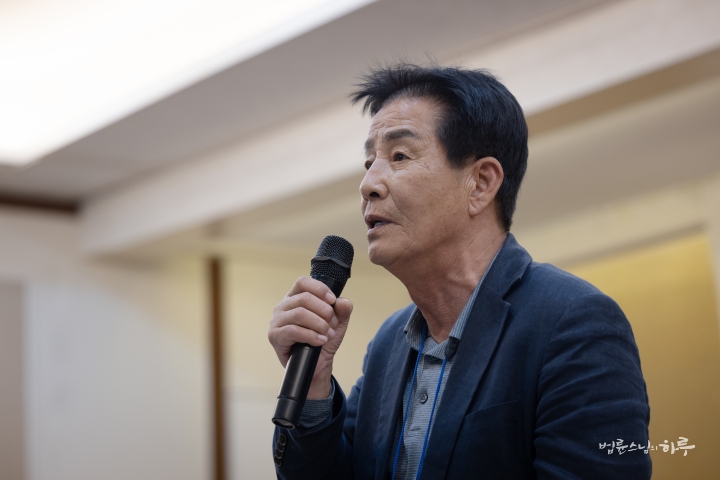
“I am the second son of the Lee family, serving as the village chief. Thank you for hosting the senior citizens’ festival again this year without fail. Despite the unpredictable weather, I’m very grateful that so many elderly from each village have attended. Today’s outing was arranged to take a brief break from daily life, reflect on the Buddha’s teachings, purify our minds through Venerable Pomnyun Sunim’s Dharma talk, and have a happy time together. I hope you all stay healthy for a long time until we meet again.”
With loud applause, the MC Lee Tae-gi appeared and greeted everyone.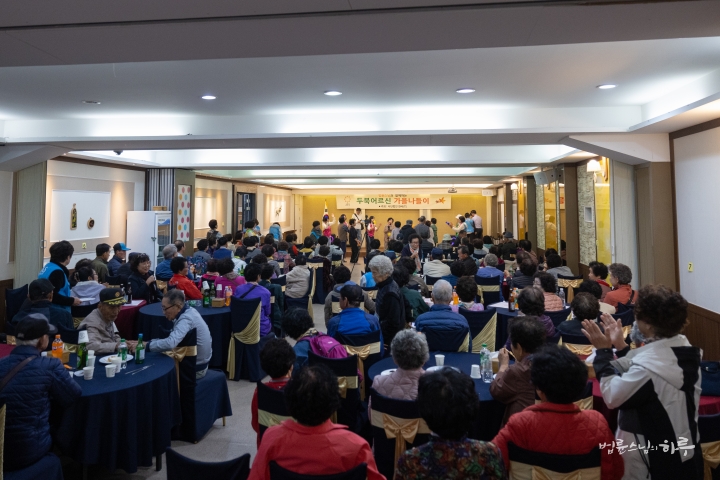
“Everyone, are you ready to have fun?”
“Yes!”
The elderly, having had a drink or two, cheered loudly with joy. To boost the mood, the Busan-Ulsan branch formed a “Jjaljjali team” wearing sparkly outfits and jumped onto the stage.
First, Lee Su-jin sang “Boritgogae” (Barley Pass) with heartfelt emotion, heating up the atmosphere for the singing contest.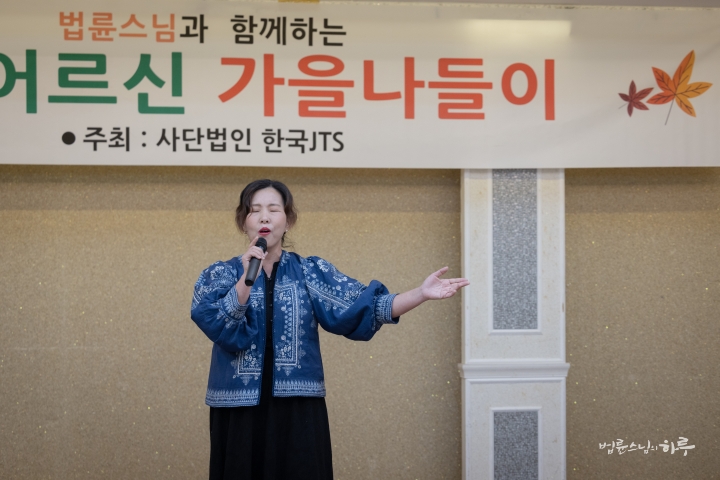
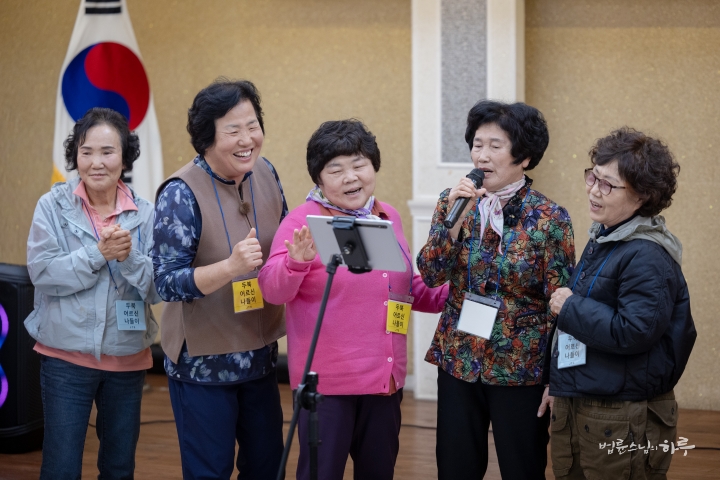
Then, the elderly who had signed up in advance came forward one by one to sing their songs.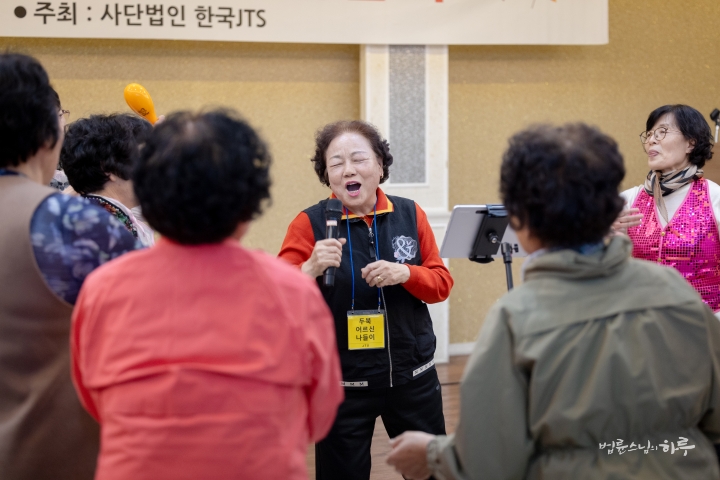
Ya ya ya, what’s wrong with my age ♬
Does love have an age?
As the lively songs began, the elderly started swaying their shoulders.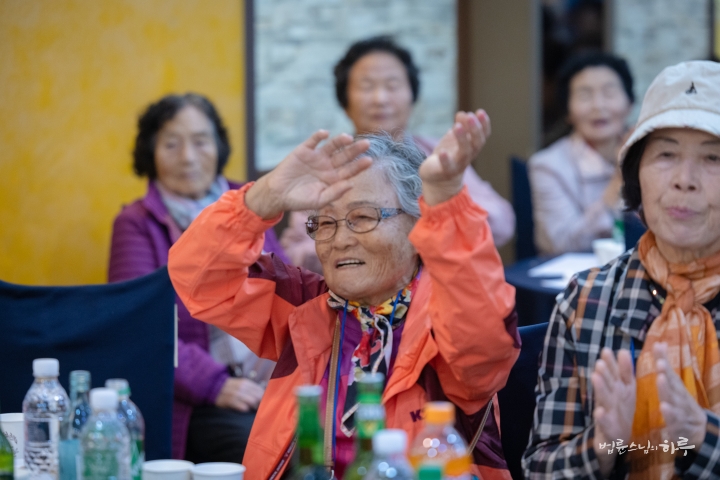
The volunteers took the elderly by the hand and danced merrily together. As the excitement reached its peak, male elderly participants also came forward one by one to sing their favorite songs.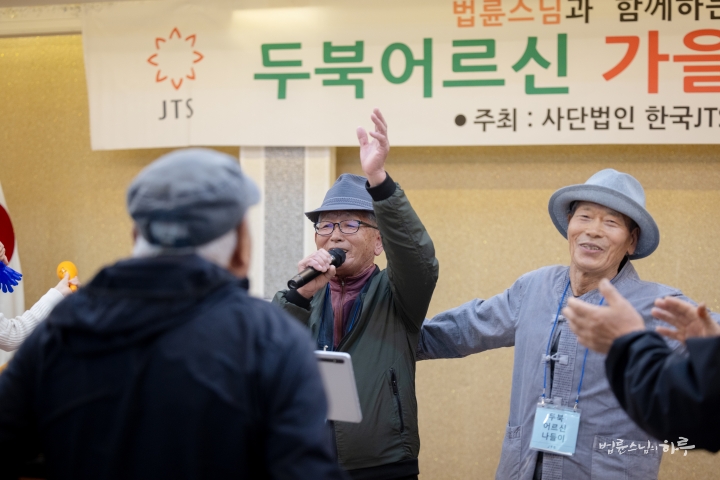
I will live in the soil, taking care of my parents
Living in the soil while being filial ♬
Familiar songs continued, and the elderly became one through singing. Though keeping rhythm and pitch wasn’t as easy as in the old days, their hearts had returned to their youth.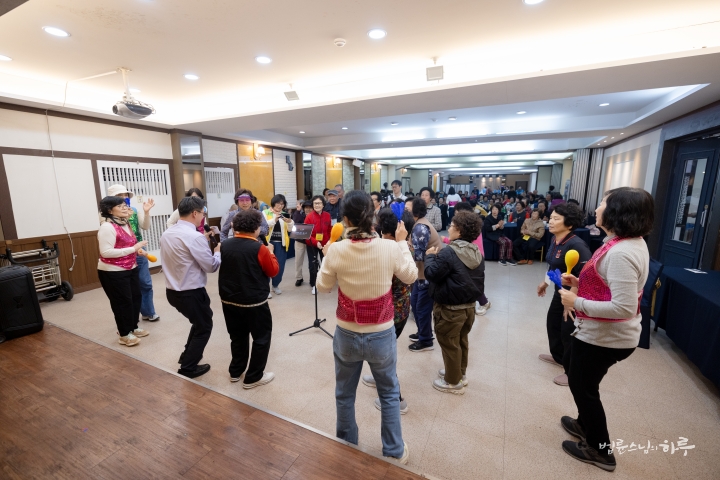
Seeing everyone so happy, Dharma Teacher Hwagwang also got excited and came to the stage to sing a song.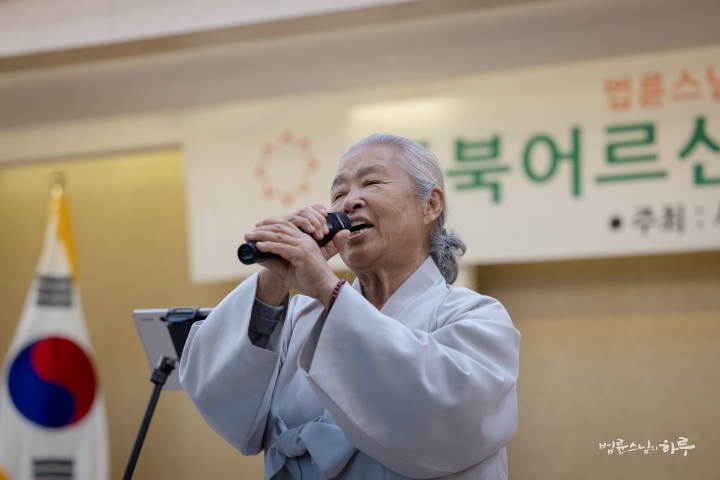
How can that person who doesn’t know where they came from know where to go ♬
Don’t know where I came from or where I’m going, what a fool I am
May all the elderly in the 13 villages of Ulju County live long and healthy lives ♬
Let’s meet again next year with even younger faces
Despite saying “my legs hurt,” the elderly willingly came forward to dance, and even the grandfathers who had been sitting shyly joined in for a lively dance party.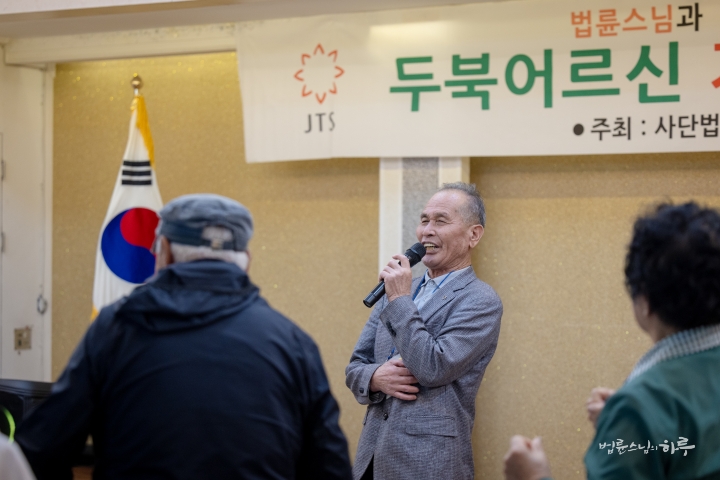
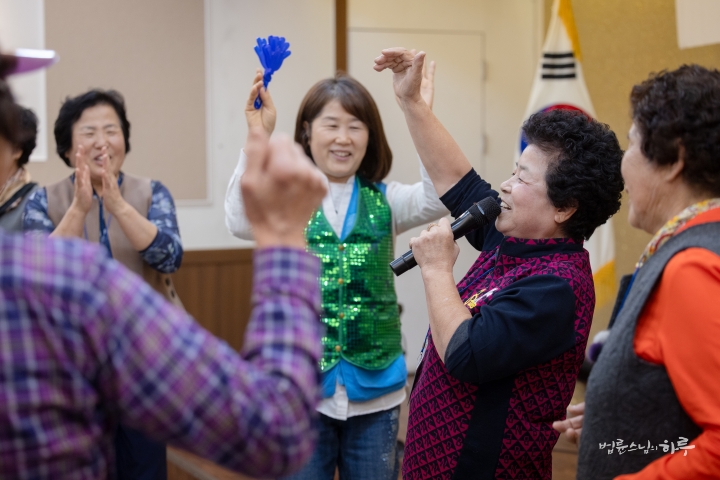
Don’t ask me, don’t ask me ♬
Don’t ask my age
I’ve come this far, only looking ahead ♬
Sorrowful tears for the years gone by
Sunim watched the elderly enjoying themselves while clapping along.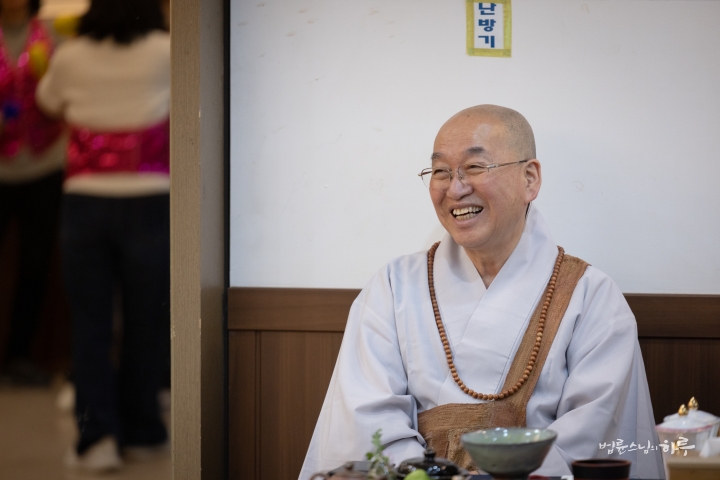
Even with wrong rhythms and off-key notes, the years melted into the lyrics, making each song a masterpiece. Though more song requests kept coming in, due to time constraints, the remaining participants promised to sing next year. After concluding the singing contest, Sunim gave closing remarks.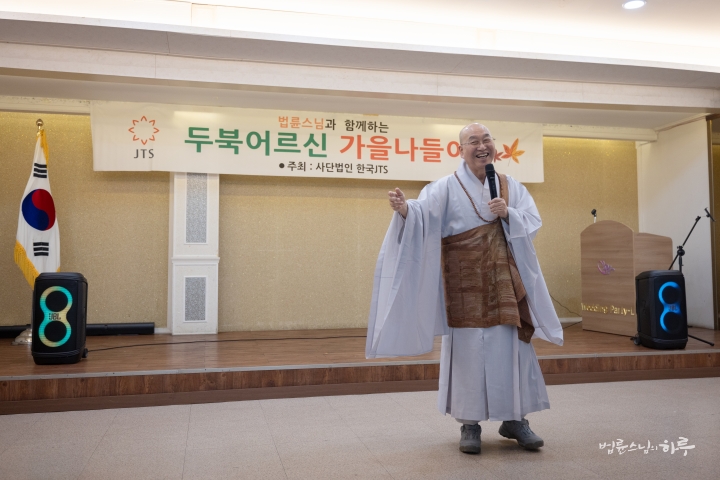
“Did you have a good time?”
“Yes!”
“Until the year before last, thanks to the COVID pandemic, I was able to spend a lot of time in my hometown, but now that the pandemic is over, I’m traveling around the world and haven’t been able to farm. Dharma Teacher Hwagwang has been taking care of you all in my place. Let’s hear some closing remarks from Dharma Teacher Hwagwang.”
Dharma Teacher Hwagwang came to the stage and gave closing remarks.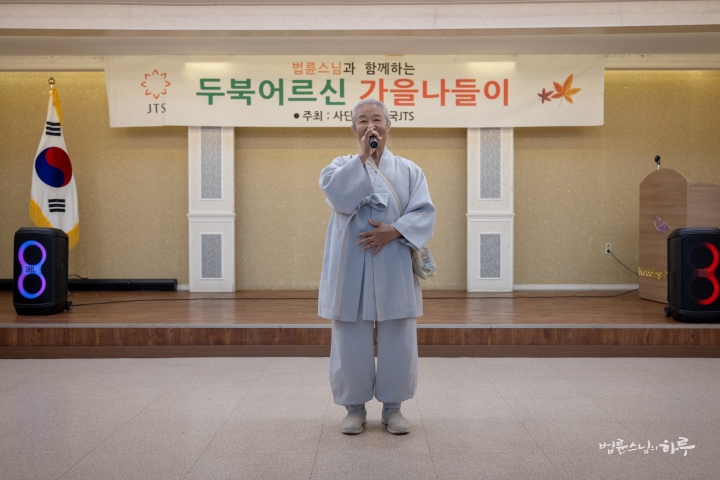
“This year, we had a lot of rain in the fall, so you must have had many worries, right? My heart ached thinking about how worried you all must be, as I also ruined my crops. I hope you all finish your harvest well, and we’ll meet again next year in even better health.”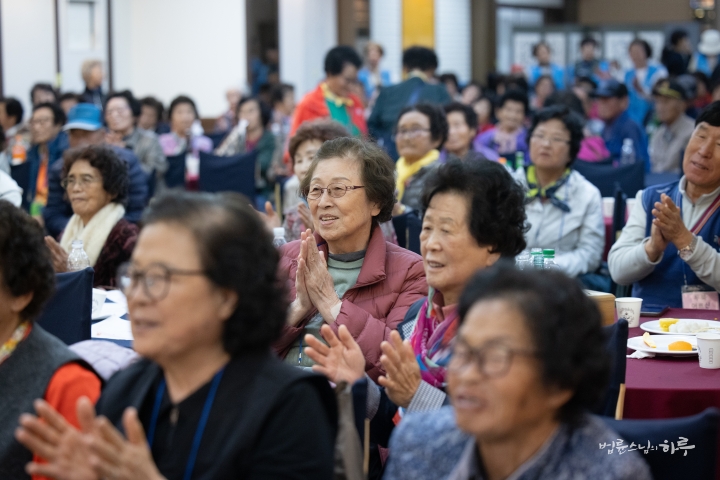
Then, prepared gifts were given to the elderly as they left. Sunim presented the gifts to the village senior citizens’ association president as a representative.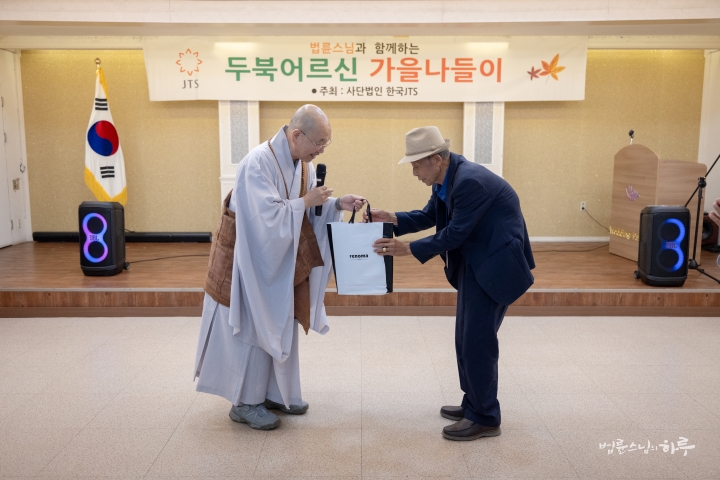
After wishing the elderly long life and good health, the Dubuk elderly autumn outing came to an end.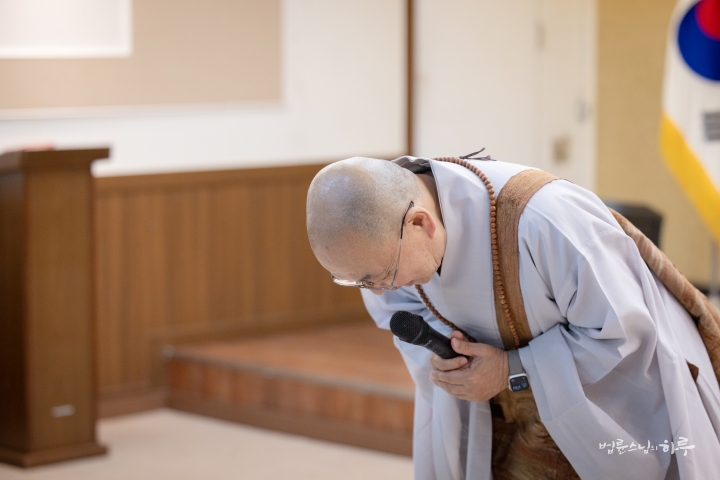
Sunim took a commemorative photo with the volunteers from the Busan-Ulsan branch of Jungto Society who had prepared the event and expressed his gratitude.
“Thank you for your hard work.” 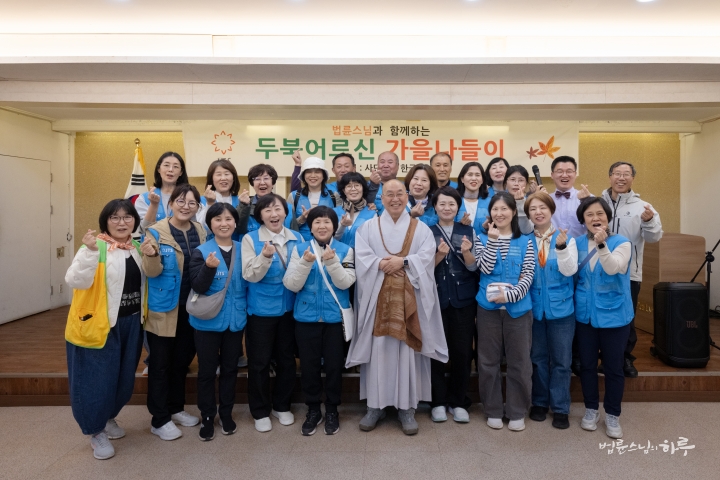
The volunteers took the bus with the elderly to Dubuk Jungto Retreat Center and then drove them home. The elderly who lived near the retreat center walked home, each carrying a gift in their hands. Along the roadside, cosmos flowers swayed gently in the autumn breeze.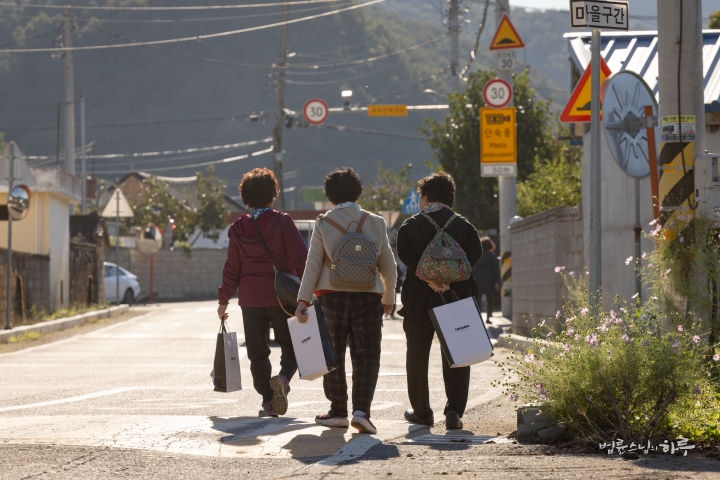
Sunim returned to Dubuk Jungto Retreat Center and worked on the farm. Due to the unusually long autumn rainy season, the napa cabbages had developed soft rot disease ahead of kimchi-making season. The roots of the cabbages were rotting or becoming mushy, leaving him wondering what to do.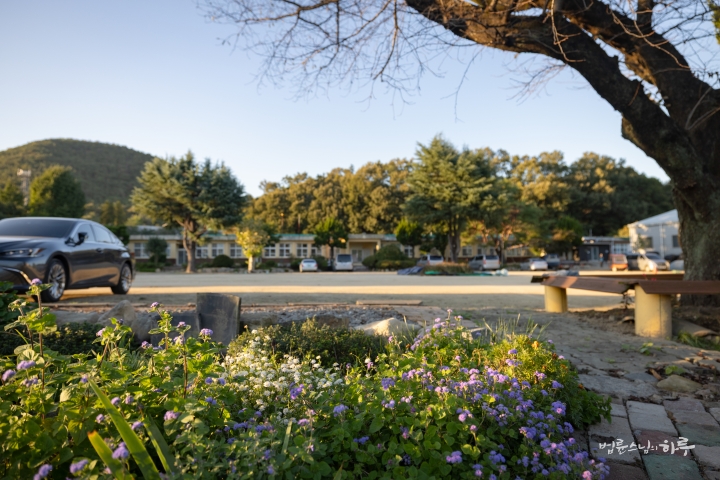
While there was no real solution, thinning out the densely planted cabbages to allow air circulation could prevent the soft rot from worsening. So he decided to pull out some cabbages.
“They all look fine, so which ones should we pull? Let’s pull this one.” 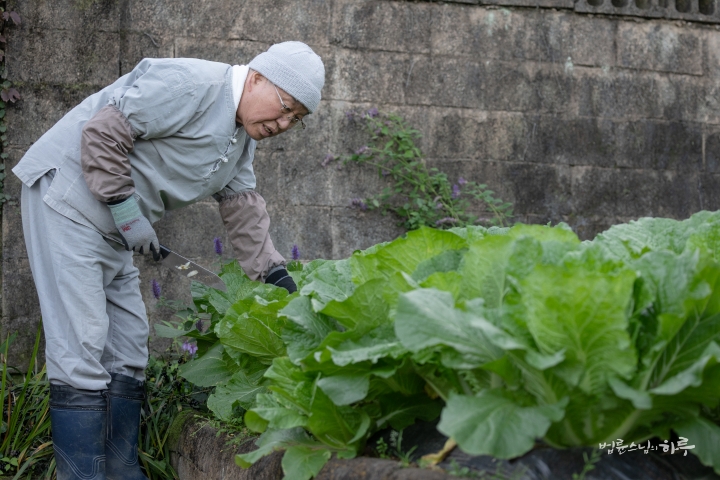
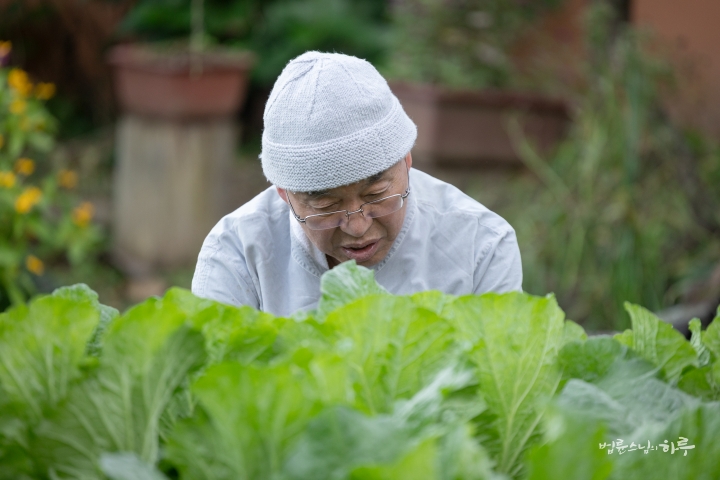
Sunim selected the cabbages that looked relatively weak and pulled them out one by one. When he pulled out the cabbages, he found that what should have been tightly packed heads were slightly wilted.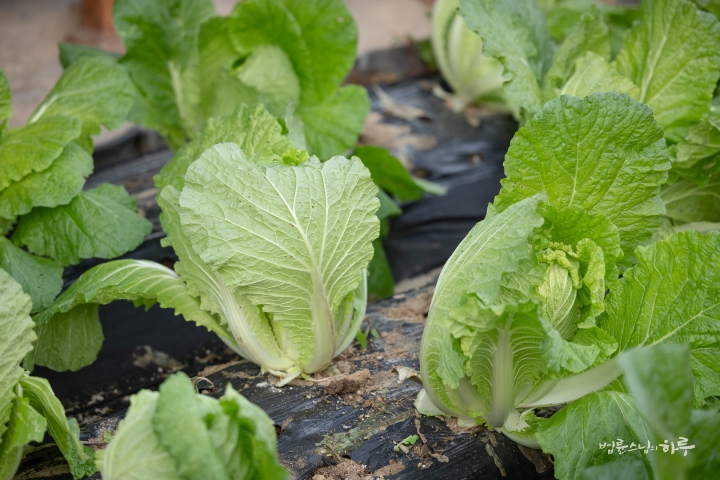
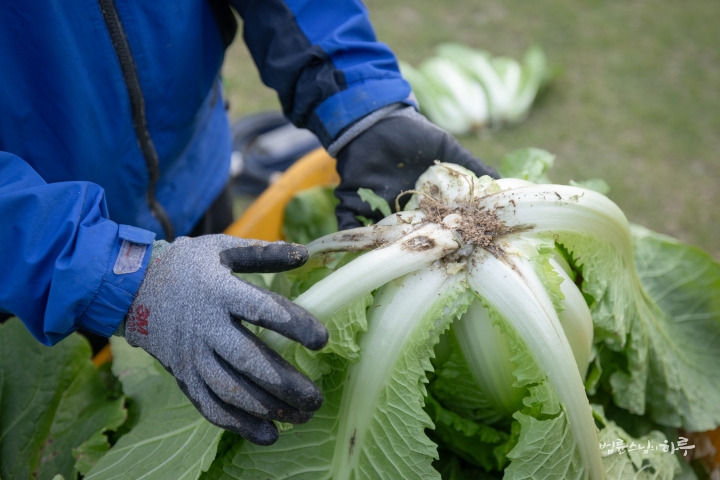
After organizing the cabbage field, he moved to the radish field. The radishes hadn’t grown well either and were very small. He pulled out or cut away the weak or overly crowded radishes, leaving only the sturdy ones.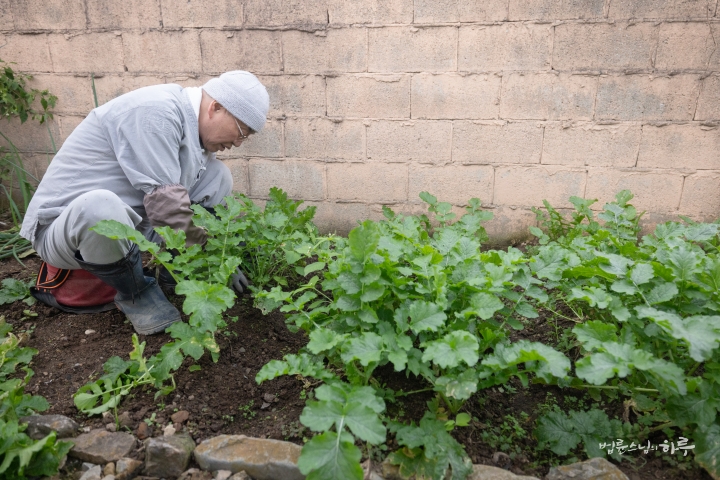
The thinned radishes were trimmed with a knife to be eaten as vegetables.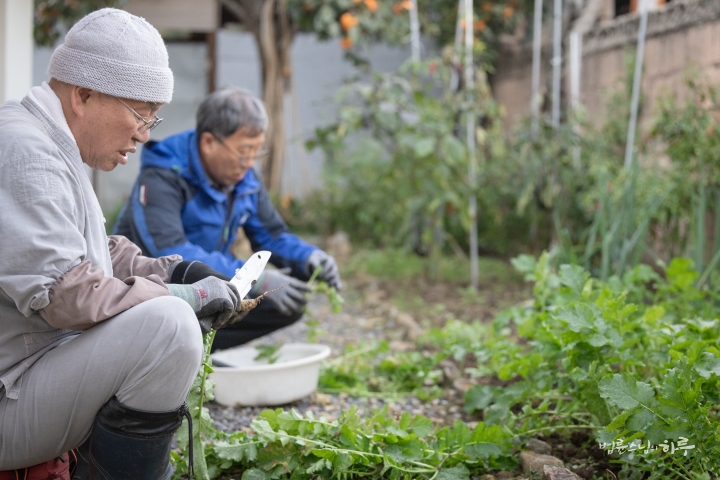
As it passed 5 PM, the sun was already setting and it began to get dark. He decided to hurry and pick persimmons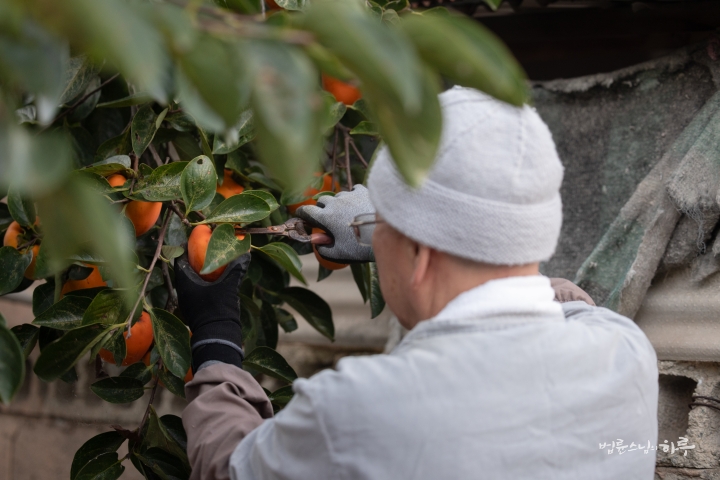
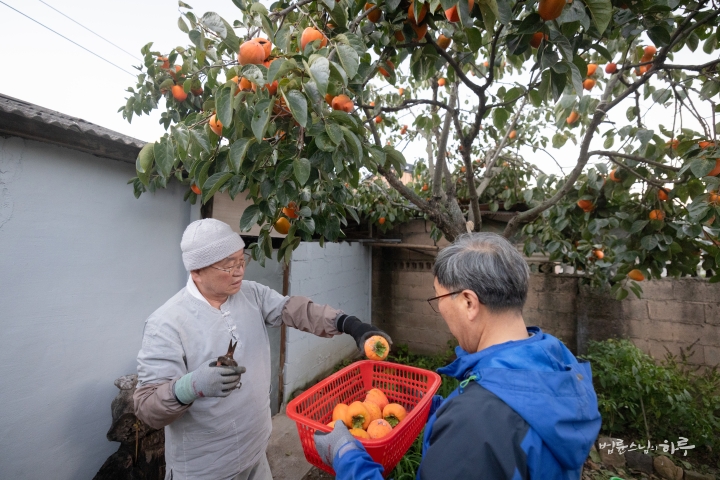
After picking all the persimmons that could be reached by hand, a ladder was brought to pick those hanging higher. Sunim climbed up the ladder to pick persimmons and handed them down, while Dharma Teacher Hyangjohn collected them in a basket below.
“Oh my, this one’s already ripe!”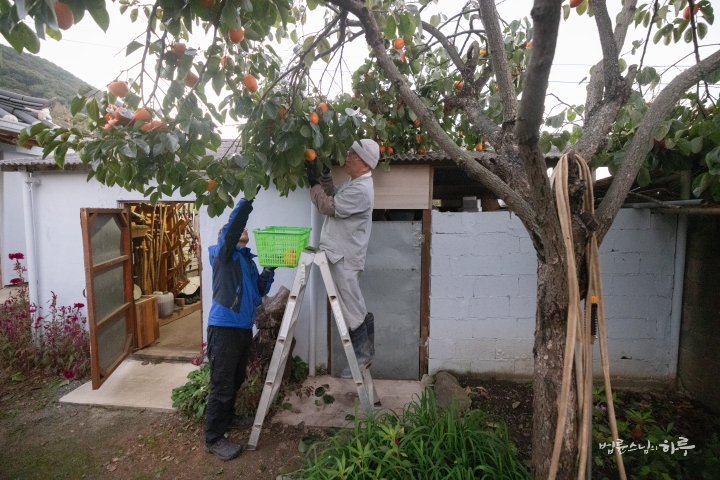
Occasionally, fully ripened persimmons were found among them.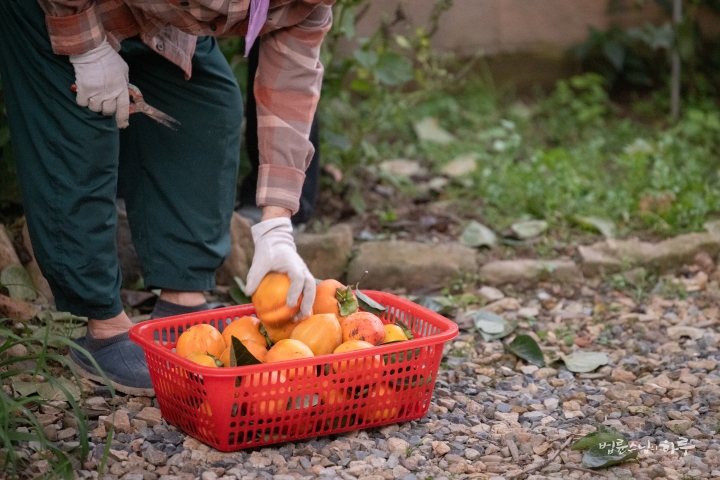
Although it had become dark and difficult to see clearly, two baskets were quickly filled with persimmons. Sunim said with a smile.
“Even though I’m old, my work efficiency is higher than yours.”
“That’s right. Without you, Sunim, the work wouldn’t get done.”
“Well, it’s not that the work wouldn’t get done at all.” (laughter) 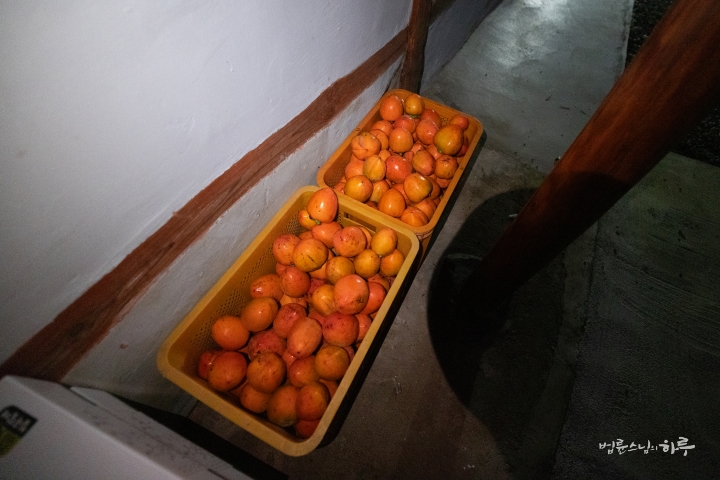
After putting the pulled cabbages into sacks and neatly arranging the picked persimmons, the communal work was completed.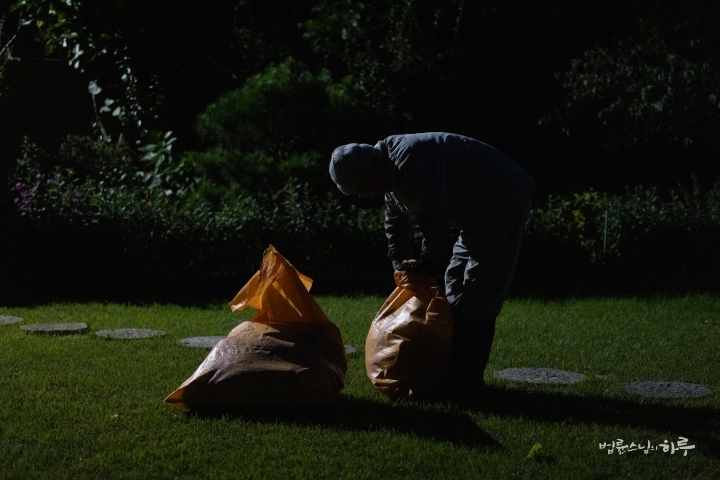
As the sun set, a crescent moon rose over the mountains.
“Thank you all for your hard work.”
After dinner, Sunim spent the evening proofreading manuscripts and handling various tasks before concluding the day’s activities.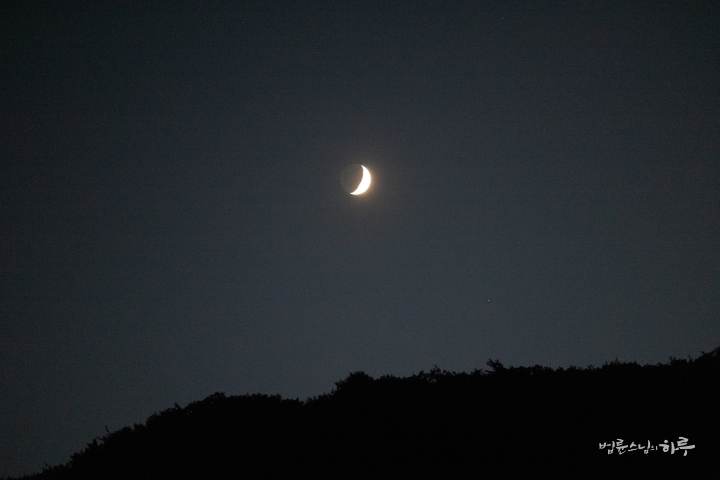
Tomorrow, Sunim will depart from Dubuk Jungto Retreat Center in the morning and travel to Seoul. In the afternoon, he will meet with social leaders outside, and in the evening, he will wrap up the Jungto Society study tour with the female INEB participants.