I'm a Soldier. I Have a Sensitive Personality and Get Very Angry Even at Small Mistakes by My Subordinates.
Jul 21, 2026 – Meeting with Buddhist International Development Cooperation NGOs, Bhutan Project Steering Committee Meeting
Hello. Today, Sunim had several meetings and held a Bhutan Project Steering Committee meeting in the afternoon.
Sunim began his day with morning practice and meditation, then proofread manuscripts. At 11 a.m., he had a luncheon appointment with officials from Buddhist NGOs and social welfare organizations, so he moved to the Peace Foundation.
Sunim guided the guests to the underground dining hall of the Jungto Social and Cultural Center. Lunch was served to the guests with food prepared directly by the Peace Foundation office.
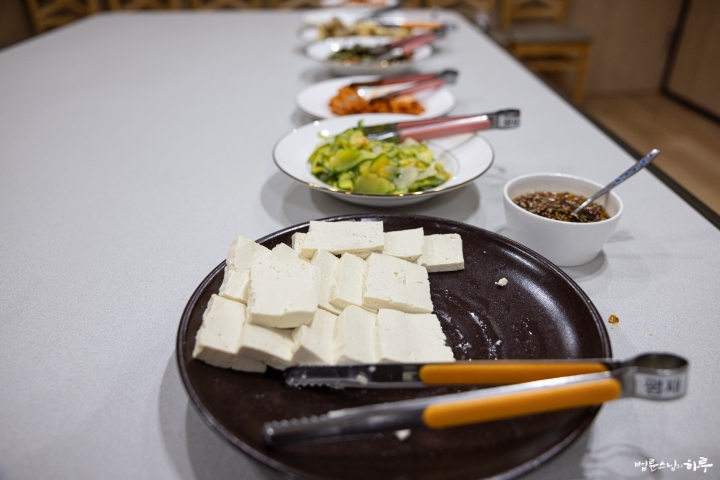
After serving themselves, Sunim and the guests recited the meal verse and began eating.
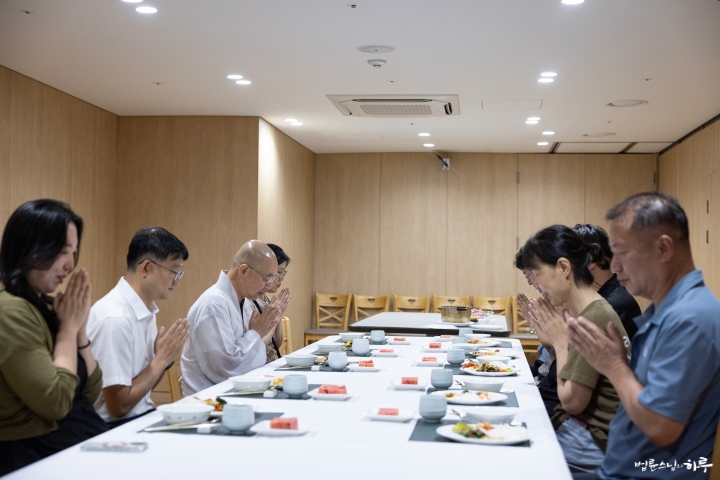
Last May, Harsha, the president of the International Network of Engaged Buddhists (INEB), and Somboon, the general secretary, visited Sunim and asked for help, explaining that Asian relief organizations were finding it difficult to continue their work due to financial difficulties. They had sought Sunim's advice on whether there might be a way to connect Korean organizations with local Asian partner organizations to advance projects in the Asian region.
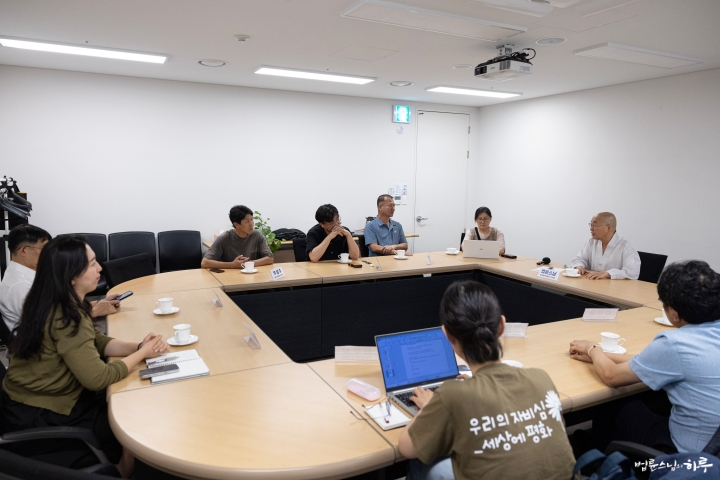
In response, Sunim personally organized today's gathering to explore ways for Korean NGOs to cooperate with Asian relief organizations whose projects had been suspended due to funding cuts. The meeting also carried the intention of exploring together how Korea, having achieved economic growth, could now take on the role of helping Asian countries become self-reliant.
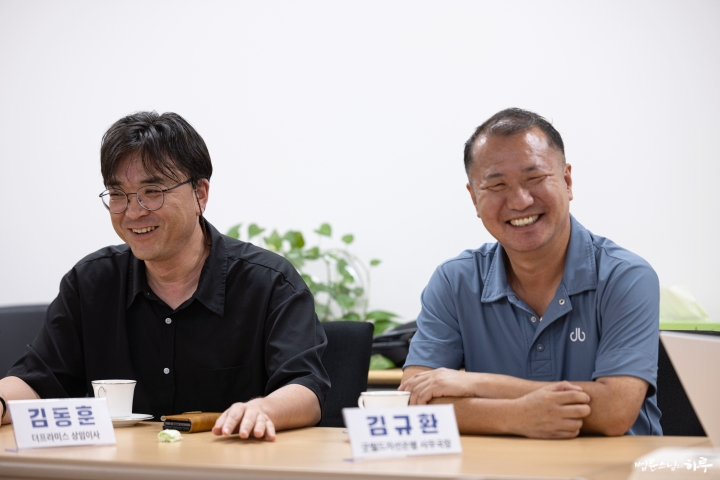
The meeting was attended by officials from NGOs and social welfare organizations that carry out relief, welfare, and public interest activities at home and abroad based on Buddhist principles, including 'The Promise,' 'Lotus World,' 'Good World,' 'Beautiful Companion,' 'Sharing and Becoming One,' 'Together with the World,' and the 'Jogye Order Social Welfare Foundation.' They shared the current status of Korean relief organizations and exchanged views on whether Sunim's proposals were realistically feasible, what difficulties might arise, and what possibilities lay ahead.
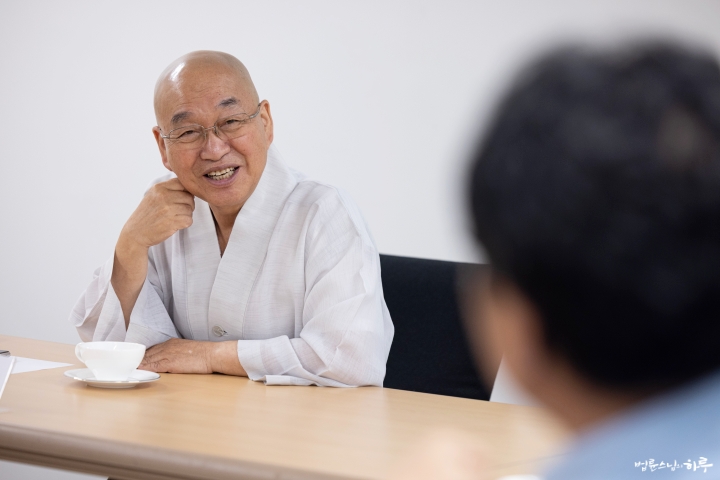
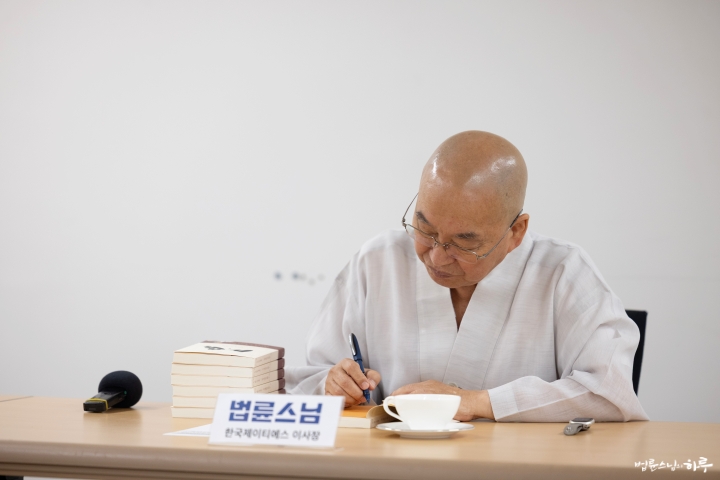
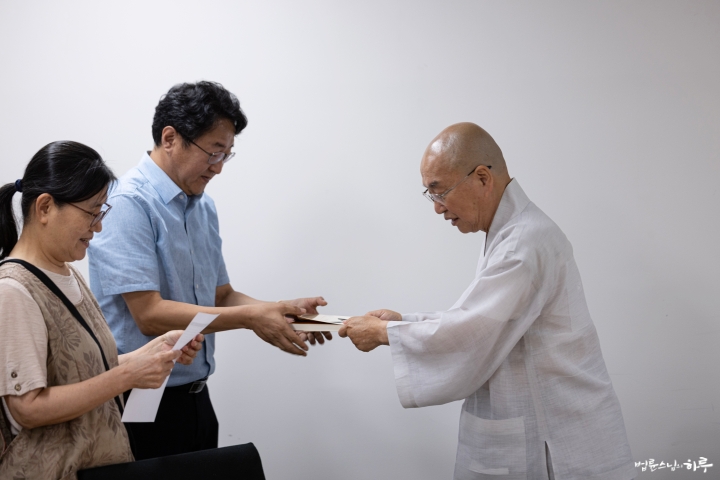
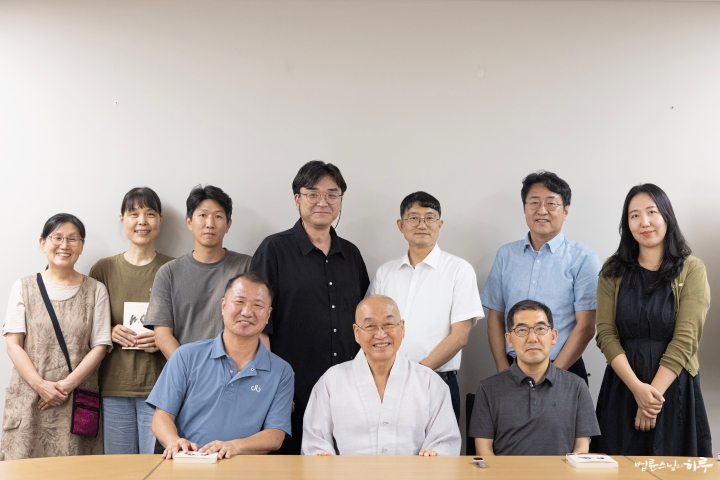
After about an hour of meeting, Sunim presented books as gifts to today's participants and took a group photo together. While taking the photo, Sunim said:
Then, around 1 p.m., National Assembly member Maeng Seong-gyu(맹성규) visited Sunim.
"I apologize for keeping you waiting. My previous meeting ran late, which is why I'm behind schedule.""It's alright, Sunim."
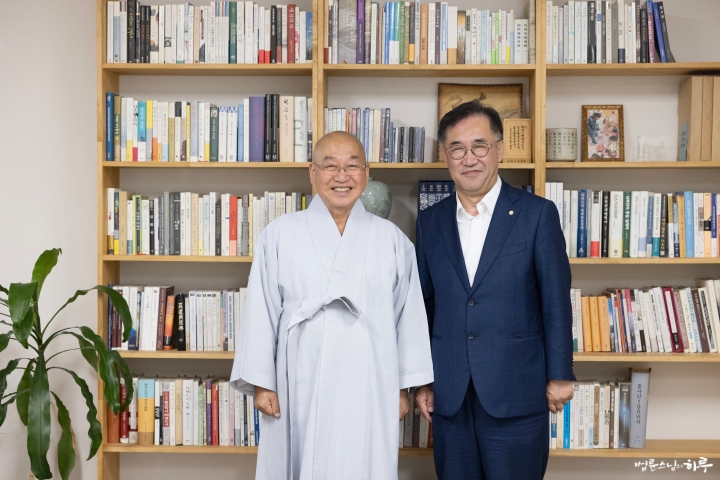
Sunim and Representative Maeng Seong-gyu talked about various topics for about an hour and a half.
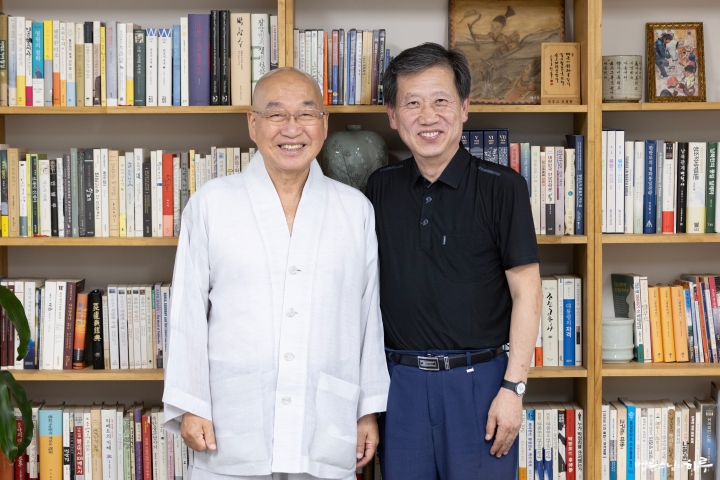
Sunim continued to research ways to help Asian countries become self-reliant. At 2 p.m., he met with Kim Seong-oh(김성오), an expert in the Korean cooperative movement, and exchanged views on ways to support people starting new endeavors such as organic farming locally through microfinance methods.
The schedule continued without pause.
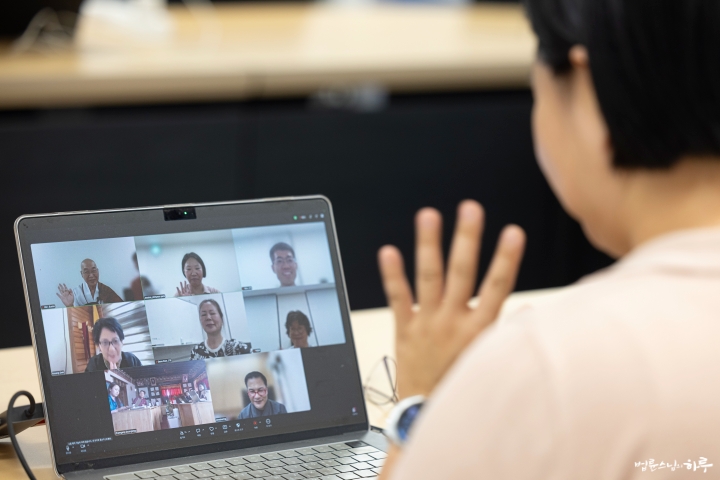
Starting at 5 p.m., the Bhutan Project Steering Committee meeting was held via Zoom. Sunim, along with Bhutan volunteers and key Bhutanese government officials serving as committee members, attended to review this year's projects and deliberate on next year's projects and budget. Rinchen Dawa also came from afar to interpret for Sunim.
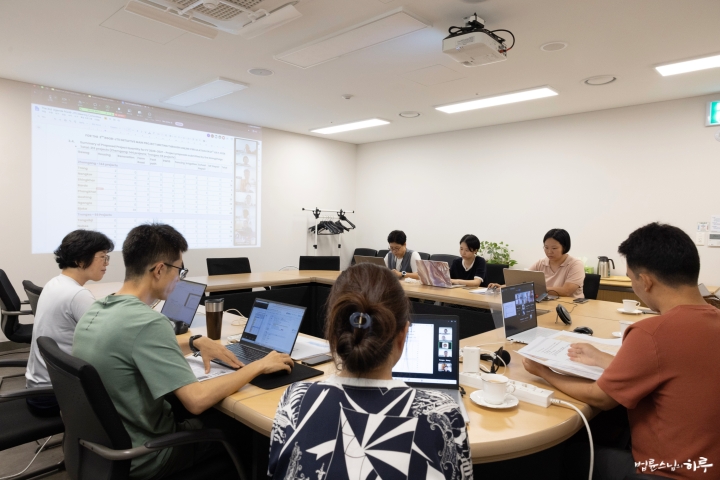
The participants exchanged greetings and offered a prayer in the Bhutanese style before beginning the meeting.
In his opening remarks, Sunim shared recent events, including how his Syria visit had been cancelled due to a bombing attack, leading him to spend time in the countryside, as well as the situation of heavy rainfall and drought in Korea. Sunim then expressed his gratitude, recalling the scene of village residents and public officials carrying out the project during his on-site inspection in Bhutan last June.
"I would like to thank the governors of the two districts and all the staff who prepared the project on-site with the residents. Since this was the first time undertaking such a project, there may have been some shortcomings, but based on this experience, I believe we will be able to carry out the next project even better. My thanks to everyone who worked hard."The Cabinet Secretary of Bhutan also shared the local situation, noting that heavy rainfall during the monsoon season was causing landslides and damage to roads and bridges, and that they were preparing for even greater rainfall.
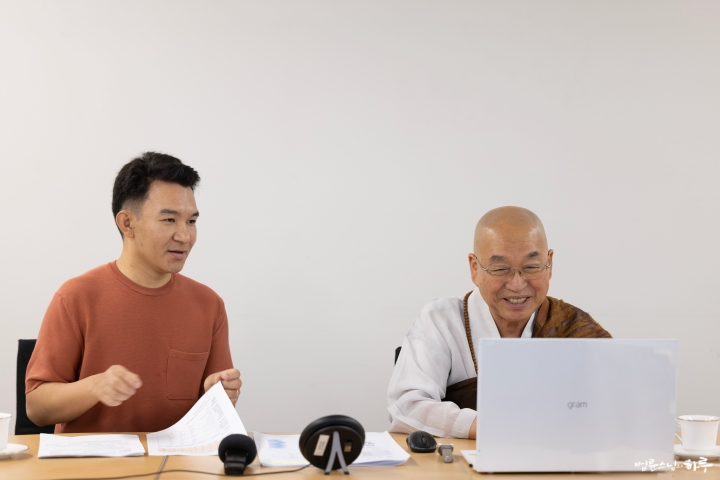
Next, the progress of major projects for the 2025-2026 fiscal year was reported. Over the past year, a total of 208 projects had been carried out, including new housing construction and repairs, irrigation channels, drinking water facilities, fence installations, and school repairs, benefiting 3,635 households, with a budget execution rate of about 60%.
The status of JTS volunteer activities was then reported. From January 1 to June of this year, five long-term volunteers have been active in Bhutan, and the activities of five short-term volunteers were introduced. As part of the short-term volunteer work, a dentist and a dental technician participated in conducting oral health examinations for residents and visited medical institutions to discuss collaboration with local medical staff. For short-term volunteer work related to housing improvement, it was reported that they did not simply install facilities, but also directly taught residents construction skills so that they could maintain and repair the facilities themselves.
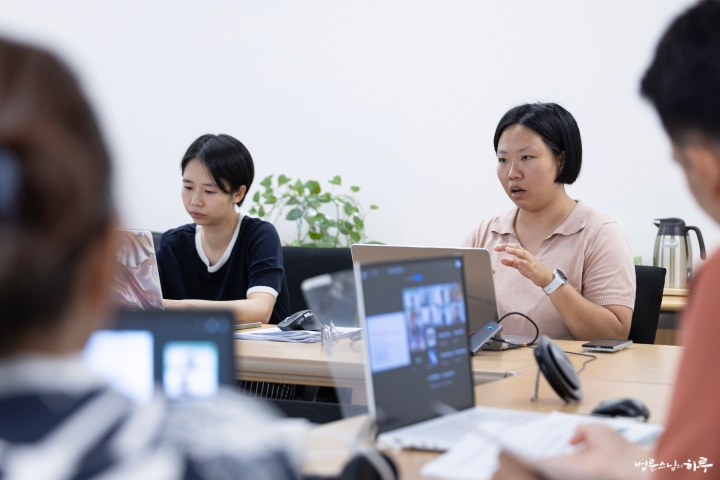
Next, the new project plans for 2026-2027 were reviewed. A total of 230 detailed projects and a budget plan were on the agenda. Upon reviewing the budget and planning documents, Sunim noticed that the unit costs for material transportation and paved road construction per unit area seemed to vary significantly by region.
"In some regions, transportation costs are set at 50,000 Ngultrum, while in others they are 150,000 Ngultrum. Even considering that fuel prices have risen, please check again whether the gap is too large. Also, for road construction of similar scale, there are significant unit cost differences between regions. Please check on-site again to determine the reasons for these differences."Sunim also carefully reviewed matters related to fence installation and irrigation channels, and requested that any questionable items be re-examined.
"On the premise that volunteers will visit the sites again to verify and that some revisions may be necessary, I will approve the current project plan."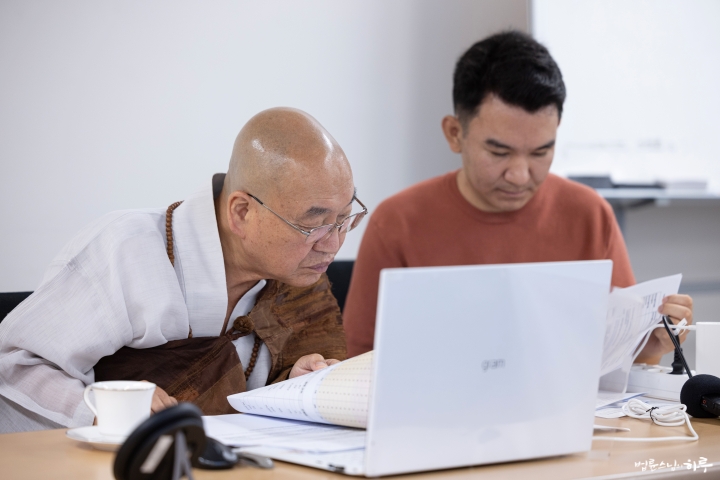
In addition, the need for additional projects such as fixing the toilet leaks at Sonamthang School and providing student showers and laundry drying facilities was discussed. It was decided to proceed with technical support from the state government and material support from JTS.
It was decided to prioritize support for the remote regions of Langthel and Jangbi in Trongsa Dzongkhag, and plans for the preservation and repair of traditional Heritage Villages were also discussed. It was agreed that the traditional village repair project would be re-discussed at the October Steering Committee meeting after establishing a comprehensive plan through resident meetings and expert inspections.
Additionally, it was shared that plans are underway to invite experts on oranges, fermented foods, and cultural heritage for a field visit next February, with the details to be discussed further at a later date.
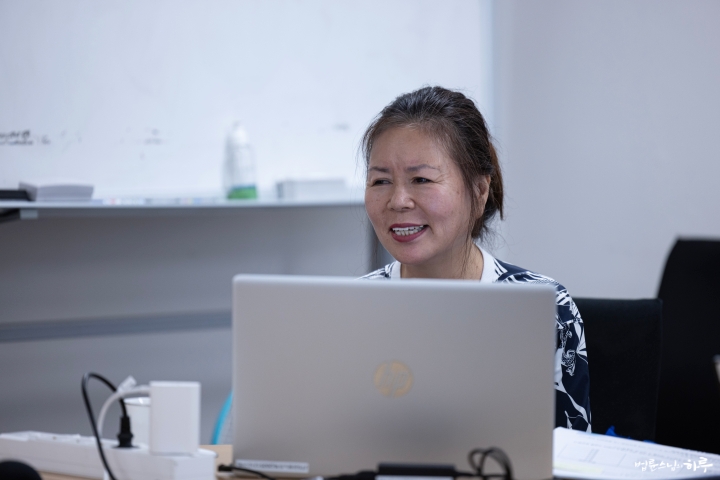
Before anyone knew it, two hours had passed. Sunim closed the meeting with these words:
"Since we are trying to carry out projects while carefully managing limited funds, I think it must be very difficult for those doing the work. That is why this project is built with our sincere dedication rather than with money. I hope we can approach this work with a prayerful heart, so that it may be completed successfully. Thank you."The Cabinet Secretary expressed gratitude to Sunim and JTS."Sunim, you may think this budget is not much, but for us, it is truly a large sum. We know well how this money is raised, and we know how hard you are working. We will also actively cooperate to ensure that these funds are not wasted. We also thank the JTS members who trust and support you."
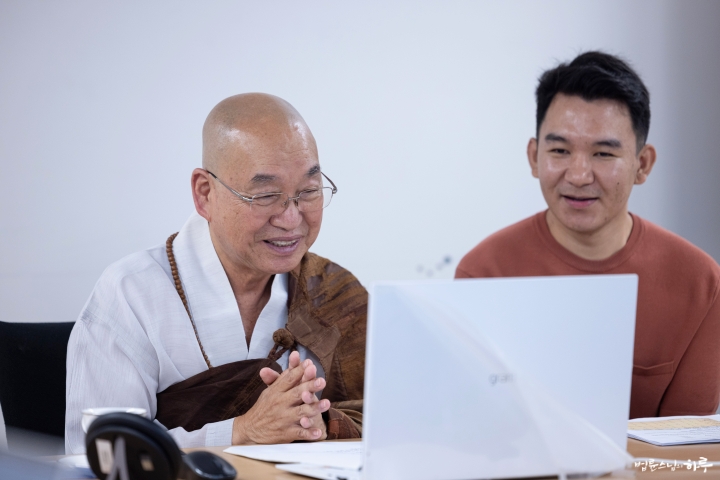
By the time the Bhutan Steering Committee meeting ended, it was past 7 p.m. Sunim wrapped up his work and rested.
Tomorrow, Sunim will give a Dharma talk at the Weekly Dharma Assembly and attend a seminar and planning committee meeting at the Peace Foundation.
Since there was no Dharma Q&A today, this post concludes with a Dharma Q&A from last May.
I'm a Soldier. I Have a Sensitive Personality and Get Very Angry Even at Small Mistakes by My Subordinates
"When we look at popular athletes, they all look impressive. But to reach that position, they must have gone through more rigorous training than anyone else. If you listen to the story of figure skater Kim Yuna, she had to practice spinning on her toes so much that her toes were completely damaged. Because she endured such grueling training, she became the top athlete. You also chose the path of a soldier yourself. A soldier is not necessarily trained to kill, but is someone who undergoes different training from ordinary people so that they can survive extreme situations and carry out their mission. Therefore, from the moment you chose the path of a soldier, harsh training was already destined for you. If you find it so difficult that you cannot endure it, then you shouldn't have chosen it in the first place, and it would be right to quit even now. If you decided to become a figure skater or baseball player, you must endure the training. That training is the very path of your life. You have chosen just such a path. Training to your physical limits in the cold and heat is the way to survive combat and crisis situations, and it prepares you for when you may have to give your life for your country. Therefore, you should think, 'This is my livelihood.' If you take the perspective that overcoming cold and heat, rolling and running is 'my work,' wouldn't it be a little easier? Complaining during training that 'it's cold,' 'it's hot,' or 'I'm hungry' is the perspective of an ordinary person, not a soldier. I think you need to actively embrace both the compensation you receive from the state as a soldier and the fact that through training you develop the ability to protect yourself in crisis situations.""It's been a year and a half since I voluntarily enlisted in the U.S. military. Going through harsh training and physical strain has made me very sensitive. As a commanding officer, I shouldn't show this sensitivity in front of my soldiers, but it's hard to stay centered when things are so tough. How should I deal with this?"
"I don't dislike the hard training as a soldier. But when I become sensitive in such situations, I end up reacting emotionally, even to small mistakes by my subordinates. I would like to ask how I should discipline myself so as not to show that side of me."
"Being a commander with such a sensitive personality may not suit you. It can lead to various risks. When making emotional decisions in tactical judgments, mistakes can occur, and when a commander gets irritated, it can instill bad feelings in the subordinates. If this accumulates, there's a significant risk that the sense of camaraderie among comrades in combat situations or during missions will considerably decline. The most important thing for a commander is to inspire trust in the subordinates. However, if you react sensitively to difficult situations and repeatedly get angry emotionally, it's easy to lose your subordinates' trust. If that happens, when a life-threatening situation arises, your subordinates, even though they are soldiers, may not be willing to give up their lives to defend the country. That's just how human psychology works. When emotional wounds accumulate, it's not easy to muster the will to protect others even at the cost of one's own life. Considering this, you need to recognize that the sensitivity arising in you could become a major obstacle as a commander. That doesn't mean you should suppress your sensitive nature. When sensitivity arises, you need to notice your own state with an 'Oh!' If you try to endure it, stress accumulates and then explodes. If you keep tallying, 'I let it go once, twice, three times,' the emotions build up into something bigger. Instead of counting how many times you've held back or trying to suppress it, you need to take the perspective of examining your own state, saying, 'Ah, I'm becoming sensitive again.' Enduring implies a hidden meaning that 'the other person did wrong and I did right.' But awareness means seeing the fact that 'I reacted sensitively to that matter.' The one reacting sensitively is you yourself. If you notice, 'Ah, I'm reacting sensitively again,' then even if you react sensitively a hundred times, you won't blame yourself or blame others. You simply observe yourself reacting sensitively. Such awareness from this perspective is essential. When you become aware of your own sensitivity, you realize that your irritation is a reaction of your own karma, not the other person's fault. Let's take an example. If your subordinates lack skill, you can simply train them more. However, if you become angry about their lack of skill and scold them with emotion, it can backfire. When you give orders in an emotionally upset state, that emotion is transmitted directly and stirs up the other person's emotions as well. What's important is to look at yourself and think, 'Ah, I'm reacting sensitively again.' Do you have any other questions?""Sunim, you mentioned combat situations earlier. As a soldier, there are cases where one has to kill during war, and even outside of war, one may kill someone while carrying out a mission. I'm curious about how karma is formed in such cases."
"For whatever reason, when you take a life, your mind becomes tense. This is true even when killing fish. Even if the degree is less, when you kill a fish, your mind cannot be at peace. If you catch a fish and release it back into the water, your mind will be at ease. However, you cannot feel peaceful when striking a fish's head with a knife. This doesn't necessarily mean it's bad. When you take a life, karma is formed that keeps your mind in a state of tension. When such karma accumulates, there is a great risk that it will provoke a killing impulse at a critical moment. For example, someone who works in a butcher shop may, when anger rises to the top of their head, unconsciously grab a knife and lunge. Habitual actions come out unconsciously. According to soldiers' accounts, killing someone for the first time is the hardest. But when combat and killing are repeated two, three, four times and become routine, the sense of guilt becomes dulled. Such karma is unavoidable as a soldier. When you chose the life of a soldier, it was already included. So if you fear such situations or truly cannot bear them, you would have to give up becoming a soldier. However, if you must continue this work, you need to find a way to compensate. For example, someone who makes a living from fishing could use part of their income to release fish fry or eggs. If someone feels guilty about having had an abortion, sponsoring children in poor countries who cannot be properly raised could be an alternative. If you find yourself in situations of taking lives in the future, you can also donate part of your income to human welfare or life-saving causes. Still, if possible, it's better not to kill. When soldiers go into battle, they can become swept up in hostility and shoot someone whom they could have taken as a prisoner. However, if you are emotionally calm, you can recognize that the purpose of combat is victory, not killing. If you've won the battle, there's no need to kill the opponent. Even if you take an enemy soldier as a prisoner, they should be returned to the other side after the war ends. Therefore, unless it is truly unavoidable, as a practitioner, it is necessary to take the perspective of avoiding killing as much as possible. And if, while performing military duties, you have no choice but to take a life, by donating to life-saving causes, you can somewhat alleviate and gradually dissolve your tense mind and karma.""Thank you."