Have the 20-Year-Old Wounds From My Early Teaching Days Really Been Healed?
Jul 20, 2026 – Dharma Propagation Assembly, JTS Board Meeting, Extraordinary General Meeting
Hello. Today, Sunim traveled from Dubuk to Seoul to attend the Dharma Propagation Assembly, the JTS Board Meeting, and the Extraordinary General Meeting.Sunim rose at 2 a.m. in the early morning to prepare for the trip to Seoul. After loading the tofu and soybean pulp made yesterday, along with luggage needed for the retreat and China trip, it was already 3 a.m. In the dark early morning, Sunim set off for Seoul.Sunim arrived in Seoul just after 6 a.m. Upon arrival, Sunim revised a manuscript, had breakfast, and then headed to the broadcasting room to give a Dharma talk at the 10 a.m. Dharma Propagation Assembly.Following the report on the results of the regular meeting by the President of Jungto Society, the Gyeongnam Branch presented a case study on their Dharma propagation activities.
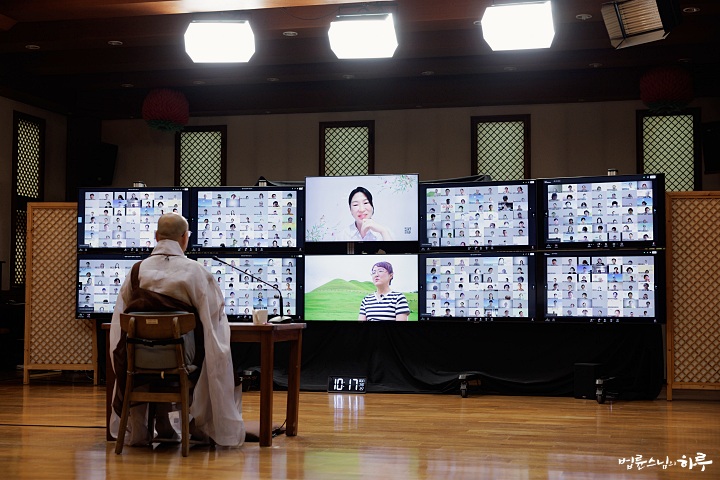
Through the video, one could see how the groups practiced together to sustain the morning practice that can easily be neglected when done alone, and how each local branch carried out various activities—such as multicultural community gatherings and reusable container campaigns—sharing and practicing together with the local community. Seeing the bright faces of the volunteers in the video, one could look forward to how group members would grow together through practice and action over the next three years, and how their activities would take root throughout the local community and bring about change.Next, the lead volunteers requested the Dharma from Sunim with the Dharma-requesting song and three bows.
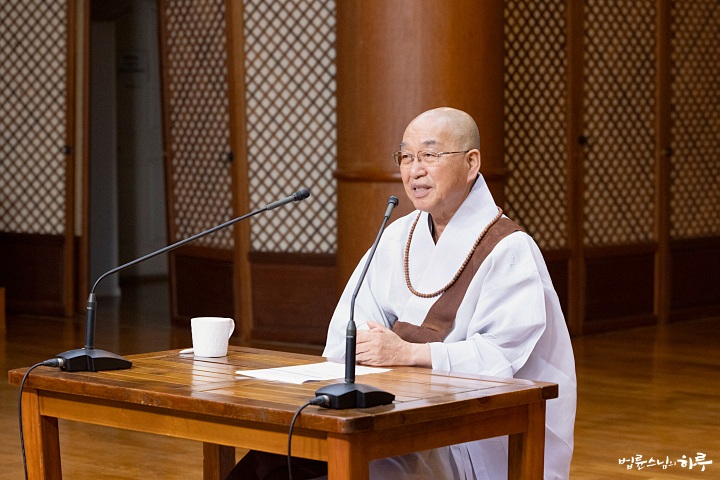
Practitioners Should Take Refuge in the Three Jewels: Buddha, Dharma, and Sangha
If there is something that practitioners should rely on, it is the Buddha, who taught us to become our own masters, the Dharma, which is the content of that teaching, and the fellow practitioners who walk that path together. These three—Buddha, Dharma, and Sangha—are called the Three Jewels because they are the three most precious things for practitioners, and we perform the ritual of taking refuge in the Three Jewels. Here, Sangha that is included in the Three Jewels is not an individual but a group. So it means 'practitioners.' So we take refuge in the Sangha, which is a gathering of practitioners. A group can be called a Sangha, and a local or regional branch can also be called a Sangha. And Jungto Society itself can be called a Sangha. We are members of that gathering of practitioners. For this Sangha to be pure, all group members must be pure. That is why it was heartening to see, as just shown, groups practicing together and engaging in social action. The activities of each local and regional branch were also excellent. The reason I showed this video today is that I believe not only the Gyeongnam Branch but all branches of Jungto Society should follow this example and pursue such activities. Of course, other branches may carry out activities that look somewhat different, tailored to their region and people. But the most important thing is that we do it together. The Sangha means taking refuge in all members who come together.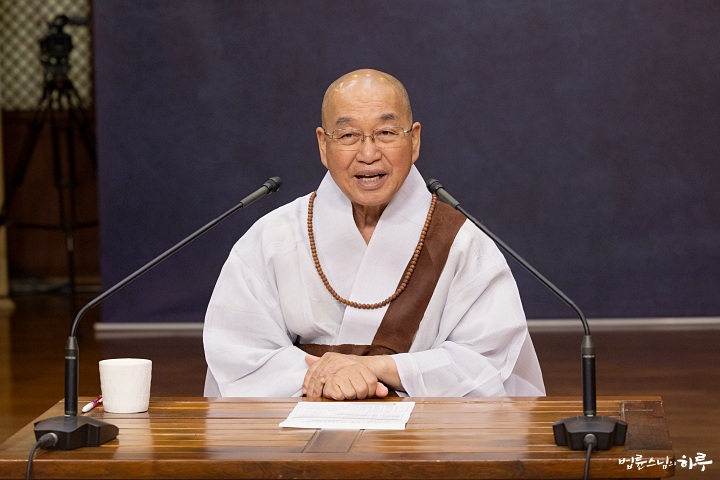
First, Practice; Second, Spreading the Dharma; Third, Social Activities
Needless to say, all of you lead volunteers should continue your own practice steadily as practitioners. Because that practice is most important, last month we practiced for 15 days and held the Semi-annual retreat for Jungto practitioners. The most important part of our activities is spreading the Dharma. Among various aspects of spreading the Dharma, such as promotion, the most important role is that of the facilitator and co-facilitator who guide people who have become interested in Buddhism onto the right path. That is why all of you participate as facilitators and co-facilitators in the operation of the Jungto Buddhism Course, Jungto Sutra Course, and Happiness School. Also, many lead volunteers serve in roles such as President of Jungto Society, regional branch chair, local branch chair, group facilitator, department head, team leader, and coordinator, running Jungto Society. In that regard, if the first is your own practice, the second is these Dharma propagation activities. These activities are not for any profit but are various activities for spreading the Buddha's teaching widely. So first is practice, and second is spreading the Dharma. And third, there are many social issues that are unrelated to the Dharma, or situations where the causes and conditions to spread the Dharma have not yet arisen.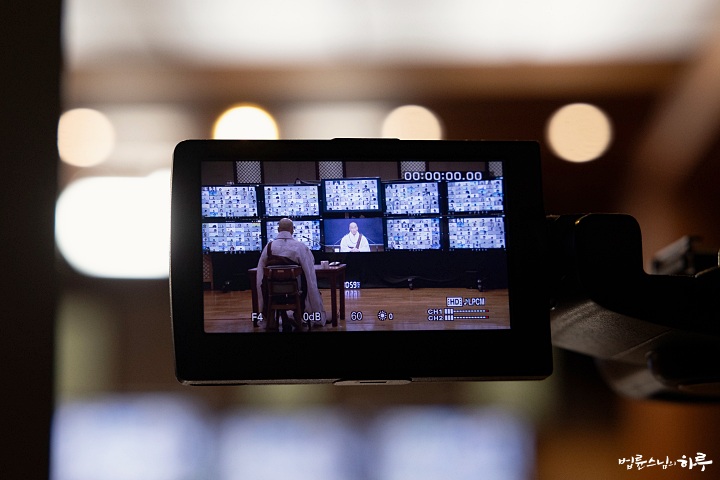
Is Earning a Lot of Money Really Living Well?
The stock market, which is a capital market, is fluctuating wildly—almost worse than a gambling table—and this is bringing much confusion to our society. Since most stock investments are made using AI, the same information is being input, so the same advice is received day after day. So advice like 'sell today' or 'buy today' is provided uniformly all at once, causing crashes today, surges tomorrow, and crashes again the day after. Rather than being a healthy capital market, it is operating like a gambling table where money is put down and money is taken. While there are economic benefits, we are people who love peace. Yet when a country's leader boasts to the world about how good our weapons are through K-defense, many peace and environmental activists are now in great confusion about whether this is truly what a national leader should do. If this were another country's leader, we could criticize them, and if it were a leader with different political ideology, we could criticize or denounce them. But when such things happen from a leader we ourselves supported, neither blind support nor unconditional criticism is right. It is time to think more carefully about what values we cherish. What have we cherished throughout our activities so far? I think it's time to reconsider these things.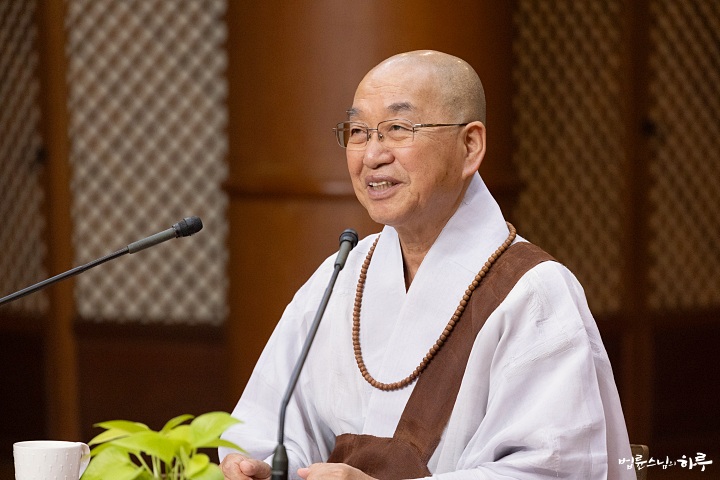
At the morning Dharma Propagation Assembly, three people who had applied in advance asked questions to Sunim.▪ An Introduction to Buddhism student wants to work on a project in collaboration with JTS. What conditions need to be met to work together with JTS?▪ There are few participants in long-distance group practice activities such as the Jirisan Retreat. How can we encourage more group members to participate together?▪ Facilitating the youth class was very rewarding, but there is a shortage of facilitators. How can we encourage more volunteers to participate in facilitating the youth class?
"Yes, let's end here today. After finishing the retreat in August, let's meet again at the Lead Volunteers' Assembly."After finishing lunch, Sunim attended the JTS Extraordinary Board Meeting at 1 p.m.After confirming the attendance, it was reported that all board members were present, the quorum was met, and the meeting was convened. Sunim, as the Chairman of the Board, then presided over the meeting. Beginning the JTS Extraordinary Board Meeting, Sunim explained why this board meeting had been convened.
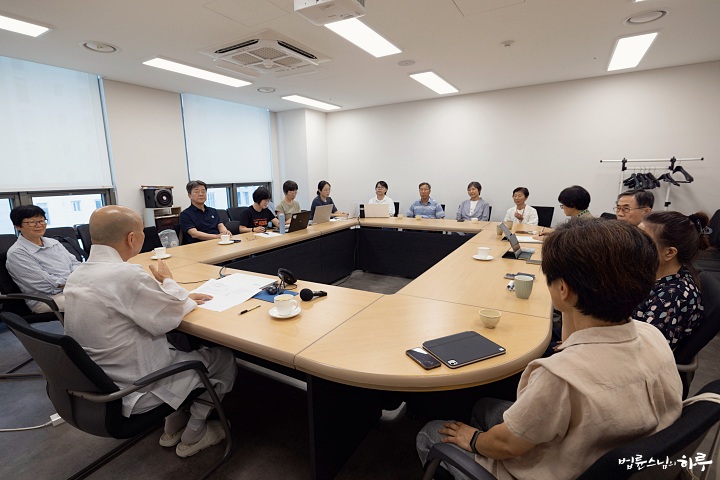
Among the existing directors, three were not renominated this time, and the remaining five were renominated. As newly recommended directors, the following were proposed: Rho Jae-guk (노재국), Representative of JTS Philippines; Dharma Teacher Hyangjon (향존법사); and Park Soo-jung (박수정), Secretary General representing the Lay Member Group. Participants agreed without objection, and the final selection would be made at the General Assembly.With some time remaining before the Extraordinary General Meeting began, Sunim explained the projects currently underway at JTS. In particular, he spoke about plans to expand the projects being carried out in Bhutan to other countries.
"The projects currently being carried out in Bhutan are gradually taking shape. So I think we can now try to expand the Bhutan-style sustainable project model to other countries as well. Bhutan is small in size and has a relatively well-established government system, so it is possible for the government to manage and supervise while residents directly carry out the projects and we provide support. However, in many other countries, it is difficult for the government to play such a role. So I'm thinking we can create country-specific models where local NGOs take on the government's role, residents directly carry out the work in their villages, and we provide support.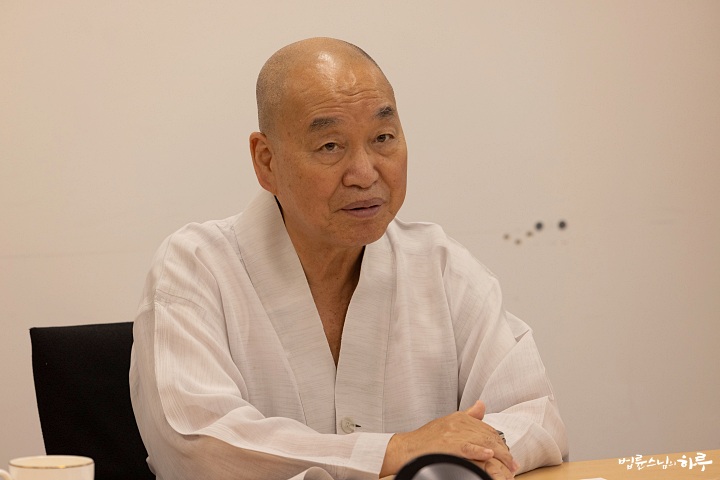
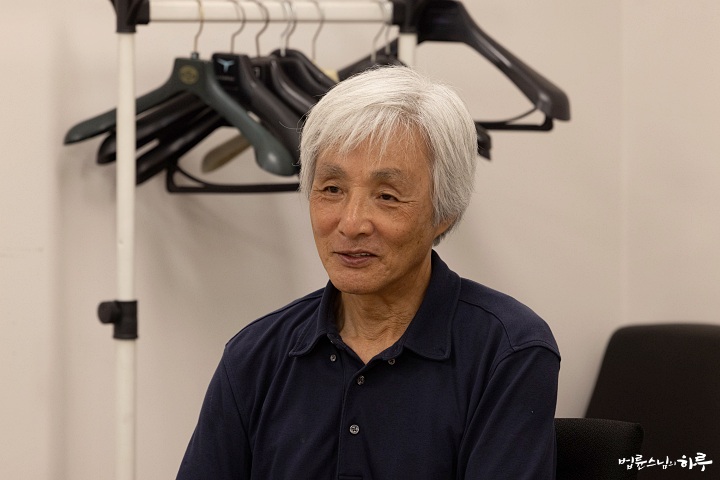
Rho Jae-guk, Representative of JTS Philippines, explained the problem of young people leaving the Philippines to work abroad, saying that the outflow of technicians, teachers, and engineers is very serious in Manila. He noted that while the situation is not yet serious in Mindanao, there is a need to prepare in advance—such as by preparing village-level projects with volunteers—before the outflow of workers becomes full-scale.In response, Sunim explained that Bhutan also faces a serious problem of young talent leaving for overseas.
"What I feel these days is that the most needed talent in the world going forward will be technicians who can work in the field, rather than AI experts. Bhutanese youth also want to learn AI, but in the actual local areas, there is more need for people who can do cement work, connect electricity, install plumbing, and do carpentry work. In our country too, when you go to the countryside, it is very difficult to find such technicians. So I think developing countries also need vocational technical schools like our industrial high schools. It would be very helpful to operate schools that can teach skills such as construction, electricity, and heavy equipment. However, more important than facilities is securing teachers who can teach. If people go abroad and only work in simple service jobs like cleaning hotels or restaurants and then return, they may earn money but no skills remain. On the other hand, if they learn skills at factories or construction sites, they can utilize those skills after returning home. For regional development in Bhutan too, people who can do cement work, electricians, and carpenters are essential. Going forward, training such technical personnel will become a very important task."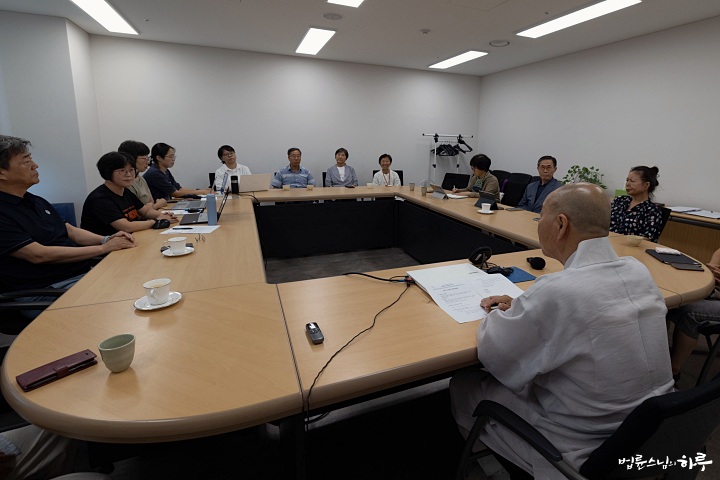
One board member asked a question."When I went abroad in the past, I saw pump facilities installed with Korean support left neglected. JTS has also been running projects in Mindanao for a long time. Are there any facilities we supported that are now neglected or unused?"Sunim answered.
"Currently, JTS Philippines focuses on school support projects, so all the schools we have built are being continuously monitored. When we deliver school supplies, we also check on their operational status. Since we have built nearly 100 schools so far, we visit and check them in turns, dividing them into the first and second halves of the year. Only one school built in a conflict zone has not been fully operational. Another school was operated not by the government but by an NGO, and when that organization withdrew, the operating entity changed to a private school. Both of these locations were remote areas where the administrative district and living zone differed, placing them in administrative blind spots. One eventually could not be operated, and the other has been converted to a private school. Other than these, most are operating normally."Then at 2 p.m., the JTS Extraordinary General Meeting began.
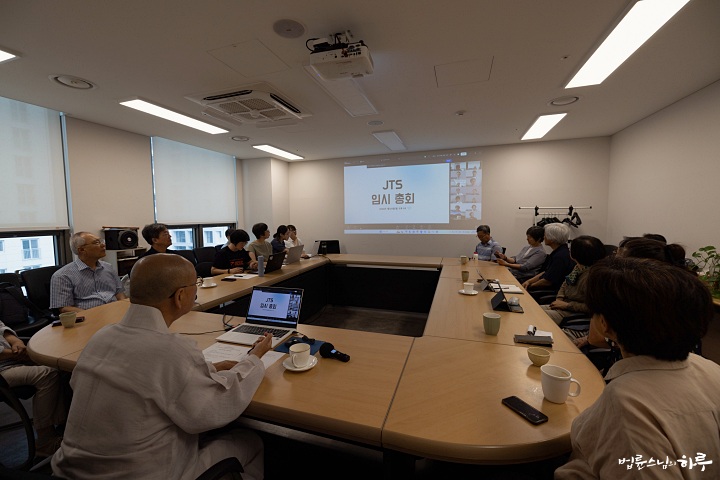
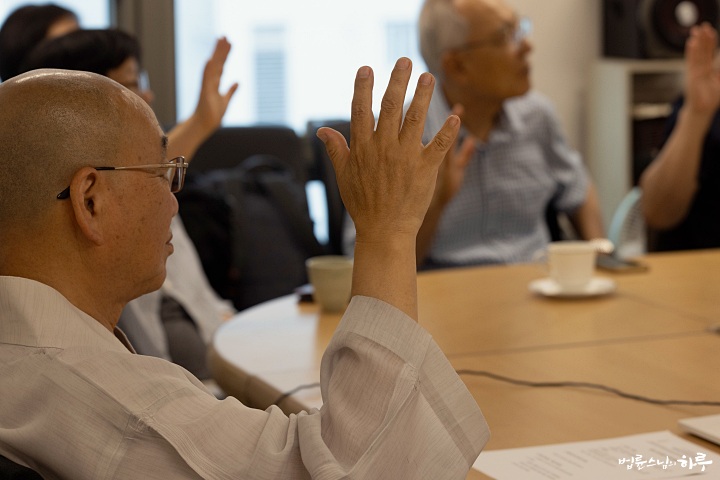
The voting results showed that all eight director candidates recommended by the Board were elected with majority approval. Then in the auditor election, Choi Yoon-hyuk (최윤혁) and Baek Sung-hee (백성희) were elected as auditors with majority approval.Afterward, the new directors elected the Chairman of the Board. Sunim was nominated, and after motion and second, was put to a vote, being re-elected as JTS Chairman with majority approval.
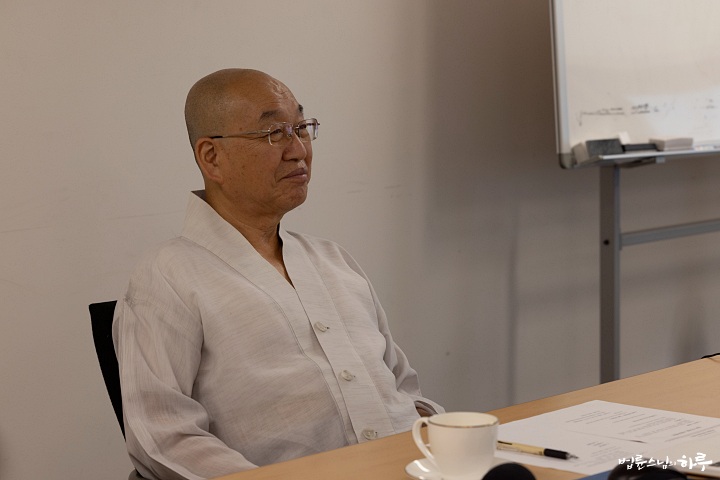
Sunim gave an acceptance speech."First, thank you for electing me. Over the next three years, I will work together in agreement with the other seven directors to run JTS well. Thank you."
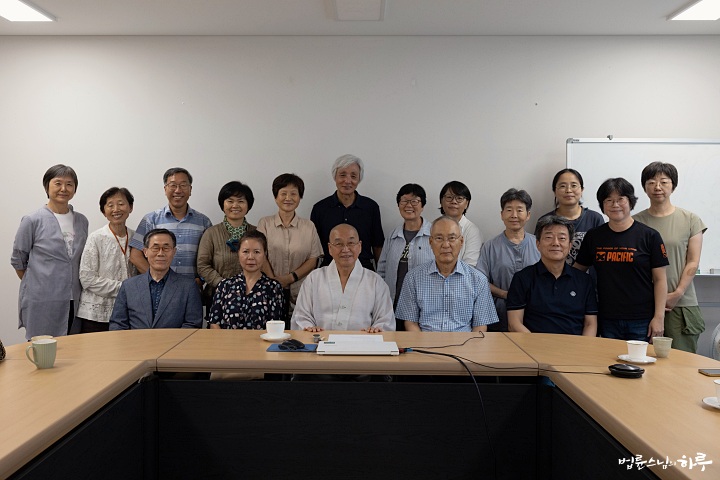
After the JTS General Meeting, Sunim worked in his office. At 3 p.m., Kim Je-dong (김제동) came to greet Sunim, and they had a brief tea talk. Sunim gave Kim Je-dong hand-made tofu and kimchi as gifts.
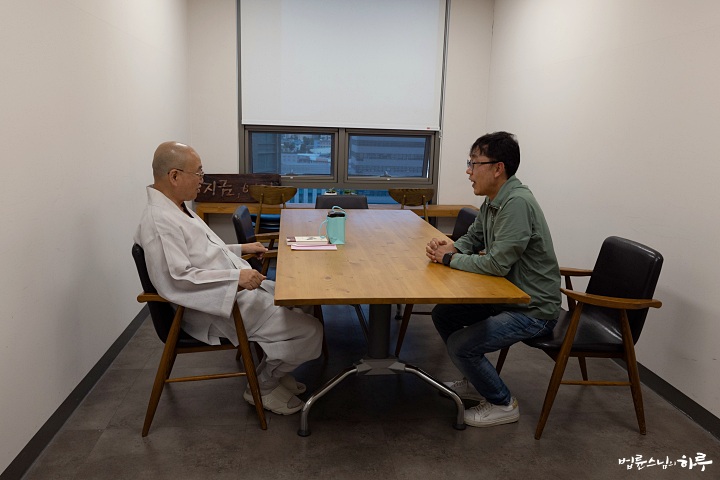
At 4 p.m., Cho Hee-yeon (조희연), former Superintendent of the Seoul Metropolitan Office of Education, came for a meeting.
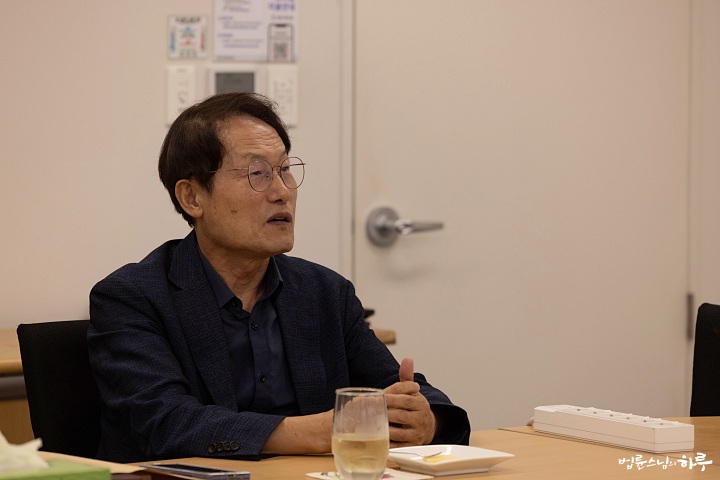
The international education cooperation project "Garden of Coexistence" (공존의 뜰), promoted by former Superintendent Cho Hee-yeon and education experts, aims to create sustainable learning opportunities for children in educationally underserved areas by utilizing Korea's AI education technology. On this day, the officials introduced to Sunim their first pilot project, which uses AI to train teachers and build an education model that enables children to learn autonomously at the Rohingya refugee camps in Bangladesh.
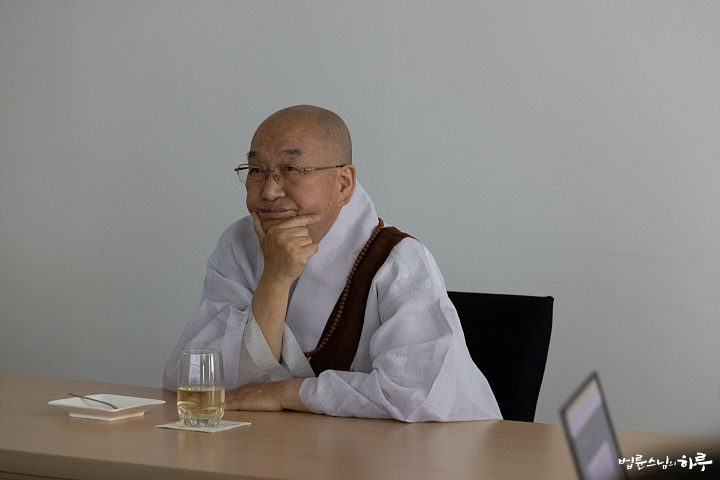
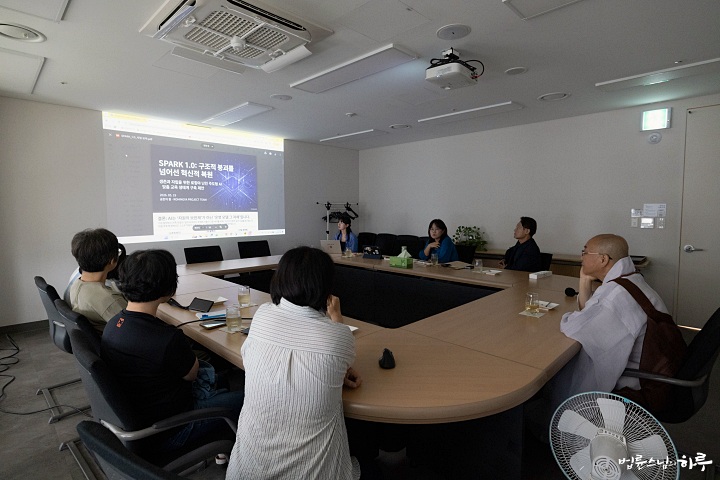
Based on JTS's long experience of supporting the Rohingya refugee camps, Sunim carefully reviewed on-site conditions such as internet environment, government policies, and teacher management, emphasizing that above all, it is important to create a structure that can be continuously operated locally. He also said that Korea's international development cooperation should evolve beyond simple aid to focus on helping local residents become self-reliant. Finally, Sunim expressed great interest in this project and proposed working together after thoroughly verifying the pilot project at the Rohingya refugee camps.
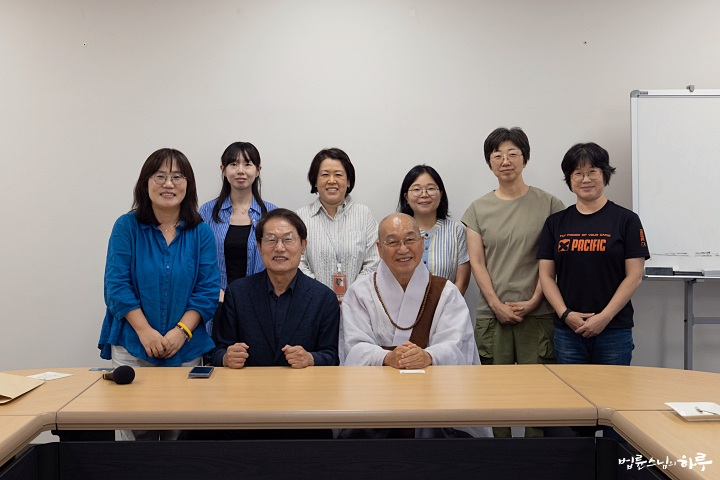
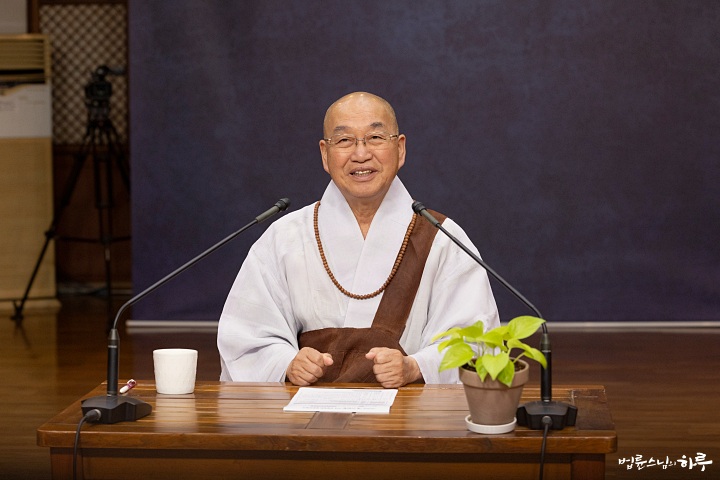
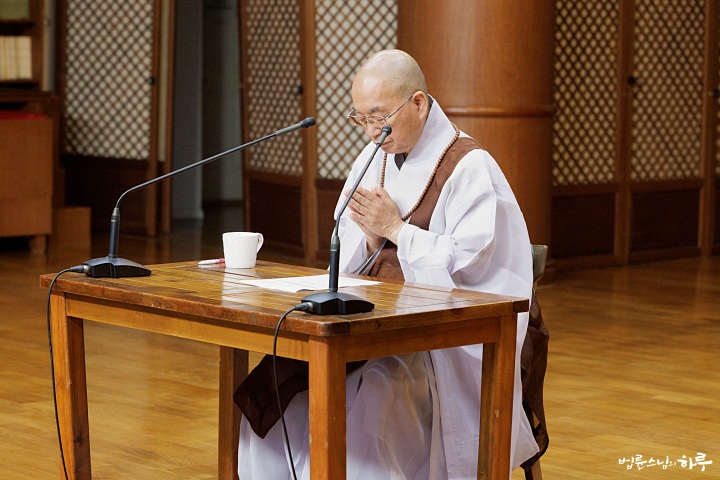
At 7:30 p.m., Sunim headed to the broadcasting room again for the evening Dharma Propagation Assembly. After the report on the results of the regular meeting and the activity video from the Gyeongnam Branch, which had been shown in the morning, Sunim's Dharma talk continued.
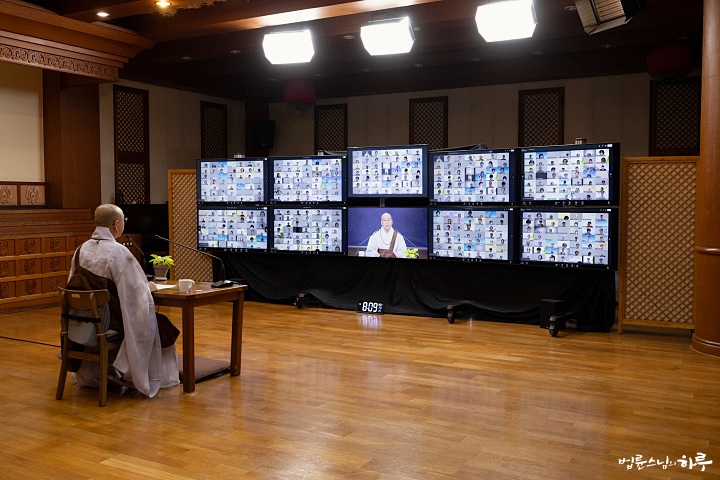
At the evening assembly, three questioners asked Sunim questions. This post introduces one of the questions and Sunim's Dharma talk.
Have the 20-Year-Old Wounds From My Early Teaching Days Really Been Healed?
"Whether the improved state of mind you feel now is truly healing or a temporary phenomenon will naturally reveal itself over time. If you face a difficult situation again and can laugh it off without being shaken as before, then you can affirm yourself, 'Oh, I've healed quite a bit.' If emotions arise again, accept it as 'Ah, I still have more to learn' and continue your practice. There is no need to feel ashamed or regretful about not handling things properly during your early teaching days. There is an old saying, 'trying to fly before you can even crawl.' How can someone who is doing something for the first time respond with maturity from the very beginning? That's almost impossible. Even monks, when they first ordain, are monks only in appearance and inevitably make many mistakes. Shaving one's head doesn't suddenly mature one's character. Just because you graduated from college and were appointed as a teacher, you don't suddenly become mature just because you have the title of teacher. You clash with students, go through various trials and errors, and gradually gain composure and mature. Usually, it takes about 10 years to truly become mature."During my early teaching days, I buried the wounds I received from students deep in my heart for 20 years. This year, when I took on the role of homeroom teacher again, those memories and emotions came back to me so intensely that I thought I might be ill. Through practice, I realized that I had been hating and avoiding myself, and when I accepted my past self as it was, my mind became much more at ease. However, I wonder whether this peace is a temporary emotional change or whether the long-standing wounds have truly been healed. If they have not yet been healed, with what kind of mindset should I continue my practice?"
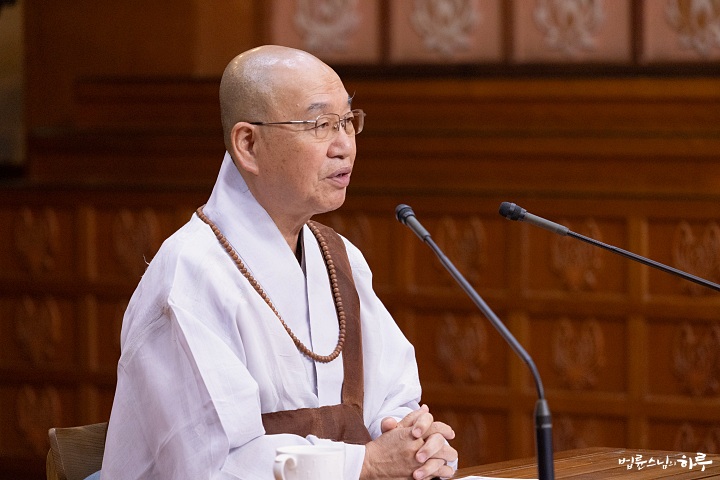
After finishing the Dharma talk, Sunim concluded his day.
Tomorrow, Sunim is scheduled to attend several meetings and the Bhutan Steering Committee meeting.