What Is the Role of Prayer, and With What Attitude Should We Do 108 Prostrations and Repentance?
July 18, 2026 – Communal Work, Dharma Q&A with Jungto Buddhism Course and Jungto Sutra Course Students
Hello. Today, Sunim engaged in communal work and held Dharma Q&A sessions with students of the Jungto Buddhism Course and the Jungto Sutra Course.
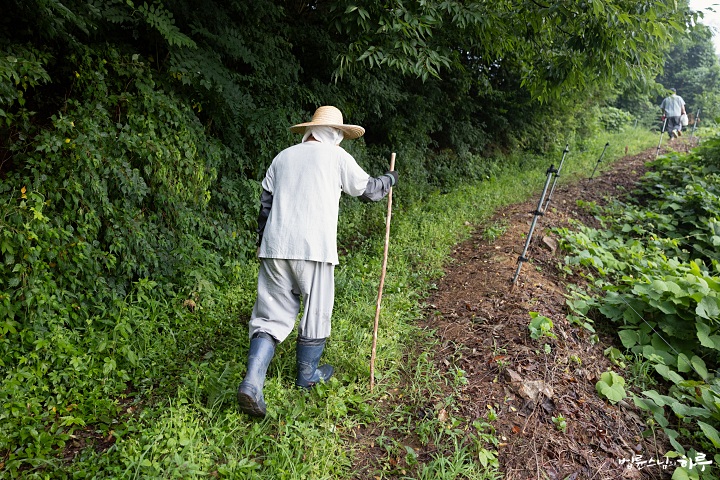
After completing his early morning practice, Sunim gathered his tools at 6 a.m. and headed up to the upper field for communal work.
Because weeds had grown thick along the path leading up to the upper field and throughout the field itself, Sunim sent an urgent request for volunteer assistance to male lay practitioners in the Yeongnam region so they could clear the weeds with string trimmers. In response, about ten male lay practitioners from the Busan-Ulsan Branch, Daegu-Gyeongbuk Branch, and Gyeongnam Branch gathered at Dubuk from early dawn.
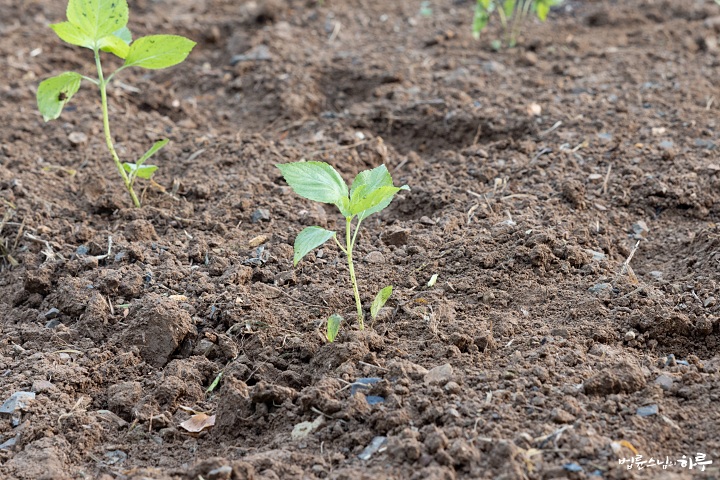
After showing the male lay practitioners where to trim the weeds, Sunim moved to the upper field to plant perilla. Dubuk had received almost no rain for a long time, but the previous day a little rain finally fell. Upon hearing the news of the rain, Sunim thought he could finally plant perilla, so he walked around the upper field and made plans for planting.
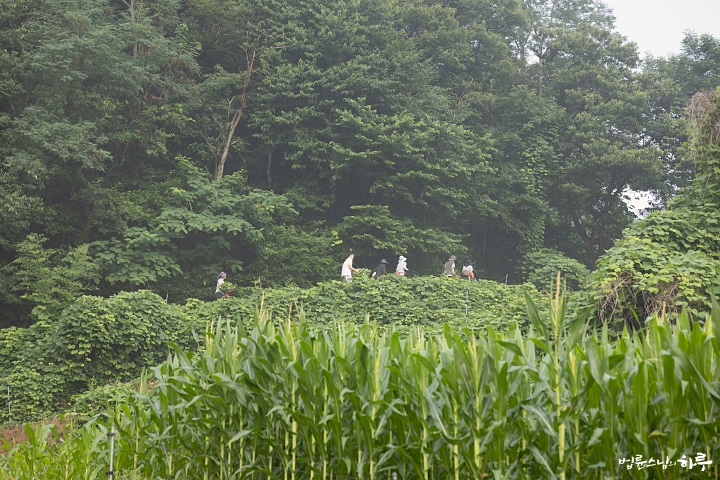
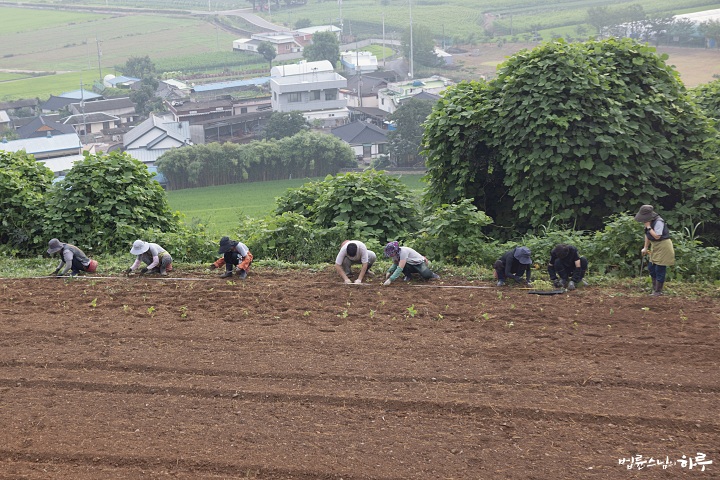
The trainees at the Haengja Institute had planned to leave for Seoul the previous day, but upon hearing the rain forecast, they postponed their trip by a day to help plant perilla. Carrying farming tools and perilla seedlings, they gathered at the upper field for communal work.
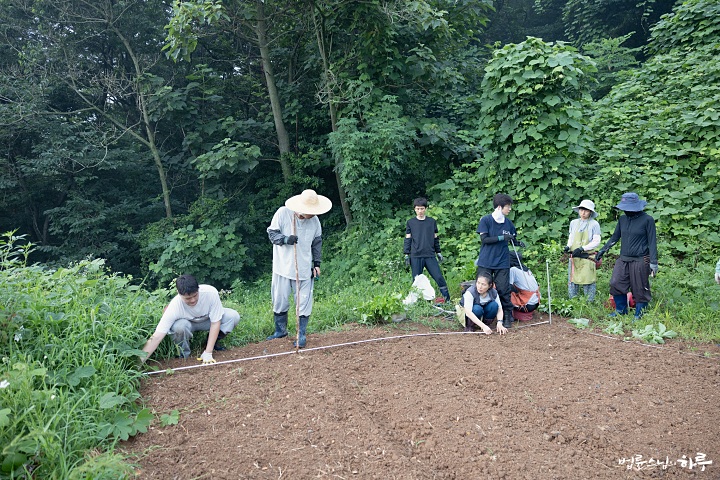
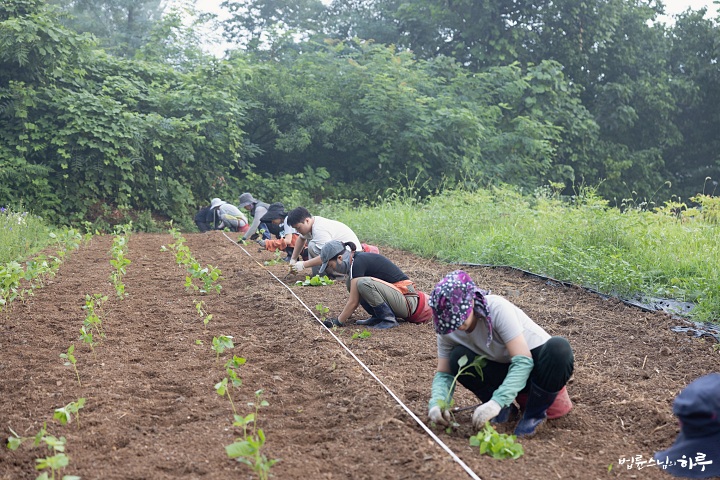
The field measured 26 meters across. A long measuring tape was laid out, and one person stood at every 3-meter interval, planting perilla seedlings at 50-centimeter intervals. Once one row was completed, the measuring tape was moved to plant the next row. Though unfamiliar with the work, the trainees focused carefully and planted each seedling with care.
"Yes, Sunim."
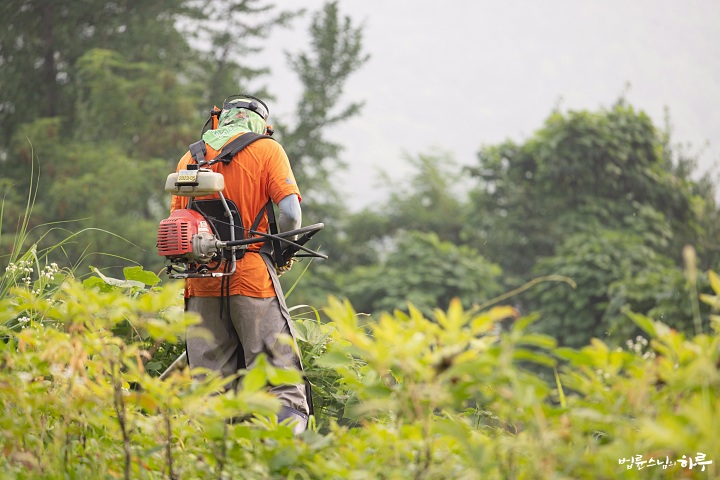
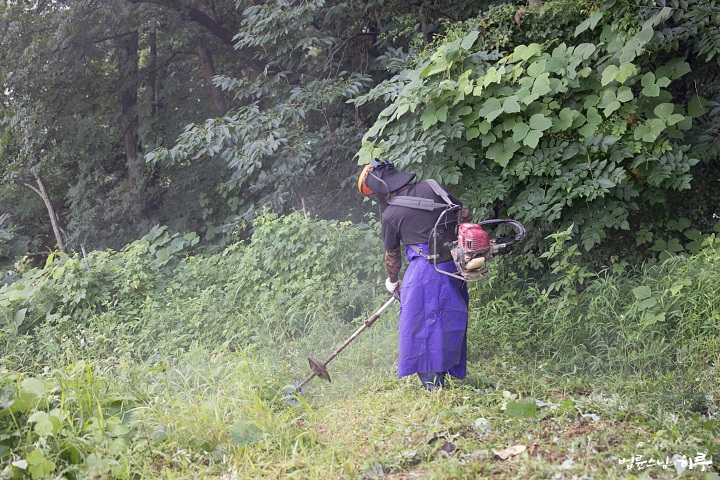
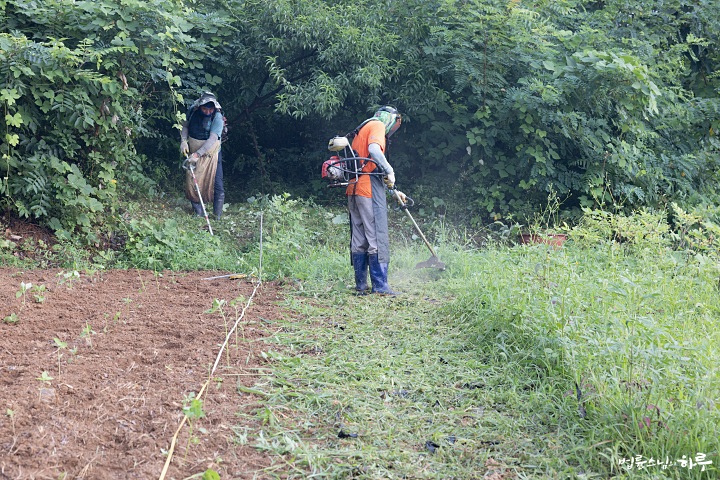
On the other side, the male lay practitioners strapped on string trimmers and cut through the thick weeds. The areas they passed through were cleanly trimmed, showing a stark contrast between before and after.
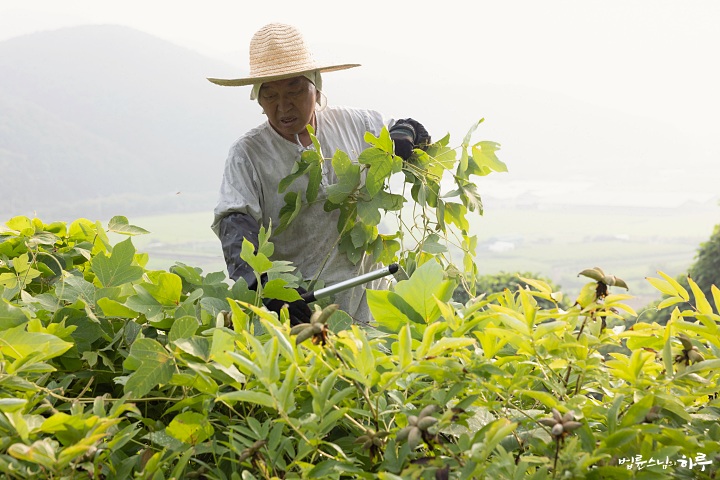
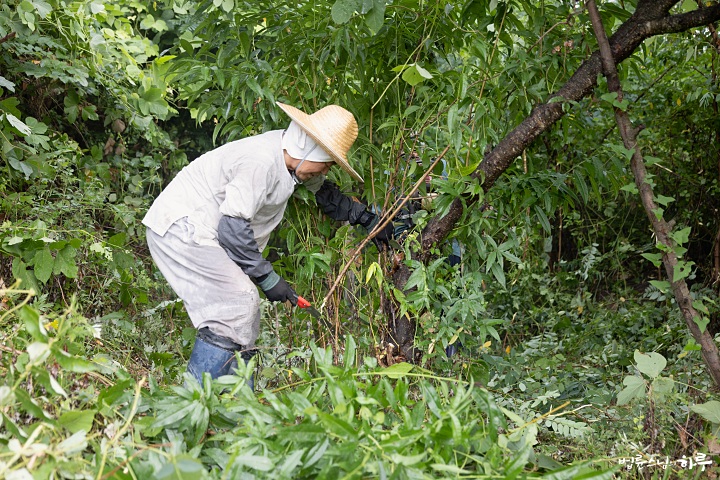
Sunim also used a sickle to remove kudzu vines covering the peonies and cut away vines tangled around the peach trees. He also used a saw to trim the smaller branches of nearby trees. Sweat poured down like rain.
One of the male lay practitioners doing the trimming said,
"Sunim, the kudzu crop has done really well this year."
"Yes, a huge success. (Laughter)"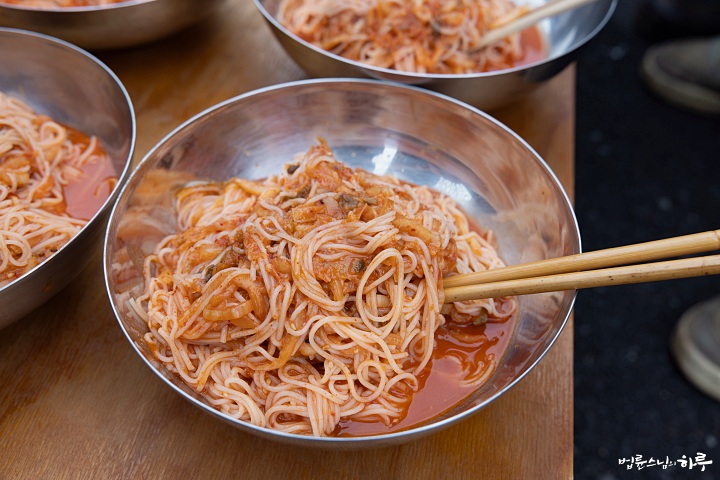
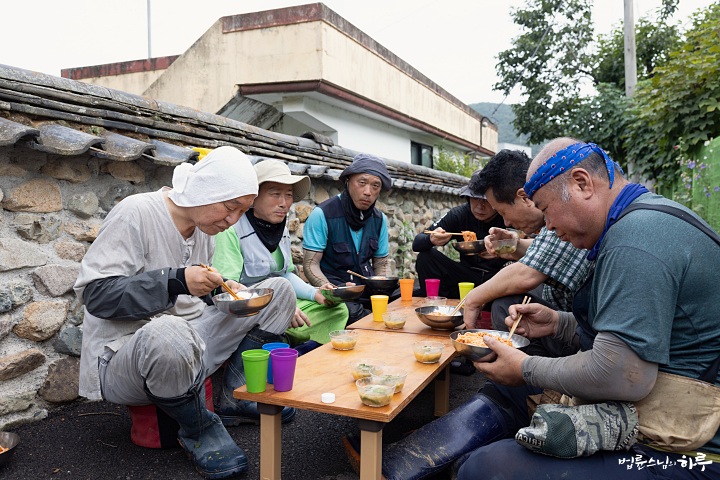
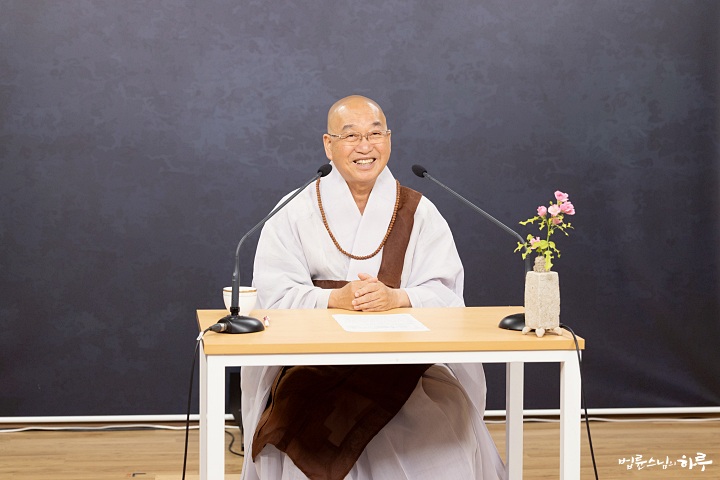
Choi Malsun (최말순) Bosallim prepared bibim noodles, so Sunim and the male lay practitioners took a break to enjoy a snack. After the snack, the male lay practitioners finished up their trimming work, while Sunim washed off his sweat and headed to the broadcasting room at Dubuk Jungto Retreat Center for the Dharma Q&A with Jungto Buddhism Course students.
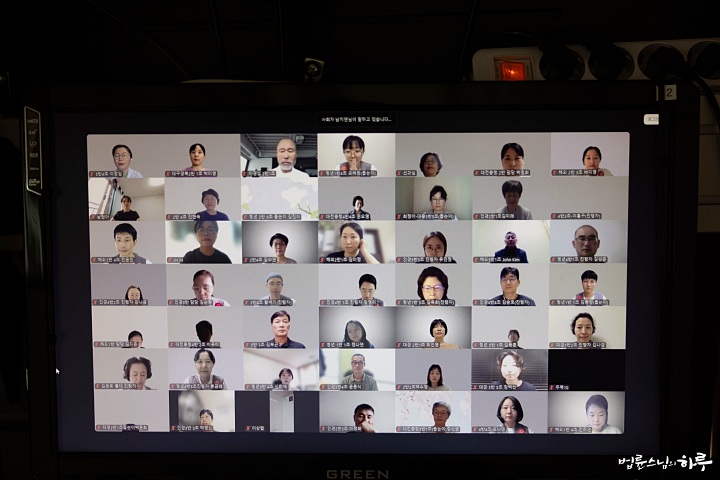
At 10 a.m., with about 1,600 people connected online simultaneously, the Dharma Q&A with the Jungto Buddhism Course began. First, everyone watched videos of activities from each branch, followed by reflections from three Jungto Buddhism Course students. All three shared a common realization: the cause of their suffering had been within themselves, and once they recognized this, their minds became peaceful and light.
"Last December, after discussing divorce with my husband, I was filled with resentment and hatred. In the midst of my suffering, I enrolled in the Jungto Buddhism Course. During one of the classes, I heard the Dharma teaching: 'People are simply programmed differently based on the environments they grew up in and their karmic conditioning—it's not a matter of right or wrong.' At that moment, something clicked. I saw how, for 17 years, I had continuously blamed and tormented my husband because he didn't fit my standards. Amazingly, my anger disappeared, and gratitude replaced my resentment."
"Now I'm gradually realizing that the cause of suffering doesn't come from outside, but from my own habits and self-attachment in how I engage with the world. When negative emotions arise, I try to recognize and let them go, and I try to understand perspectives of the world and other people that I had previously overlooked. I also do 108 prostrations daily to reflect on myself and repent. As I practice day by day, my mind has become much lighter, and I've gained the vitality to live like a lively rabbit or squirrel."
"Deep inside me was a desire that misfortune would pass me by and a wish to live only according to my plans. After returning from the Awakening Retreat at Jungto Society, I realized that the cause of my suffering was not outside but within me, and this brought me peace. My tendency to think deeply sometimes fed my delusions and created anxiety, my meticulousness became excessive and led to indecisiveness, and my empathy sometimes caused me to absorb others' negative emotions. Through this awareness, I've been able to see myself again. I'm learning to be lighter, saying 'Well, whatever!' and letting go of the heavy thoughts that once bound me."
The Jungto Buddhism Course students then requested the Dharma with three bows.
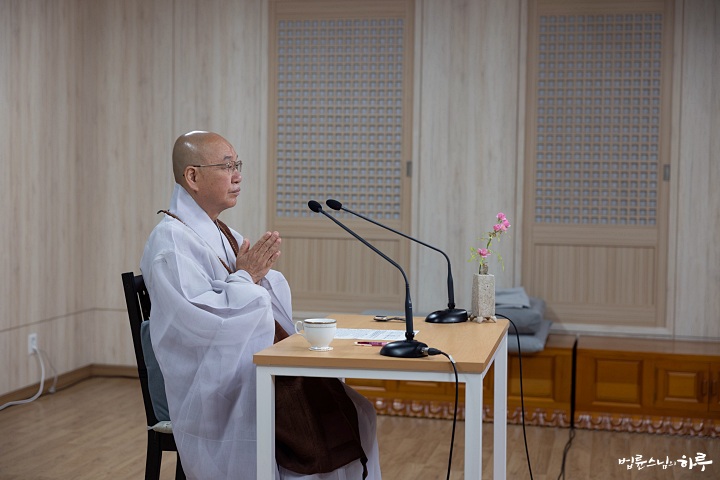
Learning Enlightenment Through the Life of the Buddha
"Hello, Jungto Buddhism Course students. You are now studying the fundamental teachings of Buddhism and the life of Gautama Buddha, who lived free from suffering while spreading these teachings. You're learning what kind of life he lived as a child, what problems prompted him to renounce his throne and leave home, how he practiced, how he reflected on himself, and how he discovered the new path of the Middle Way and, following that path with dedication, finally attained enlightenment. You're also studying what enlightenment is, and how, after attaining it, he lived for 45 years free from all suffering.Not Knowledge, But Experience and the Study of Mind
In Buddhism, direct experience is more important than intellectual understanding. Our suffering is not a matter of knowledge but a matter that arises in the mind. That's why the most important thing in the Jungto Buddhism Course is ultimately 'mindful sharing.' No matter how wonderful the teachings—whether stories about the Buddha or discussions of enlightenment—hearing and remembering them is only knowledge, not experience. So the most important thing is to know the current state of your own mind. This is called 'awareness.' And sharing this awareness with fellow practitioners is called 'mindful sharing.' To practice mindful sharing, you must first become aware of your own mind and then express it. However, first, we often don't recognize our own minds well. We don't know our own hearts. There's a saying, 'I don't even know my own mind.' This is because we don't examine ourselves. Second, it's difficult to express what's in our minds. There's another saying: 'Don't let others see what's in your mind.' Because we've spent so long hiding our minds from others, we feel very embarrassed about revealing them.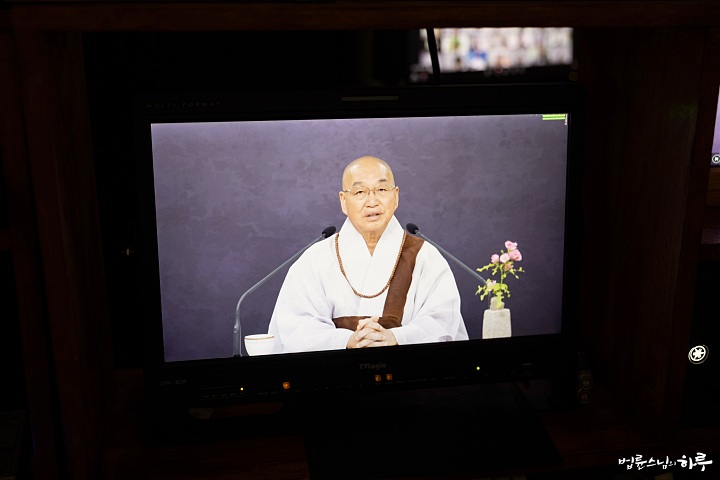
Sunim then explained the importance of practicing together with fellow practitioners and introduced the 1000-Day Practice. He concluded his opening remarks by encouraging them to continue their mind practice more deeply through the Jungto Sutra Course, where they would study Mahayana Buddhism and Seon Buddhism after graduating from the Jungto Buddhism Course.
"Now, let's hear the various questions that have arisen while you've been studying."The Jungto Buddhism Course students, who had begun their practice, asked Sunim questions about things they were curious about.
▪ If I continue practicing, will my ability to see situations as they are also become quicker?
▪ If there is no-self, who is the 'I' that practices and the 'I' that attains enlightenment, and if there is no substance, who is doing the practice?
▪ How is the strong resolve toward enlightenment different from attachment to desire, and how can we distinguish between them?
▪ From a practice perspective, what does prayer mean, and with what attitude should we do 108 prostrations?
▪ How can we harmoniously recommend Buddhism to others while respecting their autonomy?
▪ Why does Jungto Society need the 18 Precepts, and how should practitioners understand and put them into practice?
This post introduces the Dharma talk on prayer.
What Is the Role of Prayer, and With What Attitude Should We Do 108 Prostrations and Repentance?
"Hello. When I do the 1000-Day Practice prayer, I'm curious about what role this prayer plays and what its method is from a practice perspective. I'm also curious about whether repentance can be considered prayer. While attending the Jungto Buddhism Course, I learned that prayer is not about fulfilling each person's wishes but about letting go of those wishes. But honestly, I thought, 'If that's the case, can't we just let them go?' I've been doing 108 prostrations as part of the 1000-Day Practice for about a month. I've also listened to various YouTube talks by Sunim about prayer to try to understand better. But I've actually become more confused about how prayer actually works. While doing the 1000-Day Practice, I think I've been doing the 108 prostrations more like exercise. Am I praying correctly? And can I understand prayers that ask the Buddha to grant wishes as prayers from a religious perspective?"
The Original Meaning of Prayer and Its Elements of Practice
"The word 'prayer' is usually used when the person praying has something they earnestly wish for and puts their whole heart into achieving it, focusing their mind intently. That's why, since ancient times, people have restrained their appetites, dressed neatly, and endured uncomfortable sleeping conditions before and during prayer. They also avoided things considered impure. It was believed that only by purifying body and mind could one's prayers be fulfilled. When someone wishing for something restrains themselves from delicious food and gives up comfortable sleeping arrangements or marital relations to pray in a mountain or cave, it shows just how earnest their wish is. This intensity of sincerity becomes a great force in achieving one's goals. There's an old saying: 'Utmost sincerity moves the heavens.' This means, 'When sincerity is utmost, even heaven responds.' The act of praying with such utmost sincerity is generally called 'prayer.'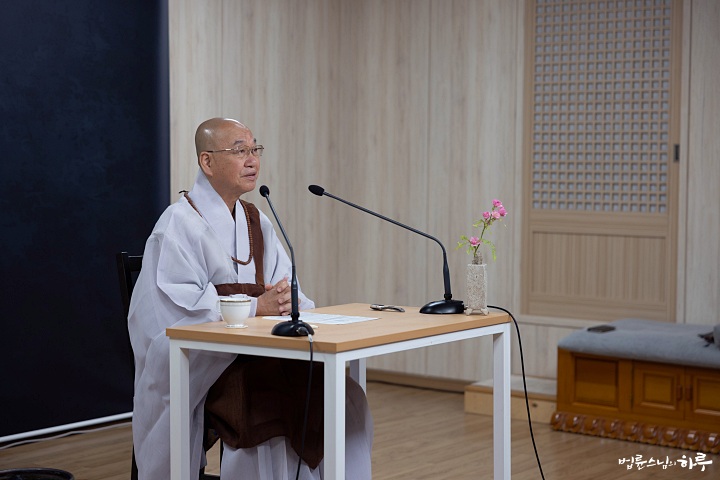
Prayer That Lets Go of Everything
However, when ordinary temples accept prayer requests, they usually don't mention this practice aspect. Instead, they emphasize that wishes will be fulfilled if you donate a lot of money. So when people say they want to do a typical wish-fulfillment prayer, I advise them to approach it from a practice perspective. I tell them to pray with the attitude of letting go of some desire. 'If this wish is fulfilled, I am willing to give up anything else,' 'I will willingly endure any hardship.' I advise them to pray from this practice perspective. And as that prayer deepens, they should progress to a state of letting go of everything, even the thought of achieving that wish. When done this way, the possibility of that wish being fulfilled becomes very high. So we can say that 'prayer' has contained elements of practice from the very beginning.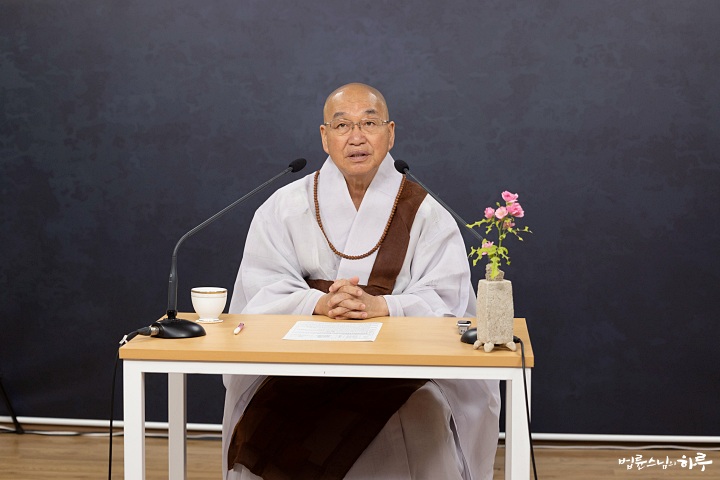
A Person Without Suffering, a Free Person
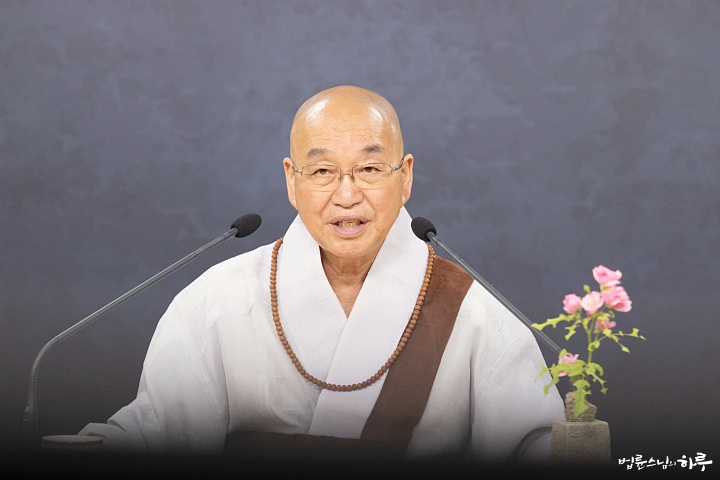
The prayer that Jungto Society practices is done from a practice perspective. However, we also practice with the perspective that even the practitioner's aspiration to become 'a person without suffering, a free person' can become a 'seed of suffering' if we cling to it. The ultimate goal the Buddha taught is to become 'a person without suffering, a person free from their own desires.' Not setting our goals on desires like wanting to become president who craves power or honor, or wanting to live long and healthily as a rich person out of greed for wealth and longevity—this is the difference between ordinary 'worldly prayer' and 'the prayer done at Jungto Society.'"I think my questions arise because prayer involves certain commitments, like the 'goal of the 1000-Day Practice prayer.' So I have questions and vague uncertainties like, 'What kind of thoughts or attitude should I have when doing prostrations?' or 'Isn't proper prayer done with focused concentration on something? Is it okay to just do prostrations like this?' That's why I asked."
"First, it's fine to do prostrations without any particular thoughts. Even if it just becomes exercise, that's fine. For our minds to be healthy, our bodies also need to be healthy. Doing many prostrations provides a lot of exercise. First, I want to say that prostrations are a full-body workout, so they help keep the body healthy. So doing prostrations is better than not doing them. However, that doesn't mean any exercise counts as practice. In other words, I can't say that prostrations done merely as exercise constitute practice. But when praying, doing prostrations—whether as exercise or otherwise—is better in many ways than not doing them.Prayer That Lets Go of the Mind
When doing prostrations during the 1000-Day Practice prayer, do them with the perspective of 'lowering the head' and 'letting go of the self.' The act of prostration is a physical movement that expresses the mind or perspective of not clinging to one's own thoughts. So doing prostrations with the perspective of letting go of stubbornness—like 'I am right' or 'What I did was good'—helps with practice. It's good to do prostrations with the attitude, 'I am lacking.' It's also fine to think, 'I will let go of my stubbornness.' Or, 'I will not pretend to be superior.' Doing prostrations with the perspective of letting go of self-attachment—the mind of clinging to 'I am right' or 'I am superior'—helps with practice. If you're a husband in conflict with your wife, it's good to do prostrations while reciting the mindful phrase, 'Everything my wife says is right.' If you're a parent in conflict with your child, you can do prostrations with the phrase, 'I will understand my child's mind.' If you keep clashing with your boss at work, you can do prostrations thinking, 'I understand my boss's mind.' In other words, from a practice perspective, 'prostration' is a physical expression of 'I will let go of my stubbornness.' So you can do prostrations with the perspective of 'I will let go of my thoughts,' or with the perspective of 'I accept the other person's mind.'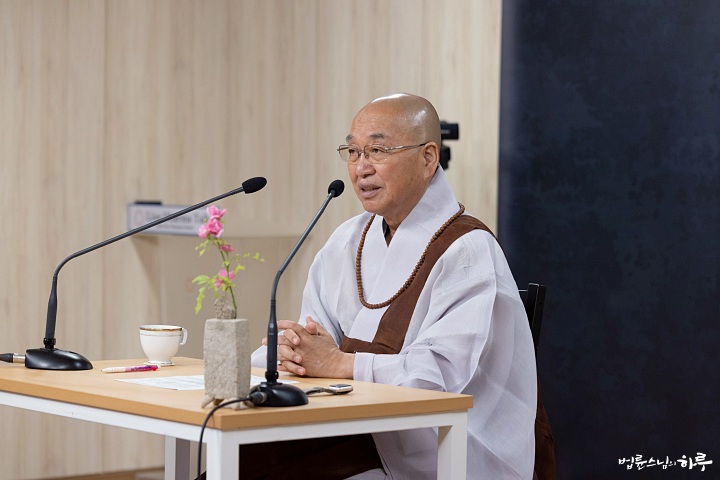
"Yes, I understand well. I will do prostrations from the perspective of lowering my mind during prayer."
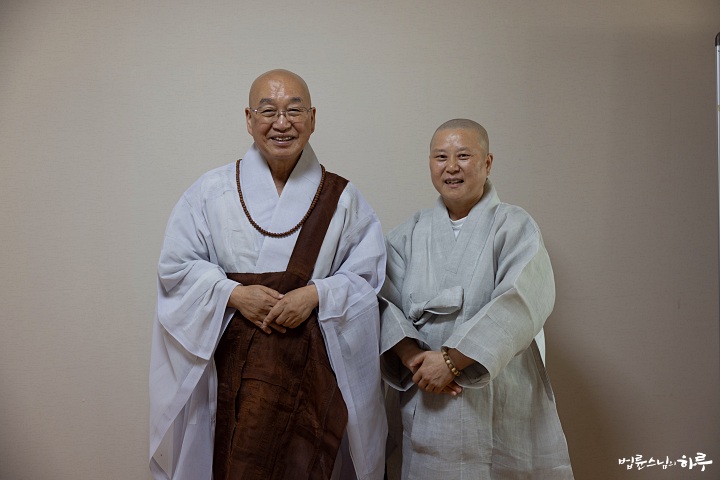
After the broadcast, Venerable Cheondo, the Standing Representative of the Ulsan Buddhist Environment Solidarity, visited Dubuk Jungto Retreat Center to meet Sunim.
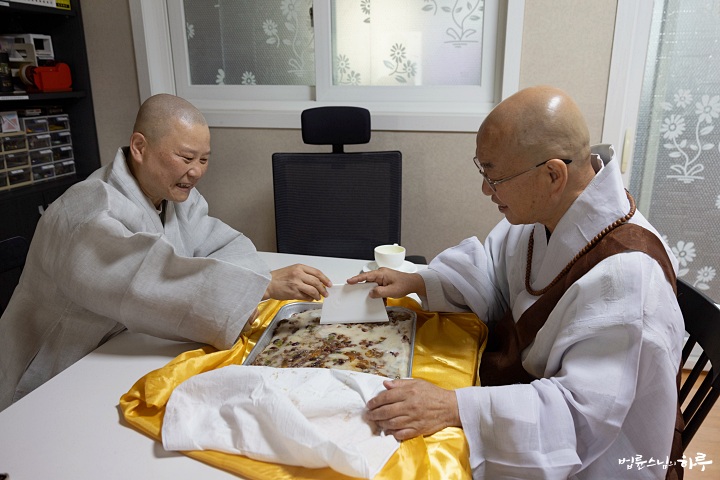
Venerable Cheondo brought rice cakes, soy milk, and kimchi for Sunim. Since both Sunims are involved in environmental activism, Venerable Cheondo brought the rice cakes wrapped in a cloth and on a tray rather than in plastic. They shared the rice cakes and kimchi as they began their conversation. Venerable Cheondo shared his concerns with Sunim about the current government's large-scale development policies, such as nuclear power plants and dams. Their conversation lasted about an hour. After the conversation, Sunim saw Venerable Cheondo off.
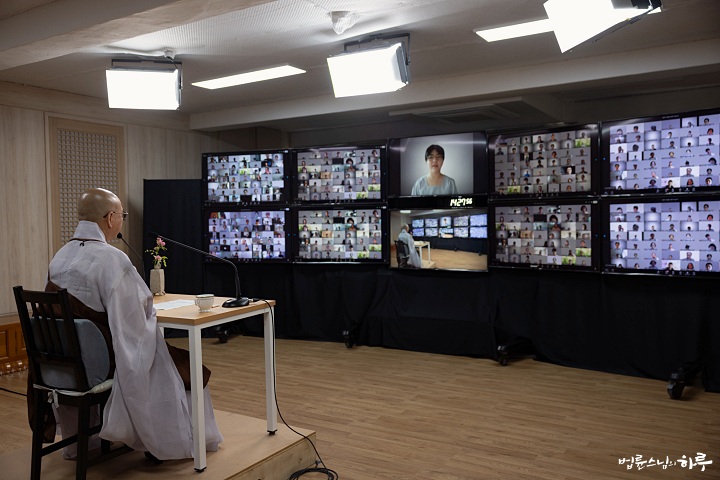
After a brief rest, at 2 p.m., Sunim headed back to the broadcasting room for the Dharma Q&A with the Jungto Sutra Course students.
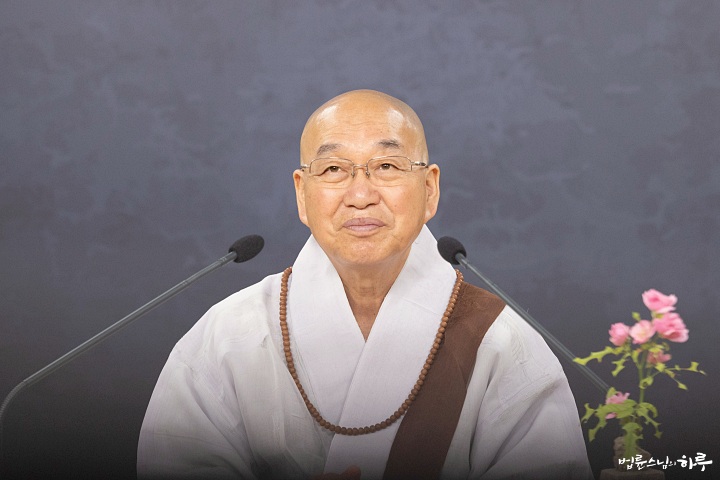
Six people who had submitted questions in advance, plus one on-site questioner, a total of seven people, asked Sunim questions about things they were curious about while studying the Jungto Sutra Course.
▪ When I pray, time passes as I focus only on becoming aware of and letting go of the thoughts that arise. I don't get around to praying with repentance while reflecting on the previous day. I'm wondering if just the practice of letting go of thoughts, as I'm doing now, is enough.
▪ Although I learned that Mahayana Buddhism respects compassion and differences, the sutras also contain criticism of Hinayana. What is the meaning of Mahayana's criticism of Hinayana, and how should I understand it?
▪ If all things are empty, then practice too doesn't seem like something to cling to, yet Jungto Society's 1000-Day Practice of prostrations sometimes feels burdensome.
▪ Having practiced blessing-seeking Buddhism before, I've come to understand the meaning of prayer anew through studying at Jungto Society. But I feel empty and sad, as if the object I used to rely on has disappeared.
▪ I want to become a soldier. But I'm wondering whether a soldier's role of using force conflicts with Buddhism's teaching of non-killing, and whether being a soldier can also be a practitioner's life.
▪ As a labor union chairperson, I'm in a situation where I need to clearly speak up against wrongdoing. I'm curious about what standards I should use to judge and act in reality while not clinging.
▪ Due to the nature of my job, I have to wake up at 5 a.m. every day, so the practice of doing 108 prostrations feels burdensome. People around me tell me not to feel too pressured, but I'm wondering if it's okay to take the practice rules that lightly, and what attitude I should have when participating in the 1000-Day Practice.
After the Dharma Q&A with the seven questioners, Sunim gave closing remarks.
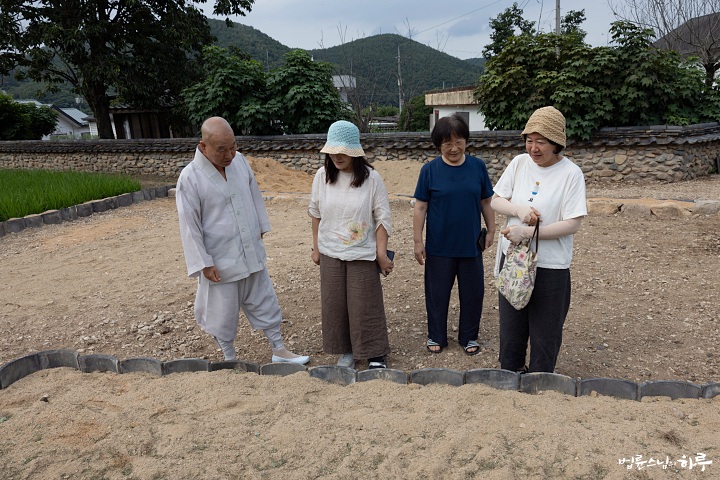
At 4 p.m., female lay practitioners in charge of landscaping at Dubuk Jungto Retreat Center visited the site to plant flowers around the dolmen area that Sunim had recently prepared. Sunim showed the site to the female lay practitioners and discussed the trees and flowers that would be needed.
Sunim had a meeting in Gyeongju, so he departed from Dubuk Jungto Retreat Center at 5:20 p.m.
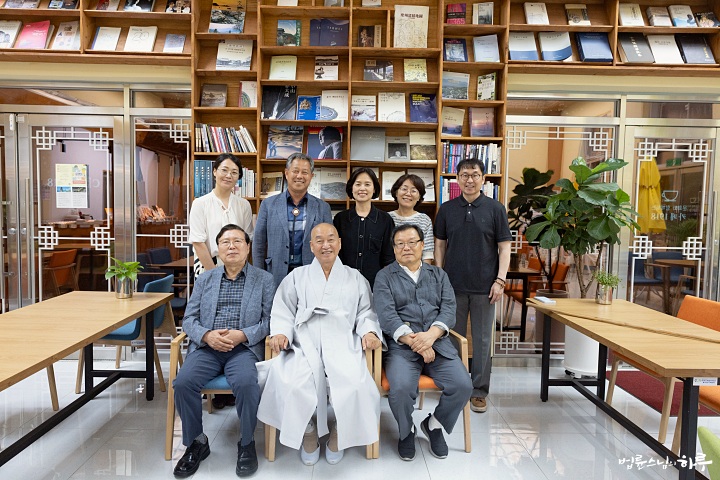
Sunim met with people involved in Gyeongju's culture and tourism sectors—including the Director of Culture and Tourism of Gyeongju City, the Director of Tourism and Convention Division, a full-time professor at Dongguk University Graduate School of Culture and Arts, officials from the Dongguk University RISE Project Team, a former professor of the Department of Cultural Tourism Industry at Gyeongju University, the Landscape Policy Advisor of Gyeongju City, and the Director of Silla Cultural Center—to exchange opinions on utilizing Gyeongju's cultural heritage and developing tourism.
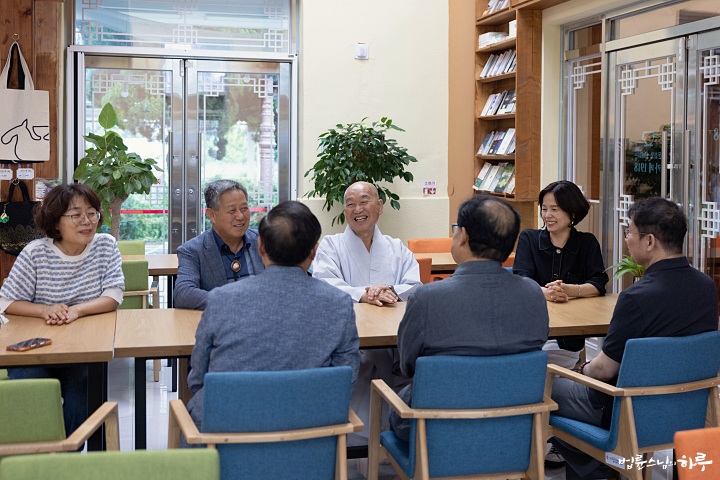
Sunim exchanged wide-ranging opinions on the construction of Cheollyongsa Temple, cultural heritage protection and utilization policies, the development of cultural content using historical figures like Choi Chi-won and Wonhyo, and the restoration of Hwangnyongsa Temple.
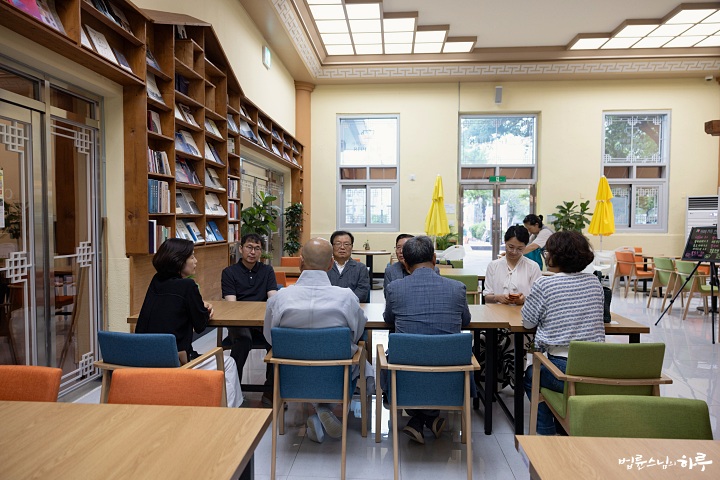
Sunim also proposed themed tours of Gyeongju.
"I think we need to create opportunities for themed tours. For example, when talking about the reunification of the Korean Peninsula, rather than just telling young people that 'we must reunify,' we can show them through history that Silla faced similar challenges. During the era when Goguryeo, Baekje, and Silla were fighting each other, the people of Silla believed that true peace meant unification. That's why they built the nine-story wooden pagoda at Hwangnyongsa Temple, dreaming of unifying the Three Han states and making such a vow. At that time, Silla was a small country. It was once even under the protection of Goguryeo. How did it rise to the center of history? The first was the peaceful integration with Gaya. What played the biggest role in integrating with Gaya was the official recognition of Buddhism. Silla had banned Buddhism, while Gaya was a Buddhist state. For integration, they needed to recognize the noble status of Gaya's aristocrats and guarantee the faith that the Gaya people practiced. So through the martyrdom of Ichadon, Buddhism was officially recognized, and afterward, integration with Gaya took place. That integration greatly developed Silla, and eventually, by taking the Han River basin, it laid the foundation for the unification of the Three Kingdoms. Based on this content, we can create pilgrimage routes. For example, we can create a historical pilgrimage route starting from the Tomb of King Beopheung, then going to General Kim Yu-shin's tomb, the Tomb of King Jinheung, and continuing to the Hwangnyongsa Temple Site. Rather than just studying from books, people can walk directly, exercise, converse with each other, and receive on-site explanations. This is exactly what travel with a story is—themed travel. Instead of tourism focused just on eating and playing, let's create travel where people learn both history and meaning together."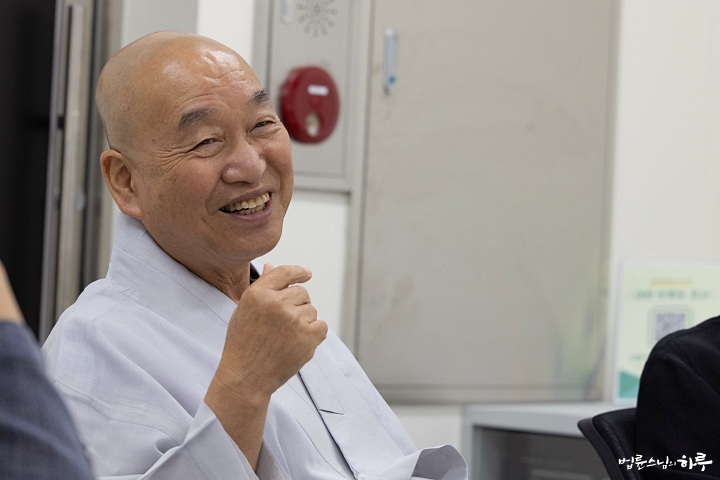
Additionally, Sunim proposed ideas for developing Gyeongju as a city of meditation and healing, new cultural programs linking Dharma Q&A sessions with art performances, and models for activating nighttime tourism and stay-based tourism. Together, they explored future tourism directions through protecting and utilizing Gyeongju's cultural heritage. As the tea conversation, which lasted about two hours, was wrapping up, Sunim said,
"Perhaps because I spent my adolescence in Gyeongju, it feels like all my thoughts and dreams were formed here. So I hope Gyeongju's cultural resources will be used more meaningfully for people. I hope we can bring figures like Wonhyo and Choi Chi-won to life, activate stay-based tourism, and create wellness spaces where people can rest comfortably. Using nighttime lighting to create an environment where people can take walks at night would also be nice. Going forward, people will feel more and more overwhelmed, so rest spaces are needed. In fact, being less developed now could become a greater competitive advantage in the future. Let's think together about how to make the most of these advantages."After the meeting, Sunim took a group photo with everyone who attended.
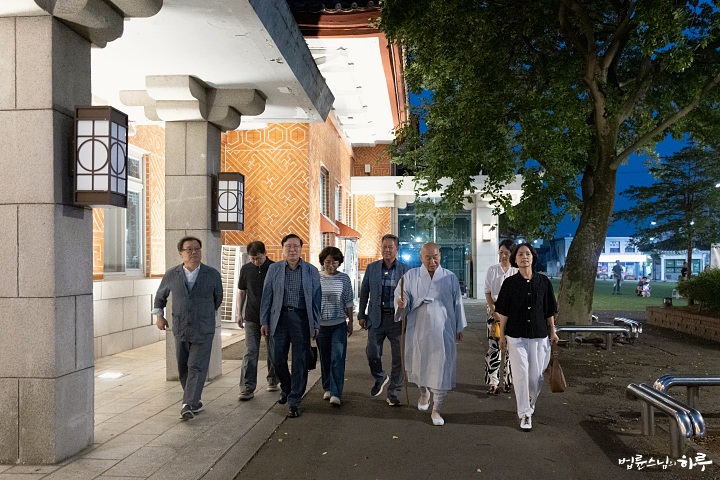
After the photo, Sunim was seen off as he got into the car and headed back to Dubuk Jungto Retreat Center.
Today, Sunim wrapped up a long day, having taken care of various tasks including communal work, Dharma talks, environmental concerns, the flower garden, and culture and tourism.
Tomorrow, he is scheduled to participate in the Jaja Retreat with Gyeolsa Practitioners and Dharma Teachers.