My 30 Years of Faith Are Crumbling After My Son's Death
July 17, 2026. Repairing the Neighbor Grandmother's Field Fence, Friday Dharma Q&A
Hello. Today Sunim did early morning work and held the Friday Dharma Q&A.
Sunim began his day with early morning practice and meditation, then proofread a manuscript. Since last night, it had seemed like rain would come to Dubuk, but in the end, no rain fell.
After finishing the proofreading, Sunim prepared to do some work with the Haengja (trainees).
"According to the weather forecast, it's supposed to rain for the next ten days starting today, so we should be able to plant perilla this weekend. Today, let's do a preliminary inspection of the upper field where we'll plant perilla, and then take a look at the Jungto Farm's rice paddies and fields."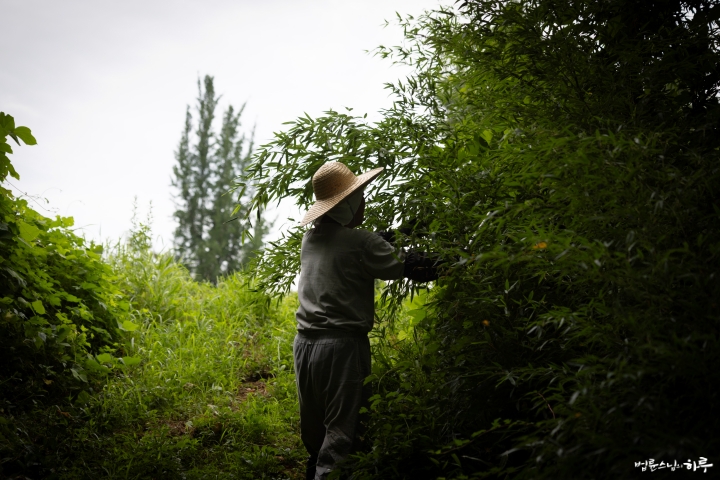
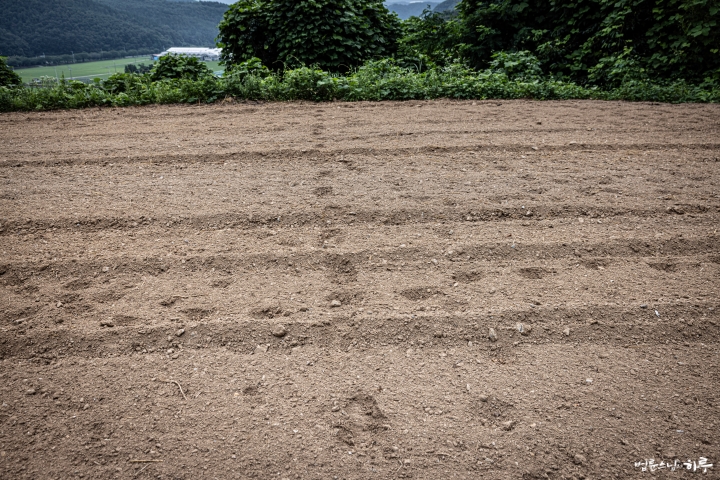
When they arrived at the upper field, the farming team had already tilled it well.
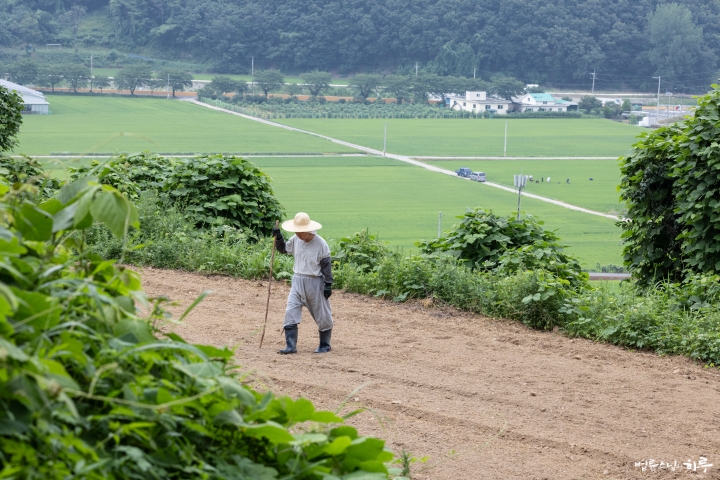
Sunim did a simple measurement to figure out how many seedlings would be needed. Step by step, he measured the length and width of the field by his stride.
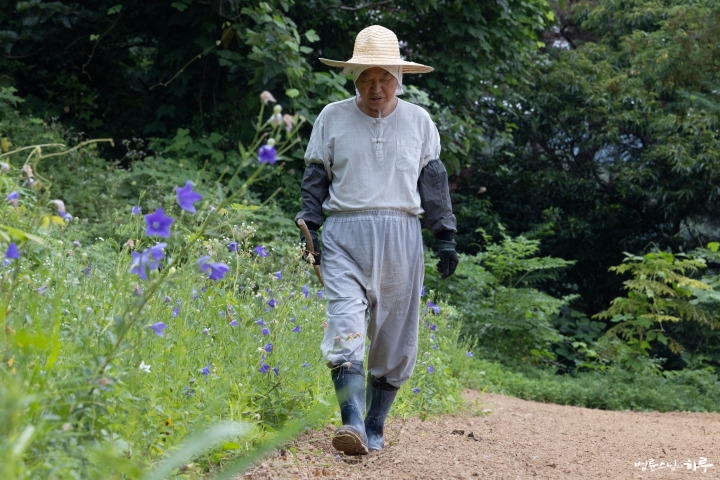
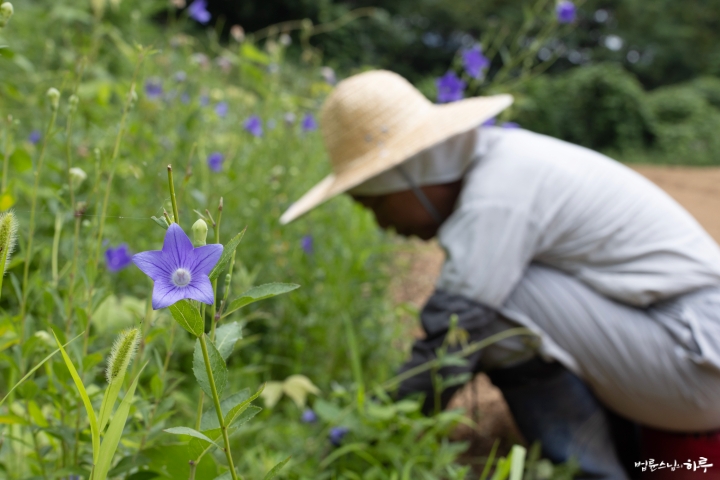
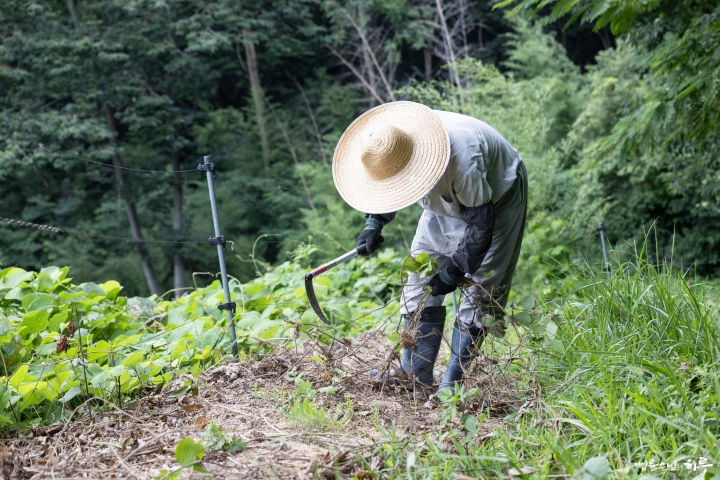
Sunim pulled weeds among the bellflower plants, cleared some kudzu vines, and came back down the mountain.
Next, Sunim went to check the water level of the reservoir in front of the village. The water had completely dried up, and the bottom of the reservoir was exposed.
"The reservoir has dried up completely because it hasn't rained."On the way to the rice paddies, they came across a grandmother who lived in the house in front of the village hall, and she looked upset. A Haengja asked her:
"Grandmother, what's the matter?"
"The water deer keep coming into my field, so I put up a fence, but big trucks keep going back and forth next to my field and have ruined it. I've repaired it several times, but today the water deer completely destroyed my field. They ate all the beans, sweet potatoes, and even the green onions I planted."
In the sweltering heat, the grandmother stood holding a hoe, sweating profusely and looking very upset. As she continued to pour out her frustrations, Sunim quietly got out of the car and walked around inspecting her field fence.
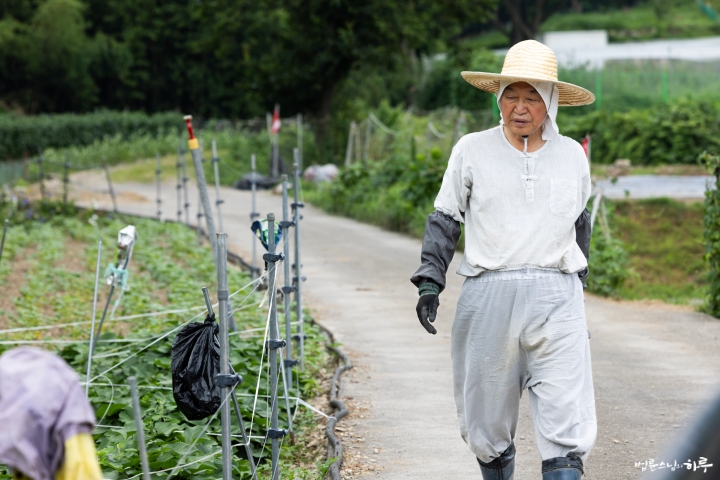
In part of the field fence, the stakes had fallen over, and the wire holding the fence together was all tangled up.
The grandmother continued talking to the Haengja.
"When I tried to drive the fence stakes back in by myself, they wouldn't go into the ground at all. It's so hot today, and trying to fix this alone makes me so upset."
Sunim went to the Jungto Farm storage shed and brought back iron rods for rebuilding the fence, along with a hammer, string, hoe, pickaxe, and pliers.
First, he untangled all the wire. The wire was so tightly tangled that undoing it was no easy task.
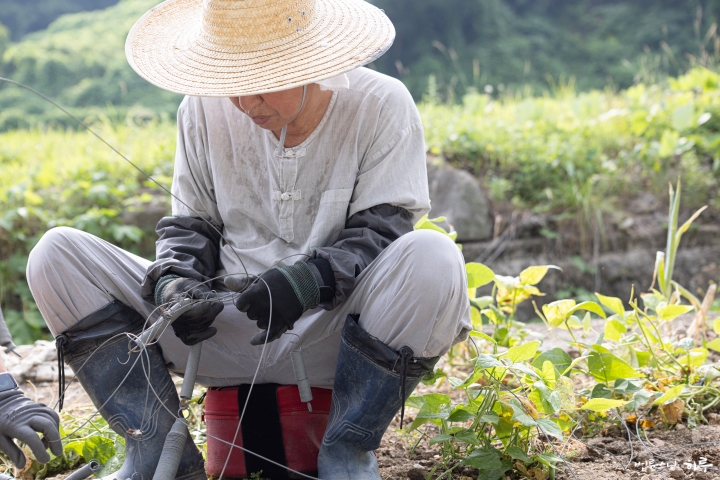
After untangling all the wire, he pulled out all the broken fence stakes and put up new ones.
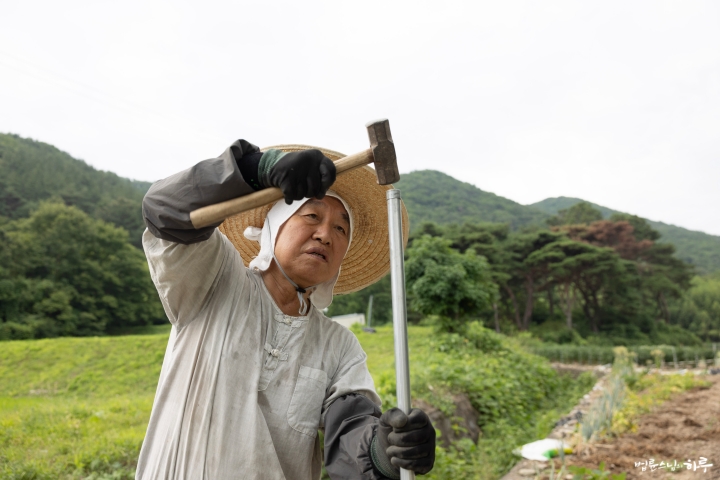
Because the ground was very hard from the drought, and the stakes the grandmother had were bent and not sharp at the ends, no matter how hard he struck them, they wouldn't go in.
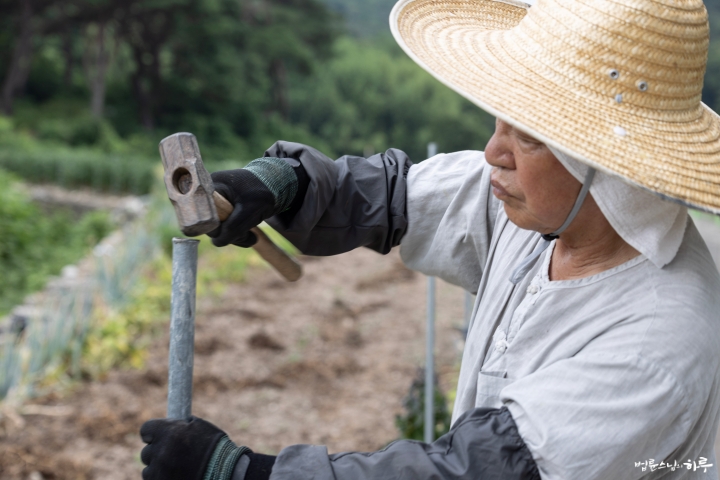
Sunim replaced them with sturdy, sharp-tipped stakes he had brought from the Jungto Farm. Then he tightly wove the untangled wire around the stakes, restoring the fence.
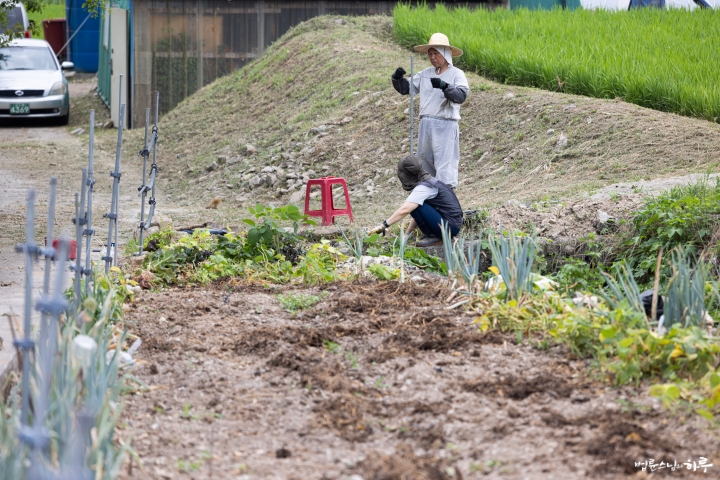
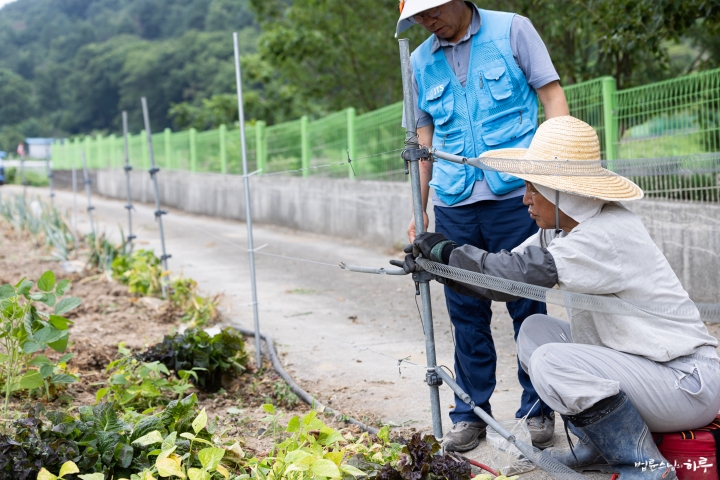
Sunim and the Haengja repeatedly drove in stakes, strung the fence wire, and packed sturdy stones around the base of the stakes.
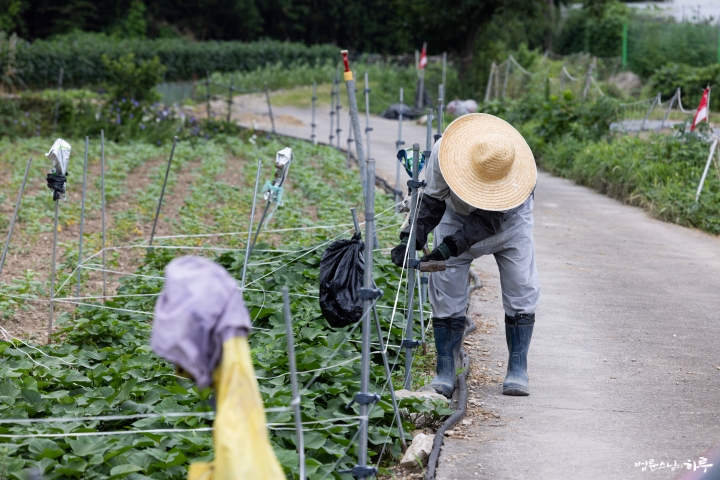
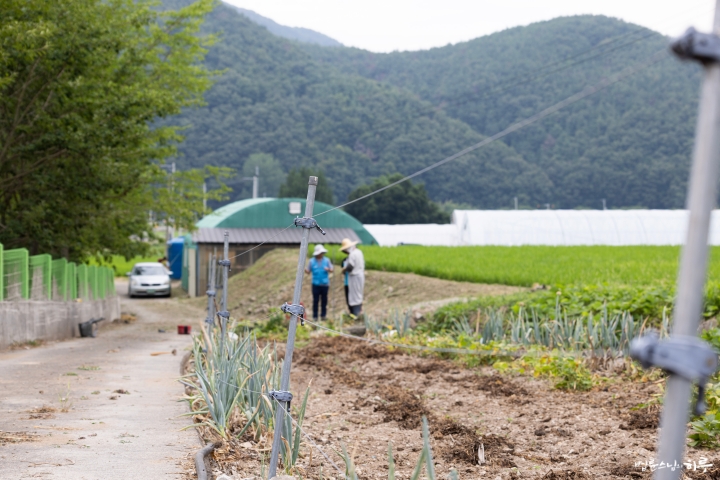
The damaged fence around the grandmother's field was finally complete.
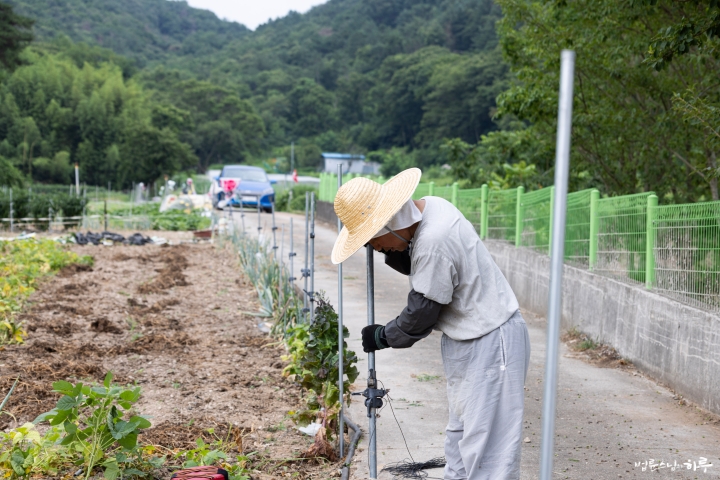
Sunim inspected the entire fence connecting to the upper part of the grandmother's field.
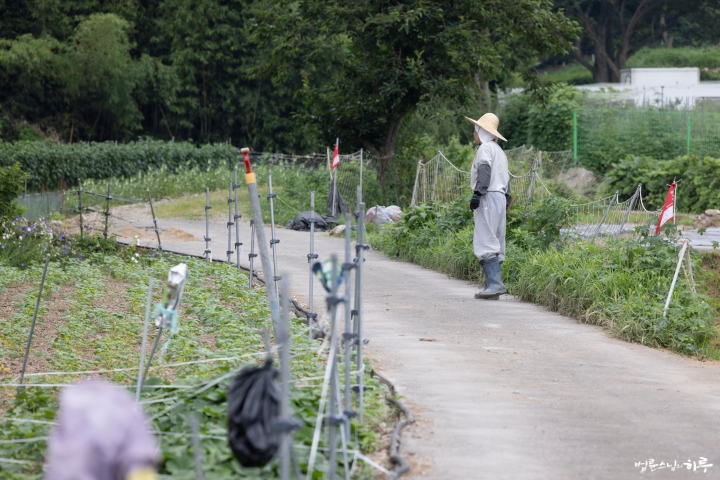
By the time the work was done, nearly three hours had passed. Sunim gathered up the tools and returned them to the storage shed.
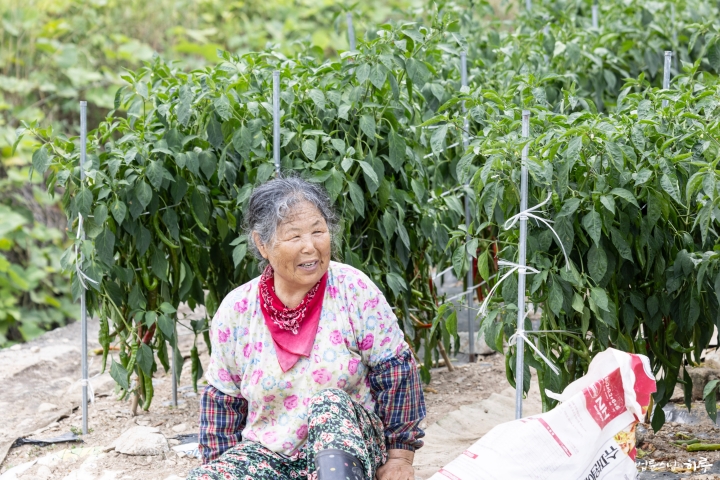
The grandmother, who had been working among her pepper plants, stopped a Haengja and asked:
"Has Sunim been working all this time?"
"Yes. (laughter)"
"Oh my, Sunim is always so generous when it comes to anything to do with our village. I really shouldn't have said anything, but I guess I was just so upset today. Thank you. There was no way I could have done this alone."
The grandmother's face finally brightened up.
After hearing that Jungto practitioners were pulling barnyard grass in the rice paddies, Sunim made his way over. From a distance, he could see the Jungto practitioners putting on rice paddy boots to prepare for weeding.
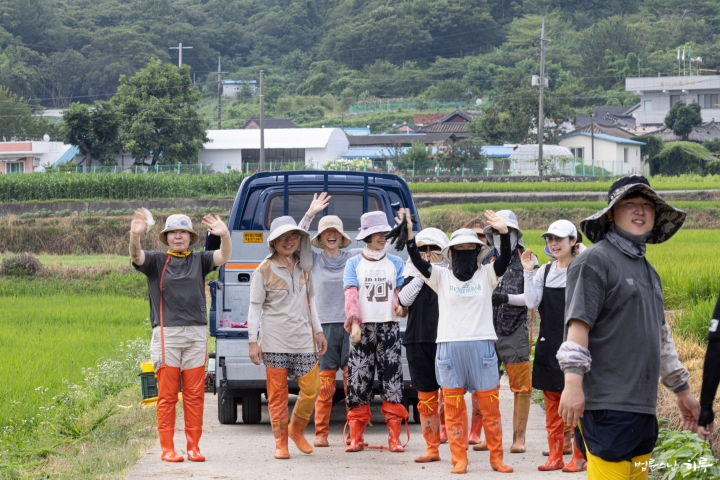
When they saw Sunim suddenly appear, the Jungto practitioners greeted him warmly.
"Which branch are you from?""We're from Dongnae."
"We're from Suseong."
"It's hot—are you sure you're okay?""Yes, we're fine!"
"Please don't overdo it. Thank you."
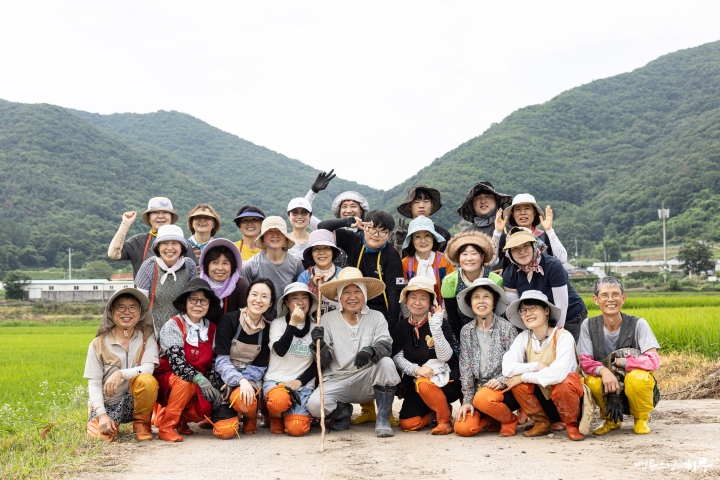
After greeting the Jungto practitioners and moving on, a villager greeted Sunim.
"Sunim, hello. How have you been? It's really hot, isn't it?"
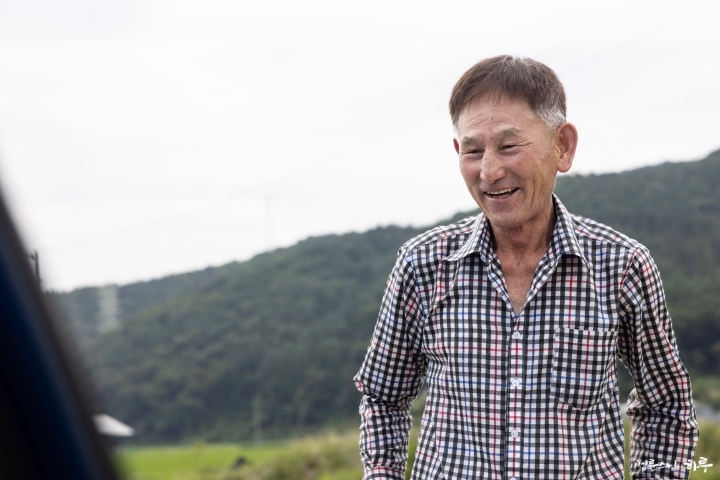
"No, Sunim, it's not from herbicide. It's probably because the weather has been so dry and hot."
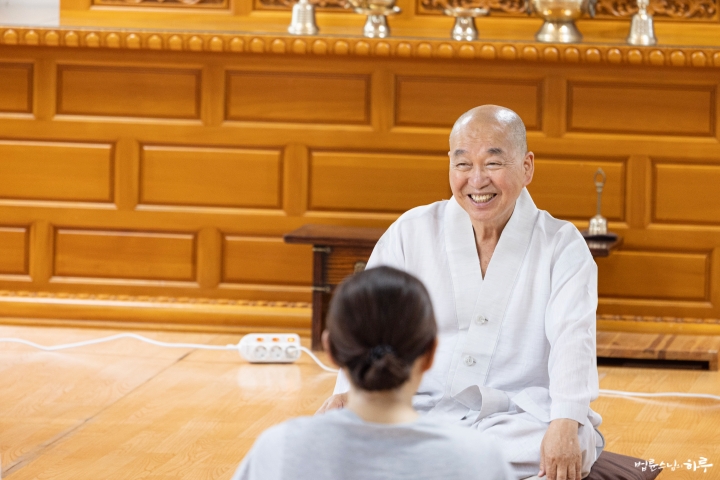
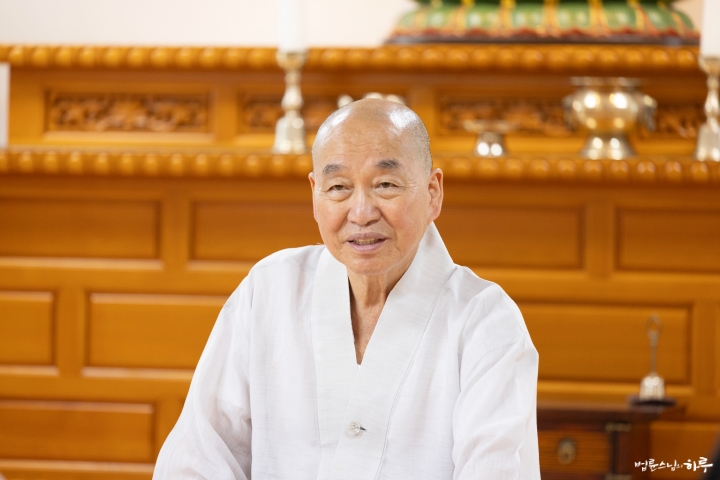
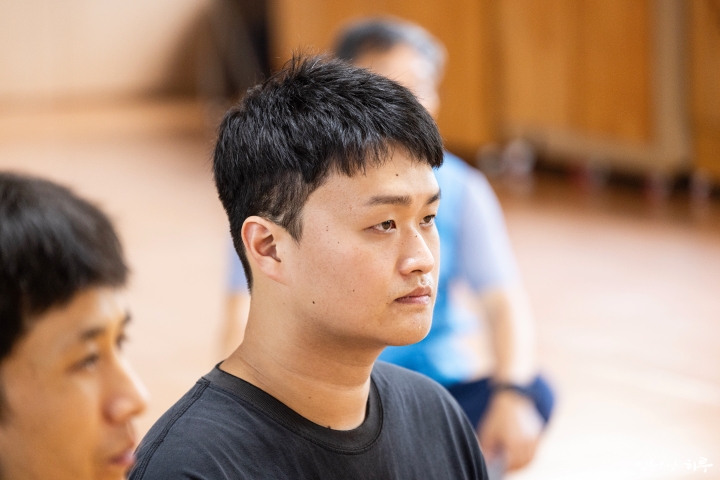
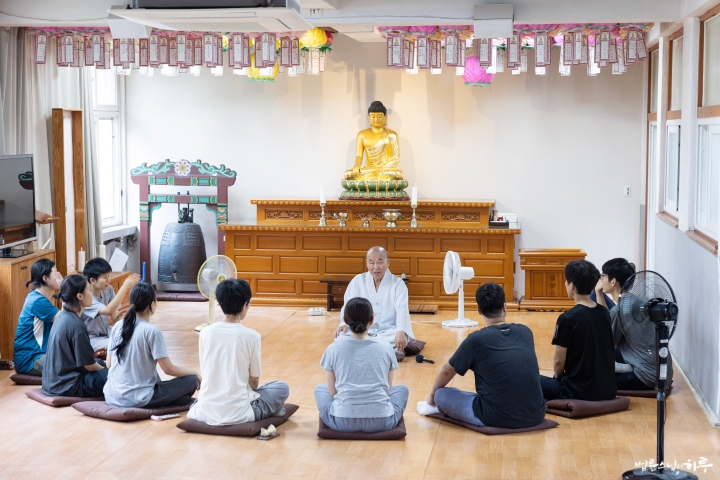
"Oh, I see."After having a combined breakfast and lunch and taking a rest, at around 4 PM, Sunim met with the Haengja who had returned for the 100-Day Chulga program at Dubuk Jungto Retreat Center. When the Haengja greeted Sunim with three bows and took their seats, Sunim asked:
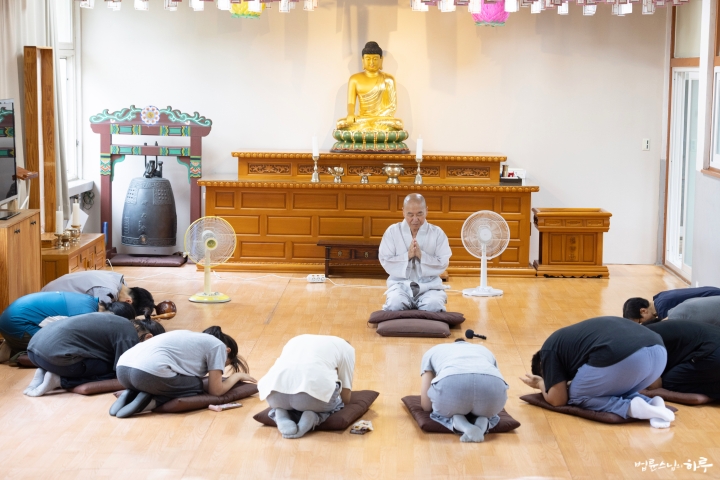
"I was in school."
"I was doing theater."
"I was running a fried chicken restaurant."
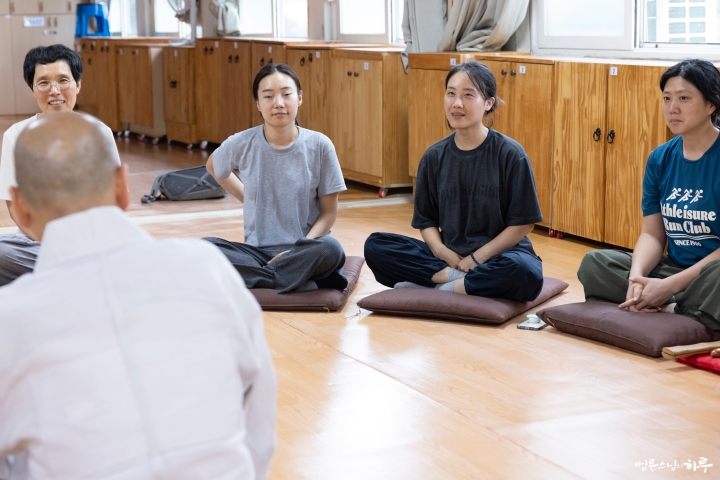
"I was a fitness trainer."
"I was just hanging out."
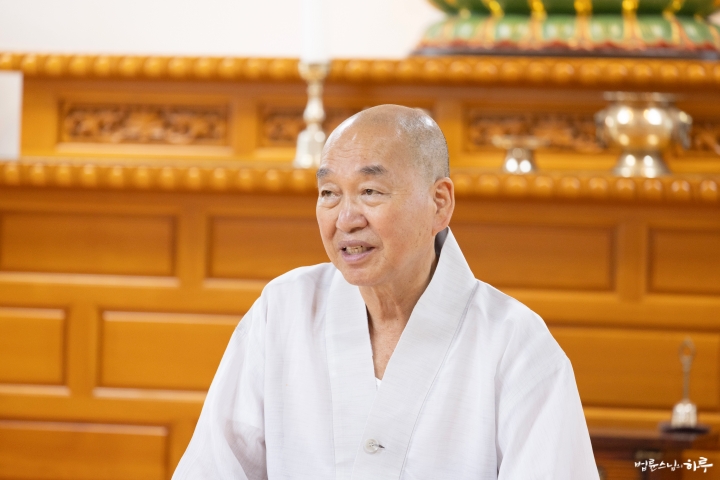
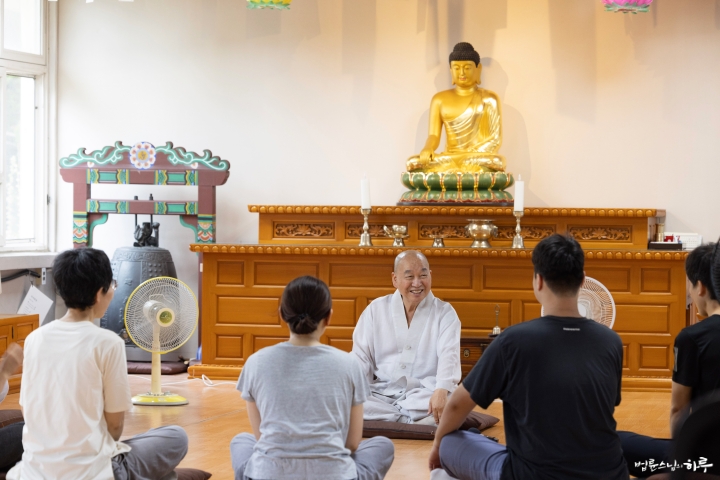
Sunim wrapped up his conversation with the Haengja and turned to his work.
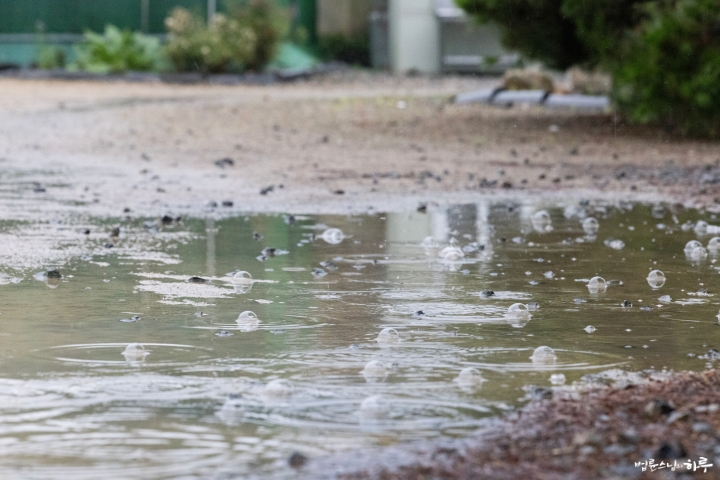
Around 6 PM, raindrops finally started to fall. A heavy shower would pour down and then stop, repeating this pattern, and thunder and lightning struck as if a downpour was about to begin.
At 7:30 PM, Sunim held the Friday Dharma Q&A at the Dubuk Studio.
"Hello everyone. How have you been this past week? We've been having extremely hot weather day after day—so hot that a fan alone isn't enough to bear it. Here, the air is clean, so the sunlight feels even more intense.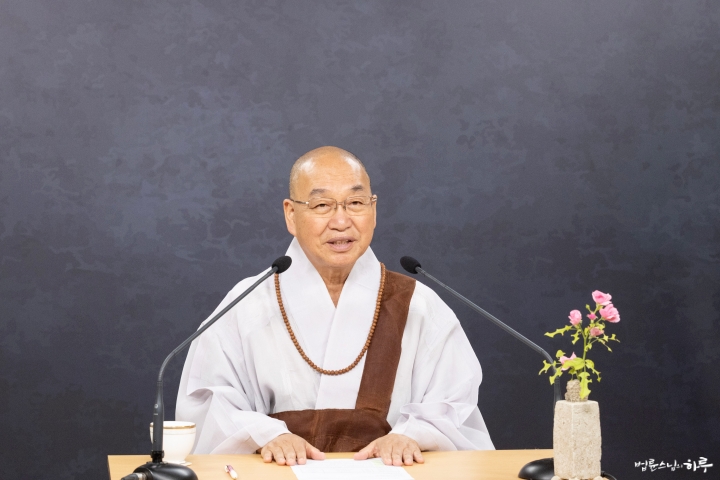
The 'Constitution' That Laid the Foundation of Our Democratic Nation
Today is Constitution Day, commemorating the enactment of the Constitution of the Republic of Korea. For the past 6,000 years of our long history, we lived in a dynastic era in which the king was the master of the country. Then, at the end of the Joseon Dynasty, Donghak thought emerged, declaring that 'humans are heaven.' In the dynastic era, the king was called the 'Son of Heaven.' But Donghak said that people are not the 'sons of God' but 'God' themselves. This became a new declaration that 'the people are the masters of the country.' We call this 'Huchongaebyeok (後天開闢),' the opening of the latter age. In the former age (Seoncheon), the king was the master of the country, but in the latter age (Hucheon), the people became the masters of the country. However, the Joseon Dynasty considered Donghak thought as deceiving the ignorant common people and executed Choe Je-u, the founder of Donghak. About 30 years later, his followers launched the Donghak Revolution to build a new nation, but the Joseon Dynasty brought in Japanese and Qing troops and brutally suppressed them. In this process, war broke out between Japan and Qing, and Japan's victory led to our nation losing its sovereignty to Japan.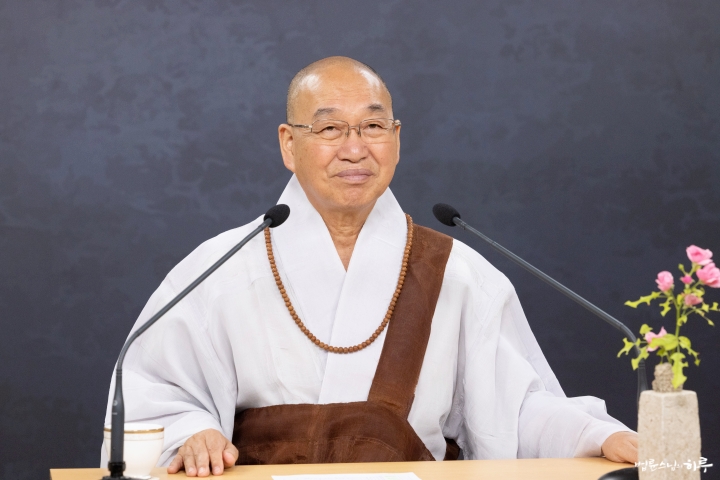
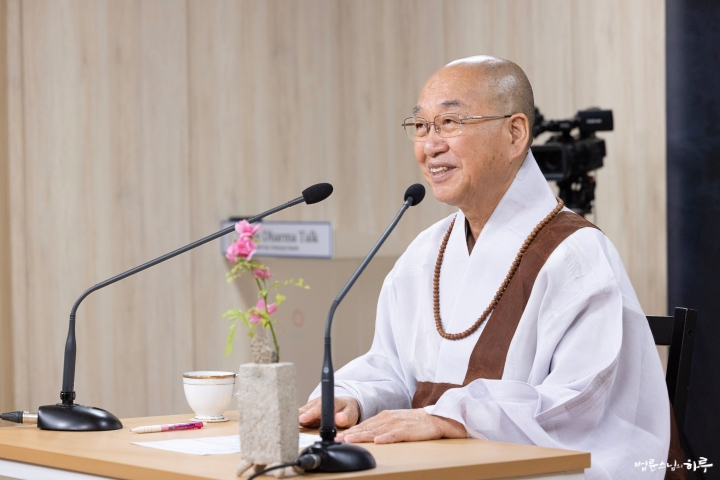
After Sunim's opening remarks, the Dharma Q&A began. A total of 4 people asked Sunim questions. Among them, this post introduces the exchange between Sunim and a mother who lost her son in an accident.
My 30 Years of Faith Are Crumbling After My Son's Death
"From a child's perspective, when a parent dies, it feels like the sky is falling and you lose your senses. But when a child dies before a parent, they say the parent completely loses their spirit. No matter what I say, it won't help you, but let's set this aside for a moment and look at a few things. If I bought something expensive yesterday and it broke today, I would feel that the money was wasted. And even if it wasn't expensive, if something I've been using for 30 years breaks, I would still feel it was a shame—because I had kept it for a long time. Even a small item, if we've shared time with it for a long while, creates attachment, and when it disappears, there's a tremendous sense of loss. How much more, then, when a beloved parent or child dies—the sense of loss would be enormous. Since ancient times, there's been a saying that when parents die, you bury them in the mountains, but when a child dies, you bury them in your heart. This speaks to the immense shock a child's death brings to a parent. Moreover, since you divorced and raised your child alone, your attachment to your son must have been even deeper. In other words, the reason you're in such great pain is because you had a deep attachment from having depended on your son for so long, and so the pain of loss is also great. If you had been living with a husband or had three children, the attachment would have been spread out, and the shock might not have been this great. But because all your attachment was concentrated on your only son, you've been unable to gather your senses to this degree.""It has been 100 days since my 25-year-old son became a star in the sky. My son, who was so kind and had such a strong will to live, died in an accident when he collided with an illegally parked vehicle. My son left this world so young and so suddenly, and my body and mind are in tremendous pain. When I think about how frightened and how much pain my son must have felt at the moment of the accident, it's unbearably distressing. I want to escape from this pain and sadness as soon as possible. I also want to live as a mother my son would not be ashamed of. I have been practicing my faith for nearly 30 years. But through this experience, I saw my heart shaking at the very foundation of my faith. How should I overcome and get through this time?"
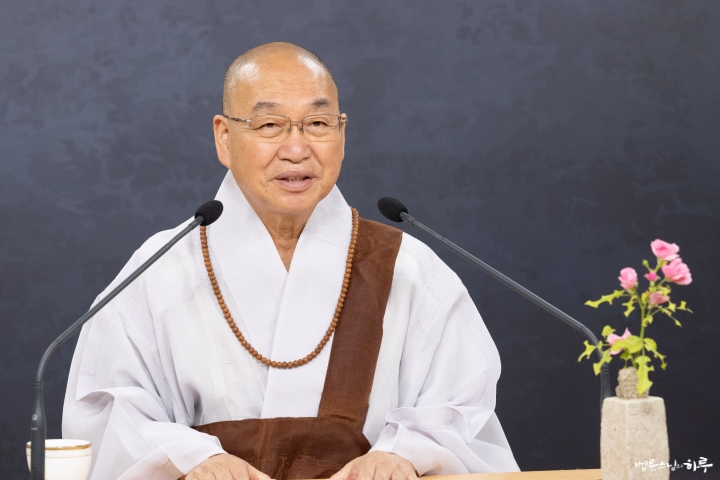
"Protestant."
"According to your faith, even turning a single hair on a person's head white or black is done by God the Creator. Then, is living and dying done by our will, or is it done by God?""God does it."
"But when attachment is too strong, dissatisfaction arises even with what God does. For matters of a certain degree, we can hold the attitude, 'If it is the Lord's will, let it be done.' But when something bad happens to someone we're strongly attached to, even if it's God's doing, it becomes difficult to accept. That's why the core of faith is having the attitude, 'Let it be done according to the Lord's will.' Accidents happen by chance. Your son also passed away in a chance accident. If the plane Sunim was on crashed, Sunim would naturally die too. But it's not right to interpret this theologically in a distorted way, saying 'he died because he didn't believe in God properly.' Because he was a son you raised alone after divorce, your attachment was bound to be unusually strong, and when such a son passed away in a sudden accident, it's a natural result that the emotional shock is great. Currently, due to the great sense of loss, you've suffered a mental shock and become unwell in both body and mind. At times like this, visiting a psychiatric department and taking medication to calm the extremely tense and overwhelmed nerves can greatly help stabilize your mind. Biologically, your brain nerves are in a state of excessive tension, so if you calm this down with medical help, you can feel much more at ease. After a few years, your heart can also recover significantly. Right now, the space in your heart that was filled with great attachment has become empty, so you feel hollow and out of your senses. For now, you need to see a psychiatrist to receive treatment and alleviate the shock inflicted on your mind. It's better not to feel that you must hold on to your current faith or that you should change your religion. Whatever your faith is, what's most important is that your heart finds peace. While keeping your current faith, it would be good to think, 'I'm somewhat dissatisfied, but since God did it, there must be a reason.' When praying too, if you gather your heart with 'I will accept the Lord's will. If it is the Lord's will, I will accept as a person of faith that my child was taken first,' you will find peace. If you continue to pray this way, your heart will gradually find stability."As Sunim concluded the Dharma Q&A and asked the questioner for her thoughts, she shared:
"Sunim, I've listened deeply to your precious words today. When my son was alive, he was preparing to become a member of a life-saving rescue team, saying he wanted to do work that saves lives. I want to carry on my son's wishes. I want to use the money I've saved for my son to help those who are struggling and in difficulty—those in humble circumstances—as I live my life.
And listening to Sunim's words about my shaking faith, I realized once again that in the end, faith is loving God until the day I die and being obedient to His will. It will take time to fully accept this grief of having lost my son, but as Sunim said, I will endure well and get through this. Thank you."
Although one cannot dare to fathom how painful it must be to send a child away first, the mother's earnest heart—remembering her son to the end and wanting to carry his intentions forward into the world—was deeply conveyed, and those listening felt their hearts grow heavy.
"Let's end here for today. Next week, I'll be entering a meditation retreat, so I won't be able to have a direct conversation with you. We'll meet again the week after and talk together."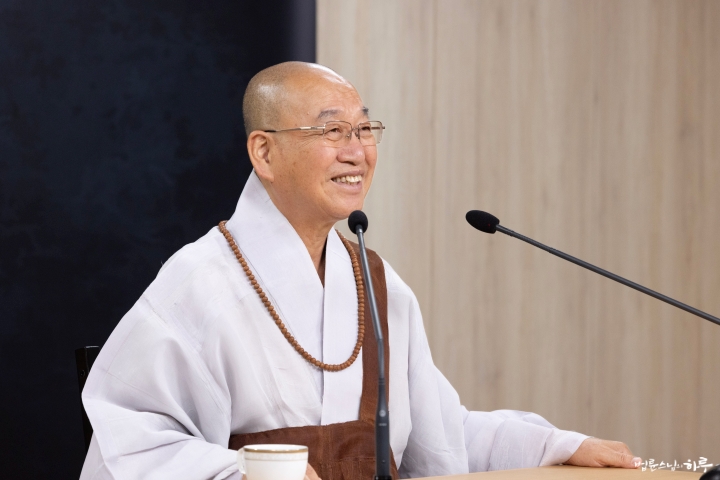
Concluding the Dharma Q&A, Sunim wrapped up the day.
The long-awaited rain has finally begun. Tomorrow, Sunim plans to plant perilla in the field with the Haengja.