There Is No Inherent Duty in Life That You Absolutely Must Fulfill.
July 16, 2026- Harvesting Crops, Hospital Visit, and Rest
Hello. Today, Sunim harvested crops from the field and visited the hospital.
Sunim began the day with morning practice and meditation.
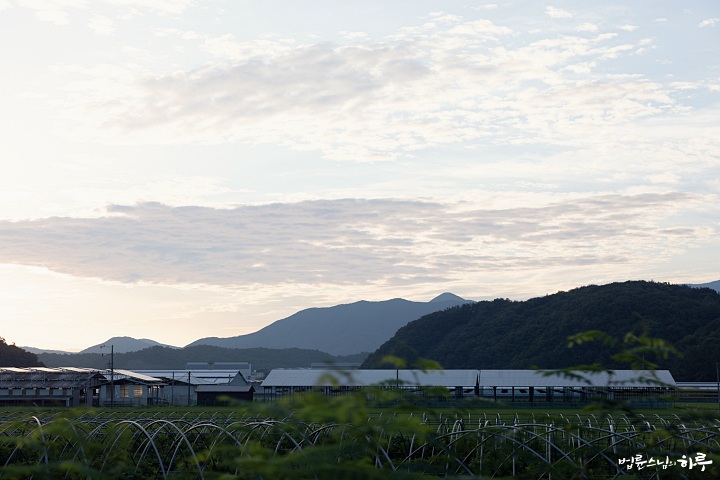
At 6 a.m., Sunim headed to the field to harvest vegetables to give as gifts to acquaintances.
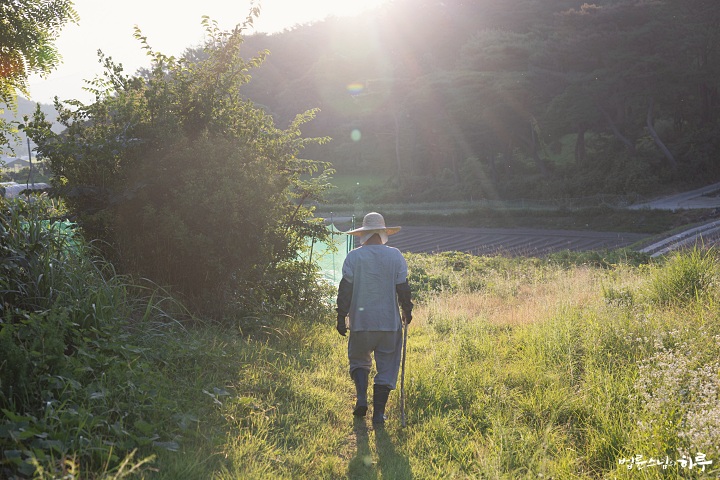
The eggplant field was full of eggplants hanging in clusters. Sunim began to harvest the larger ones.
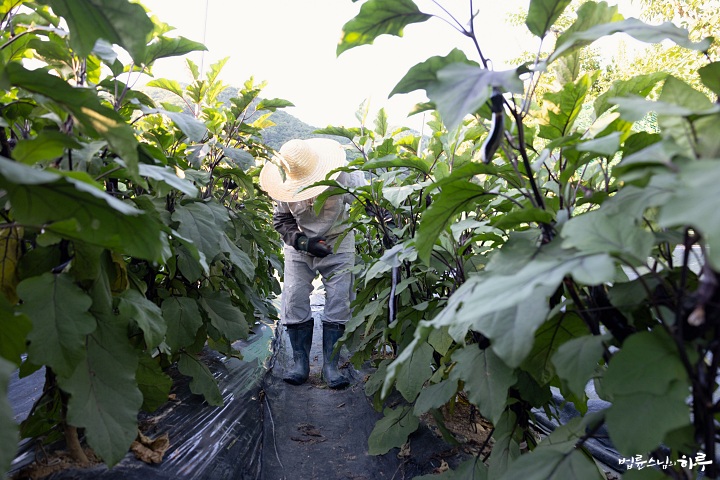
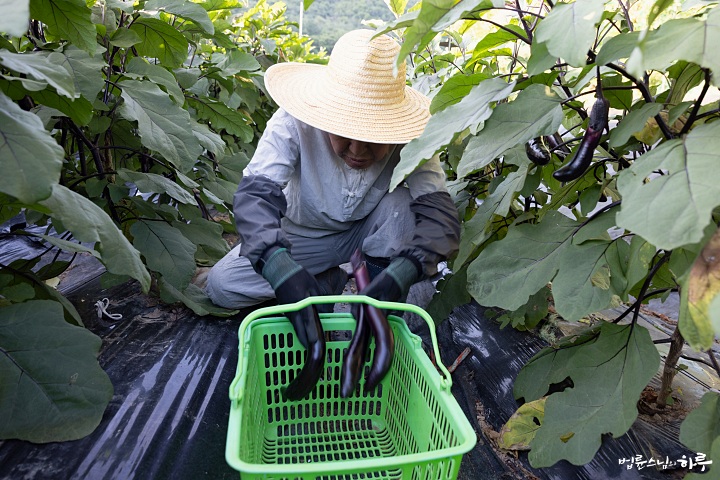
While picking eggplants, Sunim said,
"If you keep working in this posture, your back really starts to hurt."Fortunately, since the eggplants were meant as gifts for only four people, Sunim was able to harvest what was needed quickly, without much strain on his back.
Next, Sunim went to the greenhouse to harvest tomatoes and cucumbers.
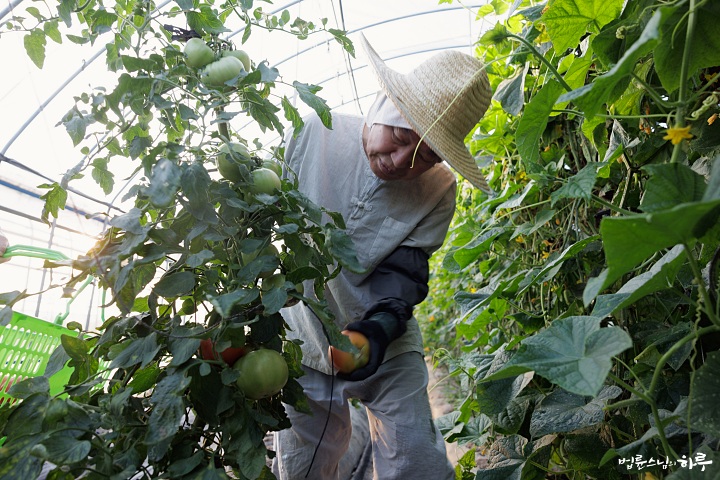
Since the cucumbers had already been harvested the previous day to make pickles for the community's retreat, only a few cucumbers were left on the vines. Still, by examining the vines carefully, Sunim was able to find and harvest a few hidden ones.
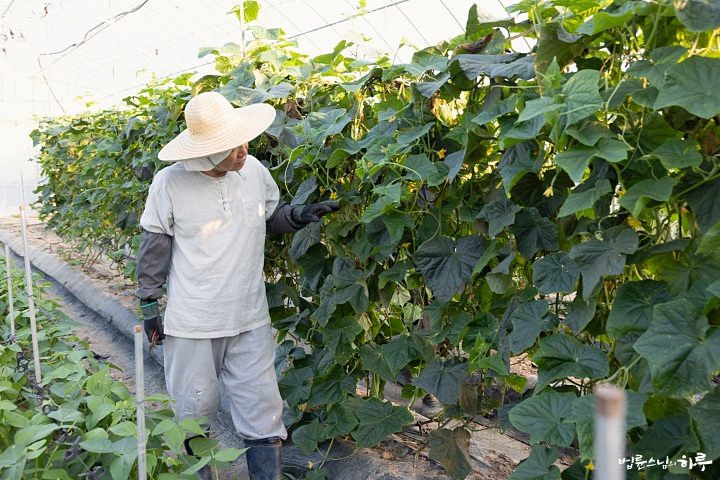
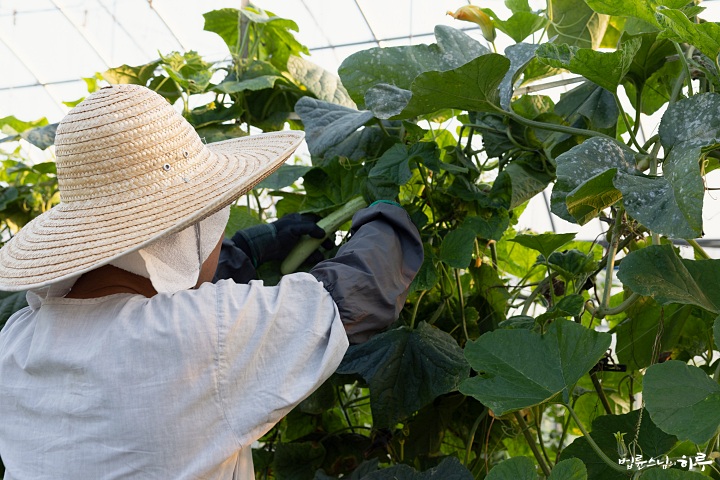
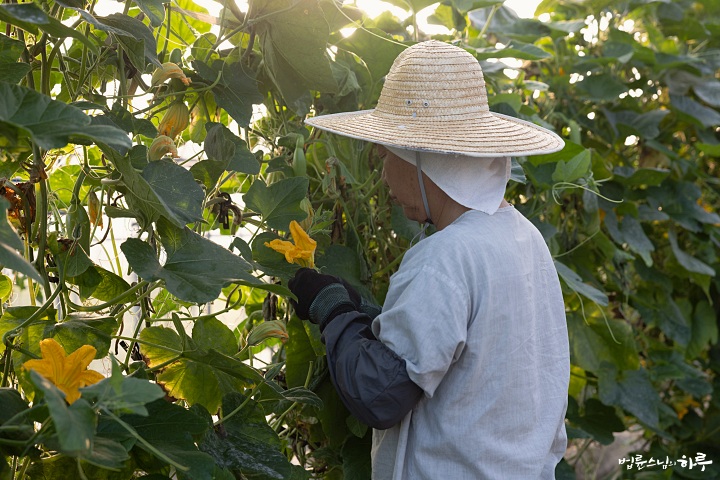
Next to the cucumbers were pumpkin vines. Sunim examined the pumpkin vines to see if any were ready to harvest.
"There are hardly any pumpkins. They need to be pollinated to bear fruit properly."Sunim then pollinated the pumpkin flowers.
Since there was also lettuce nearby, Sunim harvested some lettuce as well.
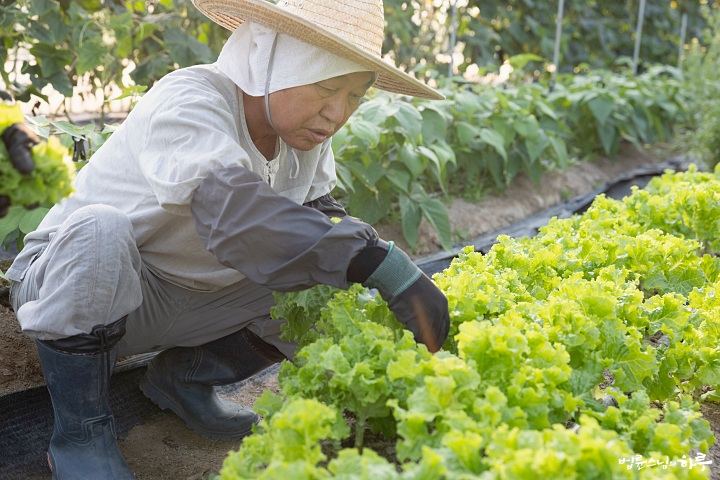
Sunim also gathered carrots and cauliflower that had been previously harvested and stored in the cold storage refrigerator.
After carefully trimming the eggplant stems with scissors, Sunim began putting together packages with the other harvested vegetables. With 6 eggplants, 2 cucumbers, 4 tomatoes, 1 cauliflower, 3 carrots, and lettuce, each package quickly became abundant.
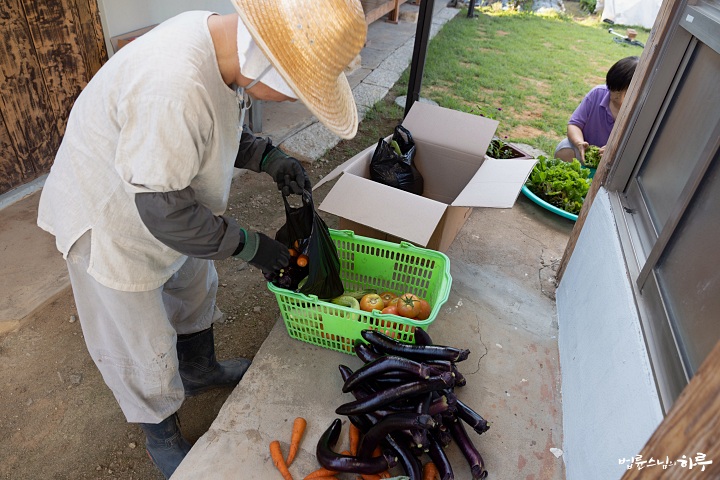
However, Sunim's back was aching, and involuntary sighs of "Oh, my back!" kept escaping. Despite the discomfort, Sunim finished packing the vegetables, put away the tools, and had breakfast.
Sunim departed at 8 a.m. to receive treatment in Busan (부산). On the way, he stopped by acquaintances' homes to deliver the vegetable packages harvested that morning.
"Hello. I just stopped by to deliver some vegetables. I harvested them myself this morning. Please enjoy them."The recipients responded with broad smiles, expressing gratitude for Sunim's unexpected gift.
"Sunim, thank you so much. I'm grateful for the vegetables, and even more so that you came to visit in person. I will enjoy them."
Sunim then got back in the car and traveled to Busan for his hospital appointment.
At 12:30 p.m., Sunim moved to a noodle restaurant to meet with Park Haeja (박해자) Bosal-nim, an honorary Senior Jungto Practitioner. Sunim arrived first, and shortly after, Bosal-nim arrived.
"Sunim, how have you been?"
"Bosal-nim, welcome. You must be hungry, so please have a bowl of noodles first. How have you been these days?"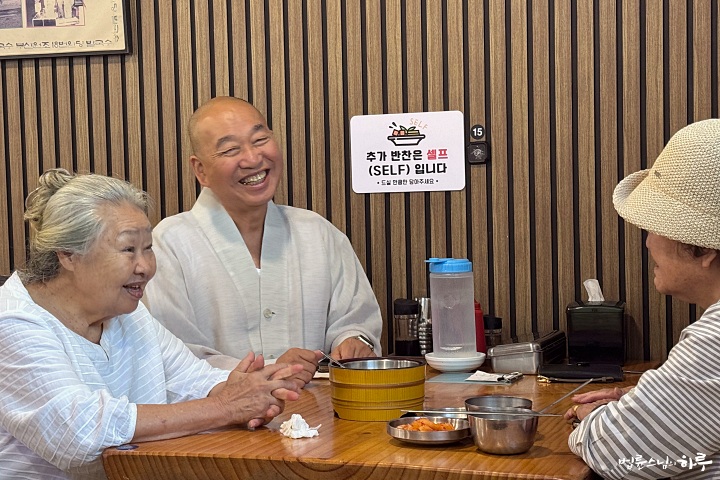
"Sunim, recently I was listening to a Weekly Dharma Assembly via Zoom online. I was listening along fine, but then something on my computer stopped working, and I couldn't hear the Dharma talk. So I called the person in charge, and they told me to exit Zoom and re-enter.
Back when online Jungto Society first started, I didn't know anything about computers, so I was afraid to touch anything. I didn't know what button to press. I would just sit there quietly. But this time, I actually turned the computer on and off, and entered and exited Zoom on my own. Even then, no sound came out. So I kept fiddling with different parts of the computer, and suddenly, Sunim's voice came through clearly. I was so happy that I clapped my hands with joy, all by myself."
"Wow, Bosal-nim, joining a Zoom meeting online at the age of 87 is truly impressive."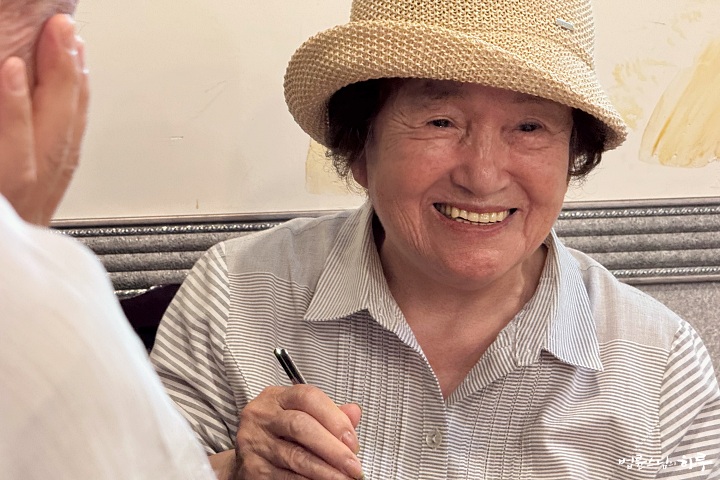
The elderly Bosal-nim looked at Sunim and smiled brightly.
As they talked about the elderly mother of Beopmyeong Sunim whom he had met recently, stories about the Haeundae (해운대) Jungto Dharma Center, and memories of past activities, it was soon time to get up from their seats.
Seeing Bosal-nim searching for her wallet to pay for the noodles, Sunim said,
"Bosal-nim, I've already paid. Please don't worry about it.""Oh, Sunim! I came all this way because I wanted to treat you to a meal.... Otherwise, why would I have come all the way here?"
"I also came all the way to Busan because I wanted to meet you and treat you to a bowl of noodles. (laughter)"Sunim got into the car with Bosal-nim to take her home. Opening Google Maps, Sunim said,
"We can enjoy an ocean view today. (laughter) If we take this road, we can pass through Yeongdo (영도) and cross the Gwangan Bridge (광안대교)."As they drove across the ocean bridge, they soon arrived in front of Bosal-nim's home.
"Bosal-nim, we'll be holding your 100th birthday celebration in October. Please be sure to come.""I will, Sunim. Thank you. Please take care on your way back."
Sunim also gave Bosal-nim a package of vegetables harvested that morning and then headed to Dubuk.
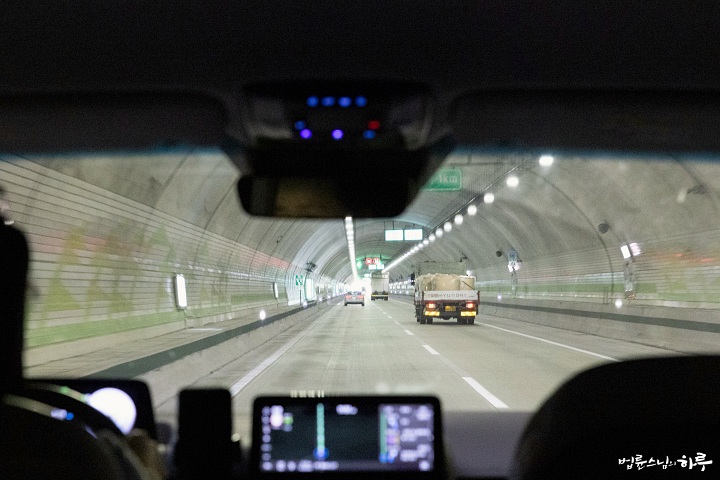
In the car, Sunim said,
"Thanks to the cancellation of the Syria trip this time, I've been able to meet with people I've long wanted to see."Around 4 p.m., Sunim arrived at Dubuk Jungto Retreat Center and had a video conference with INEB representatives.
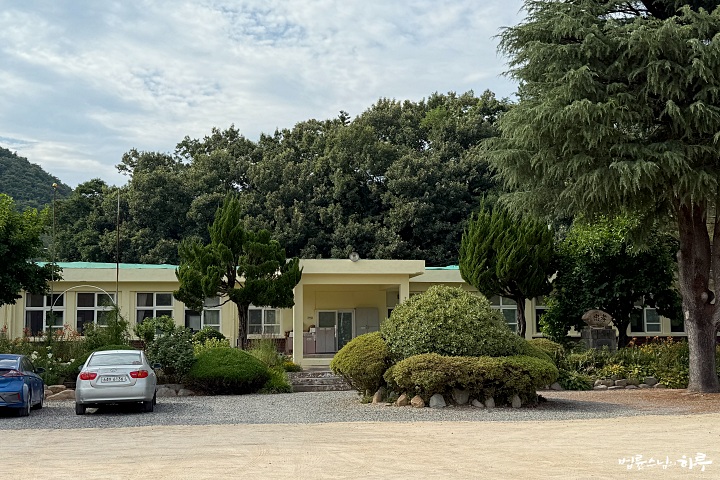
After the meeting, Sunim attended to work matters, had dinner, and then rested. Since there is no Dharma talk from Sunim today, this post introduces a Dharma Q&A from the Happy Conversations event held in Gwangju (광주) this past May.
There Is No Inherent Duty in Life That You Absolutely Must Fulfill.
"The very fact that you are confused suggests that it might be something you're doing because it makes you feel good. If you were truly doing it without any expectation, you wouldn't be confused. Let me ask you one thing. When we say, 'Help people in difficulty,' who do we usually mean by 'people in difficulty'? Aren't they people who are financially struggling, mentally exhausted, or physically ill? But you yourself just said that you are struggling and finding things difficult. So, do you also count as someone in difficulty, or not?""My father, who passed away two years ago, spent his entire life helping others and always told me, 'Help people without expecting anything in return.' Influenced by him, I have been working at a public research institution on biological resource conservation while running a small farm on my own. I practice small acts of sharing with welfare centers and people in need. However, these days, when I hear the stories of people in difficult circumstances, not only my heart but also my body often feel exhausted. On the other hand, when I'm able to be of even small help to someone, my heart feels at ease and I feel happy. But sometimes I get confused about whether I am really helping without expecting anything in return, or whether I am clinging to good deeds because they bring me comfort and happiness. Is this feeling a sense of responsibility, or is it attachment?"
"Right now, I do count as someone in difficulty."
"Then shouldn't you first help yourself? Not helping yourself means, in effect, turning a blind eye to the real person in difficulty right in front of you. I'm asking why you leave the person in difficulty right in front of you and go far away to help others." "It's not necessary to have a lot of money to do volunteer work. Even without money, I believe working hard and sweating is one way to help." "I fundamentally don't believe that life is worth living by working so hard and sweating like that. Does a rabbit living in the mountains work hard and sweat to survive? It just lives as things come. Squirrels also just live as things come, and you have far more ability than a squirrel. What makes you feel you have to strive so hard to live? Even so, a squirrel is physically weaker and less skillful than a human, so it would be logically consistent to say, 'A squirrel has to fight for its life just to be as well off as a human.' But even the tiny creatures much smaller than us live at ease. Have you ever seen a squirrel complaining about how hard life is while also pitying other squirrels and helping them with all its might? Similarly, you can just take care of yourself first. The sweat we shed isn't shed because we tell ourselves, 'I need to sweat!' When you work, sweat comes naturally. You are currently clinging to a kind of sense of duty. Your life is hard right now because you are living with a sense of obligation. But there is no inherent duty in life that you must fulfill. If something is too heavy, put it down. If it's too hard, don't do it.
"Yes, that's true. My late father always practiced volunteer work during his lifetime, and I have carried on his wishes."
"But the issue is that whether you volunteer or not, whether you help someone or not, it's all fine—so why do you say it's 'hard'? If it's something you absolutely must do, then even if it's hard, you should willingly do it. I just returned from the United States the day before yesterday, and I still haven't adjusted to the time difference. But since I've promised to give a talk in front of an audience like this, I have to see it through to the end, no matter how tired I am. I can't just walk out because I'm tired. In life, there are times when you must take responsibility, even when it's difficult. On the other hand, if I had no schedule tonight, I could sleep whenever I felt drowsy. Depending on the situation, sometimes when it's hard, you can rest, and sometimes even when it's hard, you have to push through. If food doesn't taste good, you can just not eat it. But sometimes in life, there are moments when you have to eat even if it doesn't taste good. For example, suppose I've been invited to a lay practitioner's home. They prepared food with tremendous care. But when I actually taste it, it doesn't suit my palate. In such a situation, I can't just put down my spoon and say, 'Ugh, this doesn't taste good.' Even if it doesn't taste good, I must eat it. This is life. It's not something to suffer over; it's simply something you have to do. But if it's food I'm eating alone at home, I can choose not to eat it if it doesn't taste good, and eat more if it does. Likewise, in some situations, you have to eat even if it doesn't taste good. When tired, you can rest, and when you don't feel like doing something, you don't have to. But in other conditions, you have to do things even if you don't want to, and you have to keep going even when you're tired. That's just how life is. If it's too hard for you, you can close the farm. You can even sell it. But rather than selling it, since your father's wishes are also involved, you can just take it lightly and think, 'Whether the farming goes well or not, I'll just give it a try,' even if it's physically demanding. As for volunteer work, try it, and if it's too hard, stop. But if your father's words continue to linger in your heart, then do it willingly, even if it's a bit tiring. 'Even if it's physically a bit exhausting, I'll just do it.' If you take this perspective, the work becomes far less difficult than you thought.""Yes, I understand."