During an Argument with My Wife, I Accidentally Hit Her.
Jul 10, 2026. Making Tofu, Meeting in Gyeongju, Friday Dharma Q&A
Hello. Today, Sunim made tofu and had meetings in Gyeongju(경주).
Sunim began his day with morning practice and meditation.
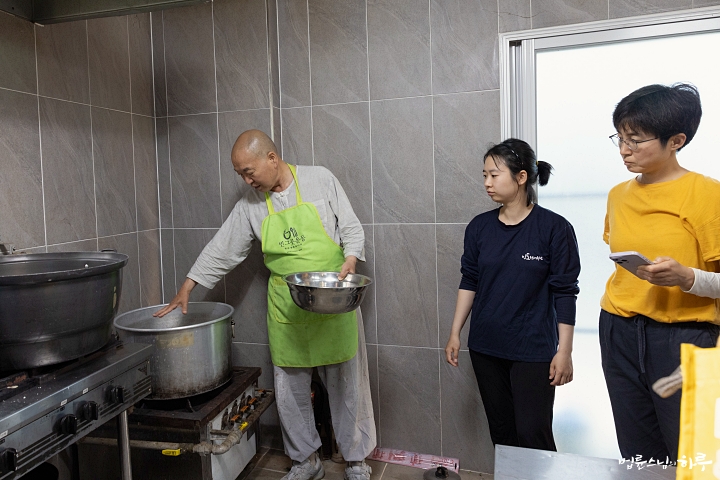
After revising a manuscript, at 6 a.m. Sunim went to the kitchen and began making tofu together with the volunteers who came from Bhutan. Before starting the work, Sunim first explained the tofu-making process.
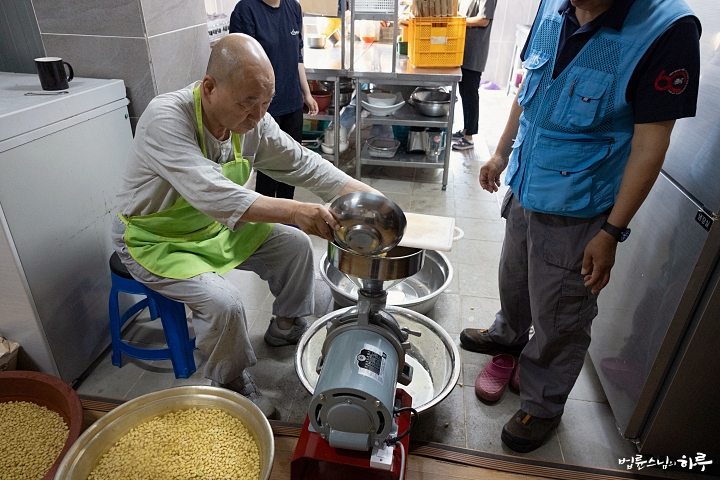
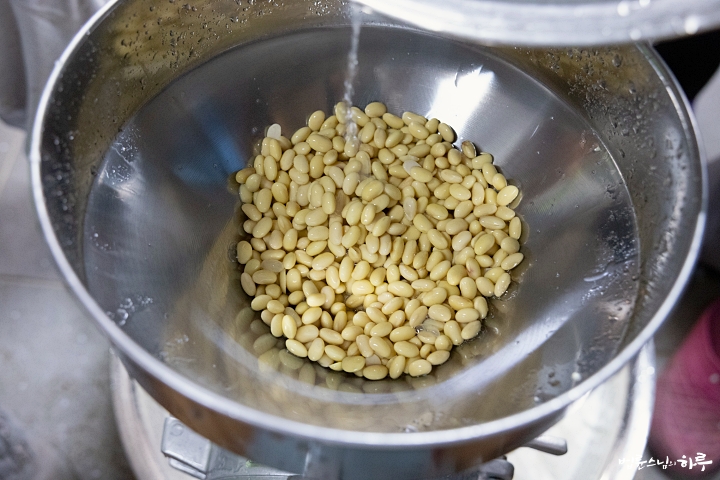
The soybeans, which had been soaking since the night before, were properly swollen. Sunim turned on the machine and began grinding the beans. At first, some beans splattered out of the machine, but as he added water little by little and continued grinding, they were soon ground smoothly. Thanks to the machine, 10 kg of beans were ground quickly.
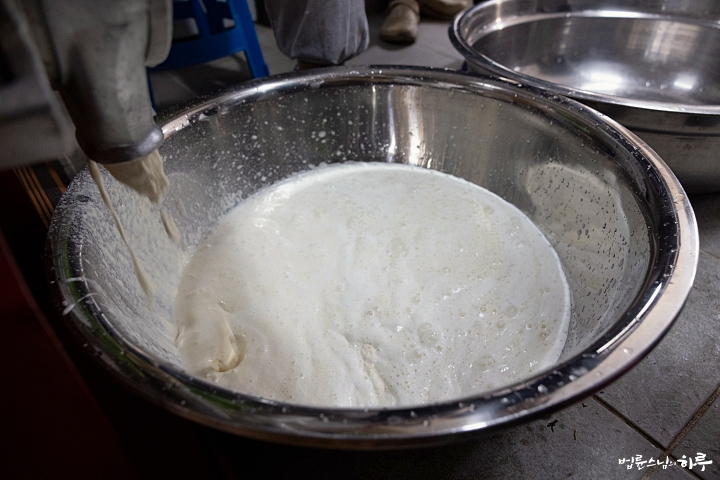
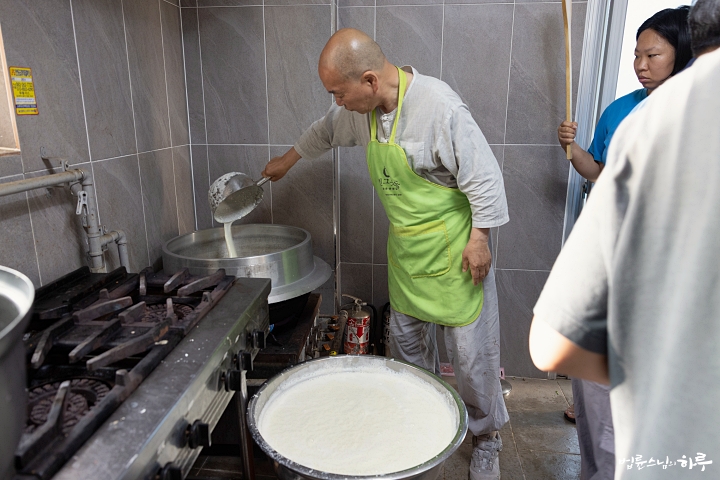
Next, the ground soy milk was placed in a large pot and boiled while stirring. It had to be stirred constantly to prevent the beans from sticking to the bottom of the pot. When the boiling soy milk suddenly rose up in the pot, Sunim quickly poured in cold water to keep it from overflowing.
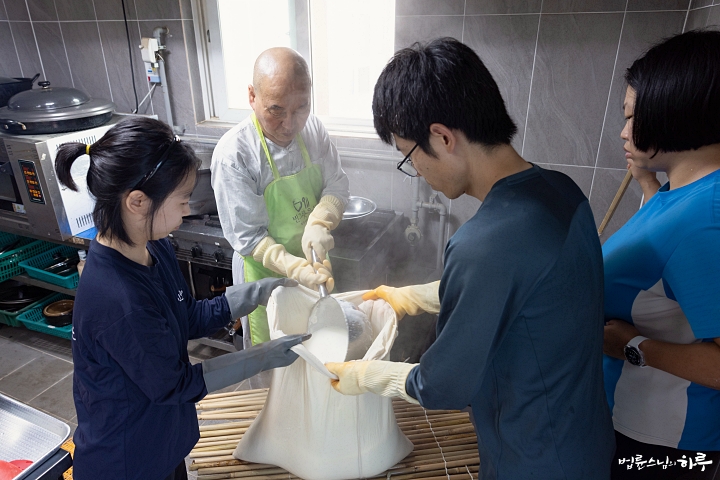
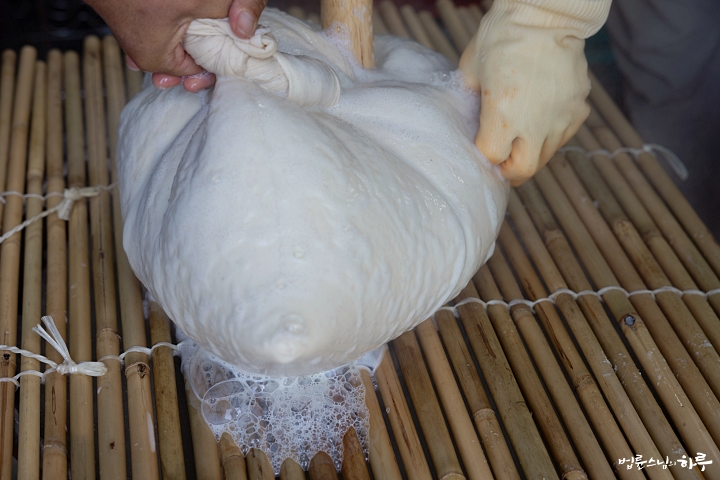
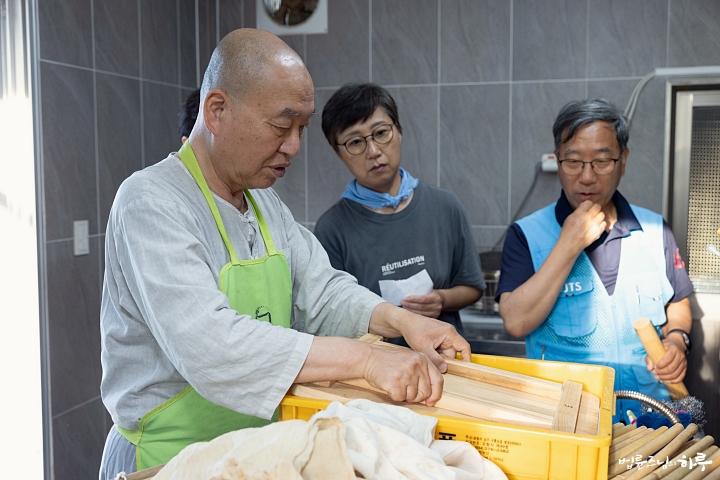
Once the beans were sufficiently cooked, the soy milk was transferred to a cloth bag and squeezed to drain the liquid. The creamy soy milk collected neatly in a basin beneath a bamboo strainer, while only soybean pulp remained inside the bag.
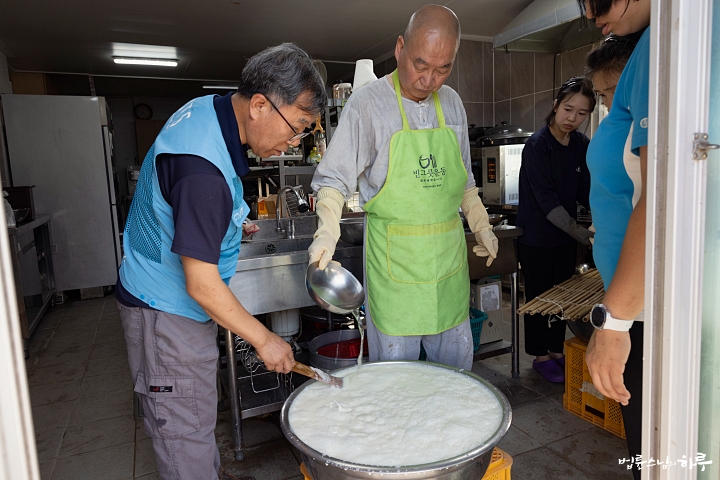
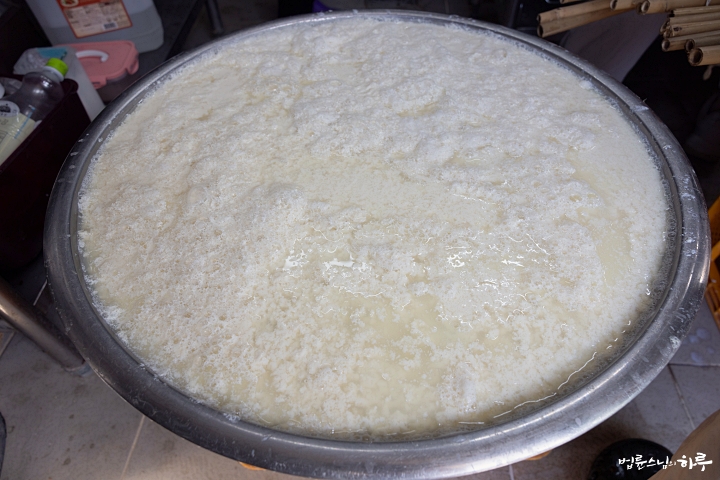
Next, they added the brine the Dharma Teacher had prepared, but contrary to expectations, the soy milk did not curdle well. Sunim suggested adding a little vinegar, and when the vinegar was added, the soy milk slowly began to curdle into soft, fluffy sundubu. It was decided that a little more brine would be obtained through one of Sunim's acquaintances.
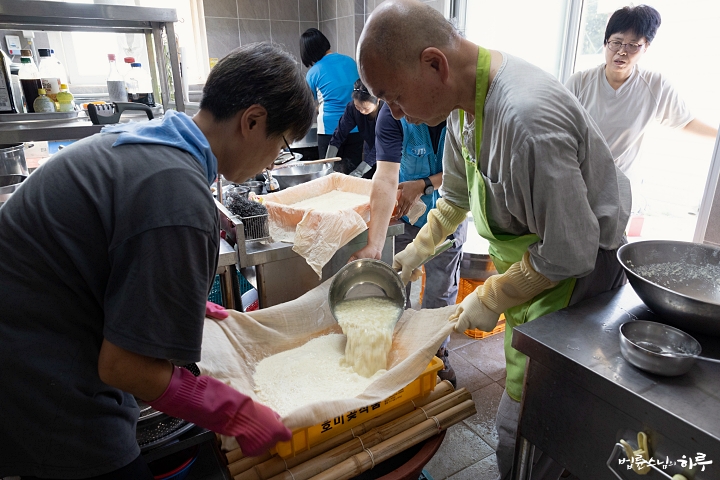
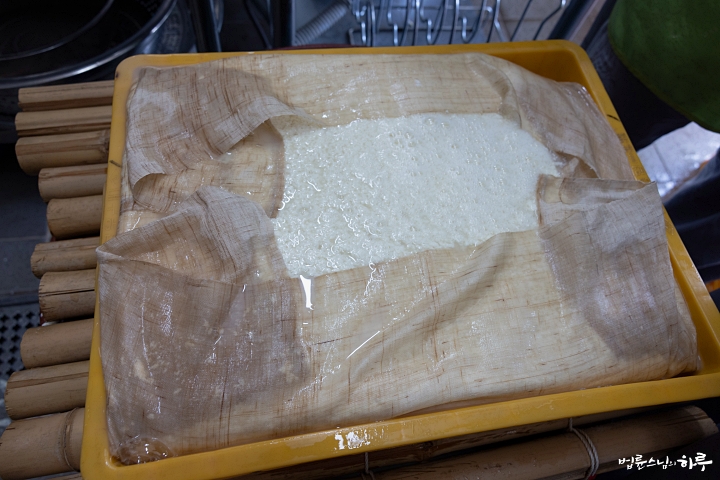
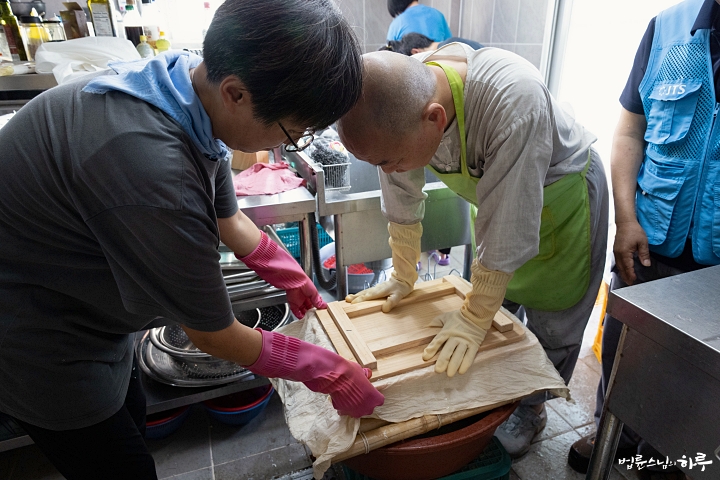
A little later, Sunim laid hemp cloth in the tofu mold and placed the sundubu inside. After covering it with the hemp cloth, he placed a wooden lid on top and added weight by placing a pot filled with water on it. As time passed, water began to drip out through the hole beneath the tofu mold. As the water drained, the tofu firmed up into shape.
For the last batch of soy milk, brine that had just been obtained through Sunim's acquaintance was added. When the brine was poured in, the tofu curdled well.
Sunim sliced the finished tofu with a knife and said to the Bhutan volunteers,
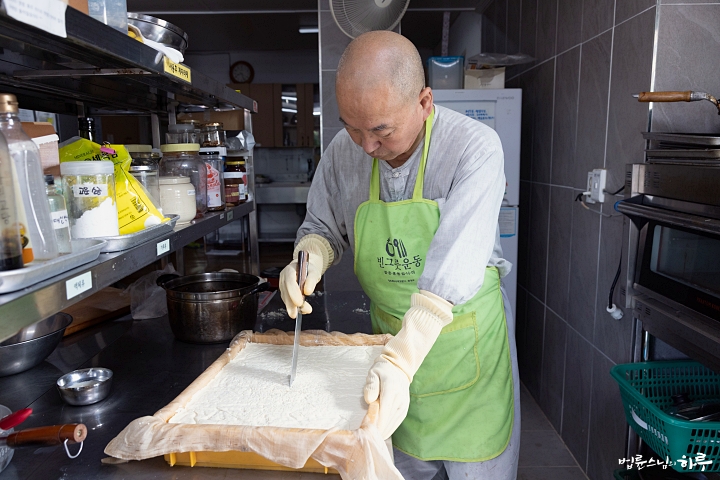
It was fragrant, soft tofu. Eaten together with well-fermented aged kimchi, it was truly delicious.
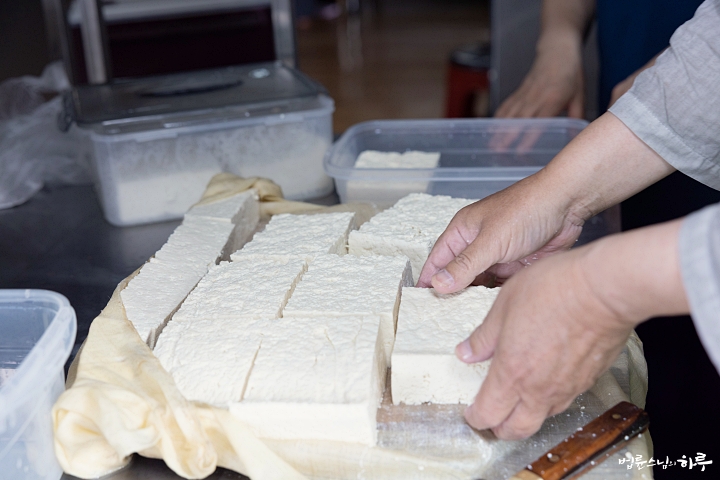
Sunim carefully cut the tofu and prepared it as gifts for the people he would meet at today's meetings.
Since Sunim had sweated a lot while making tofu, he took a quick wash and changed clothes to go out. At 9:30 a.m., he got into the car and traveled to Gyeongju.
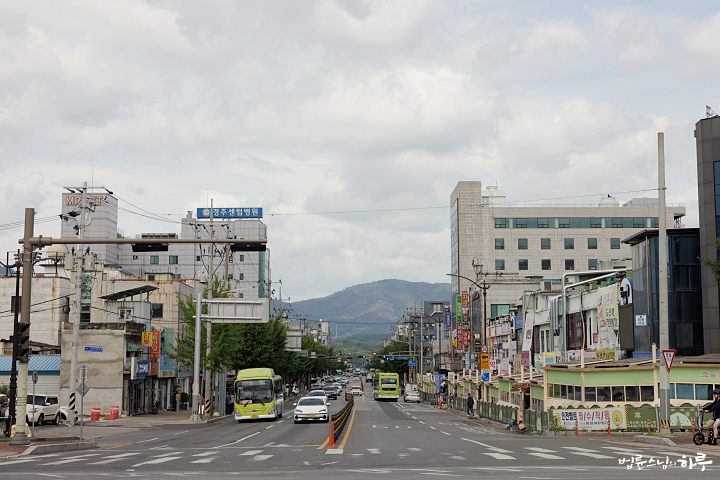
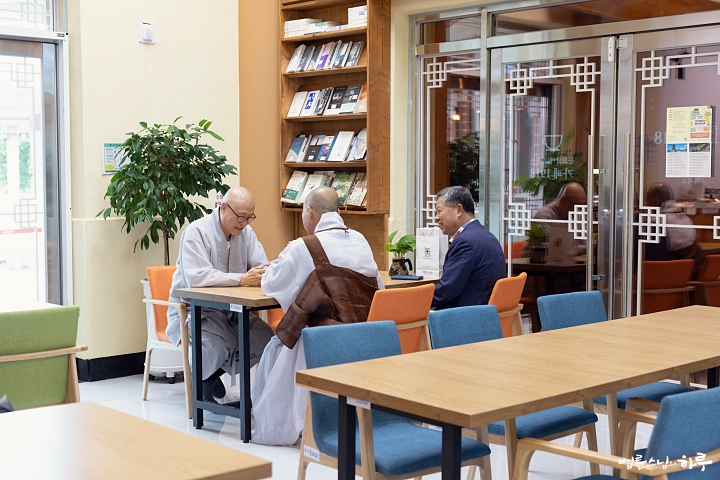
At 9:50 a.m., Sunim arrived at the meeting place, a café at the old Gyeongju Station. He met Jongsu Sunim(종수 스님), a longtime friend, together with Jin Byeong-gil(진병길), Director of the Silla Cultural Center. First, Sunim gave the tofu he had made that morning as a gift.
"This is tofu I made this morning. I hurriedly prepared it while making tofu and came here. (laughter)"Over tea, they discussed JTS's projects in Pakistan.
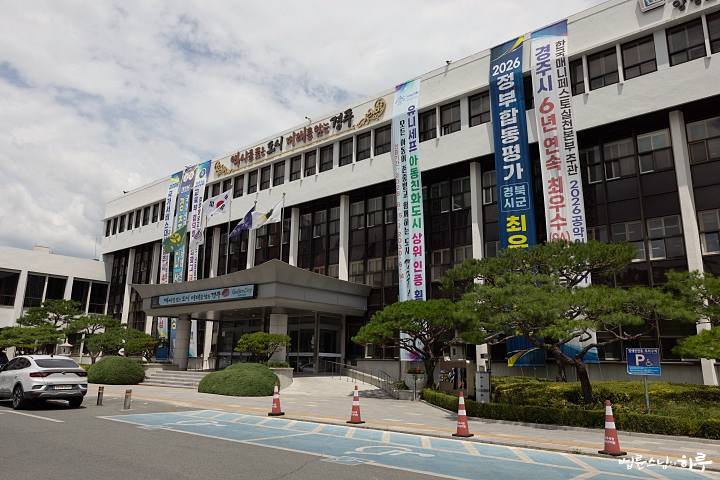
After the conversation, Sunim moved to the next meeting location, Gyeongju City Hall. There he held a meeting with the Mayor of Gyeongju about the Cheollyongsa Temple construction project. The meeting lasted about 30 minutes, and Sunim presented the Mayor with tofu as a gift.
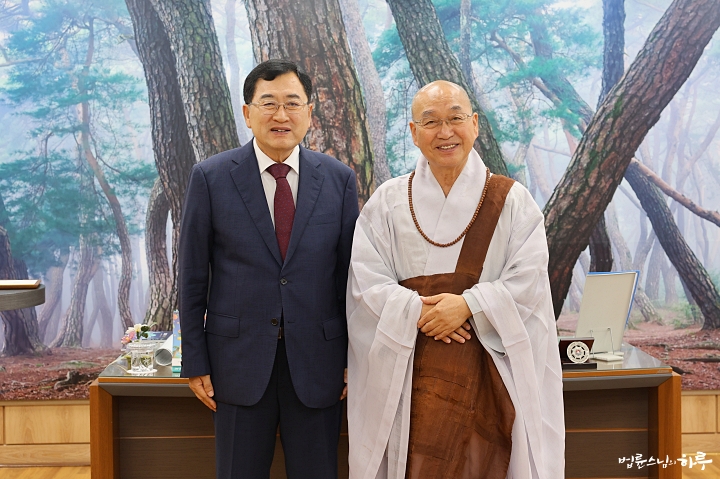
After the meeting, as Sunim was preparing to head back to Dubuk Jungto Retreat Center, the President of Dongguk University suddenly contacted him, expressing a wish to treat him to lunch. However, since Sunim had been having diarrhea and was not feeling well after his Sri Lanka trip, he could not have a meal. Instead, he suggested having tea, and they went to Dongguk University.
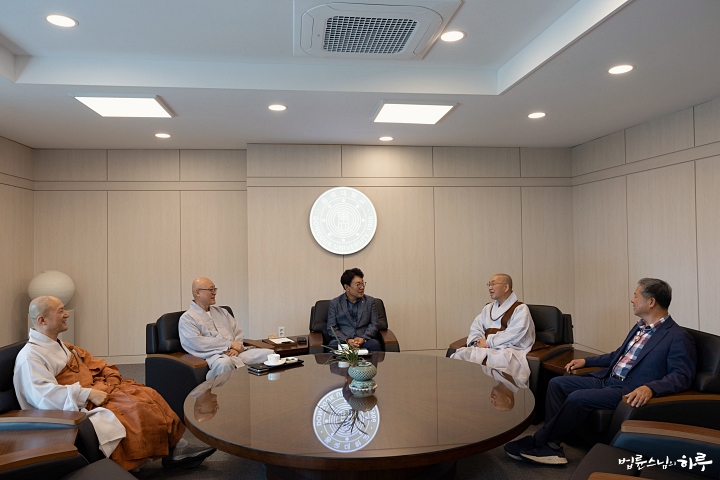
In the president's office at Dongguk University, Sunim shared tea with the President, Jongsu Sunim, and the Director of the Silla Cultural Center. They were given a brief tour of the building and heard the President's vision for the university's operations.
After the tea talk, Sunim returned to Dubuk Jungto Retreat Center, and by then it was already 1 p.m. After lunch, since the day was so hot, Sunim rested during the afternoon.
At 7:30 p.m., an online Dharma Q&A was scheduled, so Sunim moved to the broadcasting room to give a Dharma talk.
The Friday Dharma Q&A began with an introductory video about Sunim. About 4,000 people connected online simultaneously to watch Sunim's Dharma Q&A.
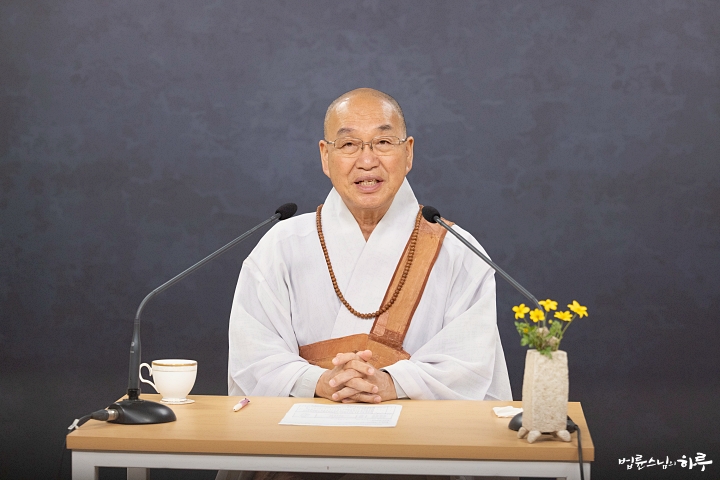
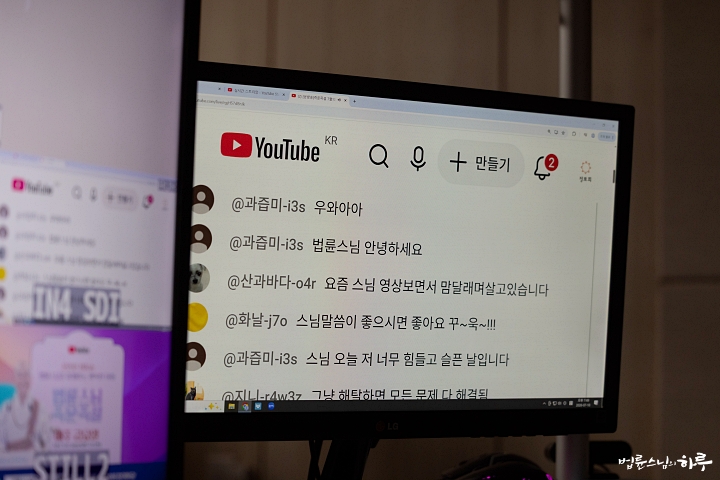
After briefly sharing about his recent trip to Sri Lanka, Sunim began the Dharma talk by speaking about the recent weather.
"The weather has been very hot lately. Looking at the whole earth, the Korean Peninsula is a small country, and within it, the place where I am now is Ulsan(울산). Here in Ulsan, not a drop of rain has fallen, and the sweltering heat continues under a blazing sun. Yet in Mungyeong(문경), also in Gyeongsang Province, they say it has rained so much that the area has become flooded, and in Chungcheong Province, over 200 millimeters of rain has fallen, causing serious flood damage. I am farming here, and right now is the time to transplant seedlings, including perilla. I transplanted some of the seedlings from the field, but even with watering, the sunlight was so intense that they all dried up and died. If you transplant during the rainy season when clouds linger for a few days and rain falls steadily, perilla grows well. These days, localized weather phenomena are occurring frequently. Concentrated rainfall in narrow areas or continuing droughts are one aspect of climate change. Not only sudden rises or drops in temperature, but also localized heavy rains and droughts cause damage such as wildfires. We are experiencing these weather changes all over the world right now. When I visited Sri Lanka, it was normally the rainy season when it would rain continuously. However, during the week I stayed, except for a little rain on the last day, not a drop fell. The umbrella I brought in case of rain was never needed. It was convenient for traveling since there was no rain, but for farmers, they need rain during the rainy season to plant rice, so they must be facing many difficulties. The weather always changes a little, but these days, the range of that change seems much larger than in the past.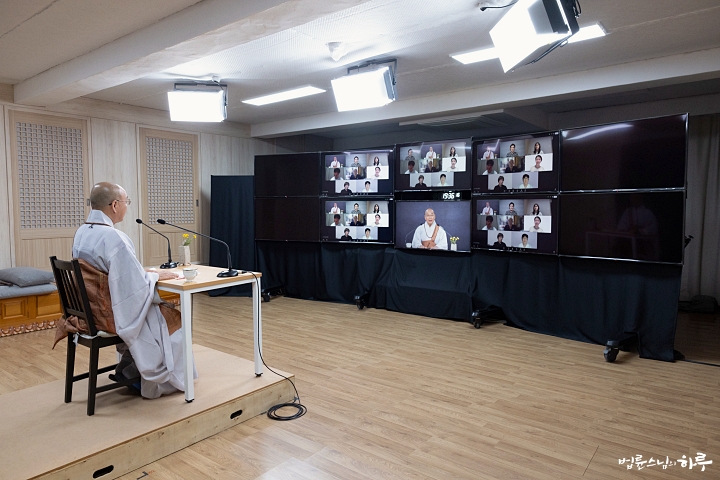
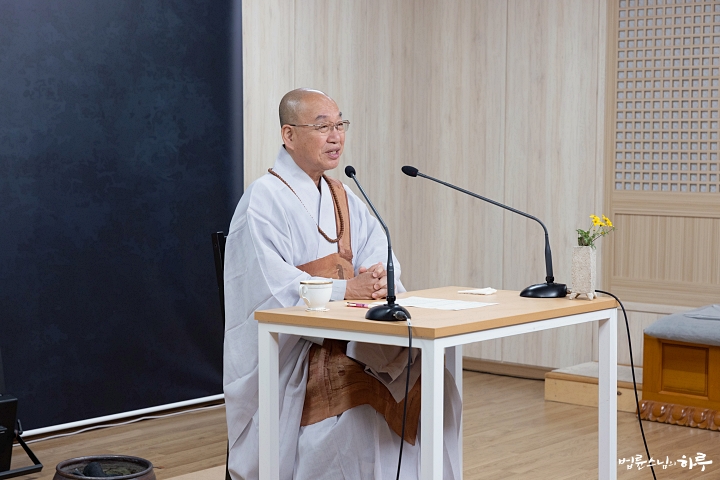
Four questioners had submitted questions in advance. Of the four questions, this post introduces Sunim's Dharma talk to the questioner who was regretful about accidentally hitting his wife.
During an Argument with My Wife, I Accidentally Hit Her.
"Thank you for speaking honestly. In feudal times, children were considered the property of their parents. When raising children, parents sometimes hit them. It was, 'They're my children—who's to say I can't hit them?' Wives were also considered their husbands' property. Husbands could hit them for not obeying. Servants were also the property of their masters, so noblemen beat their servants. In the past, teachers hitting students was also allowed for educational purposes and called 'the rod of love.' Military training was the same, and even monks, when they first entered temples to study, were sometimes hit by their masters. However, the Buddha said that violence should never be used under any circumstances. 2,600 years ago, people thought this was unrealistic advice. They believed it was impossible to raise a child without hitting or to train a wife without hitting. But nowadays, all such violence is a crime. It falls under domestic violence, school violence, and workplace violence. You described it as an accident, but it actually falls under domestic violence. Having a fiery temper is a personal issue, but the result is a crime called domestic violence. If reported, you could face measures such as a restraining order. If you hit a child, the child could be separated from the parents and taken under the protection of a social welfare facility, and if you hit your wife, you could be forcibly separated. If such an incident happened at a company, you could face criminal charges. In this way, people in the past habitually used violence, but modern society defines violence as a crime. You must clearly recognize through this incident that violence is absolutely not permitted. It's fortunate that your wife did not report it. If your wife had asked me this question, I would have definitely told her to report it. Even if she loves you, she needs to report it and have you punished for you to change."I have been married for 36 years. During an argument with my wife, I accidentally struck her right ear. Because of that incident, my wife is in a lot of pain. Both my wife and I have fiery tempers, but I do not want to divorce or separate. I acknowledge my lack of patience. Please give me your teaching on what I should do."
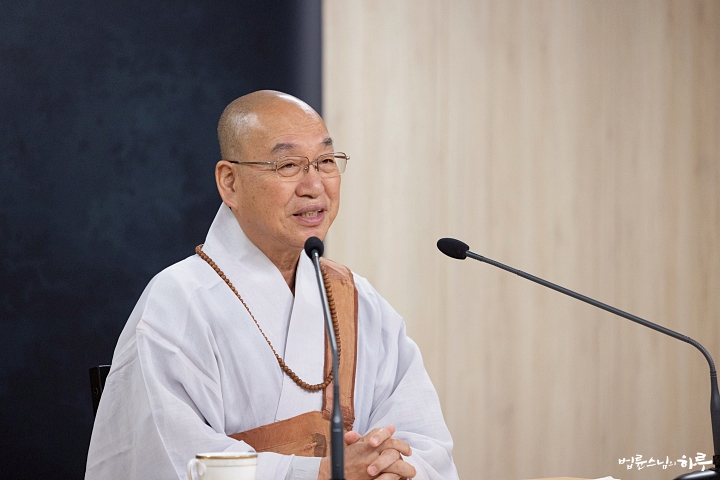
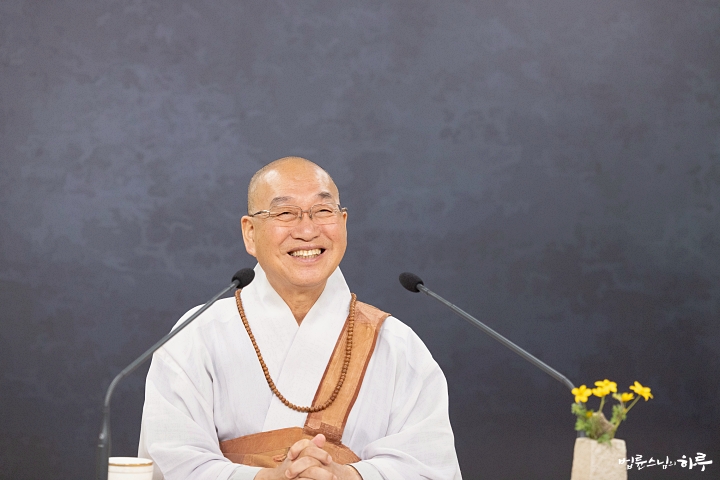
"Yes, thank you."
In addition to this question, there were also the following questions:
▪ I am a teacher and have a 4-year-old child. My husband and I have a problem with excessive phone use. I use my phone 2-3 hours a day, and my husband can't put his phone down even for a moment. Should I just restrain my own phone use? And if I don't make an issue of my husband, will my child learn by watching me?
▪ I got promoted at work and received recognition, but my heart seems to be getting further from happiness. When the success the world talks about differs from the happiness I feel, what standard should I live by?
▪ Looking at my colleagues at work and my friends, they all seem to have appointments and things to do. Boredom and loneliness weigh heavier day by day, and when I think about having to live like this for decades to come, I feel suffocated. What am I unable to accept?
To conclude the Dharma talk, Sunim gave the following closing remarks.
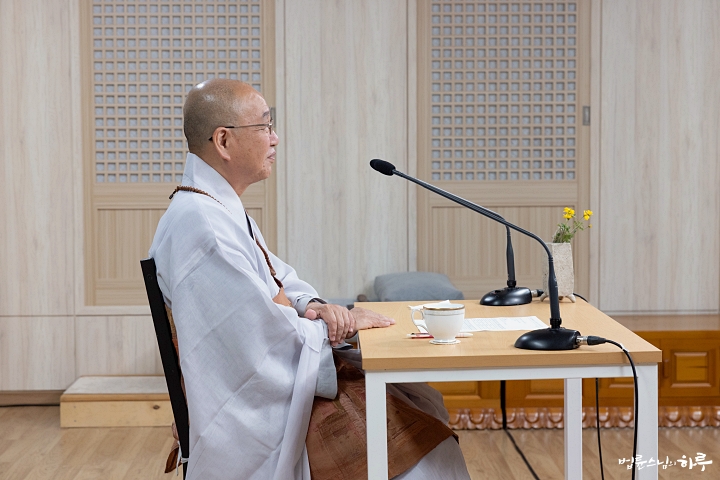
Let's Live as the Master of Our Own Life
"As we go through life, various problems arise. However, there is no set path that is definitely the right one. You can live this way or that way. But if you kill others to survive, harm others for your own benefit, or torment others for your own pleasure, karmic consequences will surely follow. You will have to pay the price later. And the interest tends to be quite high. The reason is the desire for revenge—in human psychology, if you're hit once, you feel you need to hit back about three times to feel satisfied. We can say such things are bad, or we can say they are foolish. However, in Buddhism, we say they are foolish rather than bad. This is because harming others ultimately causes greater harm to ourselves. So we say: let's not commit such foolish acts. Other than that, live freely and accept the results. Don't live being too careful or too concerned about what others think. Don't worry about whether others earn a lot of money or not. You can't take money with you when you die. It's fine if I have no money; it's fine whether others have high positions or not. Live with self-contentment like this. What's important is to live as the master of your own life. But you always shrink before money, before status, before love—you live reluctantly like that. If you enjoy living that way, you can live that way, but even squirrels and rabbits live freely in the mountains. Since we were born as human beings, shouldn't we be able to live even more freely? I hope you can live your lives a little more freely and happily like this. I'll see you again next week."After finishing the broadcast, Sunim did office work and revised reports before resting.
Tomorrow, Sunim plans to do communal work tidying up the area around the dolmens and travel to Adomorewon(아도모례원) for a meeting.