I Can't Sleep Because of the Noise from Upstairs.
Jul 9, 2026 - Planting Perilla Seeds and Weeding the Bean Field
Hello. Today, together with the Bhutan volunteers, Sunim planted perilla seeds in the garden and weeded the bean field.
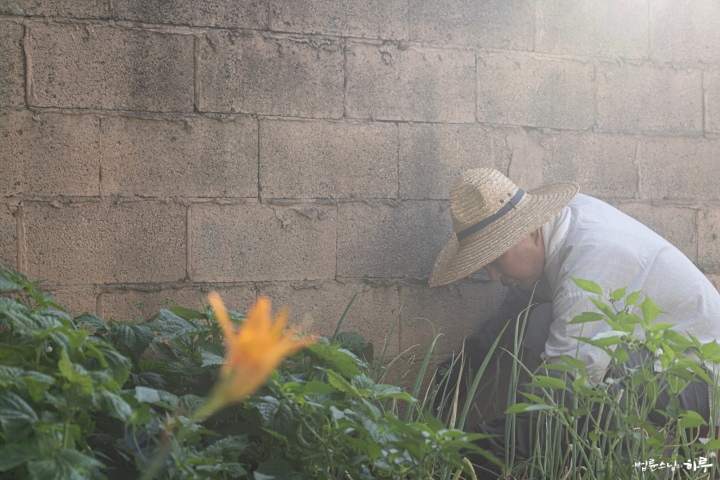
After his early morning practice and meditation, Sunim prepared for the communal work. The original plan was to plant perilla seeds with the Bhutan volunteers on the mountainside field, but due to the dry weather, the plan had to change. Perilla seeds have a higher chance of taking root when planted in thoroughly moist soil, but since it had been dry, the ground was too parched to plant them. So instead, weeds were pulled throughout the garden, and the vegetable plot was tidied up.
The Bhutan volunteers return to Korea during Bhutan's rainy season (July-August), when it's difficult to carry out projects, and use the time to rest and regroup. Today, they came to see Sunim to join him in communal work and to discuss various matters.
"Hello, Sunim."
"Welcome. Come on in."Sunim had already begun clearing weeds throughout the garden from around 6:30 a.m. When the volunteers arrived, Sunim said to them:
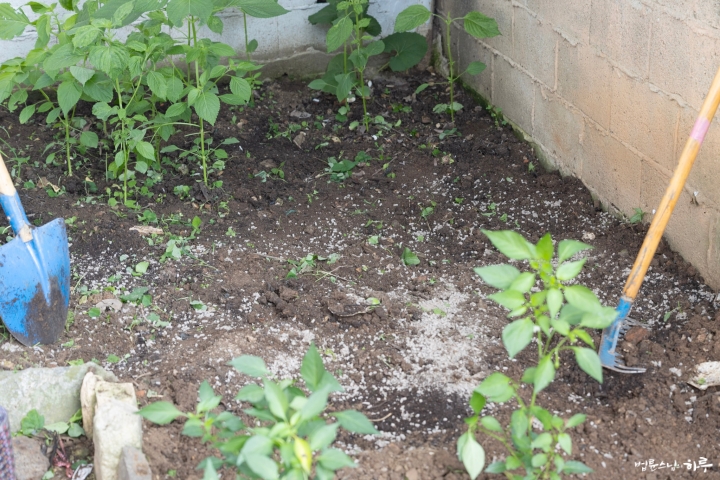
"Haengja, please finish tidying up this area. I'll go prepare to plant perilla seeds in the vegetable garden."Sunim moved to the vegetable garden and cleared everything except for the pepper plants that had already been planted.
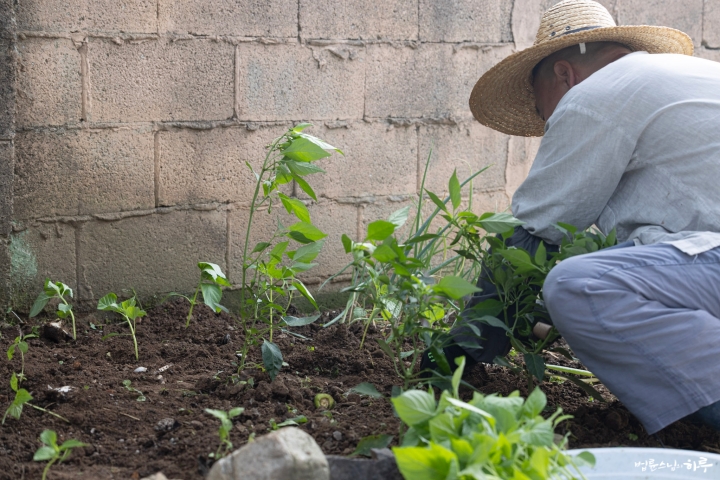
He turned the neatly cleared soil over with a shovel to loosen it.
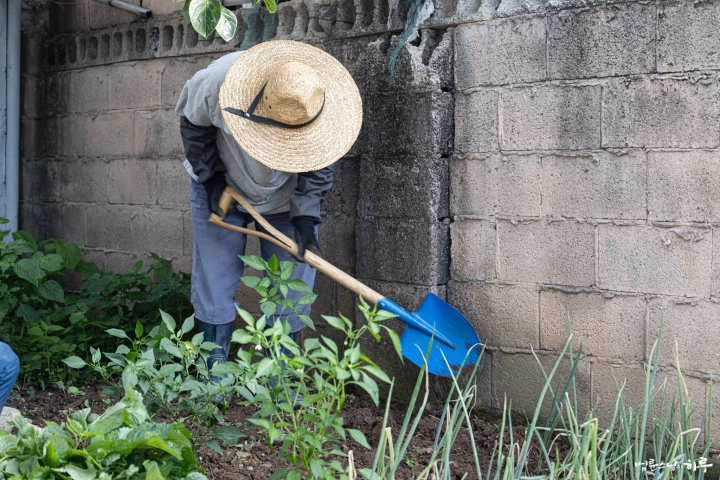
Then he spread compost on top, leveled the ground, and planted perilla seeds in neat rows.
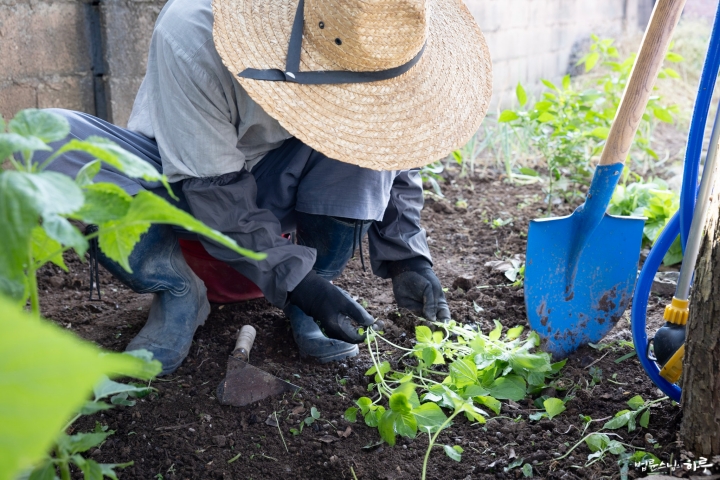
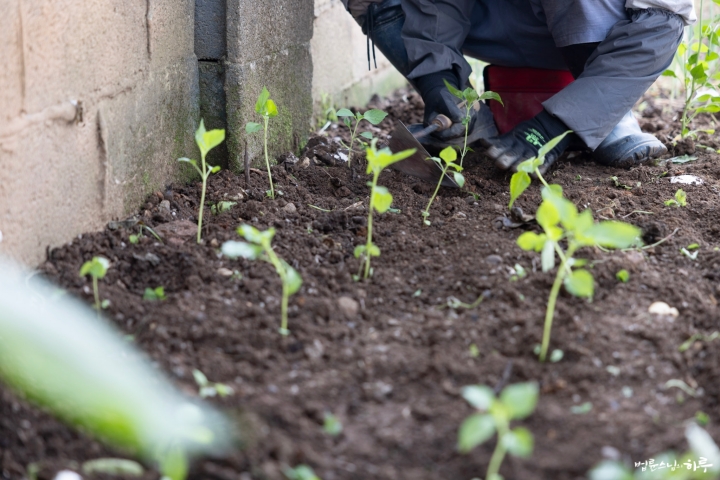
After planting the perilla seeds, he watered them generously.
"This spot is shaded, so the perilla actually has a better chance of surviving here."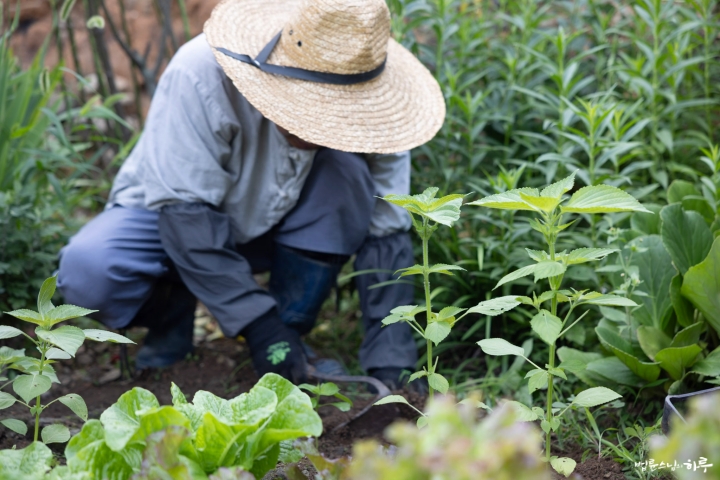
After finishing planting the perilla seeds, Sunim continued to check around the garden and then went to the young radish plot to harvest some radishes.
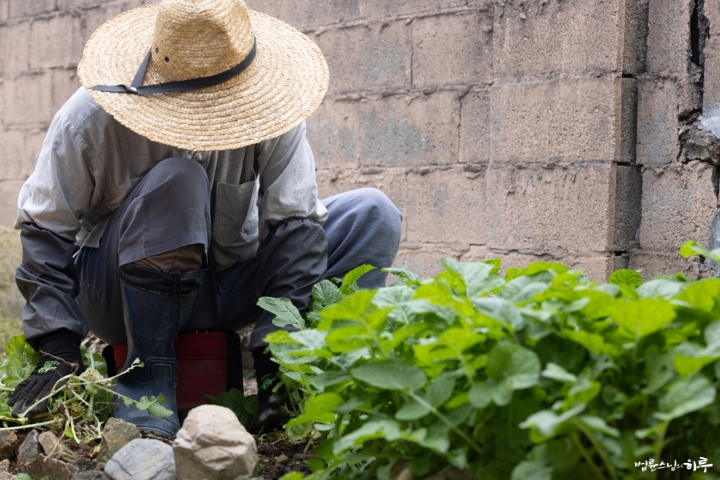
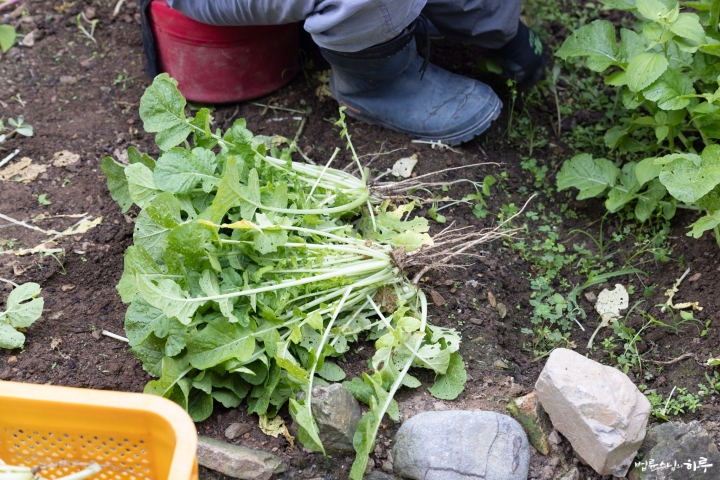
Next, he trimmed the Japanese pepper tree. It was remarkable to see one Japanese pepper tree growing so well right up against the wall.
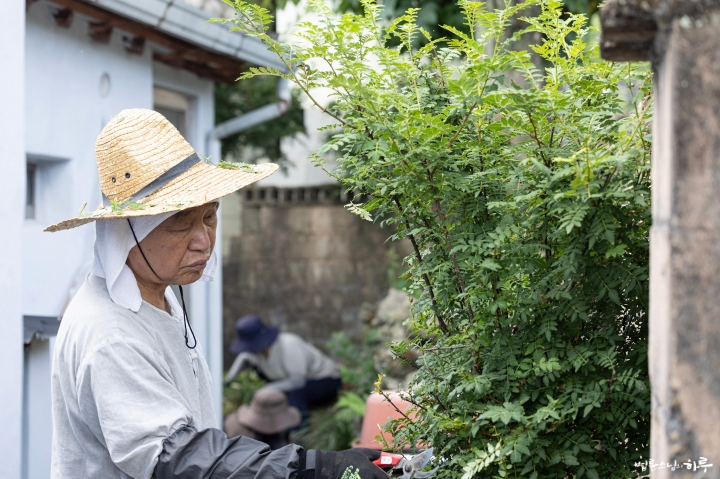
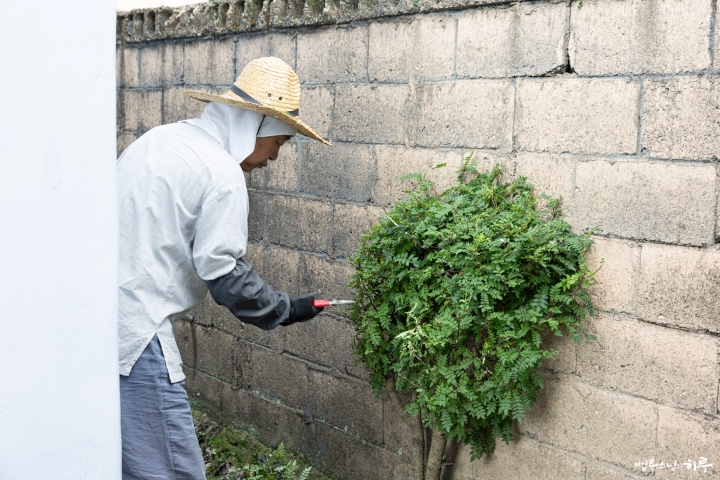
After Sunim trimmed the magnolia, peach, and other trees in the flowerbed with large and small shears, the trees took on beautifully rounded shapes.
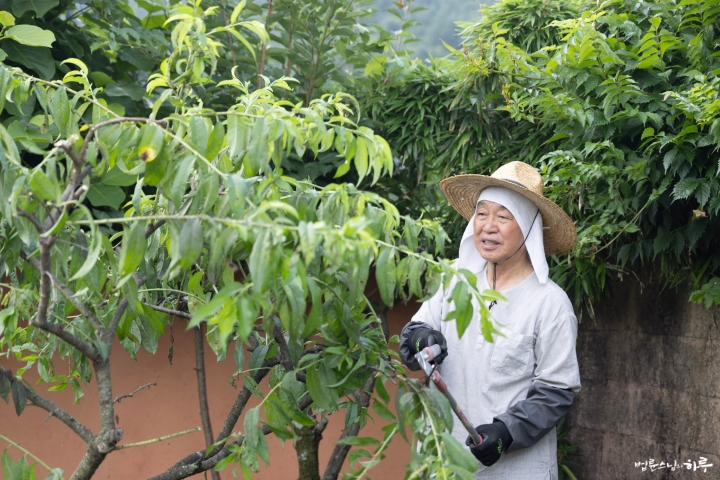
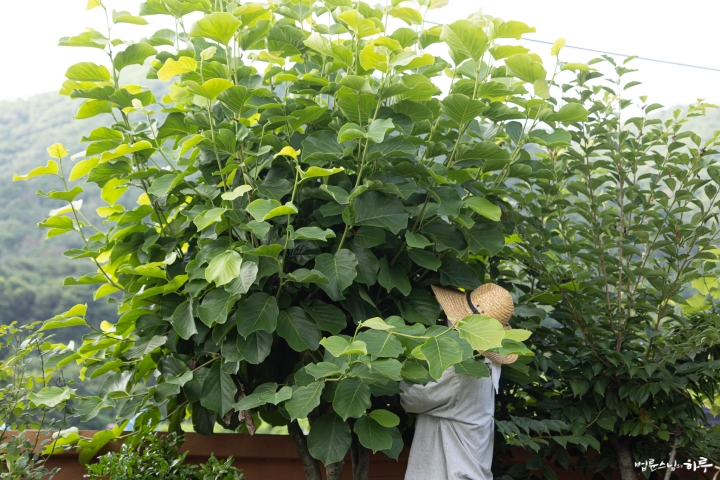
After a good while of communal work, it was past 9 a.m., and the sun was growing hotter. Sunim wrapped up the morning's work and sat down with the Bhutan volunteers for a brief meeting.
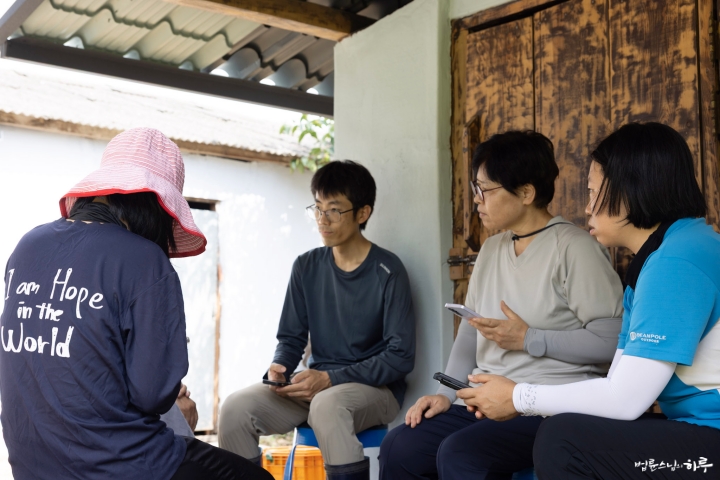
Sunim reviewed the preparations for the Steering Committee meeting scheduled for July 21 and discussed the future direction of the Bhutan project.
"Among JTS Bhutan's sustainable development projects, the most important is the housing improvement project. First, we should broaden the scope of beneficiaries and provide focused support. For the projects already planned, we should add more staff if needed and aim to complete most of the support by the first half of next year. Going forward, we need to educate village residents and public officials so that the people of Bhutan can continue sustainable development on their own. We should recruit Bhutanese university students, teach them how to build walking paths and roads, and have them actually go to each village to do the work. We need to research ways to help the local people voluntarily maintain this way of life. This sustainable development project isn't limited to Bhutan. In the future, we can try it in Southeast Asian countries like Sri Lanka, Cambodia, and Myanmar. Bhutan can be considered a pilot country for sustainable development projects."After returning from Sri Lanka, Sunim had come down with enteritis, and his strength had not fully recovered. Sunim decided to resume the communal work with the Bhutan volunteers later, once the sun went down and it cooled off a bit, and took some rest.
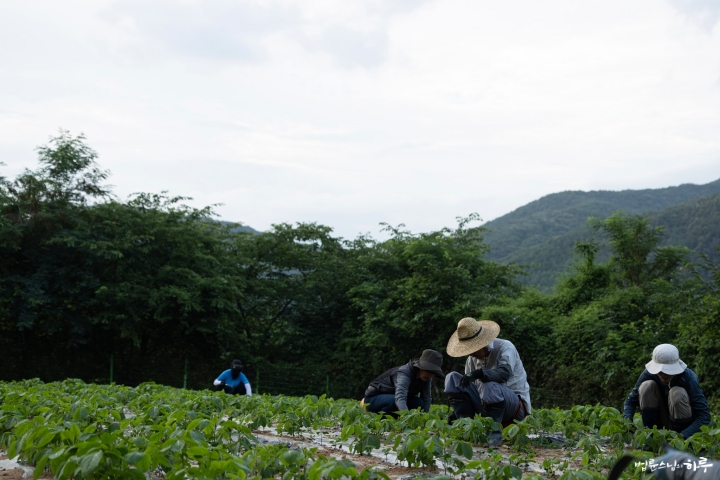
Around 6 p.m., Sunim gathered with the Bhutan volunteers again to weed the bean field at the foot of the mountain.
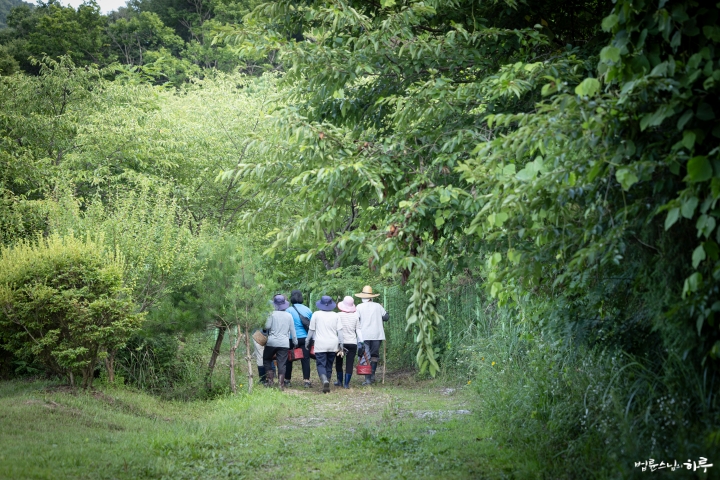
The bean field stretched out expansively.
"I thought we'd do this lightly, just for fun, but there's quite a lot of work here. (Laughter) Alright, let's each take two rows and get started."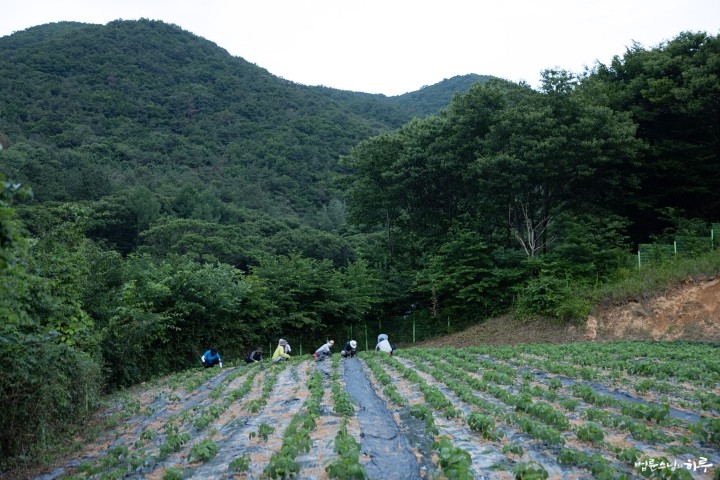
Sunim put on a cushioned seat and sat down in the furrows with the Haengja, and they began weeding together.
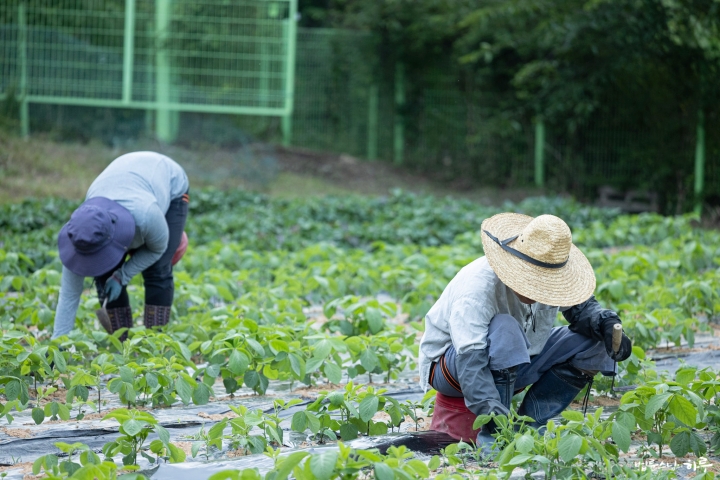
As he worked, Sunim chatted with the Haengja about various things. They talked about how many village elders had passed away recently, leaving empty houses behind; about farming; about whether they should create a bracken field; about planting bracken with an excavator; about telling the Bhutan volunteers to take plenty of seeds back with them; about whether there might be young Koreans who could work in Bhutan, and many other topics were shared casually between Sunim and the Haengja.
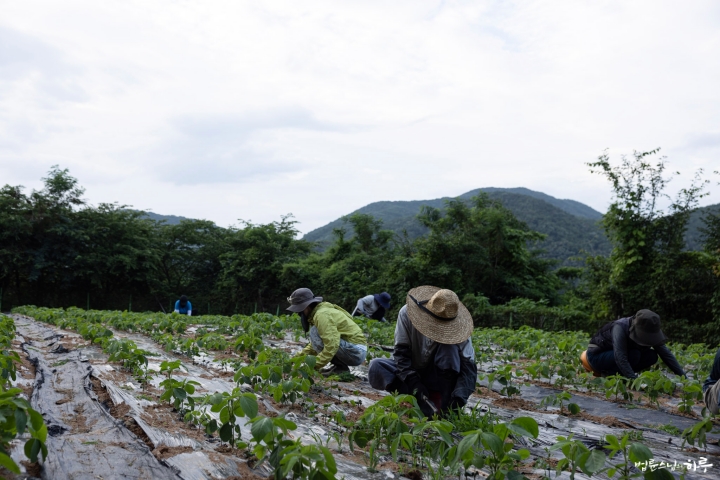
Before long, two hours had passed, and as dusk began to fall, the bean field had been neatly cleared of weeds.
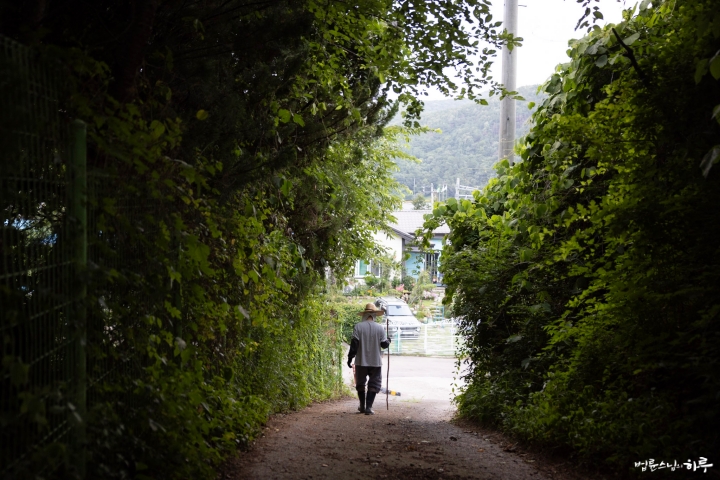
Sunim came back down the mountain with the Haengja, and together they cleaned and put away the tools they had used.
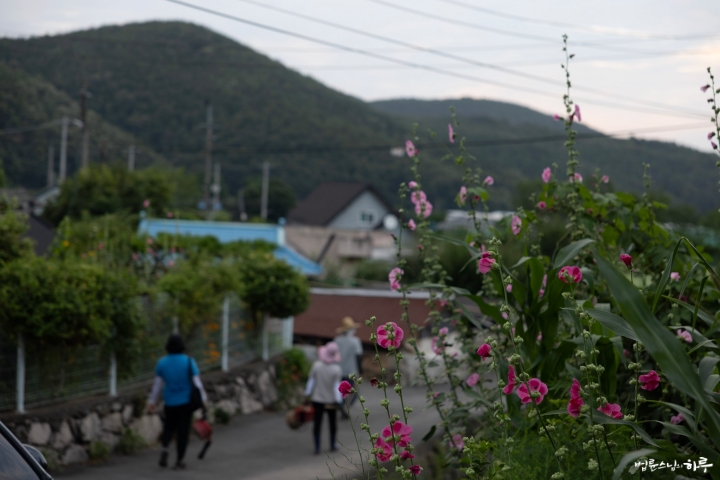
After finishing the communal work and while having a simple dinner, Sunim discussed tomorrow's schedule for making tofu with the Bhutan volunteers.
"Since you've all come this far, I'll treat you to some handmade tofu. Let's make tofu together tomorrow. (Laughter)"Thanks to this, the Bhutan volunteers postponed their return to Seoul and decided to make tofu with Sunim. By the time dinner was finished, the day had ended and it had grown dark. After tidying up, Sunim wrapped up the day by proofreading a manuscript.
Tomorrow, Sunim will make tofu, and in the evening, he will hold the Friday Dharma Q&A.
Since there was no Dharma talk today, this post concludes with a Dharma Q&A from the Happy Dialogue session held in Gwangju last May.

I Can't Sleep Because of the Noise from Upstairs. How Should I Resolve This with My Neighbor?
"This could easily escalate into a serious incident. Noise between floors is such a sensitive issue that it has sometimes led to extreme events. However, aside from the actual noise problem, you need to visit a doctor to check how sensitive your current state is. As you mentioned, if menopause symptoms are combined with the pressures of work life, your nerves can become on edge, so you need to check on yourself first. If you are in a highly sensitive state, moving to a place like a detached house could be an option. This is because, given your sensitive condition, similar problems may recur even if you move elsewhere. You could also try using earplugs that block out noise. In other words, you can think about improving your own sensitive condition. Second, if you genuinely believe the upstairs noise is excessive to the point where anyone would find it objectionable, you can purchase a noise meter and measure it. Keep the noise meter running and record continuously for a month, checking how many decibels (dB) the noise reaches. Then have an expert determine whether this qualifies as noise pollution. Even if it does qualify as noise pollution, you shouldn't just barge in and complain. You need to approach the matter carefully. Someone who consistently makes that level of noise may genuinely be unaware, or they may be in a psychologically unstable state. Provoking such a person risks escalating the conflict. If you're sensitive and the other party is also sensitive, it could lead to an extreme incident, even violence. Most conflicts caused by noise between floors escalate when the person downstairs can't bear it and goes upstairs to complain, and the person upstairs responds in kind."For over five months now, the family upstairs has been making a lot of noise every morning, as if they're exercising. I've spoken to them through the building management office, and I even happened to run into them in the elevator and mentioned it directly, but they denied it and actually seemed offended. We've lived in this apartment for about four years, and their footsteps have been very loud all this time. Now, on top of that, I hear what sounds like exercising. To try to calm my mind, I've even prayed, 'Please let something good happen to the upstairs family so they move out.' (Laughter) But I've come to dislike and resent them so much that even the prayer became stressful. I can't move, and it doesn't seem like the upstairs family plans to move either. Recently, partly due to menopause but also because of the stress from the noise, I can't sleep well. What should I do in this situation?"

"Yes, I understand. Thank you."