pomnyun_260701
"I Am the Hope of the World
Jun 29, 2026 – English Opening Ceremony, Kim Deok-ryong's Book Publication Celebration, Meeting with Sri Lankan Ambassador, Departure
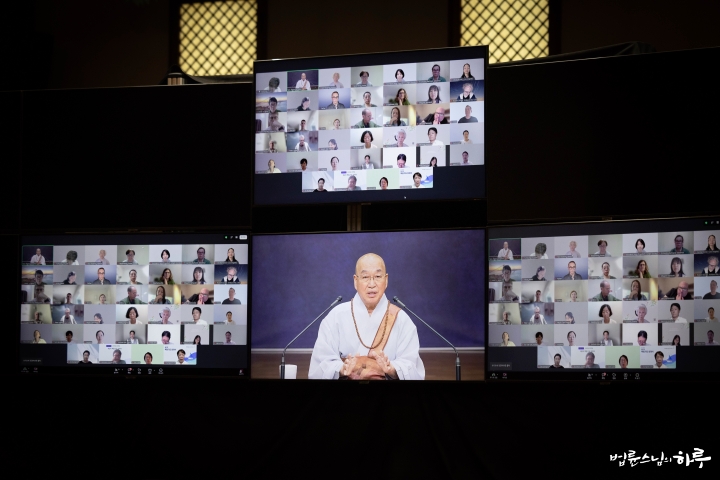
Hello. Today is the day of the English Opening Ceremony. Sunim did his morning practice and meditation, proofread manuscripts, and then moved to the broadcasting room for the English Opening Ceremony broadcast that would begin at 8 a.m.
About 30 foreign participants of the 1000-Day Practice from various countries around the world, including the United States, Germany, the United Kingdom, France, Italy, Japan, and Australia, joined online via Zoom as the 2nd 1000-Day Practice, 2nd 100-Day English Opening Ceremony began. After opening remarks from Representative Yang Yun-deok and watching a video capturing the footprints of the past 100 days, it was time for participants who had steadily practiced during the 1000-Day Practice to share their reflections.
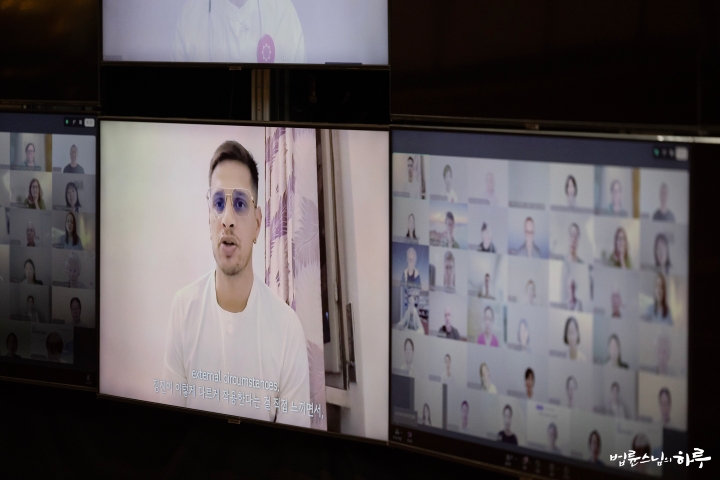
"Hello, everyone! I'm Prince, living in Italy. As I practiced diligently every day for the past 100 days, I found that my daily life became clearer and my periods of being awake grew longer. Because of this, I noticed that on days when I skipped morning practice, my mind became more chaotic, and it was harder to manage my emotions, thoughts, and feelings. I experienced firsthand how a life of practice works so differently, and I clearly realized that a life of practice brings peace."
Megumi from Japan also shared her reflections.
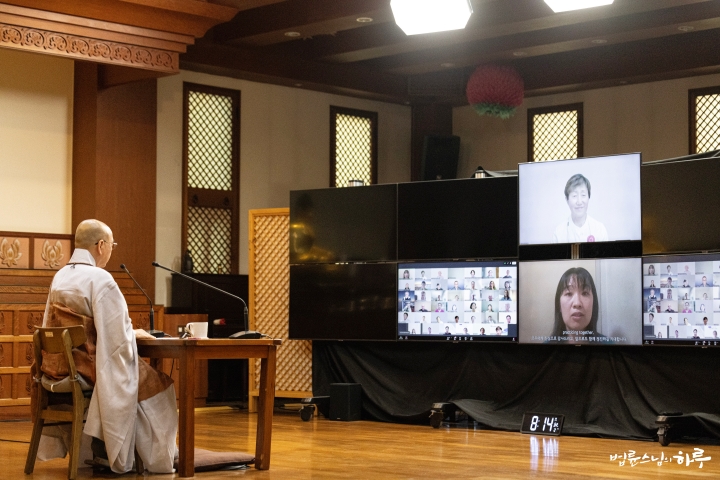
"At first, I was overwhelmed wondering if I could really make it through 100 days. But once I realized through practice that the goal isn't to achieve something through practice, but that practice itself is the goal, I was able to continue comfortably without any pressure or attachment."
"Hello, greetings from Sydney, Australia. My name is Sophie. Practice has brought positive changes not only to my life but also to the lives of my children and elderly parents. I encourage all of you to join in daily practice. You'll find community, wisdom, and warm understanding. Thank you."
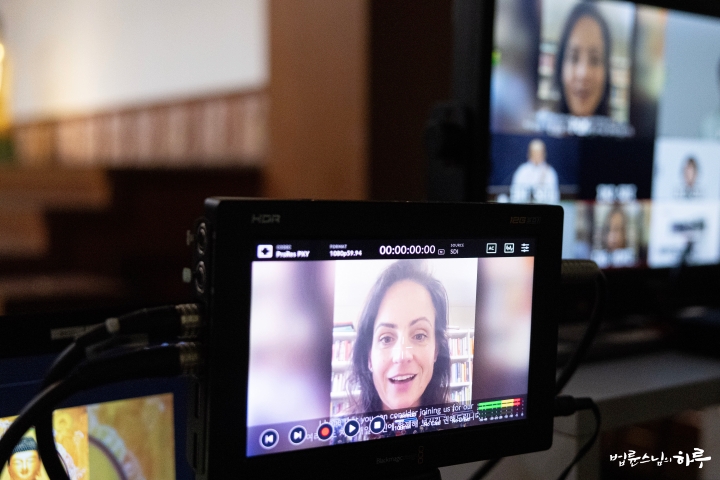
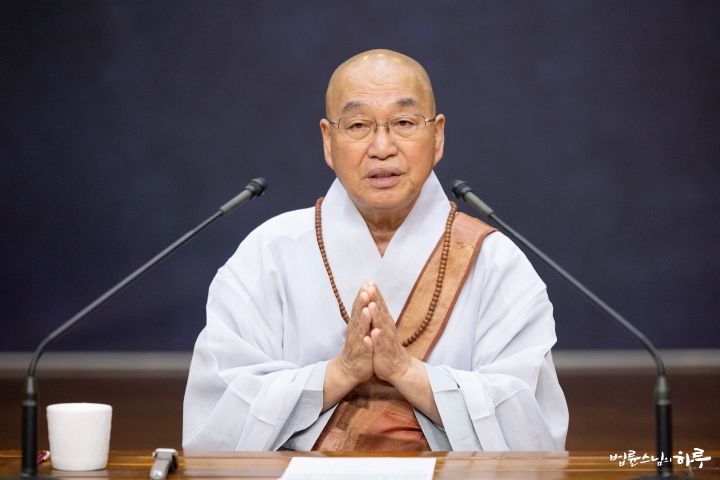
After the three participants shared their reflections on practice, Sunim's Dharma talk for the 1000-Day Practice opening began.
"Today is the day we complete the first 100-day practice of the 2nd 1000-Day Practice, 2nd Round, and begin the second 100-day practice. How was it practicing for the past 100 days? Listening to the three reflections just now, it seems practice has been of great help, and I think it's probably similar for others as well.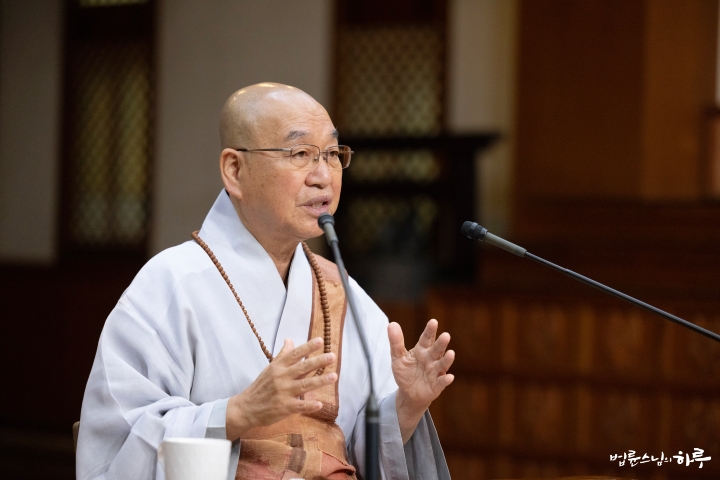
A Life Unshaken by External Stimuli
"When you observe your reactions carefully, you'll notice that when you're angry, you mostly blame the other person, saying, 'It's because you did that, I got angry.' But practice is about noticing your own reactions—'Ah, I'm getting angry now,' 'Sadness arises in situations like this.' If you turn your gaze inward and observe consistently for about 100 days, you'll come to see, 'My karma is formed this way. I react this way to these kinds of stimuli.' That's why we say 'you can know yourself' when you practice for 100 days. More precisely, it means you come to understand what kind of karma you have and how you react. Once you know how you react to external stimuli, you can change those reactions when they bring you suffering. That is, you can choose not to react, or react in a different way. Of course, this doesn't happen all at once. Through repeated trial and error and consistent practice, the way you react to external stimuli changes. At this point, people around you also begin to notice your changes. They'll say, 'You're getting angry less these days,' 'You're much less stubborn,' 'You listen carefully to others,' and feel, 'That person has really changed for the better.' Changing yourself in this way ultimately means changing your habits and, further, changing your destiny. Generally, if you practice consistently for about 3 years, you can bring about self-change. That's why it's helpful to practice with fellow practitioners under a teacher's guidance for at least 3 years. When practicing alone, it's easy to give up in the middle or risk going in the wrong direction. After about 3 years, when you experience, 'Ah, practice really does change me. My suffering is decreasing,' you gain confidence from that point on, and there's a high possibility that you can continue practicing on your own. You won't be as easily shaken by external stimuli as before. That's why we say if you practice for 100 days, you can know yourself, and if you practice for 1000 days (3 years), you can change yourself."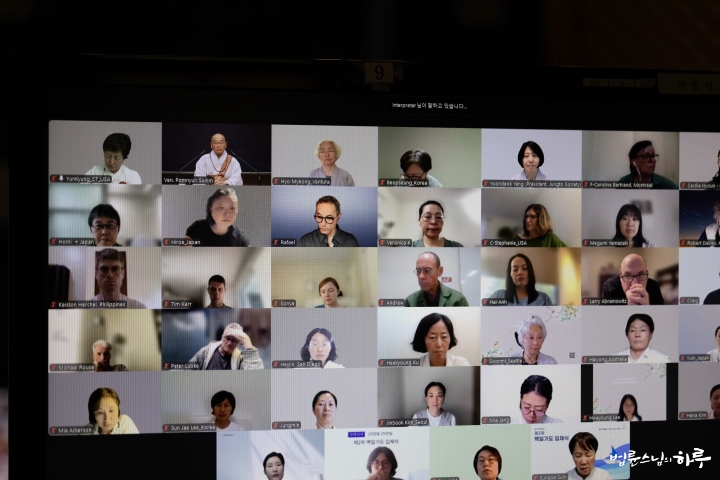
A World Where International Order Collapses and the Logic of Power Dominates
"The world we live in today feels very chaotic. This is because the rules and order we've learned to take for granted through school education and social life are now crumbling one by one. Through World War II, humanity came to understand how much damage competing through the logic of power causes to us all. Having experienced about 80 million casualties and enormous property damage, humanity became aware of how foolish war is. So after the war, humanity created a new international order to ensure such tragedies would never be repeated. The most powerful nation, the United States, took the lead in creating the United Nations (UN) and establishing rules for international order. When countries violated that order, powerful nations sanctioned or punished them, maintaining the international order. As a result, the world has maintained relatively peace without major wars for nearly 80 years. However, recently this order has been shaken. What we might call the United States—which led the creation of the international order—now judging it to be disadvantageous to itself, can be seen as being in the process of dismantling it. We were shocked when the powerful nation of Russia invaded its neighbor Ukraine. The international community condemned Russia and imposed various sanctions. Then, the bombings that amounted to a massacre in Gaza during the Israel-Palestine conflict gave the international community another shock. Before that shock could subside, the United States launched a unilateral bombing against Iran during negotiations, which gave a shock greater than the previous two wars. In particular, the extreme statements like 'we will destroy the other country's civilization' were difficult to understand with the common sense we've held until now."With a Mind to Be Hope in a Dark World
"As you can see, the world is now shifting away from an order centered on ethics, morality, and norms, and increasingly toward one dominated by the logic of power. If this trend continues, even if China invades Taiwan in the future, it may become difficult for the international community to condemn it with one voice as in the past. In this changing world, how can we preserve peace? First, protect yourself by being less affected by your surroundings in any situation. Second, we must understand the changed world and study how to reduce people's suffering. Simply returning to the past cannot be the answer. We must closely analyze the causes of the changes taking place now and find new solutions for how to maintain peace and move toward shared prosperity. As the wealth gap widens rapidly due to technological advancement, a small number of people have gained much greater influence and power than in the past. The world is increasingly moving according to the logic of power, and this means it has become very difficult to understand the current world through the religions, philosophies, ideologies, ethics, and morals we've believed in until now. Thus, a new task has been given to all of us: how to understand and respond to this changed world. I hope you can find at least some clue to the solution from the Buddha's fundamental teachings—the Middle Way, Dependent Origination, and Nirvana. Blaming the world cannot protect you in this chaotic world. Whatever the world is like, first protect yourself, and I hope the energy you have can be used to make the world even a little more peaceful. I hope you continue to practice diligently from that perspective. That's why Jungto Society's shared vow is 'I Am the Hope of the World.' We are people who, even in these circumstances, don't give in to despair but have resolved to become hope for the world. I hope you continue to practice, reflecting on the words to remember: 'I Am the Hope of the World,' with the mind of becoming a small lamp lighting the dark night."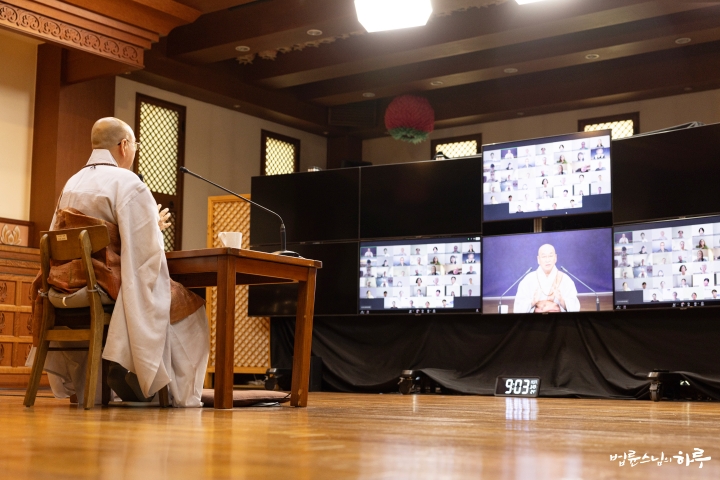
After finishing the Dharma talk for the 2nd 1000-Day Practice, 2nd Round English Opening Ceremony, Sunim immediately moved to The Peace Foundation.
Today, several guests came to The Peace Foundation to meet Sunim. At 10 a.m., National Assembly Member Lee Kwang-jae visited, and at noon, Chungnam Governor Park Soo-hyun visited to speak with Sunim.
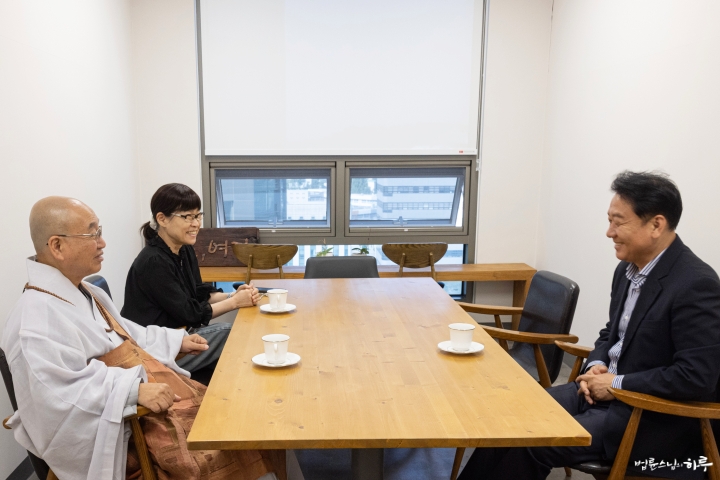
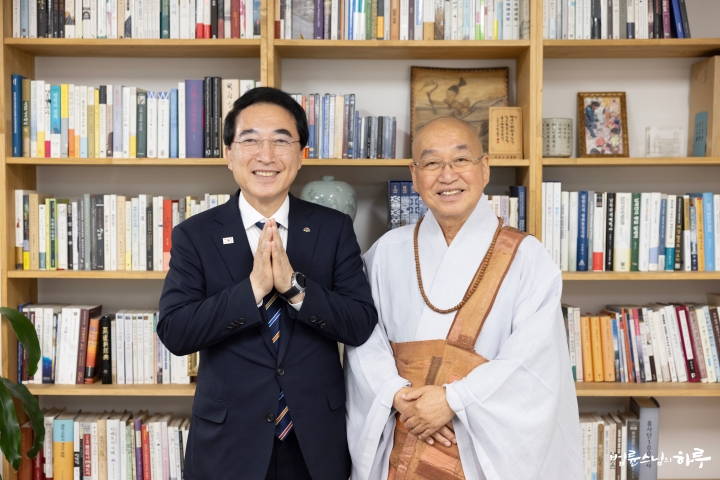
After the guests left, Sunim prepared to go out to attend the book publication celebration of former Assembly Member Kim Deok-ryong (김덕룡), to which he had been invited some time ago. Departing around 2 p.m., Sunim arrived at the National Assembly Museum around 2:30 p.m.
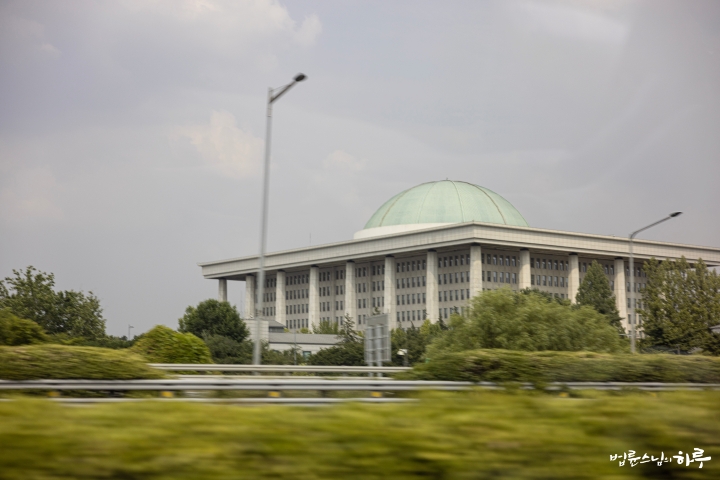
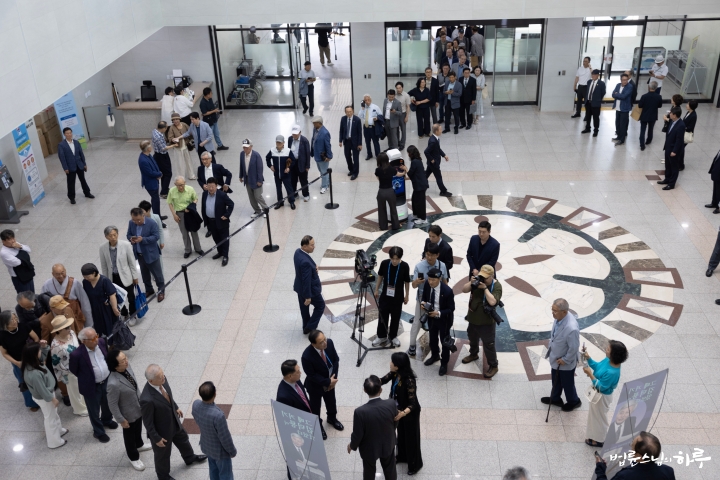
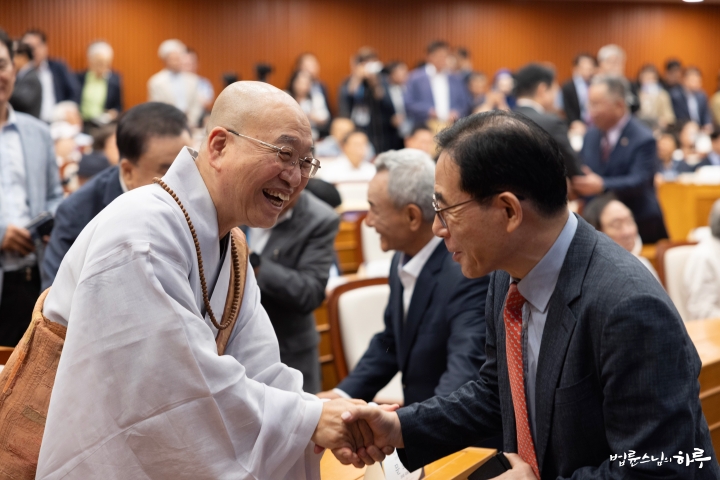
At the entrance of the venue for the publication celebration of former Assembly Member Kim Deok-ryong's memoir , there were many people.
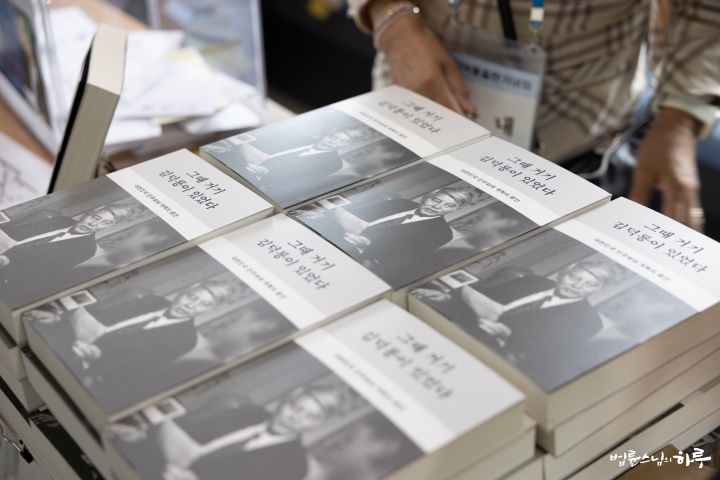
Sunim exchanged greetings with Kim Deok-ryong, congratulating him on the publication of his book.
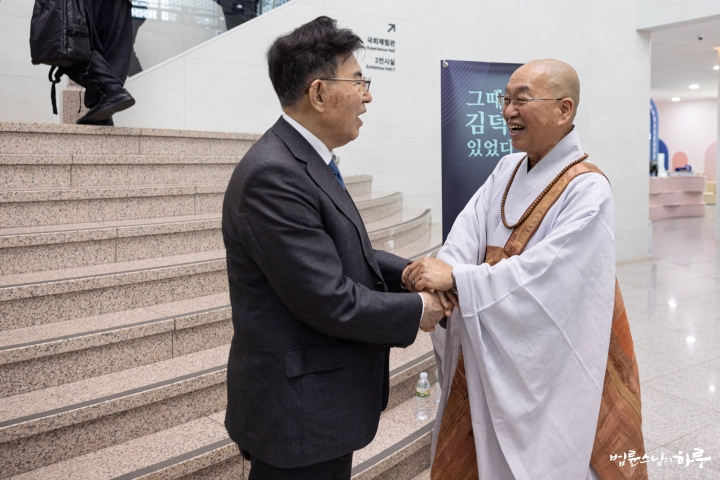
"It's alright, Sunim. Thank you for coming despite your busy schedule."
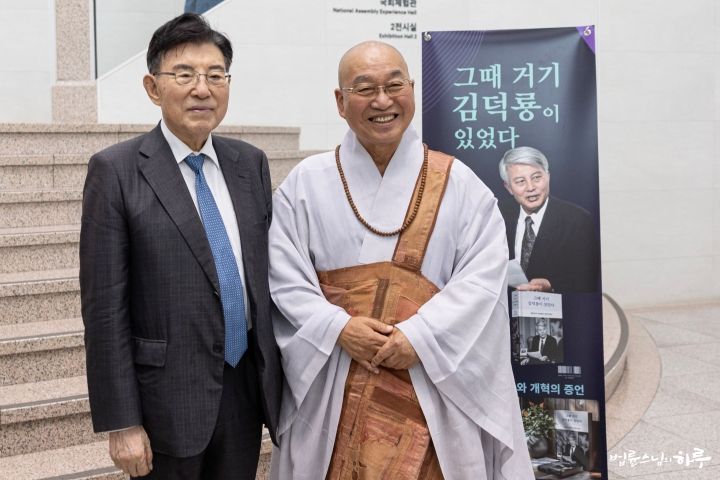
After warmly greeting Kim Deok-ryong, Sunim moved to the auditorium on the second floor to attend the event. As he entered the auditorium, many people came to greet him.
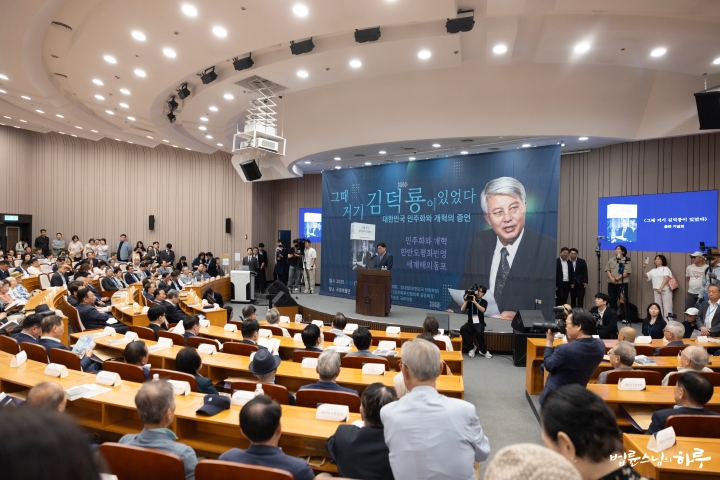
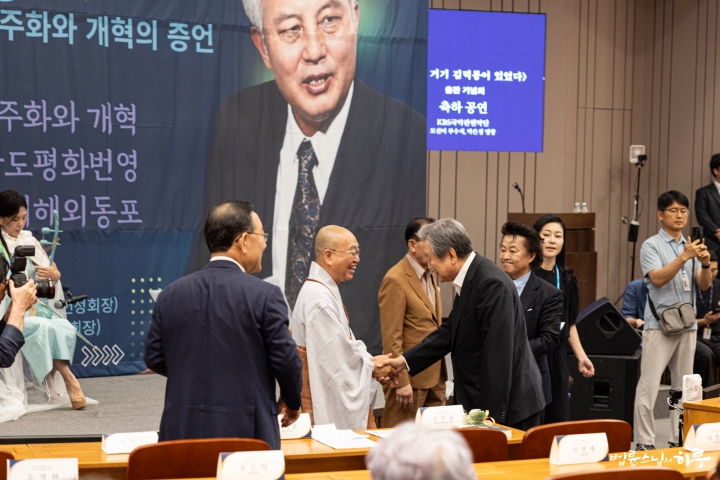
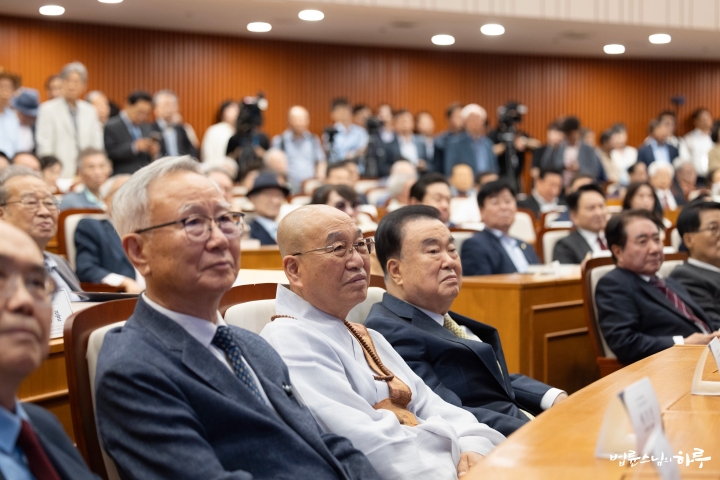
The event began, and around 4 p.m., as the congratulatory speeches from various speakers were coming to an end, Sunim left the venue first because of his appointment with the Sri Lankan Ambassador.
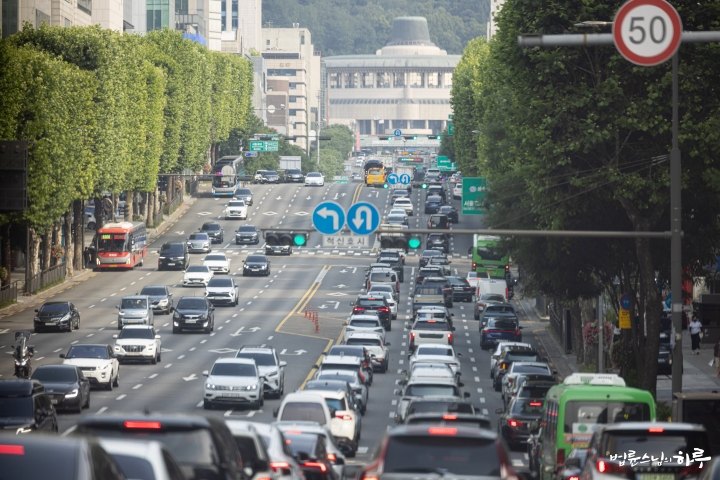
As expected, traffic was heavy, and Sunim barely made it to the Jungto Social and Cultural Center by the appointment time of 5 p.m. Shortly after, the Sri Lankan Ambassador arrived.
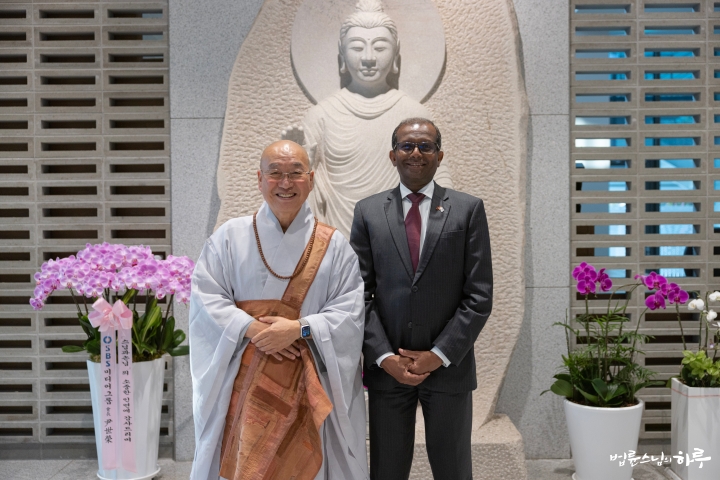
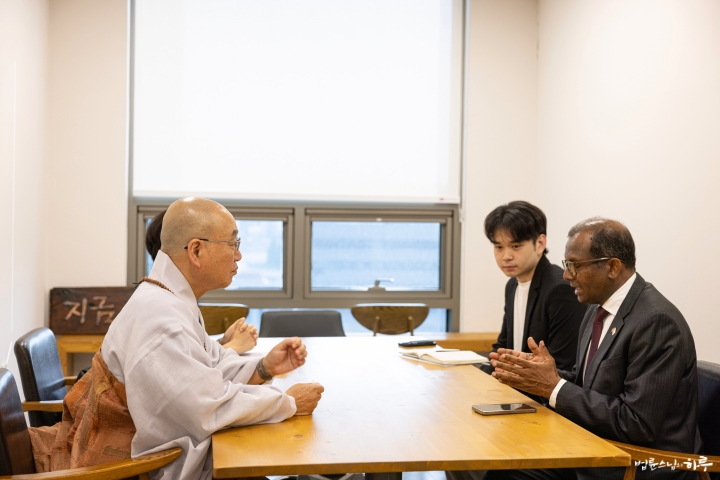
Ambassador M.K. Pathma Nathan of Sri Lanka to Korea came to meet Sunim, who is about to depart for Sri Lanka today. Sunim talked about the peace pilgrimage between Sri Lankan and Korean religious leaders that is being conducted this time, as well as the sustainable development project in Bhutan.
Ambassador Nathan expressed deep admiration for Sunim's activities and said he would support Sunim's future activities in Sri Lanka whenever help was needed.
Sunim also hoped to share with Ambassador Nathan the content and outcomes of the exchange between Sri Lanka's 'Dharmashakthi' and Korea's 'Religious Leaders' Group' after completing this Sri Lanka schedule. Furthermore, Sunim proposed that they use this as an opportunity to seek ways together for world peace and sustainable development.
After finishing his meeting with Ambassador Nathan, Sunim prepared to depart for the Sri Lanka peace pilgrimage. Since he had arranged to meet the religious leaders participating in the Sri Lanka peace pilgrimage at the airport at 8:30 p.m., Sunim also left the center at 7:20 p.m.
"Sunim, have a safe trip."
"Yes, I'll be back."
Sunim arrived at the airport around 8:30 p.m. At the airport, Reverend Park Nam-soo, Kim Dae-seon Kyomu, Reverend Park Jong-hwa, and Father Kim Hong-shin had already arrived. Sunim met the religious leaders and warmly exchanged greetings.
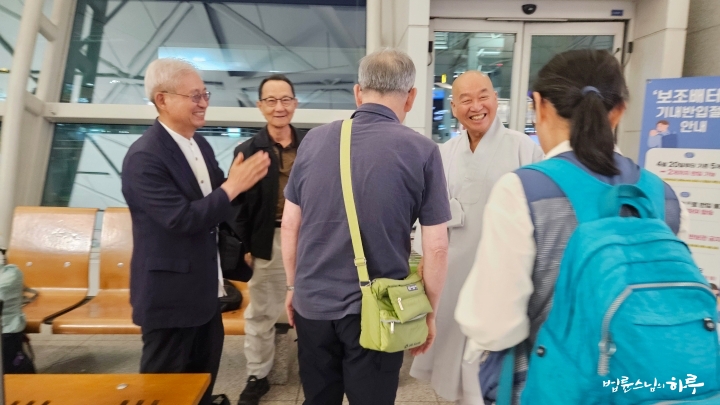
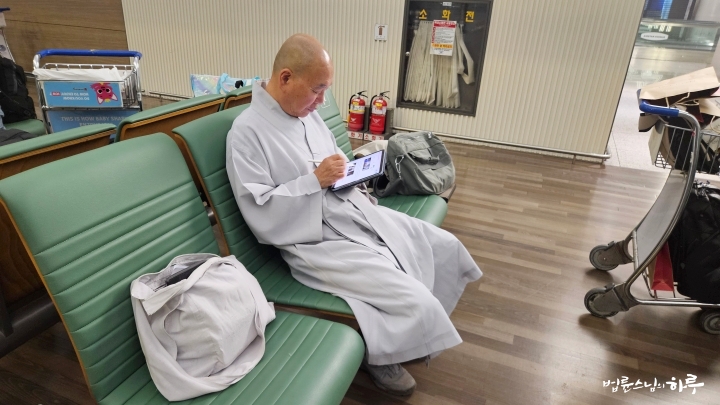
The line for check-in was particularly long today, and they were able to check in their luggage only after waiting for about an hour. Sunim went through airport procedures, sat down briefly to proofread his manuscript, and then boarded the 11:30 p.m. flight. Sunim will travel by plane through the night and arrive in Sri Lanka early tomorrow morning.
The peace pilgrimage of religious leaders from Korea and Sri Lanka has begun. Participating in this pilgrimage from Korea are members of the 'Religious Leaders' Group for National Reconciliation and Peace': Reverend Park Nam-soo, Reverend Park Jong-hwa, Kim Dae-seon Kyomu, and Father Kim Hong-jin. From Sri Lanka, members of Dharmashakthi—Venerable Assaji, Reverend Anura, and Fidorus Mawlavi—will accompany the full itinerary.
Sunim previously toured Southeast Asia and South Asia from April to May 2023 to see how people were living after COVID-19. He also visited Sri Lanka during that trip, where he came to visit an organization called 'Dharmashakthi.'
Dharmashakthi is an inter-religious peace solidarity organization founded when leaders of Sri Lanka's four major religions—Buddhism, Christianity, Hinduism, and Islam—joined together during a time when Sri Lanka's civil war wounds and religious and ethnic conflicts were deepening.
Although it is not a large organization widely known externally, it has carried out activities across religious boundaries whenever disasters or conflicts have occurred in Sri Lankan society. Through decades of these quietly sustained efforts, it has established itself as the most trusted inter-religious peace action group in Sri Lanka today.
When Sunim first met them, he felt that they had a character very similar to Korea's 'Religious Leaders' Group for National Reconciliation and Peace,' and in July 2025, he invited the religious leaders of Dharmashakthi to Korea.
At that time, the Dharmashakthi religious leaders who visited Korea, along with Korean religious leaders, attended the International Conference on Reconciliation Studies held at Seoul National University, where they introduced Sri Lanka's process of overcoming civil war and their 30-year journey toward inter-religious harmony. At a conference hosted by The Peace Foundation, they also had in-depth conversations about how Sri Lanka's experience in resolving internal conflicts could be applied to the Korean peninsula.
And the following year, this year, a peace pilgrimage delegation centered on members of Korea's 'Religious Leaders' Group for National Reconciliation and Peace' is being formed to visit Sri Lanka.
For 7 days from today until July 5, the peace pilgrimage delegation will visit Sri Lanka's capital, Colombo, followed by Kandy, Dambulla, Anuradhapura, Jaffna, and Mankulam. They plan to visit sacred sites in various regions of Sri Lanka and exchange with various religious leaders, sharing wisdom about peace and examining the footprints of peace that transformed conflict into reconciliation.
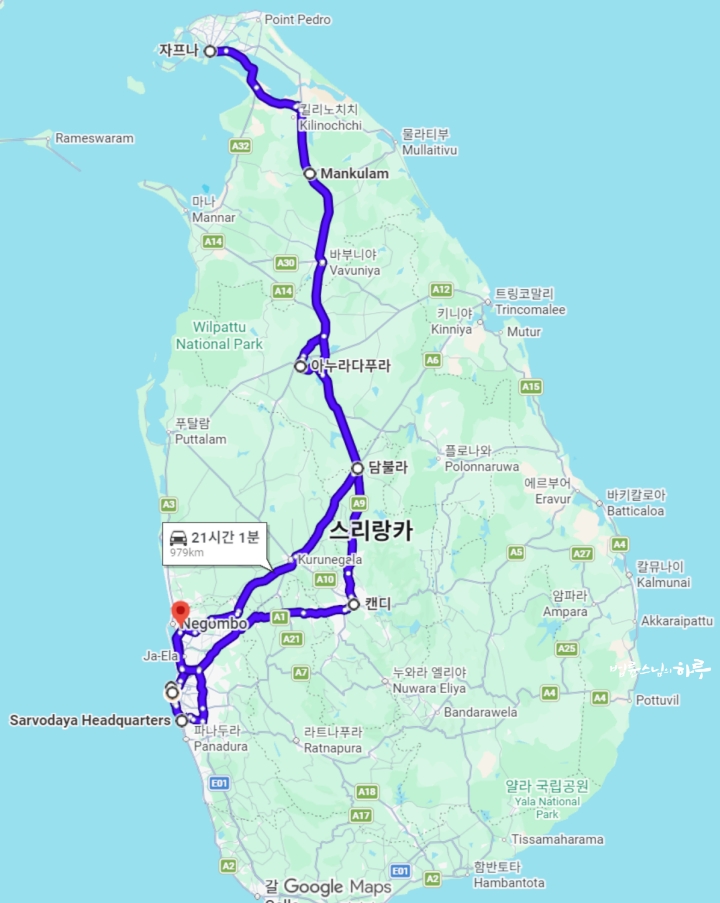
The participants of the Korea-Sri Lanka peace pilgrimage will arrive in Sri Lanka tomorrow, hold a welcoming ceremony at the Dehiwala Muhiyadeen Grand Jummah Masjid, an Islamic mosque, attend a meeting of Muslim leaders, and then visit the Young Men's Buddhist Association (YMBA) to have conversations about Sri Lanka's independence struggle."