Hello. Today is the day of the Dharma Propagation Assembly, where leading members of Jungto Society share the difficulties they face in their activities and establish a practice-oriented perspective. It is also the second day of the INEB (International Network of Engaged Buddhists) delegation's visit to Jungto Society.
Sunim began his day with early morning practice and meditation. After completing manuscript proofreading in the early morning, he moved to his office on the 10th floor of the Jungto Social and Cultural Center at 9 a.m. to meet with a guest. After the meeting, he returned to the Seoul Jungto Center for the Dharma Propagation Assembly that was scheduled to begin at 10 a.m.
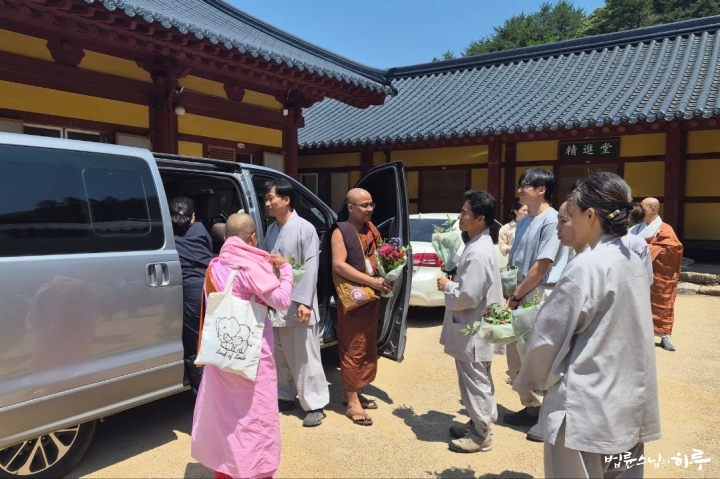
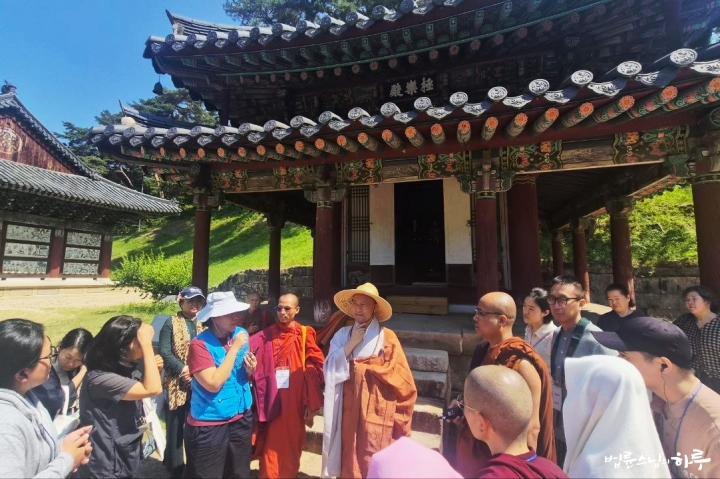
Meanwhile, the INEB delegation completed their early morning service and departed from the Jungto Social and Cultural Center at 5:30 a.m. for the Mungyeong Jungto Retreat Center. On the way, they stopped at a rest area for a simple breakfast. Upon arrival at the retreat center, they received a warm welcome from members of the Sangha and spent the morning visiting and touring Bongamsa Temple under the guidance of Yusu Sunim.
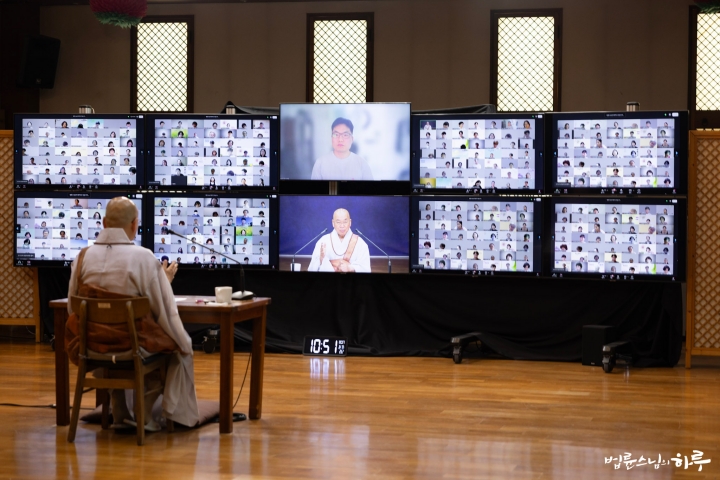
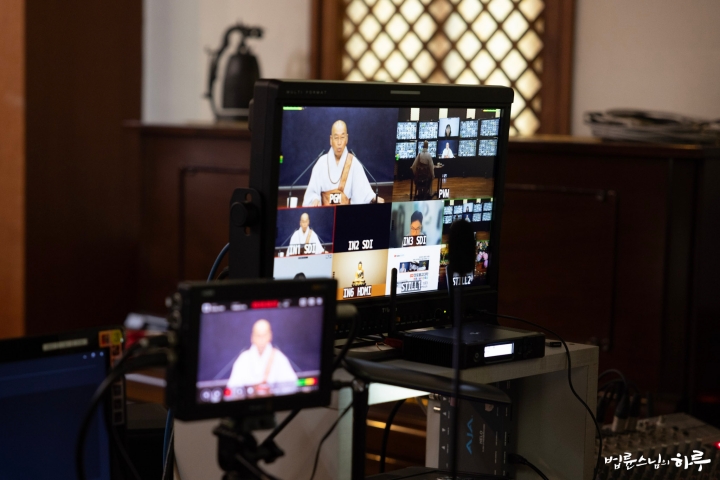
Meanwhile, at the Seoul Jungto Center, the Dharma Propagation Assembly was being broadcast live online. Today's assembly included a guidance session on the first-half semi-annual retreat for Jungto practitioners and the closing retreat. The assembly opened with the Three Refuges and the recitation of the Heart Sutra. This was followed by a report from Seonju Dharma Teacher, head of the Dharma Teachers' Group, on the results of candidate recommendations for the 7th Senior Jungto Practitioner Training, and guidance on the first-half semi-annual retreat by Hyanggwangmyeong Dharma Teacher, head of the training center. The members of the Sangha requested a Dharma talk from Sunim with the Dharma Request Song and three bows. With about 400 leading members joining via Zoom, Sunim first shared news about the current status of the JTS project from his visit to Bhutan and the ongoing INEB tour program. He then began the opening Dharma talk for the semi-annual retreat.
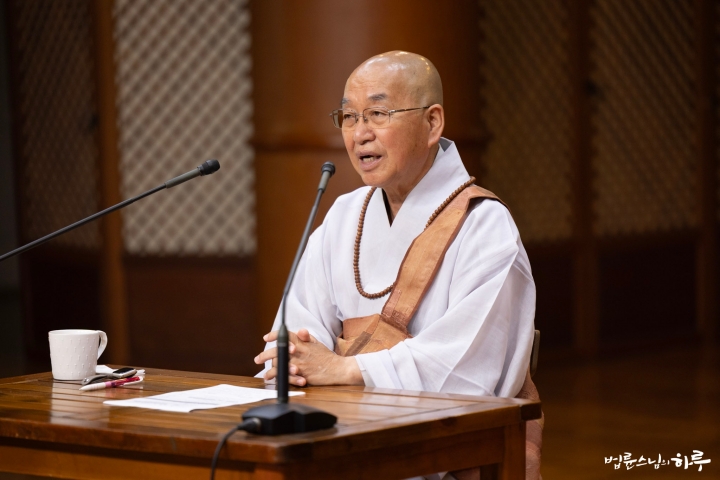
"Jungto Society is a community of practitioners, a gathering of those who practice. Even after graduating from the Jungto Buddhism Course and becoming a member of Jungto Society, practice remains a voluntary choice. Voluntary activities, voluntary practice, and voluntary service all carry very meaningful significance. However, relying solely on individual free choice without any responsibility or obligation makes it very difficult to plan work or carry out projects of any significant scale. Although Jungto Society is a voluntary community of practitioners, for these activities to be sustainable, a core group of people who take greater responsibility for practice and service must form the center, with many voluntary volunteers participating around them.
For leading members, practice is something done voluntarily for oneself, but at the same time, there is a rightful responsibility and obligation to practice. While serving voluntarily, there is also an obligation to dedicate a certain amount of time to a specific role of service. So we wake up each day and practice, and attend the weekly Dharma assembly. As Dharma propagation practitioners, we serve as facilitators in Happiness School, the Jungto Buddhism Course, or the Jungto Sutra Course, or engage in other volunteer activities equivalent to that of a facilitator. It is because there are people who take on such responsibilities that Jungto Society can be maintained and continue to develop.
We engage in volunteer activities and social action as practitioners, based on practice—we are not simply doing the kind of volunteer work that ordinary people do. When we go to Bhutan and build or repair houses for the poor, lay waterways, put up fences, install water supply systems, repair roads, build walkways, or fix schools, what we do is different from what laborers or technicians do. We are acting as practitioners.
"Being a practitioner means, first, that even though the work may be demanding, you yourself do not suffer because of it. You are not pursuing any personal gain, nor are you doing it to boast or show off. To be able to do this, practice must be the foundation."
"These days, people are busy just managing their own lives, their work, and their families. When these activities are added on top, the workload increases, and it inevitably becomes busy and demanding. However, if in the past you carried many worries, anxieties, sufferings, resentments, and grievances, and these have now diminished, then even though the work has increased, you should be able to view it as having gained more ease. Only with this perspective can you truly be called a practitioner. When you take on various tasks and try to do them better, it can become a burden and leave you exhausted. There is a risk of falling into the contradiction of suffering rather than becoming happy, even though happiness was the original aim. We have not gathered here to work, but rather as practitioners. Therefore, we must not lose sight of our true calling. No matter how good the cause, it must be done as a practitioner. If you lose sight of your true calling while doing it, you are going about it the wrong way. A school teacher's duty is to teach children. If the teacher takes care of the elderly and neglects classes, they may be a good person, but they would not be qualified as a teacher. Likewise, if you do these activities while suffering and creating conflict, you have lost sight of your true calling."
"In order not to forget that our true calling is to be practitioners, we must engage in focused practice during the Semi-annual retreat for Jungto practitioners. Do not make excuses to skip it; dedicate yourself to practice. The point is to awaken the awareness, 'I am a practitioner.' Also, during the closing retreat, reflect on yourself and become aware of the issues you have discovered through practice—such as having too much anger, too much greed, or being lazy—and resolve to work on improving them. Receive from your fellow practitioners, as a gift, what they think you should work on, and take it as your future task for practice. Over the next two weeks, I hope you will place even greater emphasis on your practice."
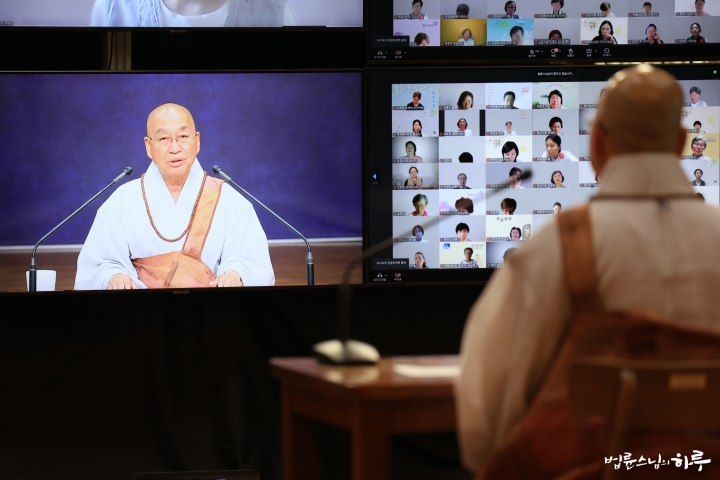
After Sunim's opening Dharma talk for the Semi-annual retreat, a Dharma Q&A session followed, during which leading members asked questions about their practice and activities. Three pre-submitted questions were addressed, and one participant asked the following question on-site:
▪ As a leading member, what specific mindset embodies a "joyful and light-hearted sense of responsibility" rather than a heavy "sense of obligation" in our respective positions?
▪ As a group facilitator, may I encourage group members who don't actively participate in practice to engage in simple practices such as 5-minute meditation or reading the Words for Practice? Or does this fall under the domain of a Dharma Teacher's practice guidance?
▪ As a third-year doctoral student, mother, and leading member, I am struggling to find balance among my studies, household duties, and Jungto Society activities. What choices should I make, and what attitude should I cultivate?
▪ I serve as a facilitator for the Youth Buddhism Course. Some young people who enter the program are struggling mentally. Are there any separate programs or alternatives available for them?
Sunim concluded the leading members' Dharma assembly with a final reminder to remain diligent in practice throughout the Semi-annual retreat period.
As soon as the Dharma assembly ended, Sunim left immediately for the Mungyeong Jungto Retreat Center.
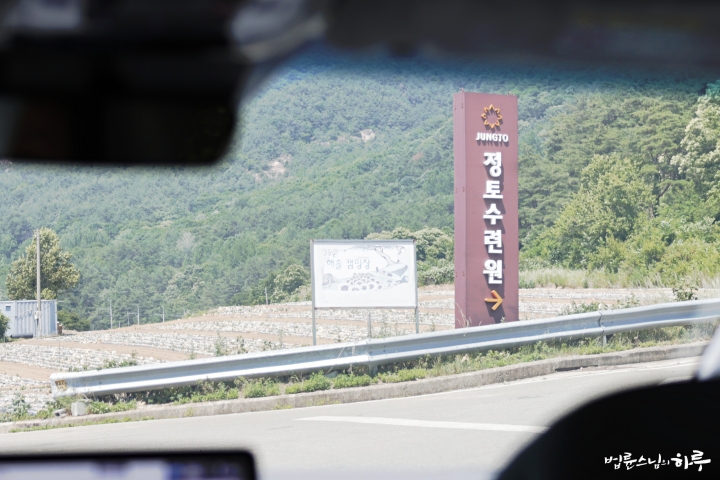
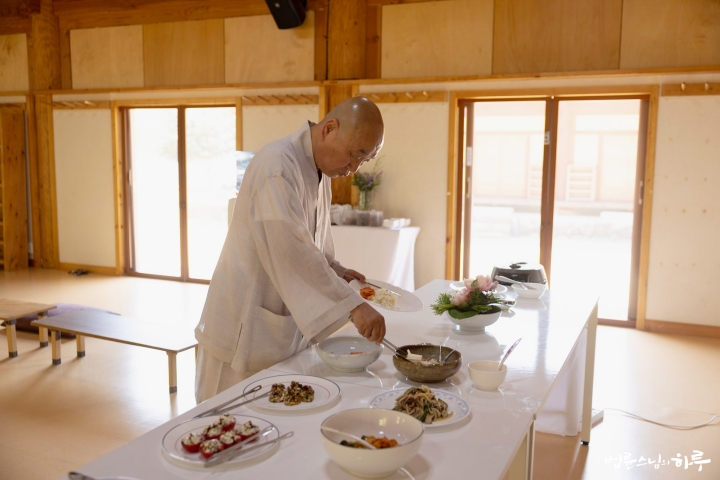
Arriving at the Mungyeong Jungto Retreat Center around 2 p.m., Sunim had a late lunch.
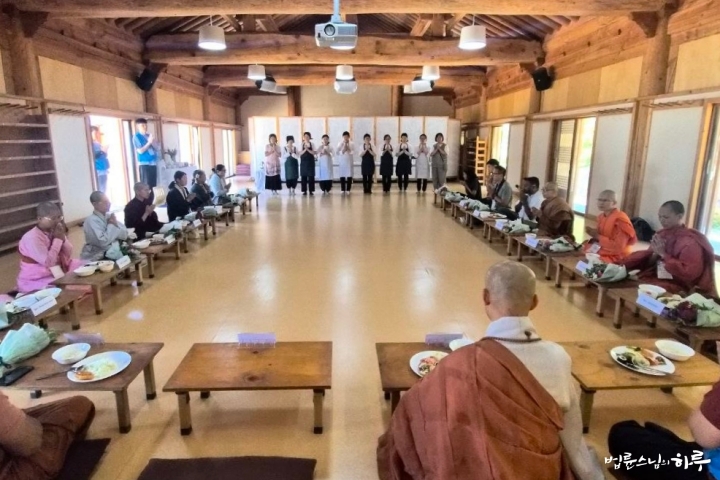
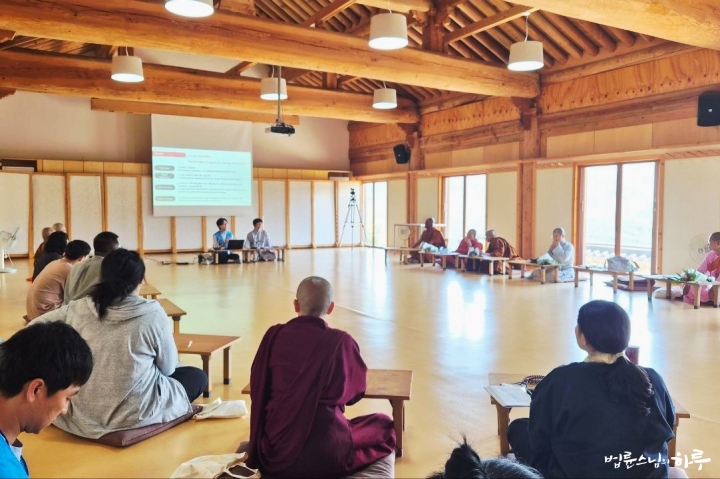
Meanwhile, the INEB delegation, having completed their morning tour of Bongamsa Temple, finished lunch and gathered at Jeongnyeomdang Hall in the Meditation Center to listen to Dharma Teacher Deoksaeng's presentation on Jungto Society's retreat programs. The participants showed great interest, as they had previously received an introduction to the Awakening Retreat—Jungto Society's signature retreat program—and had a brief taste of the experience themselves.
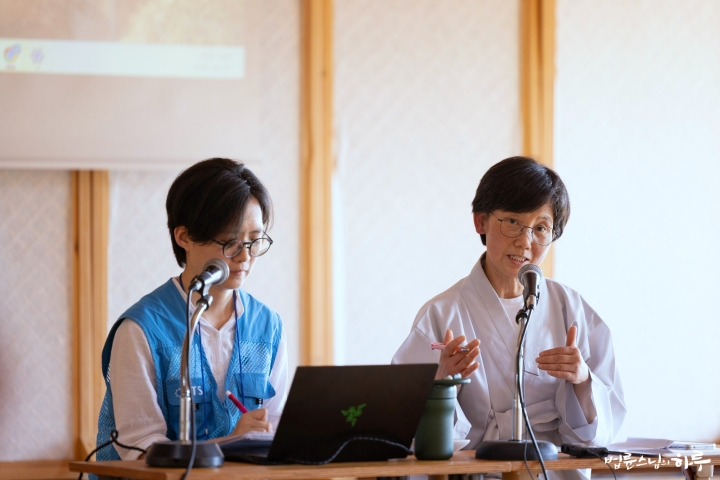
After a brief break, at 3 p.m., the Director of the Training Center, Dharma Teacher Hyanggwangmyeong, continued with a presentation on member education. She explained how to become a Jungto Society member, the leading members' educational curriculum and its content, and detailed descriptions of each stage—Balsim Practitioner, Seowon Practitioner, Gyeolsa Practitioner, and Dharma Teacher—along with the path to reach each stage. She calmly and thoroughly described the various retreats and educational programs that Jungto Society offers to its members, including Posal, Jaja, repentance, mindful sharing retreats, and the Semi-annual retreat.
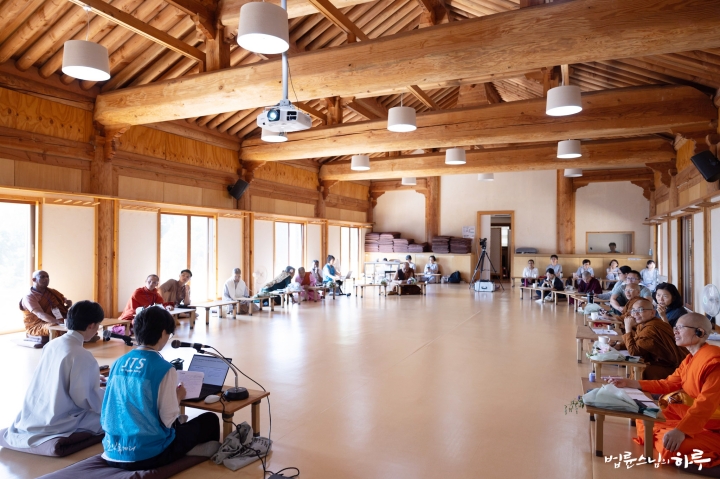
"Balsim Practitioner is the first stage of becoming a leading member. Balsim Practitioners are those who have completed all leading member education and received the precepts. They are qualified to facilitate the Jungto Buddhism Course and Jungto Sutra Course and are given opportunities to engage in Jungto Society activities. Seowon Practitioners…. (omitted) Once you become a Jungto Society member, you receive education and grow through each stage. In addition, the facilitator training, branch leader training, and leader training received while serving in various roles are job-related training. In this way, Jungto Society conducts education and training based on the Buddha's teachings to maintain the purity and harmony of the community."
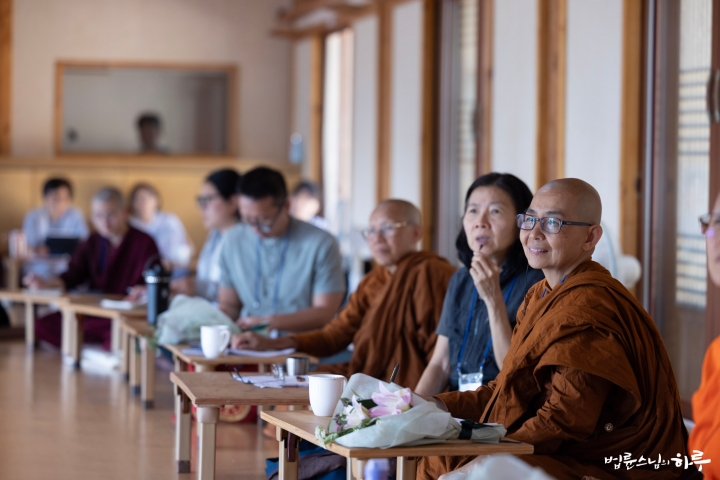
Following Dharma Teacher Hyanggwangmyeong's presentation, participants asked questions.
▪ If Gyeolsa Practitioners are those who have made vows for 30 years, does that mean they become Dharma Teachers after 30 years? How many Dharma Teachers are there in total at Jungto Society?
▪ Does one need to speak Korean to participate in the Awakening Retreat? Are there follow-up educational programs after experiencing the taste of awakening through the Awakening Retreat?
▪ Jungto Society's rigorous education and training programs are remarkable. If such programs could be offered in our country (Indonesia), it would be tremendously helpful. What ways might this be possible?
▪ I'm curious about what precepts the monastics living in the community follow.
By the time all questions had been answered, the clock had already passed 4 p.m.
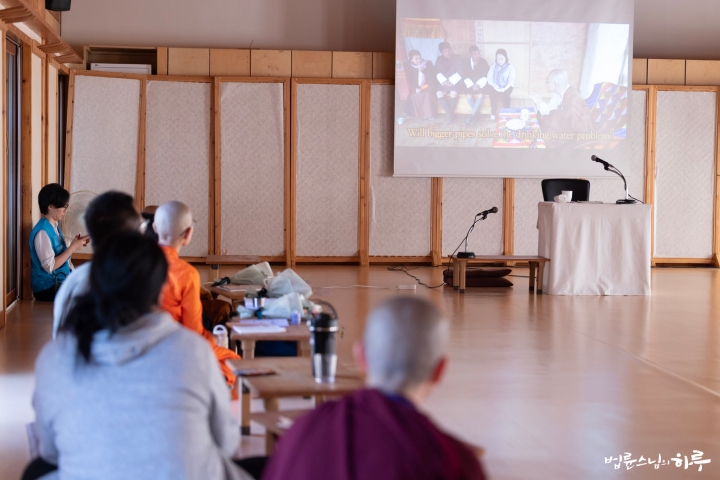
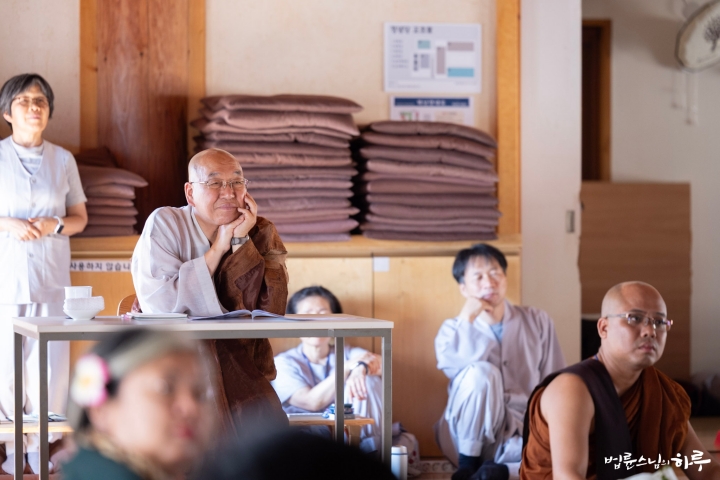
After a brief break, the session moved on to an introduction of Jungto Society's social engagement activities. Before the session began, Sunim and the participants watched a video together about JTS Mindanao activities. After the video and a brief meditation, the conversation with Sunim continued.
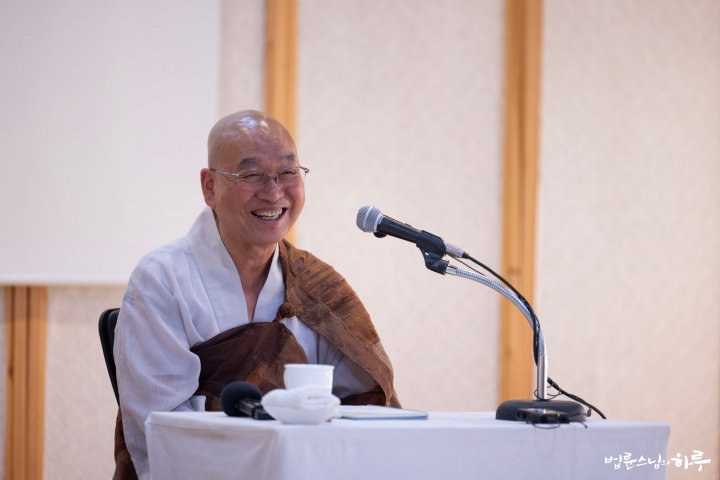
"How was your visit to Bongamsa Temple this morning? It is truly beautiful, isn't it? Bongamsa is the center of Korean Seon Buddhism. It was built about 1,200 years ago, just when Seon (Zen) Buddhism was first being introduced from China. Practitioners who had studied Seon Buddhism in China returned to Korea and built temples deep in mountains across the country, where they developed Seon Buddhism. These are known as the 'Nine Mountain Schools of Seon (Gusan Seonmun).' Bongamsa belongs to one of these nine schools, called 'Huiyangsanmun.' One of my teachers served as the Josil (Spiritual Head) of Bongamsa. During that time, while I was practicing at Bongamsa, the conditions came together for me to settle here at the Mungyeong Jungto Retreat Center."
Sunim shared the history of Bongamsa Temple and the circumstances that led him to settle at the Mungyeong Jungto Retreat Center. He then continued with an explanation of the social engagement activities Jungto Society is undertaking.
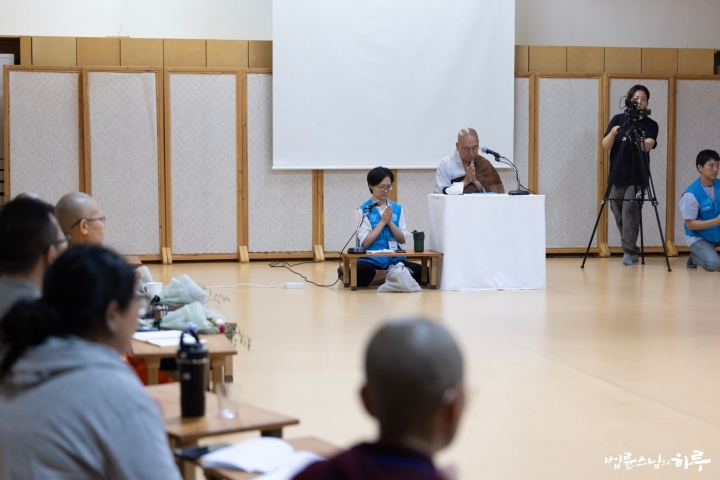
"Jungto Society carries out four main areas of social engagement. The first is addressing environmental issues on a global scale. The second is humanitarian assistance for people whose survival is threatened. The third is the pursuit of peace, free from war and conflict. The fourth is improving human rights violations such as gender discrimination, discrimination against minorities, and discrimination against people with disabilities, as well as supporting refugees. Based on these four areas, four social activity organizations operate under Jungto Society. 'Ecobuddha' for environmental activities, 'JTS' for humanitarian aid, 'The Peace Foundation' for peace on the Korean Peninsula, and 'Good Friends' for human rights and refugee support. Today, I'd like to introduce JTS, which works to eradicate poverty and ensure the right to survival."
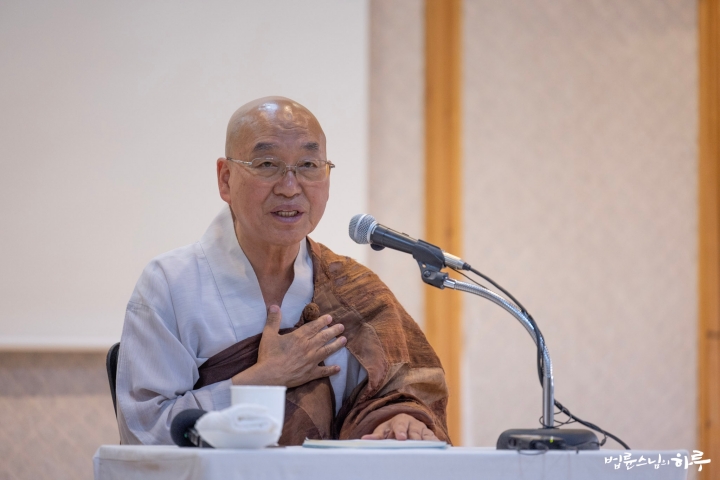
Sunim also explained how the establishment and activities of JTS are connected to the Buddha's teachings.
"Among the Buddhist scriptures, there is the 'Mahaparinirvana Sutra,' which records in detail the Buddha's final journey to nirvana. It contains the entire journey from when the Buddha left Gridhrakuta (Vulture Peak) until he reached Kushinagar. On the night when he was about to enter final nirvana after arriving at Kushinagar, Ananda, who was attending him, asked the Buddha with tears in his eyes:
'We have been able to accumulate great merit by making offerings to the Buddha. But after the Buddha enters nirvana, where shall we now make offerings and accumulate merit?'
The Buddha then replied:
'Ananda, do not worry. Even after I enter nirvana, there are four kinds of offerings that yield as much merit as making offerings to me. First, giving food to the hungry to satisfy them. Second, giving medicine to the sick to heal them. Third, helping and comforting the poor and lonely. Fourth, protecting and supporting (providing external support to) those who practice with pure dedication. These four are no different from making offerings to me.'
JTS set the direction of its activities based on these final words of the Buddha. That is how the slogan 'The hungry must eat. The sick must be treated.' came about. And since we recognized that the most symbolic aspect of helping the poor and lonely is addressing 'children who cannot receive education at the proper time,' we added the principle 'Children must learn at the proper time.' These goals of JTS, while rooted in the Buddha's teachings, also align with the principles of humanitarian aid set forth by the United Nations (UN)."
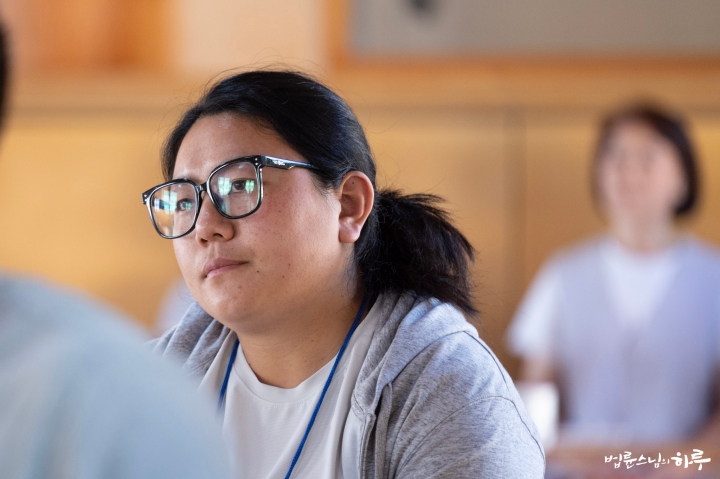
"When JTS decides who to support, we do not consider that person's religion, gender, or ethnicity. We only look at whether they are hungry, ill, or unable to attend school. At the same time, for those who wish to join us in this good work, we keep our doors open to everyone without any discrimination.
However, upholding this principle in reality is often very difficult. Especially when inter-Korean relations were frozen, we faced a great deal of criticism from many sides for our humanitarian support to the people of North Korea. We also faced strong resistance from those around us when we tried to help Muslim countries such as Afghanistan and Syria. When we began our relief work in Afghanistan, people protested fiercely, asking, 'Why are you helping the people who destroyed the Bamiyan Buddha, the world's largest Buddha statue?' At that time, I responded, 'The children who are starving there are not the ones who destroyed the Buddha statue.'
As you can see, when we carry out humanitarian aid, we receive support, but we also face many misunderstandings and opposition. Nevertheless, JTS quietly upholds its principle of 'providing support first to the places in the most dire need.' Realistically, however, the places in the most dire need are mostly conflict zones where civil wars are taking place. As a result, there is always a risk to safety. Should we not go because it is dangerous? Even if there is risk involved, if it is a place that truly needs help, going there is the path JTS must take. I will stop here and now take your questions."
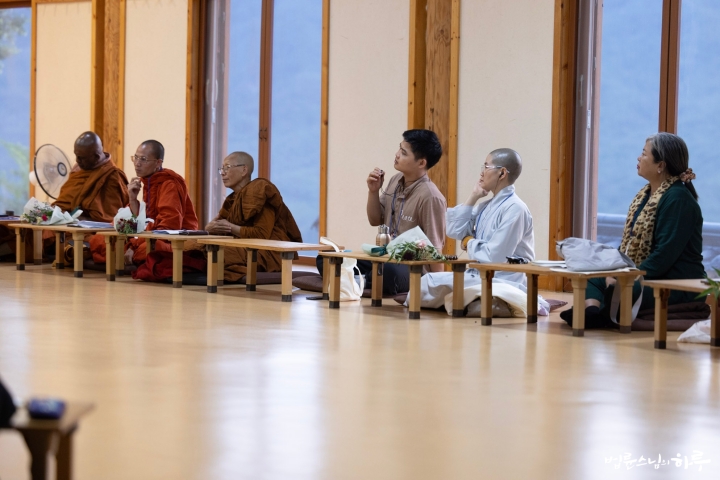
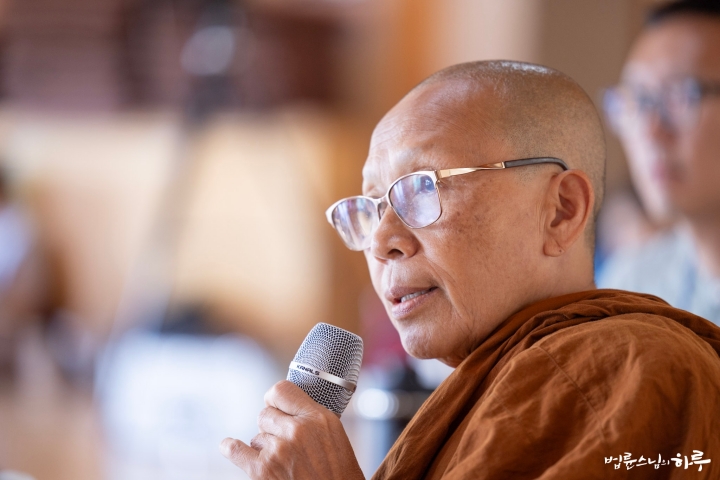
The participants, who had been listening intently to Sunim's story, continued with their questions.
▪ I'm curious about how connections are made with countries or regions when carrying out global relief activities.
▪ I'm curious about how Sunim decides 'this is the area we need to help' when carrying out relief activities. Sunim responded to the participants' questions, and they listened attentively, deeply absorbed in his words.
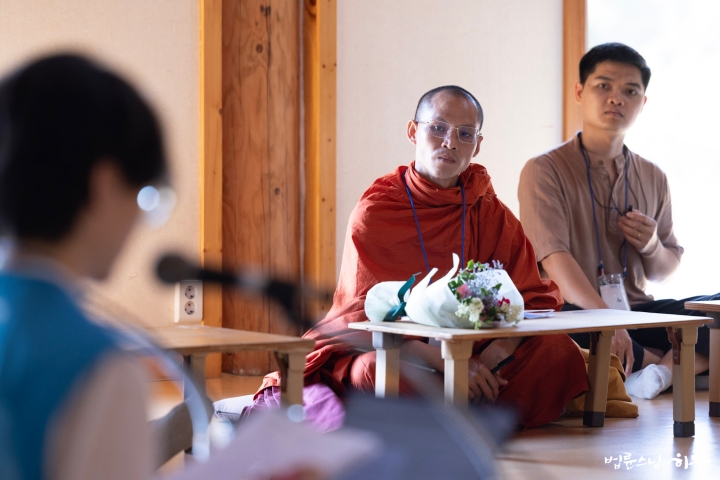
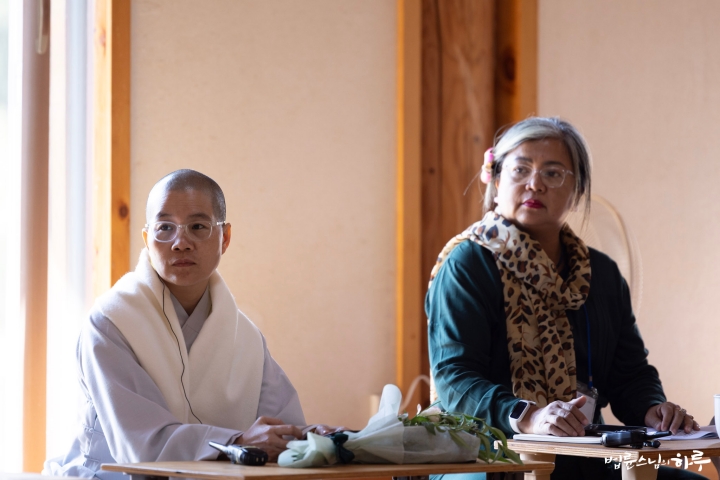
As the conversation continued, it was already 5:30 PM, time for dinner. The participants moved to Jeongjeongdang Hall at the Meditation Center for dinner. Volunteers from the Daejeon-Chungcheong Branch had carefully prepared five meals over the two days.
At 6:20 PM, the sound of the moktak echoed throughout the Meditation Center, signaling the start of the evening session. The participants gathered again at Jeongnyeomdang Hall in the Meditation Center.
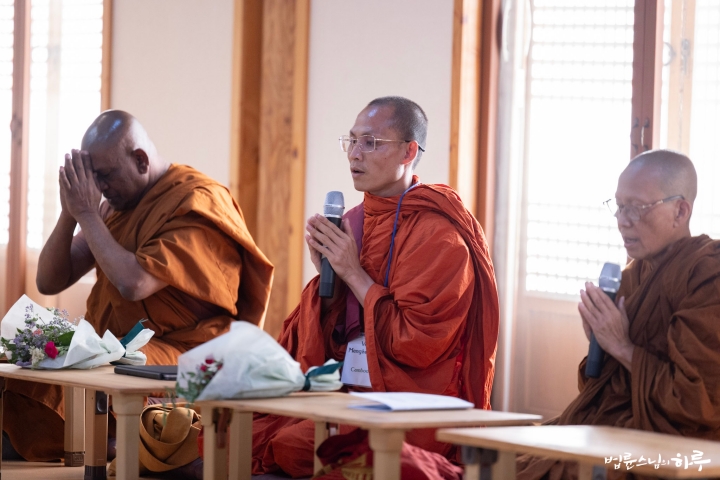
After conducting a Theravada-style service, the participants moved on to the final program of the day—a conversation with Sunim.
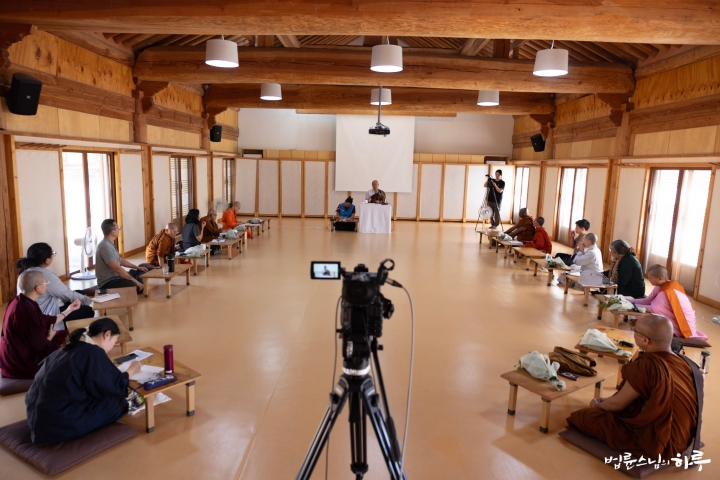
After watching a JTS video about activities in Bhutan, Sunim provided additional explanation on points that needed further clarification from the Q&A about 'bowing practice' during the afternoon session. Then, the participants asked the following questions.
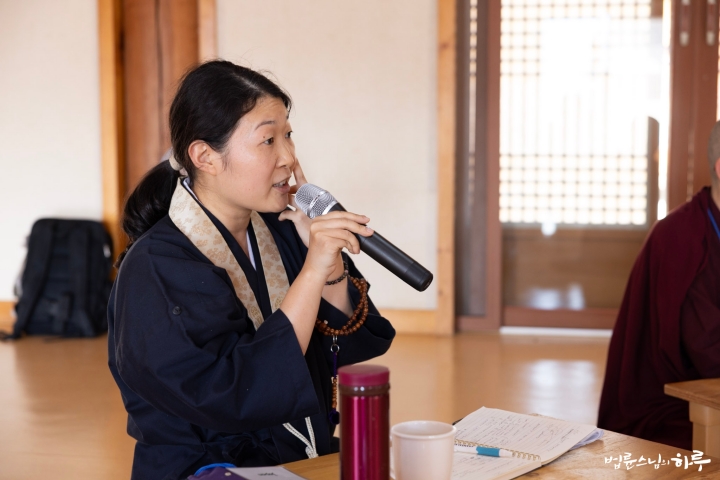
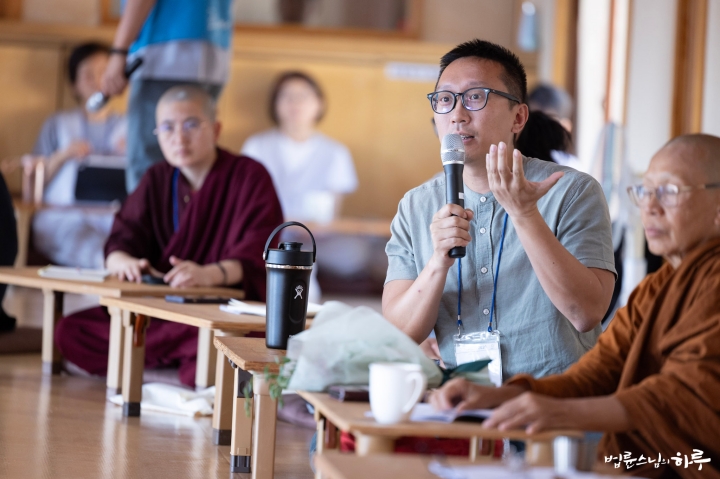
▪ What do meditation and bowing have in common, and how can we find a balance between the two?
▪ Listening to the explanations about JTS activities and meditation made me reflect on human dignity. How should Buddhists view human dignity? At 8:30 PM, the conversation with Sunim came to a close. The participants expressed their deep gratitude to Sunim for his detailed responses to their many questions and concluded the day's schedule.
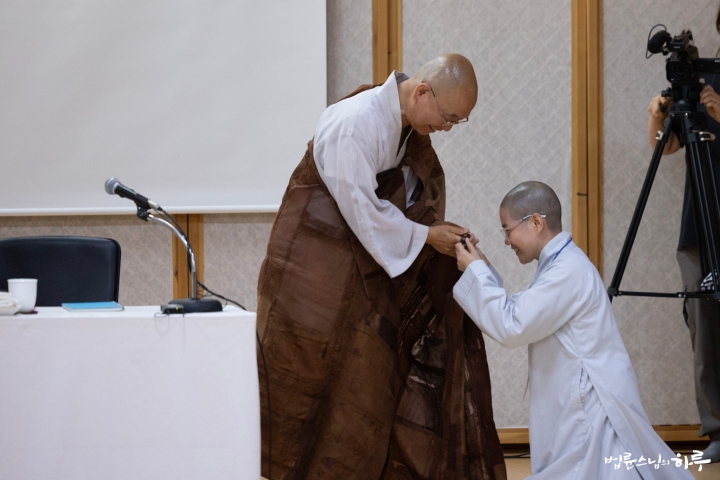
A Vietnamese monk from Vietnam was deeply moved by Sunim's heartfelt presentation and guidance, and following traditional custom, knelt down and offered a respectful bow.
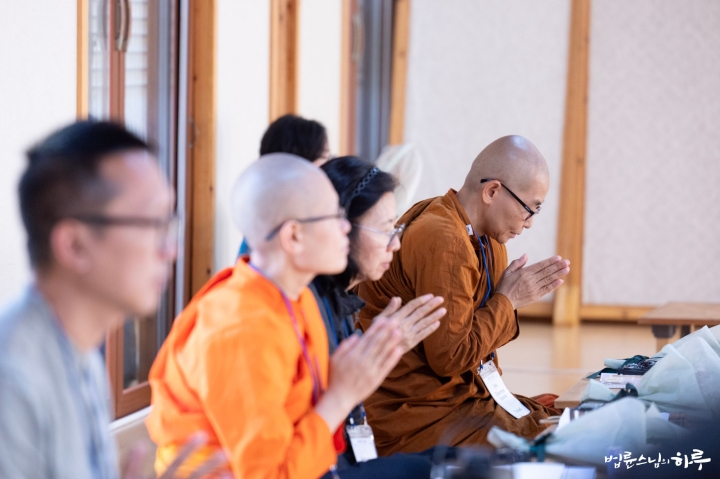
In the middle of the session, the participating monks reverently offered chanting. Through this chanting, they expressed their respect, gratitude, and deep emotion toward Sunim, who had shown them a real-life example of social practice grounded in the Buddha's teachings and spirit.
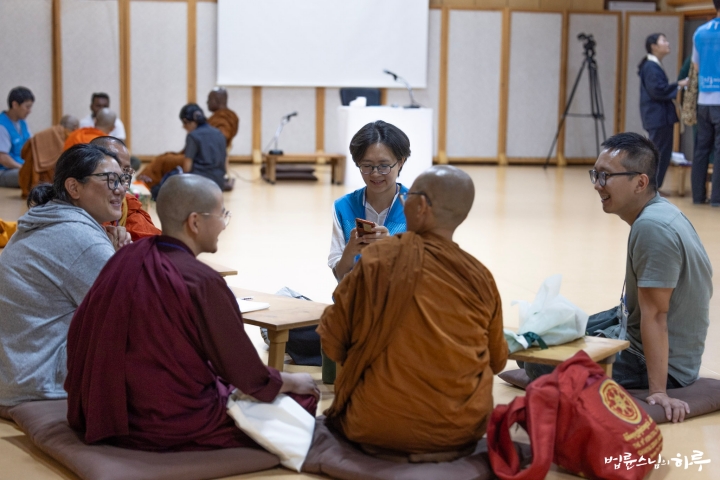
At 8:30 PM, the participants gathered in groups for the day's closing sharing session.
"I gained great learning and inspiration from seeing Sunim set an example not only through words but through daily actions."
"It was special to witness the wonderful cultural heritage at Bongamsa, and I had the remarkable experience of having the questions I had held for the past ten years clearly resolved."
"The carefully designed educational curriculum tailored to the level of the members was impressive, and the structure in which countless people who completed the training return to the community and volunteer voluntarily is truly amazing."
"I witnessed Jungto Society and JTS fully practicing the Buddha's teachings. Sunim, who constantly researches and thoughtfully responds for the benefit of the community, is a true 'super leader' who inspires us all."
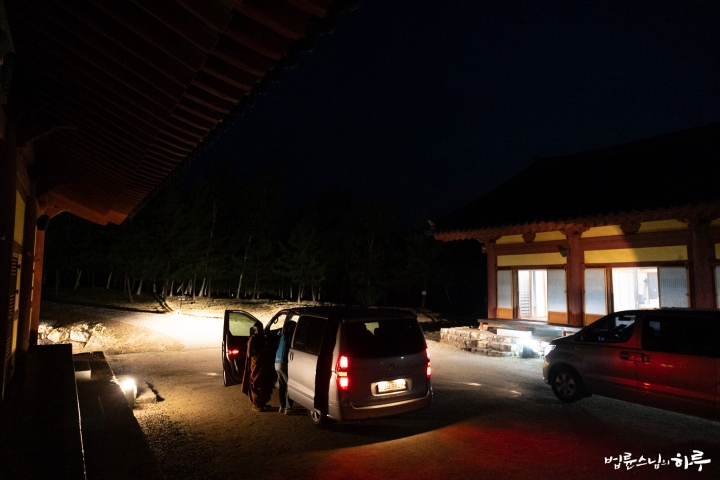
After the sharing session, the participants boarded vehicles and moved to the Jungto Retreat Center, where they wrapped up the day in their assigned accommodations. After finishing the conversation with the participants, Sunim reviewed manuscripts before concluding his day.
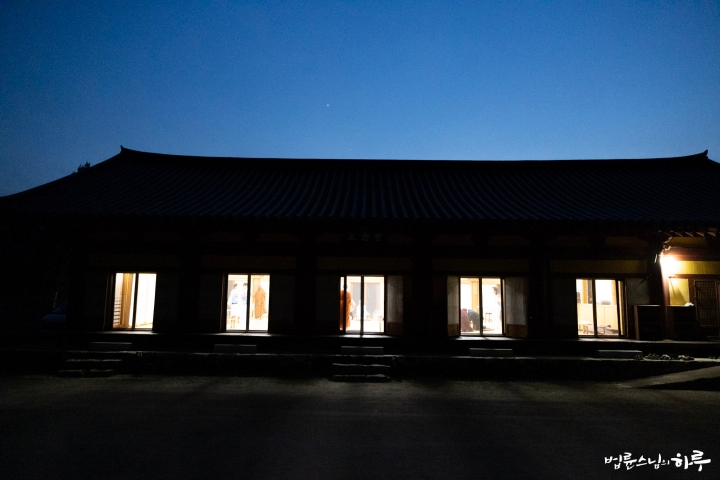
Tomorrow is the fourth day of the INEB program, with a tour of the Mungyeong Jungto Retreat Center and sessions on volunteer work and Dharma propagation activities of Jungto Society.
This post concludes with the Q&A about '108 bows' that came up during Dharma Teacher Hyanggwangmyeong's presentation, along with Sunim's supplementary explanation.
How does 108 bows help with practice that it is considered so important?
"During the introduction to Jungto Society, bowing came up very frequently and seemed important enough to be a defining feature. I'm curious why bowing is regarded as so important."
Dharma Teacher Hyanggwangmyeong responded as follows.
"First, you asked why we bow. When we bow, we gradually let go of our mind. This is called 'hasim (下心),' or lowering the mind. When we are attached to a certain thought, repeatedly bending our body in bowing helps us experience letting go of that thought. Also, bowing is a physically demanding practice. Through enduring that difficult process, we also experience overcoming the resistance within our mind. For these reasons, Jungto Society regards bowing as one of the important methods of practice. In addition, bowing has the effect of making the mind much more peaceful."
"How do you guide bowing practice for those with physical disabilities or those who have difficulty with their bodies? Our denomination also considers bowing important, and we have practitioners with disabilities, so I'm curious."
"There are also people here who cannot bow, and as people get older, more and more of them find it difficult to bow. For these people, we guide them to meditate instead. At Jungto Society, we do 108 bows at 5 AM, and those who find it difficult to bow are guided to meditate for about 20 minutes during that time."
Then, Sunim, who had been observing the earlier session, provided supplementary explanation regarding bowing.
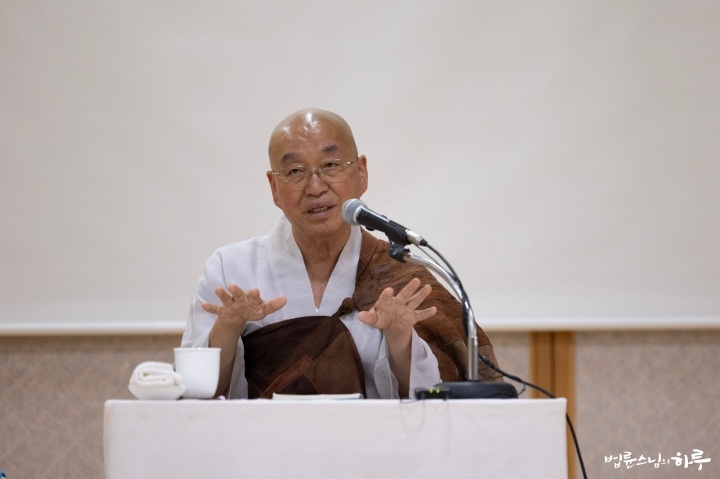
"During our earlier time together, the question came up: 'Why does Jungto Society consider bowing so important?' Let me add a little more explanation on that point.
Let's think about the relationship between our body and mind. Suppose two people are lying down having a conversation. But what happens when they disagree with each other? Do they keep arguing while lying down? No. Without realizing it, they suddenly sit up and continue talking. If the conflict continues while sitting, what happens next? Eventually, they stand up. Once standing, their heads are held high. This is the bodily posture that appears when one insists 'I am right.' Then, at some moment, when the realization 'Ah, I was wrong' arises, what happens? Naturally, the head bows down with the words 'I'm sorry.' If one feels more at fault, one bends at the waist to apologize, and if the feeling of remorse grows even greater, one kneels down. And when one feels truly, deeply at fault, one places one's forehead on the ground to apologize.
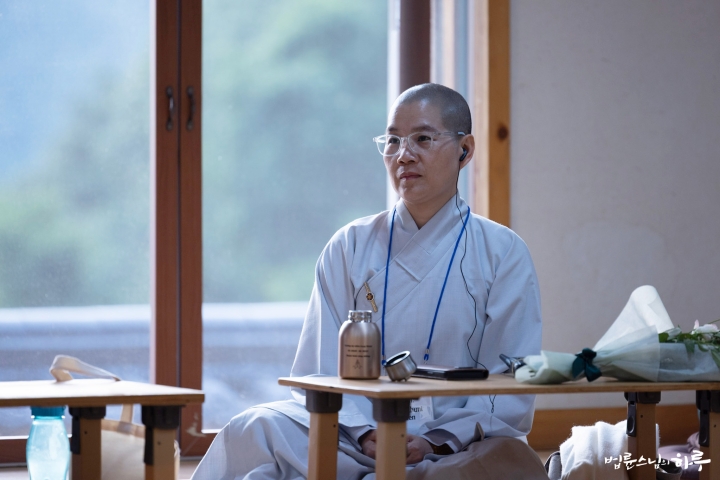
As you can see, our body is closely connected to our mind. When we think we are right, our body naturally straightens up. Don't we say that an arrogant person "has a stiff neck"? Conversely, when we become humble or lower ourselves, our body naturally bows. So performing a bow is essentially taking the posture of "I have nothing to assert about myself."
Usually, the mind moves first and the body follows. But conversely, when we bow the body first, the mind is also influenced by it. So performing a bow can ultimately be described as "bowing the mind."
A bow is not merely a physical action. It is also a practice of inscribing a new perspective on the mind while bowing. For example, when there is conflict in a marriage and you think, "My husband is the problem," try repeating to yourself while bowing, "My husband is the Buddha." Then you can let go of the mind that insists only your own thoughts are right and sincerely say "Yes" to your husband's words. Letting go of mental stress and changing your perspective in this way is exactly what bowing practice is. In other words, bowing is used as a means to cultivate the mind.
However, simply doing bows does not automatically make it a practice. In fact, the opposite phenomenon can occur. This happens when one becomes attached to the idea that "doing many bows brings blessings." Then people start to compete with each other, saying things like:
"How many bows did you do?" "I did 1,000 bows." "Oh, I only managed 800…"
When you bow with this kind of mind, the mind does not bow down—instead, the ego arises and the mind stands up even more rigidly. Therefore, practice does not lie in the act of bowing itself, but in "with what mind you are bowing." This is the first reason why we bow.
The second reason for doing prostrations is that they serve as excellent full-body exercise. Most modern people don't get enough exercise, so simply doing 108 prostrations a day naturally provides good physical activity. Various physical problems caused by accumulated stress or lack of exercise can be alleviated through prostrations. In this sense, prostrations themselves greatly benefit physical health.
The third reason is that prostrations are difficult. They become especially hard to do when the weather is hot or when you're physically tired. In Dharma practice, overcoming karma (業) means precisely this—going beyond the mind that says, "I don't want to do this." When the reluctance arises, by willingly doing it anyway, you can move past your inner resistance. As you continue, you gradually develop the attitude of actively embracing things with "Let me just try it," rather than hesitating with "Should I or shouldn't I?" or backing away saying "I don't want to." This is why prostration practice is recommended to practitioners.
At Jungto Society, when doing prostrations, we sometimes provide Words to Remember (Myeongshimmun) or vow texts that convey "approach prostrations with this mindset." This is because prostrations are not merely a physical movement, but a profound practice that trains the mind.
"Doing prostrations doesn't automatically constitute practice, but it can serve as a very useful method of practice. In particular, for people who normally have too many thoughts, meditation can actually intensify their wandering thoughts. If you have someone who is psychologically unstable or has neurotic tendencies practice meditation, perhaps only one out of ten will see any benefit, and side effects often occur instead. For such a person, doing 300 prostrations a day is better for both physical health and far more effective in restoring mental health.
In Eastern countries such as Korea, China, and Japan, there is a long tradition of traditional medicine. According to this traditional medicine, having heat rise to the head is not good for health, and conversely, cold hands and feet are also not beneficial. The head should always be cool and the hands and feet warm—that is what is good for health. In Korean traditional medicine, this is often explained in terms of the flow of 'qi (氣).' When qi surges upward, many mental illnesses or symptoms of psychological anxiety arise. Therefore, the qi that has risen upward must be brought down, and the central reference point for that is the navel (danjeon).
In order to bring qi downward, the lower body must be strong. When you do prostrations, your lower body naturally becomes very strong. Even if not prostrations, walking a lot is also very helpful. Therefore, for people who are mentally struggling, having them do prostrations or walk more than 10,000 steps a day is far more effective in calming the mind than having them sit quietly in meditation."
After hearing this, one participant shared a valuable personal experience instead of asking a question.
"I come from a Buddhist country, but I never practiced prostrations separately. Then, when I was practicing at a Chan Temple in Canada in the past, I naturally learned to do 108 prostrations every morning by sitting down and bowing my upper body. Thanks to that, my body has become very flexible. I also recommended it to elderly people around me, but they couldn't sustain it. As we were talking about prostration practice today, I remembered my experience and wanted to share it."When the participant finished speaking, Sunim's warm response followed.
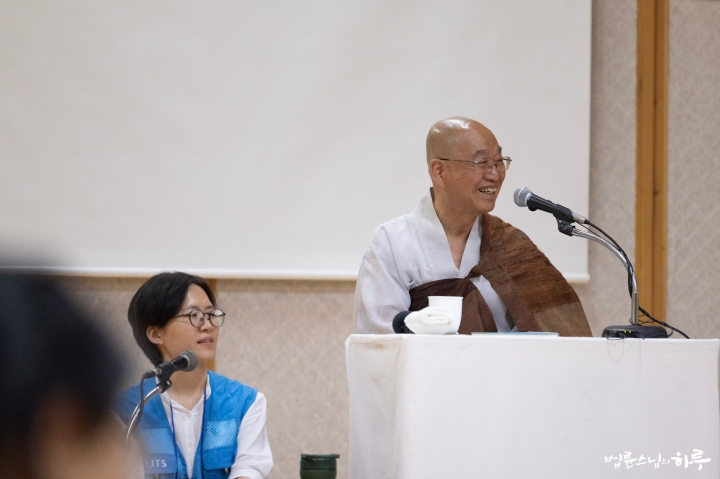
"Even when you do prostrations sitting down, you still bow your head, which fosters humility—that is, it greatly helps in letting go of arrogance. However, prostrations done while sitting have limits when it comes to strengthening the lower body. For those who have many afflictions and complicated thoughts, it is important to strengthen the lower body in order to bring qi downward. So whether Korean-style or Tibetan-style, doing prostrations while standing is much better. Also, those who meditate often experience strain on the lower back and weakening of the lower body from sitting for long periods. Therefore, doing 108 prostrations a day before meditating is also very good for maintaining physical health.
In fact, when you meditate properly, you come to realize the principles of the mind, so you naturally become humble. The real problem arises when you become attached to the notion that 'I am a person who meditates' or 'I am a practitioner.' When that happens, far from becoming humble, it is easy to fall into the delusion that you are better than others and become arrogant.
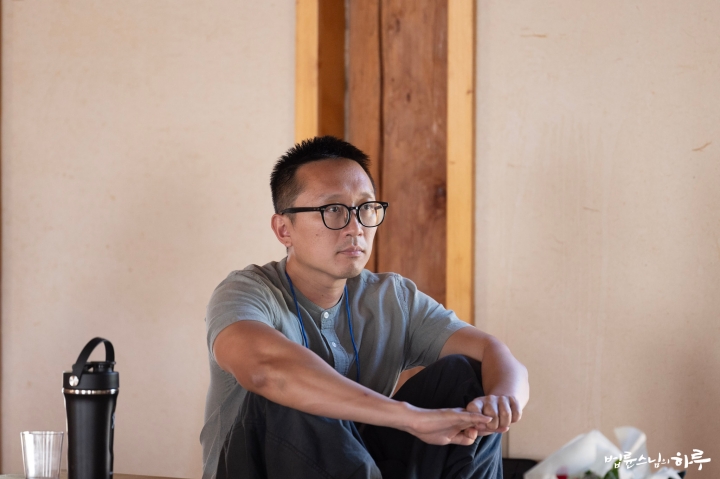
"In Korean Seon Buddhism, there is a very strong sense of pride that 'Seon is the highest.' Because of this, there is a tendency to look down upon practices other than Seon Buddhism. As a result, while practitioners may outwardly appear very confident, they can also become arrogant. A practitioner should naturally be humble, but if one misunderstands the essence of practice, it is easy to become arrogant instead. When religious leaders treat their followers or the public arrogantly, as if they were nobility or kings, this too is a phenomenon that arises from a misguided direction in practice. The Buddha spoke about this as follows:
'My disciples, a practitioner must not be servile. Be dignified.' 'My disciples, a practitioner must not be arrogant either. Be humble.'
In other words, a practitioner should be both dignified and humble. However, in reality, it is easy to become arrogant, or conversely, to become servile. Lowering one's mind and bending one's waist of one's own accord is entirely different from being forced to bow down by power or pressure. The latter is not humility but mere servility. Kneeling down and placing one's head on the ground is also the posture of one who surrenders after losing a war. Therefore, one cannot judge from outward appearance alone whether something is true humility or servility. Thank you for sharing such a valuable experience."