How Do You View Young People Who Are Not Interested in Religious Belief?
Jun 14, 2026 – Arrival in Korea, Day 2 of INEB Program (Jungto Social and Cultural Center)
Hello. Today is the second day of the INEB (International Network of Engaged Buddhists) Study Trip. Throughout the day, Sunim engaged in conversations with INEB participants on the topic of "education."
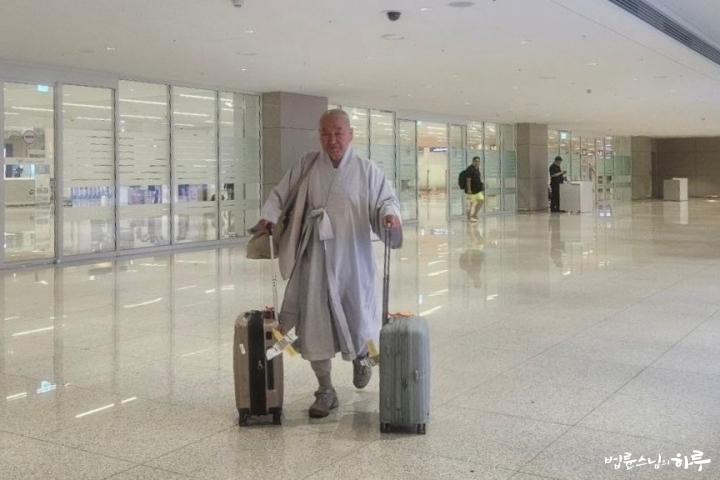
After flying out of Bangkok the previous day and traveling overnight, Sunim arrived at Incheon International Airport at 7:15 a.m. After collecting his luggage and leaving the airport, he traveled by car and arrived at the Seocho-dong Jungto Center at 8:50 a.m. Sunim unpacked his bags and prepared to join the INEB program.
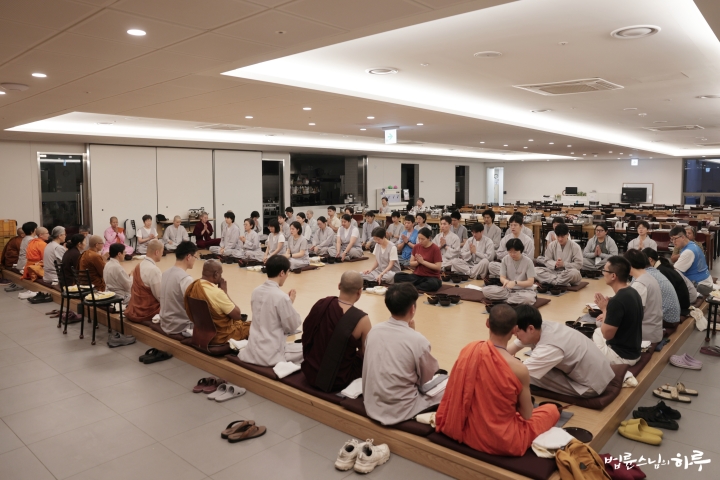
The INEB participants joined the Sangha community at the Jungto Social and Cultural Center for morning practice, the 1000-Day Practice prayer, and Barugongyang.
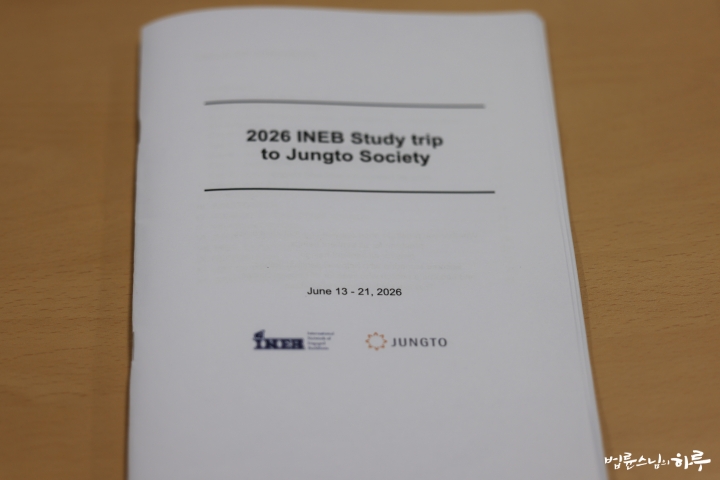
Starting at 9:00 a.m., participants toured the Jungto Social and Cultural Center and presented their respective activities. Near the end of the morning program, Sunim stopped by the 9th-floor auditorium to greet the participants. He gave them some spending money to use during their stay in Korea before leaving the auditorium.
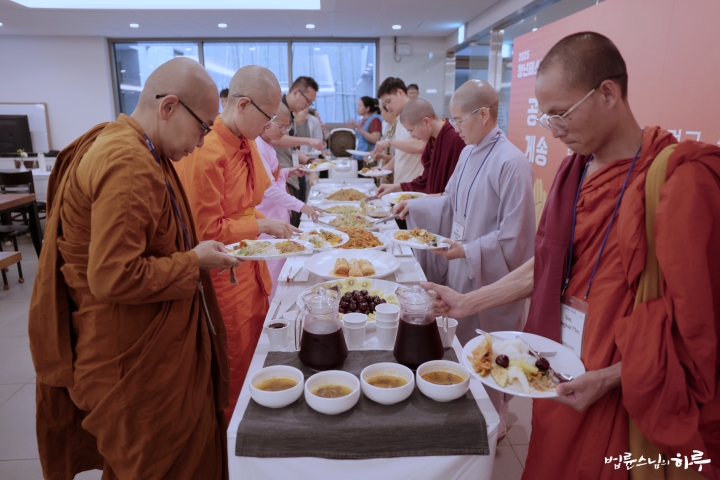
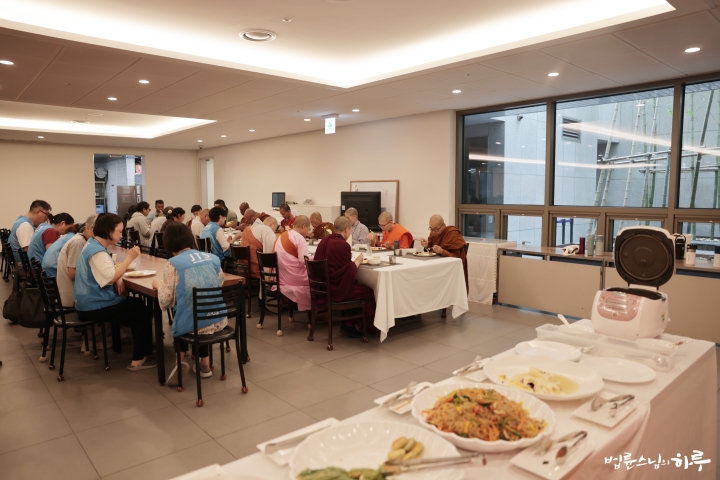
At 11:30 a.m., Sunim went down to the basement level for lunch with the INEB participants. The meal had been carefully prepared by volunteers from the Jungto Social and Cultural Center's Special Division.
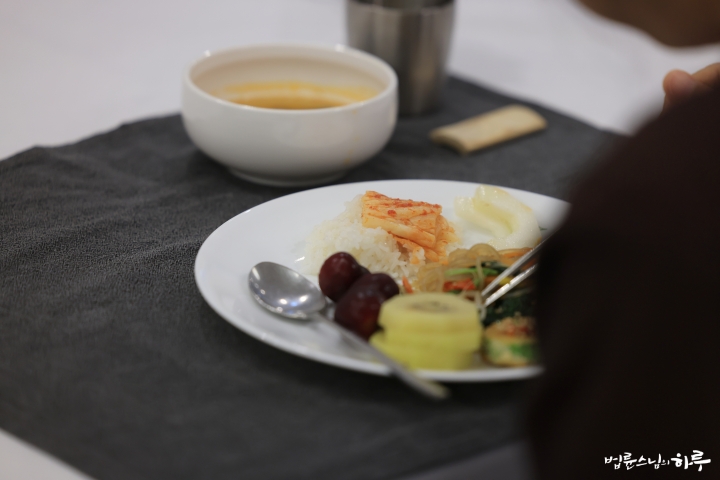
Sunim was first to serve himself and take a seat, followed by the participants. While the participants were serving themselves, Sunim went into the kitchen to thank the volunteers. The kitchen was busy preparing both the event meals and the center's daily meals.
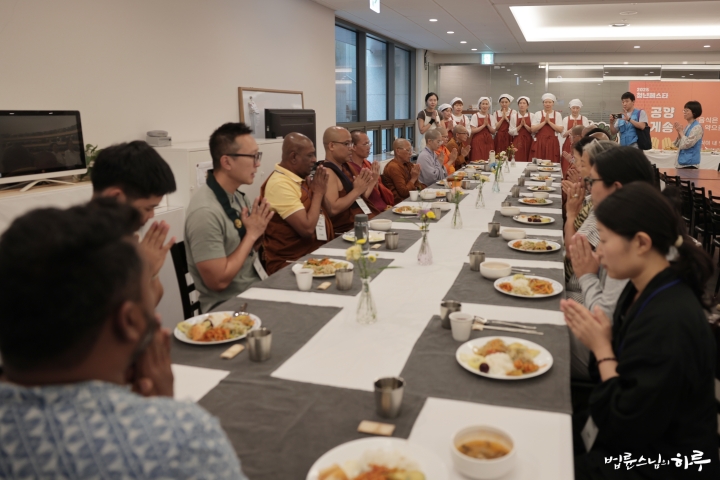
As participants gradually took their seats, once everyone was seated, they recited the meal verse and began eating. The volunteers who prepared the meal came to greet the participants, and the participants offered blessings and expressed their gratitude to the volunteers.
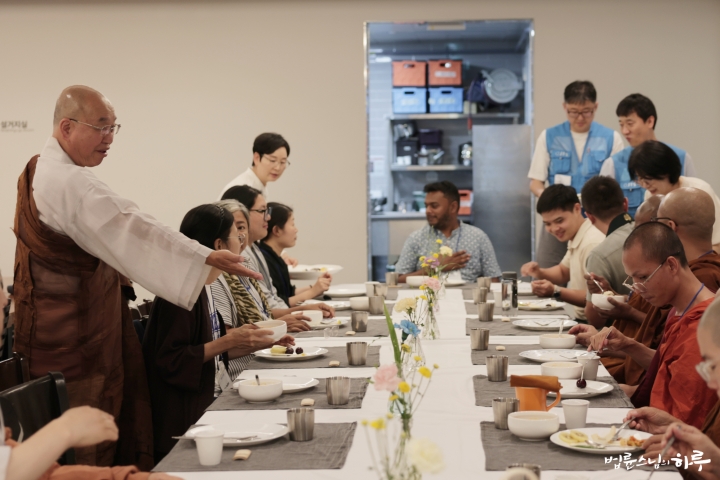
As the meal progressed, Sunim went to the serving counter and arranged for volunteers to carry dishes around the tables one by one, offering second helpings to the participants. In an unfamiliar environment, some participants hesitated to ask for more food even when they wanted it, and in the case of Theravada monks, some could only accept food when it was handed to them directly by men. Also, since some participants would not eat in the afternoon, Sunim wanted to ensure they could have a sufficient lunch, so he arranged for the volunteers to personally serve the food, taking these various considerations into account.
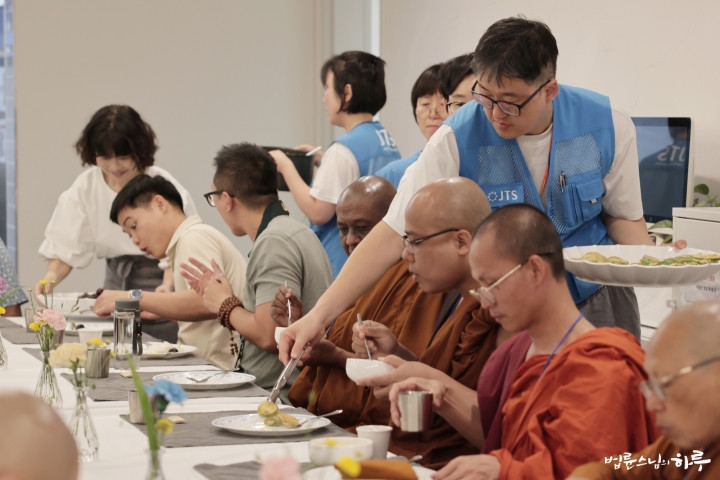
Sunim finished all the food he had taken and cleaned his bowl with water before drinking it.
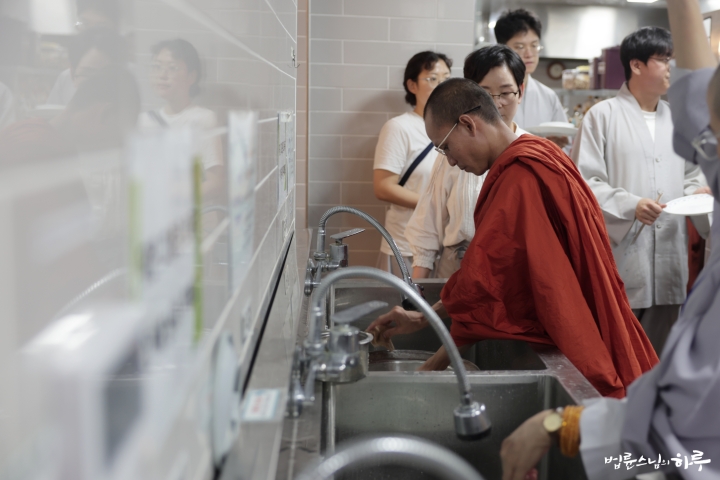
All the participants also finished their food without leaving anything, cleaned their bowls, completed the three-stage washing, and then left the dining hall.
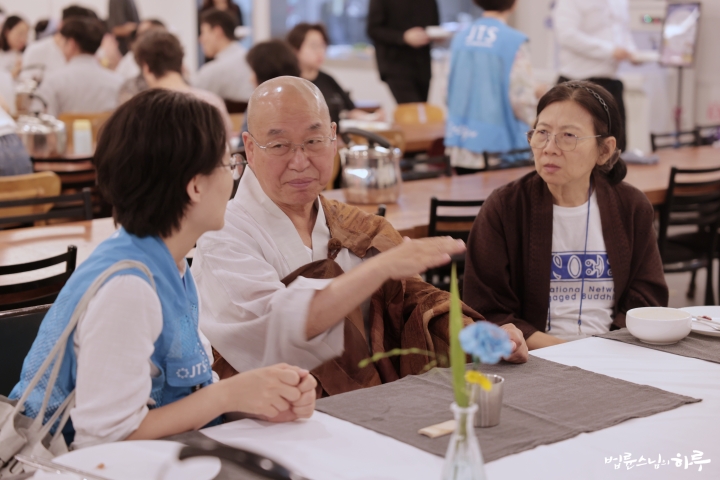
After the meal, Sunim spoke briefly at the table with Anchalee, an INEB board member in charge of the program.
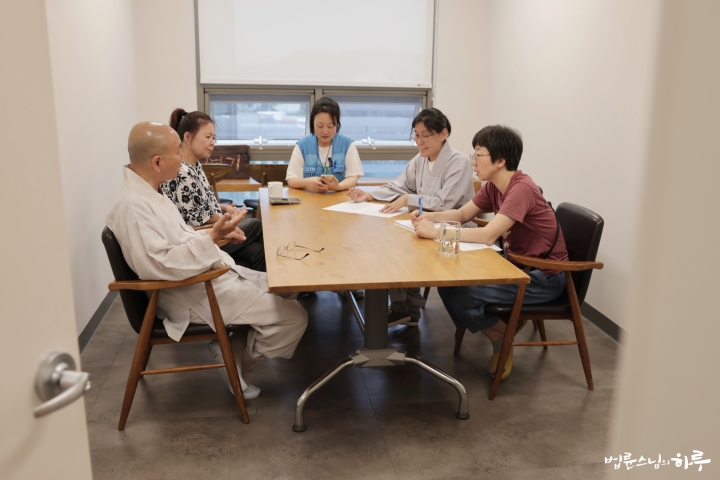
Sunim then returned to his office to discuss the upcoming Sri Lanka visit program scheduled for late June with the staff in charge. He also held a meeting with JTS President Park Gina, who was preparing for a business trip to Myanmar. Until the next INEB program began, Sunim attended to staff meetings and handled administrative work.
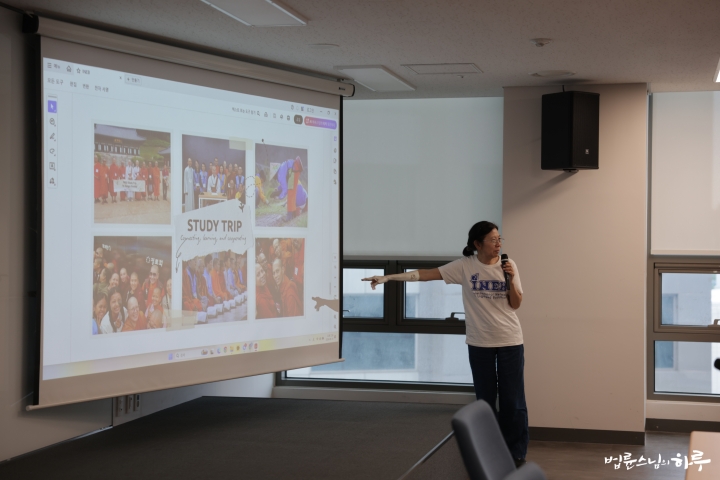
Meanwhile, the INEB participants continued their afternoon program in the 9th-floor auditorium. After the activity introduction session ended and a 15-minute break, the presentation on Jungto Society's education began at 3:15 p.m.
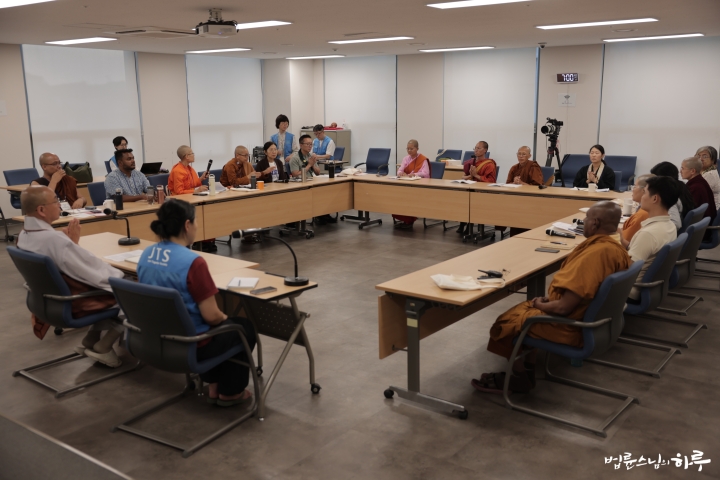
This session was led by Dharma Teacher Mubyeonsim. She began her presentation with a self-introduction, sharing her own story of how her life had been transformed by encountering Buddhism as a practice.
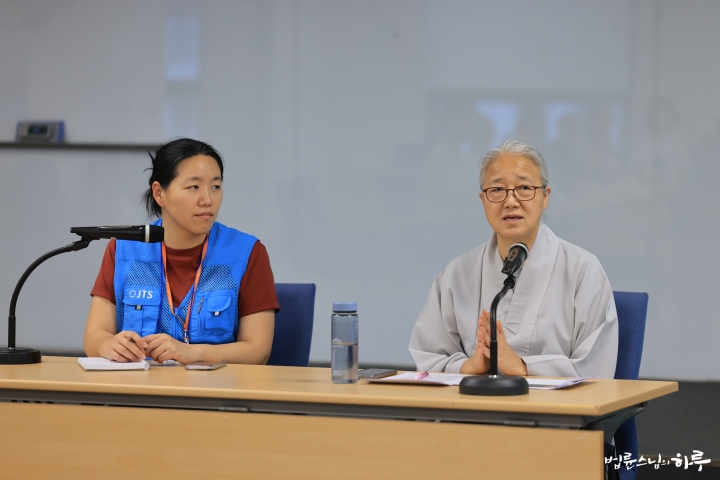
She then introduced the curricula of the Jungto Buddhism Course and the Jungto Sutra Course operated by Jungto Society. The curricula were designed to help students understand Buddhism as a practice and to experience it through direct practice. The participants asked questions about what people who enroll in the Jungto Buddhism Course are hoping to gain and how they experience personal transformation through the program.
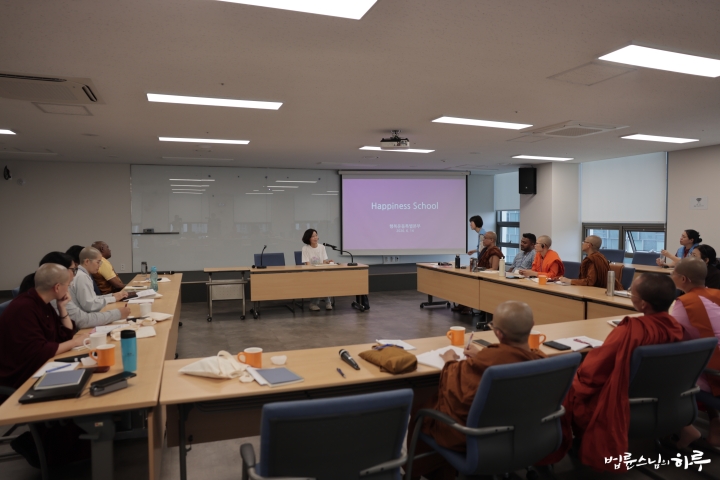
Starting at 4:10 p.m., there was an English presentation on the "Happiness School," a program for the general public, not just Buddhists. Along with introducing the curriculum of the Happiness School and the Happy Citizens Course, the presentation also covered actual examples of practical activities taking place in local communities.
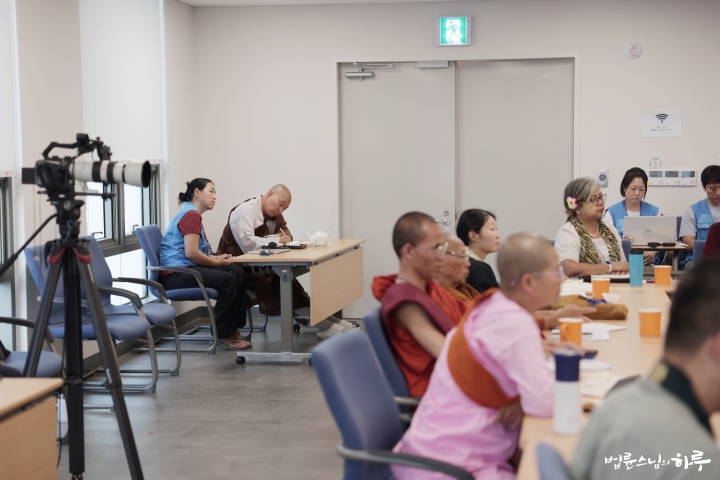
Sunim came to the 9th-floor auditorium and quietly observed from the back. The INEB participants showed great interest in the Happiness School, and many questions followed. They asked how the Happiness School programs are developed, whether psychologists are involved in the development process, how Happy Citizens transform themselves through practice and translate that into action, how that transformation can be verified, and whether there is a counseling space where personal concerns can be shared.
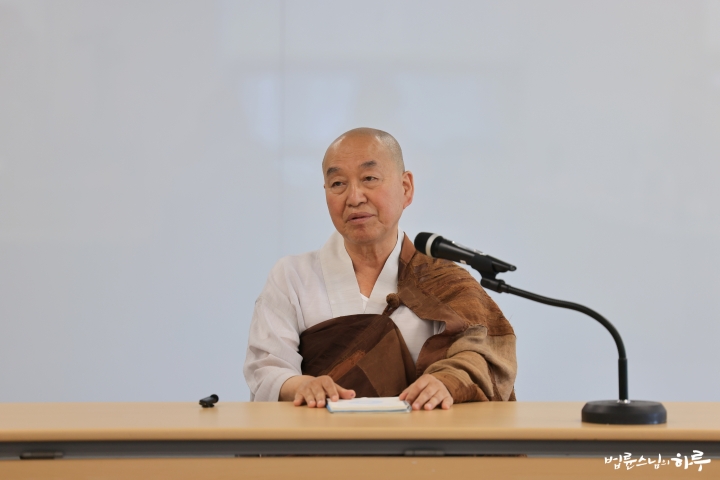
There were many questions, but with little time remaining, the session had to be wrapped up. The session's final segment was set aside for a conversation with Sunim. Sunim came up to the front seat with the microphone and shared his impressions of the session, providing additional explanations to the earlier questions.
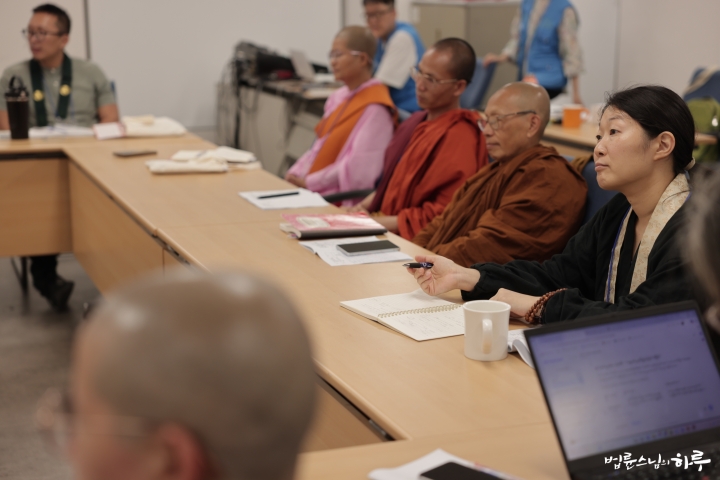
He explained the difference between the Jungto Buddhism Course and the Happiness School, the difference between Jungto members and Happy Citizens, the role of facilitators and the qualifications they should have—especially the virtues required of facilitators in online classes—the process and procedure for becoming a facilitator, the background of how the Happiness School program was created, the voluntary and network-based characteristics of Happy Citizens gatherings rooted in local organizations, the difference between Happy Citizens gatherings and the Jungto Society organization, and the process by which the Happiness School program was developed and tailored to different target groups.
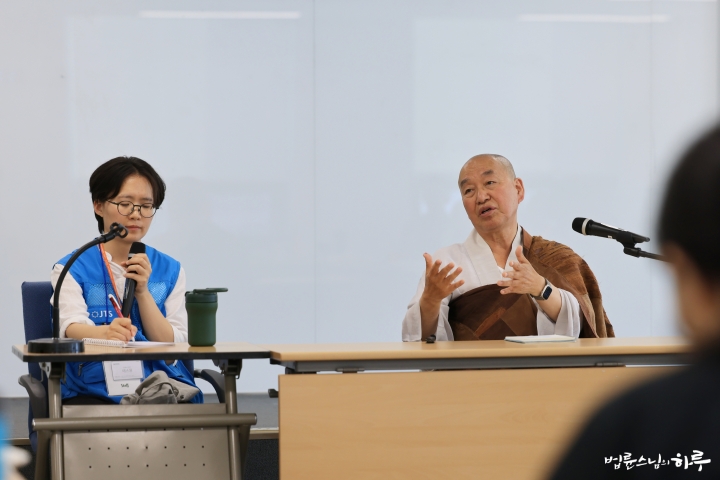
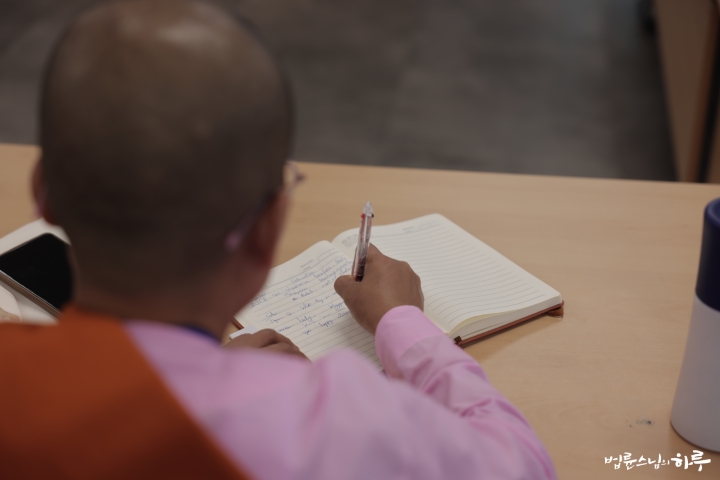
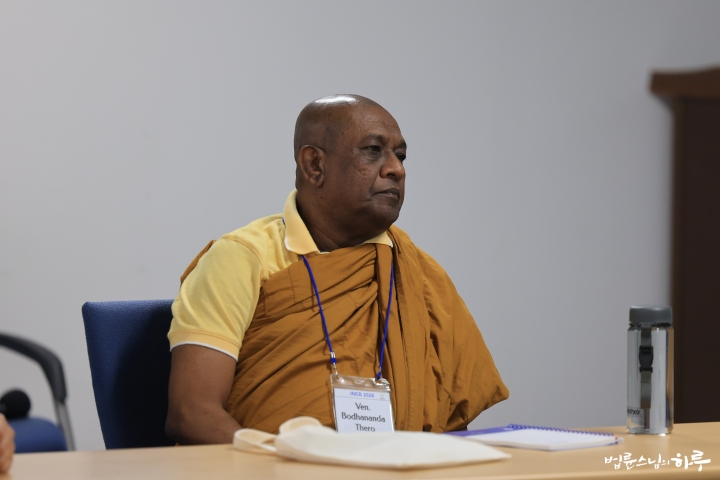
With Sunim's closing remarks, the session came to an end. It was decided to continue the conversation after dinner.
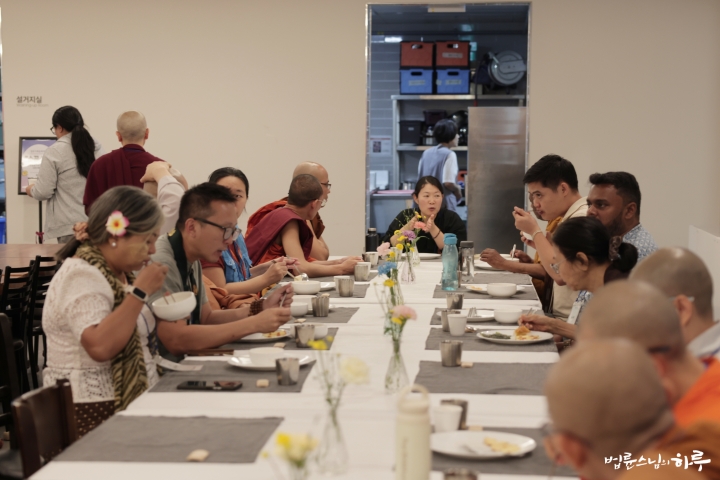
It was time for dinner. The participants went down to the basement level for their evening meal.
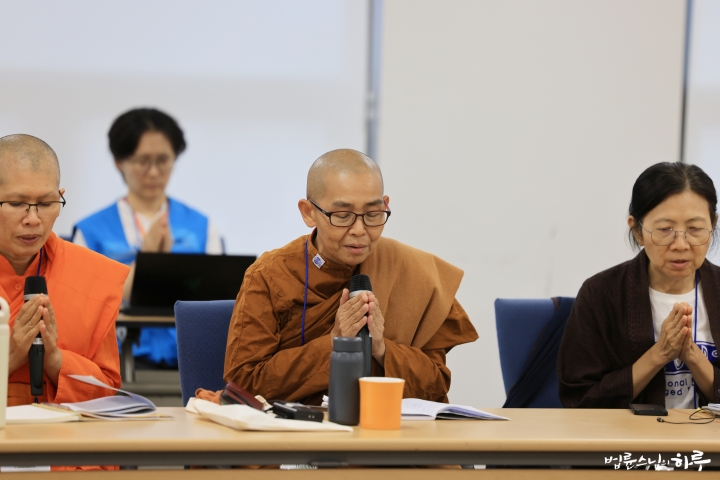
At 7:00 p.m., everyone gathered again in the 9th-floor auditorium. After offering an evening service in the Theravada style, led by a Myanmar monk's chanting, a conversation session with Sunim began.
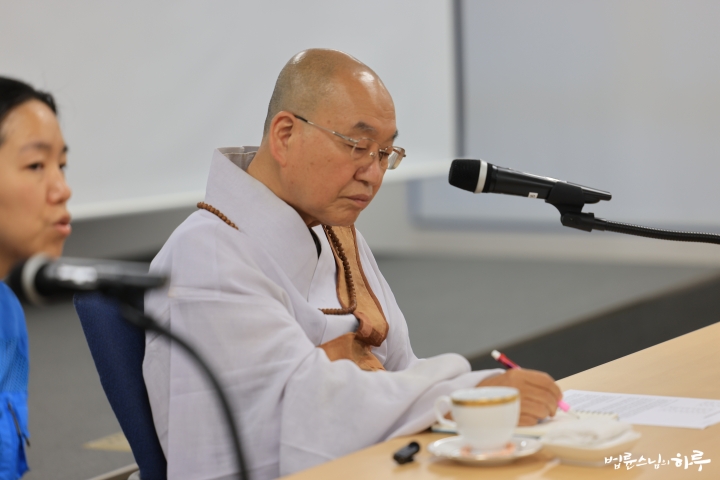
Sunim invited the participants to ask questions freely—about any topic they had been wanting to discuss, anything they wanted to share, or any questions they had about the earlier briefings. The participants asked a variety of questions.
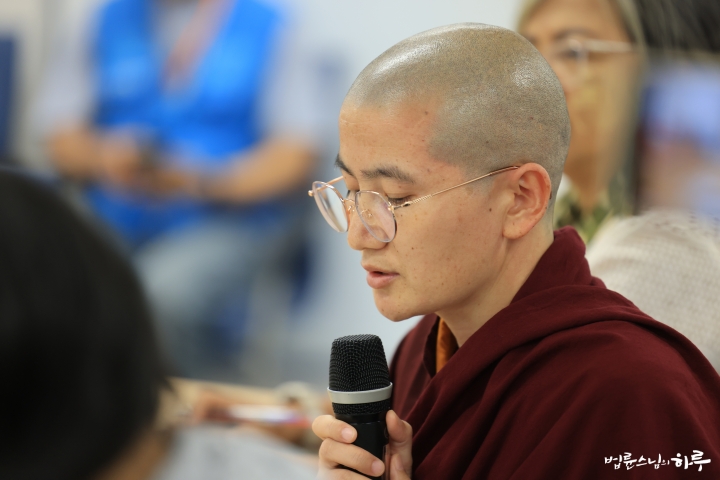
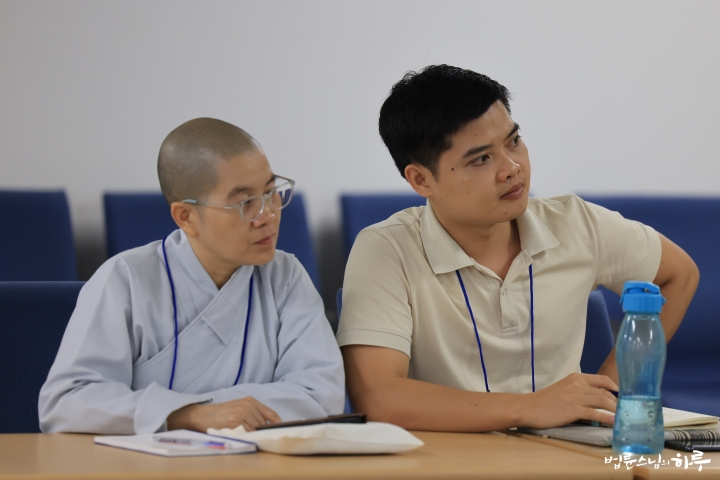
▪ It seems that Jungto Society has many members. I'd like to know if there are any rules or regulations for becoming a facilitator or a Jungto member, and how member management is conducted.
▪ Thank you for providing support to the Sagaing refugee camp in Myanmar, which was created due to civil war and a major earthquake. It has been a great help to the people there, and some have returned to their hometowns. What should we be mindful of when carrying out humanitarian aid activities?
▪ I found it interesting that the Buddhism Course approaches the Buddha not as a god but as a human Buddha, and that you study Korean Buddhist history. Is this kind of study aimed at moving beyond nationalism?
▪ Among foundational Buddhists, each believer has different beliefs about the Buddha. What is "foundational Buddhism" in Korean Buddhism?
▪ How can we explain the human Buddha? How can we explain enlightenment or ultimate happiness?
When there were no more questions, Sunim offered closing remarks along with some topics to reflect on together.
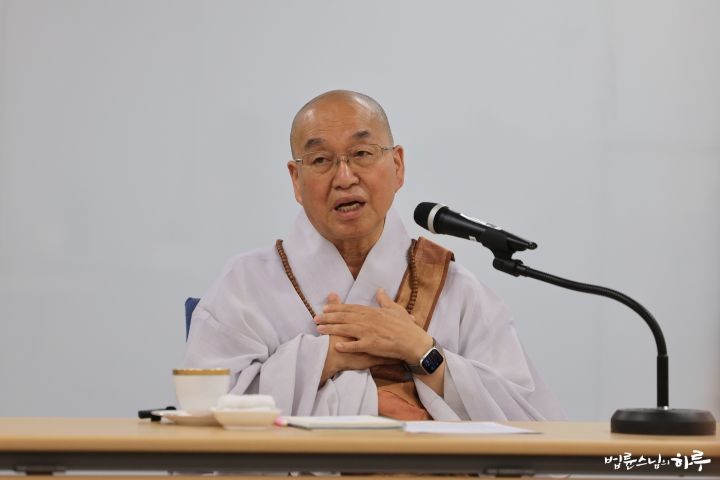
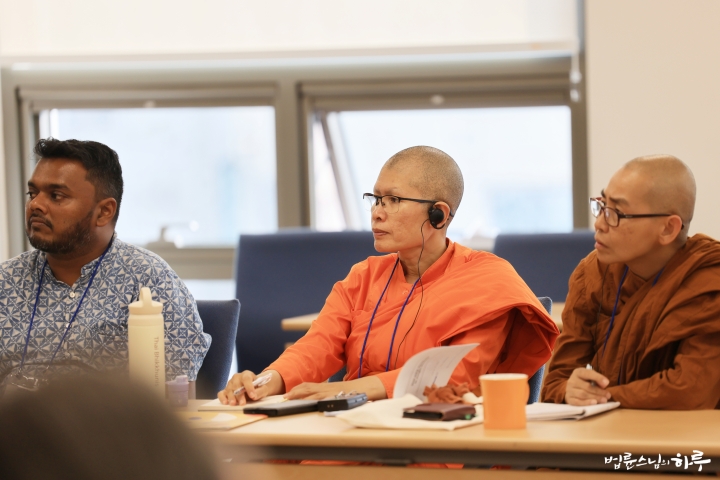
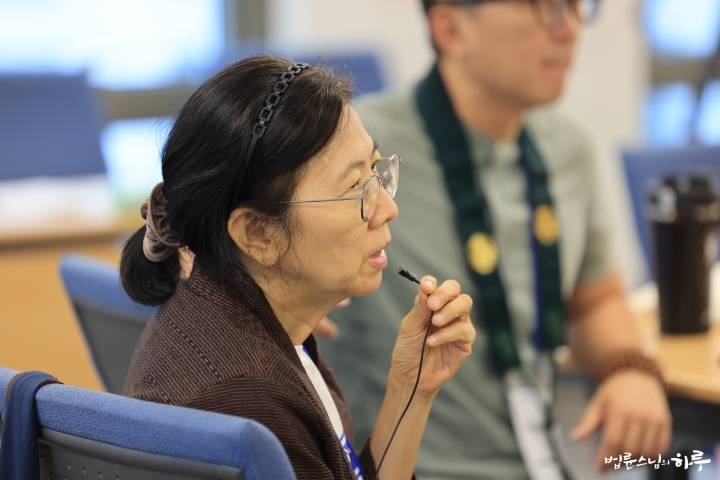
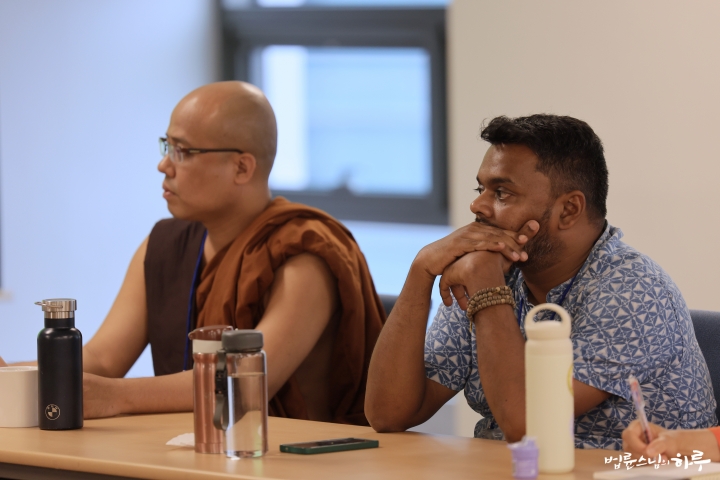
Sunim posed these questions about Buddha-Dharma for the participants to reflect on together as they continued the program.
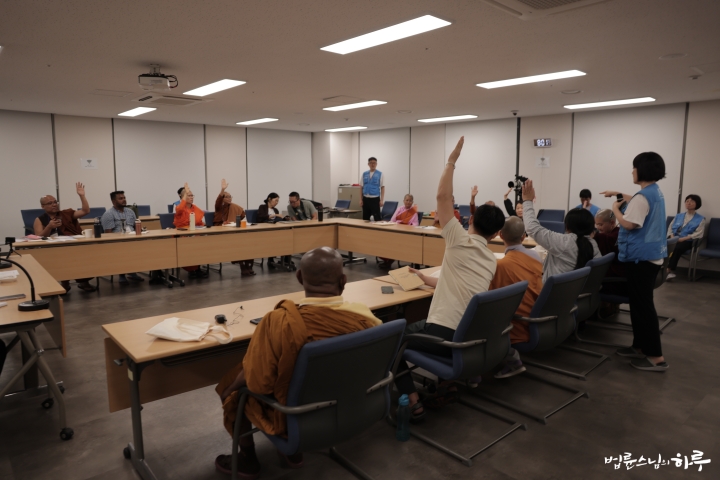
The conversation with Sunim ended past 8:00 p.m. The participants listened to announcements and then shared in groups about what they had felt during the day's INEB Study Trip program.
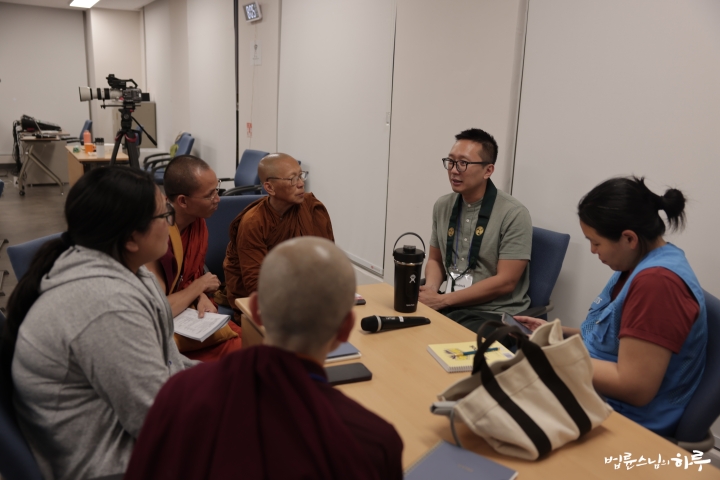
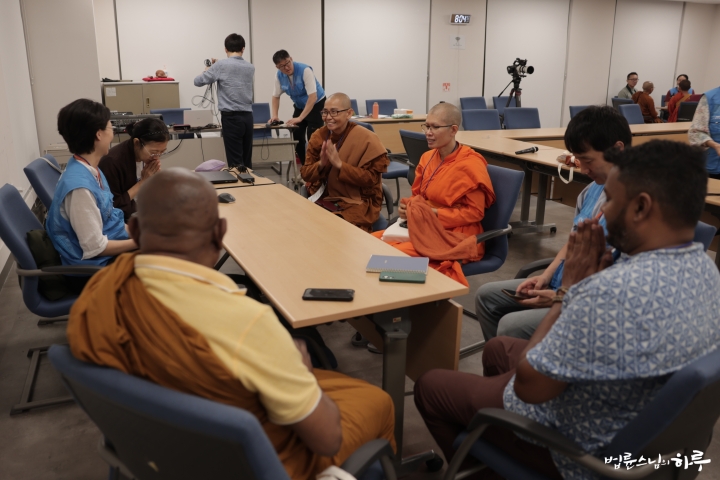
Sunim returned to his office to finish up his work, then traveled to the Jungto Center to conclude his day.
Tomorrow is the third day of the INEB program. In the morning, there will be a Dharma propagation assembly, after which Sunim will travel to the Mungyeong Jungto Retreat Center to conduct sessions with the participants on Jungto Society's retreats and member education.
This post concludes with a conversation Sunim had with a Japanese participant from INEB.

How Do You View Young People Who Are Not Interested in Religious Belief?
"In the past, people naturally considered belief to be a good thing. But it's not a matter of whether it's good or bad—as times have changed, many young people have developed negative views about belief. I think one factor is the emergence of bad examples where religions or older generations used belief to harm people: excessive demands for donations, demands for obedience based on religious authority, and even some cases of sexual misconduct. While belief has positive aspects, it also has many negative ones. It's a natural reaction for most young people to feel resistance to having belief imposed on them. Choosing and believing for oneself is freedom. Because of this trend, religion is becoming increasingly distant for young people. If we go back to the time of Gautama Buddha and look at his life and teachings, he never imposed religious belief or demanded anything feudal. Listening to the Buddha's teachings, attaining awakening, and ordaining were all matters of personal choice. Although the social hierarchy was strong at that time, within the Sangha community, class distinctions were actually denied, and equal relationships were pursued. Young people are drawn to communities that are far more egalitarian than the surrounding society. Yet today, in any country, and not only in Buddhism but in other religions as well, while the outside society pursues gender equality and age equality, religious organizations contain far more feudal and unequal elements. People don't want to enter such communities. In the past, people lived together and depended on each other, but these days, thanks to things like YouTube, people can do well even on their own. As a result, there's a growing tendency to dislike being bound to anything. I'm not saying that's a good thing. But because of this, even when people want to study the Dharma, they have preconceptions like 'religion imposes belief' and 'belonging to an organization means having to obey,' so they don't want to come near. Today's society pursues gender equality. We are taught that even people with disabilities have the same dignity as human beings. But how can teachings like 'she was born a woman because she didn't accumulate merit in a past life' or 'this disability is karma from a past life' be the Dharma? This is not the Dharma. India's traditional culture is often mistaken for the Buddhist Dharma. This problem is not unique to Buddhism—most religions face this. In other words, what religions teach is not keeping up with what schools teach. I think this is the problem, and how to overcome this is a task for all of us. Of course, I'm not saying that young people's tendencies are right or good. How to reach out to such people is another task we face. Within this trend, young people feel a great deal of loneliness. They are also at greater risk of being exposed to harmful things like drugs and stimulating content. How we approach young people to heal those wounds is something we need to study together.""I am from Japan. I listened with great interest to the earlier explanation about the differences between the Jungto Buddhism Course and the Happiness School. I think a program like the Happiness School could serve as a stepping stone for people who don't want to belong to any organization to naturally enter such a gathering. People who don't want to belong to religious organizations or groups, especially young people, seem to want diversity more than religion or belief. What do you think about the risks that religious belief can carry? And what alternatives are there?"