What Mindset Should I Have When Raising My 40-Month-Old Child?
June 11, 2026 – Day 10 in Bhutan (Inspecting Projects in Langthel Gewog, Trongsa District, and Tangsibji Gewog)
Hello. Today, Sunim traveled to Trongsa District and inspected a total of 10 projects.
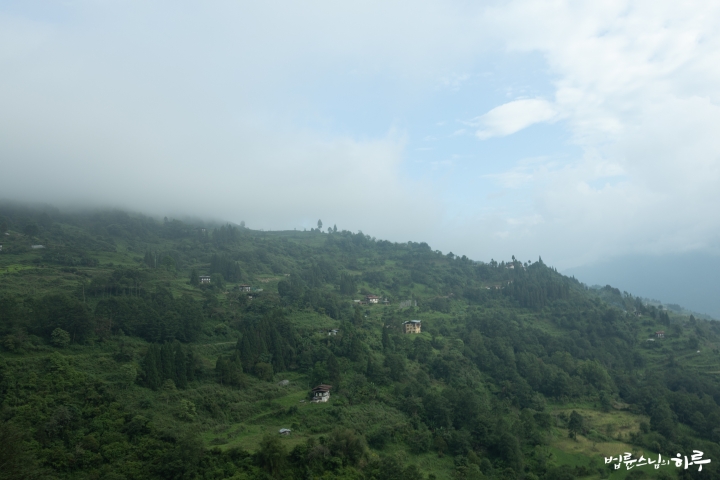
Sunim began his day with early morning practice and meditation. At 5:30 a.m., he departed from the Zhemgang Dzongkhag guest house and headed for Langthel Gewog in Trongsa District.
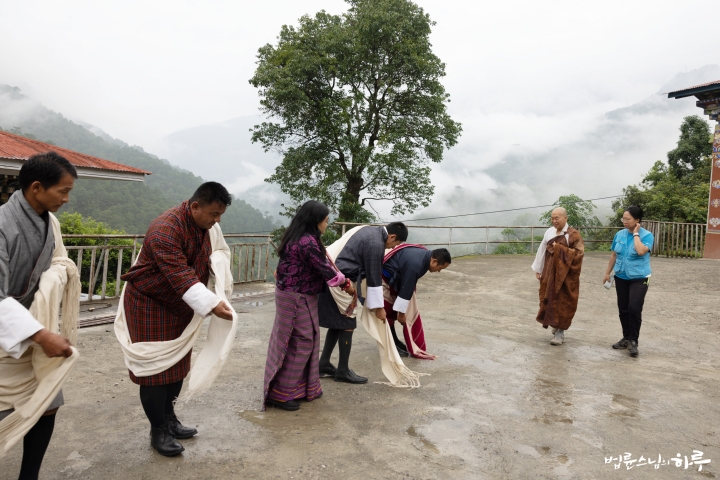
Upon arriving at Langthel Gewog, the Gup and Gewog officials welcomed Sunim. The Governor of Trongsa also arrived at the Gewog office, and they all had breakfast together.
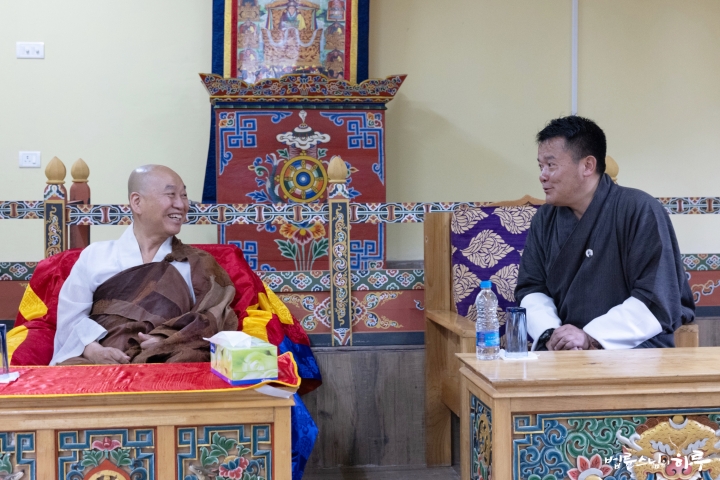
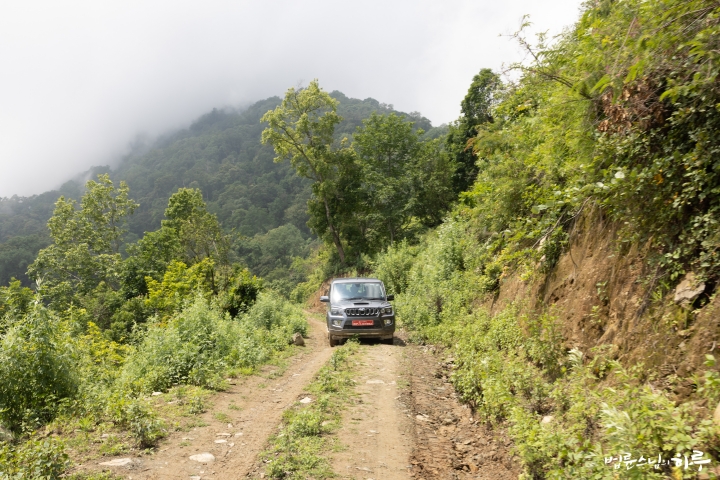
After a simple breakfast, Sunim headed to Phumzor Village in the Jangbee Chiwog of Langthel Gewog.
Phumzor Village is one of the most remote villages in Trongsa District. The Dzongdag had specifically asked that JTS pay particular attention to this village. As a pilot project for JTS, volunteers and short-term volunteers stayed in the village for about a month in 2024, working on a sample house project. Sunim himself stayed overnight in the village in 2024 and experienced firsthand the village's challenging conditions.
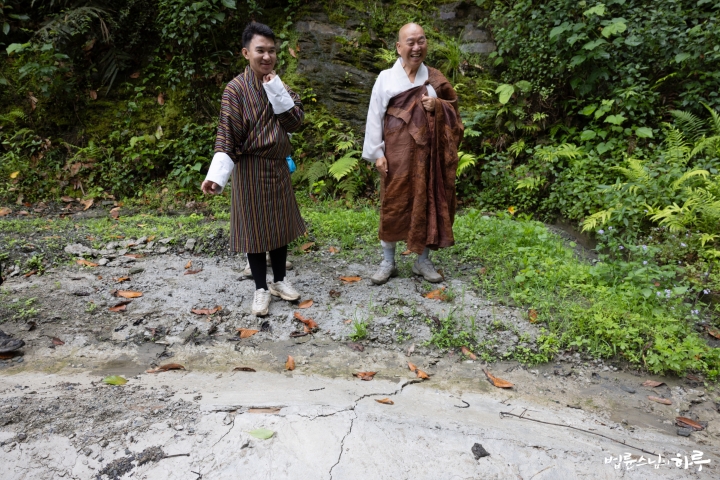
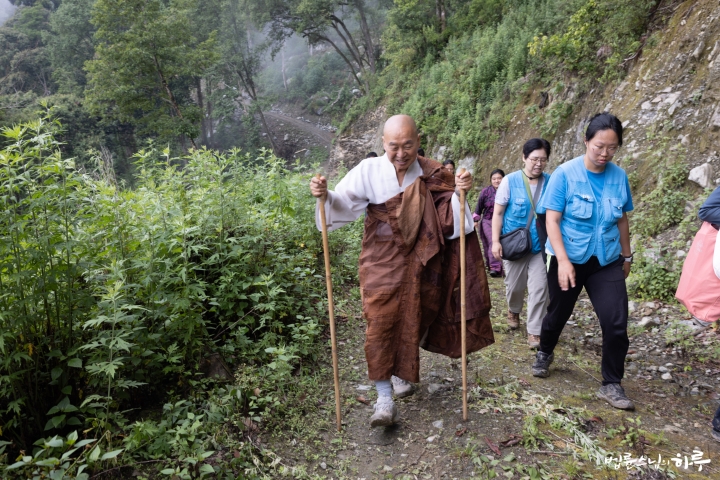
In Phumzor Village, road paving and new house construction projects are currently underway. On the way to the village, there was a paved section of road, so Sunim got out of the car and walked along it, carefully examining the condition of the pavement.
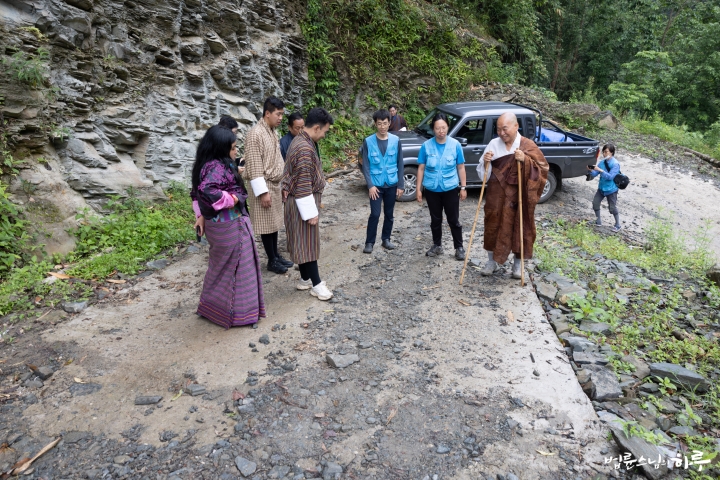
The villagers had used their ingenuity to create concrete curbs to channel water, but since the construction had been carried out without expert guidance, the ratio of cement, gravel, and sand was likely inappropriate, and some sections were already cracked. Looking at the curb structure, it was clear that it would inevitably crack under the weight of heavy trucks passing over it. Although the road paving had been done with limited skill by the villagers, Sunim said:
"Well done. Let's continue with the remaining sections as a learning opportunity."Sunim placed significance on the fact that the villagers had come together on their own to pave the road.
"The reason we ask you to pave only 100 meters of road per year is to avoid burdening the villagers. If you say you can do more, then you can carry out more work. Villagers are often mobilized for various tasks, so we want our project not to be a burden. That's why we suggest doing personal work first and public work afterward. Building a house is personal, so that's fine, but public work can burden individuals. However, since the Gup and Tshogpa consider public work more important, it seems they are proposing to do more village construction."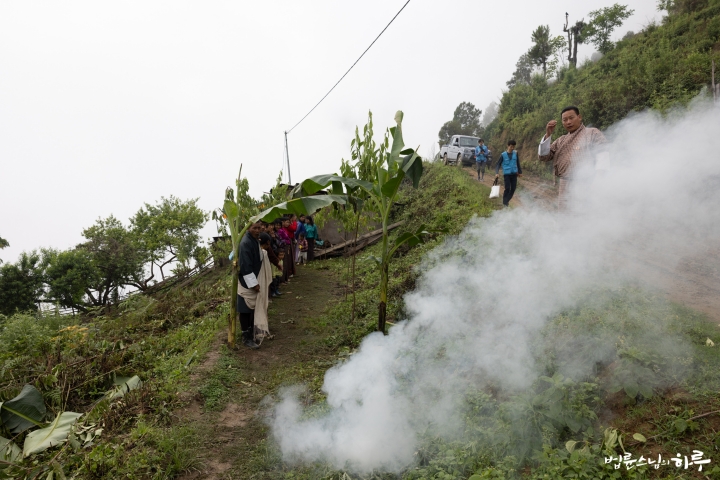
At 8:30 a.m., Sunim arrived at Phumzor Village. Five households have been building houses since last year. Since this is a pilot project, JTS did not propose a separate house design but allowed each household to build according to their own circumstances. As a result, some houses were already completed, while others were still in the foundation stage.
First, Sunim visited a completed house and held a completion ceremony. A young couple had worked hard and built a fine house. Sunim offered congratulations and a heartfelt blessing.
"Congratulations on building your new house. May the Buddha's grace and the protection of all deities keep you healthy and free from misfortune as you live in this house. And may great merit come to all those who built this house—the Gup, Tshogpa, technicians, and villagers."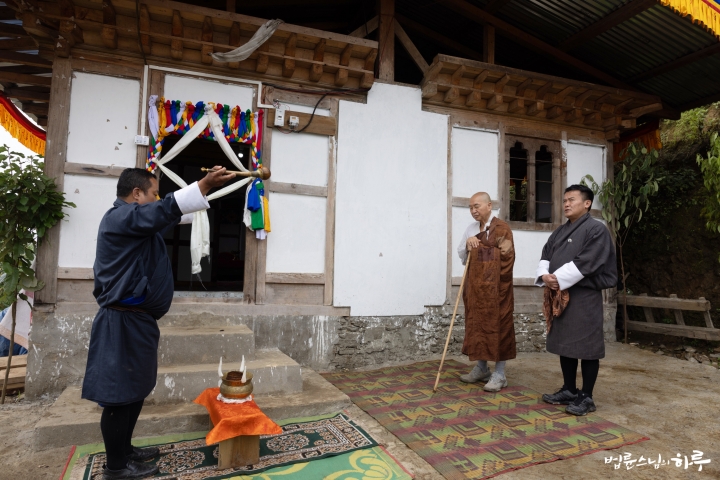
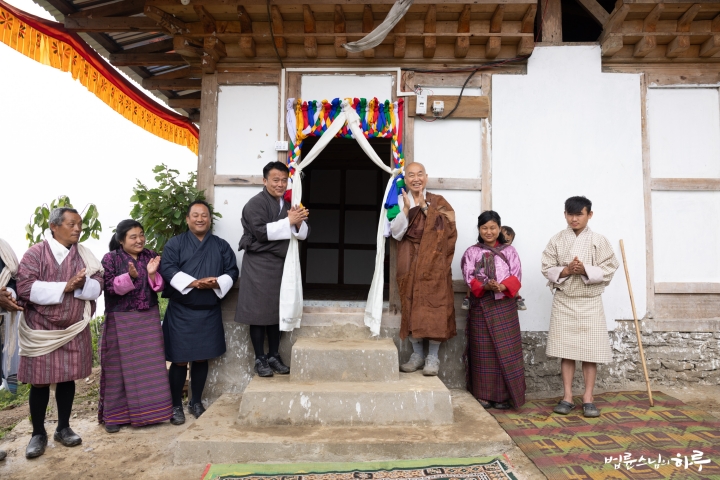
The villagers gathered to see Sunim. Since everyone was assembled, they held a brief meeting.
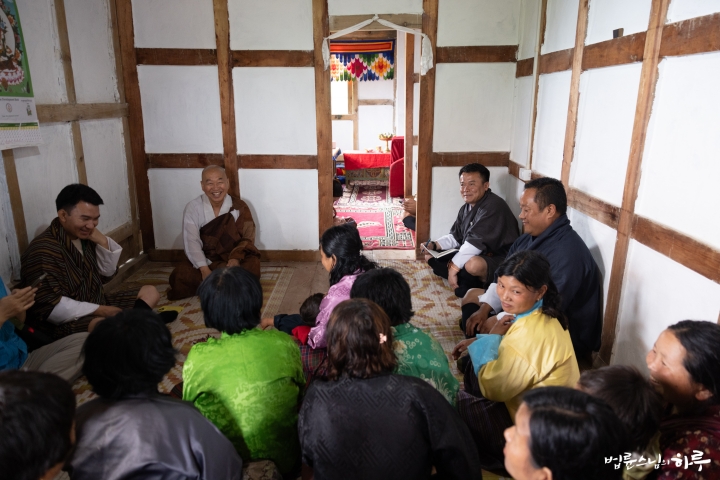
"There are three more, and one has applied for this year."
"Then if we build three more houses, the housing problem will be solved. But how is the drinking water situation? Are there any issues with drinking water?"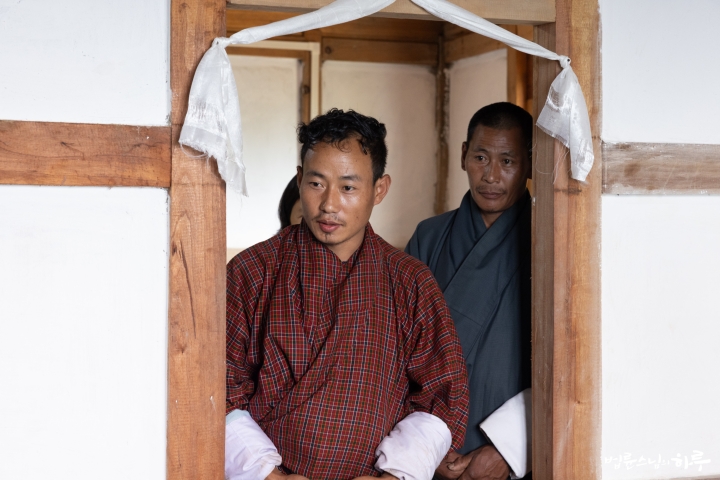
The villagers said the pipes were old and needed to be replaced. They also mentioned that since the irrigation channels were not paved, a lot of water was being lost. Additionally, there were requests for a retaining wall because a new road being built near the village temple posed a risk of soil collapse onto the temple, a request to learn how to raise cattle, and requests for support with seeds and compost.
"On the way to this village, I saw the road repairs you did. If you just roughly place stones on the side of the cement and then pour cement on top, it will crack from impact. The stones need to be laid deep into the ground. If you apply a thin layer on the side of the road, it will all crack as soon as a car drives over it. First, you need to dig the ground, install wooden formwork, and then pave at the same height as the existing road—then it won't crack. It hasn't been long since the construction, but many places are already cracked and will need to be broken up and redone. From now on, please get proper guidance from an engineer and make it thicker. I'm not scolding you for doing it wrong; I'm just letting you know how to do it better next time. (laughs)"After the meeting, Sunim gave the villagers toothbrushes he had brought from Korea as a gift. Then he visited the remaining four households. Since it had rained heavily the night before, the roads were muddy, and they had expected the visit might be difficult, but as the road conditions had improved slightly, they were able to make the site visit.
The second and third houses visited were neighbors. The two households were helping each other build their houses.
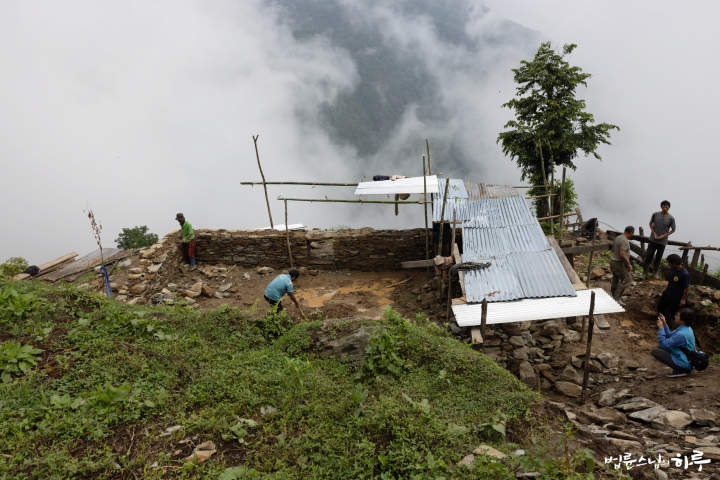
The second house was being built with stones for the foundation.
"Is it okay to build like this in the rain?""We're covering it with roofing materials as we work."
"Is there anything you need?"The Dzongdag said:
"They're putting up the walls, but cement needs to be poured into the middle of the walls."
Sunim said to the volunteer in charge:
"Please provide cement support right away."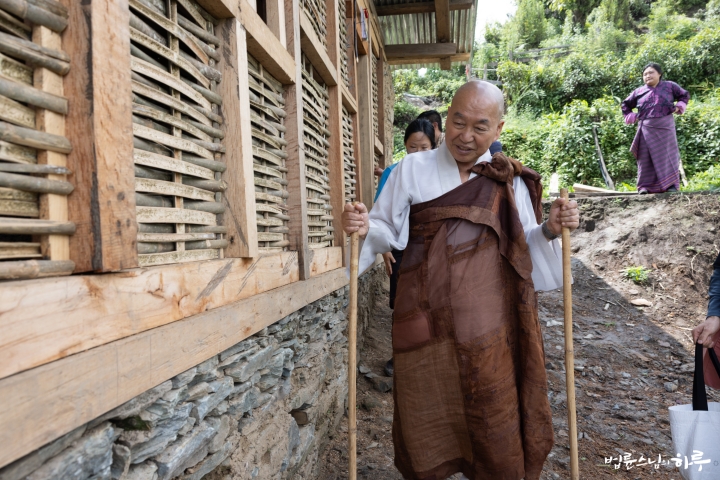
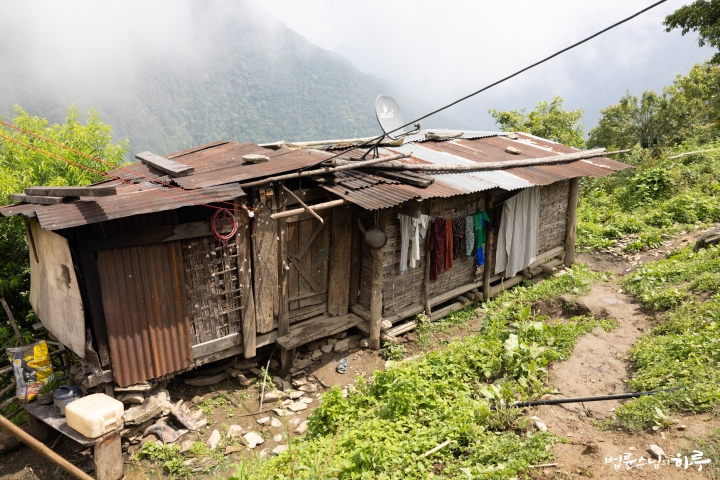
The third house already had walls and a roof in place. The new house being built was right next to the house they currently lived in.
"Well done. The house looks fine and solid. Good work."Then they moved to the fourth house.
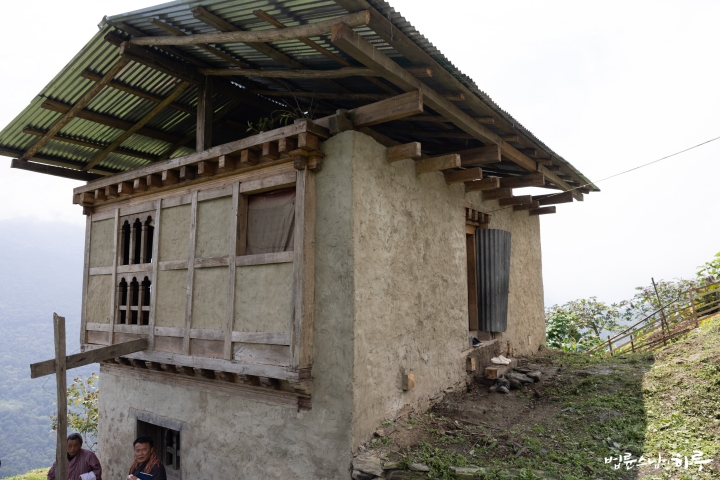
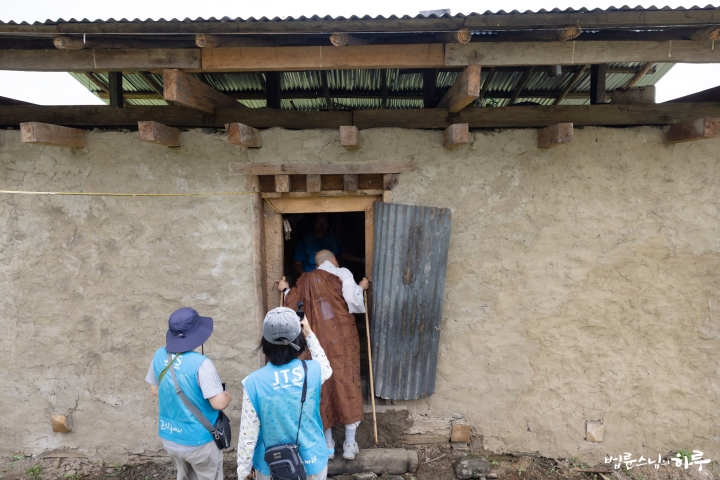
The fourth house had been started a few years ago with support from the Tarayana Foundation but was never completed. It was now being rebuilt with JTS support. Seeing that the interior wall work had not yet been done, Sunim said:
"I'll provide cement, so please complete the walls."Next, they went to the last inspection site in Phumzor Village. When they arrived, they found that house construction had been suspended.
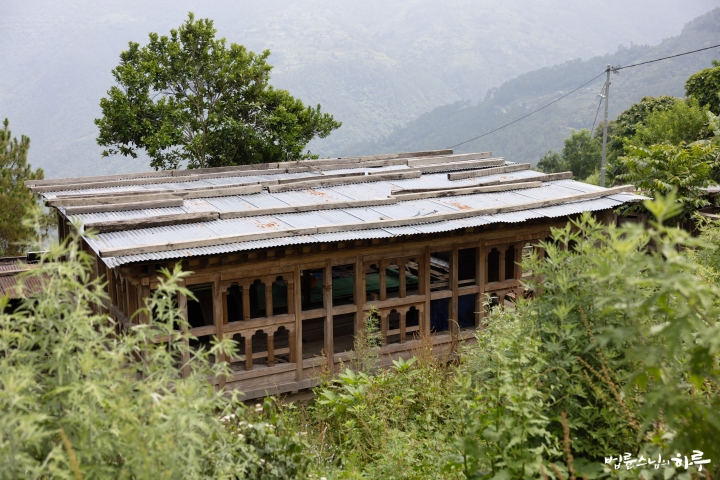
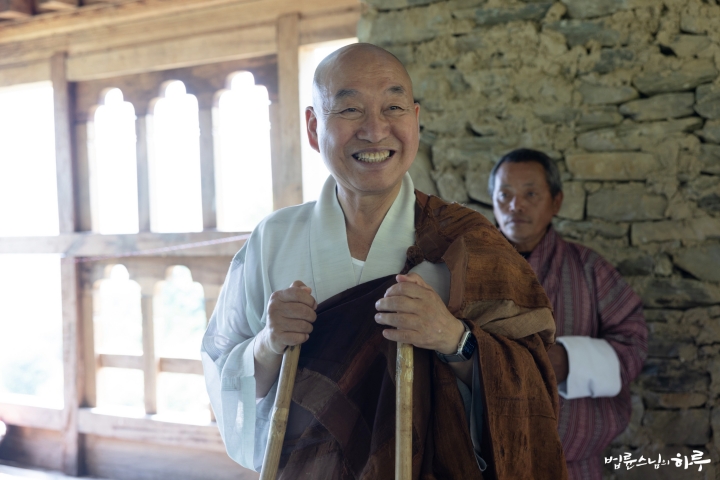
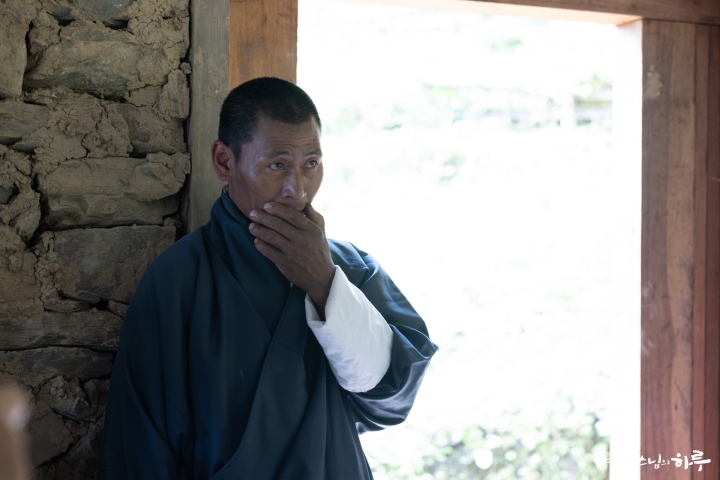
"I wanted my children to be able to come back and live here at any time."
"There's no chance your children will come back to live in this house. They won't come to this remote place to live.""I thought they might come if they lost their jobs."
"Why was construction stopped?""We're waiting for the carpenter."
"We'll provide the necessary materials, so please call the carpenter quickly and finish it soon.""Yes, Sunim! Thank you."
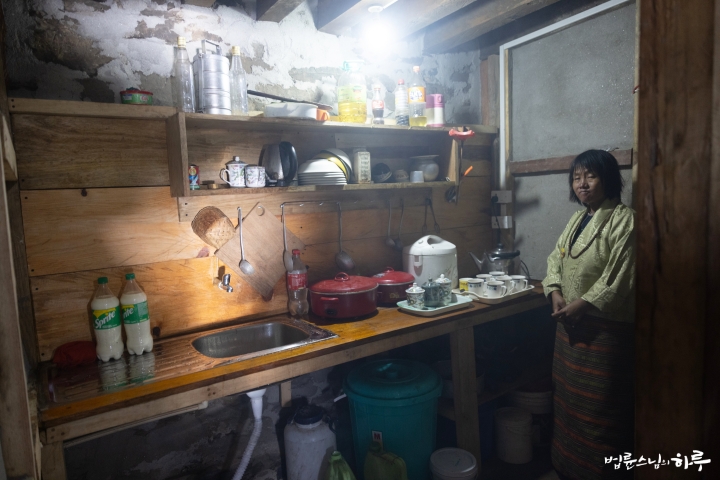
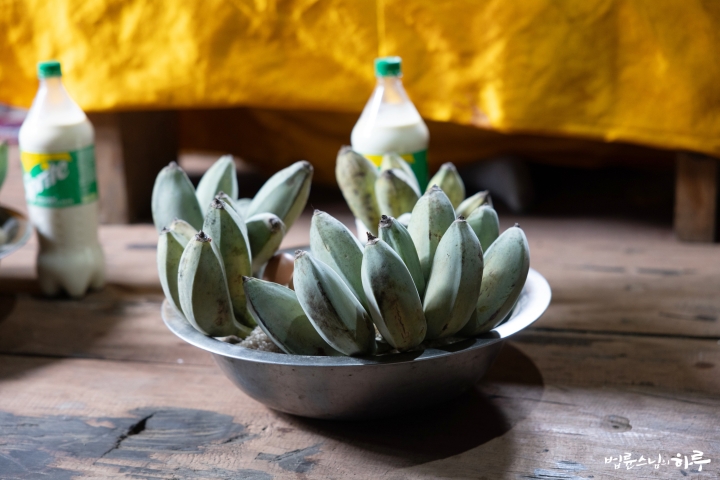
At 10:40 a.m., Sunim moved from Phumzor Village to Jangbee Village to inspect a household whose home had been remodeled. It was a house where five family members had been sharing one space because there were no interior walls. They had been using a temporarily built toilet. Through the JTS project, interior walls had been built to divide the space, and a new toilet had been constructed. Korean volunteers had also visited to connect electricity and build a sink and storage cabinets. Sunim and his group sat inside the house for a while, drinking tea and eating bananas prepared by the homeowner.
At noon, they returned to Langthel Gewog for lunch and then moved to Kella Chiwog in Tangsibji Gewog.
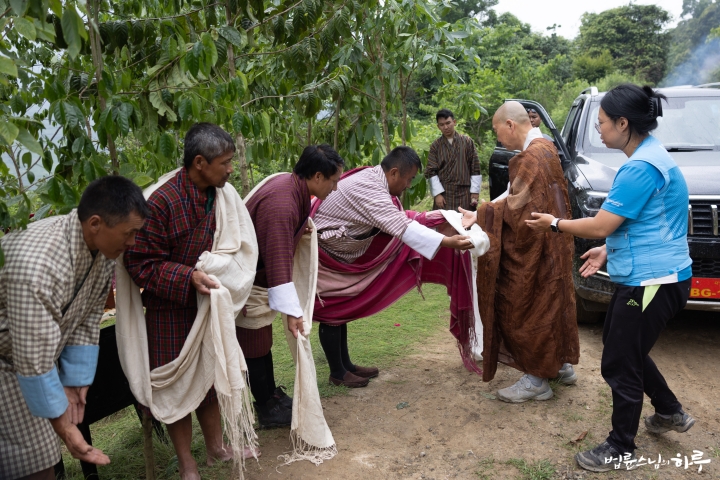
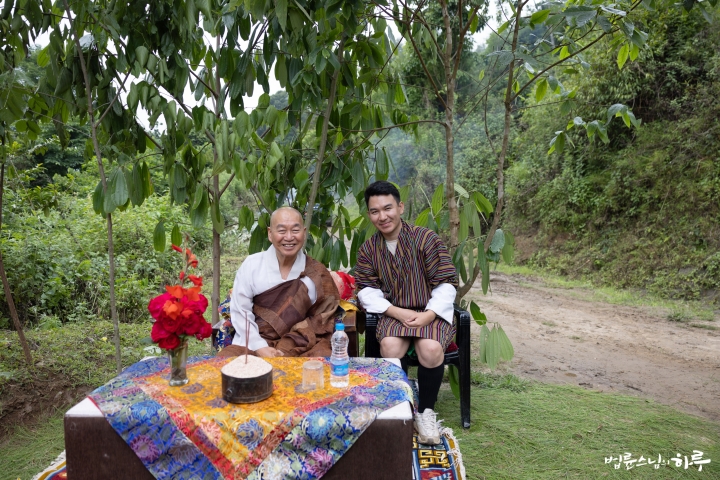
At 2:00 p.m., upon arriving at Kella Chiwog, the Gup, Tshogpa, and villagers warmly welcomed Sunim. A special welcome area had been arranged along the newly paved road. Although there were no trees in the area, they had cut down trees and planted them in the ground so that it looked as if they had been growing there all along. The villagers had carefully prepared the place in the traditional Bhutanese style of welcoming a distinguished guest.
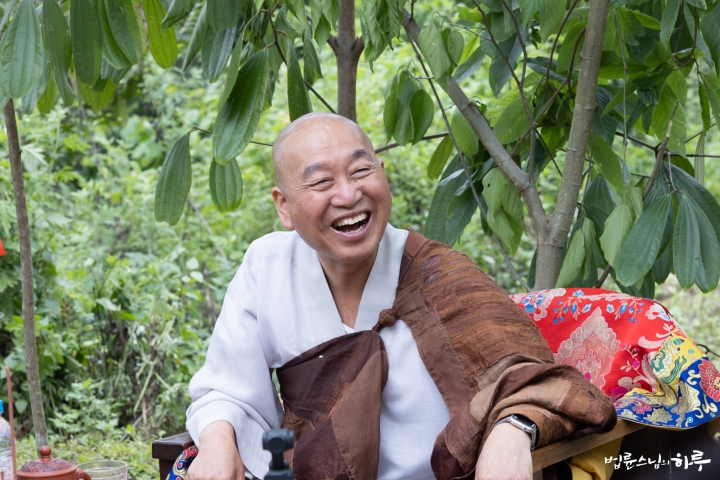
Sunim first had a brief conversation with the Gup of Tangsibji Gewog. There were households in Kella Village that had applied for housing support but later canceled, so it was necessary to confirm the reasons for cancellation. Kella Village has 55 households, of which 4 are without houses.
"If there are four households without houses, it seems the villagers could build one house per year by working together. What do you think?"The Gup explained in response to Sunim's question.
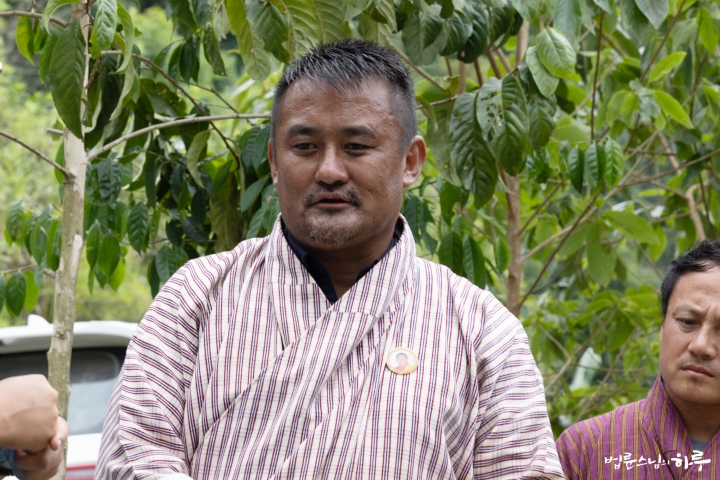
"The four truly vulnerable households cannot possibly build houses on their own. The villagers also live day-to-day with no capacity to help others, so the applications were canceled."
It was confirmed that they had canceled not because they wanted to build large houses, but because they didn't have the capacity to build houses at all. Since the JTS project's principle is not for residents to simply receive without contributing, they discussed other ways to solve the housing problem for these households through the strength of the village community. Regarding water, they discussed issues of irrigation channel loss and a shortage of pipes needed to connect to the reservoir.
The Gup of Tangsibji Gewog, who has 23 years of civil service experience, knew the village's situation in detail. Most Gups don't know the specifics of their village's internal situation, so the Tshogpas usually answer Sunim's questions. However, this Gup answered all of Sunim's questions without hesitation.
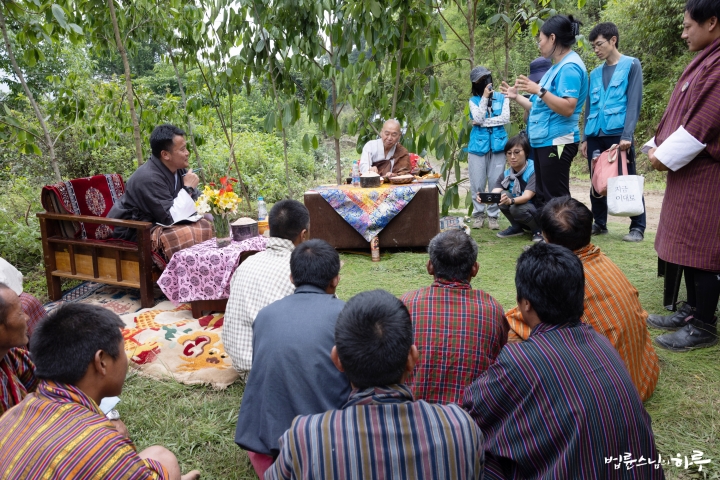
Sunim then had a conversation with the villagers.
The villagers said they had joined the JTS project in this region late, and as a result, it overlapped with farming season. They felt pressured to finish within the project deadline, which was difficult. They said that without such pressure, since building roads is essential for future generations, they would like to do it if support were provided. Sunim also shared ideas with the Gup, Tshogpa, and villagers about how to help those without family or housing—2 people with speech impairments, 1 with visual impairment, 1 with hearing impairment, and 1 75-year-old grandfather—find a way to have houses and live their lives.
Finally, Sunim asked the villagers if they had any suggestions. Instead of suggestions, the villagers expressed their gratitude to Sunim.
"We would like to express our gratitude. Until now, the damage from wild animals has been very severe, but thanks to your support with barbed wire, we were able to put up fences, and we think the wild animal damage problem will be largely resolved from this year. The road repairs being done now will also be a great help. We are especially grateful to Sunim and the JTS volunteers. Thank you to everyone who explained things to us almost as if teaching, so the project could proceed well, and who helped us in various ways."
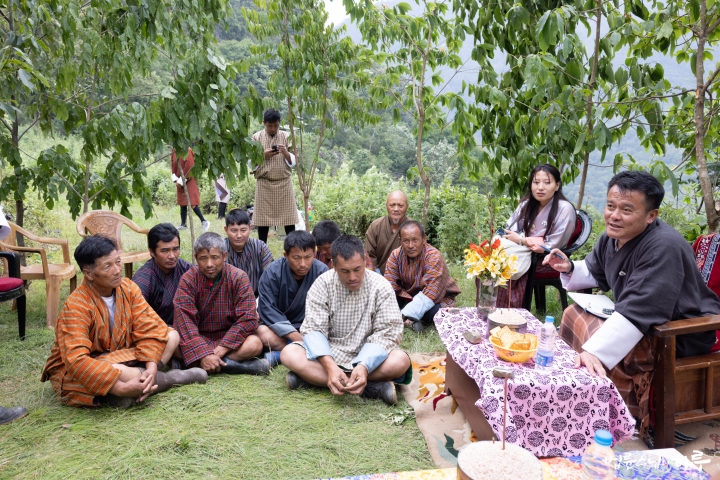
Sunim gave closing remarks.
"If problems arise in the future, please consult with the Gup and Tshogpa anytime. The 7 goals of the first phase of the JTS project are: house building, repair of poor housing (especially improvements to kitchens and toilets), fence installation, footpath paving, drinking water improvement, road paving, and irrigation channel maintenance. If any of these are needed, please apply in the future. JTS does not provide one-sided support. JTS provides materials, you do the work, and the Tshogpa, Gup, and Dzong manage it—we work together. Join Together! We meet and work together. It doesn't mean we do it for you; it means we do it together. The road paving was not simply done by JTS, but a road that you villagers built together with materials provided by JTS. Let's work together like this every year and accomplish one thing at a time. Well done."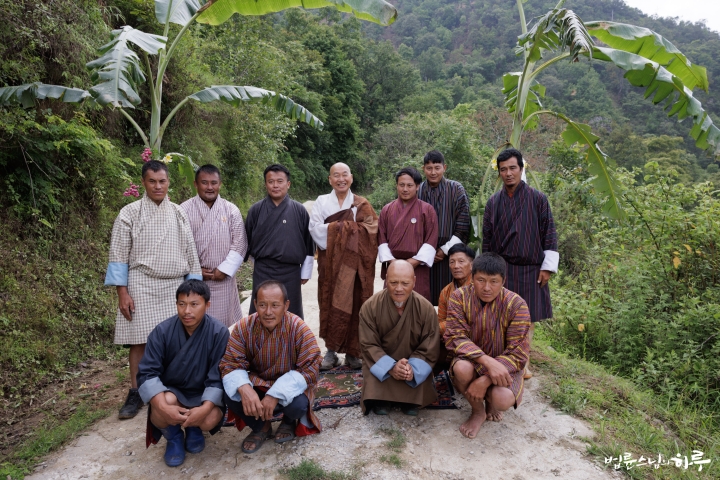
Sunim gave toothbrushes to the villagers who attended and inspected the road repairs. The project involved paving a total of 380 meters of unpaved road across six sections, with materials supported by the JTS project and labor provided by the villagers working together. Sunim got out of the car at each section where work had been done to check whether the construction had been done properly.
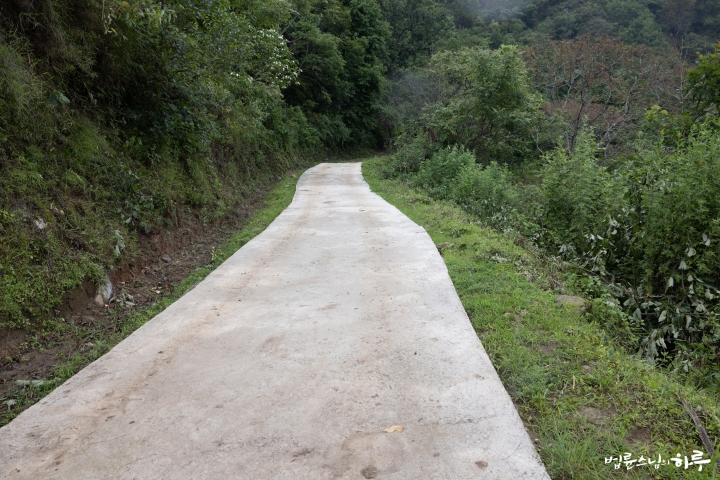
"The slope is gentle, but the road was slippery, and there have been many accidents."
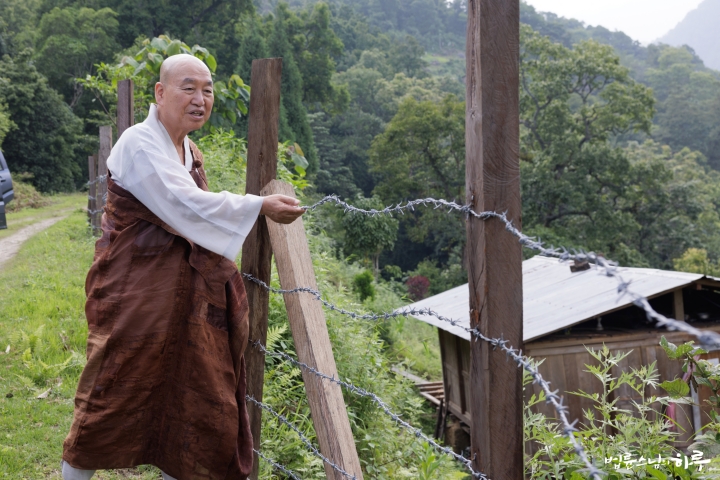
"The paving is done very well. It's at a professional level compared to other places."Sunim inspected the fence at Kella Chiwog. The barbed wire on the fence had been installed loosely. Sunim suggested to the Gup that it would be better to install it more tightly.
After finishing the site inspection at Kella Chiwog of Tangsibji Gewog, they moved on. At 4:30 p.m., they arrived at Samchhoeling Chiwog in Draagteng Gewog. There was a road repair site, so Sunim got out of the car to inspect it.
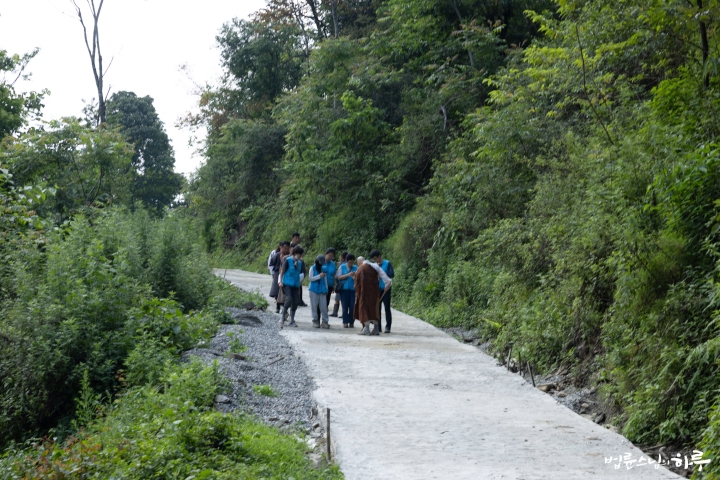
"The cement was washed away when it rained."
"Still, you did well. This is about 90 points. (laughs)"After completing the site inspection, they left Samchhoeling Chiwog and headed for Trongsa, where the JTS Center—their accommodation for the night—was located. On the way, the road was blocked due to road construction, and they had to wait for about 30 minutes. During the wait, the volunteers held a meeting to wrap up the day's schedule.
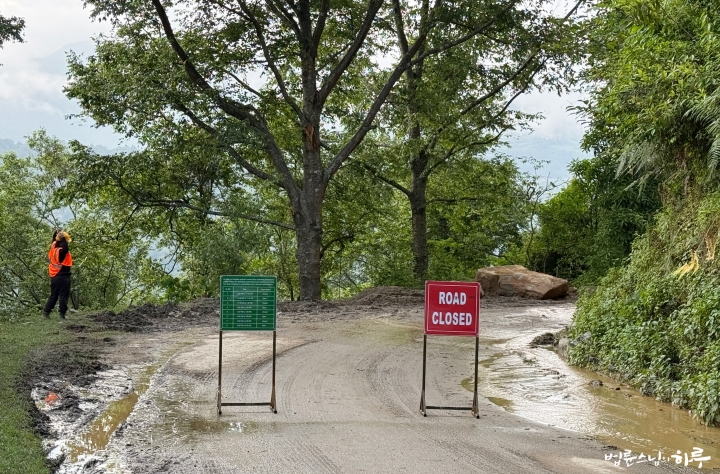
Once the road opened, they were able to continue to Trongsa. The Trongsa Dzongdag had invited Sunim and his group for dinner, so after just dropping off their luggage at the JTS Center, they headed to the Dzongdag's official residence.
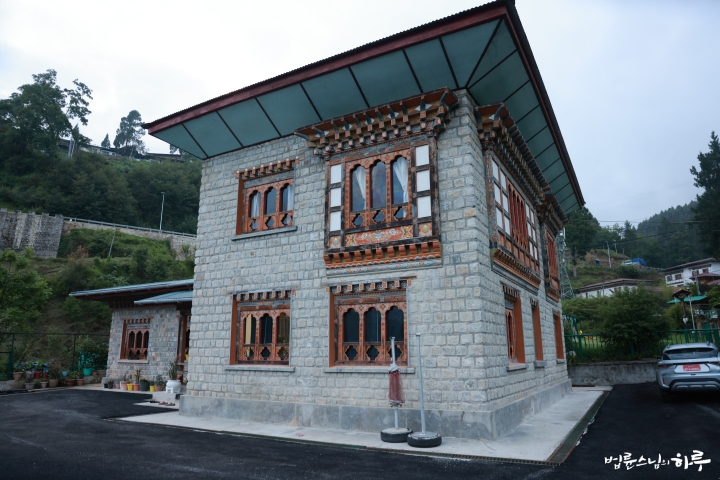
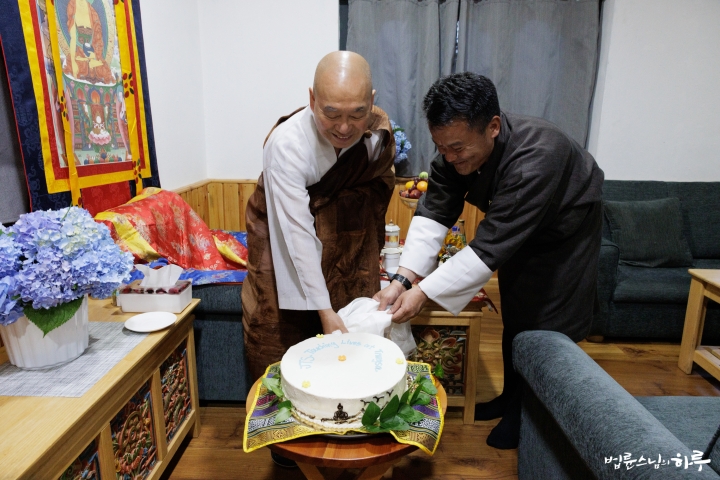
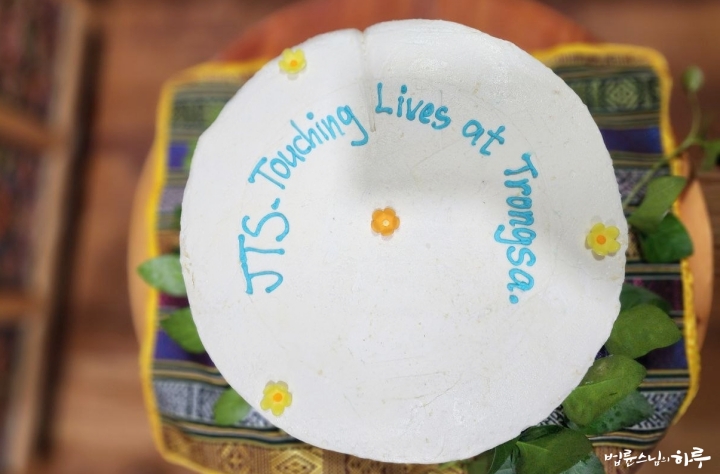
The Dzongdag mentioned that he had recently renovated his official residence. After touring the entire residence, they sat down to talk. The Dzongdag had prepared a cake out of gratitude for the inspiration and new changes that Sunim and JTS's activities had brought to the people of Trongsa. Sunim cut the cake together with the Dzongdag.
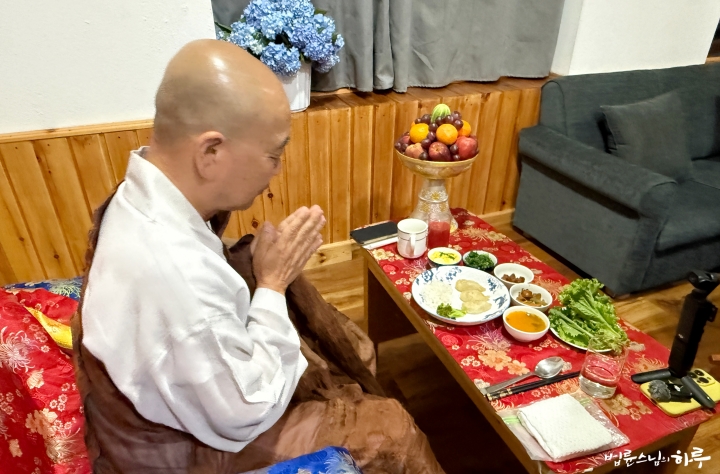
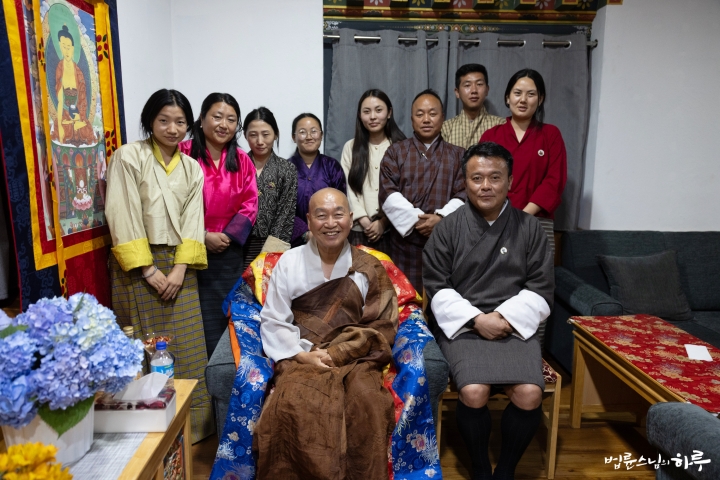
The Dzongdag had carefully prepared dinner for Sunim and his group, and they enjoyed the meal. After dinner, the Dzongdag gave Sunim incense and tea as gifts. Sunim also gave the Dzongdag one of his English books as a gift. They all took a commemorative photo with the Dzongkhag officials who had helped prepare the dinner.
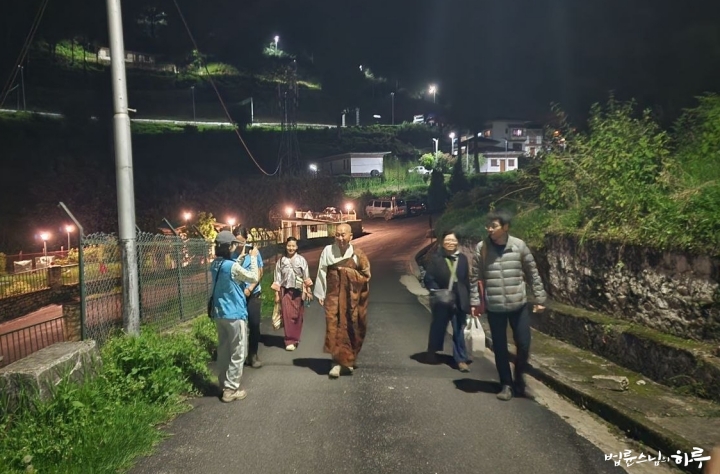
Since the official residence and the JTS Center—their accommodation for the night—were close to each other, Sunim walked back to the accommodation with the Korean volunteers. The night air was cool and pleasant for walking.
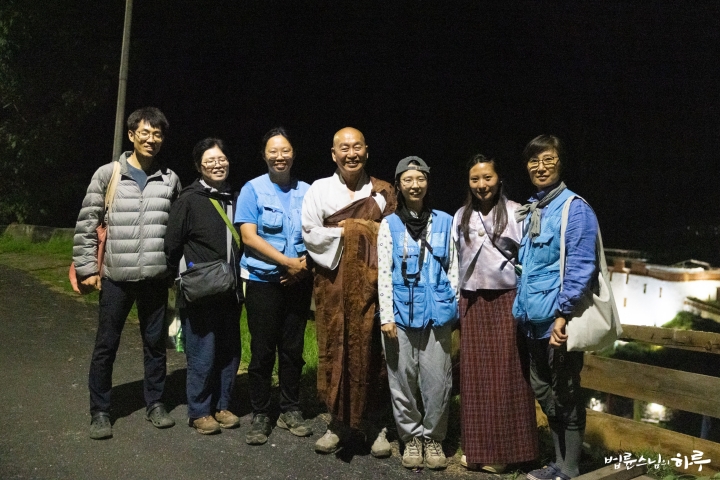
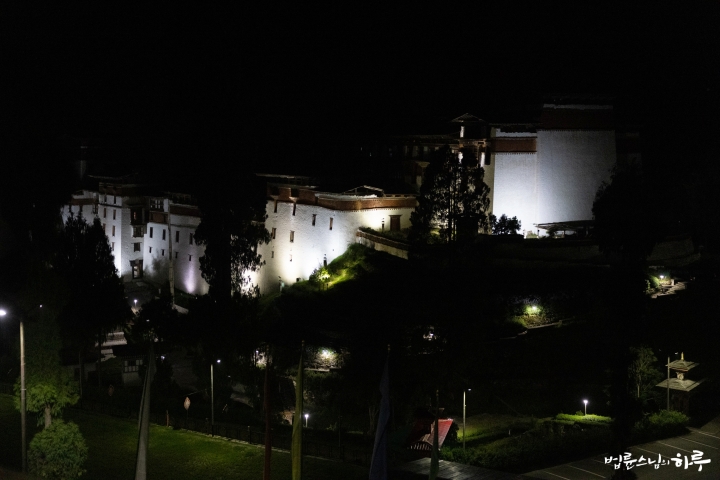
At night, the Trongsa Dzong looked even more atmospheric with its lights on. Sunim took photos with the volunteers against the backdrop of the dzong's night view and then went inside the accommodation.
Sunim tidied up, proofread some manuscripts, and concluded his day.
Tomorrow will be Day 11 of the Bhutan schedule, with inspections of Nubi Gewog and Tangsibji Gewog, followed by travel to Thimphu, where Sunim will have a conversation with Korean residents in the evening.
Since there was no Dharma talk today, this post concludes with a short Dharma Q&A from Tongyeong this past April.

What Mindset Should I Have When Raising My 40-Month-Old Child?
"Just raise your child without thinking about such things. Do you think my mother thought about such things when raising me? When she ate her meals, she fed me too. When she got dressed, she dressed me too. Children grow up well when raised this way, without overthinking.""I am raising a 40-month-old child. I'm wondering what kind of mindset I should have when raising a child. I have a strong desire to raise my child well, so I look at parenting books and various YouTube videos. As a result, I find myself wondering, 'Should I discipline now?' or 'Is this method correct?' And when I praise my child, I worry, 'Am I praising too much?' I have many such concerns. What mindset should I have when raising my child?"
"I think I'm being a bit excessive, which is why I wanted to ask you, Sunim."
"You asked a good question. You just need to live happily yourself. If you raise your child thinking, 'Raising a child is so hard, but they're young so I have no choice,' then from the child's perspective, they're making their mother suffer, which means they're being unfilial. In that case, it's hard for the child to do well. Children who are raised with great difficulty rarely turn out well. You should raise your child with the mindset of, 'What's hard about raising a child? I just add one more spoon at the table. It's not really hard for me. They grow up well on their own.' If you think, 'Having a child is much better than living alone. Even though it's a bit difficult, having a baby makes me feel happier,' then the child has made the mother happy, and the child naturally becomes filial. Living happily yourself is the best way to raise a child. If raising a child feels difficult, it's hard for the child to do well.""It's not hard. I'm extremely happy."
"And don't watch too much YouTube. It's okay to raise your child a bit casually. You're thinking too much, but children don't have many thoughts. When you worry about what kind of diaper to buy, is that the child's request or your own thought? When you worry about what kind of formula to feed, is that your thought or the child's thought? It's the mother's head that is complicated. The child eats what they're given, so as long as it's not defective, it's enough. Raising a child lightly like this makes the child lively and at ease. Raising a child too heavily suppresses their psychology, and overprotection spoils them. You must never abuse a child. It can affect the child's brain development. Don't scold them under any circumstances. If you can't afford what they're asking for, just don't give it to them. There's no need to scold. If you tell them to eat and they don't, just clear the food away. Later, when they say they're hungry, let them find food themselves. Don't scold them, saying, 'Why didn't you come when I told you to eat, and now you want it?' Don't scold them, but also don't give them everything they ask for. That way, both the parent and the child are at ease. However, many parents harshly scold their children and then give them everything they want. On one hand, they cause psychological suppression and wounds by scolding, and on the other hand, they spoil the child by giving in to their demands. The most reliable way to raise a child well is for the mother to live comfortably and happily.""Yes, I understand well. Thank you."