A True Practitioner Does Not Pray for Blessings. They Create Blessings.
June 10, 2026 – Day 9 of Bhutan Schedule (Inspection of Trong Gewog in Zhemgang District)
Hello. Today, Sunim conducted a field inspection of Trong Gewog in Zhemgang District and gave a lecture to government officials of Zhemgang District.
Sunim began the day with early morning practice and meditation, followed by an early breakfast.
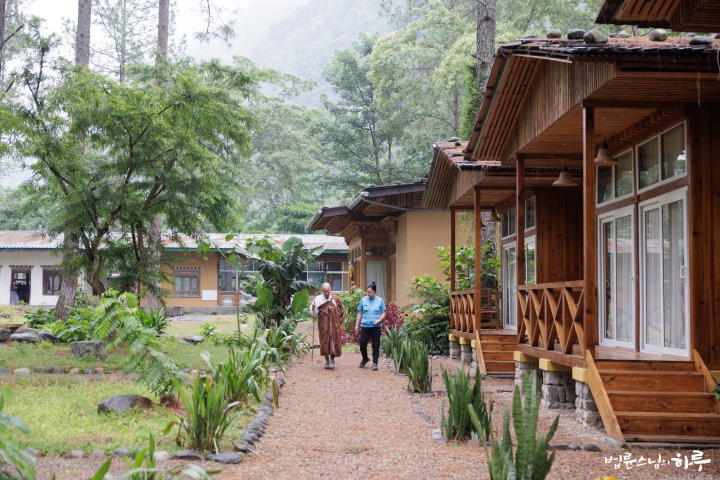
Around 8 a.m., Sunim set out for the field inspection. Since the lodging where he had stayed the previous night was located in the Tama-Berti Chiwog of Trong Gewog—the first stop of the day—the travel time was not very long.
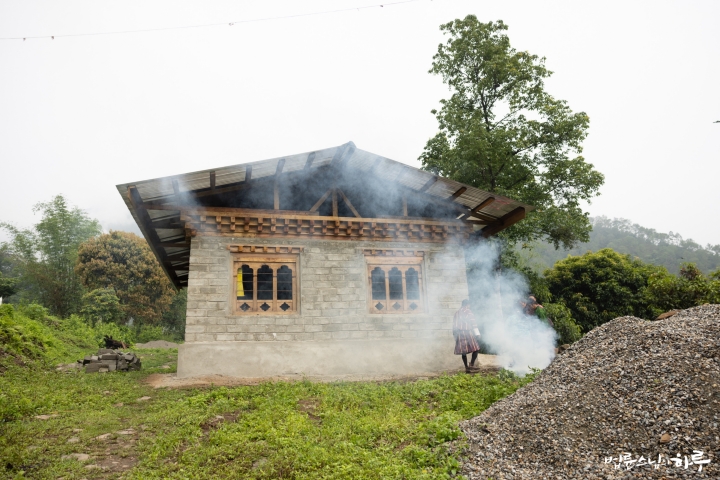
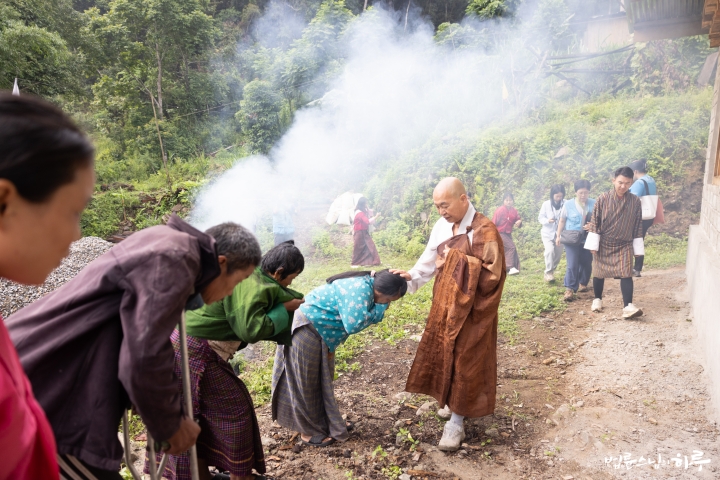
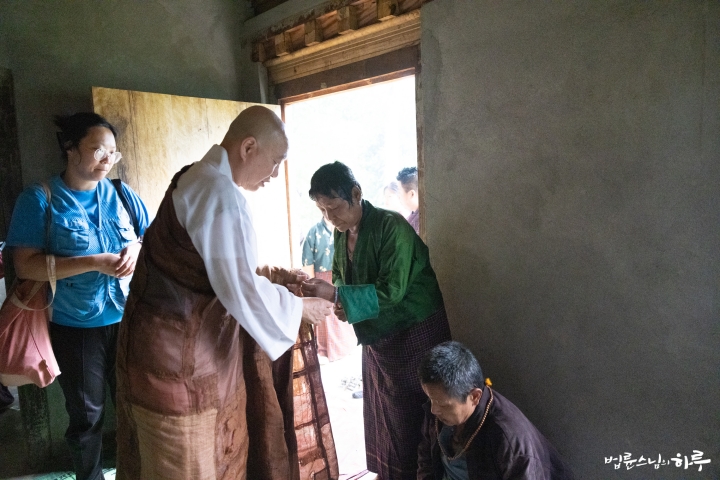
After about a five-minute drive, Sunim was warmly welcomed by the Tshogpa of Tama-Berti. Guided by the Tshogpa, Sunim made his way to a newly built house, where the homeowner and villagers were lined up waiting to greet him. Sunim warmly blessed each person, placing his hand on their heads in the Bhutanese tradition.
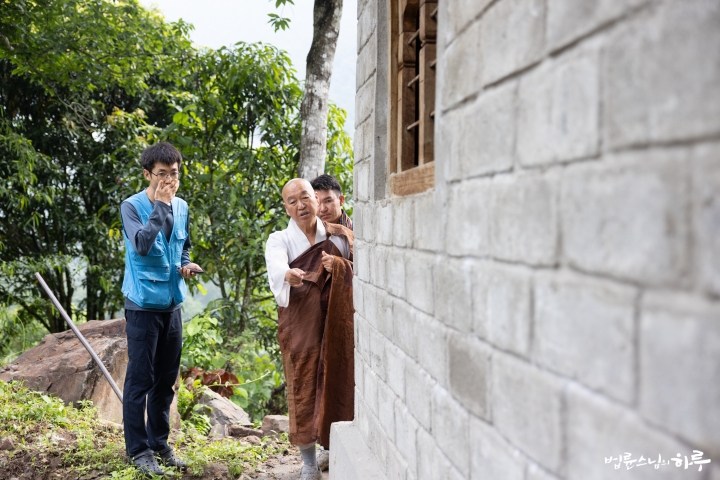
The owner of this house has a physical disability in his leg, which made it extremely difficult for him to build a house on his own. However, neighboring villagers came together to contribute bricks little by little, and through the JTS project, the remaining materials were provided, allowing him to finally have a new home. Sunim and JTS volunteers then toured the inside and outside of the house together. Upon careful inspection, several areas—including the bathroom—still needed additional finishing work.
"I am very happy."
"The house is well-built. Let's hold the inauguration ceremony later, once the house is fully completed."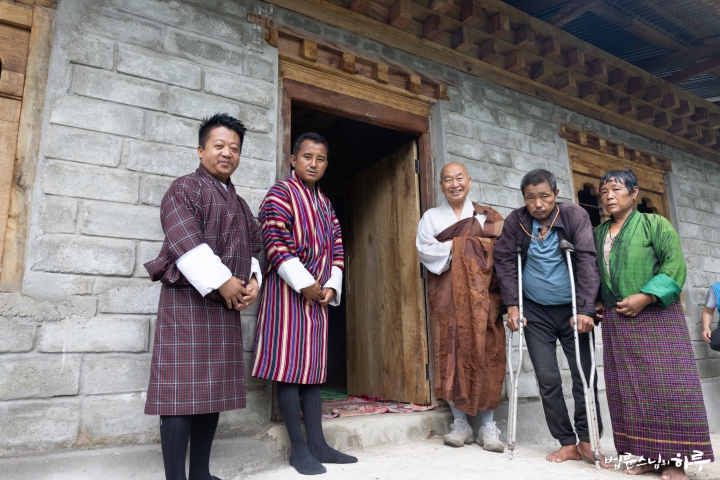
While drinking tea lovingly prepared and served by the homeowner, Sunim carefully assessed the local situation, asking the Tshogpa whether there were any other villagers in need of new homes and whether the drinking water issue had been properly resolved. The Tshogpa replied that there was one more household that needed a new house, and an application had already been submitted for next year's JTS project. Regarding drinking water, he explained that the aging pipes in the upper village still needed to be replaced. He also mentioned that the government was preparing to open a technical school nearby, and since there would be a shortage of water for use at the school, they were preparing measures to address this. However, due to the heavy workload of the Dzongkhag engineer and the shortage of specialized personnel, the water issue was not being resolved smoothly.
The next destination was Tshanglajong-Zurphel Chiwog. Tshanglajong-Zurphel Chiwog is divided into Tshanglajong village and Zurphel village. They first drove about 45 minutes to Tshanglajong village. Upon arrival, the Governor welcomed Sunim. The Governor had intended to accompany Sunim from the previous day, but due to poor health, he was only able to join the schedule starting this morning. He expressed his apologies to Sunim. As they spoke, the Governor mentioned that he was feeling dizzy due to vertigo (BPPV), and Sunim kindly provided him with medicine that would help his condition.
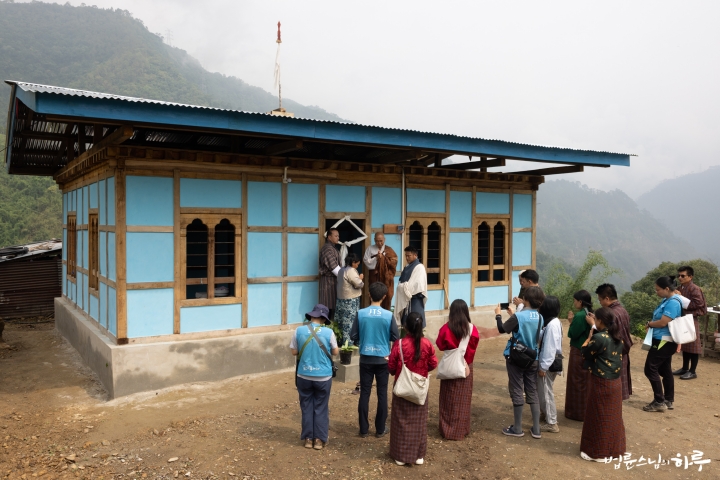
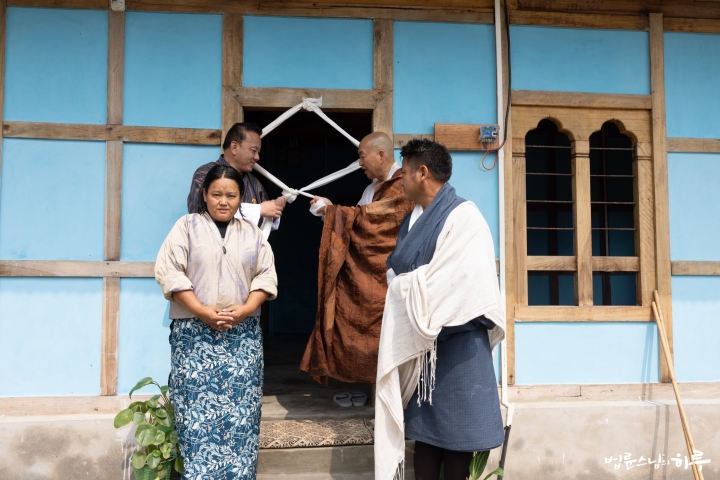
Sunim proceeded to the second house with the Governor. The second house was beautifully painted in sky blue. Upon arriving at the newly built house, Sunim took a look around and offered a blessing through chanting together. After conducting the inauguration ceremony, Sunim said:
"May you live happily without any obstacles, through the blessings of the Buddha and the protection of all the celestial guardians. Great merit will come to the many who helped build this house."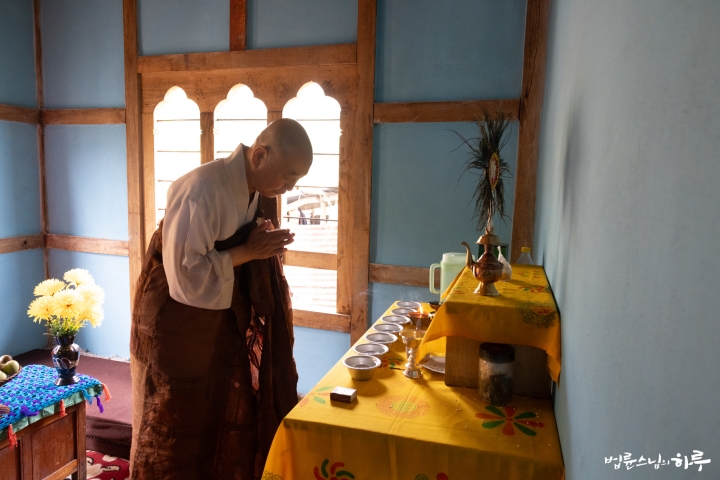
Sunim entered the newly renovated house and offered a blessing by scattering rice in the traditional Bhutanese manner. Then he entered the family's personal shrine room, lit a candle, and paid his respects.
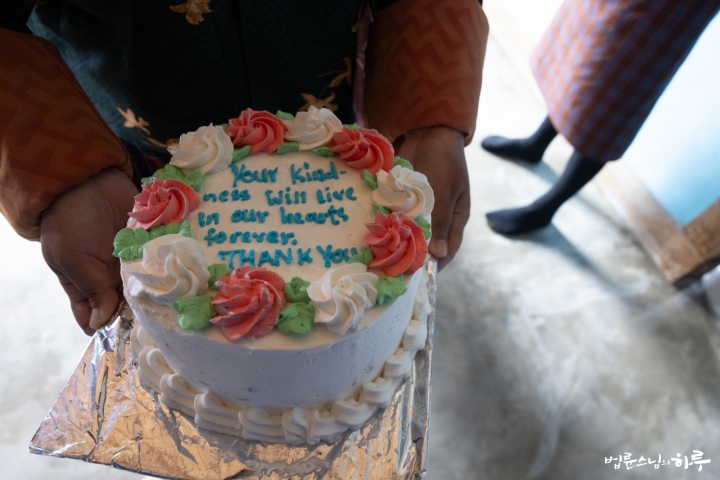
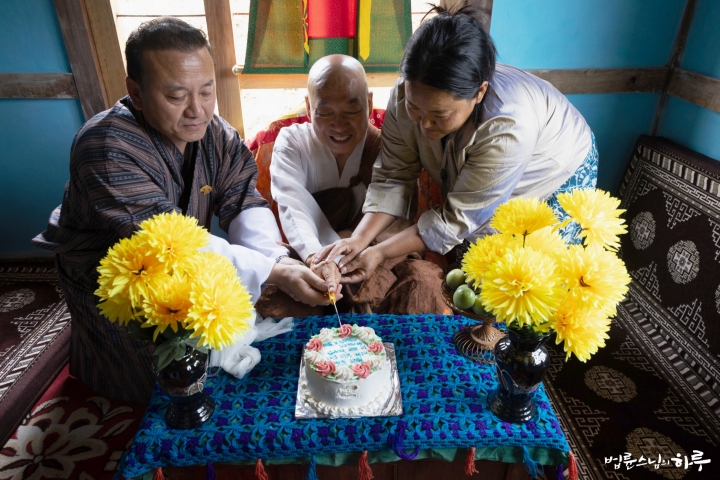
The homeowner prepared a cake of gratitude and presented it to Sunim. Sunim cut the cake together with the Governor and the homeowner, and everyone shared the cake together.
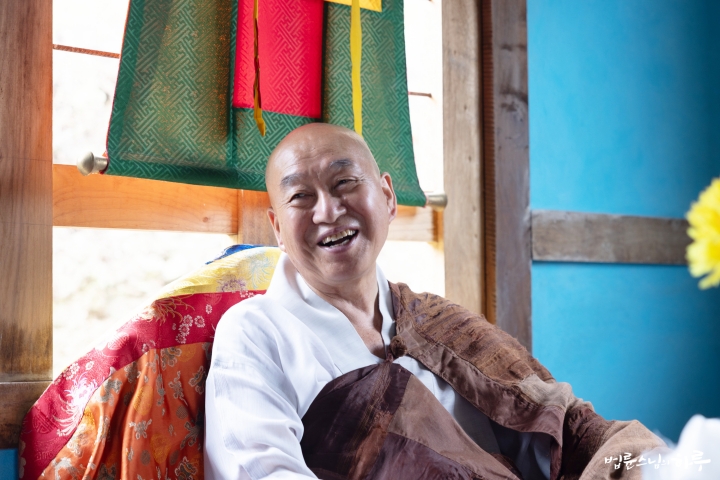
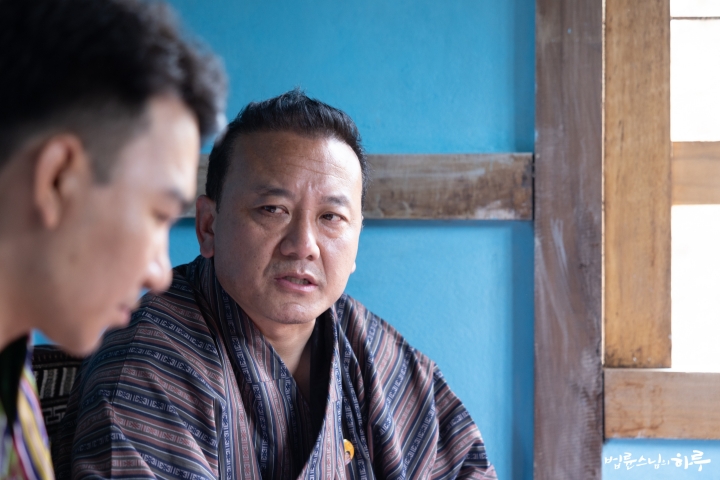
Sunim told the Governor that thanks to the well-designed housing blueprints, many houses had been built with relative ease, and that necessary modifications were being made to adapt to the local terrain. He explained that while they generally follow the sample design, when building houses on sloped terrain, it would sometimes be necessary to place the door on the side rather than as specified in the design.
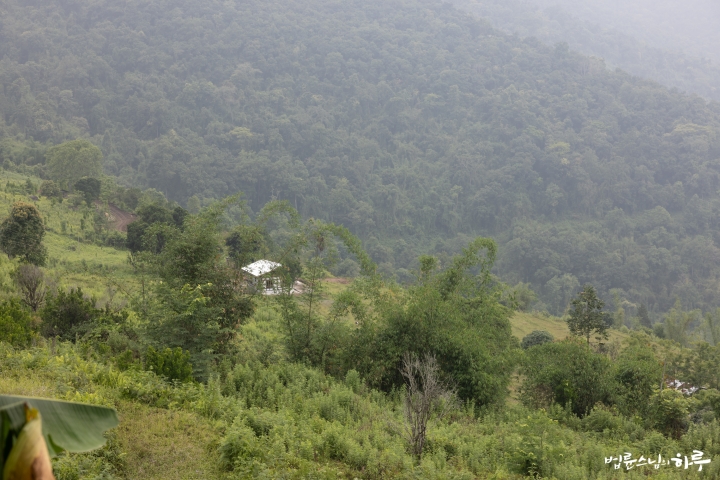
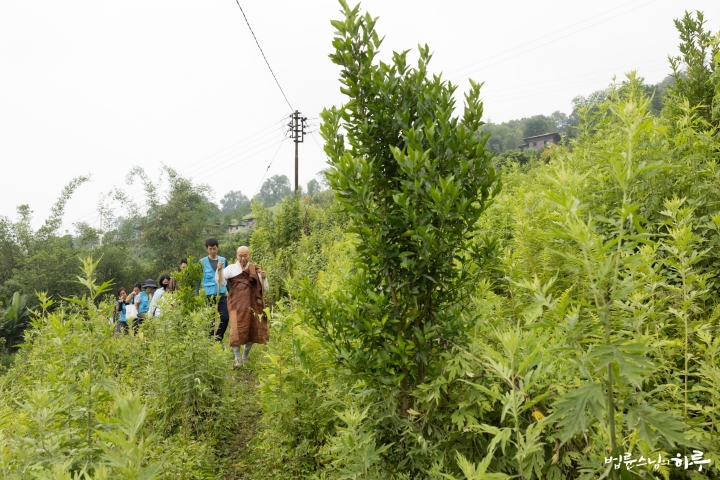
The next house to visit was in Zurphel village, so they drove for another 30 minutes. After getting out of the car, they could see a shining roof far below. That was the house they needed to visit. Although the distance to walk was long and the slope steep, putting a strain on his legs, Sunim willingly walked down because people were waiting.
When they arrived at the house, a deaf couple welcomed Sunim.
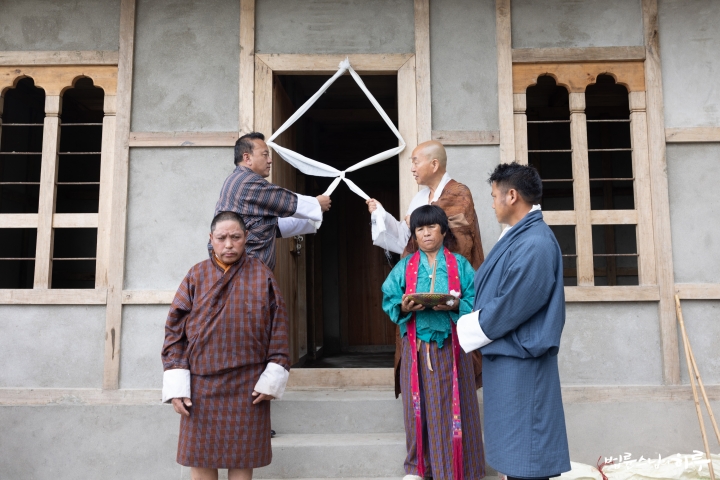
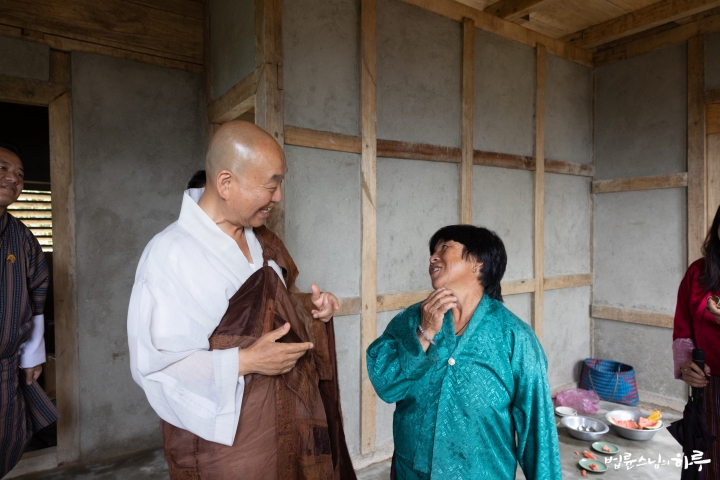
Though the homeowners could not hear, Sunim offered a heartfelt blessing.
"May you live in peace from now on, through the blessings of the Buddha and the protection of the celestial guardians."The homeowner served Sunim and the group tea and watermelon. After enjoying the refreshments and chatting, the group moved on to the final house.
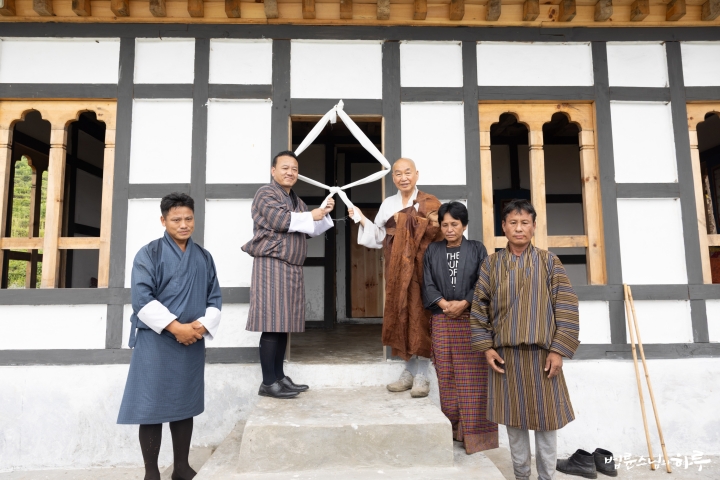
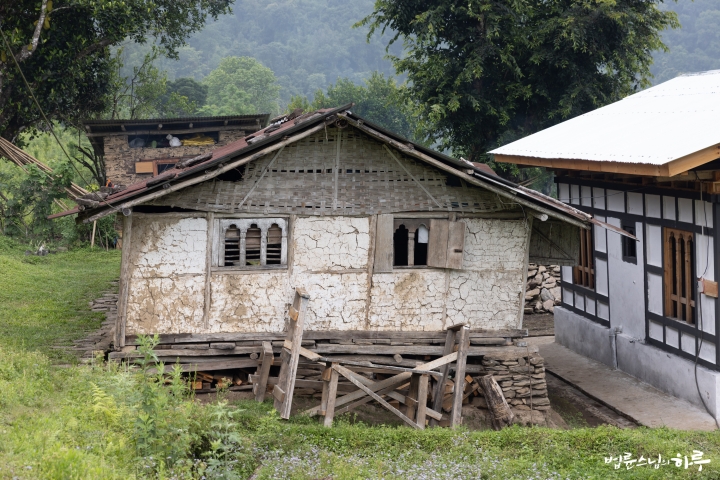
They arrived at the last house. After looking around the house, the traditional Bhutanese inauguration ceremony was conducted. Right next to the newly built house stood the old house where the family had previously lived. Here, Sunim had lunch prepared by the homeowner and villagers. Sunim conversed with the Governor during the meal.
Upon hearing that the JTS project coordinator hired by Zhemgang Dzongkhag would be quitting at the end of this month, Sunim said to the coordinator:
"Why are you trying to quit? I understand it's been difficult. Although you receive a small salary, when you work for others, that work accumulates as blessings, just like savings deposited in a bank. So you shouldn't think only of the salary you receive right now. The great merit that the Buddha spoke of is giving water to those without water, food to the hungry, treatment to the sick, clothing to the naked, building houses for the homeless, and making roads where there are none. Everything we do is this kind of work. These Koreans have also come from far away to volunteer. (Laughter) You must create blessings to receive blessings later. There's no such thing as receiving blessings without creating them. Opportunities to accumulate merit are not many, so why not consider it as creating blessings for one more year and continue your work?"After the meal, Sunim greeted the homeowner as he left the house.
"May you live happily, free from accidents and illness, through the blessings of the Buddha and the protection of all the deities.""Thank you."
After completing the field inspection, Sunim presented gifts to the departing Tshogpa and the Gewog administrators, concluding today's field inspection schedule.
"Thank you for your hard work, Tshogpa. Please continue to do well next year as well."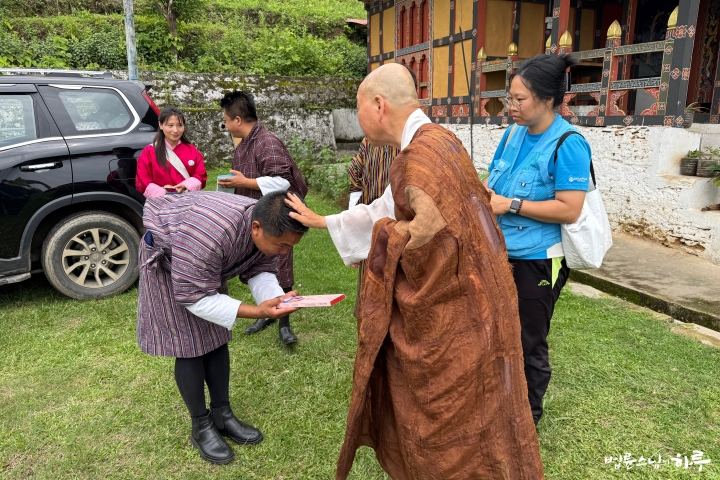
At 1:30 p.m., they arrived at today's lodging, the Zhemgang Guest House. A lecture for Zhemgang government officials was scheduled to begin at 2:30 p.m. However, since the previous program in which the officials participated ran late, Sunim's lecture was not able to begin until 3:20 p.m.
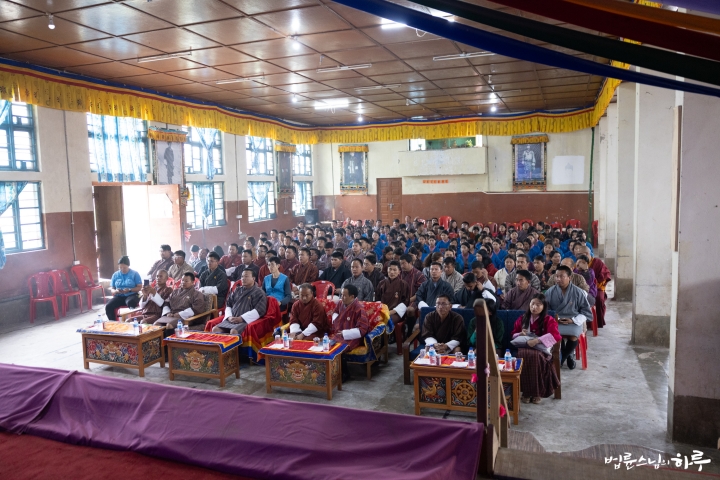
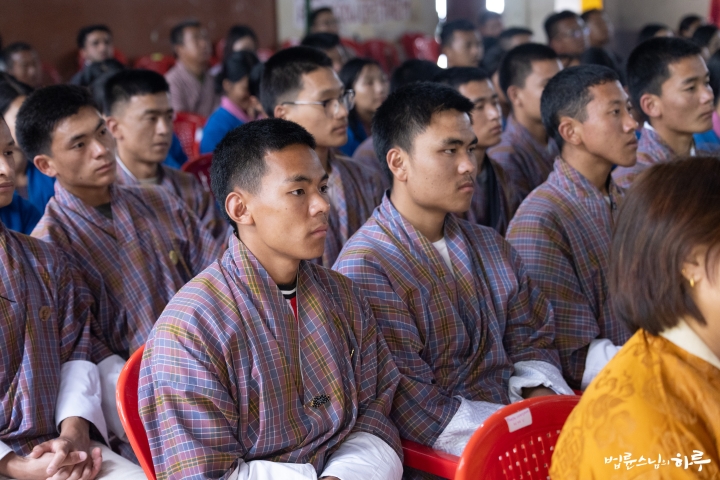
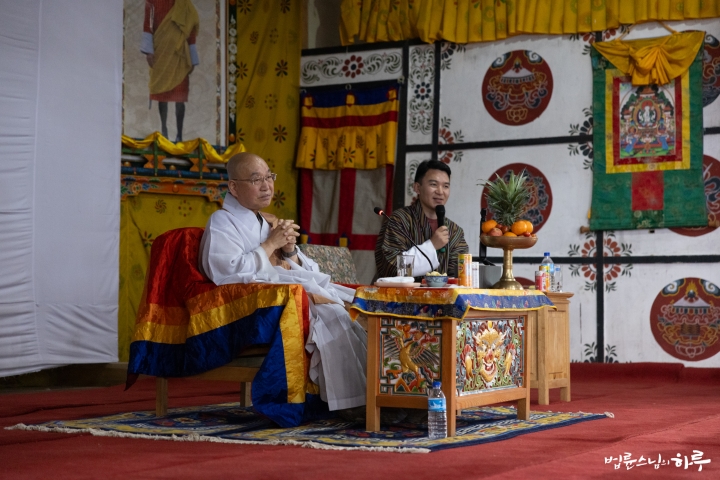
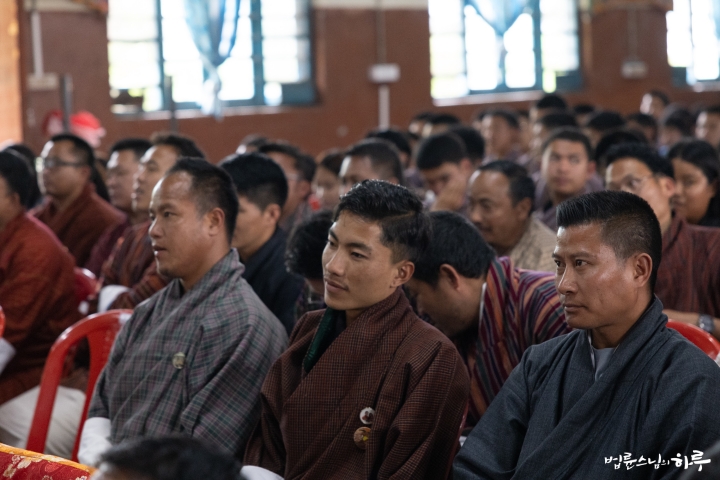
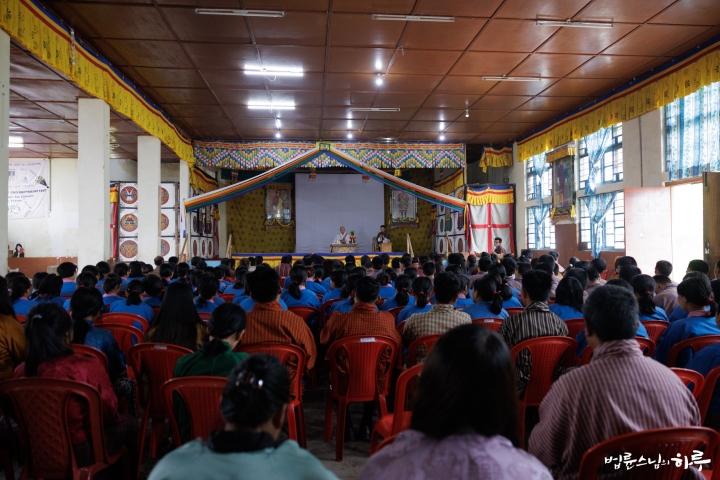
The Governor of Zhemgang had been requesting Sunim's lecture for the officials since last year, and this Bhutan visit finally provided the opportunity. The lecture was held in the auditorium of Zhemgang Central High School. Upon entering the auditorium, about 50 Zhemgang officials and around 200 high school students were waiting for Sunim's lecture.
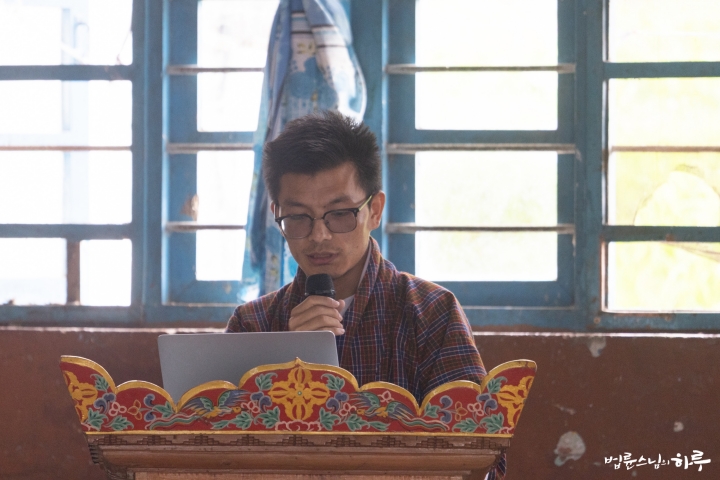
Before Sunim's lecture, the Planning Officer, Norbu, briefly introduced Sunim. The audience welcomed Sunim with applause. After his greeting, Sunim explained in detail the purpose and background of JTS undertaking the Sustainable Development Project in Bhutan. He also explained the impact and outcomes the current project is expected to have in the future.
"In this era of climate crisis, where climate change is occurring rapidly, the value of nature is becoming extremely important. I believe that 20 to 30 years from now, the natural value of Bhutan will be highly appreciated. So I hope you will not sell your houses in the countryside under any circumstances. Just think of them as being preserved and leave them as they are for the future. Of course, it would be good to simply keep the land as well, but I'm not sure what national policy dictates regarding whether you must return the land to the government if you don't farm it. In an era when everything is becoming automated and driven by artificial intelligence, those who have gone abroad may lose their jobs and all return home. I'm not saying this will definitely happen, but rather that we live in such uncertain times. However, no matter what I say now, I cannot stop the flow of young people leaving for cities and foreign countries. I expect this trend to grow even stronger. But someone must protect their hometown and their country, and I hope that someone will be you. So I hope you will become people who protect your home villages and your country. Finally, let me say one thing about Buddhism. The temporal law of dependent origination (緣起法) is called the law of cause and effect (因緣法). It means that where there is a cause, there is a result. It says that when a phenomenon occurs, it does not happen by chance but must have a cause.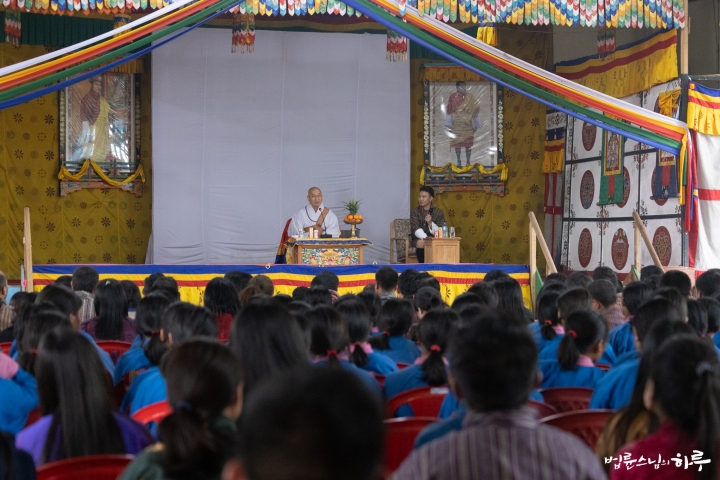
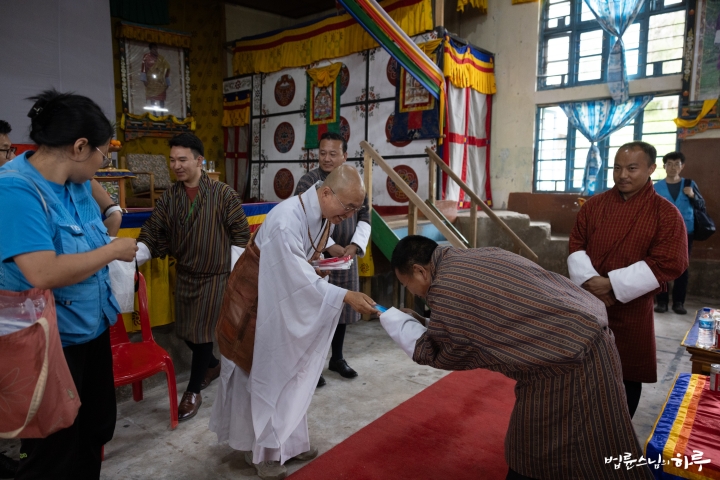
After the lecture, Sunim gave gifts to the attendees. He gave toothbrushes to the officials and JTS keychains to the students.
At 6:30 p.m., after finishing the lecture, Sunim moved to a restaurant in Zhemgang Town for dinner.
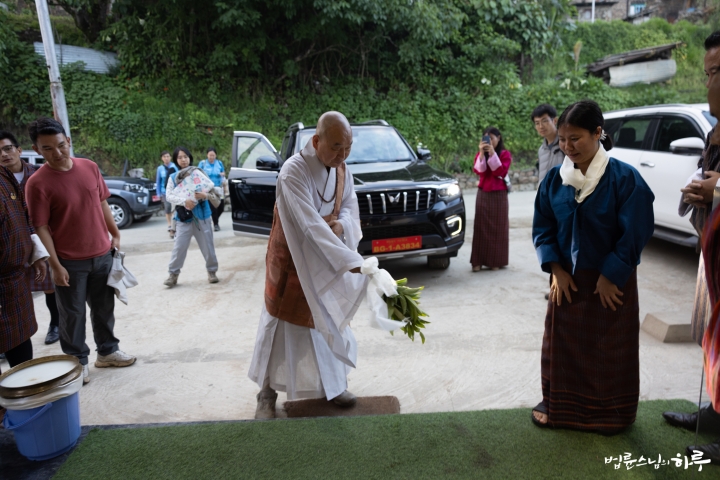
A restaurant owner who had been deeply moved upon hearing about the project that Sunim and JTS are conducting in the Zhemgang area wished to offer a meal to Sunim, which is how this dinner gathering was arranged. Upon arriving at the restaurant, the owner asked Sunim to perform the Bhutanese traditional blessings of sprinkling water and rice. Sunim sprinkled water at the entrance and rice inside the restaurant, performing the blessing ritual.
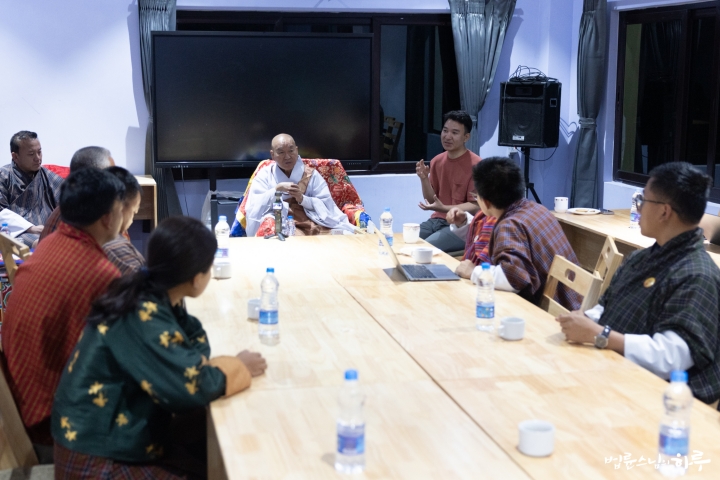
Before the meal, Sunim held a meeting with the Governor and key Zhemgang officials over tea, reviewing the field inspections that had been conducted in the Zhemgang area over the past 7 nights and 8 days. Sunim noted that overall, 80 percent was proceeding well, and discussed specific items that needed improvement as follows:
When building new houses on slopes, cutting the slope too close to the structure can cause moisture and drainage issues. To address this, Sunim suggested building retaining walls where possible to level the ground and installing drainage channels along the cut surfaces. The kitchen sink height would be standardized at 80 centimeters as the basic standard, with minor adjustments depending on the owner's height.
For walkways, the width would be expanded from 70 centimeters to 90 centimeters, and instead of uniformly applying a 100-meter length standard, the length would be flexibly supported based on each village's needs. He also suggested that water tank drainage pipes for cleaning must be extended sufficiently long, as inadequate length could cause water to flow nearby and create landslide risks. For areas where water sources are more than 13 kilometers away, the consideration was to continue using the existing water source for upper villages, while introducing a pump system to draw water from springs below the village for lower villages, to be operated as a pilot program. He also added the idea of utilizing the existing pipes that would be left over after replacement for small households outside the support scope.
Regarding agricultural waterways, he emphasized that small cracks and damage must be repaired immediately to prevent major collapses. However, since small emergency repairs are difficult under government budget procedures, he suggested that JTS provide 5–10 bags of cement immediately for urgent situations to resolve them, while also emphasizing the importance of future waterway management.
Finally, regarding school renovations, he noted that when work is done through resident volunteer methods, the finishing and quality tend to be lower. To compensate for this, he proposed switching to a method where JTS provides materials and the district dispatches professional technicians. In particular, he reported that the leaking third-floor bathroom at Sonamthang School and the lack of a laundry drying area were urgent issues, and presented specific methods for using greenhouses to create drying areas.
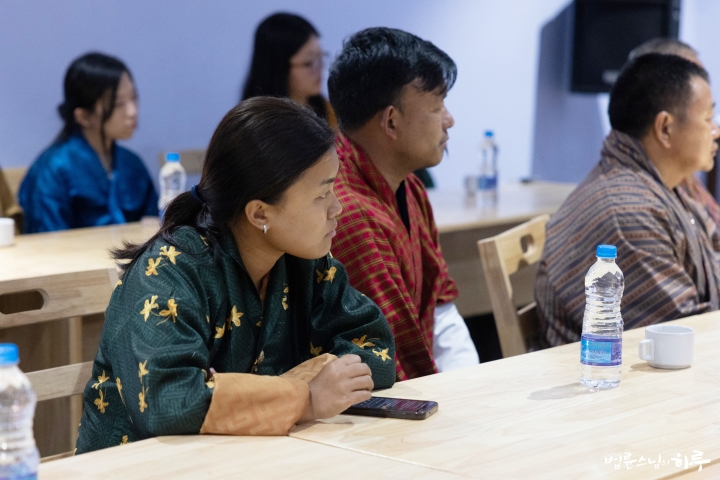
In addition, discussions were held about relaxing the current housing support criteria, which focus on the extremely poor, to prioritize support for those without houses while differentiating the level of support. That is, the idea was proposed to provide full support to the extremely poor, while providing only some materials such as roofing or cement to households in slightly better circumstances. Furthermore, he suggested establishing a joint response system to improve shared community roads, where the Gewog (district office) would budget for it and JTS would provide materials. He also shared the idea of piloting the deployment of a set consisting of a small excavator and dump truck, which could be used regularly for road repairs and site preparation for housing.
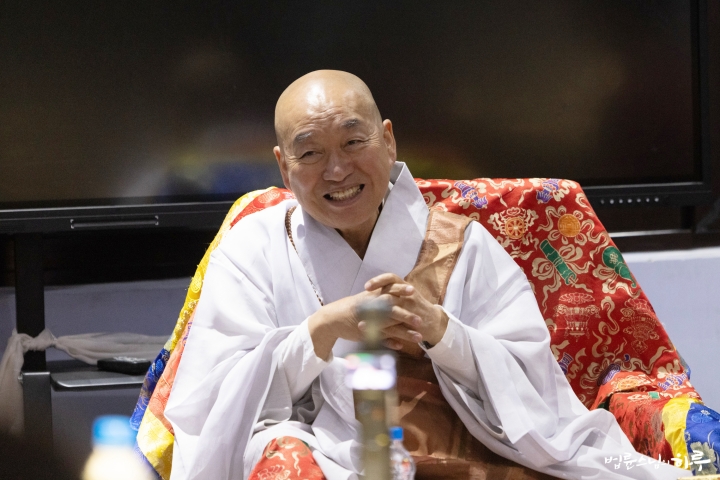
Above all, Sunim emphasized that for houses that had inauguration ceremonies in an incomplete state, regular inspections every six months are necessary to ensure they are continuously managed until fully completed.
The Governor, who had been attentively listening to Sunim's various ideas and suggested improvements, said he would consider allocating necessary portions separately from the new budget being organized this coming July. This meeting was a meaningful time for reviewing and sharing the parts of the JTS project that had been carried out, and for confirming opinions and ideas so that the project could be completed in a more developmental direction.
After a 1.5-hour meeting, the participants had dinner together. After the meal, the Governor carefully presented prepared gifts to Sunim, the interpreter Rinchen, and the JTS volunteers. In return, Sunim also presented the Governor with incense and his English book to express his gratitude.
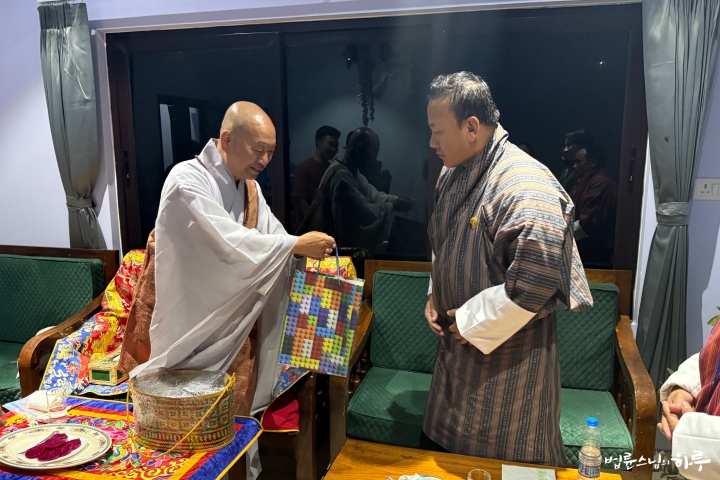
Sunim exchanged farewells with the Governor, promising to meet again in Bhutan in February of next year, and then got into the car to head to the lodging. Upon arriving at the lodging, Sunim gave allowances to the Dzongkhag officials, drivers, and Korean volunteers who had endured hardship together over the past 7 nights and 8 days, encouraging them.
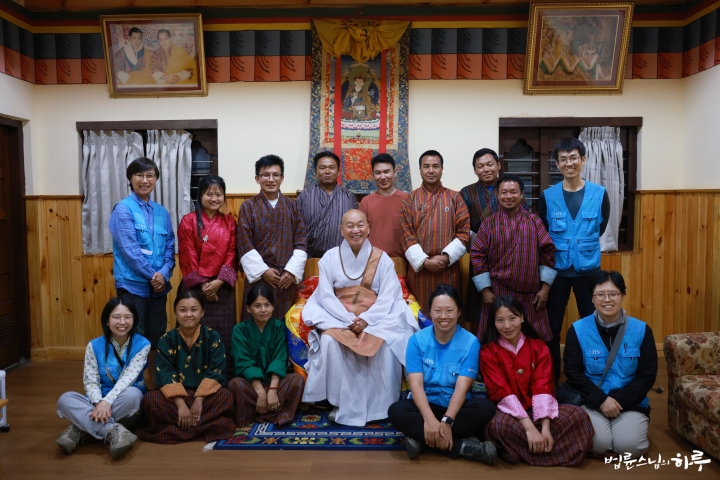
Everyone took a commemorative photo together, concluding today's schedule. Sunim organized his things and proofread manuscripts before ending his day's work.
Tomorrow, Sunim plans to travel to Langthel Gewog in Trongsa for a field inspection.
"""