Can Religion Prevent War?
June 5, 2026 – Day 4 of Bhutan Schedule (Inspection of Bjokar Gewog in Zhemgang)
Hello. Today, Sunim spent the entire day inspecting the progress of projects across five Chiwogs in Bjokar Gewog.
Sunim began the day with morning practice and meditation. At 5:40 AM, he departed from the Panbang JTS Center, and at 6:30 AM, he met the Deputy Governor and his party in Panbang before traveling together to Bjokar Gewog.
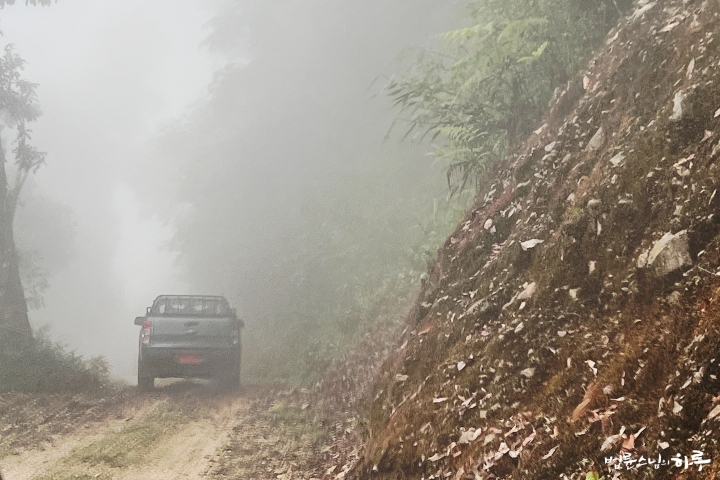
The road was thick with fog. Traveling for a long time in the car without being able to fully straighten his back put strain on his legs due to his spinal stenosis, so Sunim's legs were already hurting badly from the morning.
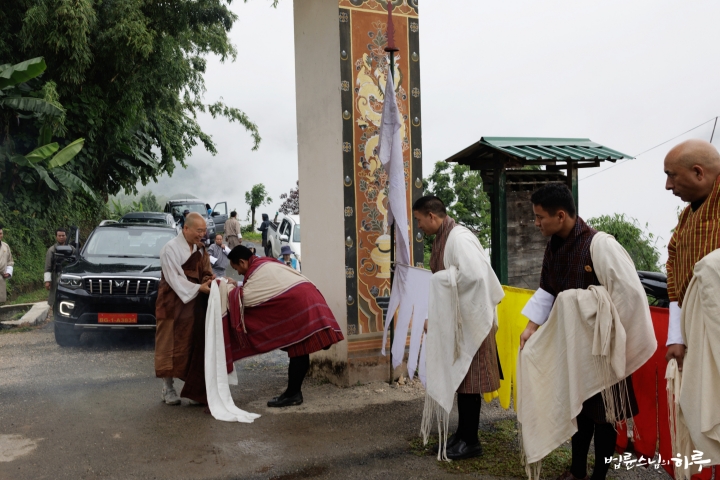
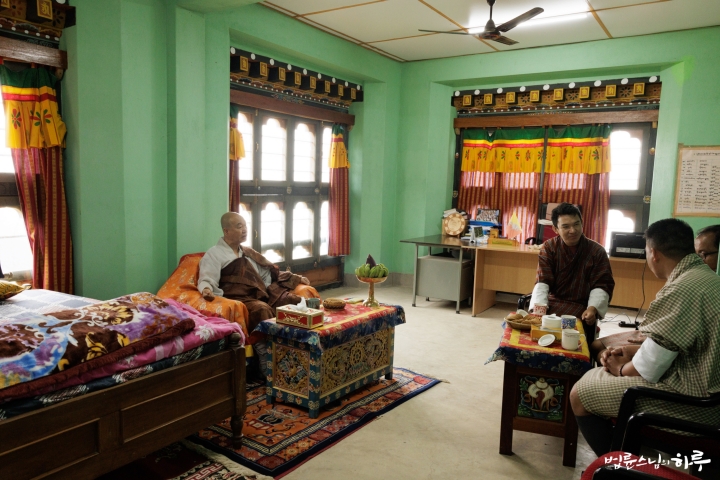
At 7:30 AM, the group arrived at the Bjokar Gewog Center. The Gup (군수, county head) and Mangmi (면장, village head) of Bjokar Gewog, along with their party, welcomed Sunim. When officials explained that breakfast had been prepared and led him to the Gup's office, the office had been transformed into a resting place for Sunim. A large bed and bedding had been set up in the office. Sunim ate the breakfast prepared by the Gewog.
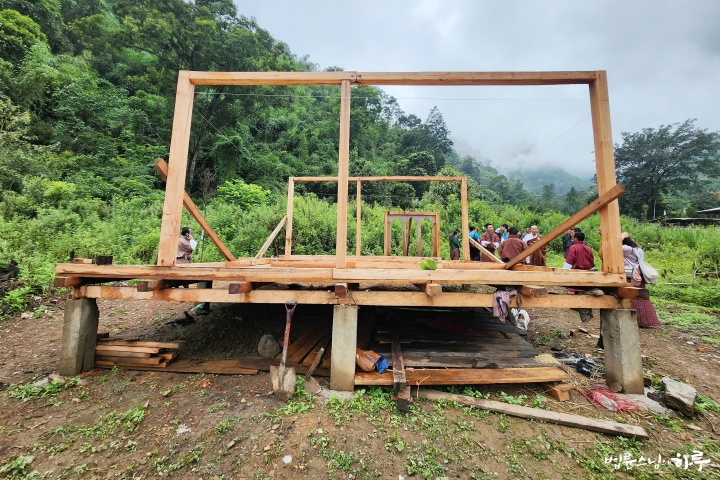
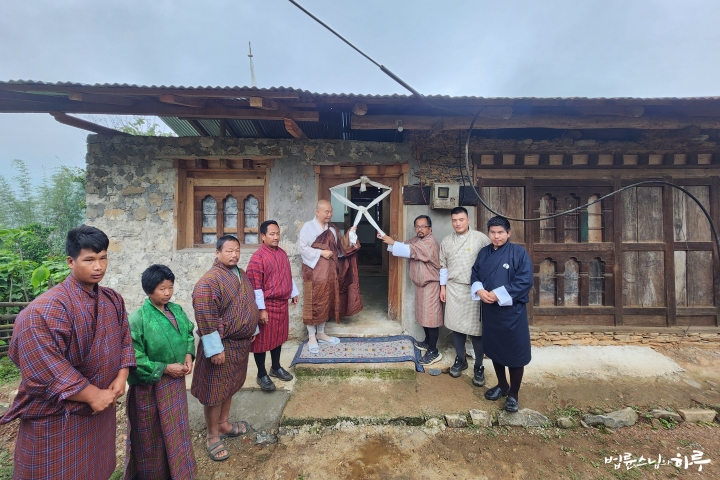
At 9:10 AM, the group arrived at Chabdenda Chiwog in Bjokar Gewog. A total of three sites were inspected in Chabdenda Chiwog. The first visit was a household building a new home. Since the homeowner was an alcoholic, the villagers were helping build a small but new house. After briefly looking around the house, Sunim's group headed to the second house.
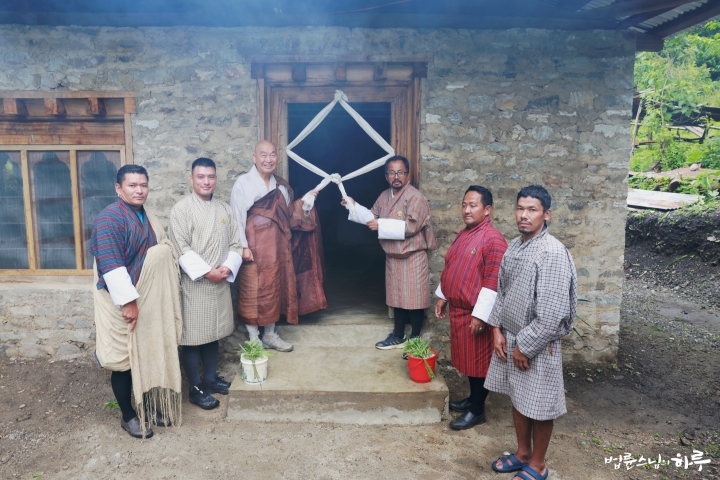
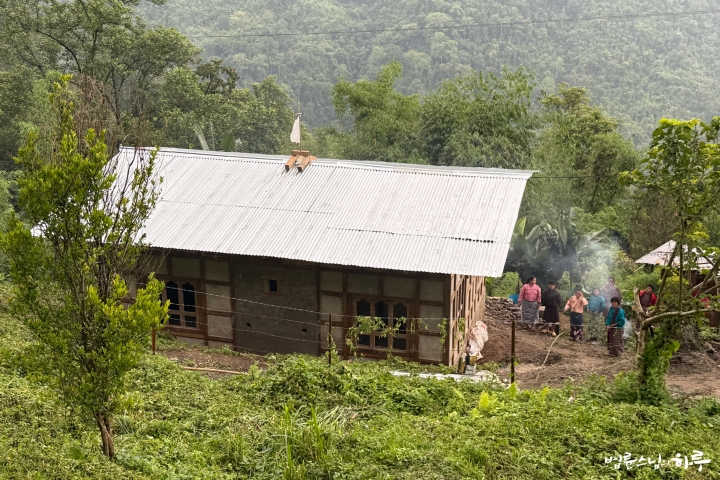
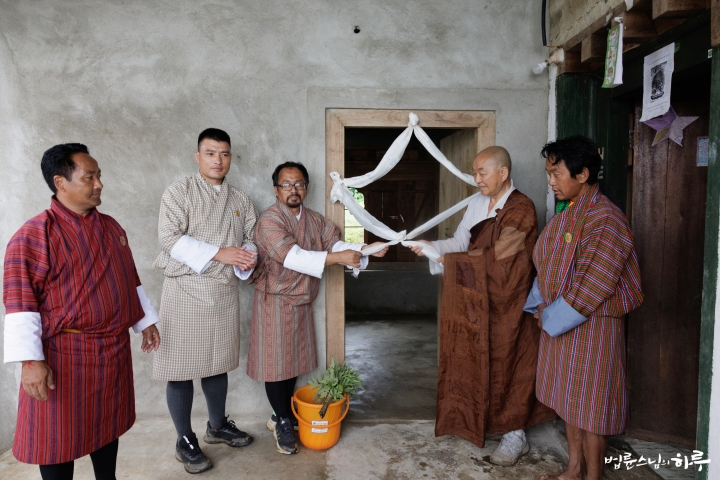
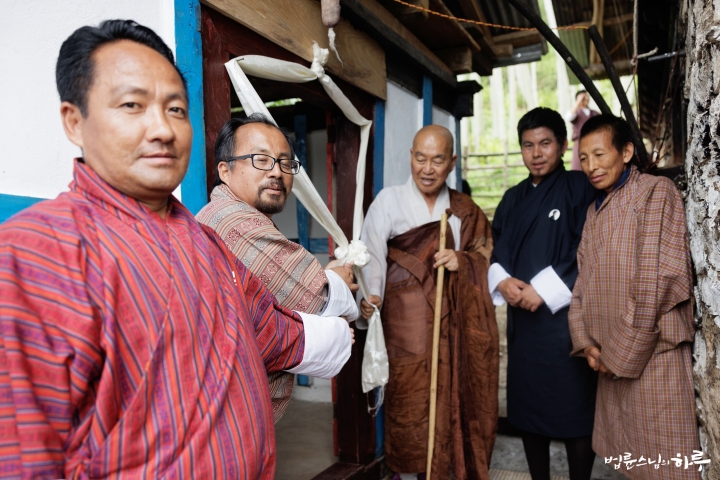
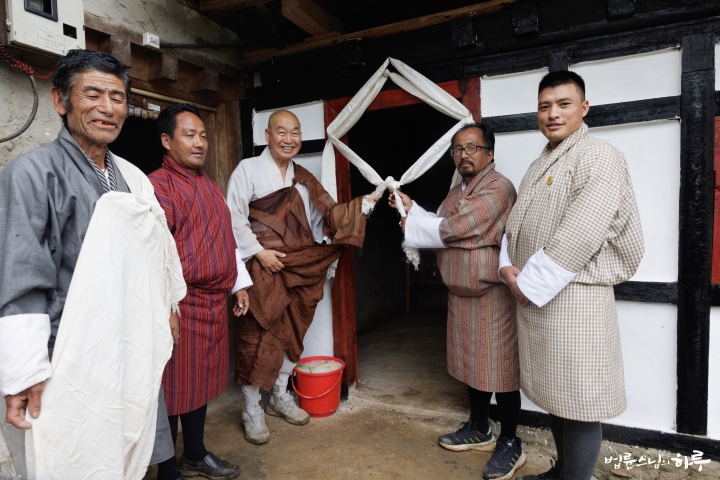
At the second house, a completion ceremony was held. After taking a look around the house, Sunim discussed several matters with the planning officer and Zhongkhar engineer. He pointed out that without applying cement soling (foundation work where stones or bricks are densely laid on bare earth before pouring foundation concrete to create a solid base) around the house up to the eaves and creating drainage channels, moisture would seep into the home. He also noted that next year's housing support should allow for different door placements based on terrain, even if house sizes remain the same. He explained that while professional technicians can handle the work without major issues, when villagers do it themselves, functional problems can arise. They discussed various work items requiring improvement or careful attention.
Next, the group moved to the village temple in Chabdenda. Villagers were standing in line, waiting for Sunim's arrival.
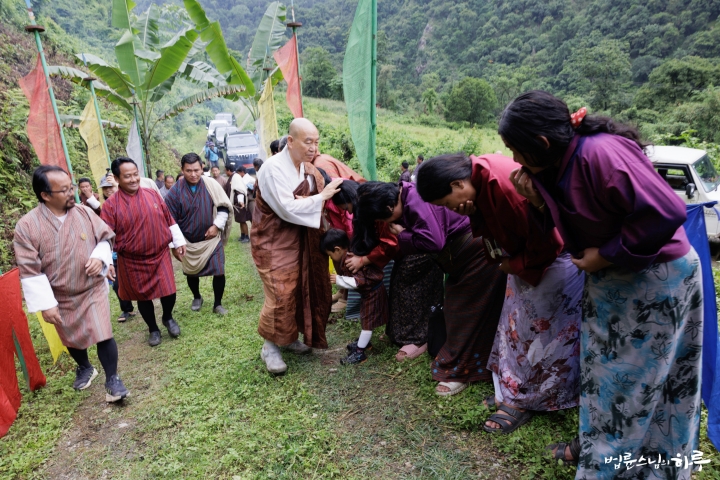
Last year, there had been a request to build a kitchen at the Chabdenda village temple. As part of this year’s project, villagers joined their efforts in communal labor to complete a kitchen behind the temple.
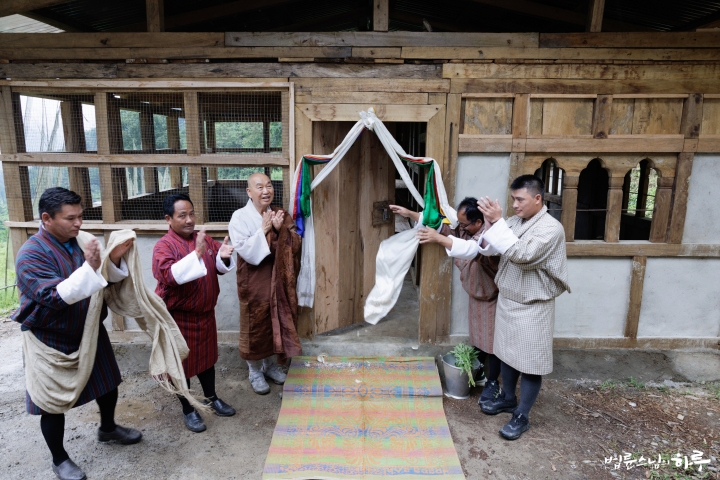
After completing the inauguration ceremony, Sunim looked around the kitchen. Noting that there was a stove but no chimney for smoke to escape, he suggested installing one. When Sunim asked the Chabdenda Tshogpa if there was anything else needed, the response was that electrical connections were not yet installed and the temple's internal electrical facilities were not properly set up, so they requested electrical installation. Additional requests included a desire to add decorations to the temple roof and to build a retaining wall at the temple to expand the seating area for people. Sunim told the Tshogpa and villagers that they should first finish building homes for residents without housing, and then discuss these matters again.
The Tshogpa and villagers earnestly served Sunim tea and offerings.
"We sincerely thank you for traveling all the way to this remote place to help us. We apologize that we have so little to offer. We are deeply grateful that you support us so generously despite our difficult circumstances and have even built us a kitchen. We wish you a safe journey."
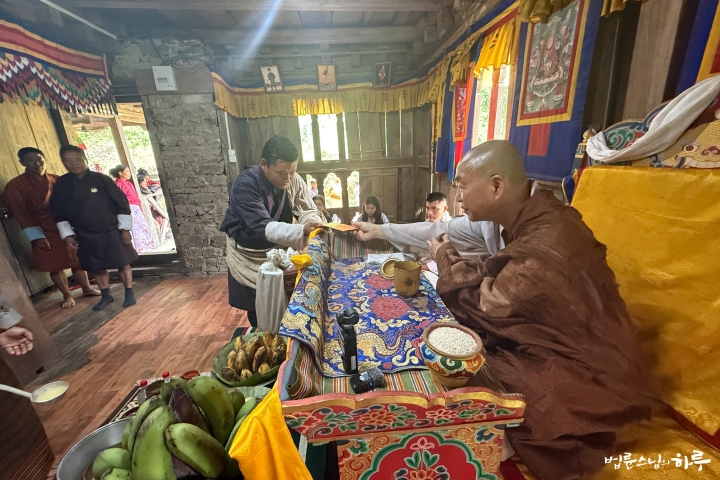
Sunim handed over a donation for the villagers to use.
"It's not a large sum, but I hope you put it to good use with the villagers."At 10:20 AM, the group left Chabdenda Temple and moved to Barpong Chiwog. Previously, there was no road directly connecting Chabdenda and Barpong Chiwogs, so traveling by car required a detour that took two hours. However, thanks to the government connecting the road, the journey can now be made in just 20 minutes. Although a short distance, it required crossing a small river and traveling along a rough unpaved road.
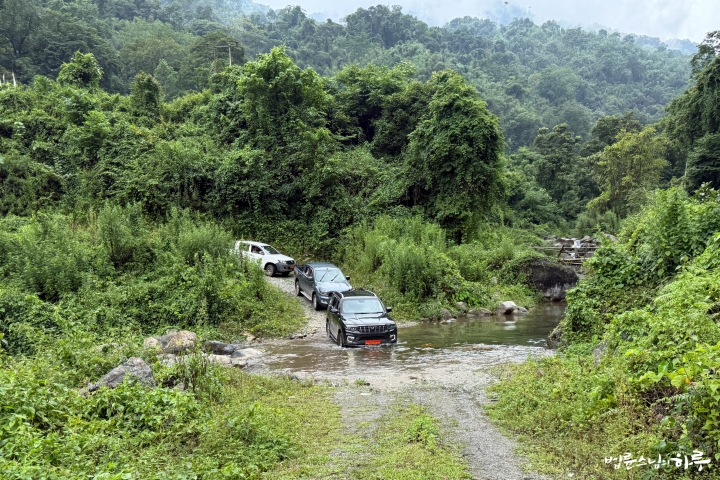
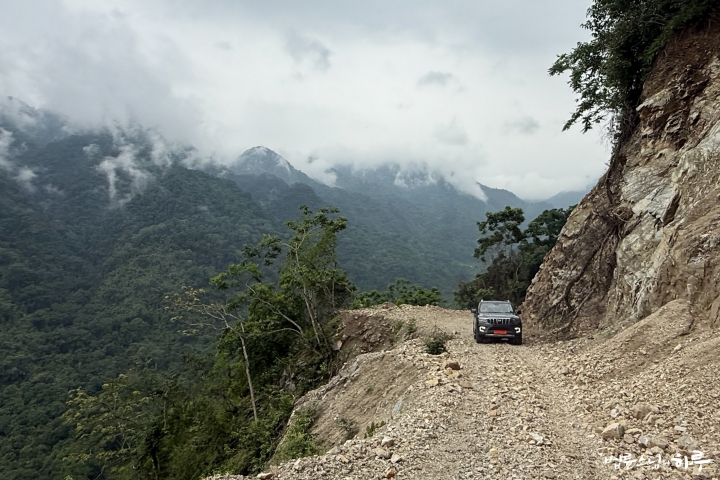
In Namergang village of Barpong Chiwog, three newly built households were inspected.
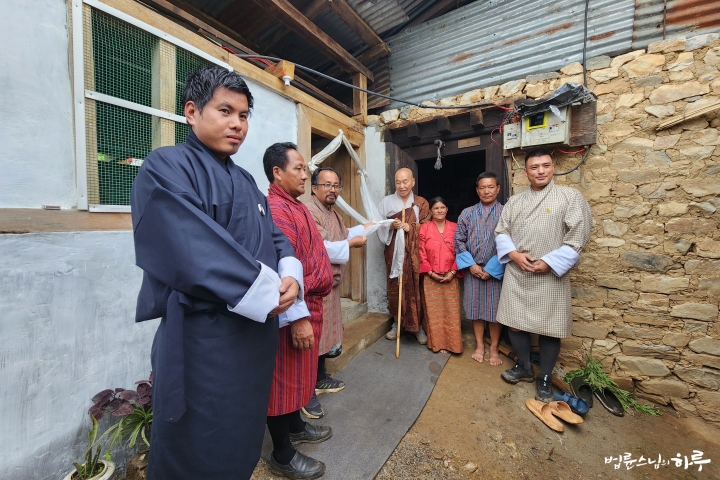
Two households were still under construction, and one had been completed. Sunim performed the inauguration ceremony and lit a candle in the private prayer room. He then presented a small gift to the homeowner and offered a blessing, wishing that everyone in the new home would be happy through the Buddha's grace.
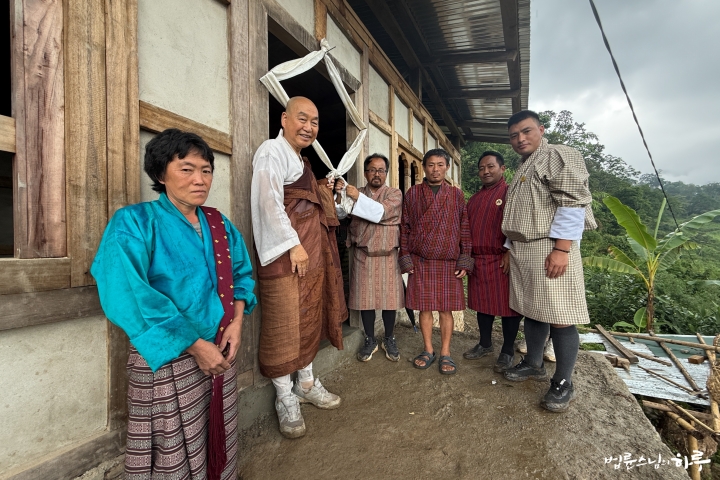
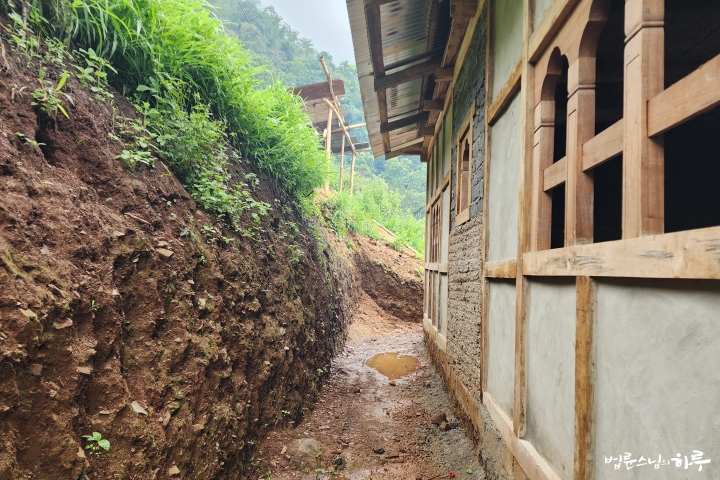
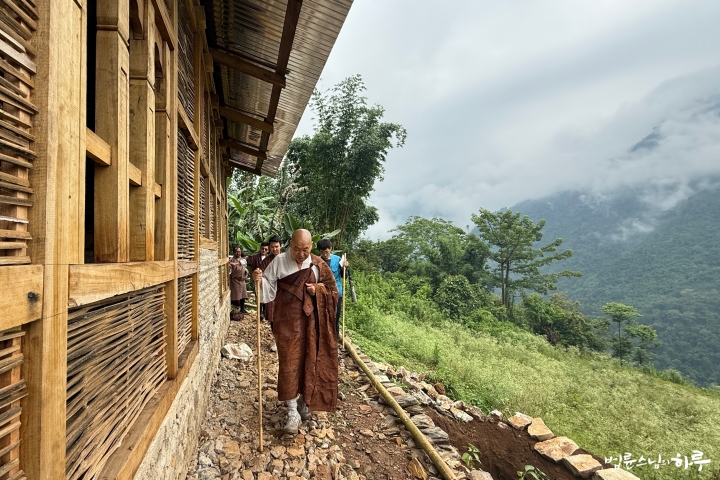
All the houses needed additional work because the outer drainage and the area up to the eave line were made of dirt rather than concrete. Sunim once again emphasized to the volunteers that concrete work around the houses and drainage construction must be done to prevent moisture from rising.
Lunch was carefully prepared by the villagers at Barpong Primary School. Sunim expressed gratitude to the villagers and asked if they had any suggestions regarding the ongoing project. He also explained the operational guidelines of the JTS project.
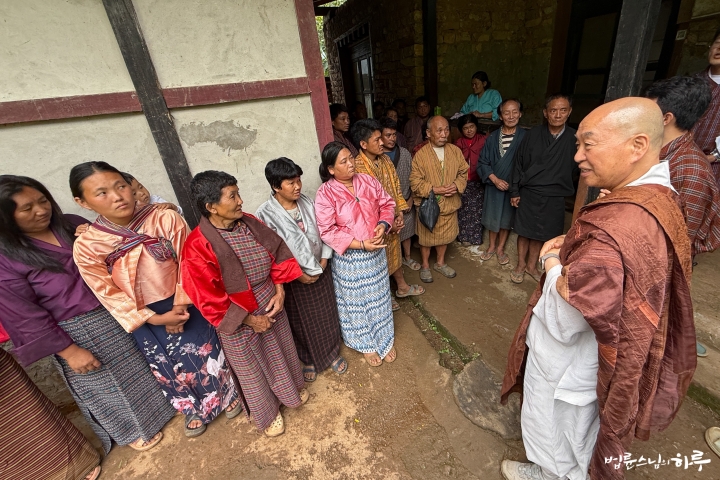
"So let's first make our living environment more convenient. Let's take care of the living first, and the temples afterward. Do you all know about the Buddha? Did the Buddha live in a fine house, or under a tree? Let's tell the Buddha to stay under the tree for a while, and start by building houses for living people.""Yes."
Sunim handed out toothbrushes as gifts to each person gathered there. He also distributed candy to the children.
Next, the group inspected one sample kitchen that Korean volunteers had built together with a village applicant. The sink and shelves made by the Korean volunteer had been neatly completed.
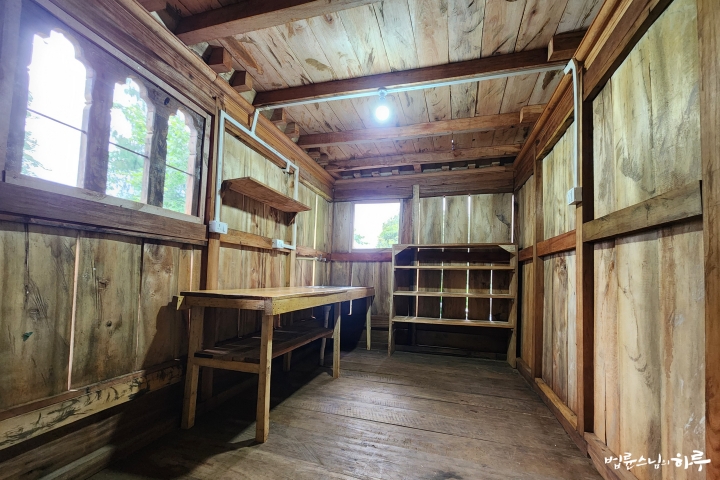
Bhutan has a culture of building kitchens separately outside, so the newly constructed standalone kitchen looked much like building a small house in itself.
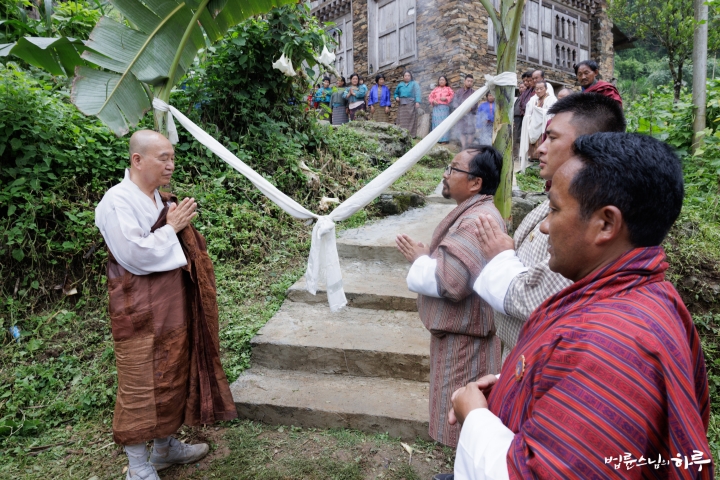
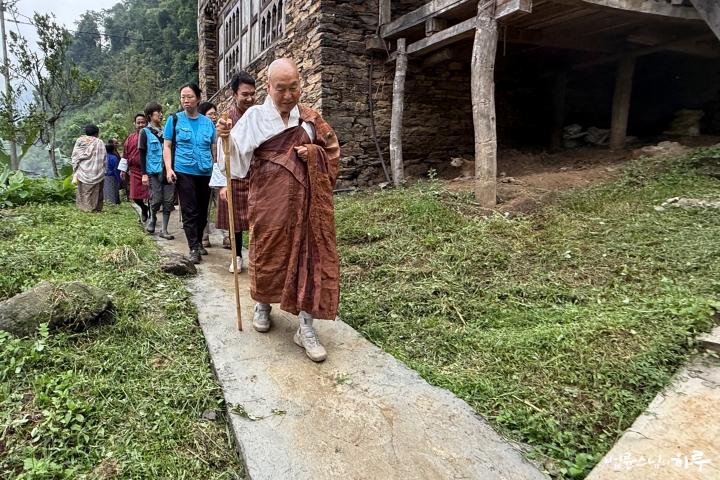
Next, the group went to inspect the walkway in Barpong village. This project aimed to create a 1-meter-wide pedestrian path to address the problem of the village interior turning into mud and making walking difficult when it rained. The walkway connected each of the densely clustered houses well. After completing the inauguration ceremony, Sunim looked around the entire walkway.
"You did a fine job."After looking at one more newly built kitchen, the group moved to Kamati Chiwog.
In Kamati Chiwog, the group visited a household whose kitchen had been renovated. The newly built stove opening was noticeably too narrow.
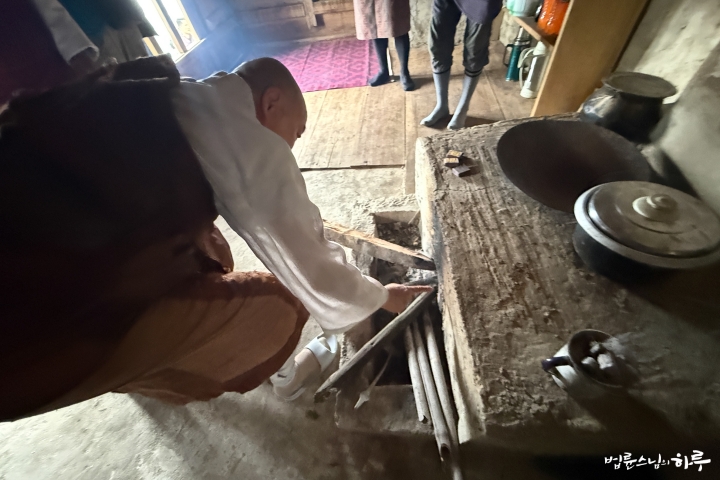
"It's much better because there's less smoke."
At 2:30 PM, the group departed from Kamati Chiwog and moved to Trong Chiwog, where the Gewog Center is located.
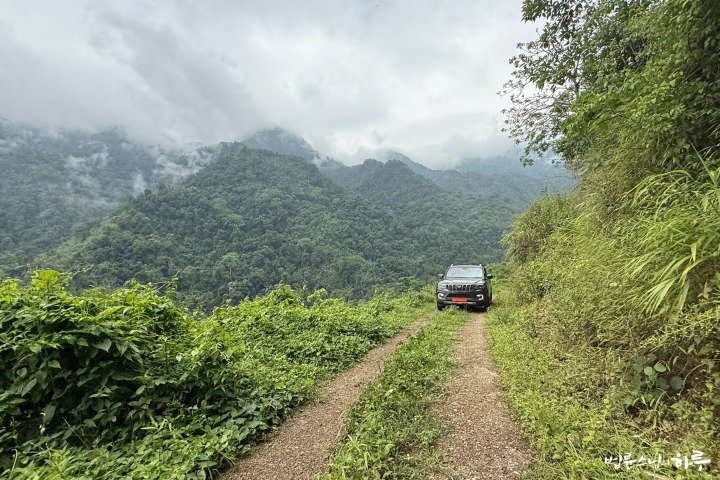
In Trong Chiwog, the inspection covered one old house renovation and seven new kitchen construction projects.
The villagers had used JTS project support to remodel a house where two elderly women lived, so the group inspected it. The villagers had joined together to renovate the interior of the home where the two elderly women lived without any family to care for them.
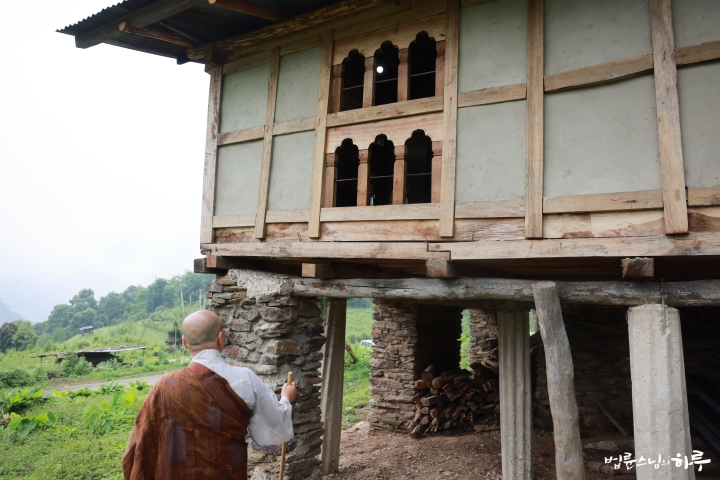
Although there was an existing toilet, it was located on the ground level while the house was built higher up, making it inconvenient for the two elderly women to go back and forth. So a new toilet was built at the same level as the house.
Sunim said to the Tshogpa (촉바):
"I heard you built it together with the villagers. Tshogpa, you've worked hard."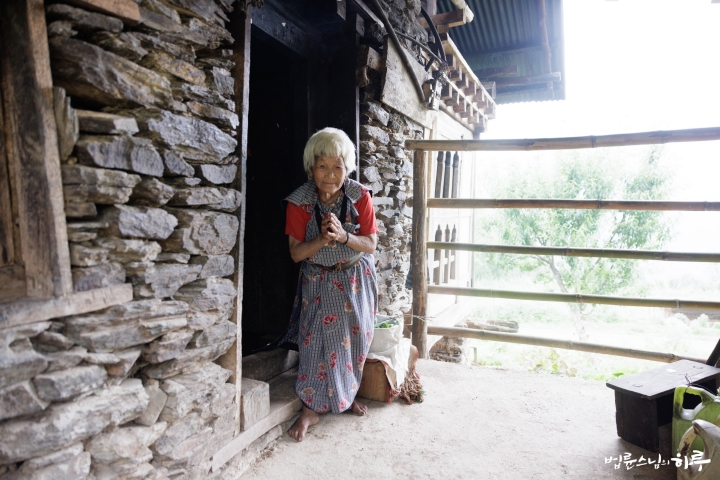
One of the elderly homeowners kept her hands together in greeting even after Sunim had moved far away.
Next, the group looked around the kitchens. As a pilot project last year, Korean volunteers had come to Trong Chiwog and personally built two kitchens, demonstrating to the villagers how to construct sinks and shelves. After that, applications were accepted from villagers, and only materials were provided while the villagers built the kitchens themselves.
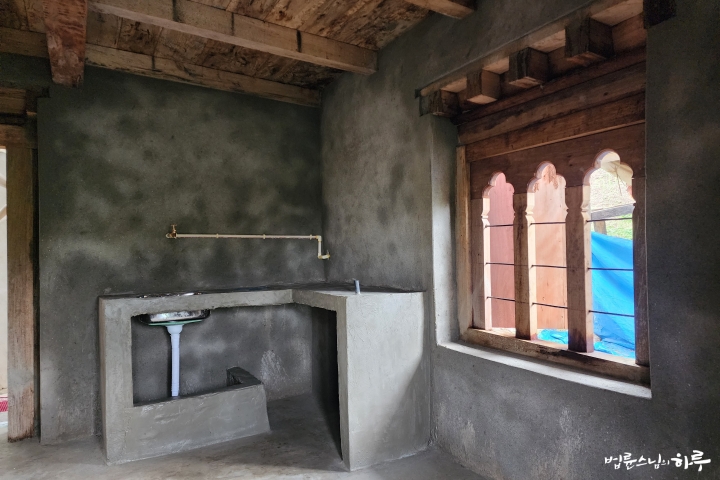
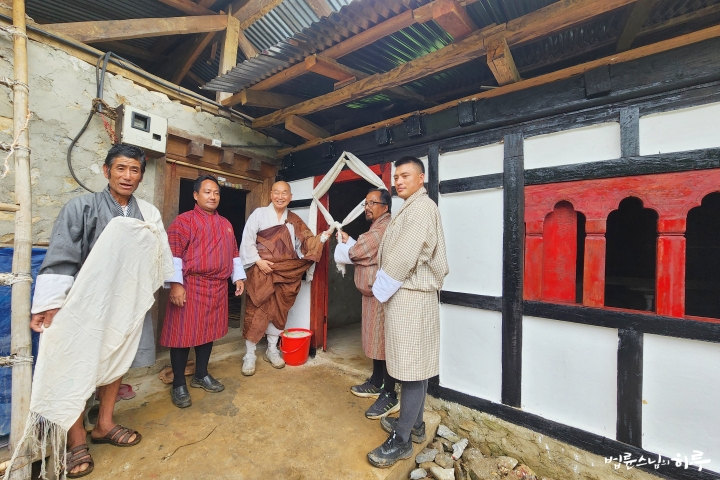
The group visited seven newly built kitchens in succession. Sunim's legs hurt badly with each step, but he silently carried out the scheduled itinerary.
In most kitchens, cement had not been wiped off promptly after installing new sinks, so cement had hardened on them. Sunim explained to the villagers that when doing cement work, it must be wiped off immediately, and that even now they should scrape off the hardened cement.
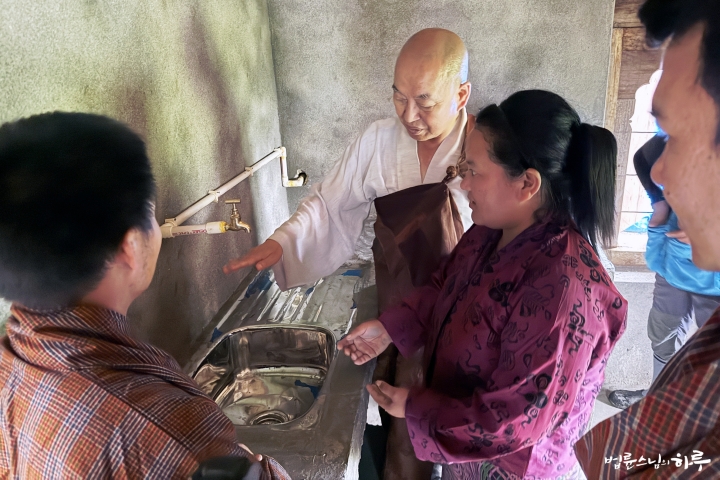
Additionally, because the villagers had never used sinks or countertops before and had always done kitchen work while sitting, the sinks and faucets had been made uncomfortably high to use. Sunim personally demonstrated how to turn on the water and how to cook. He further explained which parts would be inconvenient if the heights did not match. He also explained the situation to the planning officer and Zhongkhar engineer and asked them to redesign the sinks with a standard height of 80 centimeters.
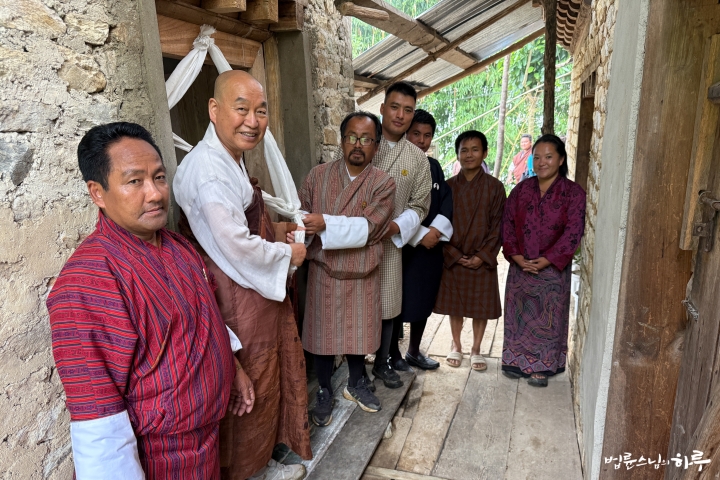
Then at 5 PM, Sunim held a Trong Chiwog village residents' meeting. About 30 villagers attended the meeting.
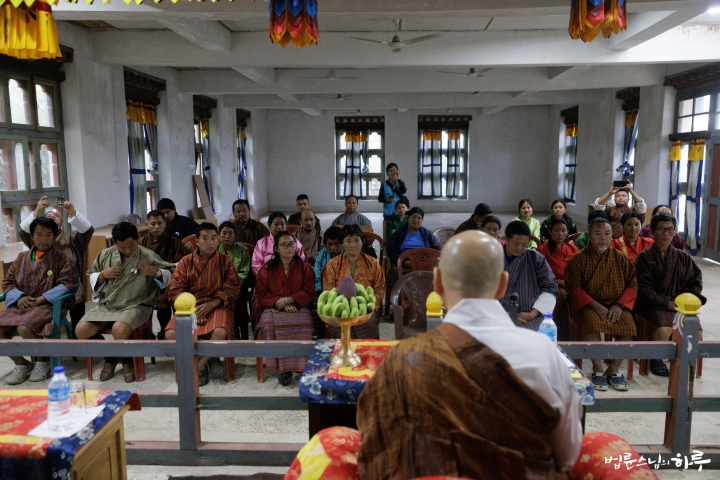
A kitchen improvement project is underway in Trong Chiwog, with a total of nine kitchens built, including sample kitchens. The original plan was to install a sink in one section of an existing building, connect water pipes, install shelves, and use electricity to create an environment where one could cook while standing. However, in reality, residents wanted to build a separate new structure outside, which added roofing, lumber, and floor cement work, effectively becoming a new kitchen building. As a result, the kitchen scale became much larger than originally planned.
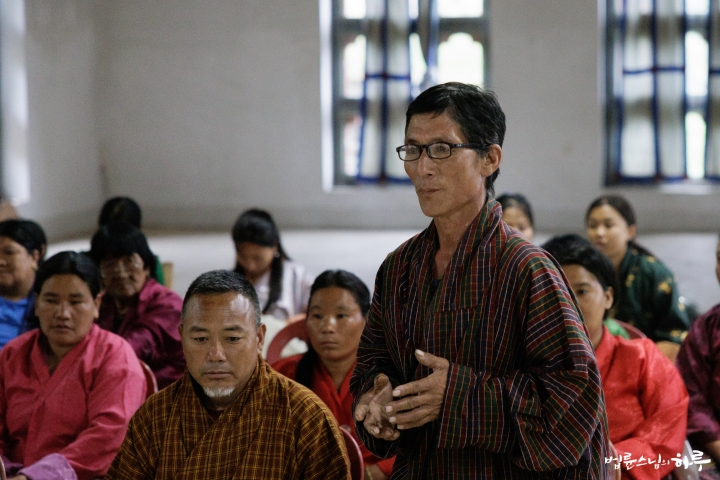
Although kitchen materials corresponding to the standard scale were provided to residents to build themselves, opinions emerged that the materials provided were extremely insufficient because most residents wanted to build larger kitchens.
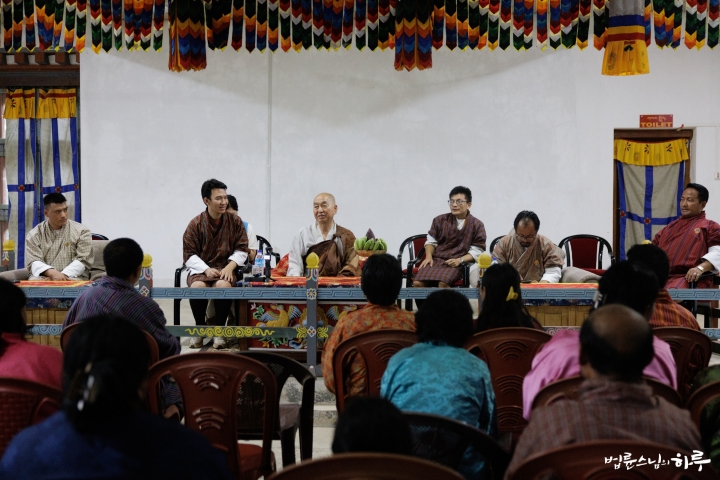
After listening to the residents, it became clear that many people in this region do bamboo crafts and need space to work while sitting. The reason they wanted larger kitchens was to also do bamboo crafting work in the kitchen.
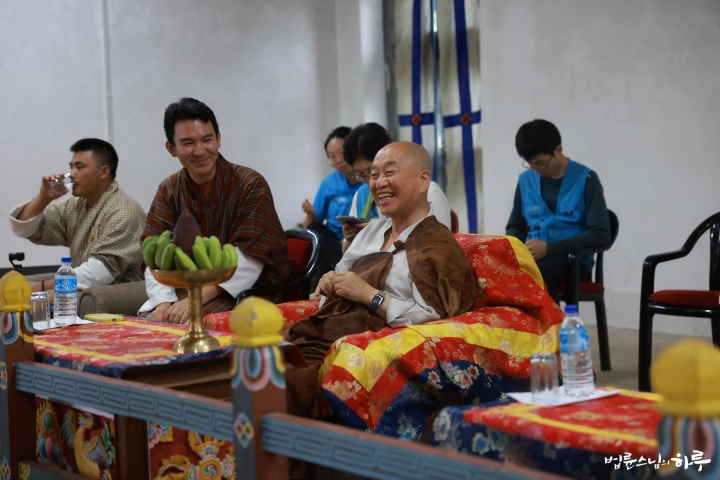
After the meeting ended at 6 PM, Sunim returned to his lodging. He skipped dinner, attended to pending tasks, and rested to conclude the day.
Tomorrow, he plans to visit Ngangla Gewog and Phangkhar Gewog in Zhemgang for on-site inspections.
Since there was no Dharma talk today, this post concludes with a Dharma Q&A conversation that took place in Gyeongju (경주) this past April.
Can Religion Prevent War?
"Wars sometimes happen because of religion, but they also happen without religion. Wars occur in countries without religion, and wars occur in countries with religion. Even if only one religion like Buddhism existed, countries believing in Buddhism could still fight each other. And when Buddhism and Christianity coexist, conflicts may arise between them. The absence of religion doesn't mean conflicts disappear. So it's difficult to definitively state what role religion plays in war. Most religions teach people not to fight and to maintain peace. However, those who want war often use religion to justify it. Even in the Buddha's time, wars were unceasing. There were times when the Buddha awakened people from their foolishness and stopped or prevented wars, but there were also wars that occurred because people did not follow the Buddha's teachings. For example, there was an incident when the neighboring powerful state of Kosala attacked Kapilavastu, the Buddha's hometown. The Buddha repeatedly urged the king toward peace, but the king, consumed by resentment, ultimately waged war and destroyed the Shakya clan. Like this, religion sometimes becomes a cause for war and conversely sometimes plays a role in preventing war. There are also many cases where wars occur regardless of religion. Today's Middle East conflict also takes the outward form of religious conflict, but behind it, economic interests surrounding oil and political conflicts are deeply intertwined. The conflict between Israel and Iran cannot simply be viewed as a religious dispute between Judaism and Islam. Within Islam itself, there is conflict between Sunni and Shia, and sometimes the tensions between them appear greater than conflicts with other religions. Countries like Saudi Arabia may even welcome Iran's weakening at the hands of Israel or the United States. This is because Iran is the central country of Shia Islam, while Saudi Arabia is the central country of Sunni Islam. Also, while Iran is being attacked by the United States and Israel, it simultaneously maintains tense relationships with surrounding countries like Saudi Arabia, the United Arab Emirates, and Kuwait. This shows that the causes of conflict are not simply between religions. Ultimately, religion is sometimes directly related to war and sometimes not. Therefore, we should see it as difficult to explain the causes of war through religion alone.""Can modern religion prevent war? It seems that if there were no religion, there would be no current Israel-Palestine conflict or various incidents in the Middle East. These conflicts seem to arise because religion exists. Even during the Three Kingdoms period when many people believed in Buddhism, territorial disputes between countries were very fierce. So can we really say that religion can prevent war?"