As a Public Servant, What Perspective Should I Have When I Get Angry at Citizens Filing Complaints?

May 21, 2026 – North Korea Experts Meeting, Lecture for Seoul City Tax Officials (Suanbo Training Center) Hello. This morning, ...

Hello. This morning, Sunim had a meeting with North Korea experts, and in the afternoon, he gave a lecture at the Seoul City Suanbo Training Center in Chungju.
Sunim began his day with early morning practice and meditation. At 7 a.m., a “North Korea Experts Meeting” was held at the Jungto Social and Cultural Center. After having breakfast with the experts in the basement dining hall, Sunim moved to the 10th-floor conference room to continue in-depth discussions.

First, Sunim shared the activities he had carried out during his eight-day visit to Washington to improve U.S.-North Korea relations and promote peace on the Korean Peninsula. He then analyzed, together with the experts, the causes of the recent decline in North Korea’s exchange rate and the rise in prices of daily necessities, and examined the economic difficulties faced by its residents. They engaged in a thorough discussion on whether there is potential for improvement in U.S.-North Korea relations going forward. From 10 a.m., a meeting with security experts was held to prepare for policy exchanges with American think tanks scheduled for late September. After the meeting, Sunim held a separate discussion with one of the experts on improving U.S.-North Korea relations.

Afterward, Hyanghoon Dharma Teacher, the Secretary General of JTS Philippines, who was scheduled to depart for the Philippines that evening, came to greet Sunim. Sunim offered various pieces of advice on the Philippines projects to Hyanghoon Dharma Teacher and then had lunch with him.

The Road to Suanbo, the “Hot Spring City”

At 1 p.m., Sunim got into the vehicle and headed to Chungju, where a lecture was scheduled for Seoul City tax officials at the Seoul City Suanbo Training Center.
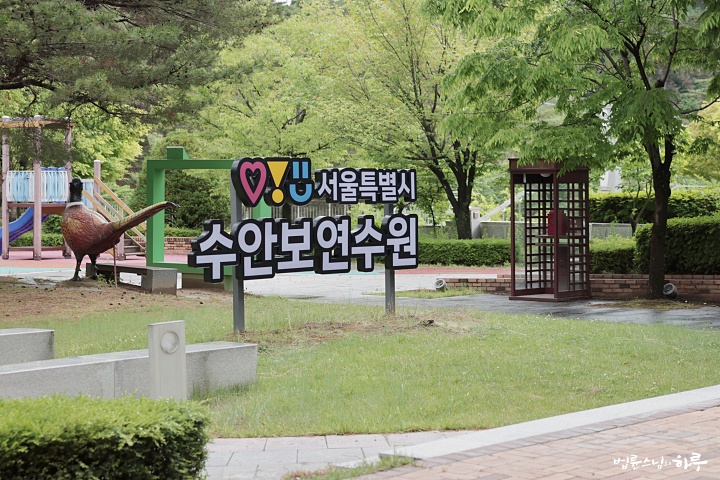
Suanbo is a resort area and hot spring city famous for its natural hot spring waters. At the Seoul City Suanbo Training Center, a training facility for Seoul City public officials, a “Distinguished Speaker Lecture” was held as part of a two-day, one-night training program for about 90 tax officials from Seoul City and its 25 autonomous districts, and Sunim was invited to give the lecture.
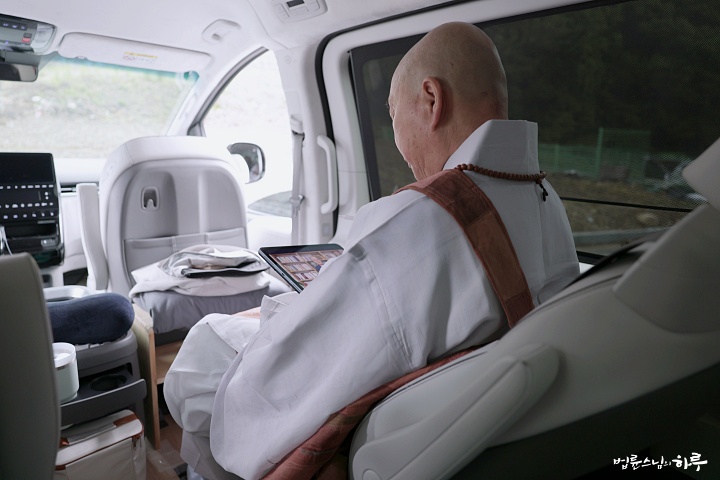
On the way to the lecture venue, Sunim checked on work matters and handled communications in the car, then took a short rest with his eyes closed.

At 3:30 p.m., Sunim arrived at the Seoul City Suanbo Training Center. Before the lecture, he had a tea time with the staff.
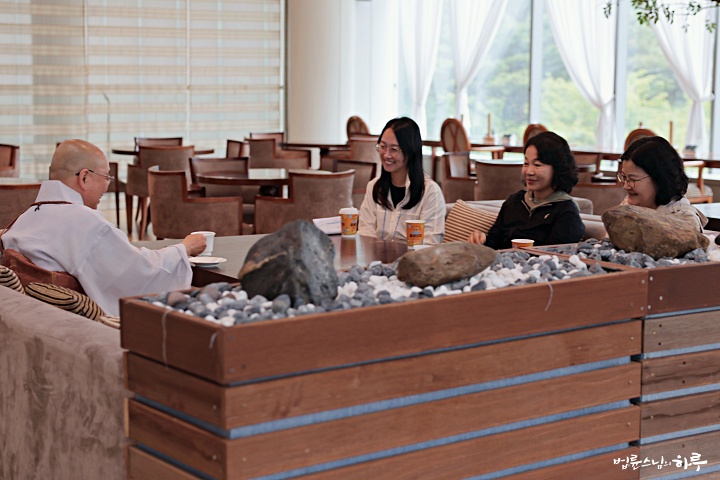
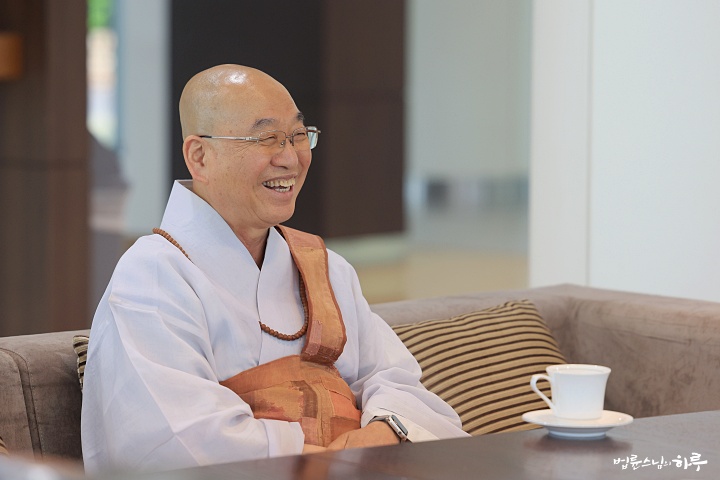
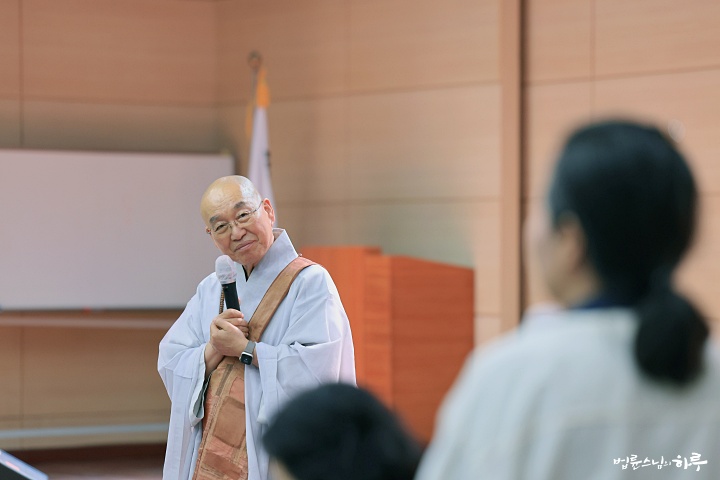
When it was time for the lecture, Sunim entered the venue and the Dharma Q&A began. As the lecture was scheduled for one hour, he kept his opening remarks brief and went straight into the dialogue.
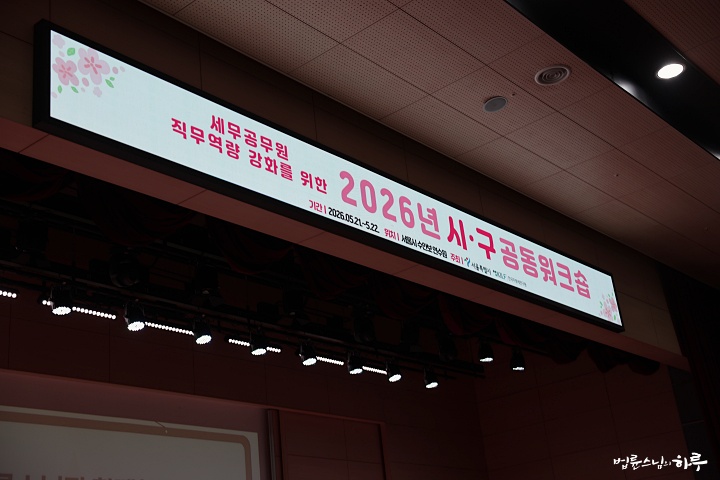
Although the organizers had collected anonymous questions in advance, Sunim made a new proposal.

“Hello. I’m not someone who can tell you ‘live your life this way or that way.’ If you have any questions or thoughts, I’d be happy to have a conversation with you, but if there are no questions, I’ll end the lecture early.”

“We received questions in advance. They were collected completely anonymously. I will read them out one by one.”

“Dharma Q&A is not done anonymously. Dharma Q&A is about having a conversation while looking at each other’s faces and eyes. It’s not knowledge. Knowledge is about giving answers and telling people what to do, but Dharma Q&A is not knowledge. Whoever wrote a question, please raise your hand and speak.”

There was no response from the audience.

“If there are no questions, I’ll be on my way. I don’t receive a lecture fee, so I can leave right now.” (laughter)

After a moment, the first questioner raised her hand, took the microphone, and asked her question.

“I watched Venerable Pomnyun Sunim’s lecture on the Heart Sutra, and I heard that suffering arises from our own greed, that there is a way out of suffering, and that to achieve this, we need to attain enlightenment. Attaining enlightenment seems very difficult to me. How can I get closer to attaining enlightenment?”
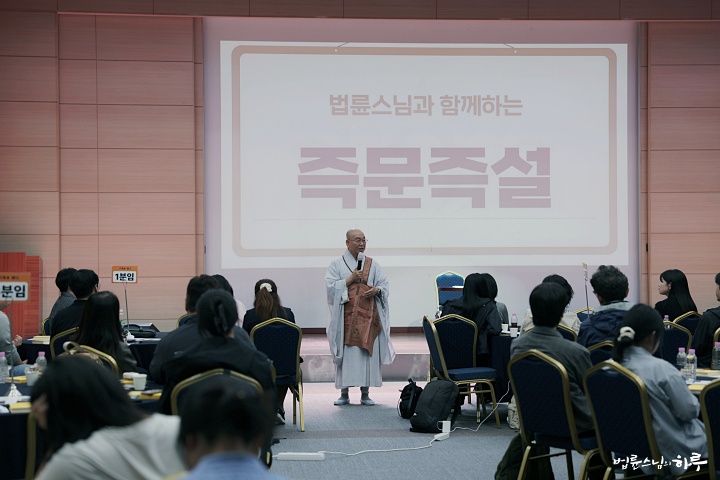
After this, Sunim stepped down from the stage and moved closer to the audience. He invited the participants to share their own stories. A participant sitting in the front row raised her hand and asked a question. This post introduces the conversation with a questioner who had spent an hour on the phone with a citizen filing a complaint.

What Perspective Should I Have When I Get Angry at Citizens Filing Complaints?

“Since I work in public service, I often meet with citizens filing complaints. Of course, there are nice people, but there are also some who make things very difficult for the staff.”

“Are there really any nice citizens filing complaints?” (everyone laughs)

“As public servants, we often hear that we are kind to the citizens we serve. But some complaints are really difficult. There was a citizen who did not qualify for a tax exemption, so additional taxes had to be collected. When I called to inform him, he kept saying, ‘The public servants are harassing me.’ He insisted that the penalty wasn’t his fault, but that the officials had deceived him. I stayed on the phone with him for an hour, but as he kept repeating the same things, I finally couldn’t take it anymore and shouted at him. After hanging up, I felt momentarily relieved. But at the same time, I wondered, ‘Is it okay for a public servant to get angry like this?’ What should I do in such situations?”
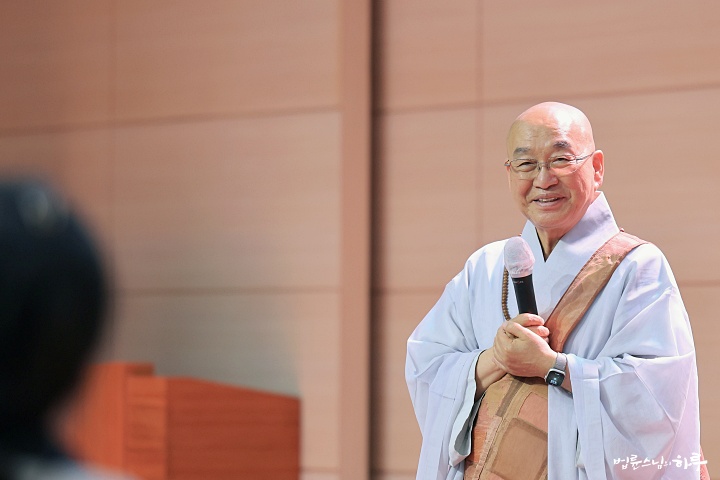
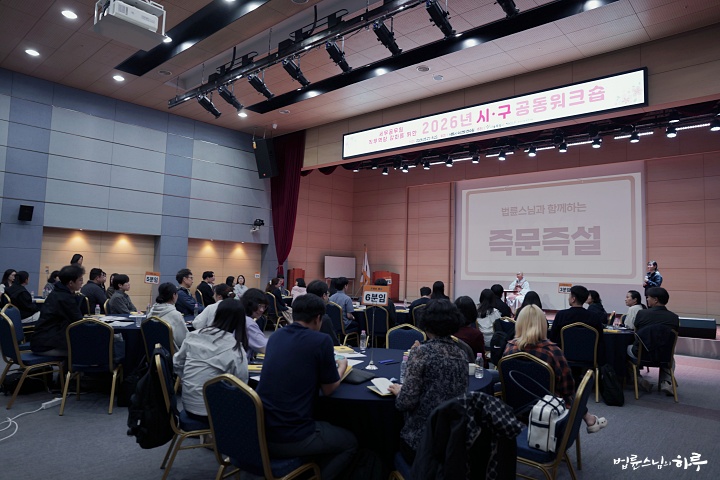
“It’s best for public servants not to get angry whenever possible. First, you need to understand the nature of complaints themselves. Why do people file complaints? If their issues had been resolved smoothly, they wouldn’t bother calling or visiting government offices. They come because their problems haven’t been resolved. So you should assume that citizens filing complaints are basically already angry. You need to understand that first. You mentioned earlier that ‘there are nice citizens too,’ but actually, there are hardly any. People usually file complaints as a last resort, after several attempts at finding a solution have failed. That’s why a separate complaints department was created in the first place. So complaints inherently come with emotions attached. Rather than reacting with ‘Why is this person so angry?’ when a citizen gets upset, you can simply understand, ‘This person is frustrated and angry right now.’ After that, it’s simple. If their case meets the regulations, resolve it. If it doesn’t, explain, ‘I’m sorry, but it’s difficult according to the regulations.’ And if they keep repeating the same thing even after your explanation, then you can wrap it up by saying, ‘I’m sorry. I have other work to attend to, so I’ll have to end the call now.’ There’s no need to keep getting dragged along.

“Even when a complainant comes in and gets angry, civil servants should not respond emotionally. Whether it turns into a fistfight or a scuffle, even if the other person grabbed your collar first, if a civil servant responds in kind and it escalates into an incident, the civil servant usually ends up at a disadvantage. That’s generally how the current system works. Relationships between men and women have a similar aspect. For example, if a man and a woman are alone in a space and the woman comes out saying ‘I was sexually harassed,’ whose words would society tend to listen to first? Generally, more weight tends to be given to the woman’s words. This isn’t to say that men and women are being discriminated against, but rather that society as a whole is likely to respond in that direction by default. Likewise, when a problem arises between a civil servant and a complainant, the civil servant’s responsibility tends to be brought up first. So if you were the one who lost your temper and got angry first, there’s a possibility that the other person could later escalate the matter by raising complaints in various places.” “These days, there are quite a few people in our society suffering from severe psychological anxiety. This tendency is especially pronounced among the younger generation, and going forward, the number of children experiencing such psychological difficulties is likely to keep increasing. Particularly when you look at children entering elementary school, cases of emotional instability or needing careful attention are far more common than before. Yet the current school system is still stuck in the old way of doing things. Teachers simply lecture children in a one-way manner. Children who are psychologically unstable or need help find it difficult to adapt through the existing methods alone. So going forward, roles within schools need to be more specialized. In addition to teachers in charge of educating students, we also need people whose role is to professionally support children with serious psychological anxiety or to handle parent counseling.”

“In the past, schools were largely run with teachers at the center. Parents didn’t have as much influence as they do now. But things are different today. Especially in places that deal with young children, such as preschools and elementary schools, the influence of parents has become almost absolute. These days, many families have only one child, so all their expectations and attention are focused on that single child. Naturally, attachment and anxiety grow along with that. On top of that, parents’ social status and influence have become far greater than in the past. We’re no longer in an era where simply teaching children well is enough. How teachers communicate and engage with parents has also become an important part of their role.” “The same applies to how public servants handle complaints. If the other person is overly sensitive or repeatedly raises issues, you need to respond with the understanding that ‘this person is in a psychologically unstable state right now.’ What’s important in those moments is not to try to convince them by saying, ‘We’ve done nothing wrong.’ Even if you explain, ‘Public servants are not here to harass you,’ it doesn’t carry much meaning for the other person. They’re already emotionally worked up. Just accept what they say with responses like, ‘Yes, I see. I understand what you’re saying,’ and wrap up the conversation at an appropriate point. If they keep going, you can protect yourself by saying something like, ‘I’m sorry, but I’m currently working,’ or ‘Let’s talk again next time,’ and move on. That’s actually the way to protect yourself.”

“There’s no need to get angry along with them. But there’s also no reason to be stuck on the phone for an hour. You can simply say, ‘Yes, I understand. However, I have some other matters to attend to,’ and end the call. It’s the same if they call again. Just respond calmly each time, as if you’re hearing it for the first time. However, you shouldn’t have the attitude of, ‘This person is annoying, so I won’t even help with what I could help with.’ Do what’s possible within the regulations, but firmly maintain that what’s against the regulations cannot be done. Even if the other person becomes threatening, it’s best to respond calmly with, ‘I wish that were possible too, but it’s difficult under the regulations.’ However, when the other person presses you with, ‘Then where am I supposed to go to resolve this?’ it’s not a good idea to just pass them off to a superior. If you do that, the superior may send them back, asking why they were sent over. In those cases, it’s better to respond with something like, ‘I’m not sure about that part,’ or ‘Under the current regulations, this is beyond my authority.'”

“I knew about this complainant to some extent, but when I actually receive such a call, I do get angry.”

“That’s why practice is necessary. Spiritual practice is exactly about training for situations like this. Even if you know in your head that ‘I should respond this way’ or ‘I shouldn’t get emotionally shaken,’ it’s hard to actually do it in reality. So whenever such calls come in, think of it as practice. When anger arises this time, tell yourself, ‘Next time I’ll try to be a little calmer,’ and work on it one step at a time. Later, you can even try answering complaint calls for your colleagues, saying, ‘Let me try this one,’ and build up your experience. After repeating it about ten times, you’ll gradually get used to it. Then, whether the other person gets angry or not, you won’t be shaken so much. Whether the complainant gets angry or says something harsh isn’t really what matters. You can keep the conversation going perfectly well while saying, ‘Yes, I understand.’ So in some ways, receiving many complaint calls isn’t necessarily a bad thing. It all becomes practice. Try shifting your perspective a bit. If you think, ‘Why are there so many calls?’ you’ll suffer, but if you think, ‘I need about three calls today for practice, but only one came in?’ your state of mind changes. In the end, what matters is the perspective you take.”
In addition, the following questions were asked:

I am a public servant with 10 years of experience. Communication is not easy. Since I am in a middle-management position, I need to take good care of those above me and look after those below me. I would like to know how to do this well.
At home, my wife and children stay up late. I worry it’s bad for their health, so I bring it up. But when I do, it feels like nagging to them and they don’t like it. Still, thinking about my family’s health, I can’t just stay silent. What should I do?
I have been thinking about the concept of “emptiness (空)” that Sunim mentioned at the beginning of the talk. Does the concept of emptiness mean that this is okay, and that is okay too? How should I live my life, and how should I give meaning to my life?

How to Embrace My Life

The lecture was scheduled to last one hour, but the conversation extended well beyond that. Sunim concluded the talk with the following closing remarks:
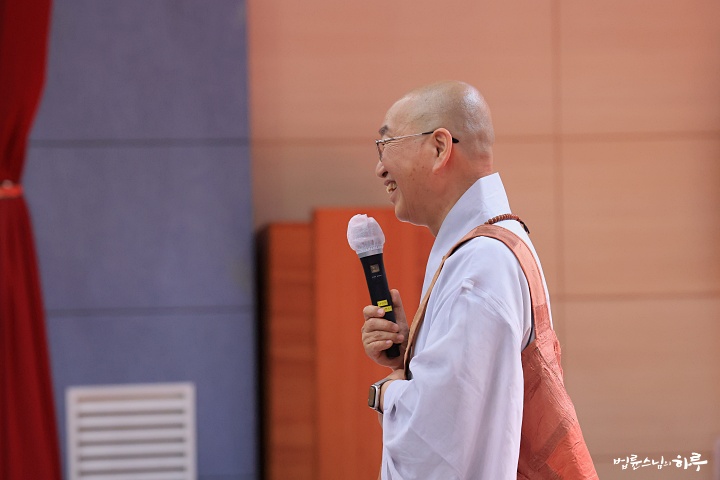
“Your work life should be enjoyable. We spend one-third of our daily lives at work. If you look at life after the age of twenty, one-third is spent sleeping, another third at work, and the remaining third on everything else. If you spend one-third of your life suffering or feeling miserable, can you really say your life is happy? So whoever you are, since you are going to live anyway, you need to find enjoyment in what you do. You have to keep giving yourself positive suggestions: ‘This is fun. There’s no problem.’ Like that. You are part of the in-between generation. You have to support the older generation, while the younger generation doesn’t really understand the concept of seniors and juniors. Instead of thinking, ‘I’m the only one losing out,’ try thinking, ‘I get to experience both sides.’ Under the older generation, you can play the role of the youngest, and in front of the younger generation, who don’t distinguish between seniors and juniors, you can also play the role of the older generation. If you think this way, it’s a good thing. Is it better to experience just one thing, or both? It’s better to experience both. Suppose you got married and then divorced. Of course, it would be better not to divorce, but if it happened, why view it only negatively? I have lived alone my whole life. But if you have experienced both married life and living alone, you have experienced both, which can be seen as a blessing. And if you want, you can marry again. In the past, remarriage wasn’t easy, but now it’s possible. So there’s no need to blame your past life or think you’re being punished by God for such matters. If you were together for five years and then parted, it means you were happy for those five years. Then you can say, ‘It was a joyful time. Goodbye,’ and bid farewell. You need to be able to accept your past time positively. What if I had been a monk for 10 years and then left the temple? By worldly standards, it might look like I hadn’t earned money or gotten a proper education. But thinking only that way is a loss for yourself. You can think positively: ‘I got to practice for 10 whole years.’ This is different in nature from arrogance. It’s an affirmation of your own existence. When parents raise their children, they raise them like princes and princesses. Yet, would it be right for a child who was raised so preciously to live tormenting themselves? Even for your parents’ sake, you shouldn’t live like that. Whatever situation you are in now, I’m telling you that it’s better to live brightly and positively.”

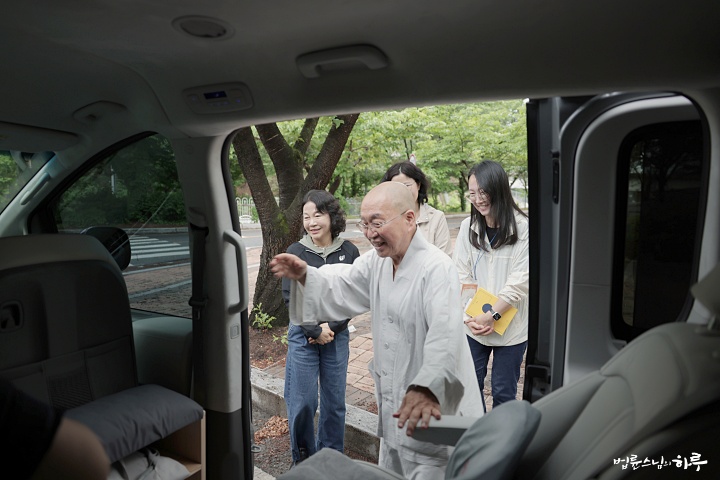
After the talk, Sunim got into the car and headed to Dubuk Jungto Retreat Center.

“If people would just change their thinking a little, they could live with such ease….”

Sunim said quietly.

Rain fell along the way from Suanbo in Chungju to Dubuk Jungto Retreat Center.
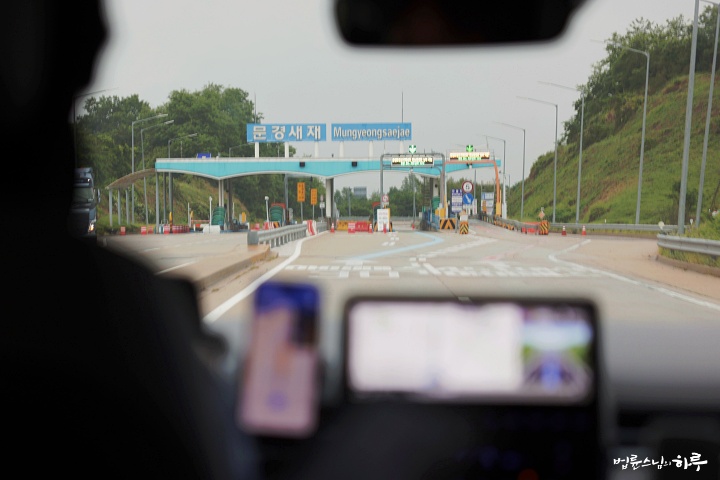
After driving for 2 hours and 20 minutes, Sunim arrived at Dubuk Jungto Retreat Center at 7:30 p.m.

Sunim had a late dinner, took care of work-related communications, and wrapped up the day.

Tomorrow morning, Sunim will visit Aegwangwon in the Hadong-gun area of Gyeongsangnam-do, and in the evening, a “Happy Conversation” Dharma Q&A talk is scheduled at the main auditorium of Chonnam National University.