I Wanted a Natural Birth, but Ended Up Having a C-Section, and I’m Angry.
May 14, 2026 – Washington D.C. Meetings, Day 3
Hello. Today marks the third day of Sunim’s visit to Washington, D.C., where he met with various figures at a Senator’s office, the State Department, the Brookings Institution, and the Church of the Holy City.
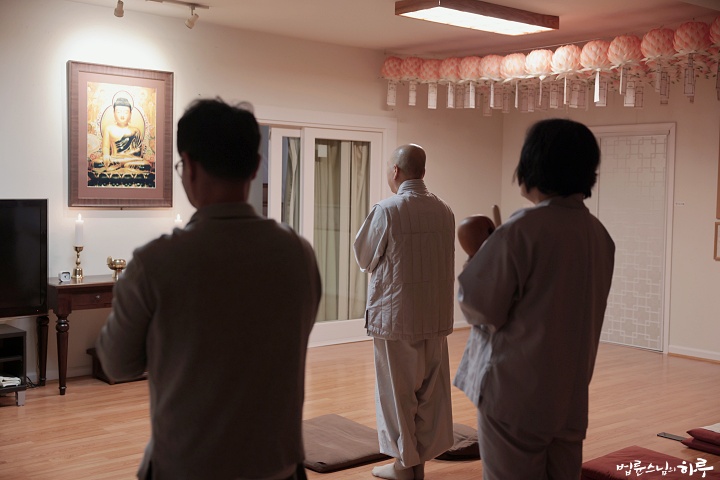
At 5 a.m., Sunim conducted morning service at the Dharma hall of the Washington DC Jungto Center, beginning the day with early practice and meditation. After an early breakfast around 6:30 a.m., he prepared to go out for today’s meetings.

At 7:40 a.m., Sunim departed the Washington DC Jungto Center and headed into downtown Washington, D.C. After a one-hour drive, he arrived at the Hart Senate Office Building, the location of his first appointment.
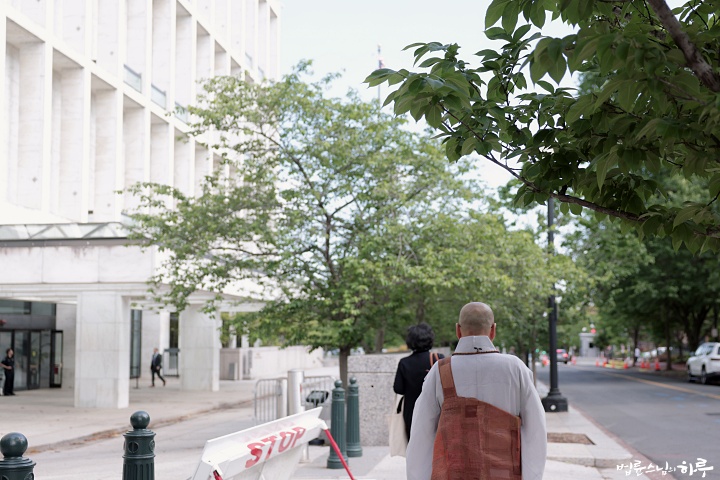
After passing through security screening, Sunim entered the building and at 9 a.m. visited the office of Senator Chris Van Hollen of Maryland, a member of the Senate Foreign Relations Committee.
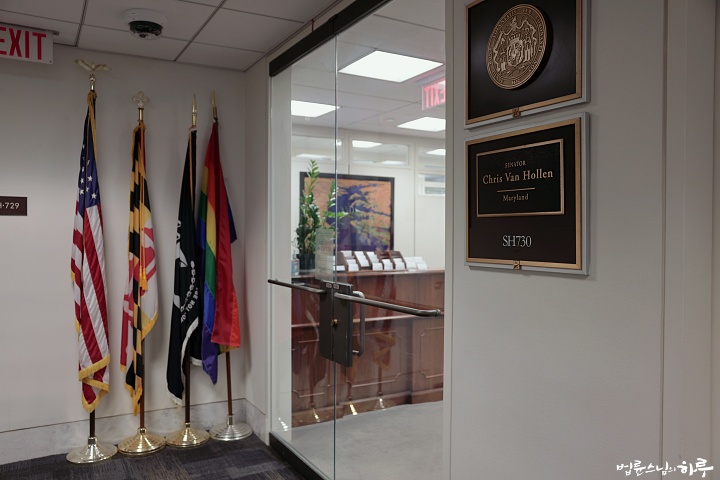
Dustin DeGrande, the foreign policy advisor specializing in security and international relations, welcomed Sunim. Senator Van Hollen was unable to attend in person due to his busy schedule, but DeGrande assured Sunim that he would listen carefully and convey the message. He expressed his gratitude for the visit during this important time when the U.S.-China summit was taking place. Sunim then explained the reasons and purpose of his visit to Washington, D.C., where he was meeting with various officials.
“I came here to inform the Senator about the actual situation in North Korea, with the aim of normalizing relations between North Korea and the United States. The economic sanctions on North Korea were intended to prevent the development of weapons of mass destruction. However, North Korea has already developed nuclear weapons, formed a military alliance with Russia, and is rapidly advancing its conventional military technology. In effect, the U.S.-intended sanctions to restrict the development of weapons of mass destruction have shown almost no real results. Instead, the suffering caused by sanctions falls entirely on the North Korean people. With exports of North Korean goods banned and overseas employment blocked, the people have lost all sources of foreign currency income. As a result, the lives of North Korean people are extremely difficult. They depend on imports for daily necessities, but with no source of foreign income, procuring goods has become difficult, leaving people in dire poverty. Between January and May of this year, the exchange rate plunged by half, and prices more than doubled. North Korea is willing to engage in dialogue with the United States. However, under the current U.S. State Department system, there are no dedicated personnel assigned to North Korean affairs, making it very difficult to find channels for mutual engagement. For the sake of the North Korean people, the resumption of imports and exports of daily necessities, the permission to export mineral resources, and the import of automobile fuel—matters related to the daily lives of the people—require the lifting of sanctions.”DeGrande, a security expert, listened attentively, taking notes as Sunim spoke. Amid the stalemate in U.S.-North Korea relations, a confirmation hearing is scheduled next week for Michelle Park Steel, who was nominated in April 2026 as U.S. Ambassador to South Korea under the second Trump administration. The advisor said he welcomed any ideas that could create new opportunities in this situation and added a few questions necessary for the hearing preparation.
Sunim once again emphasized to DeGrande that the sanctions on North Korea have no substantial effect and only cause suffering to the 25 million North Korean people. He also stressed the importance of making dialogue proposals in a way that allows the other side to feel sincerity as the U.S. works to open channels of dialogue with North Korea.
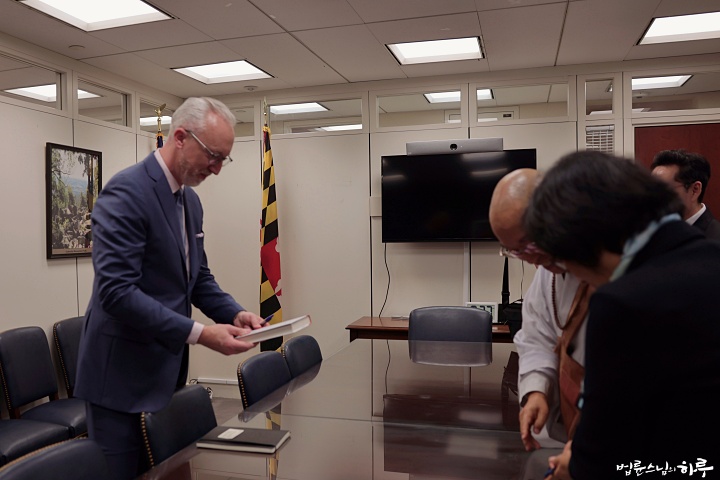
After the meeting, Sunim presented a signed copy of the English edition of “Happiness” as a gift. Then, promising continued exchanges in the future, he headed to the State Department.
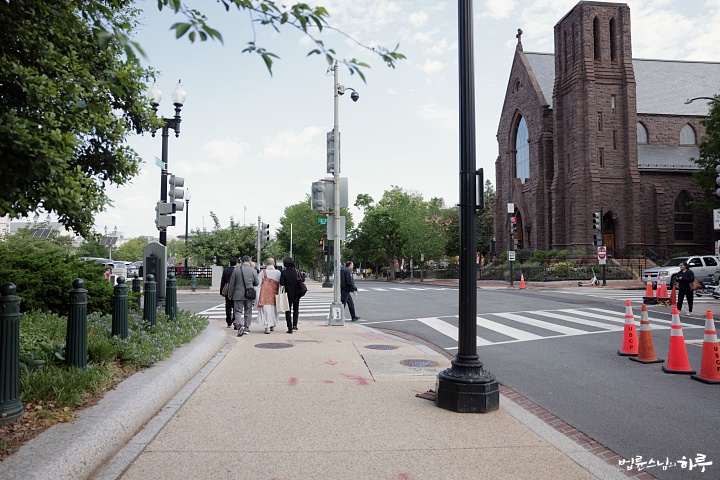
As Sunim stepped out of the building, a strong wind was blowing. After driving to the State Department and parking nearby, Sunim walked the rest of the way.
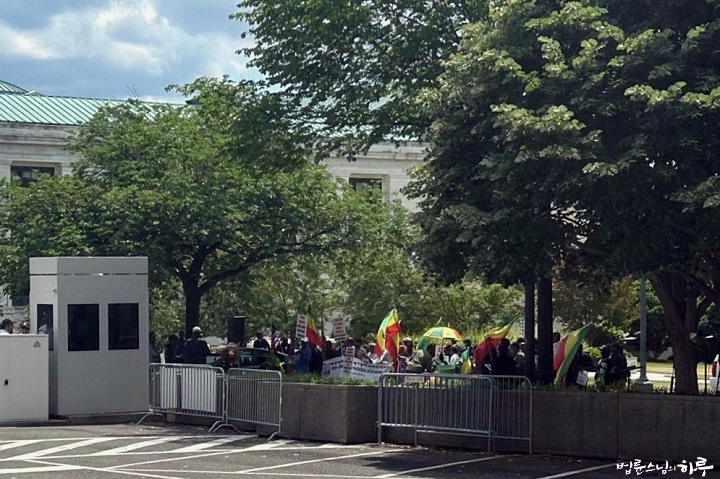
In front of the State Department building, protests were taking place by people expressing grievances against labor and immigration policies, conveying anti-war messages, and opposing the current administration’s domestic and foreign policies.
The meetings with State Department officials were not easy to arrange. Although a meeting was initially requested with James P. DeSombre, Assistant Secretary for East Asian and Pacific Affairs, scheduling was difficult due to the U.S.-China summit, and most senior officials were on business trips in China. In the end, Sunim met with Bridget Lines, Acting Director for East Asian and Pacific Affairs. Lines listened attentively to Sunim’s remarks and said she would convey his proposals to her superiors. They also discussed humanitarian assistance. Sunim presented her with the English edition of “Happiness” as a gift.
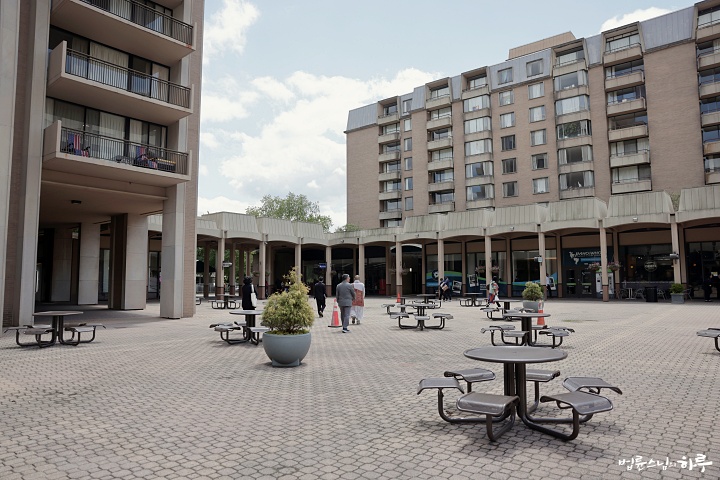
Right after leaving the State Department, Sunim met separately with a long-time acquaintance who works at the State Department. Despite it being a weekday workday, the meeting took place during the lunch break. Sunim explained the purpose of his visit and asked for cooperation.
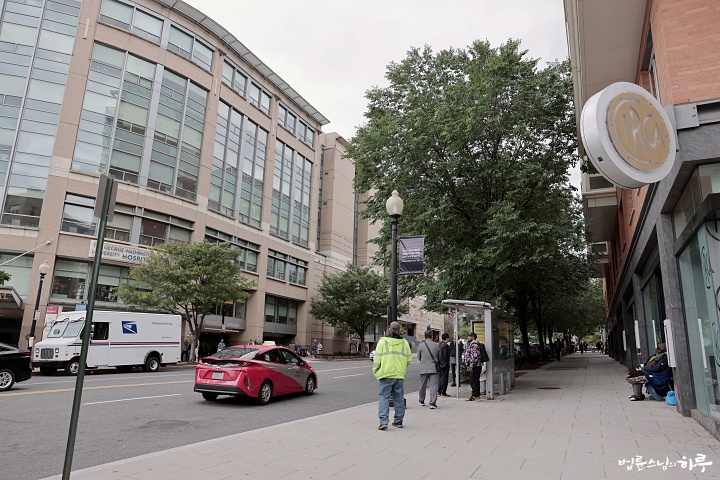
Sunim had lunch at a restaurant near George Washington University for the first time in a while. During the Washington, D.C. schedule, with long travel times and back-to-back meetings, meals had often consisted of just bread and fruit. Today, however, there was some time before the next meeting, allowing for a proper meal.
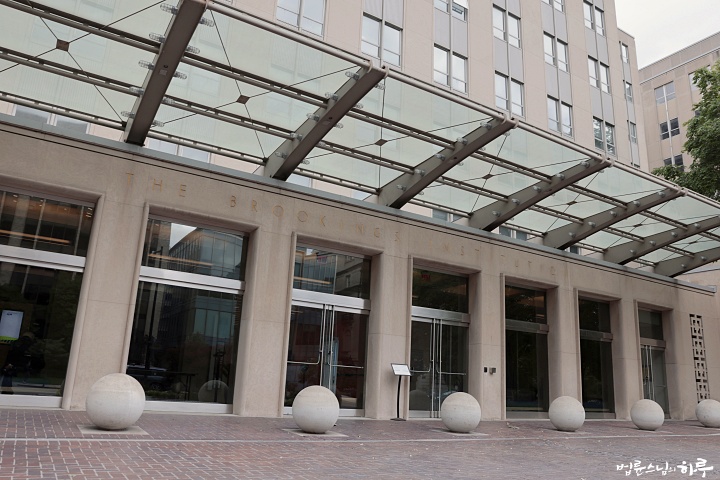
After lunch, Sunim went to the Brookings Institution to meet with Dr. Andrew Yeo, the Korea Chair. Established in 1916, the Brookings Institution has a history spanning more than a century and is a prestigious organization that consistently ranks among the top global think tanks. The visitor management here was very strict, requiring pre-registration verification and on-site photography.
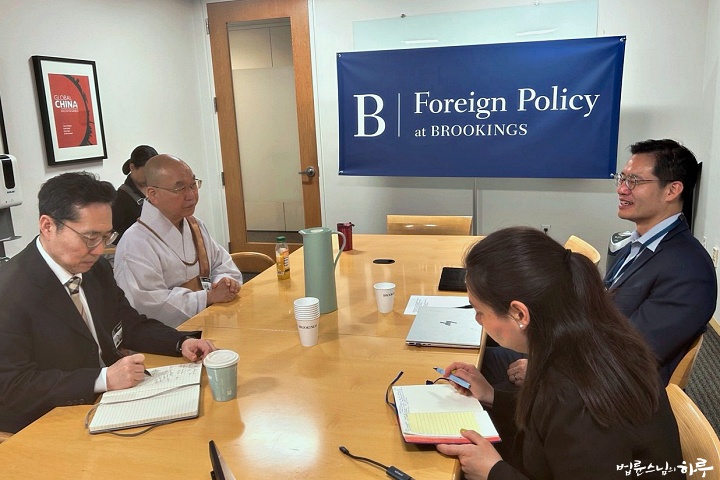
Upon entering the meeting room, Dr. Yeo warmly welcomed Sunim. The two discussed various current issues and coordinated plans for an event in September with researchers from The Peace Foundation. Sunim gifted the English editions of “Happiness” and “Why Am I Anxious?”, took commemorative photos, and arranged for their next meeting.
After the roughly 70-minute meeting, Sunim went straight to the nearby Church of the Holy City, run by Rev. Rich Tafel. Upon arriving at 4:20 p.m., the pastor was on a phone call, so Sunim waited briefly.
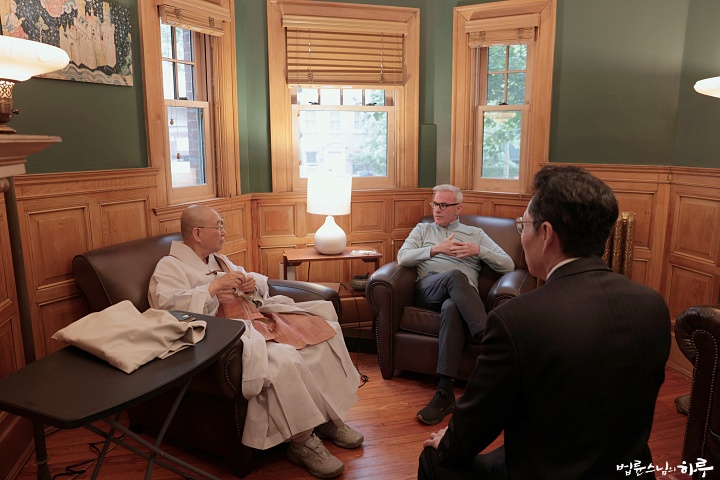
Soon, the pastor appeared and warmly welcomed Sunim, and the two caught up. Sunim spoke about his Washington schedule, while the pastor talked about a retreat program to be held at the White House the next day. This program, which respects diversity, is reportedly the first one to be selected under the Trump administration. The pastor apologized for being late, explaining that the call had run long due to pre-screening issues before the program.
“Shall I tag along to the White House retreat program tomorrow as well? I need to meet President Trump, but I haven’t found a way.”Everyone burst into laughter at Sunim’s joke. During the conversation, documentary filmmaker and civic activist Annabel Park arrived.
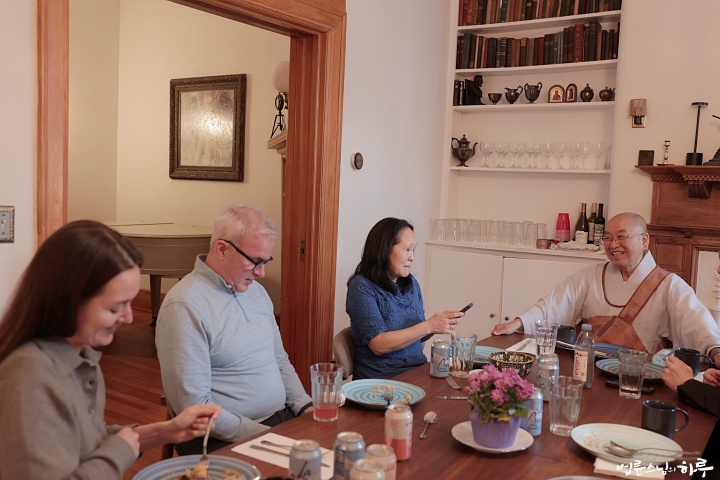
They continued their conversation on various topics while sharing the Thai food the pastor had prepared.
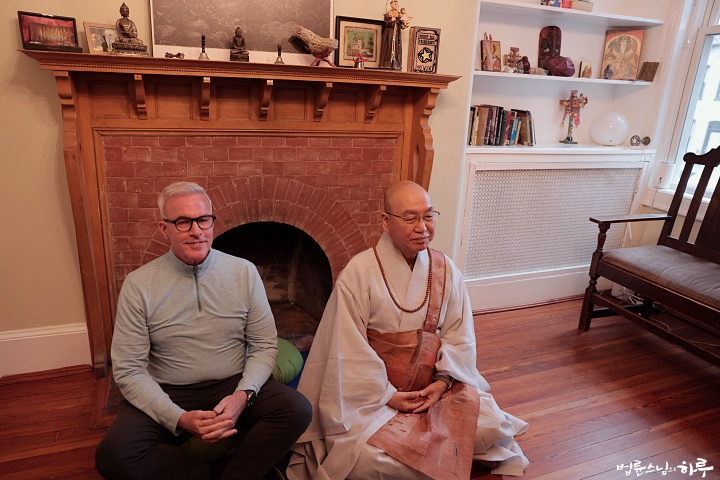
After the meal, Sunim looked around the church, which had been converted from an ordinary house. He toured the seminar room, meditation space, and guest rooms, also appreciating the paintings and decorations hung throughout. As the meeting was wrapping up, Annabel Park presented Sunim with “mushroom honey” as a gift. Sunim gave the pastor the English edition of “Happiness” and Annabel the English edition of “Why Am I Anxious?”. Annabel expressed her gratitude, saying it was exactly the book she needed right now. She also kindly offered the space for use whenever a meeting venue was needed in Washington, D.C. Rev. Tafel mentioned that he had not yet had a chance to visit Korea, and Sunim invited him to be sure to stop by the Jungto Social and Cultural Center if he ever came to Korea, before they parted ways.
Having left the lodging at 7:30 a.m. and completed five meetings, Sunim returned to the Washington DC Jungto Center at 8:30 p.m. After finishing preparations for tomorrow’s meetings, Sunim wrapped up the day.
Tomorrow, Sunim is scheduled to participate in an online Dharma Q&A at 6:30 a.m. local time, and then immediately head out for external meetings. Four more meetings await tomorrow as well.
Since there was no Dharma talk today, this post concludes with a recent online Dharma Q&A.

I Wanted a Natural Birth, but Ended Up Having a C-Section
“Two months ago, I gave birth to my baby by C-section. I had originally wanted a natural birth, but I later found out that the hospital I had been going to primarily performs C-sections. When I tried to switch hospitals, my doctor suggested that he would help me with a natural birth, so I decided to stay. As my due date approached, the hospital told me that natural labor was unlikely to start, and suggested that I first sign a surgery consent form and schedule the procedure, after which I could reconsider natural birth. I was reluctant, but found it hard to refuse the doctor’s recommendation and agreed for the time being. The very next day, however, natural labor began, and I went to the hospital at dawn. The nurse looked at my chart, said the surgery was already scheduled, and said, ‘Natural birth takes too long, so let’s not do it.’ Then they essentially left me alone for several hours while I was in labor, providing no treatment at all. As the contractions grew more severe, I requested an epidural, but they said, ‘Then we’ll move up the surgery,’ and before I knew it, I was moved to the operating room. The doctor only arrived just before the surgery time, and by then my cervix was already dilated to about 5 cm. The baby had descended significantly, and there was even a cephalohematoma, which can occur during natural birth. After this incident, on top of post-surgical complications, I am now suffering from physical pain. They say it may affect future pregnancies as well. When I asked the on-duty doctor why the surgery had been performed, he became angry, saying that he had done it because the nurse told him to, that he saw nothing wrong with it, and that I should handle it myself. Having gone through this incomprehensible experience where my right to choose how to give birth was stripped away in an instant, I deeply regret my choice of hospital. I am now in physical and emotional pain. I don’t know how to manage the sense of betrayal and the unjust anger I feel because of what happened at the hospital.”
“It’s already in the past. And it’s not that you didn’t sign the consent form, nor did the hospital commit an illegal act.”“The surgery date didn’t match the schedule from when I first signed the consent form, so the surgery that day was procedurally problematic. That’s why a new consent form wasn’t separately signed.”
“In that case, the path to resolution is, first, since it’s already in the past, you should not approach it emotionally. Pouring out your resentment won’t solve anything. If the surgery was done improperly, you can treat it as a medical accident, consult with a lawyer, and seek appropriate compensation. If you wanted a natural birth but the doctor or nurse ignored your wishes and forced the surgery, the only way to address that is also legally, by seeking compensation. For something that has already passed, there is no other path besides compensation. Just because someone hit you on the head in the past, you can’t bring up that old incident now and hit them on the head in return. If you had immediately struck back at the time of the incident, it might have qualified as self-defense. But once that moment passes, all that remains is the path of seeking compensation through the law. In our society today, there is no other way, and constantly dwelling on the incident only ends up tormenting yourself. Looking back now, it’s understandable that you feel upset. However, if upon legal review you find that you had already agreed to certain things, and after weighing various circumstances you conclude, ‘I bear some responsibility too, so winning would be difficult,’ then there is no choice but to let go of the past. Continuing to talk about it brings nothing but more suffering to yourself. Even if you heard the doctor or nurse say, ‘I’m so sorry, ma’am,’ what would actually be solved? If there is clear legal liability and you can receive compensation, that is your right and you should pursue it. But if upon review winning seems somewhat difficult and the time and cost would be significant, it may be better to give up cleanly. In life, anyone can make mistakes. Me too, and all of you as well. You can reflect, ‘Ah, I should have made a better judgment at that time.’ This doesn’t mean the doctor did well, but if your own choice also had some influence, you can be more careful next time. However, even if you want a natural birth next time, you may have to have surgery depending on your physical condition. If the first surgery causes problems with future pregnancies, you should look into it again and, if necessary, determine whether it qualifies as a medical accident. In that case, consulting with a medical specialist lawyer would be necessary. When I speak this way, you might think, ‘Why is he only talking about legal matters?’ But for issues like this, there really is no solution other than legal action. Getting angry won’t solve anything, and constantly thinking about the past only leads to self-blame. Hating the other person doesn’t make them suffer; it only makes you suffer. If you lost money investing in stocks, going to confront the bank employee or stockbroker who recommended that stock won’t solve anything, right? You just have to shake it off and think, ‘I need to be more careful next time.’ However, if the other party clearly violated the law and caused the loss, then it is your right to file a lawsuit for damages. Otherwise, our only option is to shake it off and let go.”“I consulted with several lawyers. They told me that a C-section is one method of delivery, so it isn’t problematic in itself. Even if some violation of medical law regarding the consent form were recognized, the compensation would only amount to the cost of hiring a lawyer. My family is advising me against the lawsuit, saying there is no financial benefit and it will only take a long time. But since I’ve had one surgery, they say I’ll have to have a C-section for future deliveries as well. On top of that, the risks are higher, which worries me greatly.”
“If you need surgery next time, you can have it. You gave birth by surgery the first time, so there’s no reason you can’t do it the second time. Natural birth would be good if it’s possible, but if circumstances don’t allow it, then surgery is the only option. Insisting on natural birth when it’s realistically not possible will only cause you mental anguish. Think about what you really gain from this. If you want to hold the doctor accountable even without any benefit, you can sue. If you have the resolve to punitively hold the doctor accountable even at great cost to yourself, then you can do so. However, from the perspective of practice, it’s worth reflecting on whether you really need to go that far just because of your emotions. Of course, in reality, people sometimes choose, ‘Even if I take a loss, I want to send that person to jail.’ If the doctor’s behavior feels truly outrageous, you might choose to raise the issue even at a personal loss. According to the lawyers, even if you win, the compensation isn’t large, and even that isn’t guaranteed. Hospitals have plenty of revenue and resources, so they hire medical specialist lawyers to respond. But the lawyer you hire is not one you paid such a large fee to, right? There’s a possibility they won’t research and respond as thoroughly. Generally, when a lawyer says, ‘You have a winning case,’ they’re usually saying so based only on hearing your side. In the actual trial, the other party’s arguments are added, which can change the outcome. Even if the case goes very favorably for you, if what you gain is roughly equal to the lawyer’s fees, it may be better not to file the lawsuit, as your family suggests. But if you continue to dwell on it with resentment, only you will suffer. You wanted a natural birth but ended up having surgery, and as a result your body is in difficulty. On top of that, thinking that you’ll have to keep having surgery in the future only makes you feel worse. Hating and suffering doesn’t cause any harm to the doctor or the hospital. It only makes things harder for you. If your standard is ‘I will hold them accountable for the sake of social justice,’ then you can file a complaint. From what you’ve shared, there are some elements worth fighting for in the name of justice. However, if the chances of winning are small and there’s little practical benefit even if you win, unless your purpose is social justice, it would be better not to think about it any further. Accept it as, ‘I’m thankful the baby wasn’t harmed,’ ‘I’m thankful that although there are post-surgical complications, they aren’t a major problem,’ and the realistic choice would be to find in advance a hospital that more actively supports natural birth next time. Switching hospitals doesn’t guarantee better results. There are hospitals that actively recommend natural birth, but there are also those that don’t. Inducing natural birth takes a long time and the hospital’s reimbursement is lower, while a C-section is completed in relatively less time and the reimbursement is higher. From the perspective of those working there, they may prefer surgery. You also need to understand this reality to some extent. If you wanted a natural birth from the start, it would have been better to research and choose a hospital suited to that. When you request a natural birth at a hospital that primarily performs surgeries, the medical staff may feel burdened. Of course, it is your right, but in reality, factors like this come into play. If you injure your arm or develop a boil and look for a hospital in Gangnam, Seoul, you might find that there are no suitable hospitals, or that you aren’t well-received even if you go. What happens if such a patient goes to a hospital that primarily handles cosmetic surgery or high-cost procedures? Treating them brings low reimbursement and takes up time. As doctors who treat the sick, such an attitude is not desirable, but we also need to understand this reality to some degree and take it into consideration, even if we sometimes feel they are somewhat unkind. If you visit hospitals in India, there are places with such poor sanitary conditions that you might think you’ll catch a disease rather than have your illness cured. But when you actually go there with a broken leg or a boil, treatment is often completed much more simply and quickly than in Korea. It may look a bit unrefined, but the results are often fine. This is because they handle so many such patients that it’s routine work for them. For us to practice means living while understanding the ways of the world, rather than judging right and wrong by some standard. However, if the other party has clearly violated the law, you can raise the issue for the sake of social justice, even if there is no benefit to you. Clearly defining your own position is what matters most. Even if there is little personal benefit, if it is for the sake of social justice, you can consider filing a lawsuit, even at the cost of time and effort.”“Yes, thank you.”