A Practitioner Should Not Suffer.
May 10, 2026. Dharma Q&A for Multicultural Families, Departure for the U.S Hello. Today, Sunim is scheduled to give a ...
Hello. Today, Sunim is scheduled to give a Dharma Q&A talk for multicultural families and then depart for the United States to visit Washington, D.C.

After completing his early morning practice and meditation, Sunim attended to office work until 10:30 a.m., when a guest arrived for a conversation.
The guest expressed that, in observance of Teachers’ Day, members of the Sangha wished to convey their gratitude to Sunim. Although Teachers’ Day was still a few days away, since Sunim was scheduled to depart for the United States that evening, they requested an earlier opportunity to greet him.
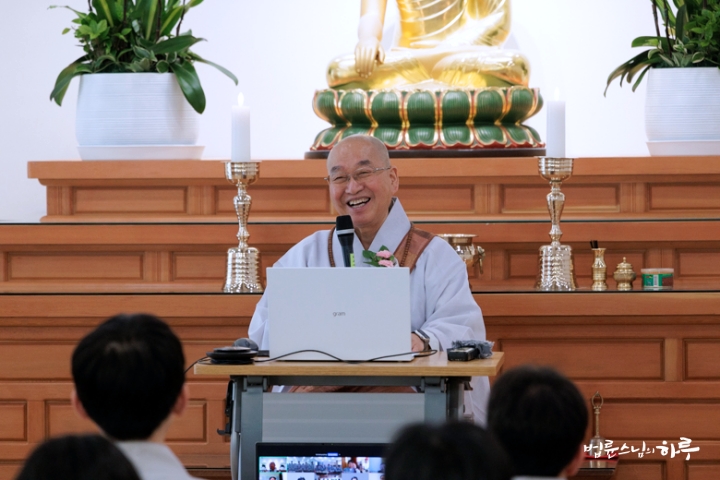
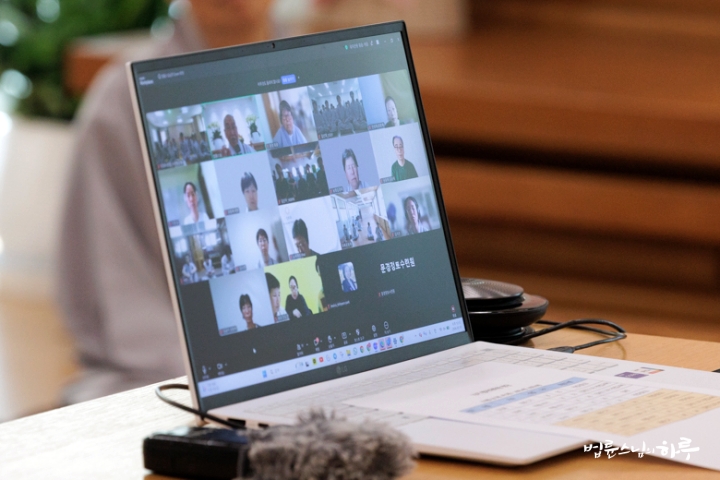
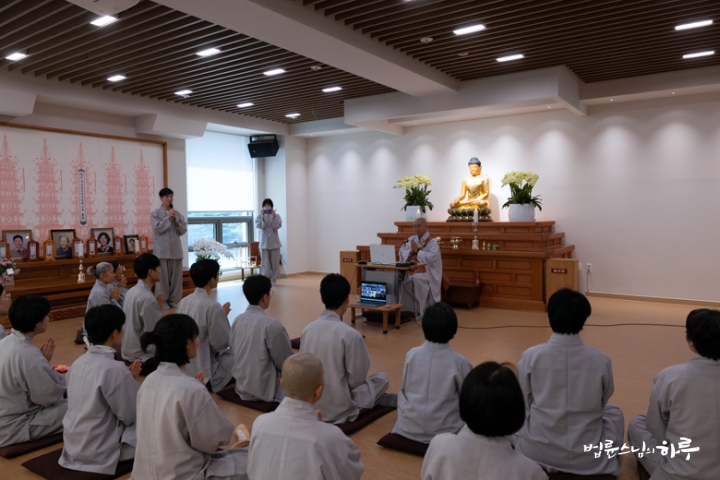
After concluding the meeting with the guest, Sunim made his way to the medium auditorium on the fourth floor of the Jungto Social and Cultural Center at 11:30 a.m. About 60 members of the Sangha were waiting for him there. Members from overseas communities active in Mungyeong, Dubuk, India, the Philippines, and Bhutan joined online.
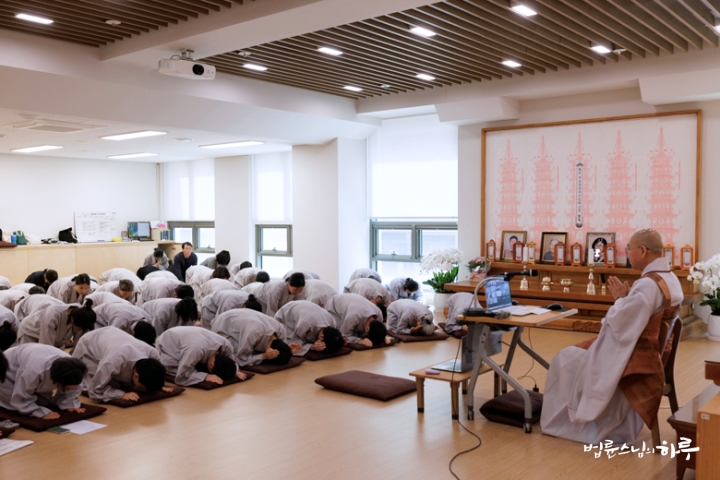
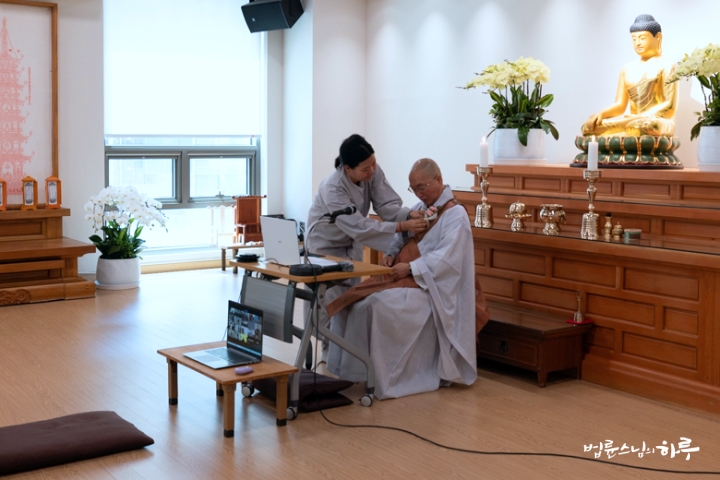
The members of the Sangha offered three bows of gratitude to Sunim, and one member pinned a carnation of appreciation on him. Together, with hearts full of gratitude, the members sang ‘The Teacher’s Grace.’ Following this, the Haengja class leader reported to Sunim about the Haengjawon Opening Ceremony held on May 7 in the Dharma Hall. Ten Haengja entered the 19th class of the three-year Haengjawon program, which aims to ‘cultivate bodhisattvas who will lead the civilization of the future.’ The newly admitted Haengja were then able to greet Sunim.
A performance prepared by the Sangha followed. Members rewrote the lyrics of the song ‘Unconditionally’ to express their gratitude to Sunim.
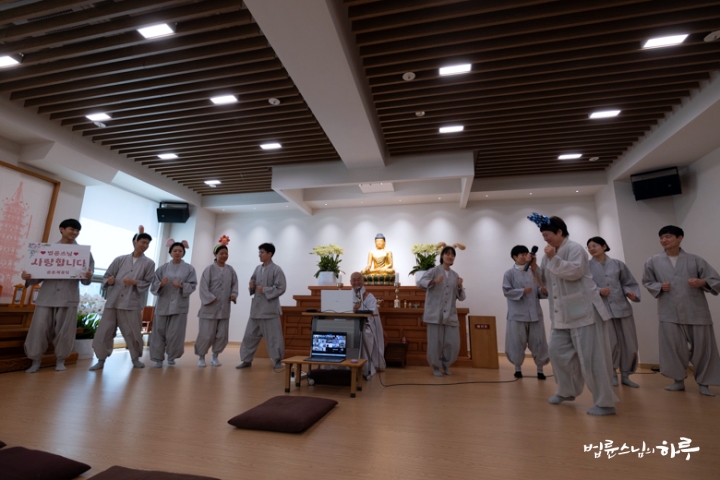
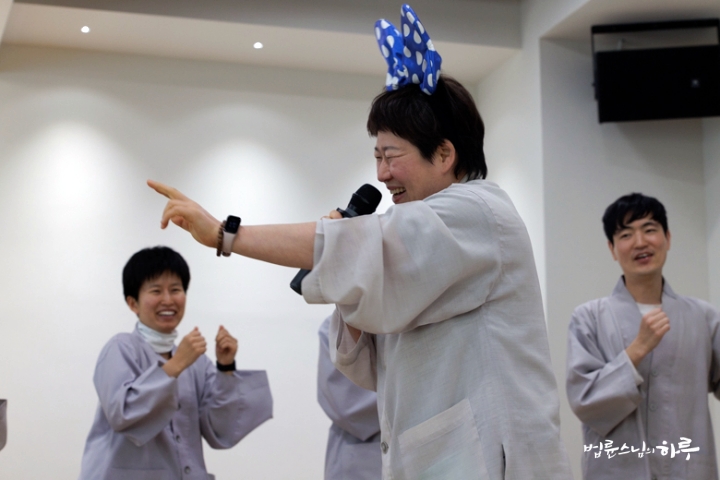
The amusing lyrics and choreography brought hearty laughter from everyone, including Sunim. The performance beautifully reflected the hearts of the Sangha members, ever ready to answer Sunim’s call.
Sunim expressed his thanks for the Teachers’ Day event and then offered a Dharma talk for the newly admitted Haengja of the Haengjawon and the members of the Sangha.
What Is the Definition of a Practitioner?
Jungto practitioners engage in various social activities, work overseas, and do many other things. However, all of these are things done by practitioners. Because we are practitioners, the most important thing is to uphold our duty as practitioners. Everything else is optional—it’s fine to do or not to do. But practice is not an optional matter that we can choose to do or not do. This is because our identity is that of practitioners. When we describe Jungto Society, we don’t call it a faith community but a community of practitioners, which means it is a gathering of those who practice. Then what is the definition of a practitioner? As we go through life, we encounter various difficulties. And those difficulties become suffering. Sometimes we feel anger or irritation, sometimes worry and anxiety, and sometimes sadness or resentment. As these various negative emotions arise, suffering is produced. At such times, we try to escape from that suffering. What matters, however, is where we look for the cause of that suffering. Depending on where we locate the cause, the way to be free from suffering also differs. Generally speaking, if someone insults me and I become angry, we tend to think that the cause of this suffering ‘lies in the other person’s insult.’ Likewise, if I bought stocks and feel distressed because the price has fallen, we think the cause of that suffering ‘lies in the stock price dropping.’ This is the conventional worldly perspective. Then how can we resolve this suffering? The other person must stop insulting me, and the stocks I bought must go up. Only then, we think, can we be free from suffering. But reality does not work that way. The stocks may not rise, and the other person may continue to make our life difficult. So this suffering cannot be resolved through my efforts alone. That is why, in order to escape this suffering, we end up asking someone for help. We ask parents, friends, or people with power. There are many ways of asking—sometimes through personal connections, and sometimes by offering money along with the request. And when we ask, we are always pleading, saying, ‘Please help me.’ This very structure has carried over directly into religion. People try to solve their problems by praying to God—a more powerful being, an omniscient and omnipotent being who knows everything and can do anything.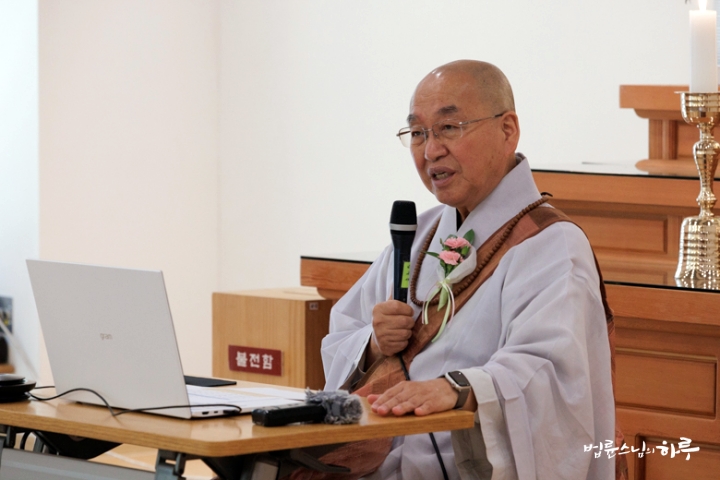
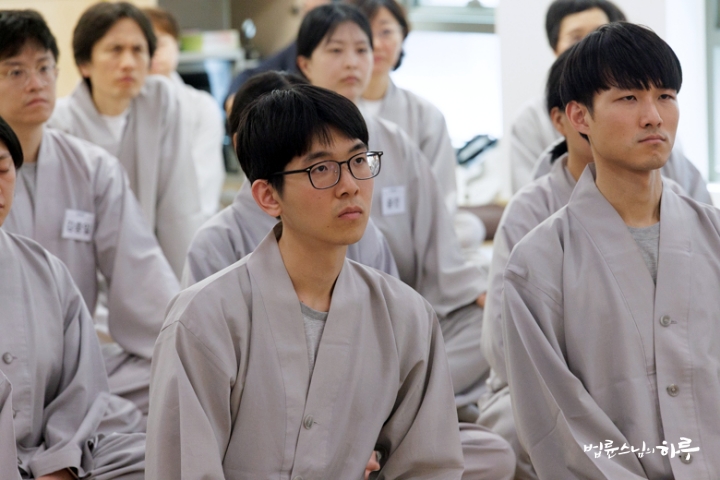
Practice Is Awakening from the Ignorance That Causes Suffering and Reaching a State Free from Suffering
Then what is practice? It begins from recognizing that the cause of suffering is not that someone insulted you, but that your mind was drawn to those words and reacted to them. When someone says, ‘Hey, you fool,’ you feel bad because you perceive those words as an insult and react to them negatively. Stocks can go up or down, but suffering arises because you cling to the idea that ‘they must go up.’ Rain may come or it may not, but if you cling to the thought that ‘it must rain,’ you suffer when it doesn’t. If you cling to the idea that ‘it shouldn’t rain because I’m going on a picnic,’ you suffer when it does rain. The problem is not outside of you, but entirely within your own mind. In other words, it lies in your ignorance or attachment. Then how can you free yourself from suffering? You simply need to recognize that you are clinging and let go of that attachment. In other words, you need to awaken from your ignorance. You just need to see things as they truly are. Maintaining this perspective so that you remain free from suffering—this is what we call practice. Becoming happy because what you want has been fulfilled is religion, while reaching a state where suffering has disappeared by awakening from your own ignorance is what we call practice. If you have resolved to stand on this perspective, you must always uphold it. When someone says, ‘I’m suffering because of this, I’m having a hard time because of that,’ I understand completely. When someone says, ‘I’m suffering because my stocks fell,’ or ‘I’m suffering because I broke up with my partner,’ I can fully understand why they would feel that way. That’s why I don’t ask them why. I simply accept their feelings and say, ‘Ah, that must be hard.’ But if the person is a practitioner, then I ask, ‘Why are you suffering?’ Whether one has shaved their head or not, the outward form is not what matters. If someone says they’re having a hard time because of this or that, then they are just an ordinary worldly person. In that case, even Sunim simply listens as one would to anyone in the world and responds with, ‘Yes, that must be hard,’ and lets it go. However, if the person is a practitioner, then from a practitioner’s perspective, I ask back, ‘Why is that suffering?’ But you must not throw this question at just anyone—doing so could cause serious harm. For example, if someone has been sexually assaulted, you should offer worldly comfort and say, ‘Oh, how difficult that must be.’ From a practitioner’s perspective, the right response would be, ‘I see. But why are you suffering?’ But in reality, it’s difficult to do that. Doing so could create problems. What matters is escaping from the trauma. Being sexually assaulted and punishing the perpetrator does not make your suffering disappear. The perpetrator being punished and you being freed from your suffering are separate matters. You must free yourself from that pain. What already happened is unjust enough—why should you continue to live under its influence? You must awaken to this fact and become free from it. And if there is a possibility that the perpetrator may cause further harm, then you should report them. But that is not for the purpose of resolving your own suffering—it is for the sake of social justice, to protect more people. This point must be made clear.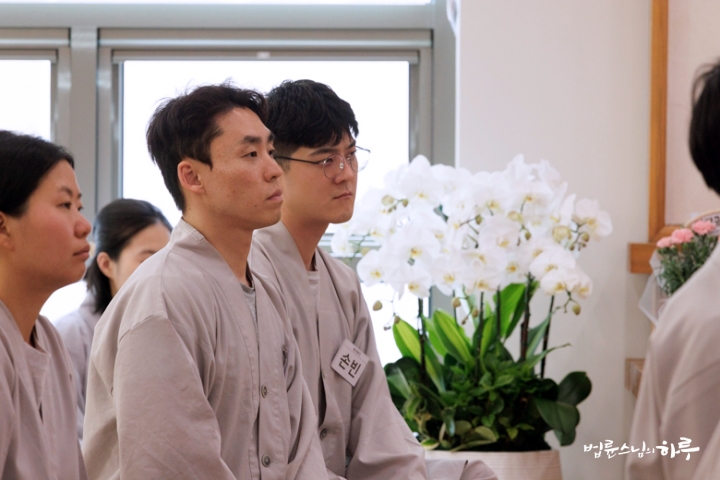
A Practitioner Should Not Suffer
When you decide to become a practitioner, it means you are no longer seeking consolation. Wanting to be consoled is like saying, ‘Please regard me as an ordinary sentient being and take good care of me.’ That kind of comfort can certainly be offered. If you say you are having a hard time, someone might tell you to go buy something delicious to eat, or pat you on the back and say, ‘Oh, it must be tough.’ You would be so grateful that tears might come to your eyes. But that is simply being free from suffering thanks to your surroundings; it is not being free from suffering because you have awakened. A practitioner should not suffer on their own. Whether things go well or not, you should not suffer. For a practitioner, whether things work out or not is not such a big issue. You must reach a state where you do not suffer when things go well, and you do not suffer when they do not. That does not mean it is fine if things do not work out, so you do not have to make an effort. It means doing your best without being overly attached to the results. You became a Haengja in order to gain that kind of strength. Whether a Haengja here is working to help North Korea, going to India to volunteer, cleaning, doing laundry, or doing any other task, you must recognize the mind of an ordinary being that says, ‘I am having a hard time because of this, I am having a hard time because of that,’ and turn back to the perspective of practice. The key is whether you can become free from that. At first, you may succeed only once out of ten times. Then it may grow to twice, then three times, until eventually you only occasionally slip. This is how you must progress. This is the most important thing. Only then, on that foundation, can you do anything. You can work, strike the moktak, do prostrations, or meditate. You can also help others. If you live keeping this perspective of practice at your center, then whatever you do becomes the work of a practitioner. If you lose this, you simply live as an ordinary person in the world. If, as an ordinary person, you work hard to help others, people will say, ‘That person is doing such good work.’ That is a good deed. Of course, it is a good thing. But for a practitioner, how others evaluate you is not very important. It is better to hear good things, but there is no need to cling to that.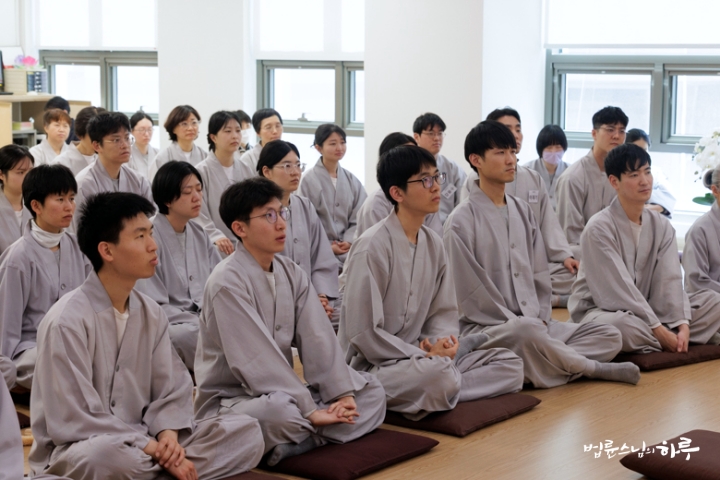
.
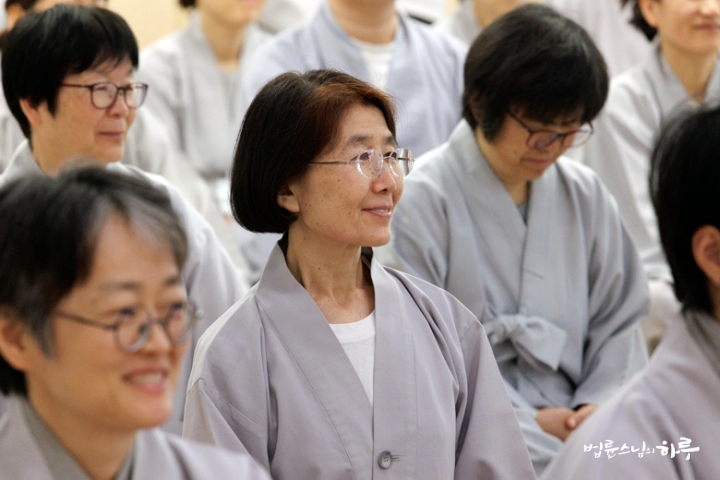
This applies not only to the ten people who entered today. It applies to every practitioner here. Otherwise, you’ll just end up living as if rubbing dirt into the floorboards. No matter how often you say, ‘I’m a practitioner, I’m a practitioner,’ those words are just passing words like the sound of chanting, and in actual life, you don’t hold a practitioner’s perspective. So you must take that perspective as your measuring stick and constantly examine and check your own mind by that standard. Even if you fail a hundred times, examining and not examining at all are completely different. If you examine, you are a practitioner; if you don’t examine, you are not a practitioner. Whether you succeed or not is not the important issue. If you try but it doesn’t work well, that can’t be helped. Still, it begins with trying once.”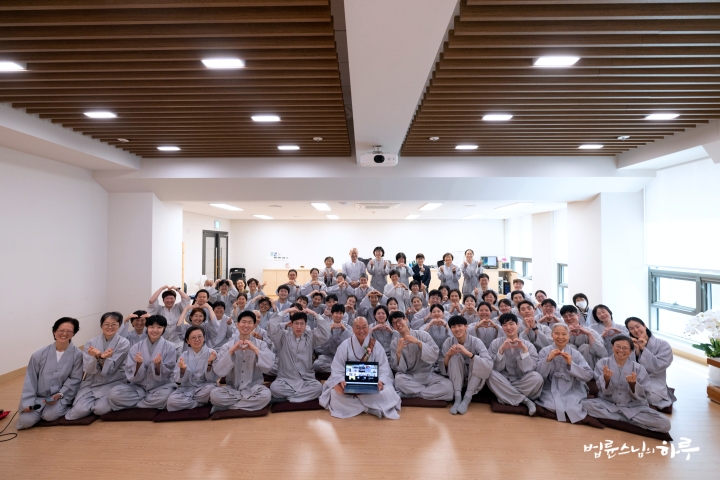
After Sunim’s Dharma talk, the members of the Sangha gathered for a commemorative photo. Together, they formed finger hearts and called out:
“Sunim, we love you!”
After the simple Teachers’ Day celebration concluded, it was lunchtime. At 12:20 PM, Sunim moved to the dining hall for his midday meal. He then proceeded directly to the basement auditorium for a Dharma Q&A session with members of the multicultural community.
Today is the outing day for the JTS Multicultural Center. Myanmar nationals living in the Siheung, Ansan, and Ilsan areas visited the Jungto Social and Cultural Center to participate in today’s event. Around 10 AM, they visited the Seoul Arts Center, one of Korea’s representative cultural venues, and enjoyed time with their families. After the outing, they returned to the Jungto Social and Cultural Center for lunch, which included gimbap, salad, french fries, and soup. Many volunteers had prepared the event and meals for today’s gathering. The final program of today’s outing was a Dharma Q&A session with Sunim.
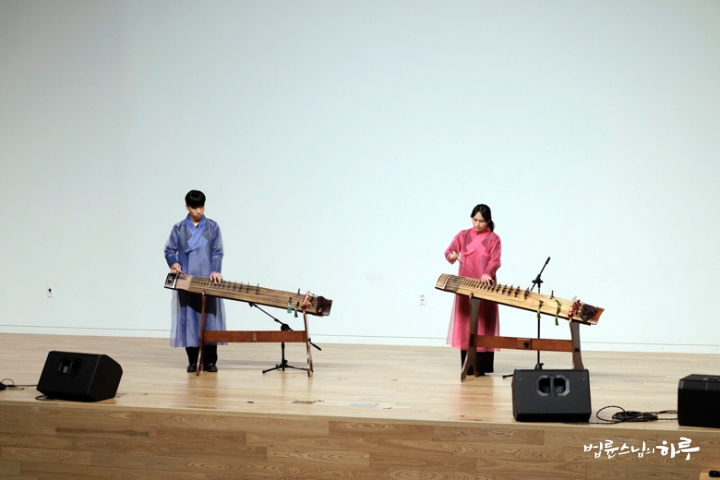
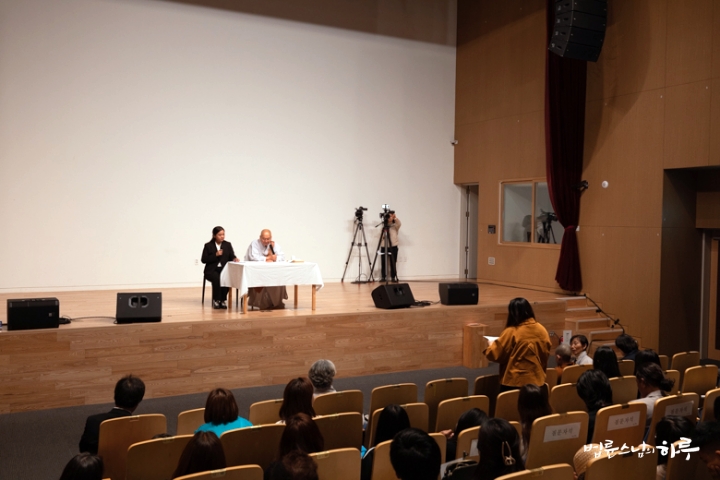
About 70 Myanmar nationals took their seats in the basement auditorium of the Jungto Social and Cultural Center. Before the conversation with Sunim began, the creative music group ‘Geomungo Jari’ gave a geomungo performance. The musicians played ‘Fly Me to the Moon’ and ‘Arirang Suite,’ blending the deep melodies of the traditional Korean instrument geomungo with modern beats. The warm tones of the geomungo seemed to welcome the multicultural guests.
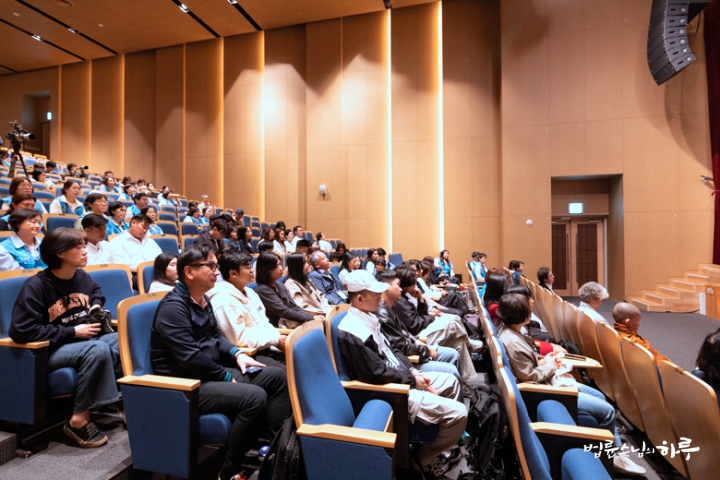
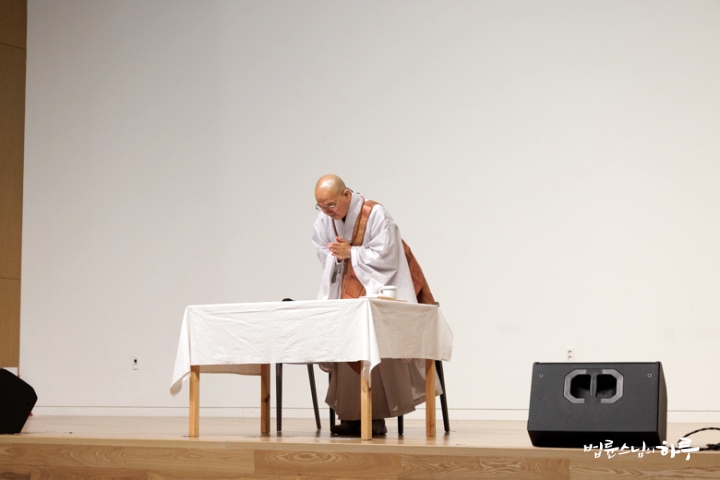
After watching an introductory video about Sunim, he walked onto the stage to applause. Sunim greeted the audience and began the conversation.
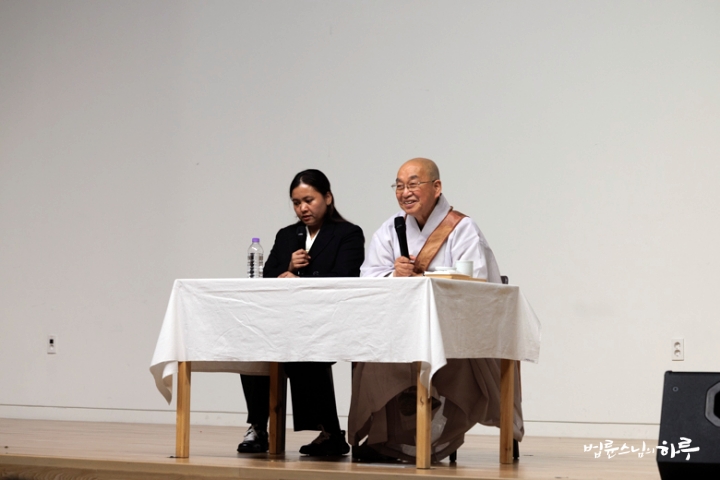
Sunim explained JTS’s ongoing activities, including school reconstruction and refugee support in the earthquake-affected regions of Mandalay and Sagaing, food and school supply assistance in Mae Sot near the Thai border, and support for Rohingya refugees in Bangladesh. He also discussed the current civil war situation in Myanmar.
“I hope your country quickly regains stability, that the many people suffering from civil war find peace, and that refugees can return to their homes. From a Buddhist perspective, India is where Buddhism began, and Sri Lanka is a country where Buddhist scholarship has flourished. Myanmar is known as a place where the tradition of practice, including Vipassana meditation, has been preserved exceptionally well. Such Myanmar practice methods should be spread more widely throughout the world. However, the reality that peace is not maintained in a Buddhist country that values practice so highly makes it difficult to convince people in other countries. I’ve shared these thoughts about your country as a greeting. Now let’s talk together about the various difficulties you are personally experiencing while living in Korea.”A total of six people asked Sunim questions. Among them, this post introduces the question from someone struggling with life in a foreign country.
I Want to Live with Confidence in an Unfamiliar Place. Life in Korea Is Hard
“I’ll speak in Korean, though my Korean isn’t very good. Living in the unfamiliar place of Korea, I try to be strong every day. Sometimes I’m so exhausted and weary, but I can’t easily allow myself to become weak because I’m afraid no one will understand me. What should I do to not lose my confidence?”
“Living in a foreign country with a different language and culture, where you know few people, is not easy in itself. There are two main ways to respond to difficulties in such situations. First, you can resolve and commit yourself to overcome this environment. This is probably what you described as ‘needing to be strong.’ Most people overcome difficulties this way, but this is more of a secular approach rather than a Buddhist one. If you overcome it, it’s called success; if you don’t, it’s evaluated as failure. Second, you can respond to difficulties from a practice-oriented perspective. When practitioners face difficulties, they look inside themselves to see what is actually difficult. They examine whether the task itself is difficult, or whether it’s their mind’s attitude toward the task that’s difficult. When the mind finds something difficult, it means it’s rejecting the task—it dislikes it. For example, when you take on a new job, it feels difficult because you have to do something you don’t know well. But this feeling of difficulty actually stems from not wanting to do something unfamiliar. Pushing through and continuing despite this is the secular way. From a practice perspective, however, if you don’t know something, you ask and learn; if you’re not familiar with something, you practice it repeatedly. You can’t do well from the start. Only after a certain amount of time do you finally become accustomed to it.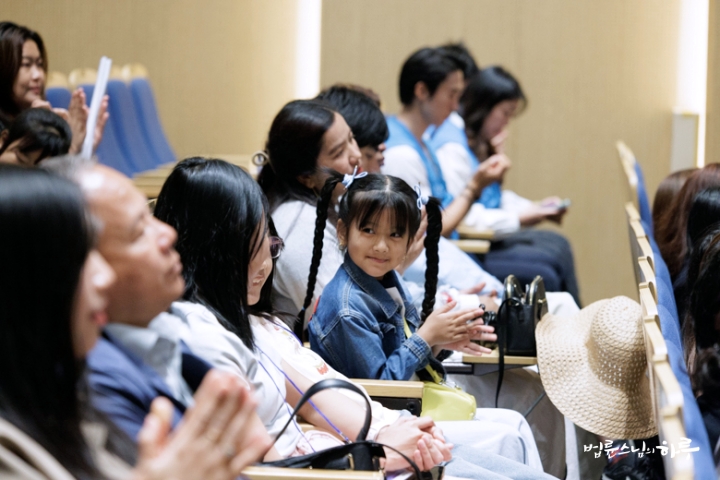
Practice Means Being Aware and Practicing Consistently
But when you become eager to do things quickly and well, you become impatient, and that’s when suffering arises. You need to be aware that you’re still at a stage where you’re not yet familiar with the work. The person who assigned the task may rush you because they want quick results. In that case, you can simply say, ‘I’m sorry. I’m not yet familiar with this, so please wait a little longer.’ There’s no need to argue or resist by asking why they’re pushing you. Their urgency also comes from wanting the work to be done quickly and well. There’s a Korean proverb that says, ‘A journey of a thousand miles begins with a single step.’ No matter how long the road, it begins with one step. No one in this world is born already skilled at something. With repeated practice, you become skilled. So tell yourself to wait a little, and ask the other person to wait as well. There’s no need to try hard to become strong. You only need to be strong when you’re forced to endure something you dislike. Practice isn’t about resolving, ‘I must become strong.’ Rather, it’s about noticing, ‘Ah, I dislike this. It’s because I’m not used to it,’ and then practicing consistently. Then, without judgments of failure or success, only the process of consistent practice remains. If you give me an example of the most difficult problem you’re facing now, we can look at it specifically. Please share.”“I’m normally not a person who cries easily, but a moment ago I almost cried. I understand what you’re saying, Sunim. I’d like to ask one more thing. Is there something important that I must realize while I’m young so that I won’t regret it later?”
“There isn’t anything in particular like that. In Buddhism, it’s said that when you create a cause, the consequence follows. But we create causes while trying to avoid their consequences, and that’s where difficulty arises. From a Buddhist perspective, if you’ve created a cause, you simply accept the consequence. If you don’t want the consequence, then you shouldn’t have created the cause in the first place. For example, suppose there’s delicious food here. You’re about to eat it, but the Buddha says, ‘There’s poison in it.’ What would you do?”“I wouldn’t eat it.”
“When told there’s poison in it, you have two choices. The reason we eat food is to live. But if eating this food will kill you, no matter how much you want it, you wouldn’t eat it. But suppose you wanted it so badly that you ate it anyway. Then you have to accept the result of dying. So when does regret arise? When you’ve eaten the poisoned food and are about to die, if you resist by saying, ‘I won’t die,’ that’s when regret arises. ‘Ah, I shouldn’t have eaten it’—that’s regret.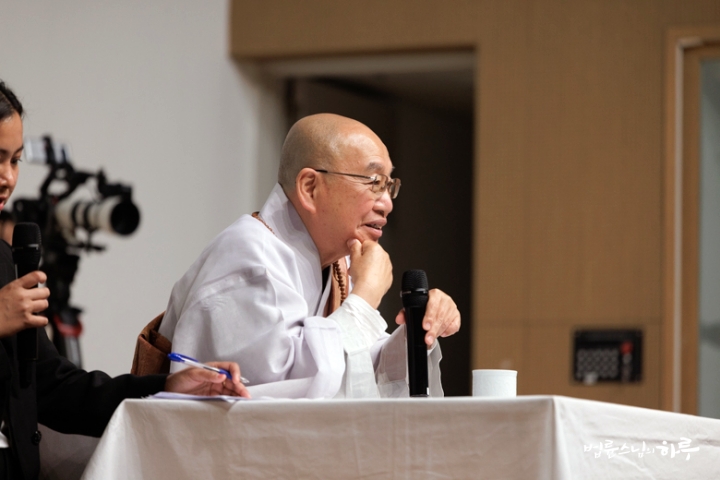
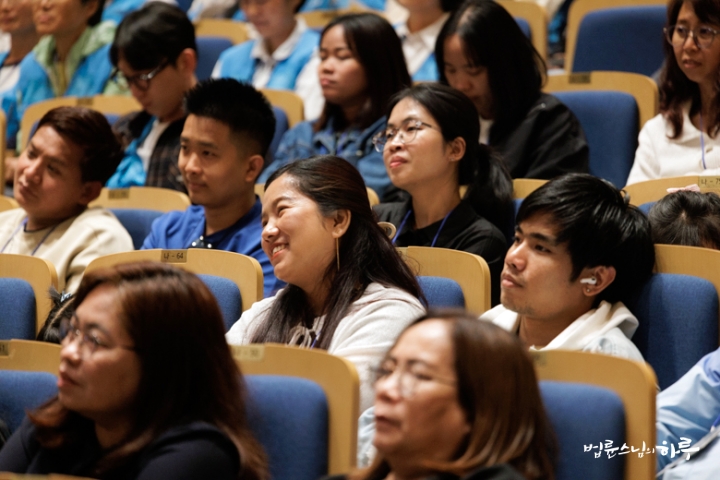
Those Who Understand Cause and Effect Do Not Regret
Regret arises from ignorance, that is, from not knowing. Let me give you another example. Suppose your life is very difficult. After agonizing over whether to borrow money, you finally borrow it. Then you have to repay it with interest, but when it comes time to repay, it’s very hard. So you think, ‘No matter how difficult things get, I shouldn’t borrow money again.’ This is what’s meant by ‘If you create a cause, you receive the consequence.’ If you don’t want the consequence, don’t create the cause. But if you create the cause and then refuse to accept the consequence, that’s when regret arises. ‘Why did I make that choice back then?’—that’s regret. Those who understand cause and effect don’t regret. You can do as you wish. If you want to play, play. But the consequence is that you’ll have no money. If you have no money, you don’t eat; if you have no house, you sleep on the street. There’s no rule that says you must work. If you don’t want to work, you don’t have to, but you must accept the consequence of going hungry and sleeping on the street. If you want to sleep in a house and eat meals, then even if you don’t want to, you have to work. This is the Buddha’s teaching of the law of cause and effect. Once you understand this principle, there is no such thing as regret.”“Yes, I understand.”
“When you leave your country and come to Korea, the language is different, you don’t know anyone, and the culture is different—do you expect difficulties, or only good things? There’s the advantage of earning a high salary, but these difficulties come along with it. If you want to earn a high salary but don’t want to face the difficulties, that’s where suffering arises. If you don’t want these difficulties, you can go to Myanmar; if you want to earn money here, you must accept these difficulties as natural. If you choose this, you must accept that result; if you don’t want that result, don’t make this choice. This is the law of causation. If you understand this law of causation, there’s no such thing as regret. If you ask what you should do to avoid regret, I would say: understand the law of cause and effect.”“Yes, thank you.”
After the Dharma Q&A with the two pre-registered questioners concluded, there was a short break.
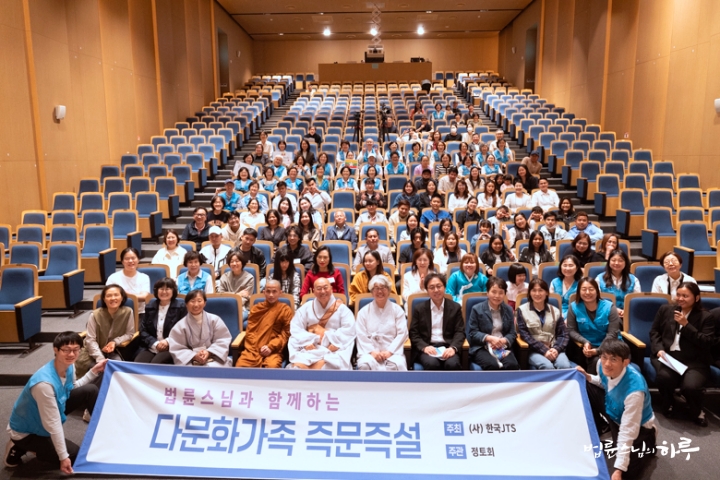
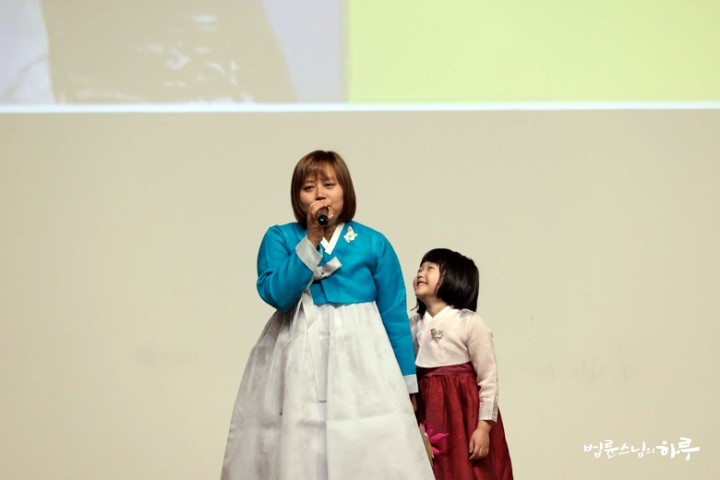
Nai Chi Nu Nu, a singer from Myanmar, came on stage beautifully dressed in hanbok along with her adorable 6-year-old daughter and sang a Myanmar song. After listening to the song, Sunim took a group photo with the participants and continued with the Dharma Q&A.
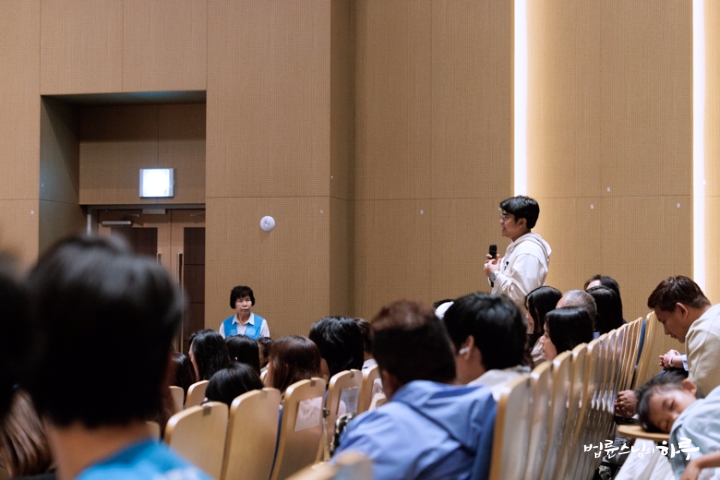
At 2:50 p.m., the Dharma Q&A session for multicultural families concluded with a big round of applause. Afterwards, Sunim attended to administrative work and prepared for his trip to the United States. At 6 p.m., Sunim got into the car to head to Incheon Airport. Dharma teachers and community staff came to see Sunim off.
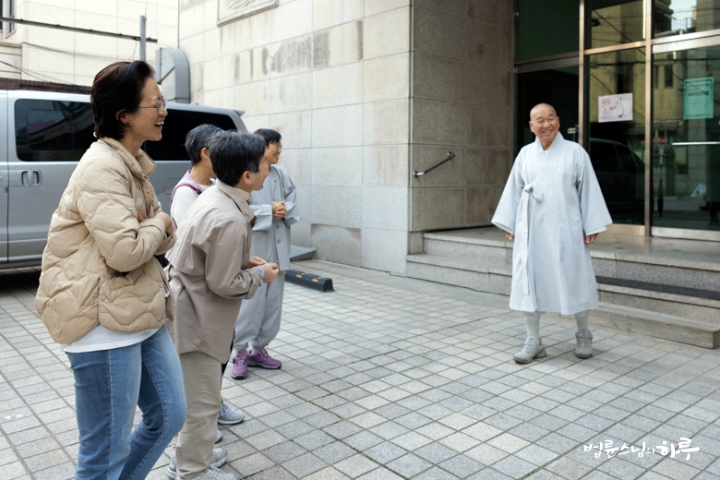
“Sunim, have a safe trip.”
“I’ll be back safely.”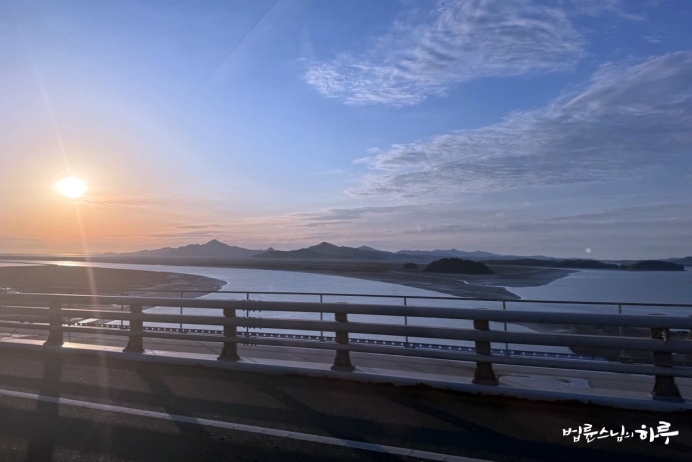
Sunim arrived at Incheon Airport at 7 p.m. The carrier Sunim was checking in as luggage was heavily packed and weighed a lot. After rearranging the luggage at the airport, he checked in. After checking in, Sunim had a simple meal of fruit.
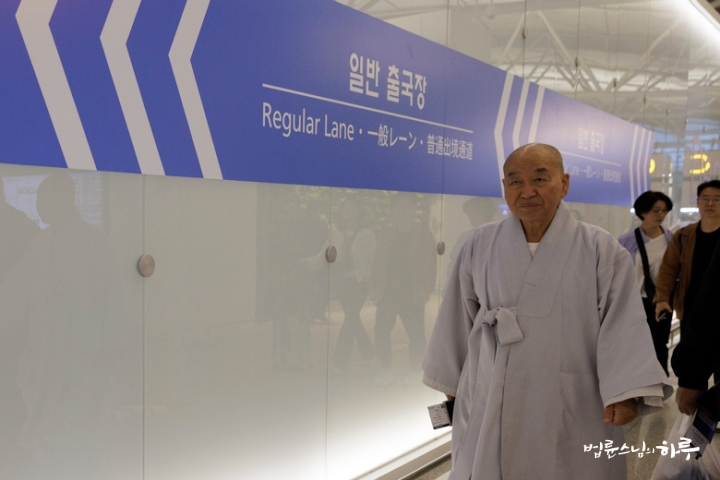
At 7:40 p.m. Korean time, Sunim said goodbye to the Haengja and entered the departure gate. Sunim will fly for 13 hours, land at Newark Airport, and travel by car to the Washington DC Jungto Center. The U.S. schedule begins tomorrow.