Living as a Weekend Couple Feels Somehow Unreal
May 8, 2026 - Breakfast Meeting, Happy Conversations Sejong Talk
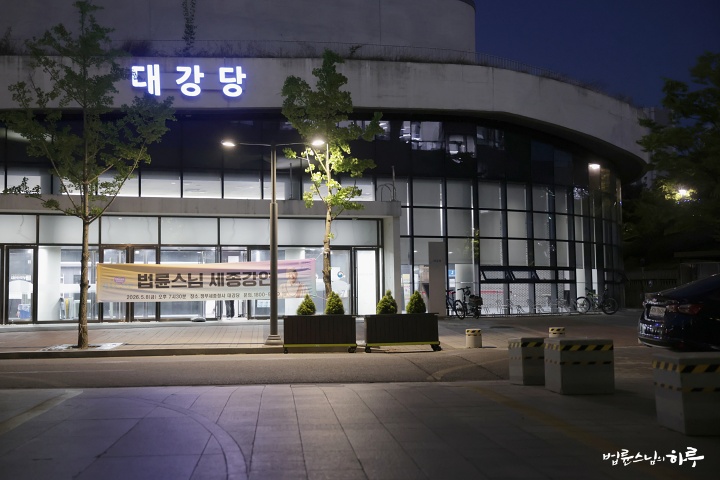
Hello. Today, the “Happy Conversations” Dharma Q&A was held at the Government Complex Sejong Auditorium.
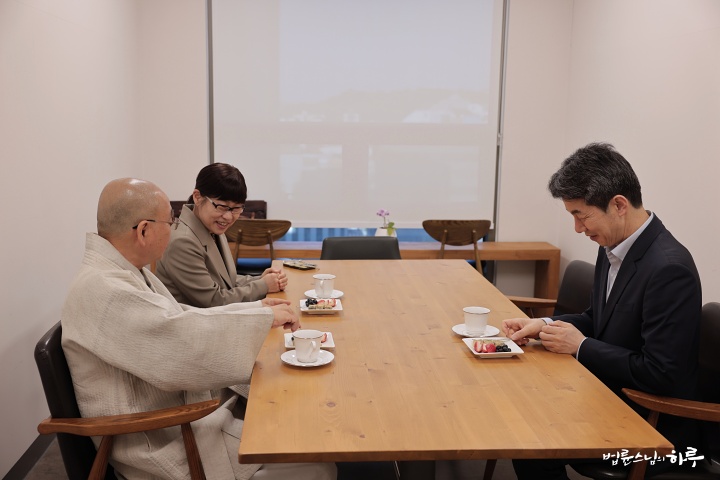
Sunim began his day with early morning practice and meditation. At 7:30 AM, he came to the basement level of the Jungto Social and Cultural Center for a breakfast meeting. After dining with National Assembly Member Yoon Geon-young (윤건영), Sunim moved to the reception room where they discussed various ways to establish peace on the Korean Peninsula and improve North Korea-U.S. relations.
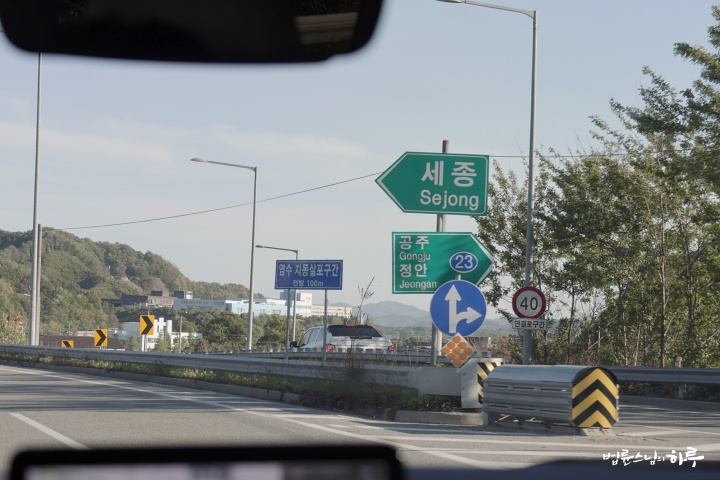
Afterward, Sunim attended to work at The Peace Foundation before departing for Sejong Special Self-Governing City at 3:50 PM. The “Happy Conversations” event was scheduled to be held at the Government Complex Sejong Auditorium at 7:30 PM.
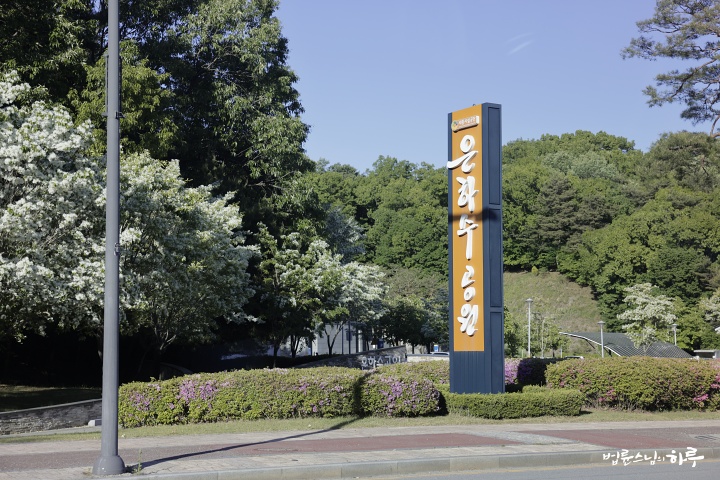
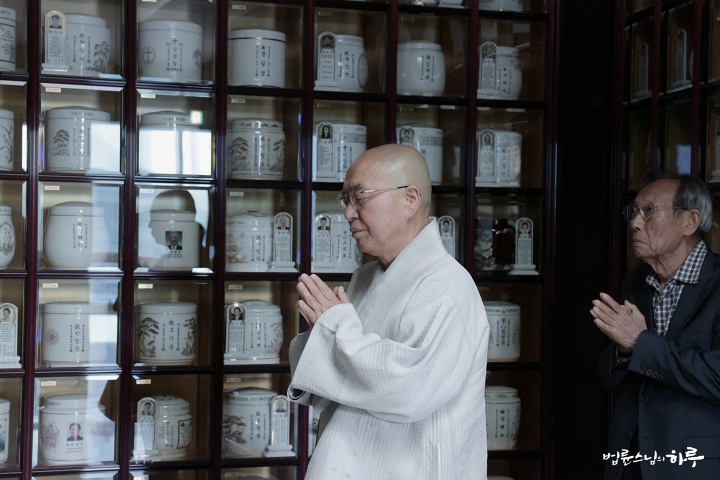
Before heading to the lecture venue, Sunim stopped by Eunhasu Park (은하수공원) in Sejong and, together with Mr. Kwak Yeong-sul (곽영술), paid tribute to Dharma Teacher Hyangryu (향류) on the first anniversary of her passing. Dharma Teacher Hyangryu, who was a Gyeolsa Practitioner of Jungto Society (Lead Jungto Practitioner), passed away on April 13, 2025, after battling cancer.
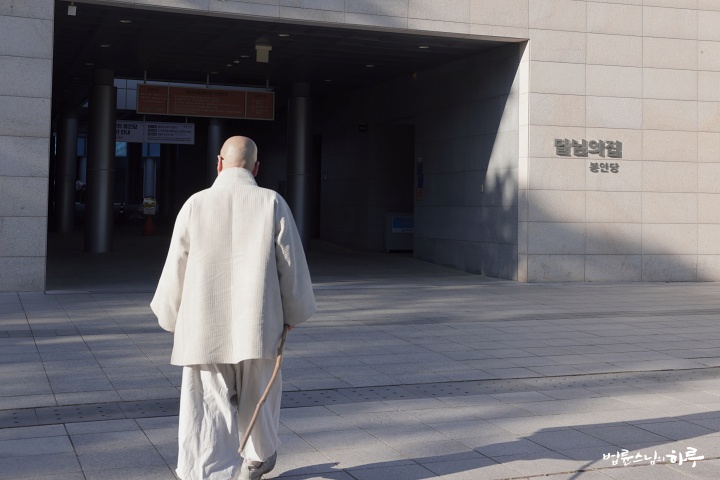
Sunim bowed before her urn and quietly recited the Liberation Mantra.
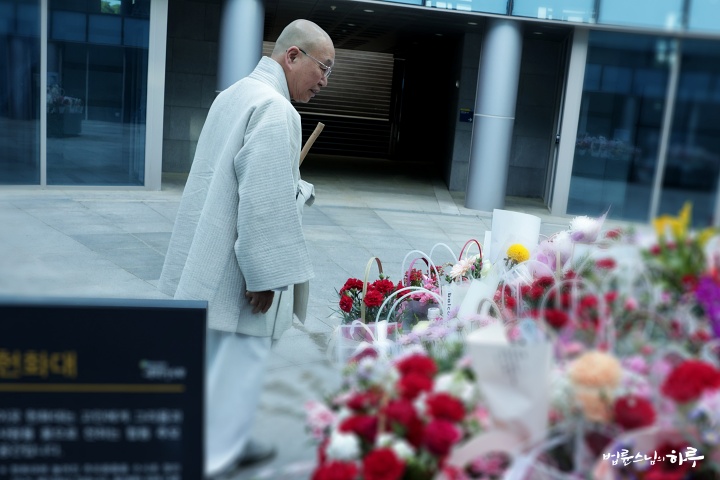
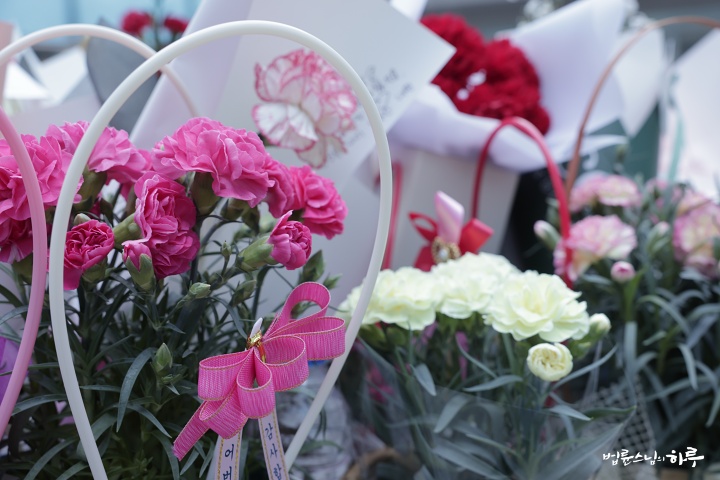
Since today was Parents’ Day, there were unusually many carnation baskets. A Sejong citizen who had come to pay respects at the columbarium approached Sunim and greeted him, saying that he watches Sunim’s Dharma Q&A on YouTube and that the deceased’s mother was also a big fan of Sunim, so his mother would be delighted today as well.
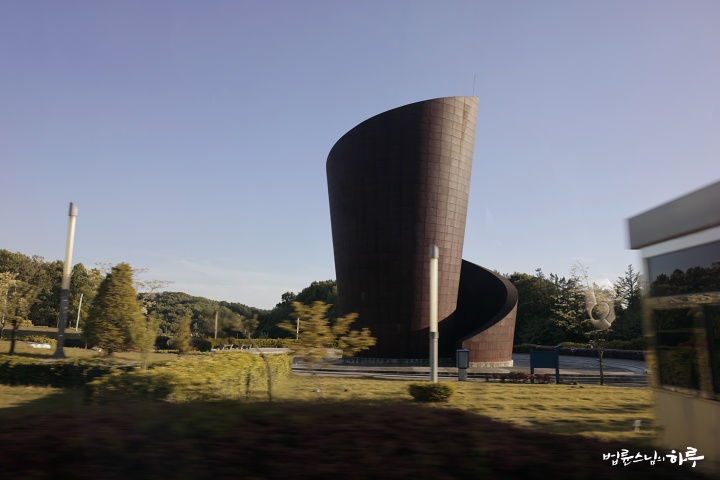
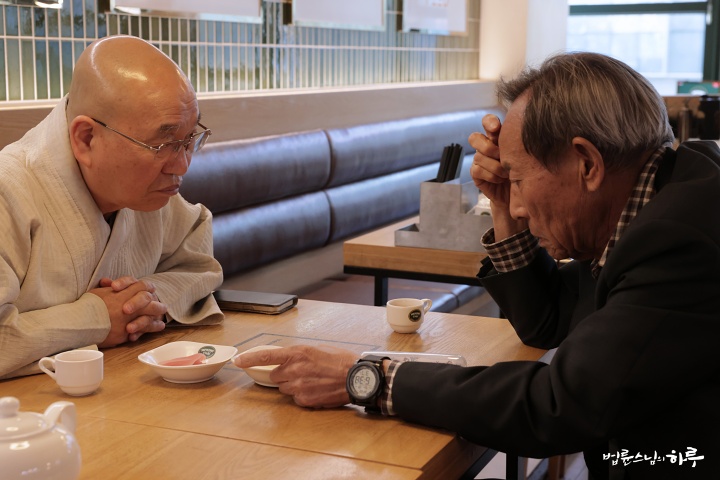
Being Friday evening, traffic was very heavy. With the lecture start time approaching, Sunim had a simple noodle dinner with Mr. Kwak Yeong-sul and discussed the restoration project of Cheonryongsa Temple. Sunim expressed his gratitude to Mr. Kwak, who participates in all of Jungto Society’s projects as if they were his own. Since a tea meeting was scheduled before the lecture, they could not talk for long, and Sunim hurriedly got up from his seat.
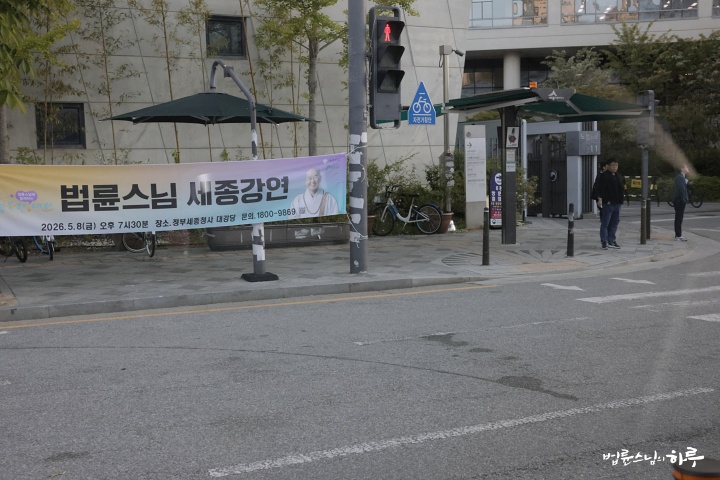
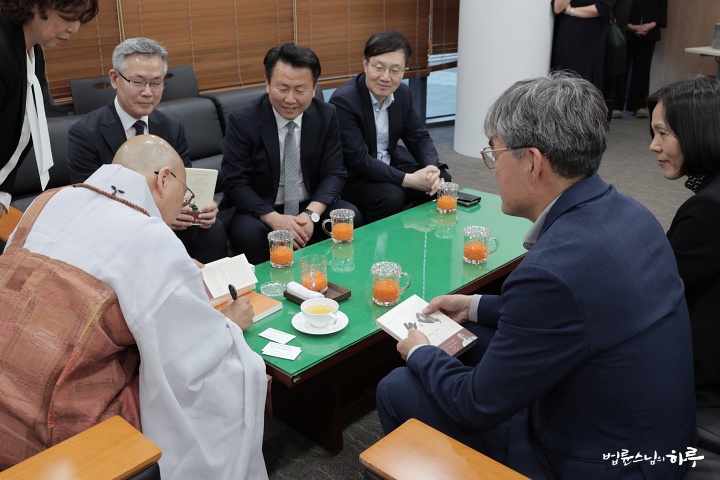
In the reception room at the lecture venue, members of the Civil Servants’ Buddhist Association were waiting for Sunim. After exchanging greetings, Sunim presented them with signed copies of his new book, “Awakening : Dialogues on Enlightenment.” As it was time for the lecture to begin, they exchanged brief greetings, took commemorative photos, and left the reception room.
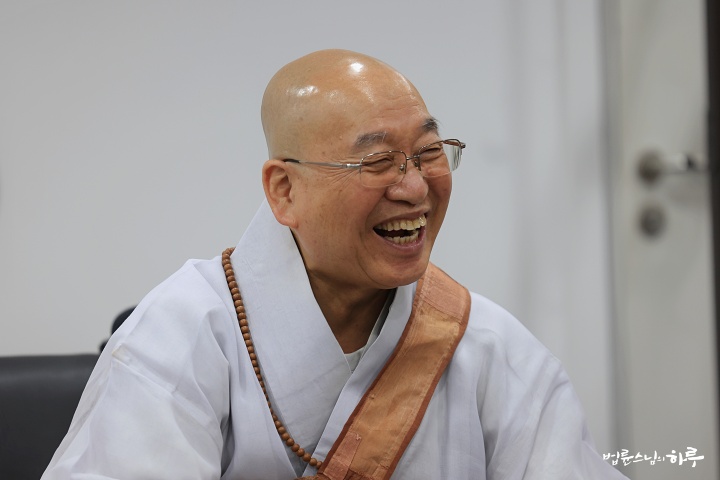
While Sunim was exchanging greetings, the pre-show performance had begun on stage. Mr. Lee Seon-ho (이선호) from the Cheongju Branch of the Daejeon-Chungcheong Division sang two songs. Today’s lecture was hosted by Mr. Chu Seong-min (추성민), an actor with the Gilbeot troupe.
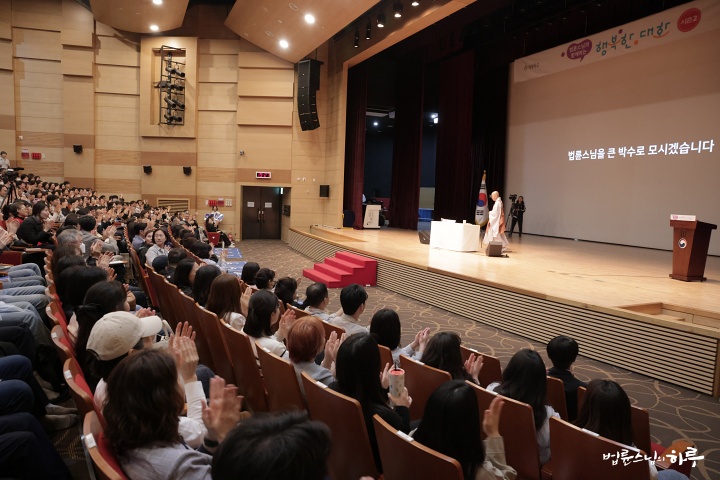
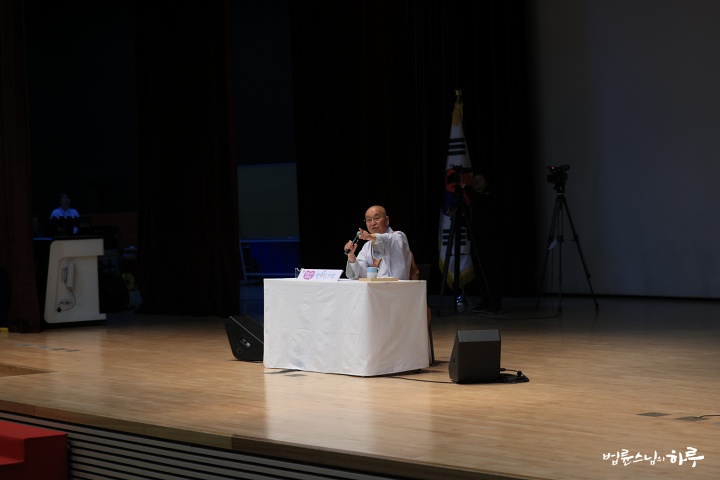
After the introductory video about Sunim ended, Sunim came to the front of the stage. Holding the microphone, Sunim gave his opening remarks.
“Have you all had dinner? The mountains and fields are lush and beautiful these days, aren’t they? It’s truly a wonderful season. I’m delighted to meet and talk with you here in Sejong City during such a beautiful season. Just a moment ago, I had a brief conversation with members of the Sejong City Civil Servants’ Buddhist Association. They told me that although the administrative capital has been relocated to Sejong, the Blue House and the National Assembly are still in Seoul, making it burdensome to travel back and forth. So I said to them, ‘It’s not enough to just construct buildings. The President and members of the National Assembly need to actually come down here to conduct their work for the relocation of the administrative capital to be truly realized.’ Action matters more than words, but we often stop at words alone.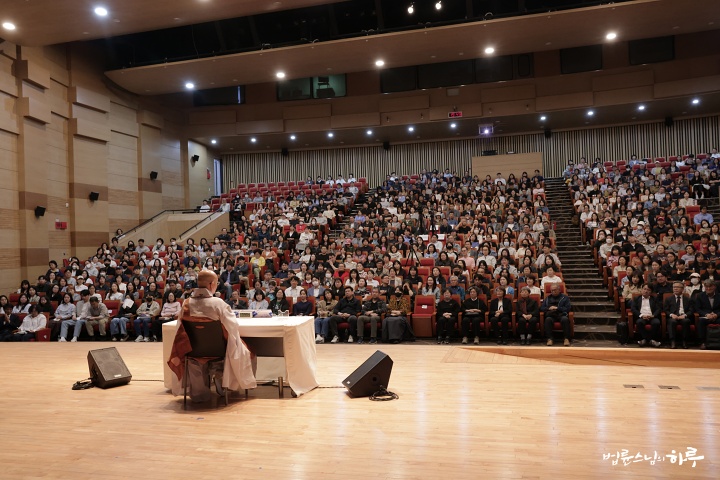
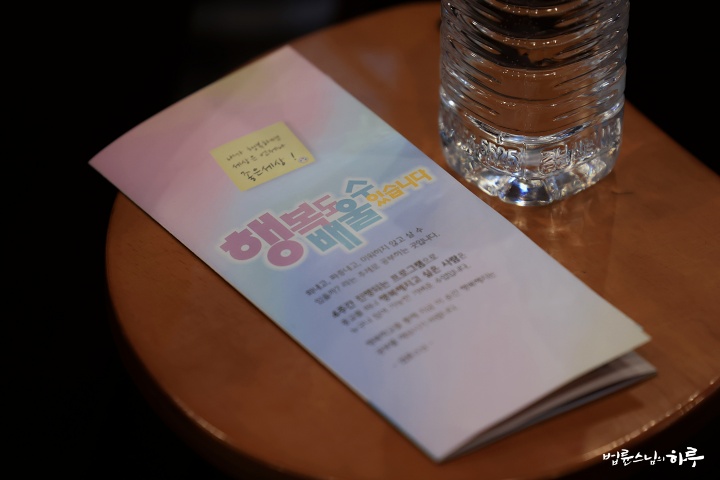
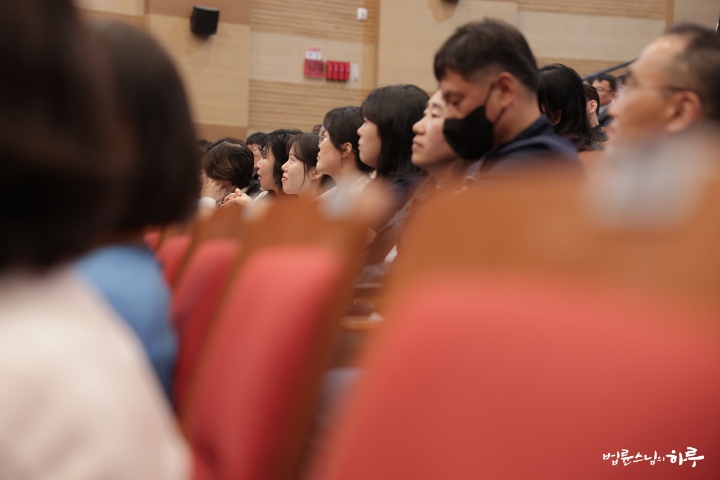
Conversations took place on a variety of topics.
Sejong Special Self-Governing City serves as the administrative capital, where most government ministries, public institutions, and national research organizations have relocated. It is a planned city built in a regional area to promote balanced national development and ease overcrowding in the metropolitan area. With a population of around 390,000 and an average age of 39.1, it is the youngest city in the country. These unique characteristics of the city also bring particular hardships to its residents.
This post introduces a questioner’s story that helps us understand the struggles faced by Sejong residents.
Life as a Weekend Couple Feels Somehow Unreal
“I am in my 50s and work in Seoul. My wife works as a civil servant in Sejong City, so we have been living as a weekend couple for about five years. At first, I had planned to move down to Sejong and live together, but realistically, I couldn’t quit my job in Seoul, so we have continued this arrangement. When I’m busy at work, it’s fine, but when I come home after work, I have no one to talk to, and I often end up drinking too much or just watching videos on my phone. Afterward, I feel a sense of self-loathing. On weekends, I go down to Sejong, help with the household chores that have piled up, and spend time with my children. Even though it’s physically tiring, I feel alive and find fulfillment in playing my role as a father. However, after spending the weekend like that and returning to Seoul, both my life in Seoul and my life with my family feel somehow unreal. Over the past five years, I have had many conversations with my wife, but there is still something that remains unfulfilled. Recently, I have started other activities and things have improved compared to before, but when I think about this lifestyle continuing long-term, it troubles me.”
“Yes, thank you.”
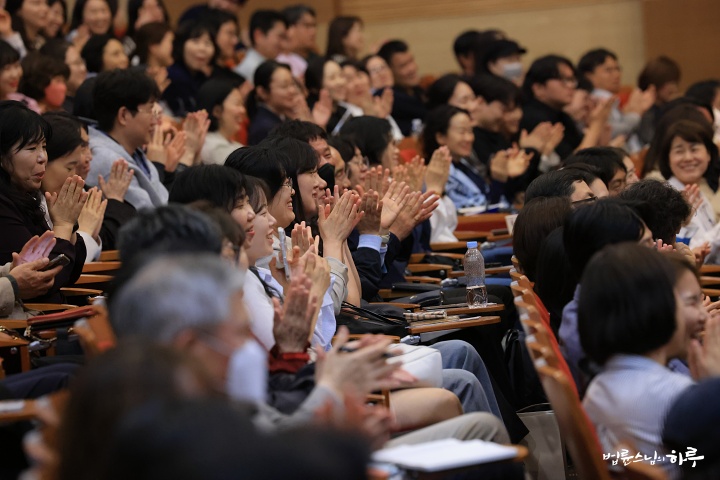
After the conversation with the final questioner ended, Sunim offered some closing remarks.
“Did you find our conversation interesting and beneficial? (Yes) What we call ‘the path of truth’ is by no means difficult—it is both enjoyable and beneficial. ‘Enjoyable’ means ‘good now,’ and ‘beneficial’ means ‘good later.’ However, ethics and morality, while they may be beneficial later, are often dull and boring in the present moment. As a result, we end up wasting the present moment. On the other hand, pleasure feels good now but isn’t good later. So in the end, we come to regret it. Therefore, you should always seek what is good both now and later. Furthermore, for it to be sustainable, it must be good for both you and others. Something that benefits only you while harming others won’t last long, and something that benefits only others while harming you won’t last either. That’s why simply enduring everything is not a good thing—because it isn’t sustainable. To be sustainable, it must be good for both you and the other person. Only when these conditions are met can we say it is ‘close to the truth.’ If something has to be done anyway, that means it’s beneficial. Saying ‘I have to do it’ ultimately means it benefits you. In such cases, try to find enjoyment in it, even if you have to force yourself. That way, this very moment can be good, and the future can be beneficial as well. I hope you’ll view the world from this perspective. Money and status come and go. Everything is impermanent (諸行無常)—it exists and then ceases to exist. But when you look back on your life, what remains as the most significant thing? It is family relationships—that is, the relationship between spouses, and between parents and children.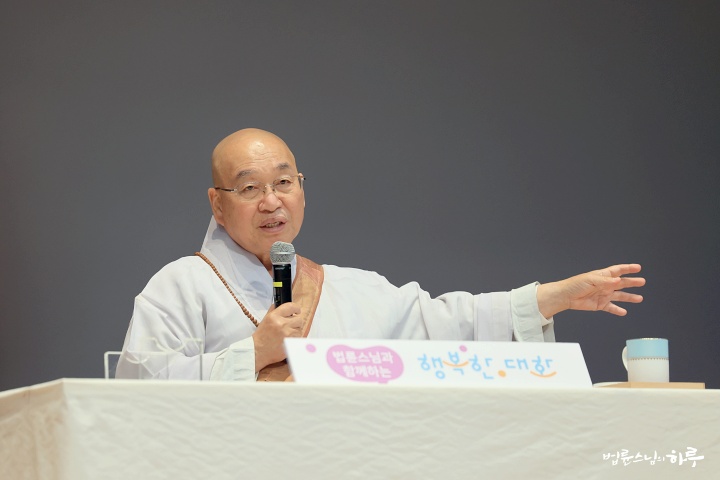
When the Dharma Q&A ended, it was past 9 p.m.
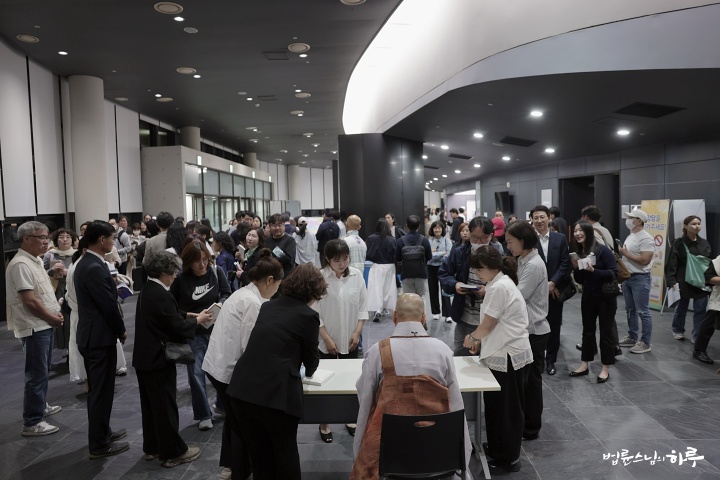
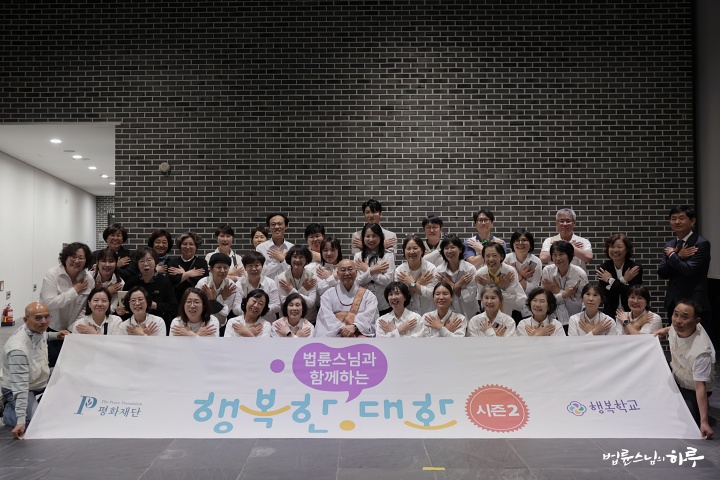
Sunim held a book signing in the lobby of the main auditorium and took commemorative photos with the Happy Citizens. To express their gratitude, the Happy Citizens sang “Grace of the Teacher” and presented Sunim with a bouquet of flowers. It was 9:45 p.m. when Sunim finally got into the car and headed for Seoul. Sunim closed his eyes briefly in the moving car. It was 11:20 p.m. when he arrived at the Seocho-dong Jungto Center.
Tomorrow, Sunim will attend the morning Planning Committee meeting, hold an online Dharma Q&A for the Sutra Course at 10 a.m., have a lunch meeting at noon, and in the afternoon, attend to work and prepare for his departure to the United States.