Is There a Middle Way in Shopping?
May 4, 2026. Meetings and Time with Monks
Hello. This morning, Sunim had meetings, and in the afternoon, he spent time with fellow monks.

Sunim began his day with early morning practice and meditation. After breakfast, he worked on manuscript editing and attended to various tasks.
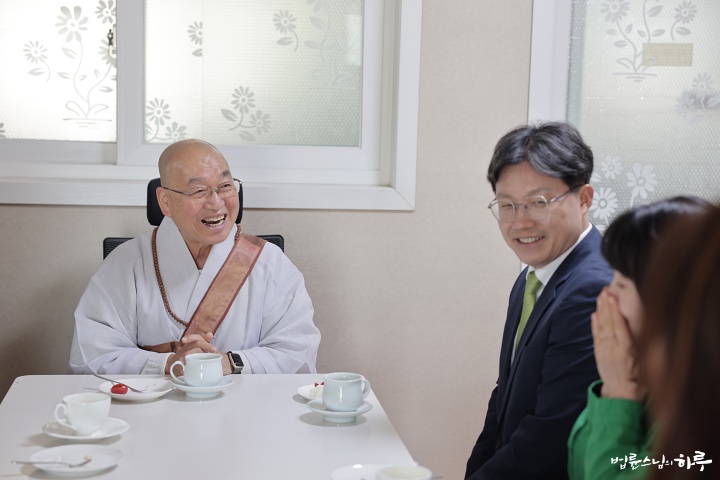
At 10 AM, Mr. Cho Yong-sik, a candidate for Ulsan City Superintendent of Education, visited Dubuk Jungto Retreat Center to pay his respects to Sunim. Sunim and the candidate’s group discussed various topics related to the education field. Sunim presented the candidate’s group with copies of his new book, “Tak! Dialogues on Awakening,” as gifts.
Today was the day when Venerable Sugyeong, Venerable Dobup, and Venerable Jihong were scheduled to visit Dubuk. Sunim prepared to welcome the senior monks and spent the afternoon with them. They engaged in conversations on various topics until late in the evening.
Tomorrow morning, Sunim plans to visit Cheollyongsa Temple with the senior monks. In the evening, after a meeting, he will travel to Seoul.
Since there was no Dharma talk today, this post concludes with a dialogue from the online English Dharma Q&A held on May 3rd.

Is There a Middle Way in Shopping?
“This is very embarrassing to admit, but before I started Jungto Dharma School, I kind of had an addiction to shopping. I would buy a lot of perfume and makeup that I didn’t need. One point when I realized it was really bad was when I was doing my tax return. I barely had any savings, and I wondered, ‘Where did all my money go?’ Then I realized it was because of shopping. When I started Jungto Dharma School, I think it helped me realize my mental patterns and get rid of a lot of my consumerist urges and tendencies. I even went to the completely opposite side, where all of my urges to shop completely disappeared, and I started really disliking and having strong feelings against consumerism and capitalism. I didn’t even want to walk into perfume, makeup, or beauty stores on the street because of how strongly I felt against them. So I improved a lot, and my friends and family noticed that I wasn’t buying as much anymore. I was saving a lot, and I only bought what I really needed. However, I don’t know why, but recently, about one month ago, my urge to shop started to come back. I don’t know if it’s because I recently started my new job and have been earning a steady income again, or because I’m maybe not practicing morning practice as often as I should, but it has been causing me a lot of suffering that I have this urge. My question is, is there a middle way when it comes to shopping? Am I supposed to follow what I was doing in the past, where if there was something I wanted but didn’t need, I should never get it? Or is there a middle way, like once a year on my birthday, I can get one thing that I want? So I’m wondering if there is a responsible and ethical way to consume, or if I should completely stay away from it.”
“Shopping involves using your own money to purchase what you need, so it falls within your freedom. Even if you spend all your income, it doesn’t harm others. It’s not a bad thing. However, doing this is detrimental to yourself. This is what we call foolish behavior. Harming yourself, causing yourself loss, and making yourself suffer is foolish. When you realize ‘I’ve been acting foolishly,’ you can simply stop. Shopping is about purchasing what you need. Sometimes it’s difficult to find what we need. That’s why we look at advertisements to discover, ‘Oh, that’s available here or there.’ Informing people well about products was the original purpose of advertising. However, in capitalism based on mass production systems, products must be sold regardless of whether people need them or not, to continue production and generate profit. This leads to excessive advertising that stimulates people’s desires to make them buy. TV and radio advertisements focus on showing certain images and playing certain sounds that trigger the desire to buy rather than addressing actual needs. When you purchase items, you feel satisfied because your desires are fulfilled. Not all items purchased through shopping are things you absolutely need. They simply match your desire to buy, and when you repeatedly fall into these desires and habits, it becomes ‘shopping addiction.’ When feeling frustrated, people shop to relieve it. They shop when feeling empty, when angry, and when sad after a breakup to console themselves. Hearing about new products and purchasing them brings great joy. The addiction deepens as people take pride in being the first to buy or in purchasing new styles. They don’t just spend what they have but even go into debt to buy. This can be called foolish behavior. You’re not alone in this. While your case might be a bit severe, most modern people have shopping addictions and tend to feel a sense of satisfaction from shopping. To break this habit, you need to refrain from shopping for a while. On the other hand, you need to resolve feelings of frustration, emptiness, or psychological suffering through practice. When there’s no emptiness in your heart, you won’t care about what clothes you wear or how others see you. When there’s emptiness or frustration in your heart, you become conscious of others and become absorbed in sensations like smells and appearances, constantly pursuing something. Let me give you an example. There’s a writer who smokes. Do you think this person smokes more when writing flows well or when they’re stuck?”“When they’re stuck.”
“When writing doesn’t flow, the mind becomes frustrated, and to relieve that frustration, they put down the pen and reach for a cigarette. It’s the same with people who drink. When they feel empty, they reach for alcohol. When you feel frustrated or empty, you turn to shopping. Still, I think it’s better than drinking or smoking. Alcohol and cigarettes harm your health. With shopping, you can donate unused items to others. That’s why I say it’s not a bad thing. From a practice perspective, this problem arises from psychological anxiety and frustration. It’s also related to advertisements cleverly created by advertisers who exploit our psychological responses. It would be good if we could become freer from these influences. That’s why it’s important to adopt the perspective of buying only what’s absolutely necessary. In other words, don’t buy based on advertisements, don’t buy after browsing in department stores, but decide what you need in advance and buy only that. I think this perspective will help improve the situation. However, for now, to change the habit, try not to buy as much as possible. But when you feel the urge to buy, maintain awareness by thinking, ‘Oh, I want to buy something,’ ‘This is shopping addiction,’ ‘This is a habit.'”“Thank you for your answer. What resonated most with me was when you talked about the underlying reasons why I shop. I don’t think I’ve ever really thought deeply about those reasons before.
Looking back now, I think it probably came from emptiness, or maybe it was from boredom. I realized it’s important that whenever I feel the urge to shop, I should ask myself, ‘Why do I really want this item?’ Of course, I’ll do my best not to buy things impulsively, but I’ll make it important to ask myself that question because it helps me become more aware of why I want to shop in the first place. This was a really big awakening for me. Thank you once again. Thank you.”