Group Facilitators Are the Flowers of Jungto Society
May 3, 2026 - Online English Dharma Q&A, Group Facilitators' Assembly, Moving to Dubuk
Hello. This morning, there was a monthly online English Dharma Q&A and the first Group Facilitators’ Assembly since COVID-19, held at Seonyudong Education and Training Center.
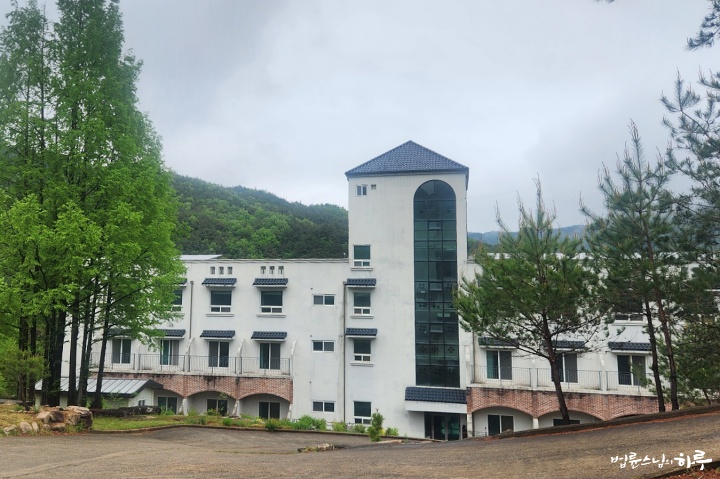
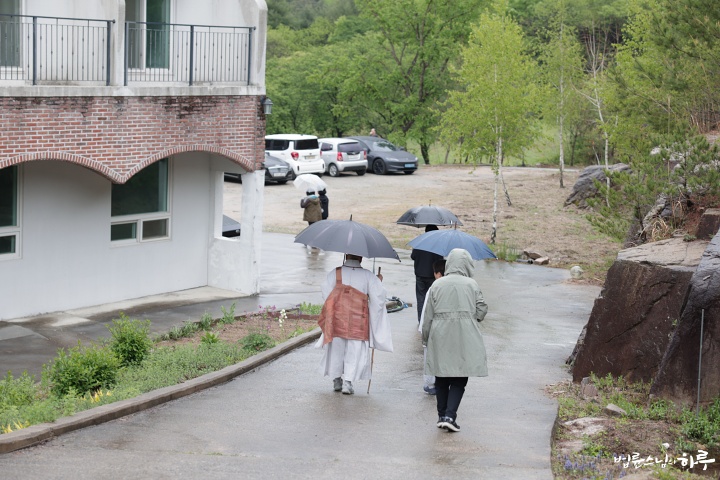
Sunim began his day with early morning practice and meditation. Spring rain was gently falling at Seonyudong Education and Training Center.
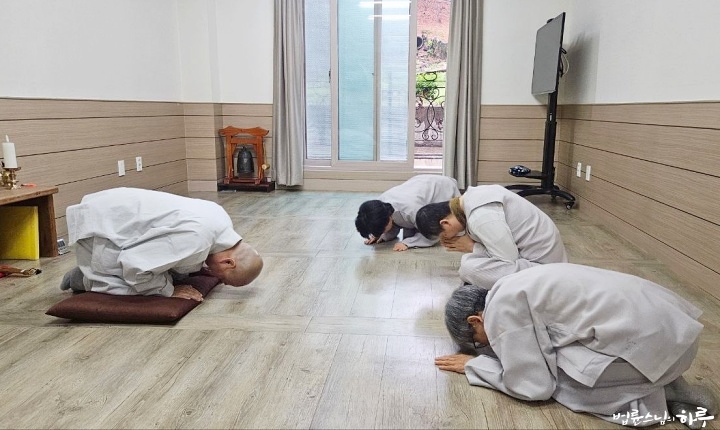
After Sunim finished breakfast, the Dharma Teachers and staff members living at the Education and Training Center offered three bows to greet him. Other Dharma Teachers were conducting retreats at Mungyeong Jungto Retreat Center. Sunim asked Dharma Teacher Hyangdeok, who was living at the center after a long hospital stay following a traffic accident.
“How are you doing, Dharma Teacher Hyangdeok?”“When I keep my eyes open, I see double, so I keep closing one eye.”
“Dharma Teacher Hyangdeok does 108 prostrations these days and even conducts evening service alone, striking the moktak wooden instrument herself.”
“Can you eat and go to the bathroom by yourself?”“Yes.”
“Then that’s all that matters. If you can do those things alone, there’s no problem living.”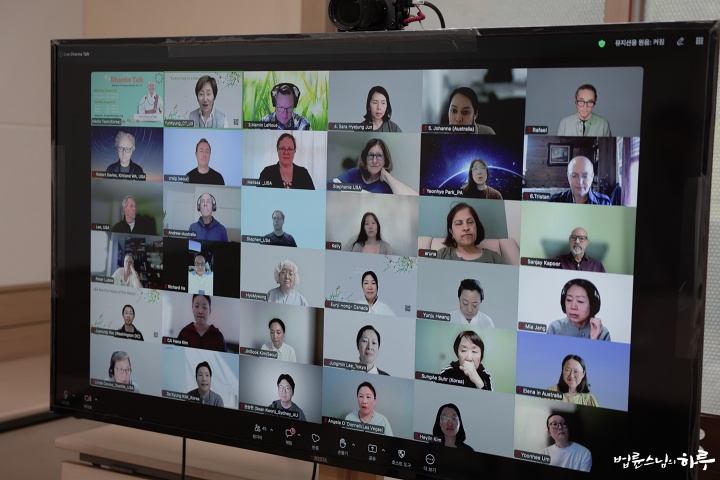
The online English Dharma Q&A began at 8 AM. About 130 foreigners joined via Zoom to attend the online English Dharma Q&A, transcending time zones and geographical boundaries. Sunim attached his microphone and sat in front of the camera.
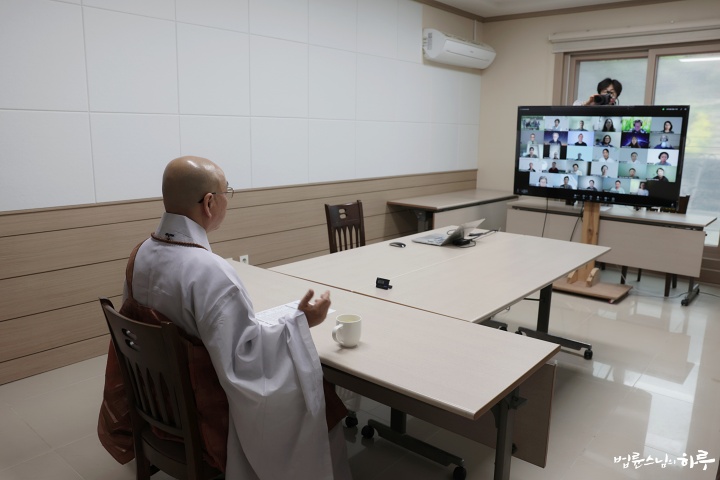
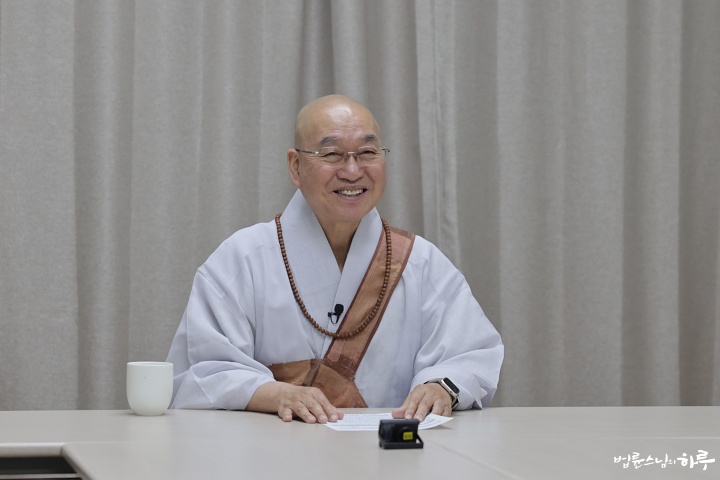
Sunim had conversations with five foreigners. The concerns included: worries about preparing for a personal business while working full-time in sales, how to navigate ethical issues while running an AI business, how to address the excessive use of disposable items by temple visitors, concerns about a brother who treats their father like a stranger after their mother’s passing, and how to handle shopping urges that have returned after a month despite having reduced them significantly through Buddhist study.
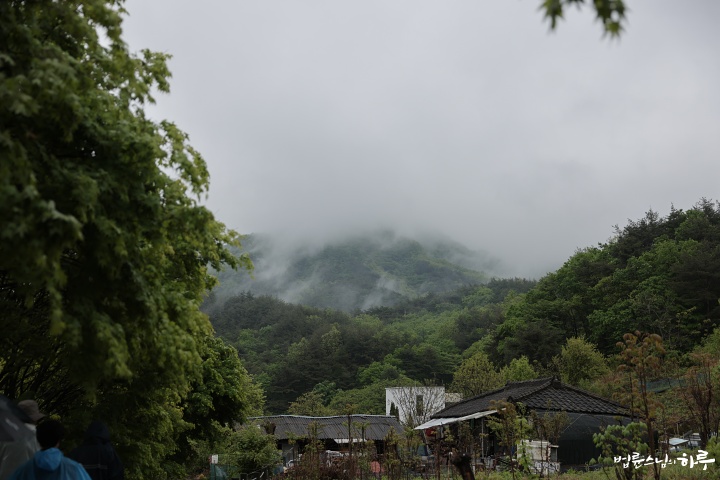
After the online Dharma Q&A ended, Sunim immediately departed for the Seonyudong Daeyasan Valley parking lot. The Group Facilitators’ Assembly was starting at 10 AM with a walk through Seonyudong Valley. As spring rain continued to fall, everyone put on raincoats and moved to the parking lot where the event was beginning.
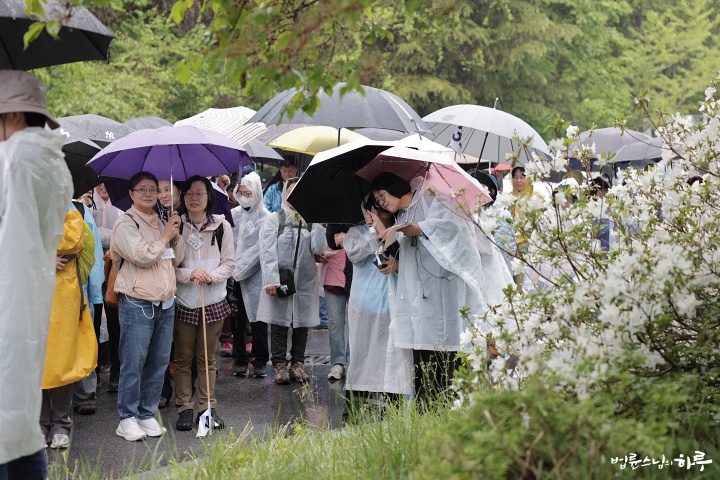
About 400 group facilitators from across the country gathered at the Seonyudong Valley parking lot, having taken buses since early morning or driven their personal vehicles. As this was the first offline Group Facilitators’ Assembly since the COVID-19 pandemic, it was the first offline event for leading members who became group facilitators after the transition to online Jungto Society. Part 1 consisted of an outing through Seonyudong Valley, and Part 2 was scheduled to be a program in the training center auditorium.
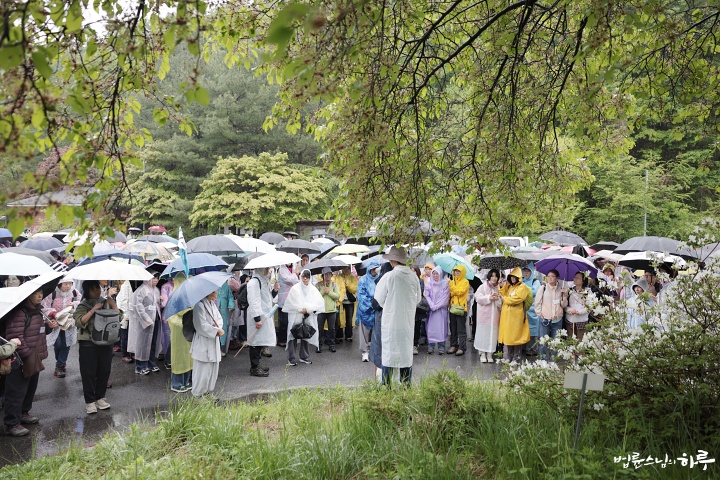
At the parking lot, the gathering point for the Seonyudong Valley outing, participants were organized into outing groups of about 50 people each and gathered by their group flags. At 10 AM, the ceremony began with the Three Refuges and the recitation of the Heart Sutra. After introducing the number of participants from each branch, Sunim gave his greeting remarks. Despite the rain, everyone did some warm-up exercises and then followed Sunim into Seonyudong Valley. Today’s outing course went from the parking lot to Yongchu Valley, Yongchu Waterfall, then to Hakcheonjeong Pavilion, through Seonyudong Valley, and back to the training center.
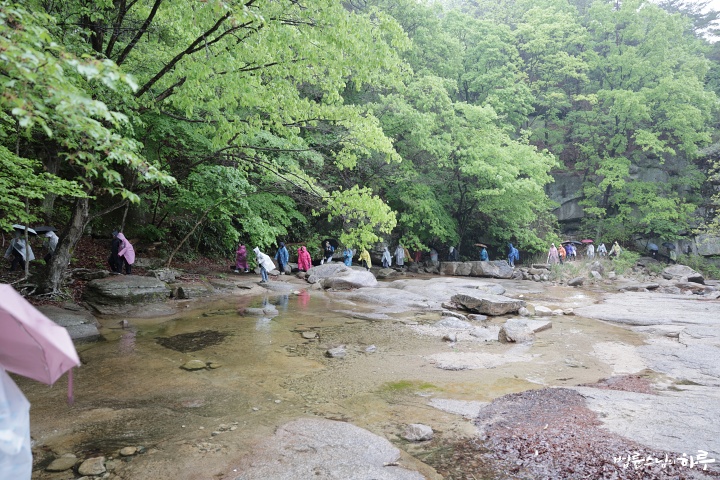
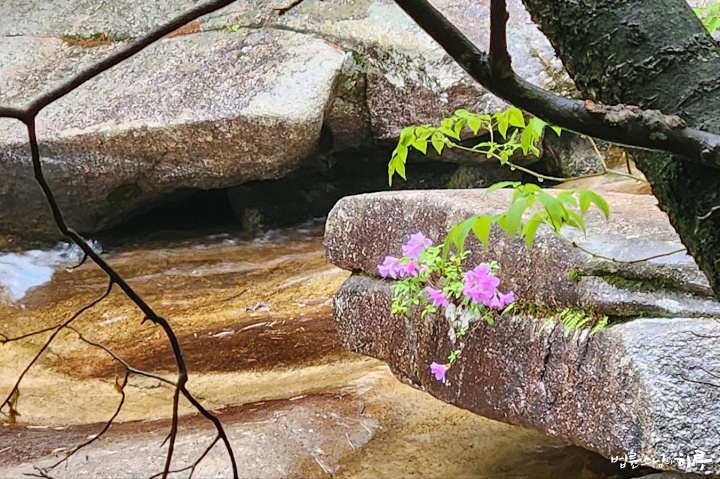
The mountains and valleys were lush with light green foliage. The spring rain made everything look even greener. The rocks in the valley were slippery from the spring rain. Each step had to be taken carefully.
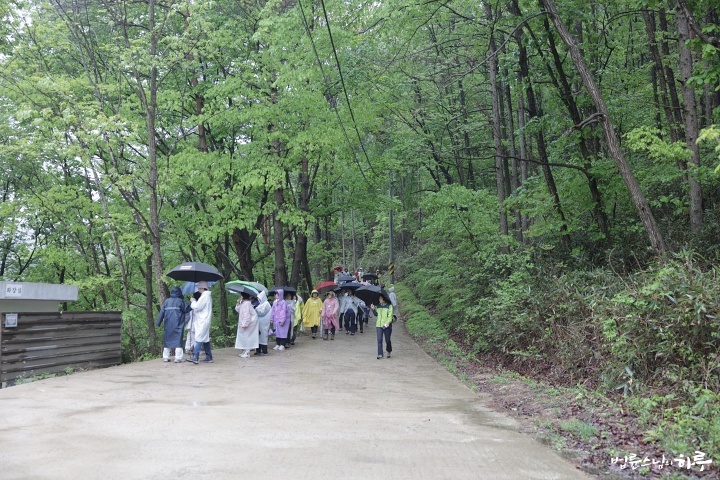
Sunim walked slowly along the path. The original walking trail seemed dangerous, so they took a different route. It appeared too risky to go further up beyond Yongchu Waterfall, so they only went as far as the waterfall before turning back. On the way back, participants at the midpoint were very happy to see Sunim.
“Are you going down already?”
“It’s dangerous to go up further, so we turned back. Please go see Yongchu Waterfall and then come down.”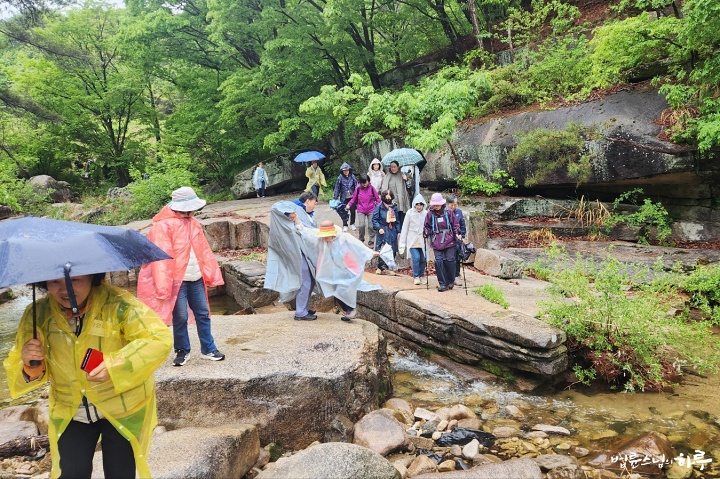
As they descended, the rear group had fallen far behind. Since this was a long-awaited offline event and participants couldn’t resist stopping to take photos in small groups along the green valley path where spring rain was falling, the gap widened even more. Sunim, leading from the front, carefully advised the event staff to station people at each fork in the path to prevent anyone from taking a wrong turn and leaving the group. Following Sunim’s guidance, people stood at key points along the route to help those who had fallen behind find their way.
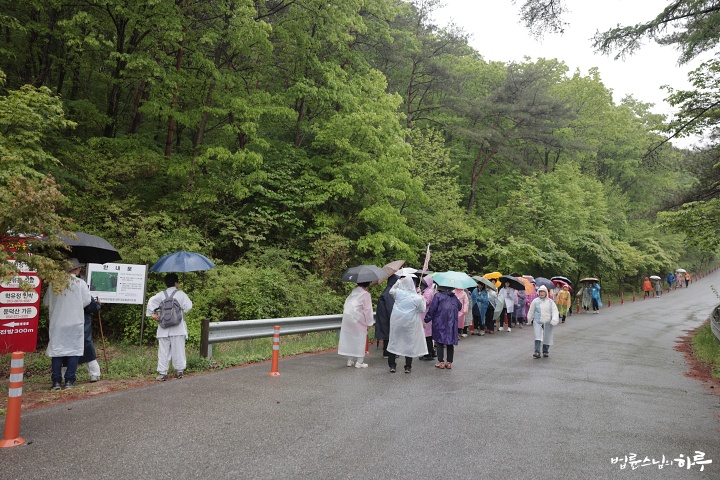
The walk concluded 30 minutes earlier than expected. The continuous spring rain had soaked clothes and shoes, and the rocks were quite slippery.
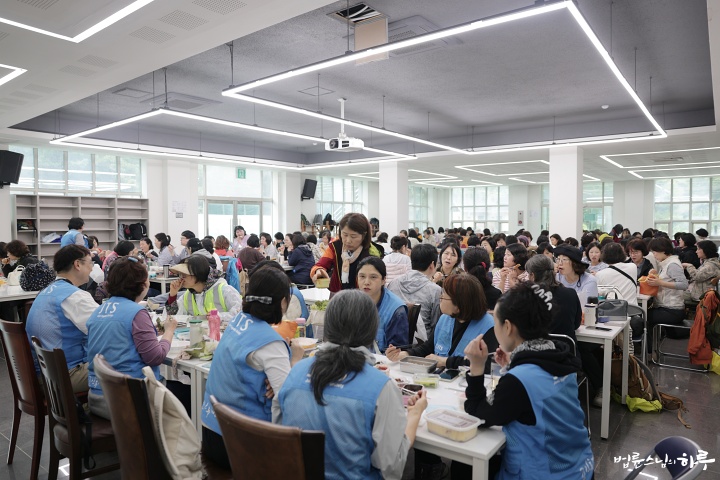
Upon arriving at the training center, participants had lunch. Sunim changed out of his wet clothes, had a simple lunch, and took a rest.
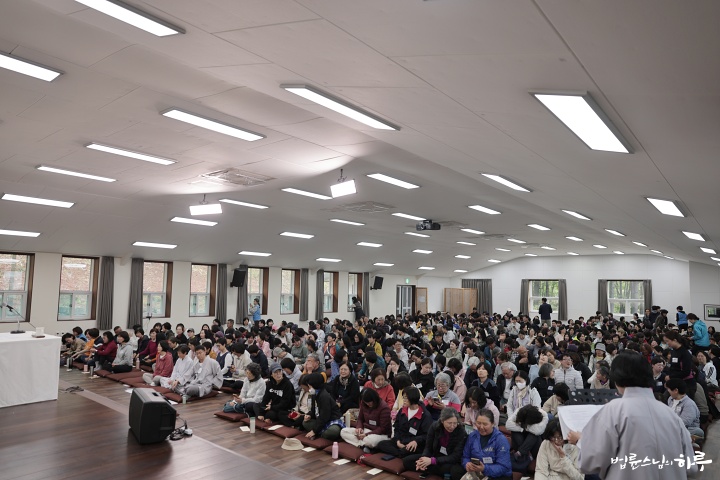
Part 2 of the Group Facilitators’ Assembly began at 1:30 PM with a preliminary program in the main auditorium of the training center. About 400 people filled the space. While it was rather chilly outside due to the spring rain, the auditorium with 400 people was quite warm. Opening the windows for ventilation brought fresh air into the hall.
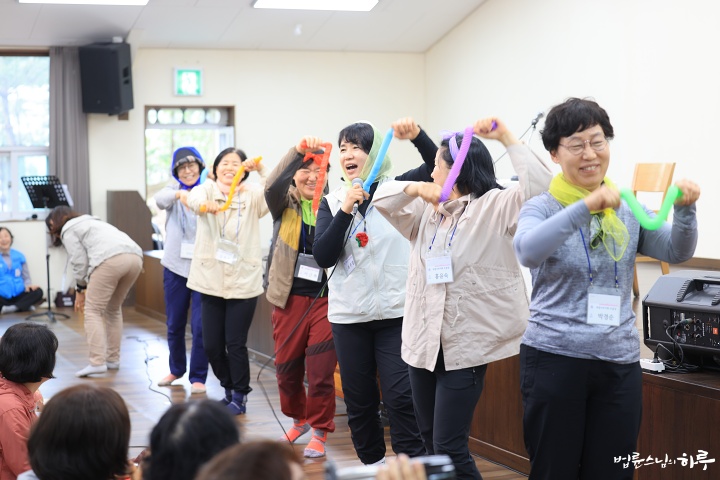
A singing contest began with each division participating. Some divisions rewrote trot songs with new lyrics, others expressed their passion through songs and freestyle dancing, and some used props and performances to show their commitment for the next three years. Each division showcased their unique style. Though it was the time when post-lunch drowsiness typically sets in, the passionate singing of the group facilitators brought tears of laughter, completely dispelling any sleepiness. Hearts opened and the atmosphere brightened.
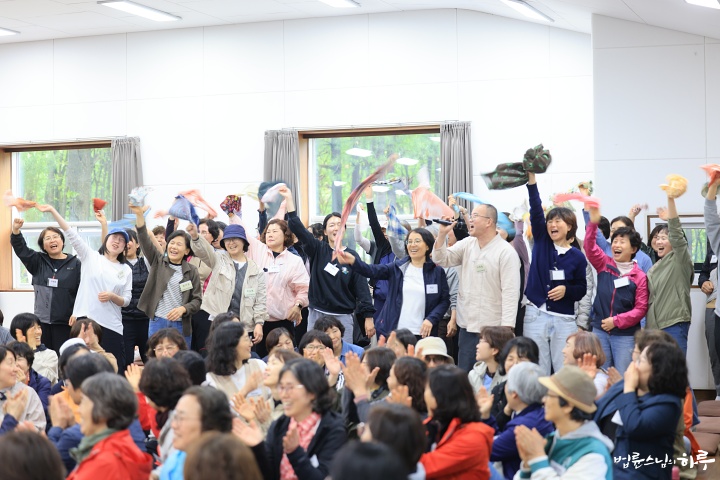
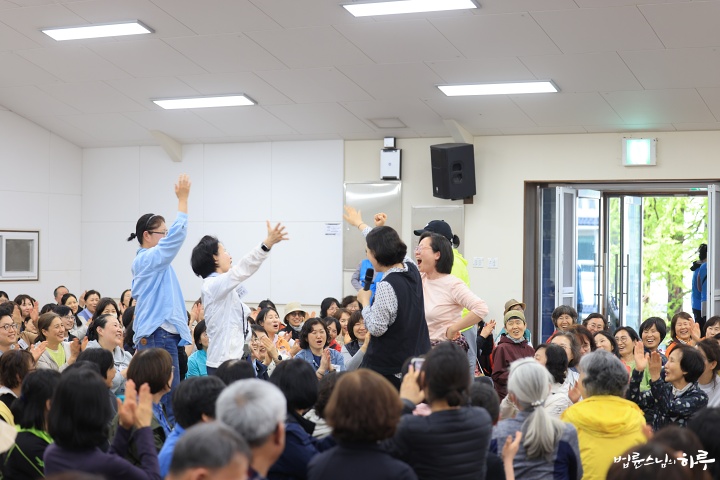
Part 2 of the Group Facilitators’ Assembly officially began at 2 PM. Starting with greetings from Dharma Teacher Seonju, each division shouted their prepared slogans. It was a time for group facilitators from each division to unite and feel empowered through these simple yet powerful chants.
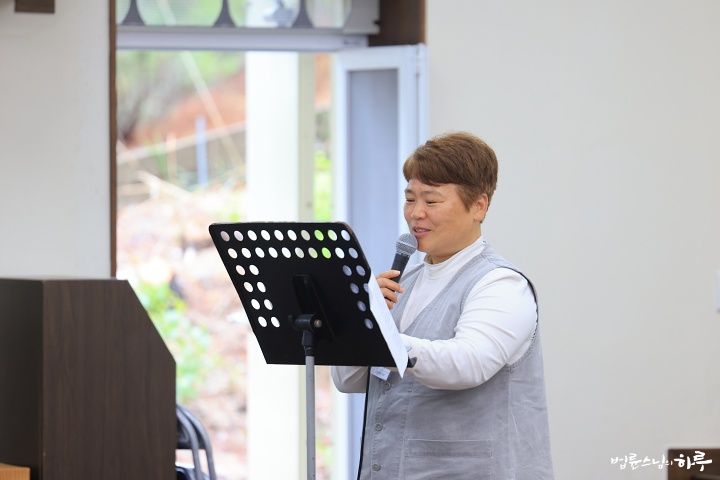
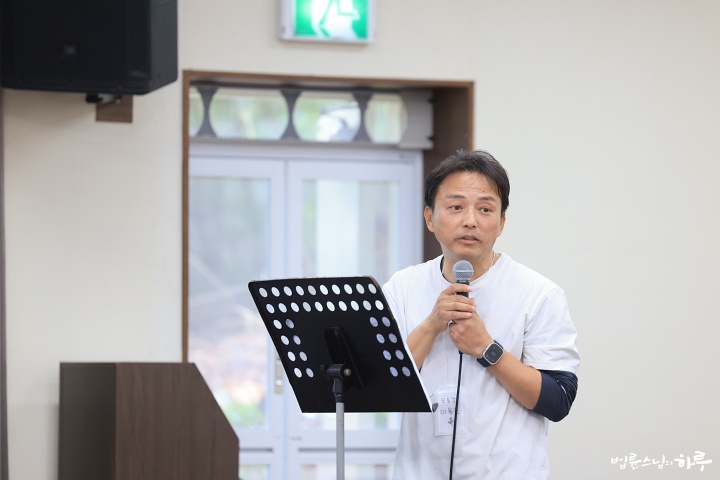
During the case study presentations, two group facilitators shared their experiences. Jung Yeon-sim from the Jeju Division introduced group activities and community sharing through onion gleaning, while Lee Yong-hoon from the East Daegu Division shared research and experiments on maximizing group members’ ideas. This was a valuable time for sharing innovative approaches.
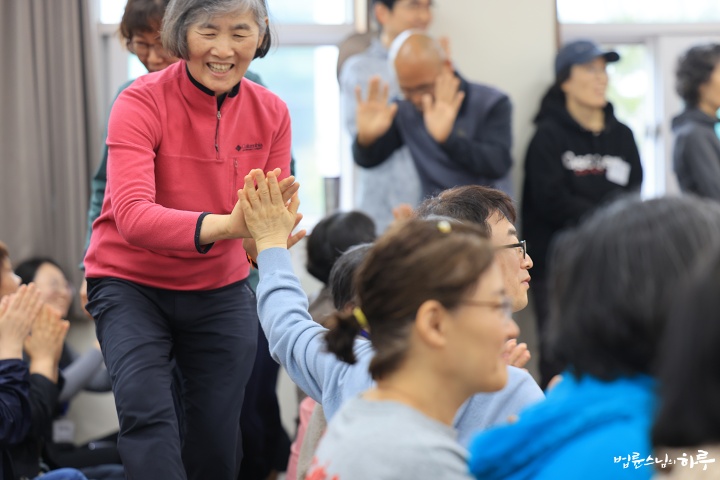
Next came the one-minute speech session. Presentations included reflections from a Youth Division group facilitator expecting to give birth next month, gratitude for senior Dharma friends who remind them of their facilitator duties, experiences from first light group activities with members, and challenges in communicating with unresponsive group members. Bae Gi-sook from the Gwangju-Jeonla Division received much applause for her two-line acrostic poem expressing her aspirations.
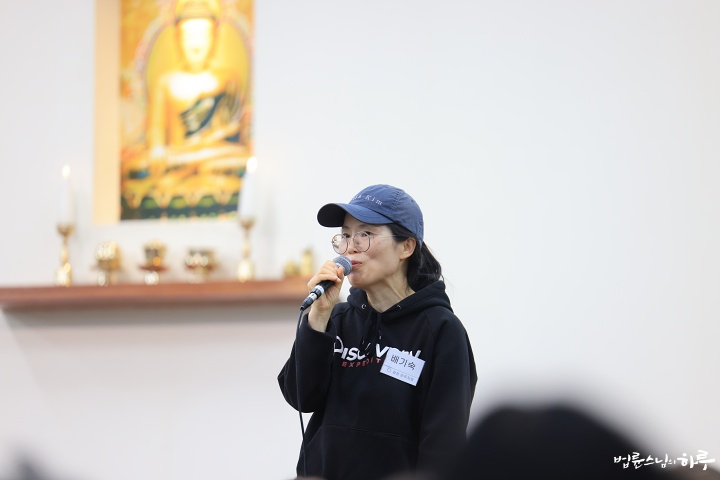
“I will perform my group facilitator duties ‘sal-sal’ (gently). The first ‘sal’ means I will observe my reluctant and withdrawing mind. The second ‘sal’ means I will approach warmly, as I don’t know most of our 60 group members well yet. I will be a group facilitator who reaches out warmly first. So I will do my facilitator duties ‘salsal’ (gently).”
While the group facilitators gave their one-minute speeches, Sunim came to the back of the auditorium to listen to their stories. The assembly requested Dharma teachings from Sunim with a chanting request and three prostrations.
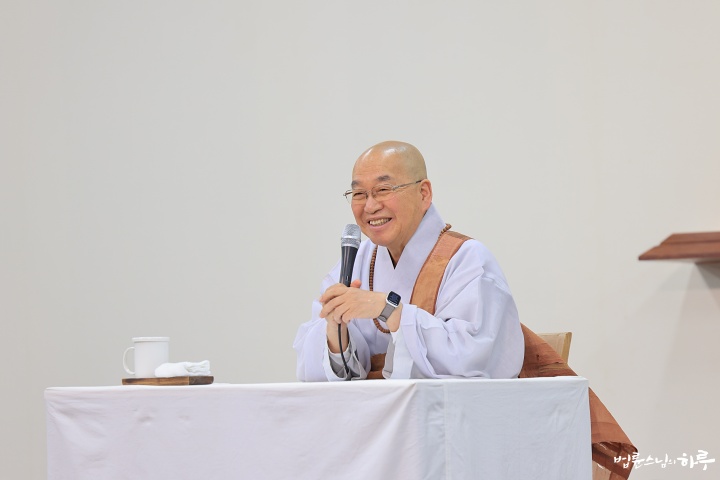
“Yes”
“It was raining – did you get very wet?”“No”
“Jungto Society has always aimed to be a member-centered organization. However, looking at the current situation, general members are somewhat removed from the central axis. While they’re called members, many actually function more like supporting members. Group facilitators and division leaders have primarily focused on managing Jungto Dharma School students. This focus on student recruitment has led to management efforts being skewed in that direction. As a result, while we’ve paid great attention to the Dharma School where ordinary citizens can encounter Jungto Society, we’ve often neglected members after they join, leaving them without much attention. This has resulted in new members continuously joining, but not many remaining over time. If there are five leading members in a group, the elected group facilitator is responsible not only for the leading members but also for managing 40 to 50 general members. Among the remaining four, one might serve as a Jungto Society coordinator or team leader, another might run the Jungto Dharma School, and another might conduct the Jungto Sutra Course. An important role of the group facilitator is to help leading members perform their duties well. While supporting and managing leading members in their roles is important, the primary focus should be on managing and guiding general members. The group facilitator’s role is to form a core team with two or three engaged volunteers among the general members and lead both practical activities and practice together with all members.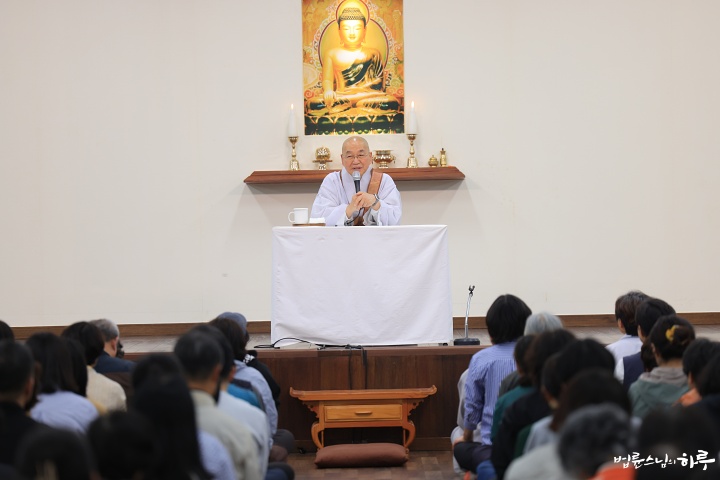
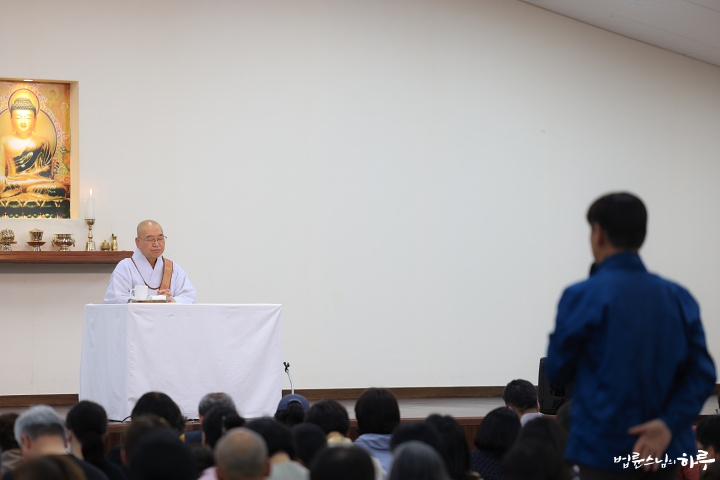
After Sunim’s keynote Dharma talk concluded, it was time for the Dharma Q&A session. Pre-selected questioners honestly asked Sunim about the difficulties they had experienced while serving as group facilitators.
I proposed a KakaoTalk communication room and home Dharma assembly guidelines to revitalize our group, but they weren’t adopted. As a new group facilitator, what direction and perspective should I take to revitalize the group?
I think a group facilitator should be flexible and warm. However, my personality is actually quite strict, so I’m worried about burdening group members over the three-year period. Is there a way to reduce this burden?
I created an anonymous meeting room on Carrot Market to do plogging near my home with citizens as a group activity. Then two men, who seemed to be single, sent me invitations to join singles’ gatherings. Is this the right way to proceed?
Since my first taste of practice while attending Jungto Dharma School, I’ve been consistently doing 300 prostrations for three years. Sometimes I feel reluctant, and people around me say I’m working too hard and that I can stop. What mindset should I have?
Sharing among group facilitators seems different from sharing with group members. Should I share my feelings openly with group members as they are, or should I share in a more refined manner?
I feel tense and exhausted after communicating multiple times with a group member who seems to have obsessive tendencies. I’ve only been a group facilitator for a month – how should I care for such people going forward?
What aspects should I develop more while serving as a group facilitator? Please suggest what kind of person I should be after completing my three-year term as group facilitator, so I can keep it in mind and practice steadily.
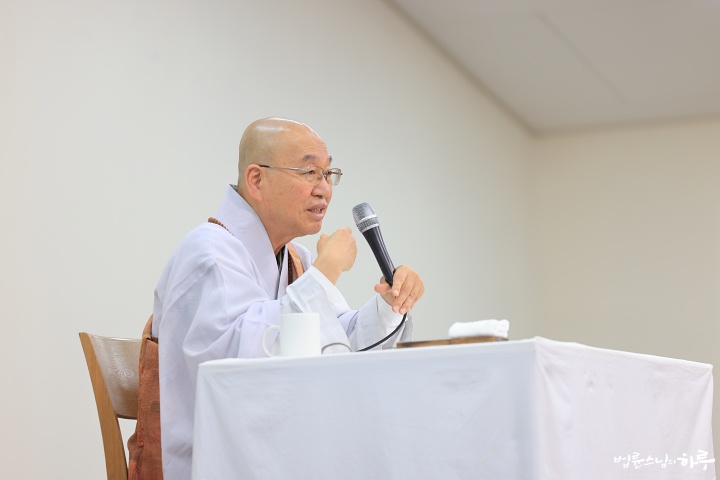
In his closing remarks, Sunim encouraged the group facilitators.
“Now, repeat after me. Group facilitators are the flowers of Jungto Society.”“Group facilitators are the flowers of Jungto Society.”
“Being a group facilitator is like working in hell at Jungto Society.”“Being a group facilitator is like working in hell at Jungto Society.”
“Group facilitators deal with and respond to all kinds of people. Being a branch leader is easier. You work with smart group facilitators. Being a division leader is even easier. You work with smart branch leaders. Then being a representative is even easier. Why? Because you work with smart division leaders. Then being a guiding Dharma teacher is the easiest. Why? Because you work with Dharma teachers. But who has the hardest job? The group facilitator. It’s the most difficult because you have to care for and deal with demanding members of the Sangha. So in Jungto Society, while you are flowers, your work is like working in hell. Lotus flowers bloom in hell. Please carry out your duties as group facilitators with this perspective. Thank you.”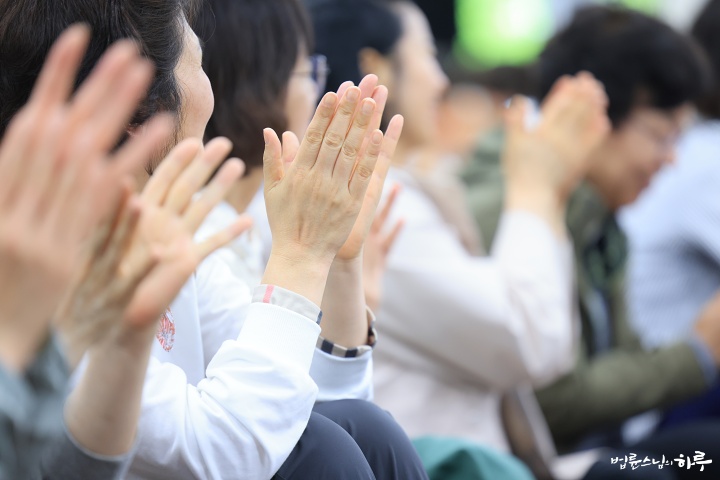
The assembly expressed their gratitude to Sunim with applause. Finally, participants shared their reflections on the Group Facilitators’ Assembly. Among the three group facilitators who shared, the last presenter received much empathy from the attendees.
“It was nice to carpool here and chat about various things, and walking through the valley was wonderful. Though the day was short, it was a fulfilling time. I was moved to tears when our group facilitator asked questions and we listened to Sunim’s words. It was precious to gather here with people who are in the same boat or have similar concerns, to get to know each other’s faces and hear each other’s stories. I’m excited about what I’ll be like in three years after serving as a group facilitator, believing I’ll be able to get along well with anyone. The talent show was incredibly enjoyable. I will cherish the aspiration I developed today and properly fulfill my duties as a group facilitator for the next three years. Thank you.”
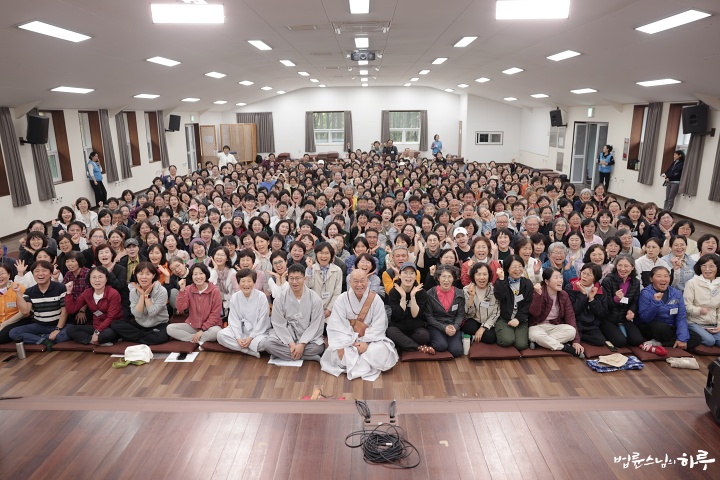
Finally, after hearing remarks from Yang Yoon-deok, President of Jungto Society, and reciting the Four Great Vows, the 2026 Group Facilitators’ Assembly concluded with a group photo. The group facilitators cleaned the venue and returned to their respective regions after receiving rice cakes for the journey home.
At 5 PM, Sunim departed from the training center and traveled to Dubuk Jungto Retreat Center. He arrived at Dubuk Jungto Retreat Center around 7:30 PM. Sunim had a late dinner and concluded his day.
Tomorrow, he has a meeting in the morning and plans to spend the afternoon with other monks.