How Can I Calm My Mind When It’s Swept Up by the Stock Market?
Apr 28, 2026. Weekly Dharma Assembly (Morning), External Meeting
Apr 28, 2026. Weekly Dharma Assembly (Morning), External Meeting
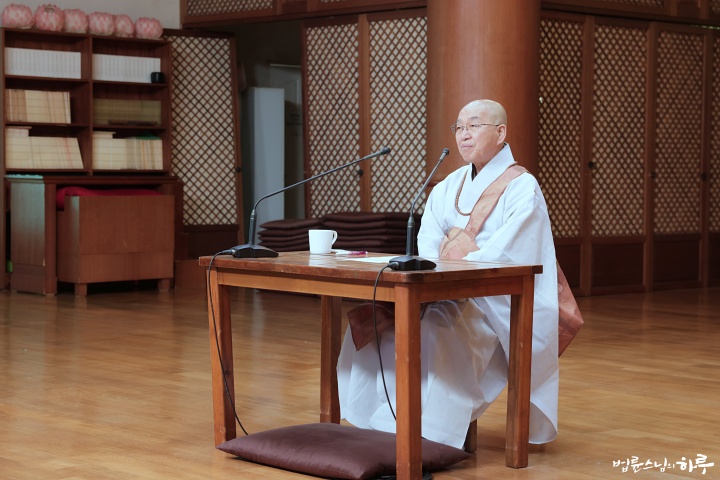
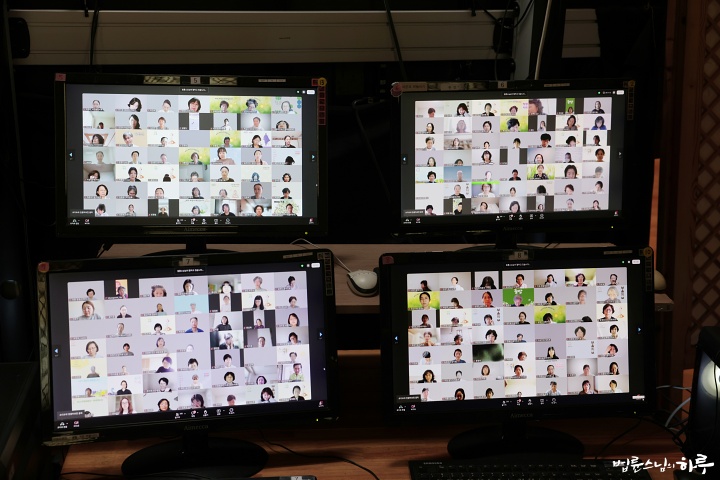
Hello. Today is the day of the Weekly Dharma Assembly where Jungto practitioners examine their practice perspectives.
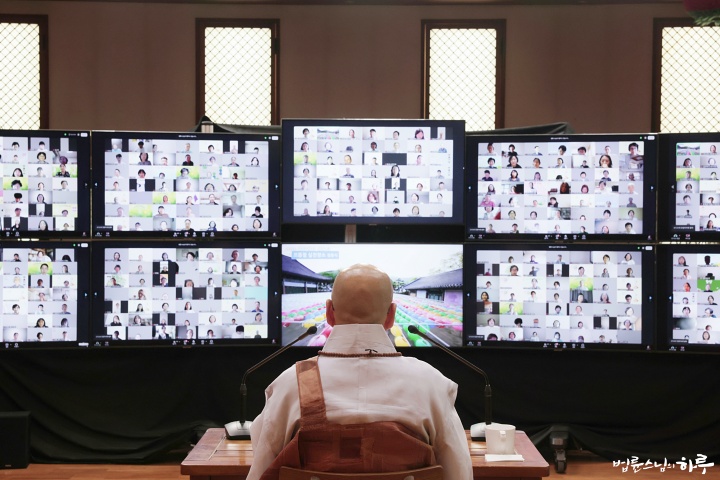
After completing morning practice and meditation, Sunim had breakfast and attended the Weekly Dharma Assembly at 10 AM.
First, the Three Refuges and Heart Sutra were recited, followed by watching a video of “Weekly Jungto Practitioner News.” The assembly requested Dharma teachings from Sunim with a chanting request and three prostrations.
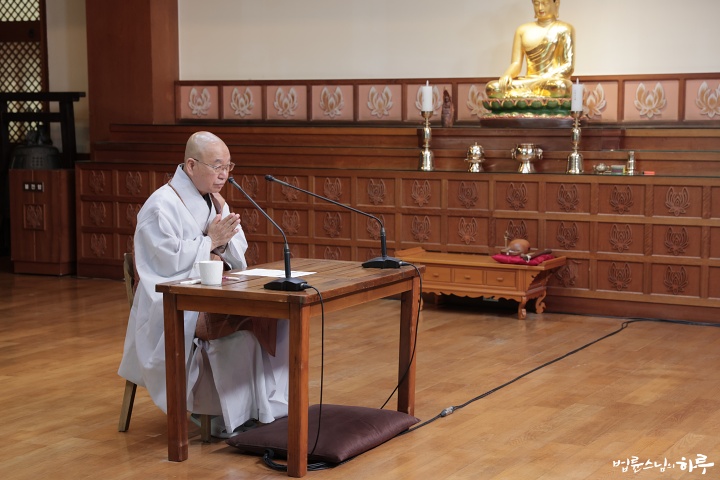

War Only Brings Suffering to Everyone
Although U.S. President Donald Trump speaks as if the ongoing war in the Middle East will end soon, it continues to drag on. The Strait of Hormuz still lacks freedom of navigation, and with oil and gas supplies disrupted in this situation, rising oil prices have led to a global economic crisis. Fortunately, South Korea has strategic oil reserves, providing some buffer. The government is responding with various policies, including securing additional oil supplies and reducing taxes to stabilize oil prices. It would be beneficial if Korean citizens could also help overcome this crisis by conserving energy such as gasoline and electricity, working together with the government. This war also seems unlikely to end easily. The Russia-Ukraine war was initially expected to end within a month or two, then predicted to conclude within at least a year, but it has already exceeded four years. The U.S.-Iran war is likely to continue in a similar manner. The suffering from war is not limited to direct victims. War endangers the global economy, bringing hardship to countless people who have no direct connection to the conflict. While winning or losing may be important to those engaged in war, from a third-party perspective, who wins or loses is not as significant as the fact that war brings suffering to everyone. Yet those consumed by a kind of ‘anger’ – the need to win – fail to see others’ suffering and inflict pain on everyone for the sake of personal victory. This is not just a problem of a few individuals or certain leaders. We all harbor such desires. Even in families, when couples fight over ‘who wins’ in battles of pride, children suffer greatly as a result. Domestic politicians, too, become so obsessed with winning and losing that rather than easing confrontation and conflict, they often end up fueling it further.
Political Participation by Jungto Society and Individuals Must Be Distinguished
Local elections are coming up in early June. These days, wherever I go, many candidates come up to greet me. You can easily see them on the streets as well. We live in a democratic society, and in a democratic society, citizens directly elect their leaders. Therefore, participating in elections and voting is our right as citizens. Candidates are also free to showcase their abilities to the fullest extent within the bounds of election law. Supporting any political party or individual is also within your rights. We should not view the exercise of individual political rights negatively. While political activities may generally appear negative to us, we should not view those engaged in political activities negatively. Rather, citizens’ political activities should be encouraged and viewed positively. However, Jungto Society is a community of practitioners. While environmental movements, peace movements, and relief activities can be conducted in the name of Jungto Society, activities outside of these cannot be carried out using the organization’s name. Of course, individual Jungto members are free to participate. Some people misunderstand that because we say “not in the name of Jungto Society,” Jungto members do not engage in political activities. Conversely, some members send text messages with political content to other Jungto members, thinking that individual members are free to engage in political activities. Both of these misunderstandings are inconsistent with Jungto Society’s direction. You must be able to distinguish between Jungto Society’s position and individual members’ positions regarding political activities. Joining a political party is an individual’s freedom. However, you should not encourage party membership in the name of Jungto Society. Supporting a specific party or candidate as an individual, not as a Jungto member, is a matter of personal freedom. Of course, Jungto Society can also support a candidate or party if it determines that they are essential for maintaining peace on the Korean Peninsula. We can support those who demonstrate exceptional capabilities in environmental protection. We can support policies that excel in helping those in difficulty and poverty. However, such decisions cannot be made by individuals alone; they must be thoroughly discussed and decided through Jungto Society’s decision-making bodies. This requires official procedures to determine whether it aligns with Jungto Society’s founding purpose and whether members agree. I hope you understand this point well to avoid confusion during election seasons like now.
No War of Aggression Can Be Justified for Any Reason
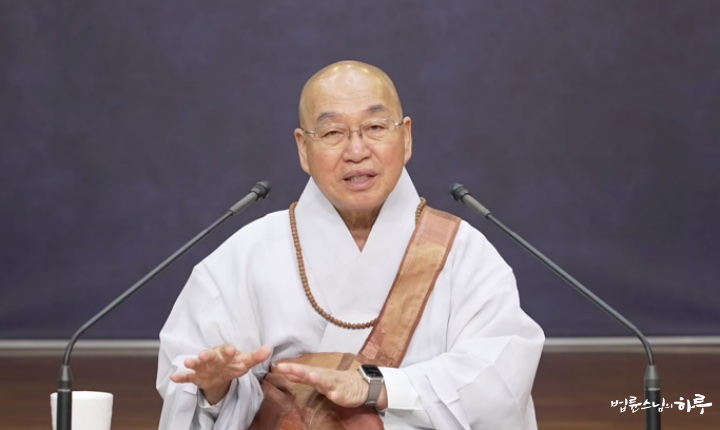
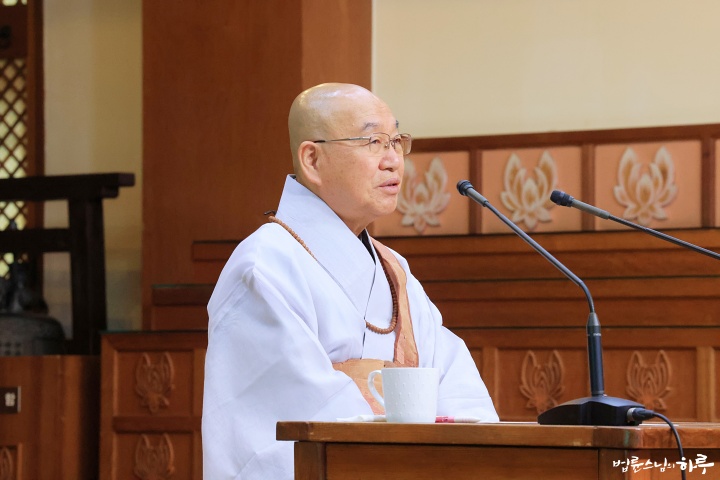
The countries currently waging wars are the United States and Russia, which rank first and second in global military power. As Russia invades its neighbor Ukraine, and the United States and Israel attack Iran, many countries around the world remain silent. When wars break out between smaller nations, major powers could say, “Stop immediately. If you don’t cease the war, we will impose sanctions.” In fact, President Trump stopped the war between Thailand and Cambodia and mediated the conflict between India and Pakistan. He even claimed he deserved the Nobel Peace Prize for ending wars around the world. However, he seems unaware of the wars he himself has initiated. He appears to be under the illusion that the wars he started are for peace. And the entire world remains silent about these wars. Currently, European countries, while unable to oppose these unjust wars of aggression, are at least not participating in them. President Trump is strongly criticizing and threatening allied nations for not joining the wars. Recently, some European leaders and conscientious intellectuals have begun to take clear positions against the wars. Pope Leo XIV from the Vatican as a religious leader, and the Prime Minister of Spain as a political leader, have issued statements saying “This war is unjust.” In response, President Trump has criticized the Pope and threatened to exclude Spain from NATO. While I’m not sure what the Korean people and leaders are thinking, it seems clear that they at least maintain the line of not participating in these wars of aggression. However, they don’t yet seem to have the courage to speak out about the injustice of these wars and oppose them. This is likely due to concerns about the national losses we might face if we oppose the United States. However, we must clearly understand in our conscience that it is not justified for a large country to invade and bomb a small country for any reason. Don’t we say that the Korean War was North Korea’s war of aggression because North Korea attacked first? Regardless of the historical issues between Ukraine and Russia, the world opposes Russia’s war of aggression because Russia launched the military attack first. Similarly, we must maintain the perspective that any preemptive attack on Iran, for whatever reason, constitutes aggression. What is needed now is to stop the war first and then adjust the remaining interests during a ceasefire. During the Korean War, the first year saw fierce fighting with front lines moving up and down between north and south before entering ceasefire negotiations, which took two years. Even during the ceasefire negotiations, the war continued and countless people were sacrificed. Nevertheless, our country achieved a ceasefire three years after the war broke out, and this state has been maintained until now. Now, rather than just an armistice, we need to sign a peace agreement that completely ends the war, and based on this, establish peaceful relations between South and North Korea. South and North Korea have maintained peace for the past 70 years, but the war has not yet been officially ended. Legally, we are still in a state of war. That’s why Jungto Society has always had a deep interest in maintaining peace on the Korean Peninsula. Our country has directly experienced how much suffering war causes in terms of human casualties and property damage. Yet we are watching other countries’ wars as if watching a fire across the river. At the very least, we must clearly maintain the position that we neither support nor participate in unjust wars of aggression. And it would be even more desirable if we could play a role in opposing war, helping war victims, and contributing to stopping wars.”After Sunim’s keynote Dharma talk ended, it was time for the Dharma Q&A session where Jungto members could ask questions about their daily concerns. A person who had registered a question in advance asked their question.
How Can I Calm My Mind That Gets Swept Up in the Stock Market?
“As Korea’s stock market continues its upward trend these days, people naturally talk about stocks when they gather. At a meeting I attended last week, stock talk came up regardless of the original topic. While eating lunch, someone looked at their phone and said, ‘Oh, I just made enough for lunch. I’ll buy lunch today.’ Another person said, ‘Someone I know made a lot of money just by subscribing to IPOs.’ Yet another said, ‘With bank interest at only 3% and no pension, I started investing in stocks a month ago thinking about retirement and my children.’ When I said, ‘Isn’t stock trading unearned income?’ they responded, ‘Stocks require a lot of study and constant attention, so it’s mental labor.’ While I could understand their point to some extent, I wondered if this could really be called ‘mental labor’ when it’s neither art nor creative work. How can I calm my mind that gets swept up in trends like real estate and stocks?”
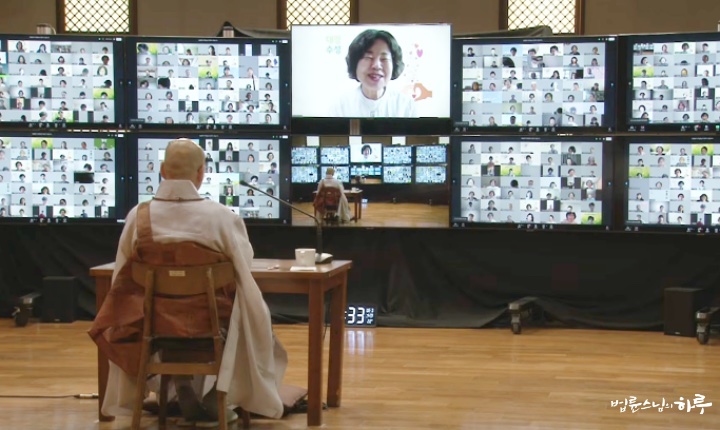
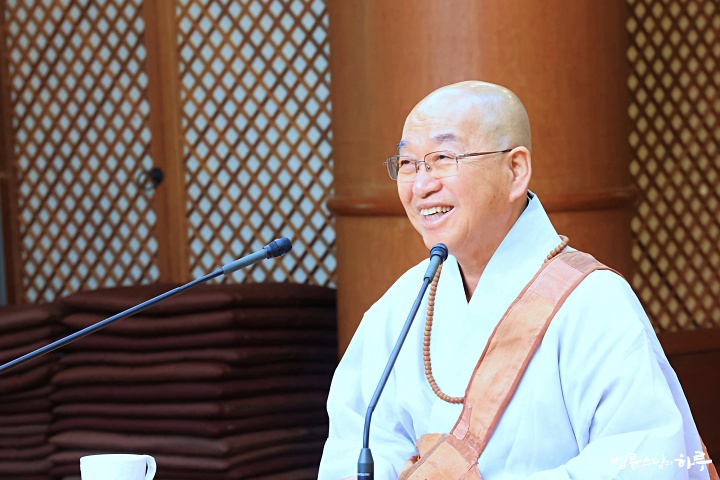
“Yes, thank you.”
After the conversation with the pre-registered questioner ended, Sunim took questions from the audience. When there were no more questioners, he entered meditation and concluded today’s morning Weekly Dharma Assembly with announcements and the Four Great Vows.
Sunim organized his backlog of work and reviewed manuscript edits. He then went out for an external meeting at 4 PM and returned to the center. In the evening, meetings with visitors who came to see Sunim continued late into the night.
Tomorrow, after a breakfast appointment in the morning, he will attend the memorial service for the late Park Sang-eun and give a Dharma talk. In the afternoon, he has several meetings scheduled.