I worry that people around me might die when they get sick
Apr 28, 2026. Farm work (tending the garden), watching a movie, visiting a nursing hospital
Hello. This morning, Sunim did farm work, watched a movie in the afternoon, and visited a nursing hospital.
Sunim began the day with early morning practice and meditation. After a simple breakfast, he tended to the vegetable garden.
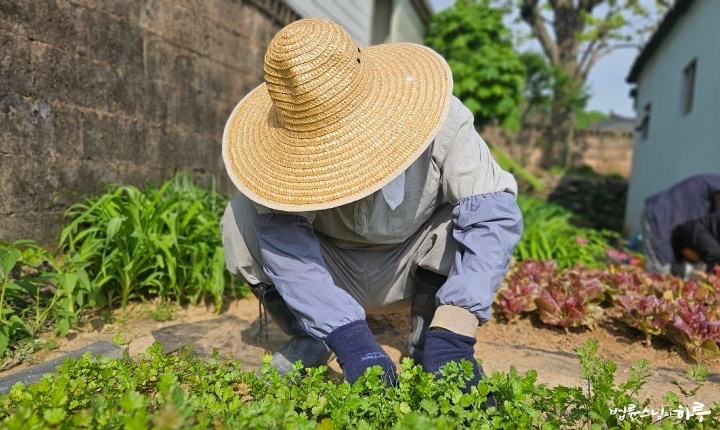
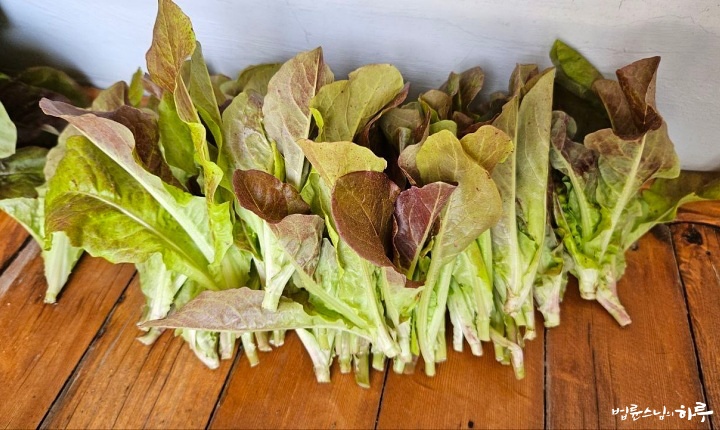
He pulled weeds from the field and harvested leafy vegetables for wraps. After finishing the morning work, he prepared to go out.
Today, Sunim visited a nursing hospital to see his older brother from his secular family who is hospitalized there.

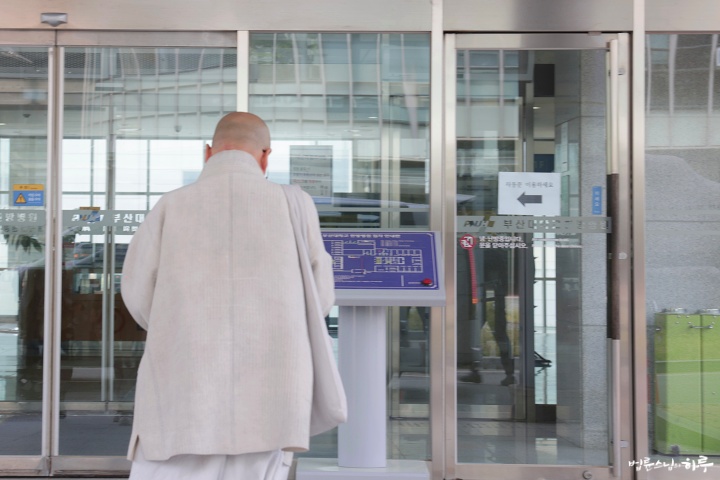
Since it was a weekday, there was no traffic, and Sunim arrived at the hospital within an hour. The large university hospital was crowded with people and cars. We barely found a parking space. Sunim went to his brother’s hospital room to visit him.
In the afternoon, Sunim planned to watch director Jung Ji-young’s film “My Name Is,” which deals with the Jeju 4.3 Incident. A few years ago, at the end of May, Director Jung Ji-young visited Sunim to request support for his new film production. At that time, Director Jung was facing difficulties raising production funds due to the challenging investment environment in the film industry and the weighty nature of the film’s subject matter, so he was visiting prominent figures. Sunim was one of the people Director Jung met during that time. Director Jung started the film production through crowdfunding, and despite various difficulties, it took nearly three years until the film was submitted to the Berlin Film Festival. “My Name Is,” starring actress Yum Hye-ran and released on the 15th of this month, attracted 100,000 viewers within 5 days of release and over 150,000 viewers as of April 25th.
Before the release, Sunim was invited but couldn’t attend due to a lecture in Daegu. A few days ago, Director Jung called Sunim before departing for Europe, requesting that he please watch the film. Coincidentally, Sunim’s overseas schedule to Syria was canceled, giving him some free time, and since he had to visit someone near Busan, he decided to watch the movie today. Since the movie started at 1:10 PM, they had a simple lunch of jjajangmyeon at a nearby restaurant before heading to the theater.
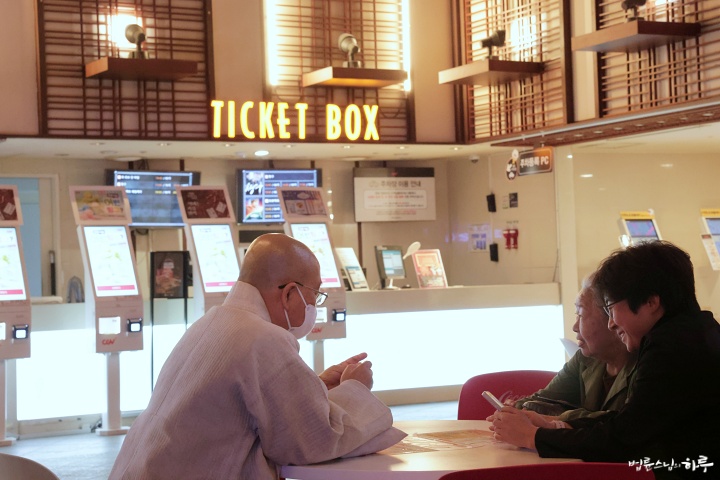
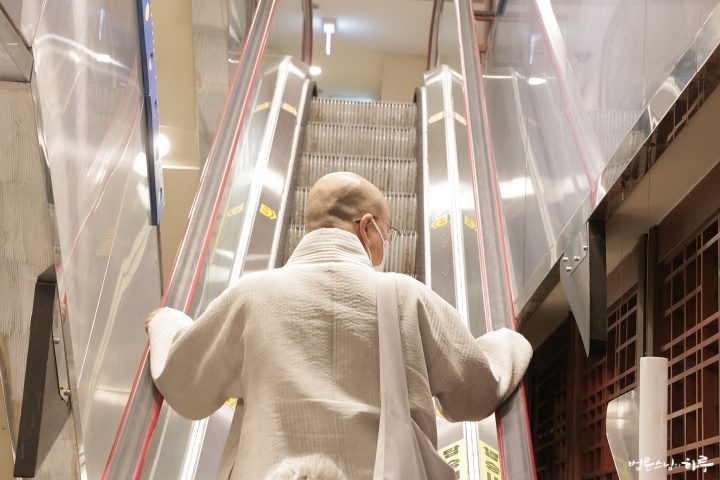
While waiting for the movie to start, they talked about when Sunim last went to a movie theater. The movie theater was very different from when Sunim went 40 years ago. Perhaps because it was a weekday afternoon, there weren’t many people in the theater. There were hardly any staff visible, and only about one person was at the snack bar.
The theater showing “My Name Is” was originally a general seating theater that could accommodate about 200 people, but it had been renovated with recliner chairs (functional chairs that allow you to rest with the backrest reclining and footrest rising) to about 90 seats. Many movie theaters these days have been renovated with recliner chairs.
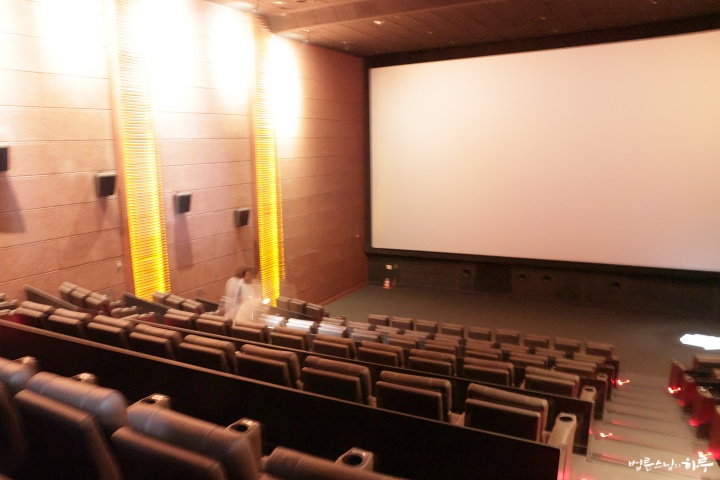
Sunim entered the dark theater and took his seat. The theater lights went out, and the movie began. He watched intently for nearly two hours.
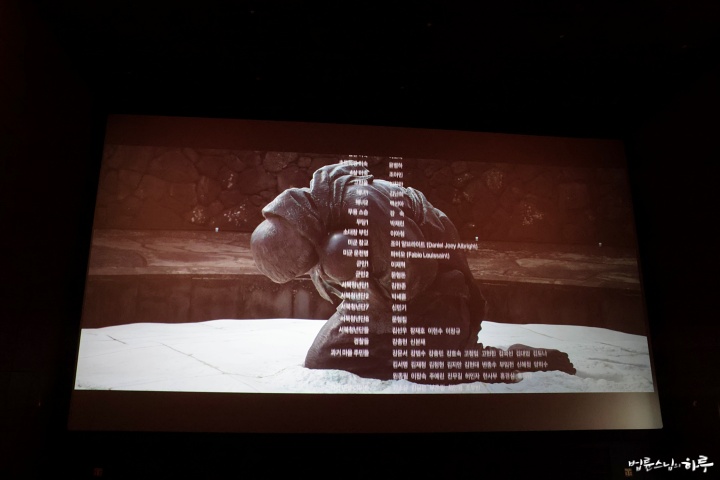
When the movie ended, it was difficult to get up from the seat. The movie left a long-lasting impression.
Sunim had watched the movie for two hours without moving. Perhaps from sitting in one position for so long, his legs were numb and he couldn’t immediately get down from the chair. Sunim carefully and slowly descended the dark theater stairs. After leaving the theater, he headed to the parking lot to get to the car. In the elevator to the parking lot, a Haengja who had watched the movie with him asked.
“What was the Jeju April 3rd Incident? Why did they kill people so indiscriminately? It was so cruel.”
After returning to the car, we searched online about the Jeju 4.3 Incident and shared impressions of the movie. The Jeju 4.3 Incident was a heartbreaking history for the people of Jeju. We learned that the massacre of civilians by public authority continued for 6-7 years, the background of why these facts couldn’t be revealed, and the complex situations that arose after liberation from Japanese colonial rule when Korea was divided into North and South. Watching the movie sparked curiosity, providing an opportunity to learn about unknown history. We also learned that the president had apologized to the families of the victims on behalf of the government. It was an art film that approached the somewhat heavy and difficult subject not ideologically but universally in terms of human suffering. It made us think that many people should see it.
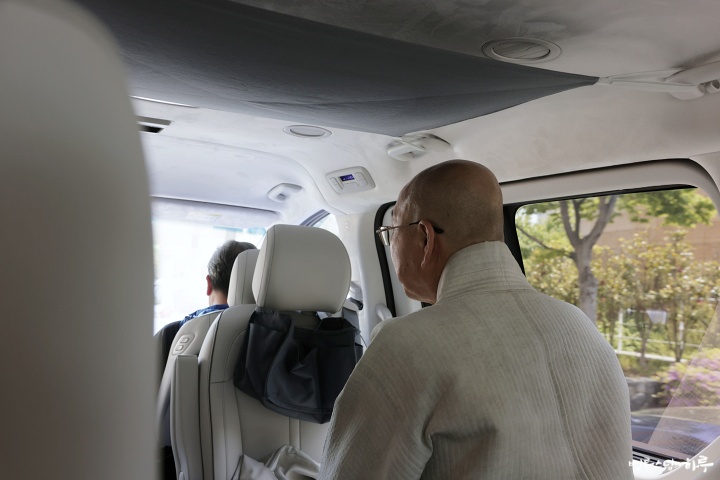
After leaving the movie theater, Sunim went to a nursing home in the Ulsan area to meet his sister-in-law who is staying there. He arrived at the nursing home, met his sister-in-law, asked about her well-being, talked about recent events, and then left.
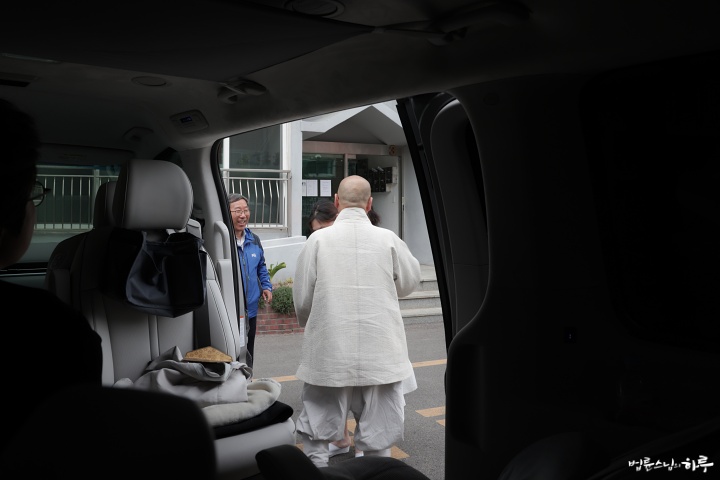
Sunim hurried back to Dubuk Jungto Retreat Center by car.
We received a call that guests would suddenly visit after hearing that Sunim was at Dubuk Jungto Retreat Center.
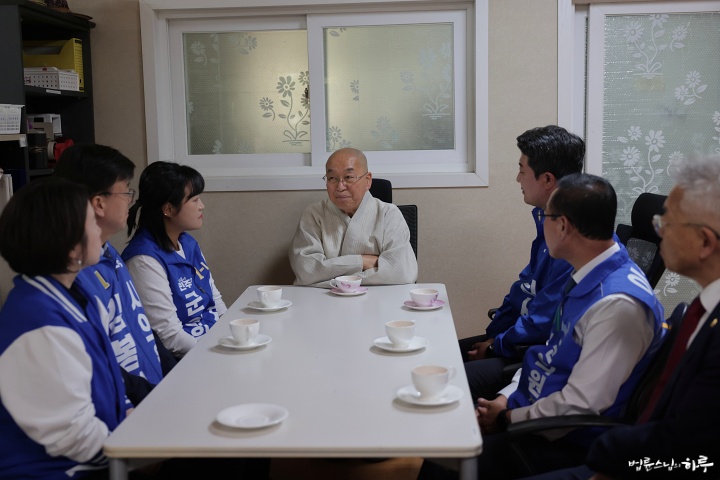
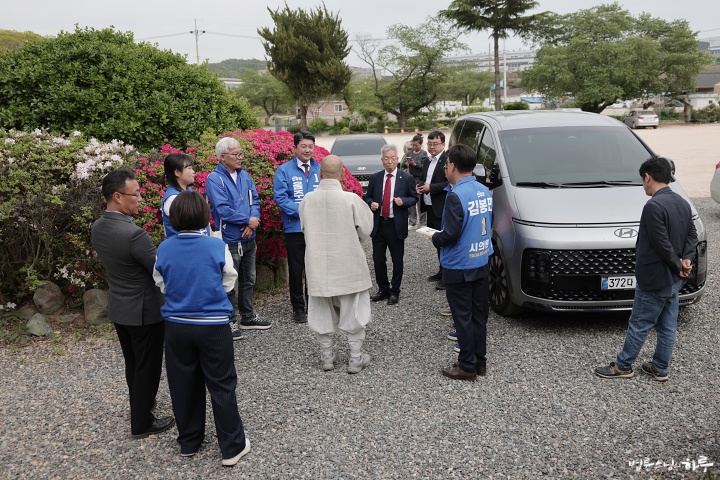
When Sunim arrived at Dubuk Jungto Retreat Center, lawyer Kim Yong-ju and local election candidates were waiting to greet Sunim. Sunim warmly greeted them and invited the guests to his office for tea. After talking with the guests for 30 minutes and taking photos, the meeting concluded.
After seeing off the guests, Sunim packed his belongings. After a simple dinner, he departed for Seoul around 8 PM. He arrived at Seoul Seocheo-dong Jungto Center close to midnight and concluded his day’s activities. Tomorrow is the day of the Weekly Dharma Assembly. Sunim plans to give a dharma talk at Seoul Seocheo-dong Jungto Center in the morning and spend the rest of the day in meetings.
Since there was no dharma talk today, this post concludes with content from a Dharma Q&A session held in April.
I Worry That People Around Me Might Die When They Get Sick
“I am a mother raising a seventeen-year-old child with intellectual disabilities. After losing my older sister and younger brother to illness within the past year, both my child and I have developed a greater fear of death. Whenever I feel even slightly unwell, my child frequently asks, ‘Mom, you’re not dying, are you?’ Recently, my younger sister had laparoscopic surgery, and I was afraid something might go wrong with her. When someone around me is sick, I worry they might leave me again. I’m curious about how I can stop having these worries.”
“Let’s say you were bitten by a snake in the mountains. You immediately went to the hospital and received an antivenom injection, so nothing happened. What effect might this one experience have next time? If after being bitten by a snake once, you become afraid of snakes and fear being bitten again just by entering grassy areas, this is trauma. Simply put, it’s a wound in your heart. Similar proverbs include ‘A heart startled by a snake is startled by a rope,’ and ‘A heart startled by a turtle is startled by a pot lid.’ On the other hand, what if you were afraid of snakes but after being bitten once, you realized it just stings a bit and if you get an antivenom injection, it’s nothing serious? Your fear of snakes might actually decrease, and you might think, ‘Being bitten by a snake is no big deal.’ In this case, the incident has become an experience. In other words, if you make an incident into a wound, it becomes a burden and obstacle in your future life, but if you make it into an experience, it becomes an asset in your future life. It’s the same with people dying. If after experiencing someone’s death, you live in constant fear of who might die next, that’s trauma. On the other hand, if you can accept it thinking, ‘It’s difficult, but those who are alive continue living!’ then it becomes an experience. Right now, questioner, this incident has left a wound and you’re experiencing trauma symptoms. In such cases, it’s necessary to get appropriate help from a psychiatrist. If your child is also struggling with the same symptoms, it’s necessary to go to a place that provides child psychological therapy for trauma treatment. So what is practice? It’s making an incident into an experience. When you realize that although you thought you couldn’t live if your mother died, you’re actually living well afterward, you come to accept that ‘Even if someone dies, there might be temporary difficulties, but it won’t significantly affect my life.’ We must make the many incidents we experience in life into experiences. For example, if someone is scolded for not doing their job well and then becomes scared and afraid of working for fear of being scolded again, that has become trauma. But if they can say, ‘I was scolded for not doing well at first, but it’s fine once I got used to it,’ that has become an experience. Ultimately, what’s important is not the incident itself, but how we accept it. We need to keep accumulating experiences. And just because bad things happen in succession doesn’t mean you’re unlucky. For example, when you roll a die with numbers 1 through 6, you might get 1, 2, or 6. The probability of each number coming up is one-sixth. But when you actually roll it, the number 1 doesn’t come up exactly once in six rolls. In six rolls, it might come up all six times, just once, or not at all. This is called experimental probability. But if you keep rolling this die – a hundred times, a thousand times, ten thousand times – as the number of rolls increases, the probability of getting 1 gradually approaches one-sixth. Rain falling from the sky follows the same principle as dice. It would be nice if rain always fell in moderate amounts, but sometimes it pours and causes floods, and sometimes it doesn’t rain at all and causes droughts. Is only moderate rain natural, while too much or too little rain unnatural? No, they are all natural phenomena. If you observe over a long period, you can know that ‘floods occur about this many times in ten years, droughts occur about this many times in ten years.’ Since major floods or droughts can come about once every ten or twenty years, we need to prepare in advance by building embankments, constructing dams, or digging wells. If we prepare like this, it’s fortunate when rain falls moderately, and we can manage to some extent even when there’s too much or too little rain. Living life while preparing like this is what life is about. But there are times, maybe once or twice in a hundred years, when rain pours so heavily that even these preparations are useless. At such times, damage is inevitable. This isn’t because you’re unlucky – even this is part of natural phenomena.”“Yes, I understand.”