I Just Look at My Phone After Work. Is This Okay?
April 26, 2026. Farm Work (Pruning Castor Aralia Trees), Guest Schedule
Hello. Sunim spent the morning doing farm work and then spent the rest of the day taking a walk around Gyeongju with guests.
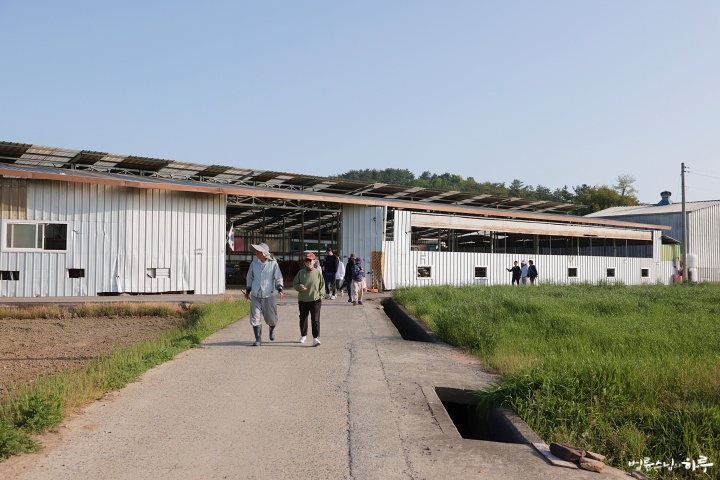
Sunim completed his early morning practice and meditation, then had breakfast. He changed into work clothes, gathered his tools, and headed to the field at Jeonggeori sister’s house.
Previously, Sunim had gone to prune the castor aralia trees at his sister’s field the day after it rained. The field was too muddy from the rain to do the pruning. Promising to return another day, Sunim only pruned a few small trees within reach before heading back.
Sunim came to his sister’s field to do the tree pruning he couldn’t complete last time. Dharma teachers and guest groups also came along to participate in the farm work together.
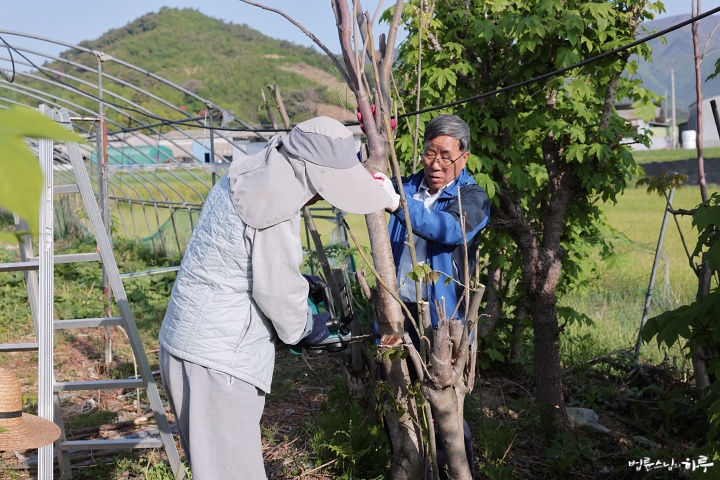
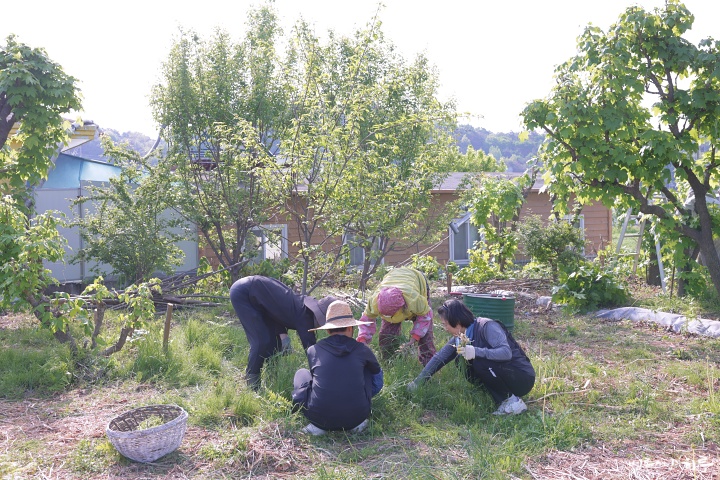
Sunim and Dharma Teacher Hyangjohn pruned the trees while the other Dharma teachers and guests harvested spring herbs from the sister’s field, including bracken, lettuce, wild garlic, butterbur, and aster.
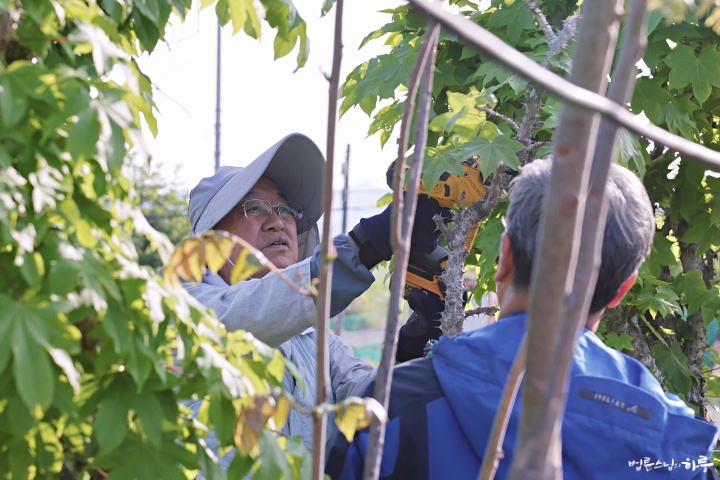
Sunim started by giving the tree of heaven a thorough pruning. He brought the necessary tools for pruning, including an automatic electric pruner, automatic saw, and pruning shears. Since castor aralia trees have many thorns, he also brought special gloves to prevent getting pricked.
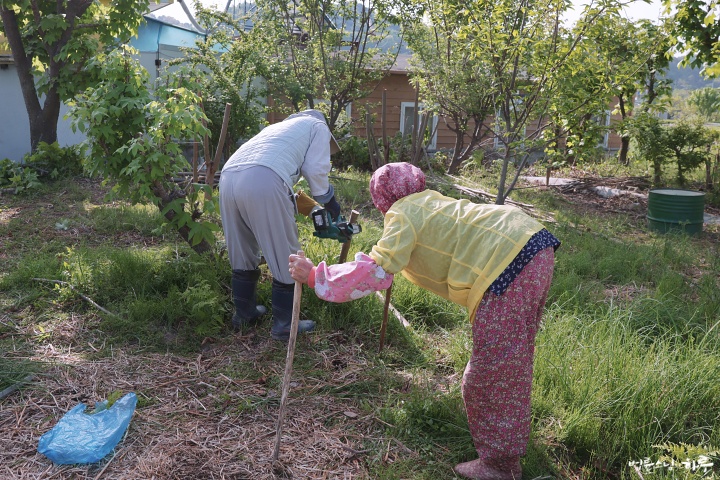
After Sunim had given the tree of heaven a good pruning, his sister came and asked him to cut more.
“Cut down all the tree of heaven, Sunim. You can cut more. You know how well tree of heaven grows. Even if you cut it all the way down, it’ll grow back so much we won’t be able to pick all the leaves.”
“Last time when you asked me to cut it, I cut it all down and got scolded for cutting too much. Should I really cut it all?”“Cut it all down. My back is bent so I can’t pick everything. In spring, an enormous amount of leaves grow and I can’t pick them all. Cut it all down.”
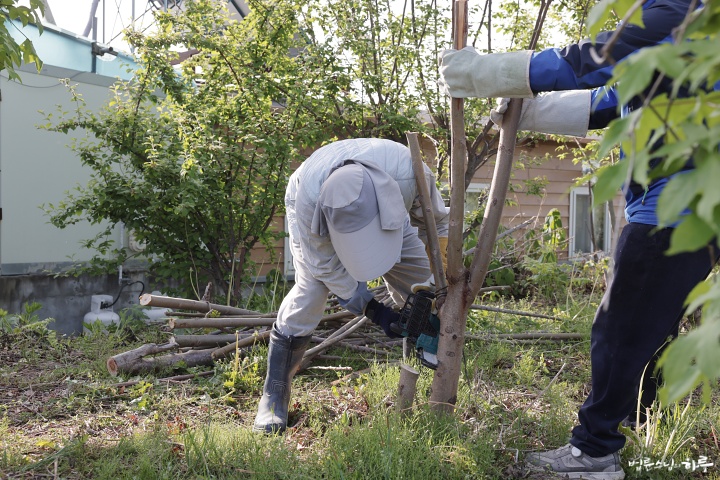
He cut the tree of heaven down to about knee height.
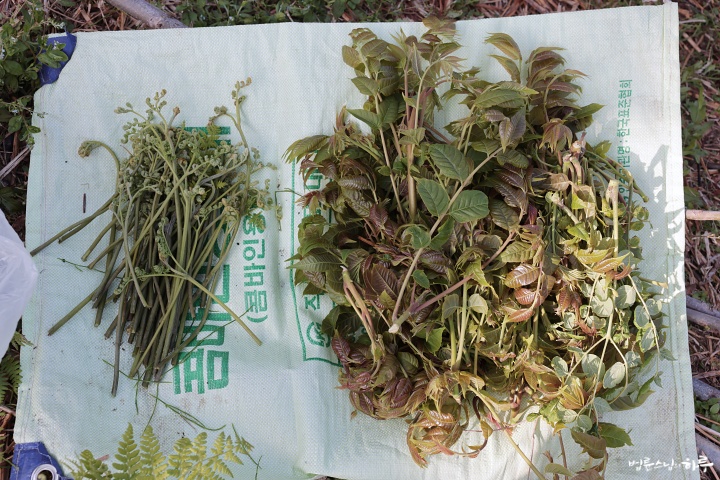
The tender tree of heaven leaves were separated and set aside. Since tree of heaven leaves can be made into pickled vegetables, they were carefully collected in one place. The branches with leaves removed were neatly arranged to one side. The tree of heaven was taken care of first.
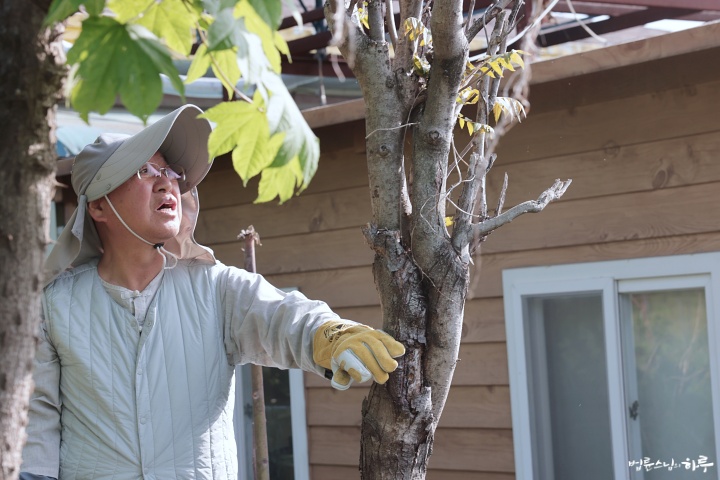
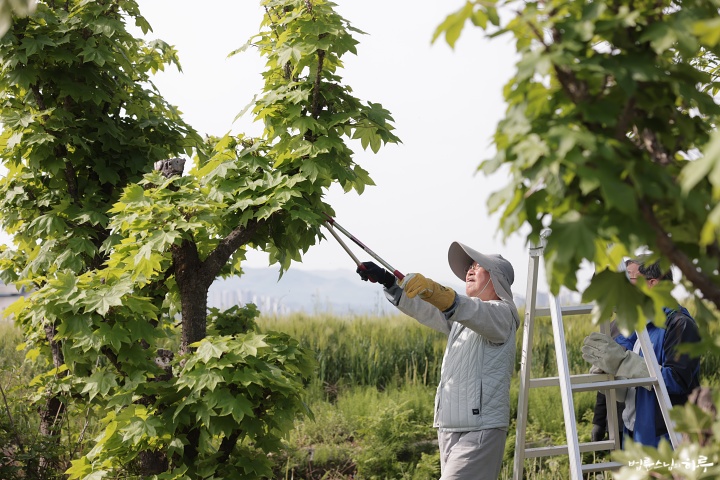
Next, he began pruning the castor aralia trees. There were several castor aralia trees. Some were so large it seemed questionable whether they could even be pruned.
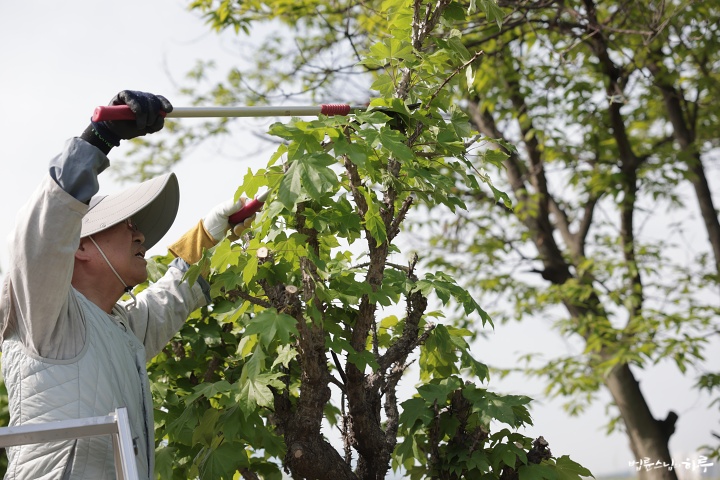
Sunim climbed up a ladder and first cut the small branches with the electric automatic pruner. He used an electric chainsaw for the thick branches. Since it was uncertain where the thick branches would fall, Sunim was careful before sawing. He calculated his pruning to ensure people nearby wouldn’t get hurt.
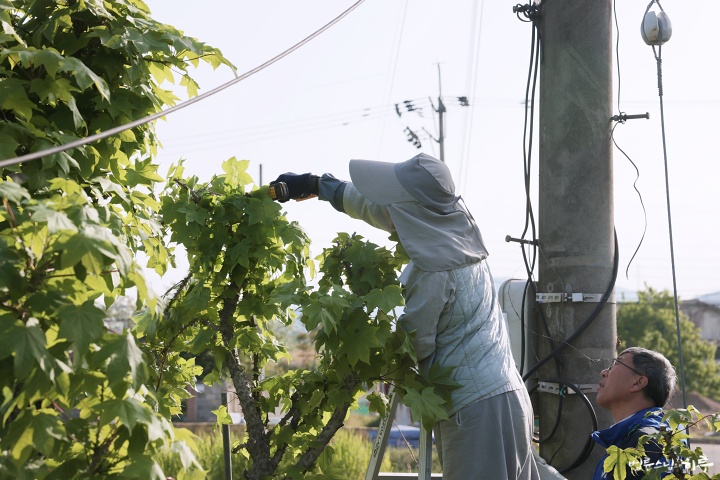
There was a fairly large castor aralia tree. It took several cuts with the chainsaw before the branch was severed.
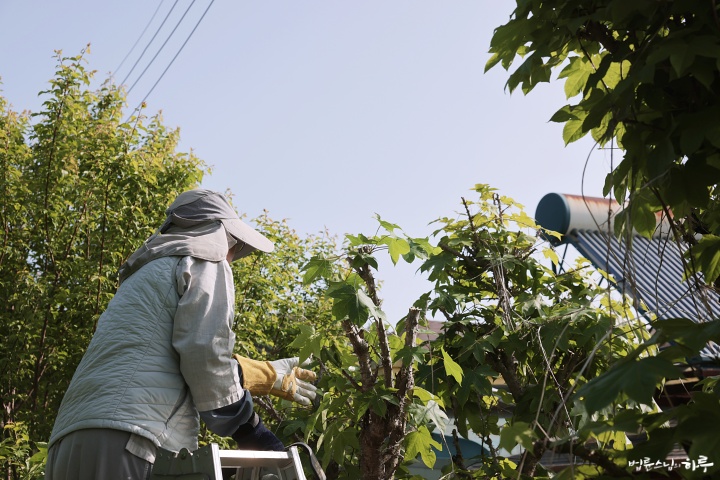
The cut castor aralia branches were further chopped into pieces and gathered at one edge of the field. The castor aralia had such sharp thorns that they couldn’t be touched without special gloves. A castor aralia thorn pierced through the sole of Sunim’s rubber boots. The boot sole was densely studded with castor aralia thorns.
An hour had passed since the pruning began. The guests who had participated in the farm work without eating breakfast went out of the field to have a simple breakfast. Sunim also paused his pruning to rest and have a snack. He enjoyed warm chai and mugwort rice cakes made from mugwort picked near the village, rolled in soybean powder. His sister came back to the field with her walking stick to point out which trees needed pruning and which didn’t.
“Please cut that dead chestnut tree branch too.”
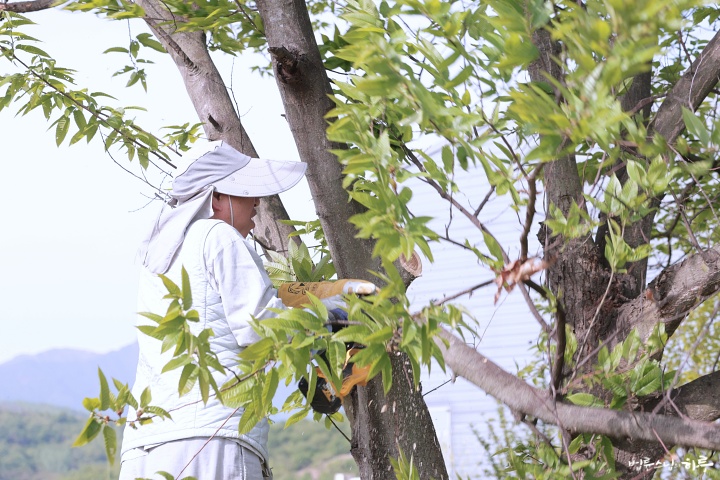
When break time ended, Sunim immediately moved the ladder to the chestnut tree and began pruning it. The chestnut tree was taller than the castor aralia. Being thicker, it required more strength to prune and he had to climb higher. He couldn’t cut the branches in one go and had to cut them in several sections.
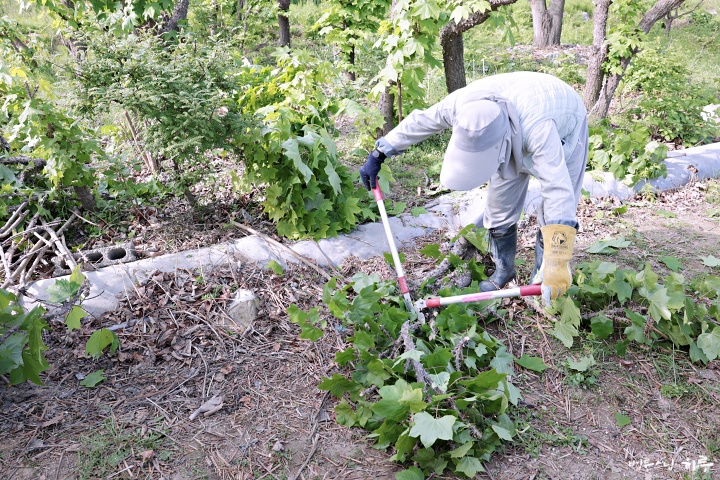
With a ‘thud,’ a large branch fell to the ground. After pruning several trees, Sunim’s hands had lost all their strength. The automatic electric pruner Sunim used had a heavy battery, making it strenuous just to hold. Dharma teachers and practitioners used the electric chainsaw and pruning shears to cut the fallen large branches into manageable lengths for transport.
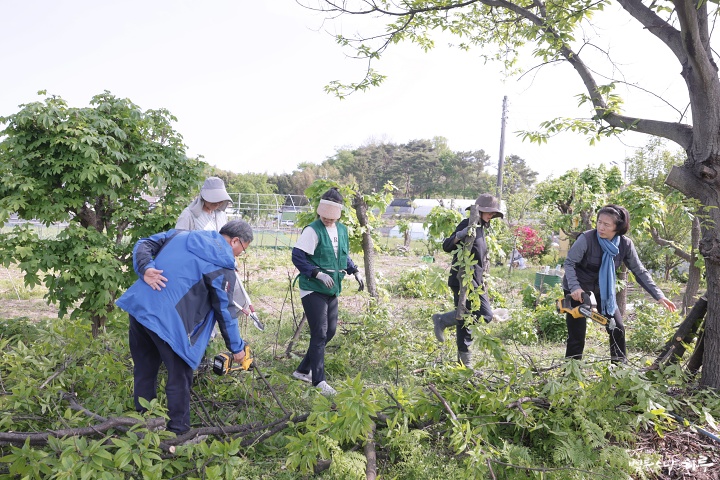
The farm work concluded with the chestnut tree.
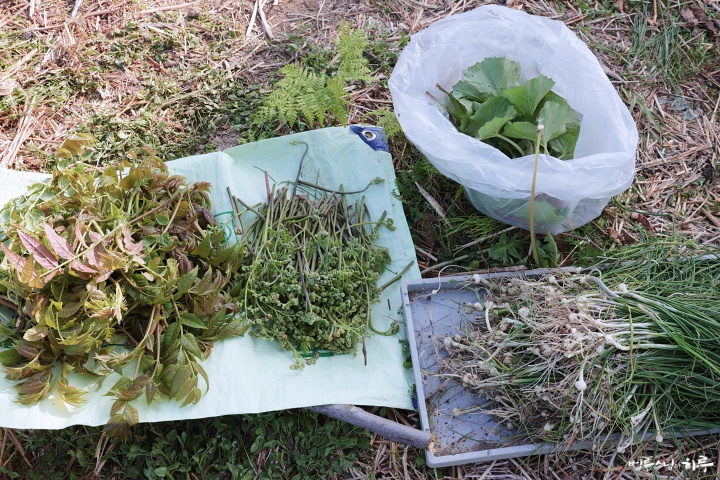
They gathered the tools and equipment, packed the harvested spring herbs into bags and baskets, and loaded them into the car.
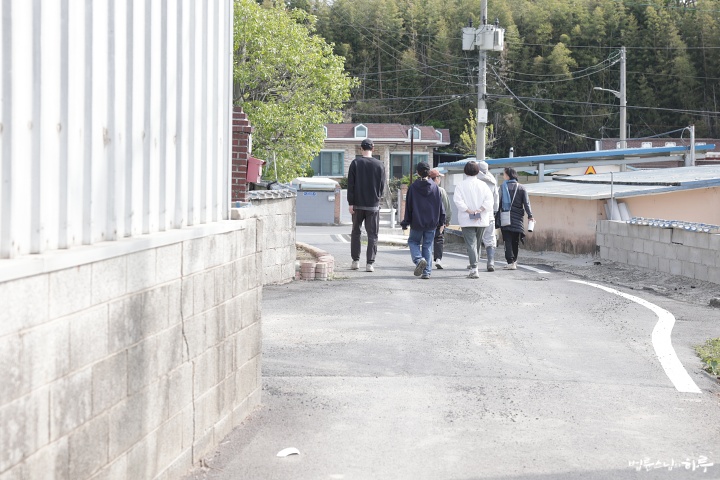
When they went to his sister’s house to say goodbye, a table was set with fruit, sweet pumpkin sikhye, and acorn jelly. Thanks to Sunim doing the pruning that the two elderly people couldn’t manage on their own, his sister insisted they eat something before leaving and prepared food for them. The homemade sweet pumpkin sikhye and acorn jelly were exceptional.
Around 10 AM, Sunim went for a walk with the guest group to Bangudae in Ulju, where the Cheonjeon-ri petroglyphs are located. It’s famous for both dinosaur footprints and petroglyphs.
After the walk, Sunim had lunch at a restaurant with the guest group, eating kalguksu (knife-cut noodles). The noodles were chewy, having been hand-rolled. After lunch, an acquaintance of Sunim suggested visiting a nearby strawberry farm, so Sunim went with the guest group to tour the strawberry farm. After touring the strawberry farm, they returned to Dubuk around 4 PM and rested.
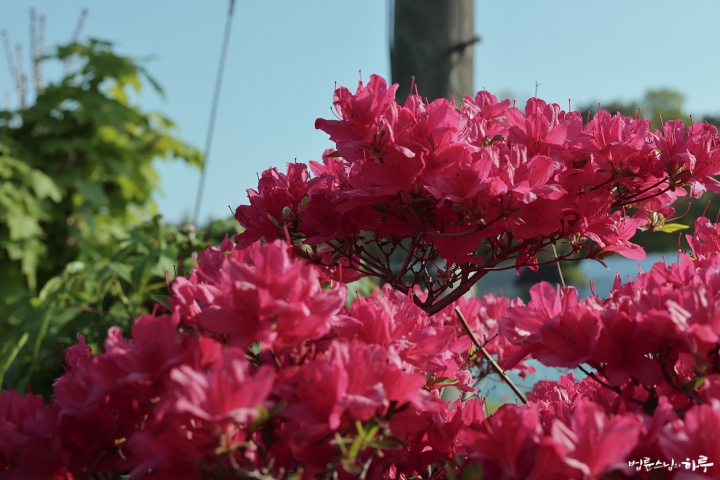
As the midday heat subsided and evening came, the wind was cool. Around 5 PM, Sunim went for a walk with the guest group around the Samneung area of Namsan. At 7 PM, they had a bountiful dinner with the spring herbs and ssam vegetables harvested during the morning farm work. Sunim had dinner with the guests, Dharma teachers from India and the Philippines, and former Jungto Society members, sharing various stories. After dinner, Sunim proofread manuscripts and concluded his day’s activities.
Tomorrow morning, he plans to weed the bellflower field during farm work and go out in the afternoon to see off guests. Since there was no Dharma talk today, this post concludes with a Dharma Q&A from the April ‘Happy Dialogue’ lecture in Daegu (대구).
I Just Look at My Phone After Work. Is This Okay?
“My concern is that when I come home after work, I want to write and draw. But when I actually get home, I end up spending time watching videos or movies on my phone. I think, ‘Well, I worked hard today, so this is happiness.’ But then I also wonder, ‘Is it okay to waste my life like this?’ But watching videos and movies on my phone is so enjoyable. It’s not like I’m not working and just playing around. I worked hard today, so maybe it’s okay to live like this. Is it okay if I continue living this way?”
“If you want to live that way, who’s going to say anything? In life, you just need to follow five things: ‘Don’t hit or kill others, don’t steal or take others’ belongings, don’t commit sexual harassment or assault, don’t curse or lie, don’t cause trouble while drunk.’ As long as it’s not these five things, live as you please without worrying about what others think. Don’t interfere with how others live either. Live freely like that. Watching videos on your phone isn’t a sin.”“I’ve wanted to write for a long time. I’m playing around, but my mind feels uncomfortable. When I sit down to write, it doesn’t come easily, so I feel distressed.”
“If you’re trying to write but it’s not coming, then don’t write. It’s not something to be distressed about. If you go to a restaurant to eat but don’t feel like eating, then don’t eat. Similarly, not being able to write isn’t something to be distressed about. Ask yourself, ‘Why am I distressed?’ If the writing isn’t coming, why are you distressed?”“I want to create interesting stories.”
“Here’s some poisoned food. If you don’t know it’s poisoned and look at it, the fragrance and color are appealing, so you think, ‘I should eat this.’ If I’m watching from the side and say, ‘That’s poisoned,’ then you can say, ‘Oh, really?’ and not eat it. But if you say, ‘Sunim, I know it’s poisoned, but even though I try not to eat it, I keep wanting to. What should I do?’ Then I’ll say, ‘Eat it and die.’ Ignorance, or not knowing, can be helped by someone informing and enlightening you from the side. But when you say, ‘I know, but I can’t do it well,’ others can’t help you. You know it’s good to write, but instead of writing, you spend time watching videos on your phone. If you know writing is good, then write. But you keep playing. Then keep doing that. Nobody can do anything about it. You ask, ‘Won’t I fail to create good work that way?’ That’s an obvious result. For example, you want to hold something, but it’s hot when you grasp it. You ask, ‘It’s hot. How can I let go?’ Is this a question about the method of letting go? If it’s hot, you just go ‘Ouch, it’s hot!’ and quickly put it down. Just let go – banghajeok (放下著). But while holding it, you ask, ‘How do I let go?’ Are you asking about the method of letting go, or saying you don’t want to let go? You don’t want to let go. Then keep holding it. But your hand will get burned. You say, ‘I don’t want to burn my hand.’ Then just let go. This isn’t a matter of method, but you’re thinking about it wrong. You’re thinking a lot without doing anything. If you want to write, just write. If you don’t want to write, just don’t write. If you know it’s good to write, then write even if you don’t want to. If you know food is poisoned, don’t eat it even if you want to. If you still want to eat it, then eat it and die. It’s a simple matter. But people look for ways to eat poisoned food without dying. Some religions take advantage of this psychology, making people believe that if they pray to Buddha or God, they won’t die even if they eat it. Money is the same. If you borrow, you have to repay, but people don’t want to repay. Some teach as if you don’t have to repay. But this goes against reason. You too can do it if you want, and if you can live without doing it, then don’t. You can live without writing, can’t you? If not writing meant death, would you keep watching videos or would you write? Right now you’re not writing because you can live without it. Psychologically, your consciousness says ‘I should write,’ but your unconscious says ‘It’s fine to just watch videos and play.’ There’s internal conflict. Just do what your heart tells you. If you’ve created karma, willingly accept the consequences. If you don’t want the consequences, don’t create the karma. There’s no need to say things like ‘I want to, but…’ If you know it’s poisoned, just don’t eat it. Questions like ‘How do I not eat it?’ aren’t necessary.”“Yes. Thank you.”