What Should I Do When My Mother Is Sad and Struggling Because of Family?
April 18, 2026. Farm Work, Dharma Q&A at Tongyeong Civic Cultural Center
Hello. This morning, Sunim did farm work, and in the afternoon, he visited the Tongyeong Civic Cultural Center for a Dharma Q&A session.
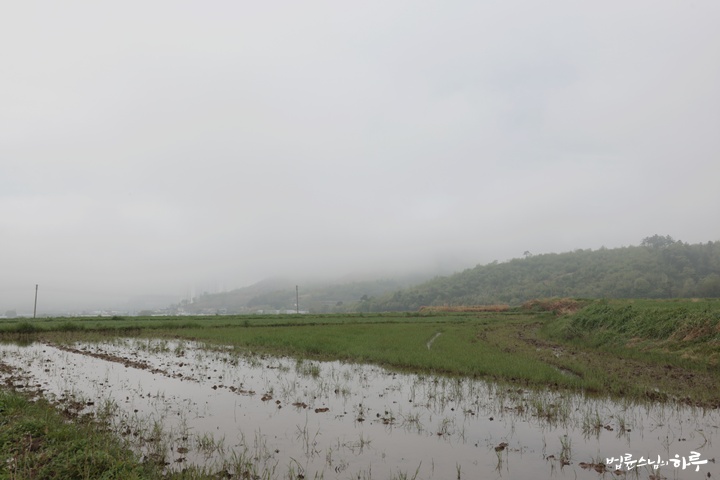
Sunim began his day with early morning practice and meditation. Spring rain had been falling at Dubuk Jungto Retreat Center since yesterday afternoon, making the ground muddy. At 6 AM, Sunim gathered his tools and headed to his elder sister’s house near Dubuk Jungto Retreat Center.
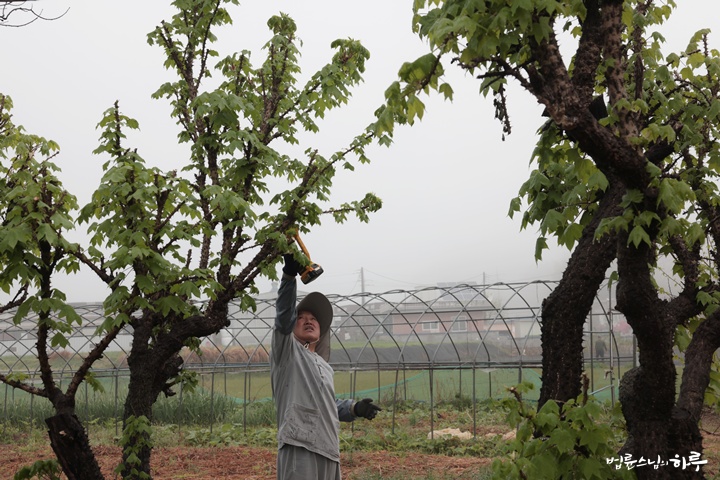
At his sister’s house, there were several castor aralia trees—a medicinal plant whose shoots are used in Korean cuisine—that had grown so tall they required pruning. It was difficult for his sister, who had a bent back, to prune the castor aralia branches, and pruning was necessary to harvest the castor aralia shoots.
“Oh my, the field is too muddy to go in. You’ll ruin your shoes and damage the field. Let’s do it another time.”
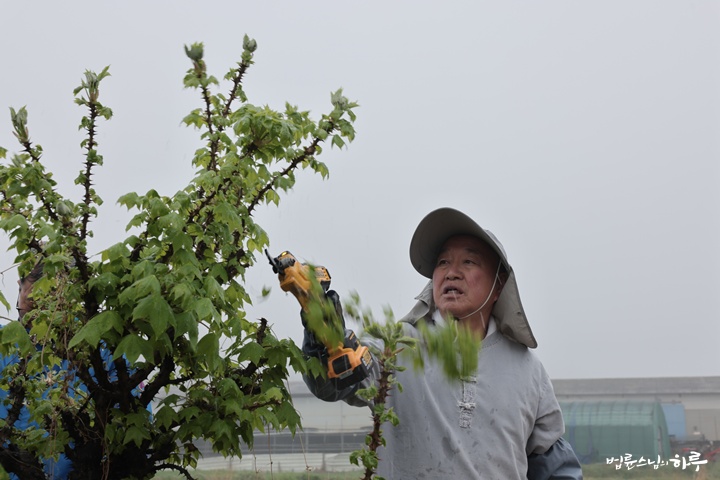
Sunim began efficiently cutting the castor aralia branches with an electric pruner. The castor aralia trees were tall and required a ladder, but the muddy field made it impossible to set up a ladder. He could only cut the branches within reach.
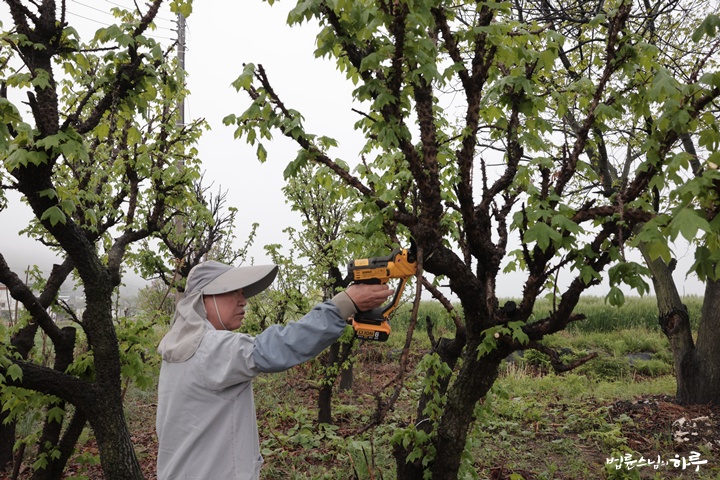
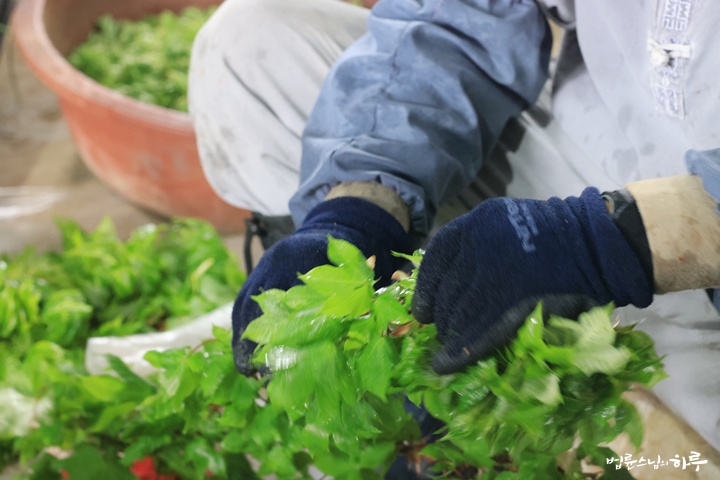
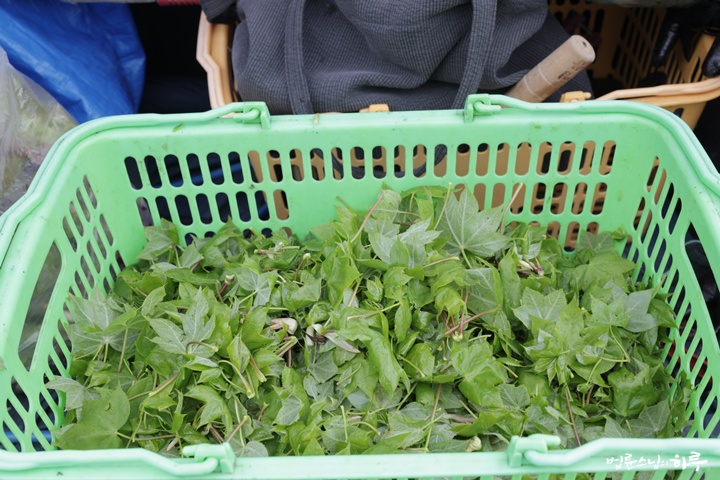
Sunim removed and sorted the castor aralia leaves from the cut branches. Large leaves were collected separately to be served to guests, while small castor aralia leaves would be blanched and seasoned as a side dish.
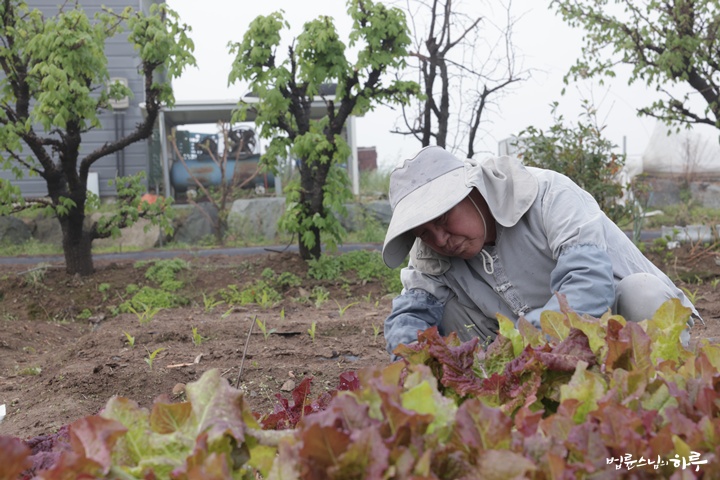
His sister told him to harvest all the fresh lettuce growing in the field and take it with him. As it happened, guests were coming to Dubuk Jungto Retreat Center today, so the lettuce was needed. He harvested a full bundle of lettuce. After about an hour of farm work, he was sweating. After returning to the center, Sunim had a late breakfast and cleaned up. Following a brief rest, he prepared for his departure to Tongyeong.
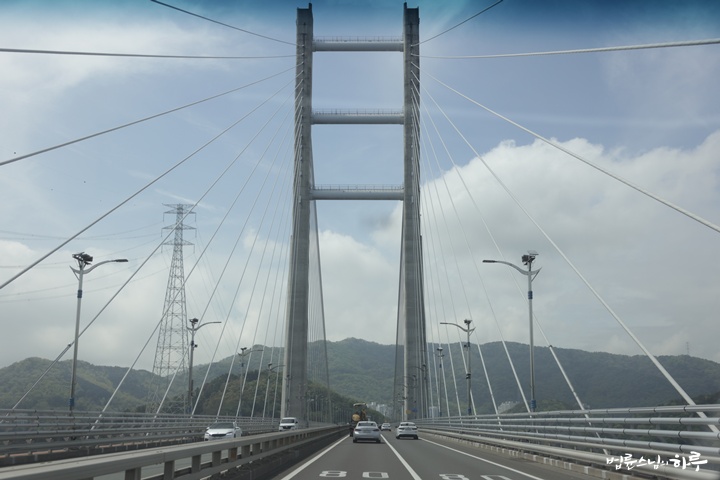
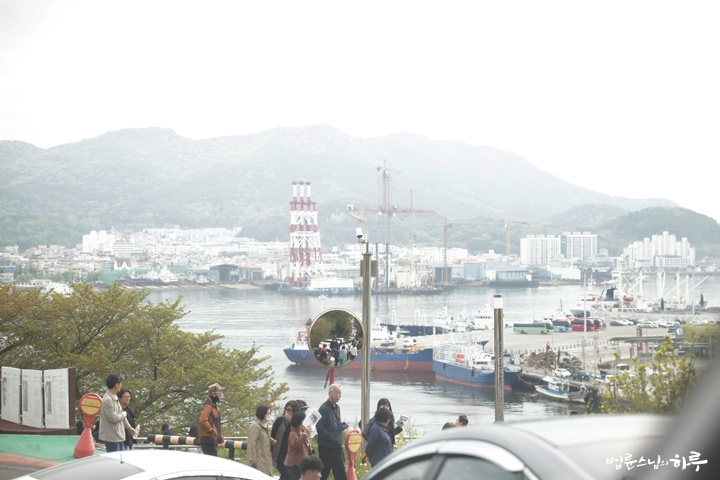
At 11 AM, Sunim got in the car and headed to Tongyeong. A Dharma Q&A for Tongyeong citizens was scheduled for 2 PM at the Tongyeong Civic Cultural Center auditorium. This was his first visit since visiting the Yun Isang Memorial Hall and birthplace during a religious leaders’ gathering in June 2020, five years ago. The parking lot at the Tongyeong Civic Cultural Center was already full. The parking attendant, not knowing it was Sunim’s vehicle, directed them to take a detour.
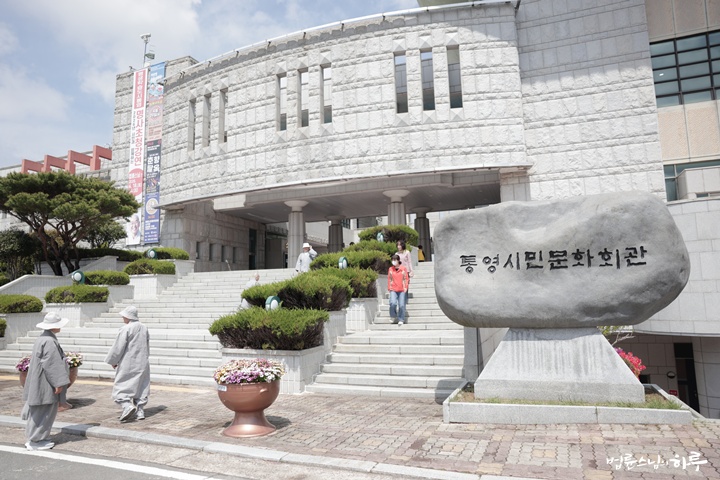

They barely managed to stop in front of the lecture hall. As Sunim got out, Venerable Yusu and monks from the Tongyeong Buddhist Temple Association came running from afar.
Thirty minutes before the lecture, the hall was bustling with Tongyeong citizens who had come to hear Sunim’s talk.
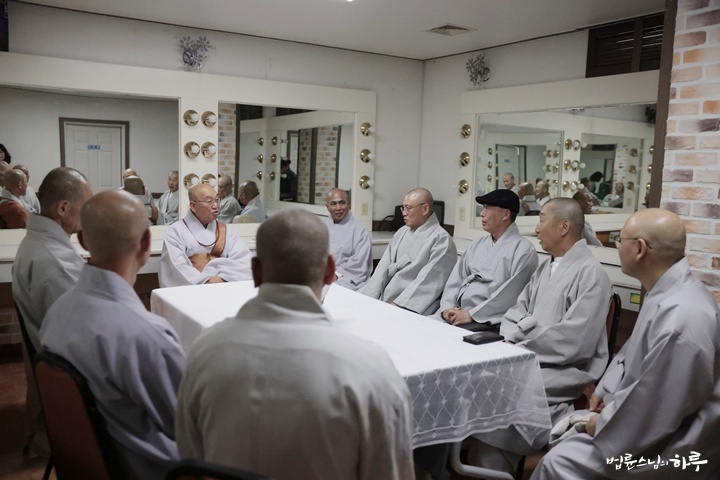
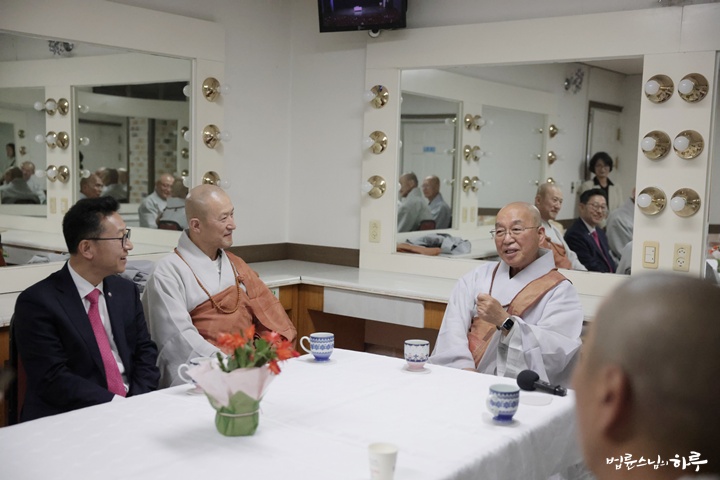
Sunim moved to the pre-lecture meeting room. They discussed various topics about the tourism industry in the Tongyeong area. Acting Mayor Yoon In-guk, who was serving as deputy mayor, came to the meeting room. News came that Tongyeong citizens had filled the lecture hall, with the first floor completely full and people being seated on the second floor.
“Where do tourists visit most in the beautiful city of Tongyeong?”“There’s a kimbap street near Admiral Yi Sun-sin’s turtle ship. That’s the busiest area. Right next to it, Dongpirang is crowded with people, and the Mireuksan cable car is popular too. Yonghwasa Temple on Mireuksan is also famous. Dipirang, Tongyeong’s nighttime attraction, is well-known too.”
“It seems the monks of the Tongyeong Buddhist Temple Association have all become Tongyeong tour guides. Rather than having just one outstanding feature, Tongyeong seems wonderful because various elements come together harmoniously.”“To truly appreciate Tongyeong, you need to take a boat and tour the surrounding islands. Saryangdo and Yokjido are beautiful.”
They discussed topics ranging from Tongyeong’s tourism industry to stories about devotees who stayed up all night watching YouTube and were late for services, religious leaders who use Sunim’s YouTube videos as sermon material, how self-employed people face more difficulties than workers, the aging society, and current issues about Tongyeong being an area of concern for population decline. As they engaged in lively conversation, it was time for the lecture to begin. Sunim moved to the lecture hall.
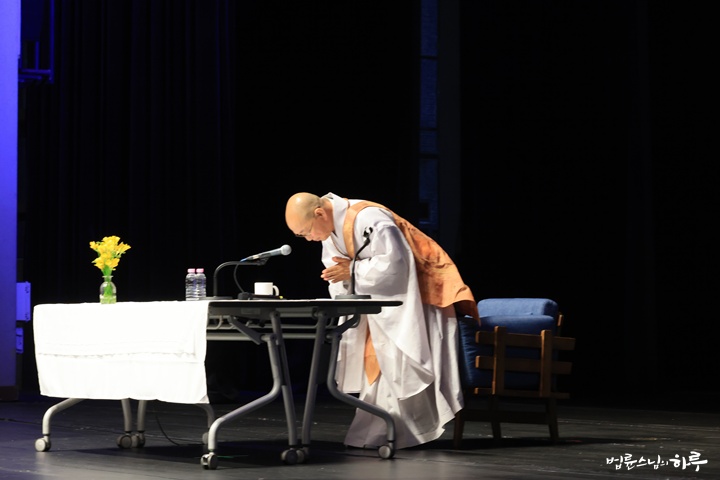
Tongyeong citizens filled the lecture hall to hear Sunim’s talk. All 880 seats at the Tongyeong Civic Cultural Center were occupied. Venerable Jeongwae from Geumtapsa Temple served as the moderator. There were greetings from Venerable Mukwon, president of the Tongyeong Buddhist Temple Association, and welcoming remarks from Acting Mayor Yoon In-guk. Sunim appeared on stage to loud applause.
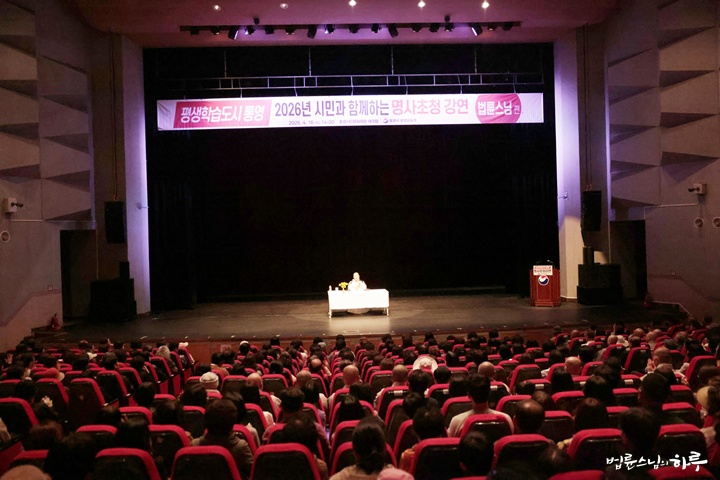
There Are No Right Answers in Life
“I’m delighted to meet you all in Tongyeong, known as Korea’s most beautiful port city and home to many historical sites. Today’s event is hosted by Tongyeong City and organized by the Tongyeong Buddhist Temple Association. I’d like to thank the Tongyeong City officials and the monks of the Tongyeong Buddhist Temple Association for arranging this gathering. I also extend my warm greetings to all the citizens who have joined us on this beautiful spring day.” People often introduce me as ‘someone who spreads happiness.’ But actually, I’m not someone who spreads happiness. Rather, I would say I’m someone who pursues my own happiness. (Everyone laughs) Because if I’m not happy first, it’s almost impossible to spread happiness to others. I hope all of you will be happy. However, I don’t have any special advice to give you about life. That’s because I believe everyone has the right to live freely in their own way.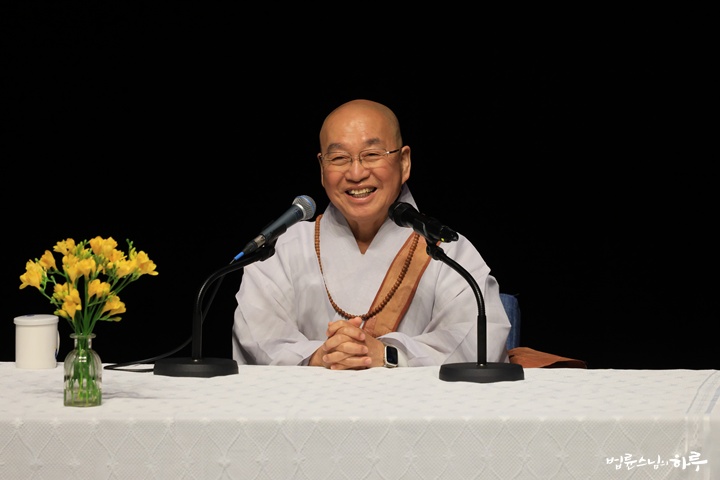
The Five Precepts, Universal Standards
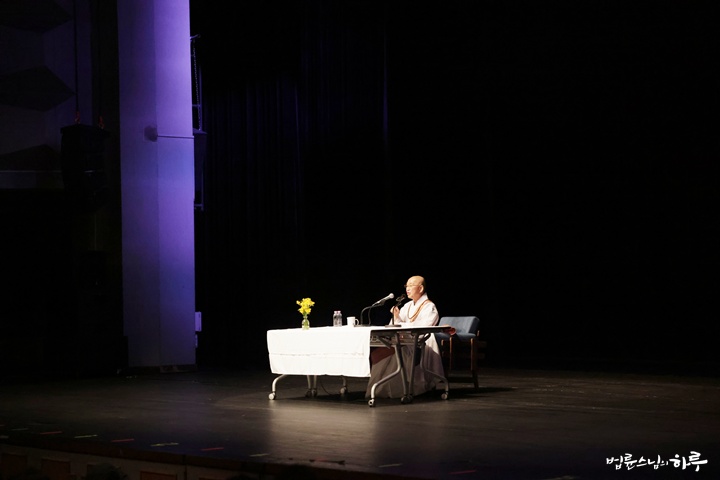
So first, while people can live as they please, they must not hit or kill others. Second, while it’s fine to pursue various interests in life, one must not steal or take others’ belongings. Third, while everyone is free to like someone, one must not force oneself on someone who is unwilling. In other words, the precept ‘do not engage in sexual misconduct’ should be understood as not sexually harassing or assaulting others. Fourth, while everyone is free to express their opinions, one must not deceive others or use abusive language. Fifth, while one can eat or drink anything, one must not get drunk and behave disgracefully. These five Buddhist precepts are the minimum standards of living that people of any religion can accept. They are also universal standards that neither Koreans nor people from other countries can deny. Therefore, these five precepts are not standards that change according to one’s religion or ethnicity. They are universal standards of living that anyone can accept as a human being. Our suffering arises when we don’t understand facts as they are. Once we know the facts, suffering immediately disappears. For example, your spouse comes home late. If you think, ‘Have you been out drinking again and come home late?’ anger immediately wells up. However, if you talk with your spouse and learn the reason for being late, you realize it was a misunderstanding and the anger disappears. After hearing the story, you learn that on the way home, your spouse found someone who had collapsed and took them to the police station, then had to stay to give a statement, which is why they were late. Your husband wasn’t late because of doing something bad, but because of doing something good. When you learn the facts like this, the anger that surged up the moment you saw your husband subsides with an ‘Oh, I see!’ The Buddha’s original teaching is not about learning something new. It’s about correctly understanding what we have misunderstood. That’s why Buddhism is never a difficult teaching. Originally, the word ‘religion’ was given its meaning as a teaching that is like a main beam among the many teachings in the world, the most supreme teaching. However, in many parts of the world today, people are in conflict over religious ideologies. The current situation in the Middle East is the same. But if humanity truly engages in religious activities as the supreme teaching, the results of those actions should always lead to peace in our hearts and peace in the world – only then can we call it ‘true religious activity.’ I urge you all to have these perspectives on life and religion. Now, let’s begin our dialogue with your questions.”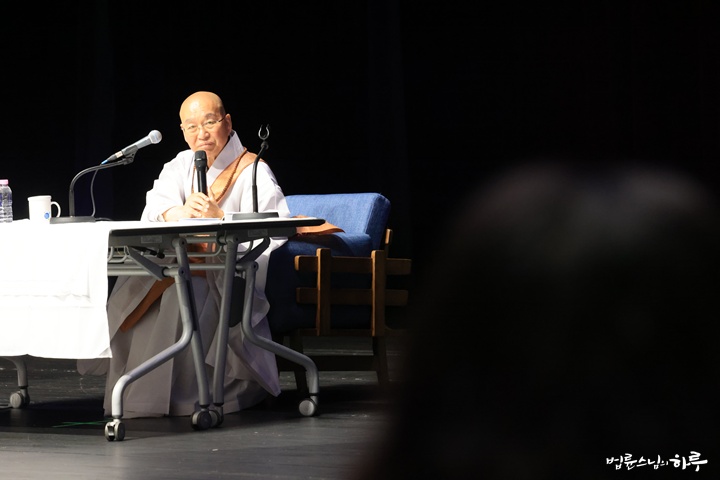
After Sunim’s greeting ended, the dialogue with Tongyeong citizens began. Questioners had written their stories on question cards and placed them in the question box, but since they were written anonymously, the microphone could not be passed to them. Sunim spoke to the audience.
“Anyone with questions, please raise your hand.”“….”
“If there are no questions, I’ll leave. I didn’t come here to give a lecture. I came to have a dialogue if you ask questions. Those who submitted question cards, please raise your hand high.”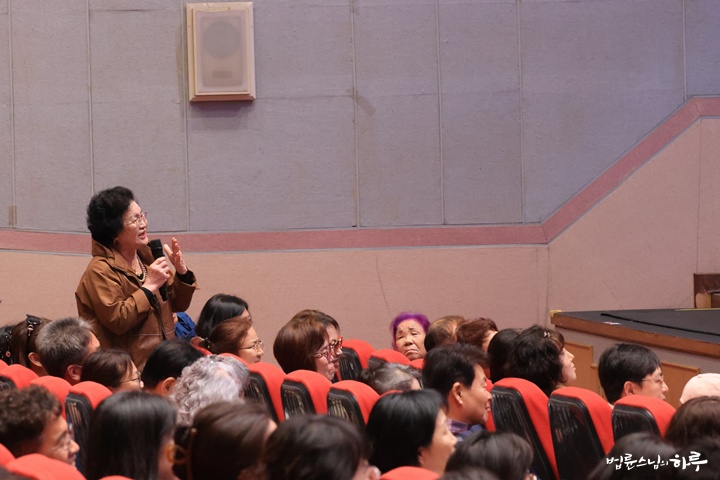
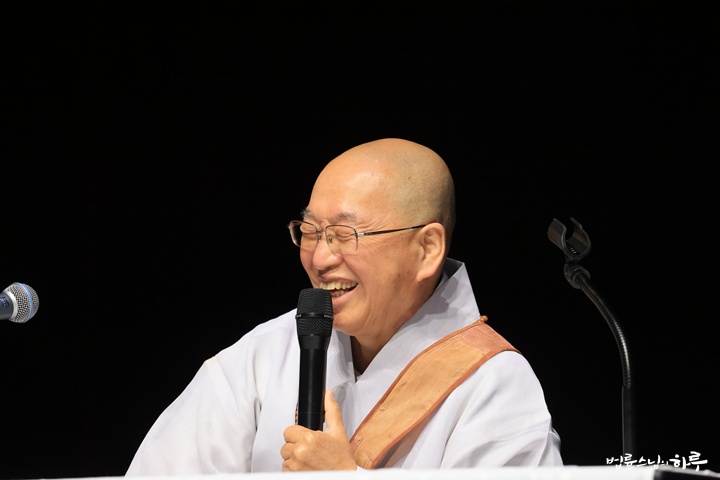
A female questioner who had written her name on the question card took the microphone and asked a question. Through the brief dialogue with Sunim, the audience burst into laughter and smiles bloomed on their faces, and the atmosphere in the lecture hall became focused.
Among various questions, this post introduces a dialogue with a woman who was worried about her mother.
“Hello, Sunim. There have been many unfortunate events in our family recently.”
“What kind of unfortunate events?”“The year before last, my sister passed away,”
“Is death necessarily a misfortune?”“Yes. Last year, my brother also passed away, so my mother is having a very hard time. How can I be of help to my mother? I wanted to bring her to this lecture, but she said she had to go sell clams. (audience laughter)”
My Mother Is Sad and Struggling Because of Family Members. What Should I Do?
“But I live in Seoul and am busy with work, so I can’t visit my parents often. I call them, but I’m worried. It would be nice if my father could be supportive, but he likes drinking too much and is not helpful at all. My mother is so sad and struggling. What should I say to her?”
“So you are doing okay, and it’s only your mother’s suffering that concerns you?”“Seeing my mother struggle makes me very anxious and worried.”
“Your mother is struggling, but why are you anxious and worried?”“Because my mother is having a hard time. She has suffered since she was young, and I wish she could live happily.”
“You want your mother to live happily, but things aren’t going the way you want?”“Yes.”
“I also wish President Trump or Putin would end the war, but they don’t do as I wish.”“Yes.”
“Trump and Putin don’t do as I want. That’s why I’m having a hard time these days. (audience laughter)”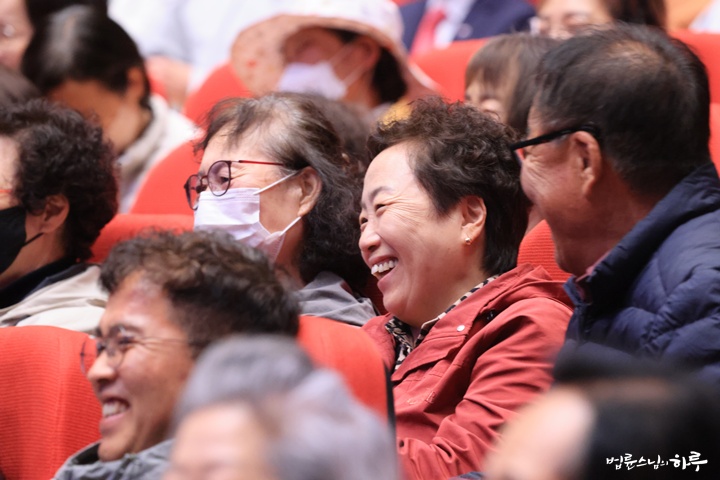
“What can I say to my mother?”
“What can I say to Trump? (audience laughter) I’m not joking. No one can really do anything special for another person. Thinking you can help is a delusion.”“Then, how should my mother live from now on?”
“Is your mother older or younger than you?”“Older.”
“Are you married?”“Yes.”
“How many children do you have?”“I don’t have any.”
“How many siblings do you have?”“Originally four, but after my sister and brother passed away, now there are two.”
“So your mother got married, had four children and raised them despite being economically worse off than you?”“Yes.”
“And your mother still went to sell clams today, right? Then does your mother have more or less life experience than you?”“More.”
“Then will she live better or worse than you?”“She’ll live well.”
“Your mother is living well even now. You’re just crying and making a fuss because she’s not living the way you want her to. You said your father drinks and gives your mother a hard time. Would it be better for your mother to live alone? Or is it better to live with your father?”“It seems better to live alone.”
“According to whom?”“According to me.”
“That’s right. That’s what you think, but for your mother at this age, would it be better to live alone? Or would it be better to have even a drinking husband, though not perfectly satisfactory? Try getting old yourself. People live that way because, while it’s not what I want, there are no other options in reality. You might think, ‘At that point, divorce would be better,’ but considering your mother’s life background, age, and relationships, even if your mother says ‘I can’t live like this anymore’ when your father drinks and causes trouble, when your father wakes up tomorrow morning with a hangover, your mother will make him hangover soup and bring it to him.”“That’s right. She really does that. (audience laughter)”
“We feel sorry for them.”
“But is it that I feel sorry for them? Or are they truly pitiful beings?”(Audience response) “It’s how I see it.”
“That’s right. It’s my problem, not theirs. They’re all smiling and living happily. So don’t keep projecting your problems onto others. You need to realize, ‘Ah, this is my problem.'”“Yes.”
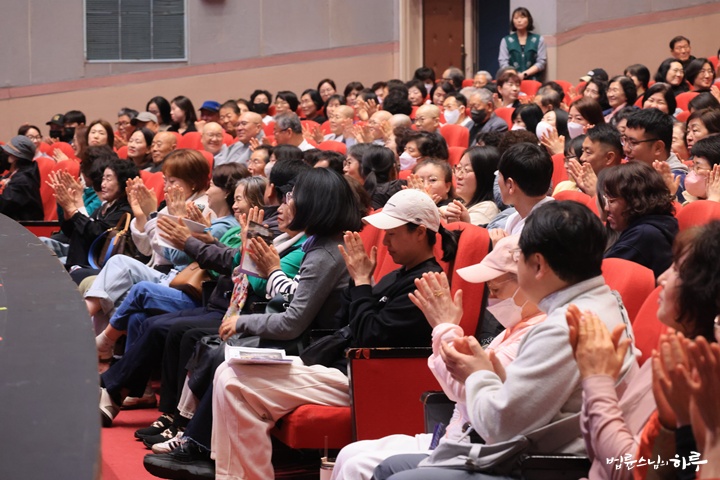
As the audience listened to the dialogue between the questioner and Sunim, some empathized with sympathy while others applauded to encourage the questioner. The initially awkward atmosphere disappeared, and hands went up here and there. An elderly woman with a booming voice grabbed the microphone and spoke.
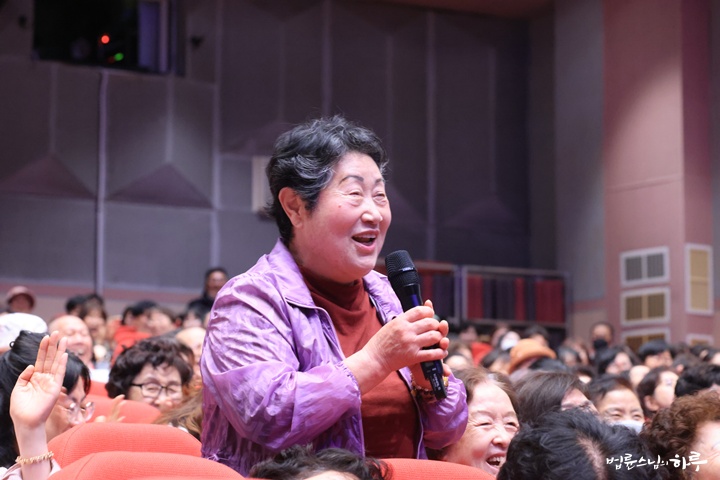
“Pomnyun Sunim, thank you for your wonderful words. I live with five children under Venerable Mukwon at Bohyeonsa Temple. I was born in 1946, and I’d like you to tell me how I stay so healthy and why I love temples so much. Is it because I love temples that I live healthily?”
“How can you ask me why you love temples when you’re the one who loves them? I should be asking you, ‘Why do you love temples so much?’ (Audience bursts into laughter)”“Sunim, please tell me the reason.”
“You know. You do.”“Please tell me. Is it something I was born with? Why do I love temples so much? I’m 81 years old, but people only see me as 70. What’s the reason for my health? Pomnyun Sunim, I love temples so much. ‘Oh, you look so healthy.’ I want to hear these words. (Audience bursts into laughter) I’m still healthy. No one can keep up with me.”
“That concludes our self-promotion, temple promotion, and advertisement. Since she says she’s healthy because she goes to temples, please visit temples often. She’s advertising without even paying.”After a round of laughter from the audience, a woman in the middle row raised her hand high and stood up with the microphone.
“Sunim, nice to meet you.”
“Yes, nice to meet you.”“Sunim, thank you so much for coming all the way to Tongyeong. It’s such a great honor and blessing to meet you. I watch a lot of YouTube videos too. I don’t have any questions. (Audience laughter, applause) Sunim, please stay healthy. Thank you.”
Thanks to two Tongyeong citizens who had no questions but wanted to express their gratitude to Sunim, the atmosphere in the auditorium became much brighter.
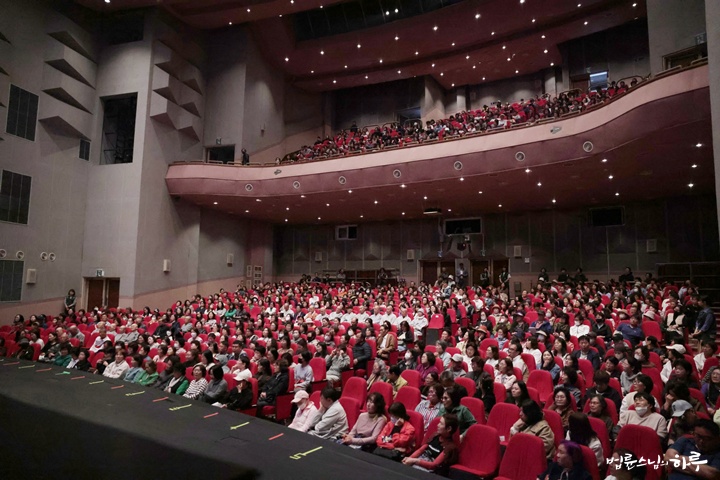
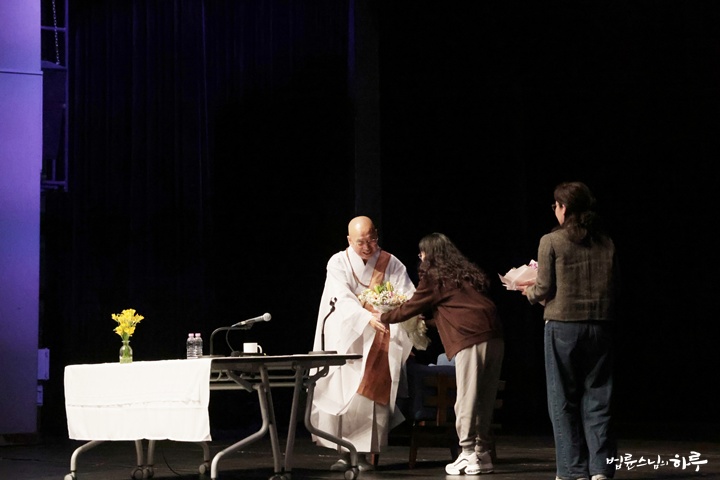
Sunim conversed with the audience for two hours. After listening to and responding to questions from Tongyeong citizens for the full two hours, two citizens came up on stage to present Sunim with bouquets of flowers in gratitude. When the lecture ended, Sunim came down from the stage and briefly shook hands with Tongyeong citizens before leaving the auditorium.
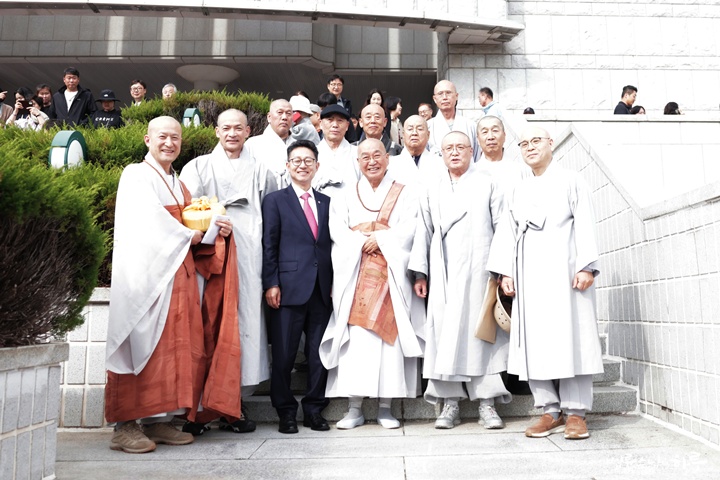
Before boarding the vehicle to Dubuk Jungto Retreat Center, Sunim took a commemorative photo on the steps with the deputy mayor he had tea with and several other monks.
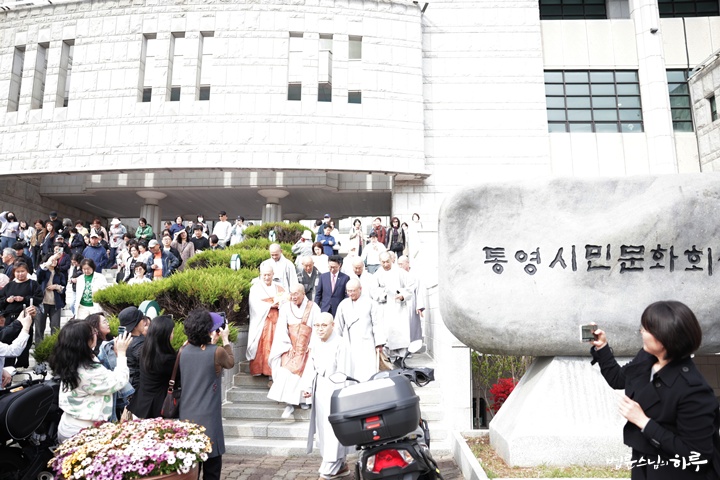
Immediately after boarding the vehicle, Sunim departed for Dubuk Jungto Retreat Center. After a two-hour drive, he arrived at Dubuk Jungto Retreat Center.
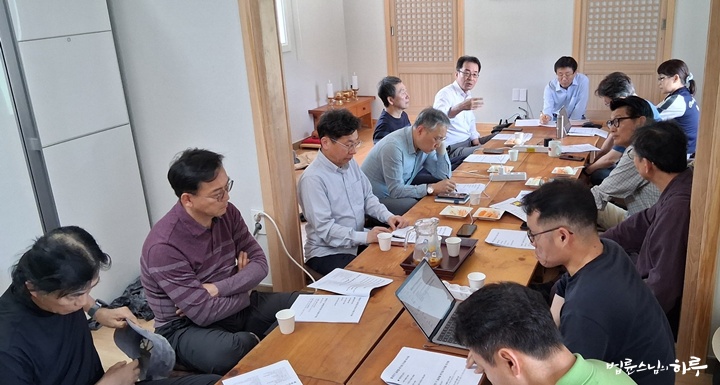
While Sunim was giving the Dharma Q&A lecture in Tongyeong, the 2026 Peace Foundation regular workshop was being held at Dubuk Jungto Retreat Center. Planning committee members and research fellows of the Peace Foundation arrived at Dubuk, had lunch, and engaged in heated discussions for over five hours on the topic “Future Strategy for the Republic of Korea: Era Transition, Civilization Transition.” They examined topics such as “AI and Future Society, North Korea’s ‘Two-State Theory’ and Our Response, Paradigm Shift in the North Korean Nuclear Issue, and Improvements to Korean Democratic Institutions” amid the turbulent international situation, and actively exchanged opinions on what role the Peace Foundation should play.
As soon as Sunim arrived at Dubuk after finishing the Tongyeong lecture, he had dinner with the Peace Foundation committee members. After the meal, he listened to the five-hour discussion and asked questions.
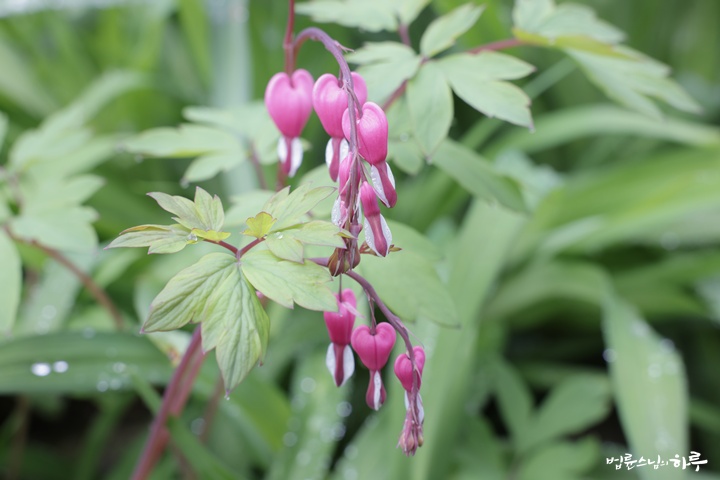
After Sunim’s remarks, the Peace Foundation committee members moved to the courtyard where they lit a bonfire that Dharma Teacher Hyangjohn had personally prepared several days in advance, and enjoyed casual conversation around the fire. Tomorrow, Sunim plans to take a walk around the Gyeongju area with the Peace Foundation research fellows before heading to Seoul.