Why Do I Get Irritated with My Mother but Not with Strangers?
Mar 4, 2026. Weekly Dharma Assembly
Hello. Today is the day of the Weekly Dharma Assembly (수행법회), where Jungto Society members examine their practice.
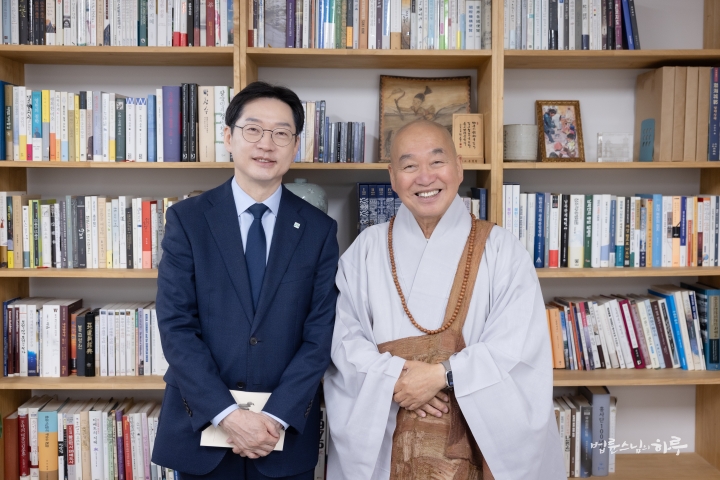
After completing morning practice and meditation, Sunim headed to the Peace Foundation to welcome a visitor. At 7 a.m., former National Assembly member Kim Kyung-soo (김 경수), who serves as the chairman of the Presidential Committee on Regional Development, came to visit Sunim.
Sunim and former Assemblyman Kim exchanged views on policy directions to overcome regional decline caused by concentration in the metropolitan area and achieve balanced national development. They also had an in-depth conversation about how to ease the deepening confrontation between ruling and opposition parties and national division, and how to achieve national unity.
As they concluded their meeting, they took a commemorative photo together. Former Assemblyman Kim Kyung-soo told Sunim that he was preparing to run for governor of Gyeongsangnam-do (경상남도) to usher in an era of regional development.
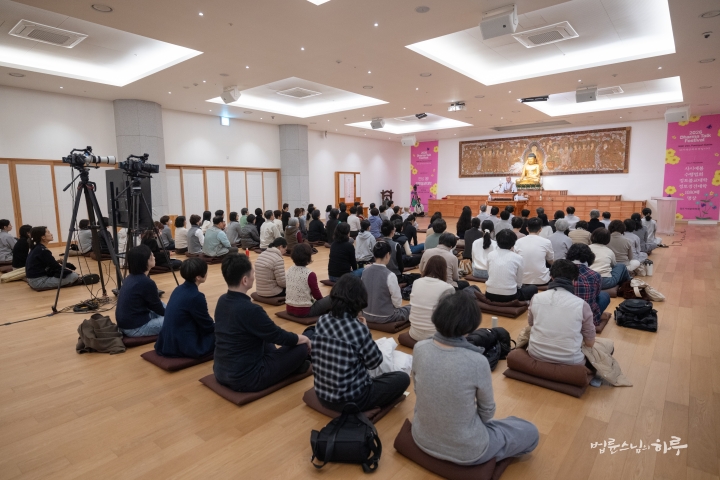
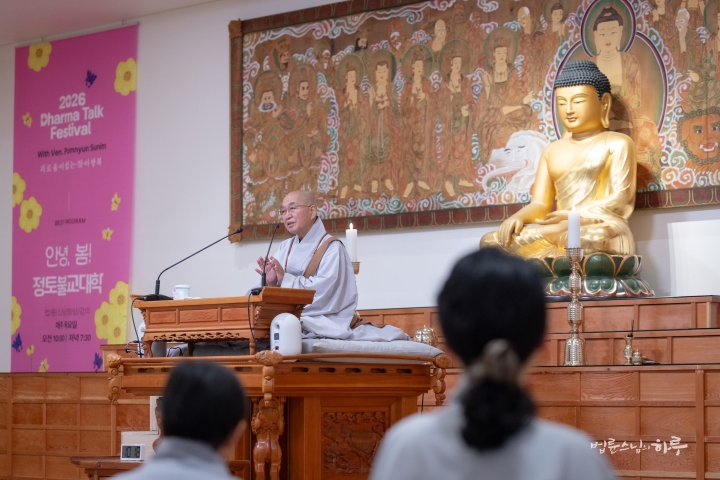
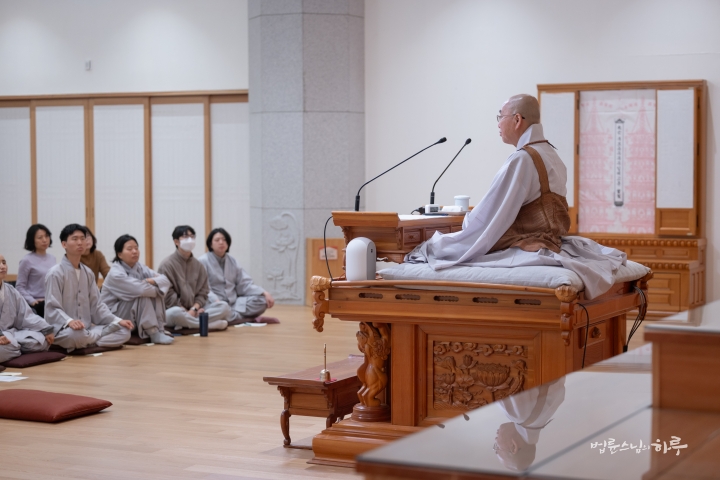
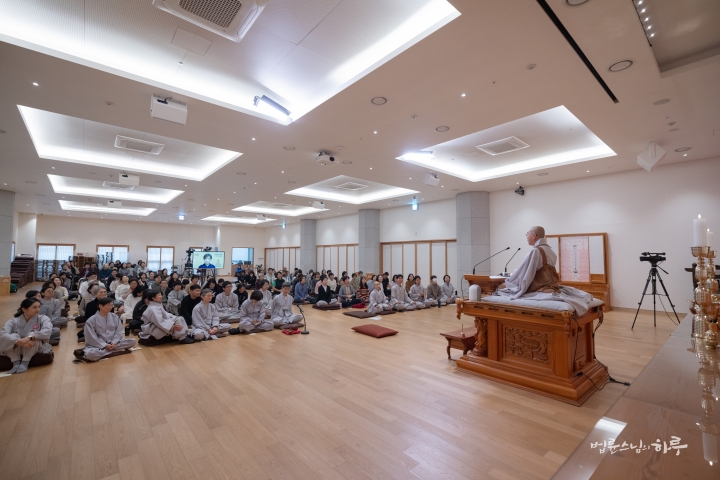
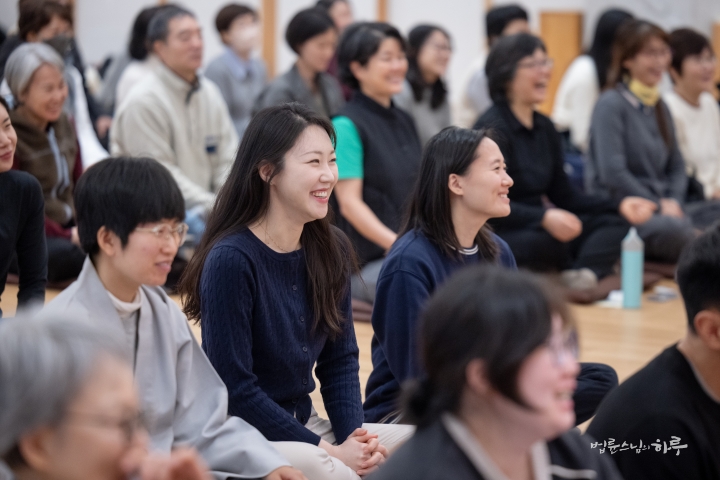
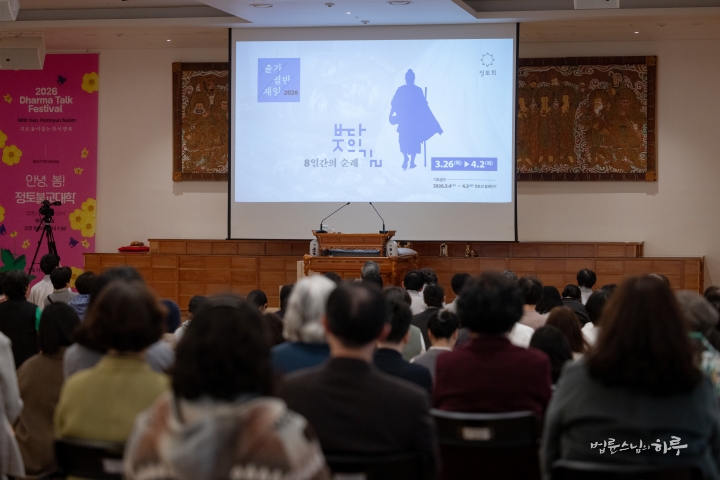
After seeing off his guest, Sunim headed to the Dharma Hall on the third floor for the Weekly Dharma Assembly. About 100 members of the Sangha had gathered in the Dharma Hall.
At 10 a.m., the Weekly Dharma Assembly began with the Three Refuges(삼귀의) and the Heart Sutra (반야심경) recitation. About 4,000 Jungto Society members joined the assembly online through video conference.
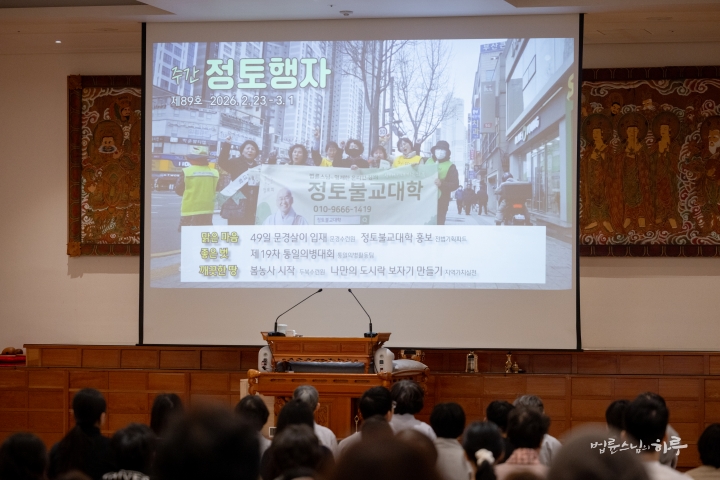
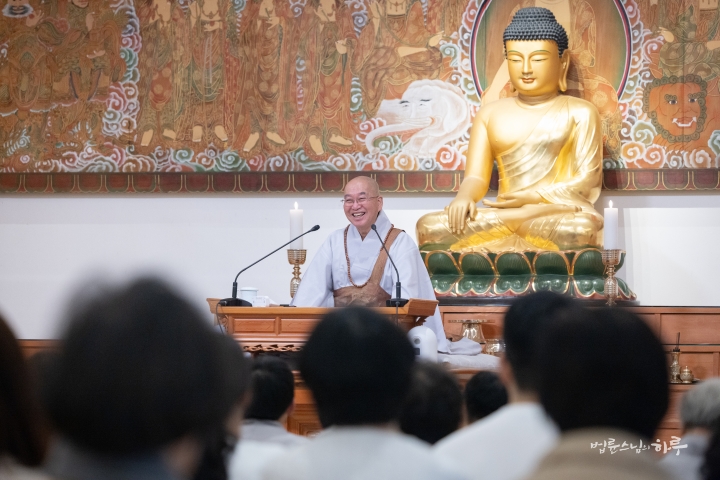
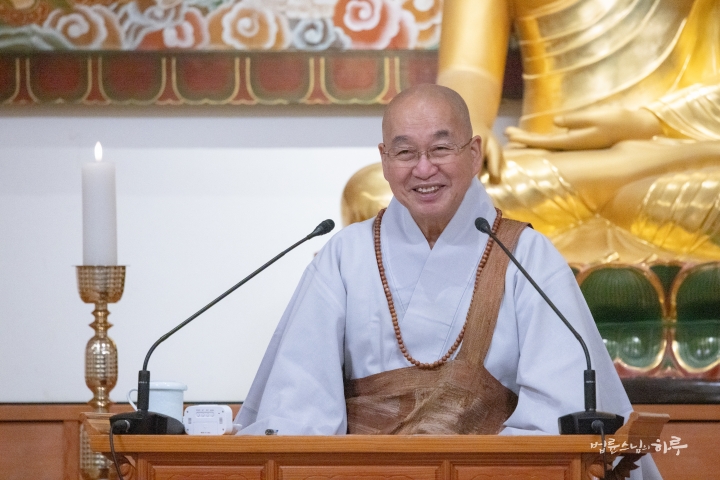
After watching a video of Jungto practitioners’ activities over the past week, the assembly members requested a Dharma talk from Sunim with three prostrations. Sunim then offered his greetings.
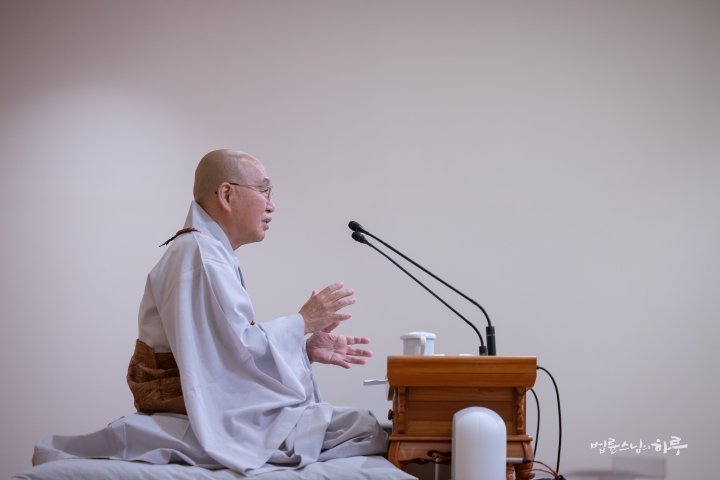
With the opening ceremony of the second 1000-Day Practice scheduled for next week, Sunim began his Dharma talk by emphasizing that the community of practitioners must first establish the principle of “placing practice as the top priority in life.”
)
is working busily, and the newly elected executive team is also preparing for a vigorous start. This weekend, the new executive team will gather to review and confirm the direction Jungto Society will take for the next three years, based on materials prepared by the 1000-Day Preparatory Committee. And on March 15, we will have the opening ceremony for the 1000-Day Practice. I ask all Jungto practitioners to set aside personal matters, no matter how busy you may be, and make time to join the opening ceremony on this day.When Practice Is Your Priority, Practice Happens Naturally
However, we often spend our time relatively leisurely on ordinary days, but when important events like this come up, we tend to say something has come up. We say things like ‘I already had an appointment that day’ or ‘I couldn’t attend because something personal suddenly came up.’ But what matters most in life is how we set our priorities.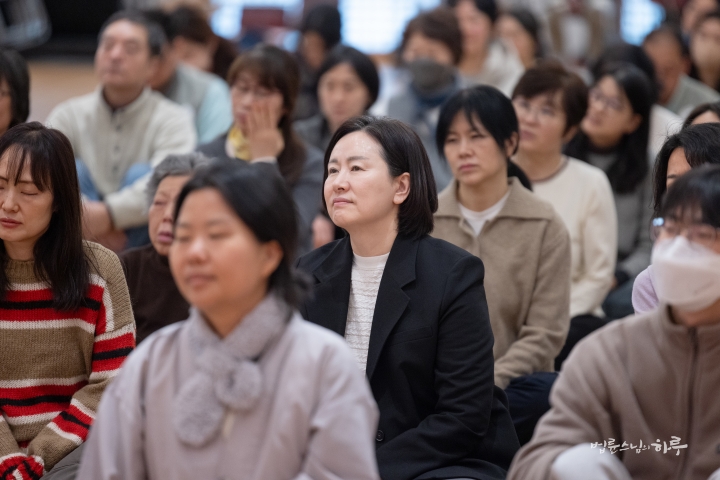
)
held every 100 days,’ ‘On that day, no matter what happens, everything else takes second priority,’ and ‘The 1000-Day Practice opening ceremony held every three years takes absolute precedence,’ then practice naturally follows. However, because you don’t prioritize practice in your life, you constantly find yourself saying, ‘I can’t maintain my practice.’ Jungto Society is a community of practitioners. We are people who place practice as the top priority in our lives. This doesn’t mean you should practice all day long. However, at the very least, we must live a life where practice comes first in our priorities. With this perspective, you won’t miss prayer times or be too busy to attend opening ceremonies. Even if you’re overseas, you can participate online regardless of time differences, so you can join with sincere intention wherever you are.”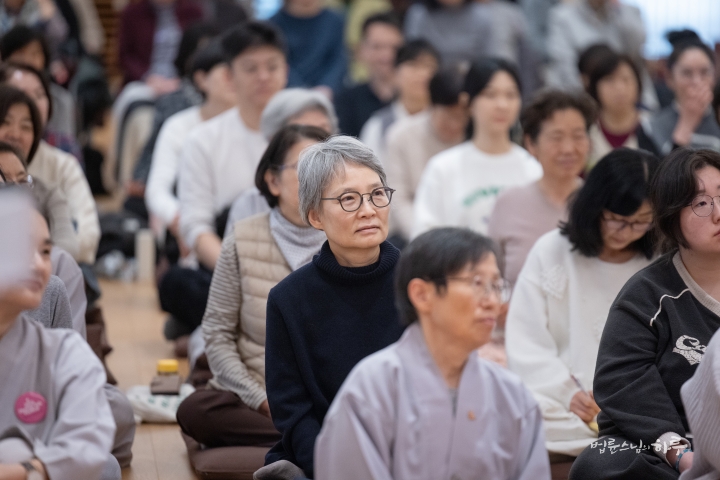
Sunim then explained what the essence of practice is.
I’ve listened to many Dharma talks, but why does my life remain the same?
The Buddha-dharma doesn’t become Buddha-dharma because of the name “Buddhism.” The truth that is recognized, the knowledge of things as they truly are—that is Buddha-dharma. When you know facts as facts, there is nothing to suffer about. Suffering arises because we fail to see facts as they are and instead fall into delusion. It’s similar to having nightmares while lying comfortably on silk bedding. If you’ve listened to the Buddha’s words or Dharma talks and thought, “Ah, I see,” and understood them, now you must practice consistently. You need to keep practicing, noticing “This time it worked!”, “This time I got caught up,” “This time I let go,” and maintain the state of not being caught up for longer periods. Even if you do get caught up, you should be able to free yourself quickly. Then there will be nothing to fear in daily life. If you fall, you simply get up and continue walking. The principle is just one. When elaborated, it becomes thousands of stories, but the content is ultimately the same. I’ve been telling this story for over fifty years. The questions you bring are mostly similar too. Yesterday at a lecture, someone asked, “I hope Sunim lives a long life and continues answering our questions for a long time.” However, there’s no particular need for me to live long. I answer questions simply because I’m alive and you want to ask. In fact, if you listen carefully to just one or two points, there’s more to practice than to ask about afterward.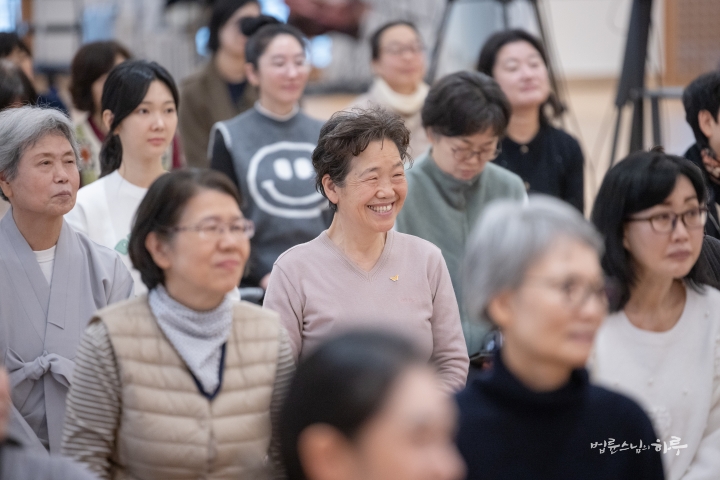
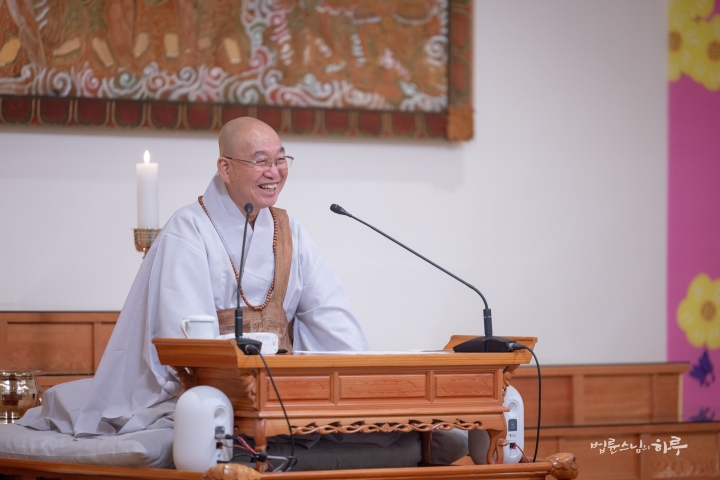
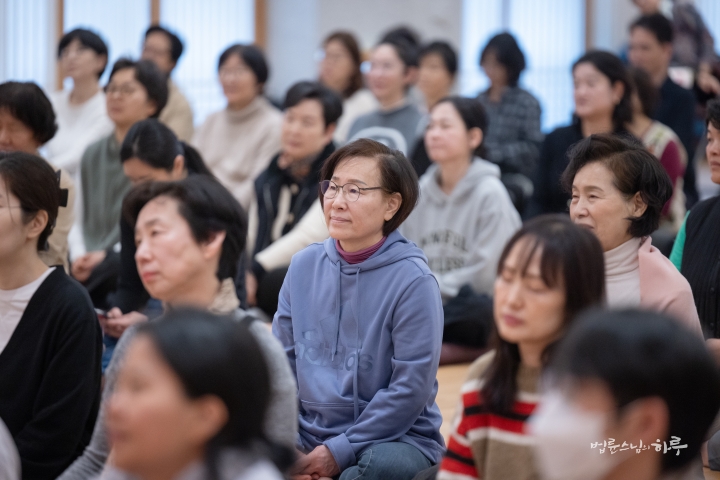
Next, Sunim took questions from those who had signed up in advance. Three people asked questions online.
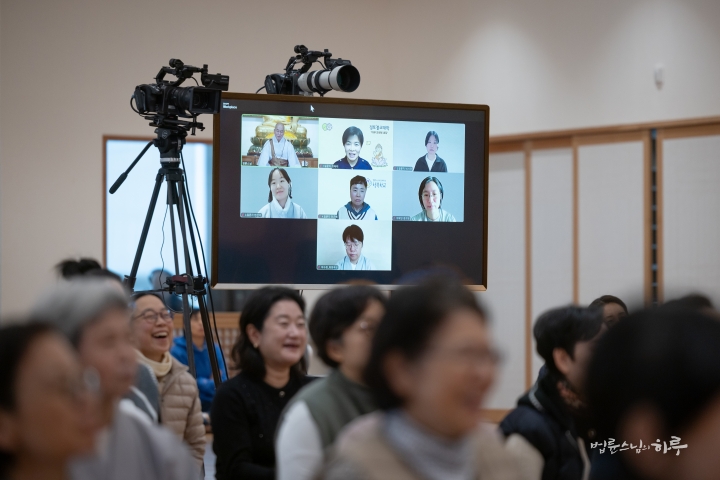
One of them sought Sunim’s advice, wondering why their heart, which was endlessly warm at volunteer sites, would suddenly turn cold in front of their sick mother.
Why Am I Warm to Strangers but Irritated with My Mother?
“Last week, I volunteered as a co-facilitator at the Awakening Retreat (깨달음의 장).On Sunday evening, the last day of volunteering, I received a call from my mother when I got home. She said she had lots of vegetables and asked me to come over and cook them together. At that moment, I felt a surge of irritation and felt like I was being forced to do something. I ended up saying curtly that it was too much trouble and hung up. Afterward, I felt very uncomfortable. The next morning, while doing prostrations, I suddenly realized something. My mother has the freedom to say and act as she wishes, but I had been dictatorial, thinking ‘Mother is wrong and I am right’ just because I didn’t like what she said. I repented for that mindset. Looking back, when I was volunteering at the Awakening Retreat, I felt happy seeing the participants’ faces brighten on the last day of the retreat. Seeing them become free from suffering made me feel proud, thinking ‘I was really well-utilized here.’ But when I got home and received my mother’s call, why did I feel irritated? Why did I feel that way when a sick, elderly person said she needed her daughter and just wanted to make some vegetable side dishes together? I willingly gave my heart to 5 days and 4 nights of volunteering, so why couldn’t I spare even a few hours for my mother? The heart I had while volunteering at the Awakening Retreat was genuine, so I wonder why that same heart doesn’t extend to my mother.”
“Just like how you were moved at the Awakening Retreat and then got irritated with your mother when you got home, if I give you an answer now, won’t you be moved again and then get irritated when your mother calls this evening?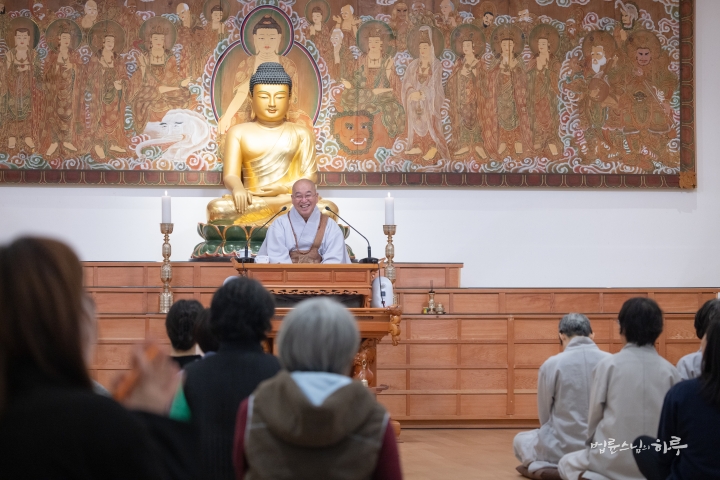
)
drank water from a skull and then vomited it up, it was a ‘wrong action,’ but because he became aware of that action, it became an opportunity for enlightenment. You’ve gained an opportunity to move in the direction of not making such mistakes again. Now you’ve discovered the contradiction in your actions. From now on, you can practice to improve this. In that process, you’ll repeatedly make mistakes and discover contradictions again. You’ll do well at the temple but fail at home repeatedly. Eventually, you might hear your husband say, ‘Then why do you go to the temple? Why do you listen to Sunim’s Dharma talks?’ But the very fact that such words reach your ears is evidence that you’ve changed from before. If you hadn’t changed, you would just let such words pass by. So in the long run, you’re in the process of improving. Of course, in the short term, what you did was wrong. You can hold both perspectives together.”“Thank you. I understand well.”
Questions continued one after another.
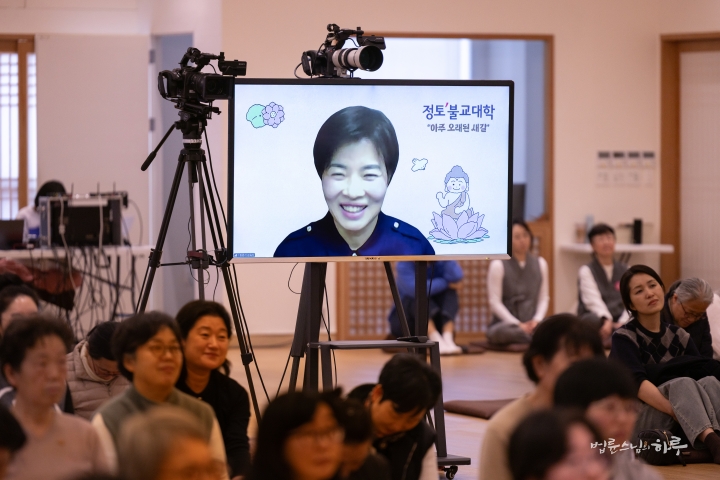
I’ve just become a new group facilitator. What attitude should I have to harmonize with group members and grow together?
I’m raising a two-year-old daughter with hereditary spastic paraplegia. Should I focus on professional treatment, or is loving care more important?
I’m currently living in community at the Jungto Social and Cultural Center. I’m wondering whether to leave or continue living in the community.
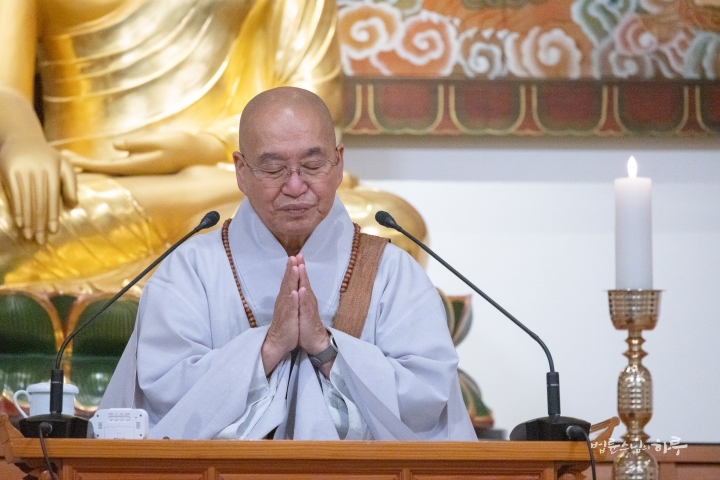
After concluding the dialogue, participants watched a video about various upcoming Jungto Society events scheduled for next week, then closed the Weekly Dharma Assembly with the Four Great Vows.
After lunch, Sunim went for a medical appointment. After the consultation, Sunim returned to the Jungto Social and Cultural Center(정토사회문화회관) to discuss the first half of the year’s overseas schedule with staff members.
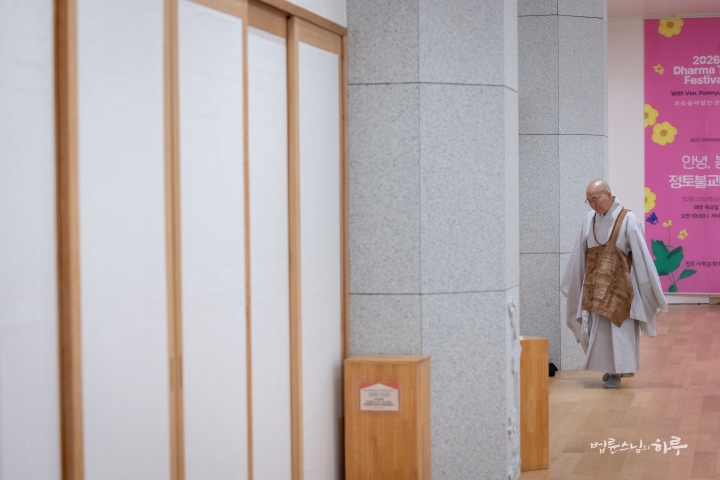
They reviewed and adjusted major schedules for the first half of the year, including emergency relief activities for flood-affected areas in Indonesia, SBS broadcast filming schedule, overseas lecture tours, and visits to Washington D.C. and Syria, before concluding the meeting.
At 4 PM, Sunim departed from Seoul for Dubuk Jungto Retreat Center (두북수련원). Originally, he was scheduled to begin relief activities in Pakistan today, but since the visa wasn’t issued, he decided to rest and receive treatment at Dubuk Jungto Retreat Center.

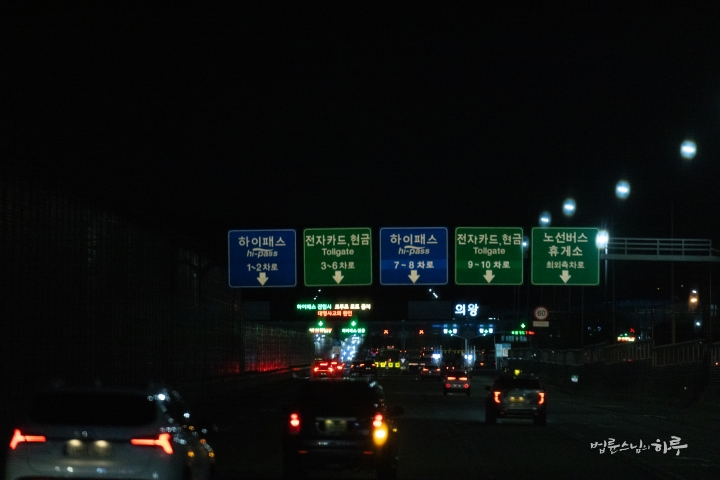
After a 3.5-hour drive, they arrived at Dubuk Jungto Retreat Center at 7:30 PM. During the drive, the sun set outside the window.
In the evening, Sunim finished the day’s work by proofreading manuscripts and handling various tasks.
As Sunim’s back pain continues without improvement, he plans to visit the hospital tomorrow morning and rest for health recovery in the afternoon.