Did I Commit Sins in My Past Life That Make My Life So Difficult Now?
Mar 3, 2026. Dharma Q&A at the Invitation of Gochang County
Hello. Morning has dawned at Dubuk Jungto Retreat Center (두북수련원).
After completing morning practice and meditation, Sunim had breakfast and then went out for community work (울력). It was a morning with fine, drizzling rain.
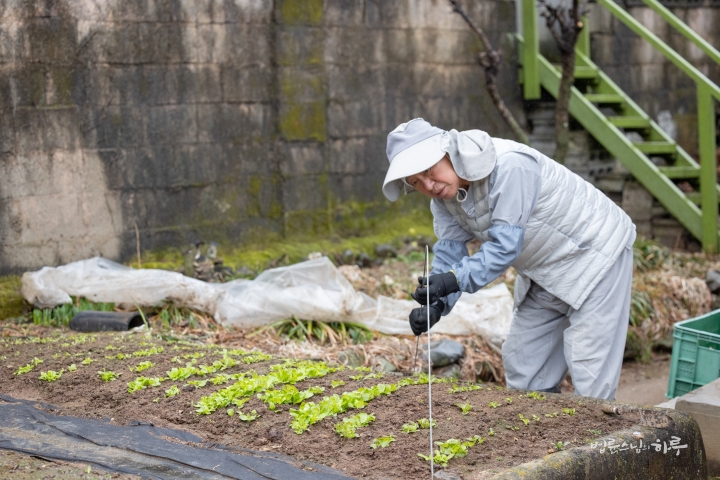
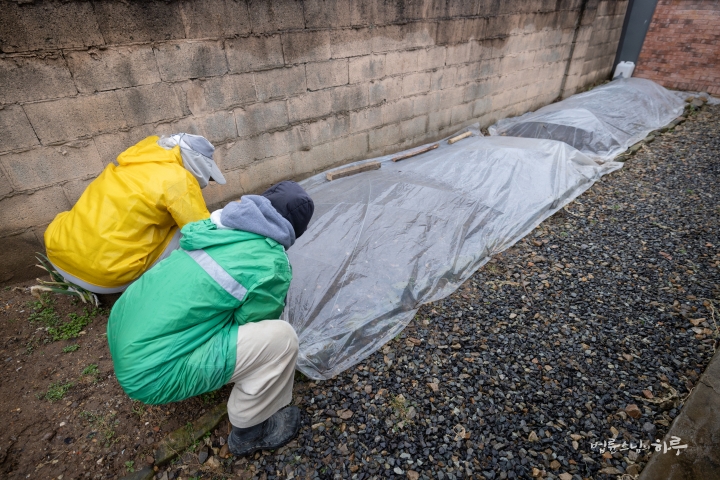
Last winter, Sunim had sown lettuce and coriander seeds in the garden and covered them with plastic. When he lifted the plastic, tender sprouts were just beginning to emerge.


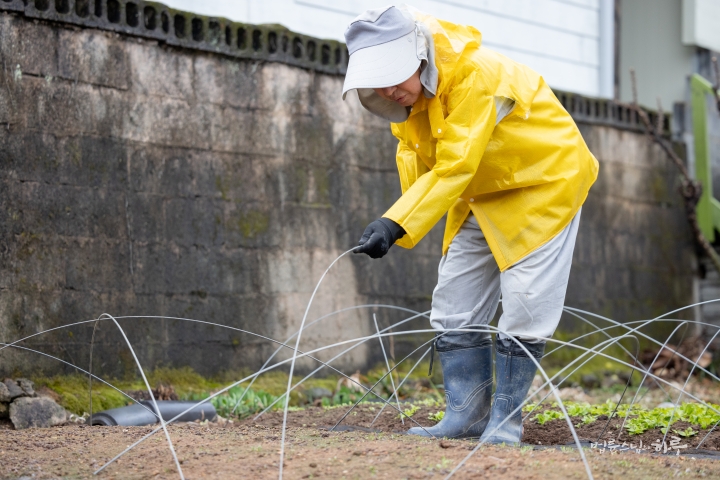
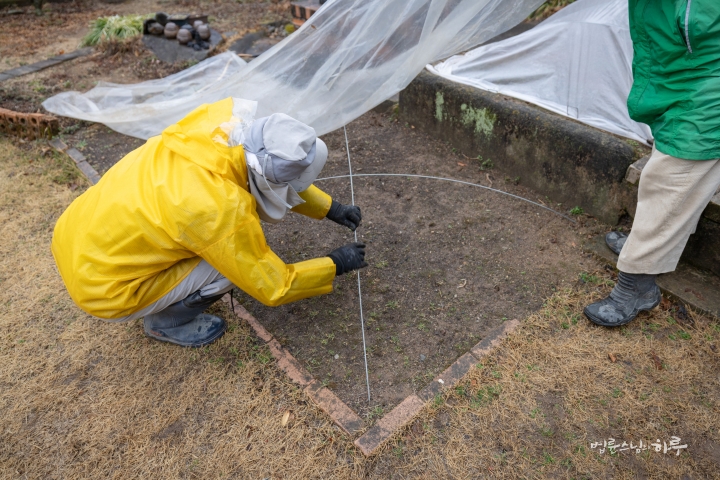
As the weather warms up, the heat inside the plastic can burn the sprouts. The plastic that had served as protection now needed to be removed. Sunim inserted wire into the plastic to create space between the plastic and the soil.
First, he inserted wire into the lettuce bed and then covered it with plastic to create a small greenhouse. As the fine rain continued to fall, he put on rain gear and continued working.
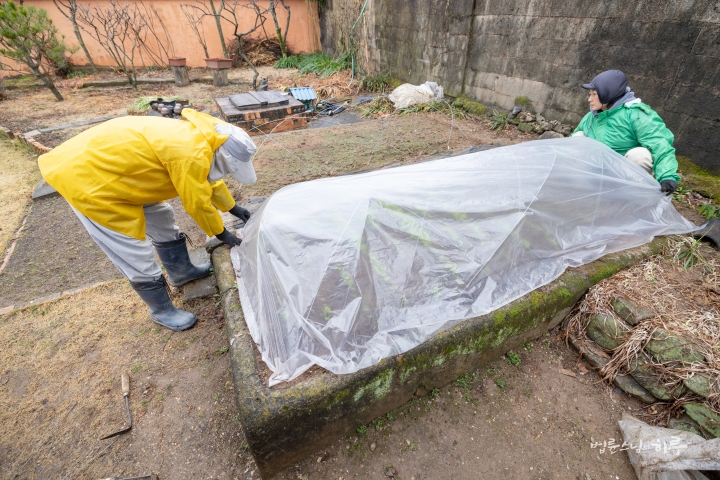

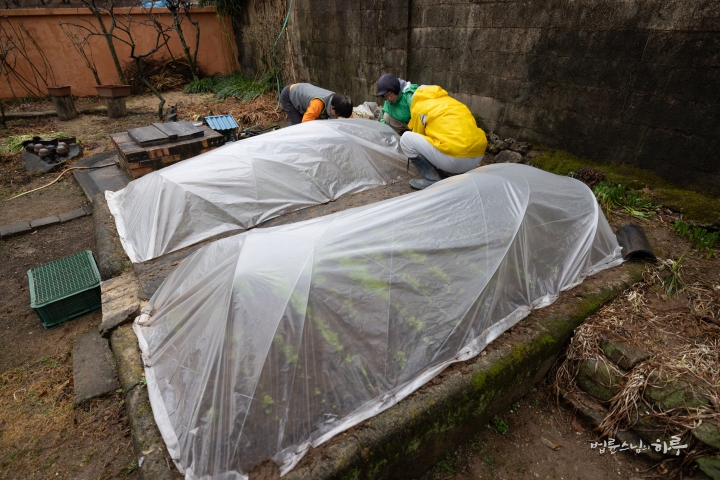
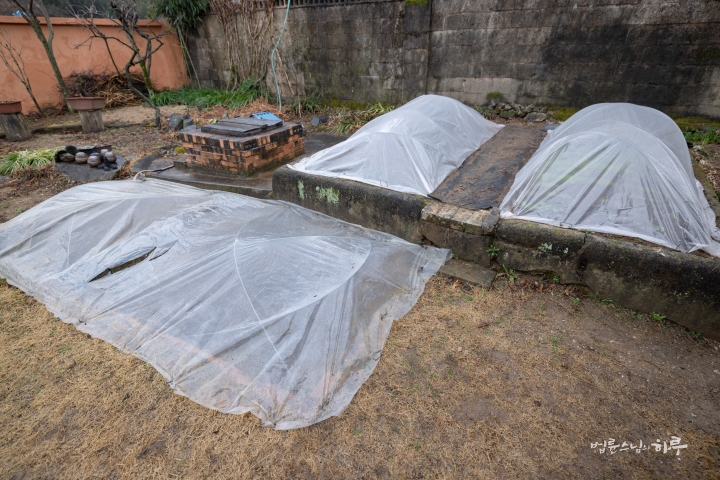
Rather than discarding the used plastic, he cleaned it thoroughly and used the same method to cover the back garden where coriander and lettuce had been planted.
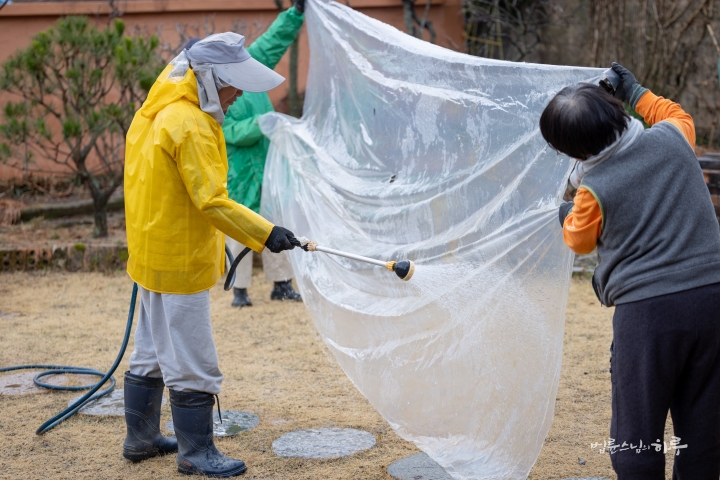
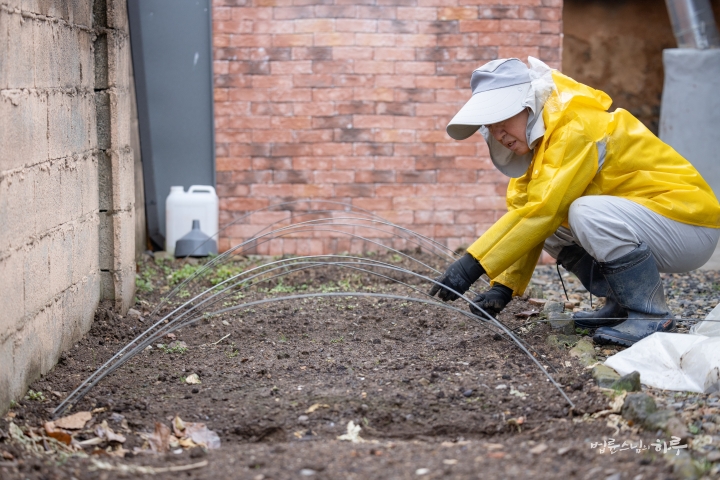
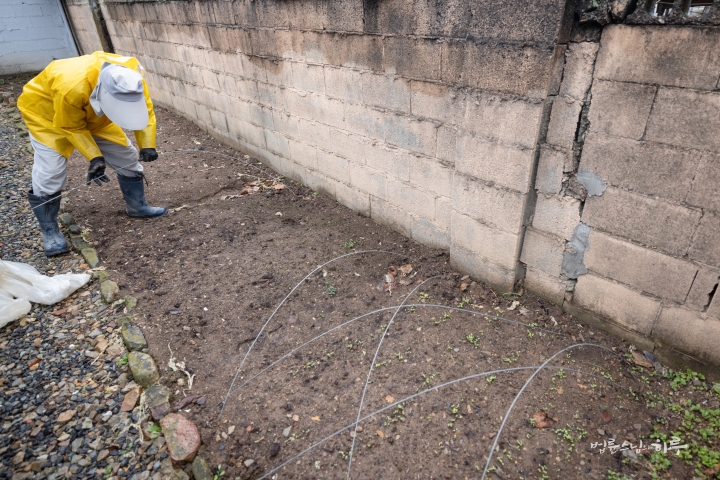
Only after finishing the chive field did he complete the community work.
After an hour and a half of community work, Sunim immediately changed clothes. At 10:40 AM, he departed from Dubuk Jungto Retreat Center for Gochang County (고창군).
Today, Gochang County invited Sunim to host the “Gochang Forum for Citizens’ Happiness.” Not only Gochang County Office but also the nearby Seonunsa Temple (선운사) strongly requested to invite Sunim, so he made time despite his busy schedule.
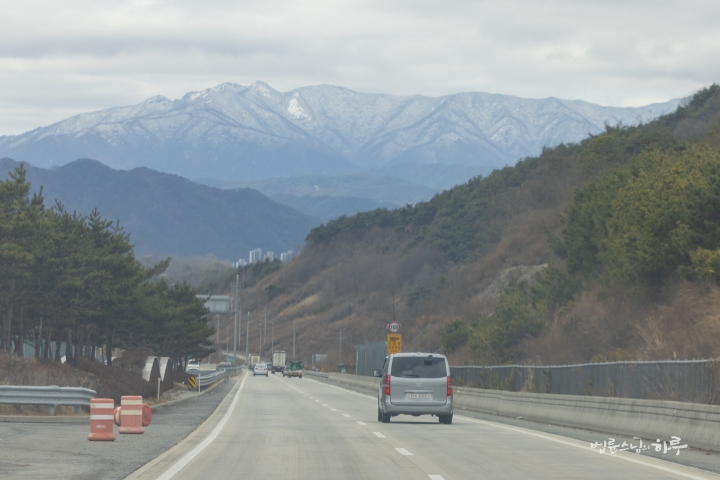
The journey from Dubuk Jungto Retreat Center to Gochang County took 3 hours and 30 minutes, crossing from east to west on the highway. After a light meal of udon at a rest stop (휴게소) along the way, they arrived in Gochang County at 2:10 PM.
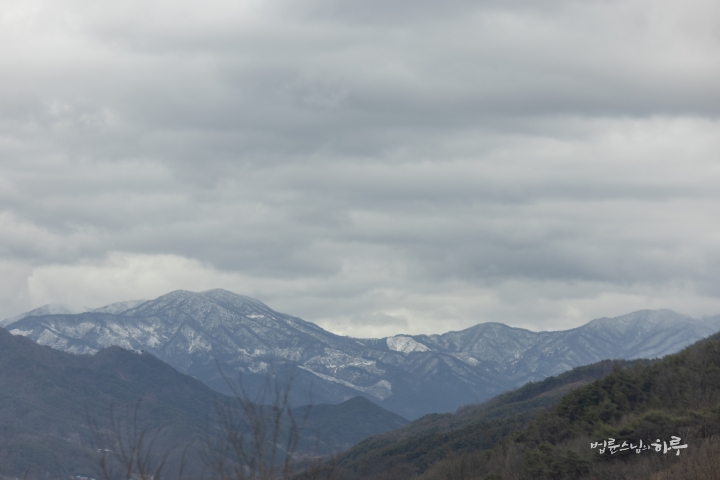
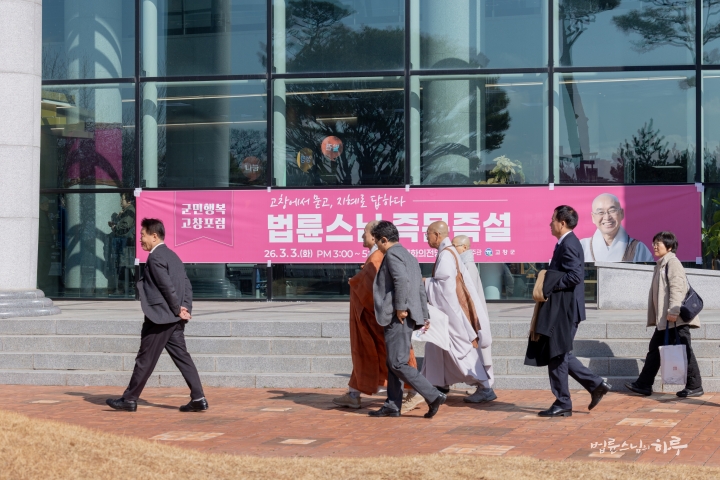
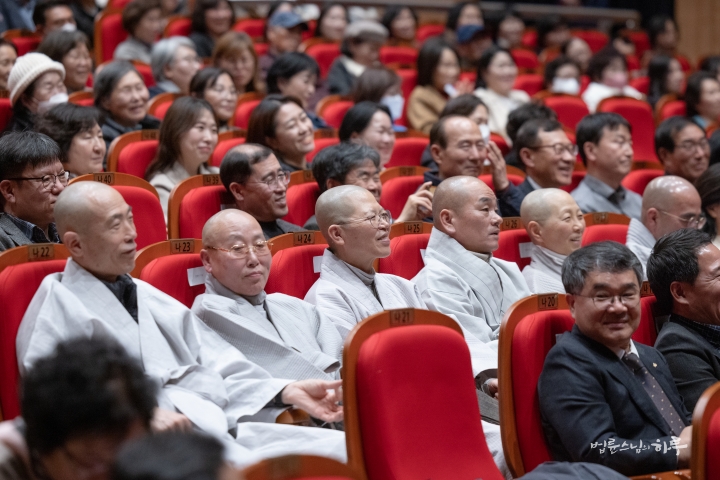
Today’s lecture was held at the Gochang Cultural Center. At the entrance, many people were lined up waiting to enter for the lecture.

Sunim arrived 50 minutes before the lecture time and had a preliminary meeting. Three people had traveled far to meet Sunim: the Vice Chairman of Jeonbuk Broadcasting (전북 방송), the Deputy Director of Jeonbuk Daily, and the Vice Chairman of the Northeast Asia Economic and Cultural Promotion Association from Shenyang, China (중국 심양),who leads economic and cultural exchanges in Northeast Asia(동북아).
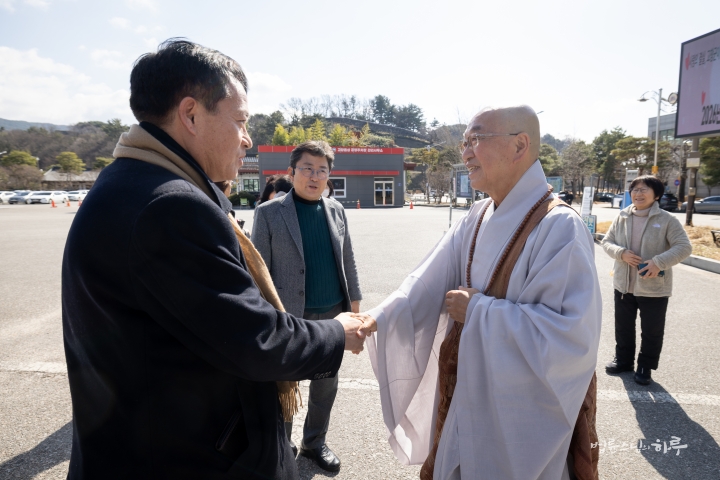
The three visitors said they had been deeply moved by Sunim’s activities. They introduced their work in cultural exchanges in the Northeast Asian region and sought Sunim’s advice on their future plans.
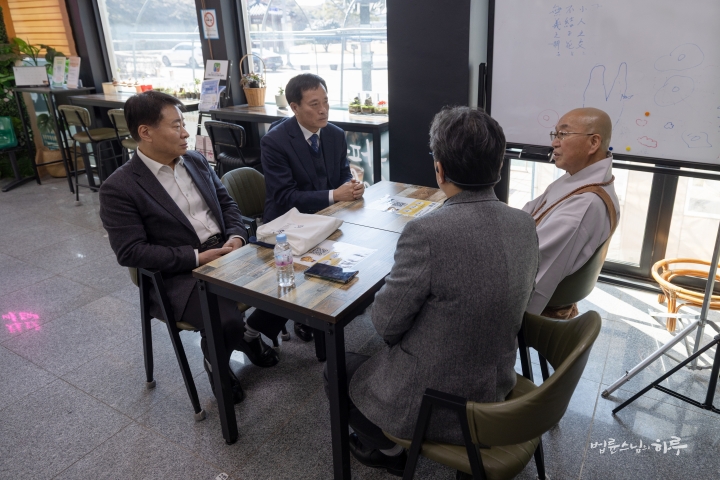
Sunim provided a detailed introduction to the Northeast Asian History Tour program and advised that utilizing this program well could help offset anti-Korean and anti-Chinese sentiments between the peoples of Korea and China, leading to meaningful results. After discussing many other areas where Korea and China could expand their exchanges, the meeting concluded.
“I need to leave now as there’s a preliminary tea meeting before the lecture. If you feel we haven’t had enough conversation, let’s continue after the lecture.”As time was running short, they hurried to the Gochang Cultural Center where the lecture was being held.
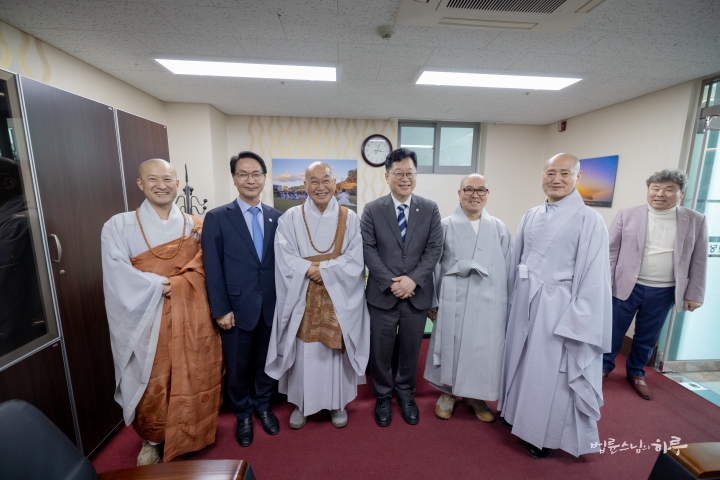
In the waiting room next to the lecture hall, local dignitaries including Congressman Ahn Ho-young (안 호영) from Jeonbuk, Gochang County Mayor Shim Deok-seop (심 덕섭), Seonunsa Temple’s Deputy Abbot Venerable Cho-u (초우스님), and Venerable Hye-su (혜수스님)welcomed Sunim.
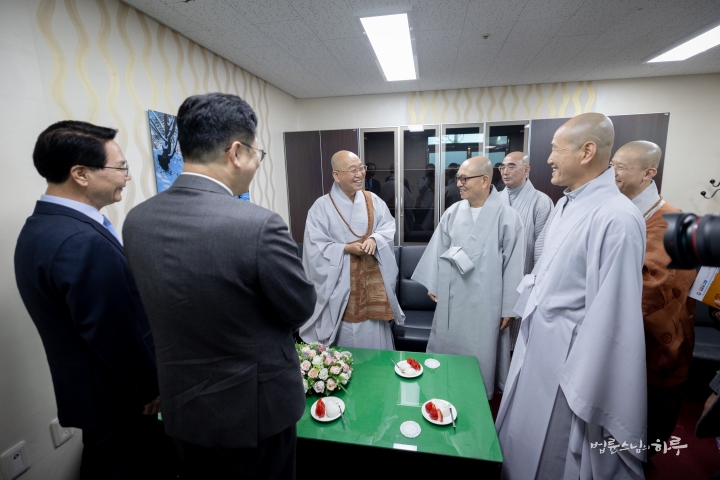
“Thank you for coming such a long way despite your busy schedule with many overseas commitments.”
“Nice to meet you.”After exchanging greetings, they had a brief tea conversation. First, the county mayor shared the pride of Gochang.
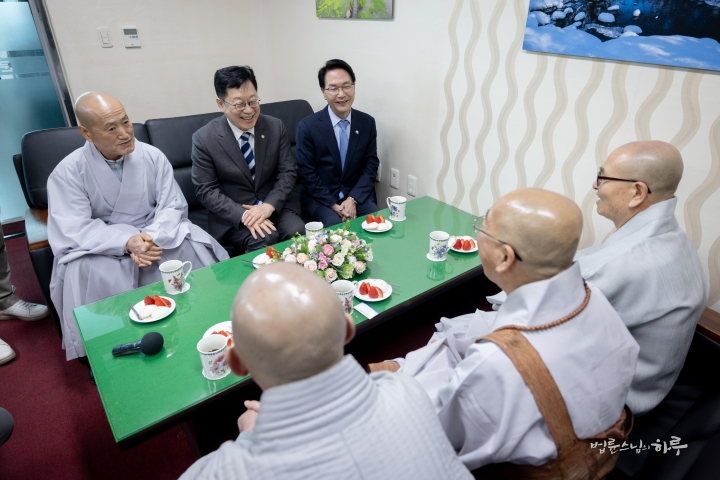
“Our Gochang has as many as seven UNESCO-recognized World Heritage sites. Starting with the dolmen sites (고인돌 유적), traces of prehistoric times, registered as World Cultural Heritage, our vast tidal flats are designated as World Natural Heritage. True to being the birthplace of pansori (판소리), both the pansori that Master Shin Jae-hyo(신 재효) systematized in this land and Gochang nongak (농악 : farmers’ music) are listed as UNESCO Intangible Cultural Heritage. The entire Gochang region is also designated as a UNESCO Biosphere Reserve. In addition, two years ago, we completed our seven sites with the certification as a Global Geopark and the inscription of the Donghak Peasant Revolution proclamation (동학농민혁명 포고문) as Memory of the World. We have one entry in each of the five programs operated by UNESCO. That’s why we call Gochang a ‘World Heritage City.'”
Sunim asked.
“Do you actually get many foreign tourists?”The county mayor hesitated for a moment.
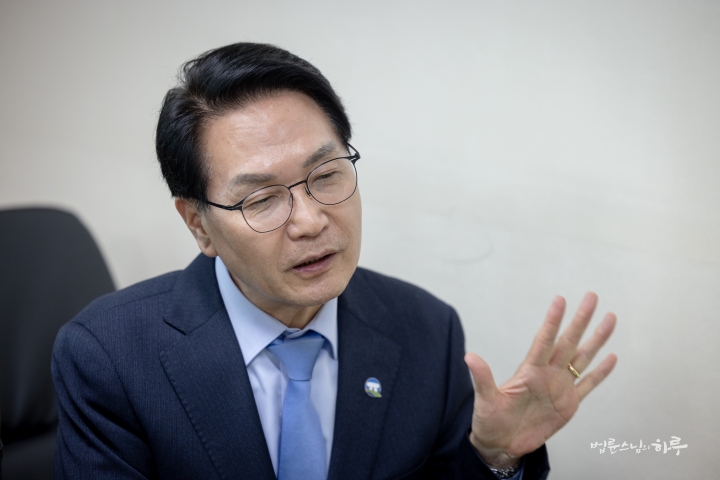
“Transportation is still inconvenient, so we don’t get many foreign visitors yet. As for domestic tourists, 12.3 million visited last year. Our recognition as a tourist destination is increasing quite a bit.”
Sunim asked again.
“When many tourists come, does it actually help the local economy?”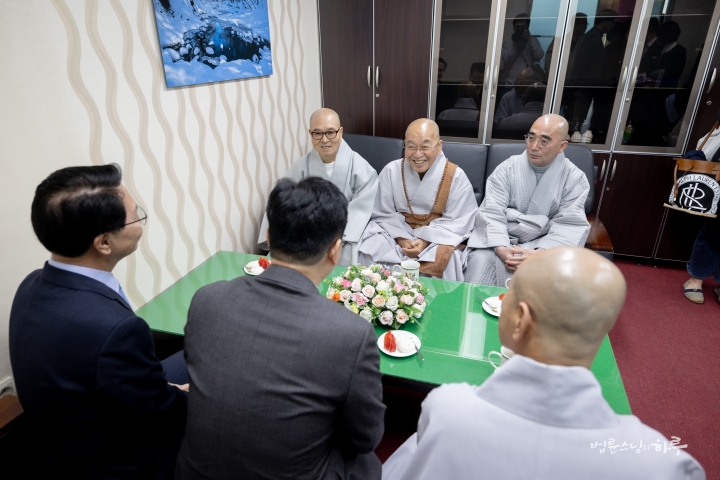
The county mayor answered honestly.
“If they just pass through, honestly it’s just bothersome. They need to stay overnight, eat meals, and connect with the local economy. If they just come and go, they only leave trash behind. That’s why we’re talking a lot these days about transitioning to stay-type tourism.”
Despite having seven World Heritage sites, they had not yet fully realized their value. As the conversation continued, it was time to start the lecture. After taking a commemorative photo with Congressman Ahn Ho-young, Mayor Shim Deok-seop, Seonunsa Temple’s Deputy Abbot Venerable Cho-u, and Venerable Hye-su, Sunim headed to the lecture hall.
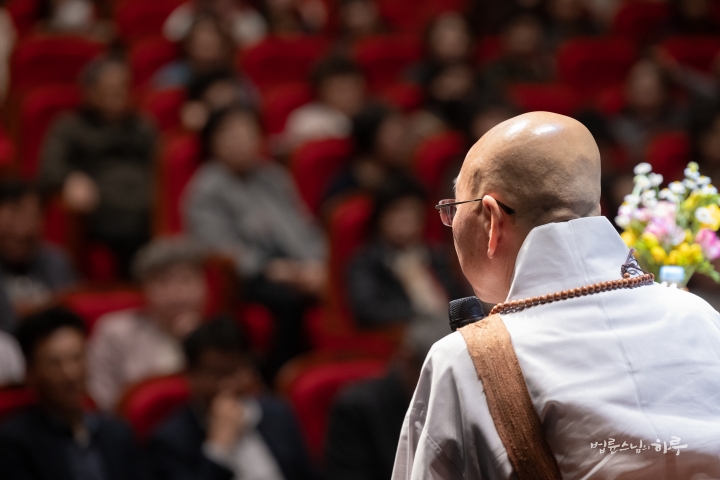
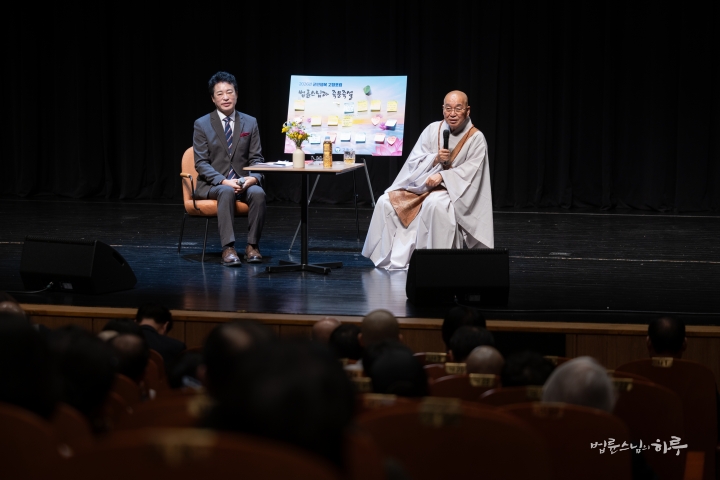
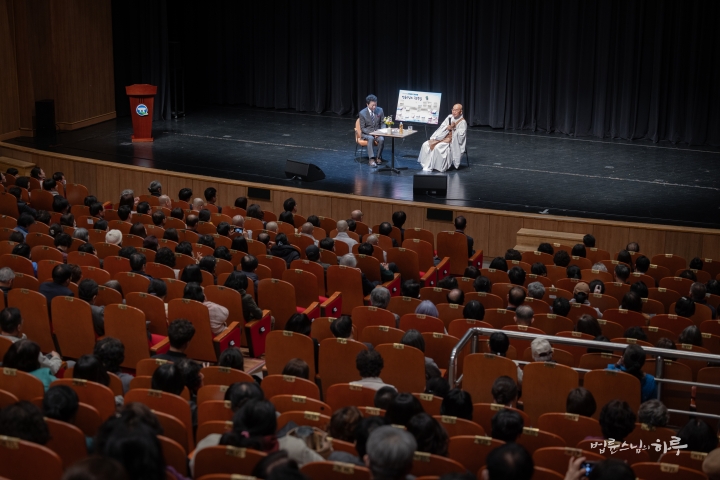
After the welcoming remarks by Congressman Ahn Ho-young, who is running for Jeonbuk Governor, and Mayor Shim Deok-seop, Sunim walked onto the stage to great applause and cheers. Before beginning the dialogue in earnest, Sunim first gave opening remarks and introduced the principles and purpose of Dharma Q&A (즉문즉설).
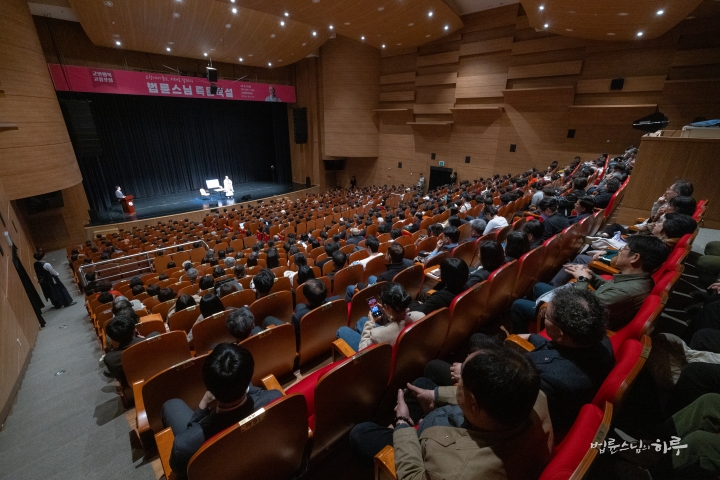
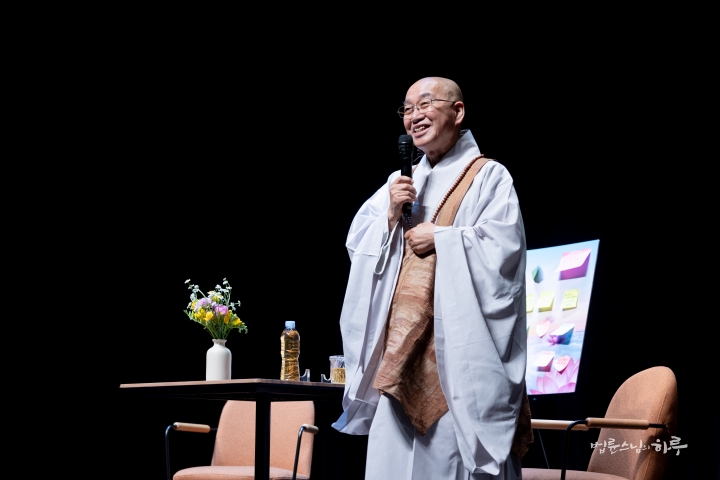
The Highest Enlightenment Is the Realization That ‘It Was No Big Deal’
“Someone says, ‘My husband died’ and suffers. Why are you sad that your husband died? Before marriage, when you had no husband, didn’t you live well alone? Not having a husband is just returning to the original state. What’s the problem? If you want to meet someone new, you can. If living together was bothersome, you can live alone. Your options have expanded. It’s not something to laugh about, but it’s not something to cry about either. This is how to establish your perspective. Someone says they’re suffering because they have a building that won’t sell. From their perspective, it might be a worry. But if you lower the price, it will sell quickly. The problem comes from wanting to get a lot for it. Just changing your perspective slightly makes it no longer a problem.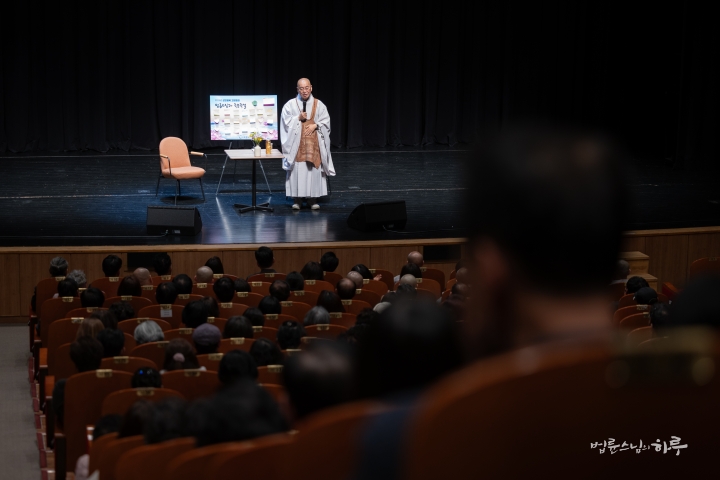
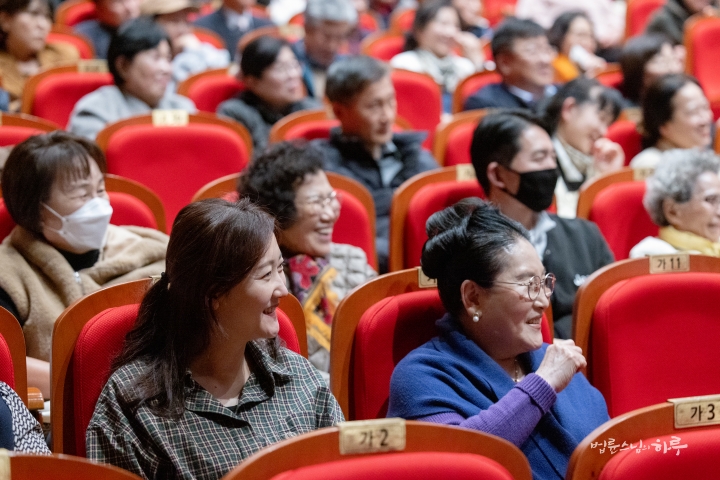
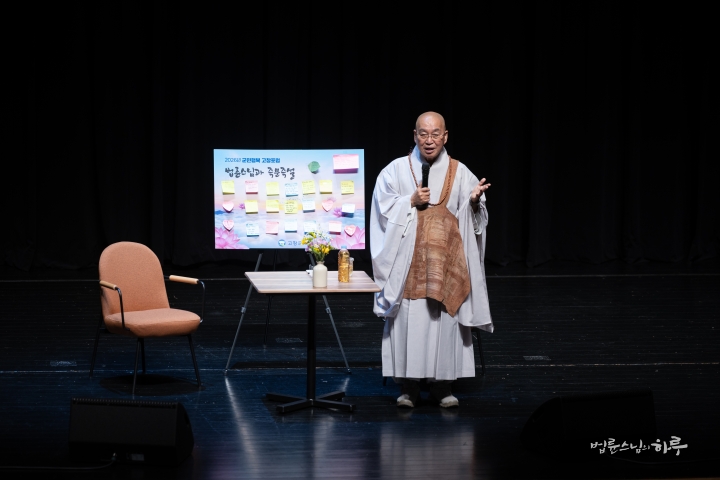
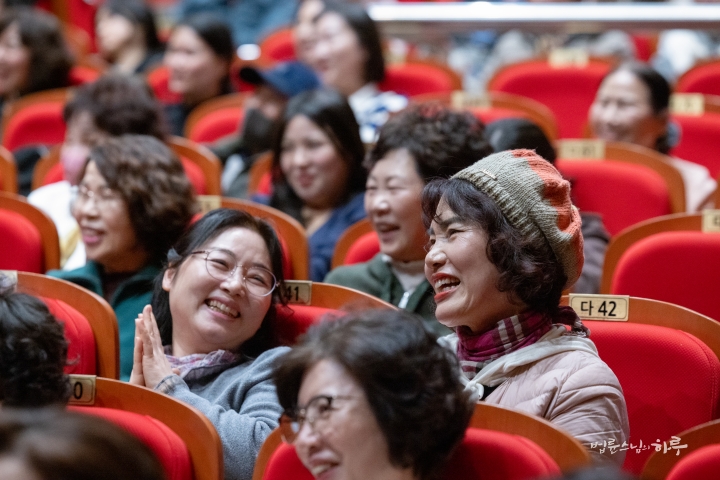
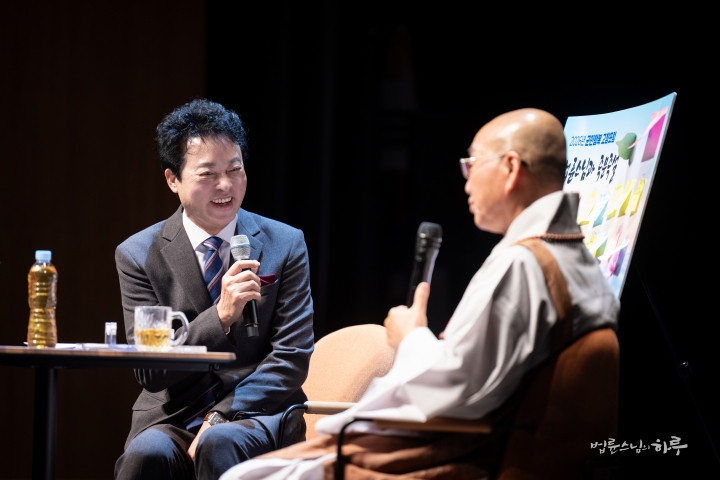
The moderator then took a seat beside Sunim. Behind the moderator sitting next to Sunim, small memo notes were stuck closely together. These had been collected in advance at the entrance to the lecture hall. Before taking their seats, audience members had written down on these small pieces of paper what they wanted to ask Sunim.
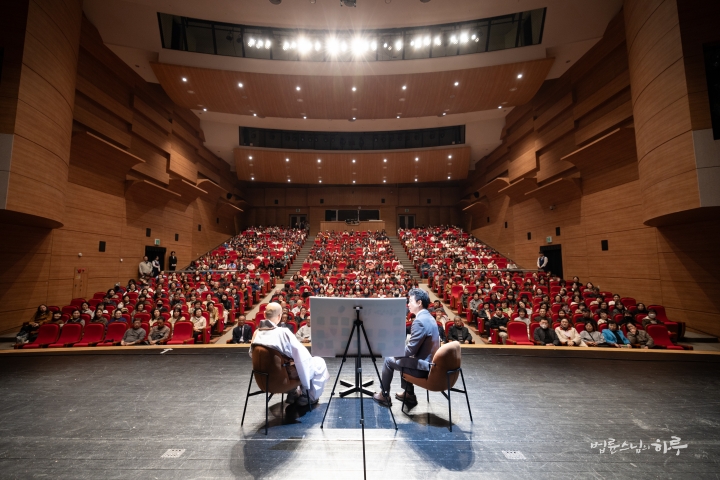
The moderator peeled off one memo note. After briefly scanning the content, the moderator posed the question to Sunim on behalf of the audience. One note, then another. Questions containing each person’s story and concerns began to unfold one by one.
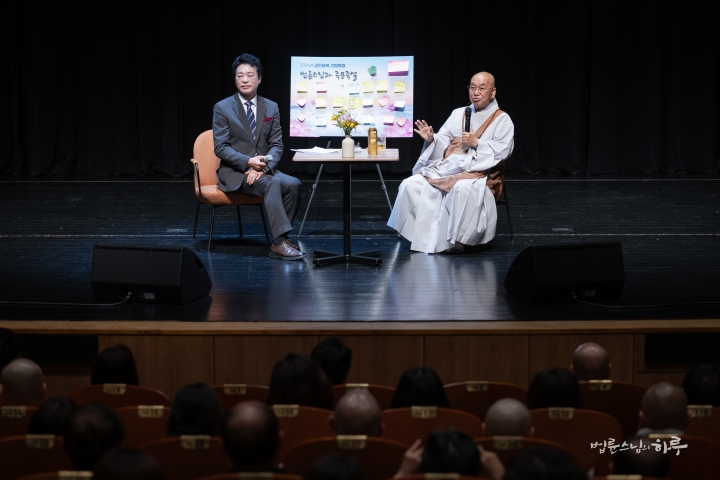
One person asked for Sunim’s advice, saying that life in this present existence was too difficult due to relationships with siblings and parents, and wondered if there were past lives and what kind of life they had lived in past lives to make things so hard now.
Did I Sin in a Past Life to Make Things So Difficult Now?
“Sunim, do past lives exist? What kind of life did I live in my past life that makes my present life so difficult? My relationship with my parents is difficult, and I don’t get along well with my siblings. I’m curious about what I can do to live with less hardship.”
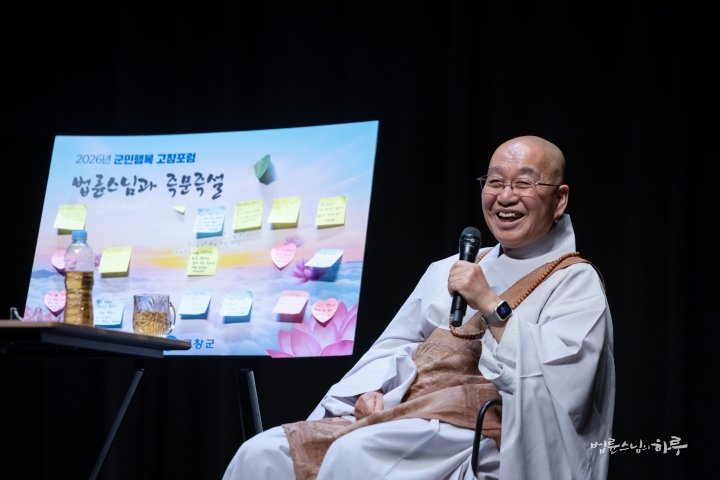
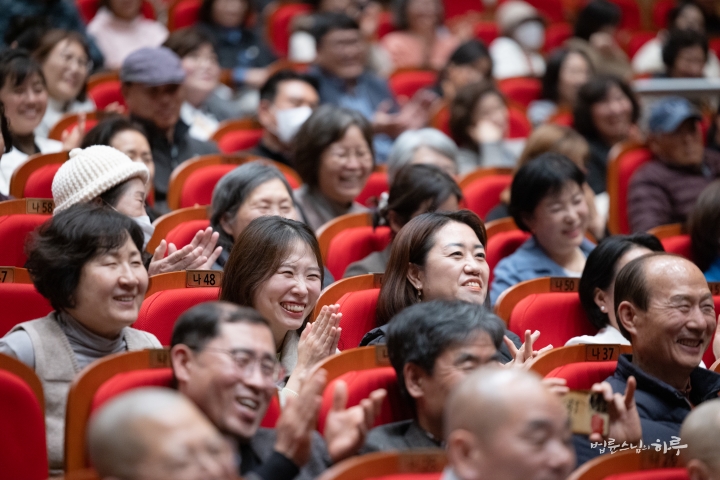
“It’s decided now.”
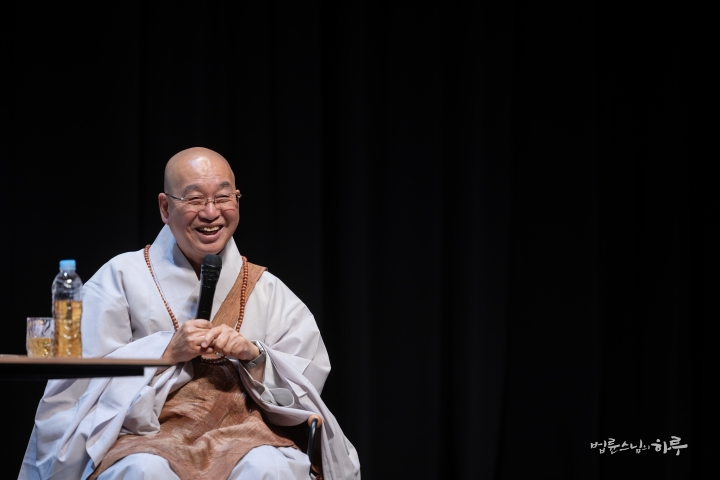
“That’s crystal clear. I understand well.”
When Sunim finished his answer, the moderator asked Sunim an additional question.
Is My Current Suffering Really Due to the Situation?
“Sunim, you have been writing books for a long time. From ‘Practical Buddhist Thought (실천적 불교사상)’ written in 1988 to ‘The Heart Sutra (반야 심경),’ you’ve published many books, and I’ve kept several passages close to my heart. Among them is this phrase: ‘Suffering doesn’t come from the situation that causes suffering, but from my thoughts.’ This is a bit difficult to understand. My current hardship is suffering, but you’re saying it comes from my thoughts. Could you explain this in a way that’s easier to understand?”
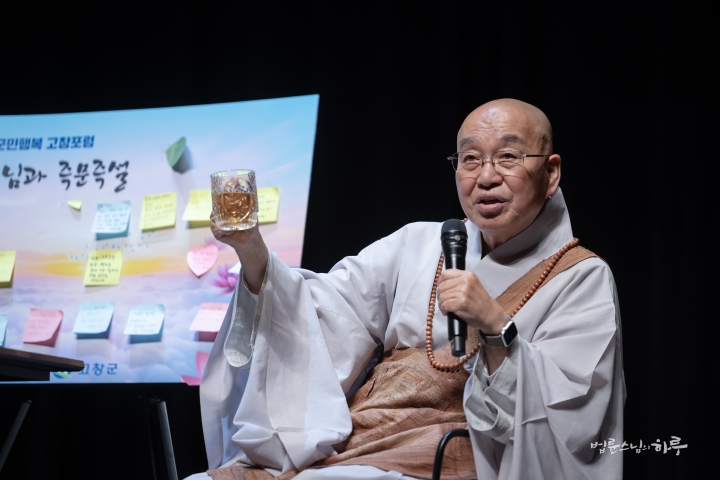
“It’s bad.”
“It’s natural to feel it’s bad. But now imagine both legs were broken in the accident. Is having one leg broken better or worse than having both legs broken?”“It’s better than having both legs broken.”
“We think breaking one leg in a traffic accident is unfortunate. That’s because we compare it to when it wasn’t broken. But if we compare having one broken leg to having two broken legs, it’s a better situation.” “So is having one broken leg a bad situation or a good situation?”“Even though the leg is broken, it’s a good situation. Because only one is broken.” (Laughter)
“Fortunate.”
“Because others died while this person survived. Our judgment changes depending on where we set our standard. Like this, any situation we experience is neither inherently good nor bad. It’s just a situation. In Buddhist terms, this is called ’emptiness (공)’ or ‘true reality (실상).’ But when thoughts intervene, comparing it this way makes it a bad situation, and comparing it that way makes it a good situation. So is good or bad in the situation? Or is it in our minds?”“It’s in our minds.”
).
‘ This doesn’t mean that if you say ‘gold,’ it becomes gold, or if you say ‘silver,’ it becomes silver. It means all relative judgments like good and bad, right and wrong, correct and incorrect arise from the mind. So in reality, if we must give rise to a thought anyway, is it better to give rise to a good one or a bad one? Most people say it’s better to give rise to a good one. But we usually give rise to bad thoughts more often. That’s why we make ourselves unhappy. We suffer because of the thoughts we create. For example, I’m living alone now. By monastic standards, is living alone past 70 a success or failure?”“It’s a success.”
“Only one in ten people who became monks with me still lives as a monk without returning to lay life. So by monastic standards, it’s a success. But by general secular standards, if someone hasn’t married by 70, people usually call it a failure. Like this, success or failure, good or bad, aren’t originally determined. They’re just facts. Depending on how you think about it, it becomes success or failure. Victory or defeat ultimately depends on your own mind. This is ‘everything is created by the mind.’ Clean and dirty aren’t in the water but in the mind. The story of Master Wonhyo (원효 대사) drinking water from a skull is an example. This principle also appears in the Avatamsaka Sutra (화엄경). Master Wonhyo also knew theoretically that ‘cleanliness and dirtiness don’t originally exist. They’re all created by the mind.’ But when he actually drank water from a skull, he vomited. At that moment, did Master Wonhyo succeed or fail in practicing what he knew?”“He failed.”
“But within that failure, he suddenly realized, ‘Ah, it’s created by the mind!’ So in this case, is failure good or bad?”“Looking at it that way, even failure is good.”
“It’s fortunate to have daughters.”
)
.’ Our lives are the same. There’s no fixed ‘who I am,’ but when you have a child, you become a mother. When you marry, you become a wife. To your parents, you’re a daughter and to your child, you become a parent. It changes depending on whom you meet and what connections you make. So if you think you’re unhappy now, it’s because you’ve accepted and chosen to see it that way. If that mindset continues, you might continue to feel unhappy. But in fact, there’s no reason to be unhappy. Ultimately, it’s a matter of how you accept it.”Questions continued one after another.
After being advised to get a detailed examination during a health checkup, I spent a week in hell. How can I reduce this worry?
I want to sincerely apologize to someone who won’t meet me. How can I convey a heartfelt apology?
Every time I make a choice, I’m always afraid and regretful. Does a life without regrets really exist?
My boyfriend and I seem to be in a rut. He just stays home, has no intention of getting a job, and seems irresponsible. Should I continue dating him?
I’ve hated many people, and those emotions torment me. How can I eliminate and resolve hatred?
The moderator read the notes one by one according to the pre-arranged format. Then Sunim made a suggestion from his seat.
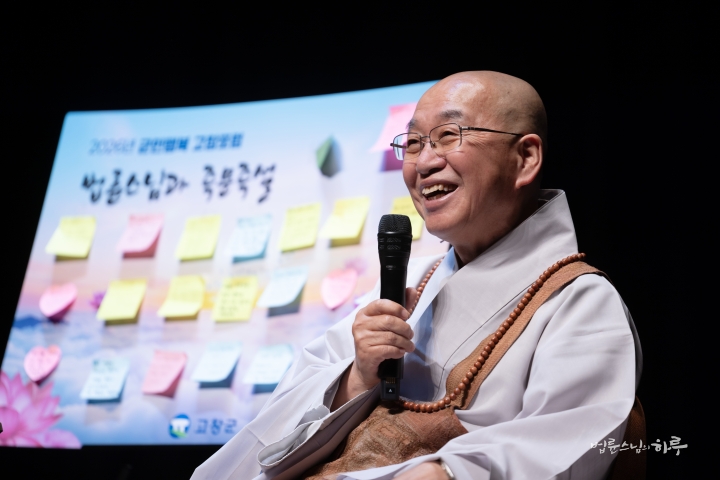
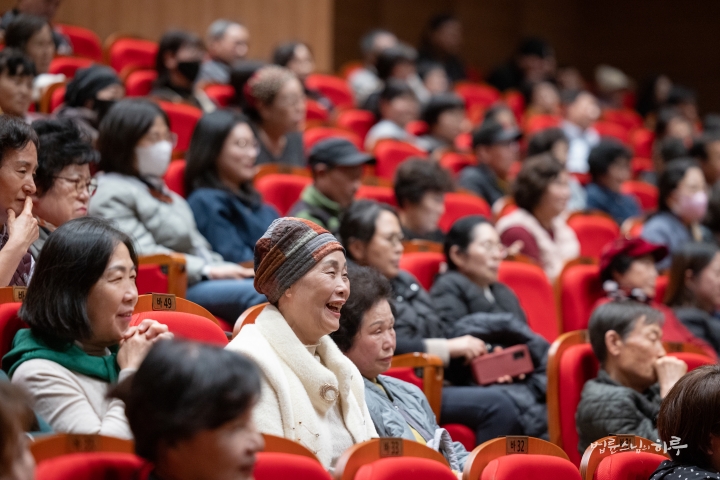
The atmosphere changed when the format changed. Hands began to rise tentatively here and there in the audience. One resident stood up and spoke with an earnest voice.
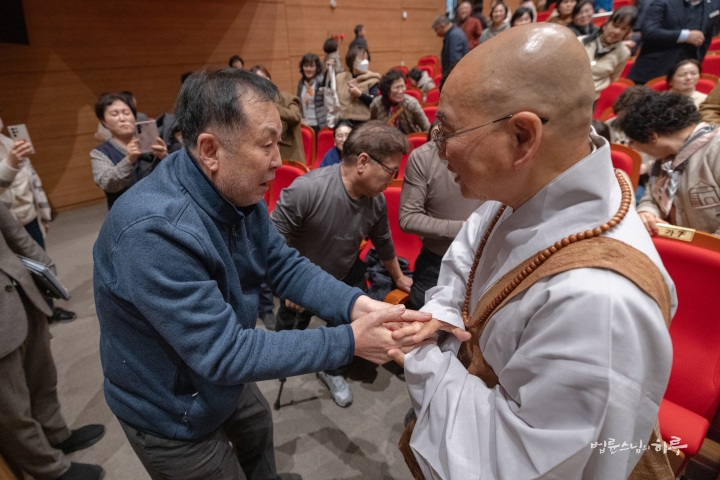
“I’m very sick, and I feel like I’ll be healed if I can just hold Sunim’s hand once.”
Sunim answered warmly.
“Let’s do that on your way out after the lecture.”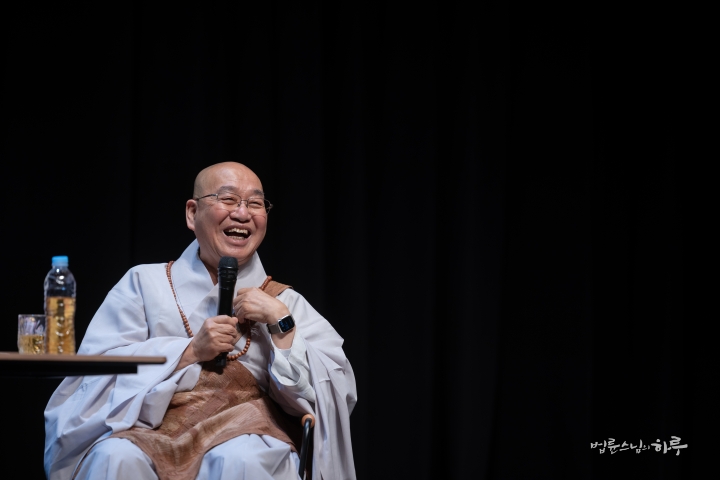
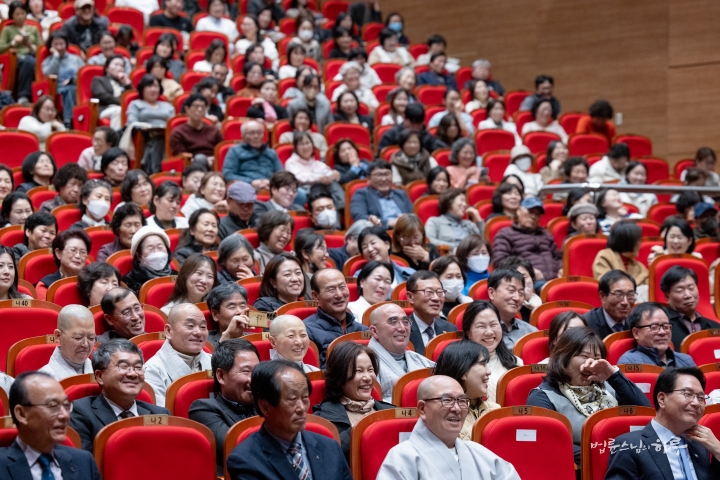
The lecture hall became lively when the format changed to direct questions and answers.
I was shocked when the Dalai Lama revealed in an official lecture that he reads and meditates on the Bible. Do you also have a Bible, and how do you incorporate it into your daily life?
I’ve been diagnosed as needing to take depression medication for 5 more years, and my mental strength is declining. It’s so hard. How can I endure going forward?
I’m worried seeing you always so busy with activities. How do you plan to spend your later years comfortably and happily?
As the lecture was wrapping up, even more people wanted to raise their hands. Unfortunately, time was up. The moderator made a final suggestion. He proposed taking a commemorative photo with Sunim and the county governor sitting on stage together with the audience.
“One, two, three!”
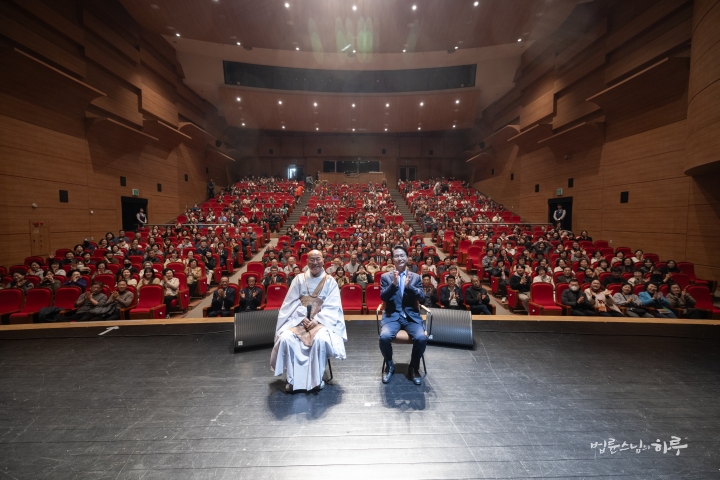
After finishing the photo with the sound of shutters, Sunim turned back toward the audience and continued his closing remarks.
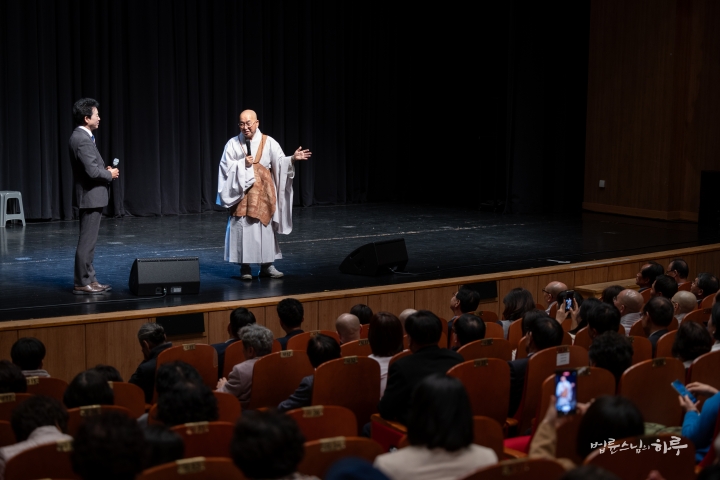
“They’re alive.”
“Worrying about death is something only living people do. When you die, will you worry about death or not? Worrying about death is a waste. You’ll see when you get there. It’s the same as someone who hasn’t even married worrying about how to raise children. You don’t even know if you’ll marry or not. Have the child and think about it then.”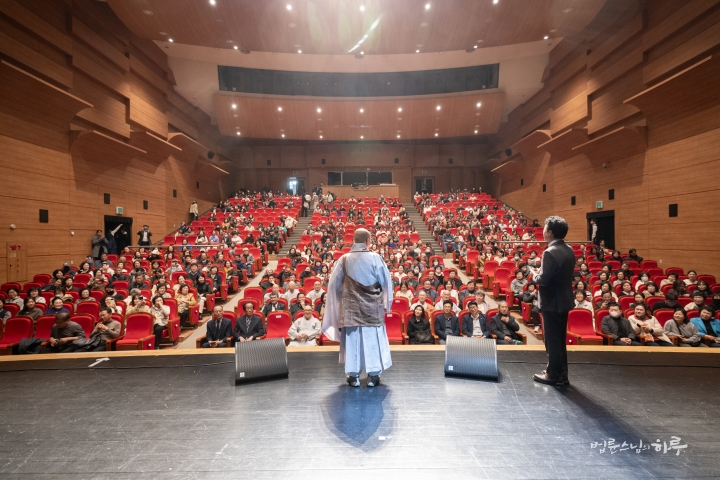
Right Here, Right Now, No Problem
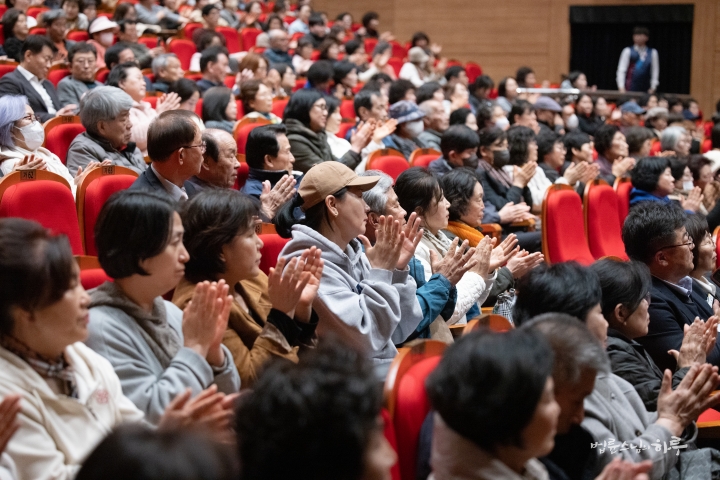
“If you think too much about the future, the brain gets confused. If you think, ‘What will happen if I get married in the future?’ the brain mistakes that future event as if it is happening right now. That is exactly what worry and anxiety are. Conversely, when you recall past memories, the brain also mistakes them for happening in the present, which creates suffering, hatred, and resentment. All these emotions arise because the brain confuses past memories as if they are occurring now. Thinking about the future brings worry, anxiety, restlessness, and unease. Suffering, anger, frustration, hatred, and resentment come from dwelling on the past. That is why Buddhism teaches: ‘Do not dwell on the past that has gone, do not anticipate the future that has not yet come, be fully awake here and now.’ Right now, here, there is no problem. If you maintain the perspective that ‘Here and now, there is no problem,’ all of you can live each day happily. Pleasure is not true happiness. True happiness is the absence of suffering.”When the talk ended, the lecture hall erupted in applause.
Sunim immediately went to find the person who had asked the question earlier. Leaning on a cane and struggling to stand, the person reached out a hand toward sunim. Sunim clasped that hand firmly with both of his own. Then, in a quiet but strong voice, he gently encouraged the person, giving them courage.
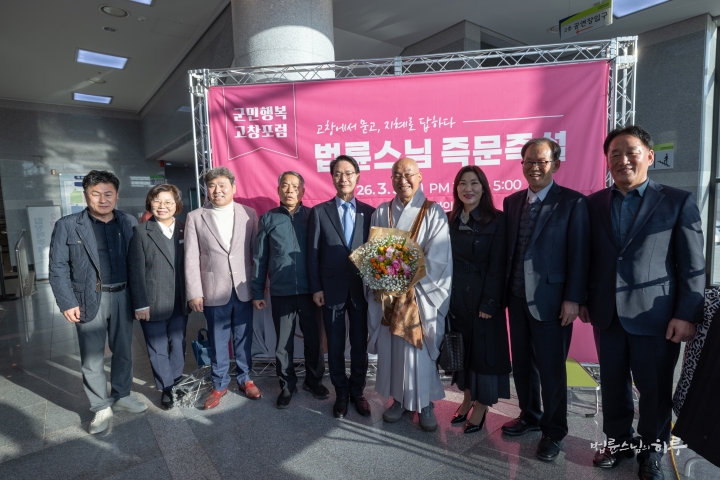
As he exited the lecture hall, the Gochang County Office presented Sunim with a bouquet of flowers. They also asked him to take one more commemorative photo in front of the banner. Sunim smiled brightly as he posed for the photo.
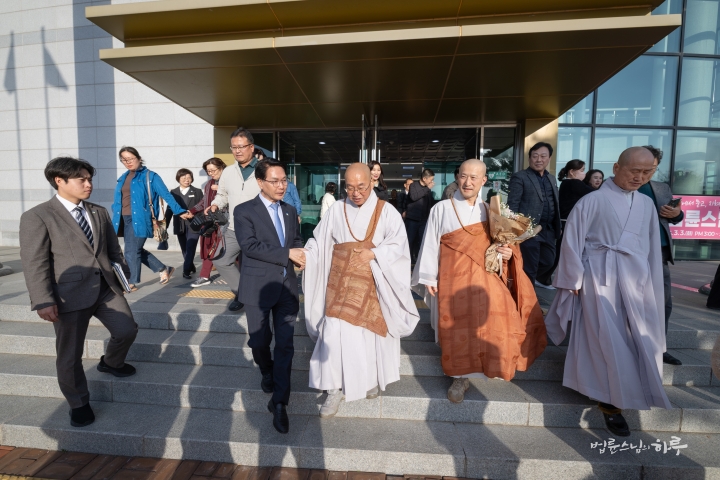
After leaving the Cultural Center, Sunim met again with the vice president of the Northeast Asia Economic and Cultural Promotion Association, whom he had met before the lecture. They had an extensive conversation about how cultural exchange between Korea and China could be further promoted.
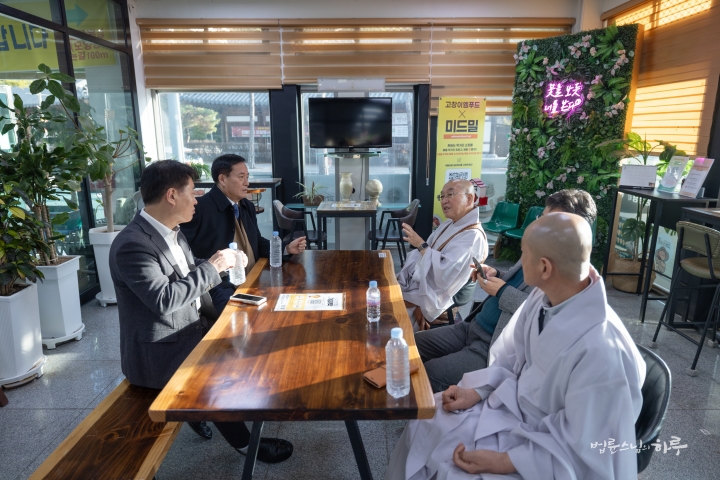
“Next time you come to Shenyang (심양), please let me know. I would like to help in any way I can with the work you do, Sunim.”
“Yes, I will.”After a 30-minute meeting, Sunim departed Gochang County at 5:30 p.m. and headed to Seoul.
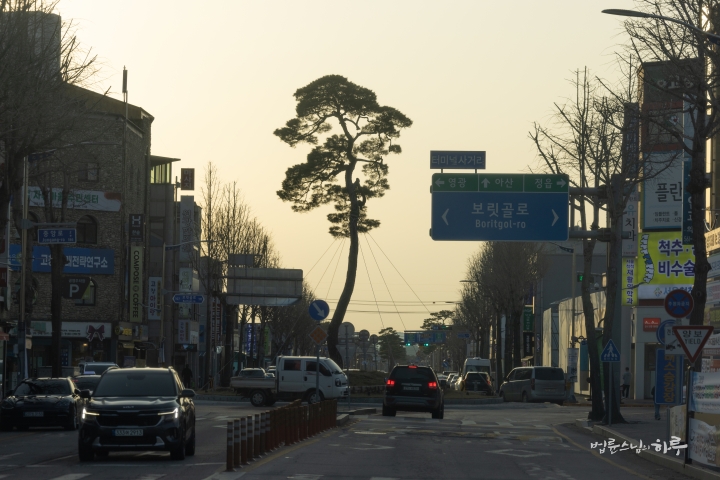
As they traveled by car, the sun set outside the window.
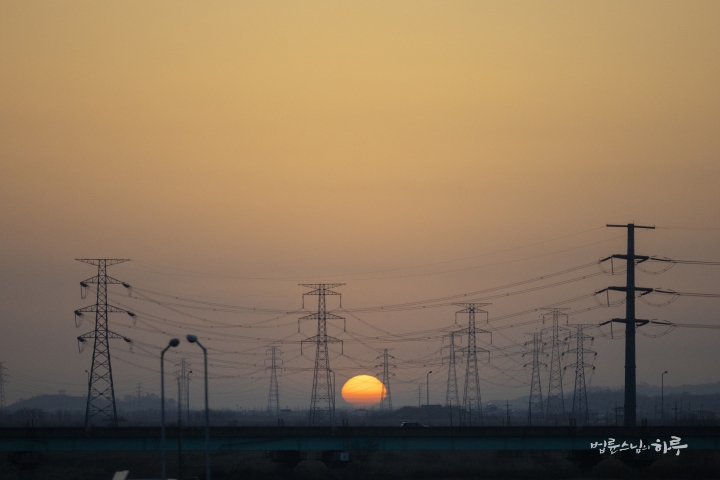
The sun had set, and the full moon rose. According to the lunar calendar, today was the first full moon (정월 대보름) of the lunar new year.
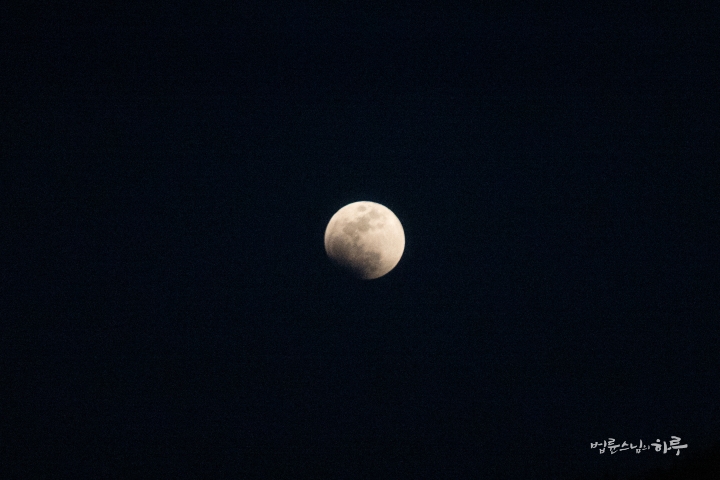
Under the full moon, we drove nonstop on the highway and arrived at the Jungto Center in Seoul at 8:30 p.m.
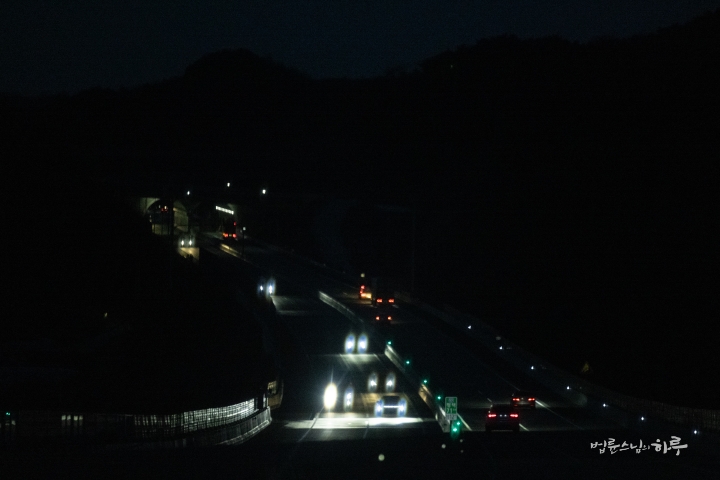
After reviewing manuscripts and handling various tasks, Sunim went to bed early.
Tomorrow, he plans to meet with guests visiting the Peace Foundation early in the morning, conduct a live Dharma talk in the late morning, discuss the first half of the year’s overseas schedule with his staff in the afternoon, and travel to the Dubuk Training Center in the evening.