What Did the Buddha First Teach After His Enlightenment?
Jan 25, 2026 - Day 2 of the India Pilgrimage, Sarnath
Hello. The second day of the 35th India Pilgrimage has dawned in Sarnath. Today, Sunim conducted an ordination ceremony in Sarnath and met with the head monks of Thai and Myanmar temples in the afternoon. In the evening, he gave online Dharma talks for the Enlightenment Day ceremony and the graduation ceremony of Jungto Dharma School.
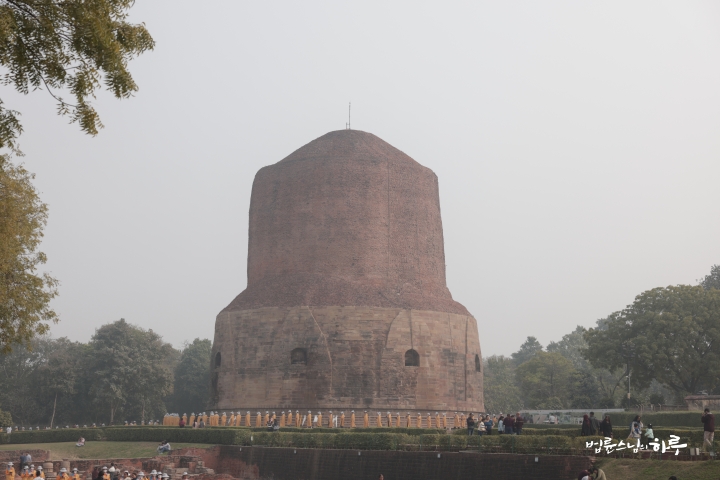
2,600 years ago in Sarnath, five ascetics became the Buddha’s first disciples. With this, the Buddha, the Dharma (teachings), and the Sangha (community of practitioners) were established. These “Three Jewels (삼보)” became the foundation that allowed Buddhism to be transmitted to us through thousands of years. And today, 500 Jungto practitioners vowed to follow the Buddha’s teachings in the same place.
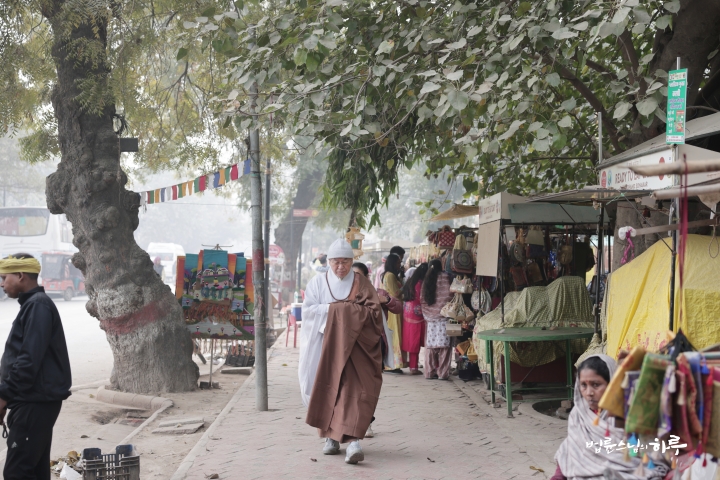
After completing morning practice and meditation, Sunim had breakfast and edited manuscripts. At 9:45 AM, he left his accommodation and traveled to Sarnath.
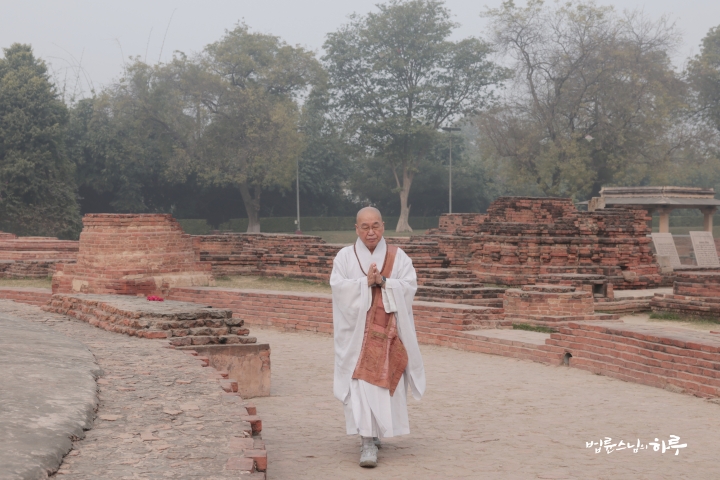
Upon arriving in Sarnath, Sunim paid respects at the Dharmarajika Stupa, built at the site of the first sermon, and then at the Dhamek Stupa, which commemorates the location of the Buddha’s second sermon.
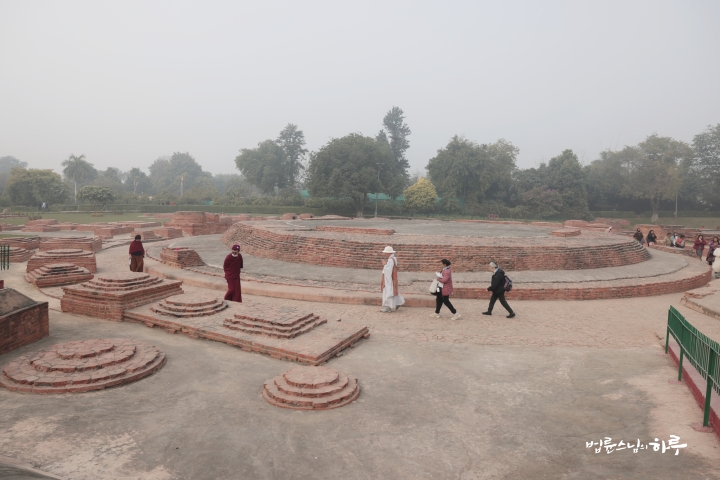
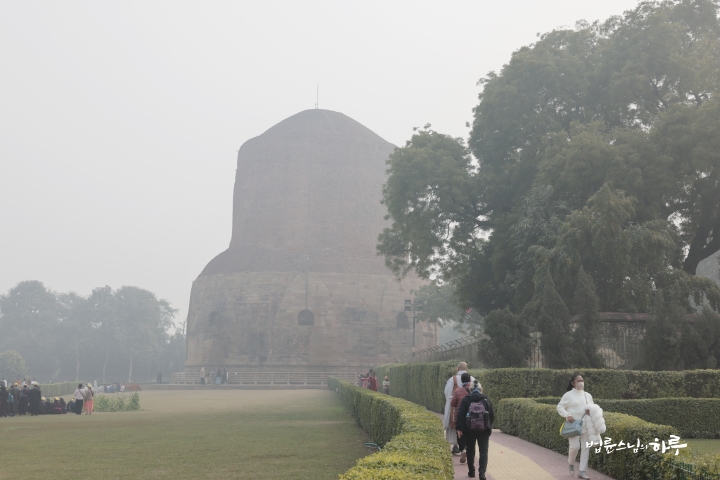
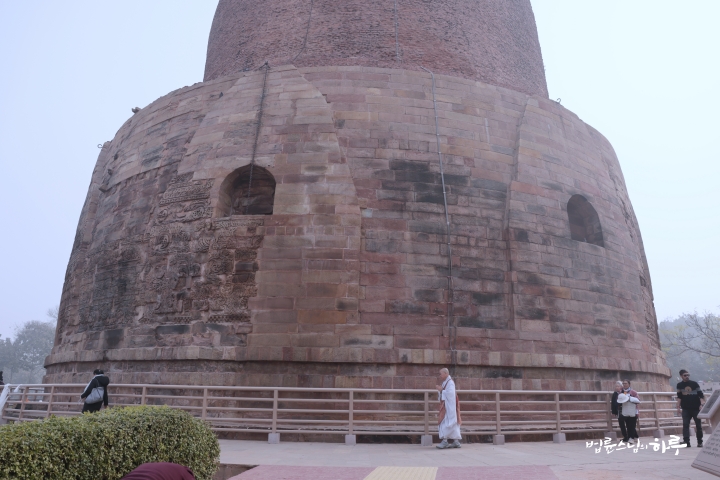
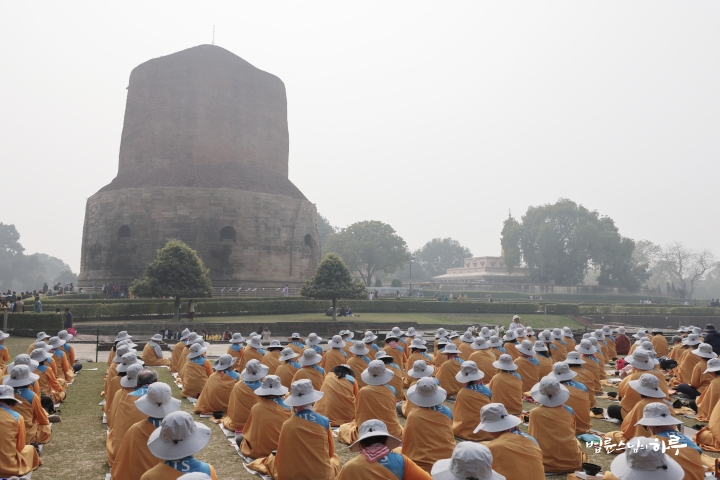
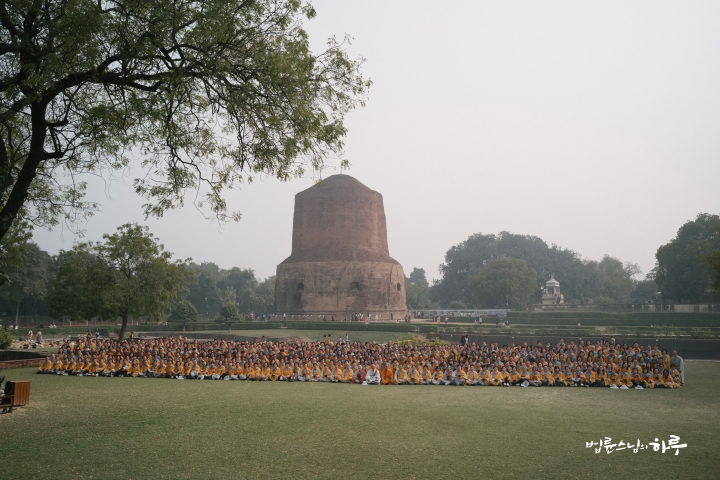
The pilgrimage group of over 500 people had arrived earlier and were sitting neatly in front of the Dhamek Stupa.
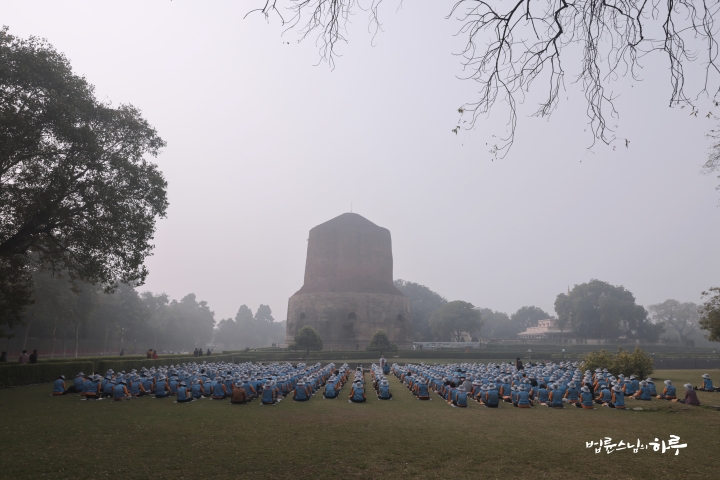
When the assembly requested a Dharma talk with three prostrations, Sunim explained the significance of the Sarnath sacred site to the pilgrimage group.
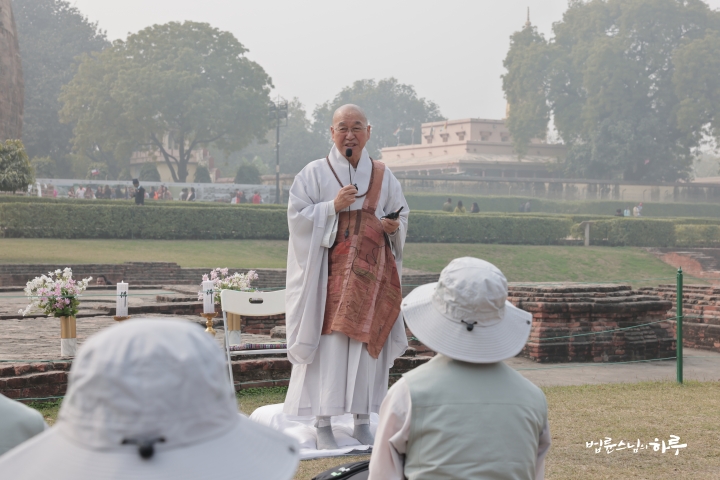
Sarnath, Where the Wheel of Dharma First Began to Turn
This forest was a place where corpses were disposed of at that time, so it was rarely visited by people. When the Buddha quietly entered this forest, the five ascetics saw the Buddha approaching from afar. The five bhikkhus said to each other: ‘Isn’t that Gautama?’ ‘Why is he coming here?’ ‘Wasn’t Gautama someone who gave up his practice?’ ‘We can’t stop him from coming, but even if he comes close, let’s not show him the courtesy due to a practitioner.’ At that time, there was a kind of mutual courtesy among practitioners. They would bring water for a practitioner who had traveled far to wash their feet and prepare a seat for them after washing. However, they agreed not to show such courtesy because they considered Gautama not a practitioner but a fallen person who had abandoned ascetic practice. They only agreed to greet him since he was someone they had lived with before.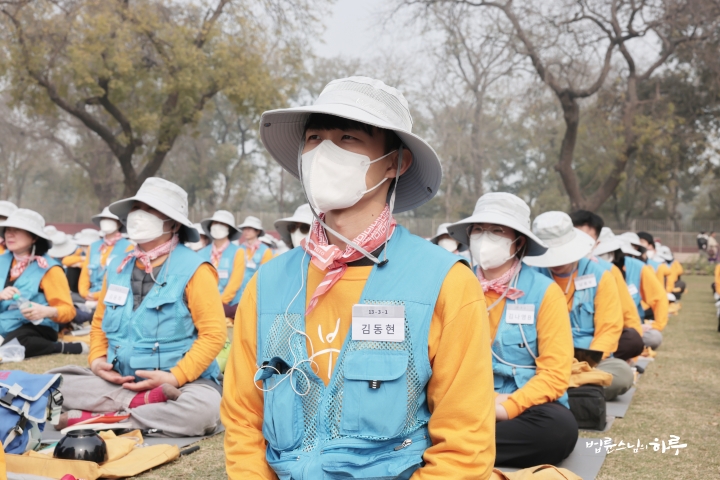
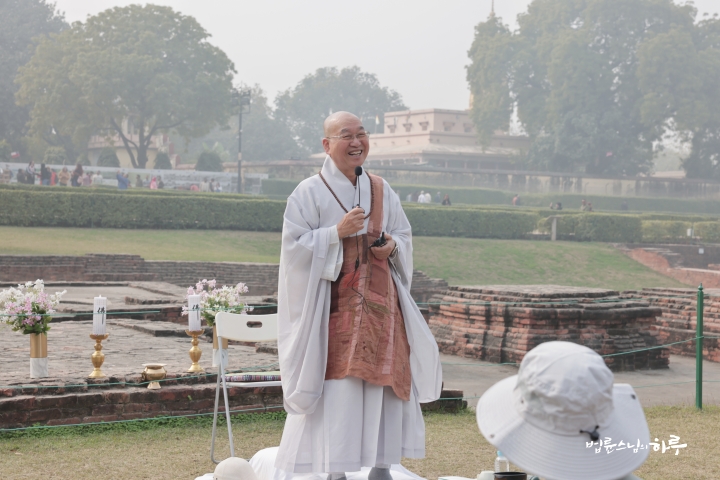
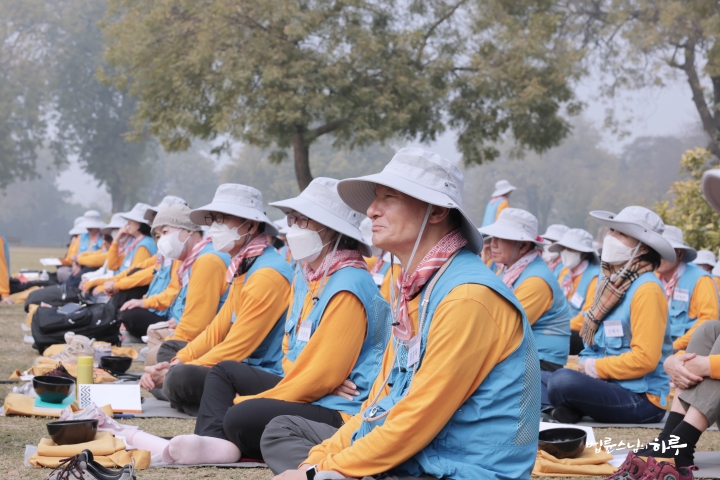
What Did the Buddha First Teach After His Enlightenment?
They moved about one kilometer deeper into the forest. In the early evening, they all entered deep meditation together. At midnight, they released their meditation and relaxed their minds. Then in the latter part of the night, at dawn, the Buddha expounded the Dharma of enlightenment to his five old friends. ‘Practitioners should abandon extremes and follow the Middle Way.’ This was the first teaching. It was a teaching to let go of all paths that lean to extremes on either side. Following this, he taught the second teaching: ‘This is suffering. This is the cause of suffering. This is the cessation of suffering. This is the path to maintain a state where suffering does not arise again.’ These are the Four Noble Truths (사성제:四聖諦). He then taught the Noble Eightfold Path (팔정도:八正道), the eight ways to never fall into suffering again.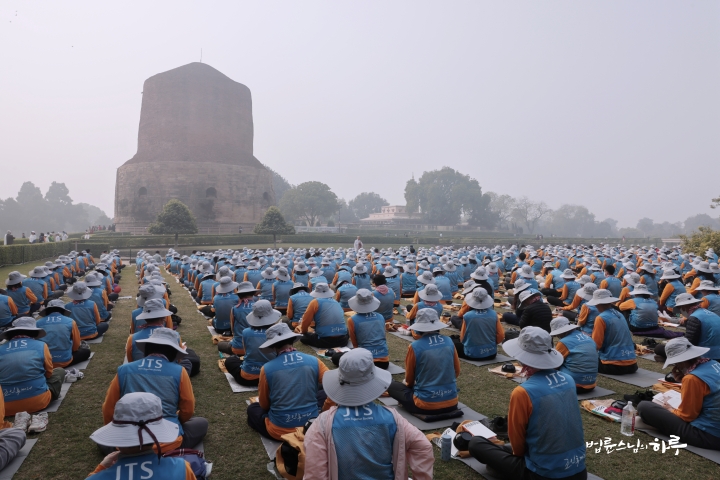
)
, built at the site of the first teaching. It is a stupa symbolizing the ‘wheel of Dharma.’ The stupa built at the site of the second teaching is the Dhamek Stupa that you see before you now. This stupa still remains in its grand scale today. The dialogue continued, and after three more days, two more people attained enlightenment. The three who had attained enlightenment went out for alms, while the Buddha and the two others continued their dialogue. The six shared the food that the three had obtained through alms while continuing their conversation. In other words, just like at the ‘Awakening Retreat,’ they continued their practice without going anywhere until they attained enlightenment.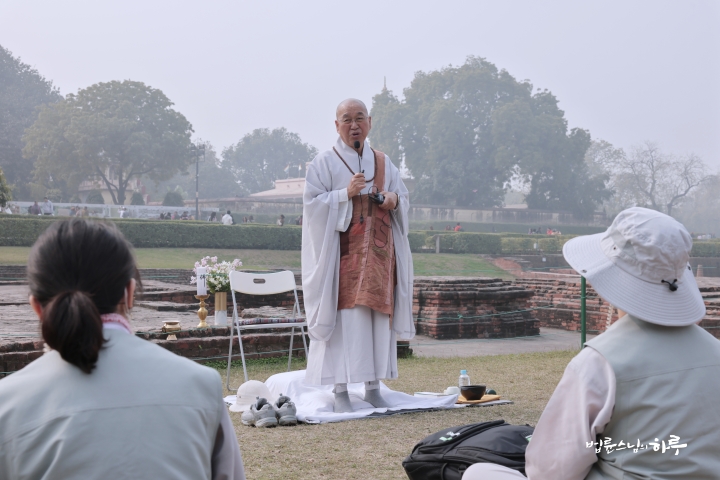
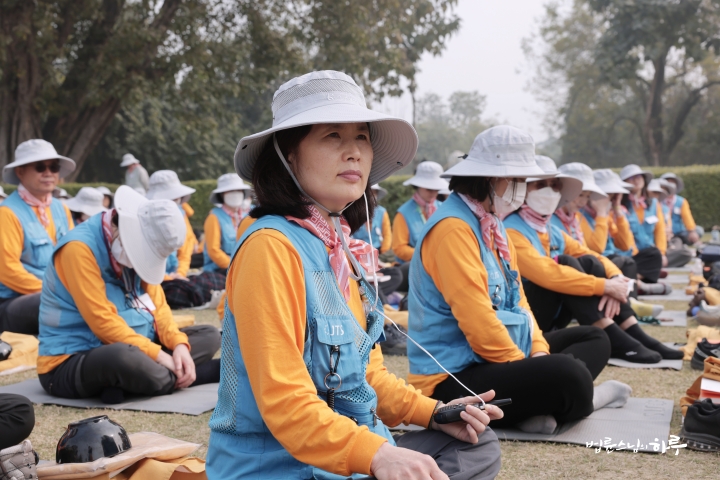
Sunim concluded his explanation of the sacred site after describing the story of Bhikkhu Yasa’s ordination and how his family and friends also attained enlightenment, resulting in 61 arhats, and explaining that the historic declaration to “go forth and spread the Dharma” was made at this place. The assembly then read sutras related to Sarnath and practiced meditation.
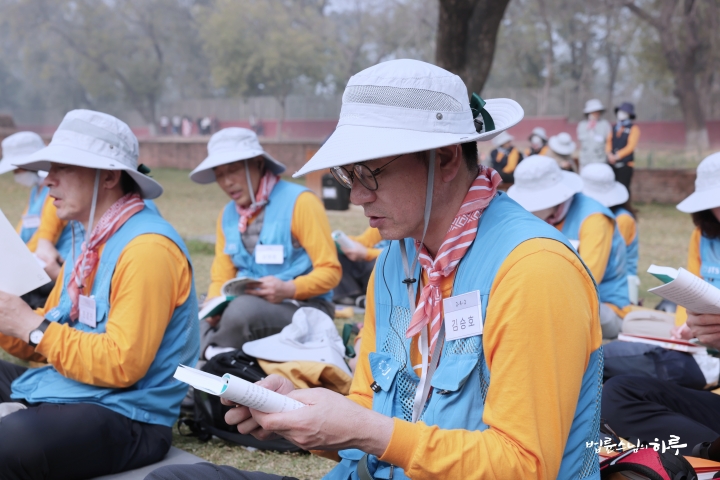
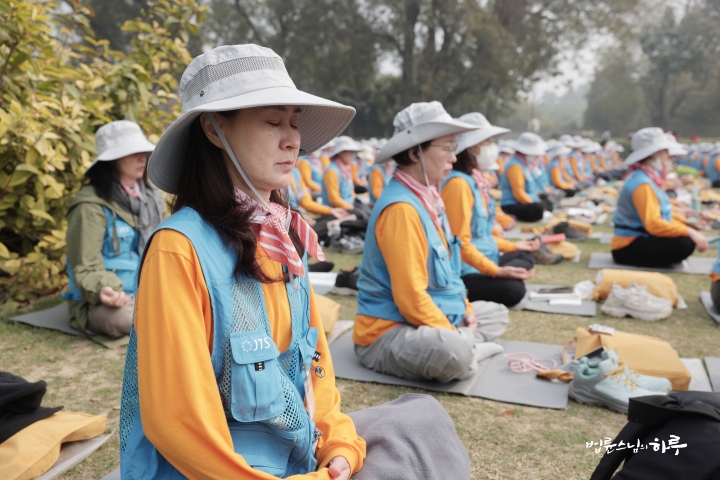
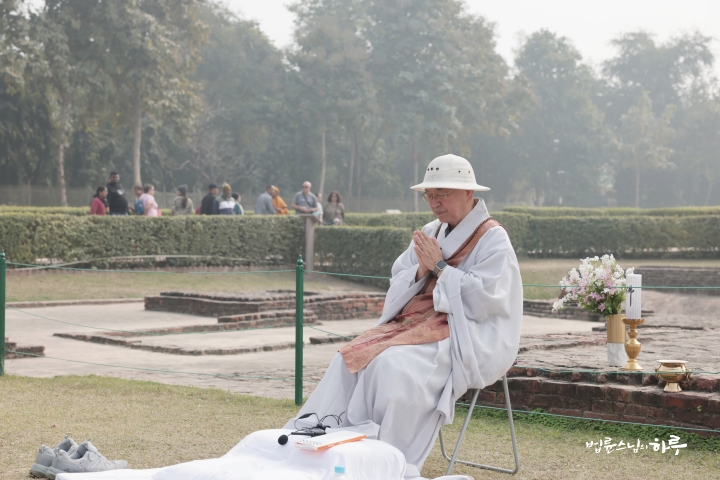
Next, a precept ceremony was conducted. The precept ceremony is a ritual for receiving the precepts that practitioners must observe. The pilgrimage group chanted the Three Refuges and the Heart Sutra while facing the Dhamek Stupa. They then invited Sunim to serve as the precept master.
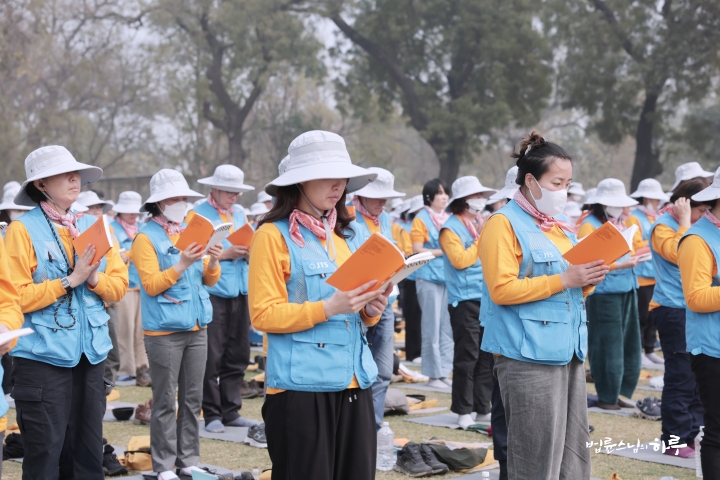
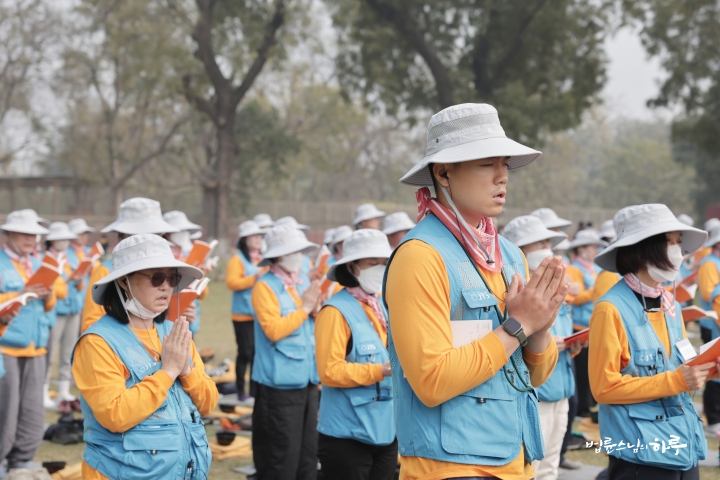
Sunim explained the five precepts that practitioners must observe. Before receiving the precepts, the assembly repented for wrongdoings committed knowingly or unknowingly over the years and performed a purification ritual.
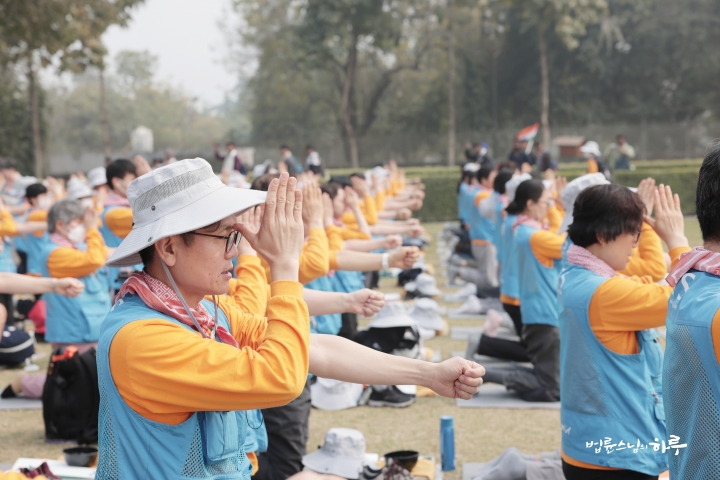
After the time of repentance, the pilgrimage group once again took refuge in the Three Jewels and made a commitment to observe the five precepts.
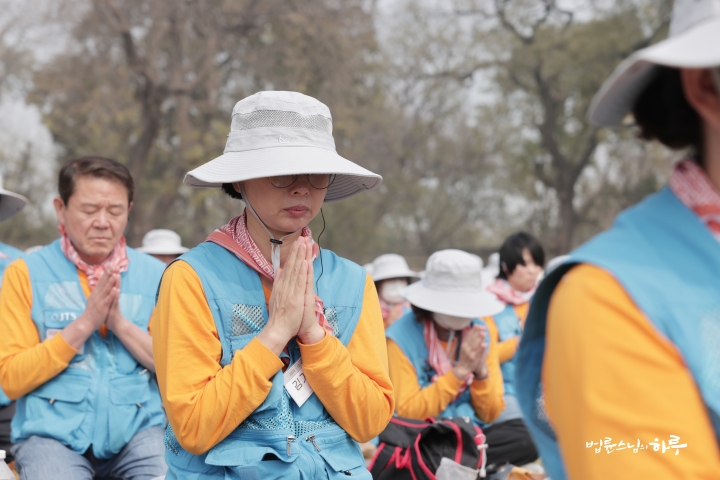
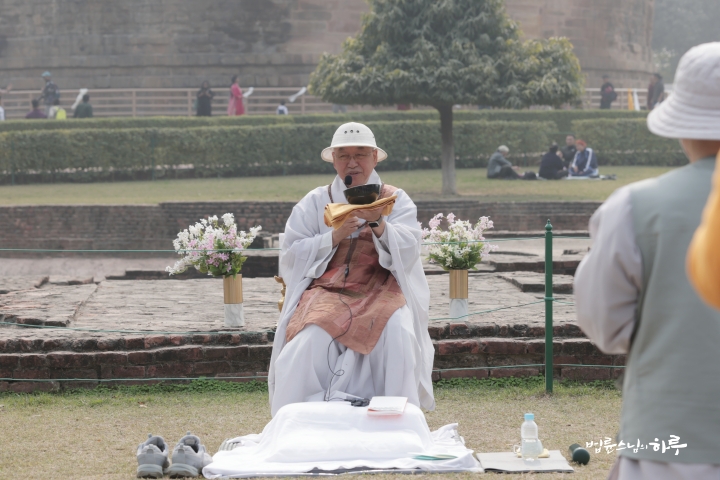
When the pilgrimage group made their determination and vow to receive and observe the precepts, Sunim offered blessings to the assembly.
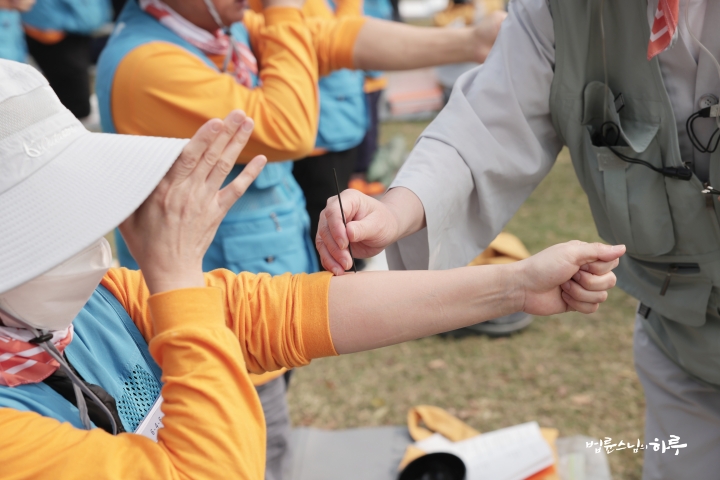
Following this, a ceremony for conferring kasaya (Buddhist robes-가사) and bowls (발우) took place. The kasaya is the robe worn by practitioners, and the bowl is the vessel used by practitioners.
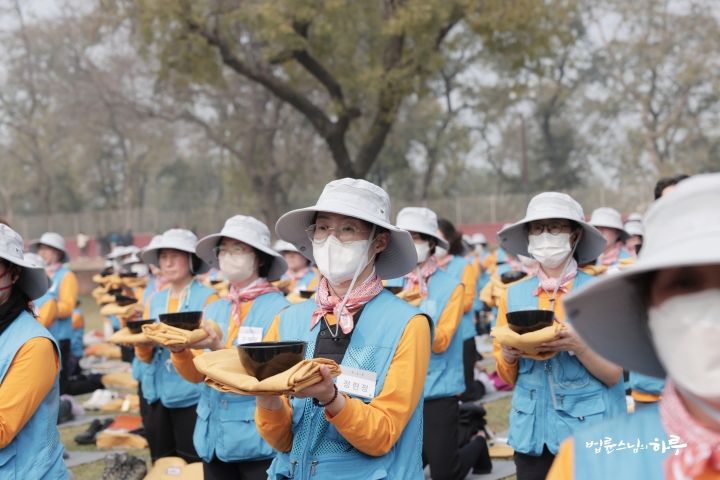
“We have received them well.”
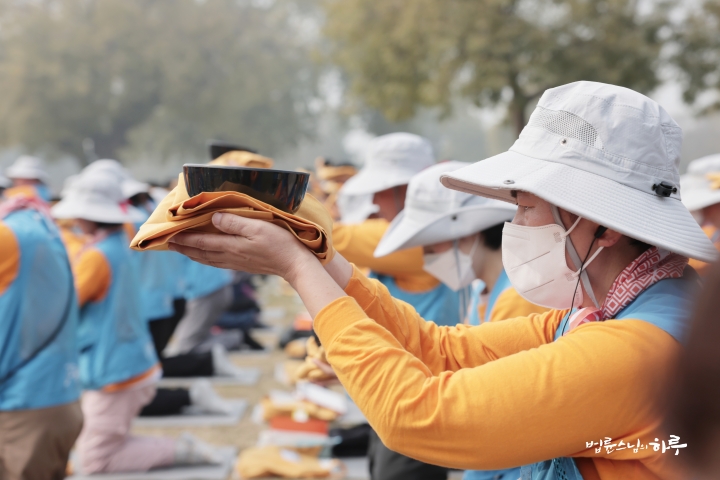
The assembly put down their bowls and began putting on their kasaya. The leading Dharma teachers helped those who were still unfamiliar with wearing the kasaya.
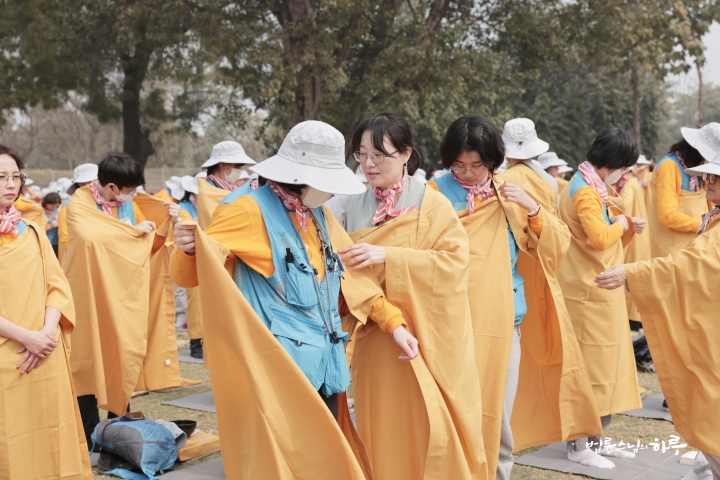
When all the pilgrims had donned their kasaya, Sarnath’s Deer Park (녹야원) was bathed in yellow. Even passing foreigners stopped in their tracks to observe the scene.
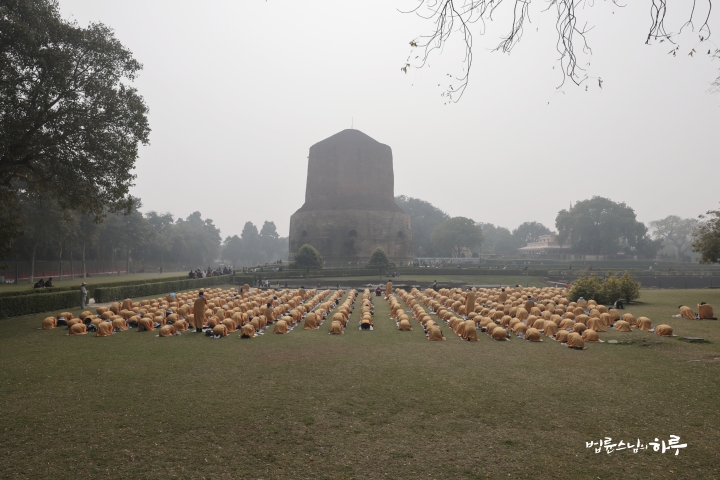
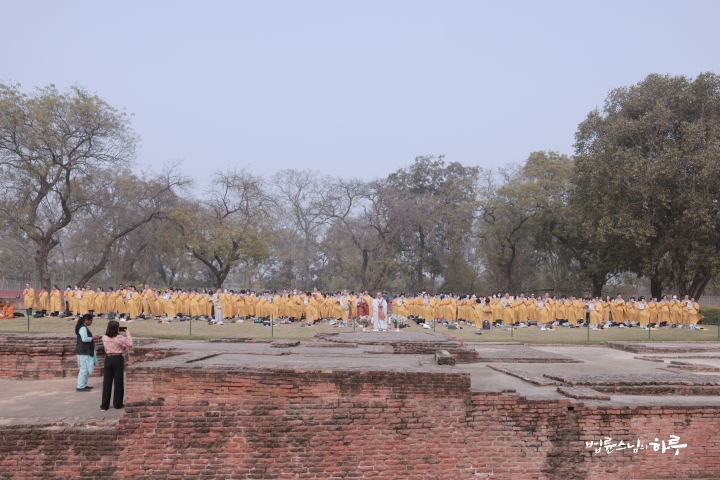
The assembly offered prostrations toward the Dhamek Stupa and then requested a Dharma talk from Sunim.
The Path of Recognizing Desire: The Middle Way First Taught at Sarnath
We have desires. When desires are fulfilled, pleasure arises; when they are not fulfilled, suffering arises. Although pleasure and suffering seem like complete opposites, the Buddha discovered that they share the same root. That root is desire.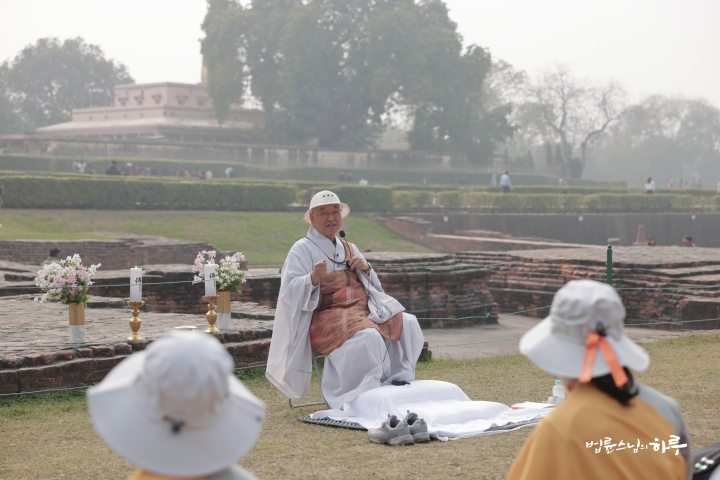
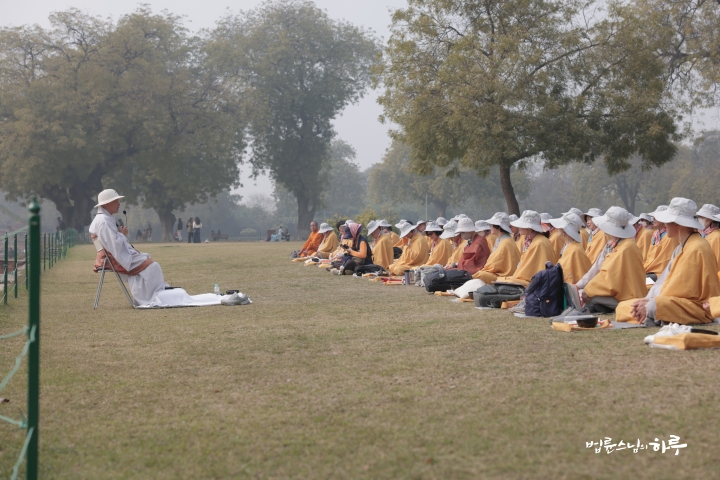
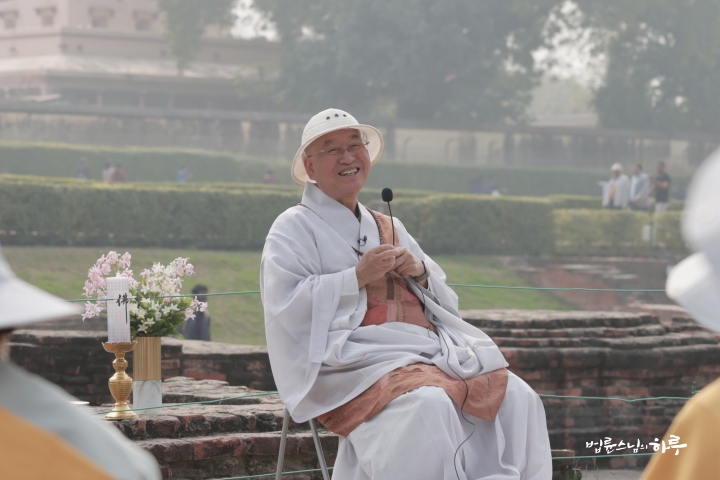
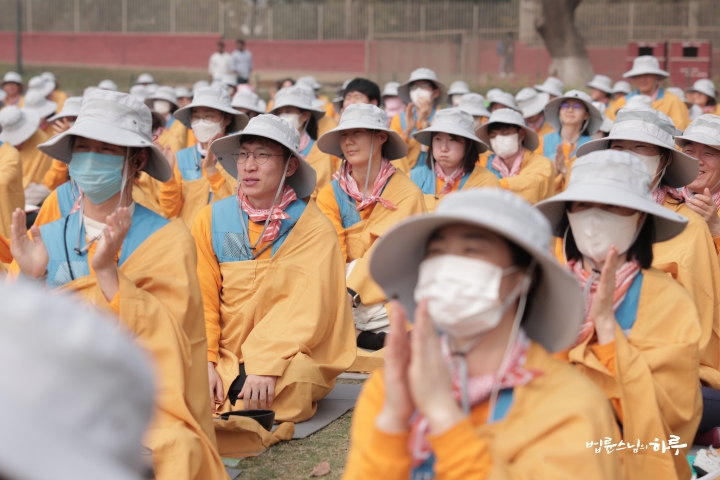
:
禪)’. However, even that has now become diluted. You too must awaken to this Dharma and reach a state where it’s fine to live long or die early, fine to be here or there, fine to live with this person or not. Of course, it’s not easy. Even though you’ve come on this pilgrimage, you should be fine whether you stay here until the end or travel to various places. It should be fine whether you see many sights or remain still and comfortable. I hope you can attain this state where anything is fine. Only then can you become free from eating, wearing clothes, and sleeping. Saying ‘I won’t eat’ through fasting is a matter of determination and resolve. However, to become free from eating, you must be free from both eating and not eating. Not eating alone is not freedom. This teaching of No Everlasting Abiding Dharma (무유정법)
was first expounded right here.”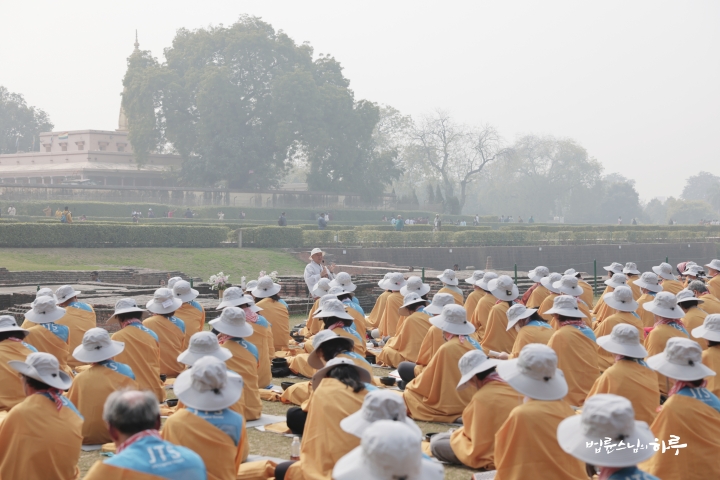
After the Dharma talk, Sunim and the pilgrimage group made a declaration to spread the Dharma. It was their commitment to share the Buddha’s teachings with more people.
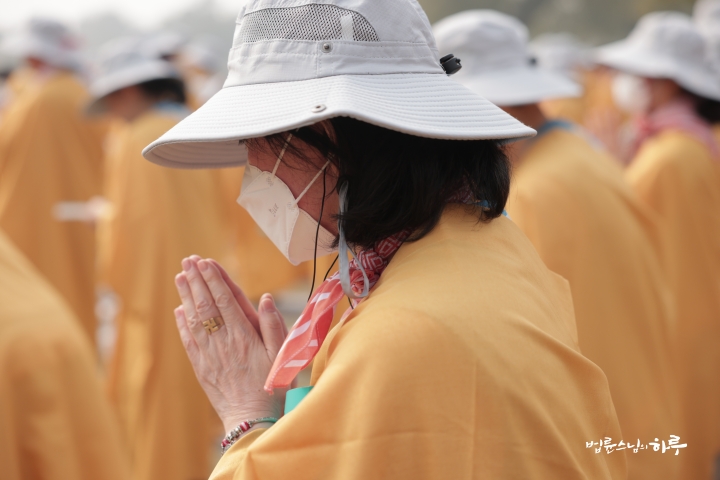
“…Practitioners, now go forth among all celestial and human beings to liberate them. For the benefit of many, for the happiness of many, to bring concrete benefit and happiness in reality, depart quickly…(omitted)”
After completing the declaration, Sunim and the assembly began circumambulating the stupa (탑돌이). The chanting of “Shakyamuni Buddha” gradually grew louder, filling all of Sarnath. The procession of about 500 people following Sunim formed one massive wave, their flowing kasayas moving in unison.
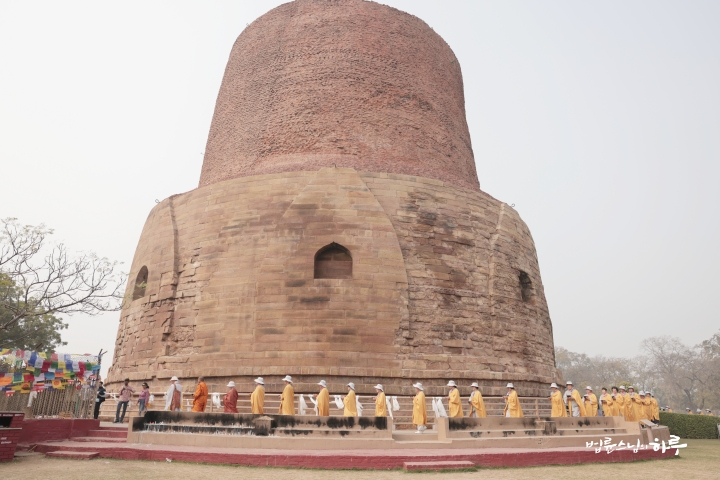
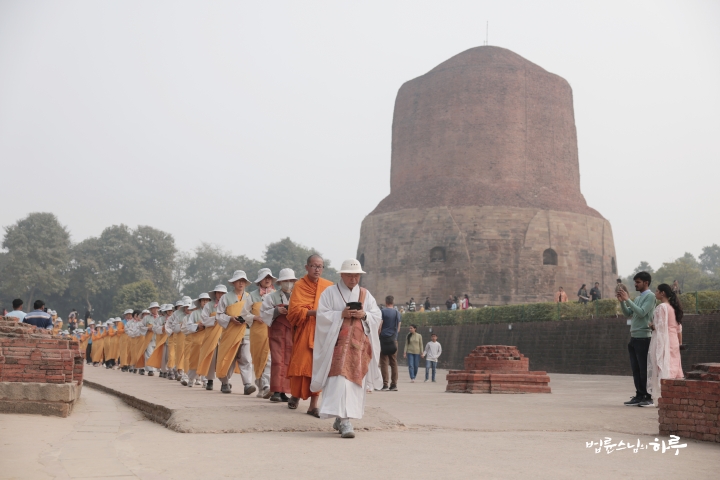
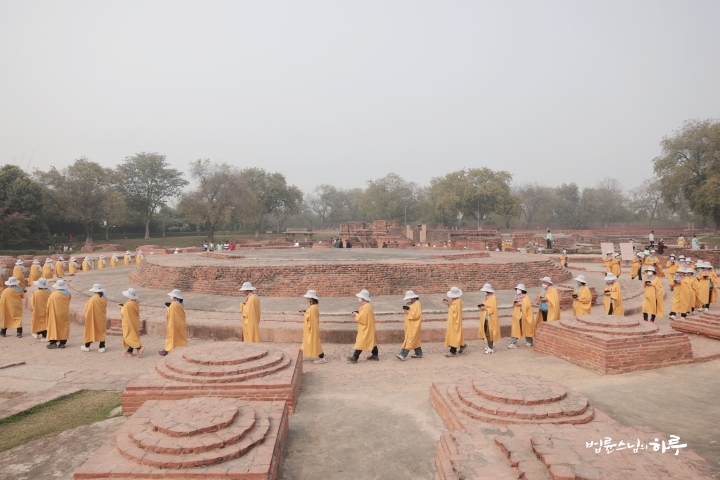
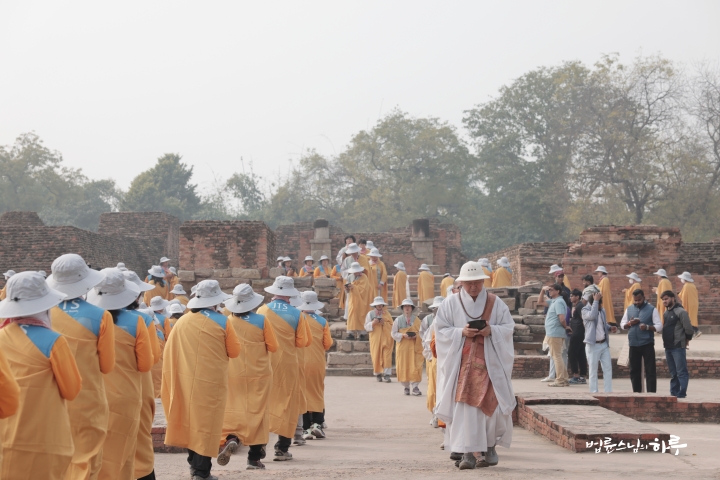
After completing the five-hour pilgrimage at Sarnath, everyone gathered for a commemorative photo. The assembly then headed to the Sarnath Museum while Sunim returned to the accommodation.
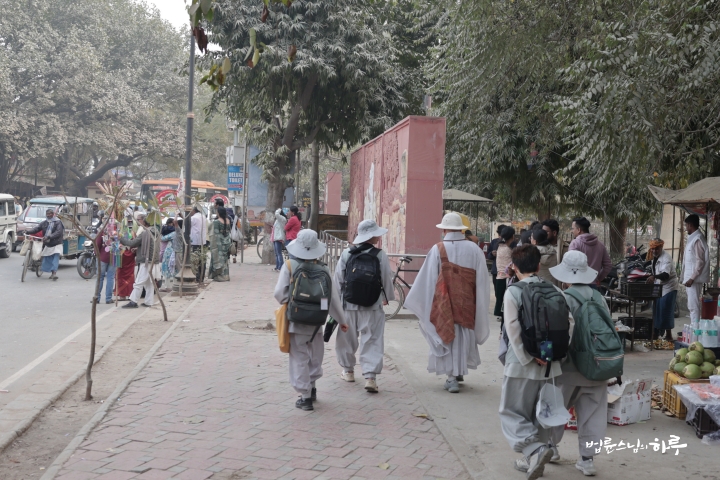
Sunim arrived at the accommodation at 3:30 PM, had a late lunch, and rested briefly. At 5:30 PM, he met with the abbot of the Thai temple.
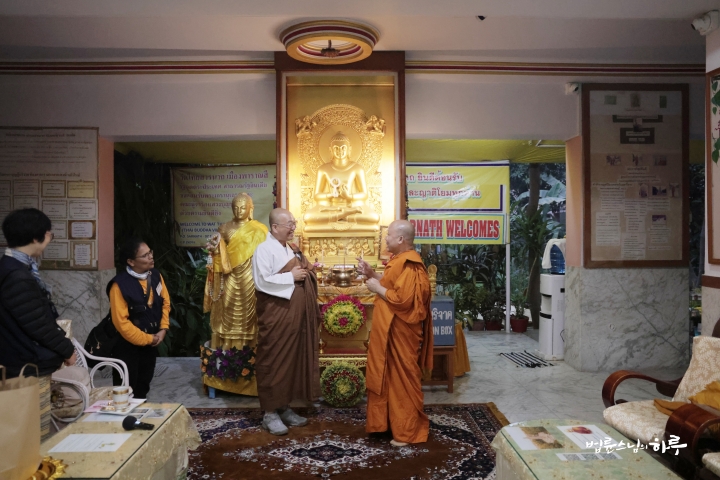
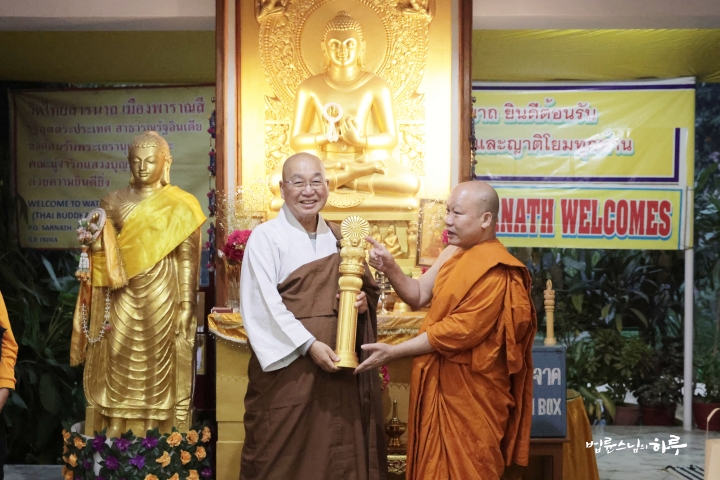
The Thai temple in Sarnath has been providing accommodation for the Jungto pilgrimage group for four years since COVID-19. This year too, the Thai temple abbot welcomed Sunim and said they could stay anytime. Thanks to this kindness, the assembly could stay comfortably. Sunim expressed his gratitude with gifts and a donation, and the abbot presented him with a Dharmachakra statue and an Ashoka pillar replica.
Sunim immediately moved to the Myanmar temple for the Enlightenment Day Eve broadcast. Enlightenment Day commemorates the day the Buddha attained enlightenment. Before the broadcast, he met with the Myanmar temple abbot. This was the same person who had provided accommodation for the pilgrimage group during last year’s pilgrimage. The abbot, who introduced himself as Rakhine, was also engaged in helping those in need.
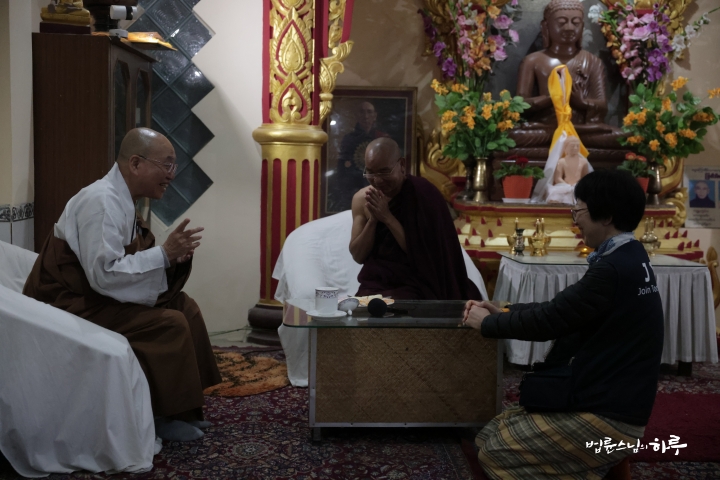
Sunim expressed his desire to help inside Myanmar but mentioned the difficulties in accessing the area. The Myanmar temple abbot replied that it would not be easy.
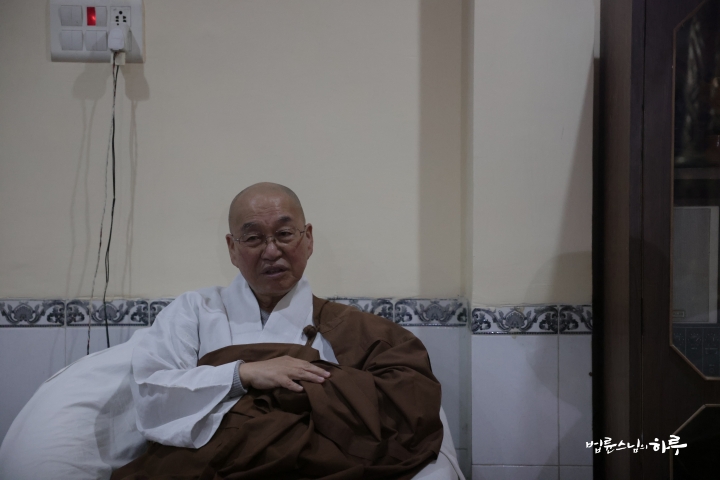
“The government is controlling too many things. They’re blocking all relief organizations, so even I find it difficult to provide support inside Myanmar. To get inside, you would need unofficial connections.”
“Yes, I understand. If you can help, JTS is ready to provide support anytime.”“Yes, Venerable. I would also like to help with your work.”
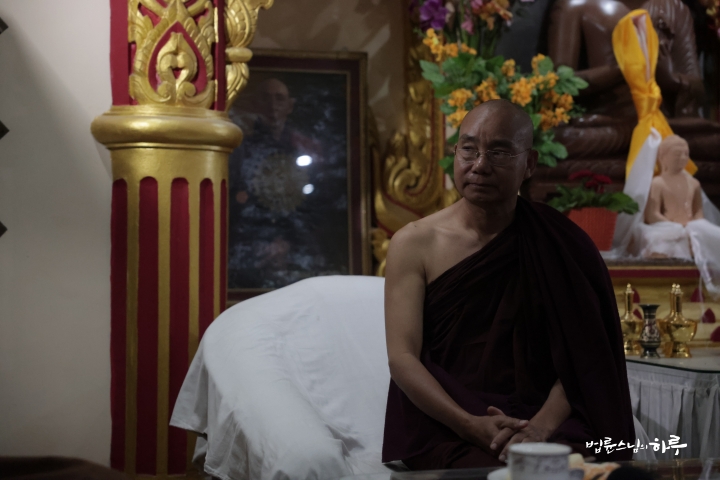
As broadcast time approached, they concluded their conversation. At 6 PM, Sunim connected online for the live broadcast of the Enlightenment Day Eve Dharma Assembly. It was 9:30 PM in Korea. The video team had prepared everything in advance for broadcasting from the accommodation. Following the sound of the jukbi (죽비), Sunim began his Dharma talk.
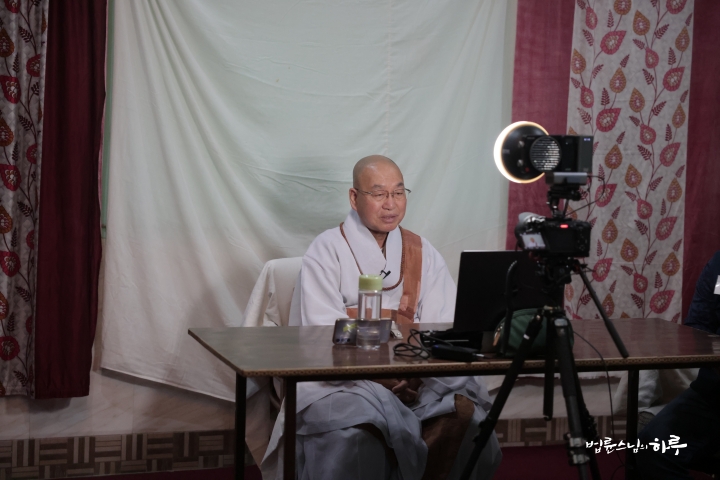
The Teaching of Enlightenment Eve: Entering Meditation Through Awareness
We often say we are meditating, but in reality, we are frequently lost in thoughts. ‘My legs hurt,’ ‘My back itches.’ As we get pulled around by bodily sensations, thoughts continue: ‘Should I stretch my legs?’ ‘Should I scratch my back?’ Sometimes old memories arise, and while our body sits here, our mind travels to the past. Our thoughts wander here and there because of tomorrow’s tasks or sudden ideas. We commonly call this state ‘indulging in delusions.’ Even though we maintain our posture and sit impressively on the outside, our minds remain busy inside. It’s difficult to say we’ve entered meditation or are properly meditating in such a state. True meditation refers to a state where thoughts have ceased. While proper posture is important, what matters most is stopping discriminating thoughts of ‘Should I do this or that?’ If we keep holding onto thoughts like ‘Should I endure the pain?’ or ‘Should I stretch my legs?’ we cannot enter meditation. When there is pain, simply be aware: ‘There is pain.’ When breath comes in, be aware: ‘Breath is coming in.’ When breath goes out, be aware: ‘Breath is going out.’ When the body itches, be aware: ‘It itches.’ Being aware of sensations, being aware of breathing – in meditation, there is only this awareness. However, we tend to link thought after thought, creating chains. This might be called thinking, contemplation, or delusion, but it’s difficult to call it meditation. It certainly cannot be called meditative concentration. Gritting your teeth and tensely enduring is not meditation, nor is being in a comfortable but drowsy state. Being comfortable while having various thoughts is also not meditation. To enter meditation, first the body and mind must be at ease. There should be no tension, no striving, and no intention. Next comes concentration. Concentrating on the breath ultimately means concentrating on sensations. Be aware of the sensations that arise when inhaling and exhaling. Be aware of the sensations occurring here and now, just as they are. When the body itches, don’t think ‘I should scratch’ or ‘I must endure,’ but simply be aware: ‘It itches.’ With eyes closed and at ease, simply be aware of the sensations arising in the body. Ease, concentration, and awareness – these three are key. So what should we do when we lose awareness? Simply be aware: ‘I lost it.’ There’s no need for self-blame, no need to add thoughts like ‘Why can’t I do this?’ When you lose it, know that you’ve lost it and return to awareness. There is only awareness. Either awareness is maintained, or you become aware of losing it and return – there are only these two. If you’re doing breath meditation, be aware of the breath. If you lose awareness, be aware ‘I lost it’ and return to the breath. This is how awareness continues. This state of concentrating while at ease is called Right Concentration (정정:
正定). Maintaining awareness is called Right Mindfulness (정념:
正念), and the persistence of becoming aware again when lost, and again when lost again, is called Right Effort (정정진:
正精進). Together, Right Concentration, Right Mindfulness, and Right Effort are what we call meditation (선정:
禪定). As you repeatedly practice entering meditation this way, the tension in body and mind naturally releases. Concentration improves, and you can deeply experience ease. Even when your mind becomes excited or tense in daily life, try pausing your activities, closing your eyes, and concentrating on your breath. You’ll quickly recover your ease. Now then, tonight, on this eve before the Buddha attained enlightenment, let us enter meditation together.”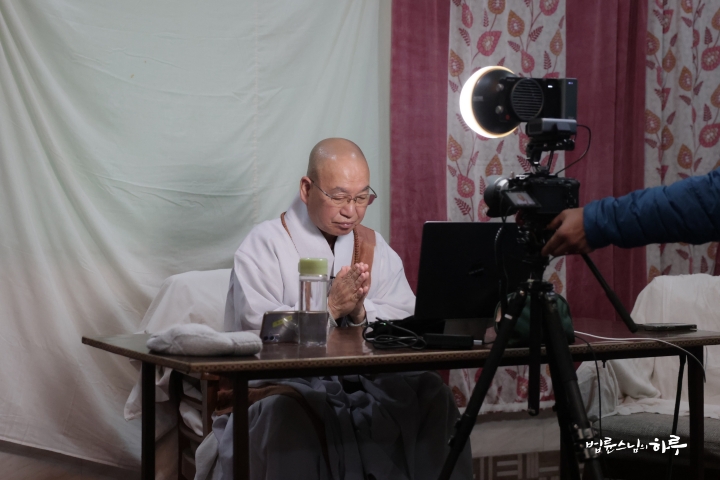
After completing the commemorative Dharma talk, the members of the Sangha practiced together to mark the Day of Buddha’s Enlightenment. They conducted four 30-minute meditation sessions until 1 AM, after which each person wrote their vow of enlightenment, concluding the special practice for the Day of Buddha’s Enlightenment.
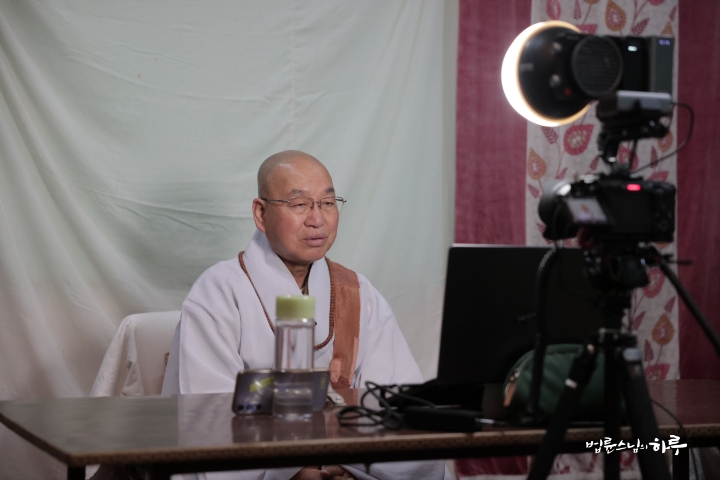
After the assembly, Sunim returned to the Thai temple to proofread manuscripts, then went back to the Myanmar temple. At 8 PM, he participated online in the graduation ceremony for the 3rd cohort of Jungto Dhamma School, an English-language Buddhist education program, and gave a Dharma talk. Thirty-five students from around the world connected to the live broadcast in the morning, afternoon, and evening, transcending time zones.
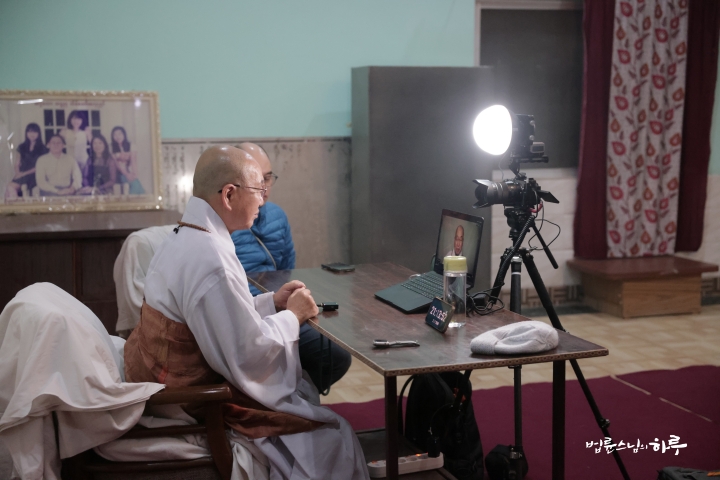
Today’s event celebrated the graduation of students who had studied together for the past five months. After watching a progress report and congratulatory messages from staff members on video, diplomas were awarded. This 3rd cohort produced graduates from seven English-speaking groups as well as the first graduates from the Korean class. Brent Feldman received the diploma on behalf of all students.
After awarding perfect attendance certificates, graduates shared their reflections. Three students shared their graduation thoughts, followed by reflections from family members, friends, and alumni. Everyone comfortably shared honest stories about how Jungto Dhamma School had changed their lives. Here is part of the reflection from student Johanna:
“I was originally an atheist who felt a strong resistance toward religion. So I hesitated a lot about learning Buddhism. But my mother, who attended Buddhist College, changed noticeably. She became much more patient, more understanding, and overall more peaceful and happy. Seeing her transformation made me wonder, ‘What could possibly change a person like this?’ That curiosity led me to join Jungto Dhamma School. Before long, I realized something important. This place is not about believing in a religion. It is about learning how to look at one’s own mind and let go of attachment. I used to live with constant anxiety, clinging to shopping and obsessing over results. Now, I no longer fixate on the past or the future—I can stay present. I feel far more peaceful, and for the first time, I truly understand what inner stability feels like. Now, whenever someone comes to me with their worries, one thought immediately comes to mind: ‘Jungto Dhamma School would definitely help.’ So to anyone who is hesitating, I want to say this: just try it. You will be surprised by how much you can change.”
The students then requested a Dharma talk from Sunim with three prostrations. Sunim congratulated them on their graduation, emphasized the significance of Buddha’s teachings for modern people, and encouraged them to continue their practice.
Seeking Today’s Path Through Buddha’s Life
I believe that today we should not simply believe and follow Buddhism as it has been handed down through tradition. Instead, we need to research anew what kind of environment Buddha lived in 2,600 years ago, what issues he addressed, and what teachings he spread. I think recreating his early teachings in today’s reality is what modern society needs most. This is why half of the Jungto Dhamma School curriculum is dedicated to studying Buddha’s life—his actual lived experience. Thank you all for completing this course despite the many difficulties you must have faced. Today, we live in an environment completely different from our ancestors. The fact that natural resources are not infinite has now become a clear reality. As a result of our excessive production and consumption, air, water, and waste are polluting the global environment and destroying the foundation of our lives. What we discard doesn’t disappear. It eventually enters our noses and mouths, returning to us. In other words, what we pollute comes back to us. Our current consumption-centered civilization is creating major risks of climate crisis and environmental pollution. Furthermore, we face entirely new challenges where production overflows due to artificial intelligence and automation, while the number of consumers decreases. Humanity’s long-held wish has been ‘Can we live without working?’ and now that possibility is opening up. However, a new question emerges: would such a life truly bring happiness to humans? We now face questions about how to live without suffering in this complex society, what kind of life humans should lead in this changed society, and what constitutes a sustainable life. I believe Buddha’s teachings offer new answers to these problems for us today. Studying Buddha’s teachings is not just about pursuing personal comfort, but can be seen as exploring humanity’s future together. I want to walk this path with you and find answers together. I offer my congratulations to all of you who have completed this entire process, and let us continue to practice diligently together.”Taking Sunim’s words to heart, everyone recited the Four Great Vows (사홍서원) and concluded the live broadcast. After taking a group photo together, students entered video conference rooms by group for mindful sharing sessions, completing the graduation ceremony.
After the broadcast, Sunim met again with the Myanmar temple’s abbot for conversation and presented a donation.
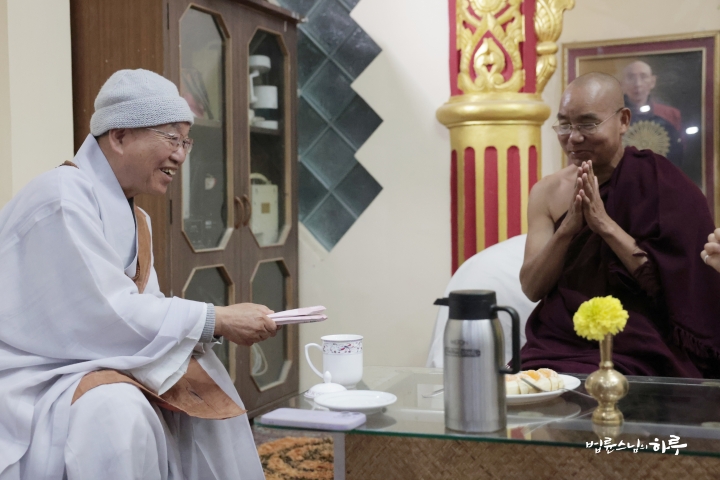
“Yes, I understand. I will use this donation well. Thank you.”
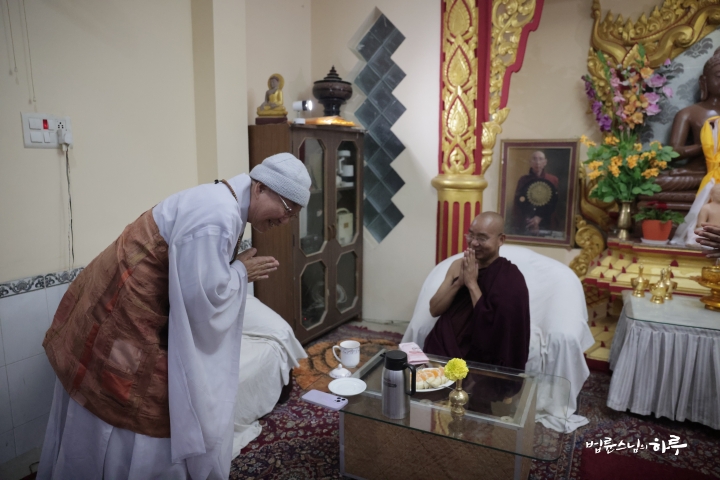
After saying goodbye to the abbot, Sunim returned to the Thai temple after 10 PM.
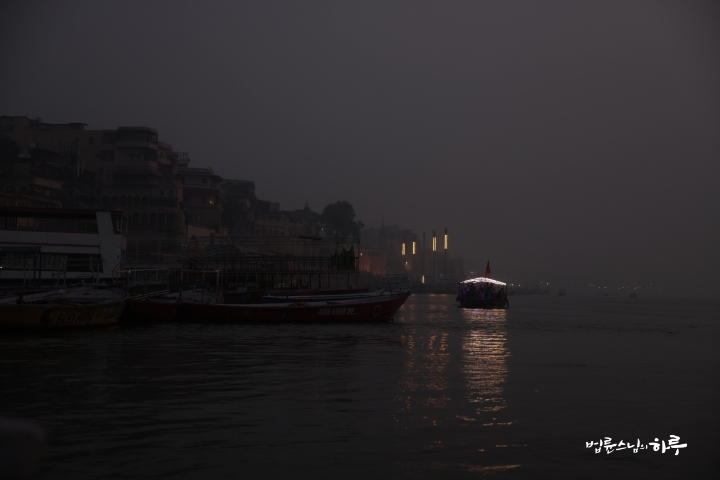
Tomorrow, Sunim will travel to Bodh Gaya, where Buddha attained enlightenment, early in the morning to hold a welcome ceremony for pilgrimage participants at Sujata Academy and visit Pragbodhi Hill (전정각산) and Dungeshwari Cave (유영굴).