“A Joyful Pilgrimage: Observing Our Minds Even in Discomfort”
Jan 24, 2026. — Attending the 2nd Global Buddhist Summit, Opening Ceremony of the 35th India Pilgrimage
Hello. Today, after attending the 2nd Global Buddhist Summit held in New Delhi, Sunim traveled to Varanasi and conducted the opening ceremony for the 35th India Pilgrimage.
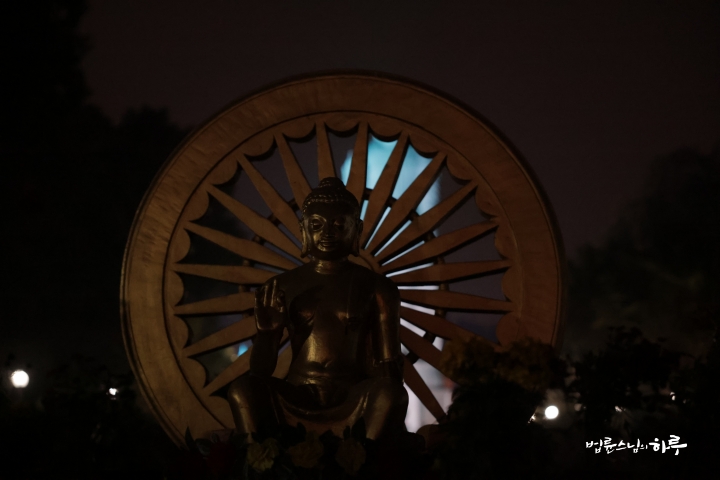
At 5:50 AM, Sunim had a simple breakfast of Nurungji (누룽지, scorched rice boiled into a porridge) and kimchi (김치) at the accommodation. At 6:40 AM, he left the lodgings and headed to Bharat Mandapam, where the 2nd Global Buddhist Summit was being held.
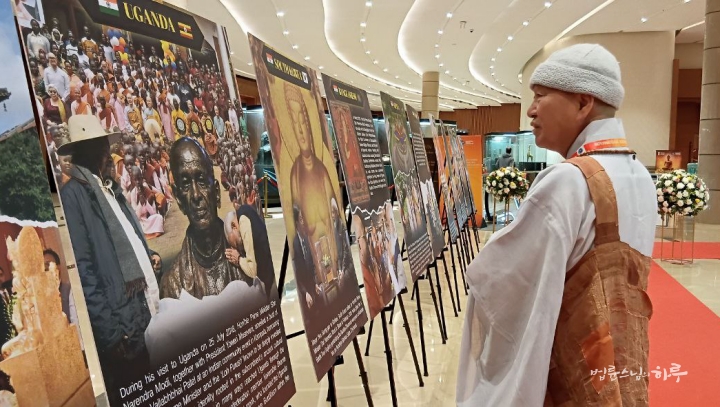
He arrived at the venue at 7:20 AM. However, the event coordinator apologized and informed him that the start of the event had been postponed by an hour to 9 AM. Since he had arrived early, Sunim took the opportunity to tour the gallery exhibition at the venue. While waiting for the event, several people came to greet him.
First, two doctoral students in Buddhist Philosophy and Buddhist History at Delhi University visited him. They said they had attended Sunim’s Dharma Q&A at Nehru University yesterday and expressed their gratitude, stating that the talk was deeply inspiring.
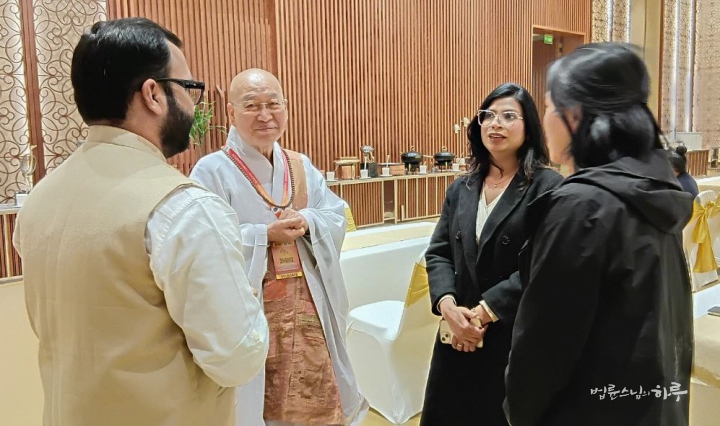
“India really needs meetings between someone like you and India’s young people. We’ll see you at the Delhi University Dharma Q&A on February 7th.”
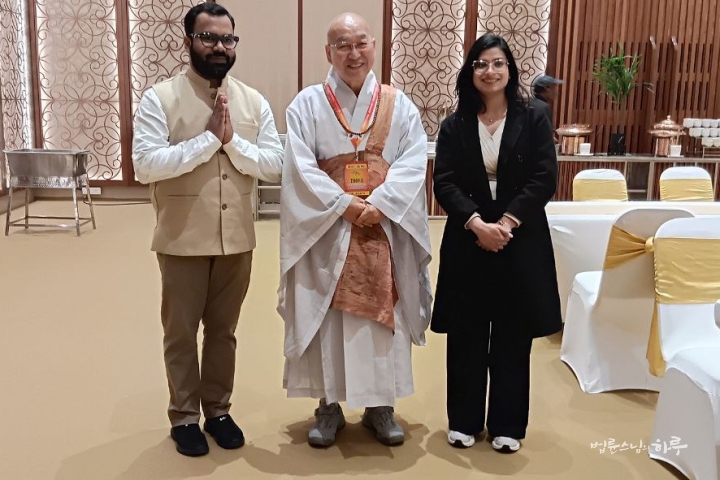
The Maurya clan, descendants of Emperor Ashoka who had attended Sunim’s Dharma talk last year, also attended this event. They recognized Sunim and approached him to exchange warm greetings.
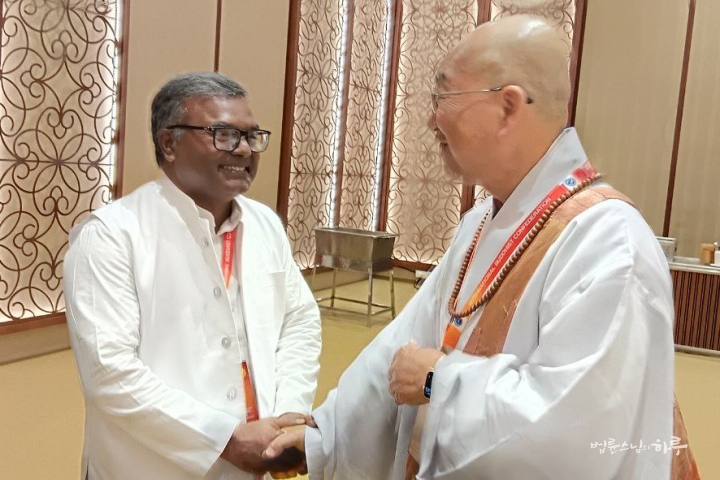
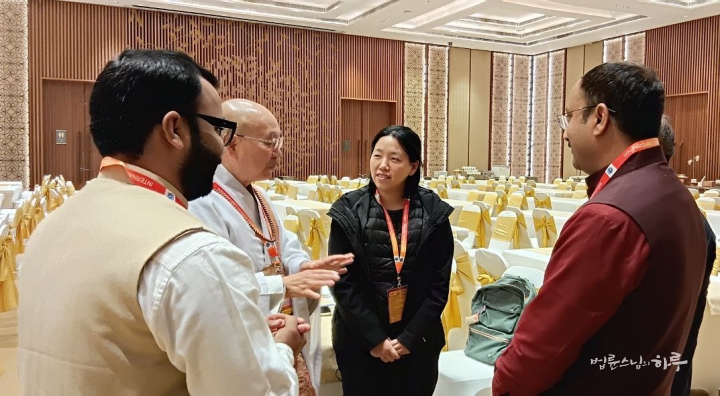
He entered the venue before 9 AM and exchanged greetings with monks from various countries including Bhutan, Mongolia, Russia, the Republic of Kalmykia, Sri Lanka, and Vietnam.
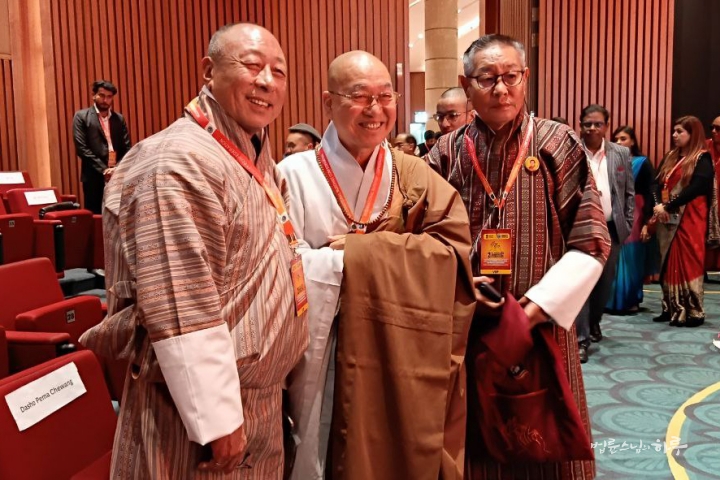
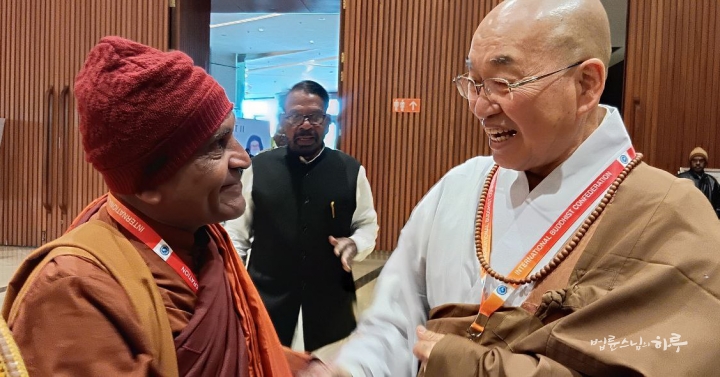
Monks from about 40 countries were invited to this Global Buddhist Summit, and India’s Minister of Culture and Tourism attended as the chief guest. Prime Minister Modi, who was originally scheduled to attend, did not participate.
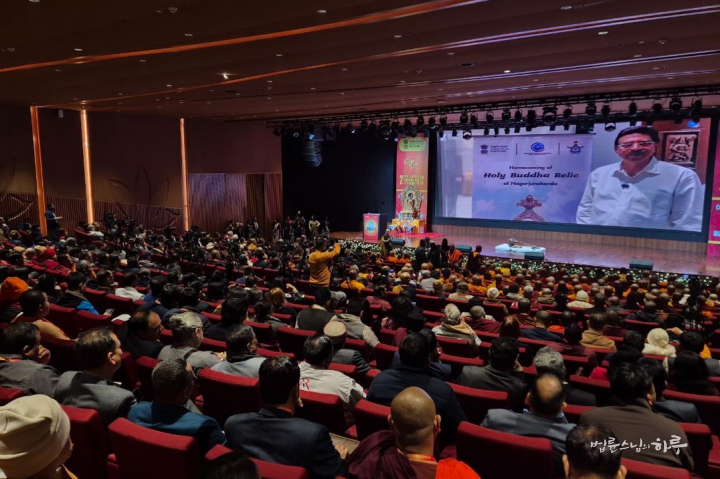
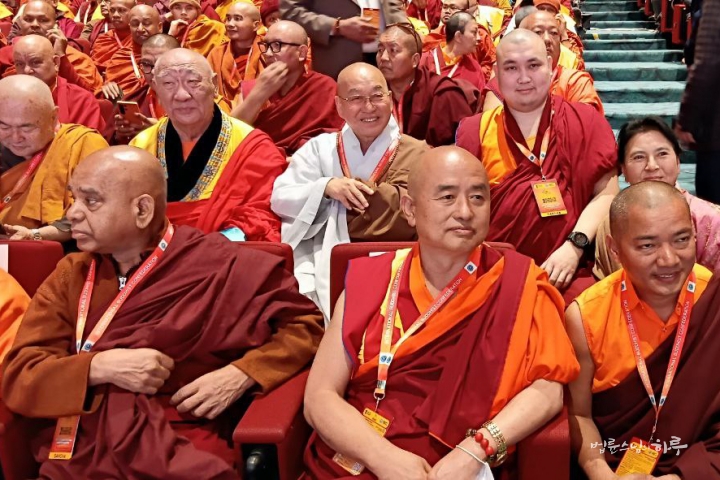
The event did not proceed until the Minister of Culture arrived, and only began in earnest after the minister’s arrival. The minister’s speech was followed by two traditional performances. Lunch was served early at 11:30 AM to respect the monastic rules of the many Theravada monks in attendance, who do not eat after noon.
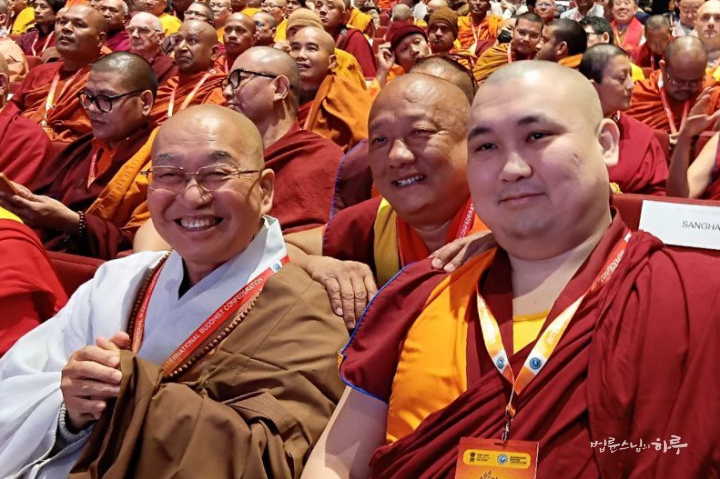
During lunch, Sunim exchanged greetings with monks from various countries, including a monk from the Mahabodhi Society and Venerable Asaji, president of Dharmashakthi, a religious NGO for reconciliation in Sri Lanka who had recently visited Korea. From Korea, the Director of Culture of the Jogye Order (조계종), the Secretary General of the Taego Order (태고종), and Venerable Simsan from Hongbeopsa Temple (홍법사) in Busan were also in attendance.
After sharing lunch and conversation with the monks from Korea, Sunim immediately headed to the airport. Ms. Kim Seon-hyeong (김 선형) from Samsung’s Delhi Research Center escorted Sunim to the airport.
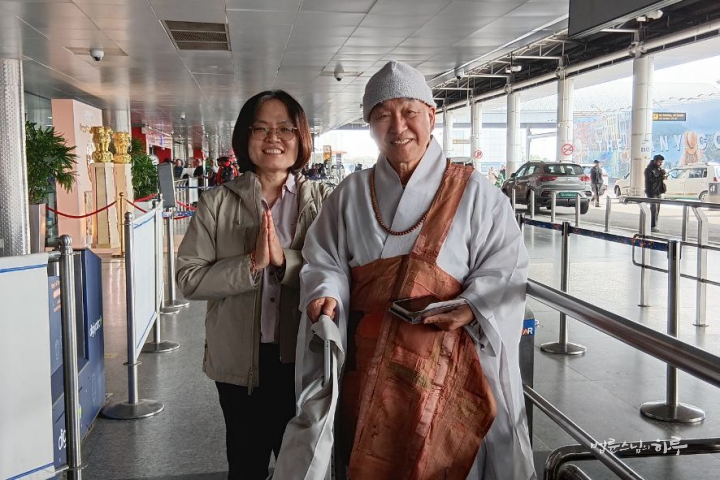
After arriving at the airport and completing check-in procedures, Sunim took a brief rest before boarding the plane.
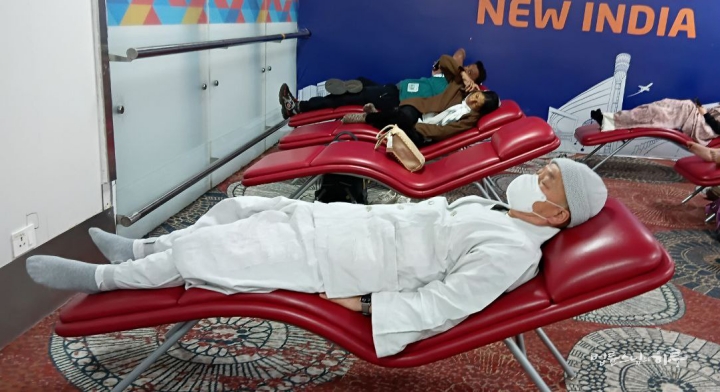
At 4:05 PM, he boarded the plane and departed from Delhi, arriving in Varanasi at 5:30 PM.
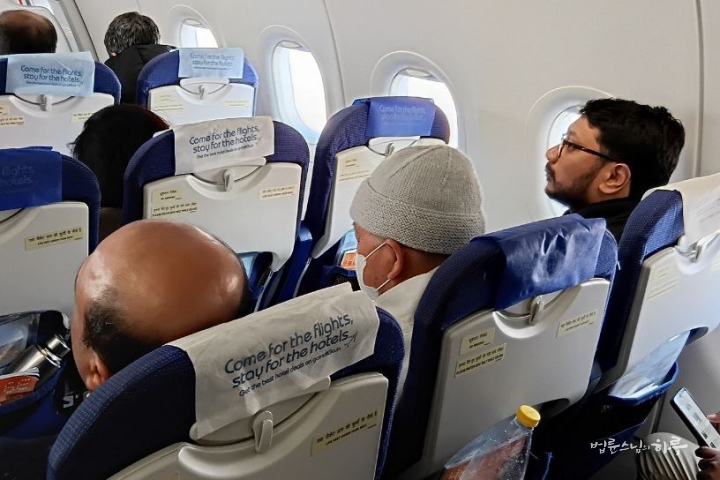
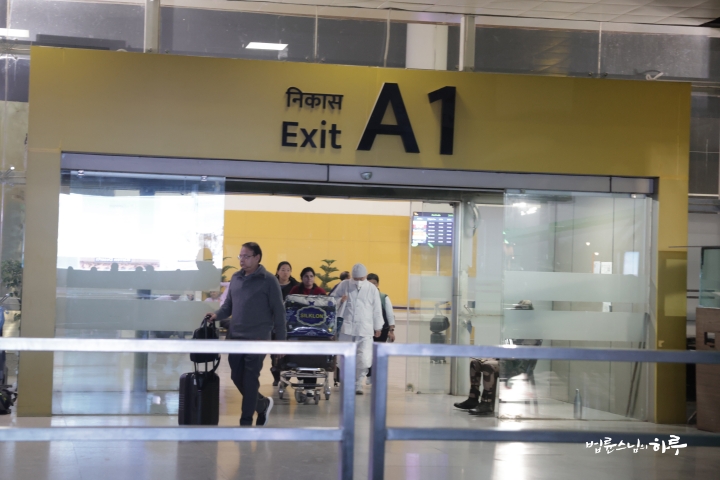
From the airport, Sunim traveled by car the Thai temple near Sarnath, which would serve as both the accommodation and the venue for the opening ceremony. Due to heavy traffic on the way, they barely arrived 30 minutes before the opening ceremony was scheduled to begin.
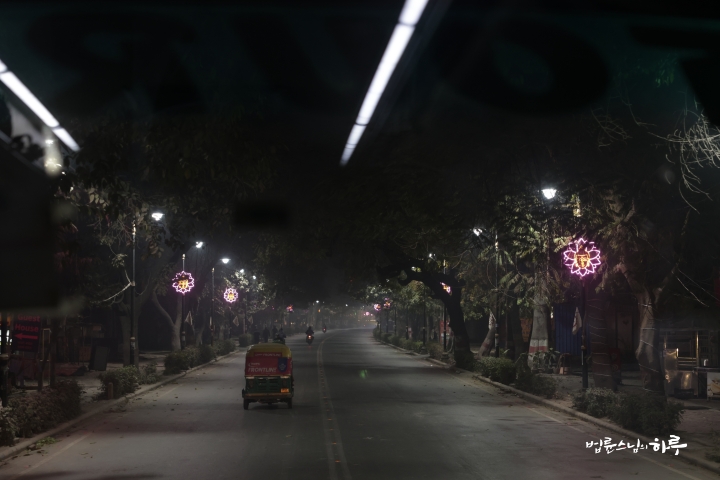
At the entrance to the accommodation, Dharma Teacher Beopdeung (법등), who had been preparing for the pilgrimage locally for the past week, was waiting for Sunim.
“Welcome, Sunim.”
“You’ve worked hard preparing everything.”Upon entering the Thai temple, the abbot was holding a public Dharma assembly in the lobby. Sunim quietly greeted him from the front of the building and entered the quarters through a small door on the side of the building.
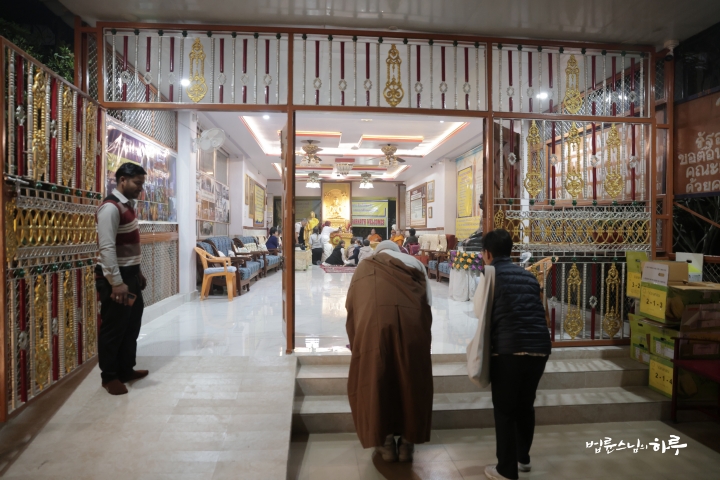
Sunim checked the status of the pilgrimage group and the opening ceremony schedule, then had a simple dinner.
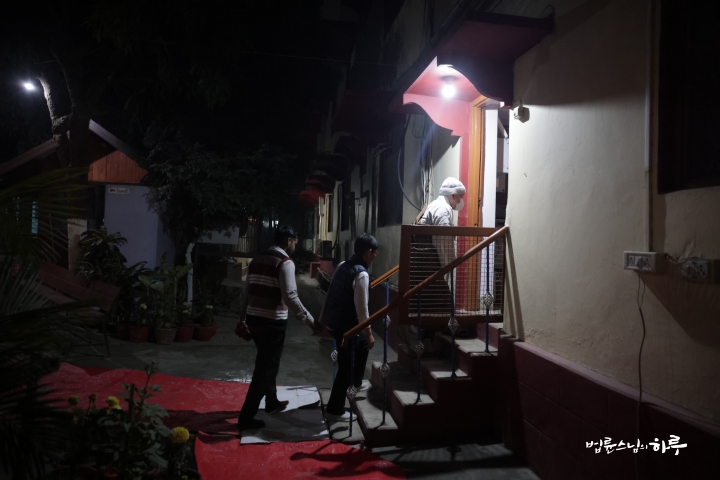
On his way to give the opening Dharma talk, the abbot of the Thai temple had just finished a public assembly, so they exchanged warm greetings.
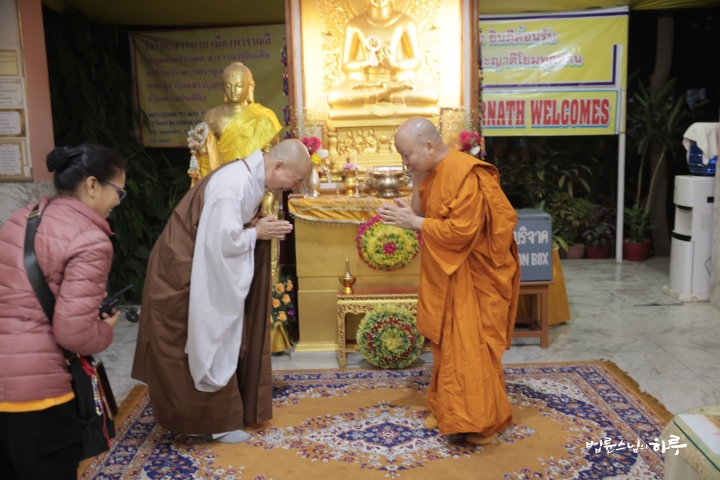
“Yes, welcome back to Sarnath.”
“Venerable, I must go now for the pilgrimage opening Dharma talk. I’ll come to greet you properly tomorrow.”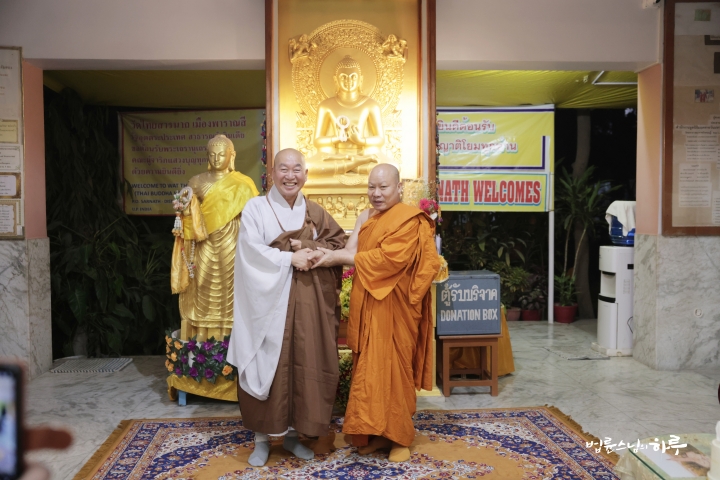
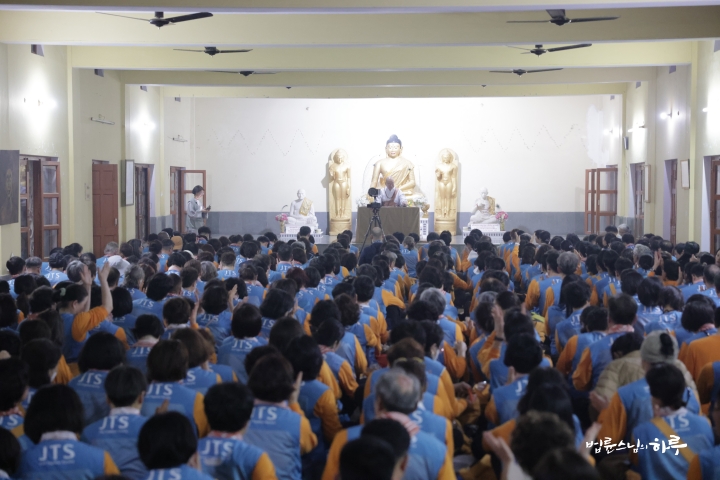
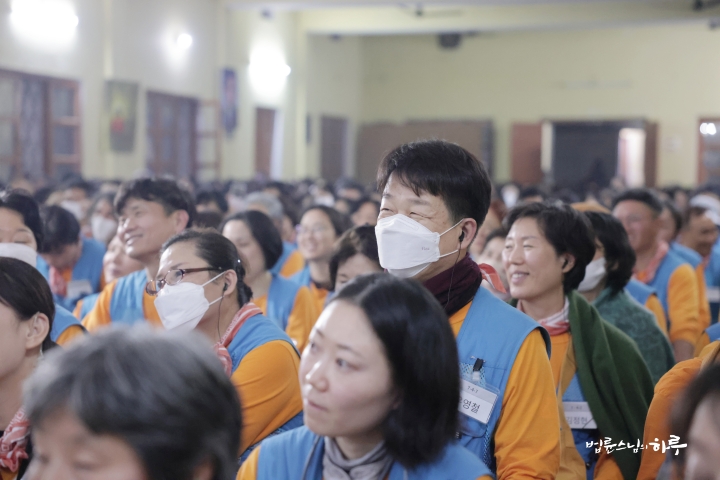
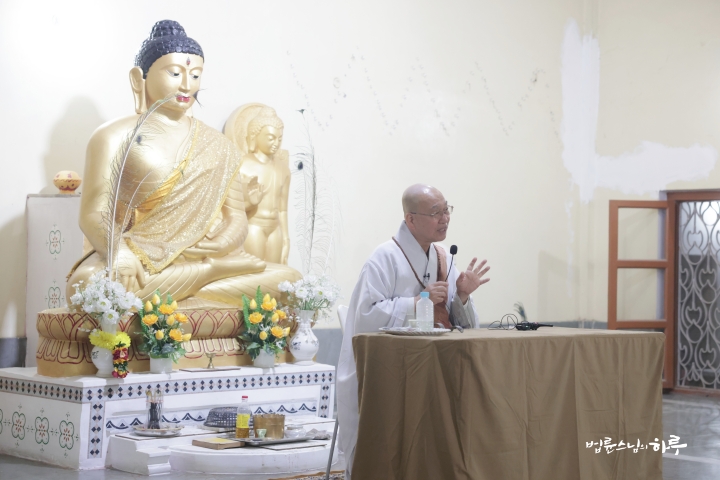
At 7 PM, the opening ceremony for the 35th India Pilgrimage began in the Vipassana Hall of the Thai temple in Sarnath with about 500 people gathered. The opening ceremony was attended by 460 pilgrims, 15 leading Dharma teachers, 17 staff members, and 26 drivers and assistant drivers who would safely drive the 13 buses.
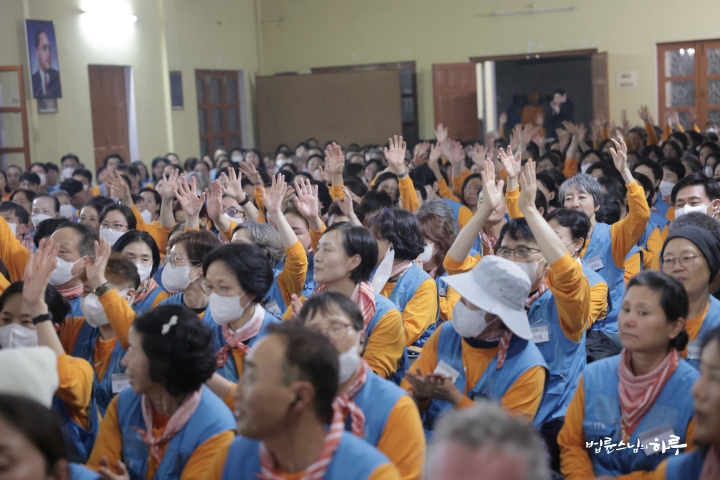
First, they expressed gratitude and presented gifts to the drivers who had safely transported the pilgrimage group from Delhi to Varanasi and who would continue to work hard during the remaining pilgrimage period.
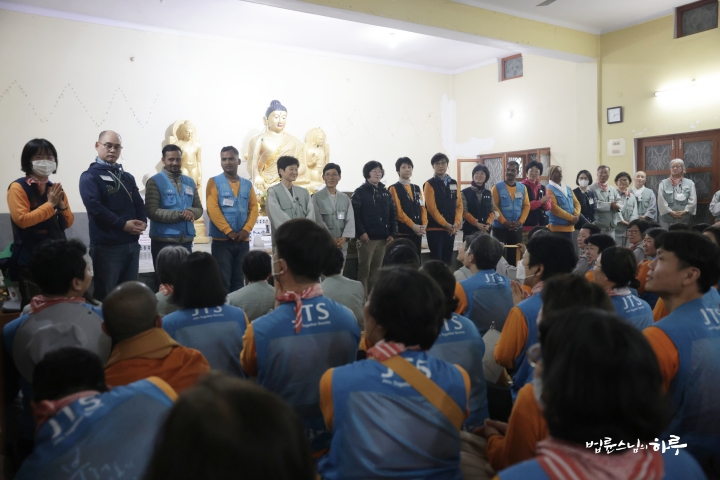
They also introduced the Dharma teachers who would lead the pilgrimage for each vehicle, the bus captains, group leaders, and the staff members who would quietly support everything from behind the scenes including accommodation, daily life, supplies, events, and documentation.
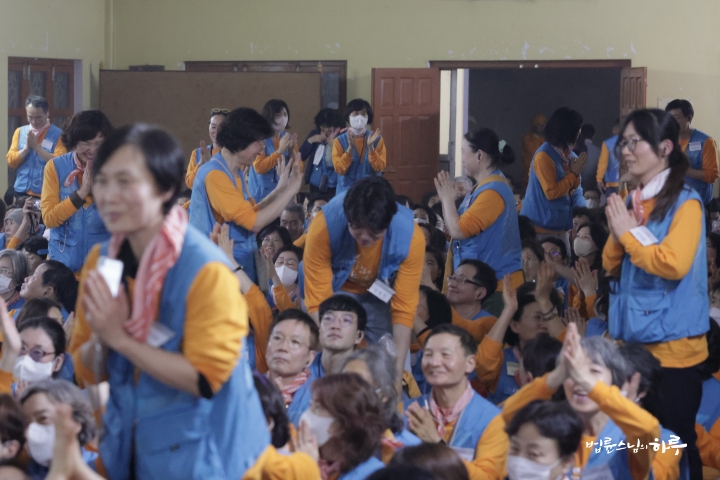
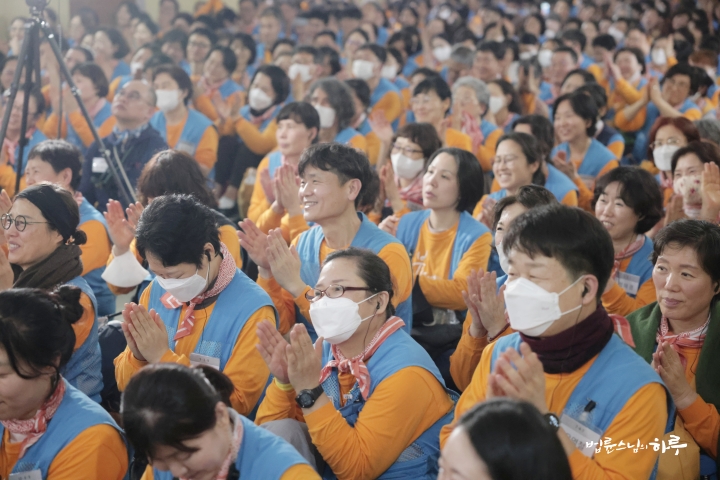
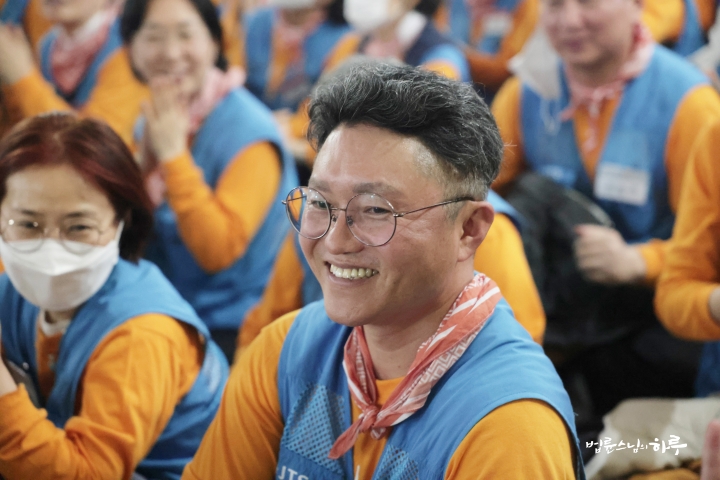
Finally, the 460 pilgrims who had gathered in Varanasi from various parts of the world through different routes waved and greeted each other from their seats. The spacious Vipassana Hall was filled with the sound of applause. Greeting fellow practitioners who would share the 16-day journey together made the beginning of the pilgrimage feel real.
The opening Dharma talk for the 35th pilgrimage then began. Due to the limited space, the assembly sat and sang the request for Dharma, then requested the teaching with three prostrations.
Why We Chose to Go on a Pilgrimage Rather Than a Comfortable Trip
We haven’t simply come on an overseas trip. We’ve only moved the location overseas; we haven’t come on a trip but have come on a pilgrimage as practitioners. Visiting the places where the Buddha and past masters practiced, and renewing our own resolve as practitioners – this is what pilgrimage is.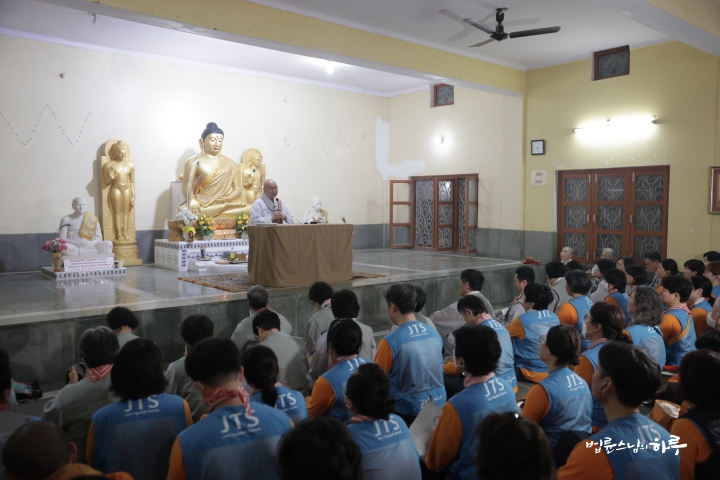
)
of the Tang Dynasty and Venerable Hyecho of Silla (신라의 혜초 스님)
went on pilgrimage from this perspective. Of course, it’s not realistically easy for us today to go on pilgrimage while begging for food and sleeping under trees like the Buddha. However, I believe it’s necessary to maintain the original perspective of pilgrimage, at least during these two weeks.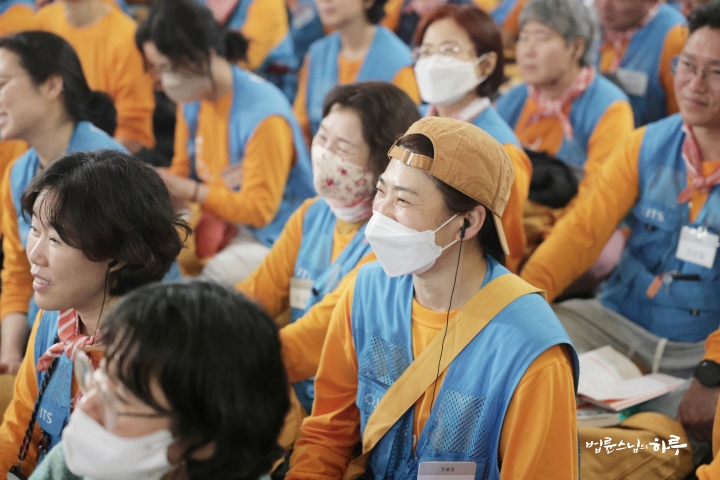
The First Gateway Is Letting Go of Complaints About Food, Clothing, and Shelter
Even today, Hindus follow these principles of pilgrimage. Hindus in India regard rivers like the Ganges and Yamuna as very sacred, and have long considered their sources, such as Gangotri and Yamunotri, as holy sites. So from the beginning to the end of their pilgrimage, they travel thousands of miles carrying only a single bowl, living on alms. The reason it’s difficult for us to travel this way now is partly because living conditions have changed significantly, and partly because Buddhism has shifted from a religion of practice to one focused on praying for blessings. This is why even ordained monks often go on pilgrimages like ordinary people go on overseas trips. However, we should approach this pilgrimage from the perspective of ‘not being overly concerned with food, clothing, and shelter.’ While the accommodations may be humble, they are better than sleeping under trees in the fields. I once traveled with just a sleeping bag, sleeping under the eaves of village houses, and had no problems at all. Over 1.4 billion people live here in India. Is there any reason why we couldn’t live here too? So during these two weeks of pilgrimage, I hope you will travel with the perspective that ‘I am a practitioner.’ Please adopt the viewpoint: ‘As a monastic practitioner, I’m supposed to be able to go hungry, so it’s fortunate that we can at least cook some food.’ This means accepting discomfort. Once you start complaining, you’ll soon regret coming here, thinking ‘Why did I come?’ Letting go of complaints about food, clothing, and shelter – that is the first gateway.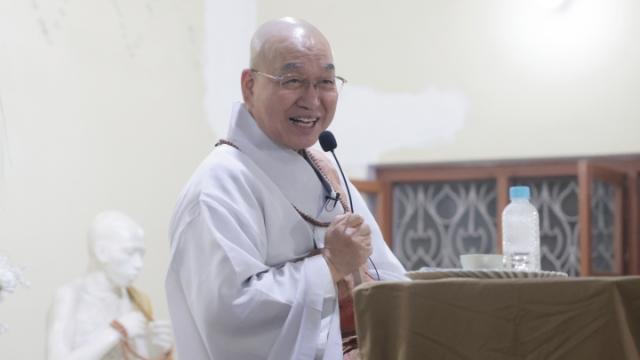
Learning the Buddha’s Teachings in the Field
Jungto Society’s pilgrimage to sacred sites is far from the superstitious practice of visiting holy places to pray for blessings. Rather, it is a time to directly verify and learn in the field the theories studied in the Jungto Dharma School. Participants can encounter the place where the Buddha attained enlightenment and witness the actual spaces where the scenes of enlightenment recorded in the sutras took place. For example, if one has learned about the water dispute between the Sakya and Koliya clans that occurred at the Rohini River during the Buddha’s time, seeing that river in person allows for a much more vivid understanding of why people fought so desperately over the water and how the Buddha intervened with his words to bring about peace. In this way, the pilgrimage provides an opportunity to learn directly from the field by following the traces of places where the Buddha’s Dharma was taught, where he practiced asceticism for six years, where he crossed the river after abandoning asceticism, and where he met various people mentioned in the sutras. When studying only through theory, the Buddha can feel like a somewhat abstract figure. However, after going on a pilgrimage to sacred sites, one realizes that the Buddha was a person who lived just like us. It can feel as if the Buddha from 2,600 years ago is present right there with us. Additionally, one comes to understand that the Buddha’s words were not fanciful tales but teachings that precisely addressed reality. This is why it is recommended that after studying the Buddha’s life, one should definitely experience field learning through a pilgrimage to the sacred sites in India.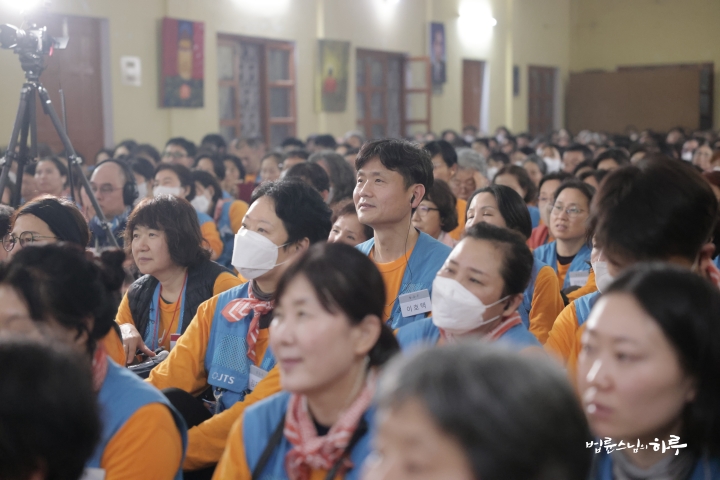
Let’s Embark on a Joyful Pilgrimage, Observing Our Minds Even in Discomfort
At that time, the Buddha begged for food, wore worn-out clothes, and slept under trees, yet he still shared wonderful teachings with the people. If we claim to follow in the Buddha’s footsteps out of longing for his way of life, but then seek to stay in nice hotels and eat delicious food, that would be contradictory. Even if we cannot live like the Buddha or like the great masters, our pilgrimage becomes meaningful when we at least try to emulate them a little. We’re not doing this to deliberately make you suffer. And compared to 30 years ago, pilgrim accommodations have improved significantly. Back then, conditions were quite harsh. Even now, water sometimes doesn’t flow well or electricity occasionally cuts out, making things inconvenient, but it’s not unbearable. When you went into your rooms, was it really that bad?”“No, it’s livable.”
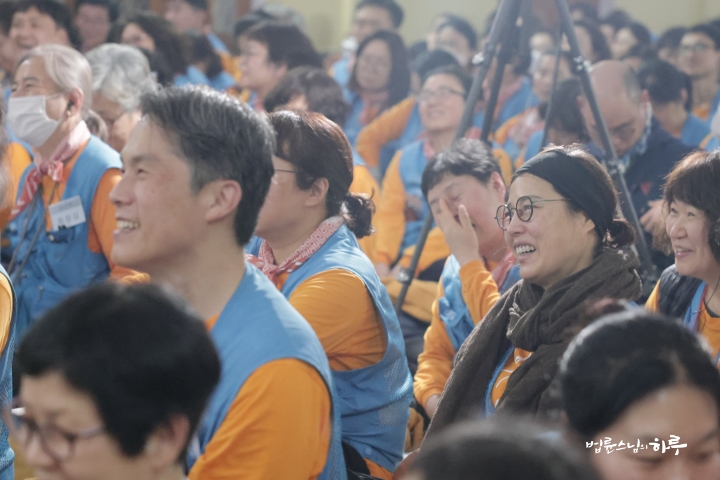
“And if you see geckos or cockroaches in your room, that’s completely natural here. Just as there are ants on the ground and grasshoppers in the grass, these are simply part of daily life in this place. We will visit eight sacred sites. We’ll stay at least one night at each site, and at some places, we’ll stay two or three nights. We’ll explore all the surrounding areas too. So the schedule is somewhat busy. However, while our bodies may be busy, our minds should not be. Our minds should be as relaxed as an elderly person with nothing to do, while our bodies should be quick and agile. The pilgrimage starts tomorrow and lasts exactly 13 days. Excluding one travel day going and two days returning, we’ll be wearing our kasayas and pilgrimaging for exactly 13 days. It will be challenging for these 13 days, but if you want to do a proper sacred site pilgrimage, who should you go with?”“Venerable Pomnyun Sunim (법륜스님).”
“Yes.”
“But even after answering like this, when the food becomes a bit insufficient and you get hungry, when you sweat and washing becomes inconvenient, complaints arise. Then the good mindset from just moments ago disappears without a trace, replaced by irritation and complaints. When that happens, don’t think ‘I shouldn’t feel this way.’ Instead, notice ‘Ah, I’m feeling this way too.’ And watch how that feeling disappears over time. Please go on this pilgrimage while also observing the landscape of your own mind.”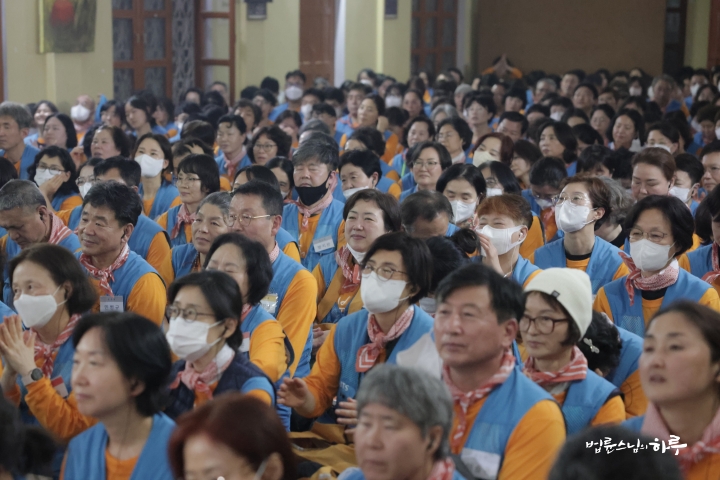
As everyone became absorbed in Sunim’s Dharma talk, which vividly depicted the Buddha’s life as if it were unfolding before their eyes, it felt as though they had traveled back thousands of years and were standing together on the very path the Buddha had walked.
After completing the opening Dharma talk for the sacred site pilgrimage, Sunim moved to his accommodation where he edited manuscripts before taking a rest.
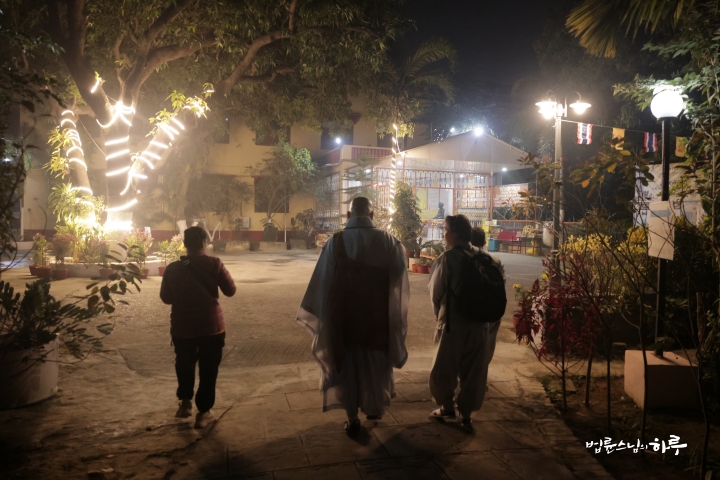
2,600 years ago, this very place, Sarnath, is where the enlightened Buddha took his first steps toward the world. And today, over 500 Jungto practitioners have gathered in the same place. Tomorrow, the 35th Sacred Site Pilgrimage ordination ceremony will be held here where the Buddha gave his first teaching.