How Should I Raise My Teenage Daughter and My Tearful Second Daughter?
Jan 12, 2026. Day 1 of Mindanao, Philippines Site Visit
Hello. Today, Sunim visited special schools for children with disabilities and indigenous school construction sites in Mindanao, Philippines, and discussed future cooperation plans with education officials.
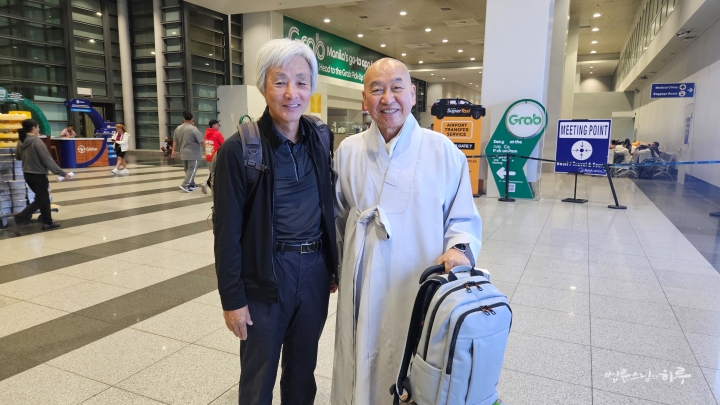
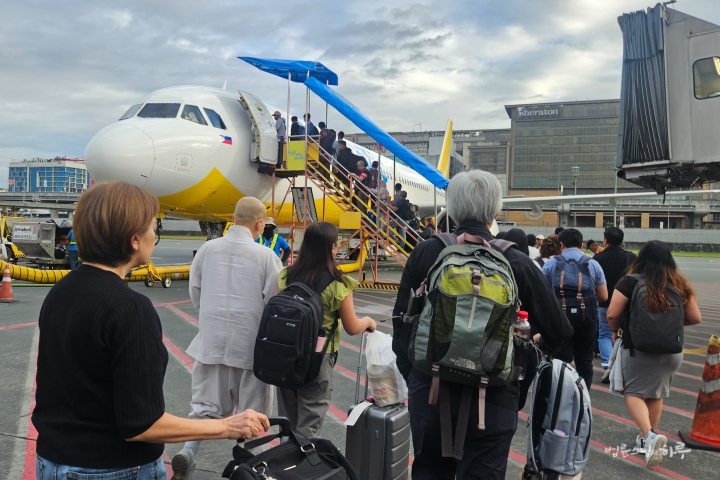
Sunim departed from Kuala Lumpur, Malaysia at 12:55 AM by plane heading to Manila. After arriving in Manila at 5:10 AM, he met with Noh Jae-guk (노재국), the representative of JTS Philippines, and immediately transferred to a flight to Cagayan de Oro Airport.
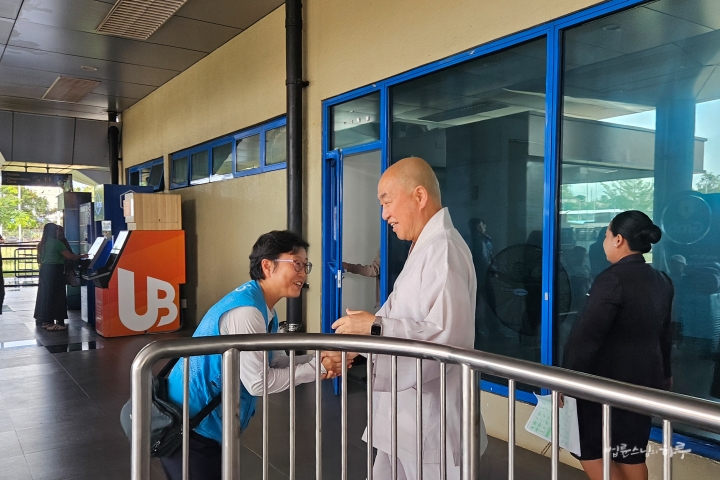
At 9:30 AM, when Sunim arrived at Cagayan de Oro Airport, Dharma Teacher Hyanghoon (향훈 법사), the secretary-general of JTS Philippines, and volunteers Kim Ga-young (김가영)and Seo Eun-sil (서은실) were there to greet him. After exchanging greetings, they immediately headed to the first school.
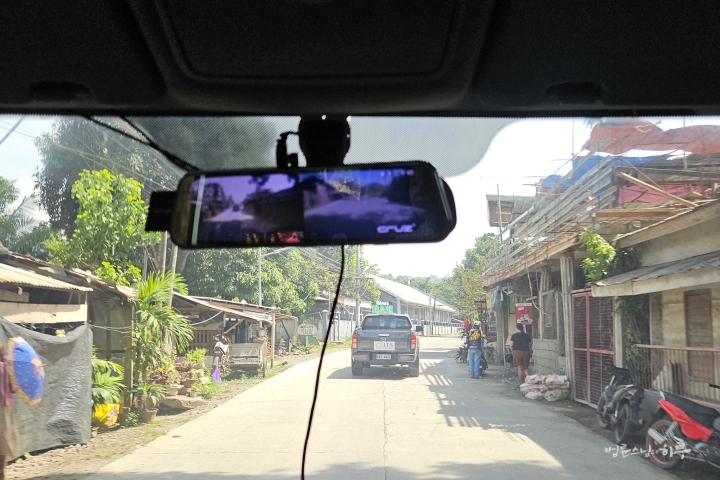
At noon, they arrived at Malitbog Central Elementary School. Edwin, who is in charge of indigenous schools at the Department of Education, and Rolen, who is in charge of special schools for children with disabilities, had also arrived at the school.
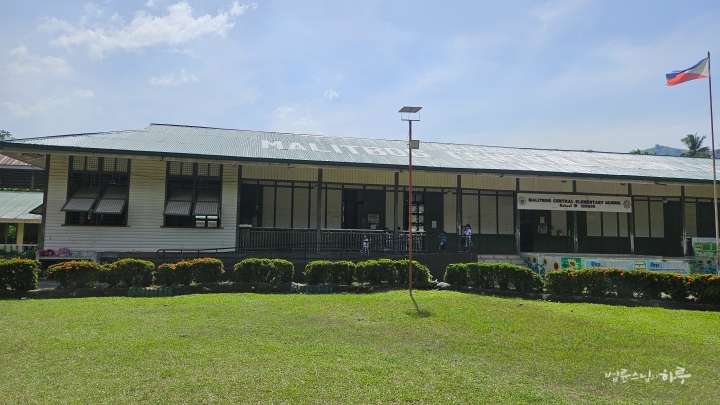
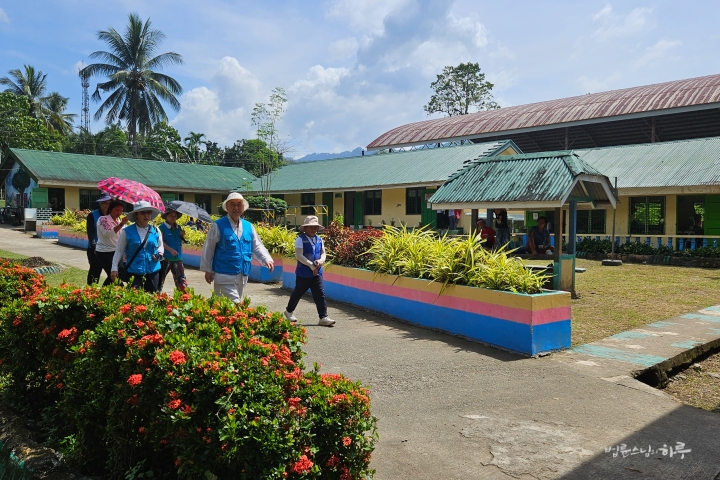
School officials earnestly requested classrooms for the special school for children with disabilities. Sunim carefully examined the school grounds and, considering harmony with the existing school, said:
“The school for people with disabilities shouldn’t be too isolated on one side. It’s better to be in the center of the school.”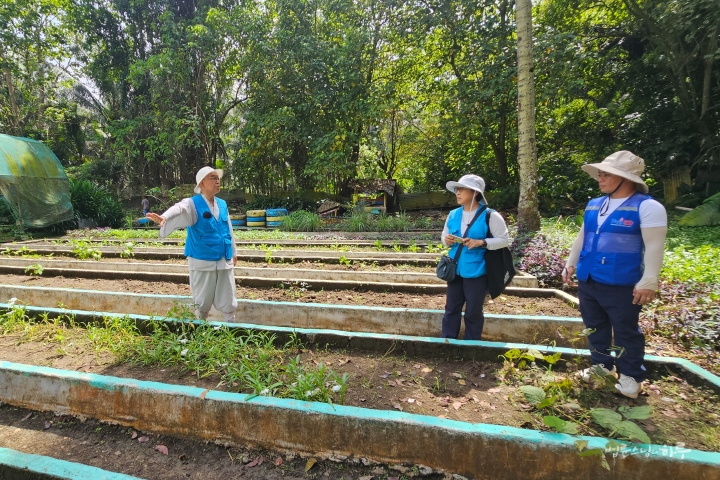

After examining the school grounds, they had lunch at a nearby restaurant and moved on to the next school. After driving for two hours on bumpy, rough mountain roads, they arrived at Pigdasag indigenous village school at 2:50 PM.
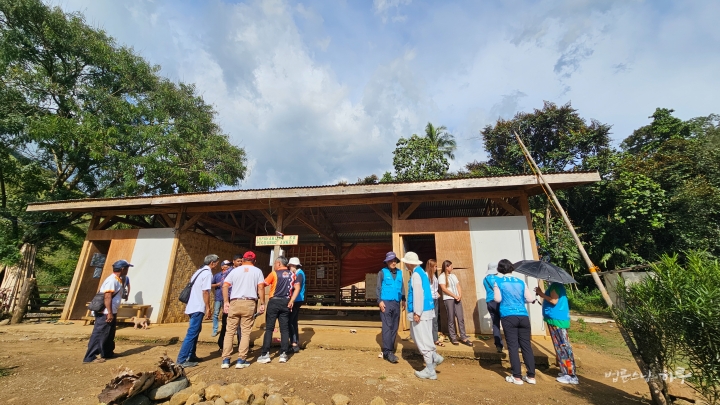
After touring the school, Sunim asked the teacher:
“How many students are there?”“They say there are 28.”
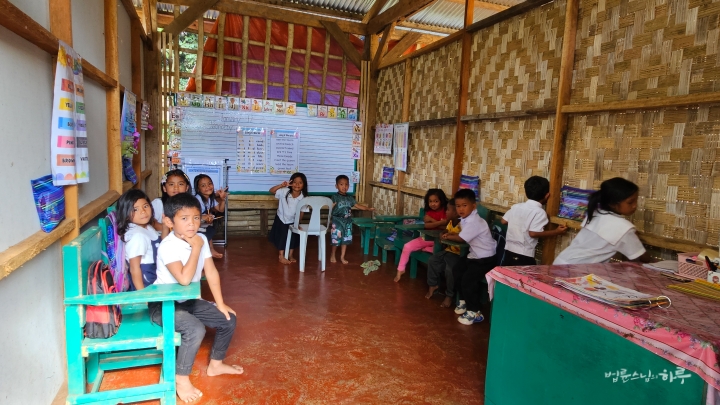
While examining the wooden building, Sunim asked again:
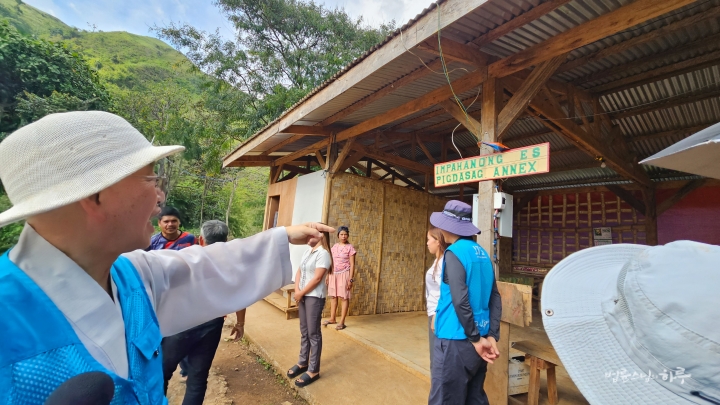
A school official explained:
“This is a community hall. We’re temporarily borrowing it to use as a school.”
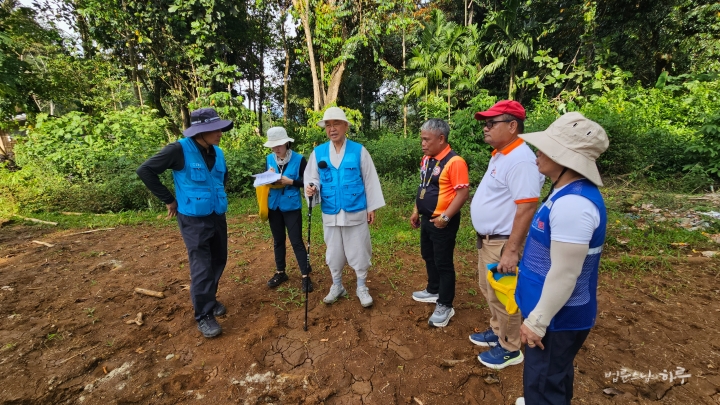
They then toured the land donated by village residents for school construction.
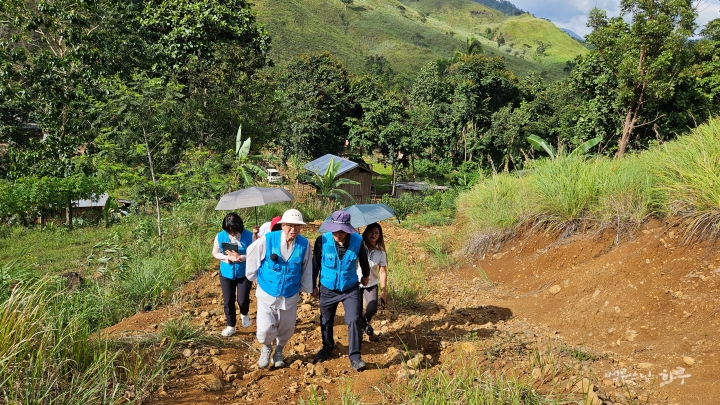
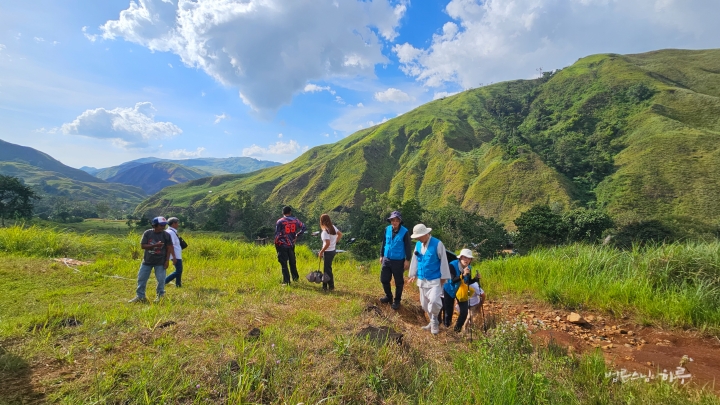
“There’s no land available near the community hall.”
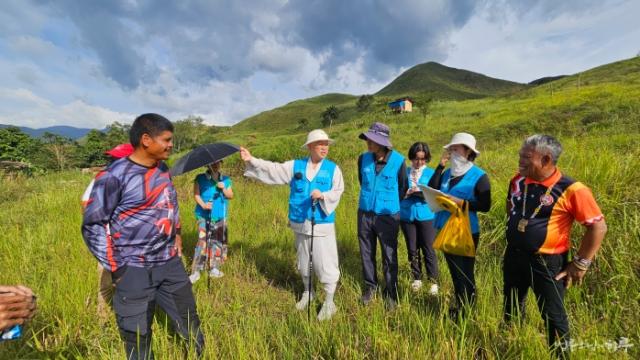
Fortunately, after hearing about an alternative site at a slightly lower elevation, they examined the location and discussed specific plans for school construction.
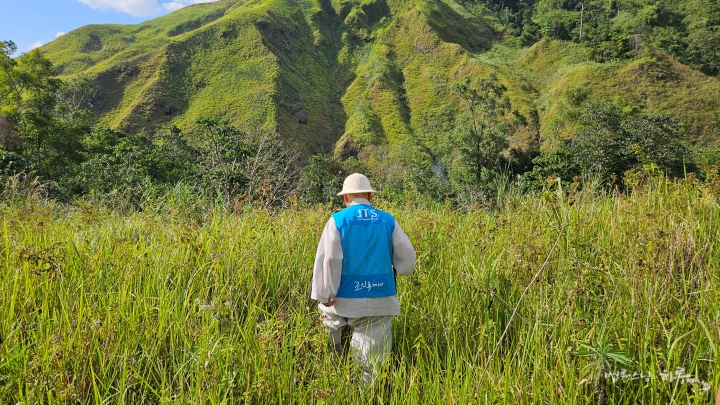
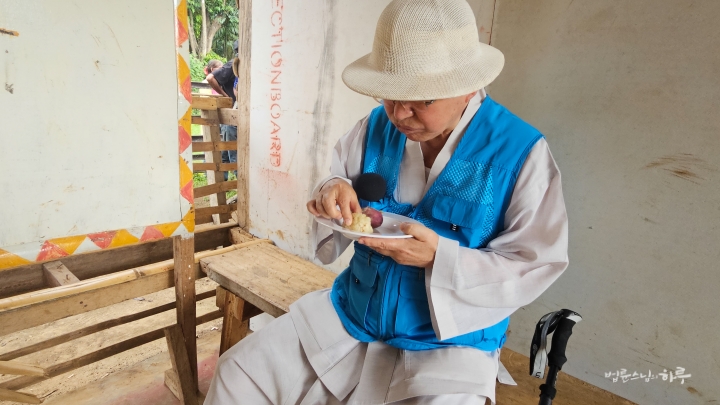
When they came down after surveying the land, village residents served snacks they had carefully prepared, including sweet potatoes and cassava cake. While sharing these heartfelt snacks, they continued discussing the school construction.

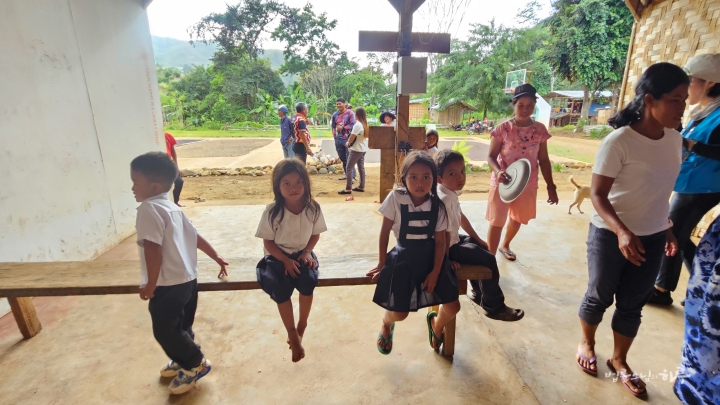
After saying goodbye to the residents, they departed for the next school at 3:40 PM.
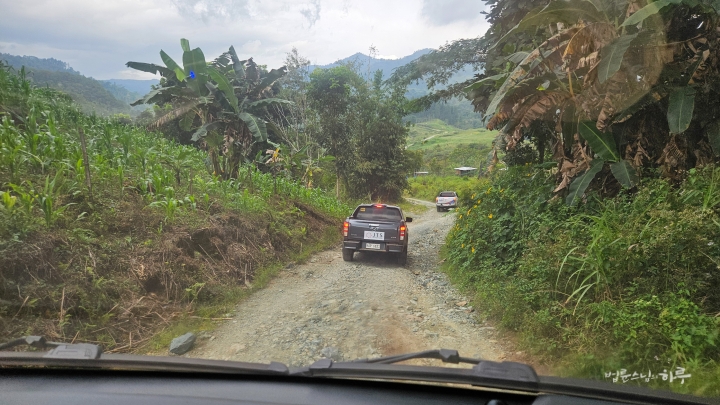
After driving on bumpy roads for an hour, they arrived at Kalabugao Central Elementary School at 4:40 PM. Although rain suddenly began to pour, Sunim and the group carefully examined the special school site even in the rain.

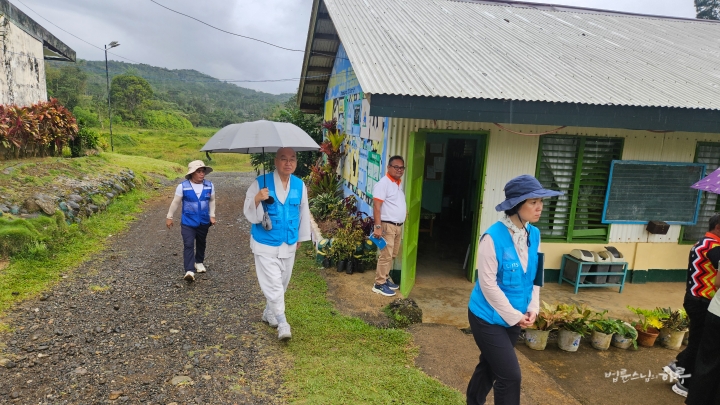
While touring the school and assessing the situation of children with disabilities, Sunim asked:
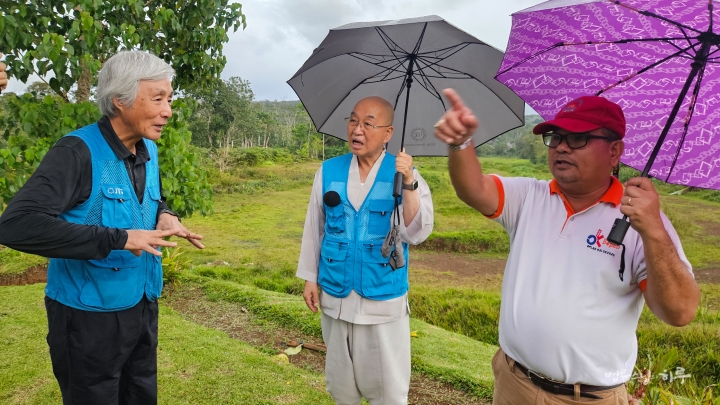
“We haven’t been able to conduct classes yet. That’s why we requested the Department of Education to build a special school.”
“Have you requested teachers to be assigned?”“Yes, we requested last year but they haven’t been assigned yet.”
Sunim spoke firmly:
“The proper order is to request classroom construction when there are teachers and children and classes are being conducted. Building classrooms first is not the priority.”To select the site, they toured various parts of the school and measured directly with a tape measure.
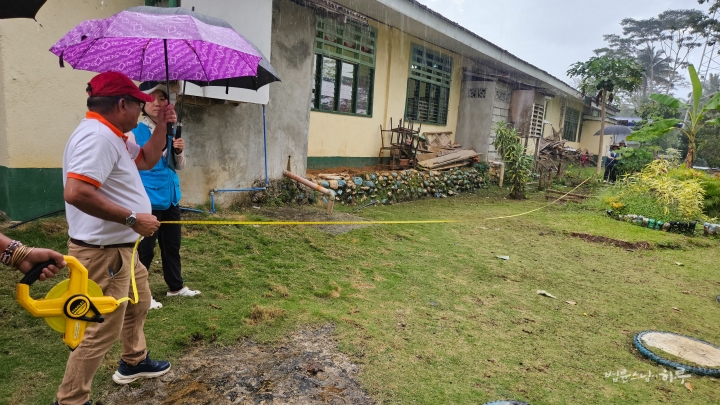
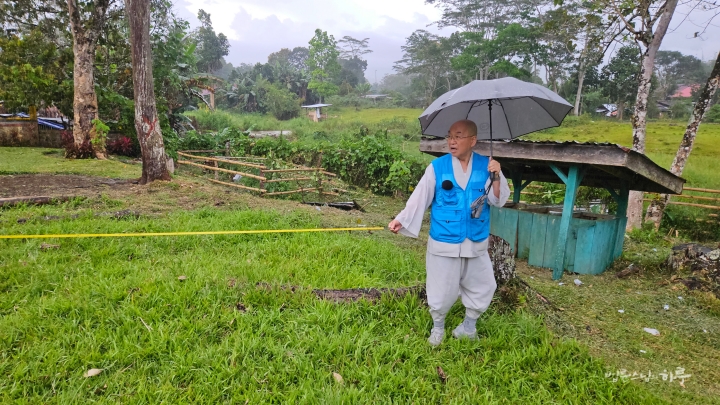
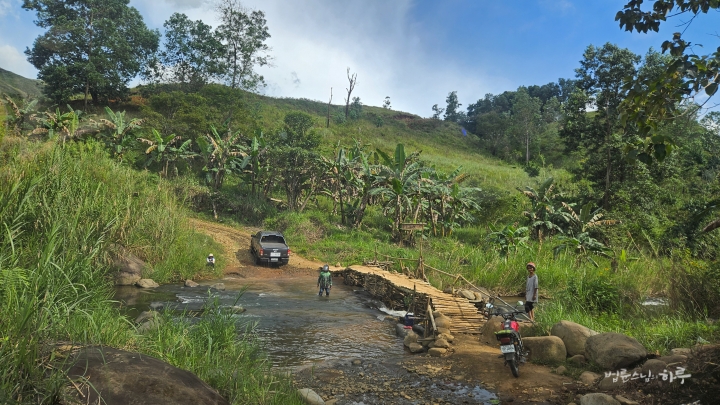
After completing the site visits to three locations, they departed for their accommodation at 5:30 PM. The journey was even more challenging. They had to cross water and move stones to allow the car to pass. Just when they thought they could catch their breath, while driving on the bumpy gravel road, a tire was partially torn. They decided to have dinner at a restaurant and replace the tire with a new one.

After dinner, they held a meeting with Department of Education officials. Sunim frankly raised practical issues:
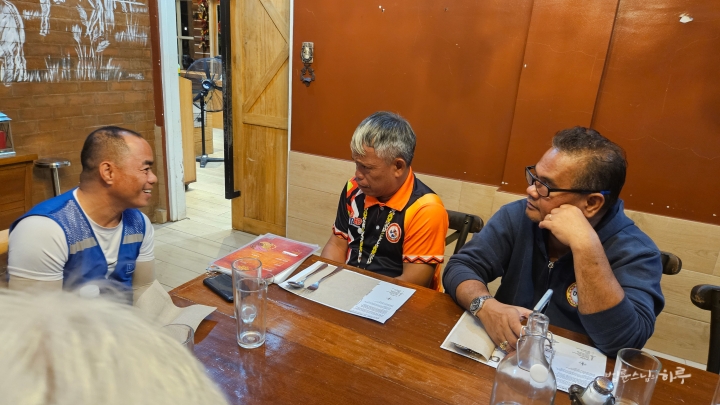
“I understand well. We’ll do that. The Superintendent has already designated dedicated personnel.”
After finishing the conversation, they drove another hour and 20 minutes and arrived at their accommodation at 9:50 PM.
Tomorrow, they plan to visit four schools. They will visit Lugawon-Kayaga, Halapitan Central Elementary School, Quezon Kolampion-Paitan, and Pamalawan-Sinuda to examine the possibility of school construction.
Since there was no Dharma talk today, this post concludes with a dialogue between Sunim and a questioner from the live Dharma Q&A broadcast on November 14 last year.

How Should I Raise My Teenage Daughter and My Tearful Second Daughter?
“I’m raising two daughters, one in 7th grade and one in 2nd grade. My eldest daughter, perhaps because she’s entered puberty, gets angry saying her mother doesn’t empathize with her words and is struggling a lot herself. My second daughter usually gets along well but cries and gets extremely angry when things don’t go her way, and she tends to be very conscious of others. She had a best friend she’d been close with since kindergarten, but recently she felt hurt when that friend became closer to a newly transferred student. She says she’s so sad that she doesn’t even want to go to school. My husband has a good heart, but when I bring up the children’s issues, he says ‘Don’t worry too much about it’ and tends to focus more on his phone. I went to work when my first child was eight and my second was 27 months old, but I’ve been taking a break from work since my second child entered 2nd grade. Since I’m at home, the children like being with their mother, but on the other hand, they seem to have become more emotionally fragile and tearful. I grew up amid my parents’ marital discord, and when the children were young, I harbored a lot of resentment toward my in-laws and husband. Now I’m trying to have a more peaceful mind by listening to Sunim’s Dharma talks. I’d like to ask whether taking a break from work to be with my children is really a good choice for them, and how I can care for them with a more peaceful mind.”
“In times like these, raising two children makes you a patriot. First, I’d like to offer words of encouragement for that. Rather than worrying too much about how to raise your children, what’s most important is observing them. You need to simply watch your child’s state as it is – ‘Oh, my child is sad today,’ ‘They cried because of this,’ ‘They’re happy at this moment.’ Rather than the mother overreacting to every single emotion the children have, the priority should be to quietly observe what makes them cry and laugh, when they act spoiled, and when they get irritable. Children experience numerous emotional ups and downs throughout each day. If a mother is at work and doesn’t see these moments, they might pass by as if they ever happened. But when you’re at home watching every scene, it can feel like there are major problems. Rather than trying to do more for your children, it’s important to fulfill your basic role as a mother. Don’t try to do too much, but don’t deliberately withhold either. Don’t be annoyed, don’t pour excessive love on them, and calmly observe how your children are growing and what problems they’re facing. It would be good to keep a diary-like record of what happened with your children and what their state was at those times. When you quietly observe and record, you’ll realize that the crying or anger that seemed like a big deal at the time often naturally subsides with time. If they throw a tantrum but are fine a little later, you can just watch it as part of their growing process. It’s not a big problem. There could be various reasons why the father doesn’t pay much attention. He might be busy with his own work, or he might genuinely feel it’s not a big deal. Even if the children fight with each other but get along well again, that’s just one of many things that can happen in daily life, not something special. When you look at it this way, you’ll realize that there’s less for a mother to do than you might think. However, if you observe that getting angry becomes routine and gradually worsens over time, then you can consider it a problem. In such cases, you can visit a specialist in child psychology and consult based on your observations. They might ask you to bring the child directly, or if they judge it to be a natural part of the growth process, they might tell you to continue observing. This way, you can reduce your own workload. If you try to respond to every situation your children face in real-time, parents won’t be able to do anything else. If you follow them around trying to control everything whenever they swing or play with slightly dangerous toys, parents will become exhausted. The parent’s role is to watch for the child’s safety and take them to the hospital if they get hurt, not to prevent everything in advance. Children learn about danger by getting slightly hurt sometimes. If parents raise children while being overly anxious, children lose opportunities to experience many things. That’s why you need to watch from a step back. If you observe that the children are doing well with just meals and basic care, it’s fine to go to work. Conversely, if observation suggests potential major problems ahead, and professional consultation determines that treatment is needed, then helping the child becomes most important. Once a doctor sets the direction for treatment, the mother just needs to be faithful to the role guided by the expert. If the mother’s constant nagging at home is actually having a more negative impact on the children, it might be better to work and maintain some distance while spending time together on weekends. You’ve already passed the period before age three when children need absolute maternal care. This isn’t a time when major problems arise just because mother is temporarily absent. However, before deciding whether to go to work, I recommend calmly observing and recording your children’s state for about 100 days. Take those results to consult with a child psychology specialist. If it’s determined to be part of the growth process, it’s fine to work. If depression or other problems are discovered, helping them receive early treatment might be more important than working. I hope you’ll clearly define your role in this way.”“I think I’ve been paying too much attention to every little thing with my children. It was very helpful when you told me to observe and watch the children. Actually, because my own growth process was somewhat difficult, I’ve always worried whether that influence might affect my children. So I often worried whether my children might be growing up without peace of mind. From now on, I’ll keep your teachings in my heart and try to have a more peaceful mind myself first. While doing so, I’ll watch over and raise my children so they can grow with more peaceful minds too. Thank you.”