My Mother with Dementia Says She Never Hit Me. How Should I Respond?
Nov 29, 2025. English Dharma Q&A, Sutra Course Dharma Q&A, Coal Briquette Delivery Volunteer Work, Gilbeot Dharma Talk
Hello. Today, Sunim held back-to-back live Dharma Q&A sessions in the morning, and in the afternoon, he delivered coal briquettes with members of ‘Gilbeot,’ a community for artists in broadcasting, film, and theater who practice mindfulness and engage in social activities, followed by a dialogue with them.

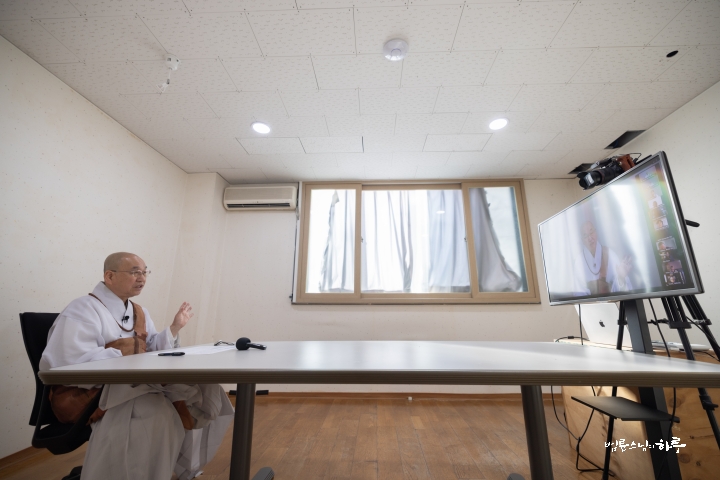
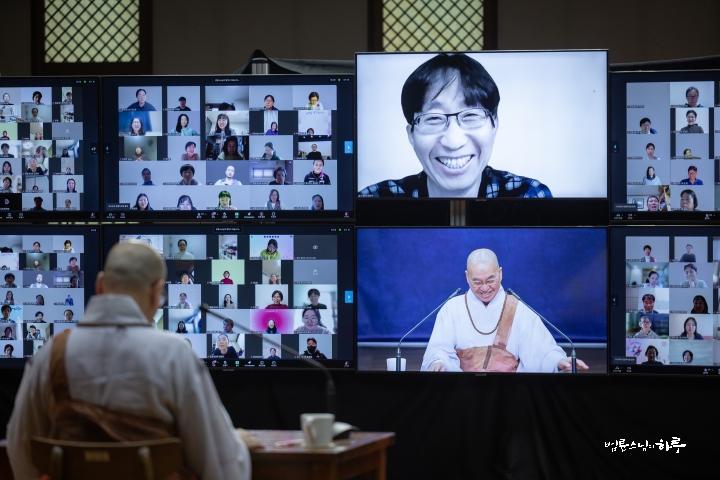
After completing his early morning practice and meditation, Sunim took his seat in front of the camera setup in the practice room on the second floor of the Jungto Center at 8 AM for the Live Dharma Talk. He began the day with an online Dharma Q&A session for Jungto Society members worldwide, with about 200 English-speaking members from the United States, Canada, Europe, Asia, and other countries connected to the video conference.
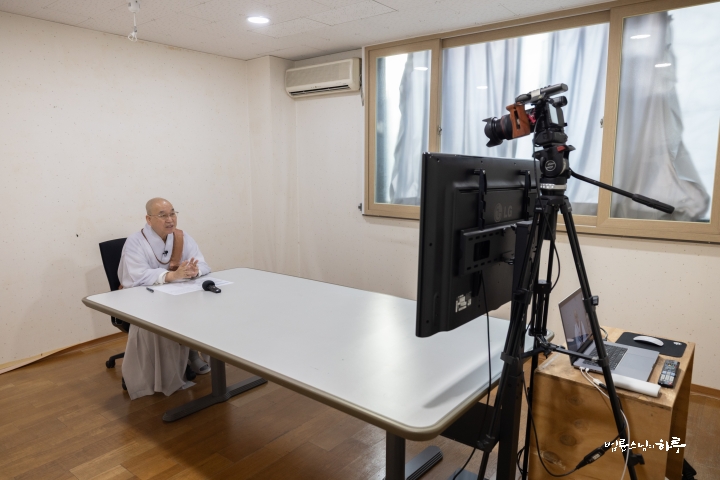
After the introductory video ended, Sunim greeted everyone with a smile and began taking questions. During the 90-minute session, five people clicked the raise hand button to ask Sunim questions. One of them shared concerns about finding balance between gentleness and firmness in daily life.

Should I Be Gentle or Firm? How Much Should a Practitioner Endure?
“My question is how to strike a balance between gentleness and firmness in daily life. Gentleness often reflects compassion, yet firmness is sometimes necessary to achieve results. For example, when my internet service failed, my polite complaint was dealt with slowly, but when my colleague spoke more sharply, the issue was resolved immediately, which made me question my approach. Where is the healthy boundary between being patient and being firm? As a Buddhist practitioner, should I always be gentle, even if it means slower results? Or are there moments when being firm is a more appropriate and effective response?”
“Listening to your question reminded me of a similar experience I had at an airport. When I arrived at the airport to check in, I was told it was already closed and I couldn’t enter. The cutoff time was 40 minutes before departure, and since I had arrived an hour early, I naturally thought I would be fine. But they said it was already closed. I had urgent business, so I earnestly pleaded with them to let me in. But they said it was already closed and refused. I pleaded for nearly 10 minutes, but they wouldn’t let me in. Then another person happened to arrive late and protested to the airline. They argued very forcefully that the legal cutoff time was 40 minutes before departure, but they had closed it an hour early, which was illegal. Thanks to that person, I was able to check in as well. Once I got to the boarding gate, I could see why they had closed early. The airline had overbooked the seats, and they couldn’t accept any more check-ins because the flight was full. As a result of my entering, another passenger who had already been assigned the same seat had to come out, and that person also protested vehemently to the airline.
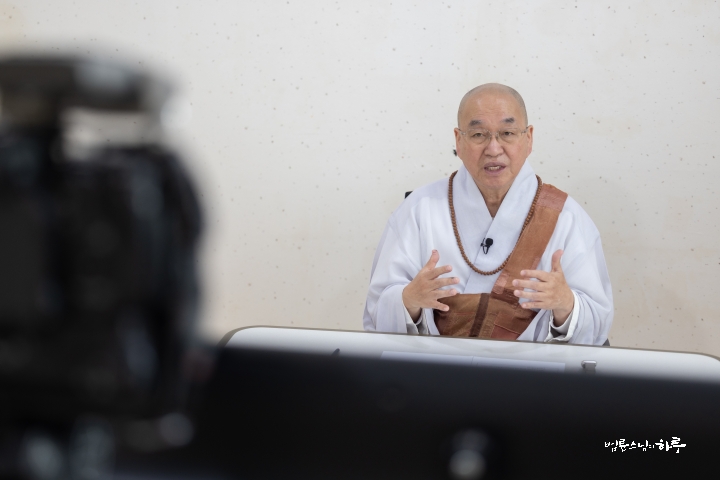
“I was actually quite polite and gentle, but my friend lost his patience, so I took advantage of his anger. So the problem was resolved not because of me.”
“Yes. In any case, I would say that the ‘Middle Way’ is using these two methods appropriately according to the situation at hand.”
Questions continued one after another. As various questions and Sunim’s answers continued, it reached 9:30 AM and the dialogue came to an end.
After finishing the live broadcast, Sunim briefly greeted visitors who had come to the Jungto Center. Kyung-taek Lee and Seung-hoon Lee, members of LA Jungto Society in the United States, had visited Korea to make a pilgrimage to Jungto Society’s main temples.
“Please visit Jukrimjeongsa, Cheollyongsa, Adomoryewon, Mungyeong Jungto Retreat Center, and the Education and Training Center – make a full tour around the country. I’ll personally guide you to Cheollyongsa tomorrow. Welcome.”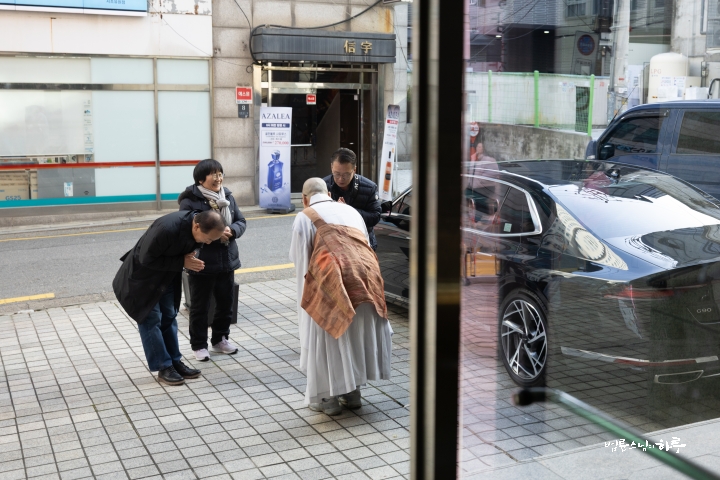
After asking Dharma Teacher Myodeok to guide the two visitors well, Sunim headed to the broadcasting room.
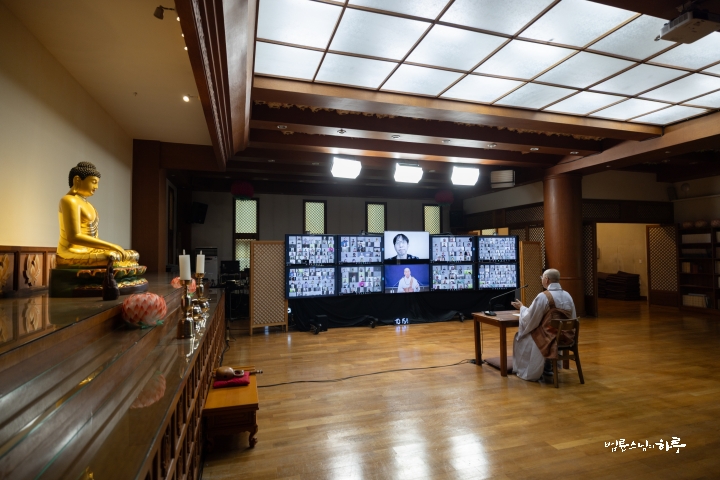
From 10 AM, Sunim held an online Dharma Q&A session from the broadcasting room at the Jungto Center, having a dialogue with Jungto Sutra Course students about questions they had while attending classes.
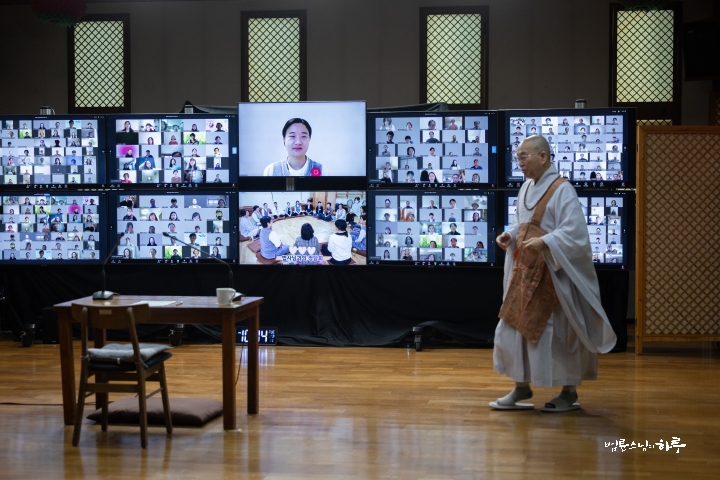
With about 1,000 people connected to the live broadcast, they watched a video showing the Sutra Course students’ practice activities over the past month.
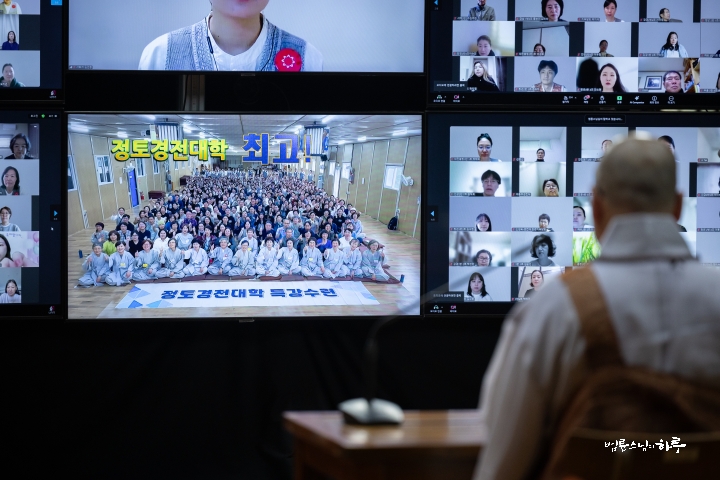
Then everyone requested a Dharma talk from Sunim with three prostrations. After introducing the curriculum of the Jungto Sutra Course, Sunim immediately began taking questions from students. He first had dialogues with six people who had submitted questions in advance, then took and answered questions on the spot. One person sought Sunim’s advice on how to practice without forming fixed notions, saying that while they could be aware, it was difficult to let go of the solid “fixed notions” they had already formed of family, friends, and colleagues.
Can I Really Let Go of the Fixed “Notions” I Have of Family, Friends, and Colleagues?
“If I hadn’t started studying the sutras, I probably wouldn’t have known that I have a fixed notion of self (ah-sang), and I would have lived without distinguishing between compassion and greed. I’m simply grateful that I can study the sutras now. However, while I’ve become able to be aware, I’m doubtful whether it’s really possible not to form fixed notions. Especially with family, friends, and colleagues whom I meet frequently, the fixed notions I’ve already formed seem quite solid. I’m curious about what it specifically means to let go of these fixed notions.”
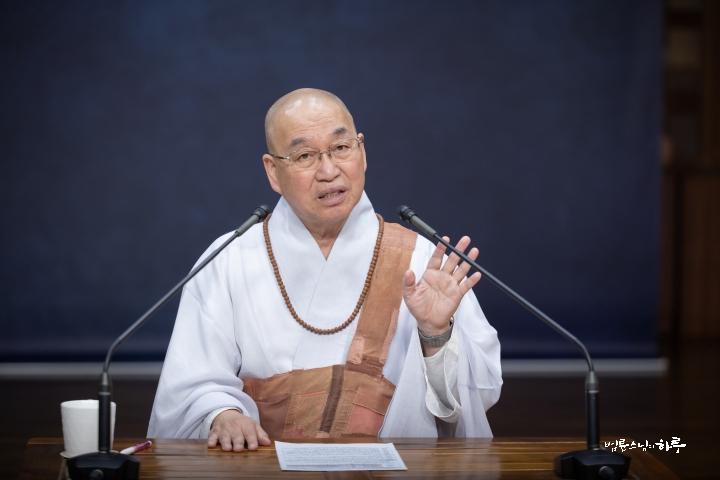
“When you observe dogs and cats, you can see that dogs have certain characteristics and cats have others. The wisdom that distinguishes and knows these characteristics is called discriminating wisdom (分別智). However, if you consider these characteristics as ‘problematic,’ this is called ‘making judgments,’ which becomes discriminating mind (分別心) or judgmental mind (是非心). In other words, if knowing the characteristics and differences between two objects helps solve a problem, it’s called wisdom. But if distinguishing these characteristics and differences as ‘good or bad,’ ‘right or wrong’ creates anger in your mind and becomes an obstacle to solving problems, it’s called discriminating mind and judgmental mind.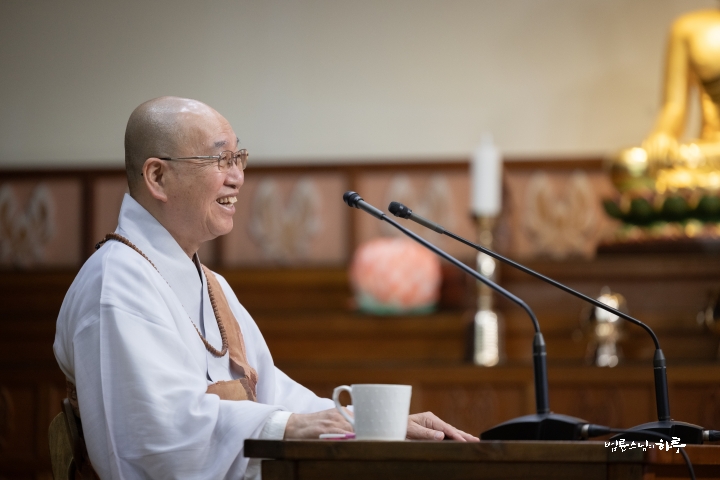
“Thank you. I understand well.”
Questions continued one after another.
The Diamond Sutra says ‘there is no self,’ while the Platform Sutra says ‘find your true self,’ which seems contradictory. How should I understand these opposing expressions?
While practicing the guideline to see the world without prejudice, I’m wondering if positive preferences might also be a kind of preconception. Are positive perspectives and preferences also preconceptions that should be let go?
I worry that letting go of attachment will eliminate desires and life’s driving force, hindering personal and social development. Also, why must we save all sentient beings? What is the reason?
Compassion comes easily toward others but it’s difficult to have compassion for family. If I keep practicing ‘they could be that way,’ will genuine compassion arise?
When trying to set standards without being attached, I experience conflict between indecisiveness and stubbornness. When placed in a position of criticism, what is the middle way?

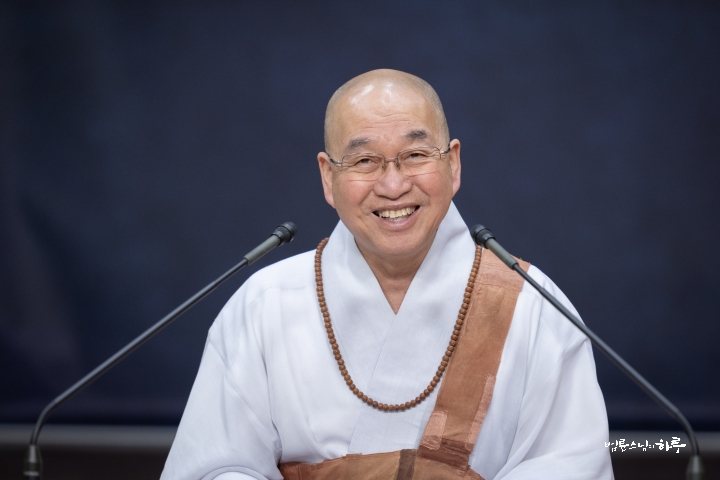
After the dialogue, Sunim emphasized that sutra study comes alive as wisdom not through mysticism or stubbornness, but through a balanced attitude of accepting what is understood and setting aside what isn’t understood for the time being.
Studying Sutras: If You Don’t Understand, Just Set It Aside
When you complete the entire curriculum and look back, you may find that parts you couldn’t understand before now make sense naturally, and content you once rejected in disbelief may change to something positive. If there are still things you don’t understand, simply set them aside again. As you continue studying this way, your perspective on Buddhism will broaden, and the depth of your awakening will deepen, allowing you to think lightly, ‘Looking back, it wasn’t such a big deal.’ There’s no need to approach it mystically, thinking ‘there must be some special secret’ just because you don’t understand. Even if you can’t see it now, it will naturally become visible when you open your eyes more deeply. You just don’t know it now, but that’s not a problem.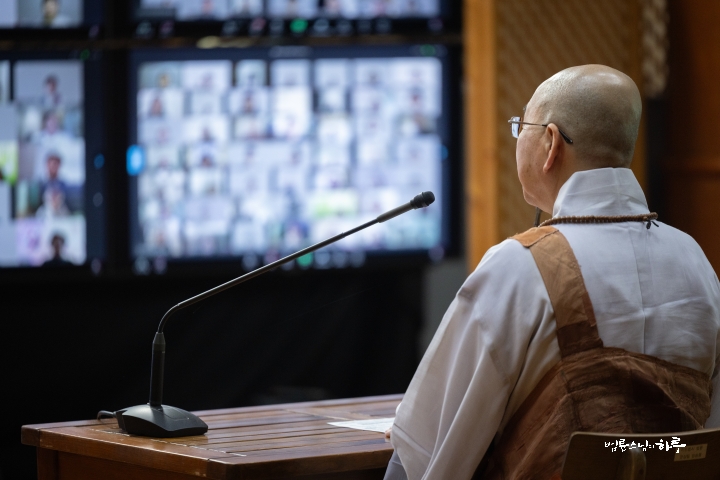
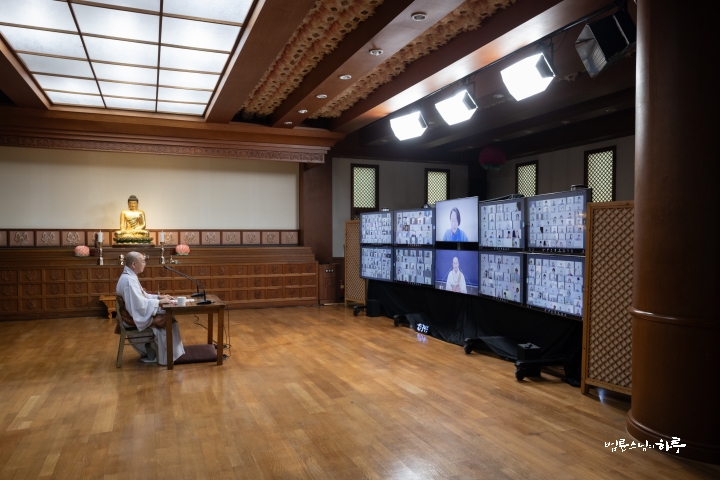
The Sutra Course students took Sunim’s words to heart and concluded the live broadcast with the Four Great Vows. Group mindful sharing sessions followed.
After leaving the broadcasting room, Sunim had lunch and changed into work clothes to deliver coal briquettes with the Gilbeot group. He put on winter pants, an apron, arm guards, gloves, and a mask, then got into the car.

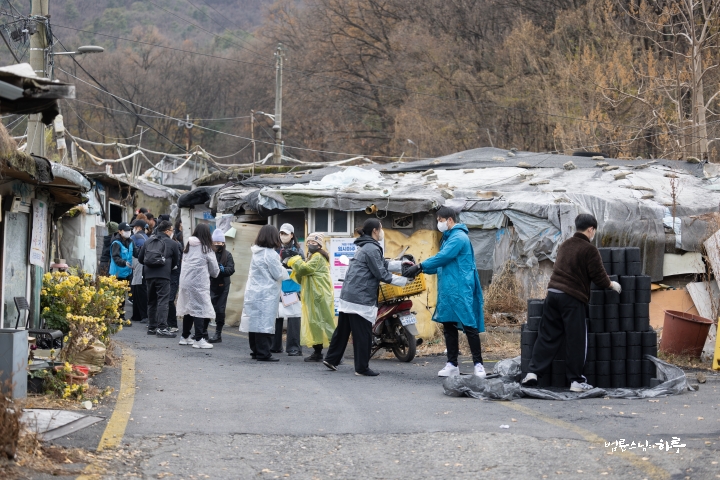
Today’s coal briquette delivery was scheduled for the Guryong Village shantytown in Gaepo-dong, Gangnam-gu, Seoul. When Sunim arrived, about 120 Gilbeot members working in broadcasting, film, theater, and the arts had gathered to deliver coal briquettes. Actor Jo In-sung was the first to welcome Sunim.
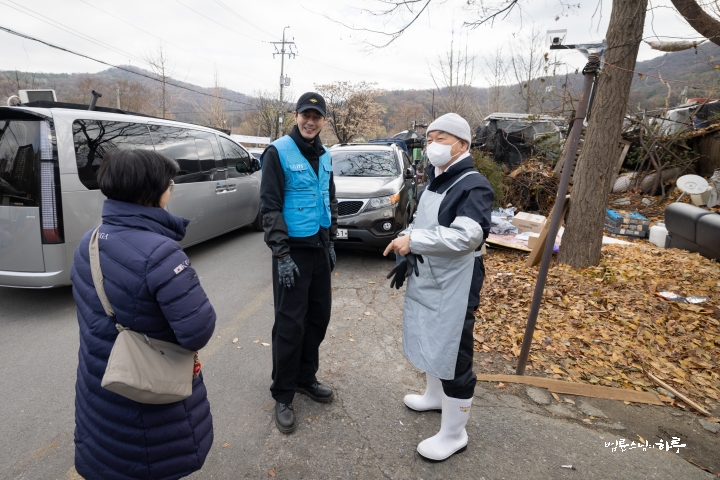
“Sunim, how have you been?”
“Yes, I returned from Japan early yesterday morning.”Everyone belatedly recognized Sunim in his work clothes and mask and exchanged warm greetings. Today, Sunim decided to join them not as a guiding Dharma teacher but as a coal briquette deliveryman.
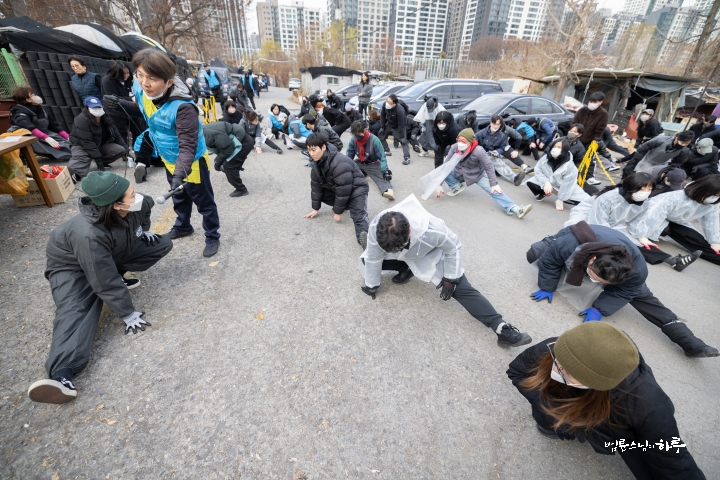
After warming up with some exercises, Sunim, as the chairman of JTS, gave the opening remarks.
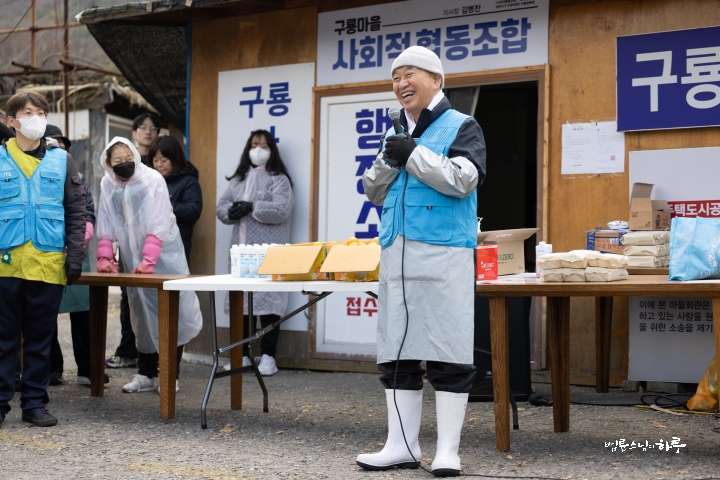
“Yes.”

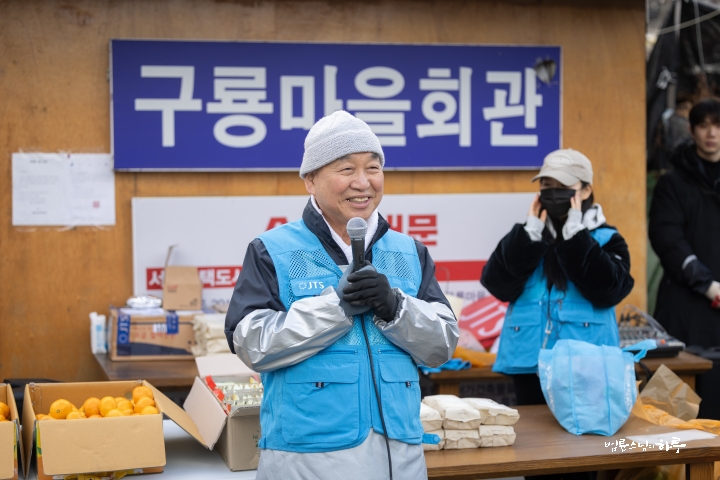
“No.”
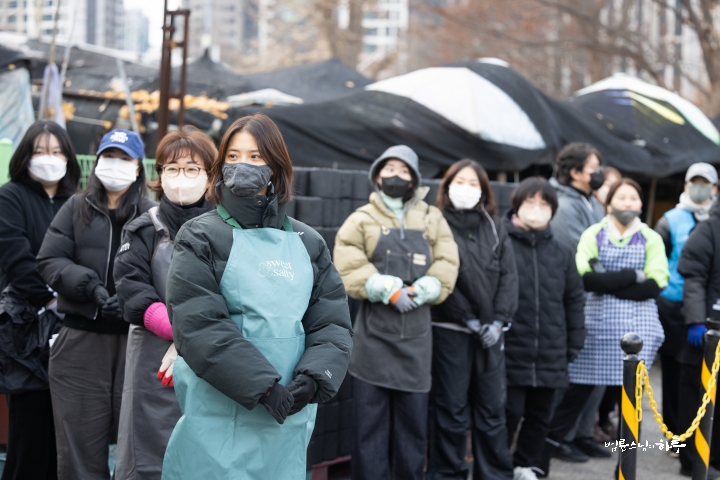
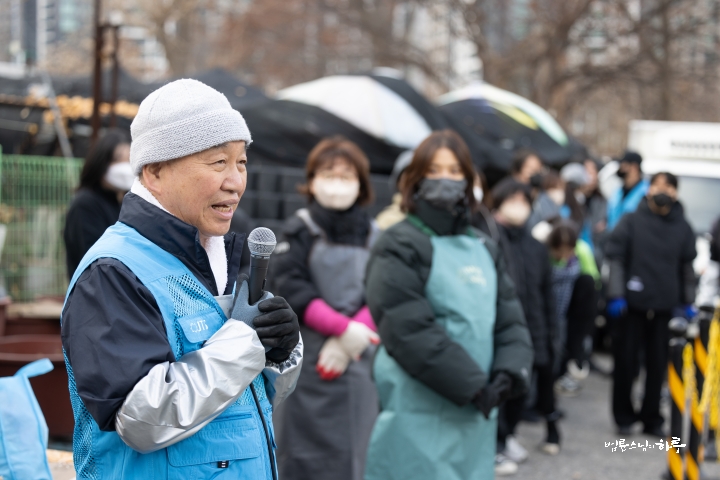
Coal Briquette Volunteering That Benefits Both You and Me
When we volunteer like this, we feel good first. Since we use our bodies enough to sweat, it’s also good exercise. Second, it’s good to do it together. When we go to lecture halls, Sunim is on the podium, you are in the audience seats, and we are divided between the stage and below. However, the experience of working together side by side, sweating and getting coal dust on ourselves, creates an entirely different dimension of intimacy. When we struggle together, laugh together, and work together, we become much closer. And it’s not just good for us. The local residents can stay warm throughout the winter with enough coal briquettes, so it’s good for everyone. Something good for both you and me – that’s exactly what our volunteering is today.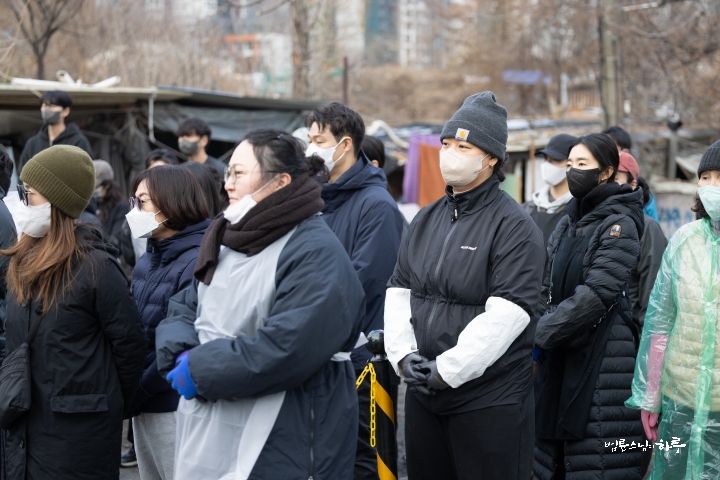
Everyone shouted “Let’s go!” together and began climbing the narrow alleyways to deliver coal briquettes. A local resident from Guryong Village came out to show which houses would receive coal briquettes today. Sunim headed to the house at the very top, the farthest location.
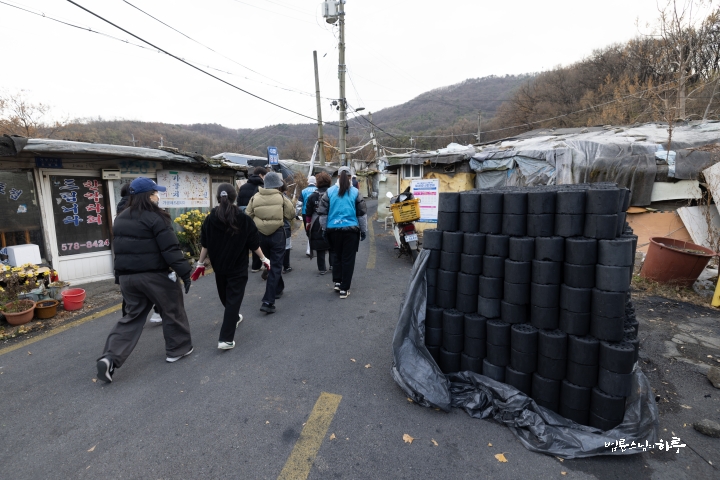
Today, the Gilbeot group needs to deliver a total of 3,400 coal briquettes. JTS and the Gilbeot group selected 17 households including those with disabled members, severely ill patients, and veterans, and decided to deliver 200 briquettes to each household. While everyone faces difficulties, these are people living in particularly challenging circumstances.
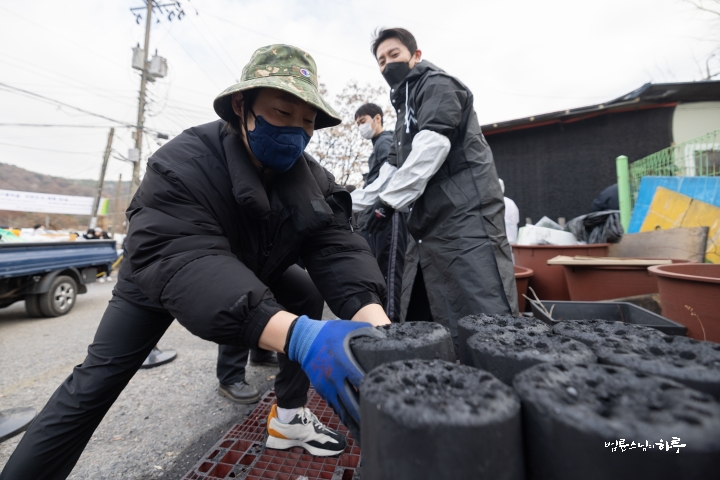
Yesterday, JTS volunteers had already unloaded coal briquettes on roads accessible by vehicles. However, since cars cannot enter the narrow alleys, Gilbeot volunteers had to line up along each alley and pass the coal briquettes from hand to hand.
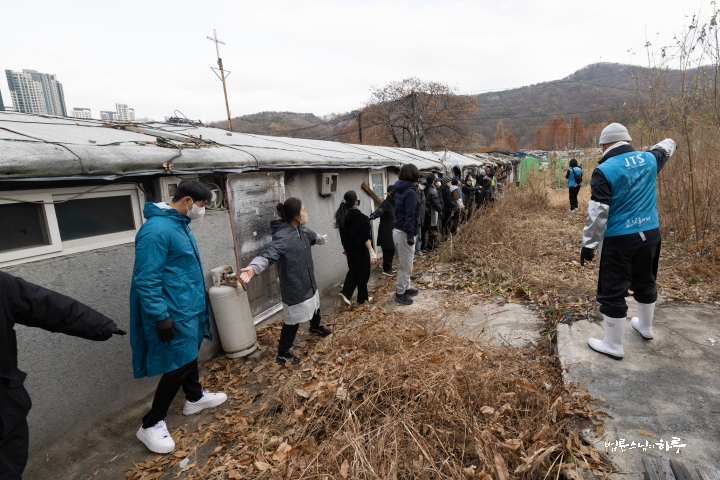
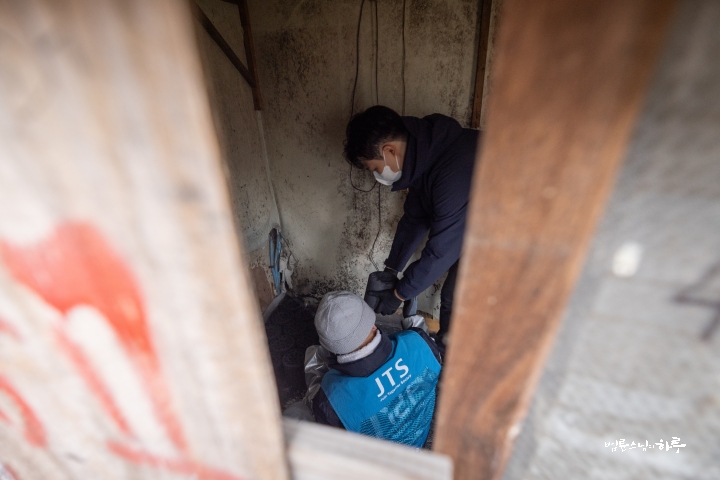
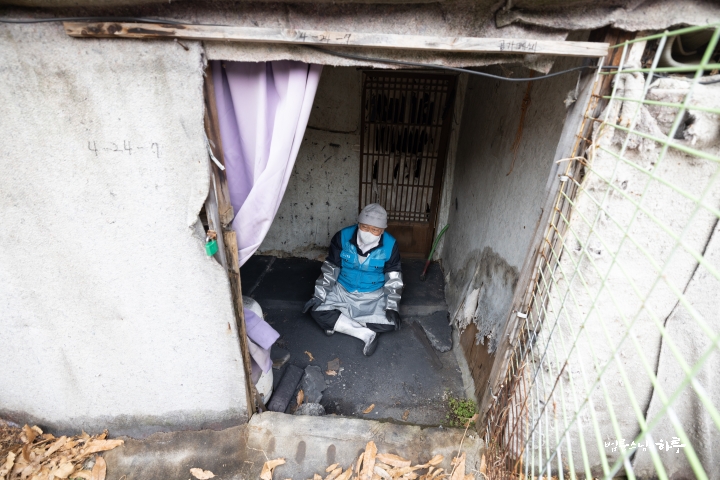
Following Sunim’s guidance, a long line was formed. They stacked 200 coal briquettes at each house. This year too, Sunim took charge of going into houses and stacking the coal briquettes. He was the only one with experience in stacking coal briquettes.
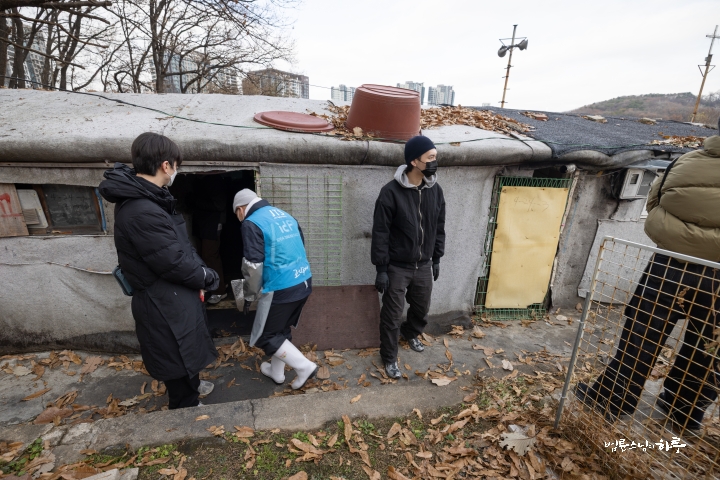
Sunim first leveled the floor and then stacked the coal briquettes neatly.
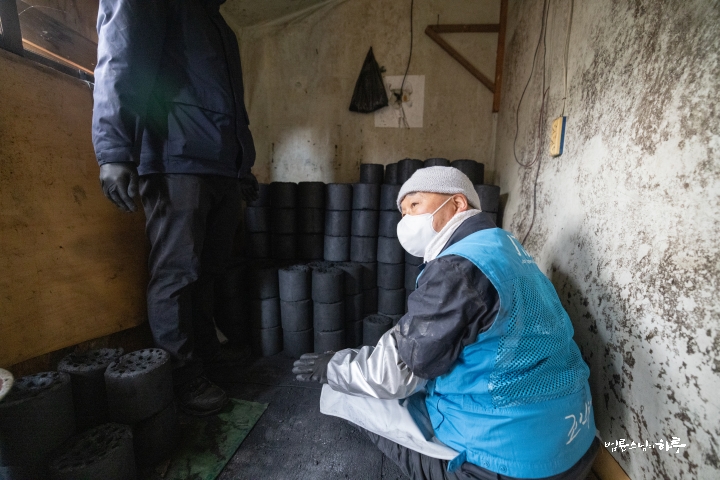
Once a certain amount of coal briquettes were stacked, Sunim entrusted the stacking to a volunteer.
“Now you just need to stack them neatly on top of this. Try it.”Once the coal briquette stacking became stable, Sunim went outside to oversee the whole operation.
“I shouldn’t see any idle hands. Come on, quickly!” (laughter)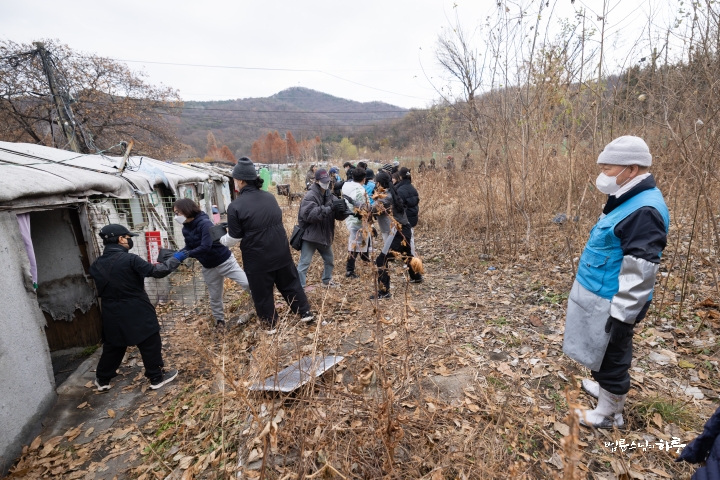
They counted each coal briquette as they carried them one by one.
“1, 2, 3…… 198, 199”
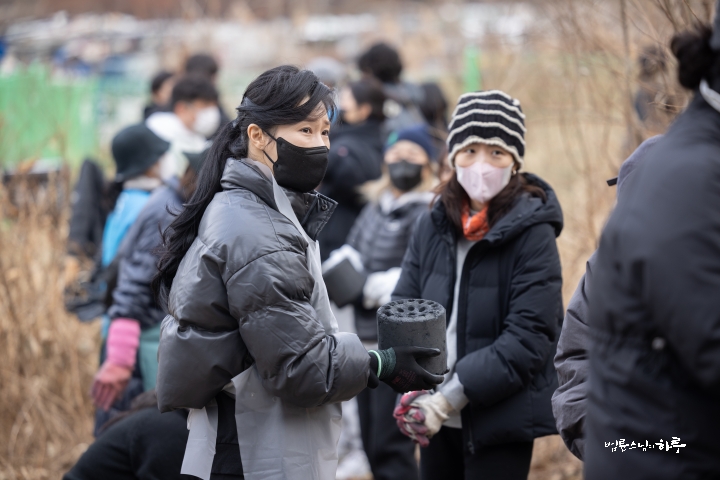
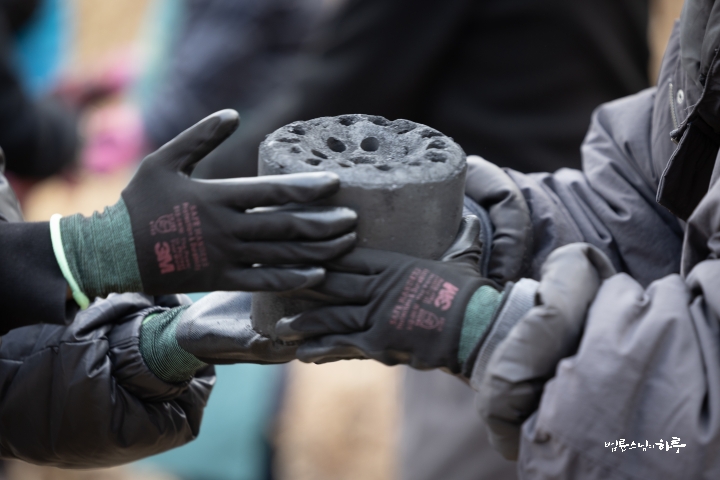
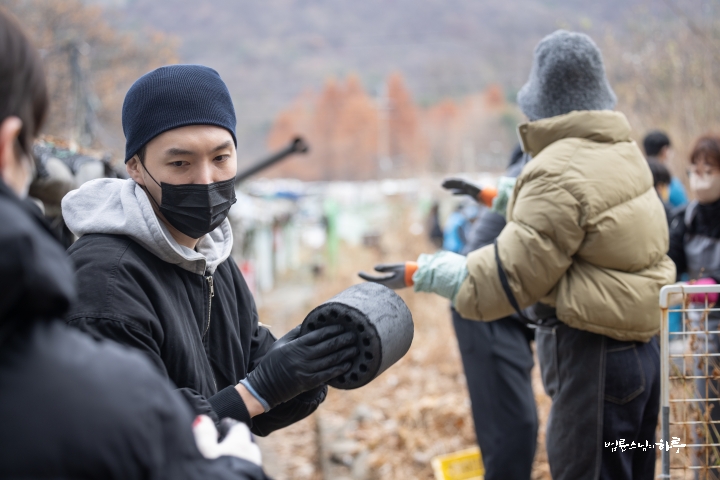
Actors Jo In-sung, Han Hyo-joo, and Im Se-mi also stood in line at various points, diligently carrying coal briquettes alongside their colleagues.

The clean gloves and sleeves quickly turned black. The masks also became darkened as if covered in soot.
“Last 200 briquettes coming through!”
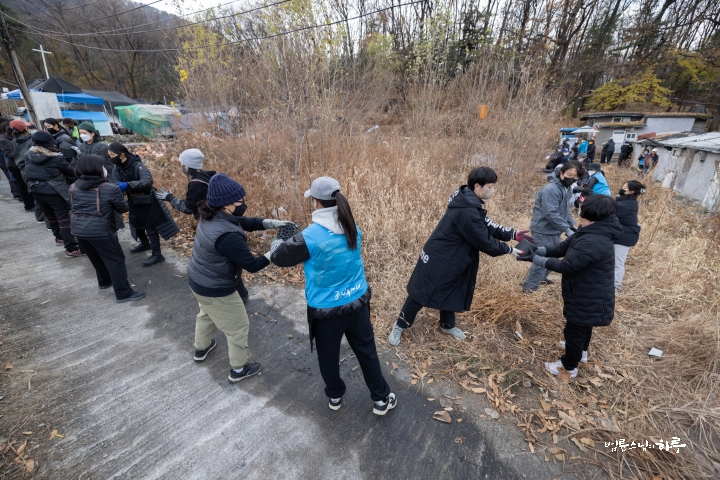
As the last coal briquette departed, everyone cheered with joy.
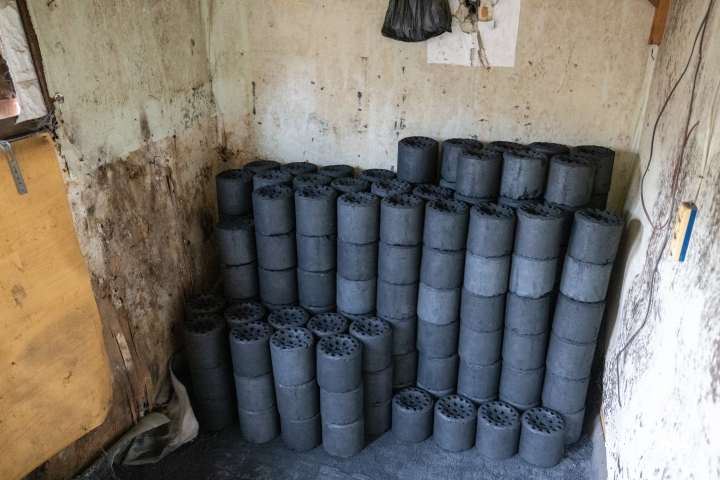
This time, coal briquettes were stacked outdoors relatively close to the house. Since multiple households share these briquettes, 600 pieces were to be stacked here.
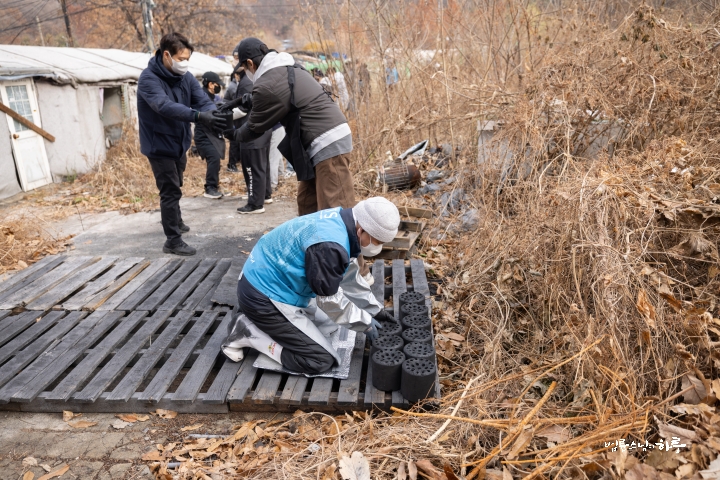
While Sunim was carefully stacking the coal briquettes one by one, the homeowner who had been silently watching made a request.
“Sunim, please stack the briquettes as high as possible. We need some space on the side to store other items.”
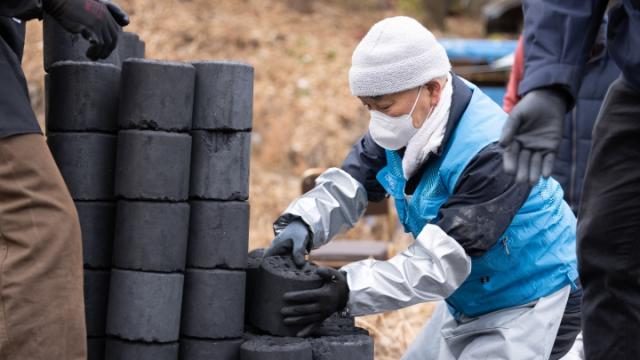
It seemed that support items from other organizations besides JTS would also need to be stored here. Sunim skillfully stacked the coal briquettes as high as possible.
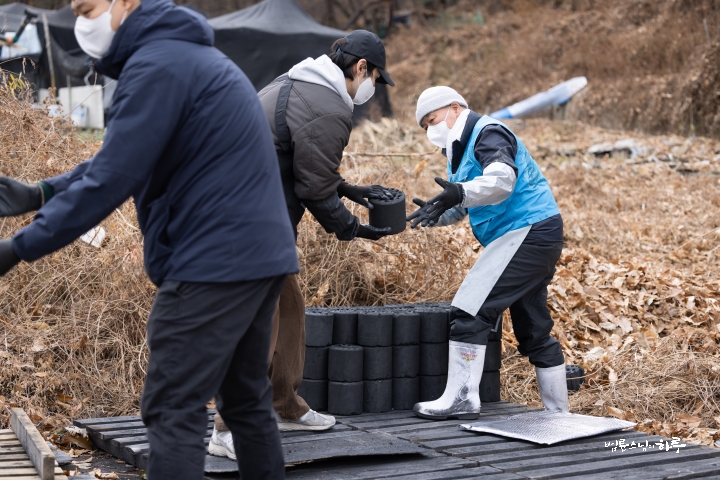
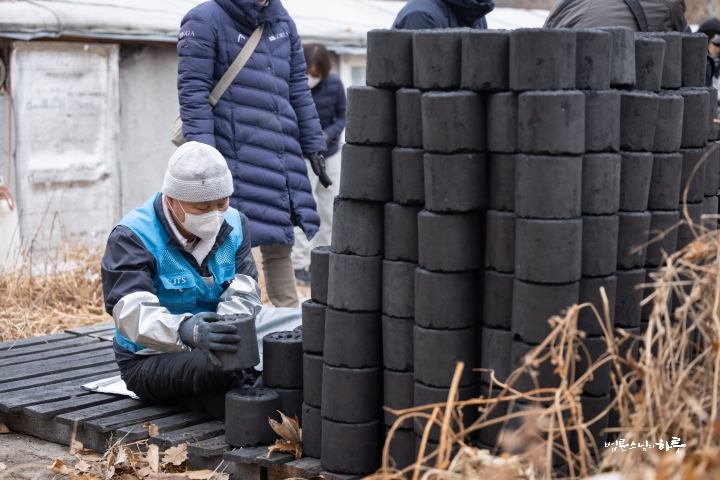
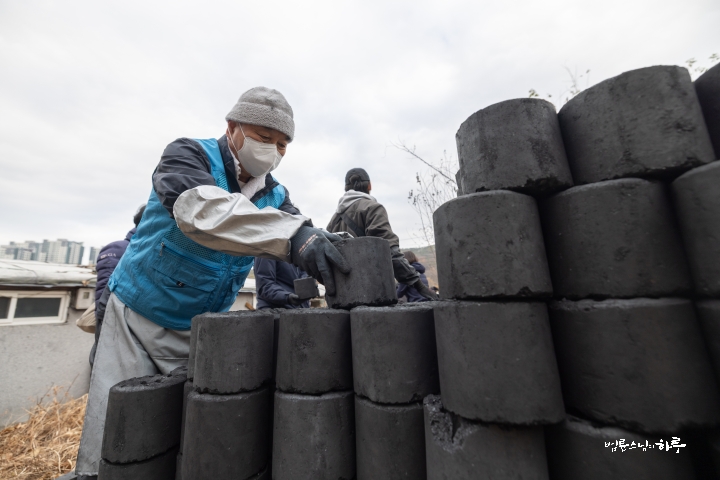
After completing the delivery of 200 briquettes, the team continued without delay to the next house, and then the next. As they repeated the same movements, some people groaned from back pain.
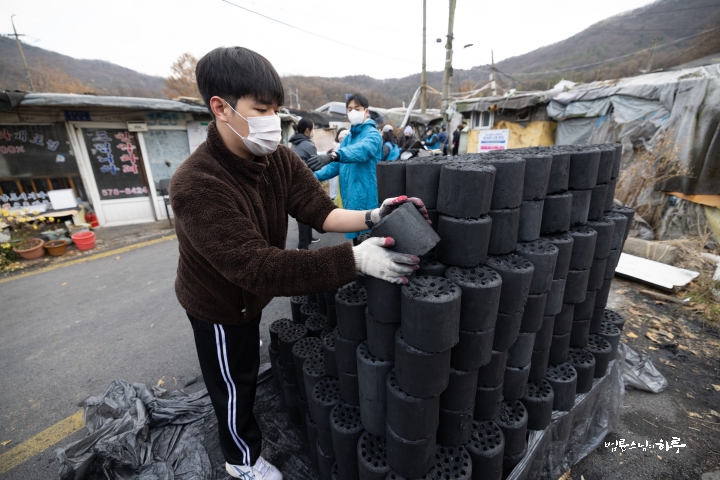
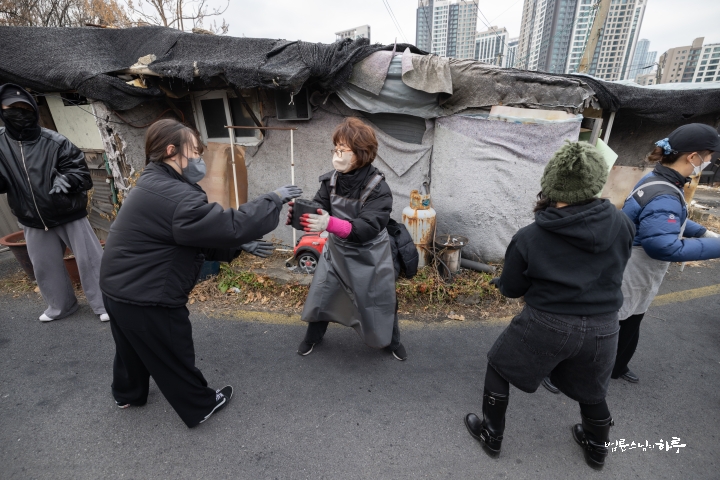
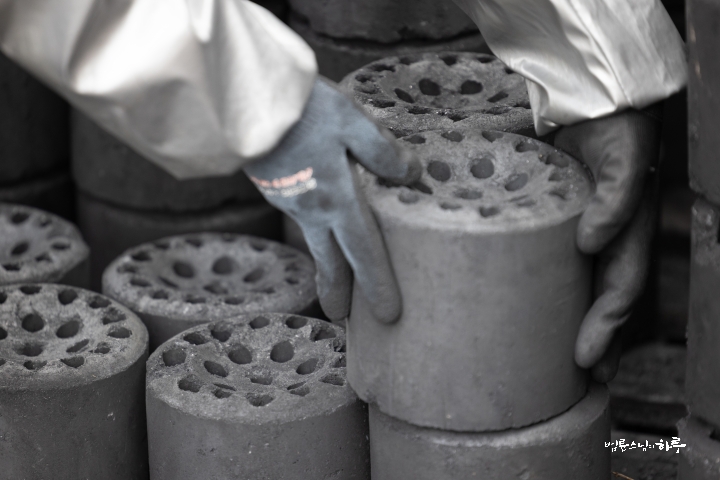
They diligently carried the coal briquettes, occasionally switching directions. Beads of sweat formed on their foreheads.

Since the delivery routes were not as long as in previous years, the delivery of 3,400 briquettes was completed in just an hour and a half.
“This is the last briquette. We’re done!”
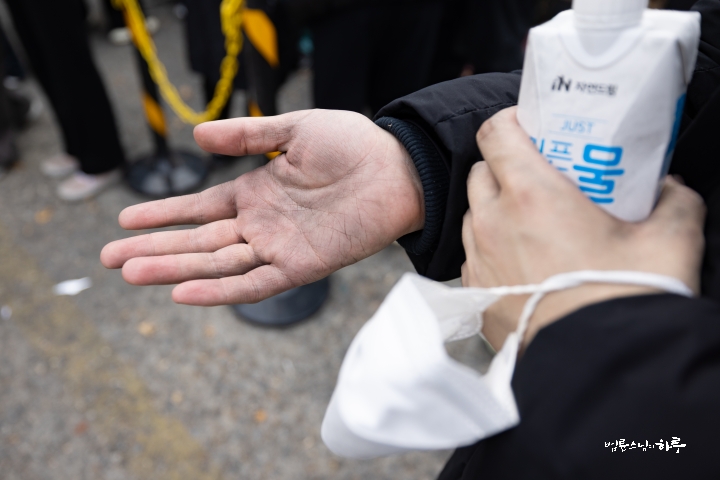
Though their bodies ached, they felt proud walking out of the alley empty-handed. When they removed their gloves, black coal dust was visible.
With coal dust still on their faces, everyone took a commemorative photo together.
“Gilbeot, fighting!”
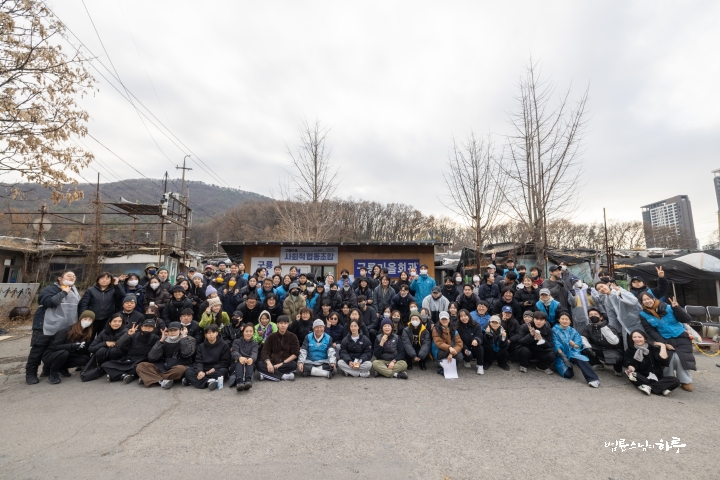
The Gilbeot group participants held a mindful sharing session on site. After greeting the actors, Sunim immediately got in the car and headed to the Jungto Social and Cultural Center.
“I’ll go ahead. Please come for dinner after your mindful sharing.”
In the basement cafeteria of the Jungto Social and Cultural Center, curry and kimchi lovingly prepared by JTS volunteers were laid out.

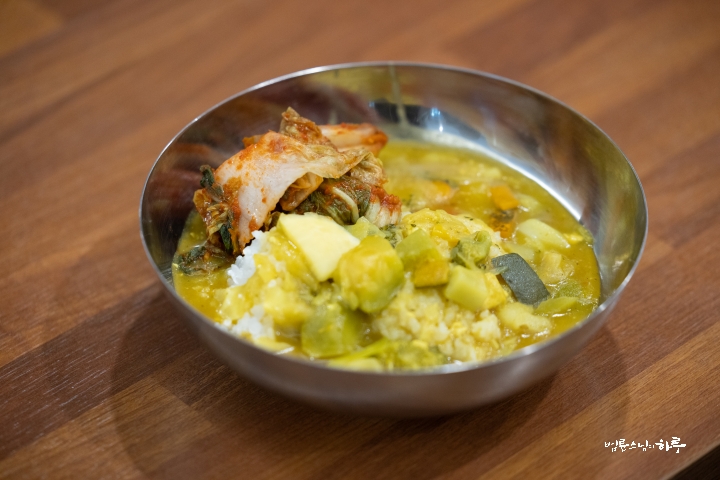
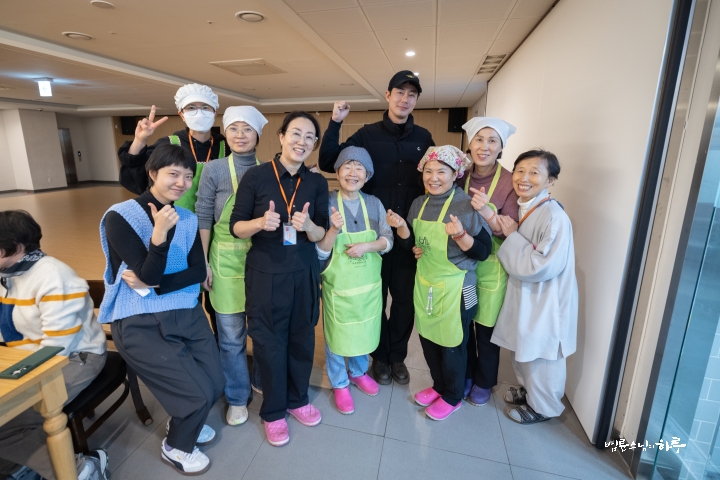
After warming up and enjoying a delicious meal, everyone gathered again in the main hall. Starting at 5:30 PM, participants had the opportunity to ask questions and engage in dialogue with Sunim about life’s concerns.
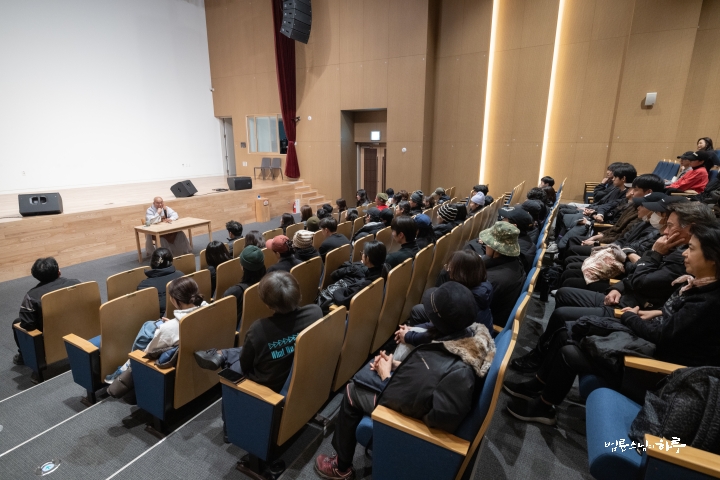
First, Sunim encouraged the Gilbeot gathering participants who had worked hard.

“Yes!”
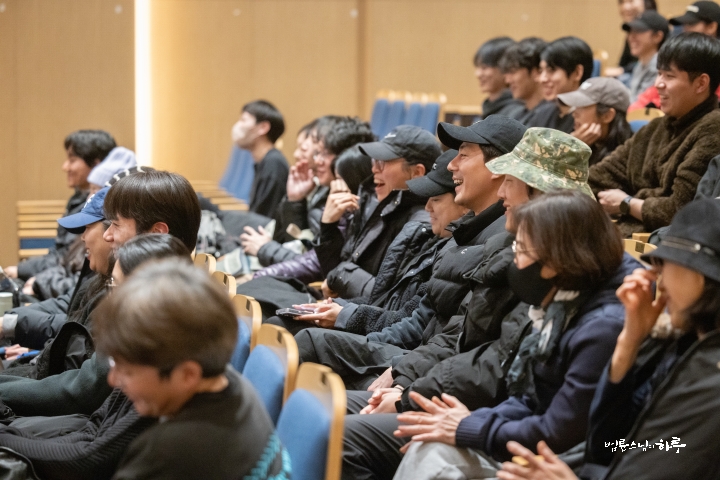
Gilbeot representative, writer Noh Hee-kyung, then gave her greeting.
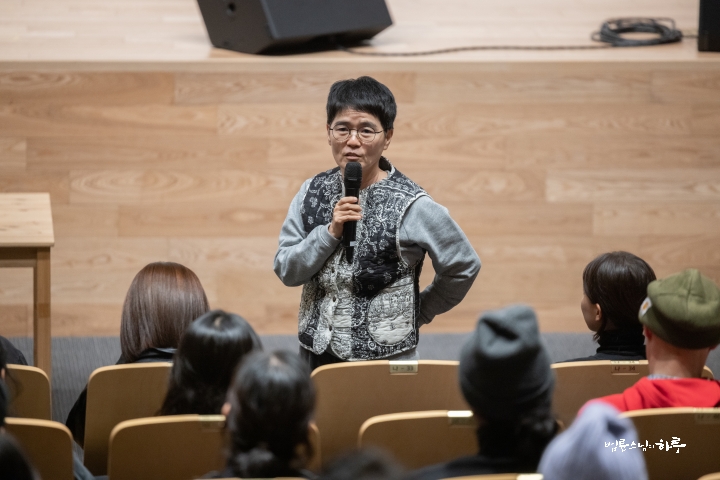
“I came just to say hello without doing any work. I’ve been volunteering for 23 years, and this is the first time I’ve missed it. So it felt really strange. Honestly, I thought I’d feel good about it, but I’ve been feeling empty for the past few days, thinking, ‘What if I can’t go anymore?’ I also felt a bit disappointed that I couldn’t experience the fun of working together. I was worried watching the cloudy weather. Looking outside from inside, it looked so cold without the sun. I thought, ‘It must be freezing. What should we do?’ But I’m glad to hear it wasn’t too cold. I’m really grateful to be able to see your faces like this.”
Anyone could then raise their hand and engage in dialogue with Sunim.

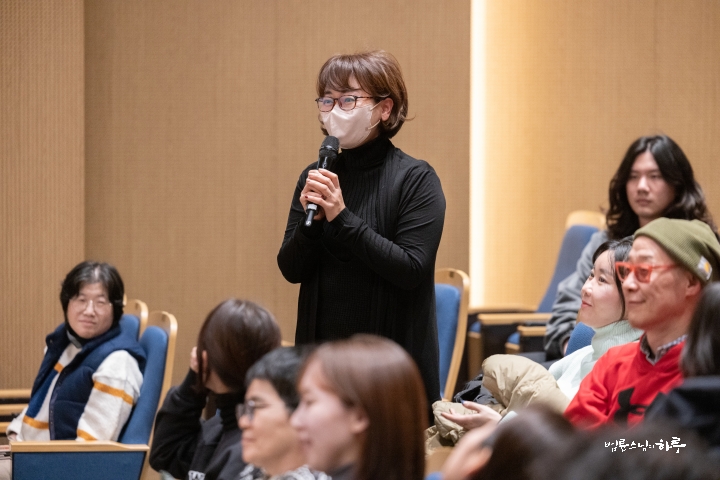
“While delivering coal briquettes, I felt like we were working in perfect harmony. It was hard, but strangely I could concentrate well… My mind became calm, almost like meditation. That made the volunteer work even more enjoyable.”
Some shared their impressions of delivering coal briquettes, while others talked about recent difficulties and shared their concerns. During the hour, six people asked Sunim questions. One of them sought Sunim’s advice on how to manage their emotions and respond when faced with their mother’s distorted memories.
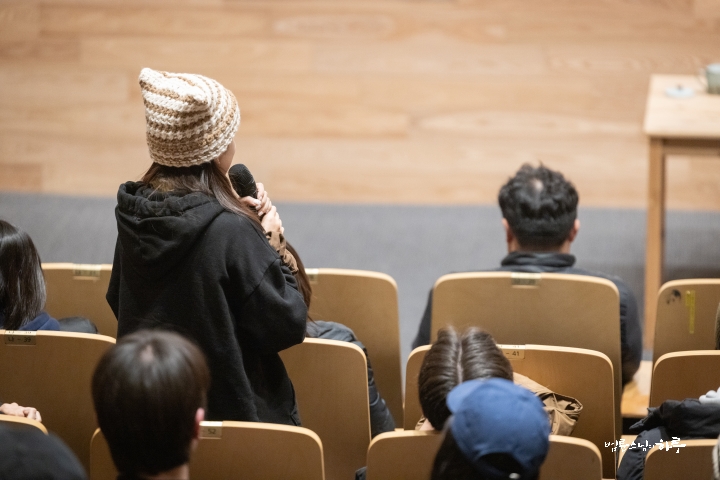
My Mother with Dementia Says ‘I Never Hit You.’ How Should I Respond?
“I grew up in a devout Christian family, but I was severely beaten by my mother as a child. I have many terrifying memories, but I’ve tried to understand her difficult life and have blamed myself for being too sensitive. Even as an adult, the weight of those memories remains as a deep wound that crushes me even on stage. However, a few years ago, my mother began showing symptoms of mild dementia, and every time she sees me, she repeatedly says, ‘I never hit you. Right?’ It makes me feel confused, as if my memories of childhood abuse are wrong, and I’m struggling with the fact that I still have unresolved resentment. When my friend heard my story, she said, ‘That was severe child abuse,’ but I find it painful both to label my mother that way and to deny the truth. The next time my mother says, ‘I never hit you,’ should I honestly tell her the truth? Or should I say ‘That’s right’ to make her feel comfortable? I would like to ask Sunim which attitude is right between these two conflicts.”


“Thank you.”


“I understand well.”

Questions continued to follow.

While delivering coal briquettes, I heard that many residents have moved away. I’m curious if the coal briquette support for Guryong Village is actually reaching those who need help.
How can I reduce the awkwardness and distance I feel in Gilbeot gatherings?
As I get older, I naturally drift apart from friends I was once close to, which makes me feel sad. How can I accept distancing relationships and find peace of mind?
I worked hard this year too, but none of my results passed. So I wonder what I did… I feel empty. How can I encourage myself and find meaning in life?
My best friend committed a crime and went to prison. How should I balance my desire to help my friend with social responsibility?

After answering all the questions, the conversation ended at 6:30 PM. After taking a group photo together, Sunim left the main hall.

He immediately packed his belongings and departed from Seoul for Dubuk Jungto Retreat Center. The car that left at 7 PM traveled on the highway for 3 hours and 30 minutes, arriving at Dubuk Jungto Retreat Center at 10:30 PM.
Tomorrow, Sunim will have an online meeting with the Jungto Society Standing 1000-Day Preparation Committee early in the morning, then attend the National Dharma Teachers’ Training to give an opening Dharma talk. In the afternoon, he will visit Cheollyongsa Temple with guests for a tour, and then return to the National Dharma Teachers’ Training in the afternoon for a Dharma Q&A and closing Dharma talk.