My Child Spends All Day Watching YouTube and Playing Games. Is This Okay?
Nov 27, 2025 - Commemorating the 60th Anniversary of Korea-Japan Diplomatic Relations, Dharma Q&A in Tokyo, Japan
Hello. Today, Sunim is in Tokyo, Japan, meeting with senior Japanese politicians for peace on the Korean Peninsula and giving a Dharma Q&A for Japanese citizens and Korean residents.
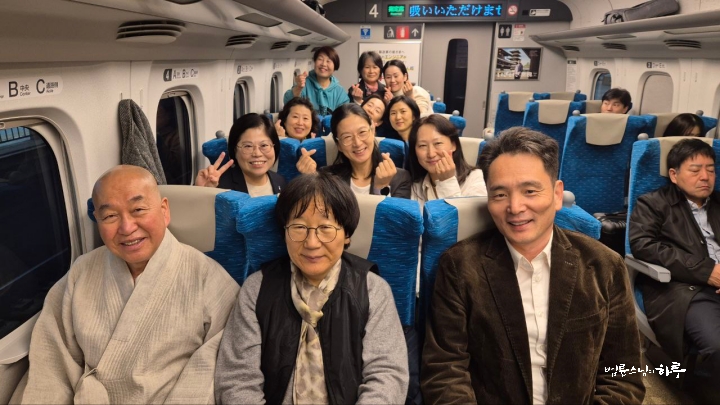
After completing his morning practice and meditation, Sunim left his accommodation at 5:30 AM and headed to Osaka Station to travel to Tokyo. He boarded the Shinkansen train departing from Osaka Station at 6:08 AM bound for Tokyo. The volunteers preparing for the lecture also traveled with Sunim on the train.
After traveling for about 2 hours and 30 minutes, they arrived at Tokyo Station at 8:34 AM and immediately headed to the meeting location. At the meeting venue, Sunim met with Japanese government officials and discussed various ways to normalize relations between North Korea and Japan.
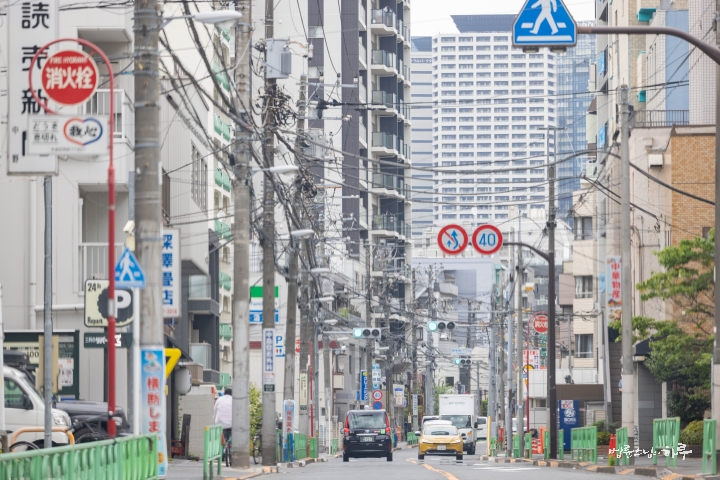
After finishing the meeting at 10:30 AM, they moved to the next meeting location. From 11 AM, Sunim met with senior Japanese politicians and had extensive discussions about how Korea and Japan could cooperate in the era of U.S.-China hegemonic competition. He also emphasized that normalizing relations between North Korea and the United States, and between North Korea and Japan, is crucial for stability in the Northeast Asian region. After the meeting, Sunim headed to the lecture hall for the Japanese-interpreted Dharma Q&A.
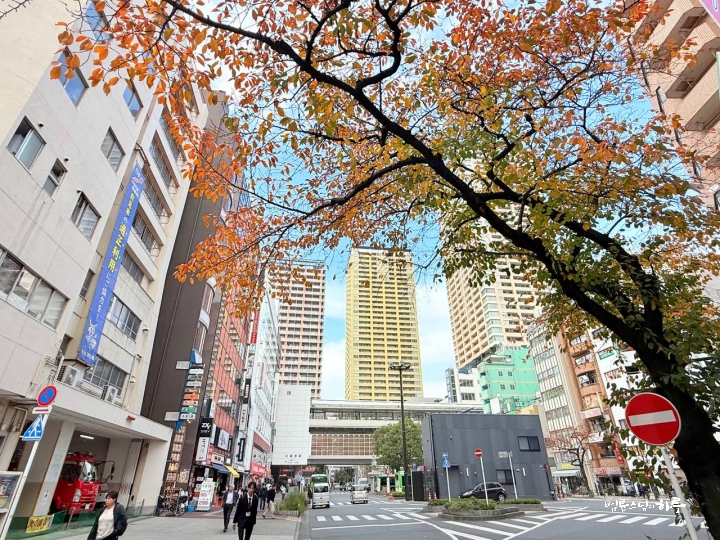
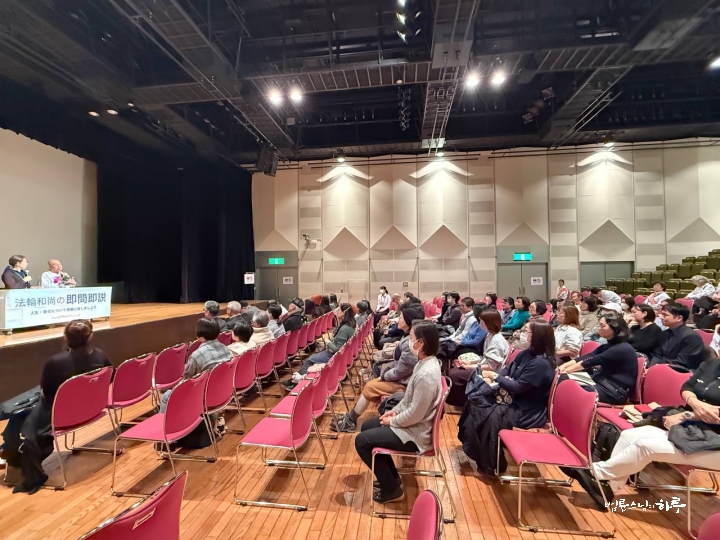
Today’s lecture is being held at Nippori Sunny Hall. It is a multipurpose cultural space located about a 2-minute walk from Tokyo’s Nippori Station. Since the Nippori area itself is a densely populated Korean residential area with many Korean restaurants and shops, it was easy to promote the lecture.
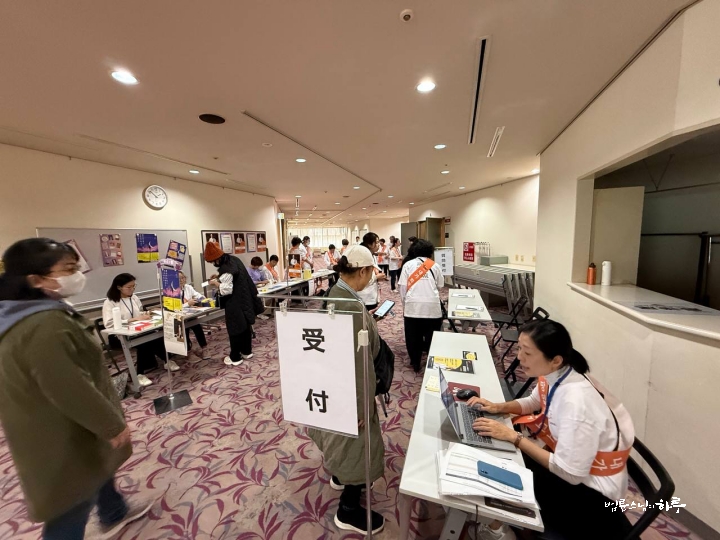
Many volunteers were busy preparing for the lecture at the venue. After warmly greeting the volunteers, Sunim headed to the waiting room. Before starting the lecture, he had tea with Mr. Hiroshi Niwano, Chairman of the Niwano Peace Foundation, and Venerable Okochi. After exchanging greetings, Sunim presented them with newly harvested rice grown at Dubuk Jungto Retreat Center.
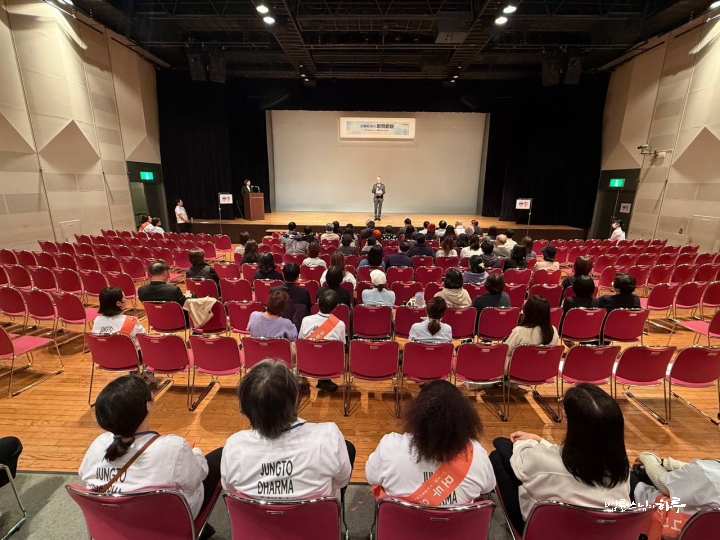
At 2 PM, before the lecture, a commemorative event for the 60th anniversary of Korea-Japan diplomatic relations was held. First, Sunim gave a commemorative speech marking the 60th anniversary of Korea-Japan diplomatic relations.
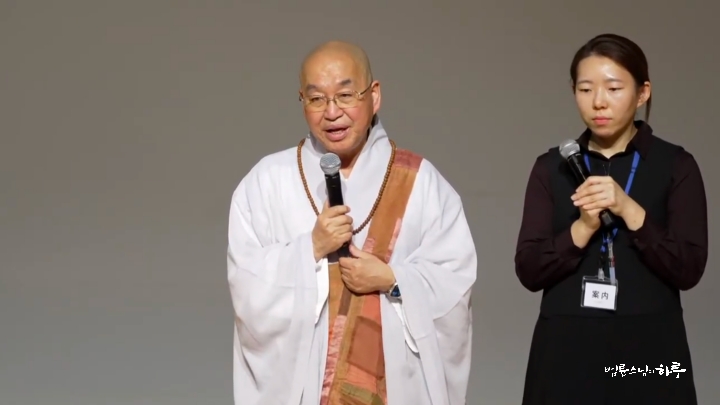
60th Anniversary of Korea-Japan Diplomatic Relations: Moving Forward Together Beyond the Past
Korea and Japan both have new governments this year. In the past, given the nature of the two governments, there would have been a risk of intensified conflicts between the nations. However, amid changes in the international situation, it is truly fortunate that both new governments are showing relatively friendly attitudes toward Korea-Japan relations. Therefore, I believe that the relationship between the two countries will develop stably in the future. When Korea-Japan relations deteriorate, many people who have worked to improve them inevitably face difficulties. The most affected would be those who have married between Korea and Japan. Next would be those doing business in Korea-Japan relations. We must work together to ensure that such people do not face difficulties in the future. Today, before our dialogue, we have arranged a brief congratulatory session to celebrate the 60th anniversary of the normalization of Korea-Japan relations. We have three speakers here to give congratulatory remarks: Chairman of the Niwano Peace Foundation, Venerable Okochi, and a director from Asuka Credit Union. Please give a big round of applause to welcome these three distinguished guests who have taken time from their busy schedules to join us. Let us all work together so that Korea-Japan relations can develop further. Thank you.”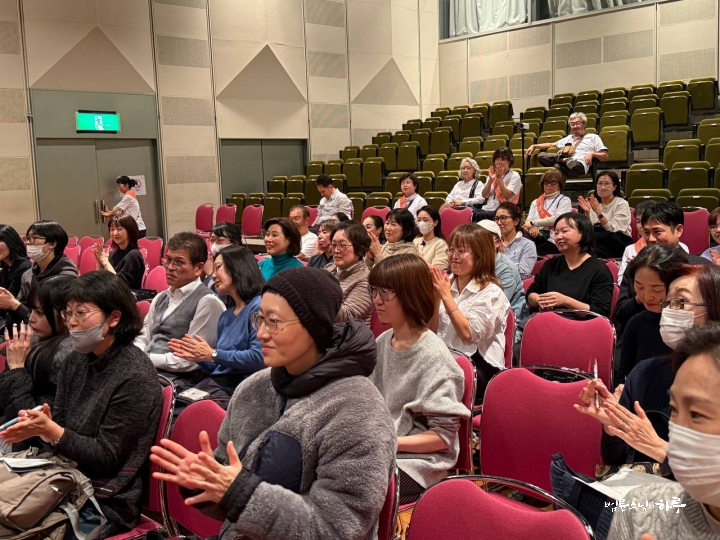
Next, Director Yoon Geon-in of Asuka Credit Union, who has supported Venerable Pomnyun Sunim’s activities in various ways since 2014, gave a congratulatory speech.
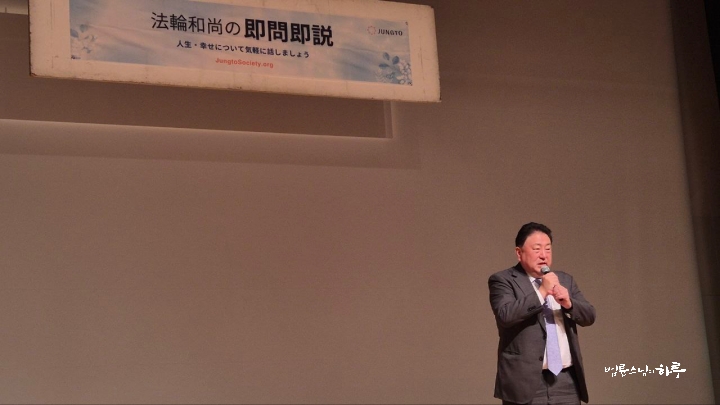
“I am neither a Buddhist nor someone engaged in any particular religious activities. In 2014, Jungto Society approached us asking if they could rent our venue to hold a special lecture by Venerable Pomnyun Sunim. Through this connection, I met Sunim for the first time, and the lecture was held in our Asuka Credit Union auditorium. That was when I first encountered ‘Dharma Q&A.’ I was truly amazed. Sunim’s words were so comfortable and humorous, and above all, they were easy to understand and clear. Since then, I have attended several of Sunim’s lectures and read many of his books, continuing this connection. It seems like it’s already been over 10 years. Although I work in a financial institution, Sunim’s words and writings have always resonated deeply with me. This year is particularly meaningful as it marks the 60th anniversary of the normalization of diplomatic relations between Korea and Japan, as well as the 80th anniversary of the end of World War II. I believe that at this time, we must choose the path of peace to ensure that war never happens again. I am deeply impressed that Venerable Pomnyun Sunim is not only concerned with everyday life problems but also actively engaged in international issues and consistently working for peace. I sincerely hope that these activities will continue to expand and become an opportunity to give hope to all of us.”
Next, Venerable Okochi, a member of INEB (International Network of Engaged Buddhists), gave a congratulatory speech.
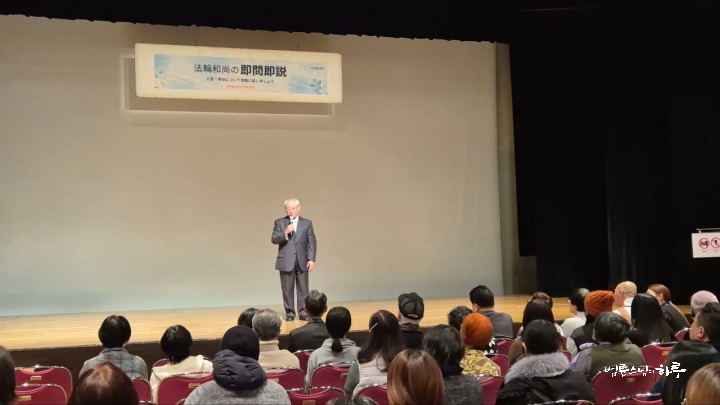
“Since around 1980, when the Indochina refugee crisis occurred, I have participated in international cooperation and refugee relief activities as a Buddhist. Since then, through various connections, I have been involved in various activities with INEB. In Japan, Buddhism is often perceived as a religion centered on rituals such as funerals, but INEB actively engages in social issues based on Buddhist teachings. From this perspective, I think it is truly wonderful that Venerable Pomnyun Sunim practices activities that engage with society based on the fundamental values of humanity and life, regardless of religion. I hope we can continue practical activities together to improve Korea-Japan relations and create a more peaceful future.”
Next, Chairman Hiroshi Niwano of the Niwano Peace Foundation gave a congratulatory speech.
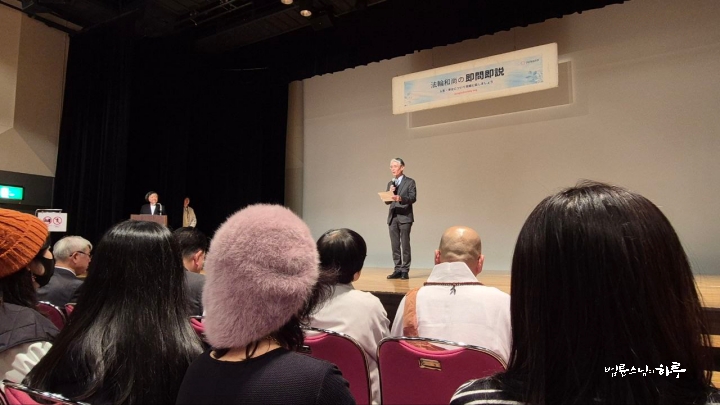
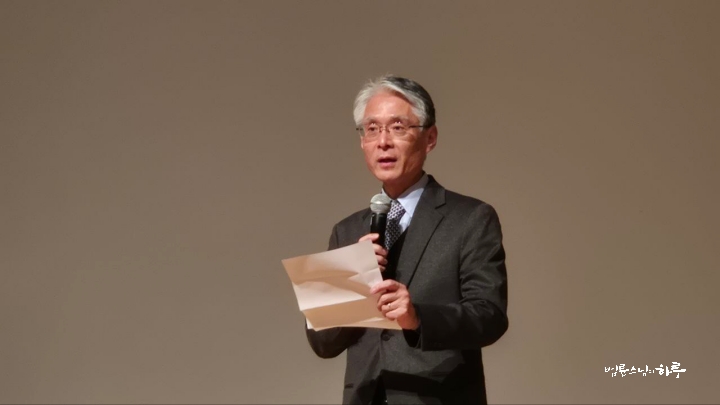
“I sincerely congratulate you on holding this Dharma assembly commemorating the 60th anniversary of the normalization of diplomatic relations between Korea and Japan. My connection with Venerable Pomnyun Sunim began when we awarded him the 37th Niwano Peace Prize in 2020. I am grateful that our connection with Venerable Pomnyun Sunim continues to this day. Venerable Pomnyun Sunim’s life is very modest and simple. He practices a self-sufficient life by farming himself. In fact, even today, Sunim gave us rice that he harvested this fall as a gift. Thank you. However, Sunim’s activities are very active and diverse, in contrast to his modest lifestyle. At that time, we couldn’t include all of Sunim’s activities in the reasons for awarding him the Peace Prize. Venerable Pomnyun Sunim lives modestly himself but seeks to realize abundance for society. That spirit is based on Buddhist compassion and wisdom, and we are deeply impressed. I hope that the friendly relations between Korea and Japan will continue to deepen and strengthen, and I sincerely wish for the health and peace of everyone here today.”
After the congratulatory speeches from the distinguished guests, the ‘Hansarang Korean Dance Research Institute’ presented a Korean dance performance as a celebratory performance. As the lively movements matched the rhythm of the traditional music, loud applause and cheers erupted.
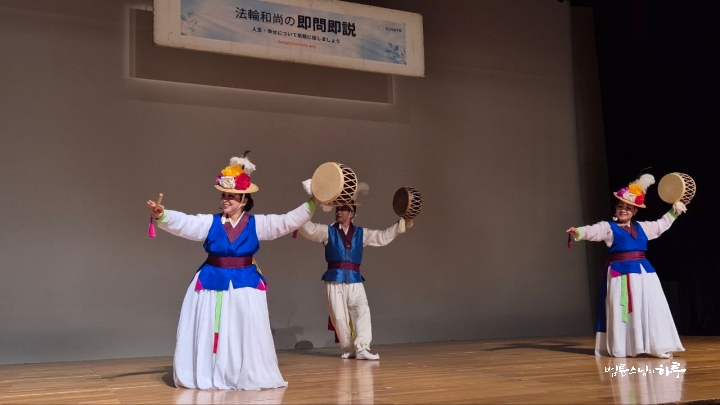
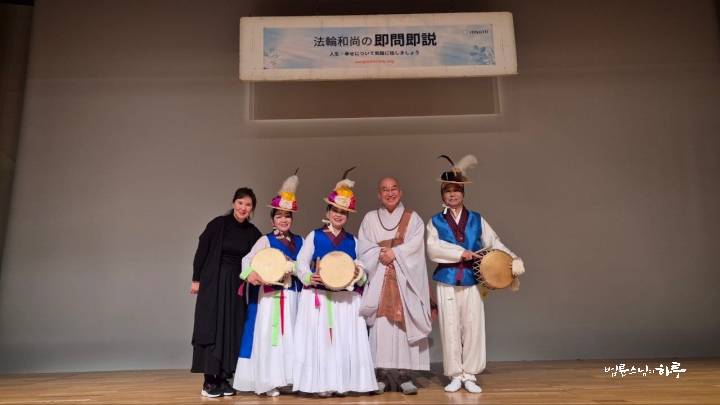
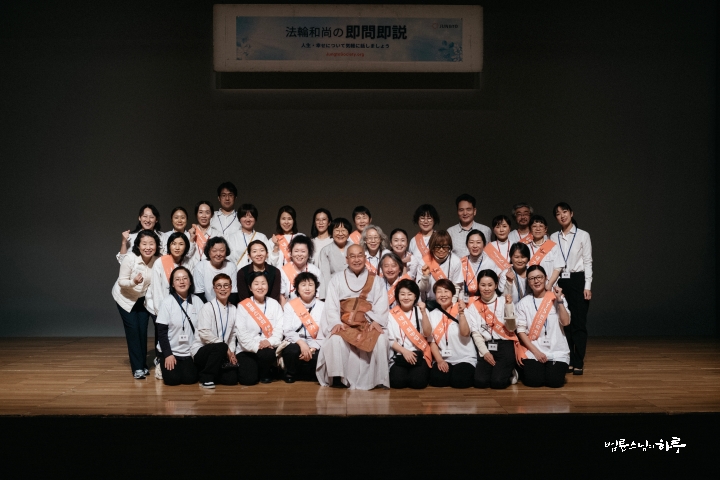
Sunim expressed his gratitude to the members of the ‘Hansarang Korean Dance Research Institute’ who performed as a talent donation and took a commemorative photo on stage.
After screening a video introducing Sunim with Japanese subtitles, Sunim walked onto the stage. Amid loud applause, Sunim and the interpreter sat side by side on stage. Sunim began the conversation with opening remarks.
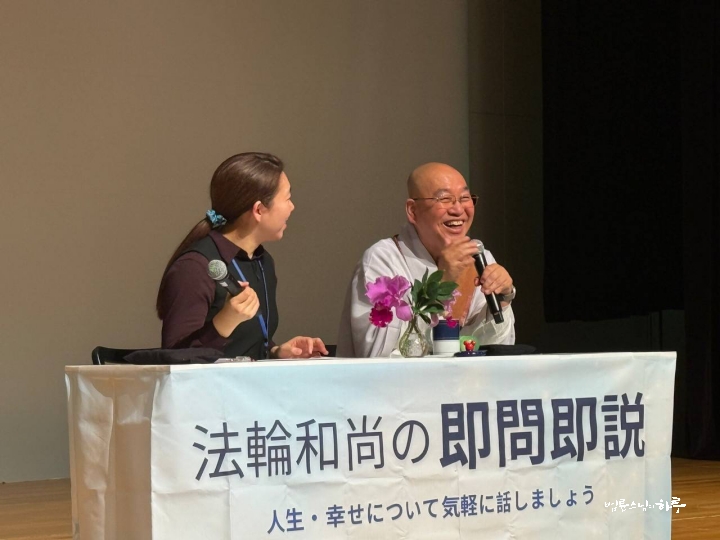
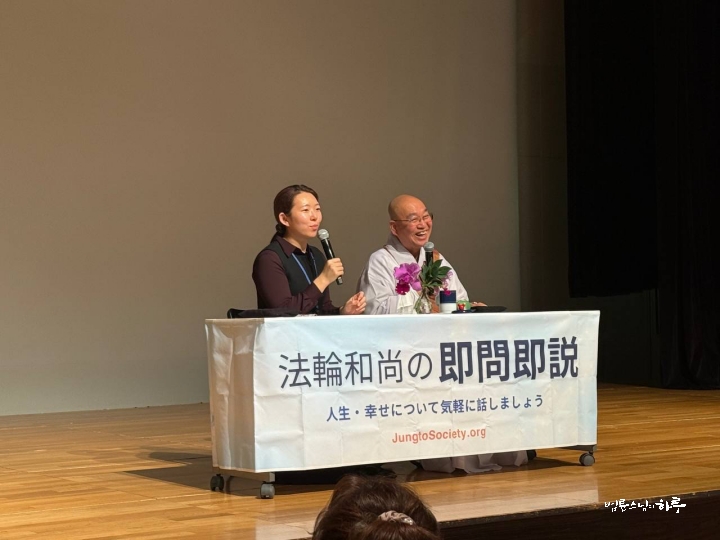
People then took turns raising their hands and asking Sunim questions. During the 90-minute session, six people raised their hands and had conversations with Sunim. One of them was concerned about their fourth-grade elementary school child who spends all day watching YouTube and playing games, and asked Sunim for advice on how to educate the child.

My Child Watches YouTube and Plays Games All Day. Is This Okay?
“I have one child in fourth grade elementary school. However, the child spends all day watching YouTube or playing games on their phone. I rarely discipline my child, but I ended up being strict with them while trying to get them to study. I think I may have been a bit harsh. In this case, I would appreciate it if you could teach me how to treat my child and how to educate them.”
“How can you ask a monk who doesn’t have children about that? (laughter) What did you like when you were young? Did you like watching TV? Did you like reading comic books?”“I liked watching TV.”
“Did your parents leave you alone? Or did they stop you?”“They stopped me.”
“When your parents told you to stop, did you stop? Or did you want to continue?”“I wanted to continue.”
“Thank you. I understand well.”
Questions continued.

I’m curious if meditation with eyes open is also Buddha’s teaching.
It’s difficult to care for my 97-year-old mother while working. Please tell me how to care for my mother without stress.
My Korean husband left home 3 years ago. How should I live on?
Should I live with my kids in my later years? Or is it better to live alone?
I work as a freelancer, but I keep thinking my client’s way of working is wrong. Should I accept the client’s ideas and work together?
There were more people who wanted to ask questions, but the promised 90 minutes were up. Regrettably, they promised to meet again during the next visit to Japan and ended the lecture with loud applause.
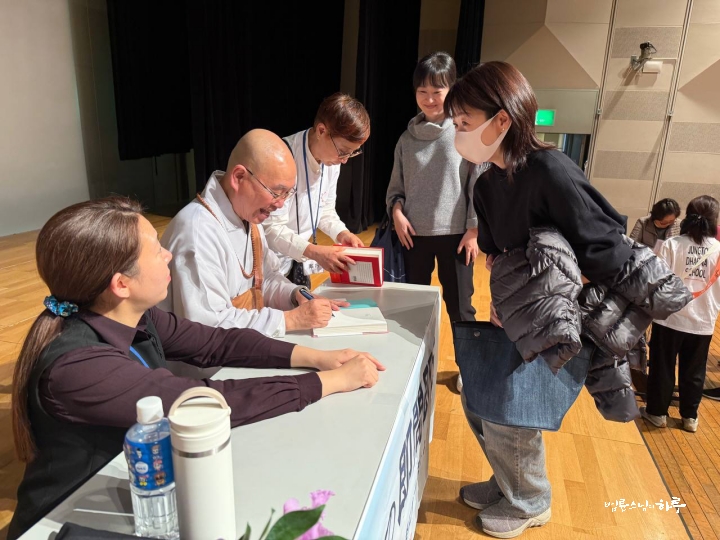
Immediately after, a book signing session was held on stage. Participants lined up, each holding a copy of Sunim’s book translated into Japanese. Sunim made eye contact and greeted each person.
After taking a commemorative photo with the volunteers who prepared the lecture, Sunim left the venue at 4 PM.
He immediately moved to the next meeting location. After conducting a meeting with relevant government officials for improving North Korea-Japan relations, he returned to the lecture hall at 6 PM.
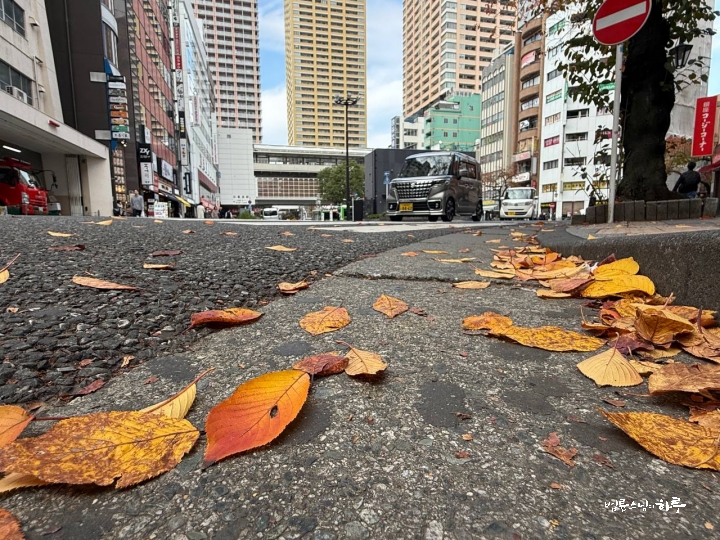
After having dinner with a lunch box in the waiting room, he headed to the lecture hall at 7 PM. In the evening, a Dharma Q&A lecture for Korean residents was held at Nippori Sunny Hall.
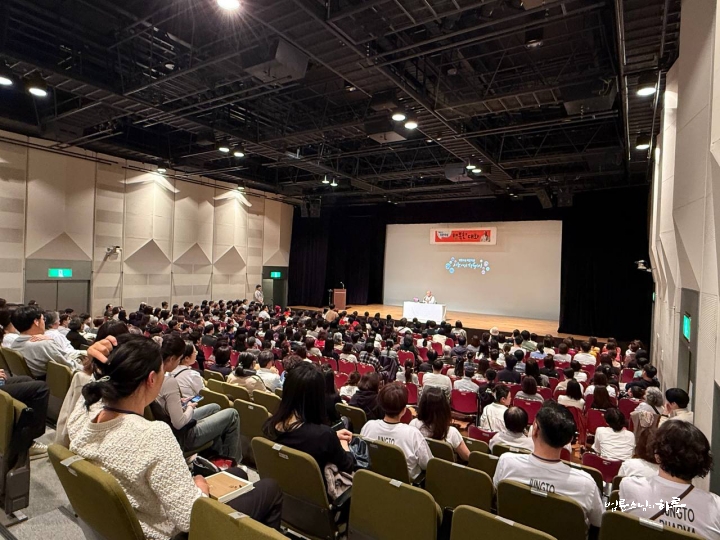
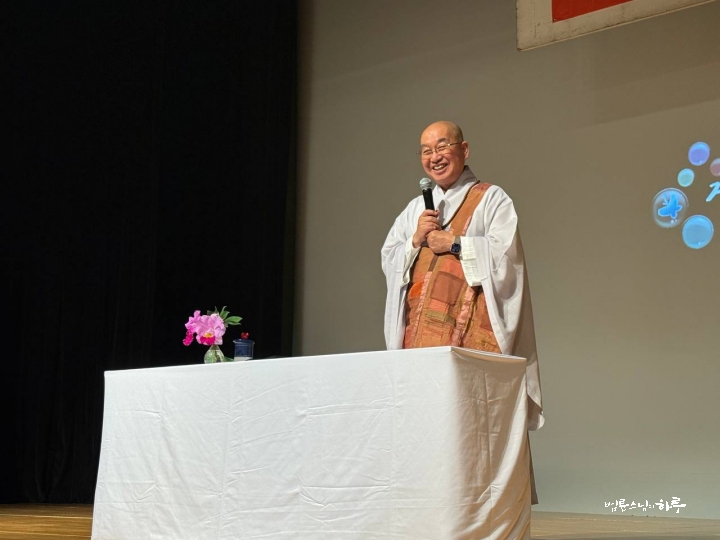
With about 350 Korean residents seated, a video introducing Sunim was screened at 7 PM. When the video ended, Sunim walked onto the stage. Loud applause and cheers poured out. Sunim greeted everyone with a bright smile.
How Can I Relieve the Mental Burden of Living Abroad for a Long Time?
If you’re concerned about your parents, send them pocket money and call them often. If you’re still worried, visiting a few times a year is better than going to your hometown and living together. When I say this, most people say, ‘Sunim says that because you don’t have children and live alone, but we can’t do that with families.’ However, when you actually go and stay with your parents, what I say is generally correct. So later they say, ‘Sunim was right.’ Then I jokingly say, ‘I only say what’s right.’ (laughter) Living alone is lonely, living with someone is annoying, when busy you want to rest, when resting you feel left behind – that’s our life, unable to do this or that. Whether it’s life stories or world stories, anything is fine. Let’s have a free conversation without topic restrictions.”Then, starting with those who had pre-registered questions, they took turns having conversations, and questions were also taken from the audience. During the two hours, ten people asked Sunim questions. One of them shared their homesickness after many years of living abroad.
18 Years of Living Abroad… I Keep Thinking of My Hometown
“I’ve been living away from my hometown Gyeongju for 18 years. When I lived in Gyeongju, I felt the city was too small and confining, so I went to university in Seoul with the single thought of escaping from there. After living in Seoul for a while, even Korea as a country started to feel too small and limiting for me, and I began wanting to go abroad. So I came to Japan, which was most familiar to me at the time. After actually living away from home for 18 years, my desire to return to my hometown grows stronger. Sunim also travels around the world. I would like to ask for your wisdom on how to manage homesickness.”
“If you want to go to your hometown, just go. If you like it here, live here. Why worry about such things? It’s the same as asking, ‘Living with someone is annoying, living alone is lonely, what should I do?’ It’s natural to be annoyed when living with someone because you clash, and it’s normal to be lonely when living alone. In such cases, I always say, ‘Do whatever you like.’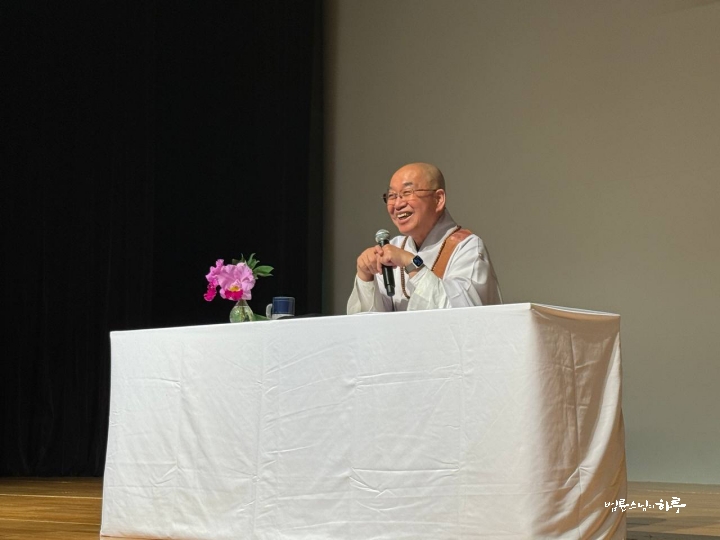
“I was foolish.”
“A home is a safe place that protects us. But at the same time, a home is also a shackle that binds us. It has both characteristics. To protect us, we need to level the ground, build walls, and cover the top. When the top is covered, the sides are blocked, and the bottom is sealed, isn’t that a prison? In other words, a home has the dual nature of being both a safe, protected place and a prison or shackle.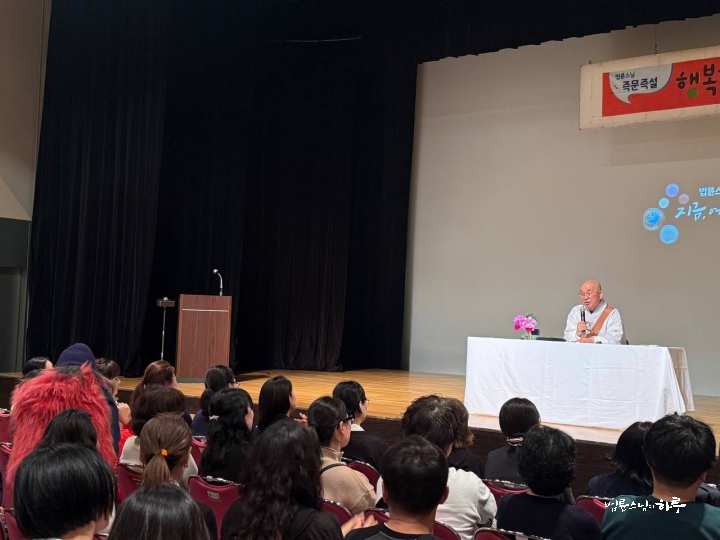
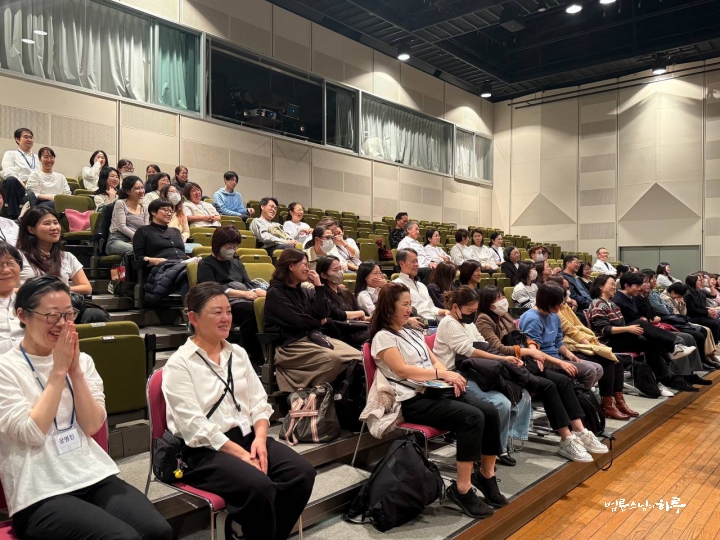
“Thank you for your clear words. I think I can sleep well tonight with a light heart and my legs stretched out comfortably.”
“For someone who has renounced worldly life, it’s good to be with someone when there are two people, and it’s good to be alone when alone. When with family, it’s nice to be with family after a long time, and when alone, it’s nice not to be bothered. When in Japan, Japan should be good, and when in Korea, Korea should be good. When in the countryside, the countryside is good, and when in the Himalayas, though inconvenient, the air and water are clean. When in the city, though the air is bad, water is bad, and there are many people, it’s convenient. Every place has this aspect and that aspect. But when you come here, you think of there, and when you go there, you think of here. When single, getting married is your wish, but after marriage, living alone looks enviable. When young, being old looks good, and when old, being young looks good again. When young, you always add years saying ‘I’m the older brother,’ ‘I’m the older sister,’ but what happens when you get old? You always subtract years. (Laughter)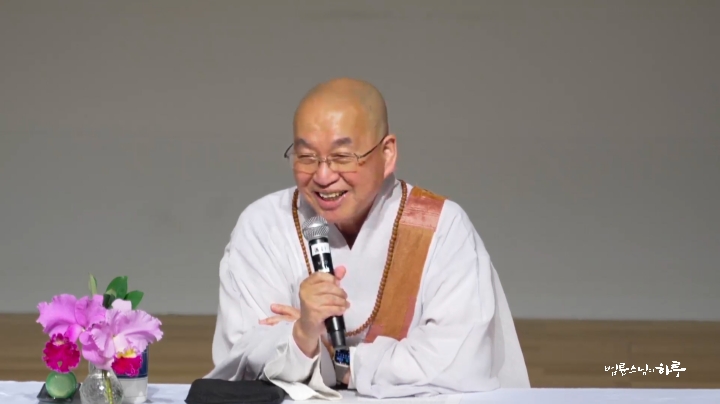
“Thank you. I understand well.”
Questions continued one after another.
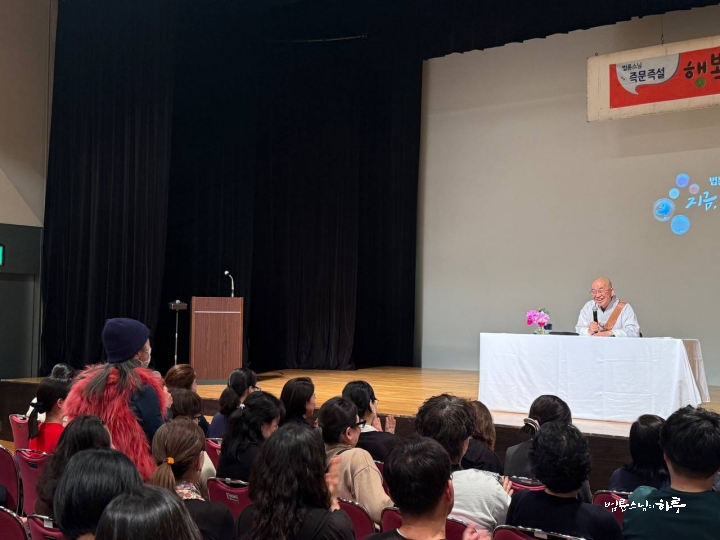
▪ As an IT developer, I’m afraid of losing my job as AI advances. What should I do?
▪ Are the good deeds I do really for others? Is an altruistic nature something we’re born with?
▪ I want to send my daughter to a Korean school rather than a Joseon school.
▪ How should I live with a husband who speaks harshly and tries to fix others?
▪ I’m suffering so much after breaking up with a good person.
▪ I want to apologize to my son for my foolish parenting. What should I say?
▪ I feel disappointed that my son thinks of himself as Japanese. Am I raising him right?
▪ My work at the nursing home is too hard due to staff shortage. How can I manage my mind?
▪ My child struggles when things don’t go as planned despite trying hard. What can I tell them?
After answering all the questions, Sunim gave closing remarks.
“Was it interesting?”“Yes!”
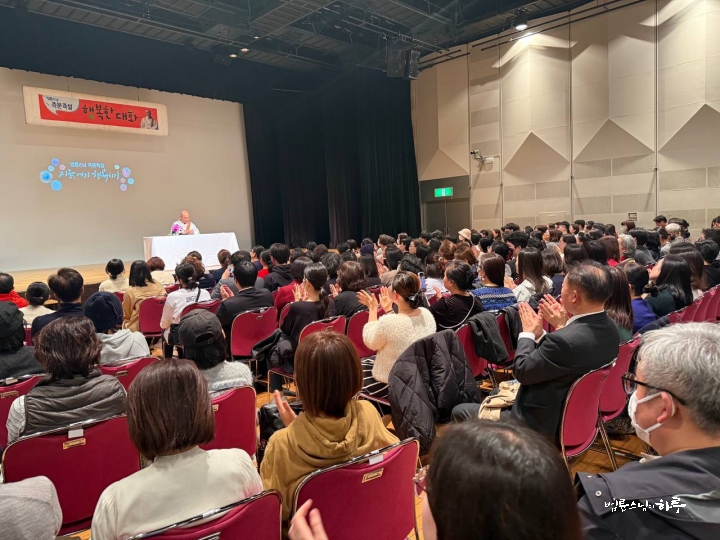
It Seems Like a Big Deal Now, but It’s Really Nothing
After talking with me, what seemed desperately difficult just moments ago now feels like nothing, doesn’t it? ‘It’s nothing’ – in sophisticated terms, this is ’emptiness’ (空). Conversely, what appears to be a big problem at first glance is ‘form’ (色). You’ve heard the phrase from the Heart Sutra, ‘form is emptiness, emptiness is form,’ right? It seems difficult when written in Chinese characters, but it’s really nothing special. It means that while something may appear to be a problem at first glance, when you look closely, there’s no problem at all. All problems in this world are like that. When you’re worked up, it seems like a big problem, but if you look closely, it’s really nothing. What seems like a major problem now becomes nothing with time. So the greatest enlightenment is knowing that ‘it’s nothing.’ When your boyfriend leaves, it seems like a big deal, but when time passes and you meet someone better, that old incident becomes nothing, doesn’t it? Wouldn’t it be nice to know from the beginning that what will be nothing later is nothing now? But you only realize it’s nothing after suffering thoroughly. That’s why realizing ‘it’s nothing’ is most important. From today, when you go home, take a moment to breathe and carefully examine what ‘seems like a big deal.’ How would this look if I looked back on it after a year? After two years? If this happened to someone else, how would I view it? When you examine it carefully like this, everything is no big deal. Is it a big deal if your husband dies? It could be good – you might remarry. Even if you don’t, isn’t living alone wonderful? But of course, you can’t tell him to die. If he dies on his own, what can we do? The reason I’m saying all this is because everything that happens in the world happens because the conditions for it to happen have been met. Of course, it would be nice if it didn’t happen, but what can we do about what has already happened?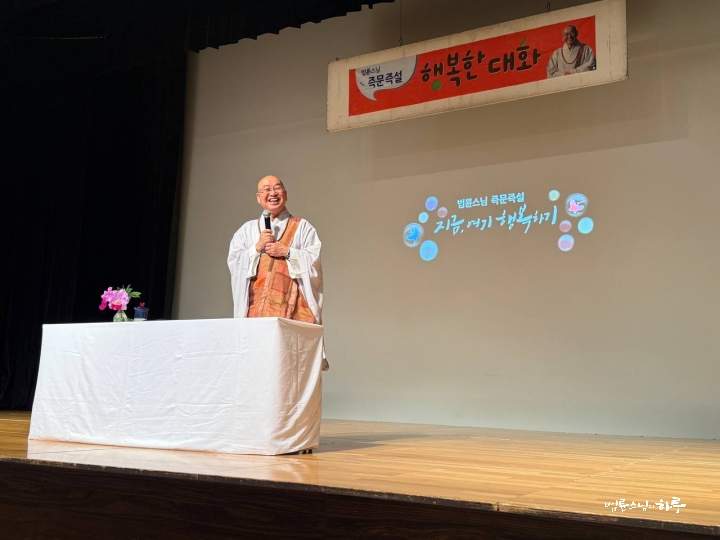
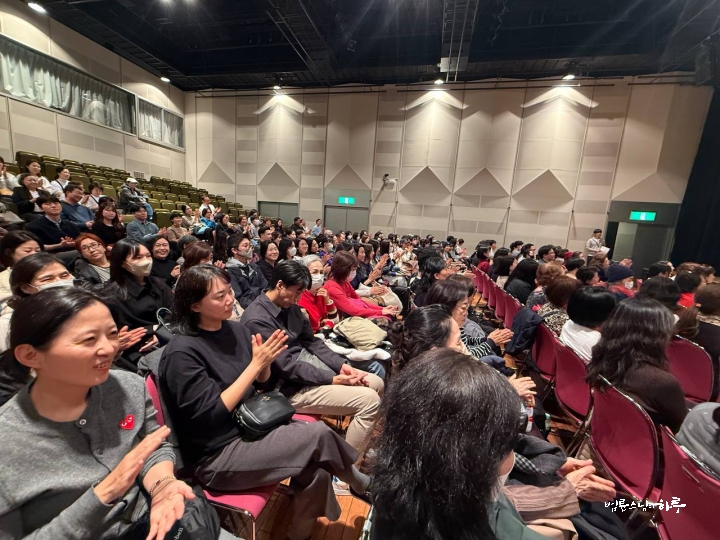
The lecture concluded with thunderous applause. It was past 9 PM. Immediately after, a book signing session began on stage.
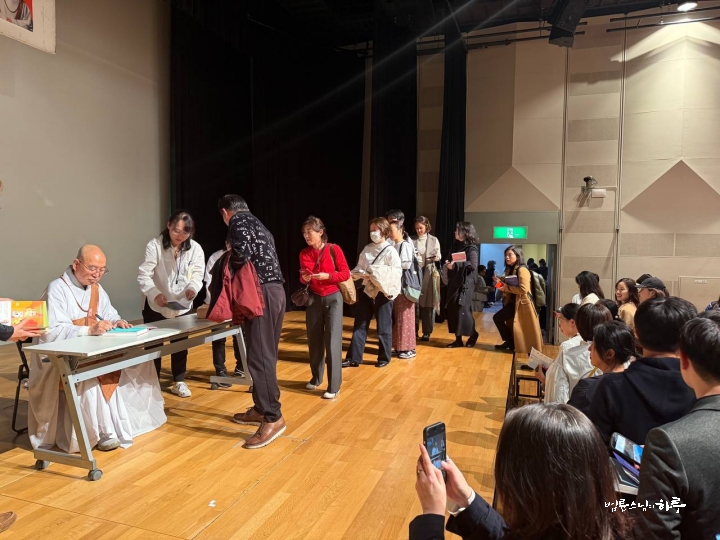
Many people formed a long line, making eye contact with Sunim and expressing their gratitude.
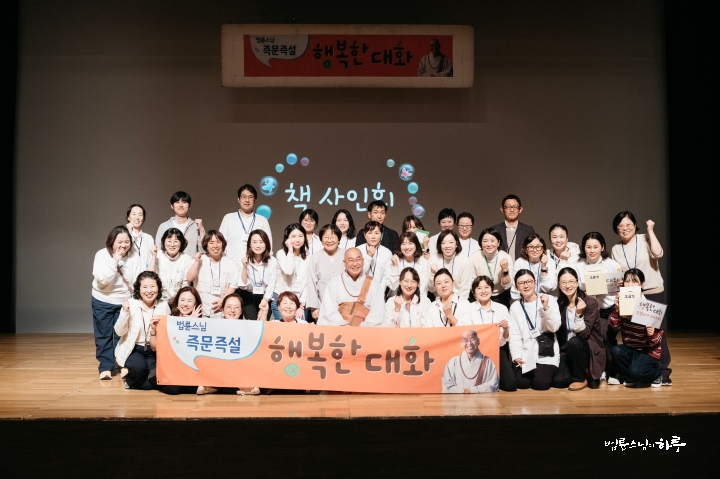
Finally, Sunim took a commemorative photo with the volunteers.
“Tokyo, fighting!”
After expressing his gratitude to the volunteers, Sunim headed to Tokyo Haneda Airport to catch his flight back to Korea.
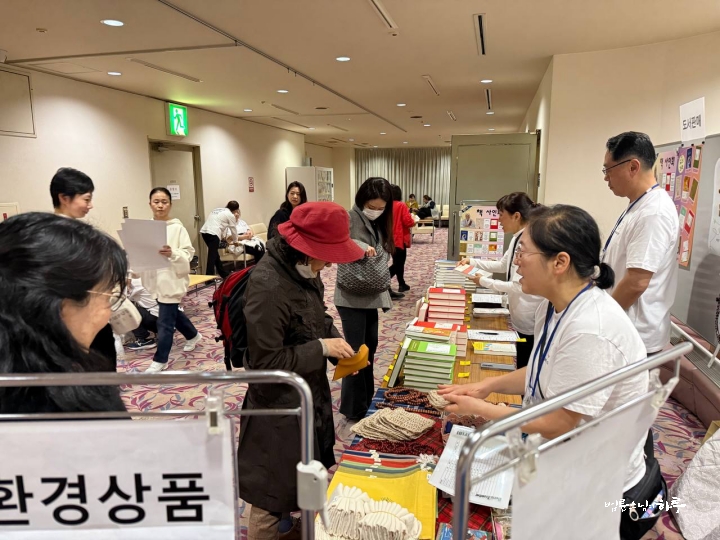
Upon arriving at the airport, Sunim checked in his luggage, went through departure procedures, and wrapped up the day’s activities by attending to work matters at the boarding gate.
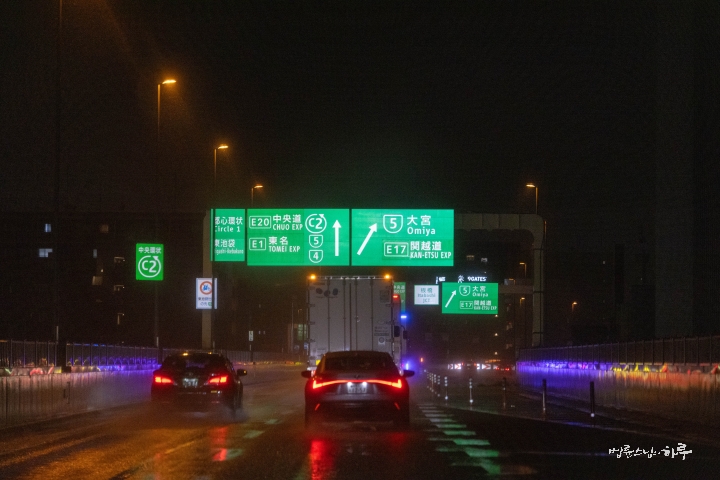
Tomorrow, Sunim will depart from Tokyo Haneda Airport at 2 AM and arrive at Incheon Airport. In the morning, he will have a meeting with Professor Park Jin-do at the Jungto Social and Cultural Center. In the afternoon, he will travel to Suncheon to visit the ‘Loving Village Learning Center’ operated by Pastor Kim Min-hae, where he will have conversations with the teachers. In the evening, he will continue with the tenth Happy Dialogue Dharma Q&A lecture in Gwangju.