How can I deal with a husband who swears while watching TV and when driving?
Nov 26, 2025. Osaka, Japan, Dharma Q&A with Japanese Interpretation
Hello. Today, Sunim is giving a Dharma Q&A in Osaka, Japan.
After completing morning practice and meditation, Sunim had breakfast at the accommodation at 6:30 AM. After breakfast, he attended to some work before conducting a live broadcast of the Weekly Dharma Assembly from the accommodation at 10 AM.
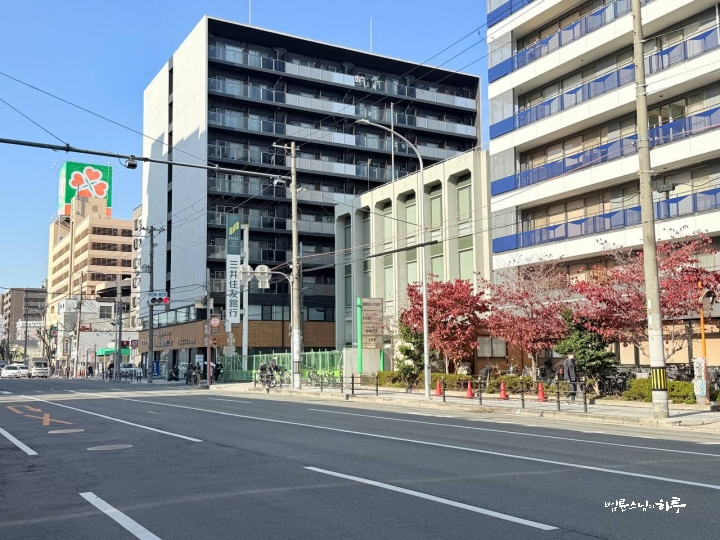
Once all Jungto Society members had entered the video conference room, they watched a video showcasing the activities of Jungto practitioners over the past week. After the video ended, the assembly requested a Dharma talk from Sunim with three bows. Following a brief meditation, Sunim gave his greeting.
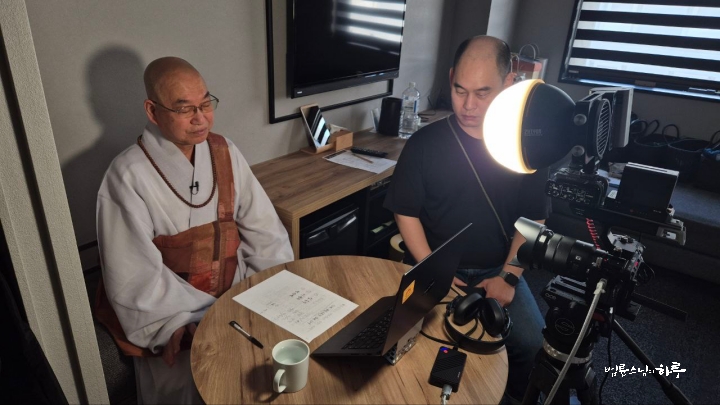
Korea and Japan: Time to Move Beyond the Past Toward Cooperation
Despite Japan’s geographical proximity to Korea, surprisingly many people don’t know much about Japan. Japan’s territory is about three times that of South Korea, its population is about two and a half times larger, and its per capita GDP is at a similar level to ours. Among countries with populations exceeding 100 million, Japan is the only one after the United States to have achieved this level of economic development. It can be considered a country with a significant economic scale globally. While we have emotional distance from Japan due to our painful history, Korea and Japan are currently very closely connected economically. Especially in the current international situation with intensifying US-China conflicts, it benefits both countries to cooperate beyond past wounds. Additionally, about 600,000 Korean residents live in Japan. Therefore, to help these residents, their second-generation children, and even Japanese people live happier lives, Jungto Society has started not only Korean resident Dharma assemblies but also Jungto Dharma School for Japanese people here.”He then received questions about various concerns. Three people had pre-registered questions and engaged in dialogue with Sunim. One of them shared their struggle with guilt after losing their mother, unsure of how to continue living.
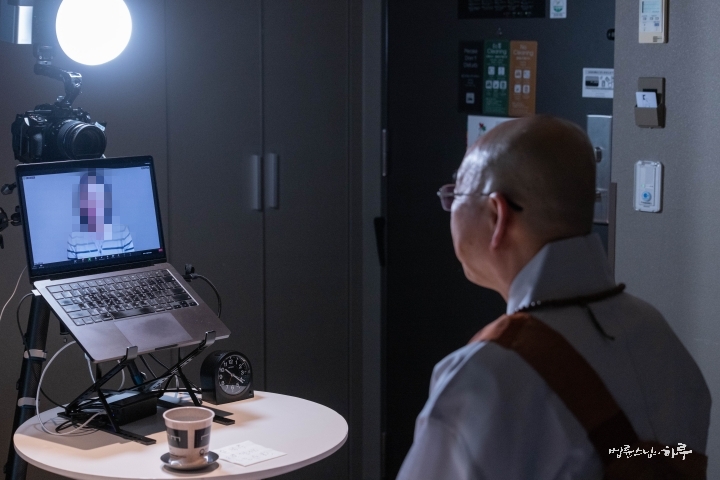
I Think I Caused My Mother’s Death, How Should I Live?
“Two years ago, my mother experienced a hemorrhagic emergency while suffering from terminal liver cirrhosis with very weakened blood vessels. The medical team said that while emergency surgery might improve her condition temporarily, the same situation was likely to recur. At that time, I had to bear all the medical expenses alone, and with national and local government support cut off, I couldn’t proceed with the surgery. My mother passed away that day. At that moment, rather than sadness, I first felt resentment and hatred, thinking ‘Why did she make me bear all this burden alone?’ My own health wasn’t good either, so I spent some time listlessly focusing only on treatment. Then I gradually became consumed by the thought ‘I am a murderer’ and fell into great suffering. Afterward, I completed the Awakening Retreat, Jungto Dharma School, and Sutra Course in succession, continuing my practice while also receiving psychiatric treatment and psychological counseling. Through this, I realized that living in guilt is like killing my mother twice, and I decided to live twice as happily, including my mother’s share. However, as my body recovered this year and I expanded my social activities again, I repeatedly feel fear of criticism, guilt, dizziness, and withdrawal when I’m among people or in moments when I might make mistakes. From what perspective should I continue my practice going forward?”
“When we make a choice, if that choice was clearly made with bad intentions, we should reflect on it. We should be careful not to repeat the same mistake. However, even if we make a choice with good intentions, there’s no guarantee that the outcome will be good.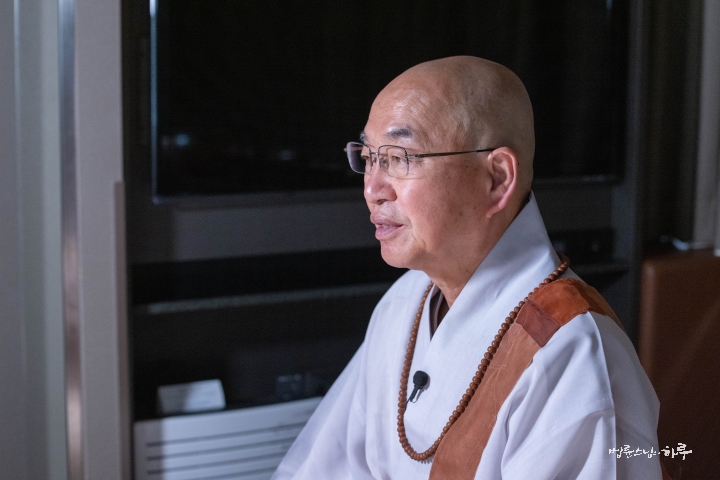
“Thank you. I feel much more at ease. I realized I just need to live happily, including my mother’s share.”
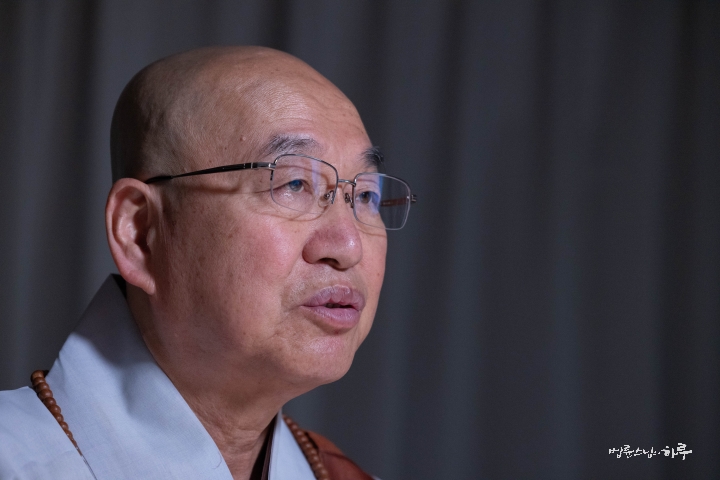
“Thank you.”
Questions continued. After finishing the dialogue, Sunim reminded everyone once more about Jungto Society’s upcoming year-end events before ending the live broadcast. After the Dharma assembly, he packed his belongings and went out for lunch.
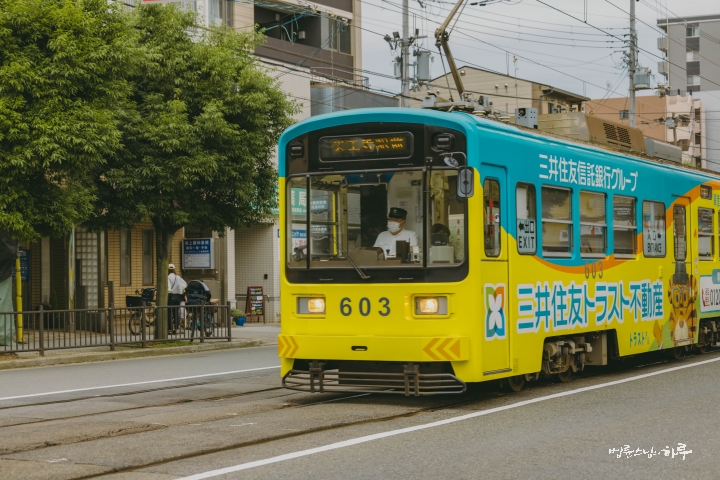
A person who was deeply moved by Sunim’s Dharma Q&A and “A Day in the Life of Sunim” and who prepares accommodation and meals whenever Sunim visits Japan, once again treated him to lunch at a Korean restaurant in the Tennoji district of Osaka.
After lunch, at 2:30 PM, Sunim visited Shitennoji Temple near the restaurant. This is Japan’s first Buddhist temple built at the national level, the oldest temple in Japan, and a place deeply connected to the establishment of Japanese Buddhism.
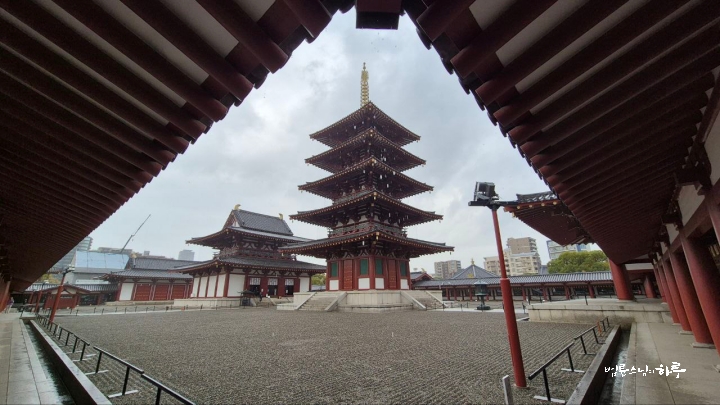

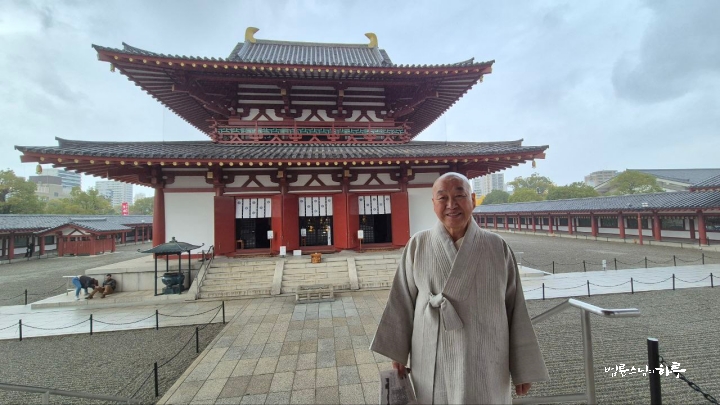
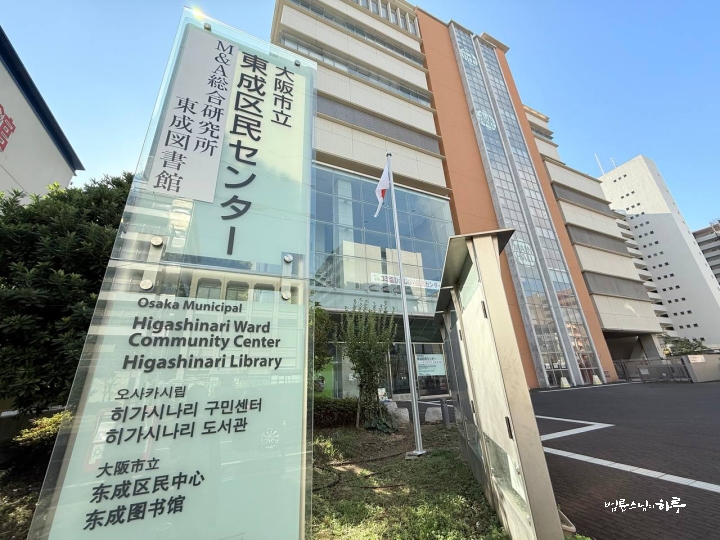
After touring Shitennoji Temple, Sunim headed to the lecture venue. Today’s lecture is being held at the Osaka City Higashinari Ward Community Center, a multipurpose community space where local Osaka residents can hold meetings, lectures, and cultural events. The venue was moved closer to Koreatown than last year’s location.
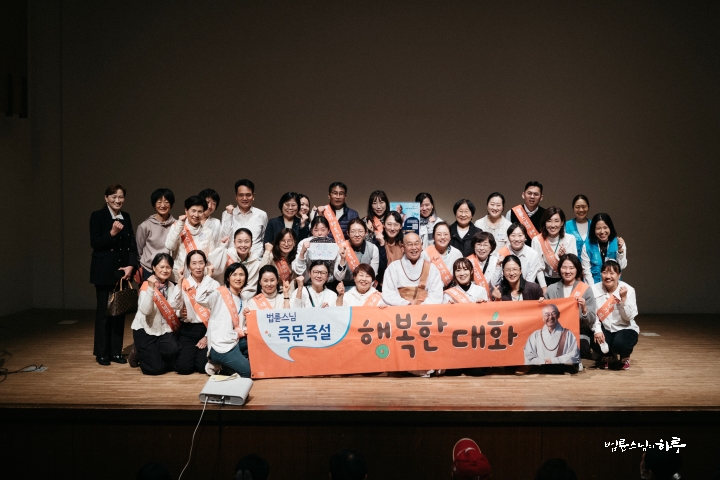
When Sunim arrived at the lecture hall, about 30 volunteers warmly welcomed him. Since volunteers from other regions and Tokyo had to leave immediately after the lecture to catch the last train, they took a group photo before the lecture began.
“Osaka, fighting!”
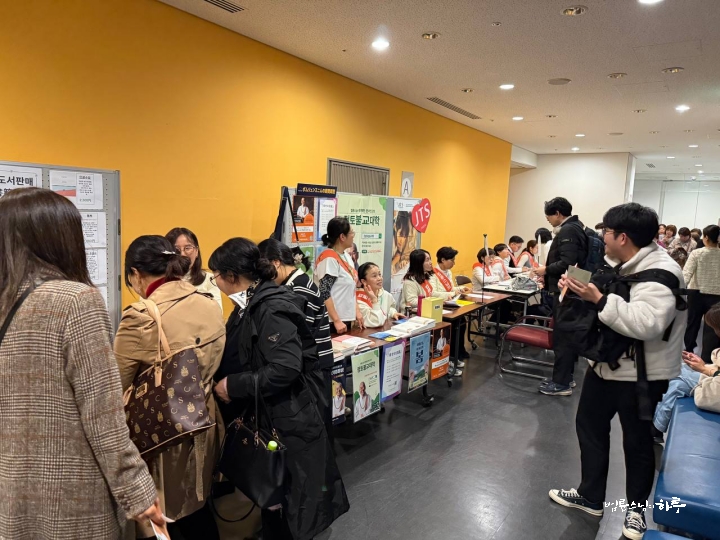
The volunteers went to their respective positions to prepare to welcome the audience. Soon, audience members began arriving at the lecture hall.
Sunim had tea and conversation with guests who visited the waiting room, then moved to the lecture hall together when it was time to begin the lecture.

At 6:30 PM, a video introducing Sunim was shown with Japanese subtitles. When the video ended, Sunim walked onto the stage to great applause and cheers. With a bright smile, Sunim gave his greeting.


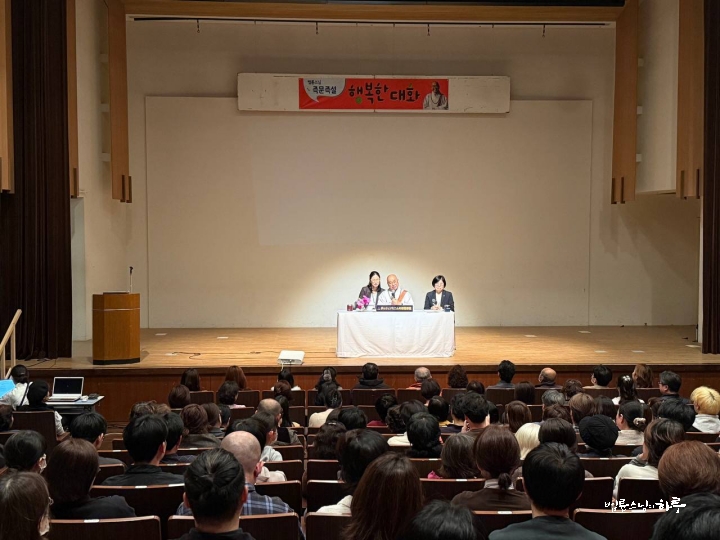
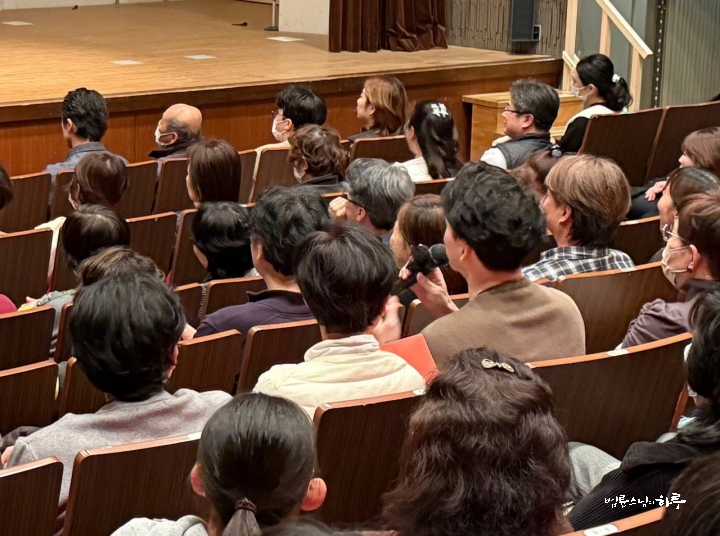
After explaining the purpose of the Dharma Q&A, Sunim began taking questions. Those who had pre-registered their questions raised their hands first to have conversations with Sunim, followed by questions from the audience.
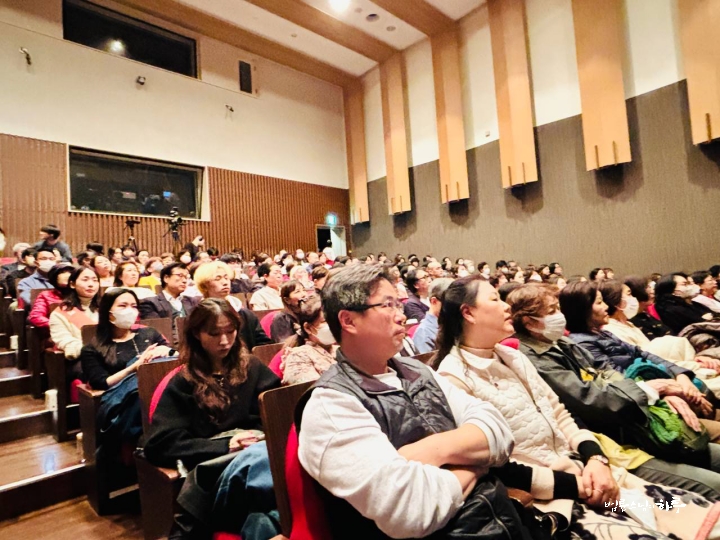
Over the course of about two hours, six people asked questions. One person sought Sunim’s advice on how to cultivate gratitude while living with a husband who constantly complains.
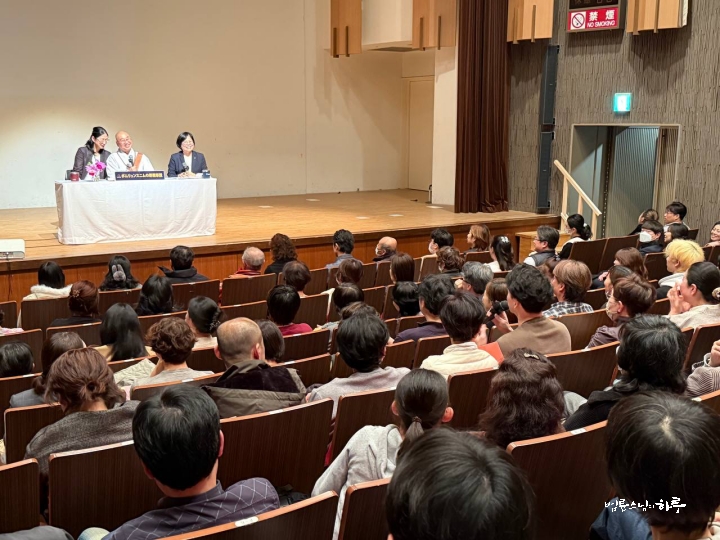
My Husband Swears While Watching TV and Driving. How Should I Deal With Him?
“My husband is full of complaints about the world. He swears while watching TV, swears while driving, and gets angry watching what people around him do. He was born the sixth of seven siblings and grew up being very conscious of others from a young age, having to help a lot with household chores. He says his other siblings caused many problems, and he had to endure watching his parents struggle. Knowing this background, I live thinking ‘that’s just how he is’ when he swears or gets angry. When I talk about this, I feel like you’ll tell me I should pray with gratitude for my husband, but honestly, I can’t do it well. I think in my head that I should always be grateful, but when I actually try to pray with gratitude, I can’t. What should I do?”
“People like you keep distorting what I say. What has your husband done well that you should pray with gratitude? If you know me so well, why don’t you come up here and speak yourself? (Laughter) In this case, there are three main ways to respond. First, you need to diagnose why your husband has these reactions. The cause is usually stress. Whenever this happens, just think, ‘Oh, my husband is under a lot of stress.’ Just as you would think ‘they must be hurting’ when a child cries, observe without judging right or wrong. When people accumulate stress, they try to relieve it somehow – whether by swearing or other means – to survive. ‘He must be under a lot of stress. So he’s releasing it by swearing.’ This way of observing things as they are is the first method.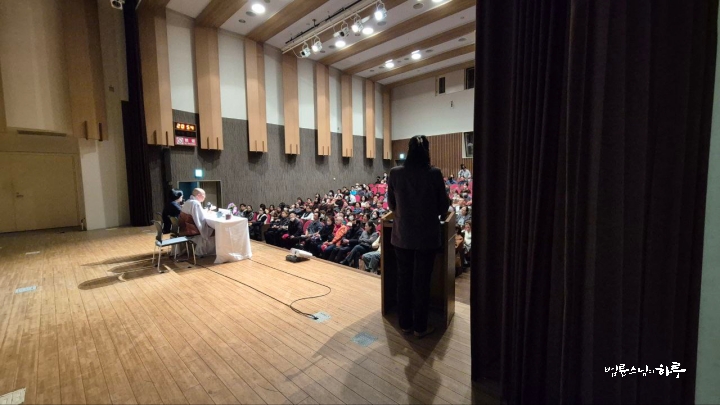
“That’s right.”
“Since he has many other good qualities, what can you do?”“I understand well. Thank you. I’m relieved that I don’t have to pray with gratitude for my husband. I’ll try the third method you suggested.”
Questions continued one after another.
I’m happy with my wife but struggling with how to handle Korean-Japanese historical perspectives. How should I approach my desire to go to Korea and apologize?
I’m exhausted from caring for my mother for a long time and placed her in a care facility, and I want to be free from guilt and burden. How can I find freedom in this relationship?
Life is hard with 10 years of depression and recurring workplace problems, and my boyfriend doesn’t understand. Will Jungto Society activities help heal my mental illness?
I haven’t seen my daughter for over 2 years during divorce proceedings and feel desperate. What can I do to see my child again?
I feel guilty about precepts and karma from repeatedly killing while learning to cook. How should I approach this situation?
My child who had a brain tumor has a risk of recurrence, and I feel anxious with every checkup. If bad results come, how should I accept that karma?
After answering all questions, the lecture concluded at 9 PM.
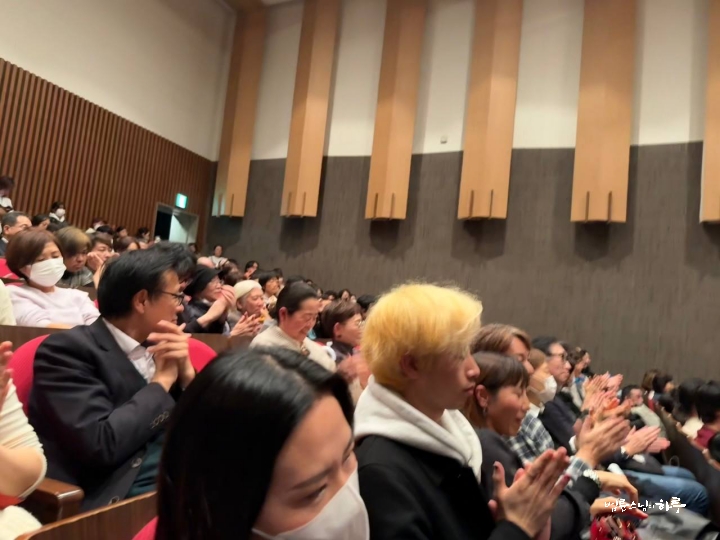
Immediately after, a book signing session was held on stage. Most of the audience lined up to receive Sunim’s signature and express their gratitude.

“Sunim, I respect you the most.”
“Thank you.”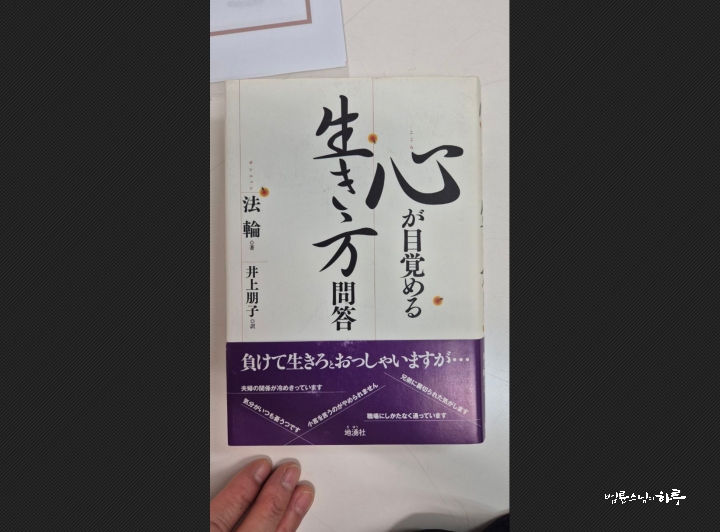
After the book signing, Sunim expressed gratitude to the volunteers and left the venue.
“Thank you all for your hard work.”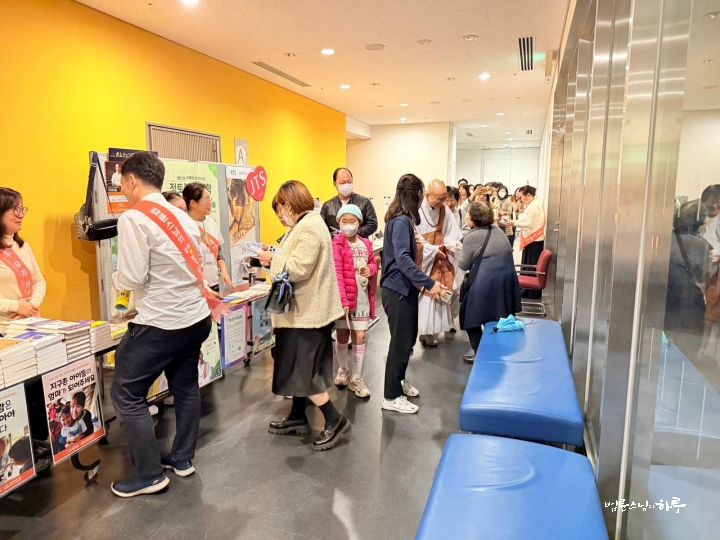
After leaving the venue, Sunim headed to his accommodation. Upon arrival, he reviewed manuscripts and handled administrative work before concluding the day’s activities.
Tomorrow, Sunim will take an early morning Shinkansen train to Tokyo. In the morning, he will meet with senior political figures to discuss normalization of North Korea-Japan relations. In the afternoon, he will give a lecture for Japanese audiences with Japanese interpretation, and in the evening, he will hold a Dharma Q&A session for Korean residents.