How Can I Fix My Habit of Clenching My Teeth and Tensing Up?
November 23, 2025 - Day 3 of Kimchi Making, Paying Respects to the Late Great Master Doyeong at Geumsansa Temple, ...
Hello. Today, on the fourth day since the passing of Geumsansa Temple’s Spiritual Leader, Great Master Doyeong, Sunim paid his respects and had a dialogue session with the community members who had finished making kimchi.
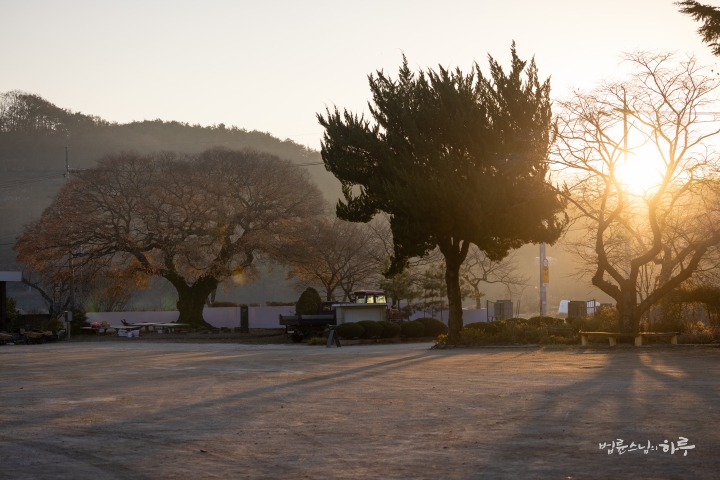
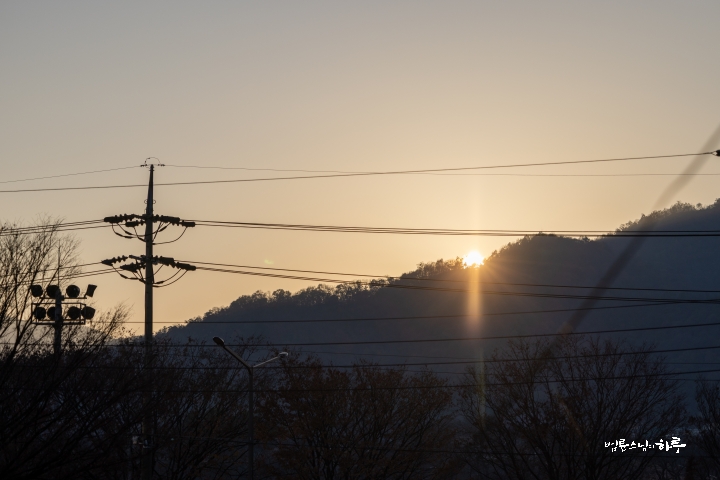
After completing morning practice and meditation, Sunim departed from Dubuk Jungto Retreat Center at 7 AM and headed to Geumsansa Temple. After a three-hour drive, he arrived at Geumsansa Temple, located in Geumsan-myeon, Gimje City, North Jeolla Province, at 10 AM.

Great Master Doyeong was the senior Dharma brother of Venerable Dobup, who has a close relationship with Sunim. Thinking of the deep connection between Venerable Dobup and Great Master Doyeong, who had walked the path of practice together after ordaining under Great Master Wolju, Sunim rushed from afar despite his busy schedule.
Upon arriving at Geumsansa Temple, Sunim met and exchanged greetings with Venerable Dobup, then headed together to the Cheoyeong Cultural Memorial Hall where the memorial altar was set up.
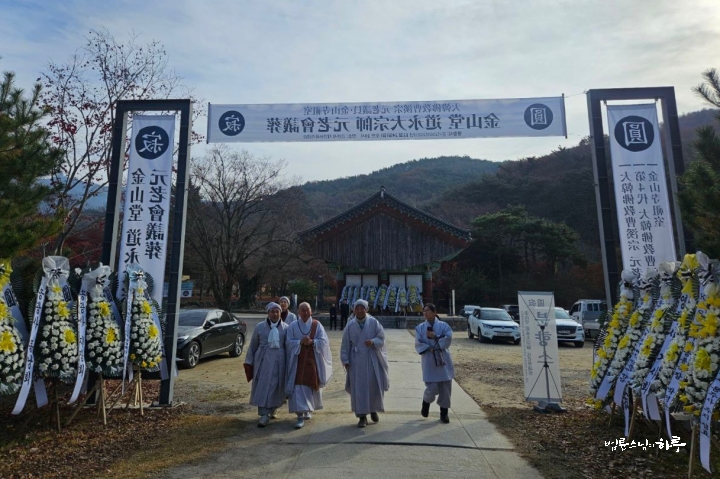
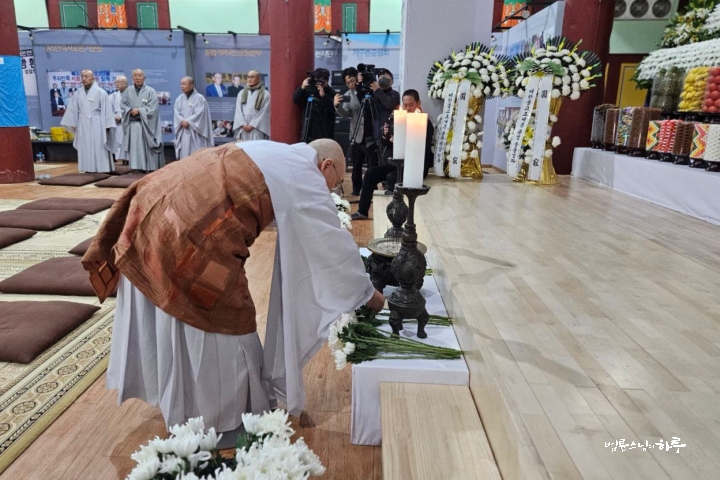
Sunim paid his respects at the memorial altar, honoring the practice spirit of Great Master Doyeong, who had walked the path of spreading the Dharma throughout his life as a teacher of the era.
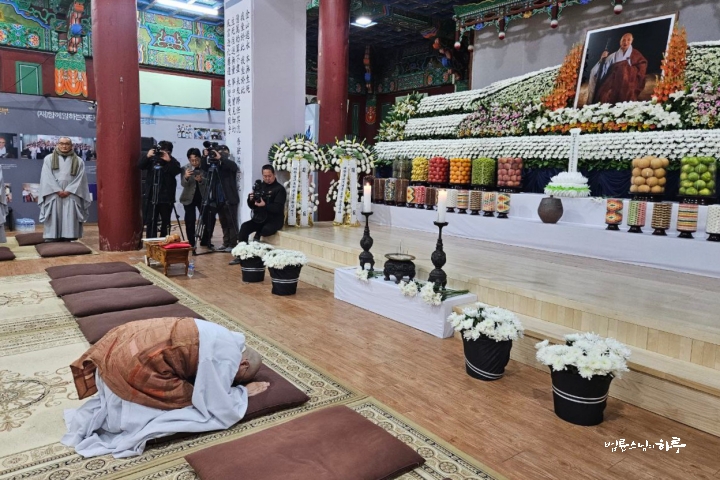
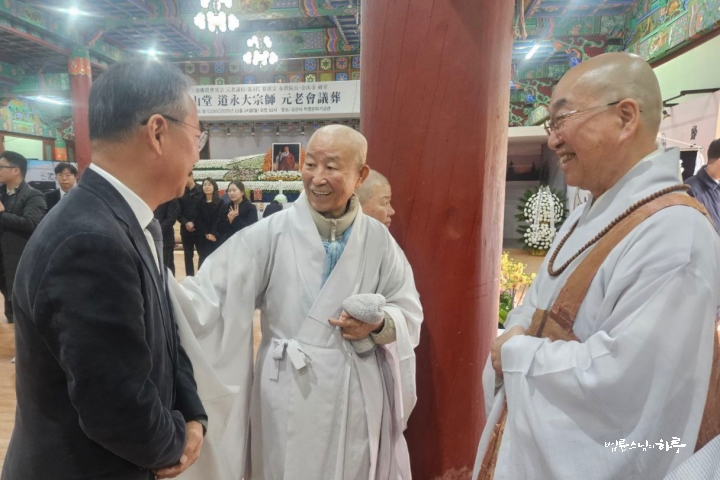
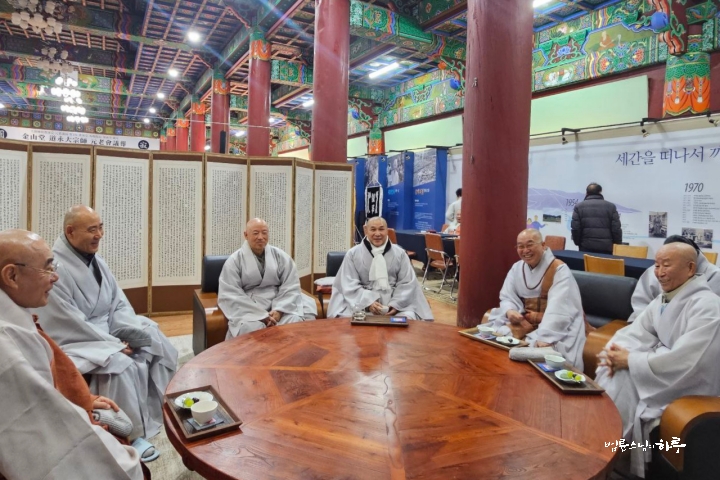
After exchanging greetings with the senior monks in attendance, Sunim shared tea and conversation for a while. Great Master Doyeong had served as the abbot of Geumsansa Temple, Heungboksa Temple in Gimje, and Songgwangsa Temple in Wanju. He also served as a member of the Central Council, Director of the Education Department of the General Affairs Office, and the 4th Head of the Jogye Order’s Propagation Center, making significant contributions to organizing the order’s administration and propagation system. His military chaplaincy work, which continued for over 50 years, is considered one of Great Master Doyeong’s most notable achievements. The senior monks shared many stories about the path Great Master Doyeong had walked.
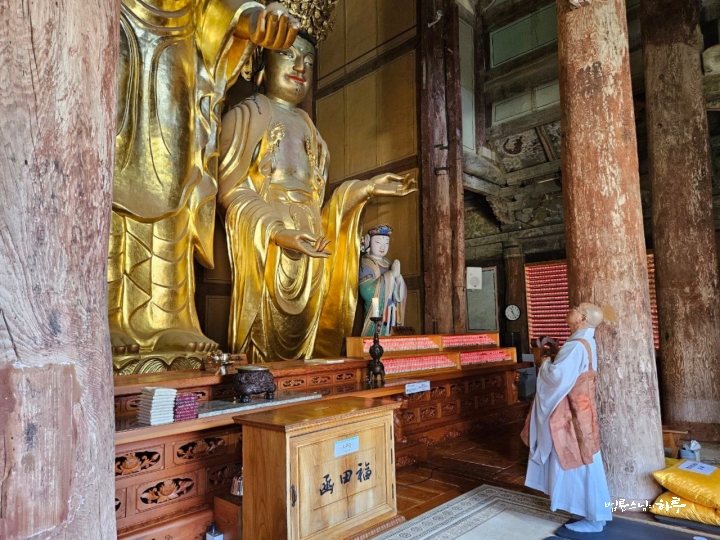
Sunim then paid respects at Geumsansa Temple’s Mireukjeon Hall, a National Treasure, and visited various halls throughout the temple grounds, including the five-story stone pagoda and Daejangjon Hall, before leaving Geumsansa Temple.
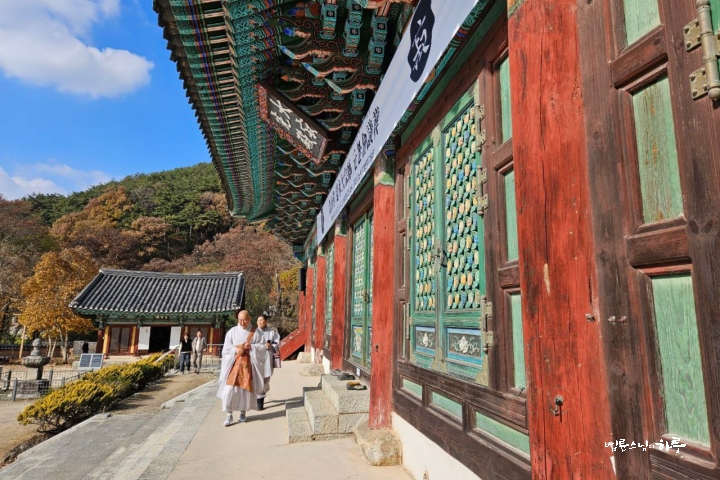
He got back in the car and drove on the highway for three hours from Geumsansa Temple. During the journey, he had lunch at a rest stop with garak noodles and arrived at Dubuk Jungto Retreat Center at 3:20 PM.
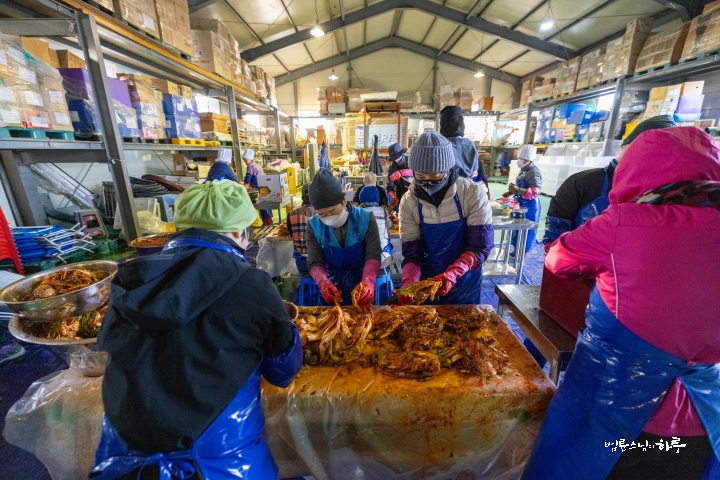
Meanwhile, at Dubuk Jungto Retreat Center, the community members spent the entire morning cleaning up after finishing the kimchi making. One team mixed the last remaining cabbages with kimchi seasoning and put them in containers.
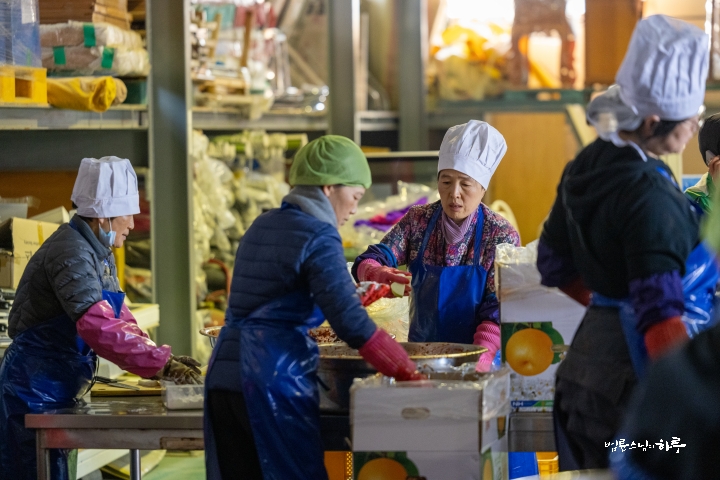
Another team thoroughly washed all the shelves, cutting boards, knives, baskets, trays, bowls, and rubber containers with water. The facilities team moved all the items from the warehouse back to their original places.
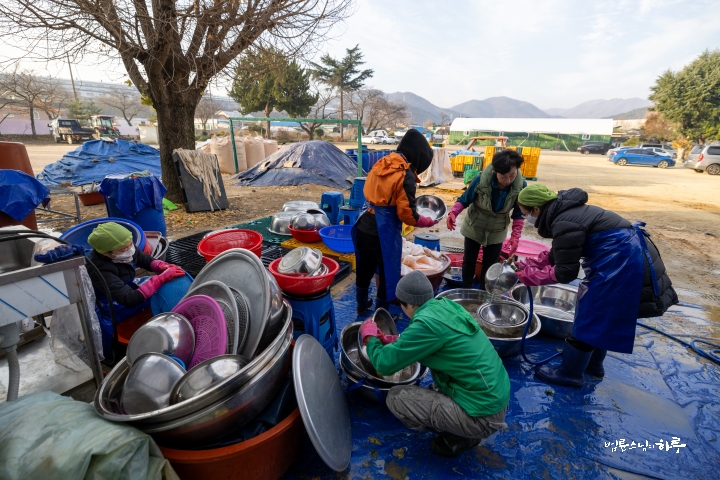
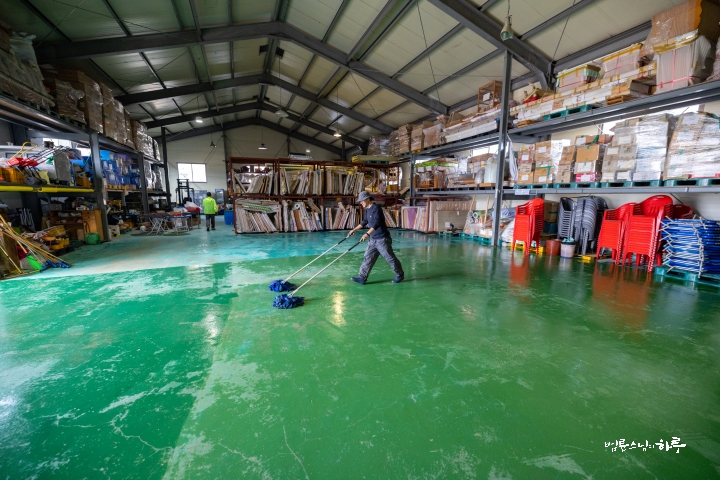
They dismantled the installed pallets and pools, and cleaned the inside of the warehouse with mops. The rubber gloves, aprons, and boots stained with kimchi seasoning were also washed clean and hung on clotheslines. After finishing the cleanup, they also picked the peppers that the farming team couldn’t harvest because they were busy preparing for kimchi making.
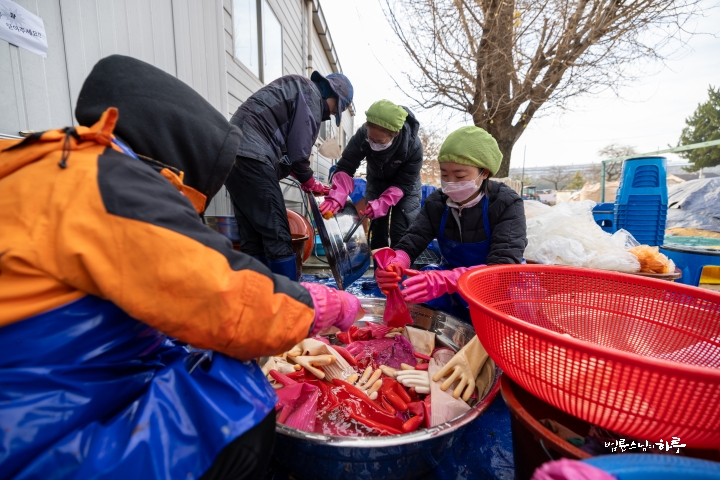
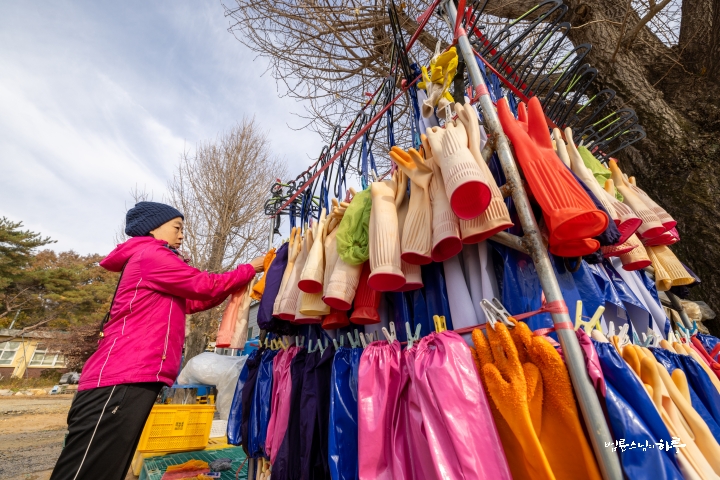
Over the past three days and two nights, everyone worked together to successfully complete making kimchi with 1,000 cabbages.
After washing their kimchi-scented clothes and taking baths, the community members all gathered at a restaurant in downtown Gyeongju at 5 PM. After having dinner together, they reflected on the process and shared their thoughts.
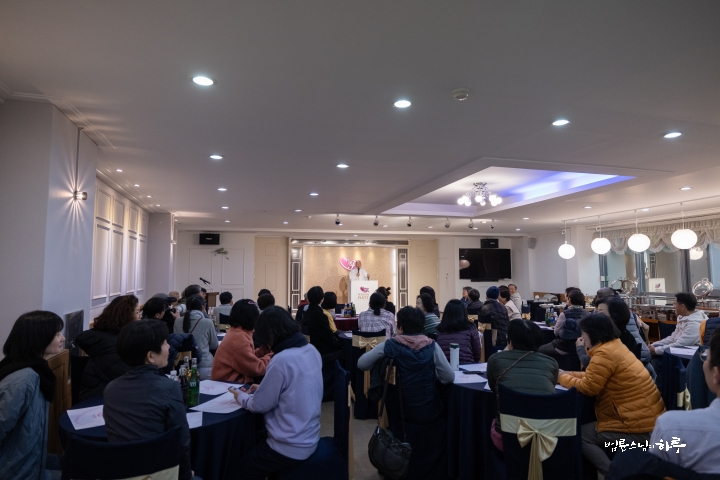
First, Sunim offered words of encouragement to the community members who had worked so hard.
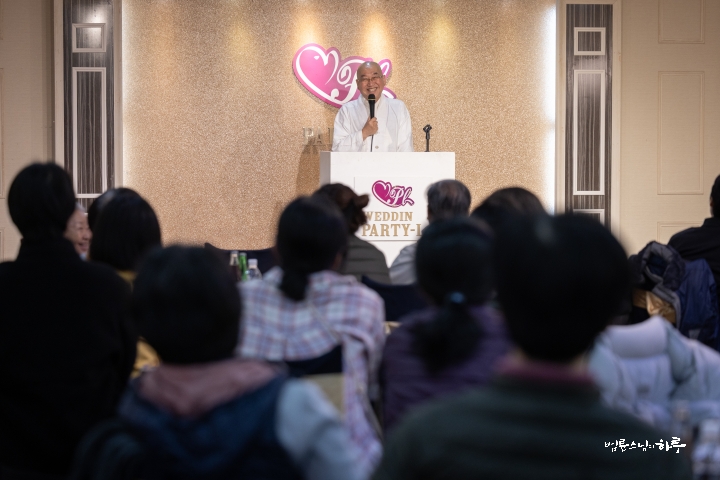
“Yes!”
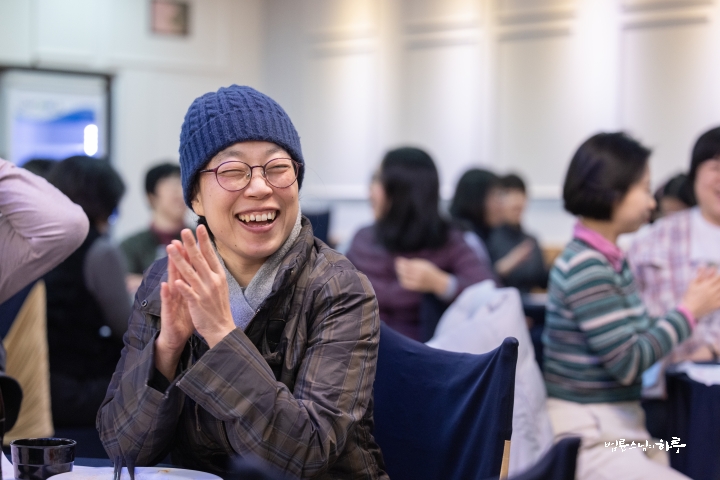
Next, Kim Eun-jin, the head of the farming team, came forward and shared her thoughts.
“I was worried whether we could really make kimchi with 1,000 cabbages in just two days, but we finally did it. You all worked really hard. Actually, many volunteers worked very hard in the process of preparing for kimchi making. I hope you’ll recognize that as well.”

Next, Jung Yoon-mi, who oversaw the kimchi making, shared her thoughts.
“I feel sorry for scheduling things too tightly and making it hard for everyone. Thanks to that, we finished the kimchi making quickly, but I felt drowsy every time I announced the schedule. I sincerely thank all of you for following the schedule so well.”
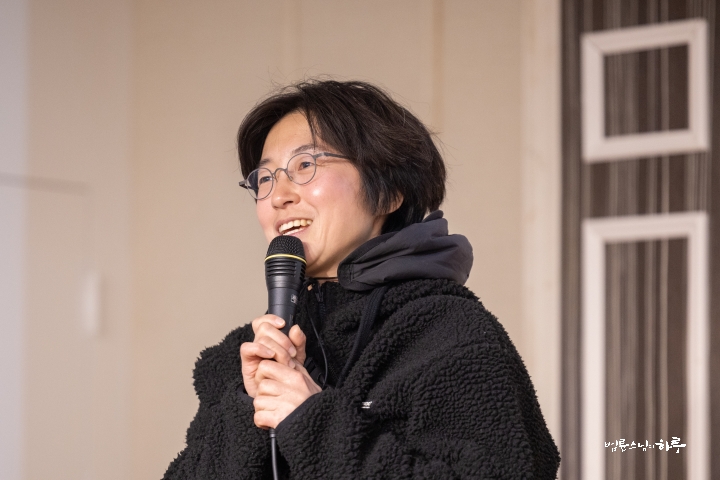
Dharma Teacher Myodang, who serves as the director of Dubuk Jungto Retreat Center, also shared her thoughts.
“This year, due to the autumn rainy season, most of our farming didn’t go well. However, the cabbage turned out better than last year thanks to the farming team’s great efforts. The rice harvest maintained last year’s yield. The summer was particularly hot, which was difficult for me too. Despite having only a few full-time volunteers, we were able to finish well thanks to the help of many volunteers. We’ll evaluate this well and prepare better for next year.”
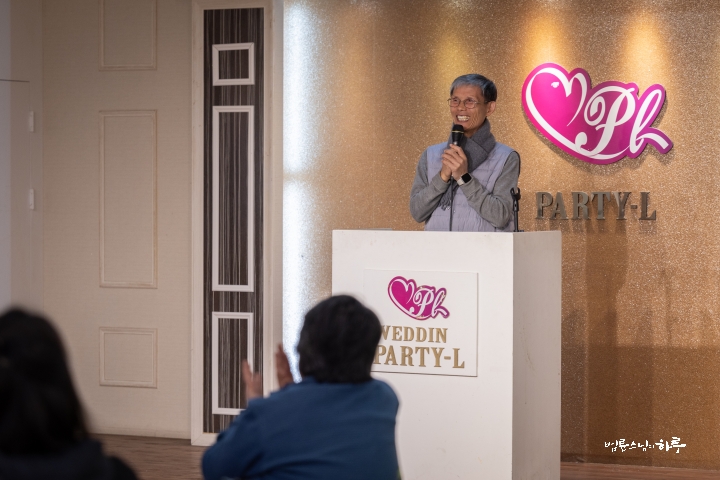
Sunim asked all the farming team members to stand up and requested that everyone give them a big round of applause.
“This year, the farming team worked really hard under difficult conditions. Please give them a big round of applause.”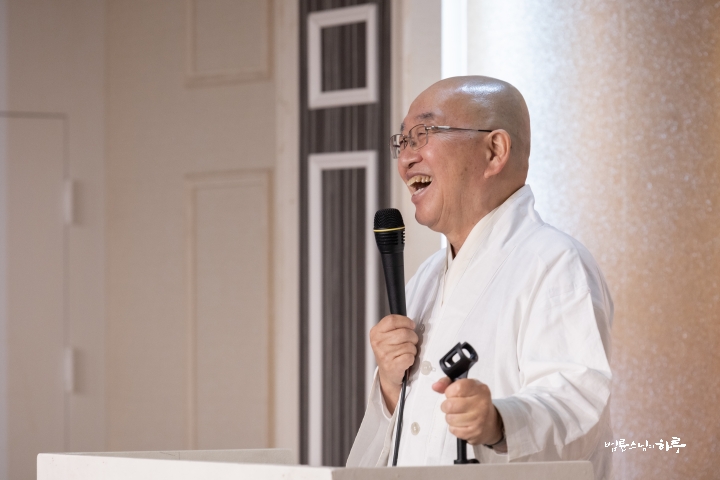
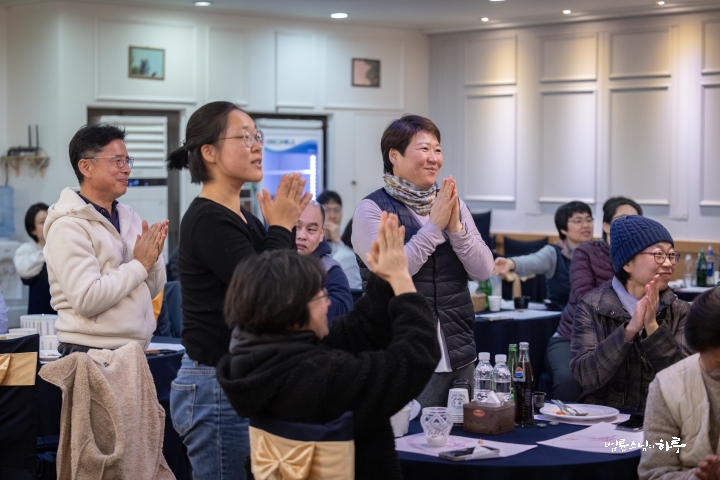
After encouraging the farming team, each department came forward in turn to encourage each other. First, the Youth Buddha team, participating in kimchi-making volunteer work for the first time, shared their thoughts.
“While we were happy to participate in the kimchi-making volunteer work, it was also difficult. There were moments when I wanted to go home, but I learned a lot from seeing the staff members and Dharma teachers working with smiles even during difficult times.”
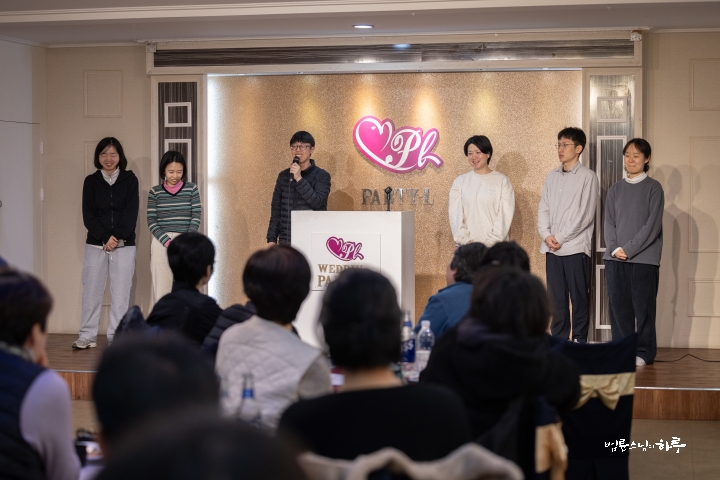
After the Youth Buddha team performed an exciting dance and went back to their seats, Dharma Teacher Hwagwang, who has been protecting Dubuk Jungto Retreat Center for 23 years, came forward and shared her thoughts.
“Farming has become very difficult due to the climate crisis. It’s work that absolutely cannot be done with such a small number of people, but the reason farming continues is thanks to numerous volunteers. This time too, about 300 volunteers came before the kimchi making to help with preparations. They don’t even get a meal, but they bring their own lunch boxes, work, and leave. I can’t express how grateful I am. While you all worked hard too, I hope you’ll recognize that numerous volunteers did the preliminary work.”
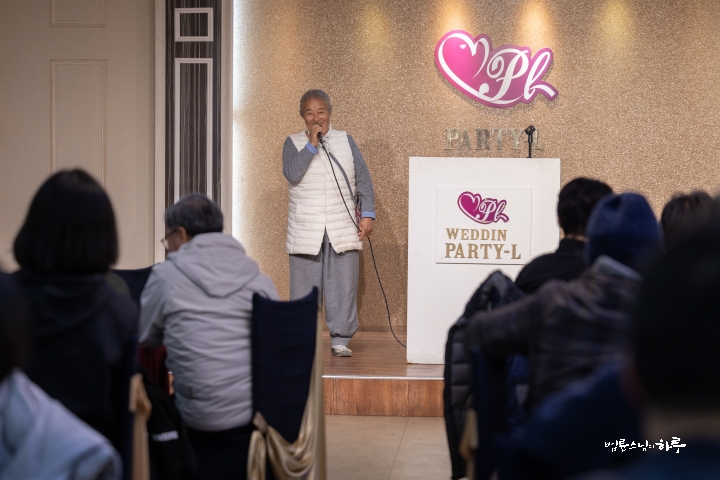
Dharma Teacher Hwagwang sang the song ‘Meongteong-guri’ with great enthusiasm.
Following this, the Construction team, Video Media team, A Day in the Life of Sunim team, Peace Foundation, JTS, Publishing team, Historical Archives team, International Cooperation team, Property Management Department, Secretariat, Training Center, and Dharma Teacher Group all stood up in turn to introduce themselves and gave each other encouraging applause.
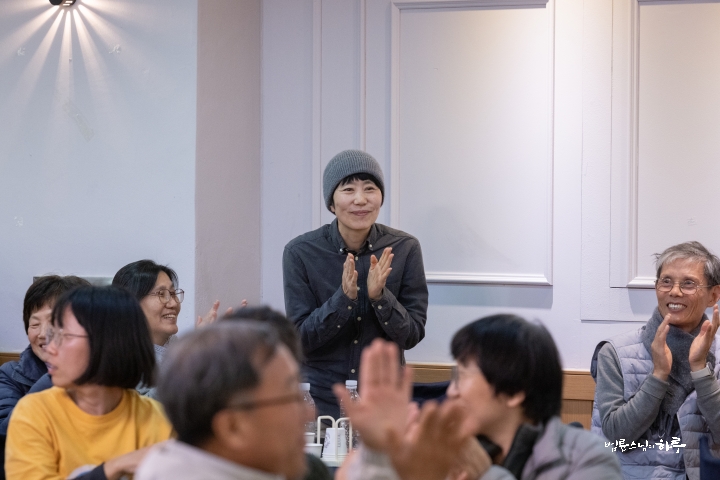

Finally, Sunim gave closing remarks.
“You’ve all worked hard throughout the year. With this, we’ll conclude the kimchi-making volunteer work.”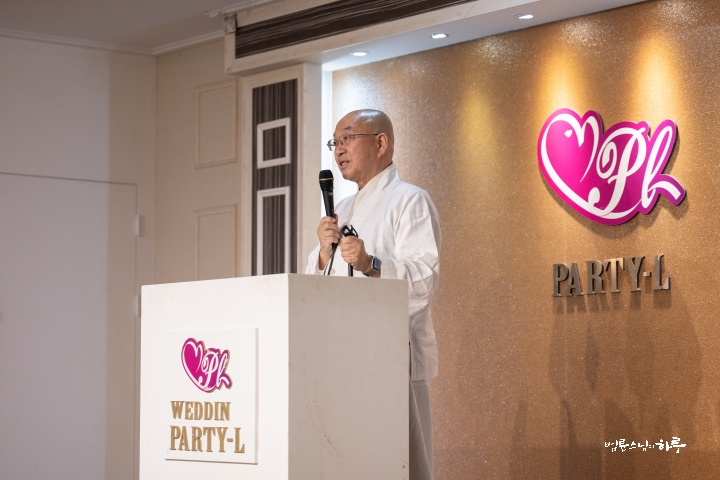
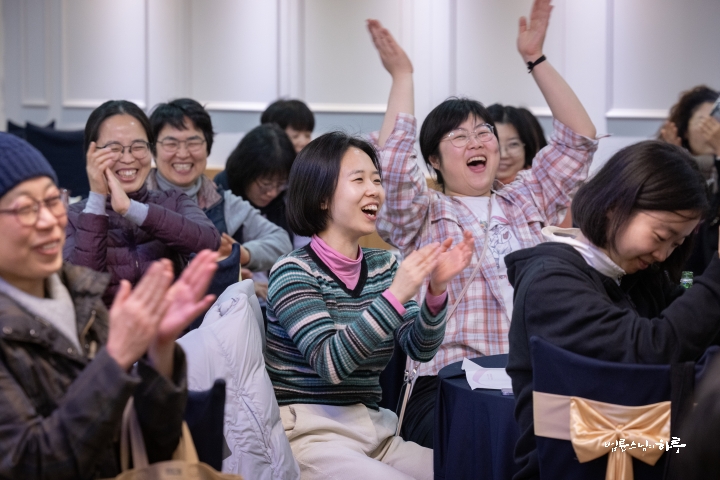
As evening prayer time approached, they hurriedly cleaned up and headed to Dubuk Jungto Retreat Center.

After arriving at Dubuk Jungto Retreat Center at 7:10 PM, they immediately held evening prayers. Following this, they had a dialogue session with Sunim.
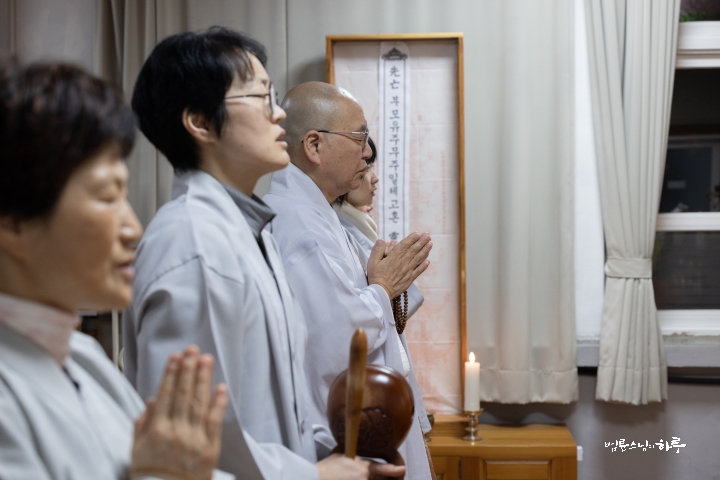
When the assembly requested a Dharma talk with three bows, Sunim began the dialogue.
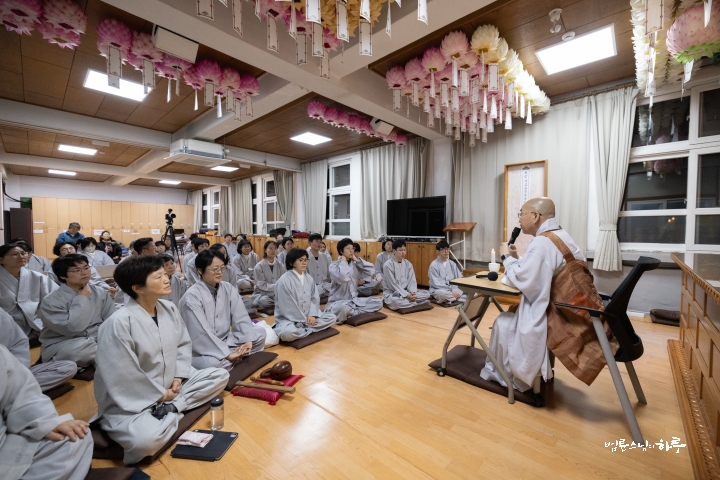
During the two-hour session, five people raised their hands and asked Sunim questions. One of them was a JTS publicity officer who asked Sunim for advice on how to set the direction for publicity, saying she wasn’t sure how to proceed.
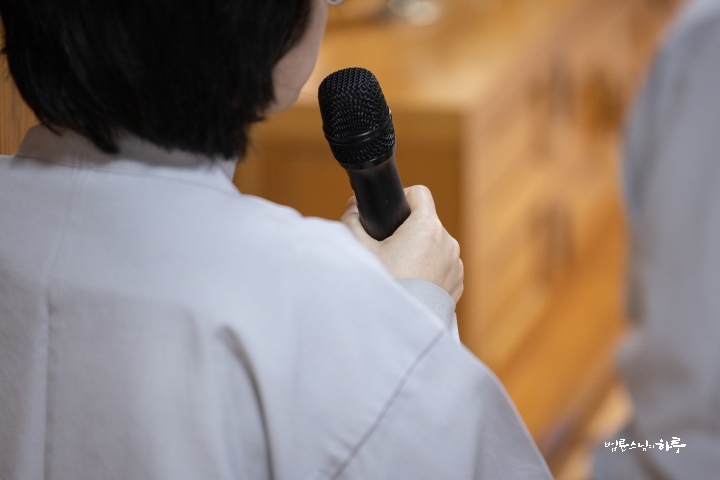
Why Doesn’t JTS Advertise?
“I’m curious about how to set the direction for JTS publicity going forward. Before joining the community, I worked in the video advertising field. Publicity itself is advertising, and advertising requires some exaggeration for people to see it and think ‘Oh, this is what it is’ and become interested. For example, you have to exaggerate that Omega-3 is good for your eyes and health for people to be enticed to buy it. But JTS doesn’t do any exaggerated advertising, let alone any advertising at all.
For instance, when the major earthquake hit Turkey and Syria, while other NGO organizations went to Turkey where they thought more donations would come in, the fact that JTS went to Syria where no one was providing support was very moving to me. I thought that if we advertised focusing on this aspect of JTS, young people would like it. However, the fact that JTS is an organization that avoids consumerism seems to conflict with advertising. How should JTS set its publicity direction?”
“We are not simply people doing peace movements, relief work, or environmental movements—we are practitioners. A practitioner is someone who doesn’t argue about the world’s problems and doesn’t look for causes in others when feeling uncomfortable, but instead reflects on it as their own issue. No matter what problem arises, clearly recognizing that ‘my anger is my own internal issue’ and not rationalizing it is the practice perspective. Therefore, the goal is to maintain equanimity in any situation. Even if it’s not perfect in reality, what’s important is moving in that direction.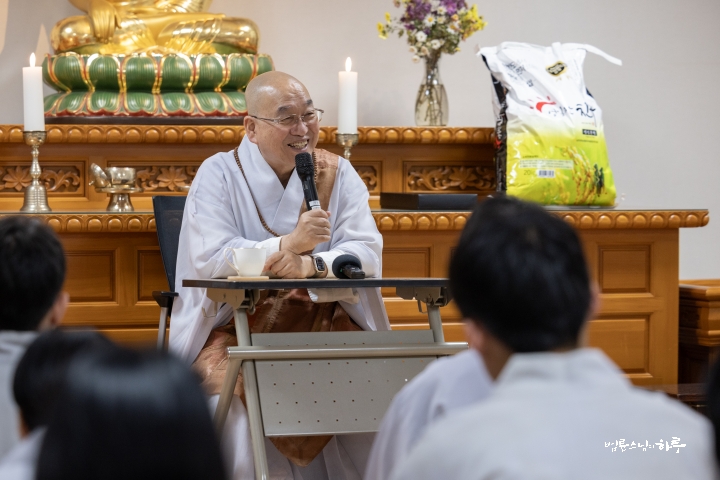
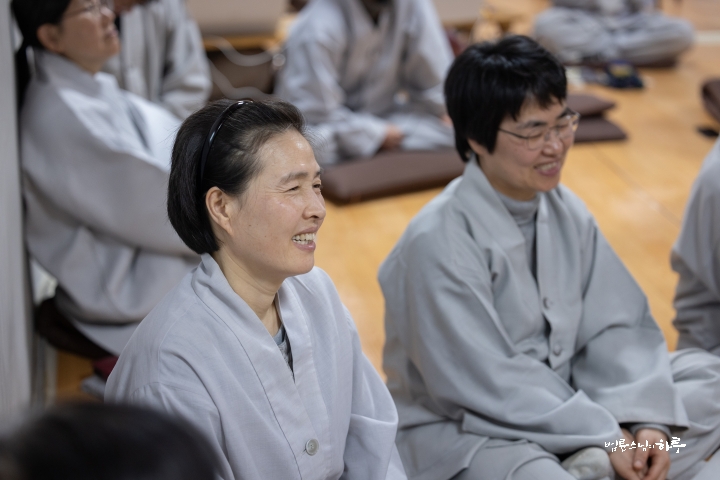
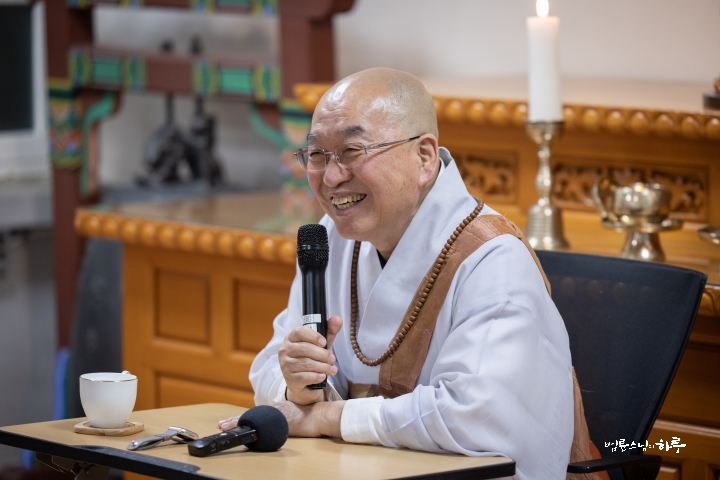
“Then wouldn’t it be okay to advertise in a way that changes people’s thinking, like public service announcements? Public service announcements deliver messages like ‘Don’t litter!'”
“While public service announcements are primarily image-based advertising, JTS’s promotion has a slightly different nature and purpose. Images alone cannot sufficiently convey the content of JTS’s projects. For example, when JTS built a school in earthquake-damaged Syria last year, Sunim’s multiple visits to the site and participation in the completion ceremony were continuously featured in ‘A Day in the Life of Sunim.’ About 15,000 to 30,000 people read ‘A Day in the Life of Sunim’ daily, and many of them participated in donations after reading it. In fact, the amount raised later exceeded the amount initially invested in the project. When the content about the Mindanao school completion ceremony in the Philippines was introduced, a large amount was also voluntarily raised. So it’s not that we don’t promote at all, but rather we choose a method where sharing our activities naturally leads to donations through people being moved. Recently, when the 100-Day Dharma Talk was held at the Jungto Social and Cultural Center, people who were moved voluntarily made offerings, and Jungto Society sends most of those offerings to JTS. This is because they contain the congregation’s wish to help neighbors in need. Therefore, there’s no need for advertising that focuses too much on fundraising.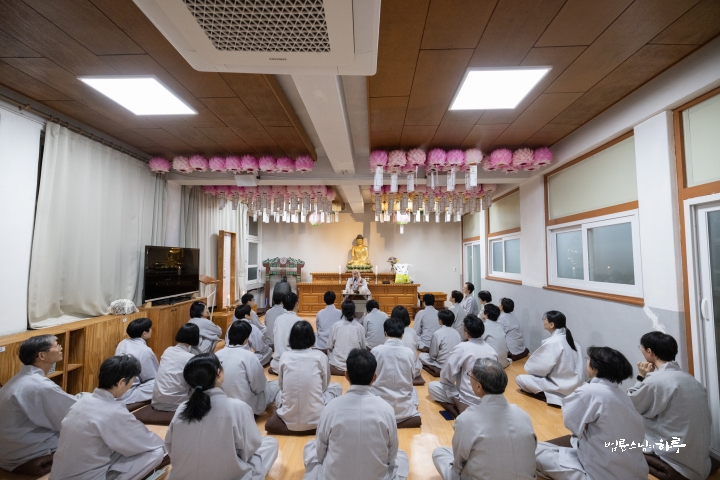
“Thank you. I understand well.”
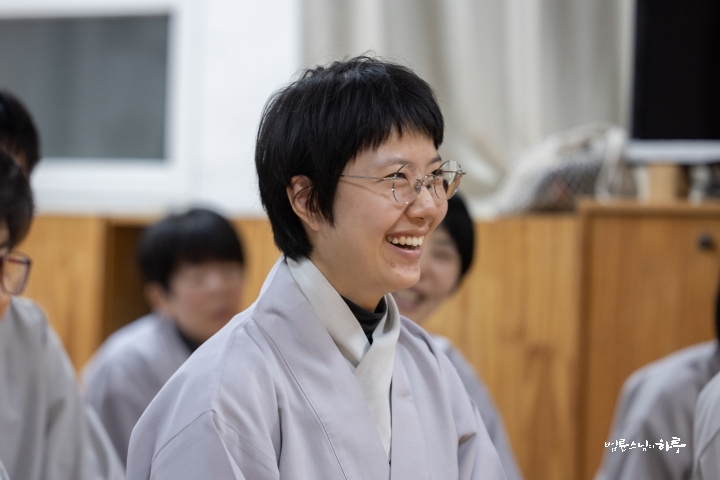
Questions continued to follow.
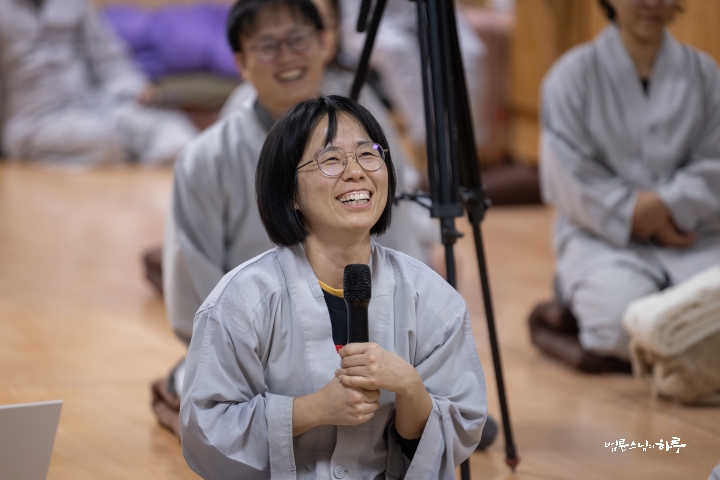
I’m a Chinese Korean, and my health insurance premium is so high that it’s a big burden. I’m wondering if I can receive support from Jungto Society.
I just returned from emergency relief activities in Jamaica the day before yesterday. I’m curious whether JTS plans to expand into Central and South America and to what extent we plan to provide support.
I’m very moody by nature, and I have too many thoughts even when meditating. What kind of practice should I do to better control my emotions in daily life?
When Sunim goes abroad for lectures, can’t I go along as a videographer? I also have a desire to go abroad, but it’s frustrating to only hear ‘no.’
The last questioner asked Sunim for help, saying they were experiencing great difficulty due to a habit that had been troubling them.
How Can I Break the Habit of Clenching My Teeth and Being Tense?
“I recently visited the dentist and was diagnosed with cracked teeth due to my habit of clenching my teeth and being tense. Since then, I’ve observed myself in daily life and realized that I often tense my jaw whether I’m working or just sitting still. Even when having comfortable conversations with people, I talk with my teeth clenched, and I especially clench my teeth while sleeping. This habit continues even when I’m alone, so I’m worried about how to overcome it. I’ve been trying meditation thinking it might help, but I notice my jaw tensing even during meditation. How can I break this habit?”
“The reason your jaw tenses even during meditation is because of your ‘striving mind’ trying to meditate well. The more you try to meditate well, the more you reinforce that state of tension. That’s why when meditating, you must always relax your body and mind and release tension. I saw in the news recently that they hold a ‘spacing out competition’ at the Han River. While it’s far from practice, spacing out can help release tension. Being spaced out is not desirable from a practice perspective because there’s no awareness, but it does have the effect of relieving tension.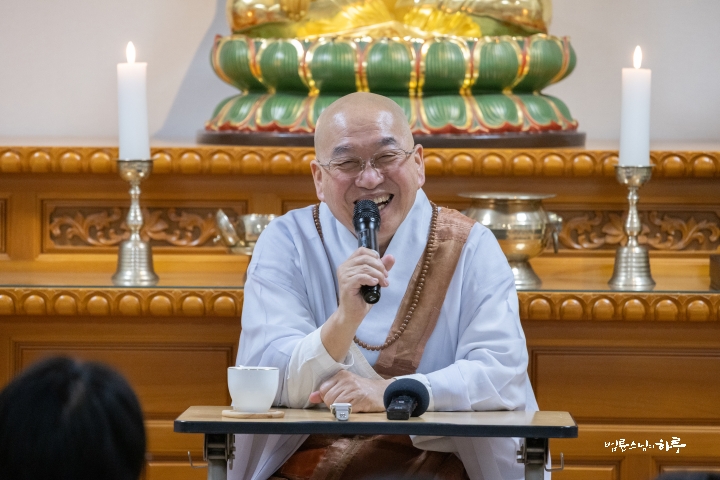

“I’m currently taking prescribed tranquilizers, but they make me drowsy, so people around me tease me calling me ‘half-asleep.’ I’m wondering if I should stop taking the medication.”
“It depends on the severity of your condition. If the tension doesn’t significantly interfere with daily life, staying awake should be the priority. However, if the tension is severe enough to break your teeth or cause teeth grinding during sleep, then treatment takes priority even if it means being drowsy during the day.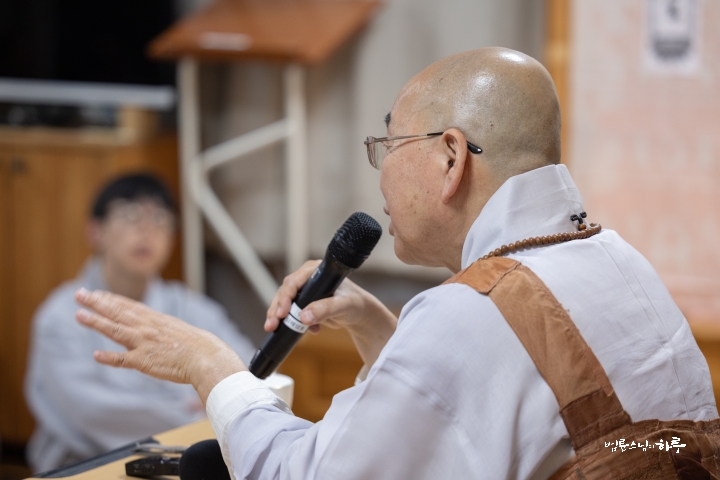

“Thank you. I understand well.”
After finishing the conversation, Sunim gave some words of advice to the community members about how they should approach the upcoming ten-day family week scheduled for the end of December.
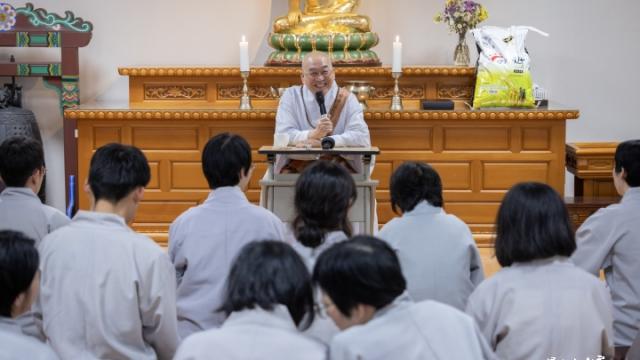
The Principles of Jungto Society Activities and the Meaning of Family Week
Jungto Society has maintained these principles from its founding to the present day. In the early days, there were no issues. At that time, most Jungto Society volunteers were people who had already left home and dedicated themselves to various fields while engaging in social movements during their college years. In some ways, they could be said to have had an even stronger commitment to renunciation than monks. Since such people gathered and worked together, even though there were some differences of opinion about not getting married or not having private property, ‘leaving home’ itself was never an issue. This was because everyone had already thrown themselves into living for the world. Therefore, all volunteers were able to live without holidays or vacations. However, as time passed and parents grew older, opinions were raised that it would be nice to briefly visit home during traditional holidays. The fact that we can practice and engage in activities like this is also due to the grace of our parents. Rather than completely severing family relationships, brief visits during holidays were permitted with the intention of remembering this grace through some communication. Then one day became two days, and eventually, in line with social atmosphere, it settled into visiting home for about three days.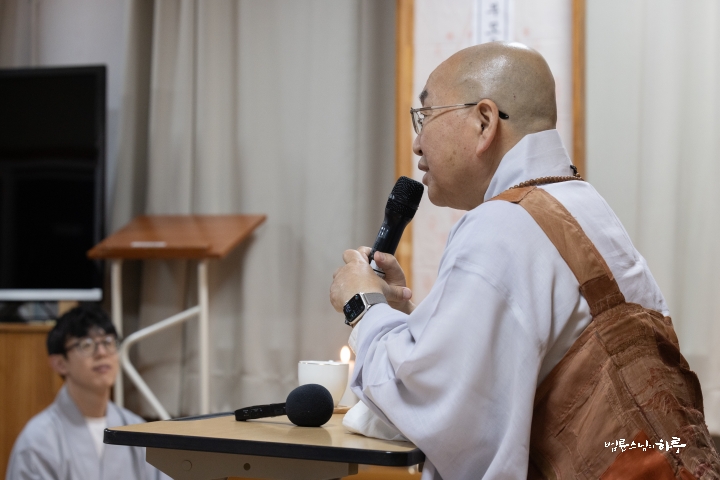
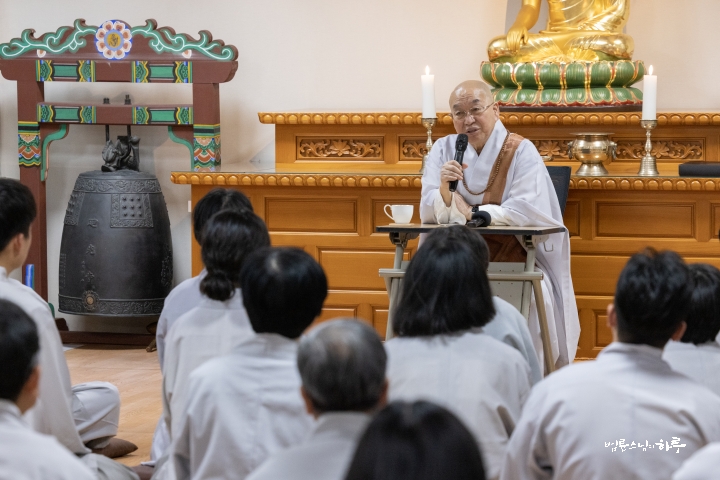
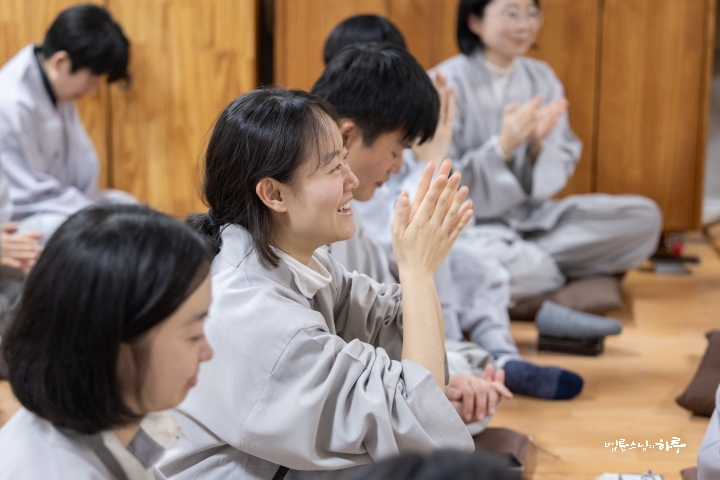
After spending more time taking questions and discussing the principles of Jungto Society activities and the meaning of Family Week that Sunim had emphasized, the dialogue session concluded at 10 PM.
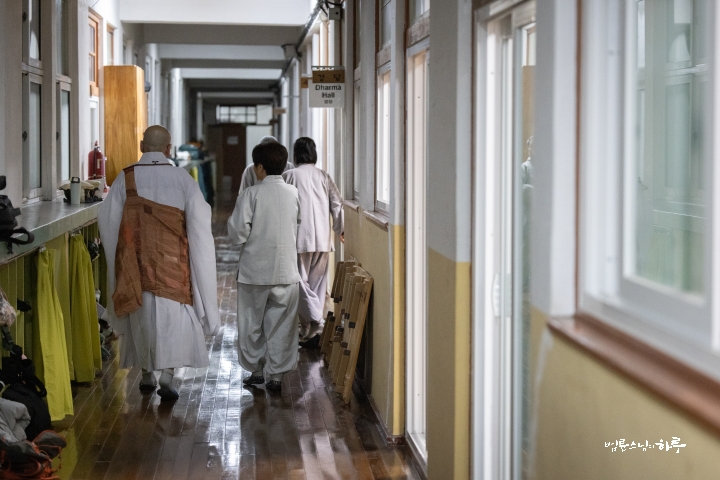
Tomorrow morning, the plan is to load cabbages onto a truck to send to Seoul, participate in communal work picking peppers, and then take an autumn outing to Namsan Mountain in Gyeongju. In the afternoon, everyone will return to their respective residences, and Sunim will travel to Busan to continue with the ninth Dharma Q&A session of the ‘Happy Dialogue’ series.