My High School Son Says Life Is Boring… How Can I Help Him?
Nov 21 - 2025. Day 1 of Kimchi Making, Friday Dharma Q&A
Hello. Today is the day for making kimchi at Dubuk Jungto Retreat Center.

About 30 members of the Seoul lay Sangha, along with Dharma Teachers and full-time volunteers, gathered at Dubuk Jungto Retreat Center for three days of kimchi making. Sunim operates various social organizations including the Peace Foundation, JTS, and Eco Buddha, and interacts with various social figures. Every year at the end of the year, he expresses his gratitude by making kimchi with agricultural products harvested directly from Dubuk Jungto Retreat Center. This year too, the community carefully prepared kimchi to eat throughout the year as well as kimchi to give as gifts.
After morning practice and meditation, kimchi making began at 6:40 AM. Sunim first made a round to check the preparation status of each team. They were scattered around washing radishes, cutting ingredients, and making seasoning.
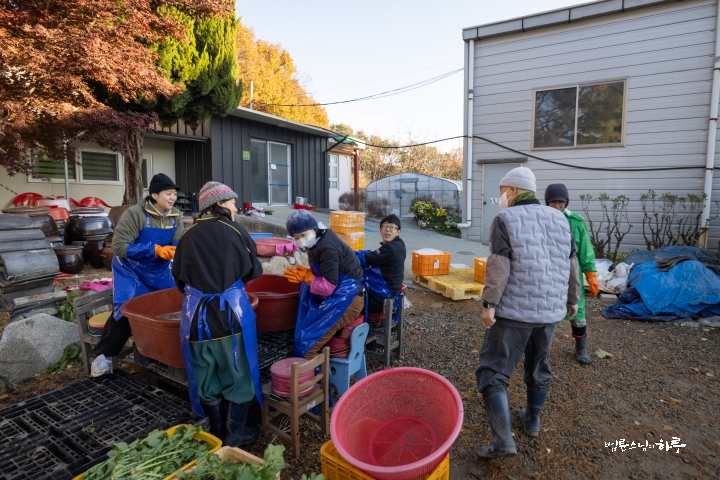
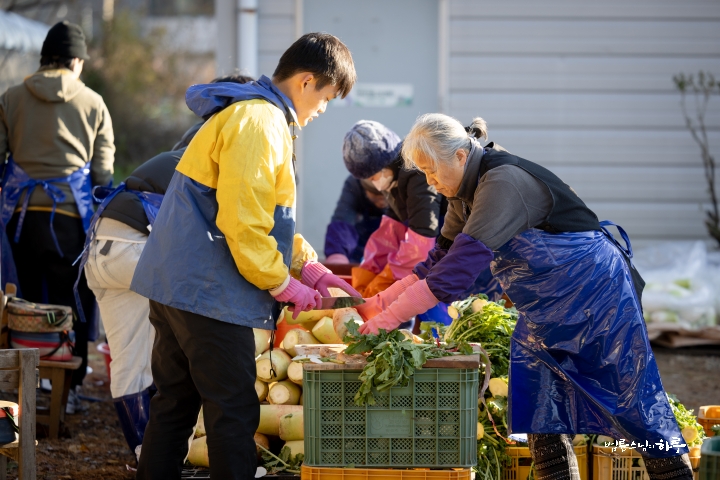
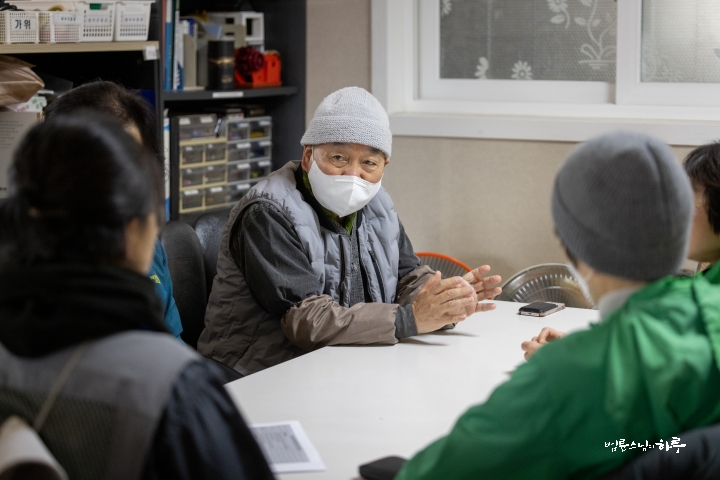
While the practitioners prepared the base ingredients for kimchi, Sunim held a meeting with the kimchi preparation team in the office. After reviewing the overall kimchi plan for the three days, he discussed detailed plans for each stage including cabbage harvesting, salting cabbage, making kimchi filling, mixing seasoning, and gift packaging, then concluded the meeting.
The weather was perfect for working, with warm sunshine in a clear sky without a single cloud. At 9:20 AM, everyone headed to the field to harvest cabbage.
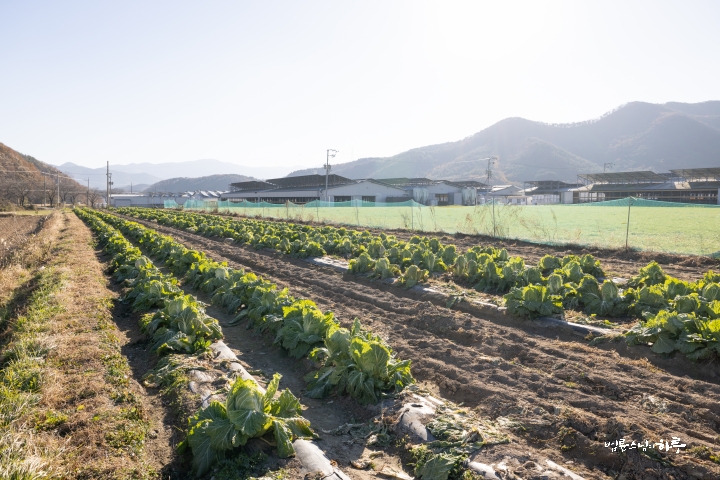
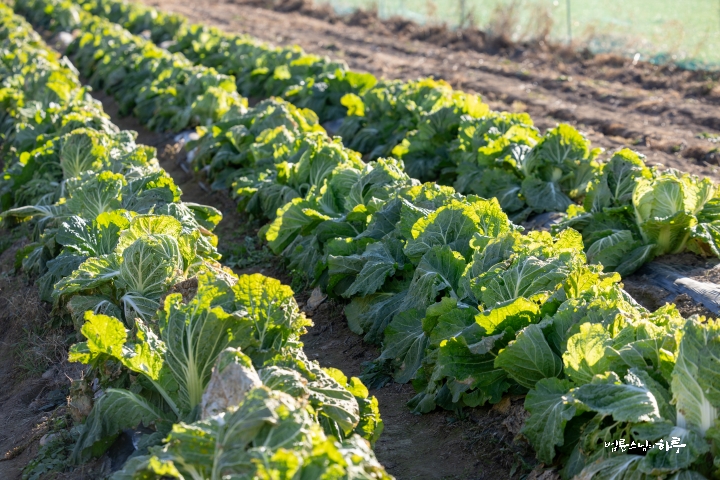
First, it was decided to harvest 670 cabbage heads from the 500-pyeong field. The cabbage leaves swayed in the autumn breeze, standing in neat rows. The hard work of the farming team throughout the year and the grace of nature could be felt.
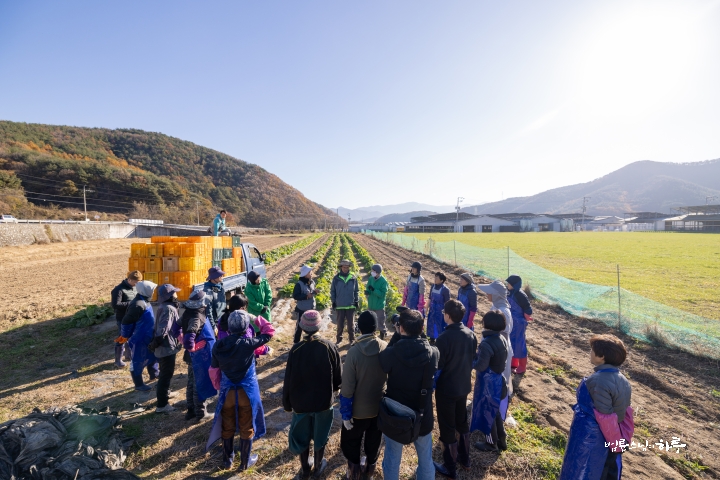
When all the practitioners gathered, the farming team leader explained the work.
“We’ll harvest 670 cabbage heads from this field, then move to the next field to harvest 330 heads, for a total of 1,000 heads to load on the truck and take to Dubuk Jungto Retreat Center. Please load them on the truck while they’re in boxes to prevent damage. If we run out of boxes, we’ll put the rest in ton bags.”
When the explanation ended, everyone shouted together.
“1,000 cabbage heads harvest! Fighting!”
A knife was needed to cut the cabbage roots, but the person in charge had forgotten to bring knives. Sunim suggested work that could be done while waiting for the knives.
“Since this has happened, let’s knock the cabbages to one side. When the knives arrive, we can just cut them right away.”
Sunim quickly moved forward along the furrow, knocking over cabbages. The practitioners also scattered throughout the field, quickly knocking over cabbages and placing transport boxes at regular intervals.

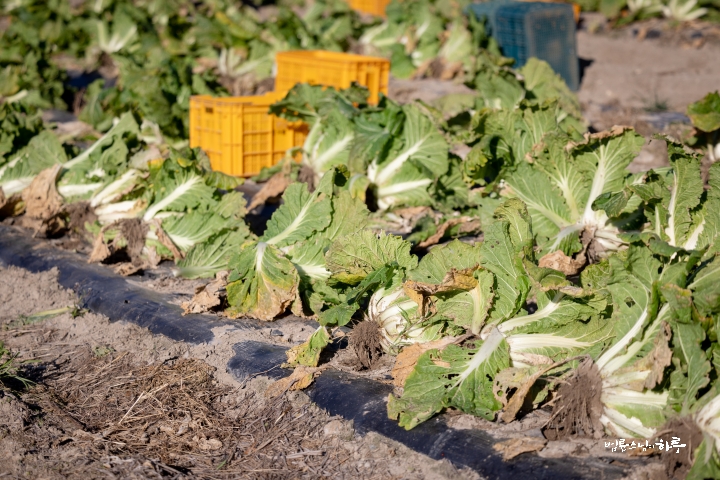

The knives soon arrived. Sunim and the practitioners quickly cut the roots of the knocked-over cabbages cleanly with knives.
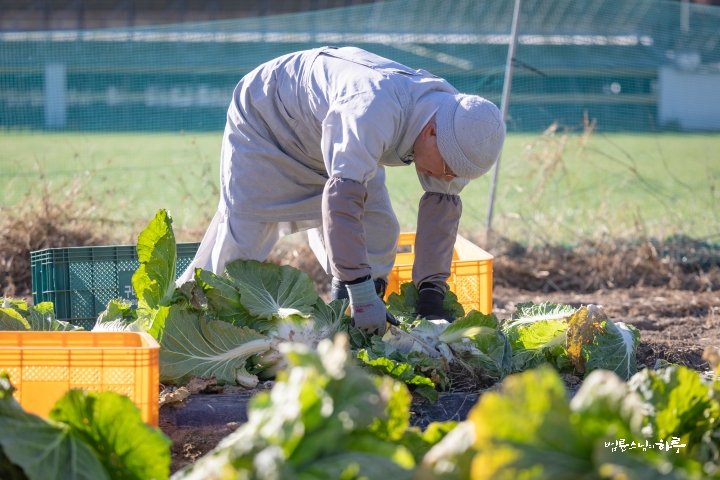
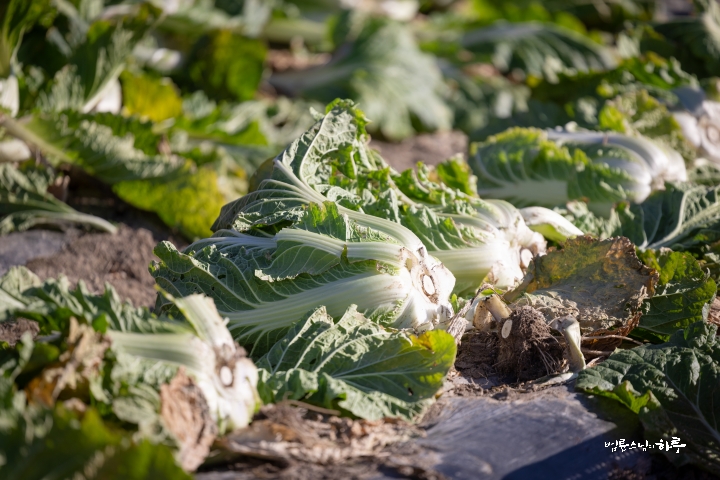
The cabbages with cut roots were placed in boxes. The cabbages were so large that only one or two could fit in each box.
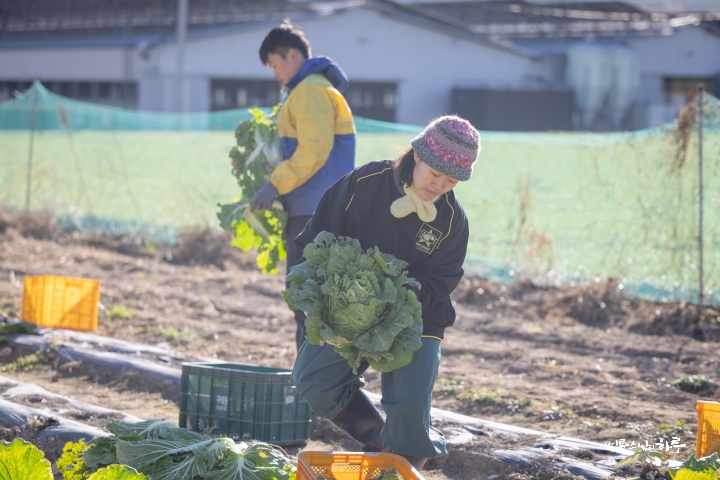
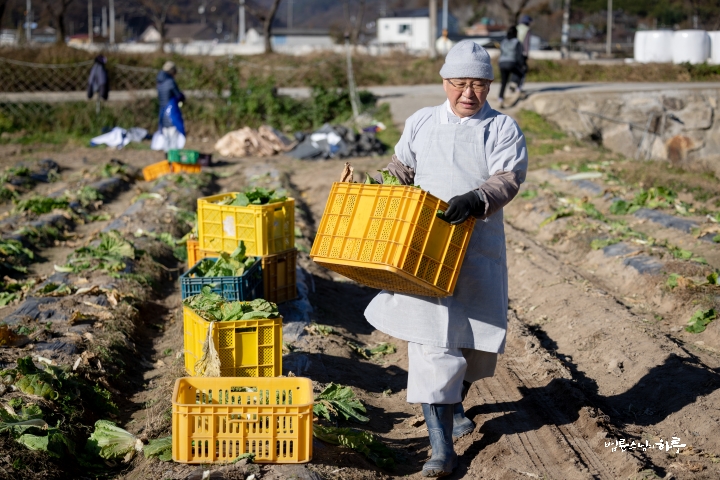

When the truck loaded with boxes departed, the next truck arrived carrying ton bags. This time, cabbages were carefully packed into the ton bags.

“Here come the cabbages.”
When all the nearby cabbages were loaded, the truck moved, and when the truck stopped, cabbages were carried again in relay. Sunim got on the truck and busily put the cabbages handed by the practitioners into the ton bags.
“Pass them this way.”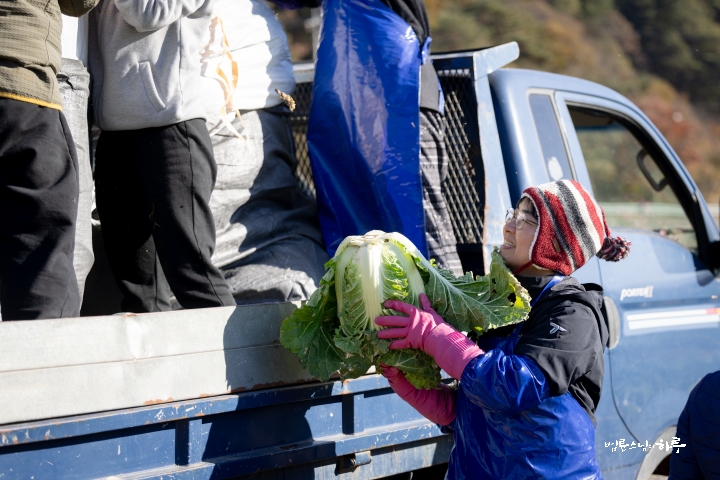
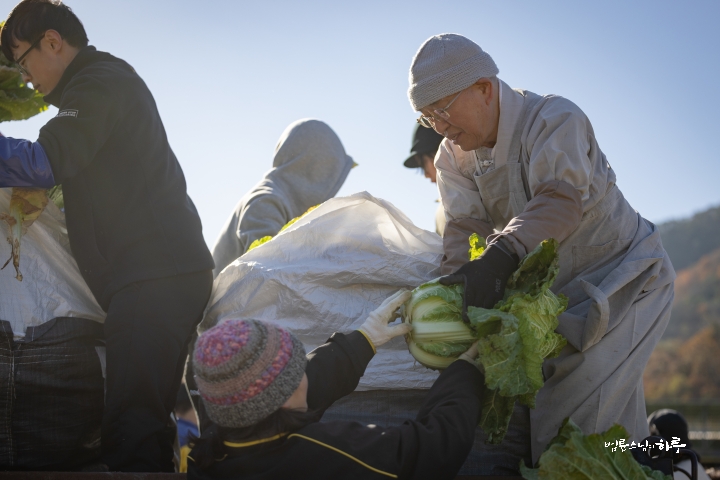
Putting cabbages in ton bags made the work much faster. The ton bags were filled with cabbages in no time.
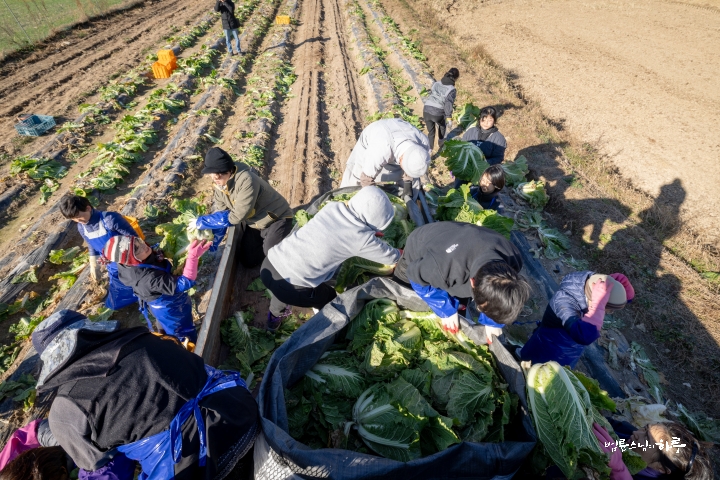
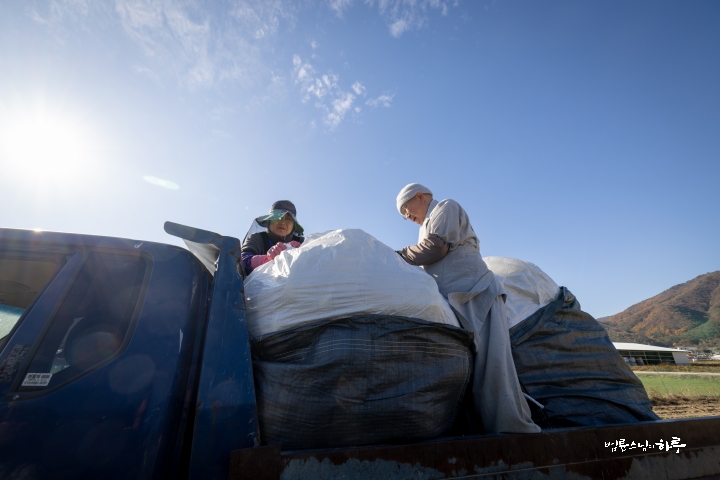
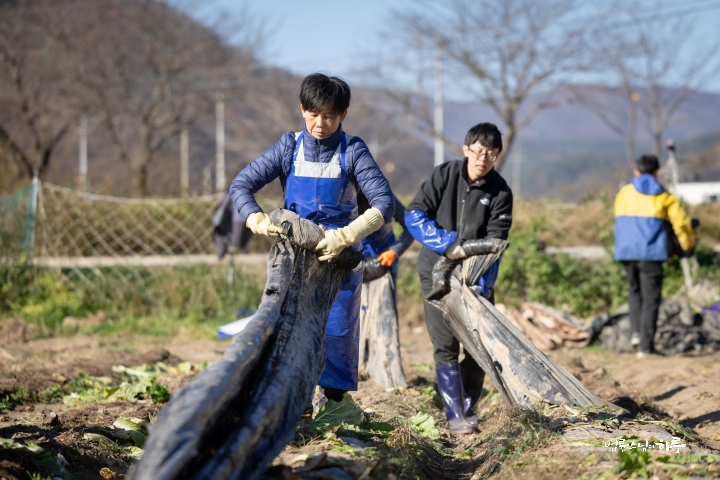
When the truck departed fully loaded with cabbages, they began to clean up the field where cabbage leaves had been scattered. After removing the mulching plastic and preparing the field for next year’s farming, they moved to the next field.
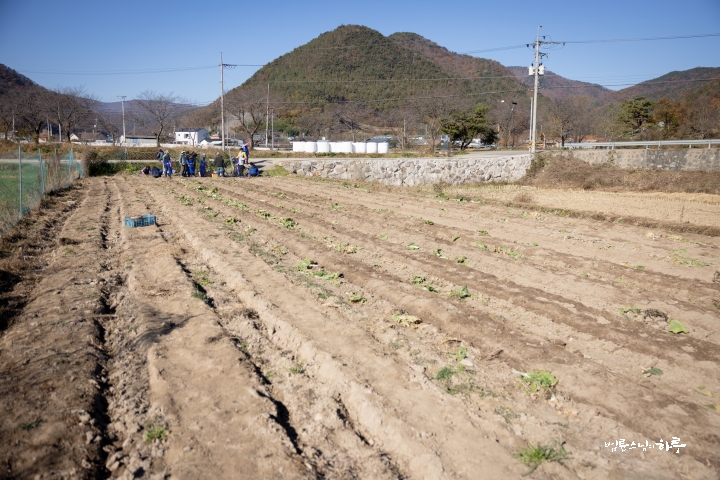
Arriving at the 200-pyeong field next to the dolmen, they began harvesting cabbages again. When all the practitioners arrived at the field, Sunim explained the work.
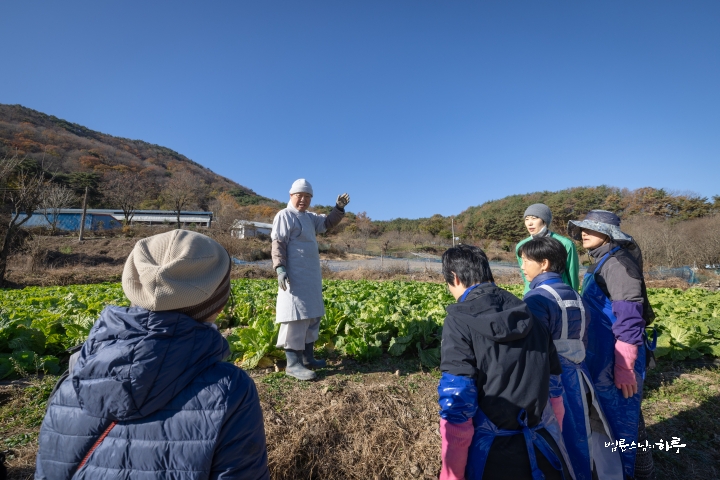
Then they entered each furrow in order and began harvesting cabbages.
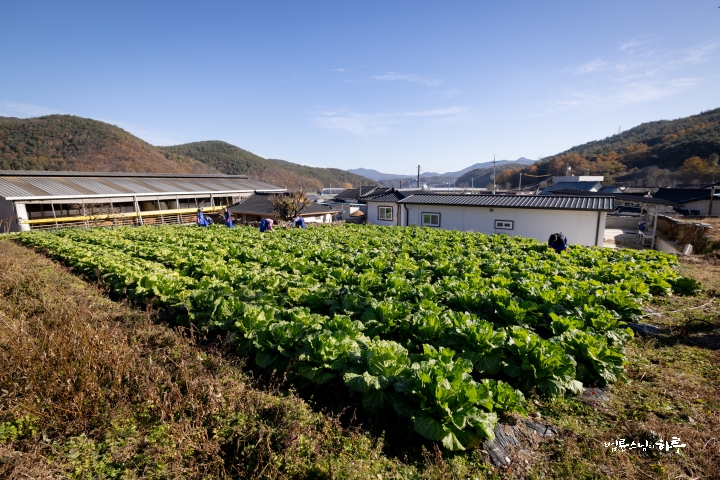
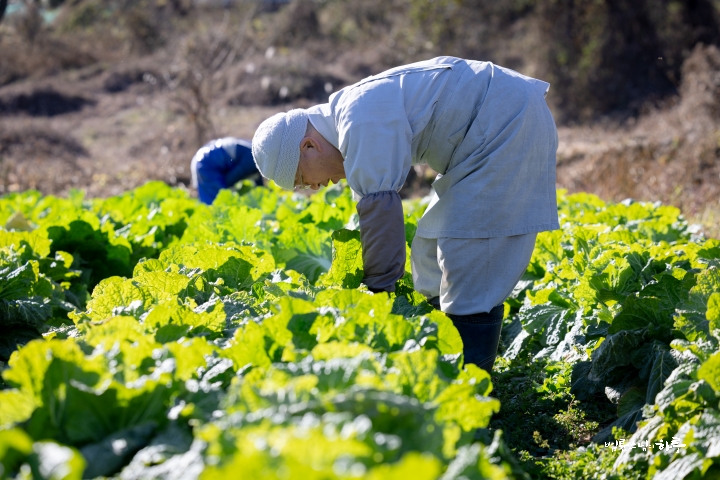
When they knocked over the cabbages and cut the roots with knives, the white inner flesh of the cabbages sparkled in the sunlight.
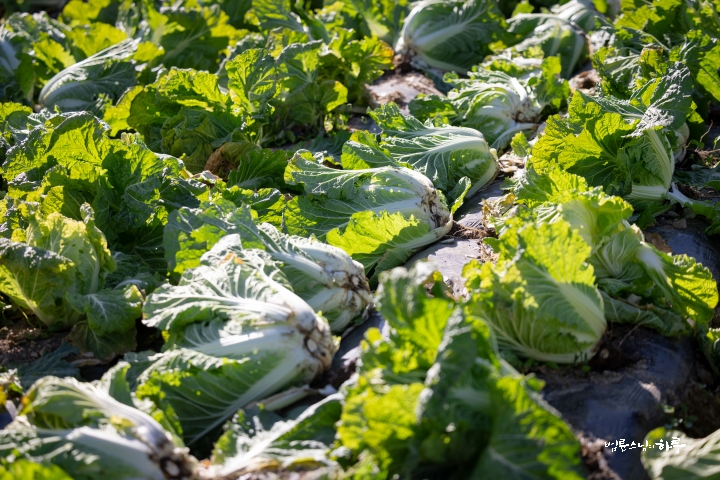
As Sunim cut the cabbage roots and moved on, the practitioners busily carried the cabbages to the truck in relay. Cabbages were neatly stacked in the ton bags loaded on the truck.

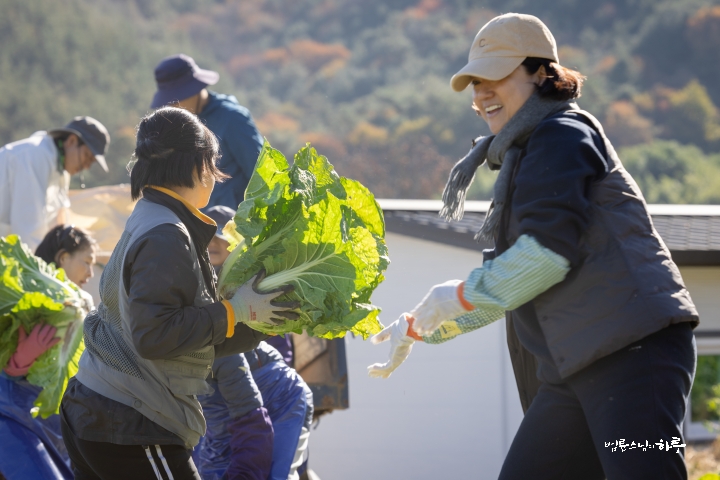
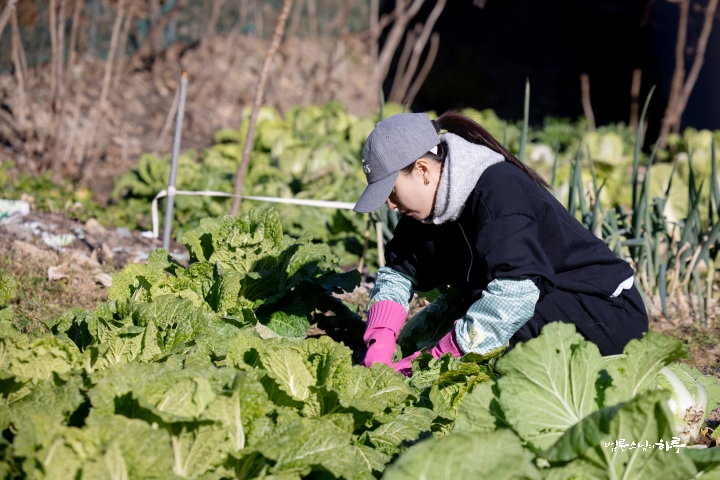
While they were busy harvesting cabbages, actress Han Hyo-joo arrived. She had attended a Gilbeot Dharma Assembly recently and heard Sunim invite her to come help with kimchi making, so she rushed over to lend a hand.
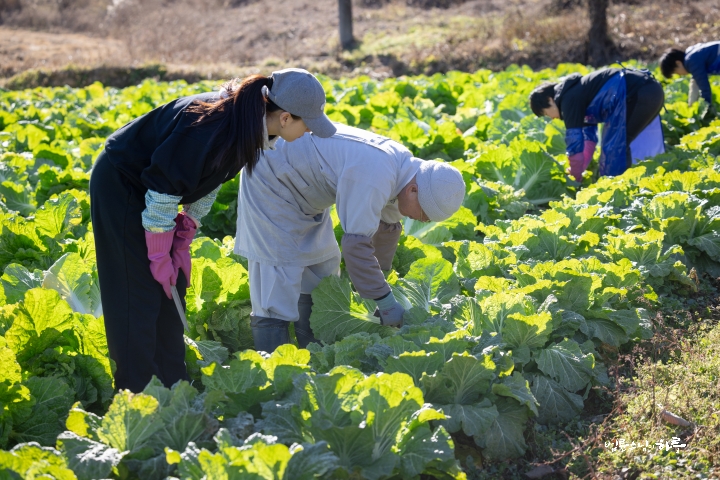
“Yes!”
“Leave the small ones. We’ll only harvest the big ones.”After listening to Sunim’s explanation, she immediately joined in harvesting cabbages.
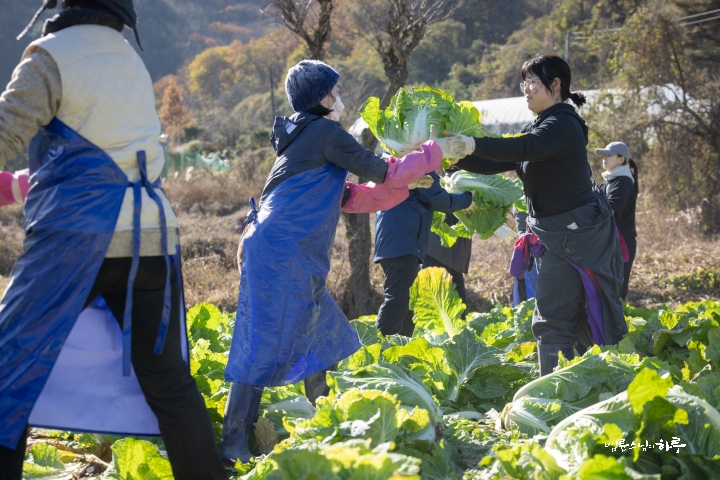
After knocking over all the cabbages, everyone worked together to load them onto the truck. They stood in a long line and carried cabbages in relay.

Sunim called out loudly at intervals to give updates.
“Those loading last, please confirm the exact count.”To avoid confusion with the count, everyone called out numbers while carrying cabbages.
“Fifteen, sixteen, seventeen…”
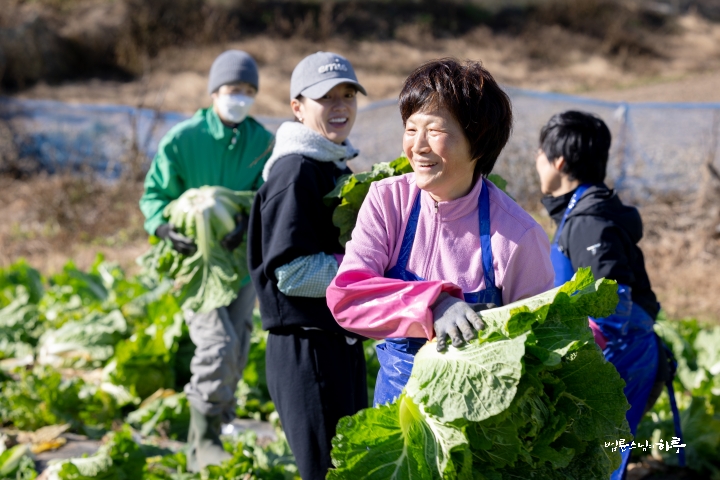
Large cabbages for gifts were loaded immediately, while small cabbages were set aside separately. When one row was completely harvested, they moved to the next row. When the truck departed fully loaded with cabbages, they decided to carry the remaining cabbages to the field entrance before the next truck arrived. They set up tables for convenient loading onto the truck and stacked the harvested cabbages high on them.
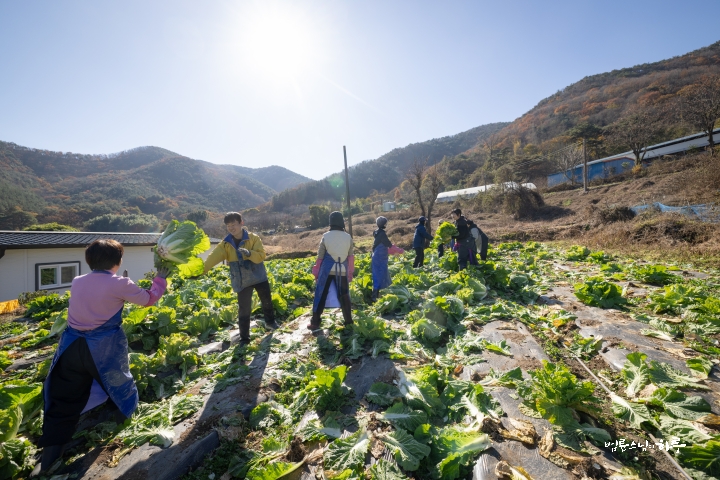
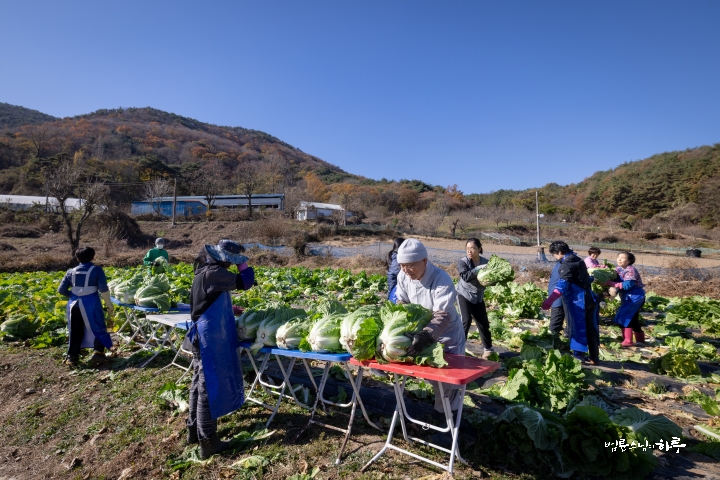
Carrying cabbages in relay, they quickly piled up like a mountain. The cabbages were very large and heavy.

When the truck arrived again, they began putting the stacked cabbages into the ton bags on the truck. Sunim smiled and said again.
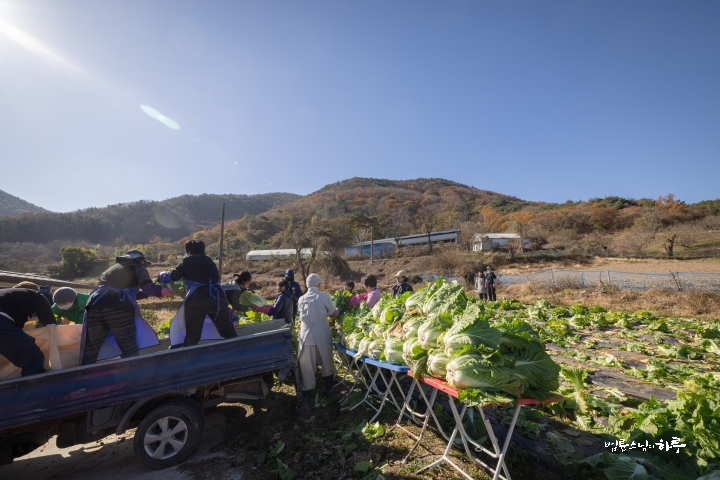
Sweat beaded on their foreheads, but the cool autumn breeze quickly cooled them down.
Cabbages that were too far away for relay passing were moved by throwing and catching with force.
“Well done!”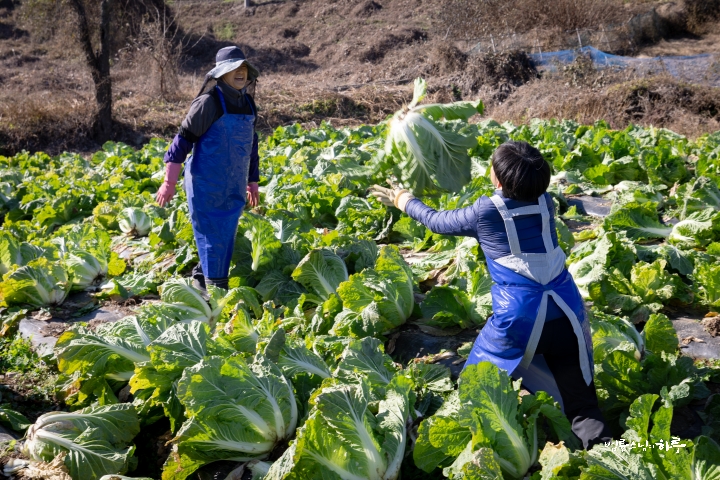
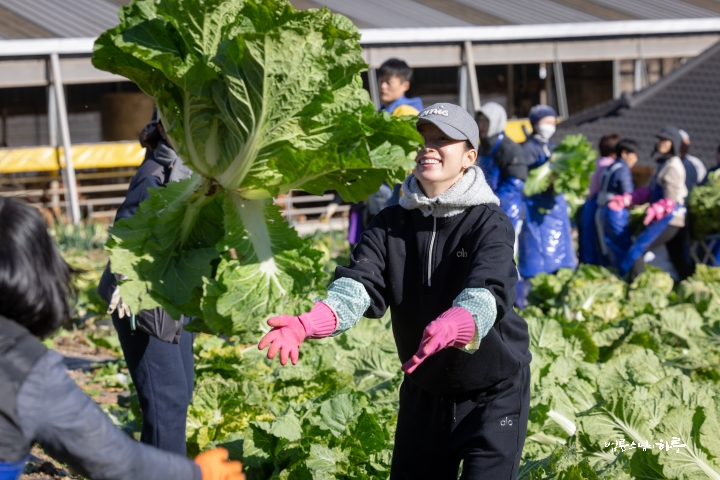
Working breathlessly to carry cabbages, they had harvested all 330 heads before they knew it. With time remaining, they also harvested cabbages to be sent to Seoul on the third day and stacked them at the field entrance.

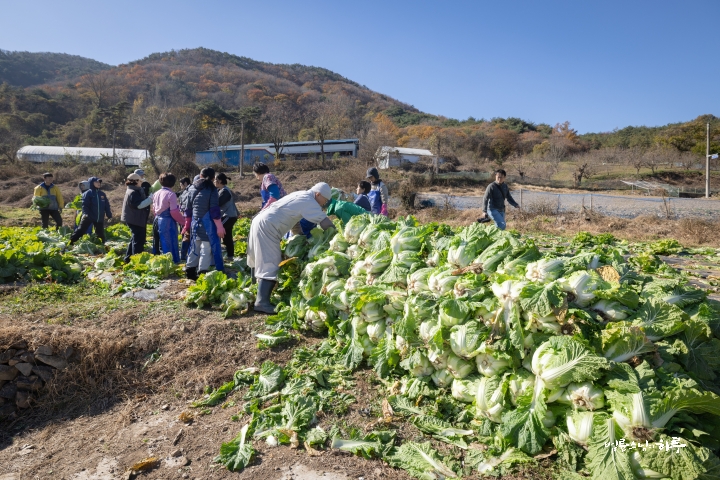
At 11:30 AM, Sunim announced the end of the morning work.
“Great work, everyone!”Everyone got on the truck together and headed to Dubuk Jungto Retreat Center.
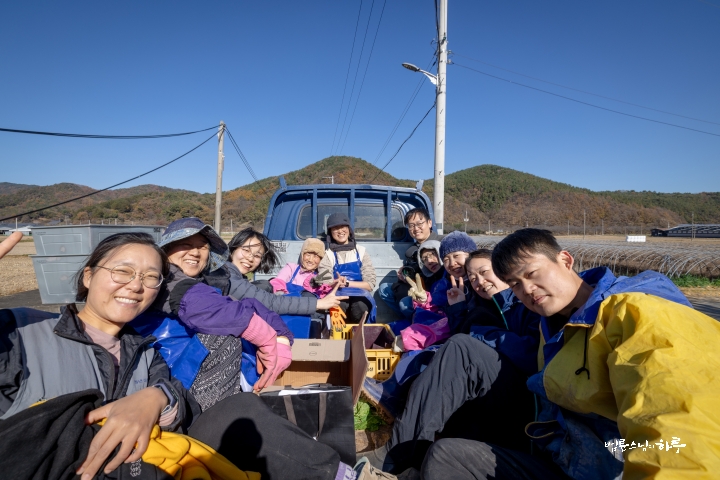
The playground was filled with harvested cabbages. Lunch was served starting at 11:30 AM.

While the members of the Sangha were taking a short break after their meal, the practitioners in charge of facilities set up a pool to salt 1,000 heads of cabbage all at once. After completing the pool setup, they began cutting and salting the cabbage at 12:30 PM. When everyone had gathered, Dharma Teacher Hwagwang personally demonstrated how to cut the cabbage. The Dharma Teacher held a knife and slowly continued with the explanation.

“First, cut down firmly as if striking once, then make a cross-shaped incision about halfway through, and then spread it apart with your hands.”
When the cabbage split open cleanly, applause erupted.

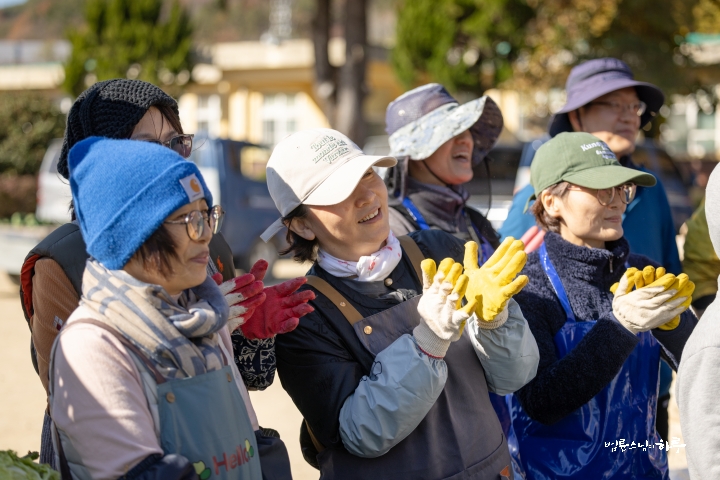
Sunim then added a supplementary explanation.
“For the outer leaves, remove only those that are yellow or in very poor condition, but it would be good to leave them as they are and salt them if possible. This is because they will continue to fall off anyway during washing. So we’ll try to leave the outer leaves as they are.”After learning how to cut the cabbage, everyone dispersed and began working. Many members of the Sangha, including Sunim, joined in cutting the cabbage. They started by cutting the 670 heads of cabbage harvested from the long field first.
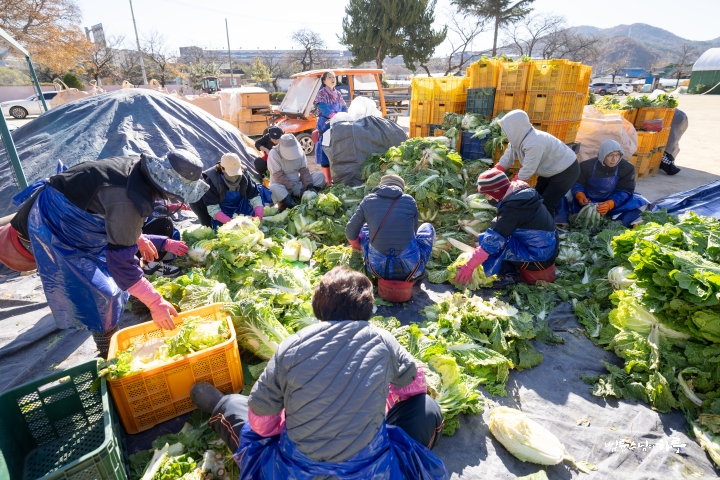

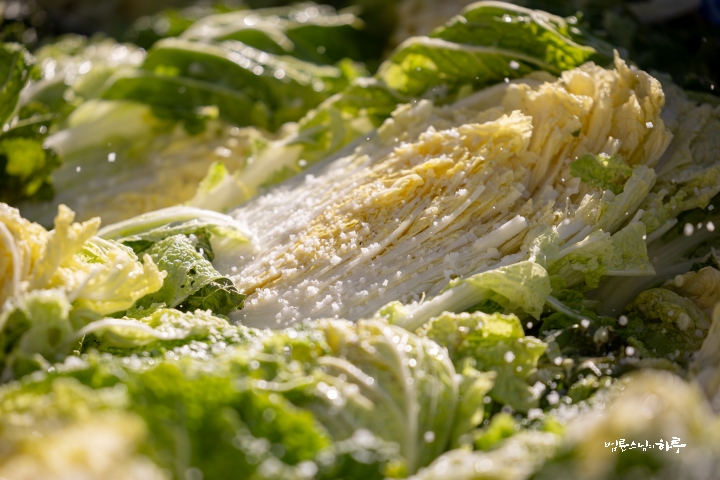
After trimming the outer leaves and cutting off the bottom of the cabbage to split it in half, the cross-section revealed the densely packed interior.

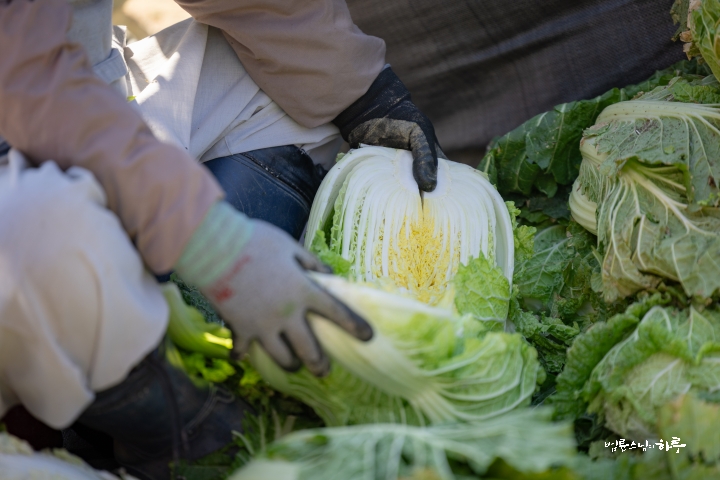
After cutting off the bottom of the cabbage and splitting it in half, they placed it in baskets. The transport team then carried the baskets and passed them to the salting team.
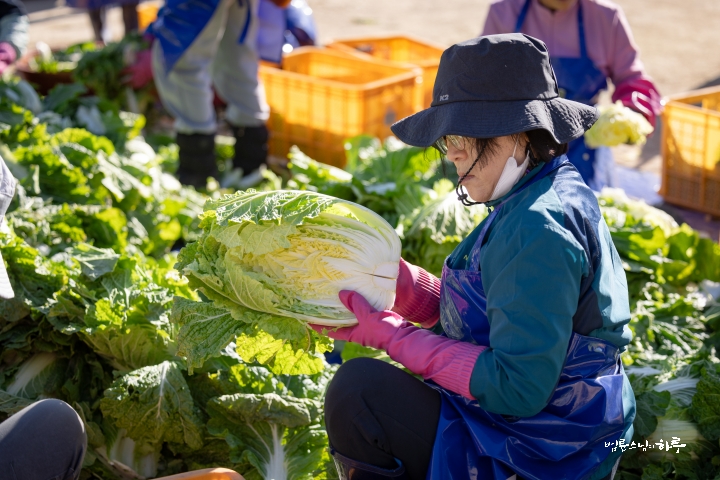
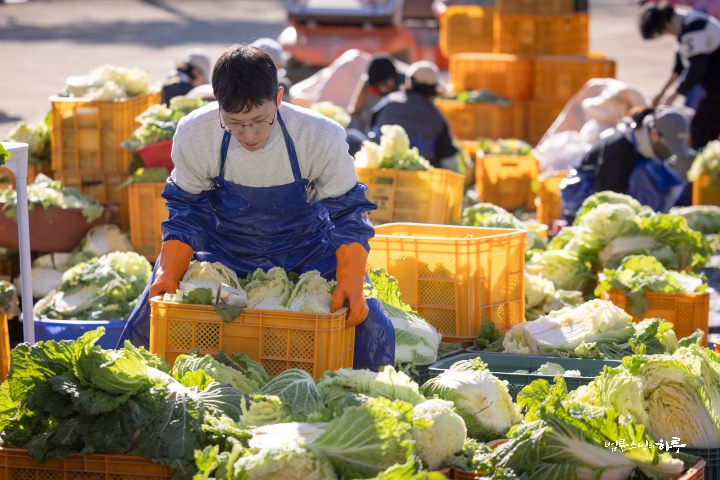
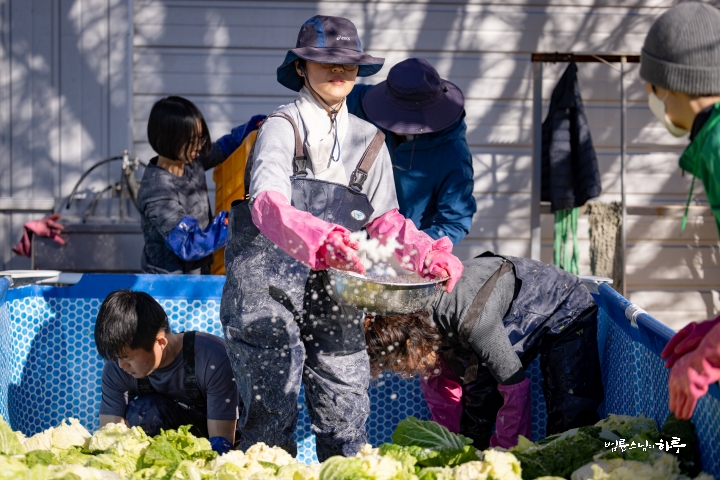
They filled containers with salt water, dipped the cabbage once, and then removed it. The cabbage that had been salted once was then neatly stacked inside the pool. When a layer of cabbage was stacked in the pool, they generously sprinkled salt on top.


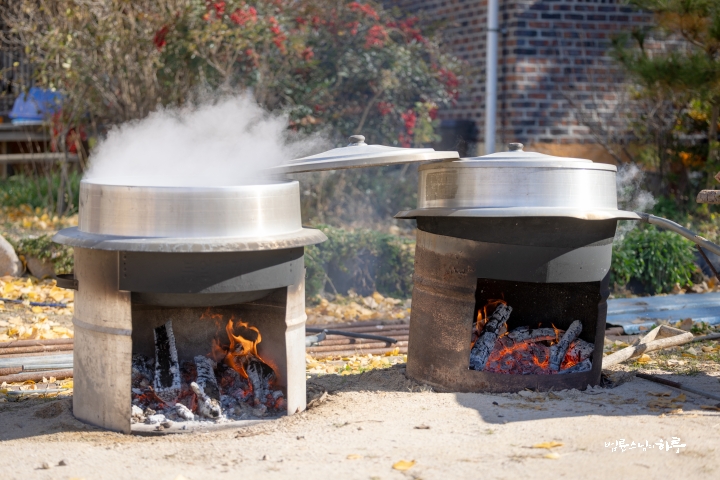
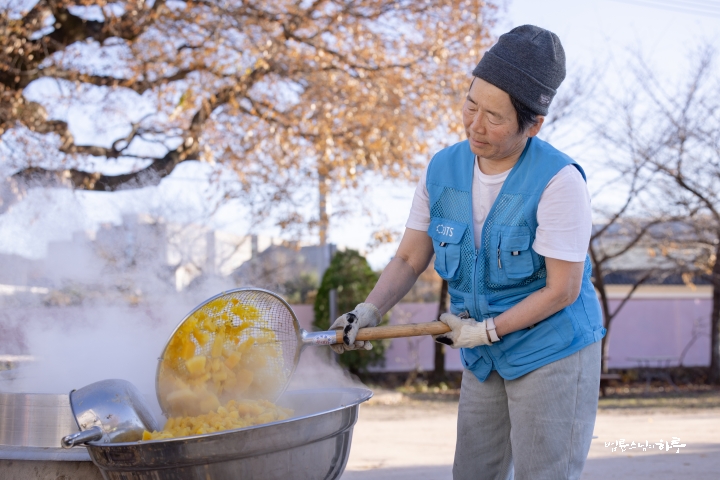
The seasoning team lit a fire with firewood, hung a pot, and made broth by adding various ingredients.
After cutting all the cabbage from the long field, they moved to another location and cut 330 heads of cabbage harvested from the dolmen field. Sunim quickly selected and removed only the large, good cabbages from the bulk bag.
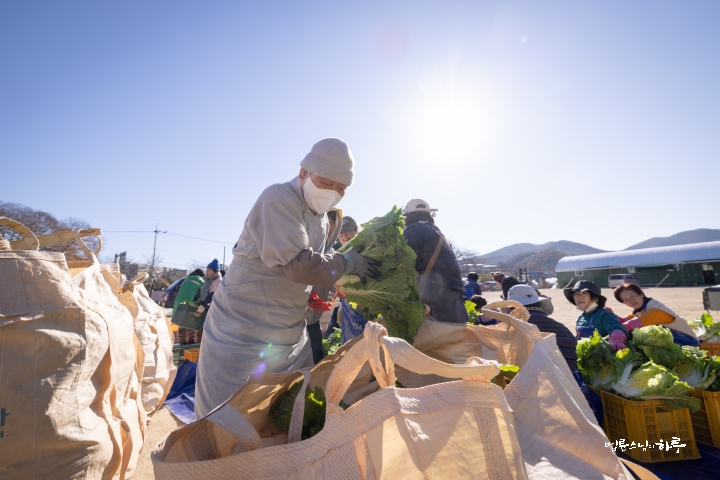
As the cabbage piled up like a mountain, the members of the Sangha quickly split them. The crisp sound of cabbage cores splitting echoed from all directions.
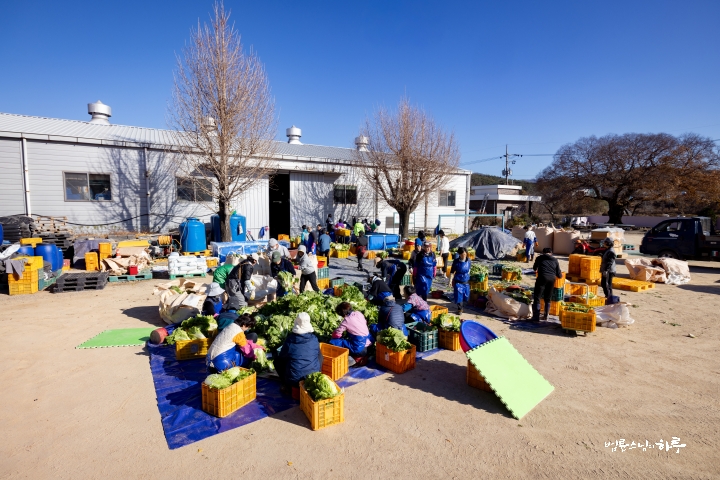

After two hours of diligently cutting cabbage, they had cut all 1,000 heads. They took a short break. After refreshing themselves with steamed buns and a cup of warm tea, they resumed the communal work.
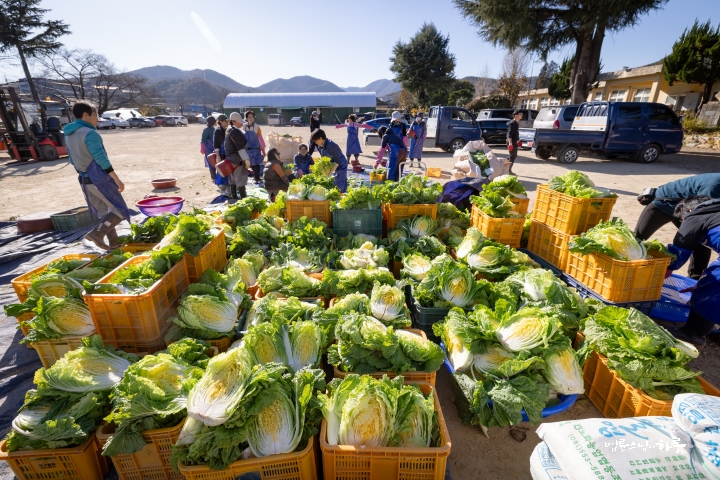
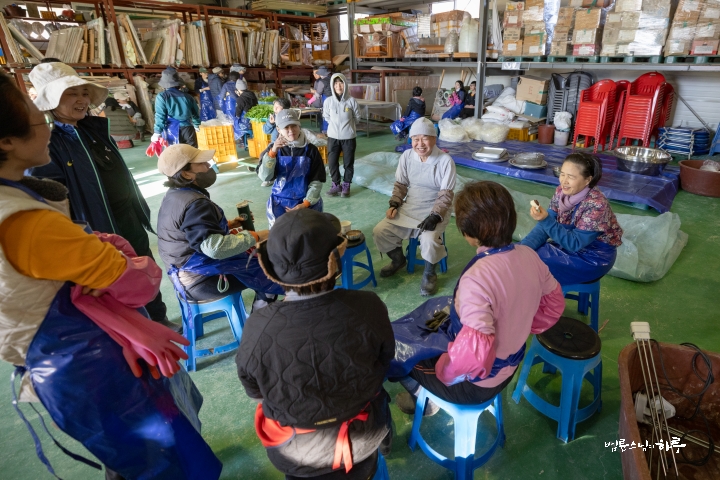
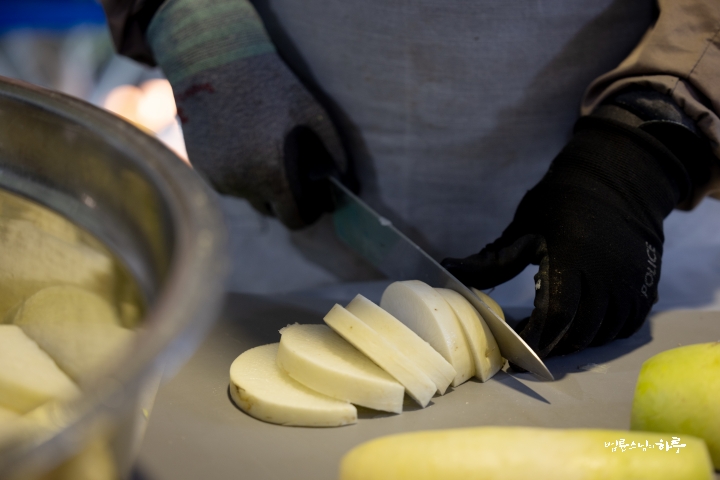
Sunim and the practitioners who had finished cutting the cabbage went into the warehouse and began cutting radishes. Since the radish harvest had failed this year, all the radishes had been purchased from the market.
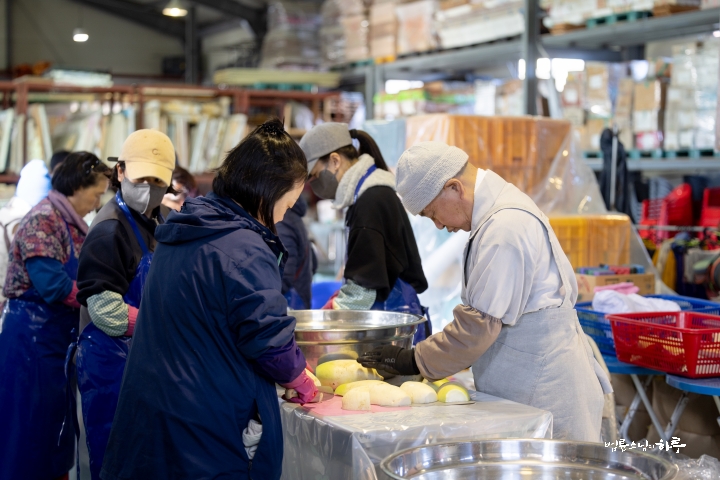
They placed the cleanly washed radishes on cutting boards and cut them into large pieces to make seokbakji (radish and cabbage kimchi). All the cut radishes were put back into plastic bags to be mixed with seasoning when packaging them as gifts tomorrow.
Meanwhile, the pool was filled to capacity with 670 heads of cabbage.
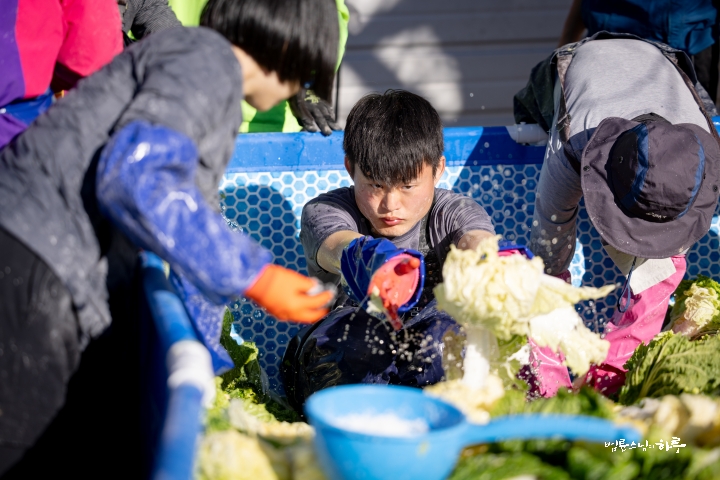

Now the cabbage needed to be fully submerged in salt water. After covering the pool with plastic and placing pallets and stones on top to keep the cabbage from floating, they began salting cabbage in the next pool.

In the second pool, they separately salted only the large and heavy cabbages.
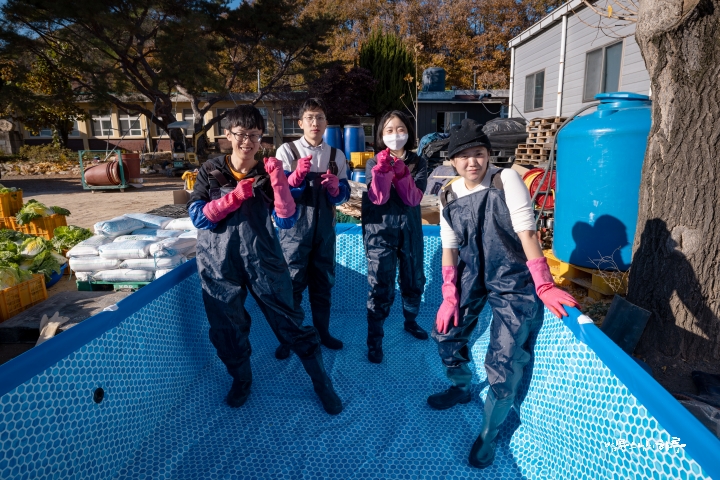

Based on their experience from the first pool, they worked even faster at the second pool.


Finally, they sprinkled salt and filled the pool with hot water. The cabbage was fully submerged in the salt water. Now they just needed to wait until the cabbage was thoroughly wilted.
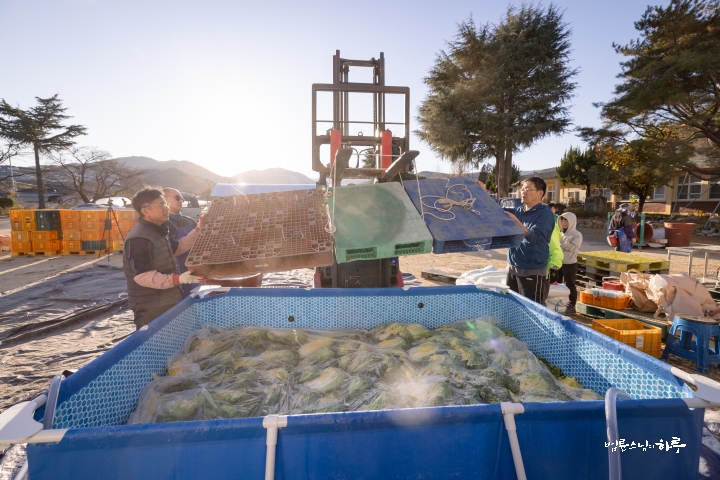
After finishing cutting the radishes for radish and cabbage kimchi, they concluded the first day of kimchi-making communal work at 4 PM. They gathered in a circle and listened to a few representatives share their impressions.
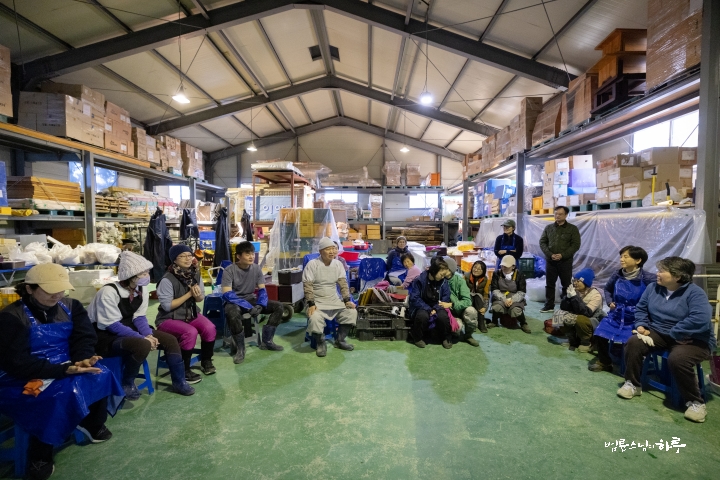
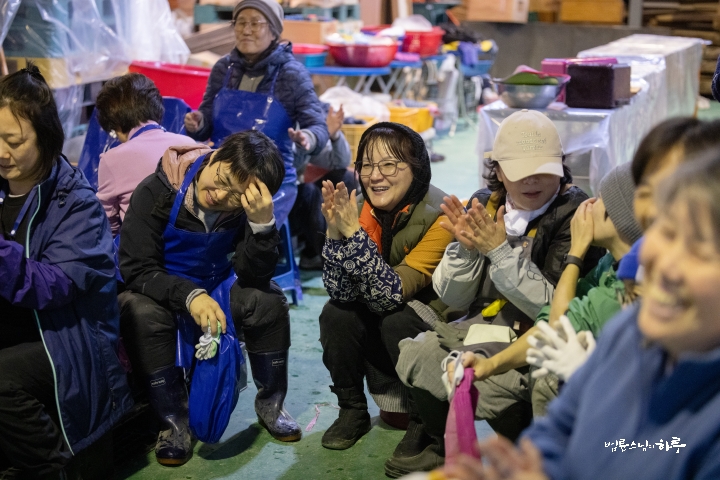
They listened to the impressions of the young Buddhas and Gyeolsa Practitioner trainees who were making kimchi together for the first time.

“I tried salting kimchi in the pool, and as time went on, I wasn’t sure if the cabbage was being salted or if I was being salted… (laughter) But I feel proud that I earned my keep.”
“After experiencing everything from pulling cabbage from the field to salting it, it was really hard. I realized I should eat even a single piece of kimchi with a grateful heart.”
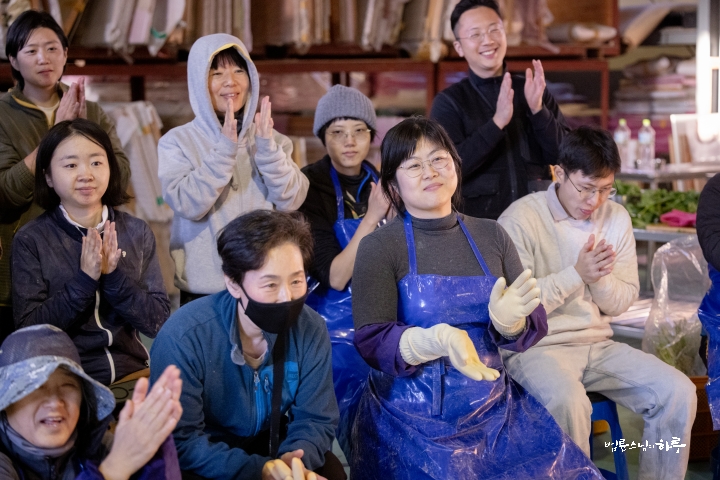
Finally, Sunim concluded the communal work with closing remarks.

They then had dinner. After warming up with hot kimchi soup and rice, everyone retired early for rest.
After sunset, Sunim headed to the broadcasting room for the Friday Dharma Q&A live stream. At 7:30 PM, about 4,200 people had connected to the YouTube live broadcast.
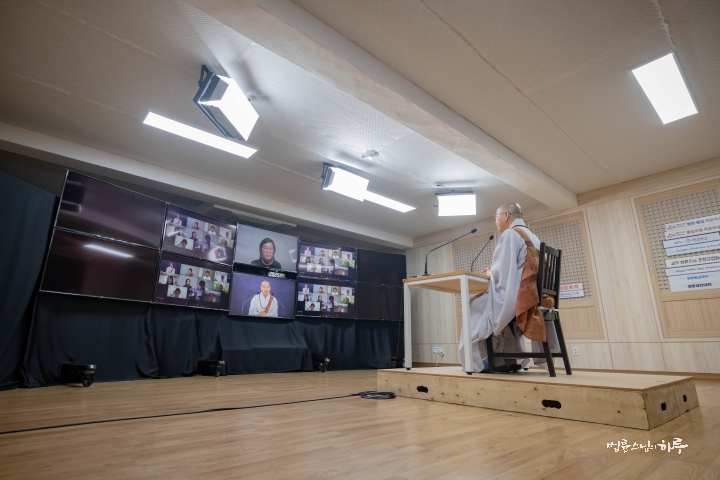
Sunim took his seat in front of the camera and greeted the viewers.

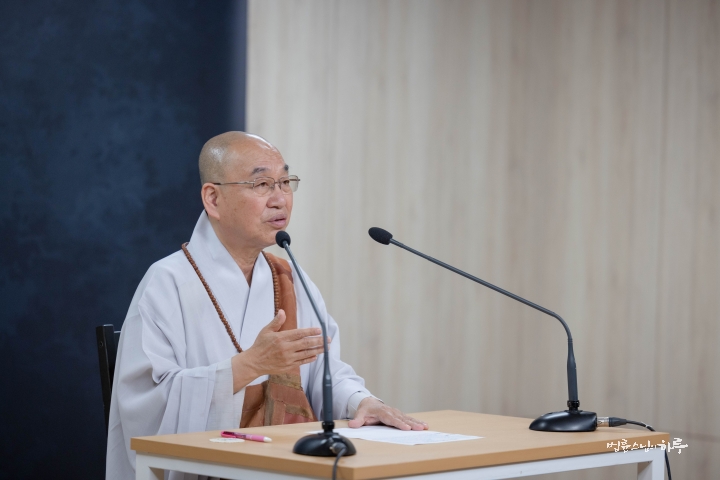
He then had conversations with those who had submitted questions in advance. During the hour, four people pressed the hand-raising button and asked Sunim questions. One of them sought Sunim’s advice as a parent, saying their high school son finds life boring and doesn’t know why he’s living.
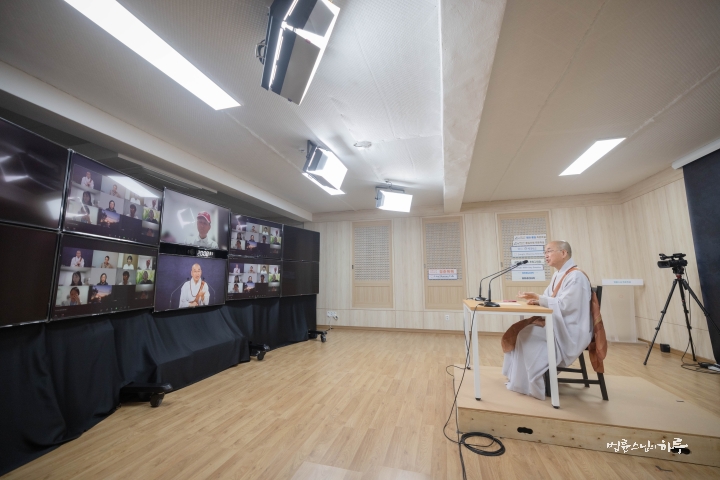
My High School Freshman Son Says Life Is Boring. How Can I Help Him as a Parent?
“My son is a high school freshman who has almost no friends and tends to be alone. He seems to be under severe academic stress, saying he feels different from other kids, that studying is too hard, life is too boring, and he doesn’t know why he’s living. He often says he wants to go back to his childhood. As a parent, I don’t know what to say or what attitude I should take to help him. I’d like to ask what mindset and actions I should have to help my son feel even a little more comfortable and not lose strength.”
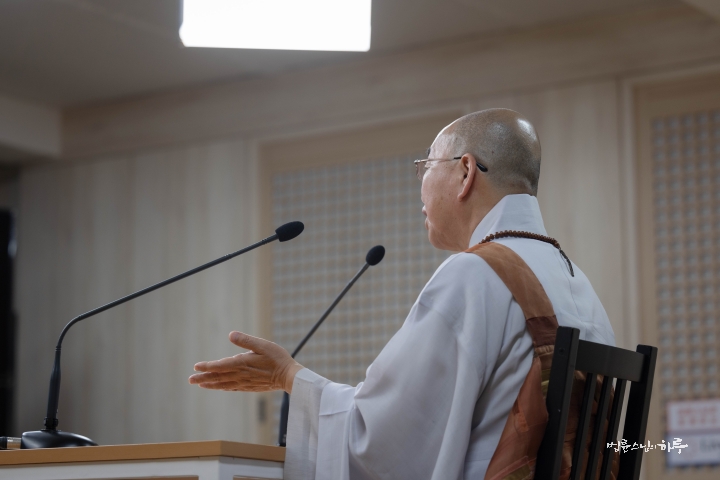
“I’ll take today’s words to heart. Thank you.”
Questions continued to follow.
After being diagnosed with narcolepsy while working at a factory, I’ve been repeatedly quitting jobs and stopping work, losing direction in life. How should I decide on my path forward?
Just as good deeds bring good results, wouldn’t the world be happier if monks married more often? Could marriage be a way to reduce suffering for future generations?
Due to long-term cervical scoliosis and a recent car accident, my body has become severely uncomfortable, and I’ve fallen into helplessness thinking ‘Why is my life like this?’ What perspective should I have amid such suffering?
After all the questioners expressed their gratitude to Sunim, he offered closing remarks.
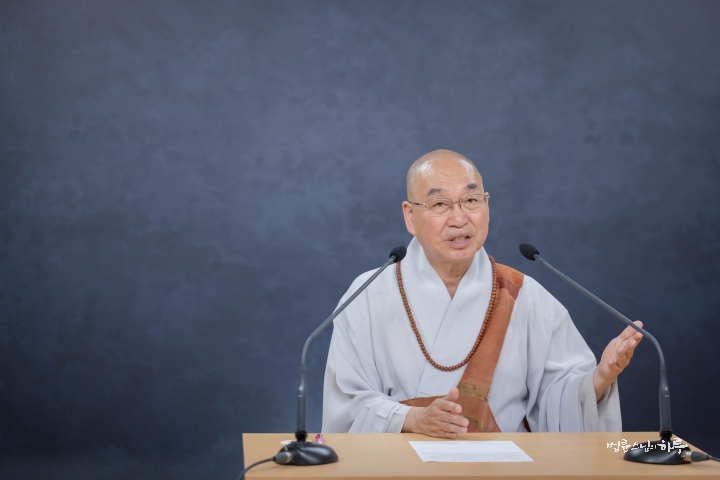
After finishing the live broadcast past 9 PM, Sunim concluded his day’s activities.

Tomorrow is the second day of kimchi-making. The plan is to spend the entire day washing the salted cabbage in running water, draining it, carefully mixing the cabbage with kimchi seasoning, placing radish pieces between layers, and storing everything in containers.