Hearing News of My Critically Ill Mother Made Me Feel Happy. Why Did I Feel This Way?
Nov 19, 2025 - Weekly Dharma Assembly, Peace Research Seminar
Hello. Today is the day of the Weekly Dharma Assembly, where Jungto Society members examine their practice.
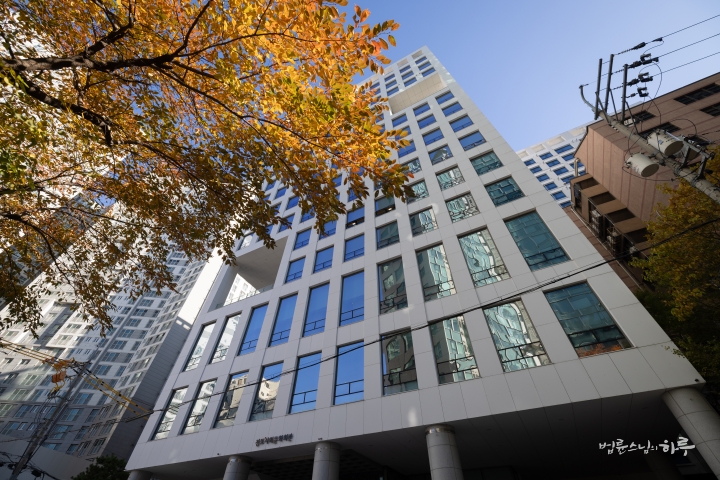
After completing morning practice and meditation, Sunim headed to the Jungto Social and Cultural Center for the Weekly Dharma Assembly.
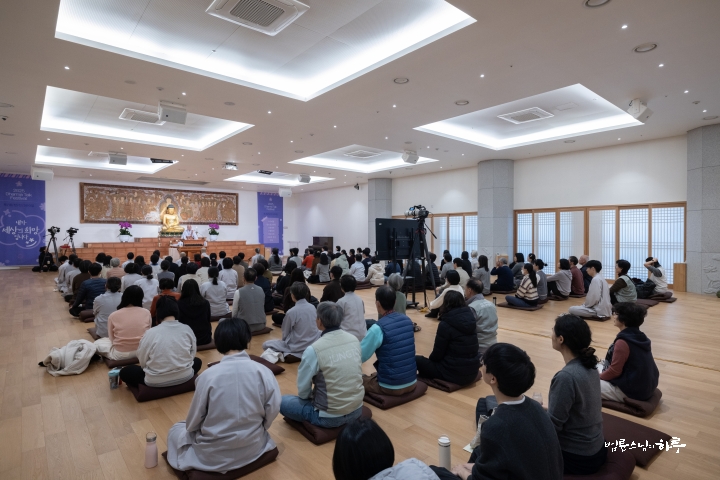
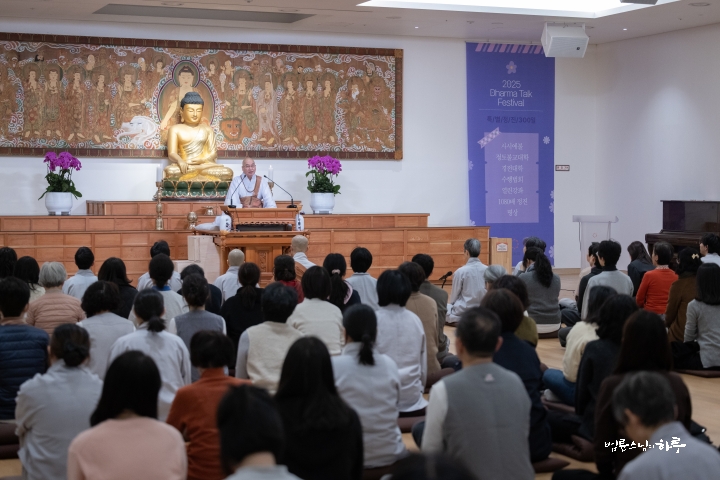
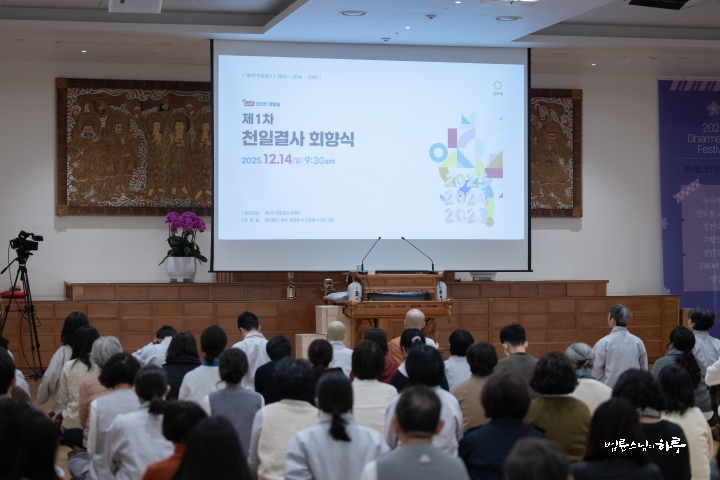
About 100 members of the Sangha had gathered in the Dharma Hall on the third floor. At 10 AM, the Weekly Dharma Assembly began with the Three Refuges and the Heart Sutra recitation. Jungto Society members joined the assembly online by connecting to the video conference room.
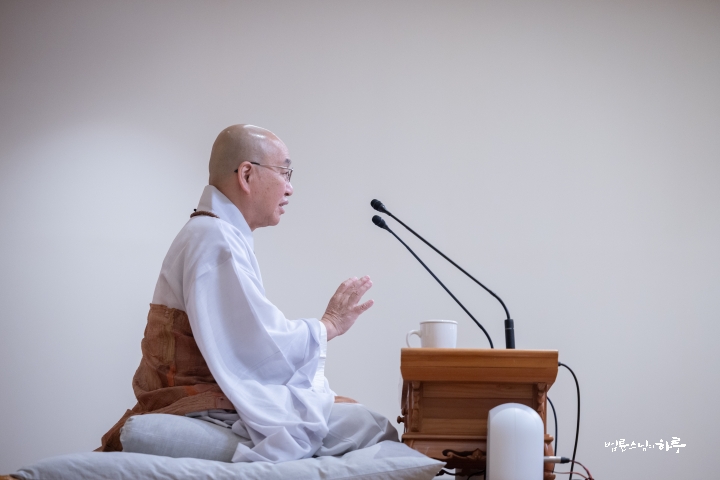
After watching a video about the weekly news of Jungto practitioners, the assembled members requested a Dharma talk from Sunim with three prostrations. First, Sunim gave opening remarks. He provided information about the upcoming First 1000-Day Practice Closing Retreat and spoke about the significance of Jungto Society’s activities, which have transcended faith-based religion to cultivate personal happiness and practice social values.
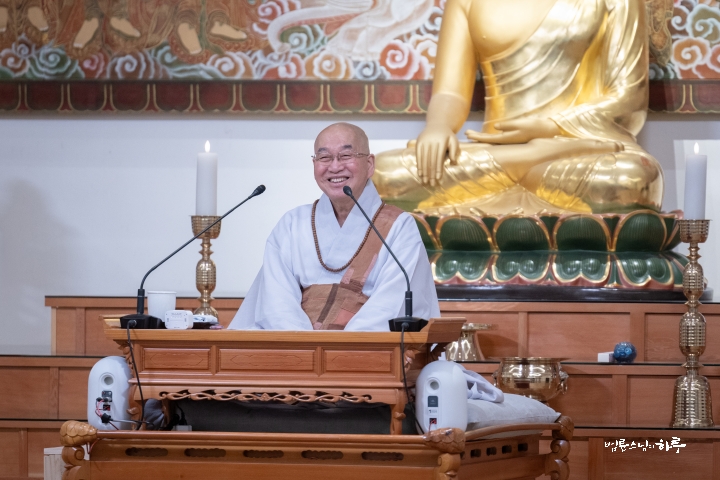
What We Need Now Is the ‘New Mind Movement’
Jungto Society does not emphasize religious materialism such as ‘if you pray, you’ll go to a good place after death.’ Globally, such materialistic religious practices are gradually declining and being pushed out of humanity’s main concerns. Of course, in the United States, conservative Christian forces combine with extreme political actions to cause significant confusion in international society, and in some developing countries, religion still exerts strong influence by combining with feudal values. However, in most democratized societies, religion is no longer a central concern, and its influence is rapidly weakening. Now religion can be said to remain merely as an element of culture. This doesn’t mean people are turning away from spiritual values. They simply no longer rely on materialistic religion as before, and this tendency is particularly pronounced among younger generations.
Next, Sunim received questions from those who had registered in advance. Two people asked questions online. One of them shared their confusion about unexpected emotions that arose upon hearing news of their mother’s critical condition, with whom they had been estranged for a long time, and asked how to view these feelings.

Hearing News of My Critically Ill Mother Made Me Feel Happy. Why Did I Feel This Way?
“My mother left home when I was three years old and later divorced my father. After that, we had no contact until my father passed away the year before last, when we reconnected and occasionally exchanged greetings. However, last week, my mother’s health deteriorated severely, and she almost passed away. Although I couldn’t provide financial support, I thought I understood and felt compassion for my mother in my heart. But when I received the news that she was critically ill and realized she might pass away, I unknowingly felt excited and experienced an inexplicable sense of pleasure. When I became aware of this, I felt guilty. How should I examine these feelings?”
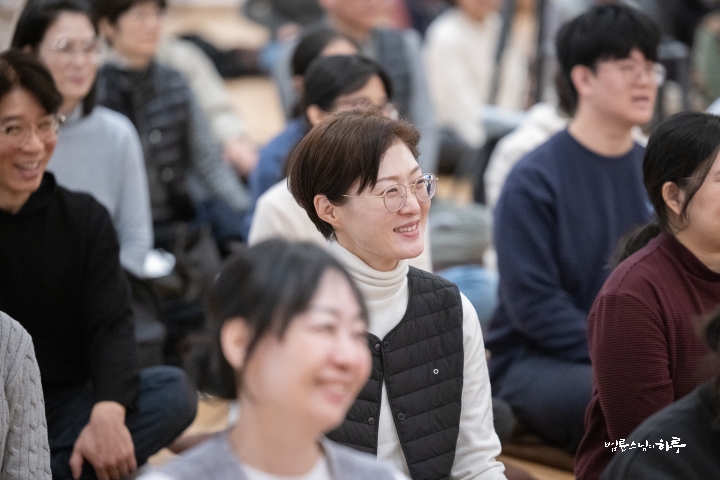
“Yes, thank you.”
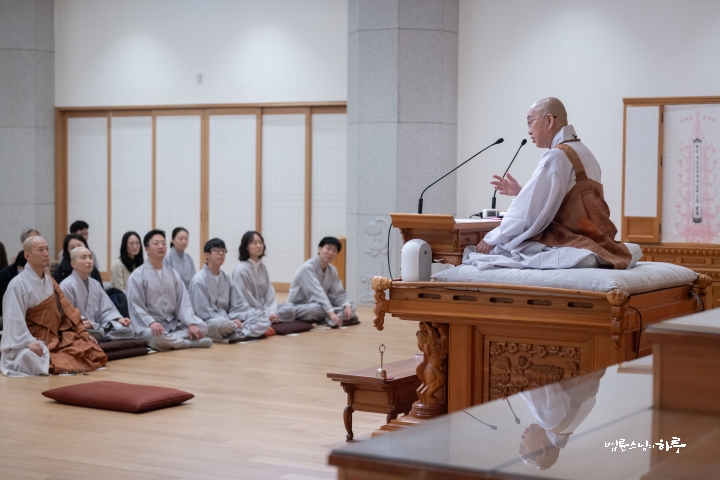
Sunim then took one more question.
An acquaintance asked me why I make donations when I’m not financially well-off. I’m curious if there’s an appropriate time for giving.
After answering the question, it was time to conclude the Dharma assembly. After watching a video about various upcoming Jungto Society events scheduled for next week, the Weekly Dharma Assembly concluded with the Four Great Vows.
After lunch, from 1 PM, Sunim attended a Peace Foundation research seminar held in the Peace Foundation conference room on the topic of “Changes in the Arctic and Their Significance in the Arctic Ocean Era.” Today’s seminar featured an in-depth two-hour presentation by Professor Kim Seok-hwan, a visiting professor at Hankuk University of Foreign Studies.
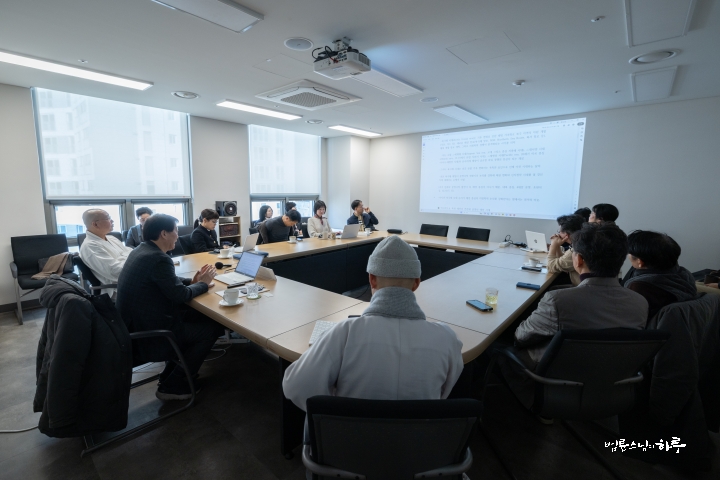
The professor explained that the Arctic Ocean era stems from accelerated ice melting due to climate change, leading to a transitional period marked by resource development, the opening of the Northern Sea Route (NSR), the establishment of sea-land integrated logistics networks, and intensified geopolitical competition among major powers. He predicted that the Arctic Ocean era would become a catalyst for a new civilizational transformation, similar to how the Aegean Sea, Mediterranean Sea, Atlantic Ocean, and Pacific Ocean eras defined world order through maritime dominance. However, he analyzed that this transformation differs from previous ones in that human-induced climate change is triggering the change.
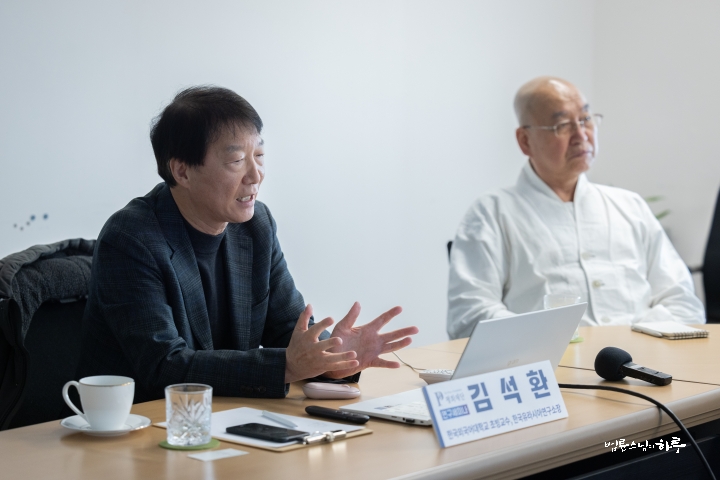
He particularly emphasized that competition between the Russia-China bloc and the US-NATO alliance is likely to intensify in the Arctic, and that Arctic resource development and NSR activation will reshape industrial landscapes in energy, logistics, shipbuilding, and environmental technology. He also stressed that Arctic ice melting will transform northern Eurasia into a new strategic space, potentially escalating military tensions, and that Korea’s east coast will simultaneously face increased economic opportunities and security risks. In this context, he suggested that Korea should actively respond to the new opportunities and challenges of the Arctic era through polar research, sustainable technology development, and participation in multilateral cooperation.
During the Q&A session following the lecture, various questions arose regarding the Arctic Ocean era. One participant asked about Korea’s icebreaker technology and the possibility of operating Arctic routes, while another pointed out the lack of inter-ministerial cooperation in implementing Arctic policies. Concerns were raised about considering the negative impacts of the climate crisis, and questions followed about how North Korea’s geopolitical position might change amid Arctic development.
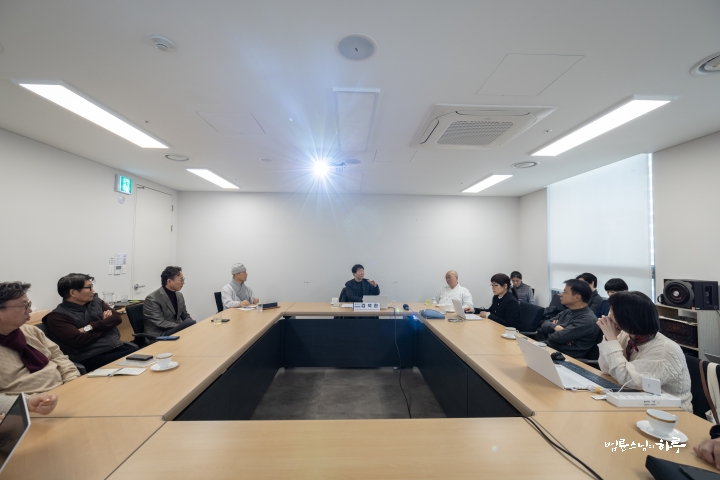
Sunim asked about the civilizational significance of the Arctic Ocean era.
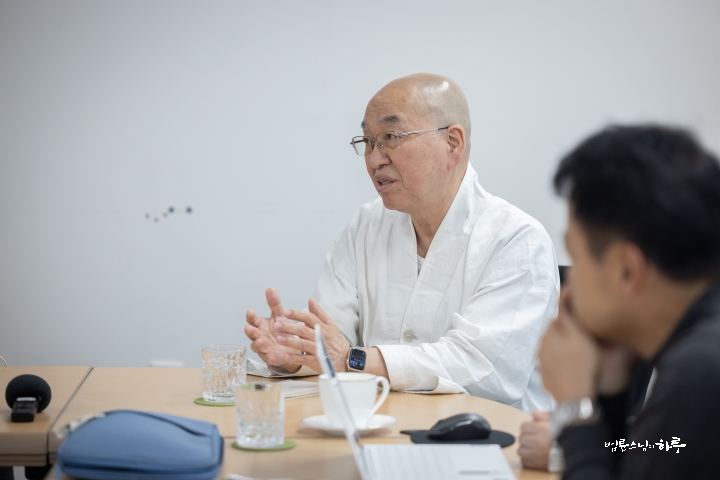
Can the Arctic Ocean Era Really Be Considered a Civilizational Transformation?
“I understand that opening Arctic routes will shorten distances to Europe, creating various logistical advantages, and that improved route accessibility will make resource development in permafrost regions much easier. I also understand the prospects that some tundra areas might emerge as new agricultural production bases due to climate change, and that fishing industries might benefit as fish species migrate north due to water temperature changes. However, I have doubts about your comparison of these changes to ‘civilizational transformations’ like the Aegean Sea era, Mediterranean era, Atlantic era, and Pacific era. The Aegean Sea era was significant because conflicts between Greece and Persia, the centers of the world at that time, took place in the Aegean Sea. The Mediterranean era was possible because Rome became the center and civilization expanded to Greece, Egypt, Persia, and Western Europe. The Atlantic era changed the world order through the discovery of the New World connecting America and Europe, and the Pacific era created major trends through the rise of East Asia and its connection with America. Such processes require deep connections between civilizations or shifts in the axis of world history for maritime eras to function as civilizational turning points. I’m not convinced whether the development of the Arctic Ocean can bring about changes of such magnitude. Beyond shortening logistics distances between East Asia and Europe, what factors could fundamentally connect civilizations or reorganize the world order on a global scale? The possibility of an Indian Ocean era seems more likely with the rise of India and China. I’m curious about the grounds for evaluating the Arctic Ocean era as a civilizational transformation.”In response, Professor Kim Seok-hwan explained that the concept of the Arctic Ocean era goes beyond simple route development and represents a civilizational event where climate change fundamentally reorganizes the spatial structure of human activities. Just as the internet created new realms of human activity at the boundary between invention and discovery, the Arctic space opened by ice melting enables new connections and activities beyond existing geographical imagination.

He explained that since climate change affects not only humans but the entire Earth’s ecology, Arctic changes should be understood as a catalyst for massive civilizational transformation that simultaneously holds possibilities for both utopia and dystopia.
Sunim then asked an additional question about the possibility of reorganizing agricultural maps due to climate change.
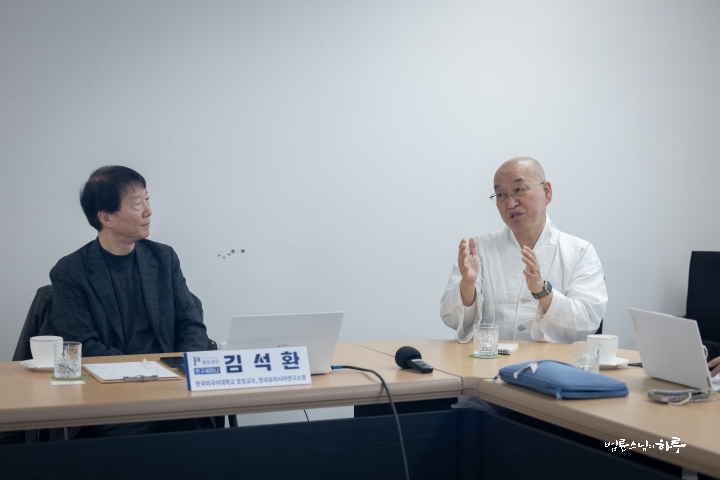
Could New Agricultural Zones Open Up Amid the Climate Crisis?
“The negative impacts of the climate crisis are already clearly evident in many places. However, I think there’s also a possibility that rising temperatures could create new agricultural zones. For example, in the United States, areas near the Rocky Mountains were once wastelands, but as irrigation technology using groundwater expanded, cultivable areas gradually extended westward. I’m curious whether regions like Siberian tundra or parts of northern Canada might be transformed into new agricultural zones where wheat farming becomes possible due to rising temperatures. I recently visited Pakistan, where the melting of permanent snow in the Himalayas has lowered the Indus River water level, causing the long-maintained irrigation canal system to malfunction and turning vast farmlands into wastelands. In countries like Bangladesh, when river levels drop, seawater flows upstream, covering plains with salt and making farming impossible. As existing agricultural zones rapidly decline due to the climate crisis, I think the possibility of northern regions, where farming was previously difficult, transforming into new food production areas is a very important issue. So I’d like to ask: Are countries like Russia and Canada actually conducting research on the possibility of converting their northern regions into future agricultural bases as temperatures rise? And could such changes become a new alternative to solving the global food crisis?”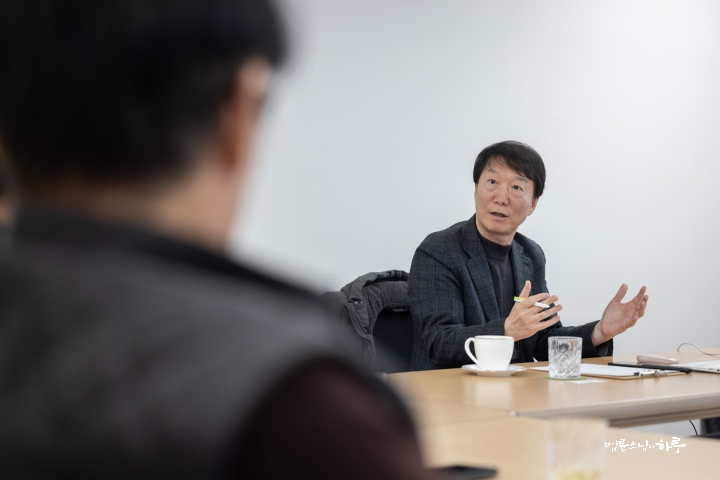
Professor Kim explained that food security is a core area of national strategy, and that Russia and Canada are already establishing long-term strategies with post-climate change agricultural maps in mind. He revealed that Russia, while banning GMOs, is strengthening its own variety improvement and pest research, and is building food and settlement strategies that utilize rising temperatures along the Arctic coast. Development of the trans-Arctic corridor connecting the Arctic and Siberia is underway, centered on the Yenisei, Lena, and Ob river basins, which he assessed has high potential to function as a new agricultural, settlement, and logistics axis. He also explained that as climate change reshapes the agricultural landscape, the northward shift of food production is becoming a reality, and the resulting population migration and new industrial and urban strategies are already being discussed among major powers.
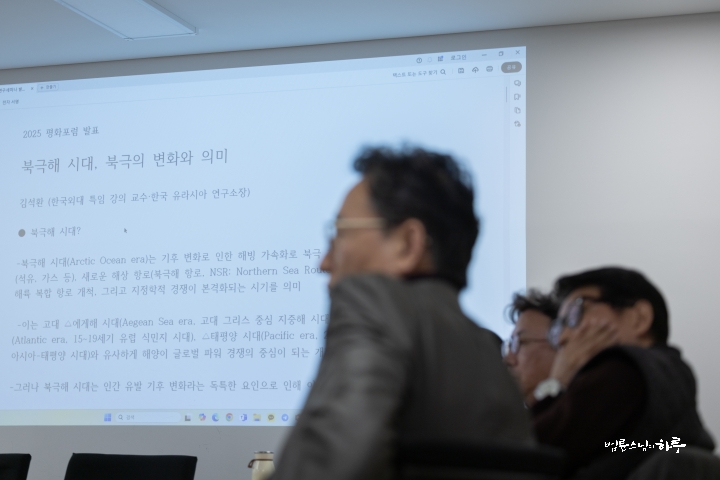
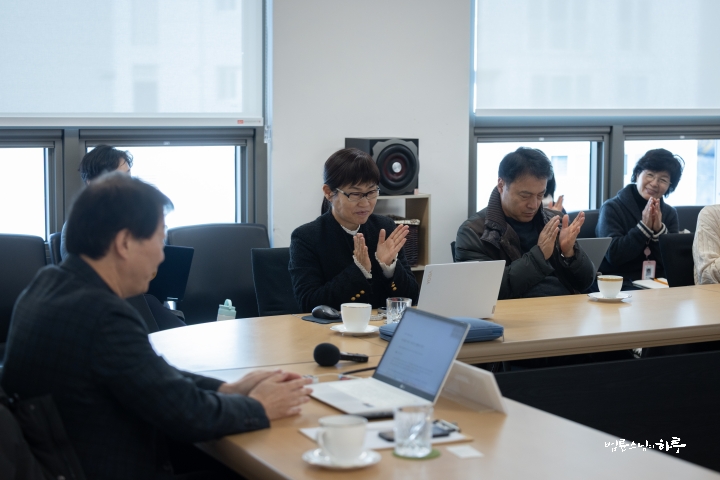
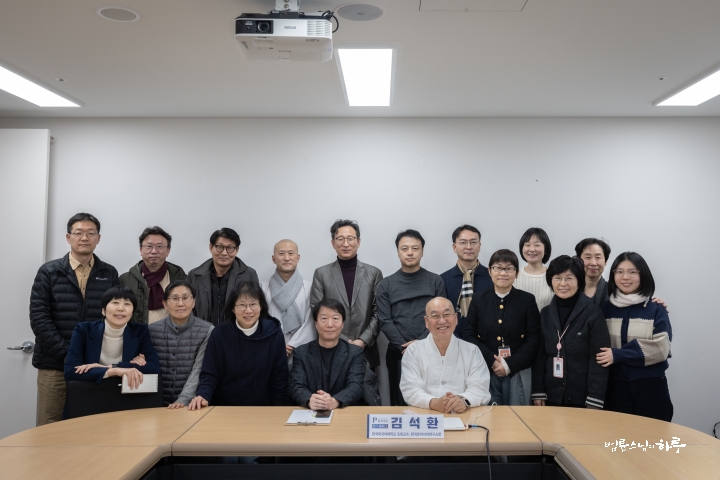
Though brief, it was an opportunity to explore various challenges posed by the Arctic Ocean era through wide-ranging topics including industry, policy, climate, and international politics. The presentations and discussions continued for three hours. As 4 PM approached, everyone took a commemorative photo together and concluded the seminar.
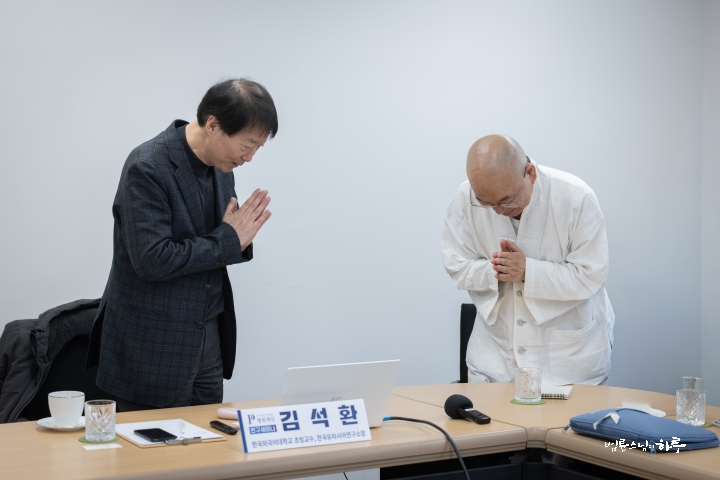
After expressing his gratitude to Professor Kim Seok-hwan, Sunim immediately attended the Peace Foundation Planning Committee meeting. After exploring prospects for improving North Korea-US relations, they discussed how to improve the increasingly severe confrontation between ruling and opposition parties and what role the Peace Foundation should play, then concluded the meeting.
As the sun set, at 7:30 PM, Sunim conducted a live broadcast of the evening Weekly Dharma Assembly. About 80 members of the Sangha were seated in the third-floor Dharma Hall, while Jungto Society members connected through online video conferencing.
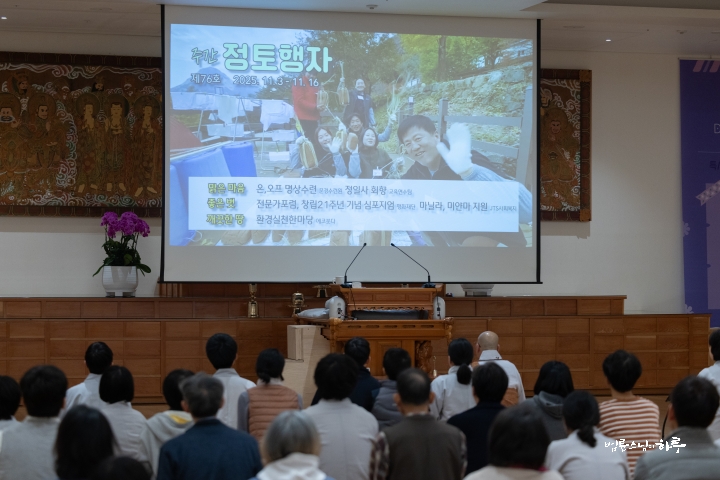
After watching a video about weekly Jungto practitioners’ news together, the assembly requested a Dharma talk from Sunim with three prostrations. Like in the morning assembly, Sunim began the dialogue after mentioning the suddenly cold weather and urging many members to participate in the upcoming First 1000-Day Practice Closing Retreat.
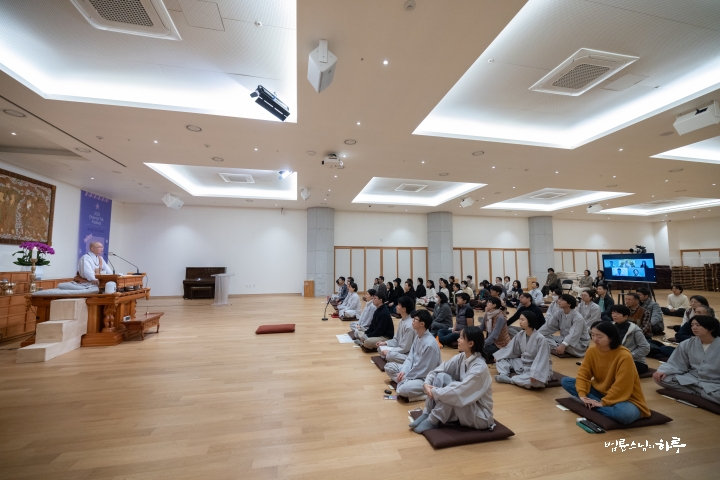
To Avoid Being Shaken by Each Day, Take a Longer View of Life
If we look at each fleeting moment, there are successes and failures, but when we take a longer view, rather than dividing them into success and failure, we can see them as part of life’s process. Instead of becoming exhausted by being too attached to each day, it’s better to accept various events as simply things that happen in the course of ongoing life. Even earth-shattering events like a family member having an accident or dying become just one part of life’s process once they’ve passed. Needless to say, this applies even more to minor matters.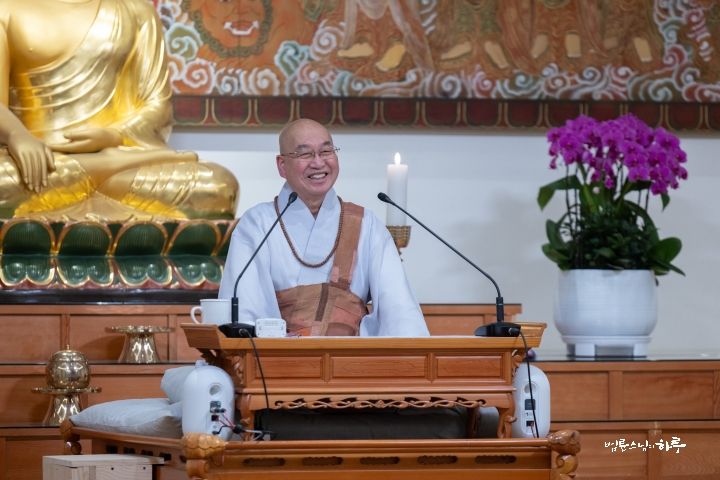
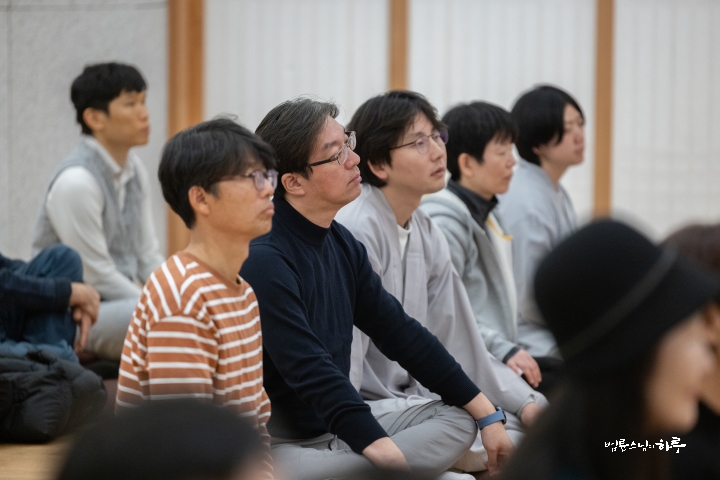
For the next hour, two people asked Sunim questions.
In the Jungto Dharma School’s Practical Buddhist Thought class, the explanation of why we should observe precepts seems to have aspects that don’t align with reality. How should we view cases where the perpetrator actually suffers less?
When I looked at Jungto Society’s plans for the Youth Festival, I feel it doesn’t really address the current concerns of young people. What if we reflected young people’s actual concerns?
After finishing the dialogue, it was past 9 PM. After concluding the assembly with the Four Great Vows, the members of the Sangha sat in circles by group for mindful sharing.
Tomorrow, Sunim will have an early morning breakfast meeting with North Korea experts at The Peace Foundation, followed by a Dharma Q&A at Dongjak District Office. In the afternoon, he will give a Dharma Q&A at Dongguk University, and in the evening, he will attend the Blue Korean Language Collection book celebration with Teacher Choi Han-sil.