When the Feeling of Not Wanting to Do Something Arises, Is It Okay to Quietly Skip?
Nov 16, 2025 - Jungto Dharma School Q&A, Happiness Movement Special Headquarters Day
Hello. Today, Sunim held an online Dharma Q&A session for foreign practitioners enrolled in Jungto Dharma School, then participated in the Happiness Movement Special Headquarters Day event all day, engaging in conversations.
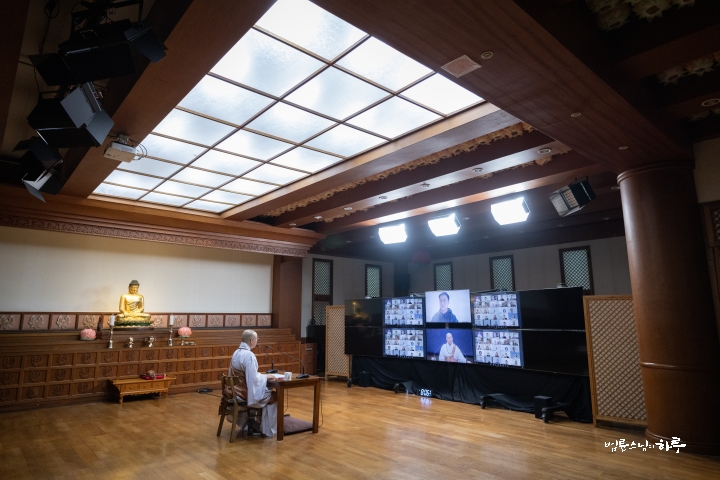
After completing morning practice and meditation, Sunim began the day at 7 AM with an online Dharma Q&A session with Jungto Dharma School students from the broadcasting room at Seoul Jungto Center.
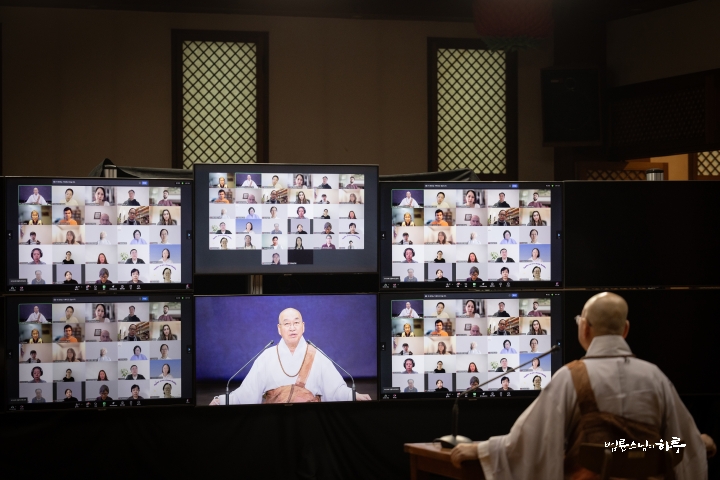
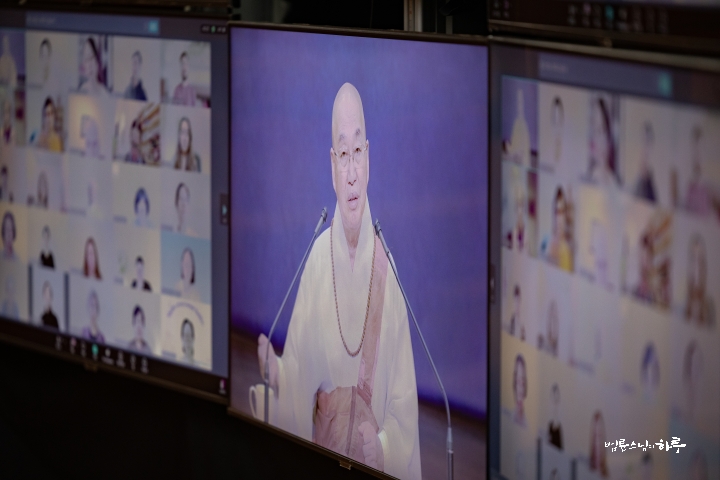
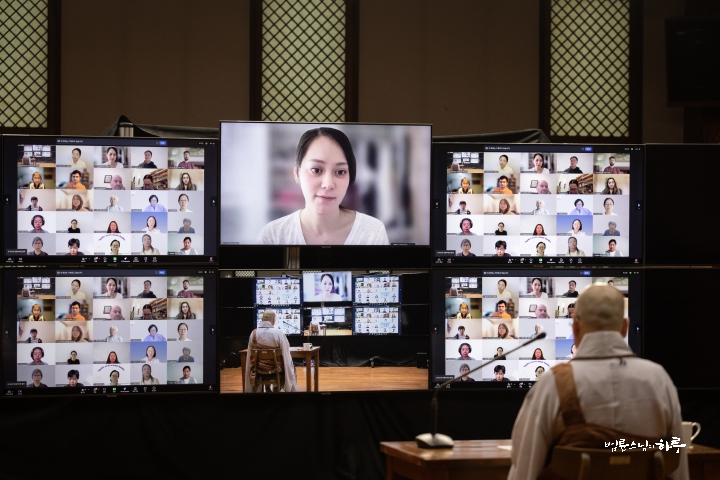
Thirteen students taking Jungto Dharma School classes from around the world – Australia, the United States, Korea, Cyprus, Germany, the United Kingdom, and Canada – gathered together in the online space. Realizing that learning knows no borders, everyone warmly greeted each other.
When Sunim entered the video conference room, three students representing the group shared their impressions of the classes they had taken so far.
“It has been an extremely valuable experience, which I continue to enjoy as a continuation of Part I of the course. I can say that my favorite aspect of the course has always been the sharing. I have learned a lot from the group I share the course with. So, yes, that’s great.”
“This experience has been extremely valuable for me as well. I remember starting Buddhism I earlier this year. I wasn’t very keen on taking the class. I did it more to make my mom happy, but it was a life-changing experience. Now, I feel like I have definitely changed for the better. My mom, my boyfriend and my family have all noticed a change in me. I just feel a lot calmer and happier overall. It’s definitely improved the quality of my life. I’m so grateful for this course that I want to stay and volunteer with Jungto Society after it ends.”
“At first, sharing was a bit difficult for me, but it has also been one of the highlights of the course. I got much better at expressing myself.”
Through the students’ presentations, it was evident that Jungto Dharma School had become a place where lives were being transformed. The students then requested a Dharma talk from Sunim with three bows. Sunim emphasized that studying the Buddha’s life is essential to understanding the difficulties of practice and developing a Buddhist perspective on social and historical issues.
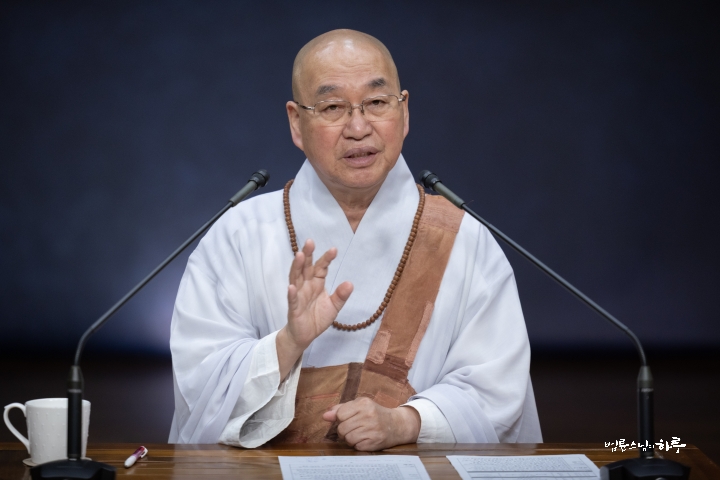
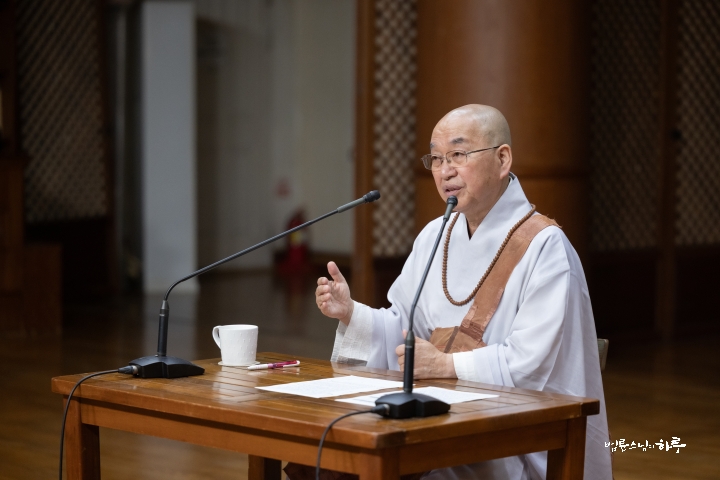
Next was a time for freely asking questions about things they were curious about while taking classes. Six people pressed the raise hand button and asked Sunim questions. Questions about class content came up, as well as personal concerns – a variety of questions followed. Among them, one person asked for Sunim’s advice on how to maintain perspective, feeling that the teachings to be content with the present and to act for change seemed contradictory.

Be Content with the Present vs Act for Change… It’s Really Confusing
“The Dharma teaches us to be present and content with where we are in the moment. However, in Buddhism II and as you also had mentioned earlier, Gautama knew that his current path was not right, even though he didn’t know which path to take, which is why he went through the Great Renunciation. I feel that these two teachings are contradictory because I’m not sure how to apply them to my daily life. Sometimes I struggle with anxiety and doubt, and I wonder if I should make changes in my life, such as where I live. But I never know if it’s just useless, mindless, worrying and I should just be present and content with my current situation or if the change I want to make is valid, like the change Buddha made. How did the Buddha know, and how can we tell the difference between overthinking, mindless worrying and a doubt that warrants a real change in our lives?”
“Your answer did make sense. We have to stop and assess whether it’s actually a problem. If so, and if we decide that we need to make a change, then we can take that path. I will take that advice with me.”
Questions continued one after another.
-People in old stories seemed to easily attain enlightenment just by hearing Dharma talks, but why do modern people find it so difficult? Does the difficulty of enlightenment vary with the times and social environment?
-While leisurely people find it easy to start practice, how can busy modern people with many burdens encounter practice and reduce their suffering?
-I know that learning the Dharma makes one happier, but I’m curious why compassion or the desire to serve doesn’t naturally sprout within me.
-I’m curious if the monastic life is like a doctoral program of letting go of possessions and studying deeply. Is this the right understanding of the monastic lifestyle?
Time flew by as various questions were answered. The live broadcast ended at nearly 10 o’clock, with plans to have another session to address remaining questions.
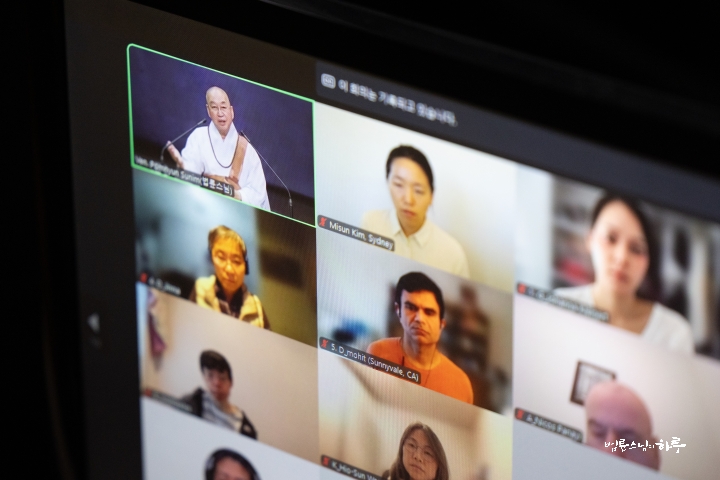
The students gathered in their group video conference rooms to continue with mindful sharing, while Sunim left the broadcasting room.
The street trees lining Seoul’s city center had already turned deep autumn colors. The flow of seasons quietly permeated every leaf rustling in the wind.

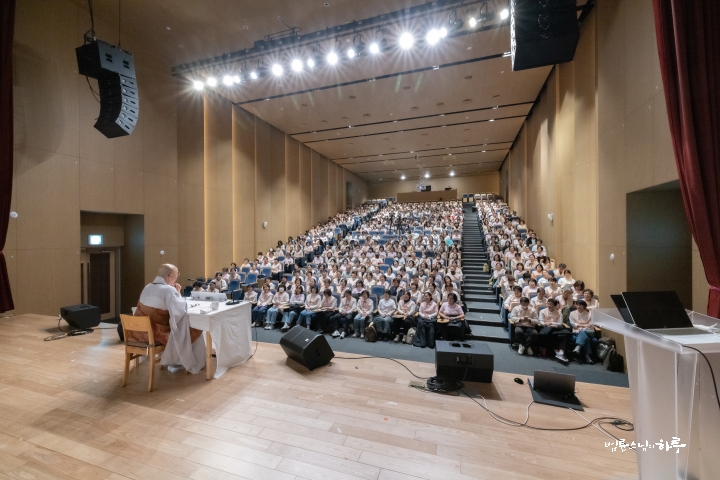
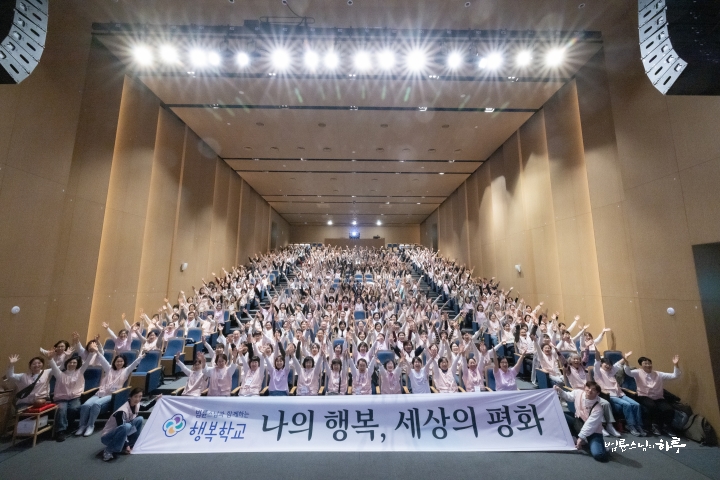
From 10 AM, the Happiness Movement Special Headquarters Day event began in the underground auditorium of the Jungto Social and Cultural Center. About 400 Happiness Headquarters members conducting Happiness Schools in 17 branches nationwide gathered in one place.
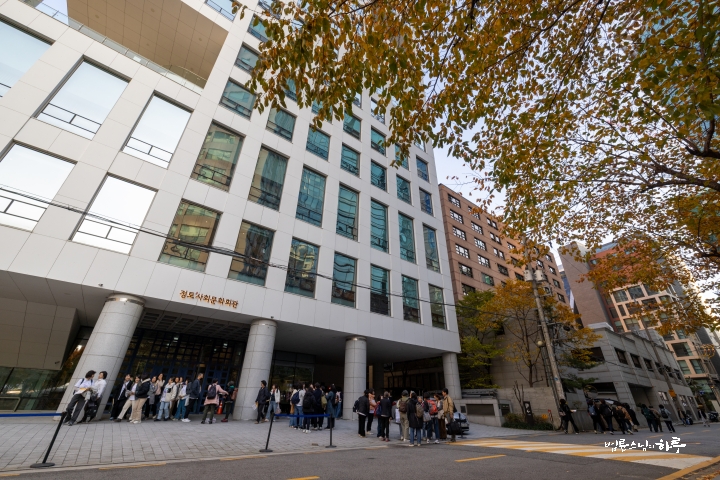
In the morning, the first program featured a dialogue session about Happy Citizens’ Group activities with Mr. Kwon Young-sun, Planning Committee Chair of The Peace Foundation. Looking back on three years of Happy Citizens’ Group activities and planning for the next three years, they envisioned the future that happy citizens would create together.
Afterwards, everyone unpacked the lunch boxes they had brought from home and ate in small groups. After lunch, from 1:30 PM, the second program began with a dialogue session with Venerable Pomnyun Sunim.
Before starting the second part, Happiness Headquarters members from the Incheon-Southern Gyeonggi branch performed a song. Recalling the reality that war still hasn’t stopped and tremendous killing and destruction of homes continues in Ukraine and Gaza, Palestine, they earnestly sang ‘That Shadow, That Fragrance’ with the heartfelt message that ‘war should never happen under any circumstances.’
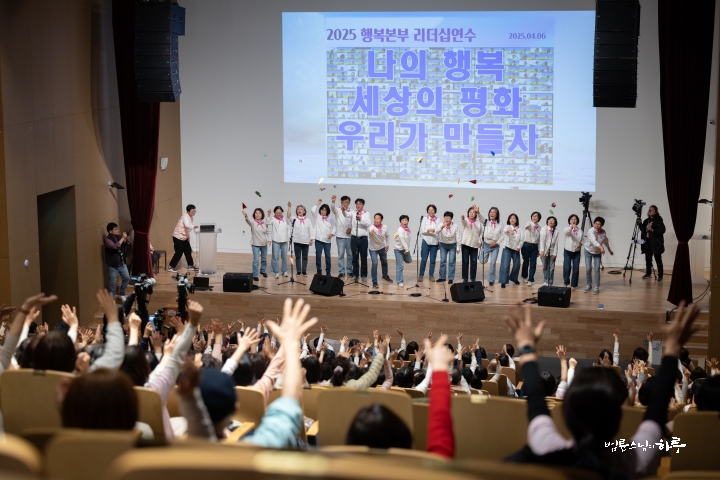
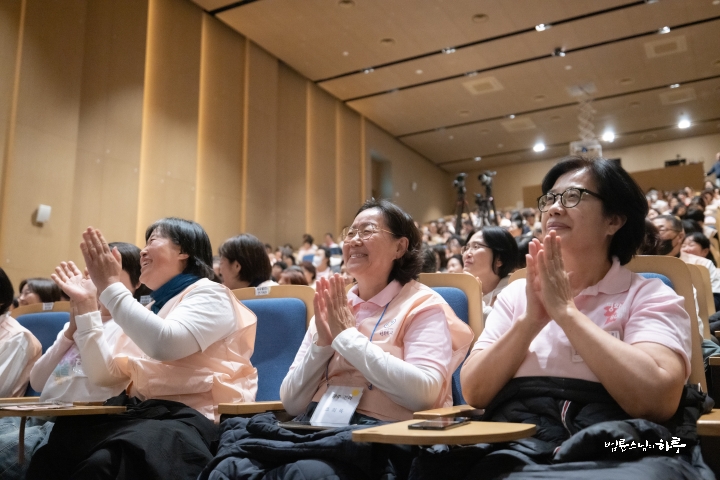
The audience responded with loud applause, praying for peace on the Korean Peninsula and in the world.
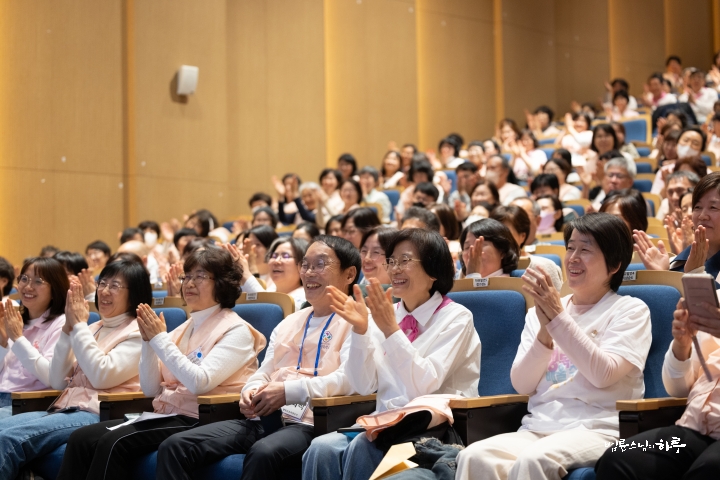
Next was a time to reflect on Happiness School operations and Happy Citizens’ Group activities and share impressions. First, they heard from those who had quietly held their positions in the Unification Special Committee and Happiness Headquarters for the past nine years.
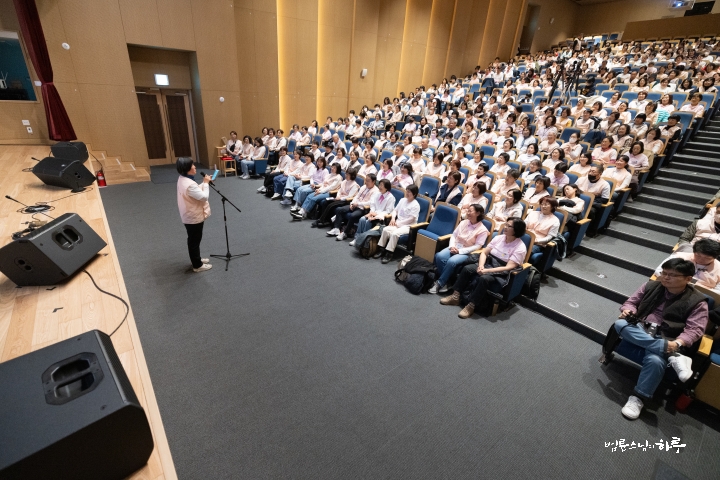
“Looking back on nine years, I see my footprints all over Jecheon. The people who came in slippers to Happiness School and environmental activities, the neighbors I met while distributing flyers as if earning day by day… All those moments were my warmest playground and the time that truly brightened my 50s. Thanks to everyone, I really played well, as if dancing.”
The presentation deeply showed ‘with what heart the community was built’ through nine years of cultivating every corner of the region with their own footsteps.
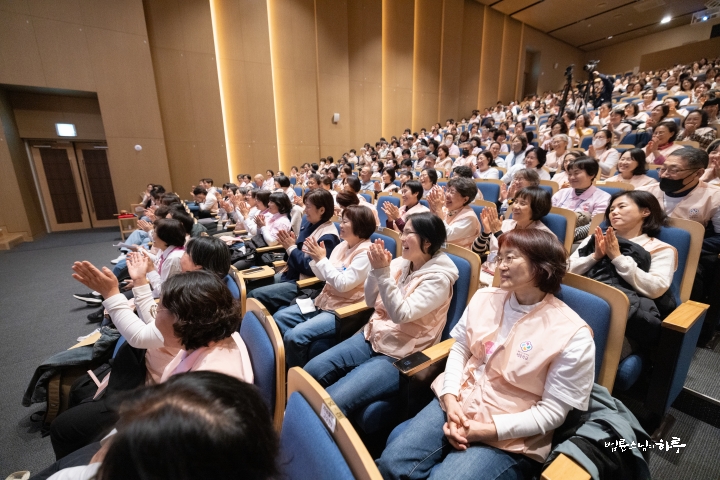
Next, they heard from six-year veterans who faced the wave of change called the COVID pandemic immediately upon joining the Happiness Headquarters and pioneered the new path of online Happiness School.
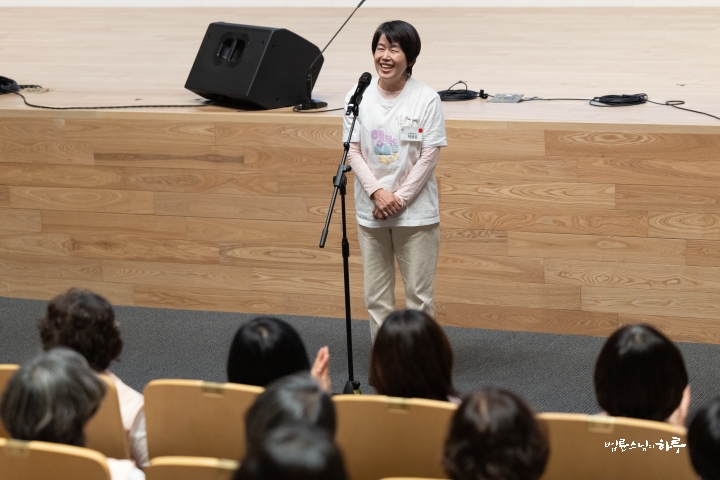
“I learned that a butterfly effect occurs when even just one person becomes happy. While facilitating, I used my son as a research subject to look into his heart, and our relationship transformed from being like enemies to supporting each other. What initially felt like work has now become my study, and I was able to discover the sense of justice within me that I had unconsciously overlooked.”
The presentation showed well how ‘one person’s happiness expands’ through the changes in practice that permeated even to family.
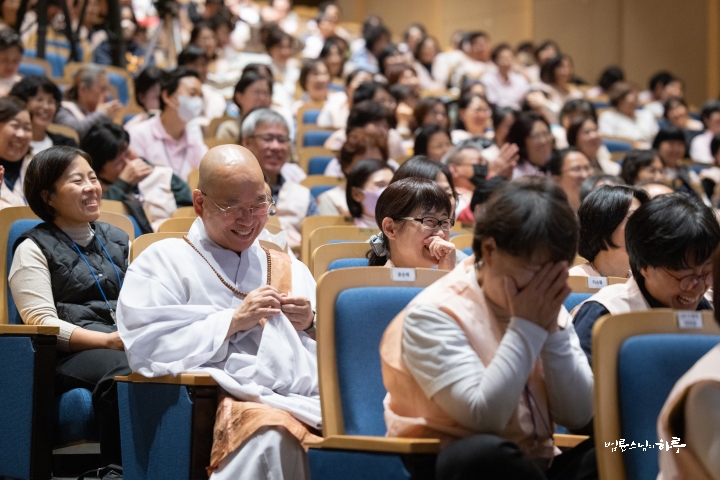
Finally, they heard from the fresh three-year Happiness Headquarters members who inherited nine years of precious achievements and are steadily building new manuals while infusing fresh energy.
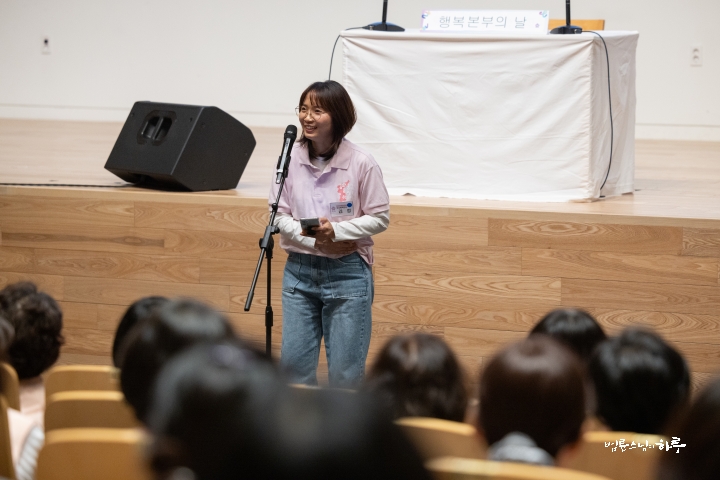
“The Happiness Headquarters was a practical field where I could actually apply what I had learned. In the process of planning and creating together from nothing and coordinating our differences, I felt that practice, which I had only known intellectually, was finally being exercised in life. I was able to come this far lightly and joyfully thanks to fellow practitioners who always embraced my shortcomings.”
The presentation honestly revealed ‘how practice is exercised in life’ through the process of learning while encountering challenges in the field.
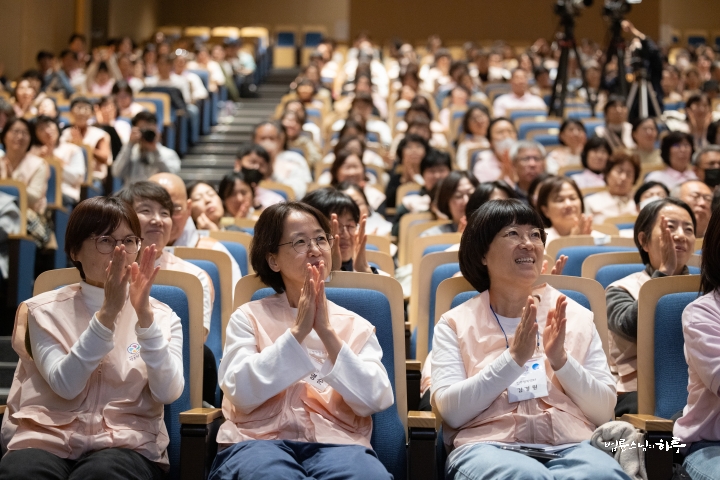
After sharing the activity stories of nine people, this time felt even richer.
Leaving behind the emotion and regret, everyone requested a Dharma talk from Sunim with three bows. Sunim began the dialogue by encouraging the Happiness Headquarters members who had been actively working for as long as nine years or as short as three years.
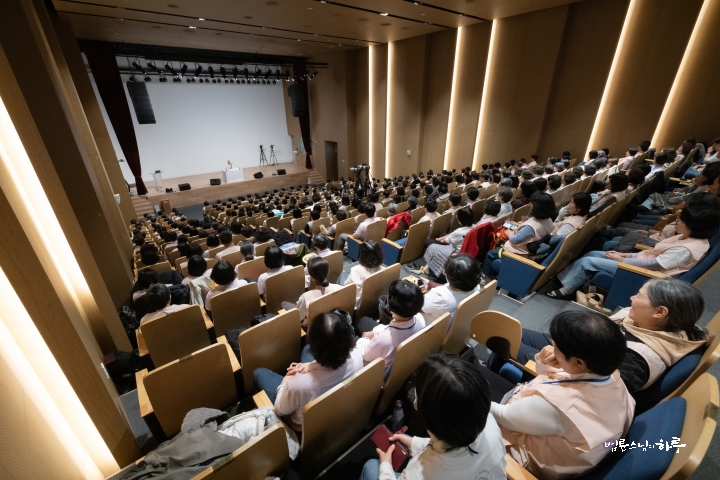
When those who had been active for nine years stood up, everyone gave them a big round of applause.
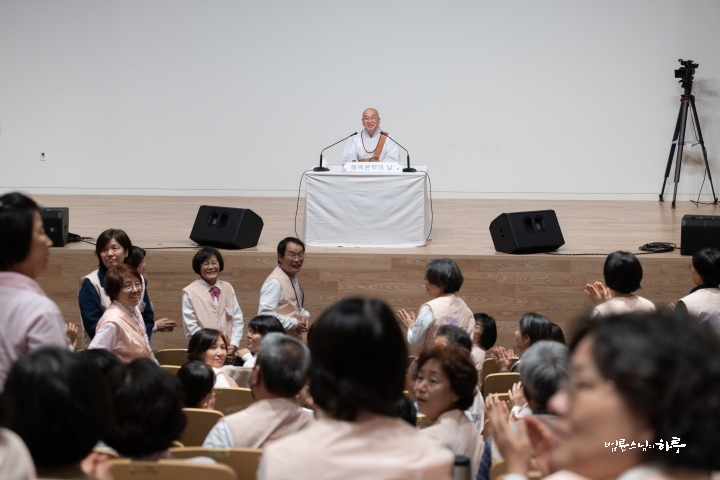
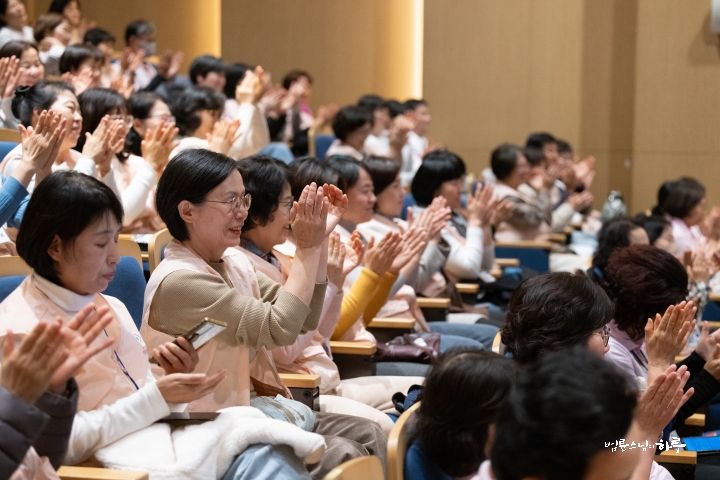
Subsequently, those who had been consistently active for six years and three years also stood up in turn and received big applause.
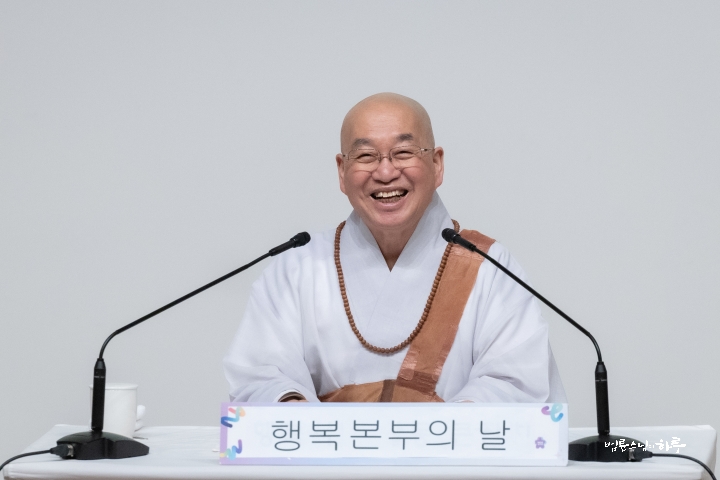
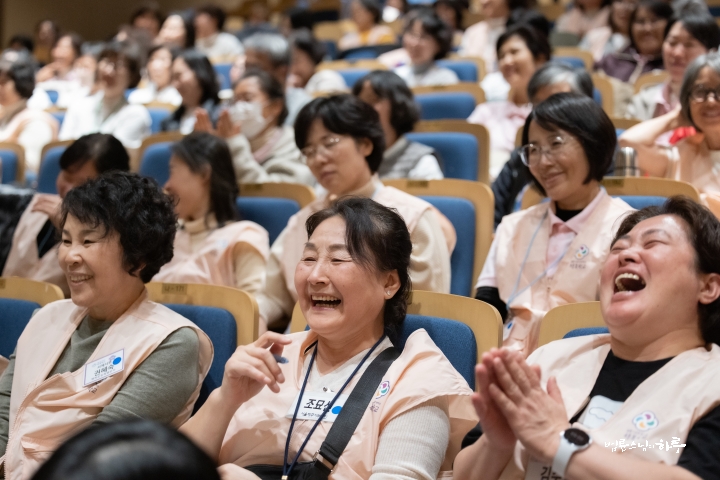
The Reason for Position Rotation: Organizational Wisdom Connecting Practice and Social Action
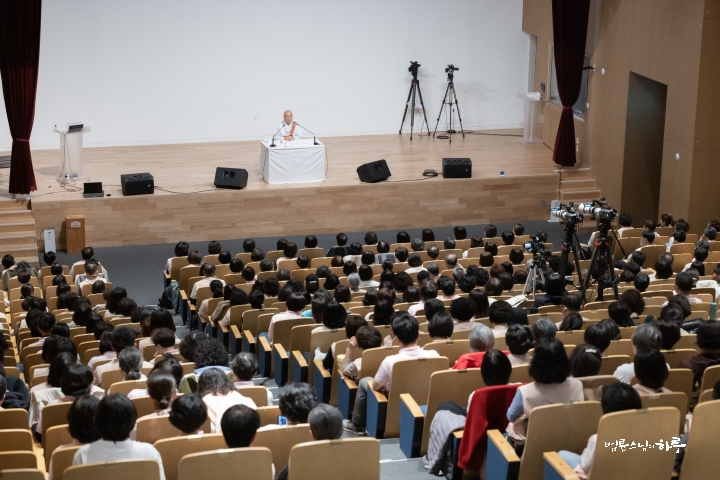
Following this, anyone could raise their hand and ask Sunim questions about any concerns they had while being active. One person asked for Sunim’s advice on what perspective to have as a group facilitator, mentioning that when seeing someone absent from activities due to illness, they sometimes feel like skipping too.
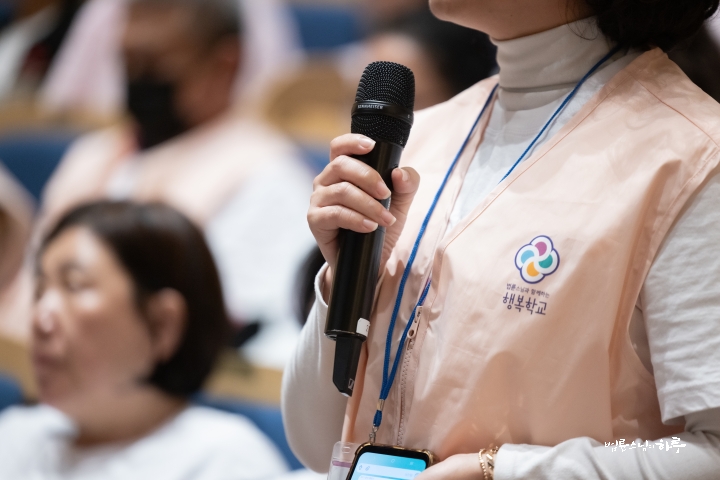
When the Feeling of Not Wanting to Do It Arises, Is It Okay to Quietly Skip?
“About half of our group members are absent from activities due to illness or talk about their pain during sharing time. Despite this, some participate in activities as much as possible, while others are absent due to circumstances. Watching this, I sometimes feel like I don’t want to do it either. Currently, the Special Happiness Movement Division promotes lectures almost daily, and even when registration is full, they tell us to continue promoting until we increase the waiting list. At such times, I wonder, ‘Since I’m not sick now and have time, do I have to attend everything?’ and sometimes I quietly remove my name from the participation list. Is it okay to do this?”
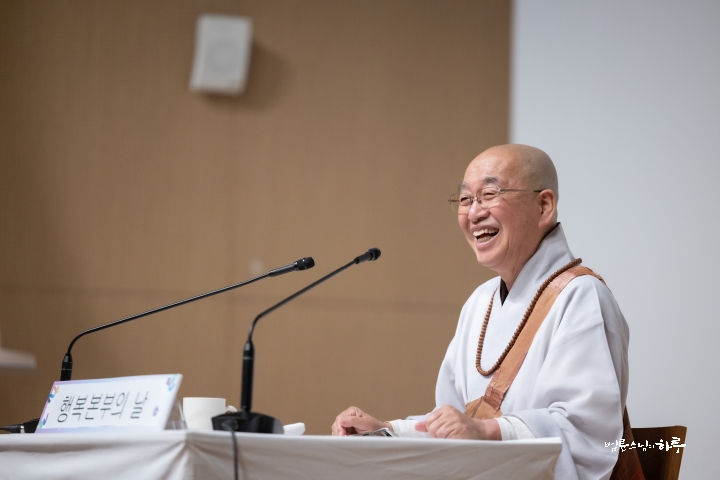
“It’s better to be healthy and participate in activities.”
“For example, when your husband does business that you oppose, if you keep creating conflict, that business will fail. Why? Because the business needs to fail for you to be proven right. If the business succeeds, you’ll feel deflated in front of your husband. If your husband says, ‘See? It worked out just as I said,’ your spirit will be broken. The business needs to fail so you can say, ‘See? I told you it wouldn’t work.’ Then you’ll feel satisfied. But while feeling satisfied is nice, if your husband’s business fails, the loss is significant. Do you prefer feeling satisfied, or would you rather have your husband’s business succeed even if it makes you feel frustrated?”“I prefer feeling satisfied.”
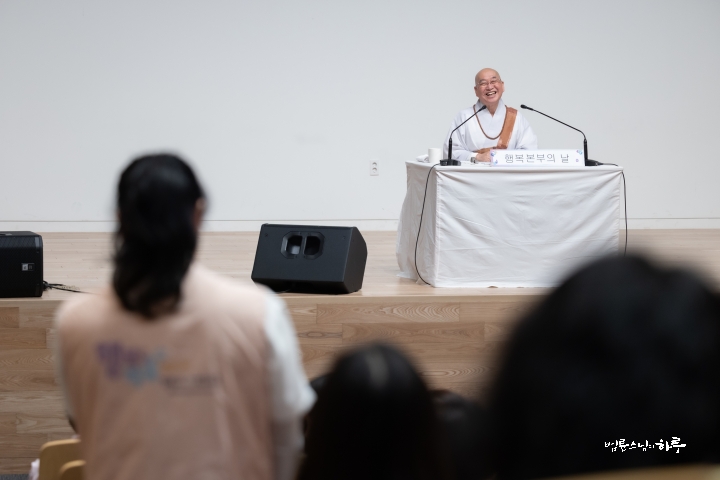
“Sunim, I think I answered incorrectly. It’s better for my husband’s business to succeed even if I feel frustrated.”
“You can initially express your opinion to your husband. You can say, ‘Honey, I don’t think that will work.’ But if his determination to try is too strong and it seems useless to stop him, it’s better to support him by saying, ‘Then, give it a try.’ If you keep trying to stop him, the wish that ‘I hope that business doesn’t go well’ can grow stronger in your heart. Similarly, if you see fellow practitioners who are sick frequently absent and you want to skip too, your wish becomes wanting to be sick. That’s why the probability of getting sick increases.” ‘My fellow practitioner can’t attend because they’re sick, but I’m healthy so let me participate.’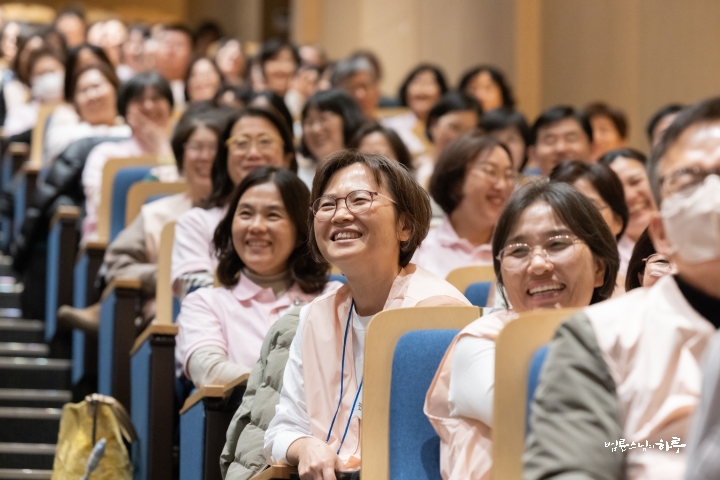
“I understand well.”
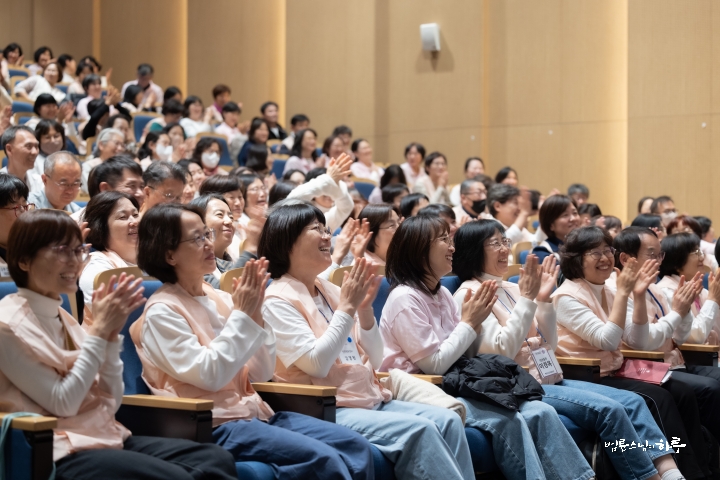
Questions continued to follow.
-While practicing the consumption pause activity, I’ve had questions about the standards and boundaries between necessities and desires for food and daily necessities. How far is basic necessity in food consumption, and where does desire begin?
-As a new group facilitator, I accept various roles like a fun game, but I’m concerned whether such a light attitude is okay. What attitude should I have toward my duties to be used well and grow for a long time?
-Could we establish a recommendation system or bonus points so that experience in the Special Happiness Movement Division can be recognized within Jungto Society?
-I’ve enjoyed serving as village chief for 6 years with high resident satisfaction, and I’m being asked to continue, but I have to stop the happiness movement next year due to the position rotation system. Should I continue the village chief role?
-Running a Happiness School with only 3 participants feels like a waste of resources. How about postponing to next month until more people gather?
After answering all the questions, it was time to conclude. Sunim reminded us of the direction of the new civic movement we need to create in this phase of change.
The New Civic Movement Created by Happiness School
Happiness School is also part of the same trend. We continue steadily, hoping it will develop into a national happiness movement. Although it was started by Jungto Society, which originated from Buddhism, Jungto Society’s goal is not to remain within the specific boundaries of Buddhism. Its purpose is to hope that the people of the Republic of Korea and, furthermore, all people in the world can be free from suffering. In fact, when we started Happiness School, there were many daunting aspects. There was no place to benchmark. When things are difficult, if there are precedents to refer to, you can go and learn from them, but the direction Jungto Society set was ‘let’s create and experiment ourselves.’ As mentioned in the testimonials earlier, during the first three years, we had to create the programs ourselves, gather people to work with ourselves, and find venues ourselves. It wasn’t an easy process. But looking back, that experience became an opportunity to make us more creative and proactive.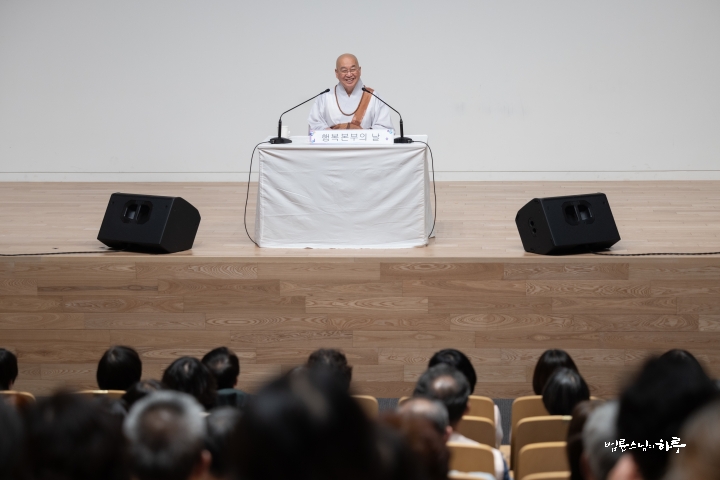
Starting Locally to Change the World
Among those who want to study the mind, there are people who feel burdened by Jungto Society’s Buddhist identity and have a rejection reaction. So we created Happiness School as a program where people can study the mind without the Buddhist name. While the big goal of ‘making people happy’ is the same, Jungto Society and the Happiness Citizens Movement have slightly different ways of operating. While Jungto Society is a pyramid-type organization where central and regional organizations are connected, the Happiness Citizens Movement centers on regional organizations, and these regions form a horizontal network. The Special Headquarters for Happiness Movement plays a supporting role for this organization. As the number of happy citizens increases and they become the center, it will develop into regional organizations centered on happiness centers and a national network where each regional organization is organically connected. This is a new form of civic movement that didn’t exist before, and it can be called the practice of grassroots democracy starting from the very bottom. You are now creating a new history of leading social change from the local level while studying the mind yourselves. With such goals, I hope those of you working at the Special Headquarters for Happiness Movement will approach this with a bit more confidence.”The Happiness Headquarters members responded to Sunim’s words with loud applause.
Next, they had time to express gratitude as they wrapped up the past three years. First, they presented a bouquet of flowers with gratitude to Venerable Pomnyun Sunim, who led the community and gave loving teachings so that they could freely carry out activities to create personal happiness and world peace.
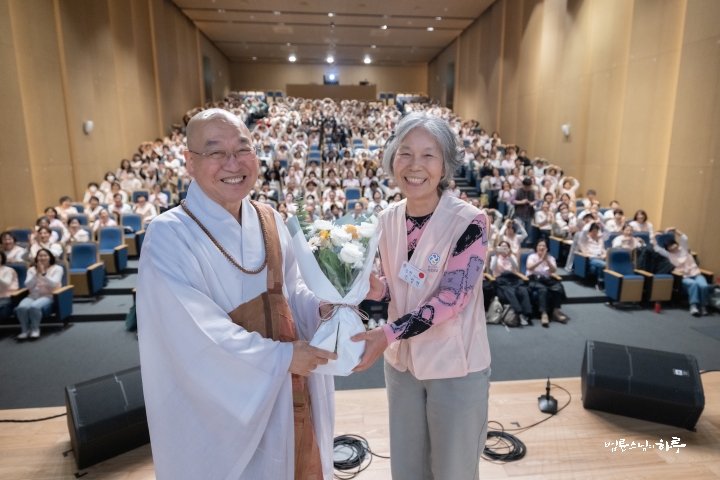
Son Jeong-yeon, who was selected as the most frequent facilitator for conducting Happiness School over 40 times in the past three years, presented the bouquet to Sunim. The community shouted loudly with applause.
“Thank you, Sunim!”
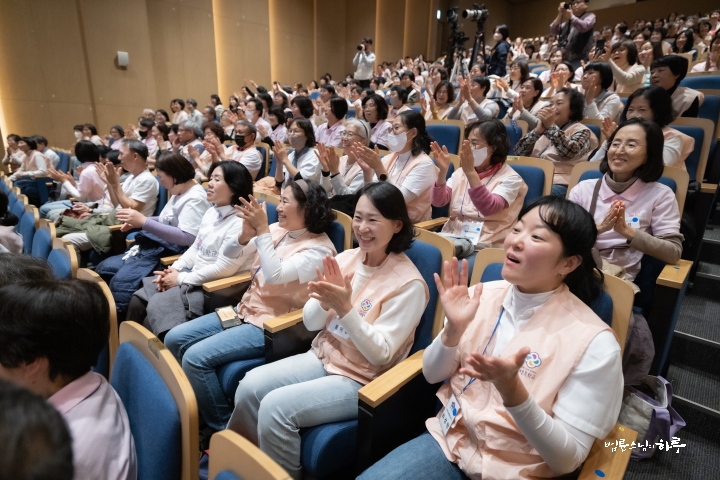
Next, they delivered a crown and cake with gratitude to Kwon Young-sun, Planning Committee Chair of The Peace Foundation, who guided and led the Happiness Headquarters members in both material and spiritual aspects. Receiving the cake, Chair Kwon encouraged the Happiness Headquarters members once again.
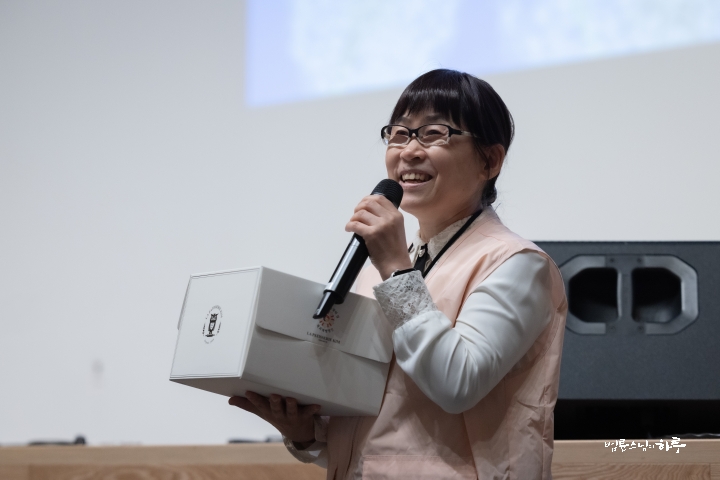
“We are now in an era of upheaval where we need to study and think intensely. If AI continues to develop, we might see an era where humans are prohibited from driving cars. So I hope you will also take the lead in pioneering AI Happiness School. Thank you all for your hard work.”
Next, the Happiness Headquarters steering committee members came forward to greet everyone, followed by group facilitators and center directors who all stood up from their seats to greet each other, sending warm applause to one another.
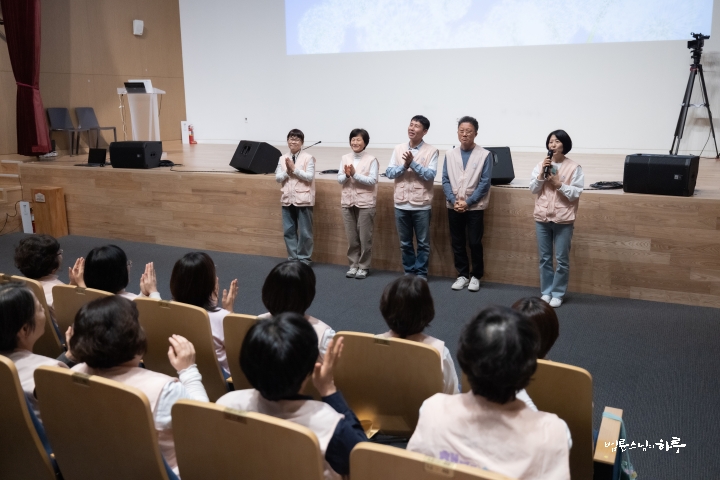
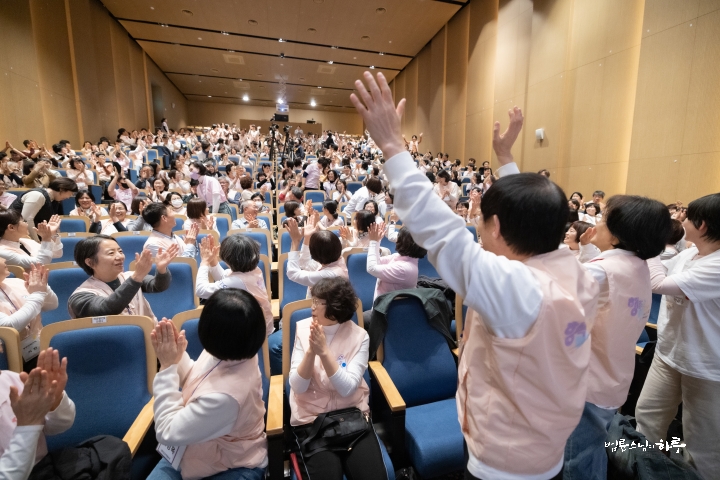
Next, the chapter presidents and chapter Dharma teachers came forward one by one to greet everyone. The members of the Sangha made heart shapes with their hands to express gratitude to one another for their hard work.
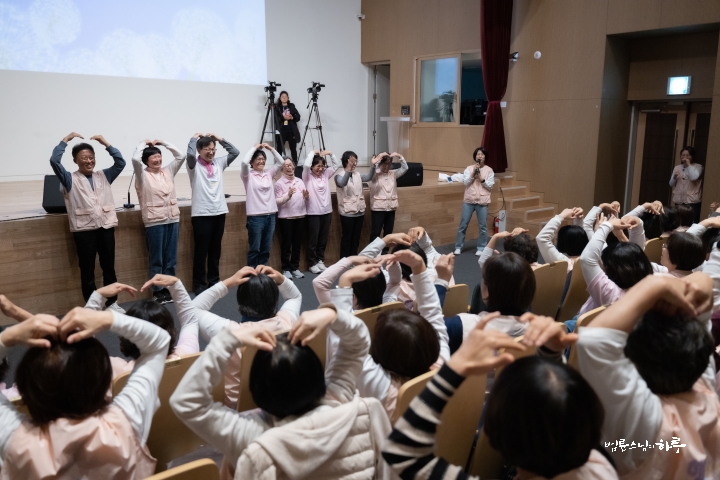
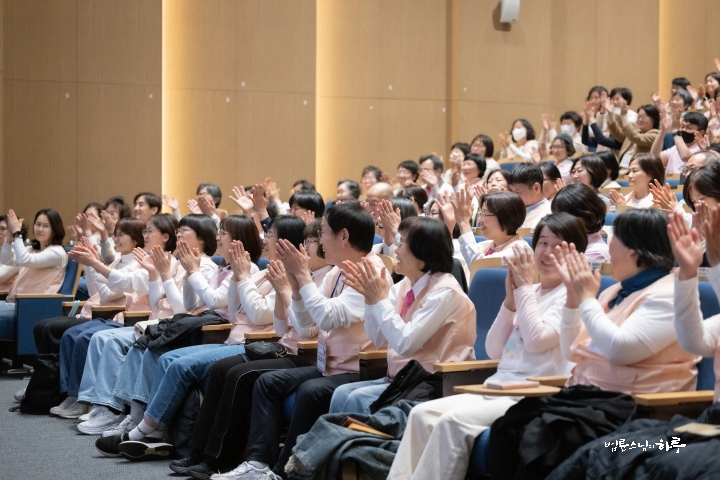
Finally, all members of the Support Division and Activity Division came forward to greet everyone. Thunderous applause erupted.
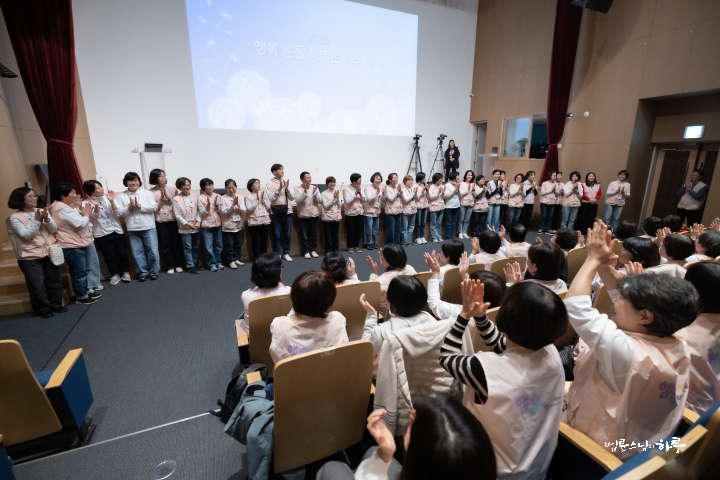
The time of gratitude and encouragement concluded with a commitment to continue the momentum of the National Happiness Movement by enrolling 5,000 people in Happiness School by the end of December.
Next, Dharma Teacher Hyangsang, who is in charge of the Special Headquarters for the Happiness Movement, gave closing remarks.
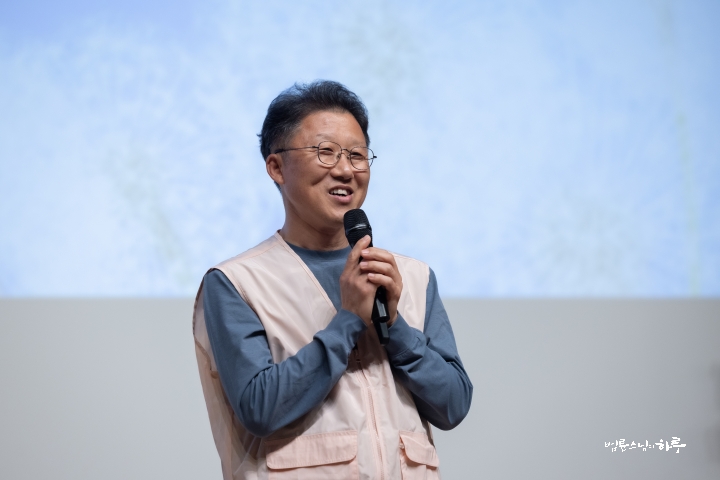
“It’s truly moving to see this place filled to capacity. I would like to once again thank the senior volunteers who have been paving the way through trial and error. Since the transition is already well-prepared, I believe the junior volunteers will continue to do well even after you move to regional chapters. I expect that your experience will expand greatly in the second 1000-Day Practice, making local citizen groups the center of a new grassroots movement. Thank you all for your hard work.”
Next, everyone watched a video showcasing the activities of the past three years. As memories were recalled, eyes quickly became teary.
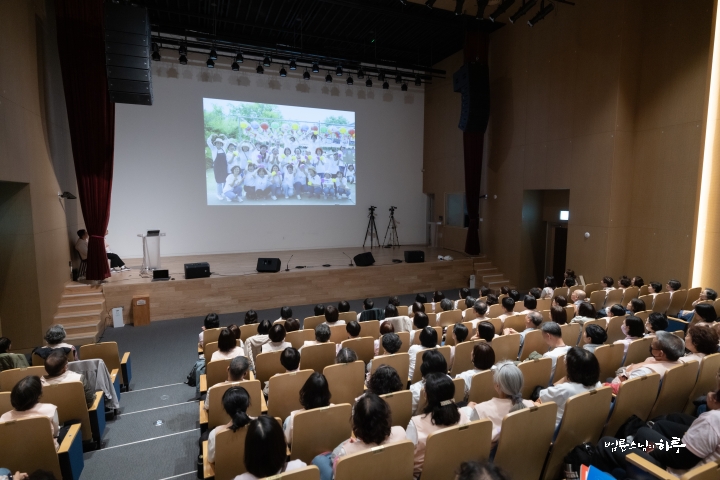
Finally, everyone took a commemorative photo together to remember this day.
“My happiness, world peace!”
Shouting loudly, the last Special Headquarters for the Happiness Movement Day event of the first 1000-Day Practice came to an end.
After leaving the Jungto Social and Cultural Center, all the members headed home, while Sunim packed his belongings and headed to Gimpo Airport to catch a flight.
After an hour’s drive to Gimpo Airport, Sunim boarded a flight to Jeju departing at 6:40 PM. However, the flight was delayed by about 40 minutes, landing at Jeju Airport after 9 PM.
Upon exiting the airport, Jungto Society members warmly welcomed Sunim. He immediately went to his accommodation, unpacked, had a late dinner, and concluded the day’s activities.
Tomorrow, at the invitation of Jeju Development Corporation, Sunim will give a Dharma Q&A for their employees. In the evening, he will continue with the seventh Happy Dialogue Dharma Q&A at the Seogwipo Arts Center.