What Are the Real Assets Left to Us After the Youth Festival?
November 15, 2025. Jaja Retreat for Gyeolsa Practitioners and Dharma Teachers, Youth Festival Supporters Disbanding Ceremony
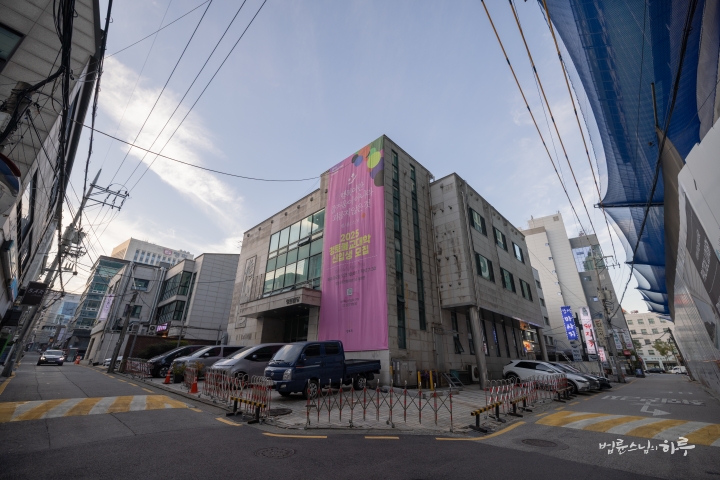
Hello. Morning has dawned at Seoul Jungto Center.
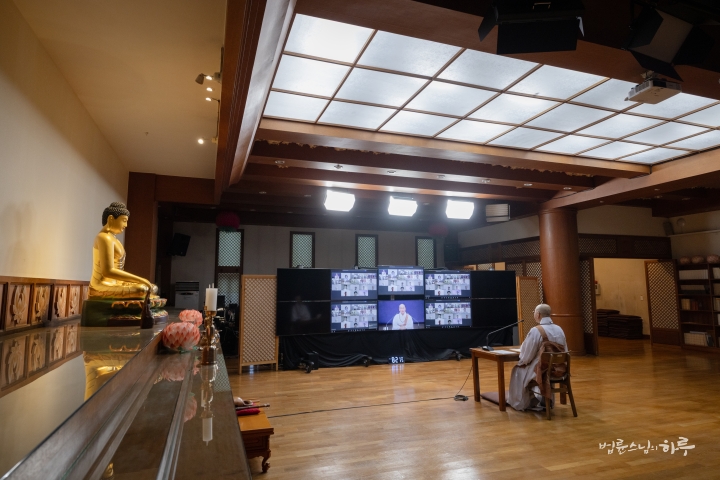
After completing morning practice and meditation, Sunim participated online in the Jaja (自恣) Retreat for Gyeolsa (結社) Practitioners and Dharma Teachers from the broadcasting room at Jungto Center starting at 8 AM. About 110 Gyeolsa Practitioners and Dharma Teachers also gathered at main temples across the country to participate in the day-long Jaja Retreat.
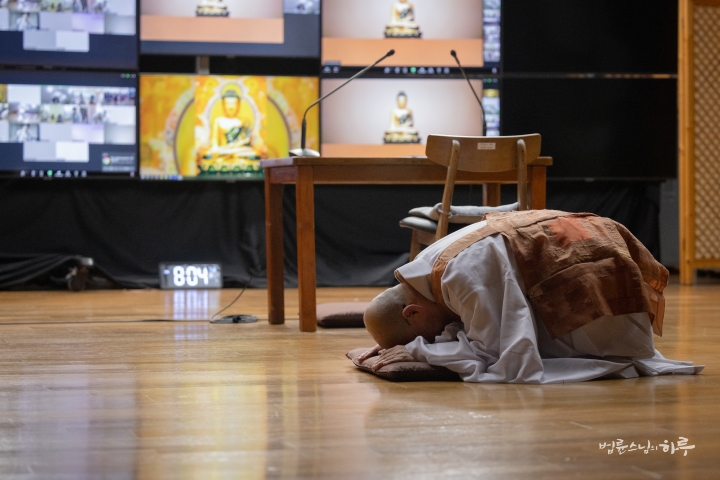
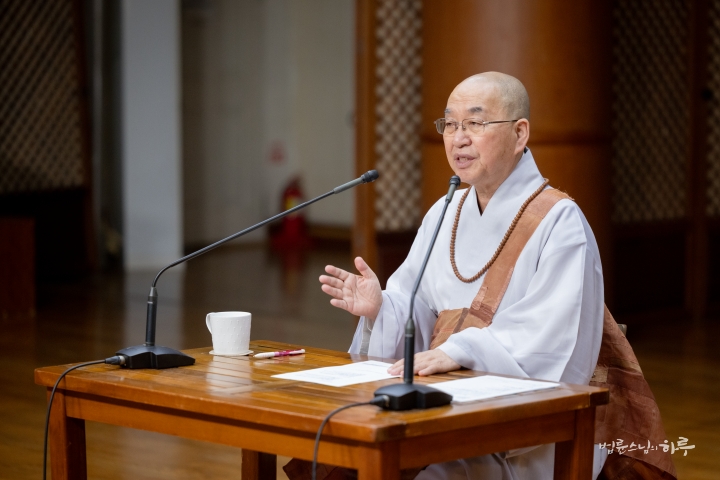
After chanting and reciting the Heart Sutra, the Gyeolsa Practitioners and Dharma Teachers requested an opening Dharma talk from Sunim with three prostrations. Sunim explained in detail why Jungto Society practices ‘Jaja.’
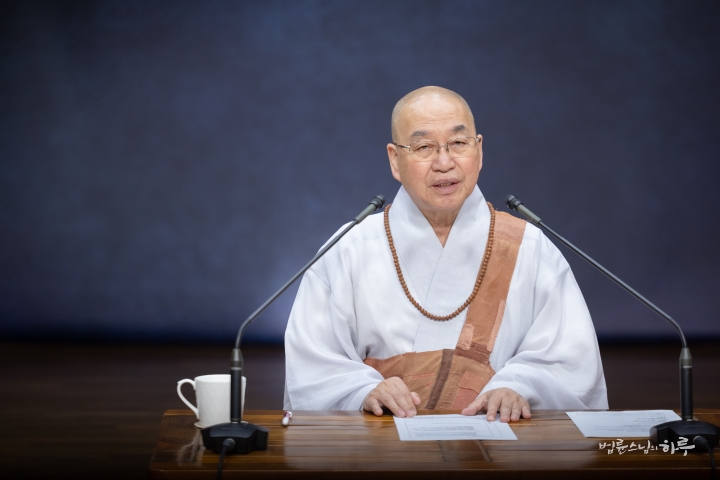
The Path to Healing Through Knowing One’s Mind – Repentance, Posal (布薩) , and Jaja
Knowing one’s own mind is called ‘self-awareness’ (自覺) in Chinese characters. Self-awareness means knowing one’s own mental state. When the mind is contaminated by the three poisons of greed, anger, and ignorance (貪瞋癡), it means recognizing ‘This is the state my mind is in now’ and returning to a pure state. This practice of turning the mind around is called ‘repentance’ (懺悔). Therefore, we must practice repentance daily by examining our own minds. Fundamentally, since ‘ordinary mind is the Way(道),’ we should be aware every moment, but at the very least, we should examine our mental state once a day. After Buddha’s passing, it was the Sangha that took on Buddha’s role. The Sangha refers not to a single monk but to a community of practitioners. The Sangha can fulfill Buddha’s role only when it maintains pure precepts and harmony as if it were a single entity. However, since we are still in the process of practice and not in a state of moment-to-moment awareness, it’s difficult to recognize all our own faults by ourselves. That’s why Jaja (自恣) is a system where we ask other Sangha members to use their eyes, ears, and wisdom to point out any faults where we failed to maintain purity as practitioners or violated community precepts over the past year. ‘If you see my faults with your wisdom and point them out to me with compassionate hearts for my sake, I will gladly accept them and correct those faults.’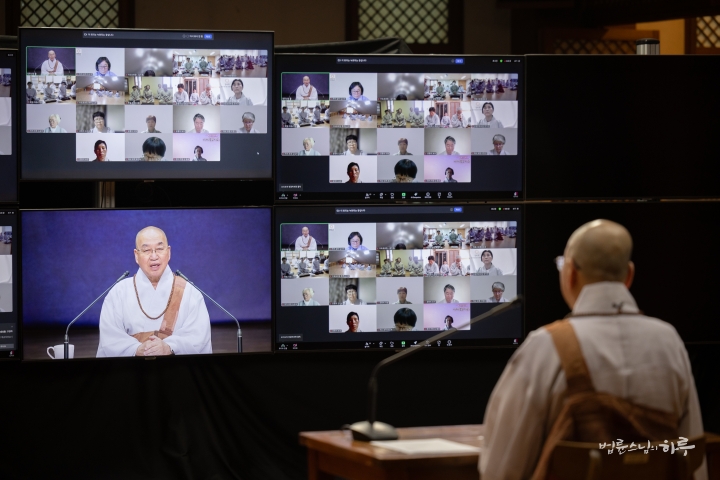
Following this, the Gyeolsa Practitioners and Dharma Teachers repented according to the 40 precepts, and then each group member requested Jaja from their fellow group members.
“If you have any doubts from seeing and hearing my words and actions, or if there is anything you would like to say for my practice, I request Jaja for my benefit.”
They continued with Jaja until 4 PM. After completing Jaja, everyone gathered again for a Dharma Q&A session with Sunim. First, Sunim encouraged the Gyeolsa Practitioners and Dharma Teachers who had completed Jaja.
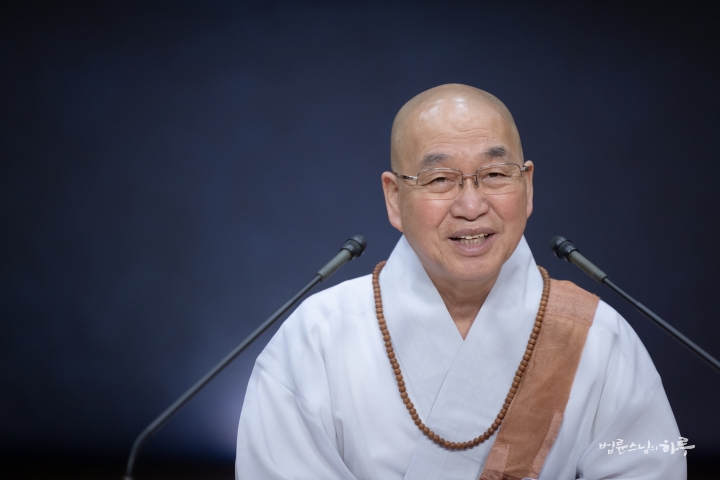
Following this, anyone could freely ask Sunim questions about any concerns that arose during the Jaja process. Various questions continued for an hour. Among them, one person shared their confusion about how to speak as a practitioner when navigating between giving advice and criticism.

**Regarding the Precept About Not Teaching Others, Where Is the Line Between Criticism and Suggestion?
**
“I’m confused about the boundary between criticism and providing information or suggesting opinions in relation to the precept ‘I will not teach others.’ During this Youth Festival, I conducted three sessions of ‘One Bite Meditation.’ To the right was the Magic Soil section, and to the left was the Mini Barugongyang (a traditional Buddhist monastic meal ritual) section. After all activities ended, when a youth volunteer asked ‘How was it?’, I said, ‘It would have been really nice if we could have switched places with the Mini Barugongyang corner. The Magic Soil corner required constant explanation to visitors, so it was very noisy. Even though the meditation was only 5 minutes, it was quite loud.’ After saying this, I immediately regretted it. I thought, ‘Oh, this is criticism again.’ I’m always confused about the boundary between conveying a practitioner’s attitude or perspective and trying to teach others.”
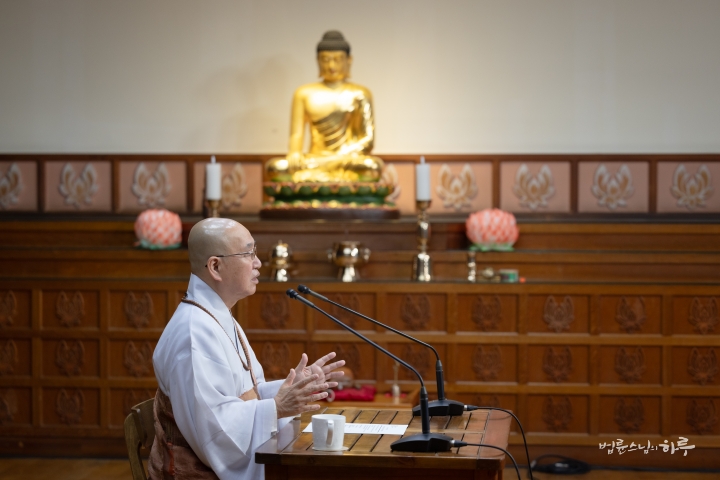
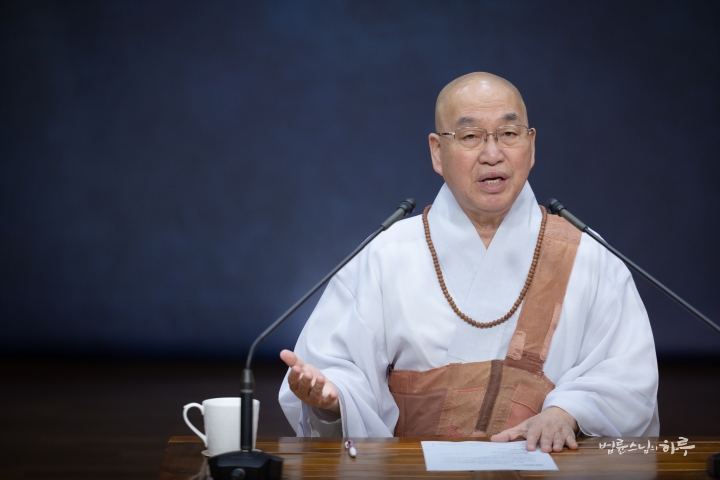
“Yes. I won’t lose sight of this perspective. Thank you.”
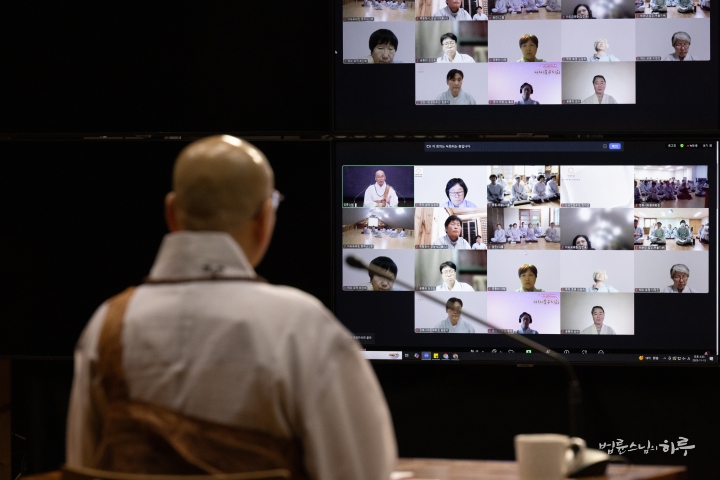
Questions continued to follow.
If I miss the Weekly Dharma Assembly during the Northeast Asian History Tour, does that count as breaking the precept of attending the Weekly Dharma Assembly once a week?
If I express opposition again at the next level meeting for a proposal that was already rejected despite sufficient discussion, is that a violation of precepts?
During Jaja, can we repeatedly emphasize the same point? When something has become a chronic habit for someone, I hesitate to point it out – how should we conduct Jaja in such cases?
When online meetings continue and I miss regular meal times, should this be subject to repentance?
Among Dharma Teacher candidates, if someone has a history of mental illness, how much of this information should be shared in meetings? It’s sensitive information – how much should we discuss?
During meditation, my unconscious is triggered causing convulsions and I end up removing clothes, making group practice burdensome. Should I still participate in group practice when I have these bodily reactions?
I think Dharma Teachers need a certain level of dress code even in everyday life. What would be an appropriate standard?
I sometimes feel uncomfortable with attitudes that excessively distinguish between the community and the Lay Member Group without flexibility. What mindset and attitude should I have in such situations?
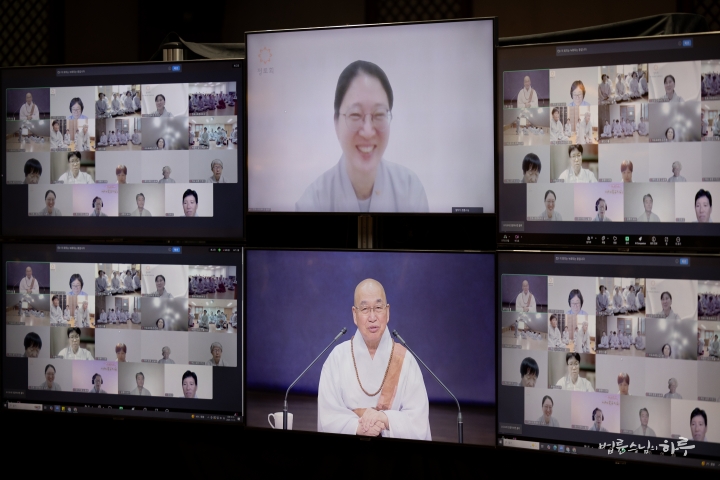
The last questioner asked Sunim for advice on how to speak when it seems like telling someone what to fix won’t be effective.
Ingrained Habits Are Hard to Change – How Should We Address Them?
“In our group during Jaja, someone said to a fellow practitioner, ‘This will be hard for you to change.’ The person knows their own karmic patterns, but those around them also think, ‘Even if I tell them this, it’s such an ingrained habit and karmic pattern that it won’t change easily.’ When we feel this way, with what attitude and mindset should we conduct Jaja?”
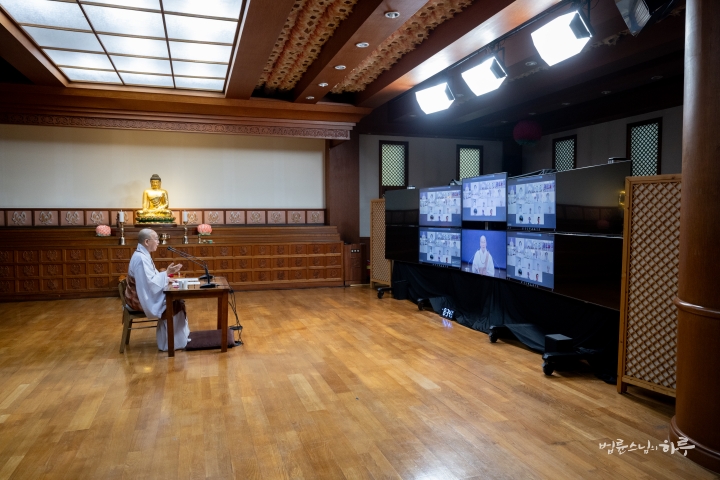
“I understand well. Thank you.”
After finishing the dialogue, Sunim had another appointment immediately, so he hurried to the Jungto Social and Cultural Center without attending the closing ceremony. The Gyeolsa Practitioners and Dharma Teachers completed the closing ceremony and finished the entire Jaja retreat.
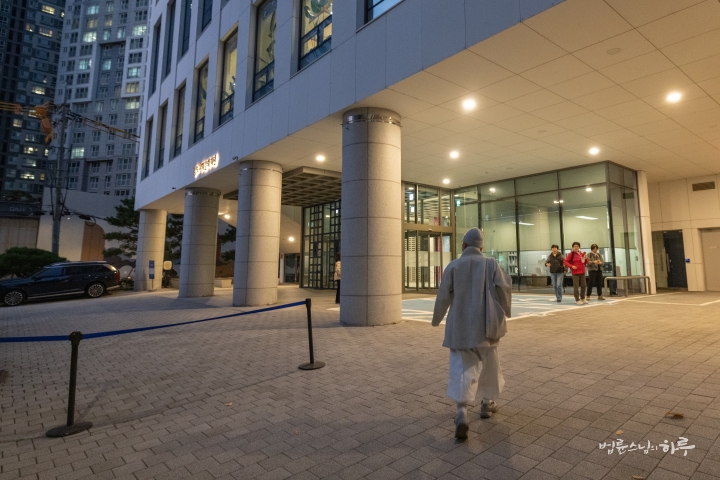
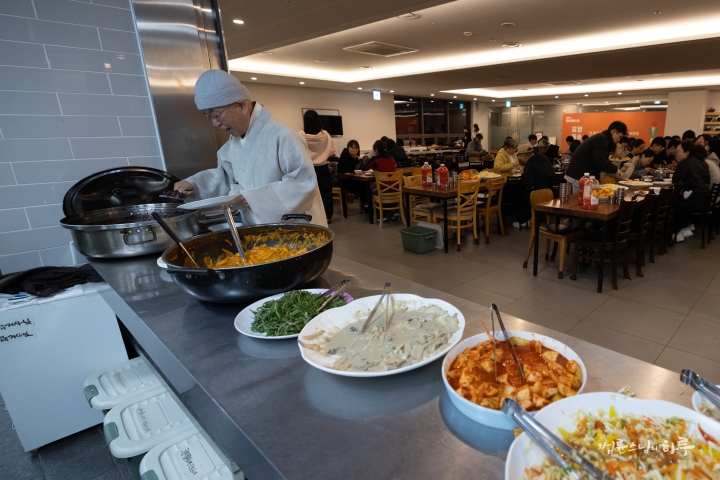
As the sun set, at 5:30 PM, the supporters who had prepared and conducted the Youth Festa gathered at the Jungto Social and Cultural Center for their disbanding ceremony. First, they had dinner together in the basement cafeteria. A simple dinner was prepared for the young volunteers who had worked hard preparing for the Youth Festa over the past three months.
After having dinner together, they held a cake cutting ceremony to celebrate successfully completing the Youth Festa. The President of Jungto Society who oversaw the Youth Festa, the Special Youth Division Director, and the Youth Division Dharma Teachers all came forward. Seeing the cake with Avalokitesvara Bodhisattva drawn on it, Sunim laughed and said:
“How can we cut Avalokitesvara Bodhisattva?” (Laughter)They cut the cake while avoiding Avalokitesvara Bodhisattva.
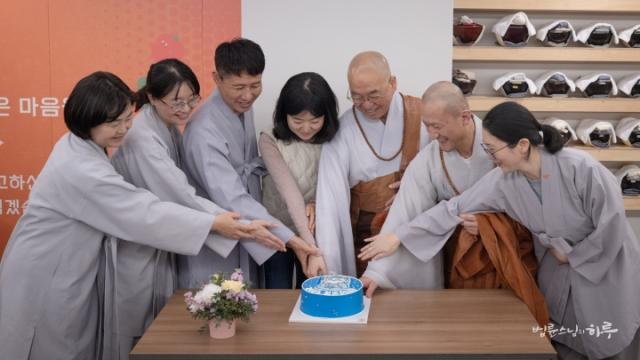
“One, two, three!”

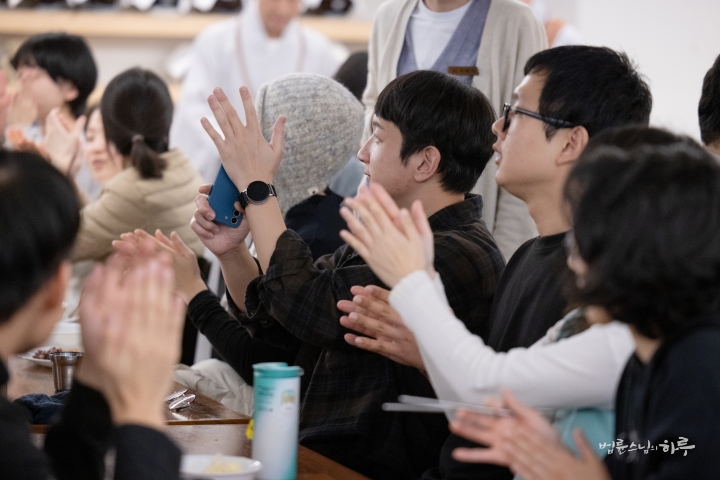
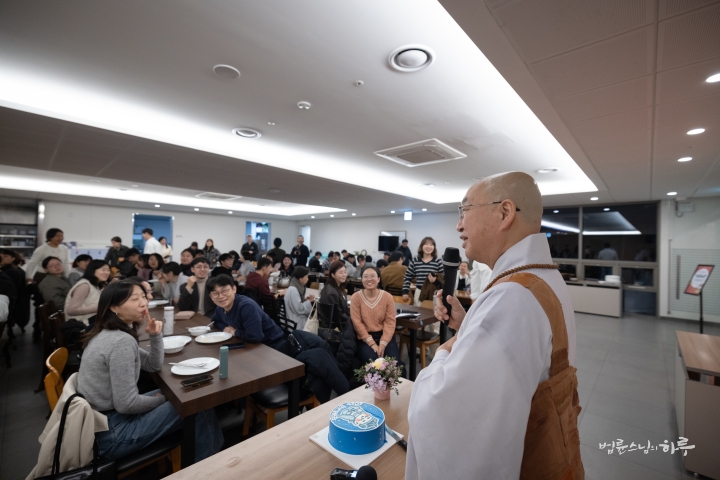
After cutting the cake, Sunim asked the young people:
“We’d like to continue.”
“Those who would like to continue, please raise your hands.”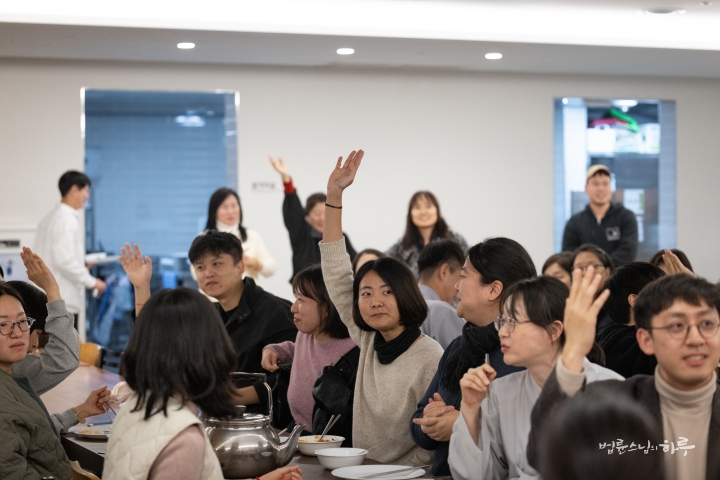
Most people raised their hands.
“Is it better to hold it at the Jungto Social and Cultural Center like this time? Or would it be better to hold it at a larger venue like Dongguk University? If we want more people to participate and make it socially meaningful, it would be better to hold it at Dongguk University. But if we want to create a focal point for participants to continue their connection with Jungto Society, it would be better to hold it at the Jungto Social and Cultural Center, even though the space is limited. There are pros and cons. Those who think it would be better to hold it at a larger venue, please raise your hands.”Opinions were divided about the next venue for the Youth Festa.
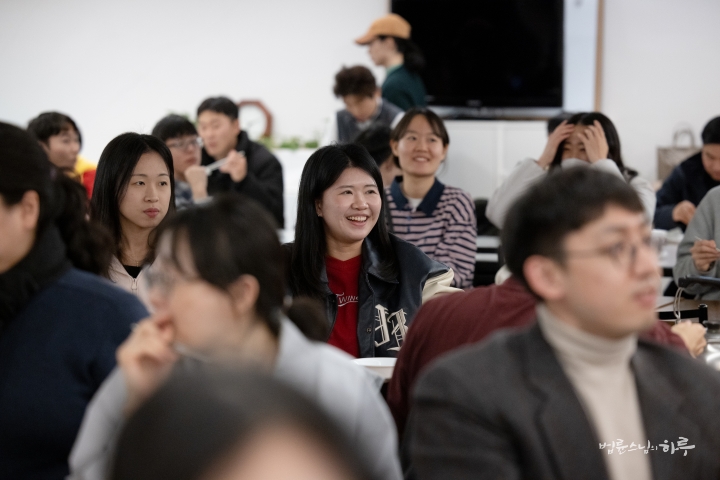
They decided to discuss it again later and all moved to the underground auditorium together.
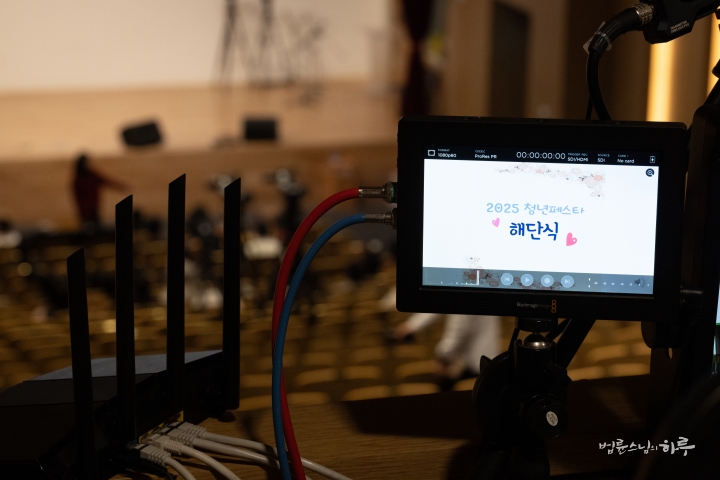
With about 100 young volunteers gathered, the Youth Festa Supporters’ disbanding ceremony began at 6:30 PM.
First, the Special Youth Division performed an opening celebration for the disbanding ceremony. When two people sang “It’s You” as a duet, originally sung by Sung Si-kyung and IU together, the venue immediately filled with a celebratory atmosphere.
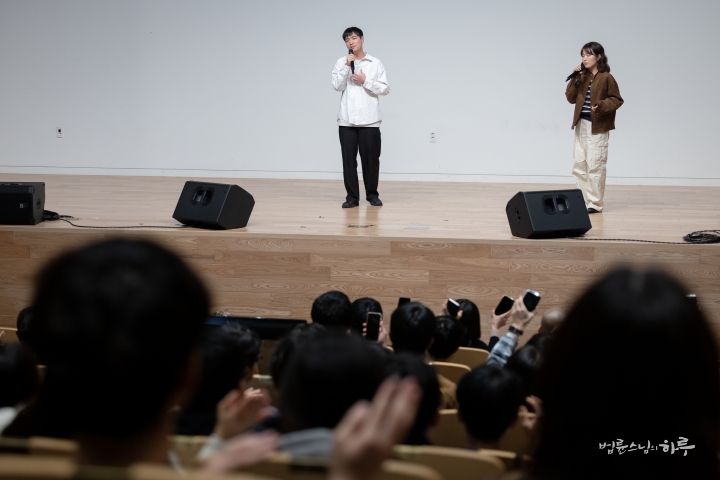
They then passionately sang “Blue Whale.” Like the lyrics about starting in a small pond but swimming like a whale, they wished for the Youth Festa to continue developing.
Someday we too will swim like blue whales ♬
May we live in this wide world without fear
May we be such people
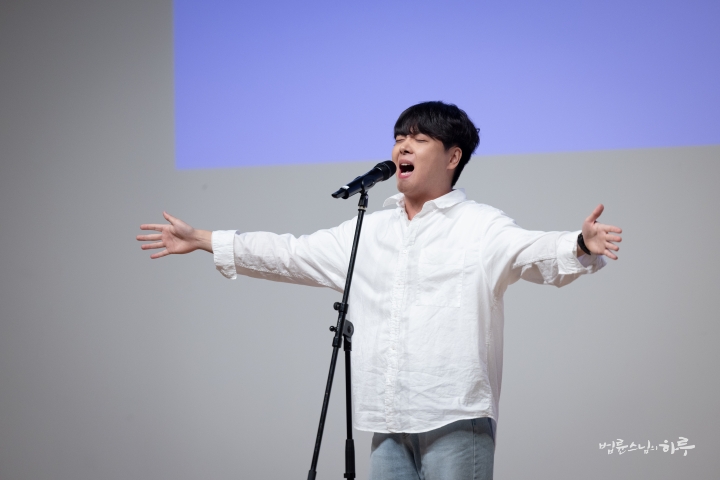
They sang together and encouraged each other with loud applause for their hard work.
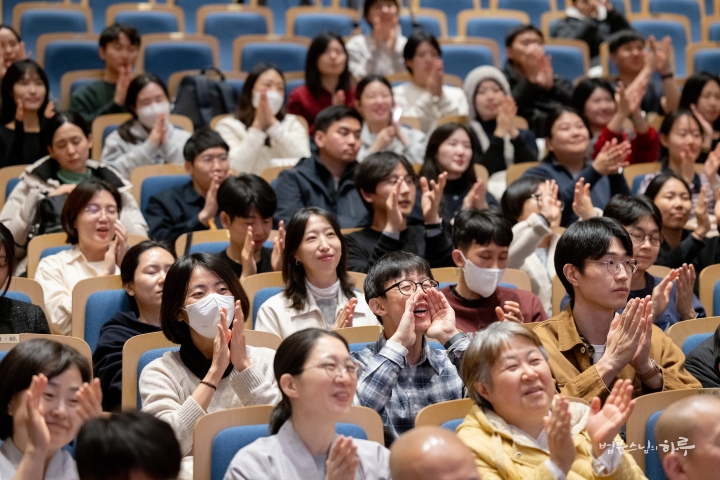
Next, they had time to hear reflections from the supporters about what they felt while conducting the Youth Festa. One person from each department – Lecture Department, Seminar Department, Booth Department, Promotion Department, Guide Department, Support Department – came forward and freely shared their thoughts.
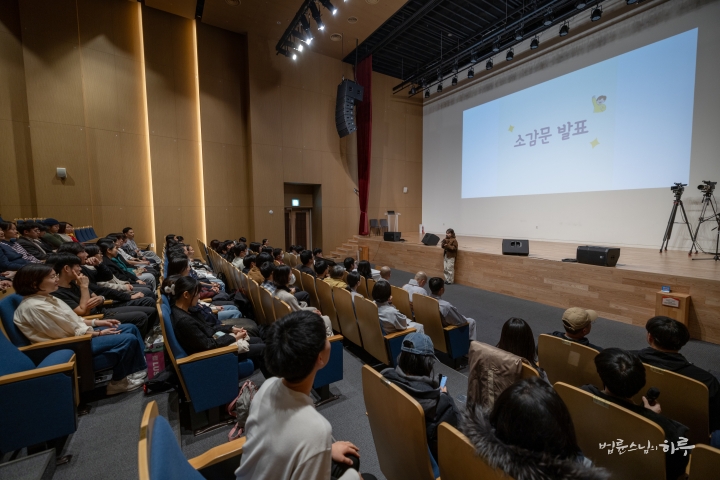
“At first, I couldn’t even hold a needle, but as I took on the sewing playground volunteer work, many afflictions arose. However, I realized again that this process was practice. By attending every practice session without missing, I was able to properly learn at least the basics. On the event day, I approached it with the mindset of ‘I’ll donate one million won every time discrimination arises,’ and praying like this, I was able to finish successfully. It was a time when I deeply felt that peace of mind and immersion are more valuable than the comfort that material things provide.”
“At first, I just wanted to enjoy as a participant, but seeing fellow practitioners preparing made me want to help create it too, so I took on various responsibilities. It was a whirlwind schedule, but as I did things one by one, I realized I had accomplished more than I thought. The sight of fellow practitioners doing their best in their respective roles gave me great strength, and the fact that we prepared together remained as reassurance. Thanks to this Youth Festa, it was a time when I fully experienced new experiences and joy.”
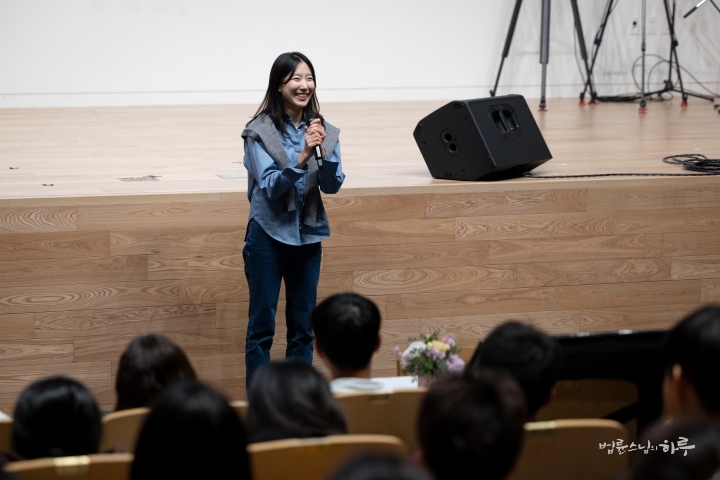
“I developed and operated the entire system so participants could use it comfortably – homepage, check-in, seat assignment, etc. Since I was connected with various departments, there was a lot of communication, and seeing the entire event made me want it to succeed even more. There were many shortcomings, but as I fulfilled my responsibilities wholeheartedly, meaningful changes remained within me too. I’m grateful that we accomplished this big event together with many fellow practitioners, and it was a time of much learning.”
“The seminar team had no foundation at all, but it felt even more attractive because it was like a blank canvas. There were many constraints and frustrations, but conducting 31 sessions over 3 days, I felt the joy of creating something from nothing. Working with team members I liked made me so happy that I thought we were already ‘successful people.’ I learned that young people want to open their hearts and connect, and I developed a wish to expand such opportunities.”
“While filming throughout the event and seeing the vibrant appearance of young people, I realized I had been viewing the word ‘youth’ too heavily. I was grateful thinking that young people could enjoy themselves here freely because there were people volunteering quietly in unseen places. Through this event, I felt the sincerity and warmth of many people, and I felt both embarrassed and grateful.”
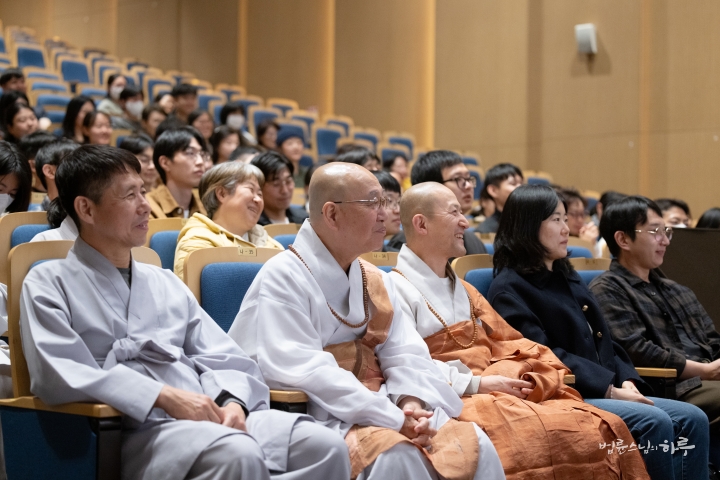
The last young person who stood before everyone was shy and repeated what they had said several times, continuing their reflection that seemed to break off and reconnect.
“Throughout the event, I blamed myself a lot thinking ‘I’m not doing much, I’m not being properly utilized.’ Then when I went to eat and saw the deliciously prepared meal, I was so grateful for the fellow practitioners’ efforts, but also thought ‘I’m not even earning my keep.’ I was so troubled that I even thought about making a donation. So I kept reflecting on my mind while practicing, and I’m sorry I didn’t prepare enough today either. Then when we were organizing items after the event ended… how should I say this… Still, I’m grateful I could be together like this.”
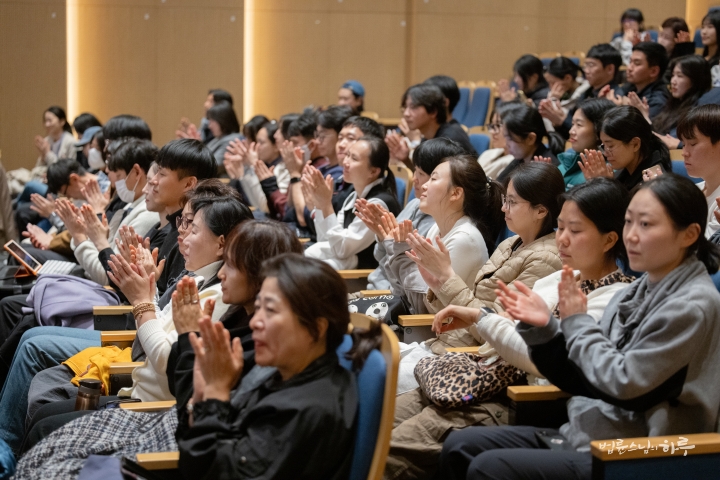
Sunim listened attentively to the young volunteers’ reflections and gave big applause after each person finished their presentation.
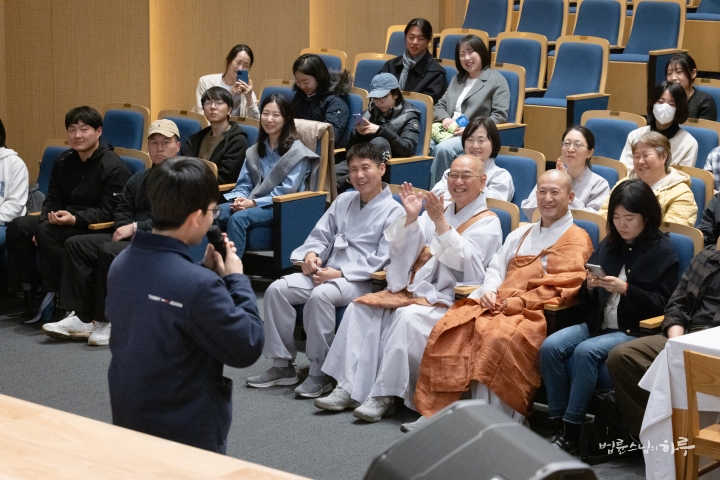
The young volunteers were able to look back on the meaningful time they had created while listening to their fellow practitioners’ presentations.
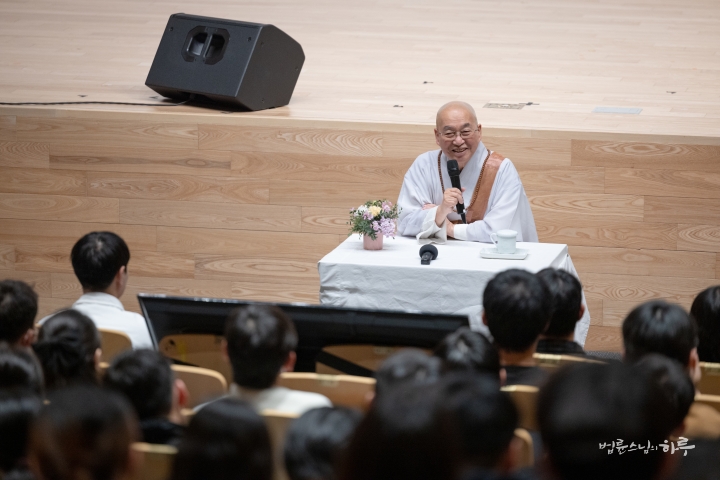
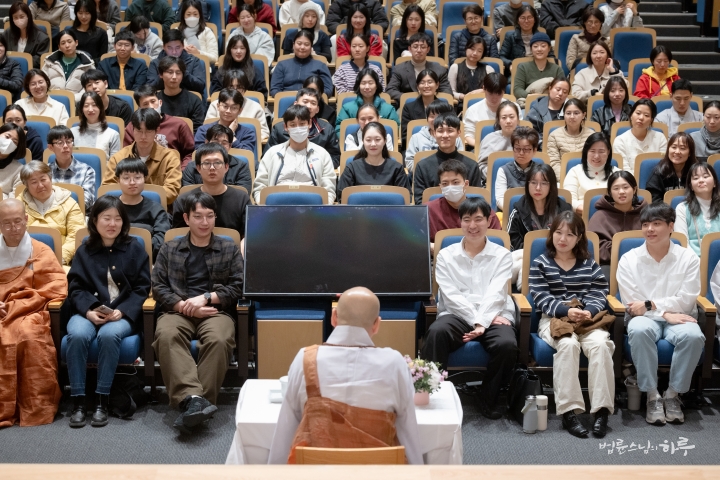
Next, the young volunteers asked Sunim for a dharma talk to conclude the disbanding ceremony. Sunim emphasized that we must deeply reflect on what we learned and what assets we gained through this Youth Festa.
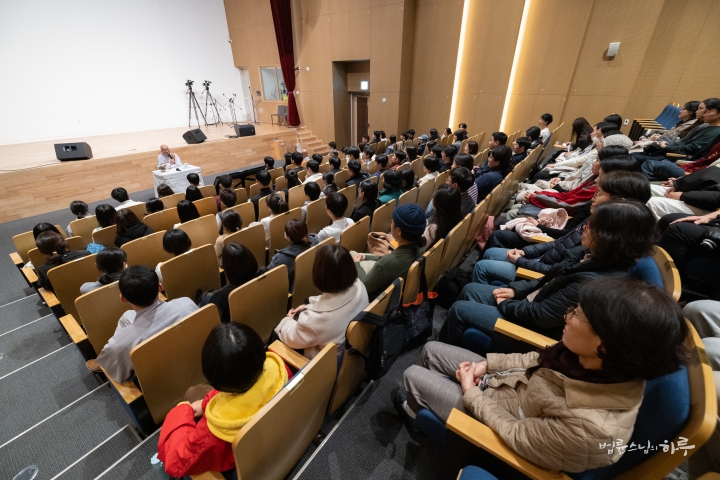
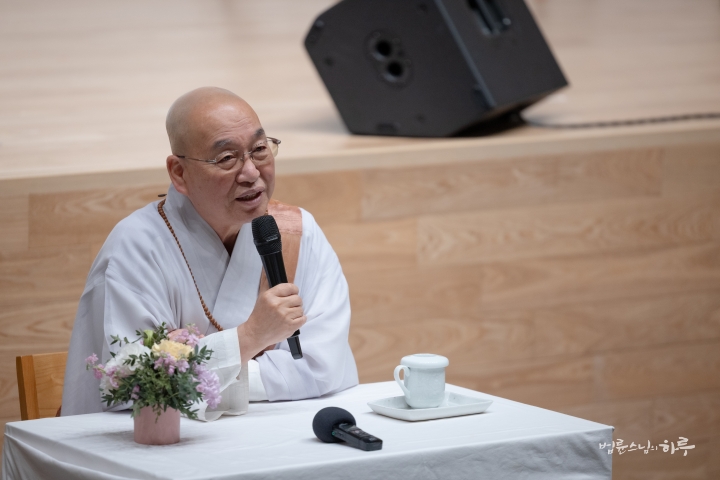
Now that the Youth Festival is over, what are the real assets that remain with us?
First, the experience of directly planning and implementing the Youth Festival will have remained as a significant asset. Although it was challenging, you gained new experiences. To use a mountain climbing analogy, it’s like having the experience of ‘enduring hardship while climbing a mountain.’ Just as you might feel, ‘So mountain climbing builds physical strength,’ or ‘This time I crossed streams and climbed steep paths,’ such experiences are remembered for a long time. In other words, just as you save profits, this event has accumulated the asset of ‘experience.’ All the work you physically engaged in—preparing meals, managing the organization, producing event materials—will have become valuable resources for you. Second, the deep ‘experience with people’ gained from working with fellow practitioners is also a significant asset. While you usually just exchange greetings and practice together, you can only truly understand a person’s thoughts, personality, strengths and weaknesses by working together. When you go through hardships together, both positive and negative aspects of a person are revealed. As mentioned in the reflections, ‘I worked with good people,’ the fastest way to know what kind of person someone is, is to work with them. Through this event, you experienced people and went through various processes of building relationships with others.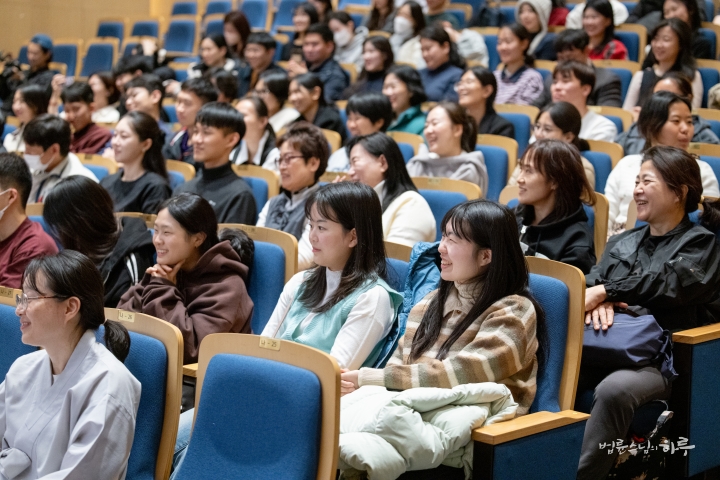
Why Now Is the Best Time
That’s why now is the best time for you too. It’s a good time even if you’re inexperienced. Because it’s your first time, you can draw freely on a blank canvas. Others might judge you as clumsy, but their evaluation isn’t what matters. We grow through experiencing this process. If we were to evaluate how successful this Youth Festival was, the real criteria would be: ‘How much experience did you gain?’, ‘Did that experience become meaningful and memorable for you?’, ‘Did you gain confidence that you too can accomplish such things?’ These are the true measures. When you repeat experiences, your skills naturally improve. The same goes for presentations. Even if you stumble a bit, after doing it three or four times, you’ll get much better. If you shrink back, you won’t improve. Whatever it is, after repeating it a few times, you eventually become familiar and skilled at it. I hope that through these various experiences, you’ll grow into people who can manage a company or even run a country.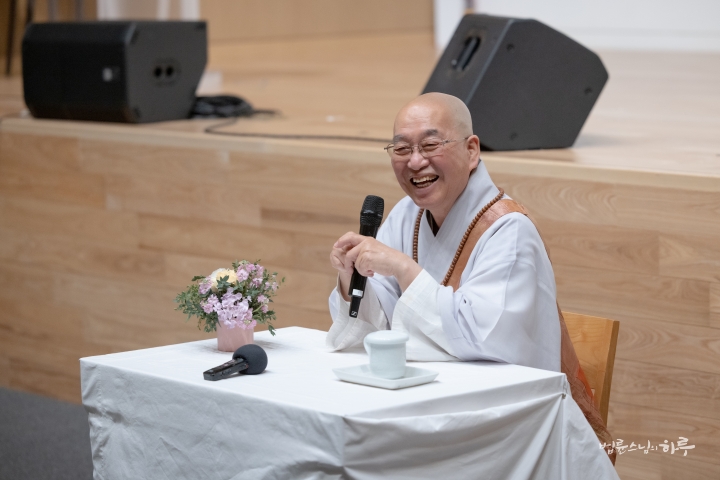
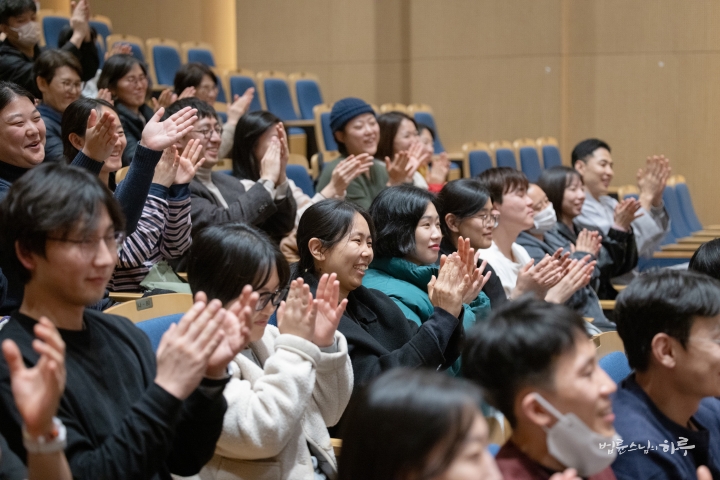
After finishing the Dharma talk, Sunim passed the microphone to Venerable Yusu, who had supported the young volunteers in various ways behind the scenes. Venerable Yusu also expressed great joy about today’s closing ceremony and shared his thoughts.
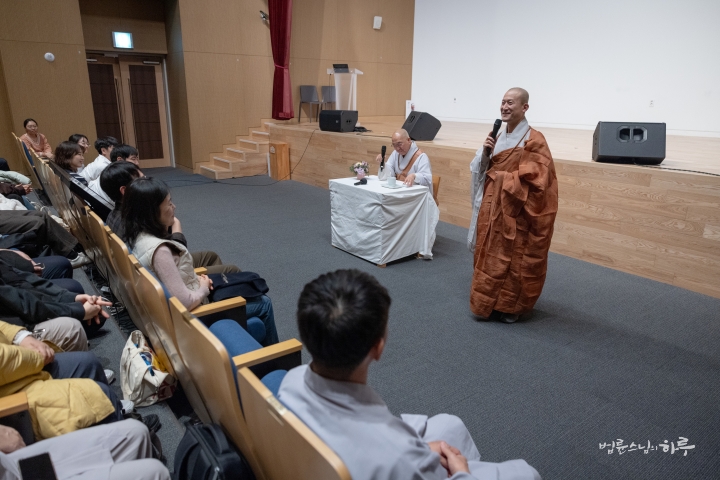
“I was truly happy and delighted to organize this major event with our young people. Above all, I’m even more pleased to see that the youth are saying ‘It was great, I want to do it again’ rather than ‘It was hard.’ It seems the Youth Festa has instilled great confidence in all of you. I hope this experience becomes an asset for bringing dreams and hope to young people in Korea and around the world.”
Next, Dharma Teacher Hyanghwa, who is in charge of the Special Youth Division, shared her thoughts.
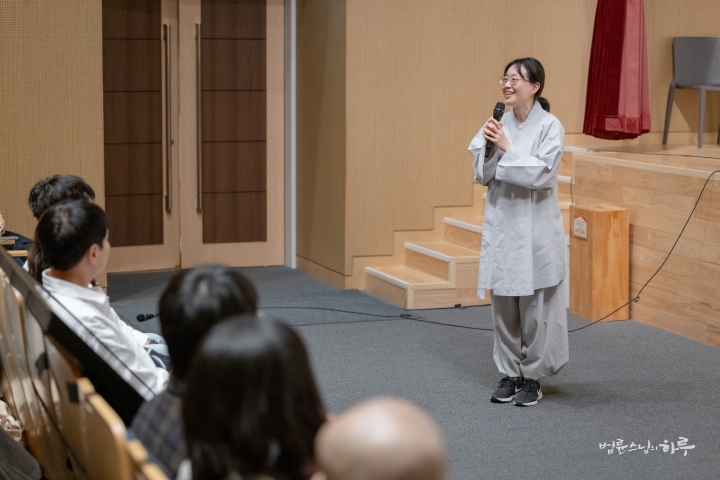
“It was truly wonderful to be with all of you. Your bright smiles before, during, and after the event brought great warmth to my heart. Even though some of you said you were so exhausted that you wouldn’t come back to Jungto Society after the event, I’m even more grateful that everyone came today. You all worked so hard.”
Finally, Park Soo-jung, the division leader who oversaw the Youth Festa, shared her thoughts.
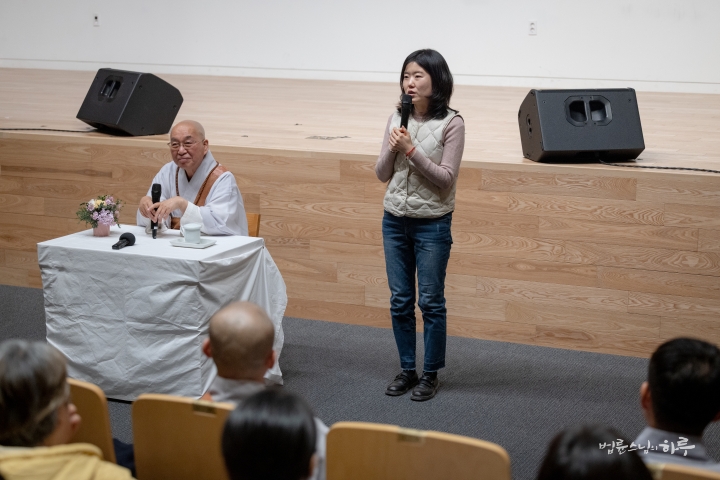
“I feel deeply grateful to all my fellow practitioners. There were many moments when I didn’t want to continue, felt angry, and thought ‘Please don’t look for me!’ But the reason we can laugh together in the end is because you all persevered with camaraderie. As this Youth Festa has become the pinnacle of our activities, there must be much that remains in your hearts. I hope next year we can take on even bigger roles and work with even more young people from around the world. Everyone did a great job.”
As the closing ceremony was wrapping up, Sunim called back to the front the young volunteer who had struggled to speak coherently during the earlier testimonial.
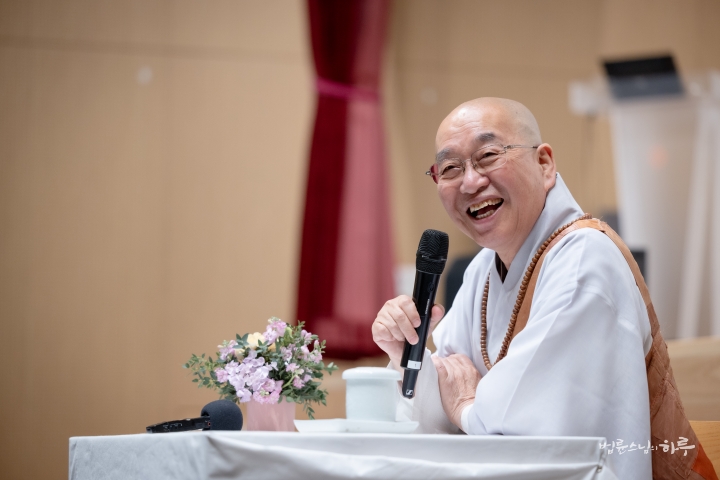
Standing before everyone again, the young volunteer shared his thoughts coherently within one minute. Everyone gave him a big round of applause. Sunim once again warmly encouraged the young volunteer.
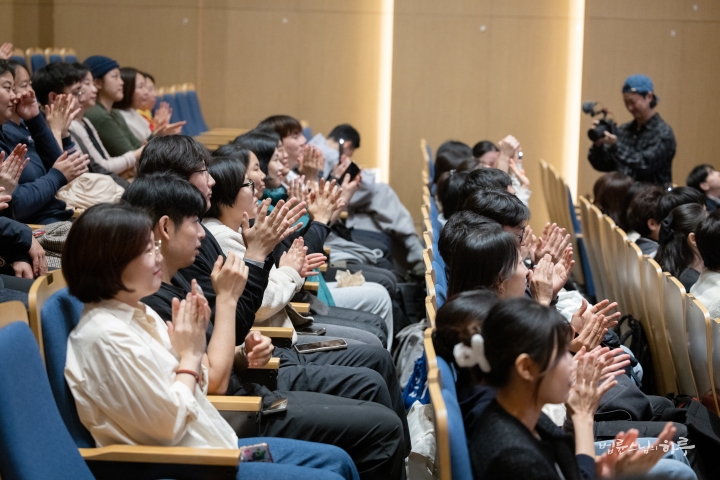
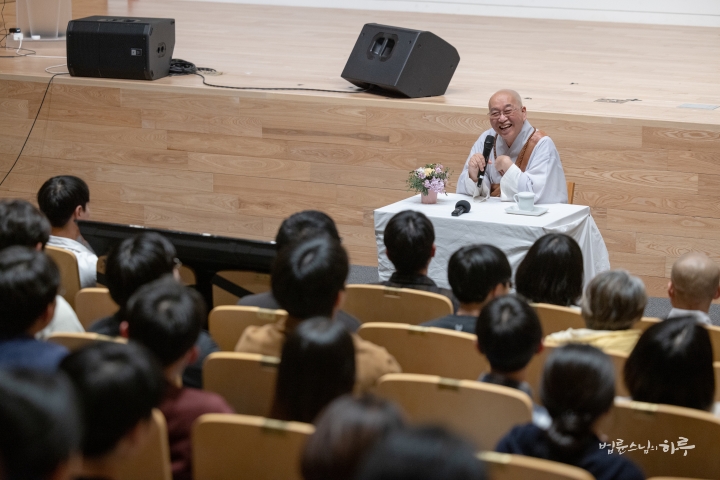
The Youth Festa closing ceremony concluded with the Four Great Vows.
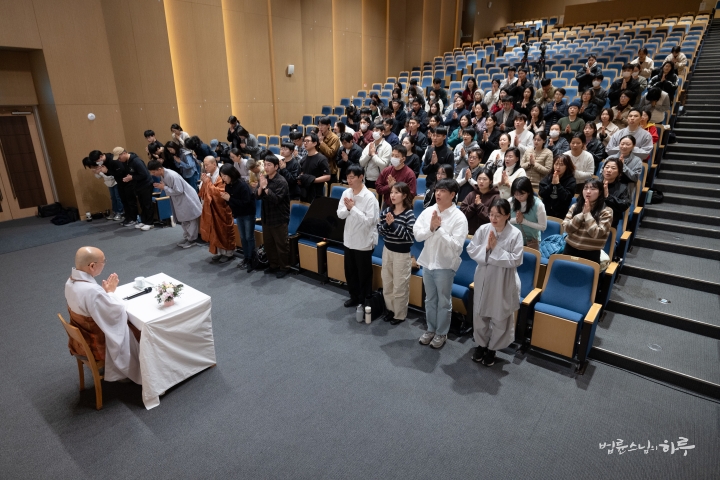
Finally, everyone took a commemorative photo together.
“We all had a great time!”
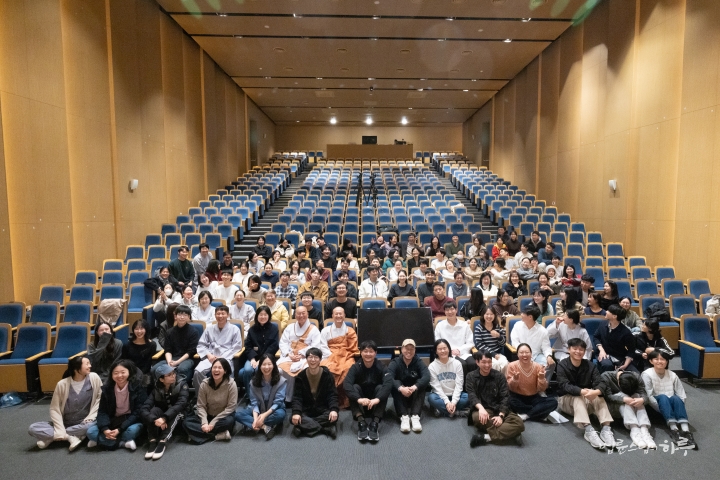
The Youth Festa concluded with a loud cheer. Everyone truly had a wonderful, exciting time.
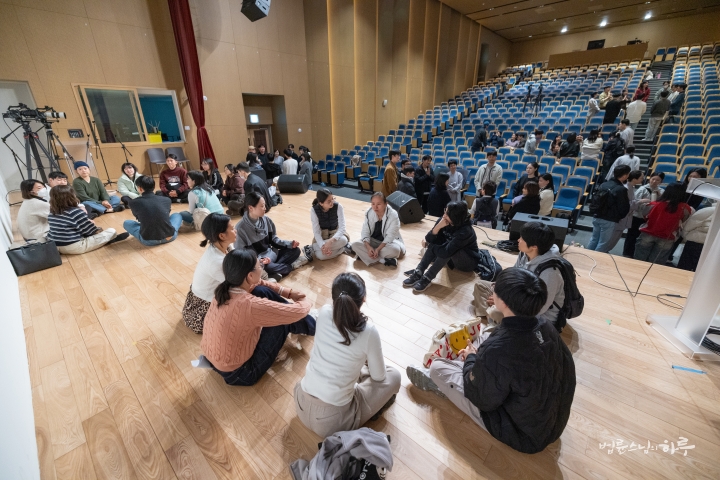
The youth supporters gathered in groups for mindful sharing sessions, and after encouraging the youth supporters, Sunim returned to the Jungto Center to conclude the day’s activities.
Tomorrow morning, Sunim will have an online Dharma Q&A session with Jungto Dhamma School students who are taking the “Human Buddha” course. He will then attend the Happiness Movement Special Headquarters event all day for discussions. In the evening, he will travel to Gimpo Airport and fly to Jeju Island for tomorrow’s lecture in Jeju.