Why Are There No Monks in Robes or with Shaved Heads at Jungto Society?
October 28, 2025. Women's INEB Day 7, Sharing Reflections Hello. Today marks the final day of the Women's INEB Jungto ...
Hello. Today marks the final day of the Women’s INEB Jungto Society Study Tour.
After completing morning practice and meditation, Sunim departed from Dubuk Jungto Retreat Center at 7:30 AM and headed to Seoul.

After a four-hour drive on the highway, he arrived at the Jungto Social and Cultural Center in Seoul at 11 AM. Following lunch, at 3 PM, he met with a social leader from outside the organization for a discussion. They exchanged views on various topics, including how to improve North Korea-US relations and inter-Korean relations for peace on the Korean Peninsula, and how to overcome the deepening partisan conflicts in Korea to achieve national unity. Afterward, he returned to the Jungto Social and Cultural Center.

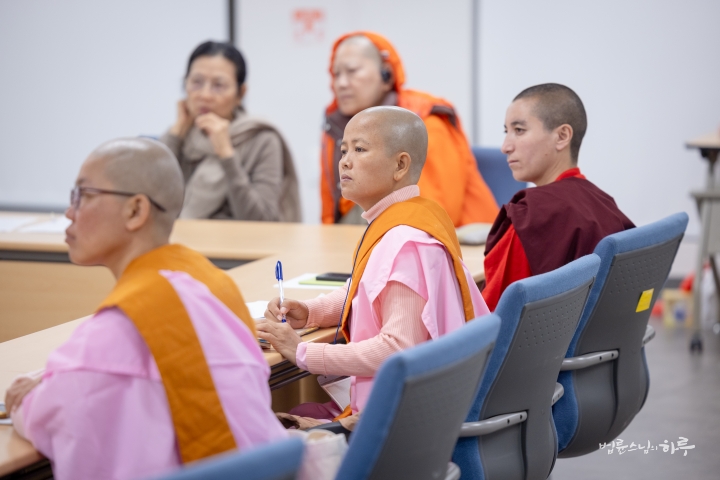
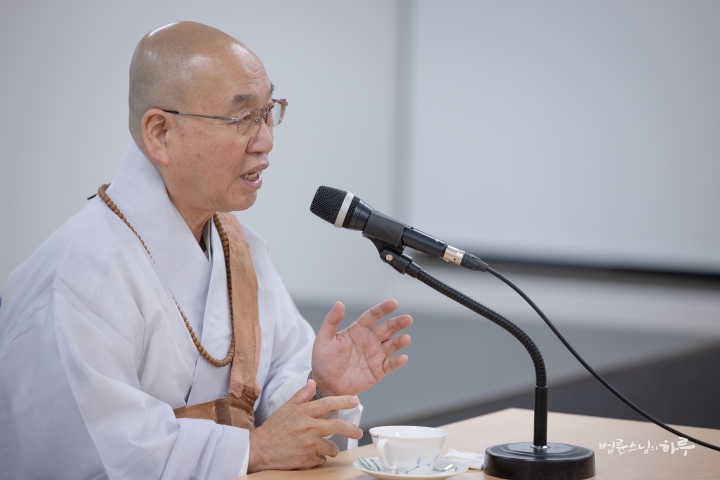
As the sun set, at 7 PM, Sunim gathered with the Women’s INEB participants in the 9th-floor auditorium to conclude their seven-day study tour.

First, all participants took time to write their reflections. Looking back on their seven-day journey, they carefully penned their accumulated thoughts and feelings on white paper.
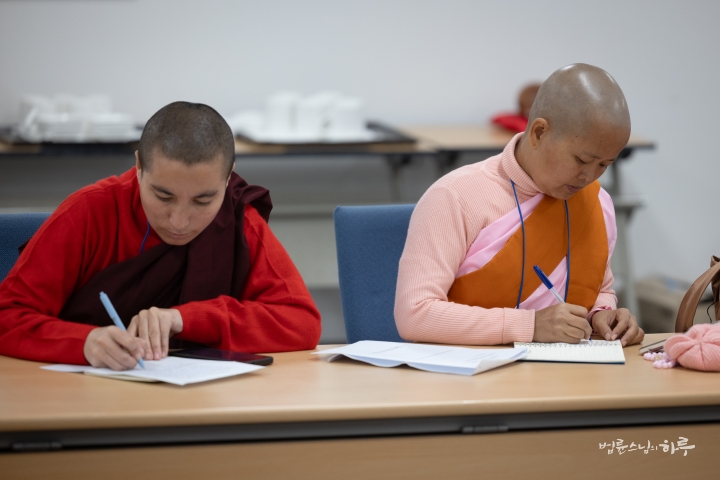

After completing their reflections, participants began presenting one by one.
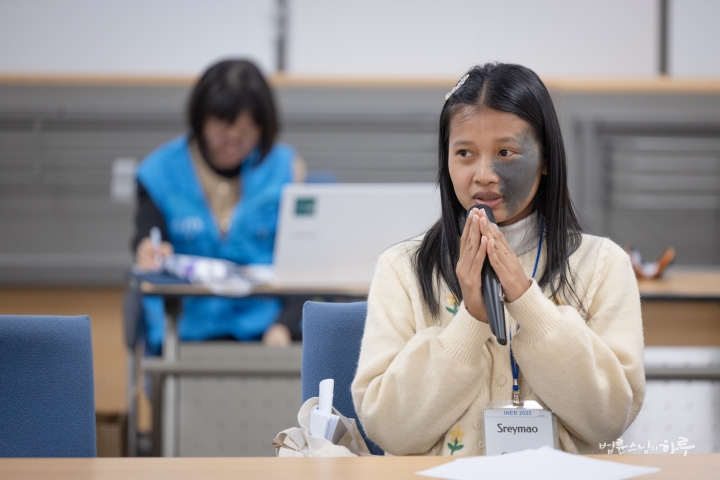
“Through this study trip, I realized that life is not only about studying, working, and earning money—it’s about community, citizenship, and the next generation. Jungto Society showed me that consistent practice and collective effort make us powerful and confident enough to help others. I learned that lifelong learning is never too late, regardless of age or circumstance.”
The sharing of reflections continued.
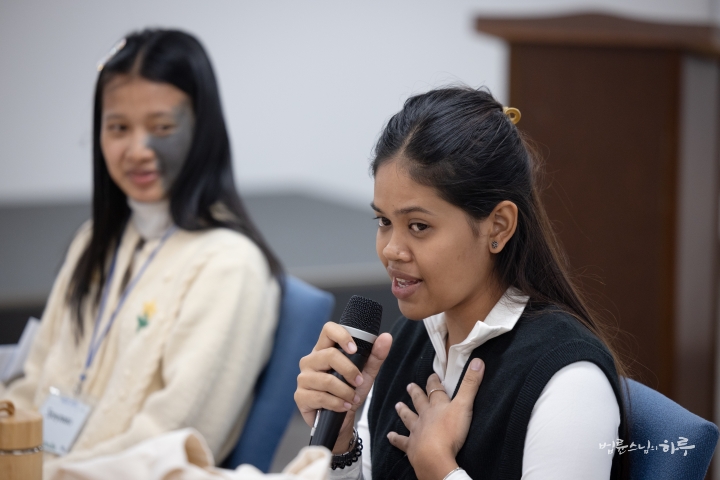
“As the youngest participant, I learned the beauty of waking up early to chant and begin each day with a peaceful mind. I now understand why Jungto Society has such influence—because its people work tirelessly for humanity without discrimination or expectation of reward. This experience strengthened my commitment to live mindfully and contribute to society with sincerity.”
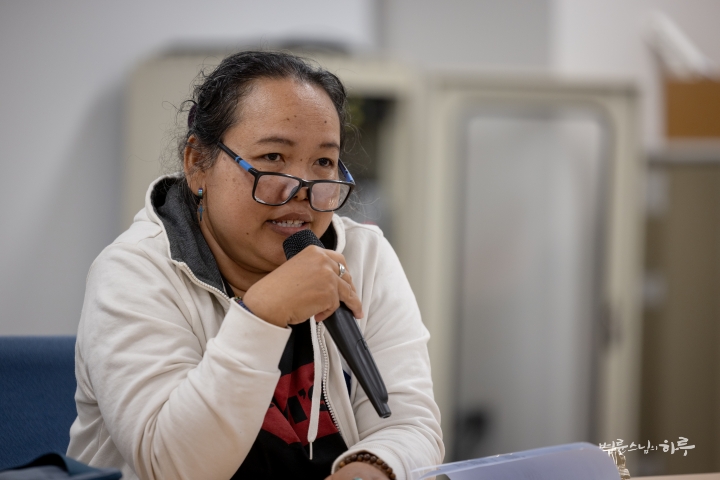
“This trip was unlike any other—filled with love, service, and true volunteer spirit. I was deeply moved by how Jungto Society integrates spiritual practice with social engagement. It reminded me that social change takes time, but it begins with one person’s courage to act. I saw that volunteer-based communities can truly thrive, even in our modern world.”
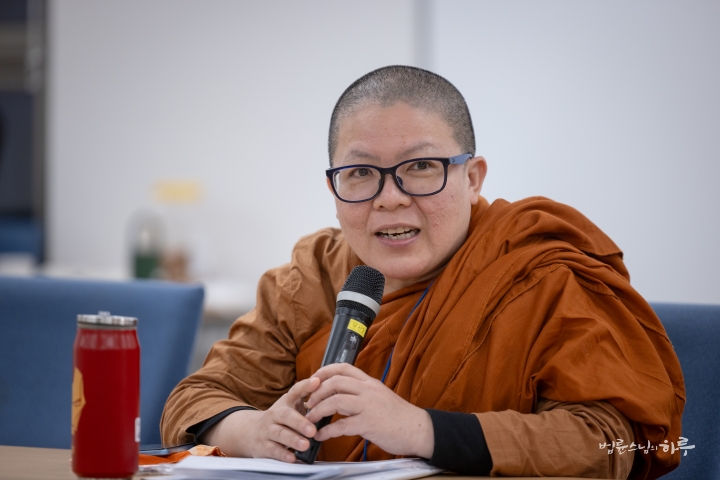
“Meeting Korean Buddhist leaders and learning about Jungto’s organizational structure inspired me to apply similar models in my own NGO. This trip convinced me that real social change is possible when a community shares a vision and works tirelessly toward it. Even small changes matter; consistency and long-term dedication make transformation real.”
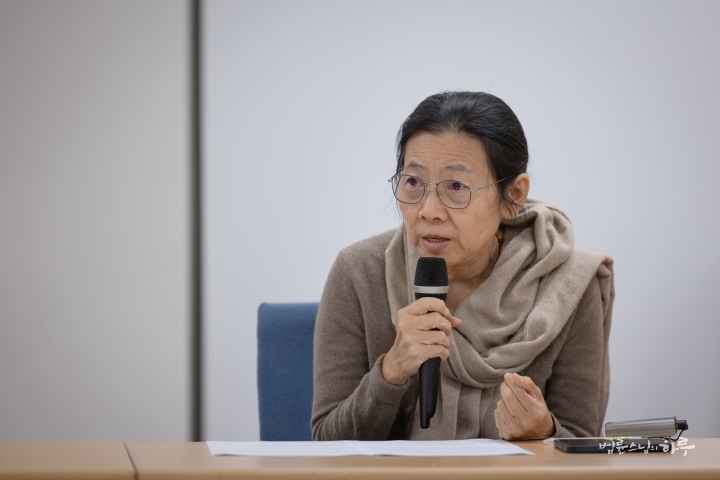
“Having women practitioners together in a warm, nurturing environment was profoundly empowering. Listening to Dharma teachers’ personal journeys showed me how leadership without ego—rooted in respect and equality—can bring true, lasting social change. This trip reminded me that faith-based movements succeed when led with humility and compassion.”
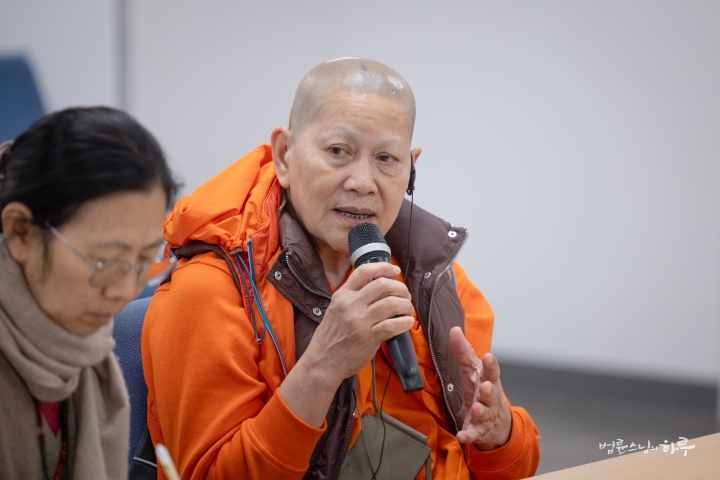
“Before coming here, I felt like a withered tree ready to die. Now, through this experience, I feel as if sacred water has revived me. I’ve regained purpose—to live as a nun who helps the world and humanity. I will stand strong again, leading vulnerable children with love and calm strength. True practice is not only rituals but living with compassion and wisdom.”
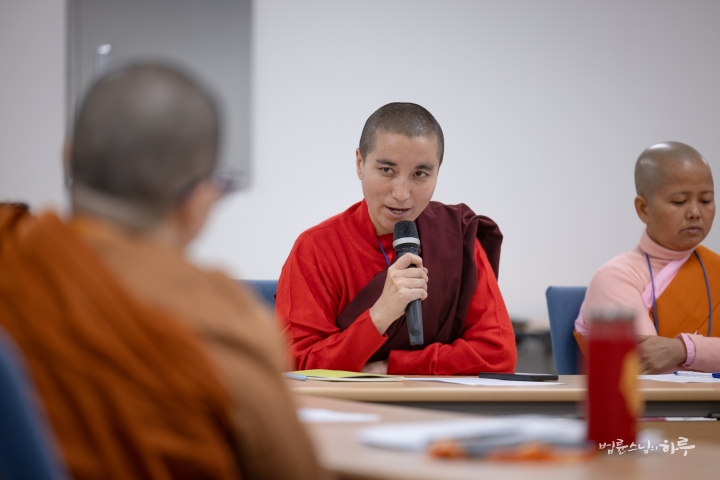
“I was deeply moved by how Buddhism in Korea is lived through social service and environmental care. Seeing Venerable Pomnyun Sunim’s compassionate action inspired me to reflect on how I can serve my own community. True change, I realized, begins within—by cultivating mindfulness and gratitude in daily life.”
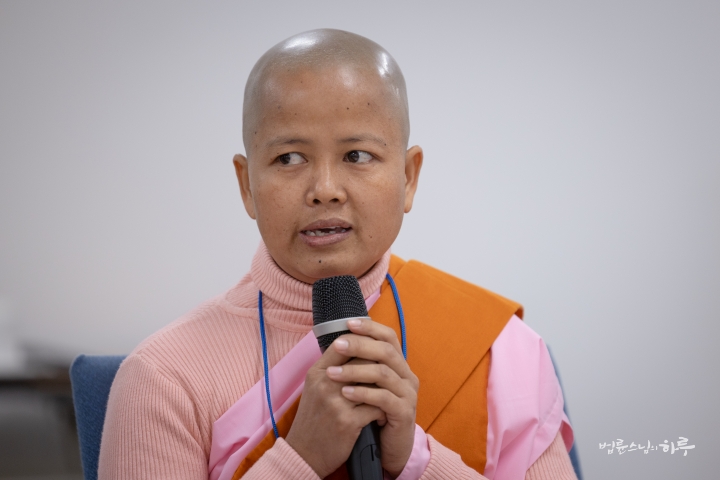
“This was my first visit to Korea, and I was inspired by how communities share agricultural knowledge, such as using natural fertilizers. I also found it eye-opening that people here can discuss religion, politics, and business openly regardless of gender. It showed me how communication and shared wisdom can transcend boundaries.”
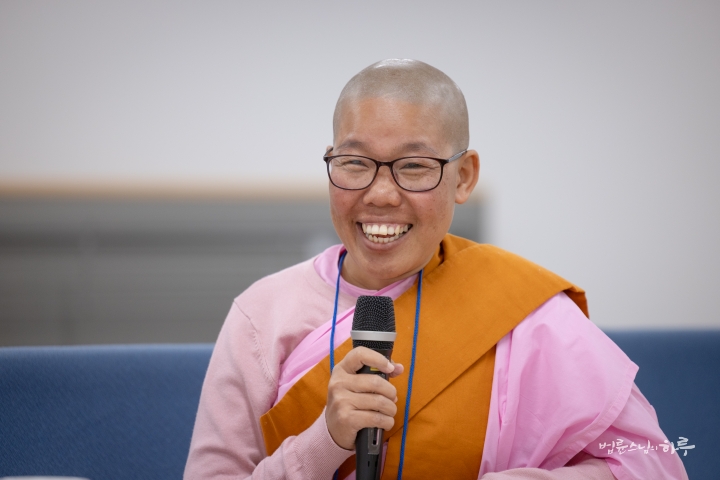
“I learned that meaningful change doesn’t require a grand movement—it starts from transforming our own habits and minds. Practicing mindfulness, kindness, and cooperation can ripple outward to bring both inner and outer change. Even something as simple as learning to empty the bowl mindfully taught me the joy and depth of awareness.”
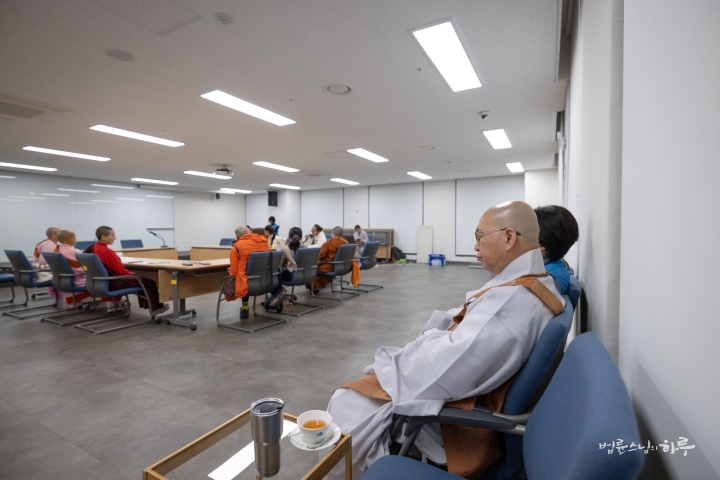
Despite their diverse backgrounds, the participants were deeply moved by witnessing how practice and service are integrated into one life at Jungto Society. Everyone gained confidence that “small actions can change the world” and felt renewed appreciation for inner peace and the power of community. While some focused on practice and meditation and others on social change or women’s leadership, all expressed deep satisfaction with their experience of growing together and forming warm bonds of solidarity.
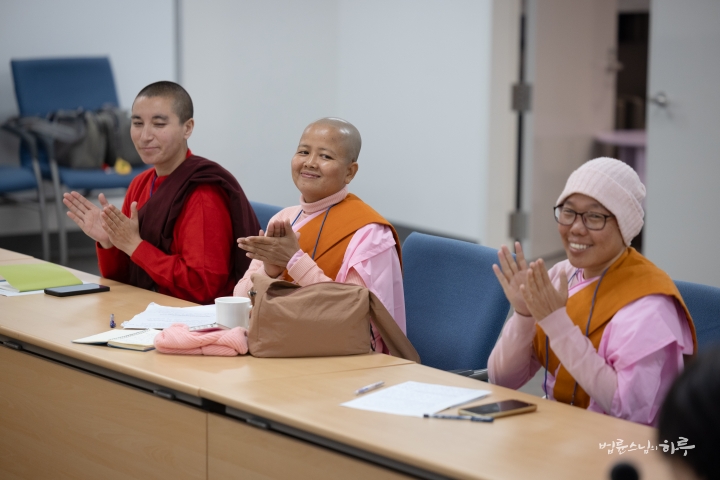
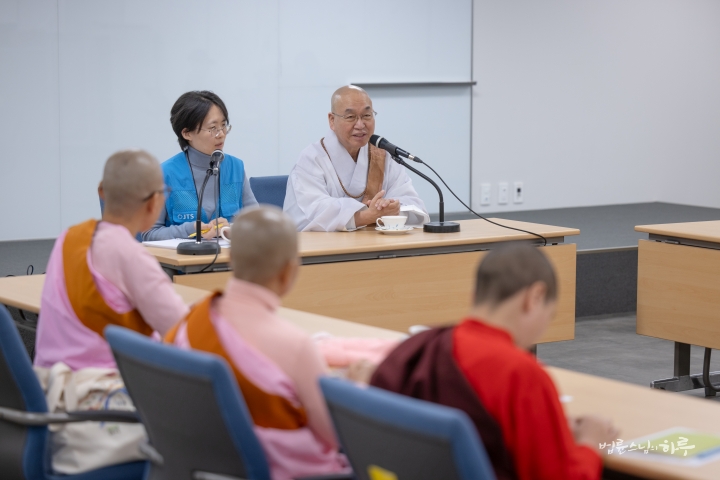
Next, participants had time for dialogue with Sunim. He asked each Women’s INEB participant about their activities in their respective countries.
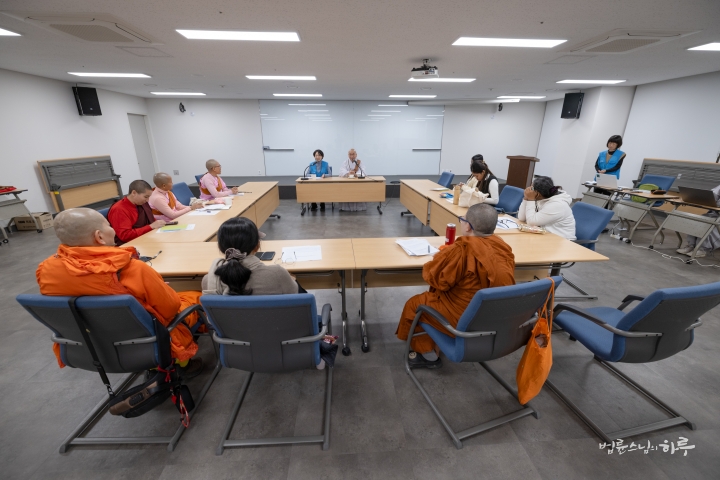
It became clear that women practitioners and activists from Thailand, Myanmar, Ladakh (India), Cambodia, and Malaysia, who are interested in compassion, peace, environment, education, and social engagement, had gathered to learn how to practice Buddha’s teachings in modern society and explore possibilities for solidarity and cooperation. Sunim also offered advice on what perspectives they should maintain when returning to their respective fields.
After listening carefully to the participants’ activities, Sunim concluded the Women’s INEB Jungto Society Study Tour program with words of encouragement.
Why Are There No Monks in Robes or with Shaved Heads at Jungto Society?
The Buddha renounced his throne and left his family. He ate by begging for alms, which meant he was not attached to the taste of food. He ate only the minimum needed to sustain his body, and the clothes he wore were discarded cloth that no one else would wear. At that time, people considered cloth that had covered corpses to be impure and wouldn’t wear it. The Buddha covered his body with such cloth and slept under trees or in caves.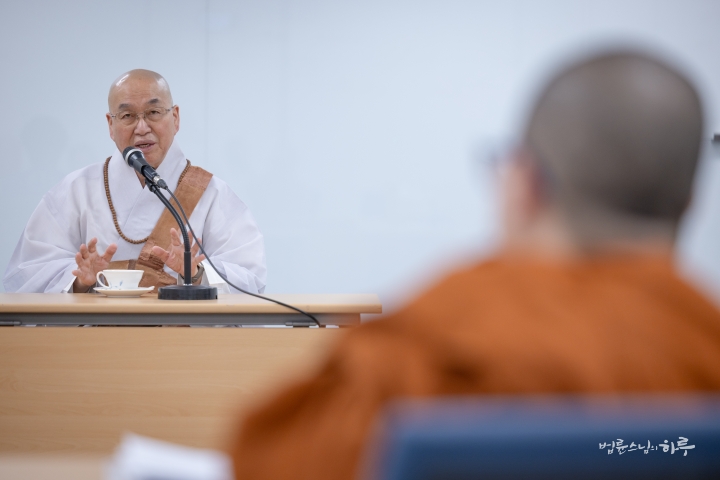
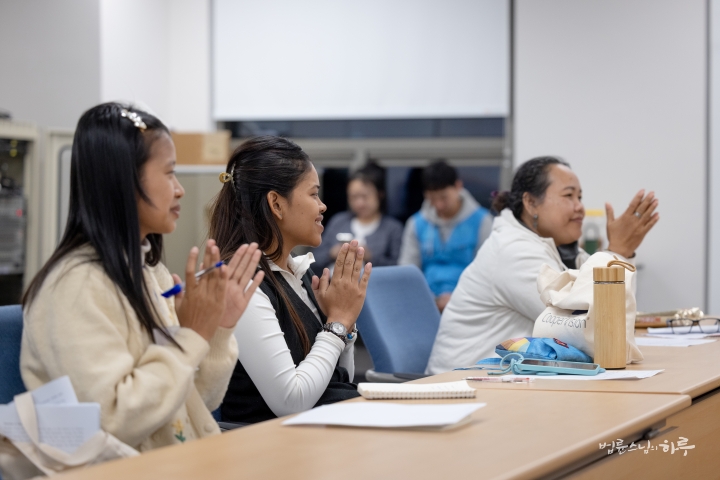
With loud applause, the Women’s INEB Jungto Society Study Tour program came to a complete close.
Sunim then presented a book as a gift to each participant.
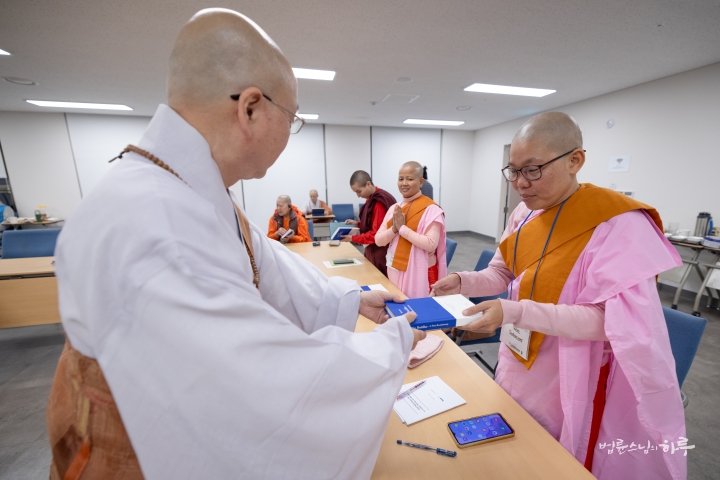
The participants also presented gifts they had brought from their respective countries to Sunim.
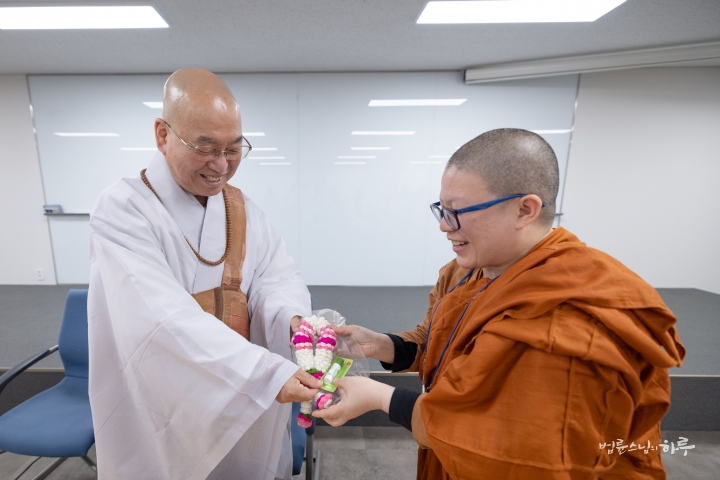
After the gift exchange ceremony, Sunim bid farewell to the Women’s INEB participants.
“I hope each of you will do well in your respective responsibilities. And if there is essential work or something difficult to do alone, let’s contact each other and explore how we can cooperate together.”By the time the gathering ended, it was 9 PM. Everyone retired to their last night’s accommodation in Korea, leaving their regrets behind.

Tomorrow morning, Sunim will conduct a live broadcast of the Weekly Dharma Assembly. In the afternoon, he will film a promotional video for the Youth Festa, meet with the JTS Secretary-General to discuss support plans for refugee camps in Myanmar and Thailand, and pack items to take to Bhutan.