Is It Unfilial Not to Hold Ancestral Rites?
2025.10.27. Dubuk Elders' Autumn Outing Hello. Today is the day for an autumn outing with elders living in 13 villages ...
Hello. Today is the day for an autumn outing with elders living in 13 villages near Dubuk Jungto Retreat Center.
For the past 21 years, Dubuk Retreat Center has been conducting volunteer activities, visiting the homes of elders with mobility difficulties to clean their houses, prepare side dishes, and provide companionship. Every year, the center also hosts spring and autumn festivals for the local elders.
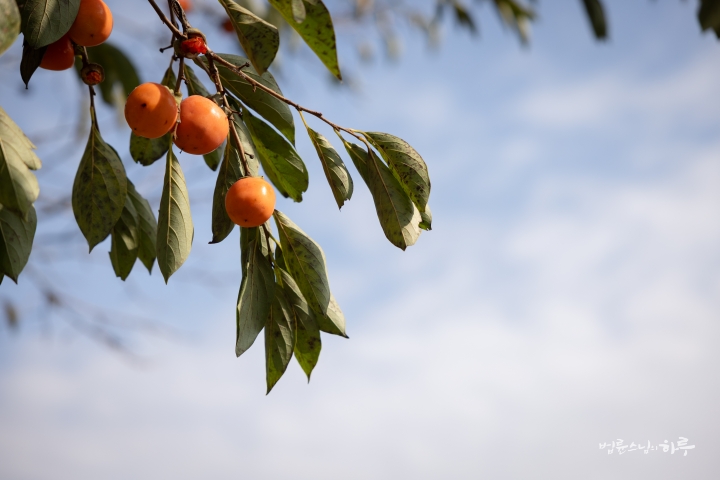
The village chief’s announcement echoed throughout the village.
“Ah. Ah. Aah. Today is the village elders’ festival day with Venerable Pomnyun Sunim. Since the weather is chilly, please dress warmly before coming out.”
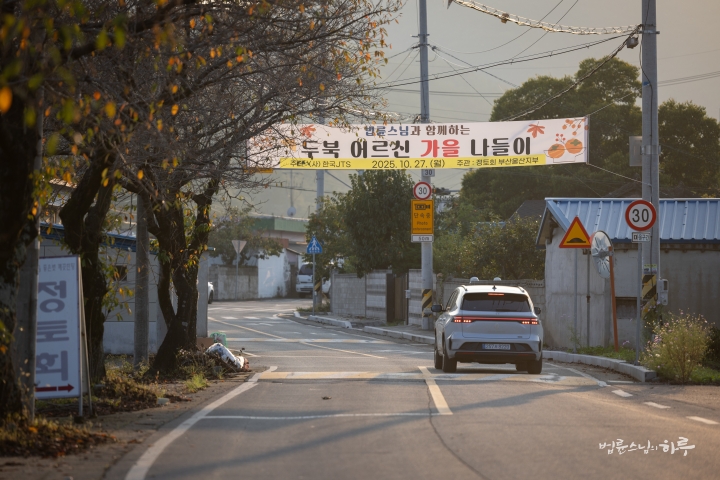
About 30 volunteers from the Busan-Ulsan Division of Jungto Society visited each village to pick up the elders. Some elders came with their bicycles or electric scooters. The volunteers greeted the elders with bright smiles.
“Elder, how have you been?”
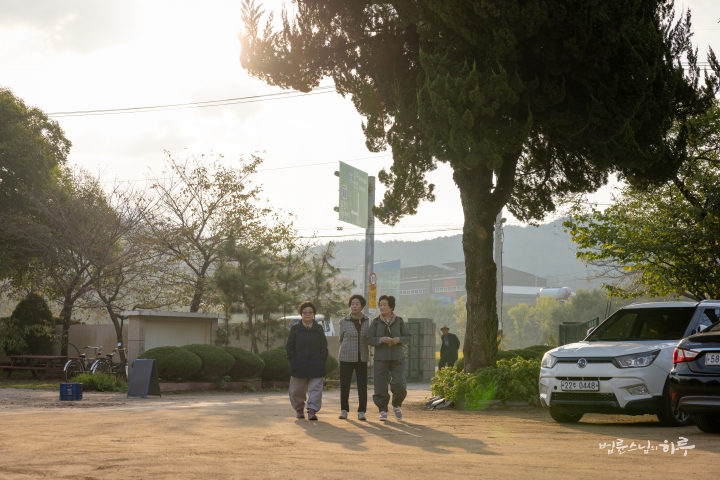
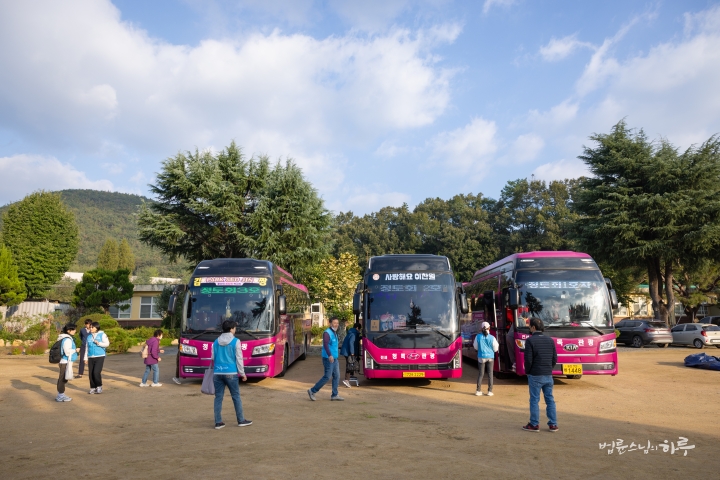
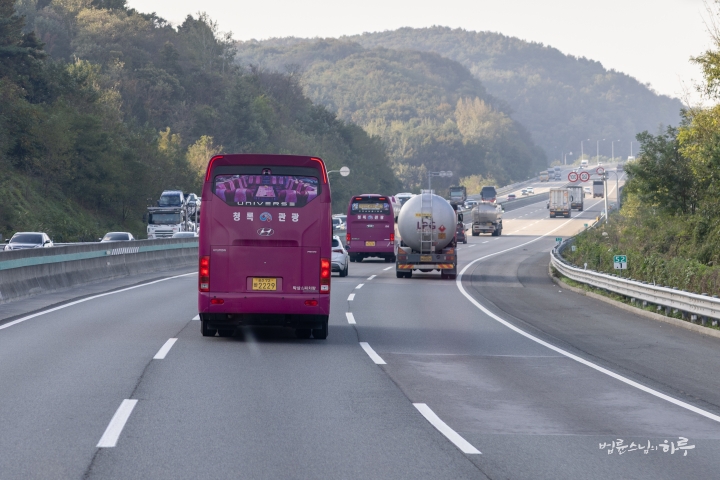
After boarding all the elders onto three large buses parked at the Dubuk Retreat Center playground, they departed for Unmunsa Temple. After an hour’s bus ride, they arrived at Unmunsa Temple at 9 AM.
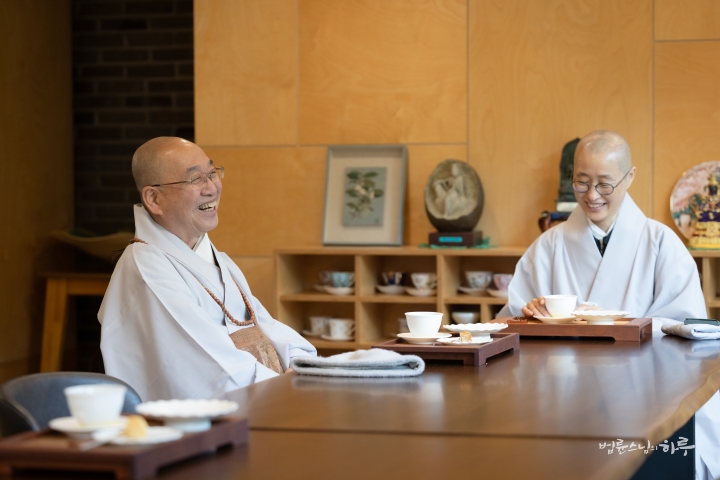
Sunim arrived at Unmunsa Temple an hour earlier than the elders and had tea with Eungwang Sunim, who serves as the head monk.
While having tea, the buses carrying the elders arrived. Sunim hurried to the main gate to greet the elders.
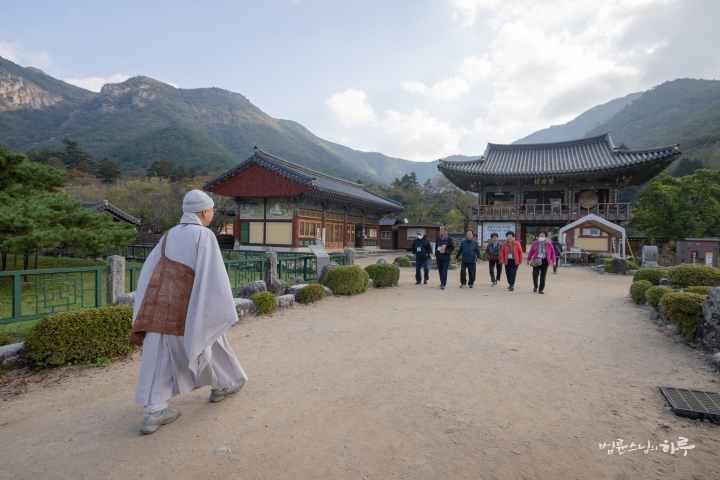
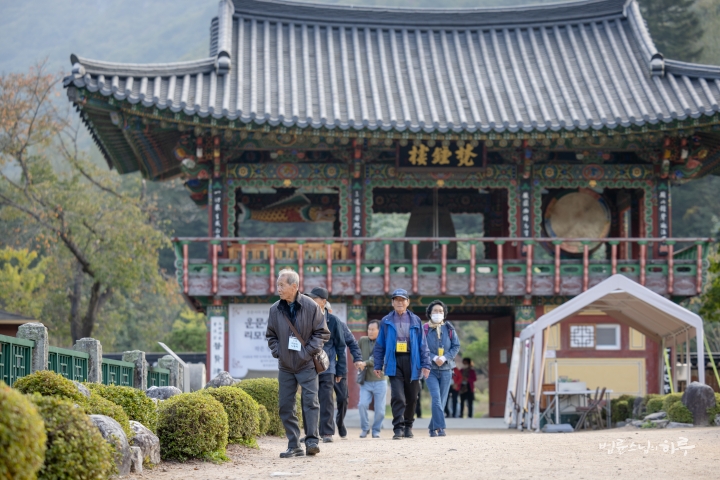
The elders who got off the bus entered through the main gate, using walking sticks and supported by volunteers. Sunim greeted the elders with a bright smile.
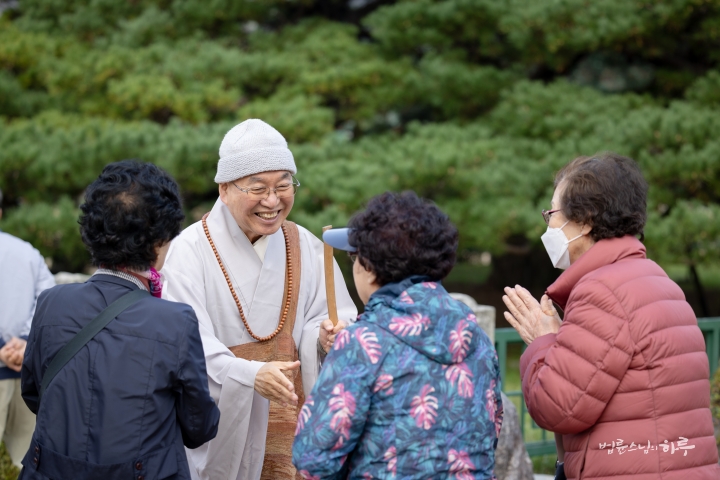
“We came together as brothers and sisters.”
“You really look alike.” “Thank you all for making the effort to come!”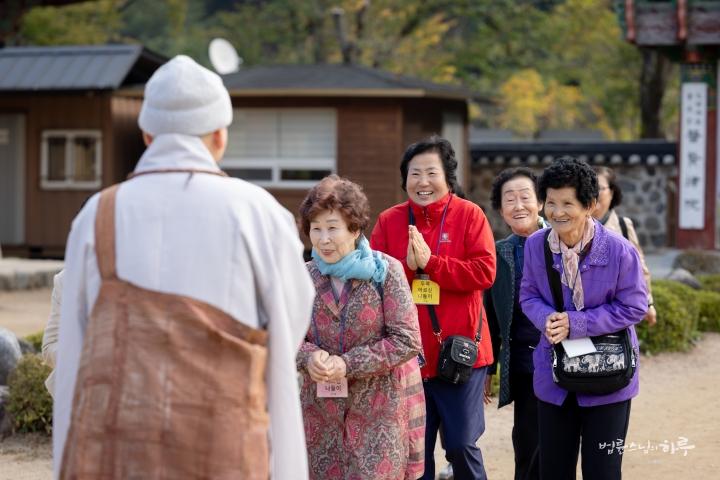
Together with the elders, everyone headed to the main hall.
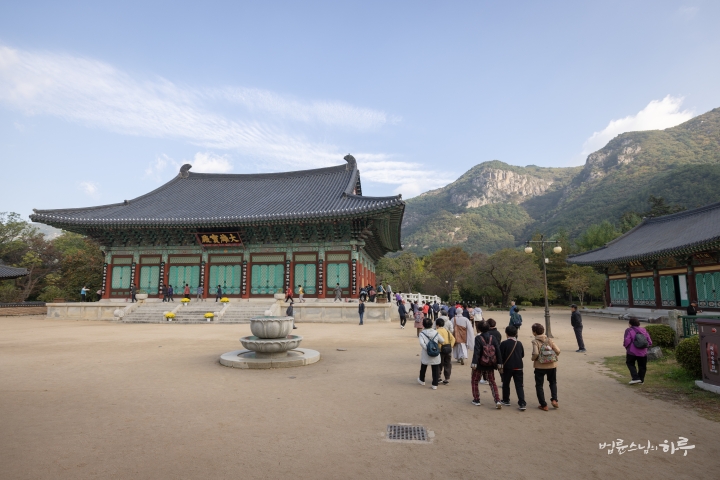
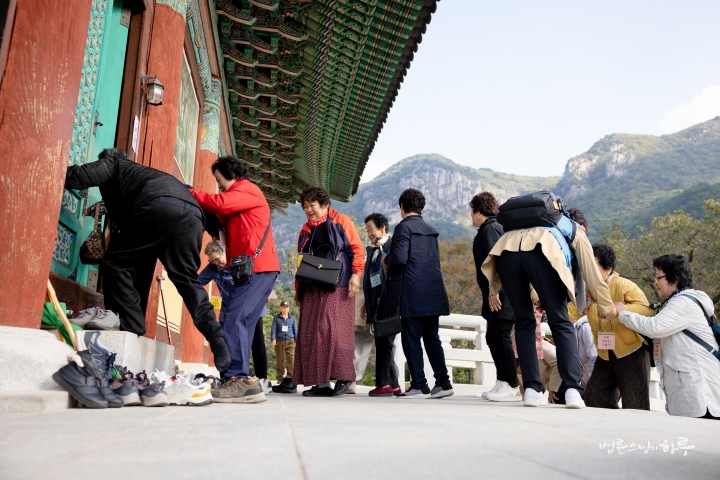
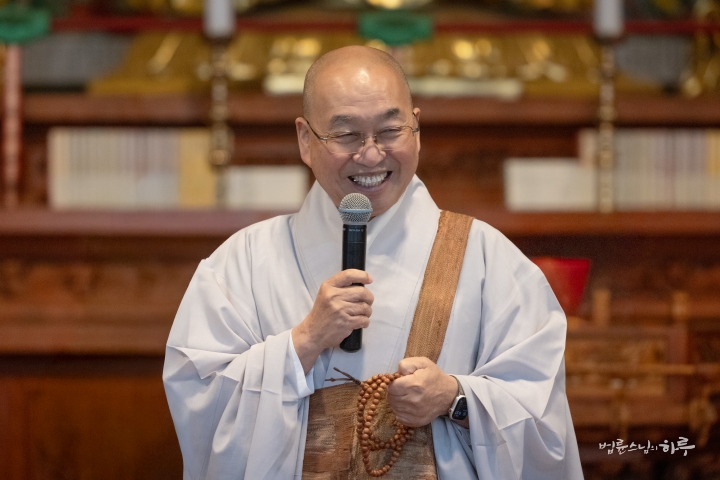
After all the elders paid their respects to Buddha and took their seats, Sunim gave a greeting.
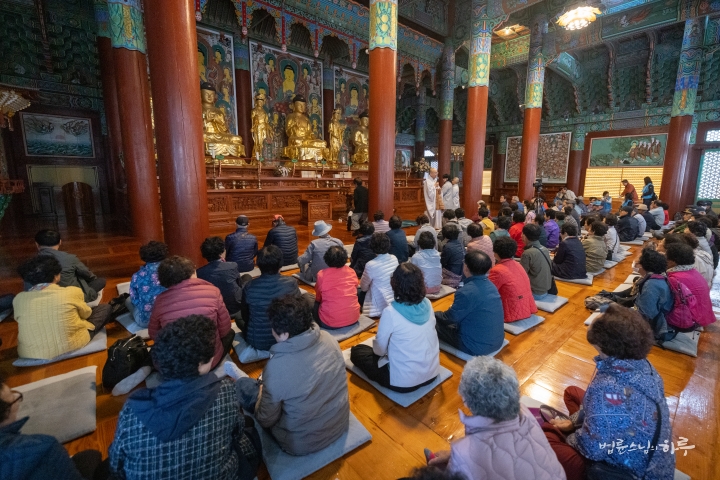
“Yes.”
“It seems winter has arrived before autumn. There were rumors of a good harvest this year since there were no typhoons, but now with so much rain in autumn, many can’t even harvest their crops. When rice sprouts in the field, there will be more broken grains during milling, reducing the yield. You must be quite worried. But this is nature’s doing, so what can we do?Please Put Down All Your Worries and Concerns for Today
So today, let’s put down all our worries and concerns and enjoy this outing together. Originally, we planned to go on a distant trip in spring and visit somewhere nearby in autumn since the days are shorter. However, I couldn’t move from March to June because I was conducting a program called ‘100-Day Dharma Talk,’ where I gave dharma talks every single day for a hundred days without rest. As a result, we couldn’t hold the spring elder festival, so we’re having it now in autumn. Since the days are short, we couldn’t go far and came to the nearby Unmunsa Temple. Has it been a long time since you visited Unmunsa Temple?”“Yes.”
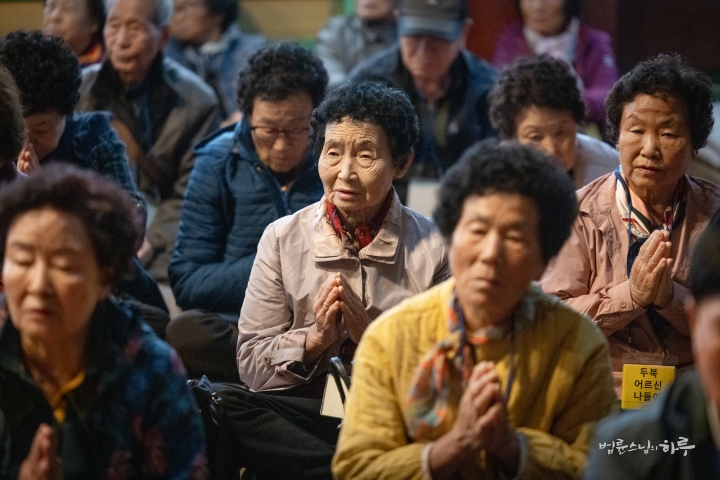
Following this, Dharma Teacher Hwagwang led the Three Refuges, Heart Sutra, and Avalokitesvara chanting, then offered a prayer. The elders also joined in prayer with their hands together devoutly.
“We pray for the health of all elders participating today and for peace in their families.”
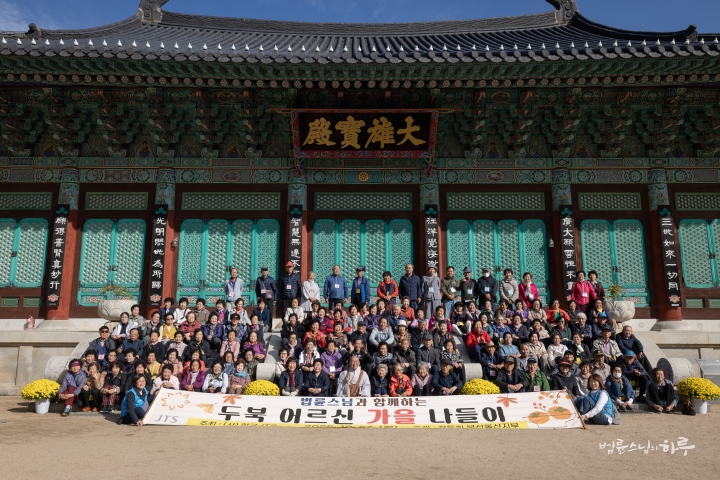
After the prayer, they went outside and took a commemorative photo with the elders. Since many couldn’t stand due to leg pain, they sat on the steps for the photo.
“Unmunsa!”
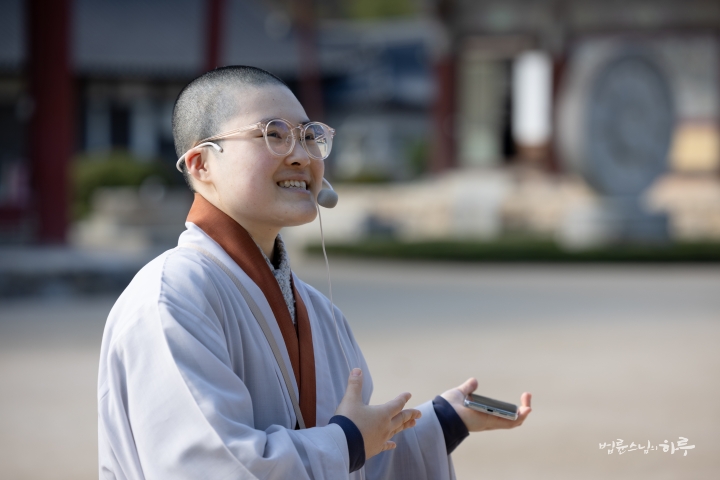
A student monk studying at Unmunsa Temple then gave a detailed introduction about the temple.
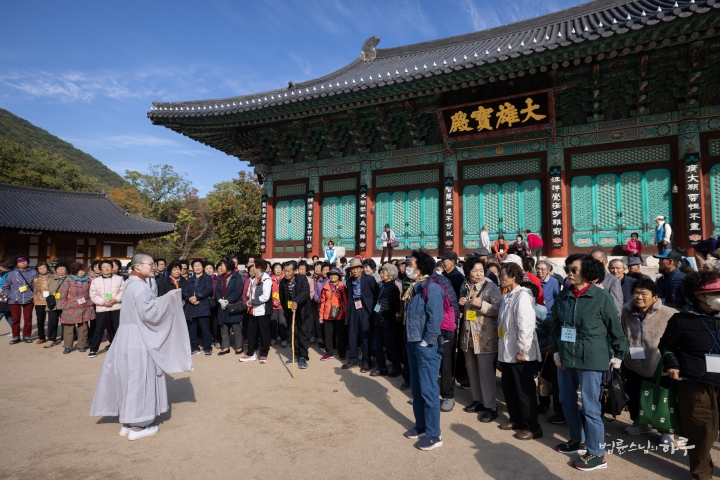
“Our Unmunsa Temple was first built during the Silla Dynasty. Daejak-gapsa, one of the ‘Five Gapsa Temples’ centered around Mt. Unmun at that time, is the origin of Unmunsa Temple. It’s a temple with a very deep history. I’ll explain the temple grounds in detail. Shall we all stand up and move together?”
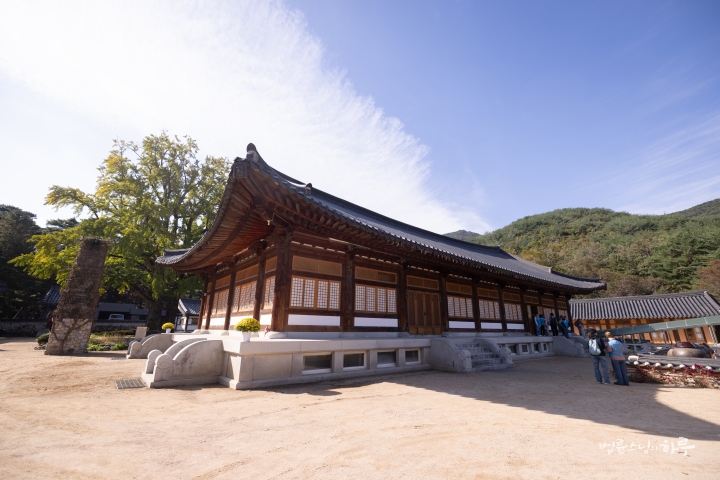
They toured around Manseru, visiting various halls including Birojeon, Obaekjeon, Gwaneumjeon, and Cheongpungryo, and learned about the nine treasures within the temple grounds.
The elders took photos in small groups and tasted the water before heading together to Seonyeoldang where the Dharma Q&A would be held.
While the elders were touring the temple, Sunim briefly greeted the student monks at Unmunsa Temple. When the student monks requested a dharma talk, Sunim gave them a brief teaching.
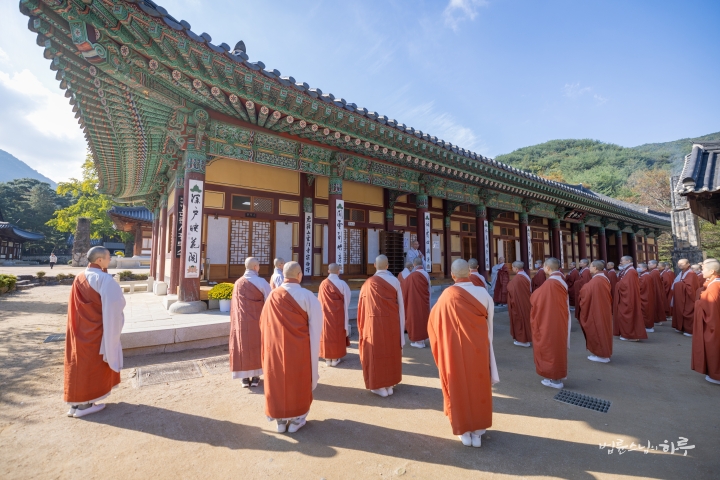
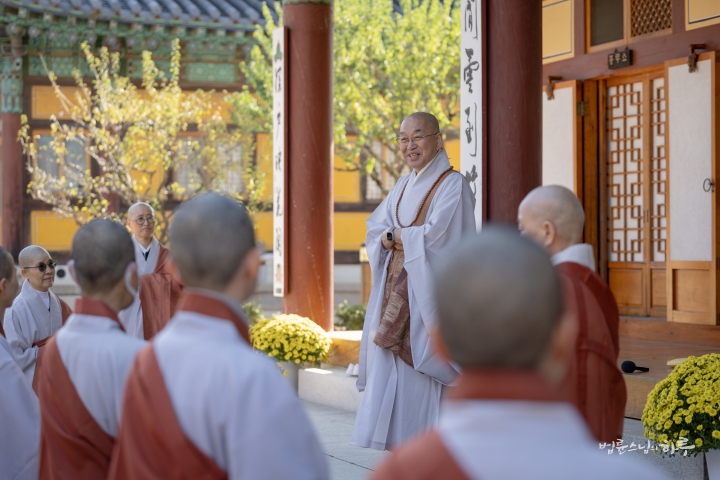
Life Is Hard? That’s Proof You’re Alive
Practitioners don’t have anything special to overcome. We simply respond to situations as they arise and live accordingly. If we get sick, we’re in pain. When the time comes, we die. So I hope you don’t attach too much meaning to living. Did you all come here risking your lives to attain enlightenment? Enlightenment isn’t something special—it’s being constantly aware of your state in daily life and responding appropriately to situations. I believe this is what Mahayana Buddhism calls ‘No Everlasting Abiding Dharma’ and what Theravada Buddhism calls the teaching of the ‘Middle Way.’ So don’t think of your seminary life as difficult. When it’s time to cook, cook. When it’s time to work, work. When it’s time to meditate, meditate. When it’s time for morning service, do morning service. Aren’t all these things possible because we’re alive? When we die, we can’t even do these things. Pain is also something we experience because we’re alive. So I hope you accept daily life as practice.”“Thank you.”
After taking a commemorative photo with the student monks, Sunim also headed to Seonyeoldang.
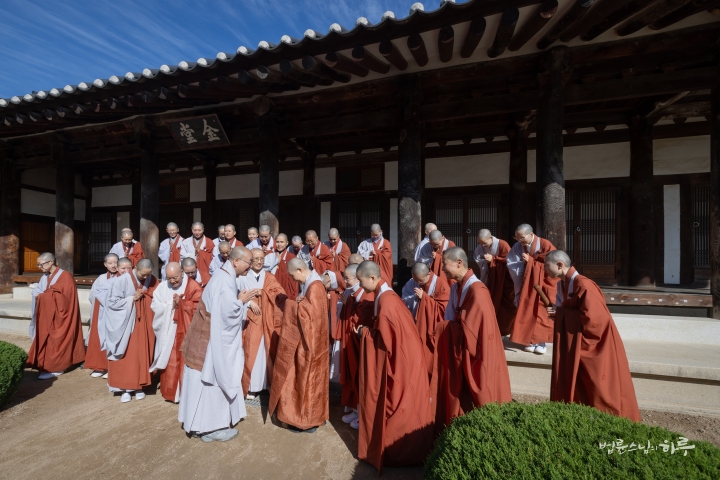
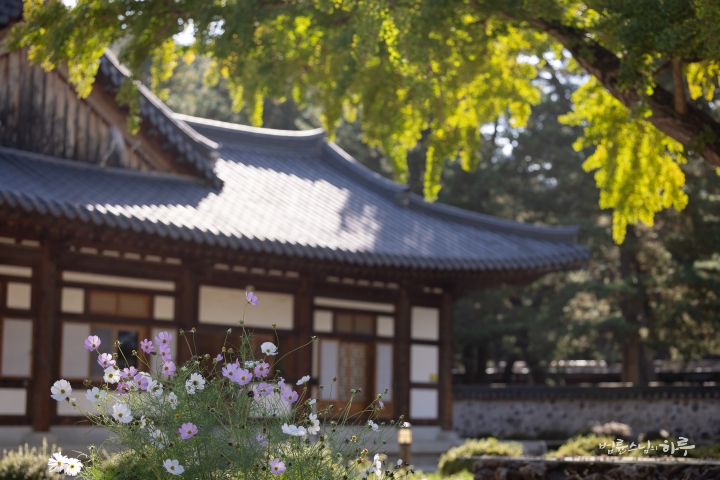
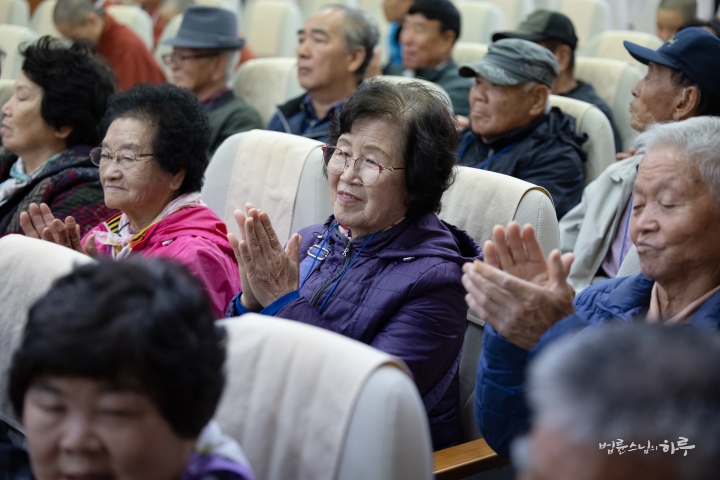
When about 150 elders had taken their seats in Seonyeoldang, Sunim began the dharma talk.
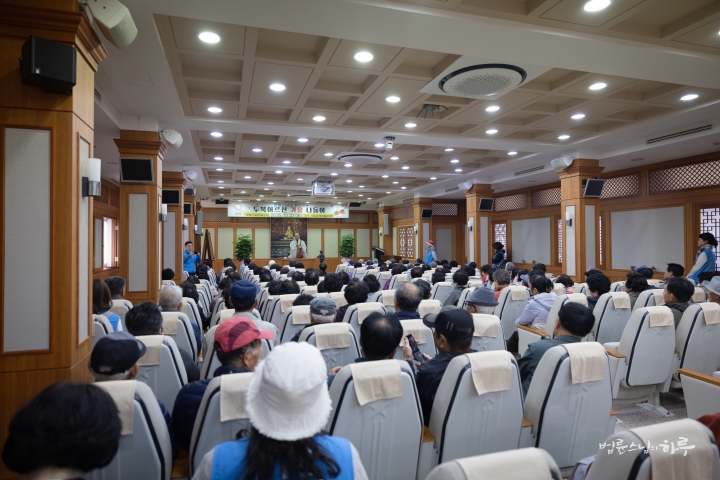
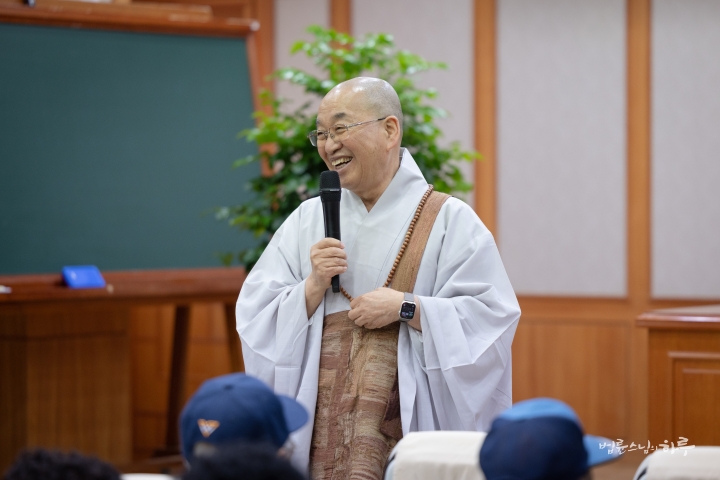
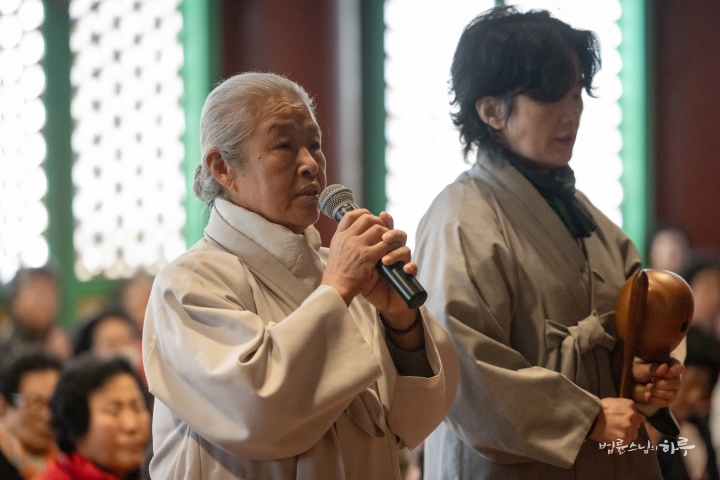
Following this, there was time for anyone to raise their hand and ask questions. Before the elders could raise their hands, Venerable Iljin, who serves as the Dean of Unmunsa Sangha University, quickly raised her hand and asked the first question.
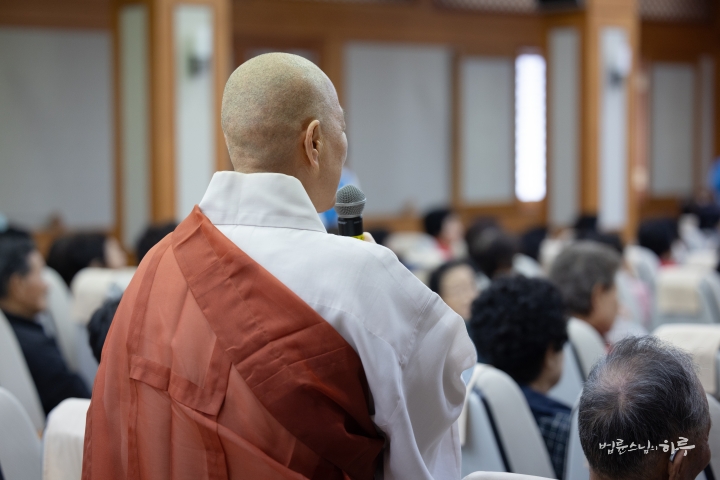
Why Does Sunim Travel with So Many Elders?
I know this is part of Sunim’s daily routine, but today you’ve brought an especially large group of elders to Unmunsa Temple. Since you’ve made this precious journey, I’m curious why you travel with so many elders.”
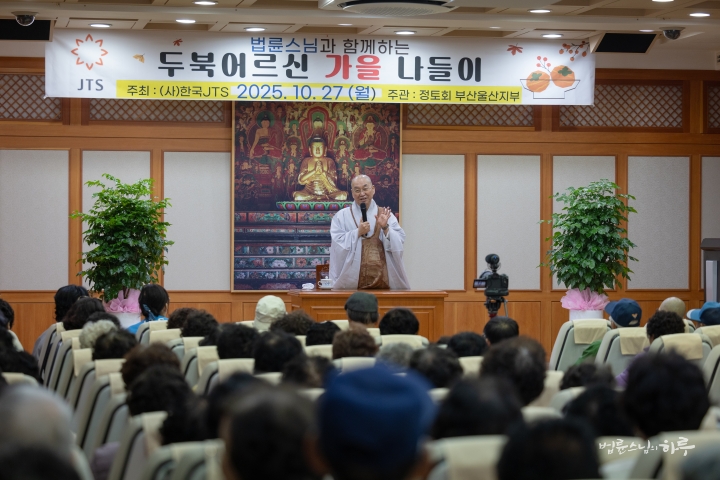
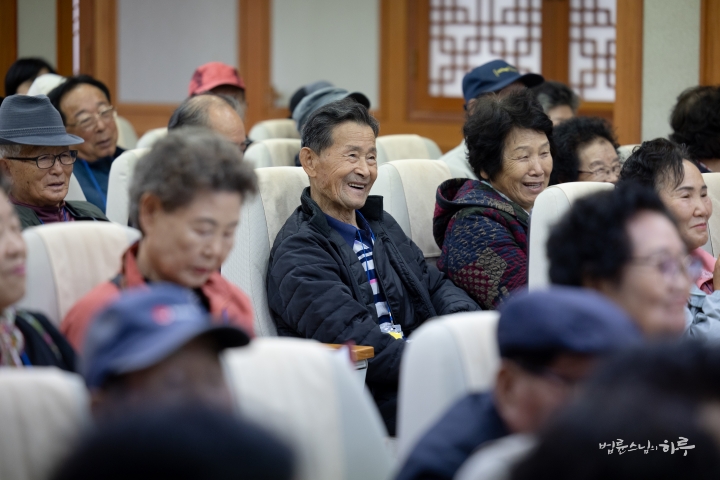
As the atmosphere for conversation warmed up, the elderly began raising their hands to ask questions. One person shared concerns about how to accept the phenomenon of ancestral rites gradually disappearing, as the current trend is that most people no longer perform ancestral rites during Chuseok.
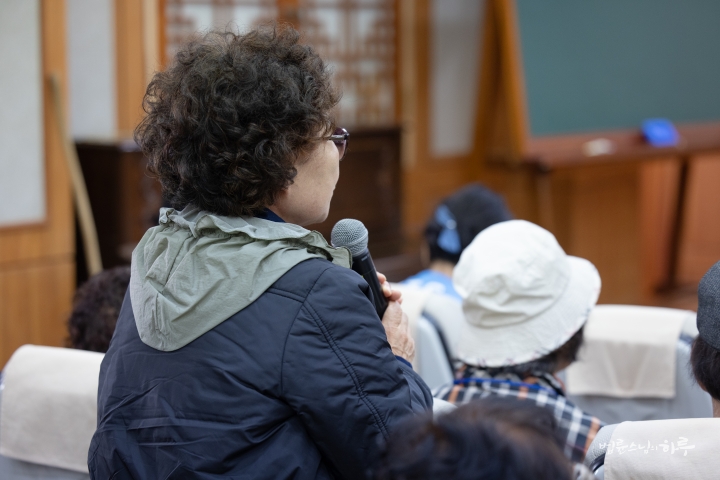
Is It Unfilial Not to Perform Ancestral Rites?
“I’ve been married into the Gyeongju Choi clan for quite some time. The current trend is that most people no longer perform ancestral rites during Chuseok. How should we accept this trend of ancestral rites gradually disappearing? Is it unfilial not to perform ancestral rites? I’m curious about what mindset we should have toward our ancestors.”
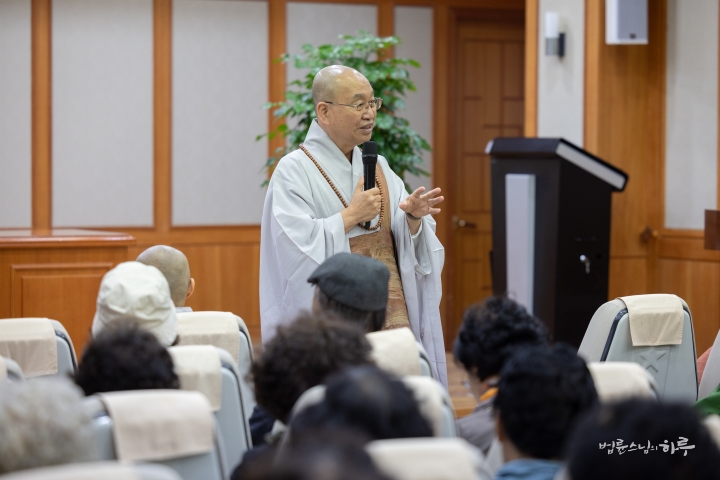
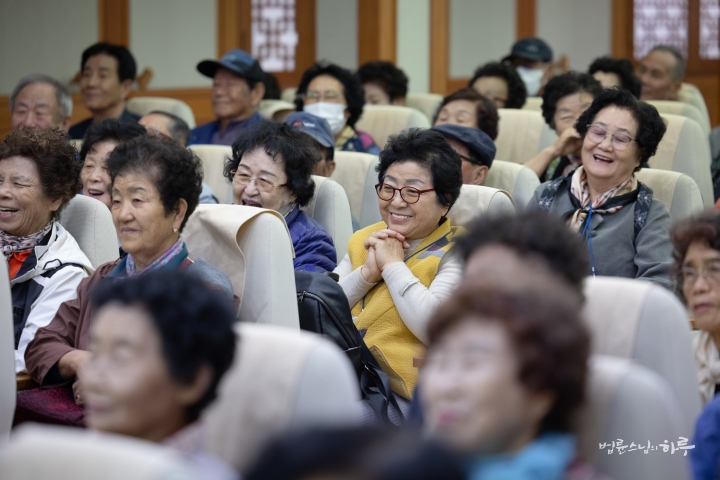
As the topic of ancestral rites came up, other elderly participants raised their hands and comfortably shared their thoughts about ancestral rites.
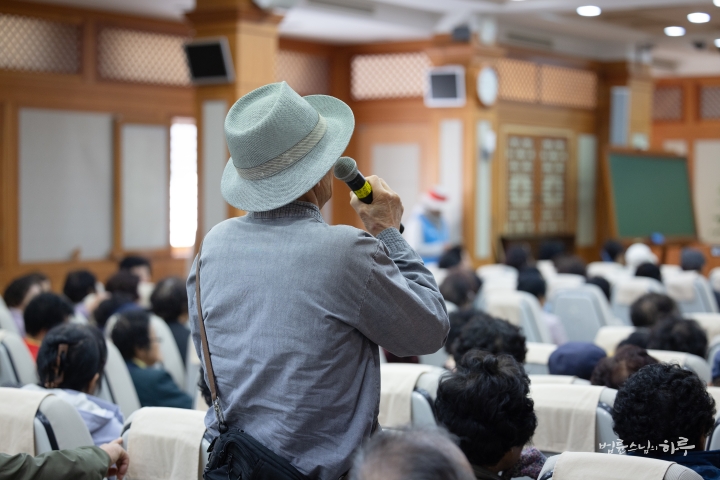
“We try to perform ancestral rites more conveniently by holding grandmother and grandfather’s rites together, and we also perform mother’s rite together with father’s rite. When writing the spirit tablet, we write both names together. I think this way is good.”
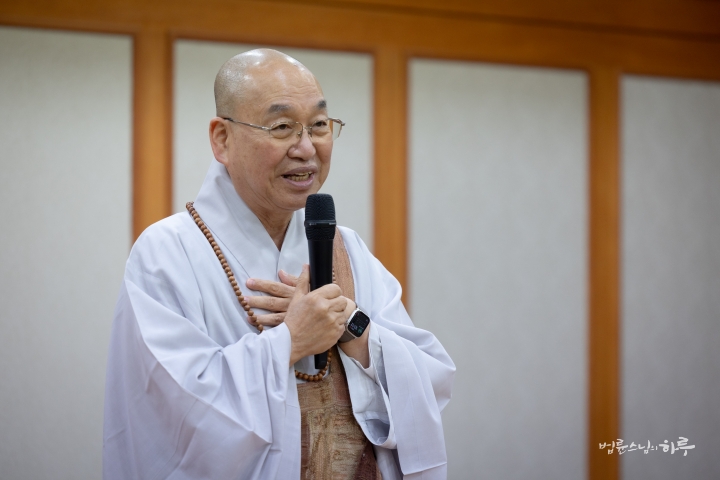
Sunim continued with a smile.
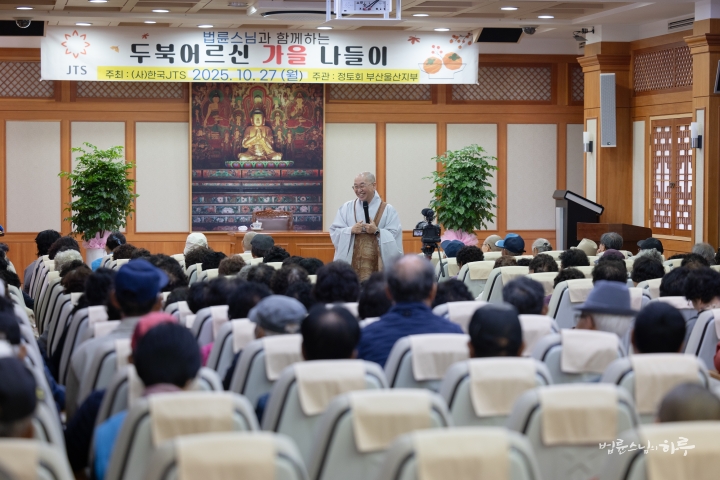
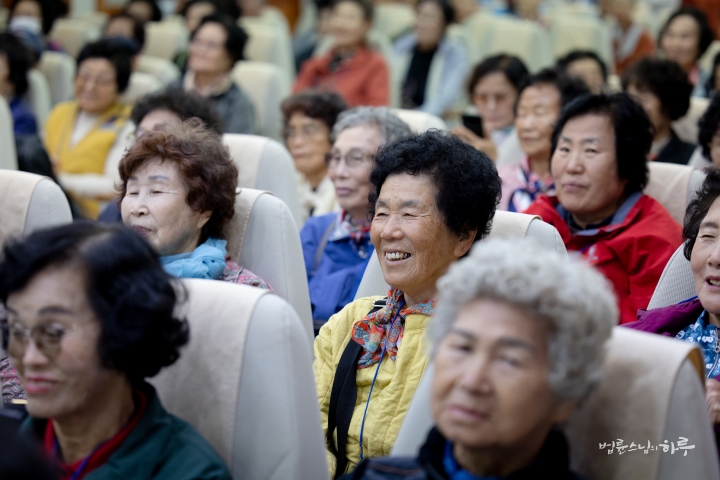
Today, time flew by as Sunim spent an hour discussing various aspects of ancestral rites. As Sunim concluded the conversation, he expressed his gratitude to the nuns of Unmunsa Temple.
After leaving Seonyeoldang Hall, everyone moved together to the parking lot.
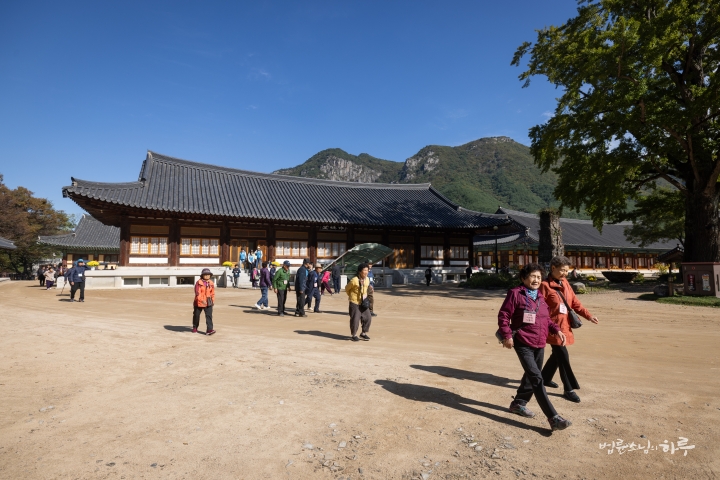
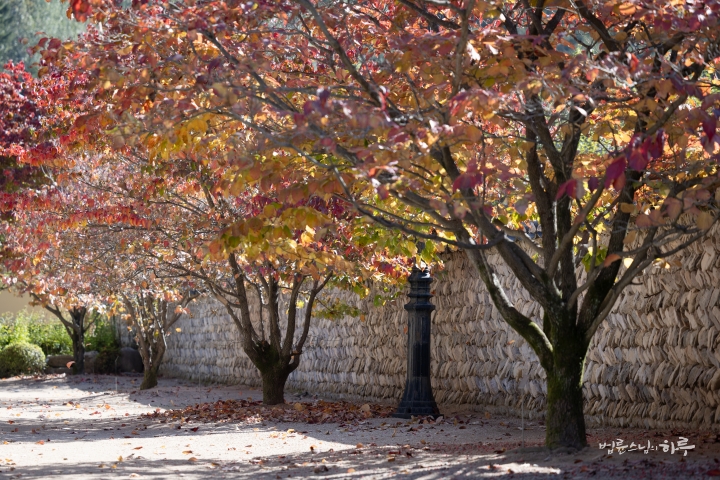
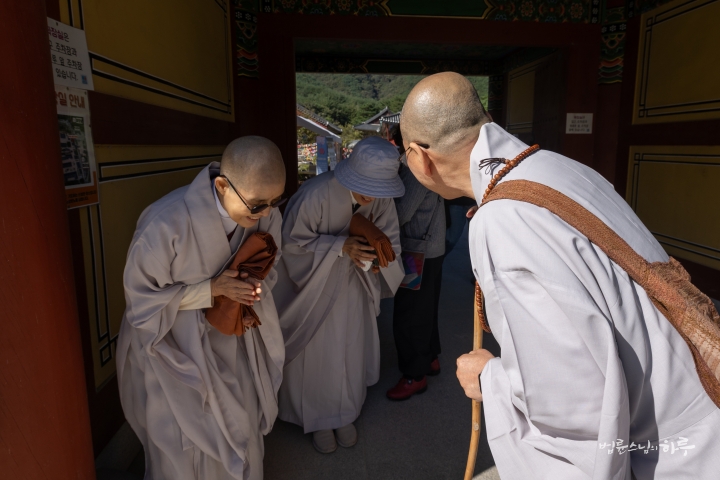
Unmunsa Temple had beautifully wrapped and presented gifts of dapo (tea cloth), handkerchiefs, and prayer beads to all the elderly visitors. After expressing his gratitude to the head nun and the lecture master for their warm hospitality, Sunim left Unmunsa Temple.
The elderly visitors boarded the bus again and headed to the lunch venue. In the afternoon, a program was prepared at a buffet restaurant in downtown Gyeongju where various dishes were laid out and the elderly could enjoy entertainment.

Sunim arrived at the restaurant before the elderly visitors to check on the food preparation. Soon the elderly arrived and began their meal.
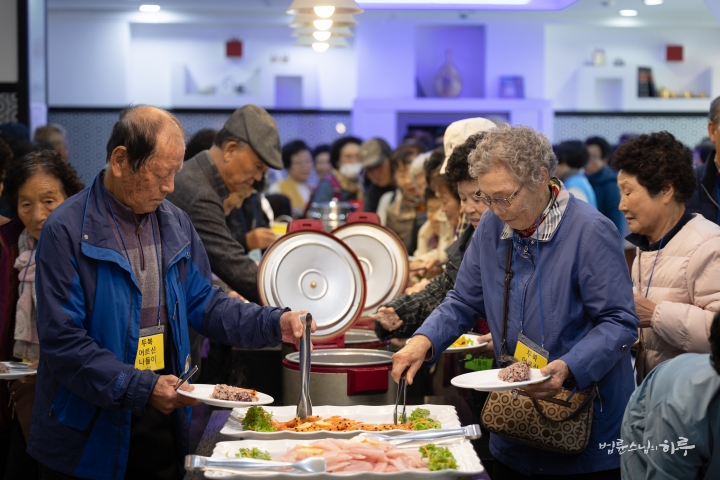
The volunteers busily carried drinks and replenished food to ensure the elderly could enjoy their lunch comfortably.
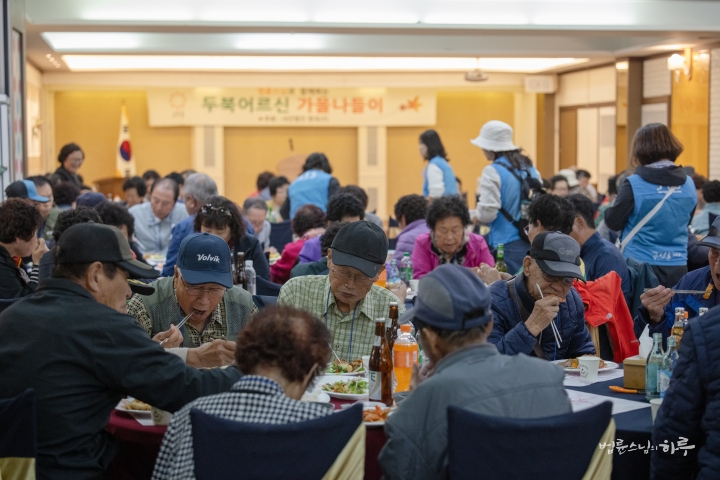
After all the elderly had finished eating, Sunim gave a greeting.
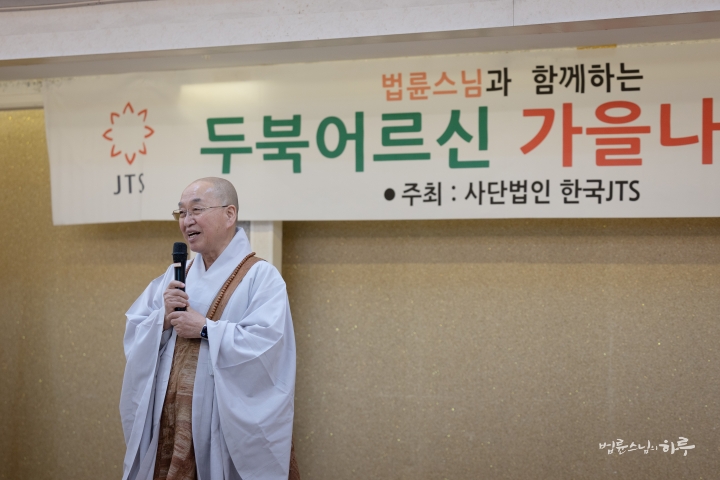
“Yes!”
“Was the food delicious?”“Yes!”
“Since we’ve prepared plenty of food, please use it as accompaniment and have a drink while you enjoy yourselves to the fullest from now on. Don’t worry about keeping up appearances – just have fun and enjoy yourselves.”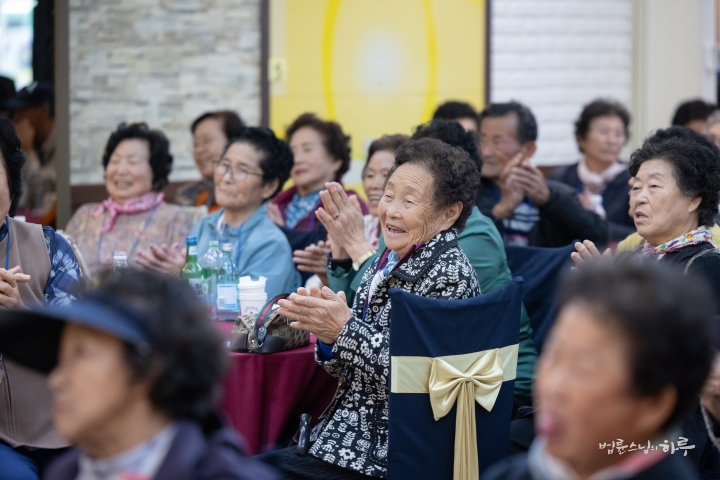
Next, the president of the senior citizens’ association spoke on behalf of the elderly.
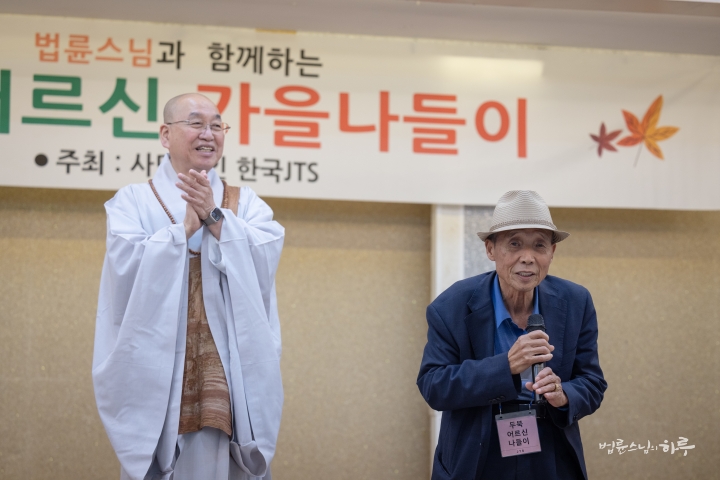
“Jungto Society has been hosting this senior citizens’ festival every year, and I believe this is the 21st year. How grateful we are that you have been taking care of us elderly people for such a long time. Please give them a big round of applause. Enjoy the good food and have a wonderful time.”
Next, the village chief of Hwalcheon-ri gave a greeting.
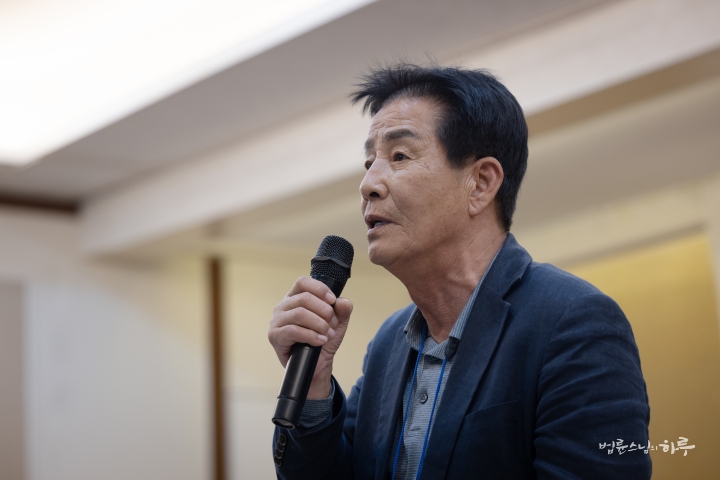
“I am the second son of the Lee family, serving as the village chief. Thank you for hosting the senior citizens’ festival again this year without fail. Despite the unpredictable weather, I’m very grateful that so many elderly from each village have attended. Today’s outing was arranged to take a brief break from daily life, reflect on the Buddha’s teachings, purify our minds through Venerable Pomnyun Sunim’s Dharma talk, and have a happy time together. I hope you all stay healthy for a long time until we meet again.”
With loud applause, the MC Lee Tae-gi appeared and greeted everyone.
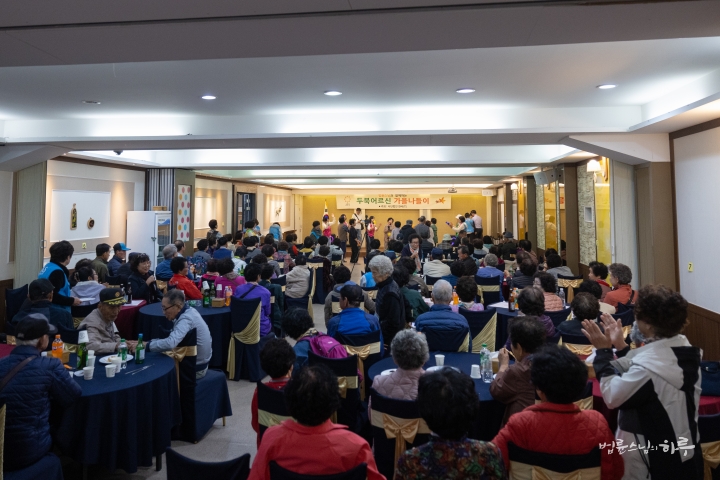
“Everyone, are you ready to have fun?”
“Yes!”
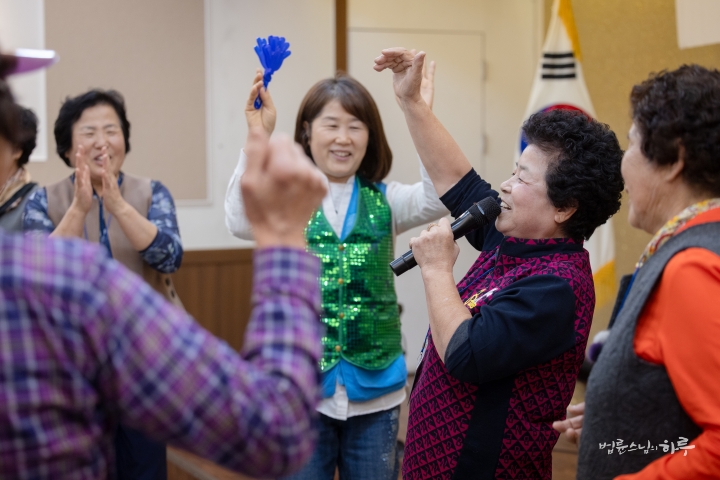
The elderly, having had a drink or two, cheered loudly with joy. To boost the mood, the Busan-Ulsan branch formed a “Jjaljjali team” wearing sparkly outfits and jumped onto the stage.
First, Lee Su-jin sang “Boritgogae” (Barley Pass) with heartfelt emotion, heating up the atmosphere for the singing contest.
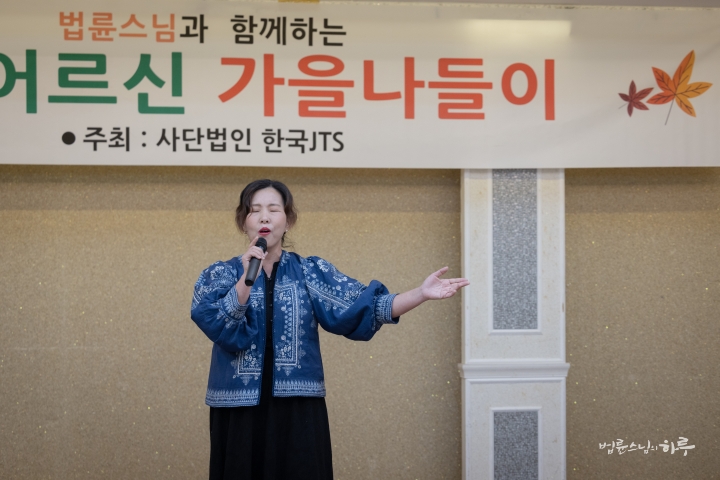
Then, the elderly who had signed up in advance came forward one by one to sing their songs.
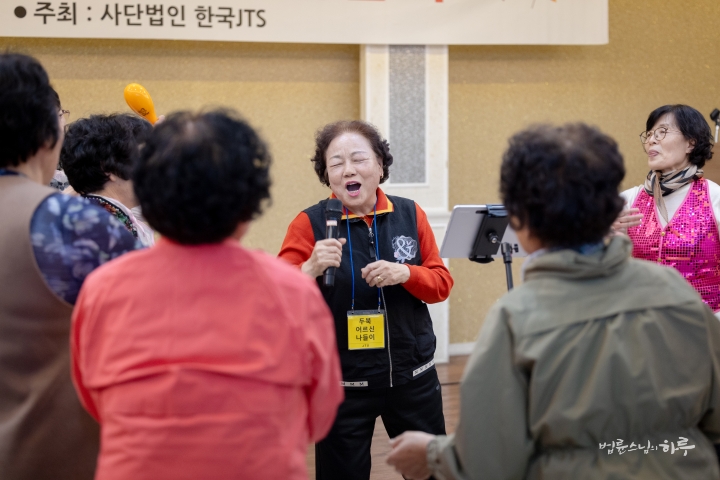
Ya ya ya, what’s wrong with my age ♬
Does love have an age?
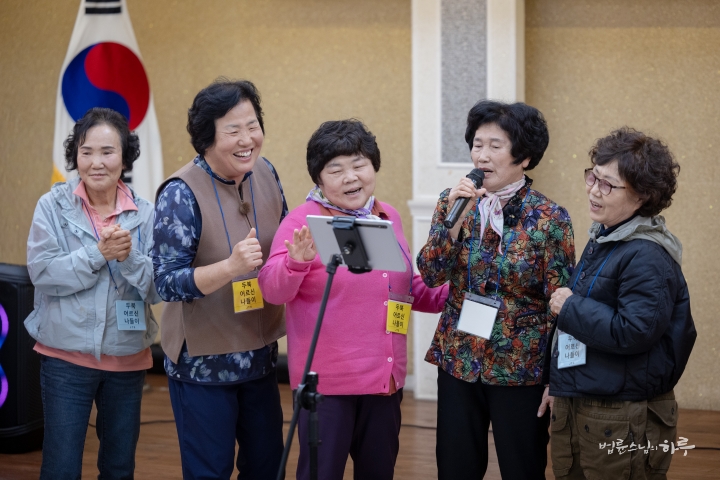
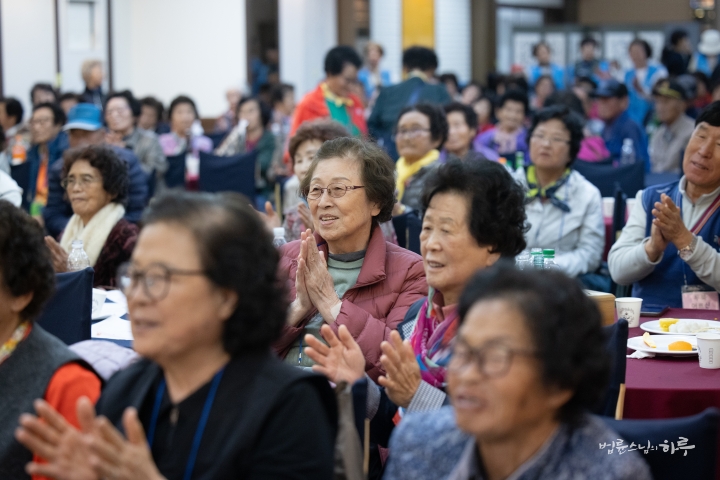
As the lively songs began, the elderly started swaying their shoulders.
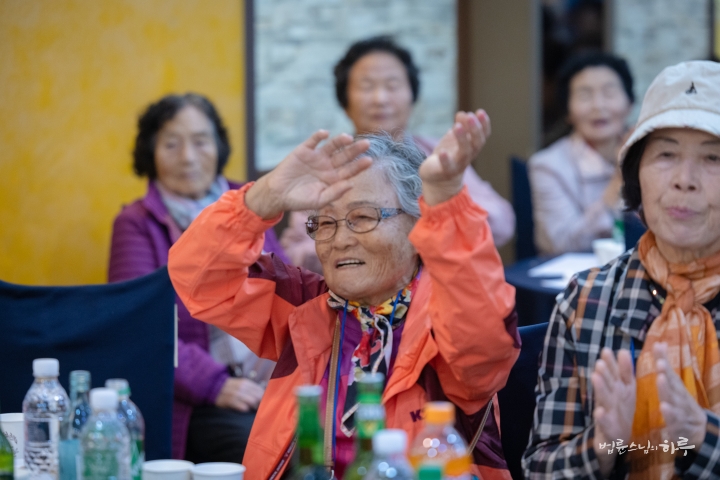
The volunteers took the elderly by the hand and danced merrily together. As the excitement reached its peak, male elderly participants also came forward one by one to sing their favorite songs.
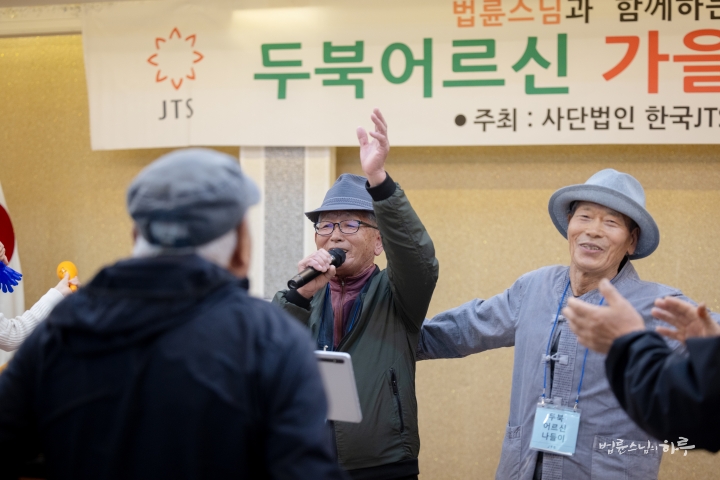
I will live in the soil, taking care of my parents
Living in the soil while being filial ♬
Familiar songs continued, and the elderly became one through singing. Though keeping rhythm and pitch wasn’t as easy as in the old days, their hearts had returned to their youth.
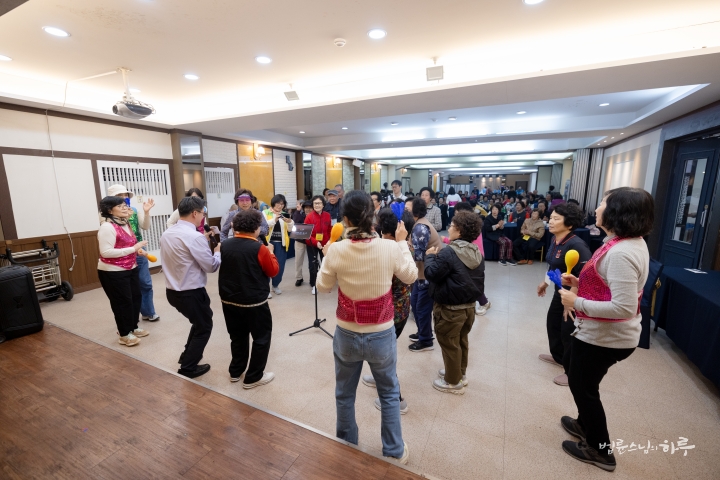
Seeing everyone so happy, Dharma Teacher Hwagwang also got excited and came to the stage to sing a song.
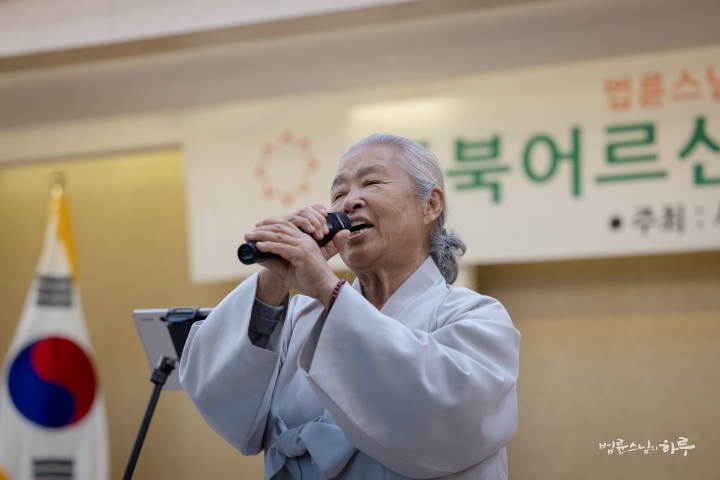
How can that person who doesn’t know where they came from know where to go ♬
Don’t know where I came from or where I’m going, what a fool I am
May all the elderly in the 13 villages of Ulju County live long and healthy lives ♬
Let’s meet again next year with even younger faces
Despite saying “my legs hurt,” the elderly willingly came forward to dance, and even the grandfathers who had been sitting shyly joined in for a lively dance party.
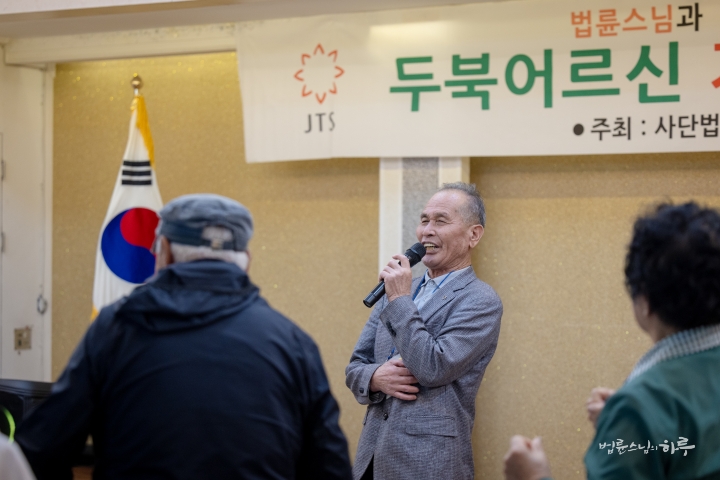
Don’t ask me, don’t ask me ♬
Don’t ask my age
I’ve come this far, only looking ahead ♬
Sorrowful tears for the years gone by
Sunim watched the elderly enjoying themselves while clapping along.
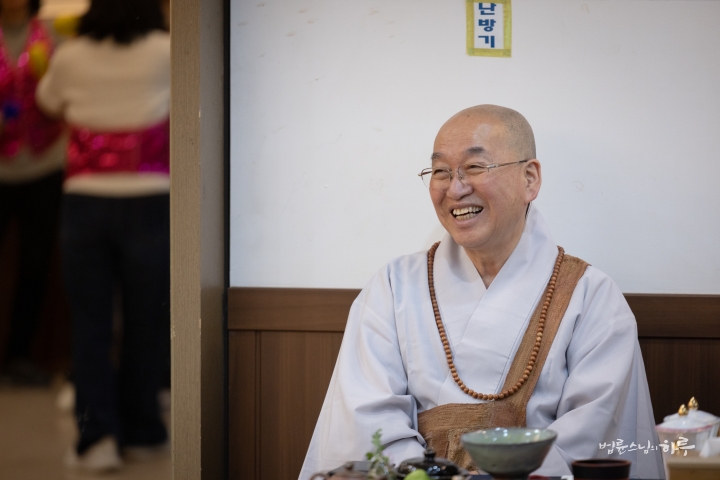
Even with wrong rhythms and off-key notes, the years melted into the lyrics, making each song a masterpiece. Though more song requests kept coming in, due to time constraints, the remaining participants promised to sing next year. After concluding the singing contest, Sunim gave closing remarks.
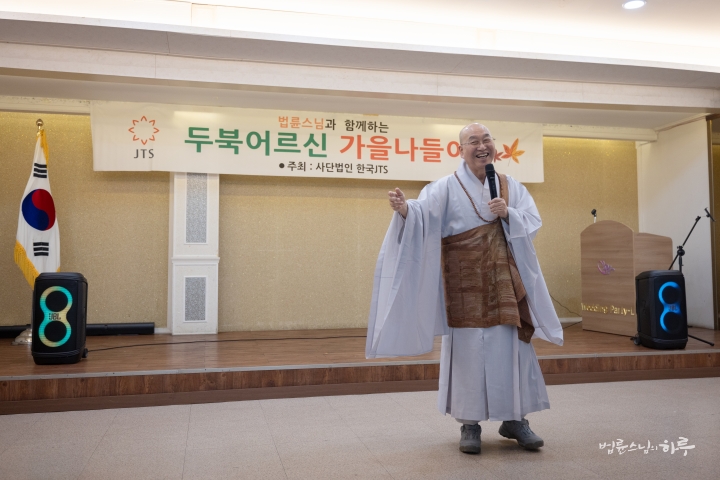
“Yes!”
“Until the year before last, thanks to the COVID pandemic, I was able to spend a lot of time in my hometown, but now that the pandemic is over, I’m traveling around the world and haven’t been able to farm. Dharma Teacher Hwagwang has been taking care of you all in my place. Let’s hear some closing remarks from Dharma Teacher Hwagwang.”Dharma Teacher Hwagwang came to the stage and gave closing remarks.
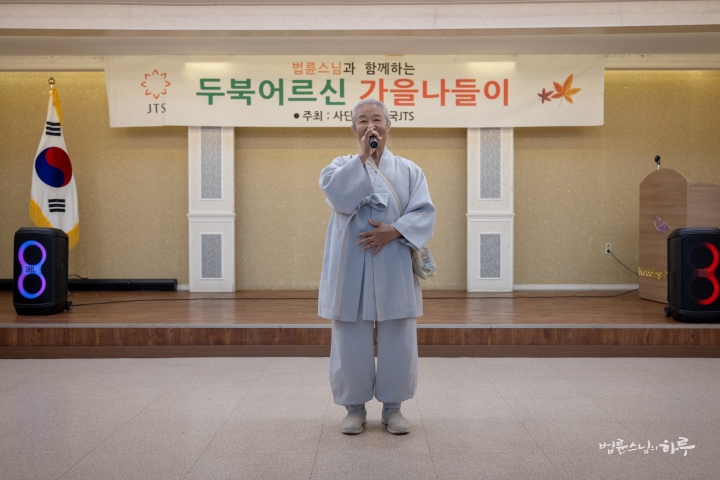
“This year, we had a lot of rain in the fall, so you must have had many worries, right? My heart ached thinking about how worried you all must be, as I also ruined my crops. I hope you all finish your harvest well, and we’ll meet again next year in even better health.”
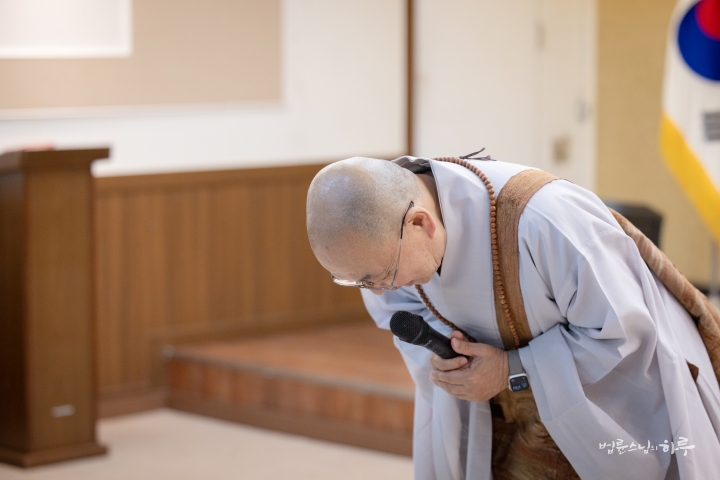
Then, prepared gifts were given to the elderly as they left. Sunim presented the gifts to the village senior citizens’ association president as a representative.
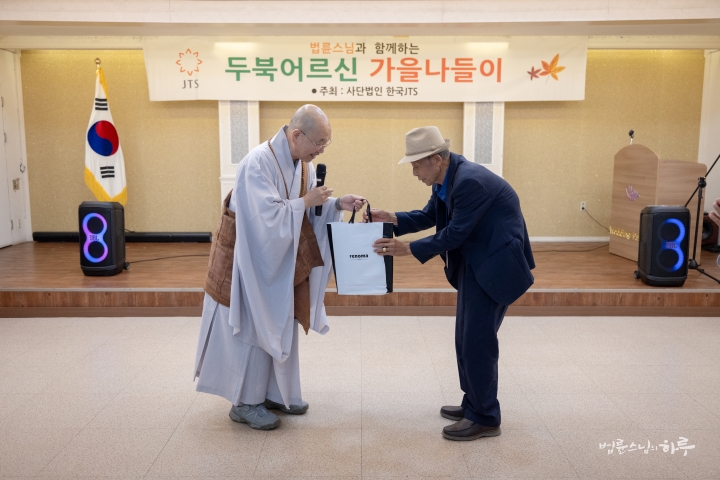
After wishing the elderly long life and good health, the Dubuk elderly autumn outing came to an end.
Sunim took a commemorative photo with the volunteers from the Busan-Ulsan branch of Jungto Society who had prepared the event and expressed his gratitude.
“Thank you for your hard work.”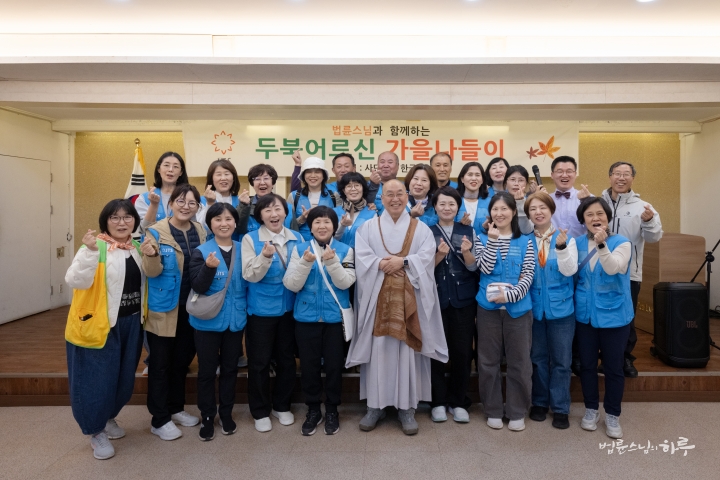
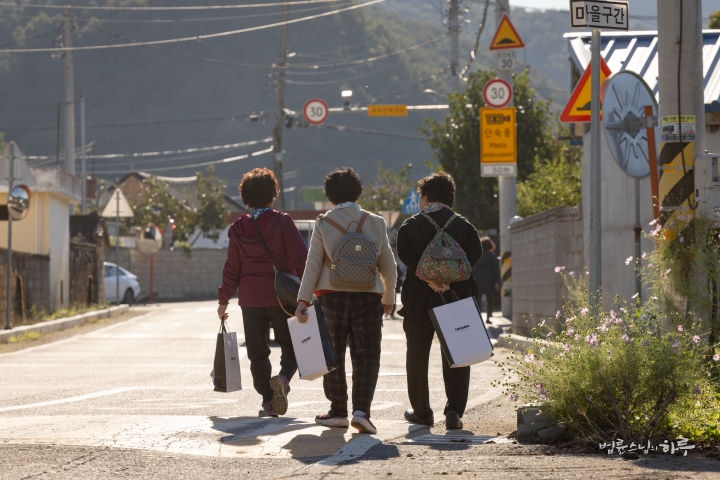
The volunteers took the bus with the elderly to Dubuk Jungto Retreat Center and then drove them home. The elderly who lived near the retreat center walked home, each carrying a gift in their hands. Along the roadside, cosmos flowers swayed gently in the autumn breeze.
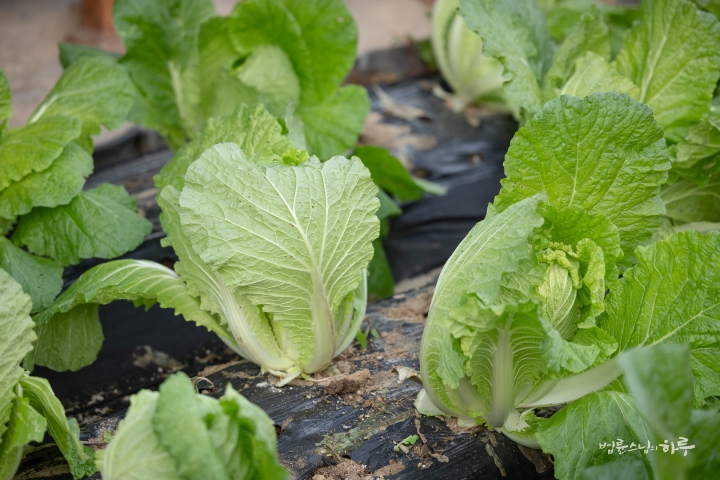
Sunim returned to Dubuk Jungto Retreat Center and worked on the farm. Due to the unusually long autumn rainy season, the napa cabbages had developed soft rot disease ahead of kimchi-making season. The roots of the cabbages were rotting or becoming mushy, leaving him wondering what to do.
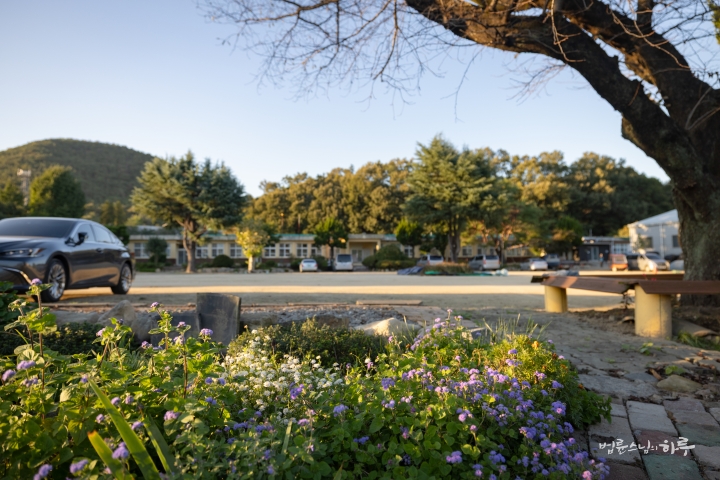
While there was no real solution, thinning out the densely planted cabbages to allow air circulation could prevent the soft rot from worsening. So he decided to pull out some cabbages.
“They all look fine, so which ones should we pull? Let’s pull this one.”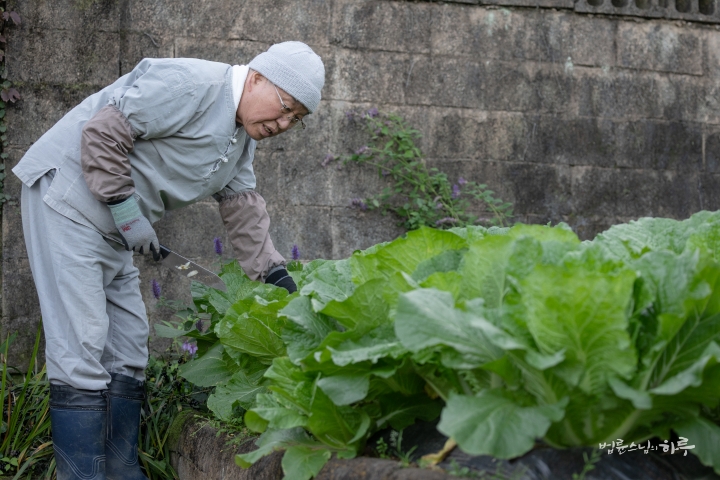
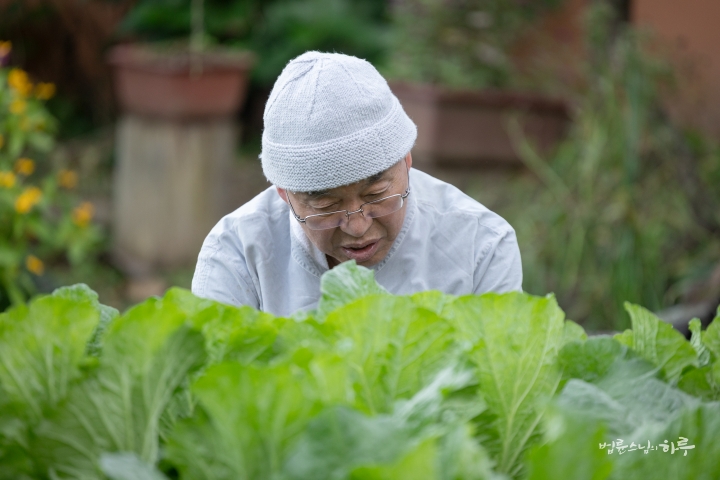
Sunim selected the cabbages that looked relatively weak and pulled them out one by one. When he pulled out the cabbages, he found that what should have been tightly packed heads were slightly wilted.
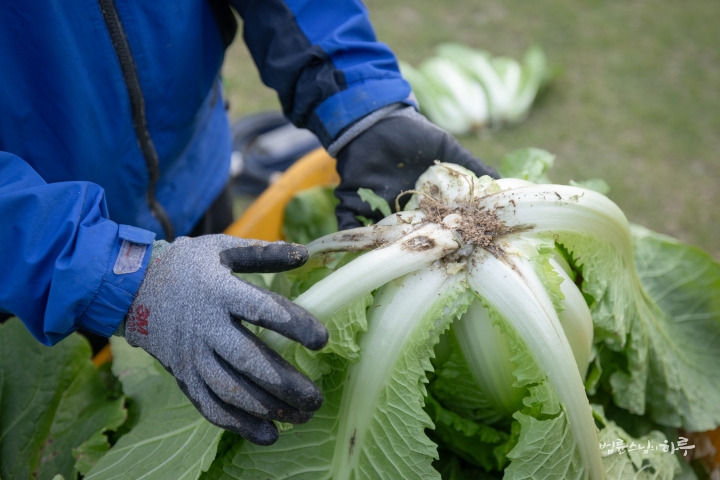
After organizing the cabbage field, he moved to the radish field. The radishes hadn’t grown well either and were very small. He pulled out or cut away the weak or overly crowded radishes, leaving only the sturdy ones.
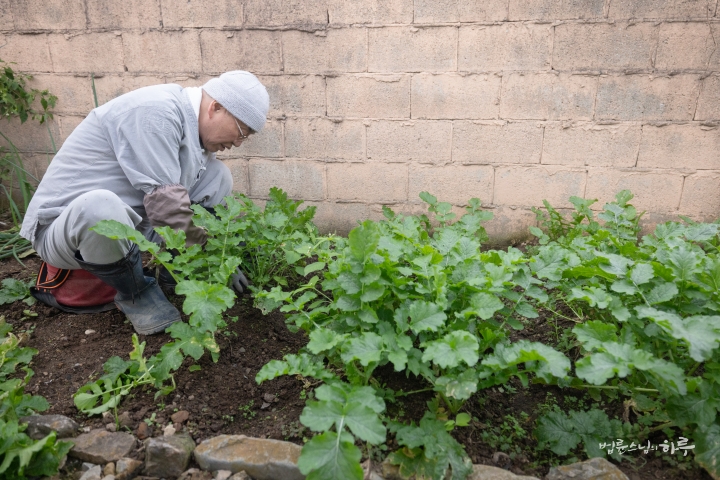
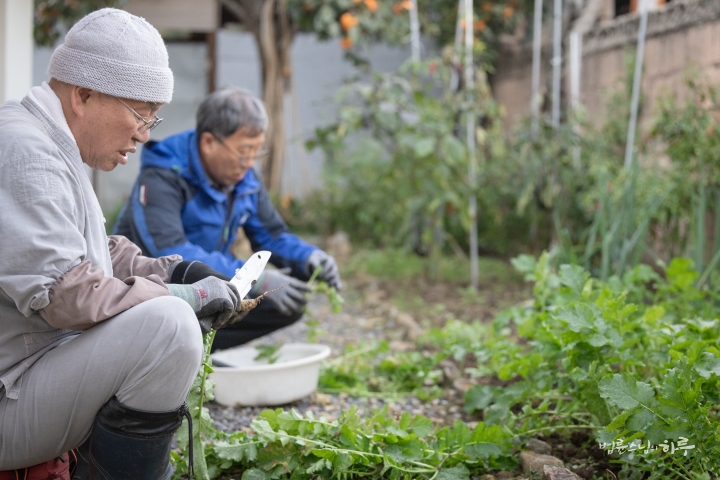
The thinned radishes were trimmed with a knife to be eaten as vegetables.
As it passed 5 PM, the sun was already setting and it began to get dark. He decided to hurry and pick persimmons
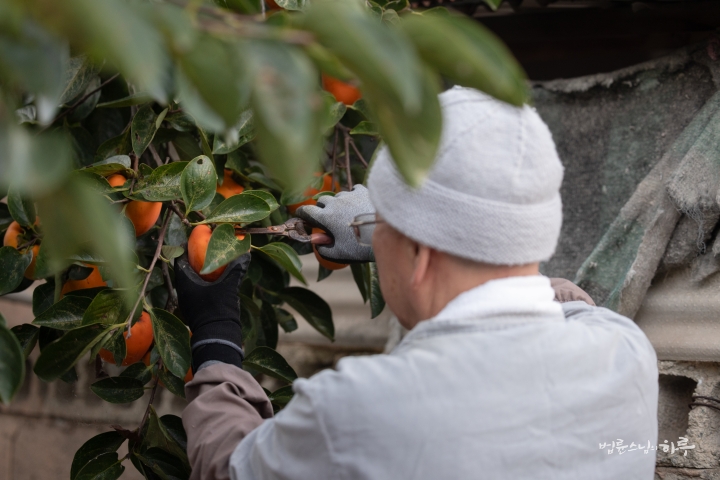
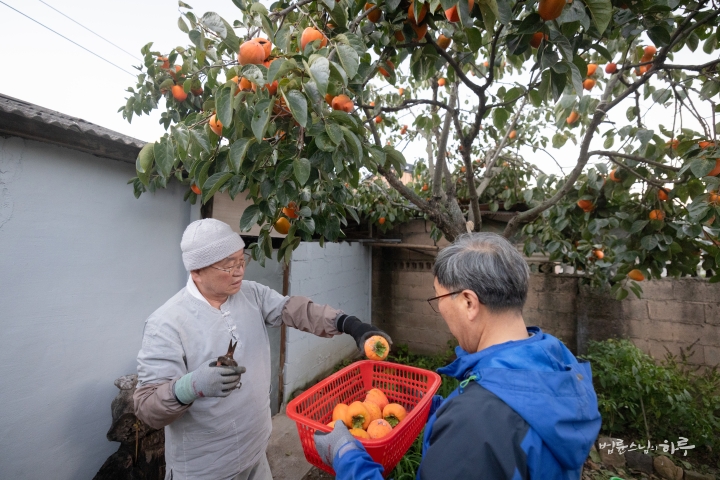
After picking all the persimmons that could be reached by hand, a ladder was brought to pick those hanging higher. Sunim climbed up the ladder to pick persimmons and handed them down, while Dharma Teacher Hyangjohn collected them in a basket below.
“Oh my, this one’s already ripe!”
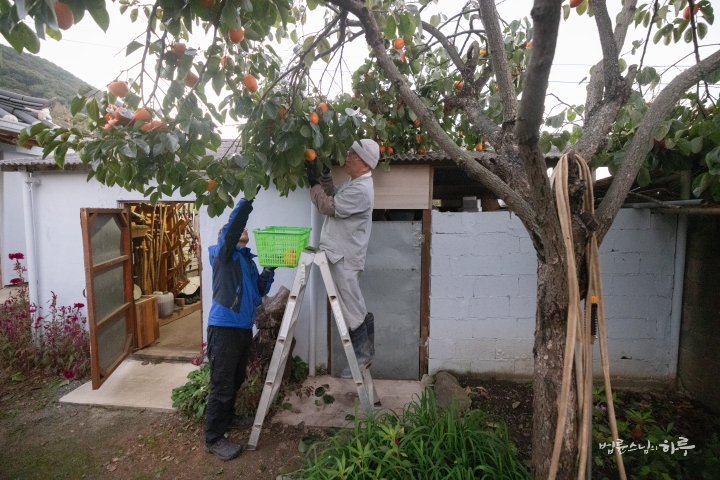
Occasionally, fully ripened persimmons were found among them.
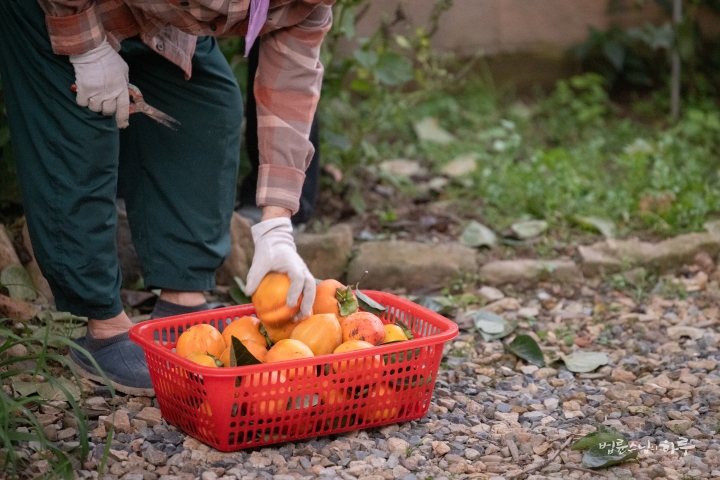
Although it had become dark and difficult to see clearly, two baskets were quickly filled with persimmons. Sunim said with a smile.

“That’s right. Without you, Sunim, the work wouldn’t get done.”
“Well, it’s not that the work wouldn’t get done at all.” (laughter)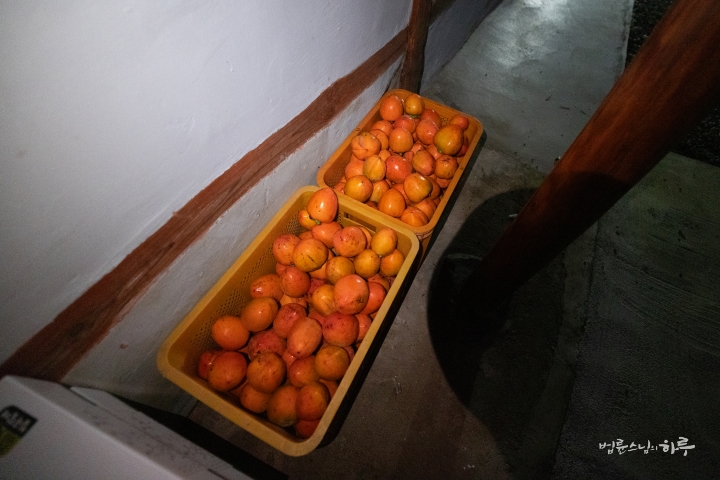
After putting the pulled cabbages into sacks and neatly arranging the picked persimmons, the communal work was completed.
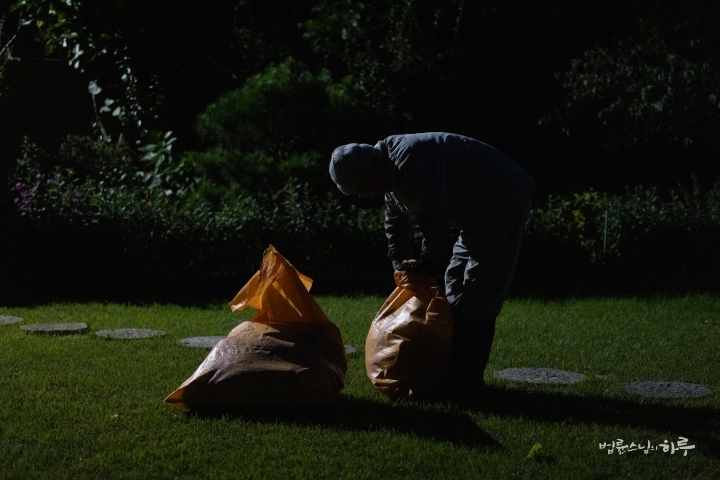
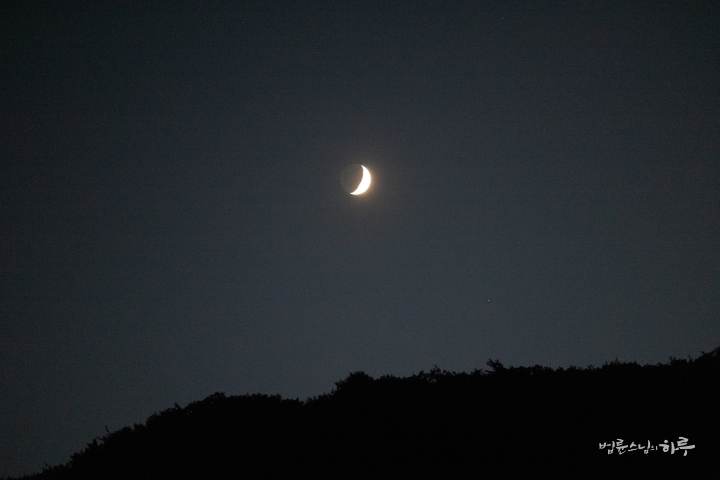
As the sun set, a crescent moon rose over the mountains.
“Thank you all for your hard work.”After dinner, Sunim spent the evening proofreading manuscripts and handling various tasks before concluding the day’s activities.
Tomorrow, Sunim will depart from Dubuk Jungto Retreat Center in the morning and travel to Seoul. In the afternoon, he will meet with social leaders outside, and in the evening, he will wrap up the Jungto Society study tour with the female INEB participants.